Day 82 – Midland Road – York Way – Copenhagen Street – Caledonian Road

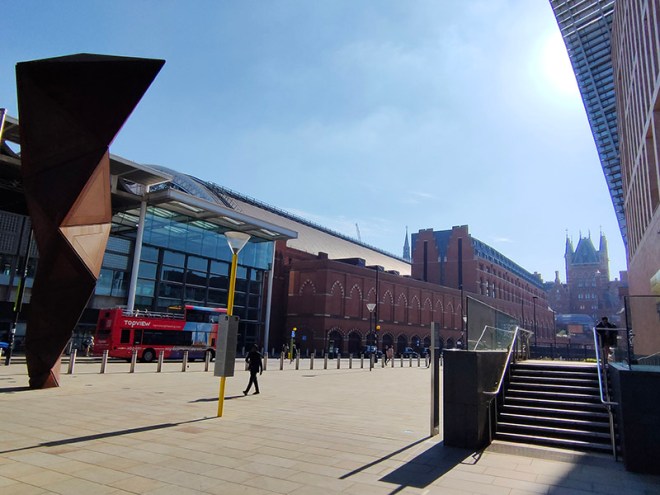
Following an extended summer break, today’s walk sees us return to the area around King’s Cross for the first time in ten years, during which, I think it’s fair to say, quite a bit has changed. We visit the area to the north of KX station which has undergone a massive make-over in the last couple of decades then venture eastward into Pentonville, bordered to the south by the eponymous Road and to the north by Copenhagen Street. All of which is intersected by the Regent’s Canal.
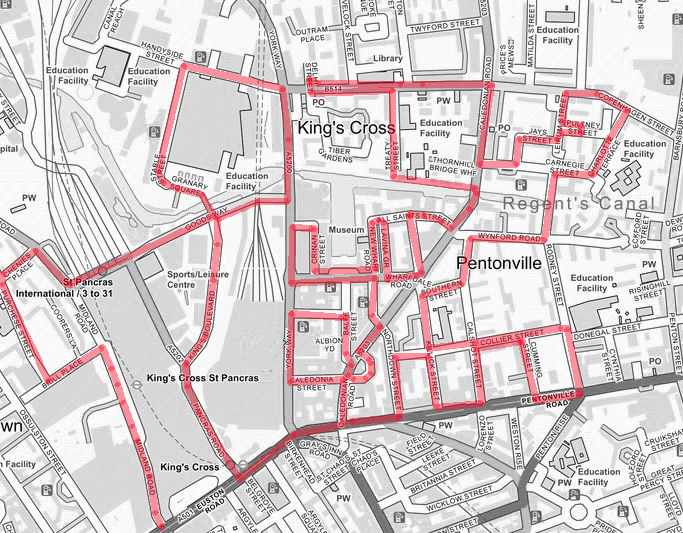
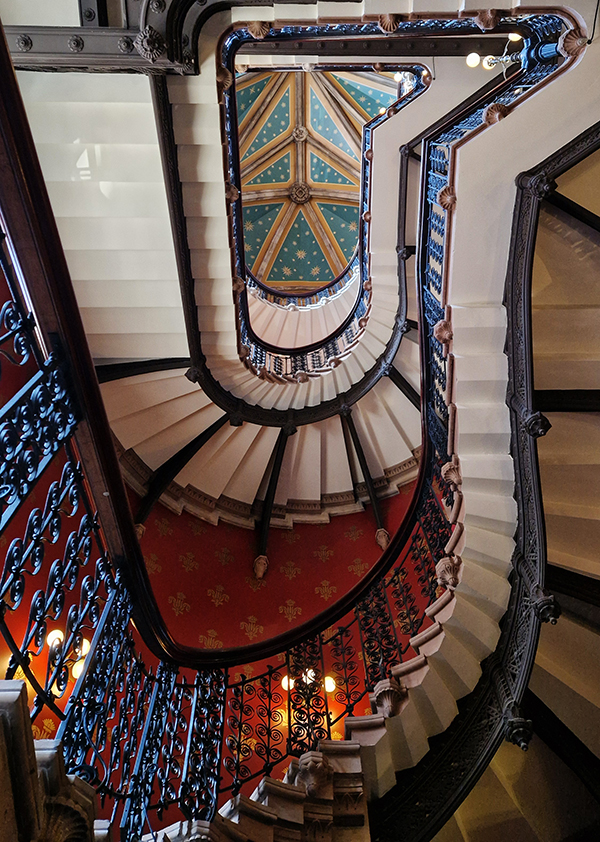
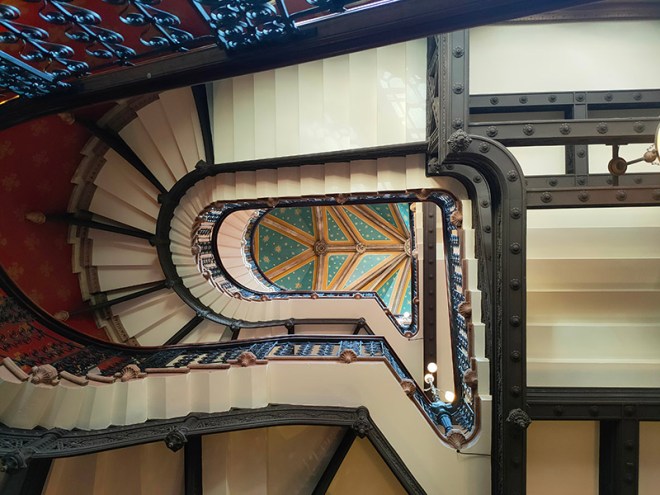
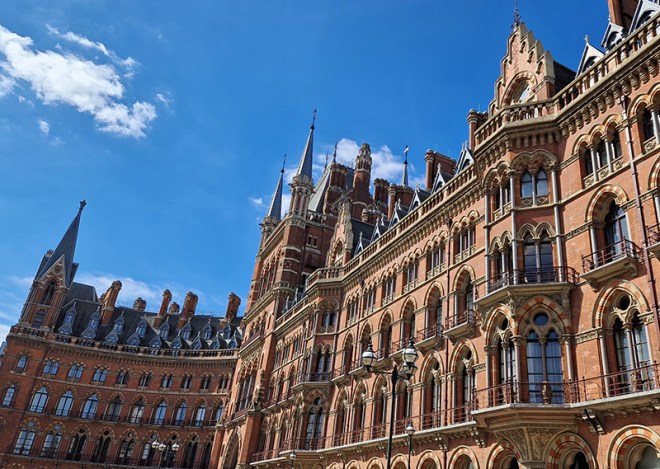
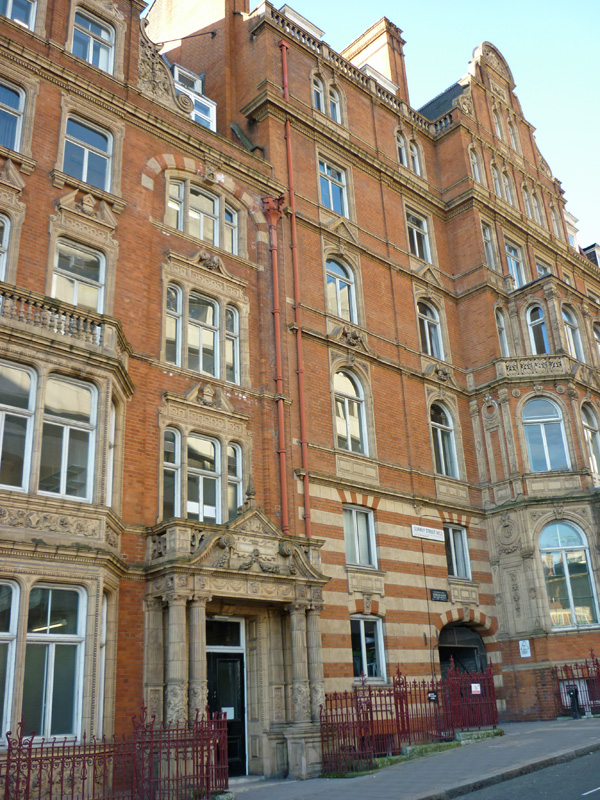
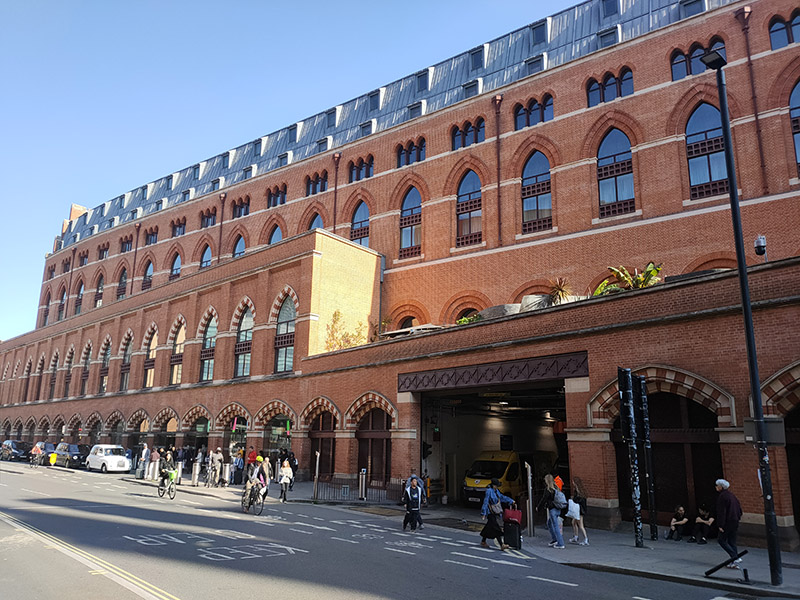
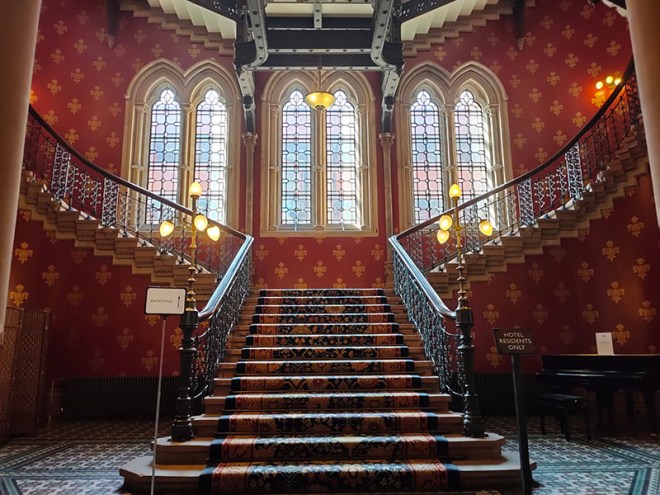
We kick off at the southern end of Midland Road which runs northward between the British Library and St Pancras International (both of which we dealt with back on Day 9). We also covered the always astonishing Renaissance Hotel (née Midland Grand Hotel) back then but as a bit of a bonus we’ll take another look at that at the end of this post.
Adjacent to the British Library, to the north, is the Francis Crick Institute, named after the British scientist who along with James Watson identified the structure of DNA in 1953, drawing on the work of Maurice Wilkins, Rosalind Franklin and others. The Crick, as it is generally known, is home to a partnership between six of the world’s leading biomedical research organisations: the Medical Research Council, Cancer Research UK, Wellcome, UCL (University College London), Imperial College London and King’s College London. The genesis of this partnership was the 2007 Cooksey report which looked at ways to consolidate and enhance medical research in the UK. The institute was officially opened by Queen Elizabeth in November 2016 and was fully operational by the spring of 2017. It now houses over 2000 people and more than 100 research groups.
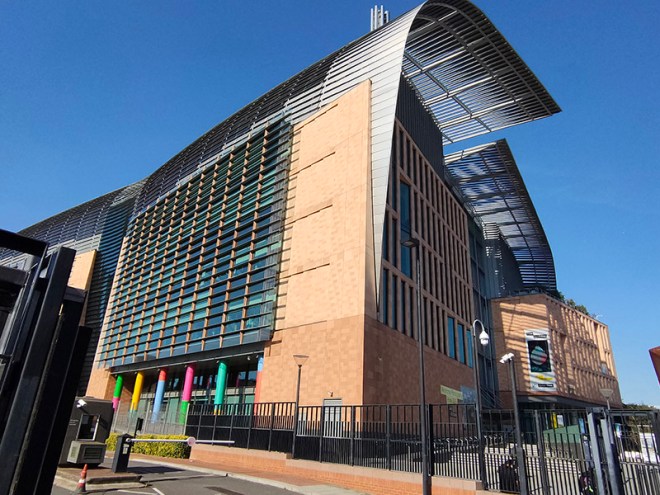
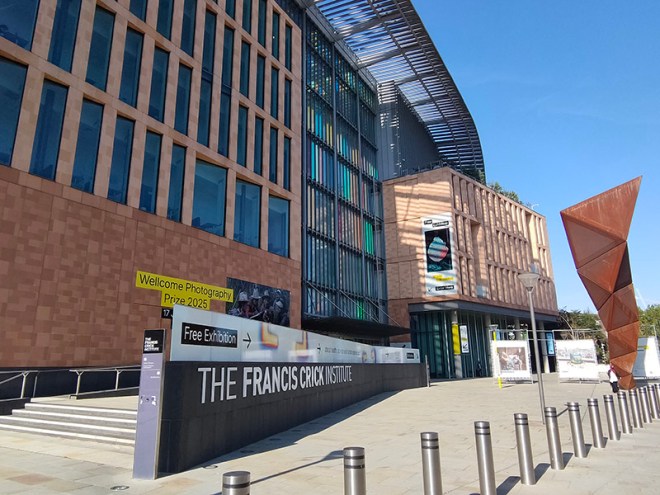
Beyond the Crick we turn left into Brill Place then follow Purchese Street and Chenies Place back round to Pancras Road which takes over from Midland Road.
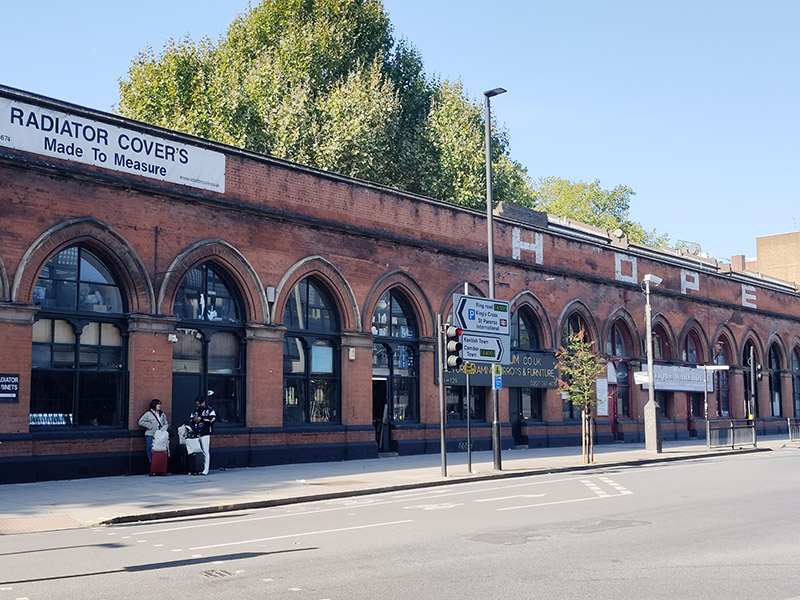
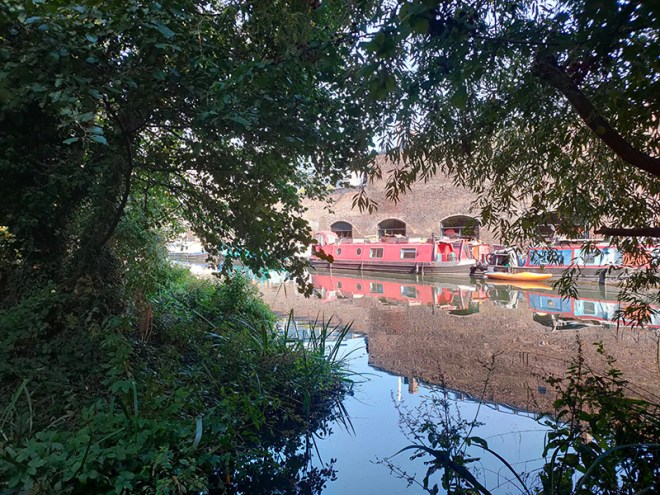
Pancras Road partially veers east in the form of a tunnel under the rail lines out of St Pancras then morphs into Goods Way. To the north of Goods Way, sandwiched in between Camley Street and the Regent’s Canal is the Camley Street Natural Park, a little patch of wilderness in the city. The site was once a coal drop for the railways into King’s Cross Station, which was demolished in the 1960s. As it was subsequently colonised by nature the London Wildlife Trust ran a campaign in the 1980’s to save the site from development and create a nature reserve which opened in 1985. Nice café if you’re in the vicinity. They’ll even do you an Aperol Spritz (which I think demonstrates that we’ve now reached peak Aperol Spritz).
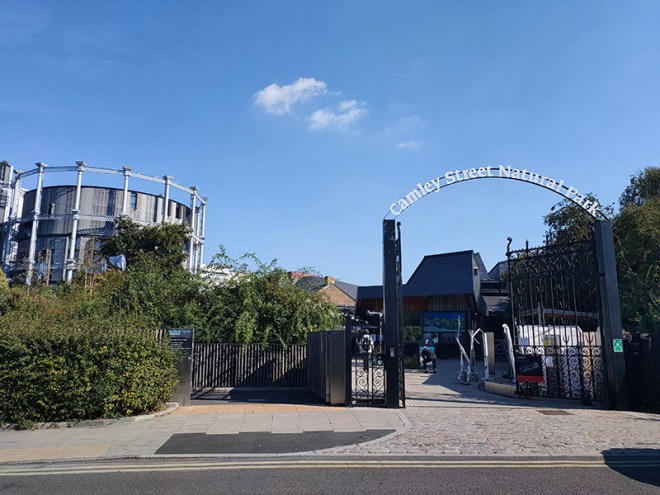
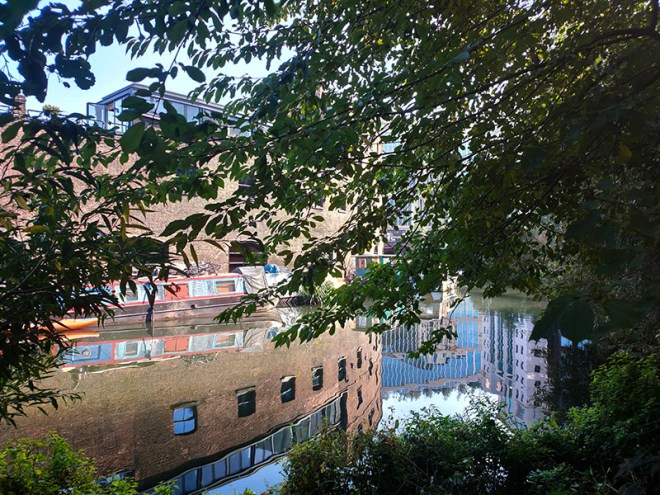
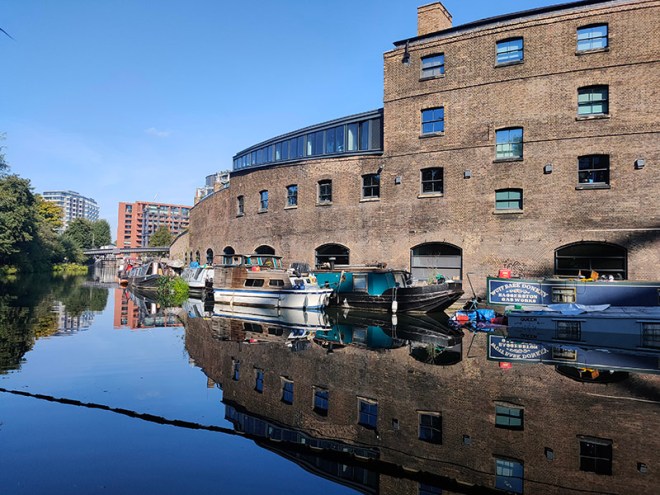
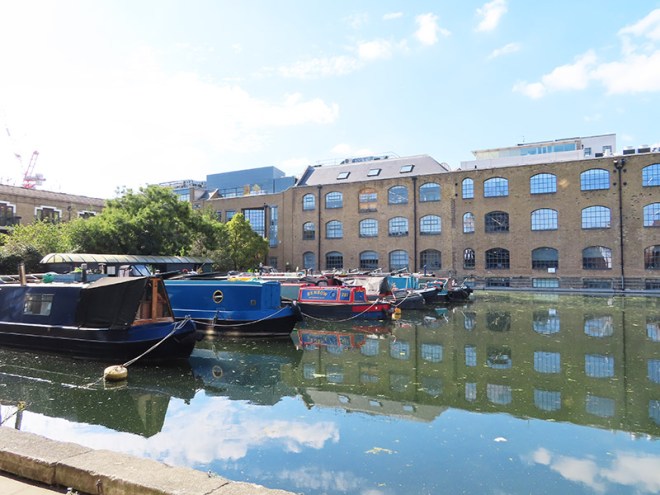
After polishing off an Earl Grey tea and ham and cheese croissant at the café we cross the canal via the Somerstown Bridge and enter the heart of the King’s Cross regeneration.
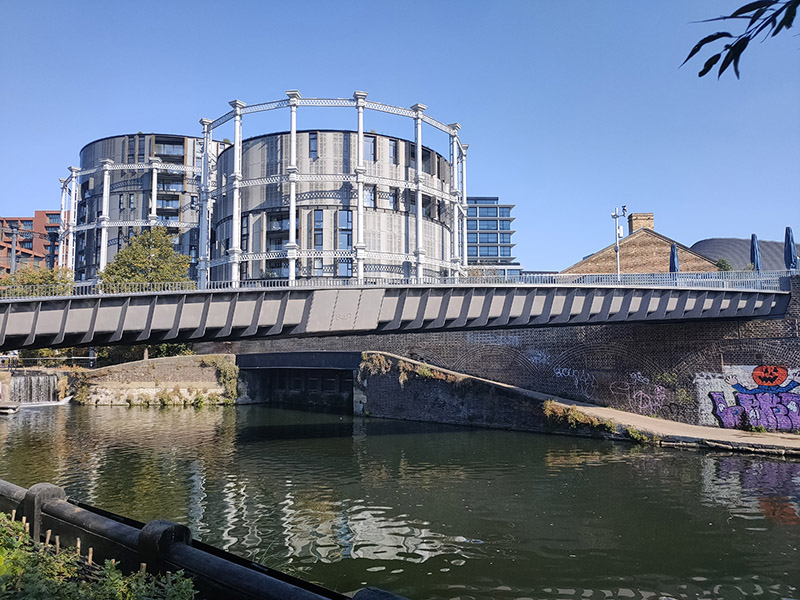
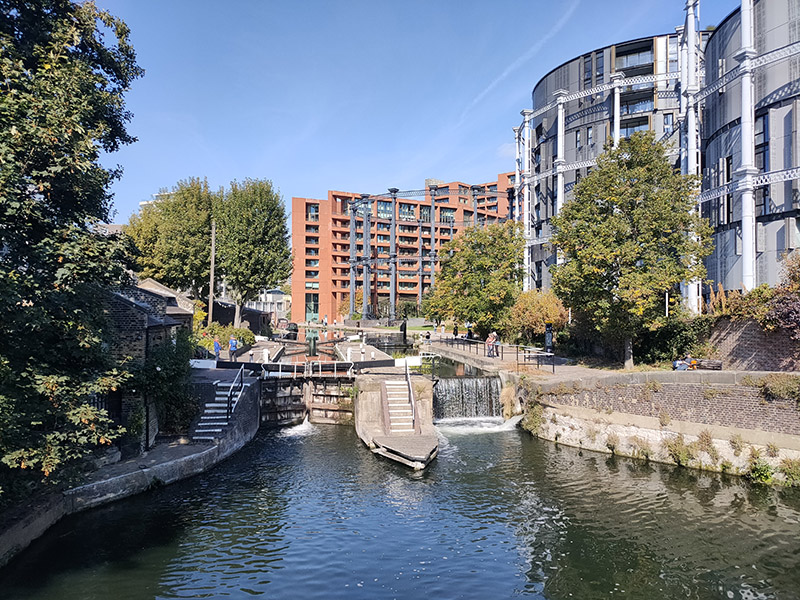
A potted history : In the early 19th century, prior to the arrival of the railways, this area had already developed into an industrial hub with the opening of the canal in 1820 and the Pancras Gasworks in 1824. A number of other “polluting” businesses such as paint manufacture and refuse sorting were also established in the area giving it a somewhat tarnished reputation. In an attempt to offset this, a huge memorial to, the recently deceased, King George IV was erected at a major crossroads in 1836. The memorial attracted ridicule and was demolished in 1845 to ease the flow of traffic, but the new name for the area – ‘King’s Cross’ – stuck. King’s Cross station opened in 1852 and St Pancras station followed around 15 years later. In the latter years of the 19th century both the railways and the gasworks were expanded leading to the demolition of much of the surrounding housing. After WWII and nationalisation of the railways in 1948, the transport of freight by rail suffered a rapid decline and in the southern part of the Goods Yard, most of the rail lines were lifted in the 1980s. Although six gasholders remained in service until 2000, the area went from being a busy industrial and distribution district to a place that was synonymous with urban sleaze and decay, consisting mainly of derelict and disused buildings, railway sidings, warehouses and contaminated land. At the same time it became something of a hub for artists and creative organisations and was closely associated with the illegal rave scene in the 1990’s.
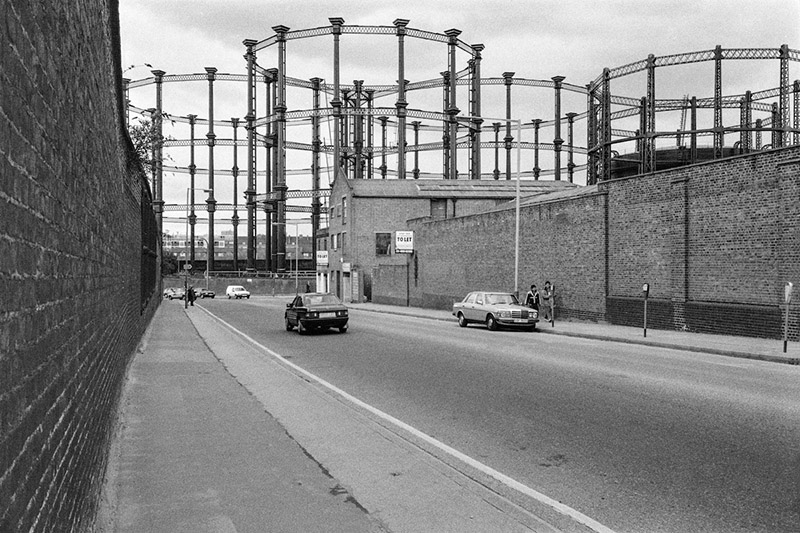
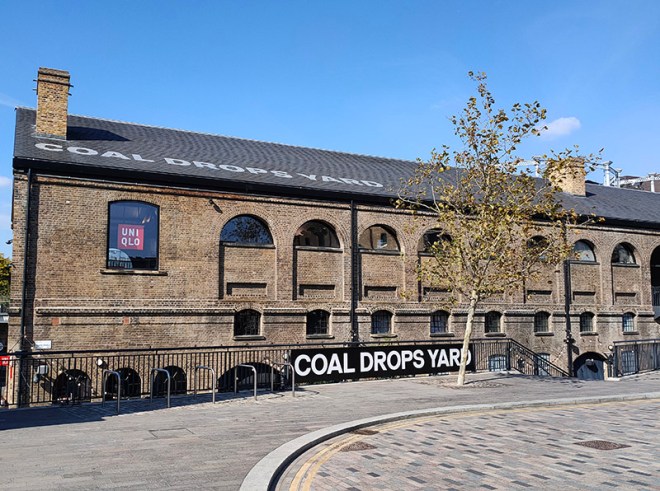
The 1996 decision to move the Channel Tunnel Rail Link from Waterloo to St Pancras became the catalyst for redevelopment by landowners, London & Continental Railways Limited and Excel (now DHL). It took another ten years though before outline planning permission was granted for 50 new buildings, 20 new streets, 10 new major public spaces, the restoration and refurbishment of 20 historic buildings and structures, and up to 2,000 homes. Early infrastructure works began in 2007, with development starting in earnest in late 2008. Much of the early investment was focused in and around the Victorian buildings that once formed the Goods Yard. In September 2011, the University of the Arts London moved to the Granary Complex, and parts of the development opened to the public for the first time. Since then the historic Coal Drops have been redeveloped as a shopping destination, and companies such as Google, Meta, Universal Music and Havas have chosen to locate here. New public streets, squares and gardens have opened, among them Granary Square with its spectacular fountains and Gasholder Park. In January 2015, the UK government and DHL announced the sale of their investment in the King’s Cross redevelopment to Australian Super, Australia’s biggest superannuation/pension fund. I must confess here that there is a part of me which wishes I had thought to undertake this project before all of the above happened.
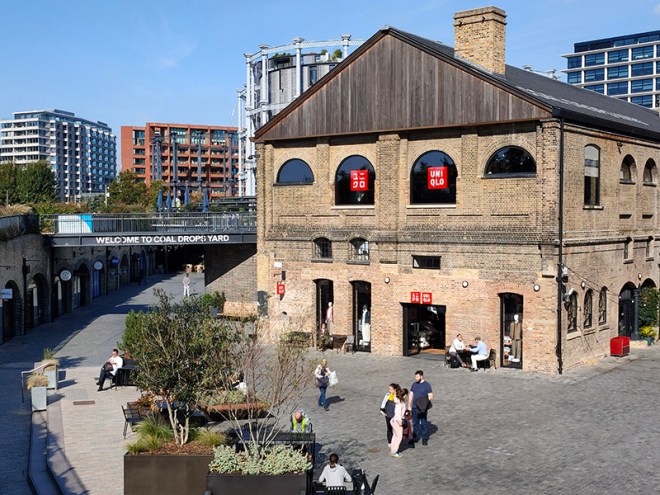
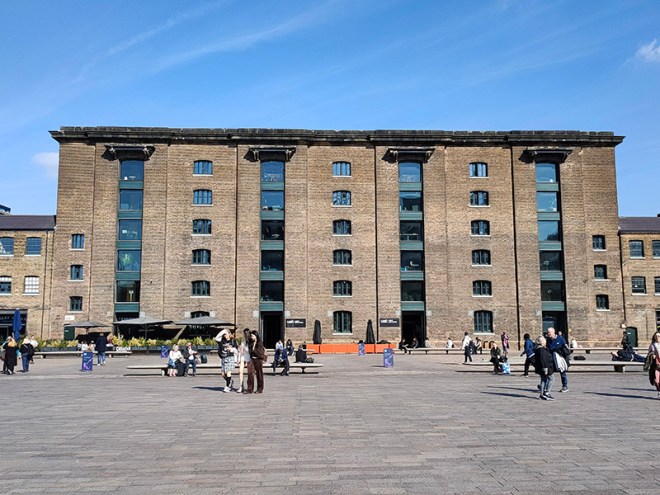
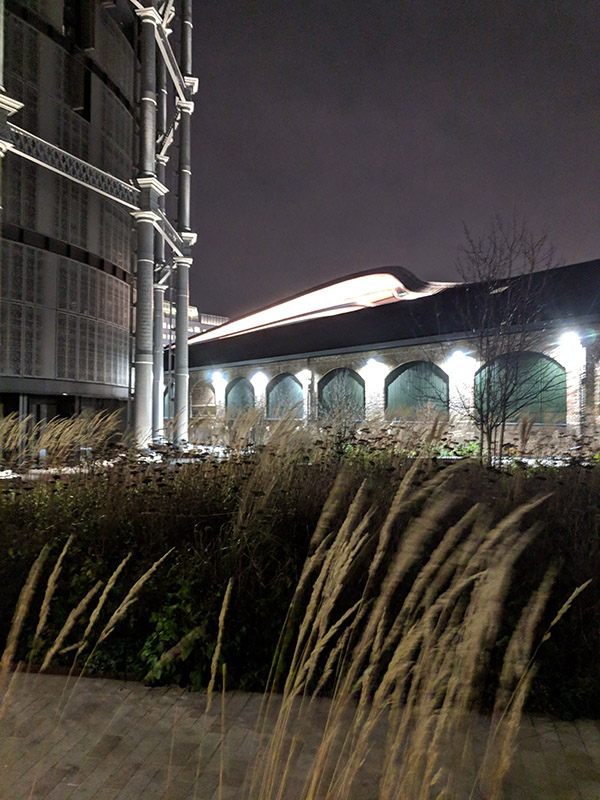
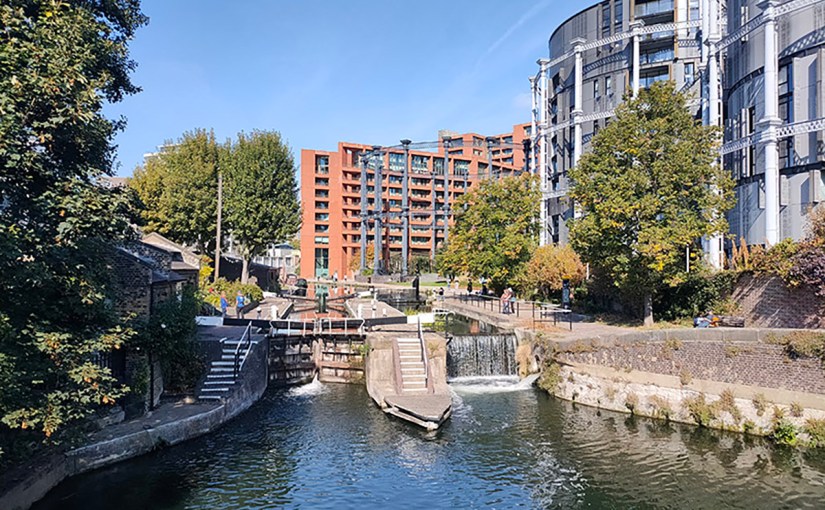
Three of the Gasholders built for the Pancras Gasworks in 1860-67, known as the ‘Siamese Triplet’, because their frames are joined by a common spine, escaped demolition and were awarded Grade II listed status. As part of the renewal programme these were painstakingly restored over a five year period by a specialist engineering firm in Yorkshire and upon their return to King’s Cross, erected on the northern bank of Regent’s Canal and developed into 145 apartments, designed by Wilkinson Eyre Architects, and completed in 2018. (The photos below are from a previous visit in December 2020).
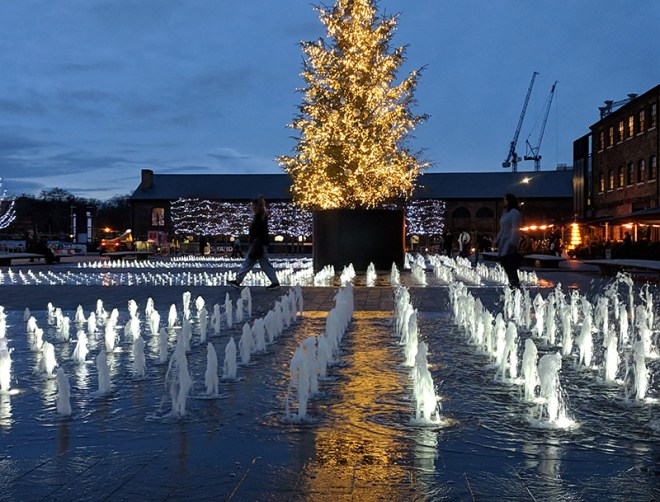
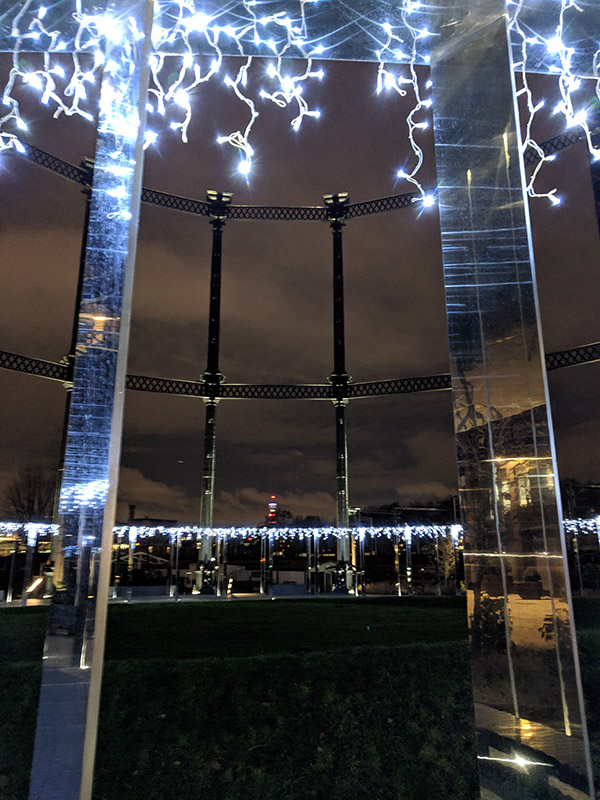
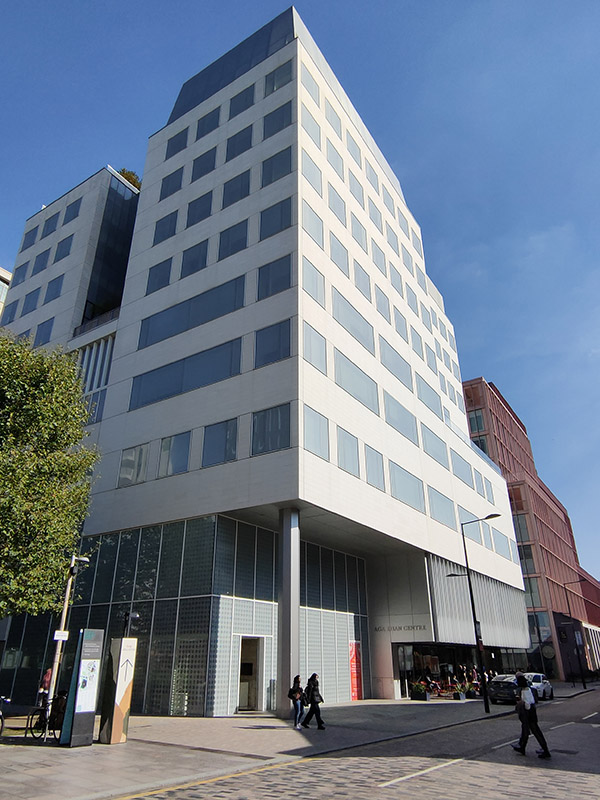
Stable Street runs through the middle of the development area as far as Handyside Street. At their intersection stands the Aga Khan Centre, the UK home for three organisations founded by His Late Highness Aga Khan IV, the hereditary spiritual leader of the Shi‘a Ismaili Muslims. The building was designed by the Japanese architect, Fumihiko Maki, who unfortunately passed away in 2024. The building is influenced by Islamic architectural history and is clad in detailed pale limestone, referencing the grand Portland stone buildings across London.
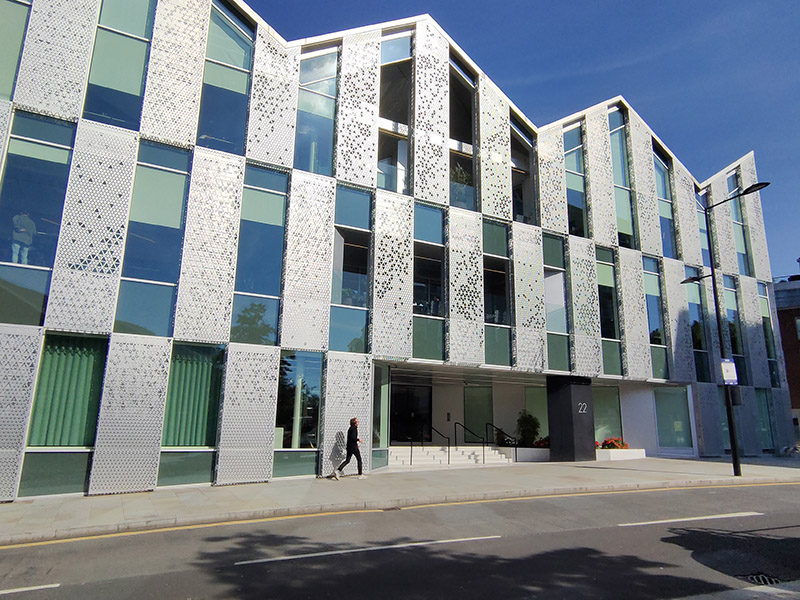
The striking Q1 office building at 22 Handyside was built over three listed railway tunnels so the design involved a lightweight structure with a diagonal orientation clad in perforated panels of anodized aluminium.
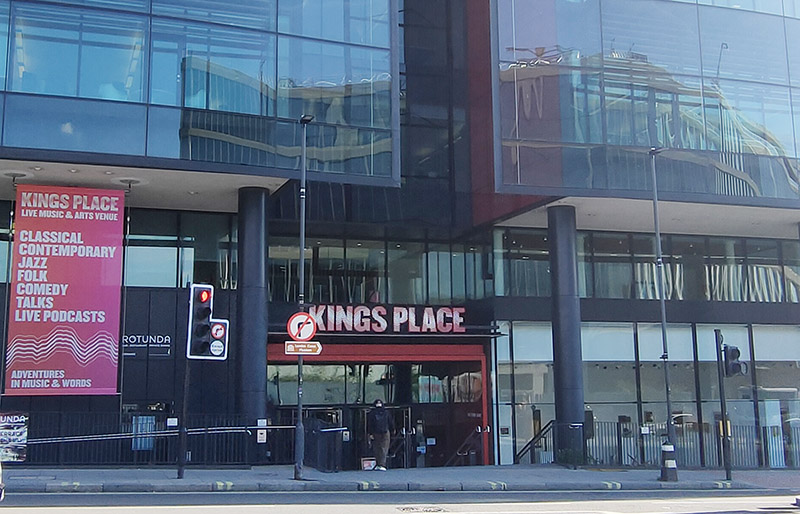
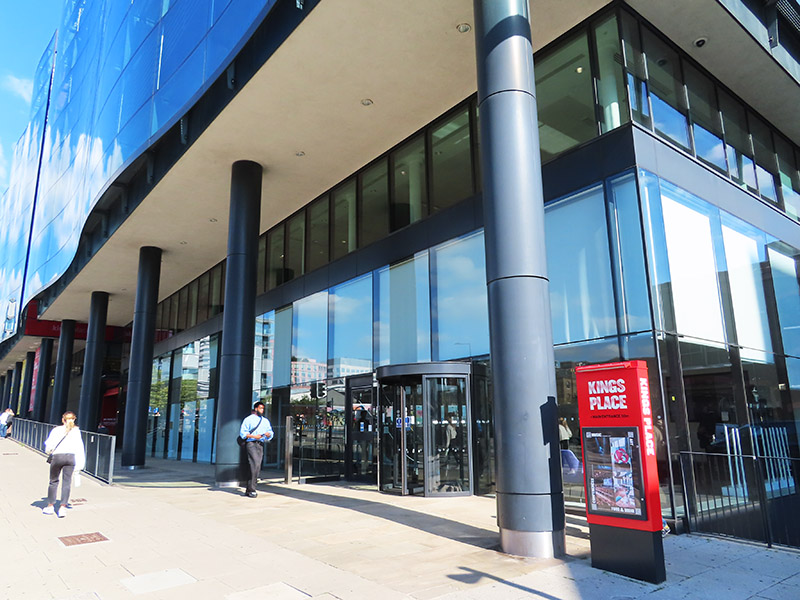
We head back south on York Way. Prominent on the east side is King’s Place music and arts venue which has been hosting an excellent programme of classical, contemporary and jazz concerts since 2008 and is also home to the London Podcast Festival. Dixon Jones were the architects for the building, which contains the first new public concert hall to be built in Central London since the completion of the Barbican Concert Hall in 1982.
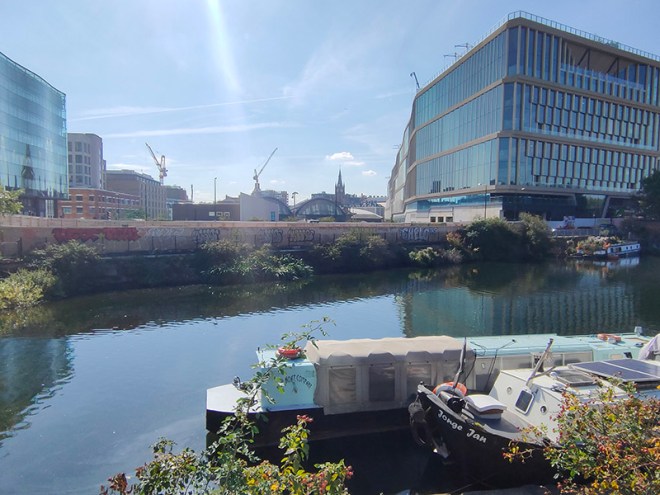
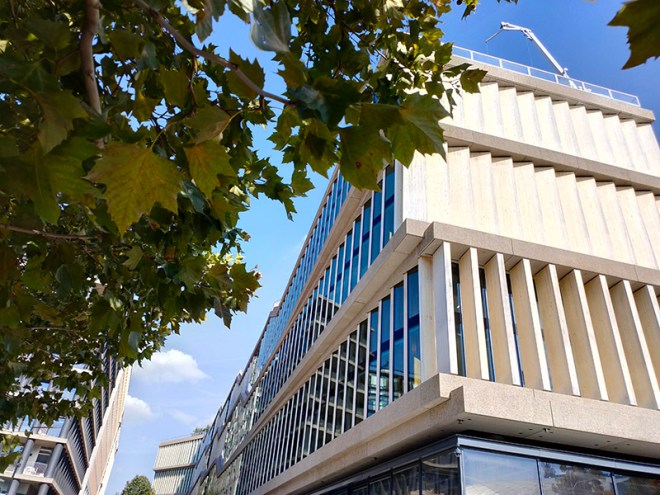
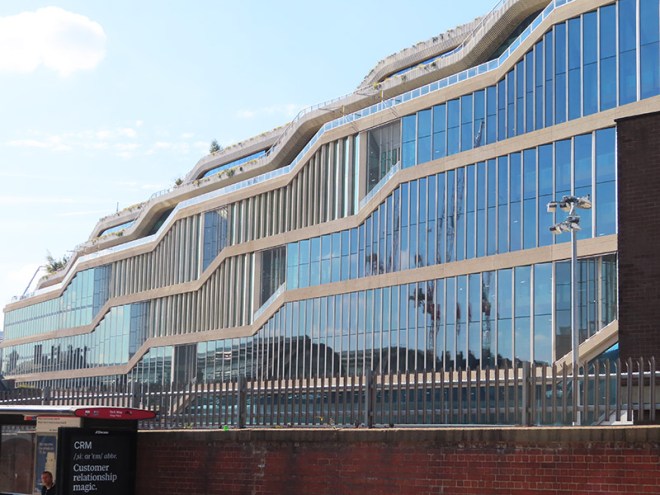
Returning to Goods Way we follow the canal along to Granary Square then turn down onto Kings Boulevard, almost the whole length of which, as far as the north end of King’s Cross Station, is flanked by Google’s new UK HQ. Construction on this, the first wholly owned and designed Google building outside the US, began way back in 2018. Designed by Heatherwick Studio and Bjarke Ingels Group (BIG), the purpose-built 11-storey building, which is 72 metres tall at its highest point and 330 metres long has been dubbed a “landscraper”. The 861,100sq ft of office space will, upon completion, make it the 8th largest building in Europe by office space and provide the potential to house 7,000 Google employees. Those employees are expected to start moving in later in 2025.
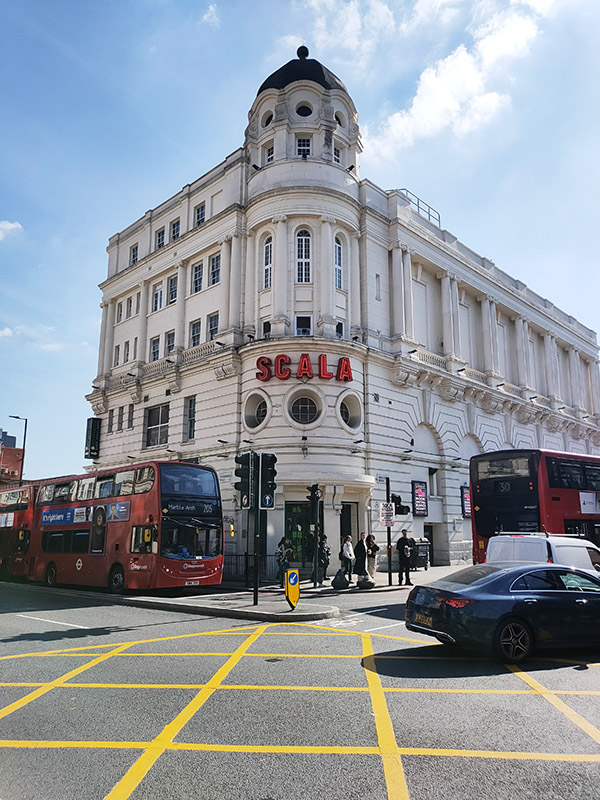
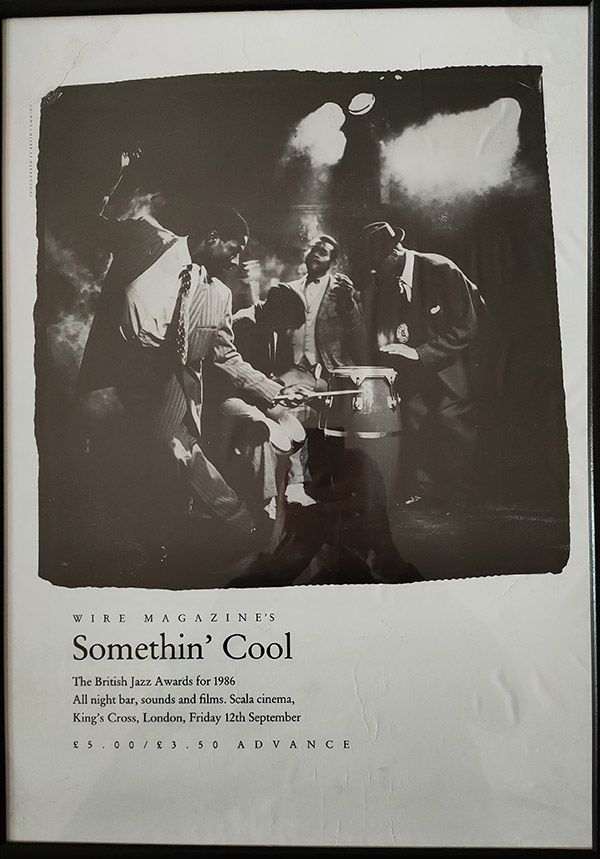
We round Kings Cross Station via Pancras Road and the fag end of Euston Road and find ourselves at the start of Pentonville Road opposite the Scala. I wrote about this back in Day 12 but at that time (towards the end of 2015) the building was swathed in scaffolding so there were no photographs included. I can now belatedly rectify that and also mention (which I didn’t before) that my one visit to the Scala was to attend the 1986 British Jazz Awards all-nighter (an event about which the internet is entirely ignorant it seems – this framed poster still hangs on my bedroom wall).
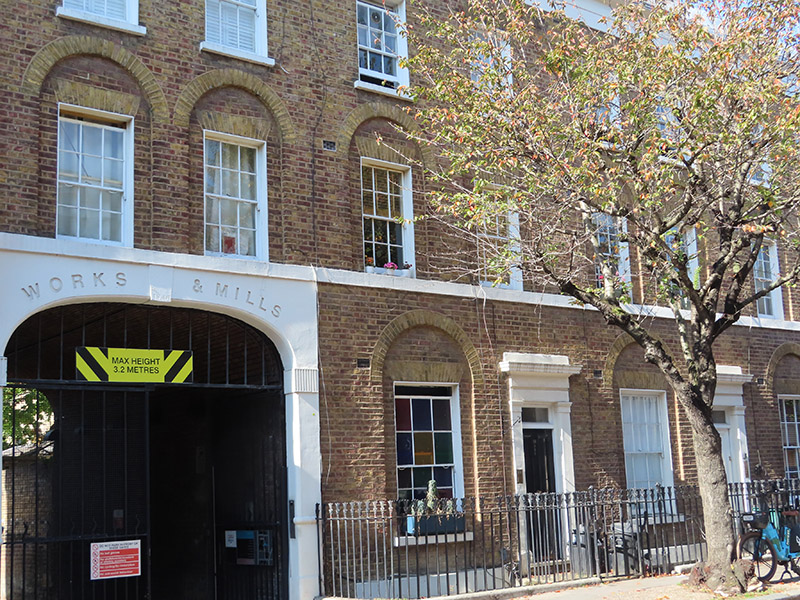
Across the road from the Scala we enter the Caledonian Road at its southern end then complete a circuit of Caledonia Street, York Way, Railway Street and Balfe Street. Nos. 17 and 17a on the latter are Grade II listed. These mid-19th century terraces must have had some remarkable changes of fortune during their lifetime and I doubt they have ever been more desirable than they are now.
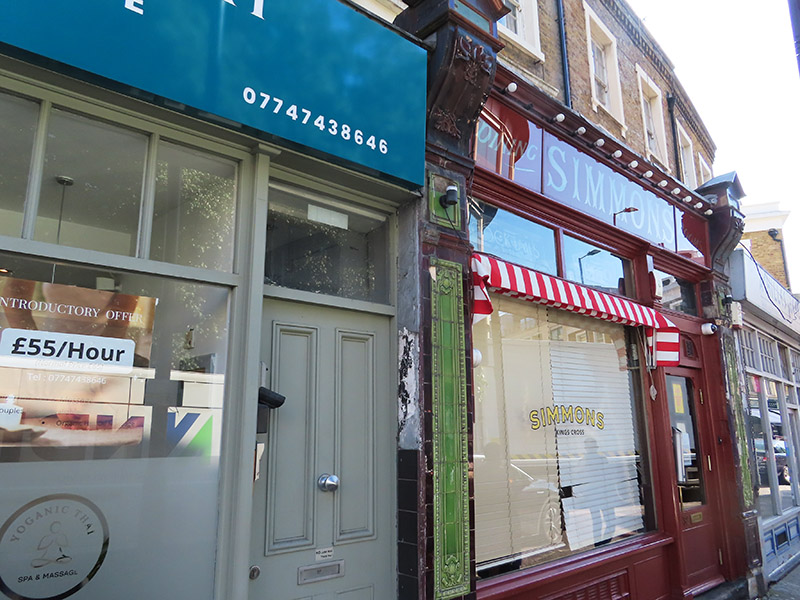
Back on Caledonian Road, the first of the Simmons chain of bars (opened in 2012) has cutely retained the façade of the old style tearoom that preceded it.
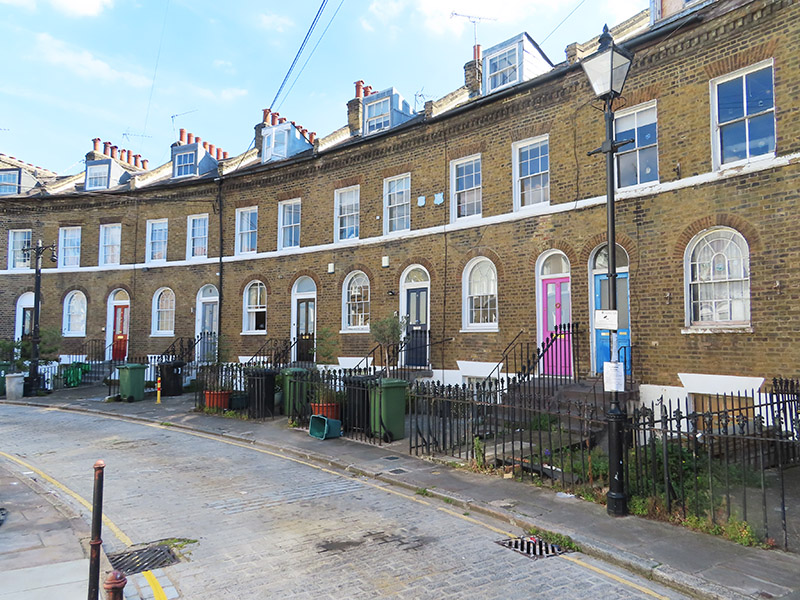
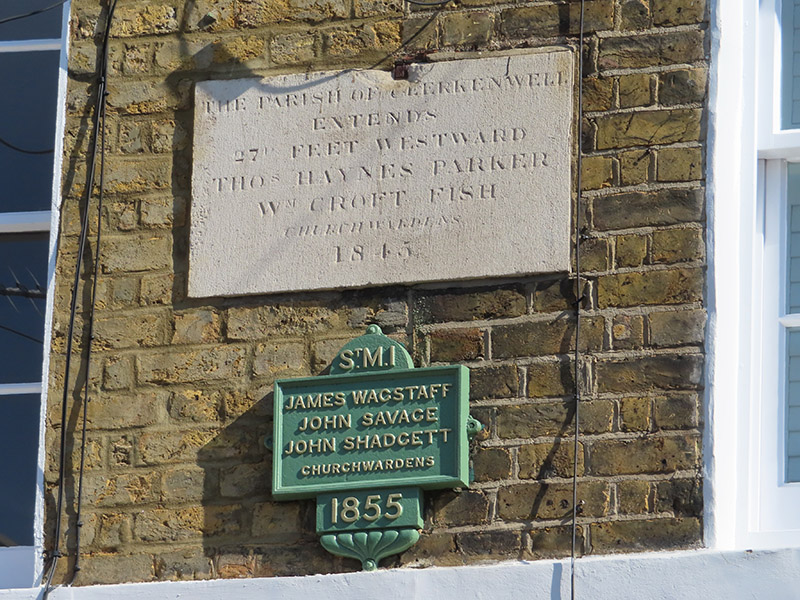
From here we swing left round Keystone Crescent (formerly Caledonian Crescent). Built by the son of a Shoreditch bricklayer, Robert James Stuckey, in 1846 this has the smallest radius of any crescent in Europe and is unique in having a matching inner and outer circle. The change of name was effected in 1917 by Robert’s grandson, Algernon, for reasons undocumented. The 24 houses in the Crescent are all Grade II listed; one of them has parish marker plaques that include the names of the local church wardens in 1845 and 1855 and another (no.28) operates as a Private Members’ Speakeasy.
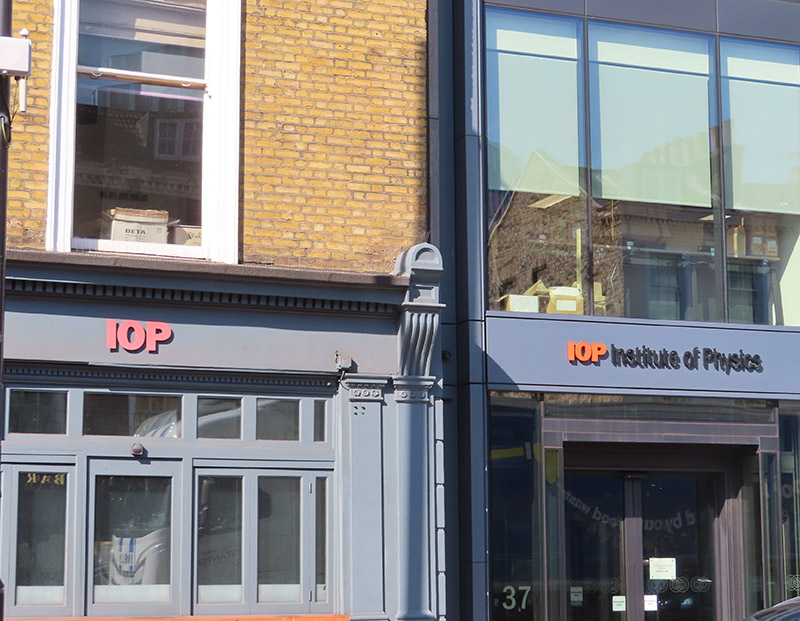
At the other end of the Crescent we’re back on Caledonian Road, naturally enough, and on the opposite side of the road to the Institute Of Physics which I wasn’t able to get a proper shot of due to the ridiculous volume of traffic. Just as well it’s not much to look at then. The IOP as it exists today was formed through the merger of the The Physical Society of London and the Institute of Physics in 1960. The former had been established in 1874, after Professor Frederick Guthrie, of the Royal College of Science, wrote to physicists to suggest a “society for physical research”. The latter was incorporated by the Board of Trade in 1920 with The Royal Microscopical Society and the Roentgen Society as its associate societies. To be honest, it’s not at all clear why two bodies were needed or what the difference between them was. But that’s Physicists for you.
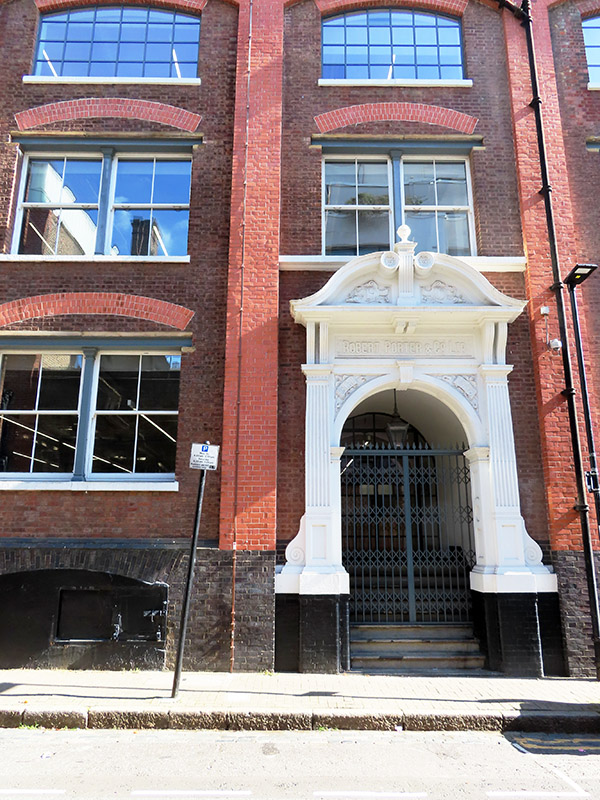
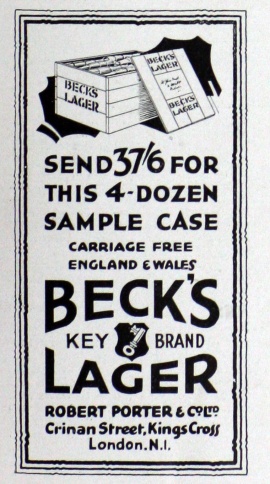
We make our way back to York Way via Northdown Street and Wharfdale Road then just before we reach King’s Place again we turn east onto Crinan Street which loops back to Wharfdale Road. Crinan Street is home the former Robert Porter & Co. Beer Bottling Plant. For some reason I always think of lager as being quite a recent arrival to these shores but (the aptly named) Mr Porter was bottling a Beck’s lager at least as far back as 1927.
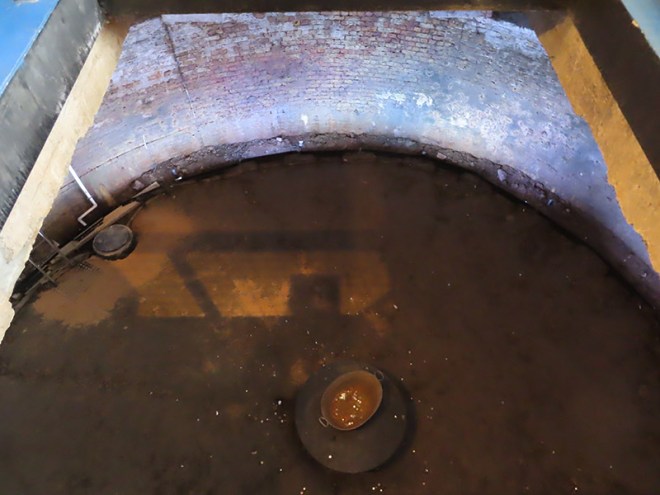
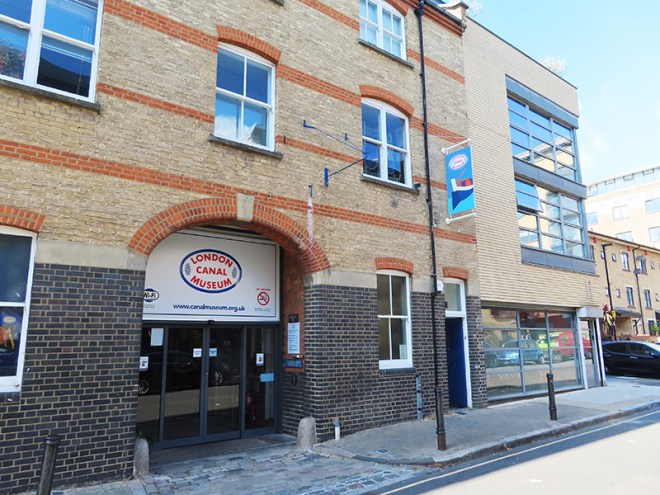
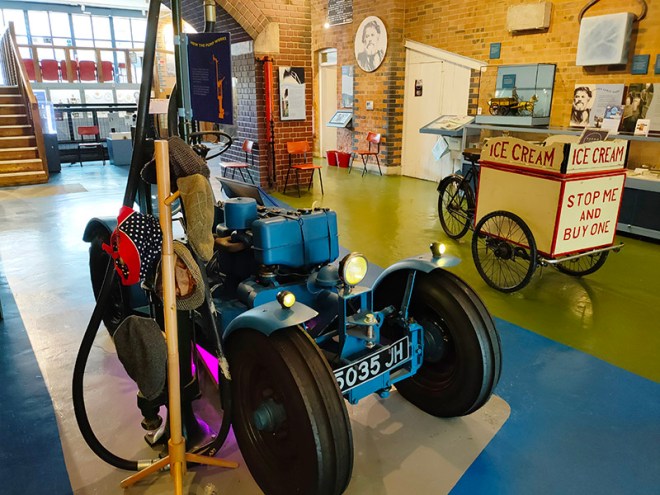
Next up is New Wharf Road where you will find the London Canal Museum. Naturally enough, the museum deals with the story of London’s canals but as it is housed in a former ice warehouse built in about 1862-3 for Carlo Gatti (1817 – 1878), the famous ice cream maker, it also, perhaps more interestingly, features the history of the ice and ice cream trade in this country. Gatti came to London from the Italian speaking part of Switzerland in 1847 and began his business life selling refreshments from a stall, a kind of waffle sprinkled with sugar, and chestnuts in winter. Within a couple of years he had opened his own café and restaurant which included a chocolate-making machine that he later exhibited at the Great Exhibition of 1851. Gatti was one of the first people to offer ice cream for sale to the public and, initially, he made this using cut ice from the Regent’s Canal. Subsequently though, as he concentrated on the ice trade business, he began importing ice that originated in the Norwegian Fjords. The ice well he had built at 12-13 New Wharf Road to cater for his first import of Norwegian ice, a consignment of 400 tons, is still on view at the museum. The museum is small but well worth the relatively modest admission charge. The staff are particularly knowledgeable and communicative.
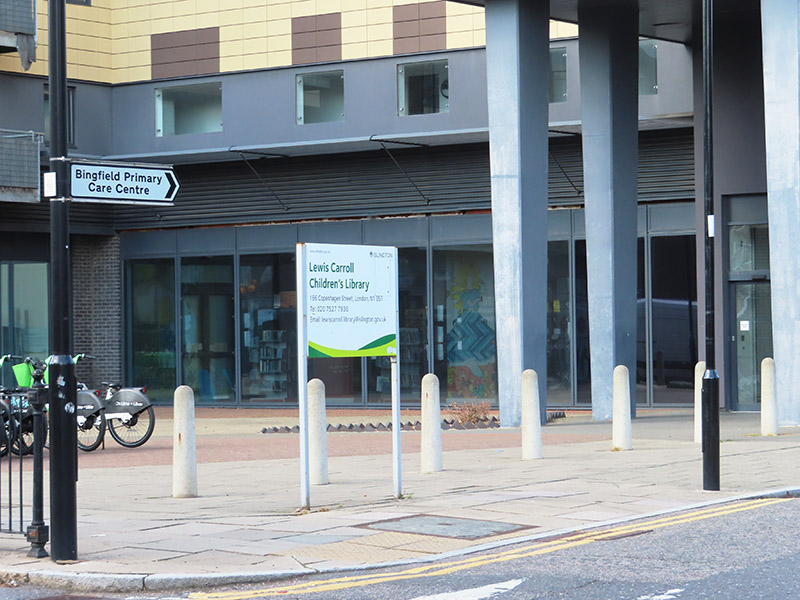
Beyond the museum, New Wharf Street forms a junction with All Saints Street from where we go down Lavina Grove and up Killick Street before re-joining the Caledonian Road. Crossing over the Regent’s Canal again we follow the north bank towpath as far as Treaty Street then continue north onto Copenhagen Street. Here we go west as far as (the miniscule) Delhi Street, York Way Court and Tiber Gardens before doubling back eastward past the Lewis Carroll Children’s Library. The Library opened originally in 1952 and was renovated in 2008 at which time it acquired murals inspired by Carroll’s Alice In Wonderland. Unlike traditional public libraries, the library maintains a unique access policy requiring adults to be accompanied by a child to enter, ensuring the space remains dedicated to its young users. Big up to Islington Council for keeping it going.
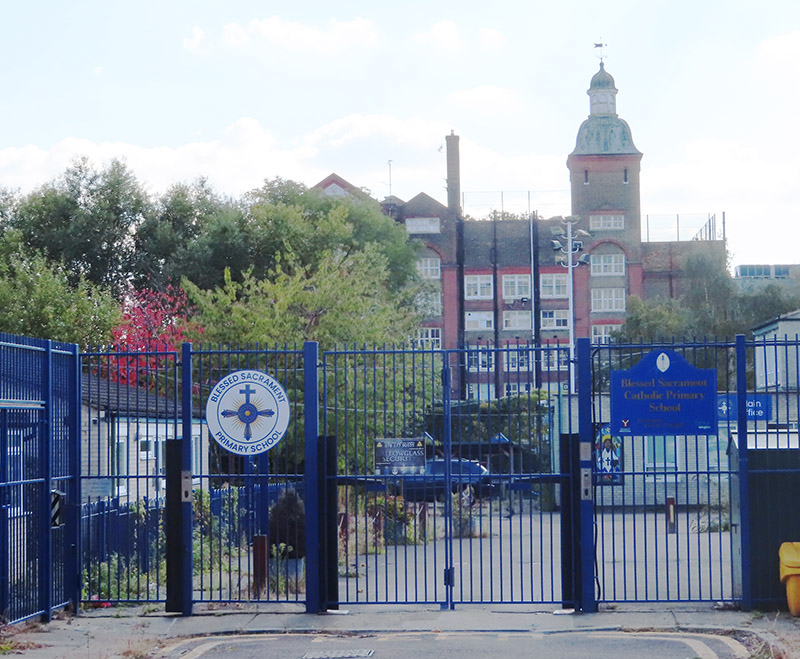
On the other side of Copenhagen Street is a stark illustration of the falling school pupil numbers in certain Inner London boroughs. Islington Council decided to discontinue Blessed Sacrament Roman Catholic Primary School, Boadicea Street with effect from 31 July 2024. The school had 210 places but only 76 pupils as at the October 2023 School Census. The School Roll Projections forecast roll numbers for this area to continue to fall across the next five years by a further three to six per cent a year.
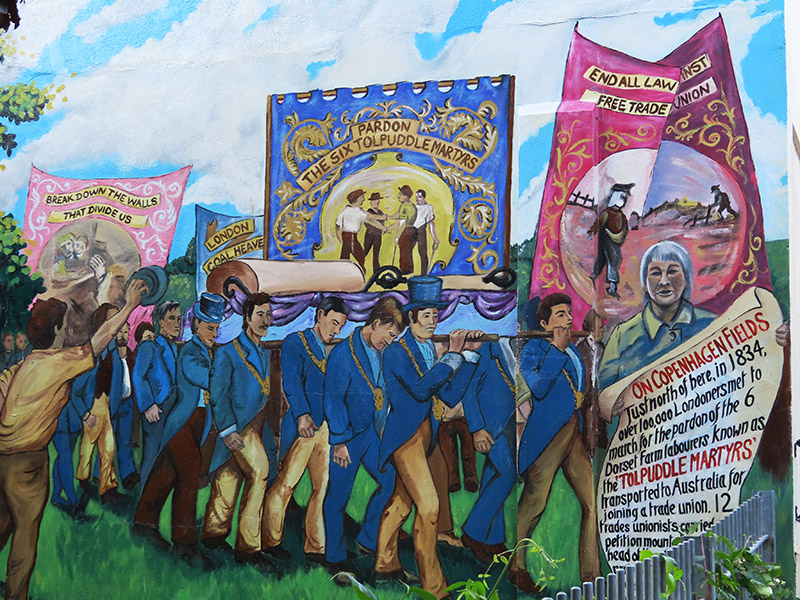
A short way further east at Edward Square there is a mural commemorating the 1834 protest at Copenhagen Fields (which was a bit further north of here) by up to 100,000 people in support of the Tolpuddle Martyrs. The mural was painted by Dave Bangs in 1984 to celebrate the 150th anniversary of the demonstration and used local people as models.
Continuing east past Julius Nyere Close, named after the first President of post-colonial Tanzania, we turn south onto another section of the Caledonian Road. You’d probably need to go quite a bit further east to come across another St George’s flag. I guess the owner of this one is either ignorant of or unfazed by the irony of its positioning.
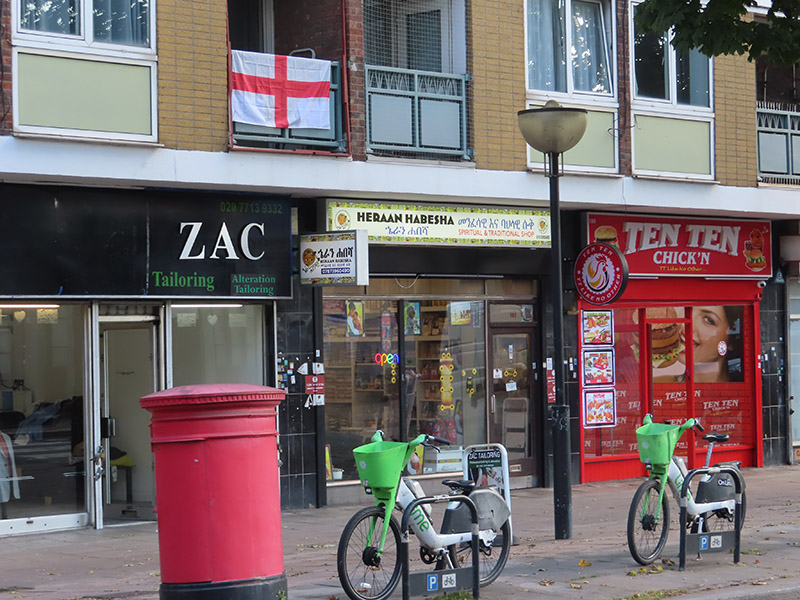
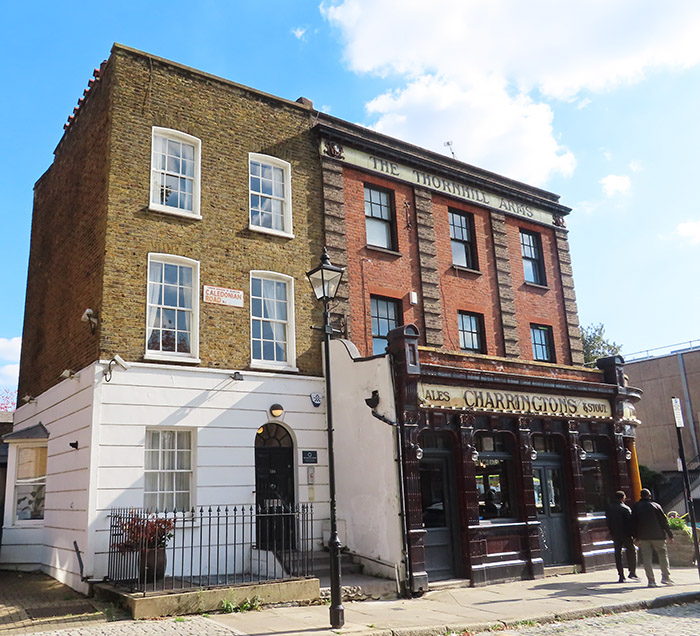
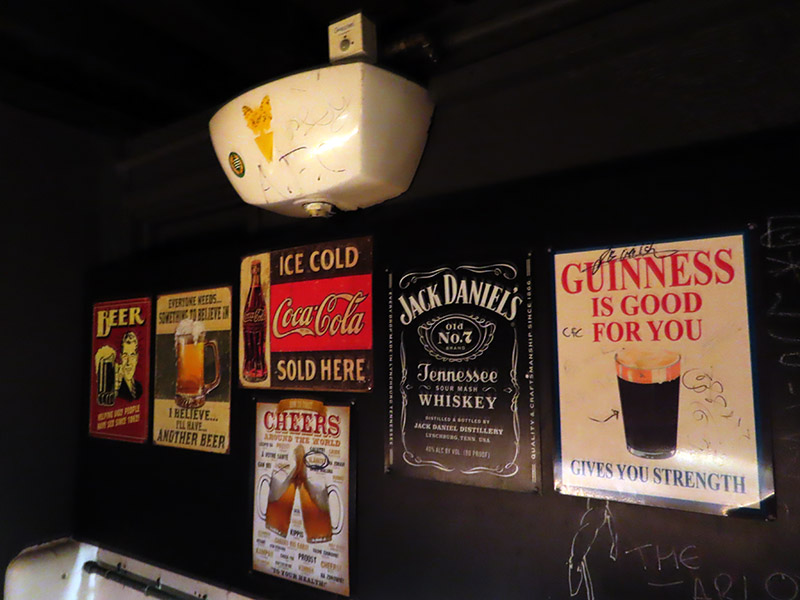
Turning off the east side of Caledonian Road we’re into public housing territory and work our way via Carnegie Street, Bayan Street, Jay Street, and Leirum Street back to Copenhagen Street. From here we take a route back south encompassing Charlotte Terrace, Pulteney Street, Muriel Street. This brings us onto Wynford Road where, just past Fife Terrace, we reach today’s pub of the day, The Thornhill Arms. This is one of those classic Charrington pubs, dating from the mid-nineteenth century with the iconic crimson glazed tiling on the lower floor and red brick with rusticated red/grey brick pilasters forming the exterior of the upper floors. Inside, the building contains many period features including what appears to be part of the original bar. There are tragically few of these pubs remaining in their original incarnation so I was relieved to find that this one wasn’t abandoned as I thought when I passed it heading up the Caledonian Road earlier in the walk.
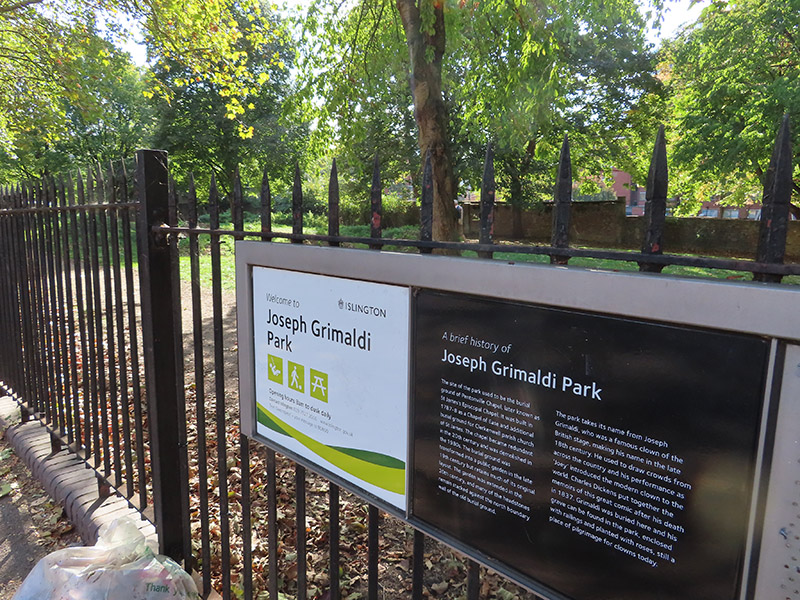
After a swift half we plough on back south on Calshot Street, Southern Street and Killick Street before switching east again along Collier Street. In between Cumming Street and Rodney Street is a contender for one of the most unkempt bits of green space in the capital. In fairness, I didn’t walk around all of Joseph Grimaldi Park, named after the most popular actor and entertainer of the Regency Era, but the part I did see just comprised a series of weed-covered mounds. Grimaldi died in 1837 and was buried here in what was then St. James’s Churchyard. Unfortunately, I was put off venturing into the park so I didn’t come across Grimaldi’s grave or the musical artwork that was installed in his honour as part of a 2010 re-landscaping. Tears of a Clown indeed.
In between the park and the Pentonville Road is the headquarters of the Royal National Institute of Blind People (RNIB). The RNIB moved into the Grimaldi Building, an office building designed by Allies and Morrison Architects to reflect the shape of the church that once graced the site, in 2023. Prior to that their HQ was in Judd Street, south of King’s Cross.
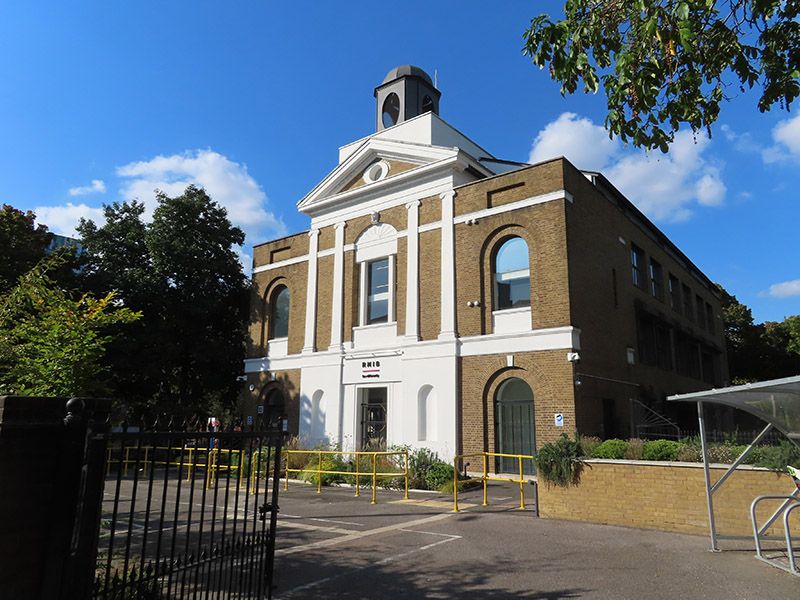
For the final part of today’s excursion it’s just a case of winding our way back to King’s Cross station utilising the streets in between Collier Street and Pentonville Road that we’ve already visited other sections of, namely Calshot Street, Killick Street and Northdown Street. For the sake of completeness we’ll also give the 40 metre long Afflect Street a mention.

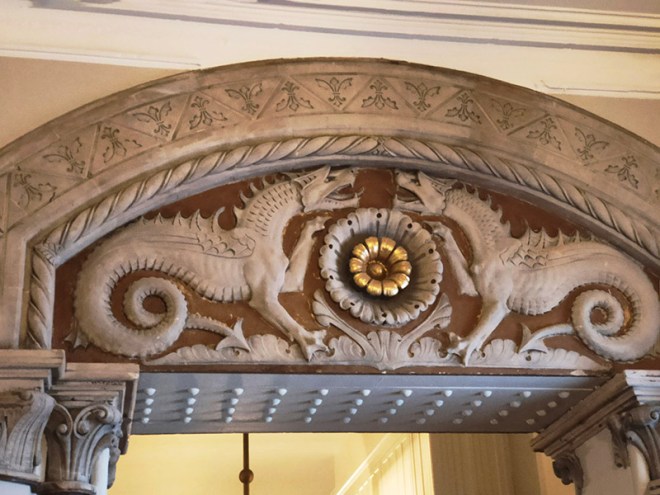
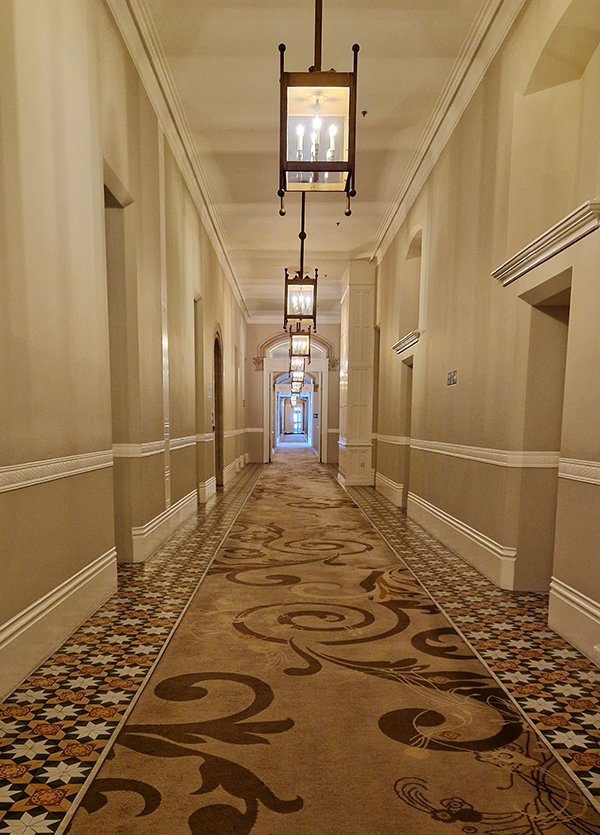
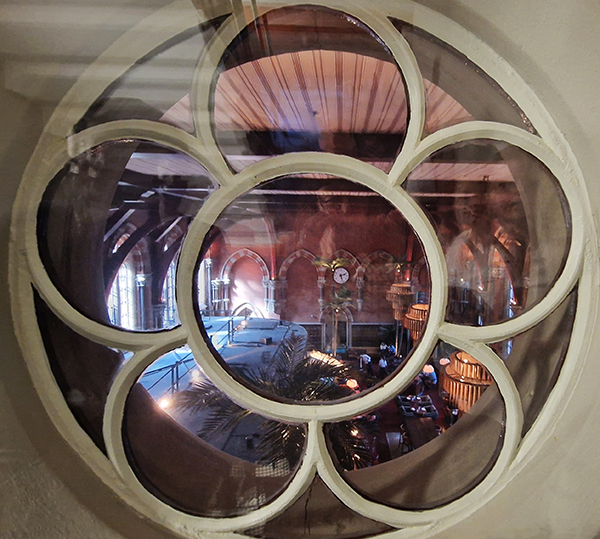
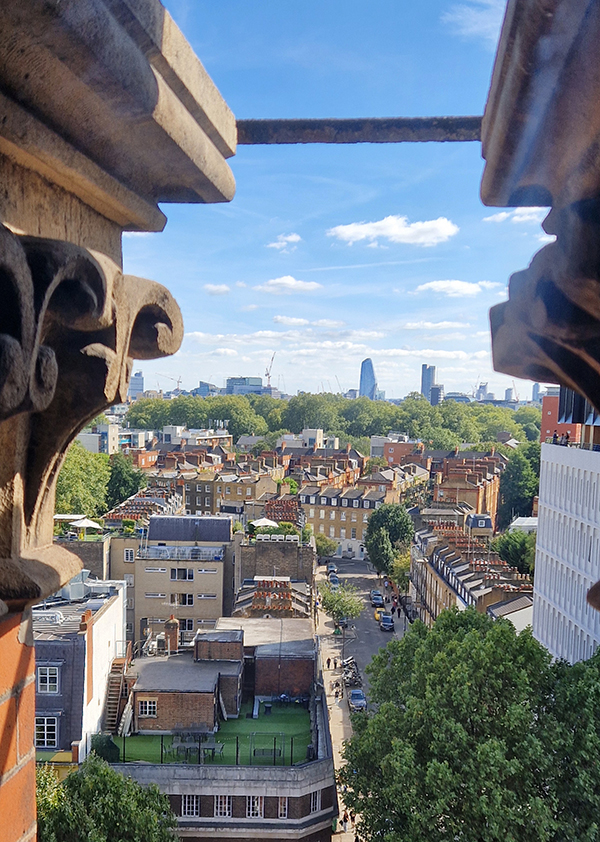
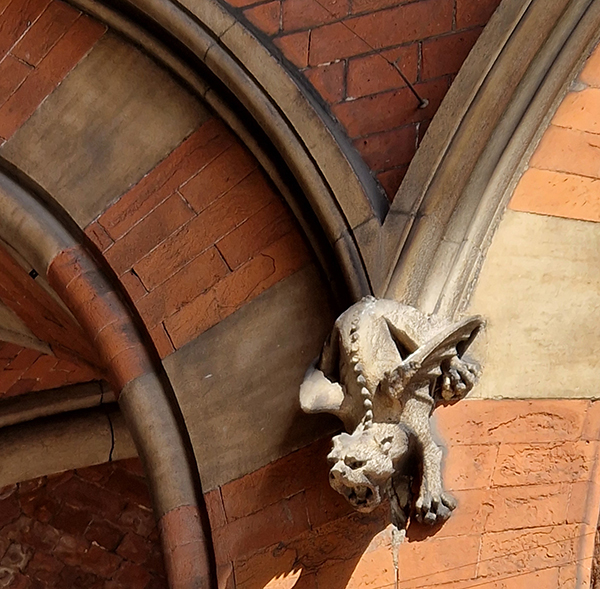
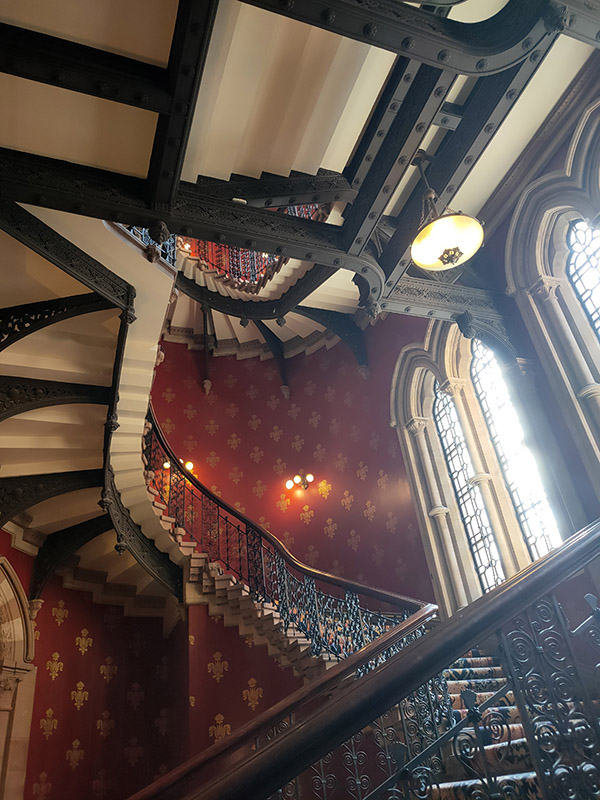
As noted at the start of the post, we’ll finish today with George Gilbert Scott’s 1873 masterpiece, The Midland Grand Hotel, now brought back to life (fittingly) as The Renaissance Hotel, St Pancras. So here are a few highlights of a tour of the inside of the hotel I took during Open House weekend 2024.
Day 81 – Knightsbridge – Brompton Road – Exhibition Road

We’ve switched the focus back west again this time with another visit to the Royal Borough of Kensington and Chelsea; specifically, the area immediately south of Hyde Park in between Sloane Street and Exhibition Road. It’s a packed programme which includes visits to Harrods (somewhat reluctantly), the V&A Museum and the Brompton Oratory.

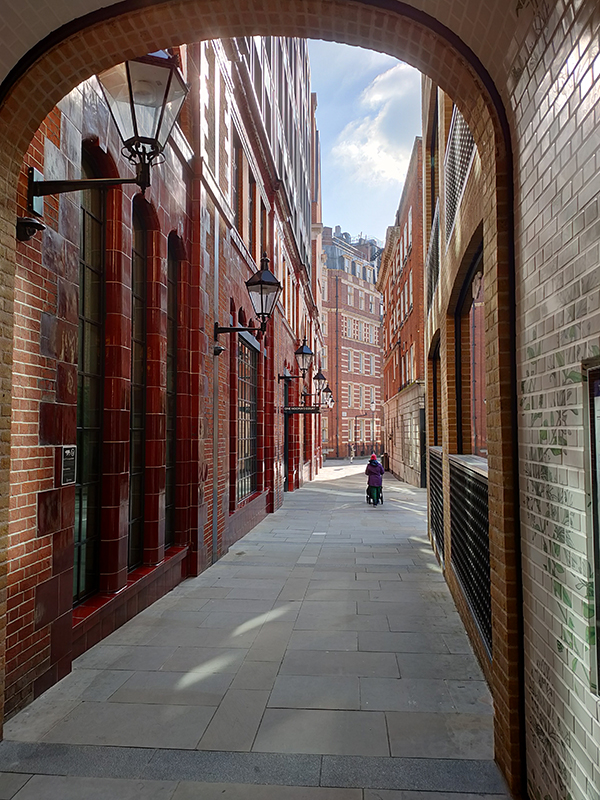
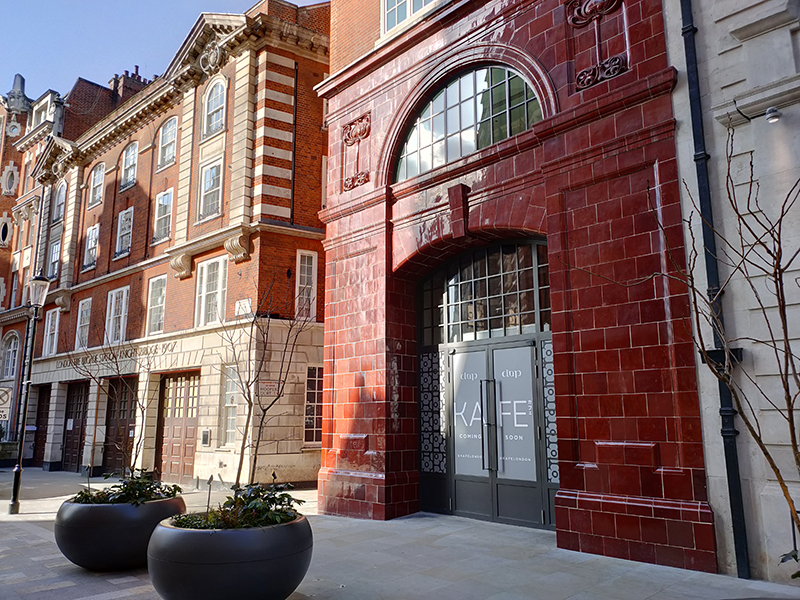
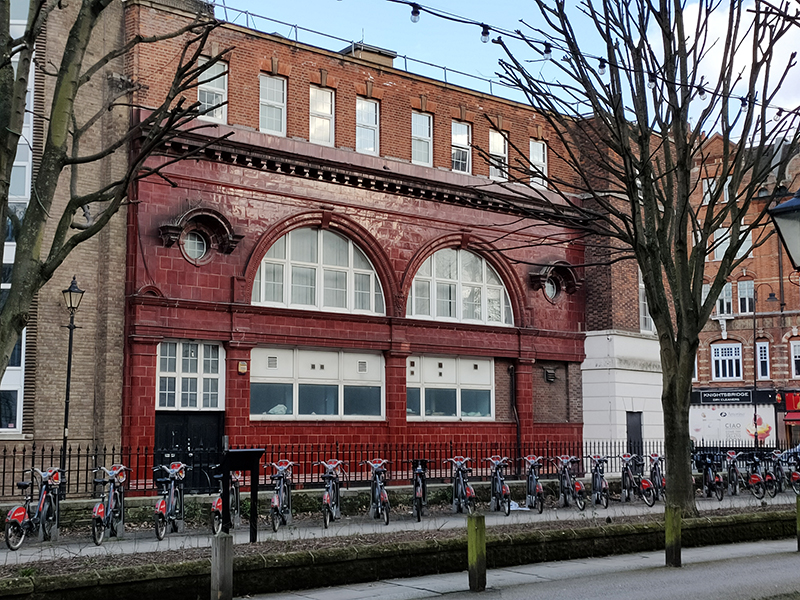
We begin at Knightsbridge Underground Station, which was originally built in 1906 in the classic Leslie Green style. In the 1930’s, coinciding with the introduction of escalators, a new ticket hall and entrance were incorporated into the building on the corner of Brompton Road and Sloane Street and an additional entrance, closer to Harrods, was created with a long subway linking the two. The photographs below show the original familiar ox-blood tiling on display in Hooper’s Court and Basil Street. In 2017 a new step-free access to the tube station from Hooper’s Court was given the go-ahead but as of the time of writing construction of this is still “on-going”.

As it happens, 2017 was when this blog last found itself in this vicinity (Day 46 to be precise) and, memory being what it is, the first part of today’s walk ends up being something of a reprise. From the Harrods exit we proceed up the Brompton Road, cut down Hooper’s Court into Basil Street and then work our way around Rysbrack Street, Stackhouse Street, Pavilion Road, Hans Crescent, Hans Road, Herbert Crescent, Hans Street and the eastern wing of Hans Place. Things kick off in earnest on the west side of Hans Place which is where you’ll find the Ecuadorean Embassy.

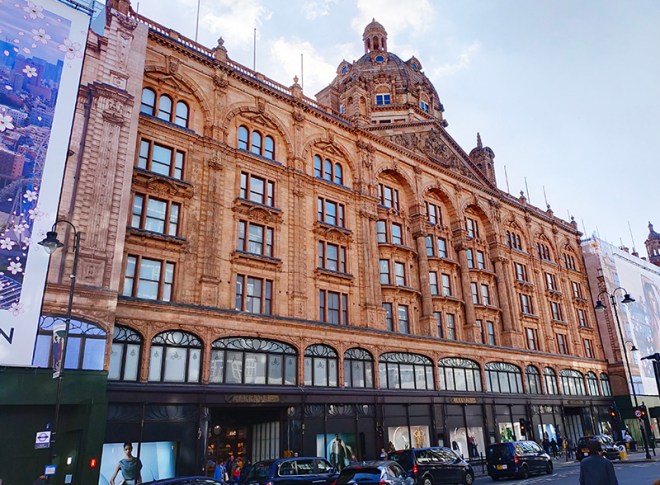
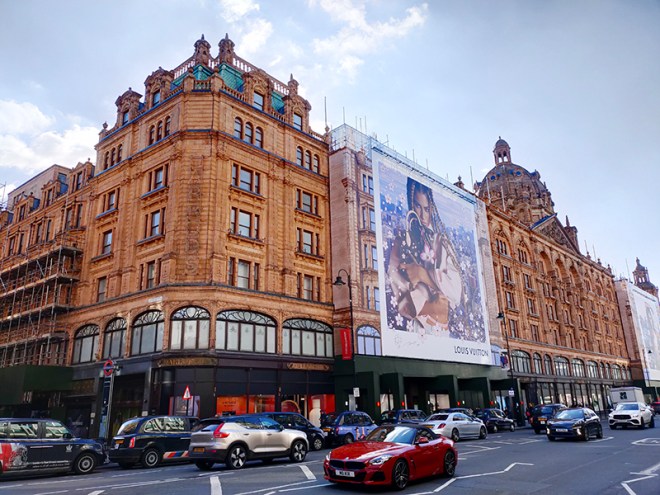
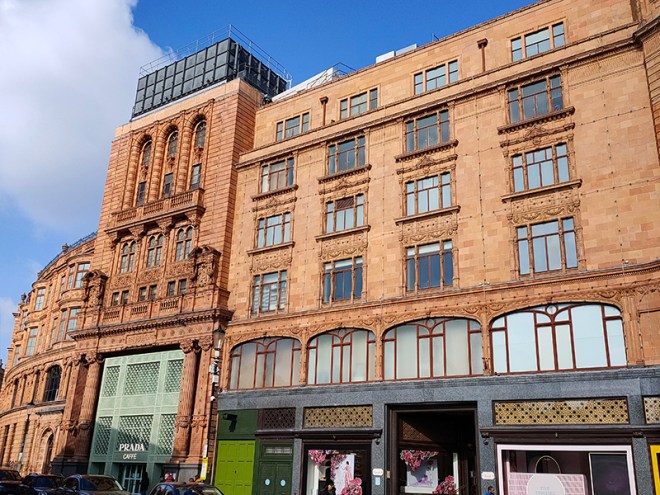
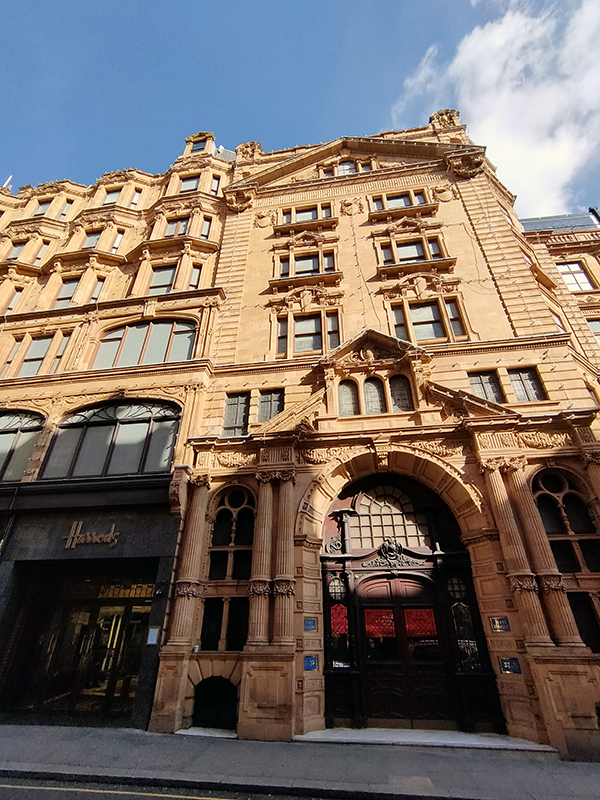
I didn’t fully comprehend the scale of Harrods until I walked all the way around its outside. Occupying a 20,000 square metre site with a total selling space, across 7 floors, of over 100,000 square metres this is the largest department store in Europe. The business was established by Charles Henry Harold (1799 – 1885), initially in Southwark, then relocating to the Brompton Road in 1849 and expanding rapidly from a single room to a collection of adjoining buildings. When those buildings burnt to the ground in 1883 the current building was swiftly erected on the same site. Designed by architect, Charles William Stephens, the new store had a palatial style, featuring a frontage clad in terracotta tiles adorned with cherubs, swirling Art Nouveau windows and was topped with a baroque-style dome.

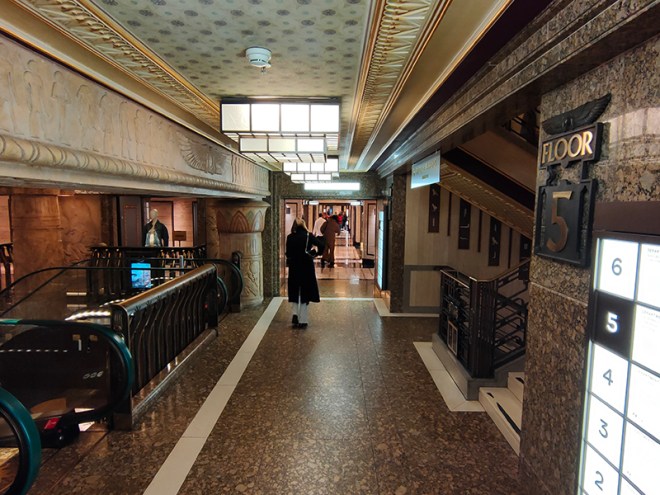
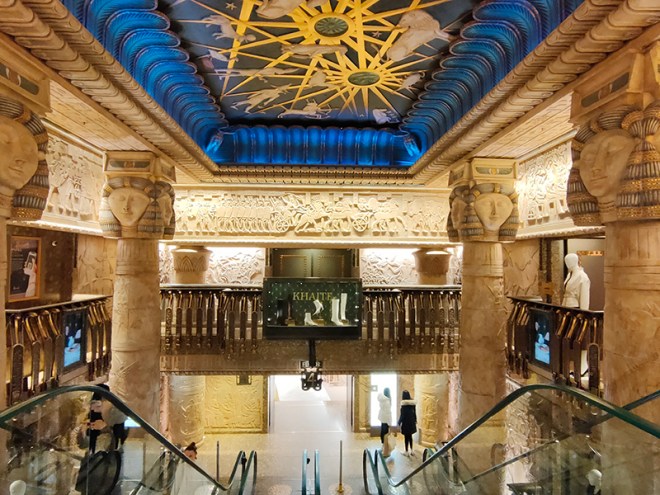
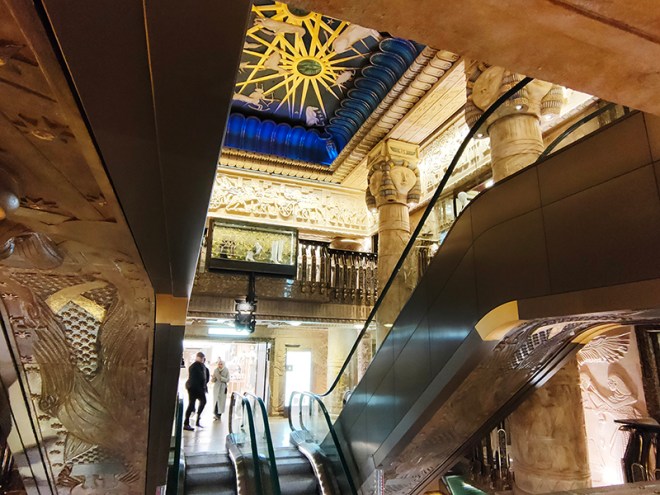
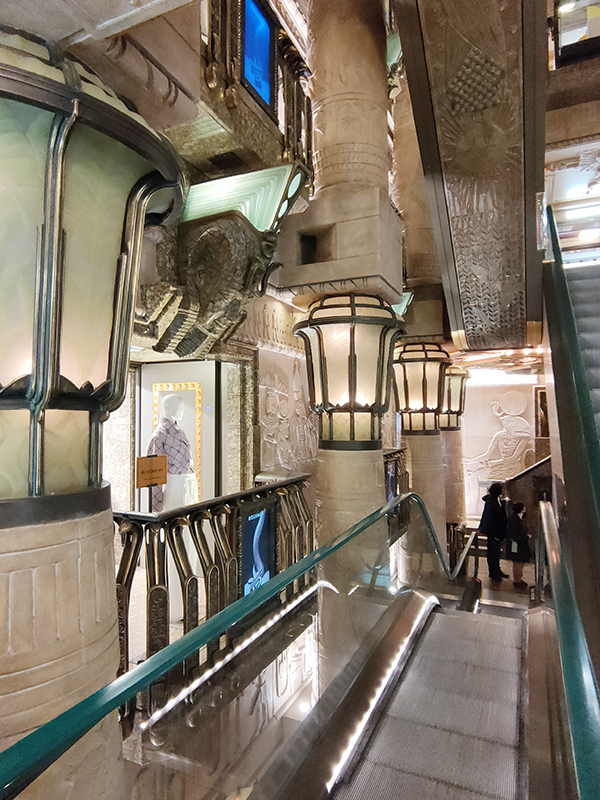
In 1899 the company went public and remained independent until 1959 when it was acquired by and merged into House of Fraser. In 1985 HoF fell into the private ownership of the Al-Fayed Brothers after a bitter struggle with Tiny Rowlands’ Lonrho Group. When HoF was relisted in 1994 Harrods was split off and became a private company once again. In 1989, Harrods introduced a dress code for customers and among the would-be patrons who fell foul of this were both Kylie Minogue and Jason Donovan, a Scout troop, a woman with a Mohican hair cut and the entire first team of FC Shakhtar Donetsk. This no longer appears to be enforced by the current owners, the Qatari Investment Authority, who bought out the now thoroughly disgraced Mohamed Al-Fayed in 2010. As already noted, I had qualms about stepping inside Harrods especially as its key interior feature, the Egyptian-themed central escalator was commissioned by Al-Fayed, whose face adorns the many pharaonic statues you pass. However, it is a tour-de-force of kitsch excess so, as long as you don’t actually buy anything, it’s worth experiencing as a one-off.

The store wasn’t exactly heaving and, aside from visitors from the Gulf petro-states, it’s hard to see who would be interested in buying stuff here that is available far cheaper elsewhere. There is, of course, merchandise which is unique to this particular emporium but surely even the tackiest of billionaires would baulk at throwing away £25,000 on this.

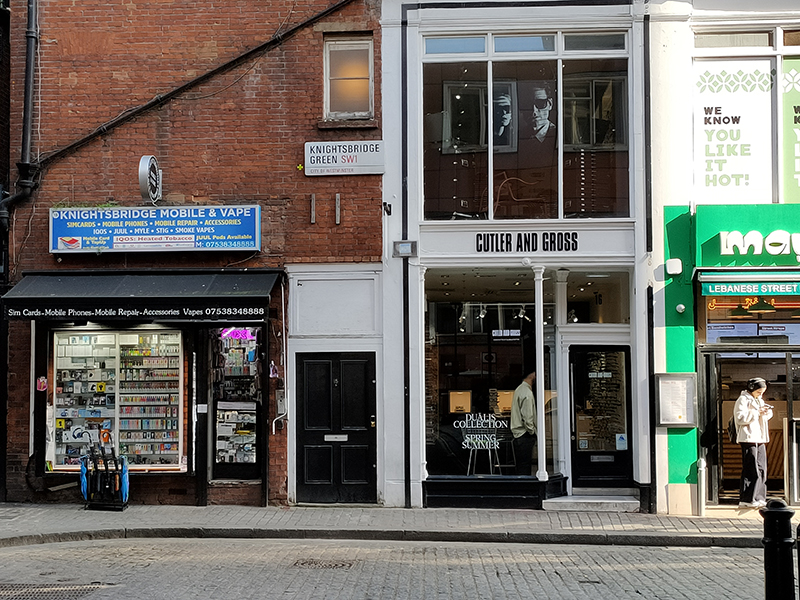
Having entered Harrods from the Hans Road entrance I exited via the main entrance on Brompton Road and headed back towards the tube station before cutting through Knightsbridge Green onto Knightsbridge (the road). There’s absolutely no trace of greenery on Knightsbridge Green but it does boast one of these (yes even here).

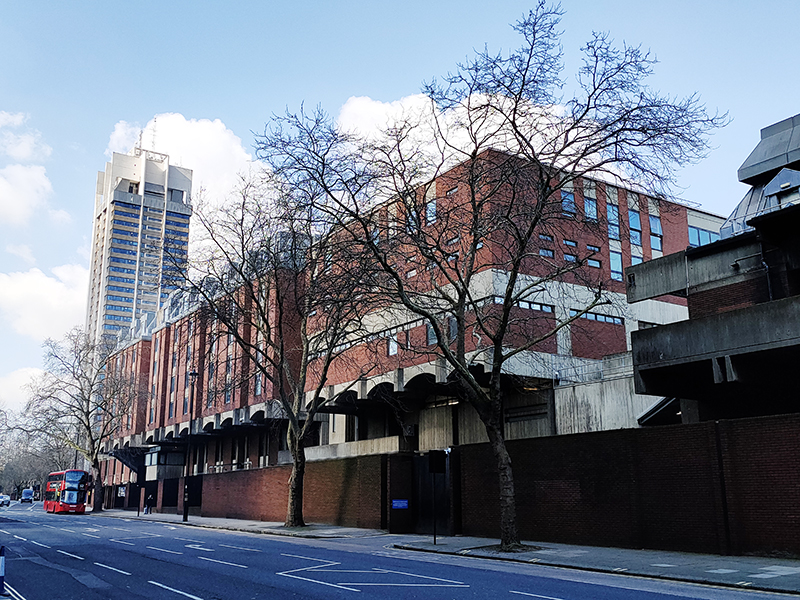
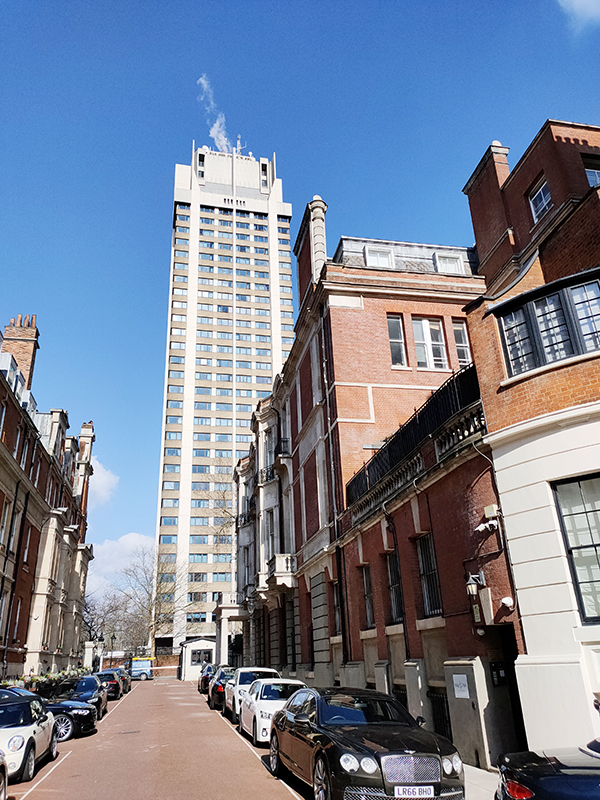
Once out onto Knightsbridge we’re confronted by the blot on the horizon that is the Hyde Park Barracks (aka Knightsbridge Barracks). This site, only 1.2km from Buckingham Palace, has been a home to the Horse Guards since 1795 but the current buildings, designed by Sir Basil Spence (1907 – 1976), were completed in 1970. They provide accommodation for 23 officers, 60 warrant officers and non-commissioned officers, 431 rank and file, and 273 horses. The most prominent feature is the 33-storey, 94-metre residential tower. The barracks have been described as “the ugliest building in London” by critic A.A Gill and were voted no.8 in a list of Britain’s top ten eyesores compiled from a poll of the readers of Country Life magazine. Loath as I am to align myself with either I find it hard to disagree.

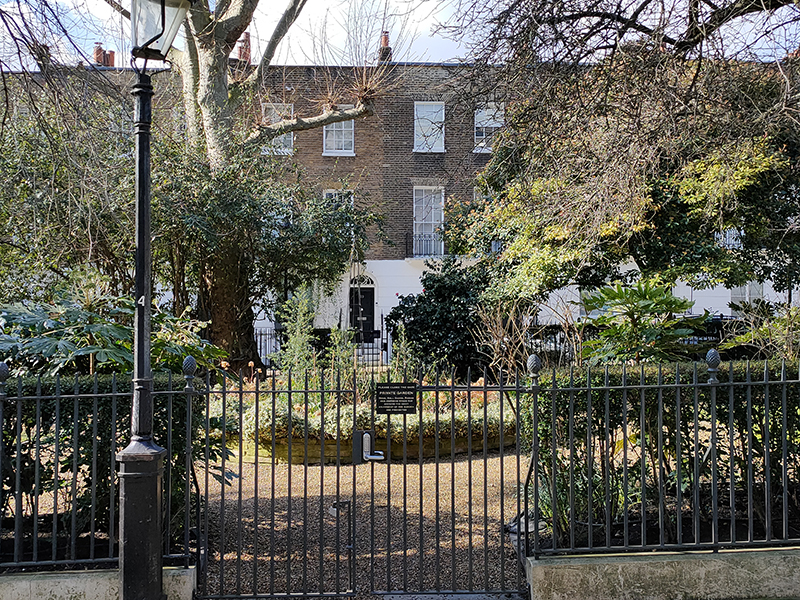
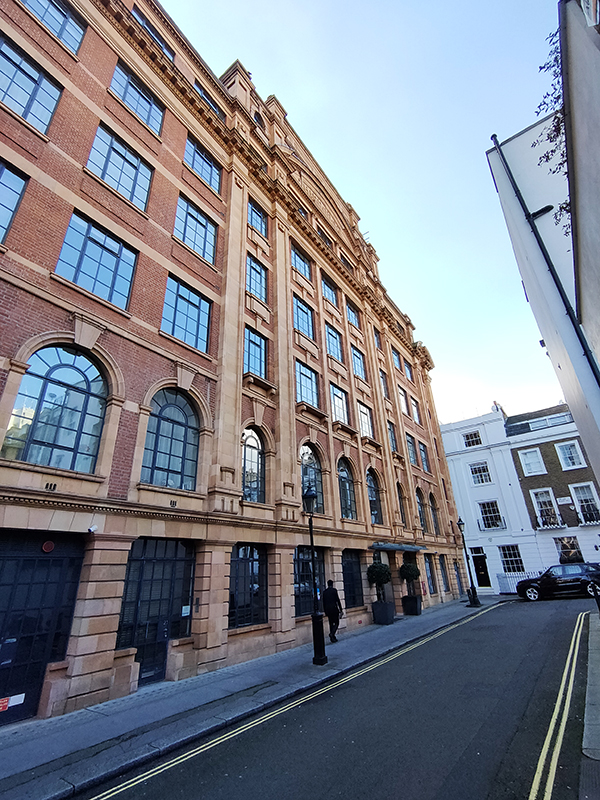
Heading south on Trevor Street we enter Trevor Square, the first of many, many residential squares built around private gardens that we’ll encounter today. This one dates from the 1820’s and is named after Arthur Hill-Trevor, 3rd Viscount Dungannon who agreed to demolish his Powis House in 1811 to make way for the new development. At the southern end stands the former Harrods Depositary building which was subject to a residential redevelopment in 2002.

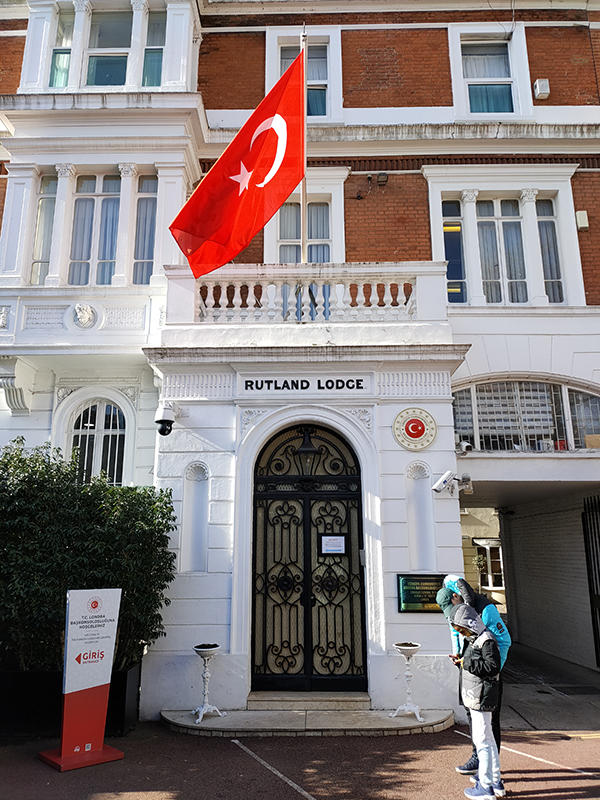
From Trevor Square we loop round Lancelot Place and Raphael Street back onto Brompton Road then follow Trevor Place up to Knightsbridge once more. Next stop, continuing west, is Rutland Gardens at the far end of which is the Turkish consulate. I assume none of the several Bentleys parked end to end down the street are related to this but I could be mistaken.

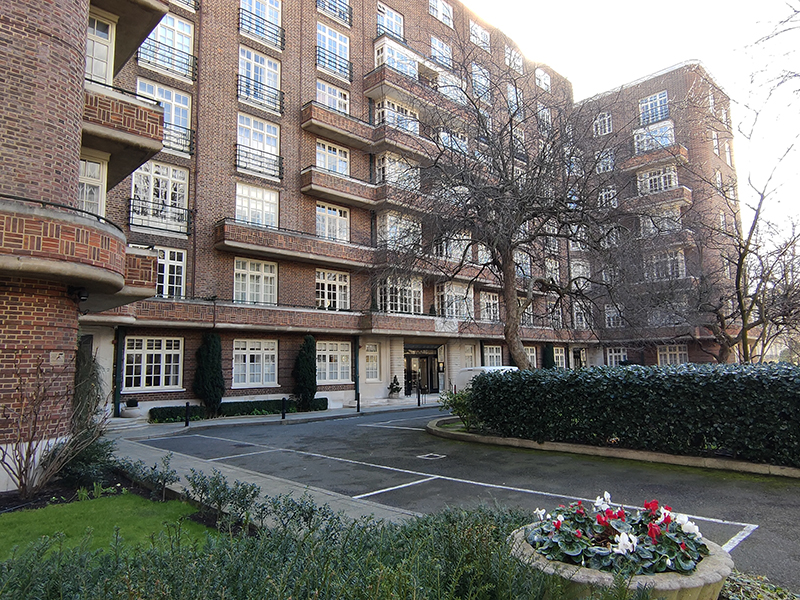
We return to Knightsbridge and as it merges into Kensington Road we turn south on Rutland Gate. Proceeding down the eastern section of this two-pronged thoroughfare we pass the Grade II Listed Eresby House from 1934.
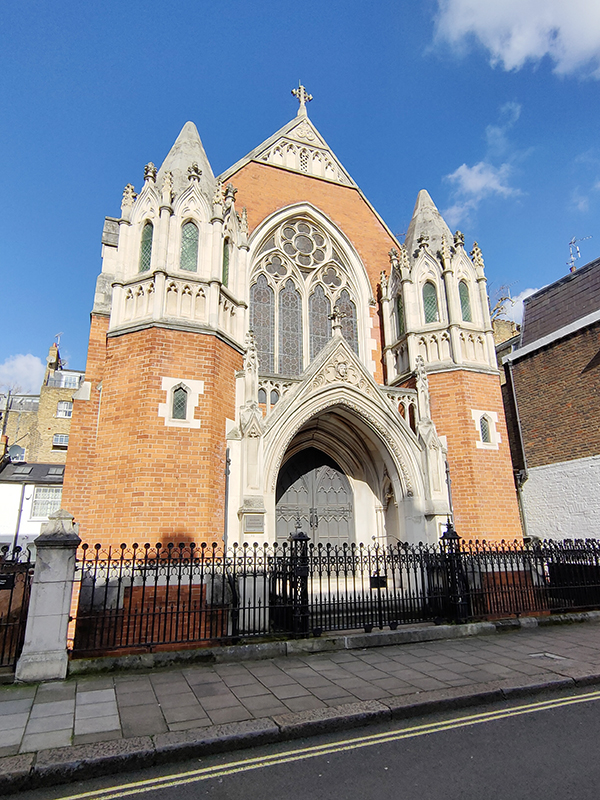
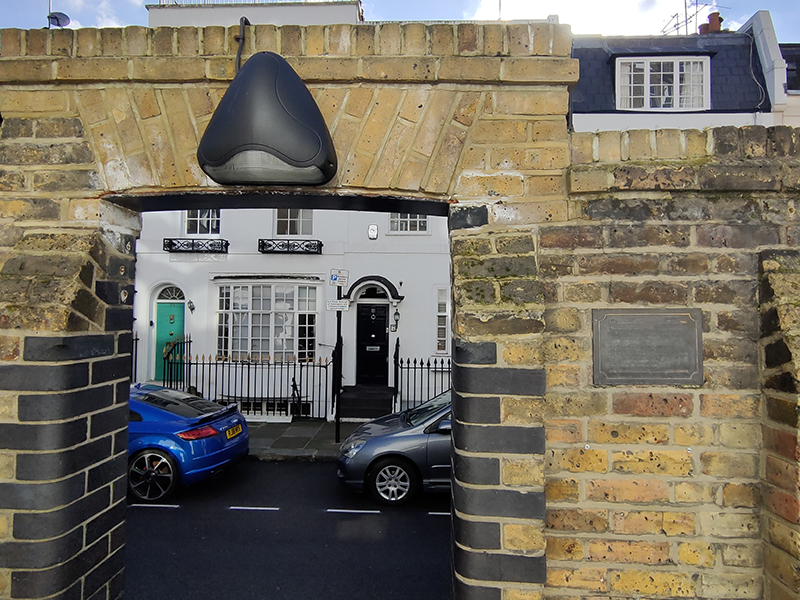
At the bottom of Rutland Gate we turn left into Rutland Mews East which we exit from onto Rutland Street via “The Hole In The Wall” which is explained thus in the metal plaque on the wall beside it. This boundary wall of the Rutland Estate was destroyed by a bomb, during World War II, on 25 September 1940. At the request of residents a right of way was established when the wall was rebuilt by the City of Westminster in 1948 and has come to be known as ‘the hole in the wall.
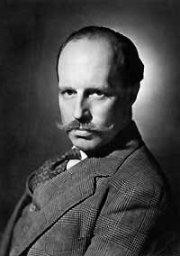
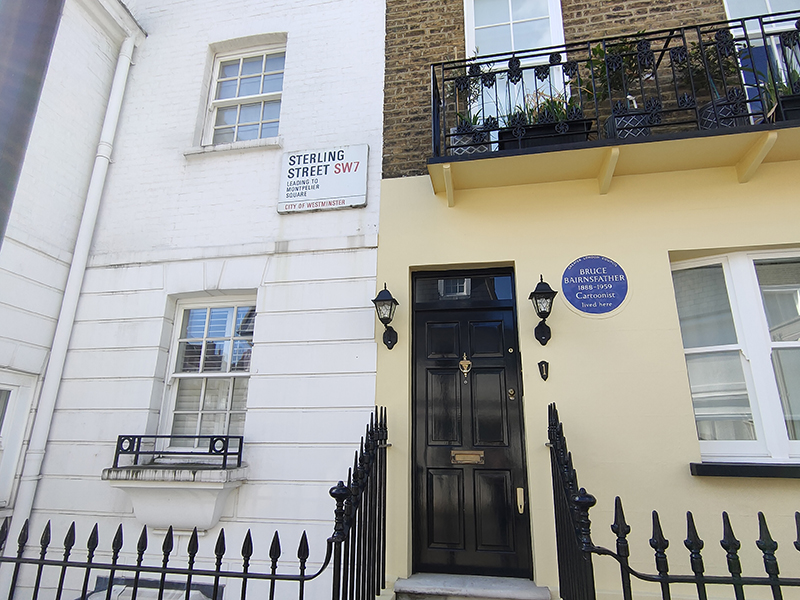
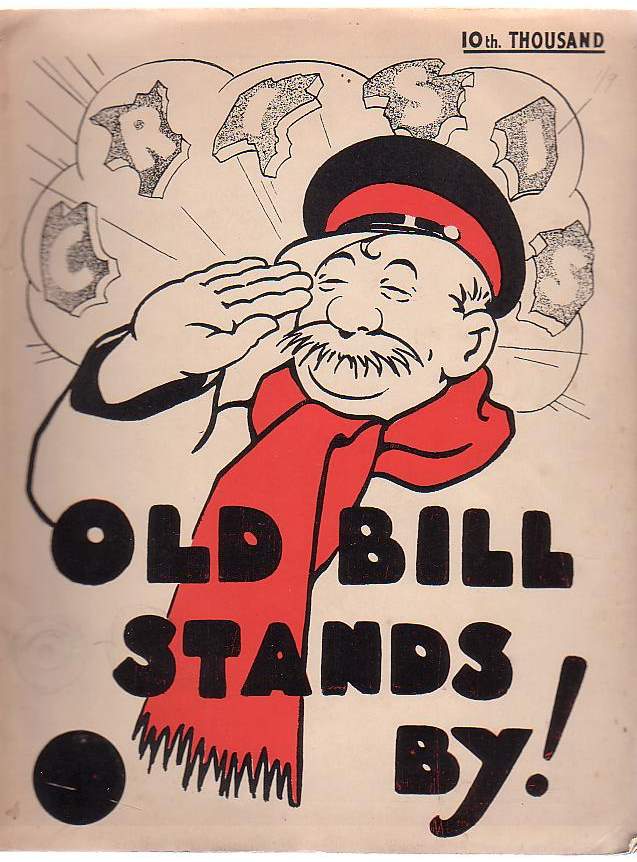
Heading up Montpelier Walk we swing right into Montpelier Square and circumnavigate this get to Sterling Street. No.1 Sterling Street has a blue plaque commemorating the humorist and cartoonist, Bruce Bairnsfather (1887 – 1959). Bairnsfather was commissioned into the Royal Warwickshire Regiment in 1914 as a second lieutenant and served with a machine gun unit in France until 1915, when he was hospitalised with shell shock sustained during the Second Battle of Ypres. While in recovery he developed his humorous series for the Bystander weekly tabloid about life in the trenches, featuring “Old Bill”, a curmudgeonly soldier with trademark walrus moustache and balaclava. The character became hugely popular during WW1, a success that continued through the inter-war years. And because many police officers at that time sported a similar type of facial hair it is probable that he was the inspiration for the police becoming known as “The Old Bill”.

Turning into Montpelier Place we pass the Deutsche Evangelische Christuskirche, established in 1904 to serve West London’s German Lutheran community. It was funded by Baron Sir John Henry Schroder (neé von Schröder) who had moved to England at the age of 16 to join the London office of the eponymous Merchant Banking firm created by his father. He was awarded his Baronetcy in 1892. The dedication of the church was attended by two of Queen Victoria’s grand-daughters and one of her sons-in-law.

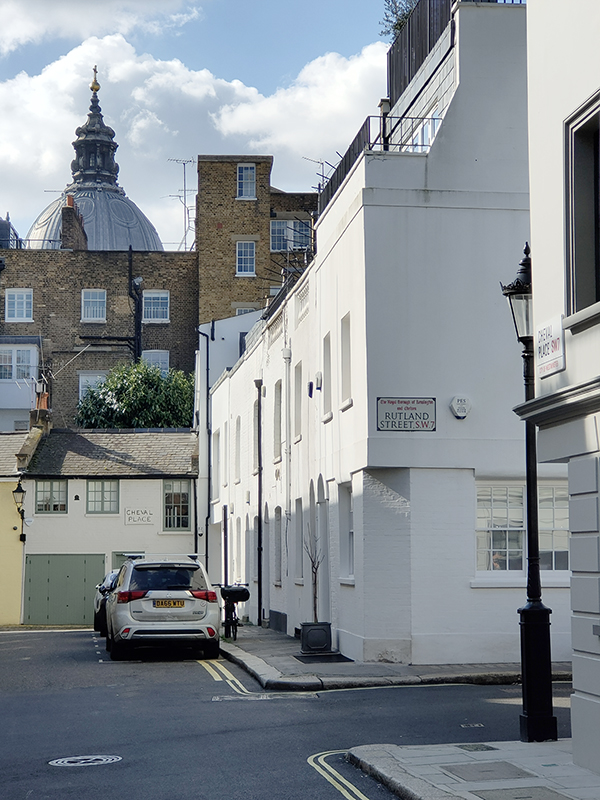
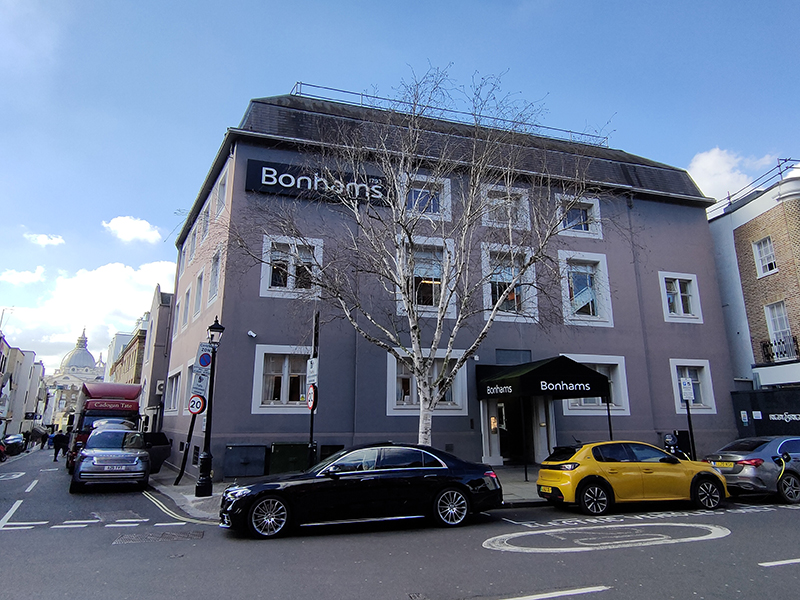
Following Montpelier Street back towards the Brompton Road we turn west onto Cheval Place just after Bonham’s Auctioneers. This is the international firm’s second auction house in London, after the flagship saleroom in Bond Street. The presence of a chauffeur-driven car parked on double yellow lines tends to be the rule rather than the exception in this part of town.

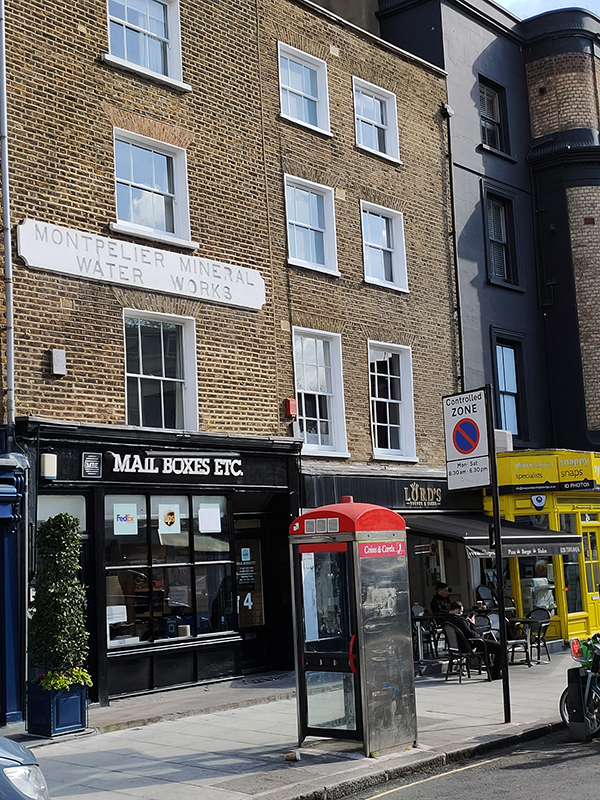
On the other side of Montpelier Street there’s a sign on one of the buildings that reads Montpelier Mineral Water Works. Unfortunately, I haven’t been able to discover anything about this save that Montpelier Mineral Water was a genuine product once upon a time.

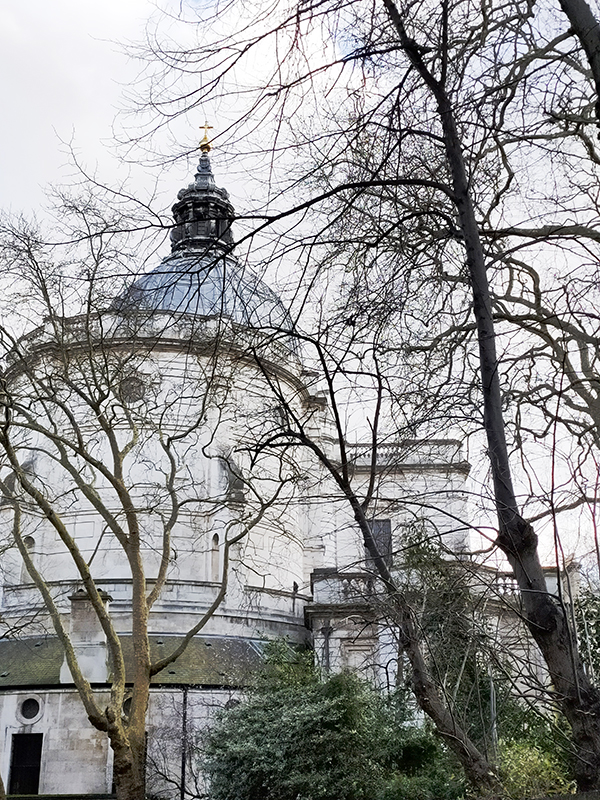
Anyway, back to Cheval Place which runs parallel to the Brompton Road and affords a view of the dome of Brompton Oratory, of which more later.

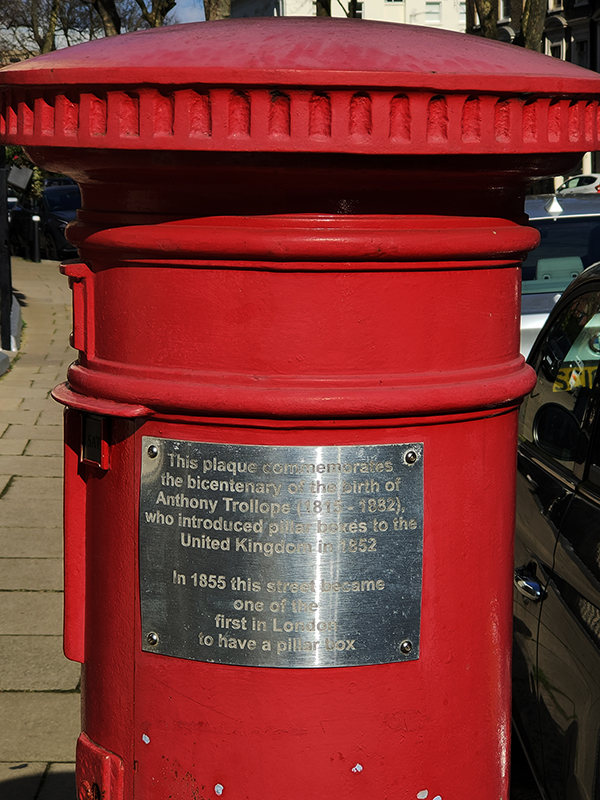
After a quick look at Fairholt Street we follow Rutland Street back round to the Hole In the Wall and on the other side make our way up the other leg of Rutland Gate. About half way up is one of several postboxes in London adorned with a plaque commemorating the bicentenary of the birth of novelist Anthony Trollope (1815 – 1882). In 1850’s, Trollope worked as a surveyor in the Post Office (going on to attain a senior position within the management hierarchy. At that time letters had to be taken to the local receiving house (early form of post office) or handed to a Bellman who walked the streets in uniform, ringing a bell to attract attention. Trollope was given the task of finding a solution to the problem of collecting mail on the Channel Islands where the usual practice was proving unsatisfactory. He recommended a device he may have seen in use in Paris: a “letter-receiving pillar” out of cast iron and around 1.5m high. The first four such pillar boxes were erected in David Place, New Street, Cheapside and St Clement’s Road in Saint Helier in 1852. In the beginning, there was no standard design for the boxes and numerous foundries created different sizes, shapes and colours. In 1859, a bronze green colour became standard on the basis that this would be unobtrusive. However, it soon became clear that it was too unobtrusive, since people kept walking into them and red became the standard colour in 1874.
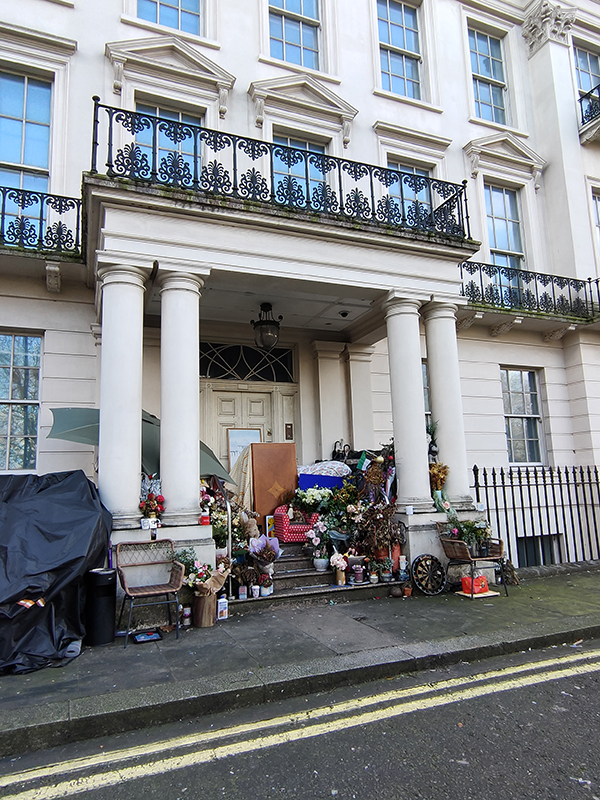
Arriving at the junction of Rutland Gate and Knightsbridge we encounter something of a mystery. 2–8a Rutland Gate is a large white stuccoed house originally built as a terrace of four houses in the mid 19th-century and converted into a single property in the 1980s. In 2012, the house was described as having seven storeys and 45 bedrooms, with a total size of 5,600 m2 and including a swimming pool, underground parking, several lifts, bulletproof windows and substantial interior decoration of gold leaf. In April 2020, it was bought by a Chinese businessman for a reputed £210 million, making it quite probably the most expensive house ever sold in the UK. But then in 2022 it was reported that it had been put on the market again. Either way it doesn’t look like anyone is in residence at the present time although someone has made themselves at home out front.
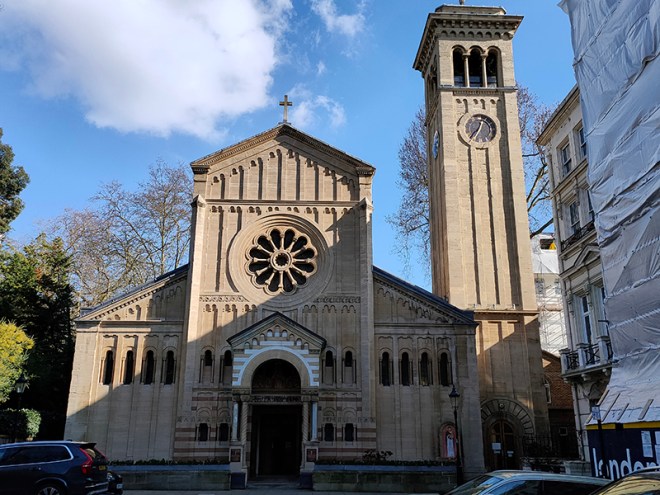
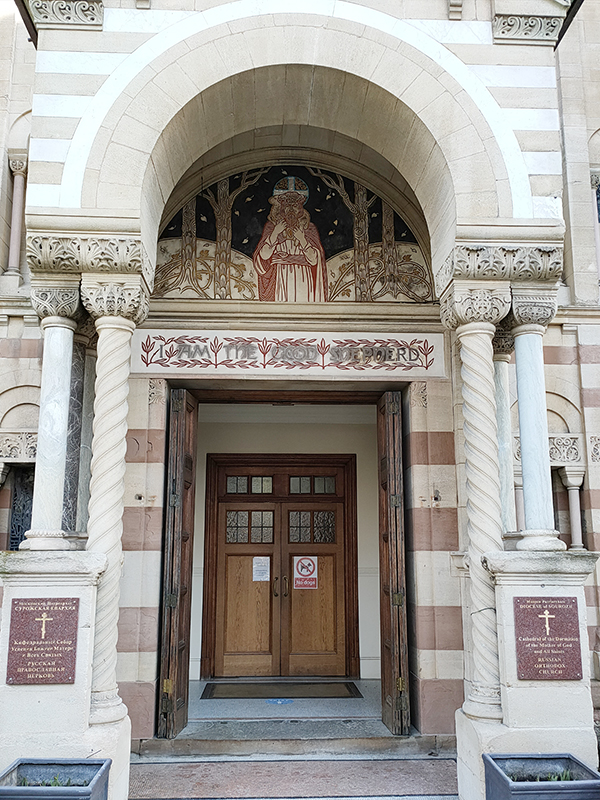
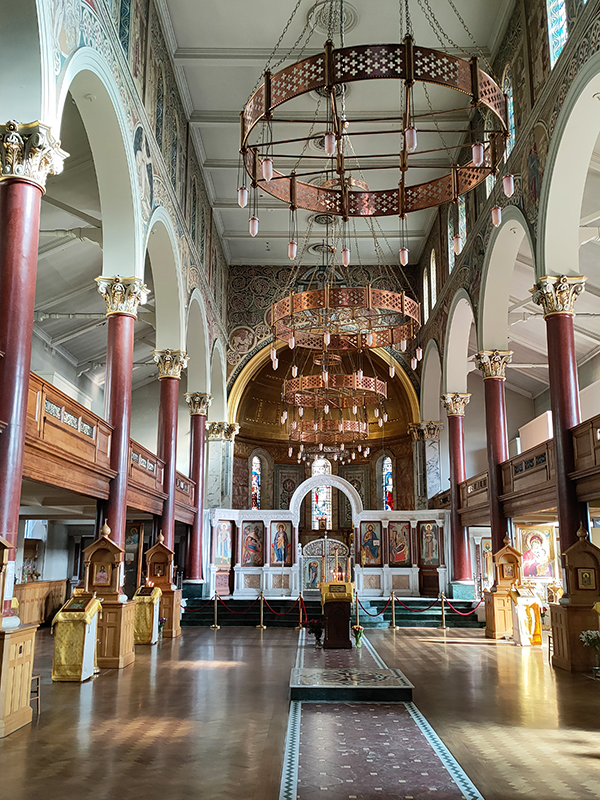
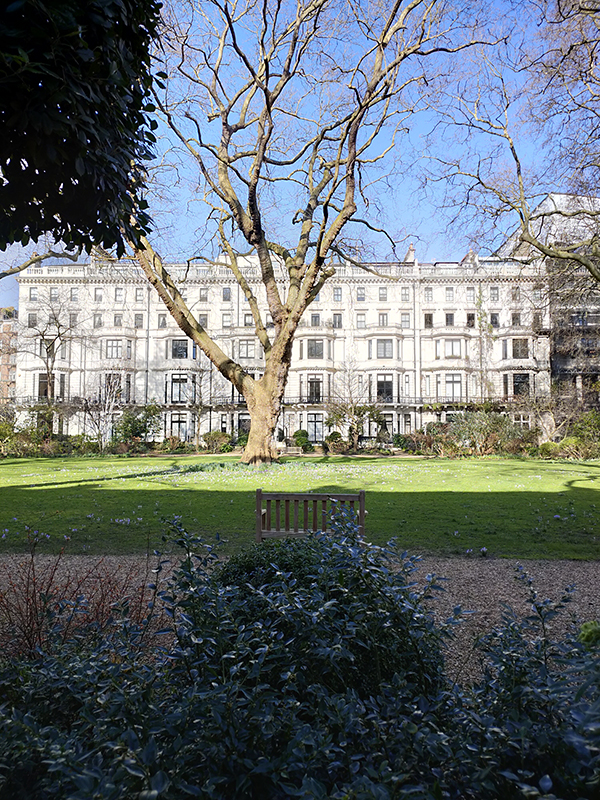
We continue west along Princes Gate and turn south into Ennismore Gardens on the east side of which we find the Russian Orthodox Cathedral of the Dormition of the Mother of God and All Saints home to the Russian Orthodox Diocese of Sourozh. This former Anglican church dates back to 1849 when architect Lewis Vulliamy proposed a design in the Lombard style instead of the conventional Gothic of the time. His vision wasn’t fully realized for lack of finance but in 1891 the church was remodelled such that the main façade is a very close copy of that of the Basilica of San Zeno in Verona. In the mid-1950’s the building was let to the Russian Orthodox Church and in 1978 the Sourozh Diocese bought it outright. It has a Grade II* listing. The interior is very lavish with plenty of gold (leaf) on show and filled with icons (which they ask you not to photograph up close). There are also a large number of framed texts, which my A Level Russian from nearly half a century ago allows me to read but not understand.

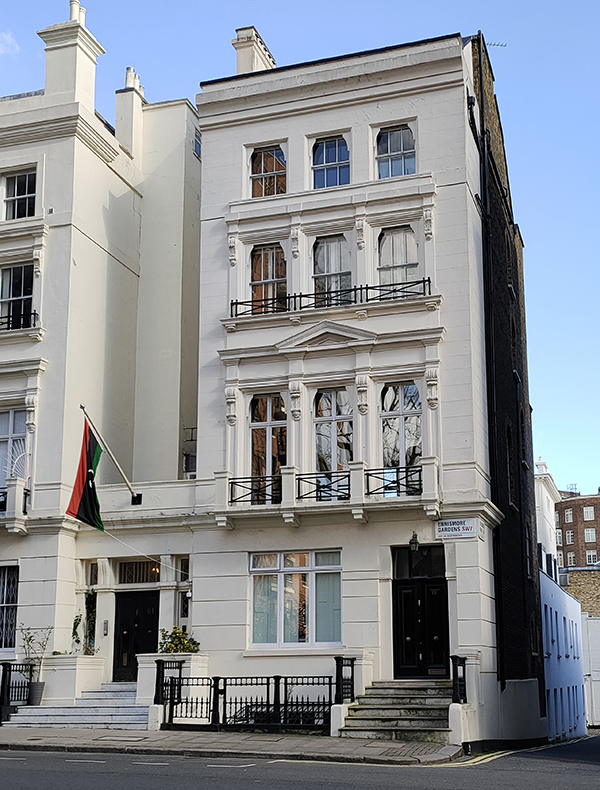
At nos. 61-62 Ennismore Gardens is the consular section of the Libyan Embassy (though there’s nothing on the building to identify it as such other than the flag). The website of the Royal Borough of Kensington & Chelsea has it listed under the splendid alternative name, The People’s Bureau of the Great Socialist People’s Libyan Arab Jamahiriya, though the page hasn’t been updated since 2016.

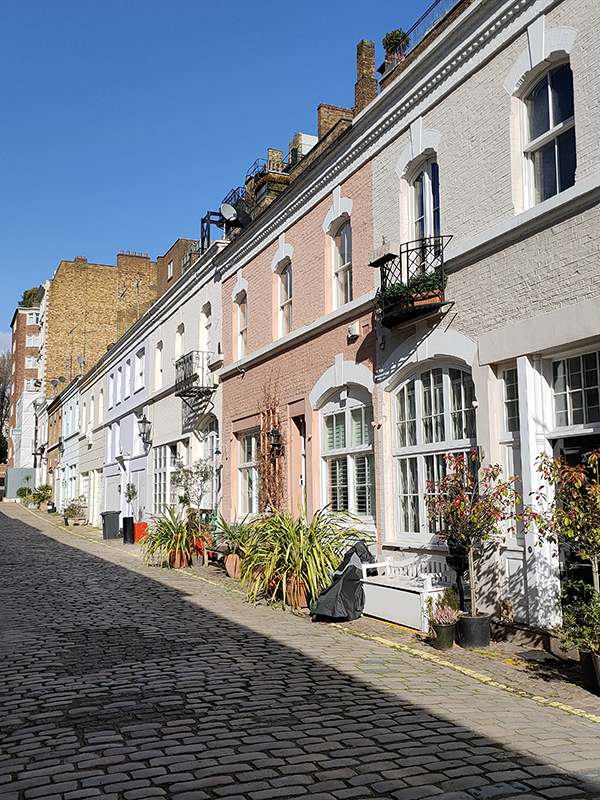
We complete a full circuit of the actual garden square bit of Ennismore Gardens and then swing round the very picturesque Ennismore Mews into Ennismore Street.

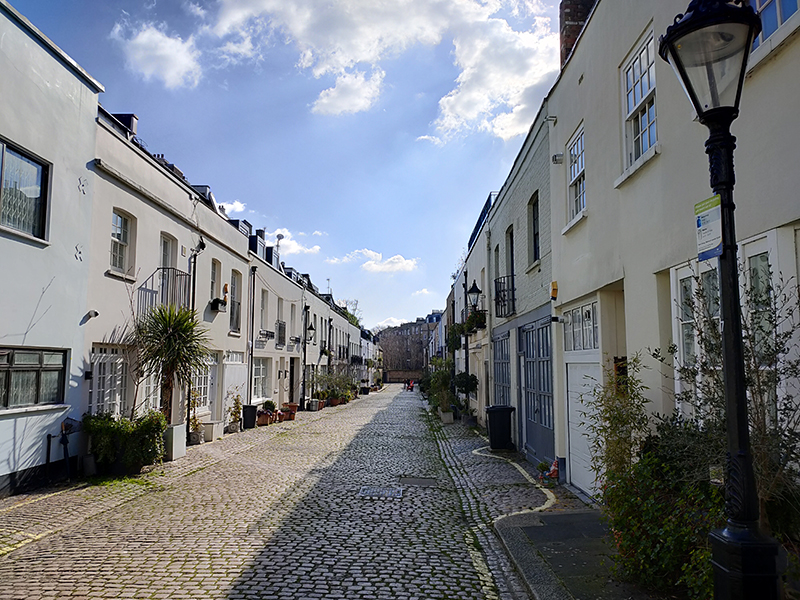
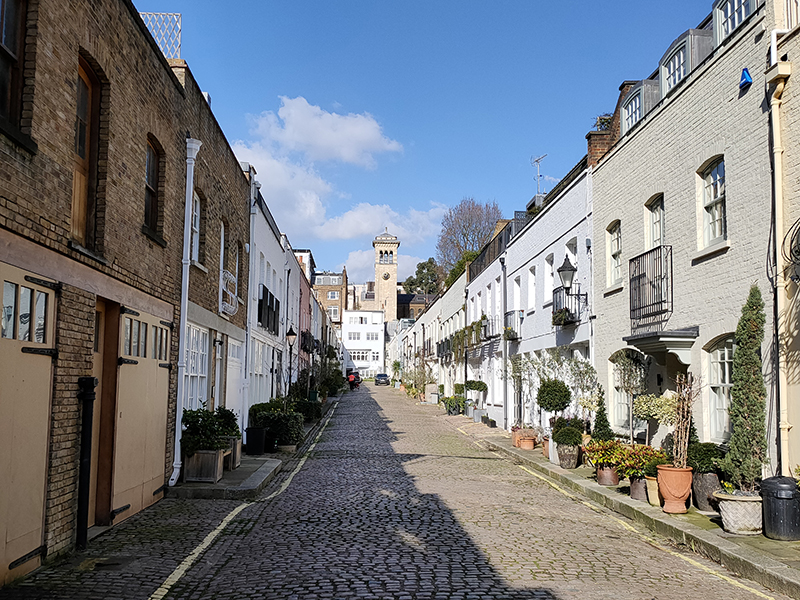
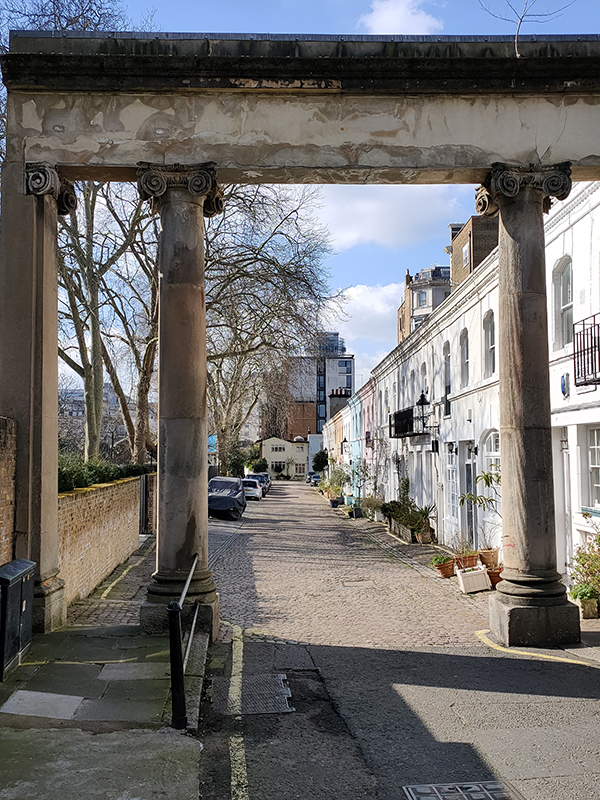
Heading west, Ennismore Street becomes Ennismore Garden Mews (which is also very picturesque). At the entrance to the mews, which were built between 1868 and 1874 by Peter and Alexander Thorn on land belonging to the 3rd Earl of Listowel, stands a Grade II listed arch, featuring paired Ionic columns supporting an entablature (I had to look that up too).

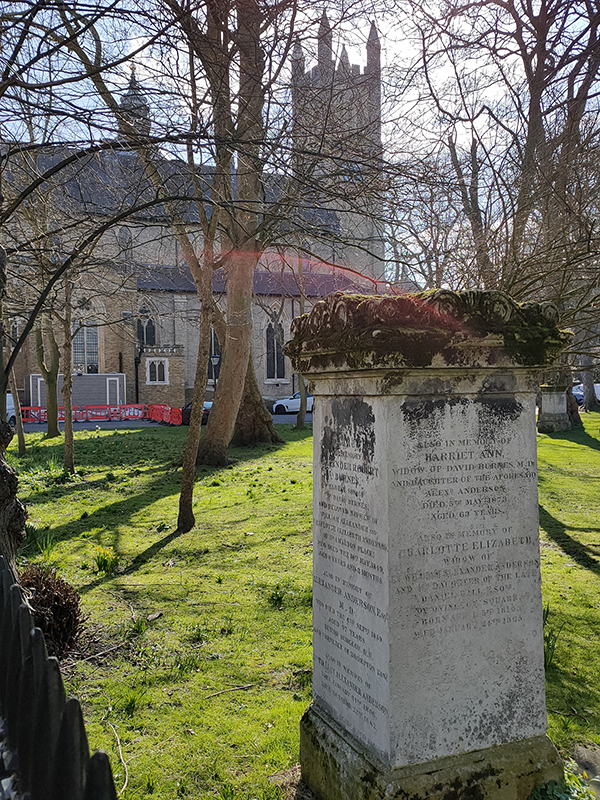
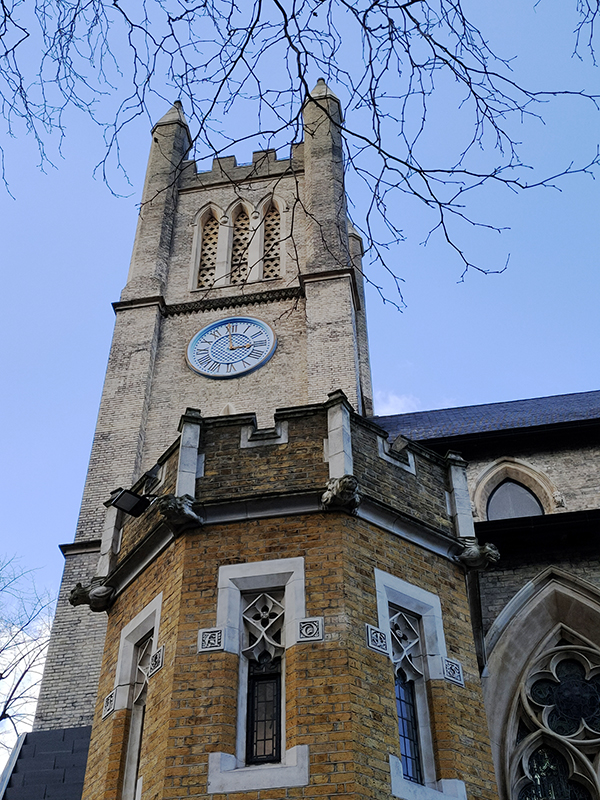
To the south of the mews lies Holy Trinity Brompton, a Grade II listed Anglican church that was consecrated by the Bishop of London in 1829.

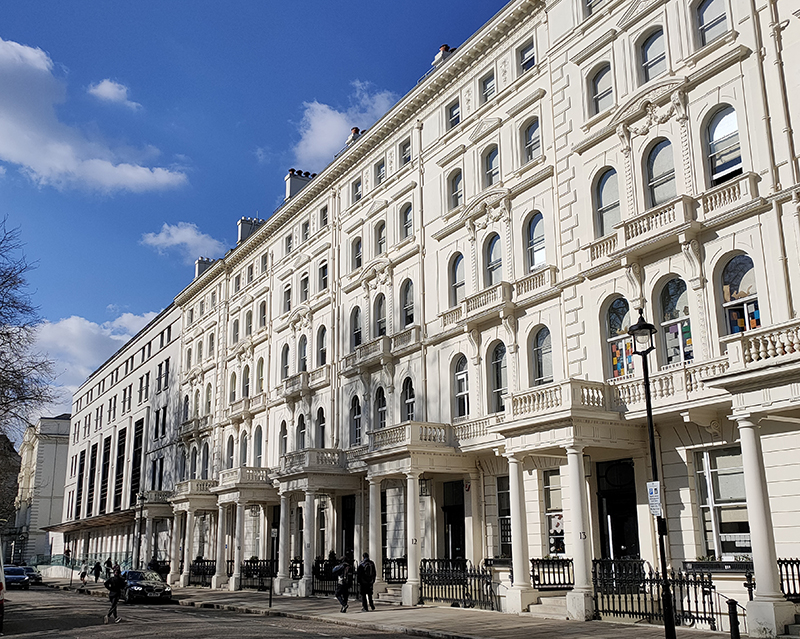
Beyond the churchyard, Ennismore Garden Mews takes a northward turn up to Prince’s Gardens. Princes Gardens Square was developed between the 1850’s and the 1870’s by by Sir Charles James Freake, one of the most successful speculative builders in Victorian London. Apart from those on the north side of the square and those fronting onto Exhibition Road all of Freake’s original white stuccoed townhouses were demolished in the 1950’s to make way for the expansion of the Imperial College campus. One of those remaining on Exhibition Road has since 1962 played host to the London branch of the Goethe-Institut (the German equivalent of the British Council).

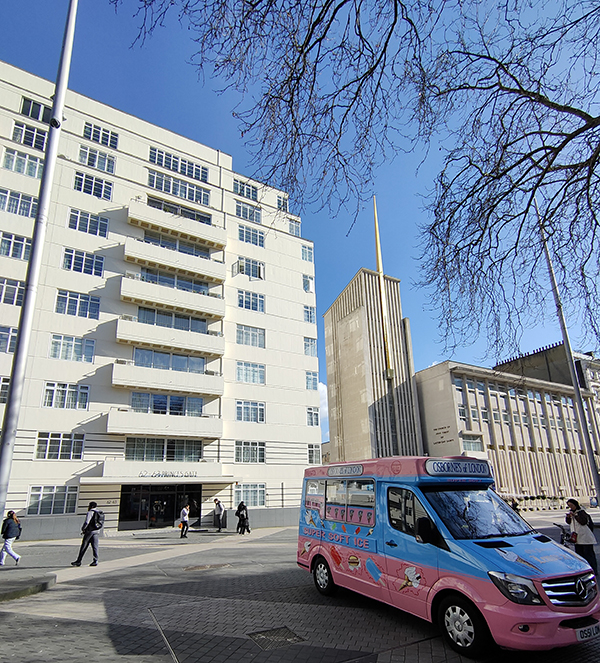
We head south down Exhibition Road, concentrating solely on its east side first encountering the fabulous Art Deco apartment block, 59-63 Prince’s Gate, which was designed by Adie, Button & Partners and completed in 1935.

Immediately adjacent is the modernist Hyde Park Chapel of The Church of Jesus Christ of Latter-day Saints (in other words Mormon HQ London). This site, bombed during World War II, was originally identified as a suitable location for a Chapel in London by the then Mormon President in 1954 and was completed and dedicated in 1961.

First ice-cream van sighting of the year and March still a day away.

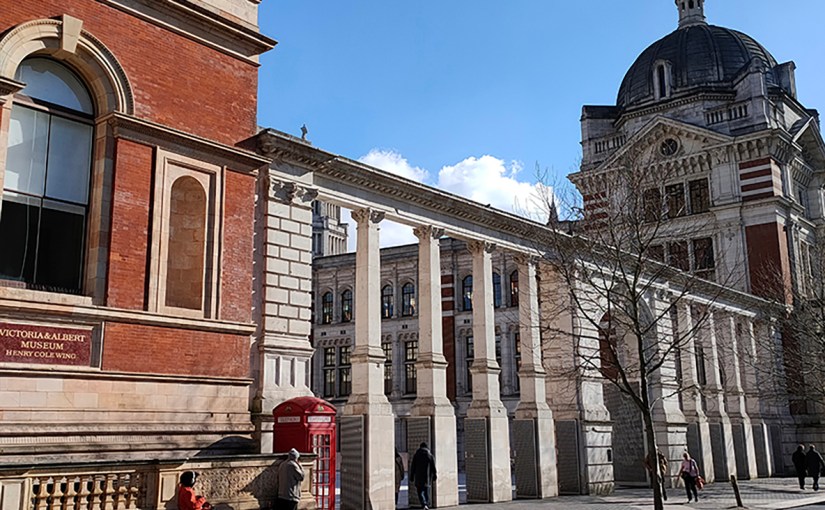
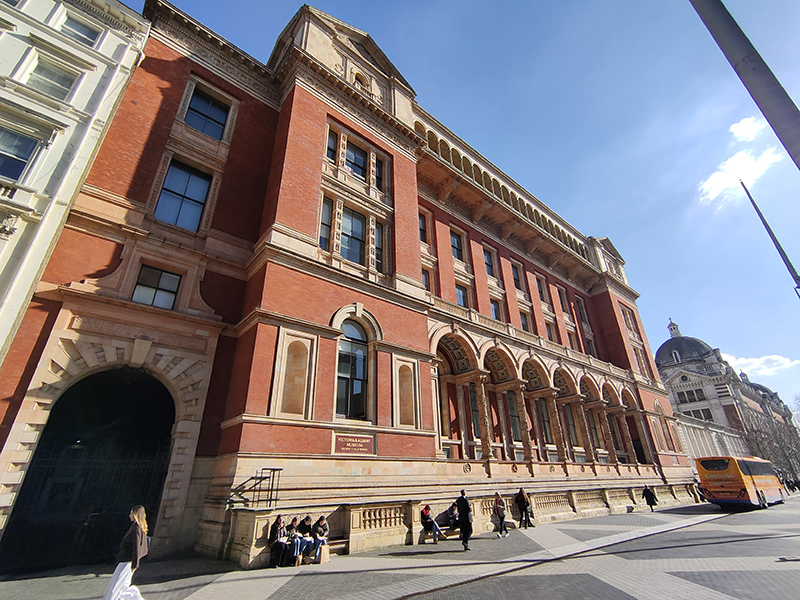
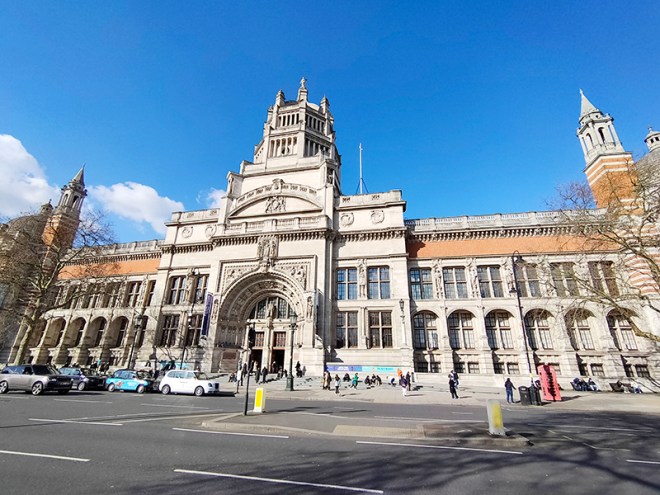
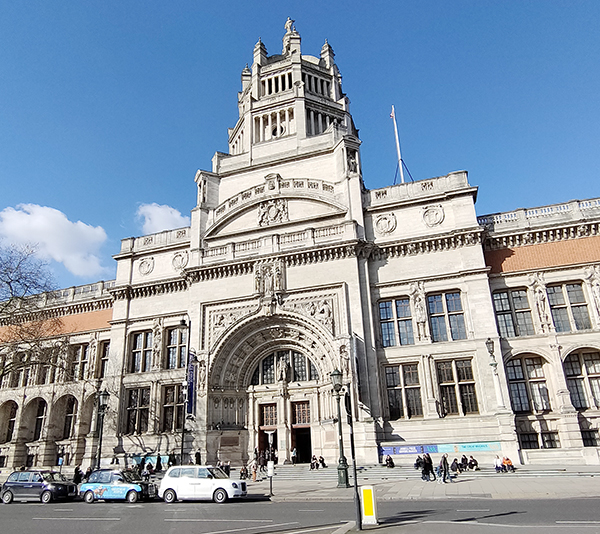
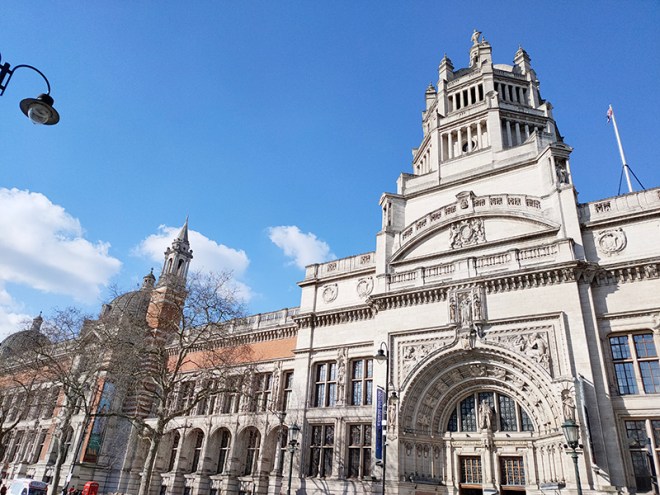
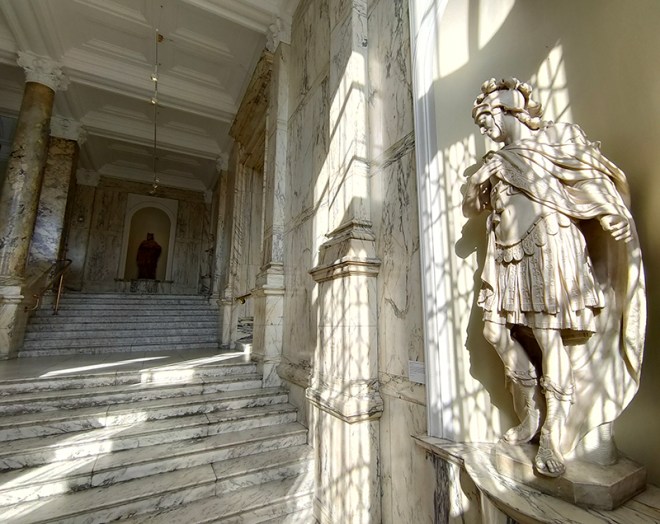
Two blocks further south and we reach the Victoria & Albert Museum which we enter via the Henry Cole Wing on Exhibition Road, designed by one of the museum’s in-house architects, Henry Scott. Constructed of brick and adorned with terracotta sculpture in an imitation Italian Renaissance style, it was completed in 1873.

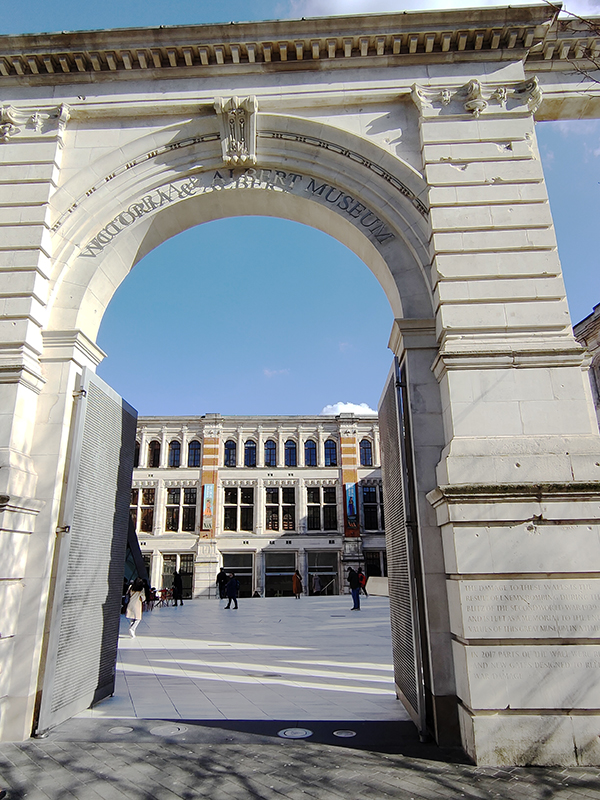
The origins of the V&A lie in the Great Exhibition of 1851 after which, its creator and champion, Prince Albert, urged that the profits of the Exhibition be used to develop a cultural district of museums and colleges in South Kensington devoted to art and science education. The V&A, originally known as the Museum of Manufactures, was the first of these institutions. It was founded in 1852 and moved to its current home, comprised of two buildings (one a temporary iron structure) five years later, at which time it was renamed as The South Kensington Museum. The first Director of the museum was Henry Cole (1808 – 1882) who had been one of the driving forces behind the Great Exhibition. Over the next 40 years the museum grew in piecemeal fashion including the construction of the North Court and South Court. Then in the late 1880’s a competition was held to select a new professional architect to complete the Museum. The design of the winner, Aston Webb (1849 -1930), called for long galleries punctuated by a three-storey octagon surmounted by a small cupola, and on the west, a large square court (eventually octagonal) balanced by the Architectural Courts on the east. In May 1899, in what was to be her last public ceremony, Queen Victoria laid the foundation stone for Aston Webb’s new scheme. The occasion also marked the changing of the Museum’s name to the Victoria and Albert Museum. As the building neared completion, a Committee of Re-arrangement looked at the question of how all the empty new galleries and courts should be filled. It decreed that the whole collection should be displayed by material (all the wood, together, all the textiles, all the ceramics etc.) in a huge three-dimensional encyclopaedia of materials and techniques. One of the last things to be completed was the inscription round the main door arch, which was adapted from Sir Joshua Reynolds: “The excellence of every art must consist in the complete accomplishment of its purpose”. The Museum was finally finished on 26 June 1909, more than 50 years after work had started on the original structures.

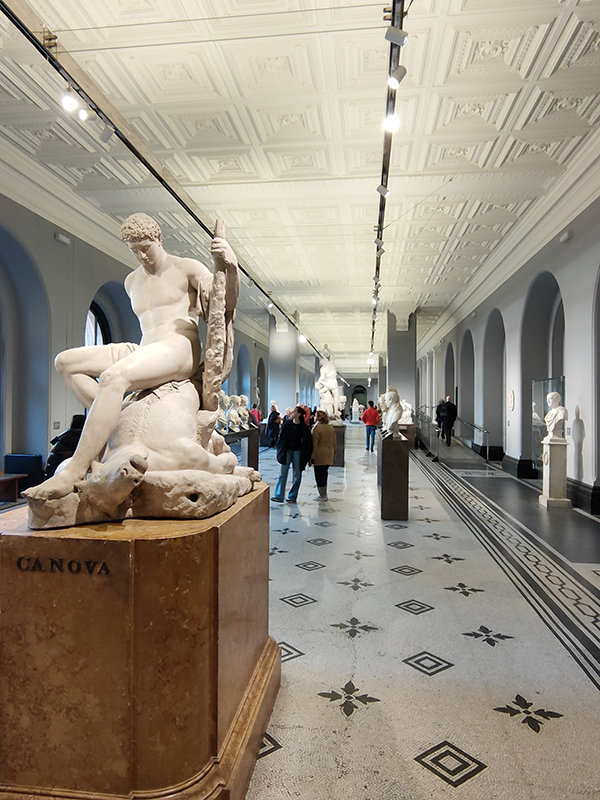
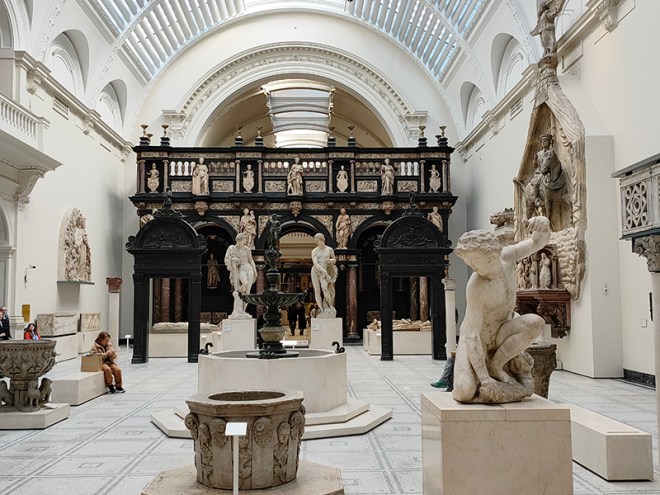
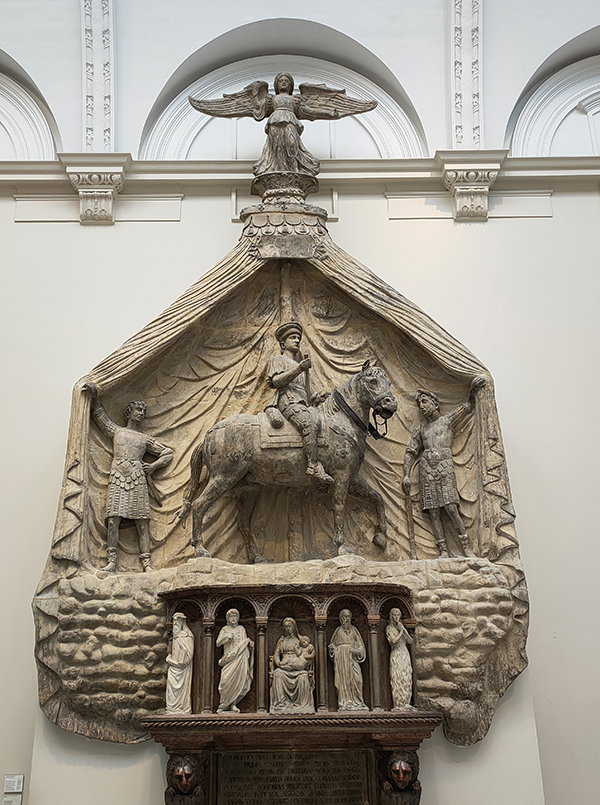
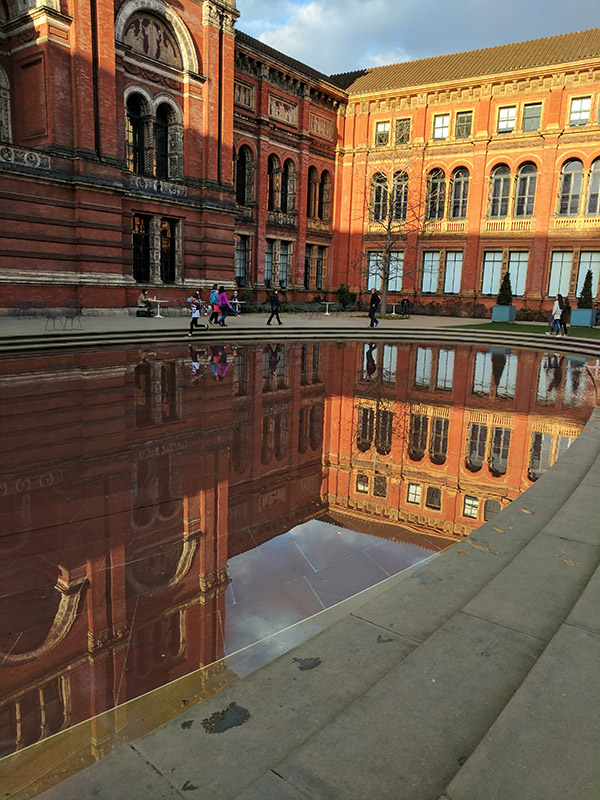
I’ve visited the V&A on numerous occasions over the years and yet I’m still staggered by the scale of some of the exhibits on display. One of these monumental objects is the Rood-loft (or Choir Screen) from St John’s Cathedral in ‘s-Hertogenbosch, Germany created in the 1610’s. Carved from two types of alabaster and two types of stone it stands 7.8m tall and over 10m wide. The rood-loft was acquired by the V&A from the art dealer Murray Marks who had purchased it from the cathedral authorities. It was probably removed from the cathedral in 1866 because it obstructed the congregation’s view of the high altar and because its style clashed with that of the Gothic church. In 1871 it was purchased outright, transported to England in sections and was rebuilt on the south wall of the Cast Court. During 1923-4 it was dismantled again and reconstructed in Gallery 50. I’ve looked very closely every time and still can’t see the joins.  One of the highlights of the museum is the John Madejski Garden, which was sadly closed for renovations at the moment so the photo in the slideshow below is from a previous visit. Originally this was a courtyard; the pool, lawns and planting which can be seen today were created by the landscape architect Kim Wilkie in 2005.

Henry Cole lived and worked at 33 Thurloe Square, directly opposite the museum. In addition to his achievements relating to the Museum and the Great Exhibition, Cole is credited with devising the concept of sending greetings cards at Christmas, introducing the world’s first commercial Christmas card in 1843.

We continue east along the south side of Thurloe Place before turning right onto the stretch of the Brompton Road that heads off towards Chelsea. This takes us past Empire House, built between 1911 and 1918 in a florid free baroque style with sculpted decoration on Portland stone, as the new UK HQ and showroom of the Continental Tyre and Rubber Company Ltd. Continental only occupied the building until around 1925 at which point it was sold and converted into shops and flats by the architect Henry Branch.

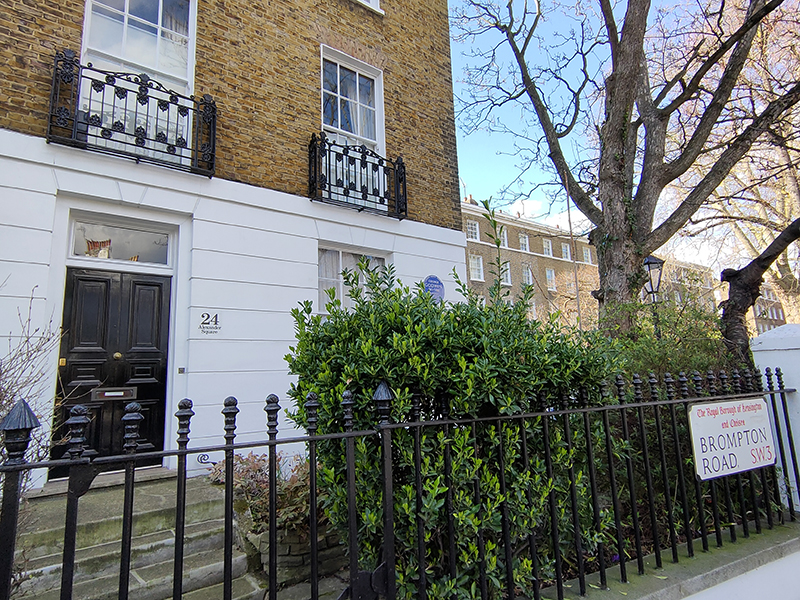
At no.24 Alexander Square, fronting the Brompton Road, a blue plaque commemorates the architect George Godwin (1813 -1888). His works included churches, housing and public buildings, and large areas of South Kensington and Earl’s Court, including five public houses. His memorial in Brompton Cemetery is Grade II listed, unlike any of the buildings he created.

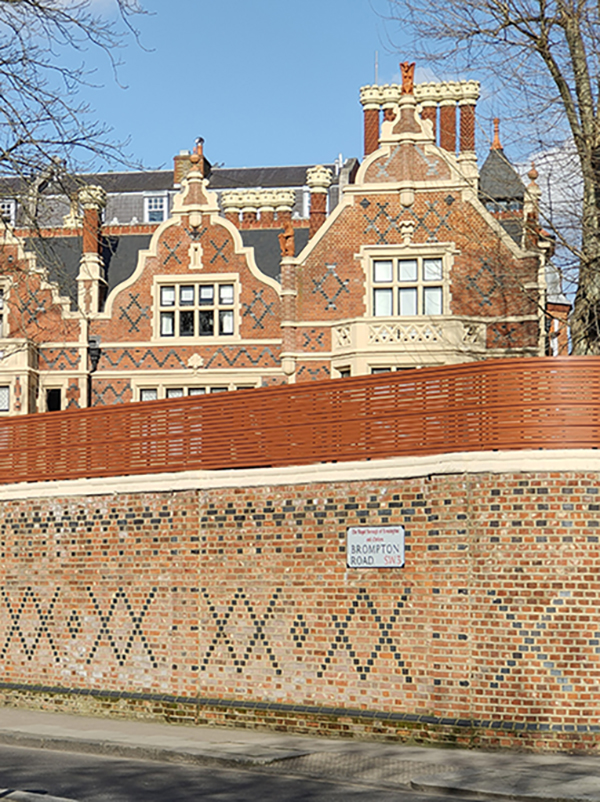
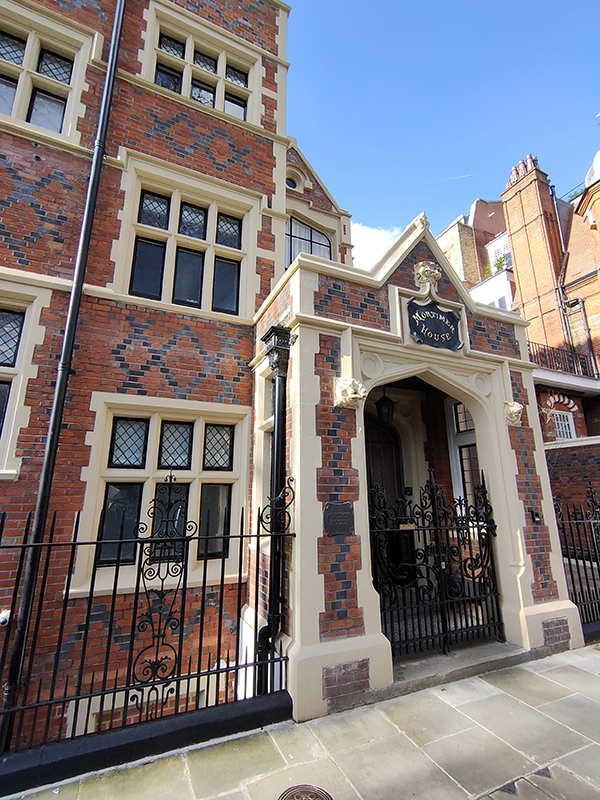
Opposite here, on the corner of Brompton Road and Egerton Gardens, stands Mortimer House built by the one-time Governor of the Bank of England, Edward Howley Palmer, in the mid-1880s. The house is built in the late 19th-century Tudorbethan style in red and blue interspersed brickwork, with various decorations including gables and statues of griffins and bears with shields. Tall groups of brick chimney stacks surmount the property. The stables of the house have a conical roof and are now garages. A swimming pool in a conservatory was added in the late 20th century. Mortimer House was home to the chairman of British American Tobacco, Sir Frederick Macnaghten, in the 1950s and 1960s and continues to be privately owned.

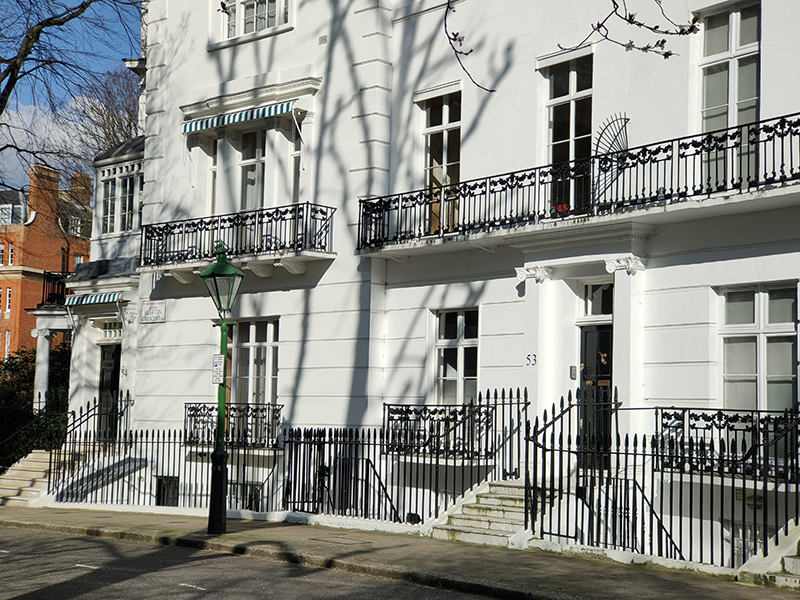
In December 2013 Edgerton Crescent was named the “most expensive street in Britain” for the second successive year, with an average house price of £7.4 million. Since then it’s relinquished that particular title but is still very desirable. David Frost lived here in the late 1960’s apparently.

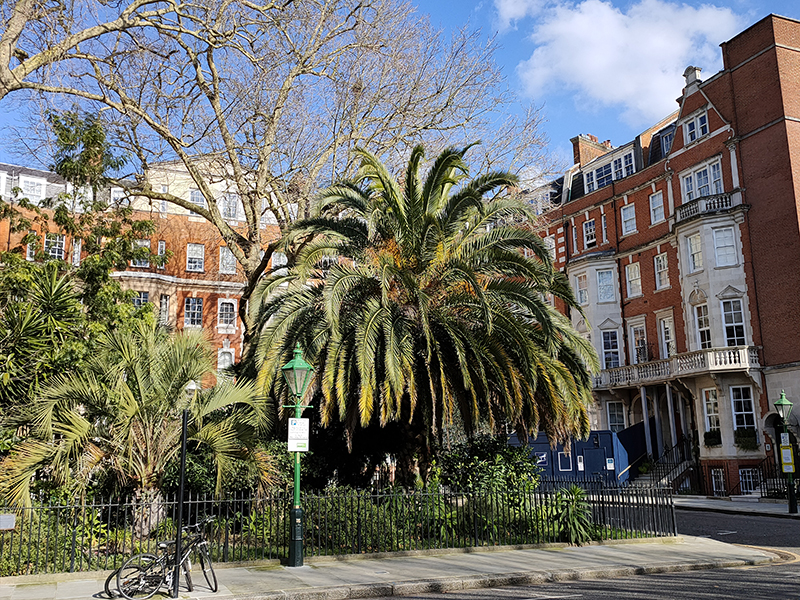
Having followed the crescent back to Edgerton Gardens we loop round into Edgerton Terrace which we look up and down taking particular note of the splendid palm tree adorning the small garden around which Edgerton Place curves.

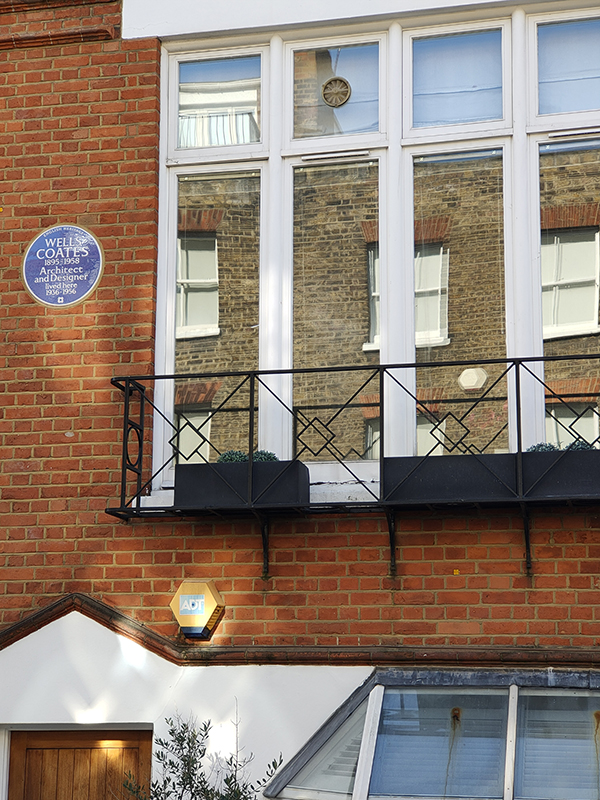
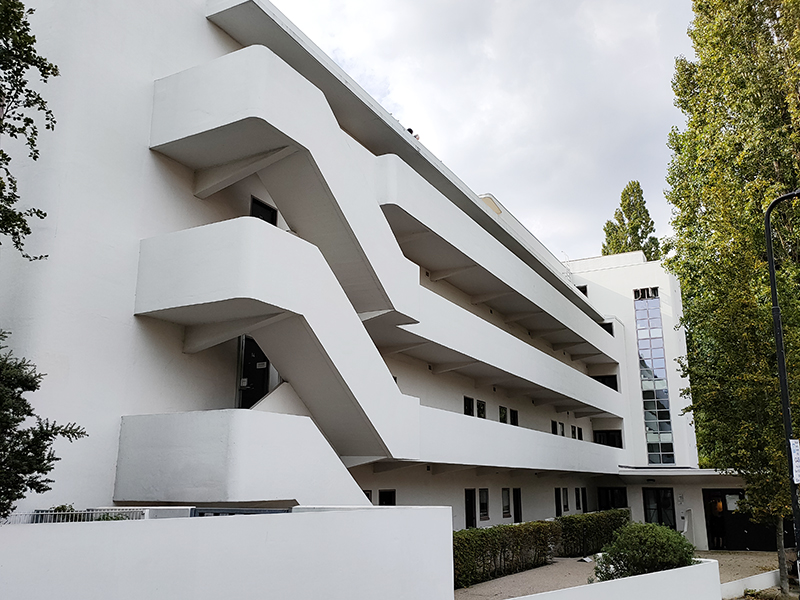
The final section of Edgerton Gardens leads into Yeoman’s Row which has a blue plaque at no.18 for the modernist architect Wells Coates (1895 – 1958) who is perhaps best known for the Isokon Building in Hampstead (which is a must visit if you ever get the chance).

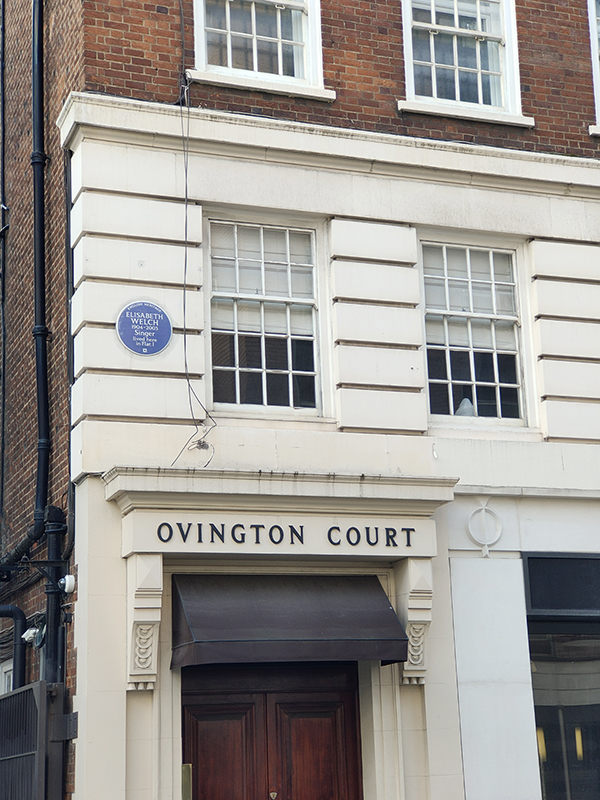
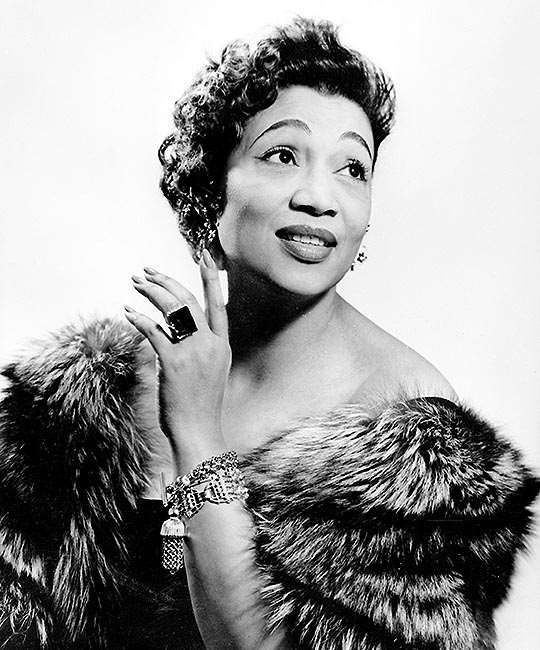
At the end of Yeoman’s Row, Glynde Mews takes us onto Walton Street from where the next links back to Brompton Road are Ovington Square and Ovington Gardens. At the top end of the latter there’s another blue plaque, this one in honour of the American singer and actress, Elizabeth Welch (1904 – 2003). Although American-born, to a father of Indigenous American and African American ancestry and a mother of Scottish and Irish descent, she was based in Britain for most of her career. During WWII, she remained in London during the Blitz, and entertained the armed forces as a member of Sir John Gielgud’s company. After the war she performed in many West End shows as well as making numerous appearances on television and radio. She featured in the Royal Variety Performance twice; did Desert Island Discs twice, and in 1979 was cast as a Goddess by Derek Jarman, singing “Stormy Weather” in his film version of Shakespeare’s The Tempest.

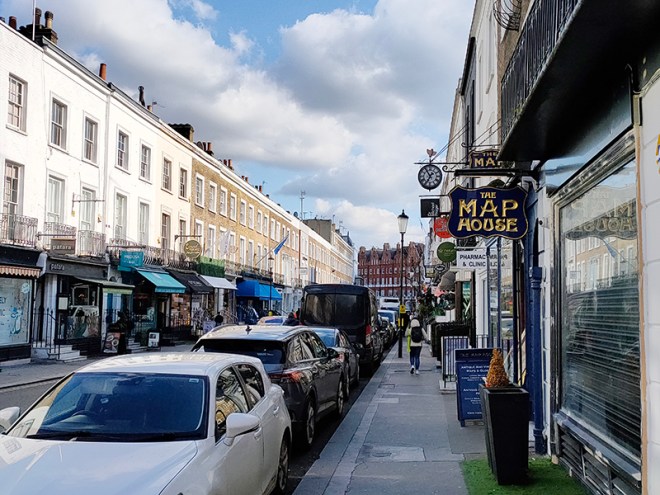
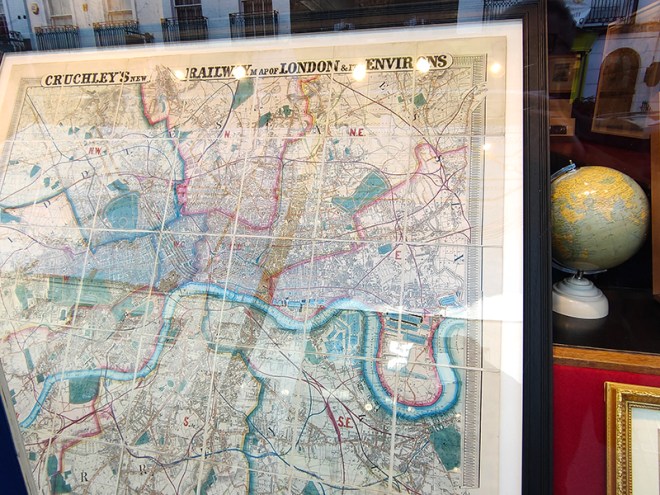
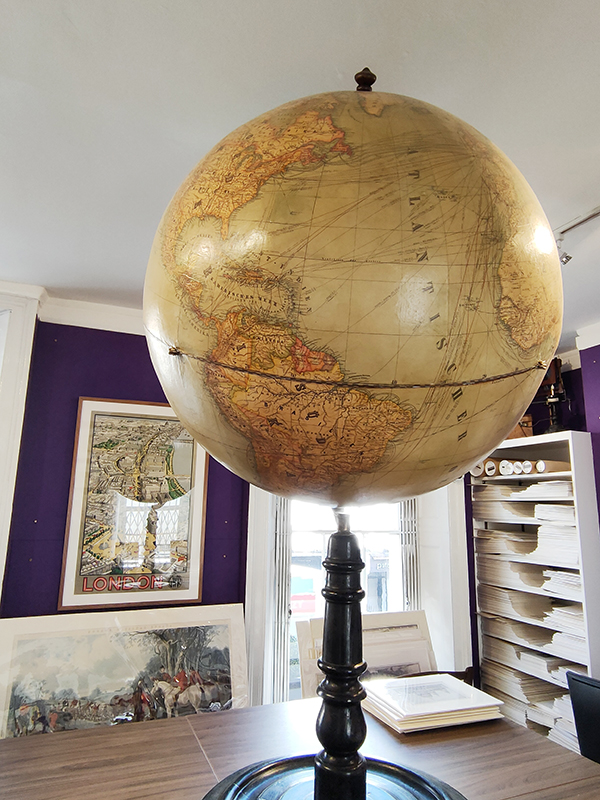
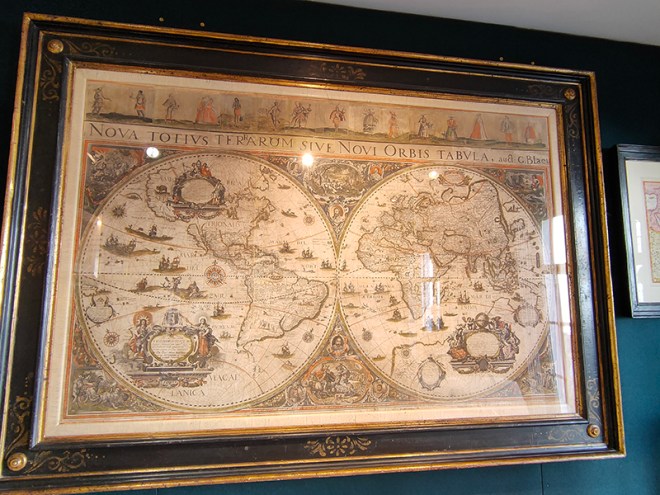
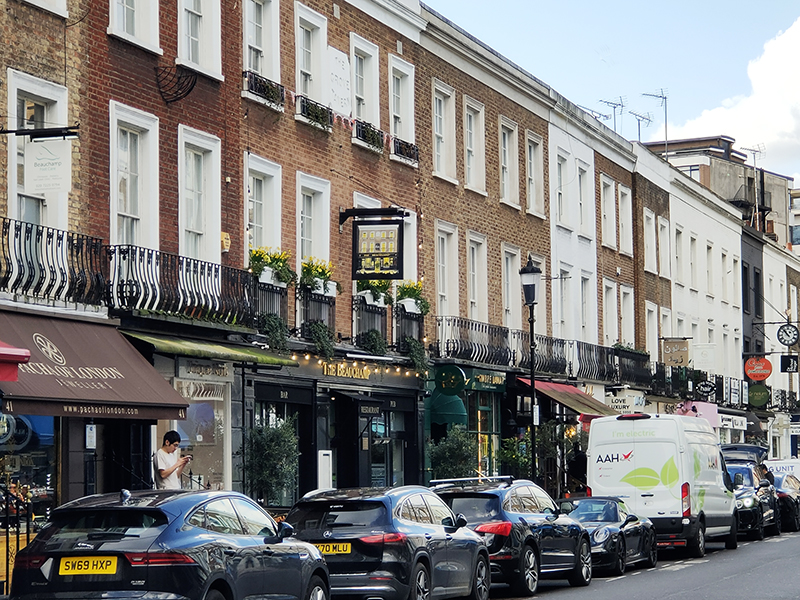
Next on the right, continuing east, is Beauchamp Place where there were a couple of unscheduled stops I couldn’t resist. First up was the Map House which has been selling and supplying maps to collectors, motorists, aviators, explorers, Prime Ministers and the Royal Family since 1907. That was the year Sifton, Praed & Company Ltd. (trading as The Map House) was established in St. James’s Street. The Map House moved to its present location at No. 54 Beauchamp Place in 1973 and it continues to house the most comprehensive selection of original antique and vintage maps, globes, and engravings offered for sale anywhere in the world; over 10,000 maps alone. There are some fascinating examples out on display which all are welcome to come in and check out.

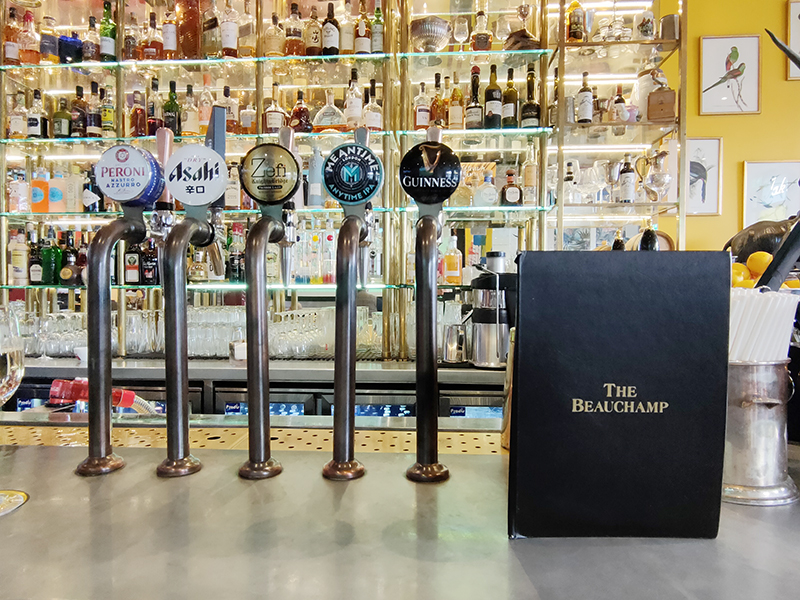
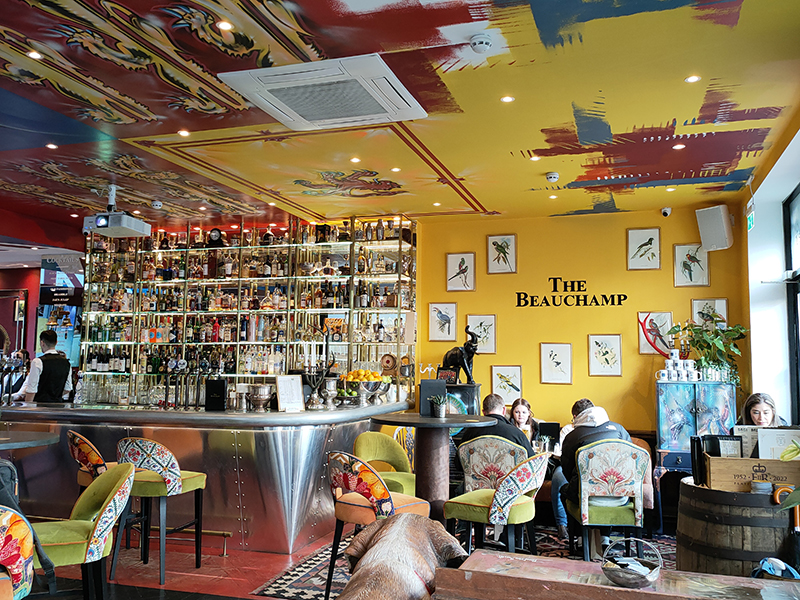
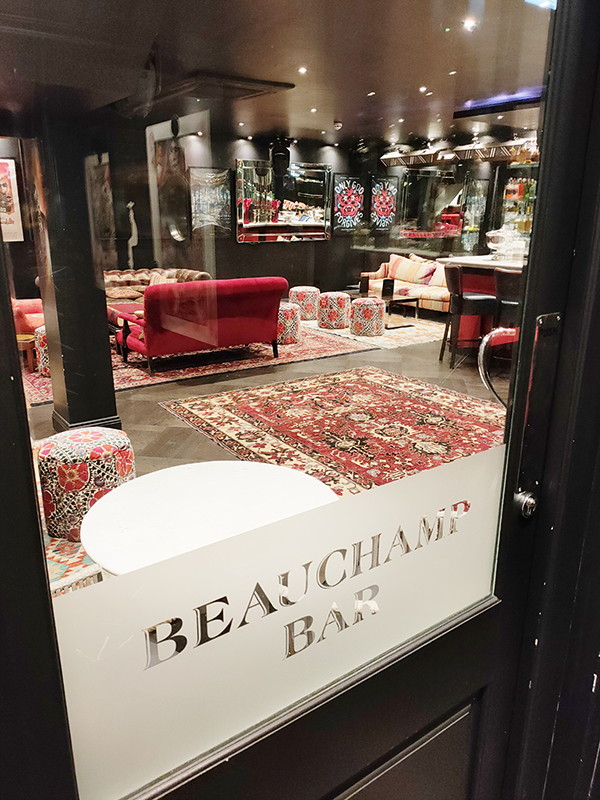
I wasn’t going to stop off for a drink today but given that it was my mother’s maiden name I couldn’t pass by the opportunity to make the Beauchamp the pub of the day.

Beauchamp Place is named after  Edward Seymour, Viscount Beauchamp, who was a nephew of Jane Seymour (Henry VIII’s third wife) and therefore cousin to Edward VI. It also afforded a celebrity spot of the day in the shape of Alexander Armstrong, of Pointless fame.

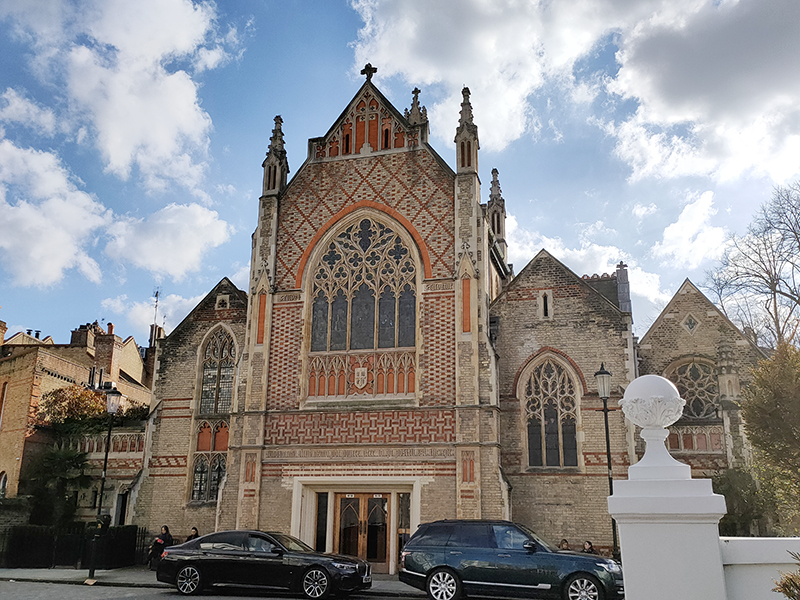
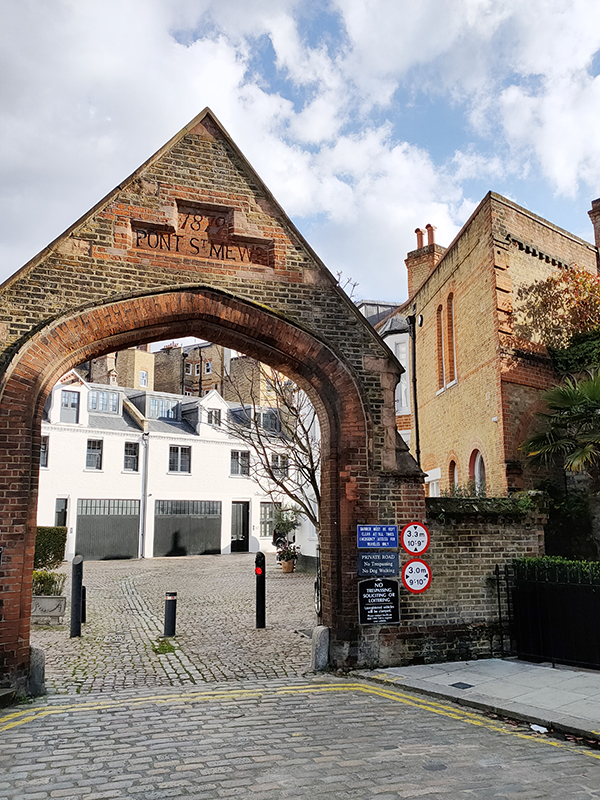
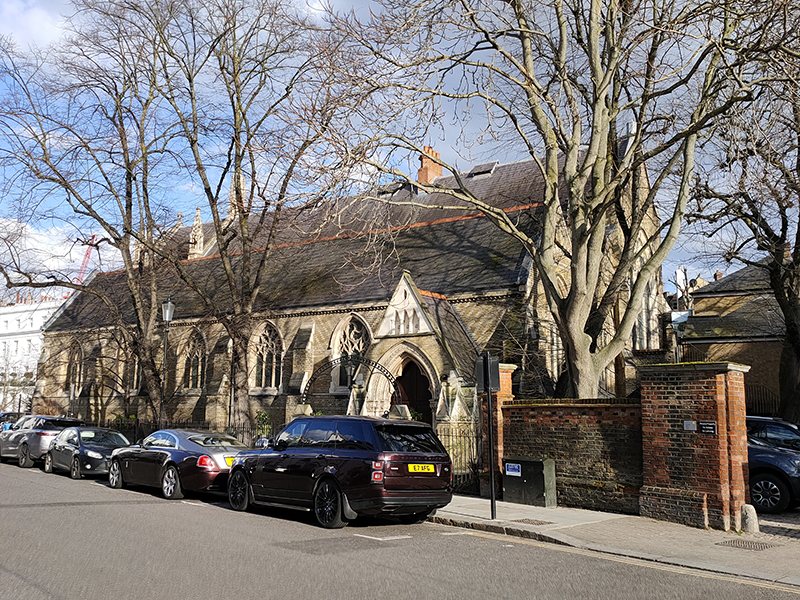
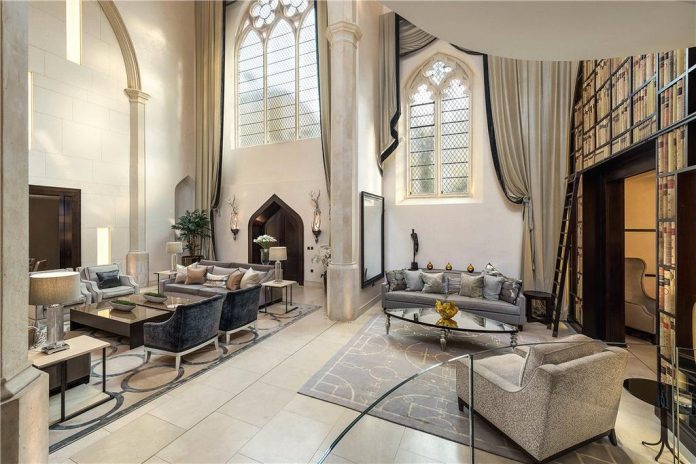
Leaving all this behind, we turn east onto Walton Street and head back towards Harrods. Facing onto Walton Place and surrounded on its other sides by Pont Mews is the Grade II listed St Saviours Church designed by George Basevi (1794-1845). Basevi was also responsible for the design of the Fitzwilliam Museum in Cambridge. The church was built in the Early Decorated style of the Gothic Revival on a site donated by the Earl of Cadogan and consecrated in 1840. The building was sold by the Diocese of London in 1998 for a reported £1 million and converted into a private home. (Also reportedly) it was owned by Alain Boublil, writer of Les Misérables and Miss Saigon, for 6 years before selling in 2009 for £13.5 million to a Thai businessman who spent an additional £10 million on a major renovation. In 2019 it was listed for sale at £55m but is currently on the market for £44m.

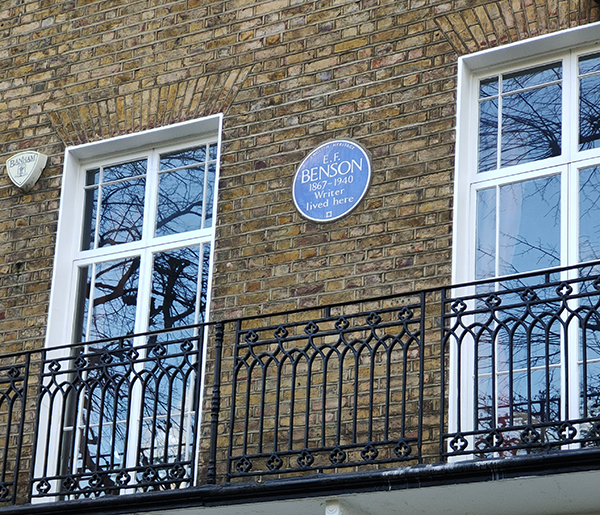
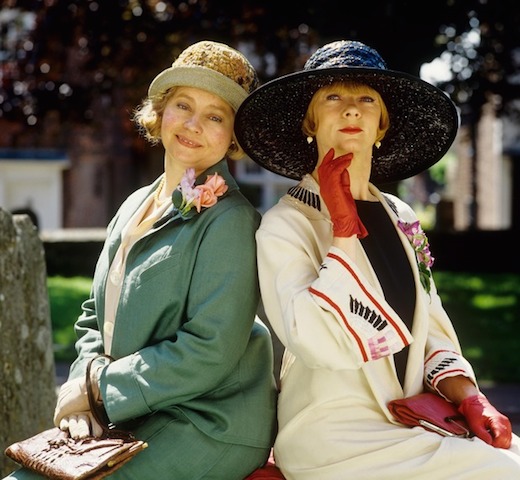
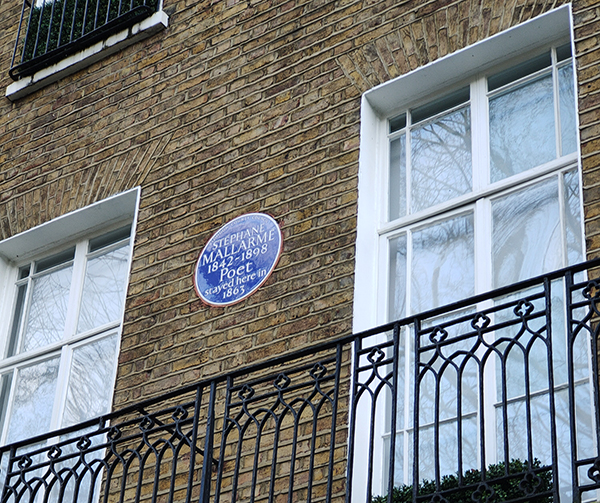
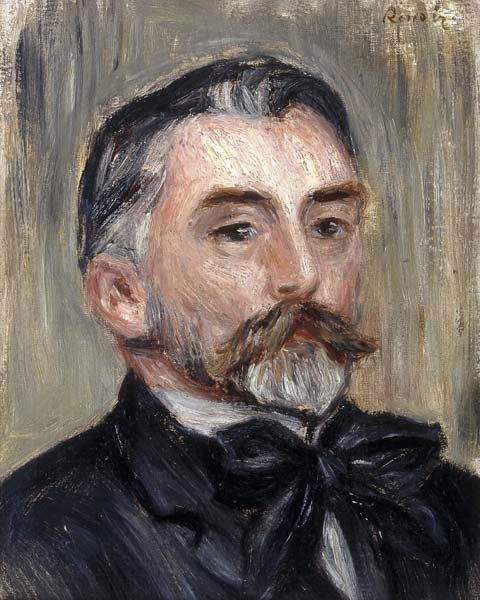
We return to the Brompton Road again via Hans Place and turn to the west. After visiting Brompton Place and Beaufort Gardens we cross over to the north side of Brompton Road and make our way down to Brompton Square which boasts three blue plaques. No. 25 was home to the writer Edward Frederic Benson (1867 – 1940) who is probably best known for his Mapp and Lucia series of novels and short stories. These have been adapted twice for TV; in 1985 with Prunella Scales and Geraldine McEwan in the title roles and in 2014 with Miranda Richardson and Anna Chancellor. French Poet and critic, Stephane Mallarmé (1842 – 1898) stayed at no.6 in 1863 while studying for an English teaching certificate. Mallarmé’s poetry has been the inspiration for several musical pieces, notably Claude Debussy’s Prélude à l’après-midi d’un faune (1894) and Maurice Ravel’s Trois poèmes de Mallarmé (1913) and his work has remained influential throughout the 20th and into the present century.

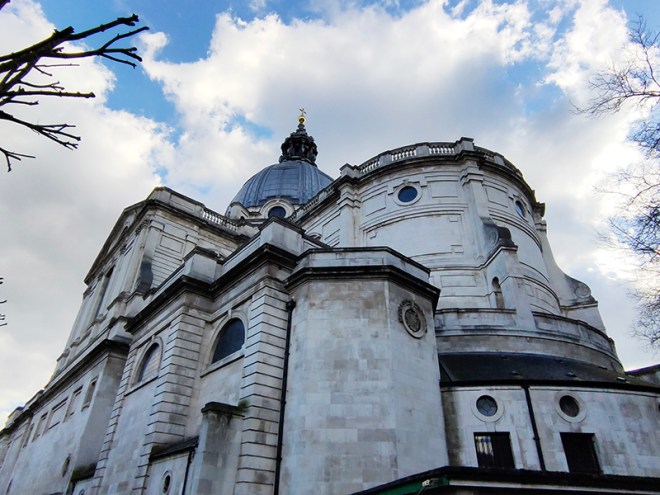
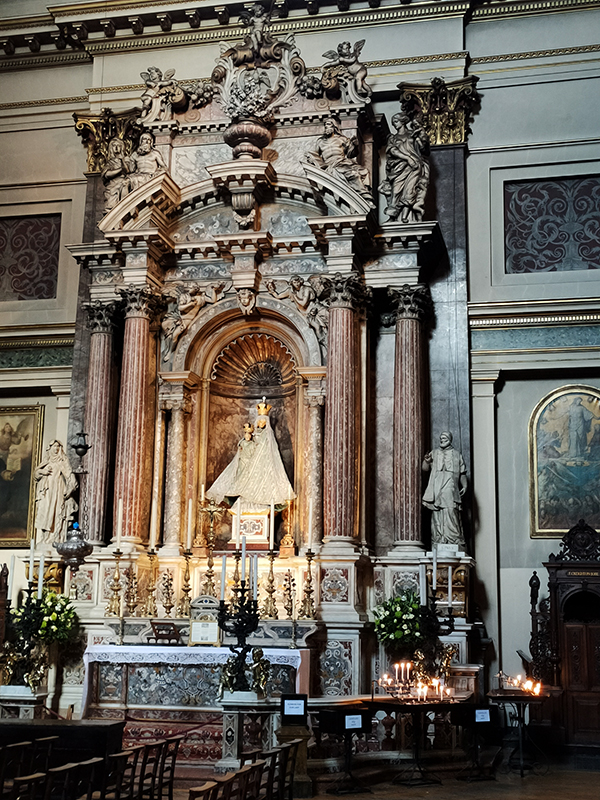
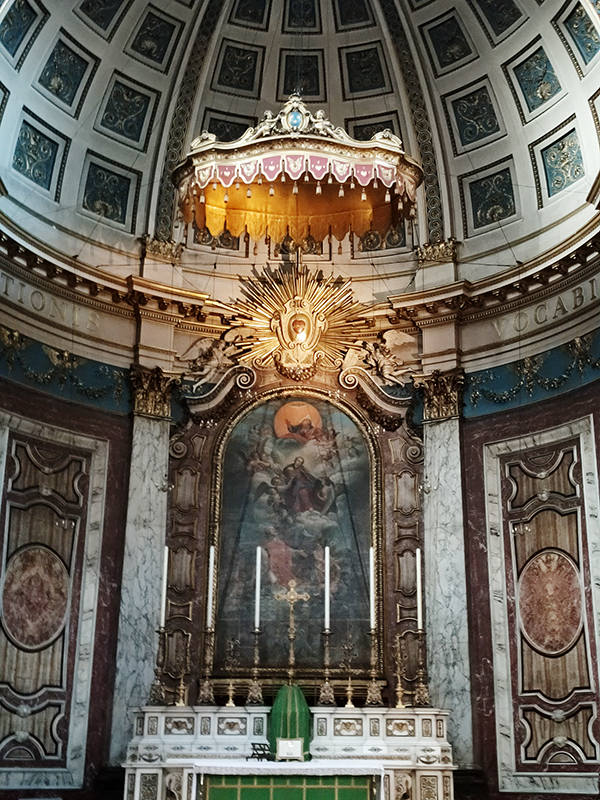
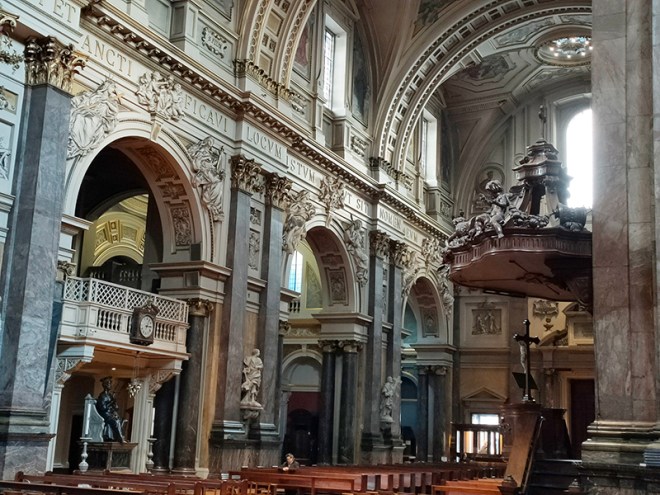
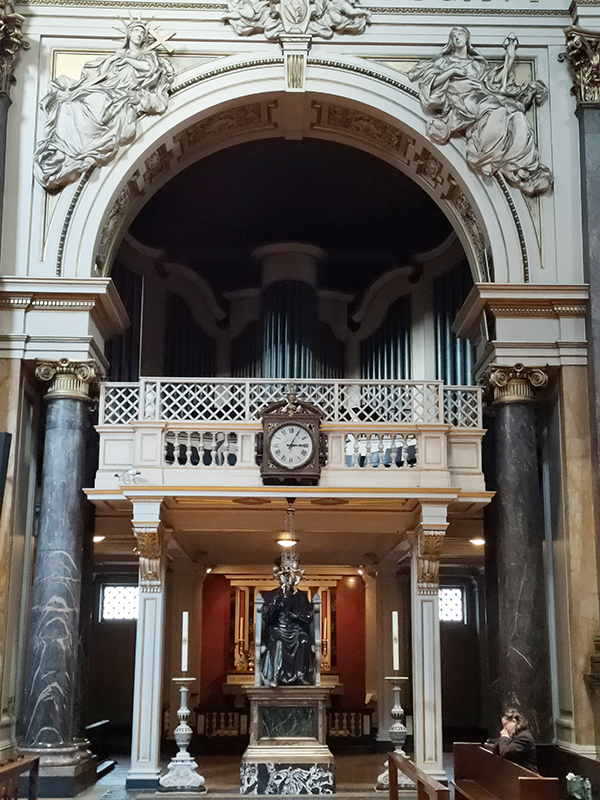
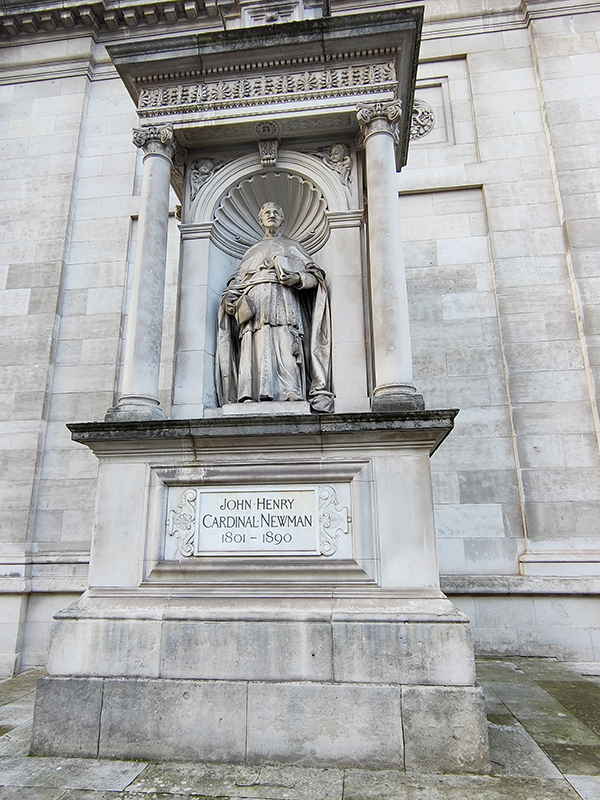
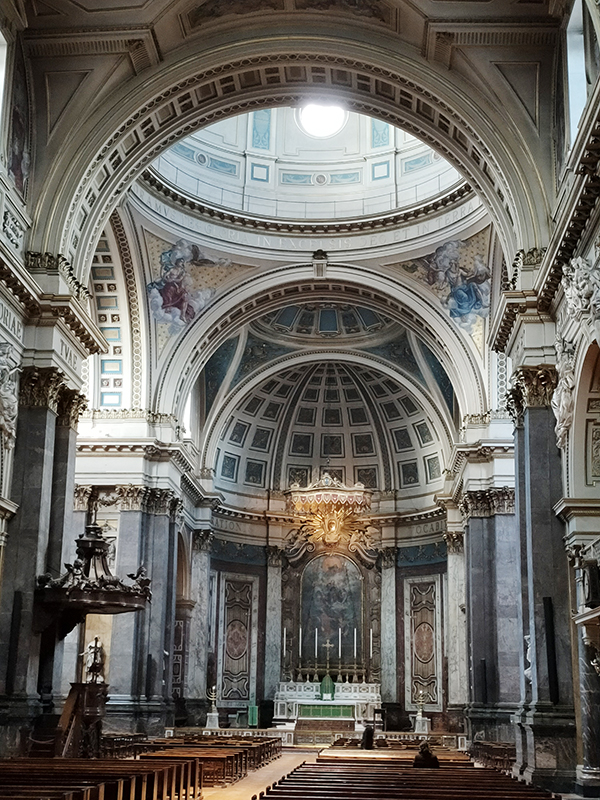
After a quick run up Cottage Place which leads to Holy Trinity Church (see above) we turn our attention to what is commonly known as Brompton Oratory. This famous Roman Catholic church should correctly be referred to as the Church of the Immaculate Heart of Mary. It is the second-largest Catholic church in London, with a nave exceeding in width even that of St Paul’s Cathedral (Anglican). The Oratory was founded by John Henry Newman (1801 – 1890), following his conversion to Catholicism in 1845, along with a group of other converts, including Father Frederick William Faber. The design, in the Renaissance style, by Herbert Gribble, a twenty-nine year old recent convert from Devon, was judged the winner in a competition for which Gribble was awarded a prize of £200 by the Fathers.  The foundation stone was laid in June 1880 and the neo-baroque building was privately consecrated on the 16th April 1884. The façade at the South end was not added until 1893 and the outer dome was completed in 1895-96 to a design of George Sherrin.  The last major external work was the erection of the adjacent memorial to Newman in 1896 (six years after his death).

Before we head home via South Kensington tube there is on final point of interest which is the side entrance to the disused Brompton Road tube station on Cottage Place. Brompton Road was opened in 1906 by the Great Northern, Piccadilly and Brompton Railway, located between Knightsbridge and South Kensington on the Piccadilly Line. From the outset it saw little passenger usage and within a few years some services were passing through without stopping. In 1934 when Knightsbridge station was modernised with escalators and provided with a new southern entrance Brompton Road was closed. And, since that brings us full circle, we’ll sign off there. This one’s been a bit of a monster so huge thanks if you’ve managed to stick with it to the bitter end.

Day 79 – Kennington Road – Kennington Park Road – Kennington Lane – Imperial War Museum

As promised, we’ve ventured back south of the river for today’s outing and specifically, as the more insightful amongst you may have twigged, we’re talking Kennington. The route stretches from the axis of Kennington Road and Kennington Park Road to the south to the Imperial War Museum in the north, taking in all the streets within the wedge formed by those two main roads. It’s a mainly residential area with a familiar mix of historic terraces and squares cheek by jowl with high-rise estates. In recent times, Kennington has been on something of an upward curve as those Victorian and Georgian terraces became available to young professionals at a significant discount to similar properties in other areas of London.

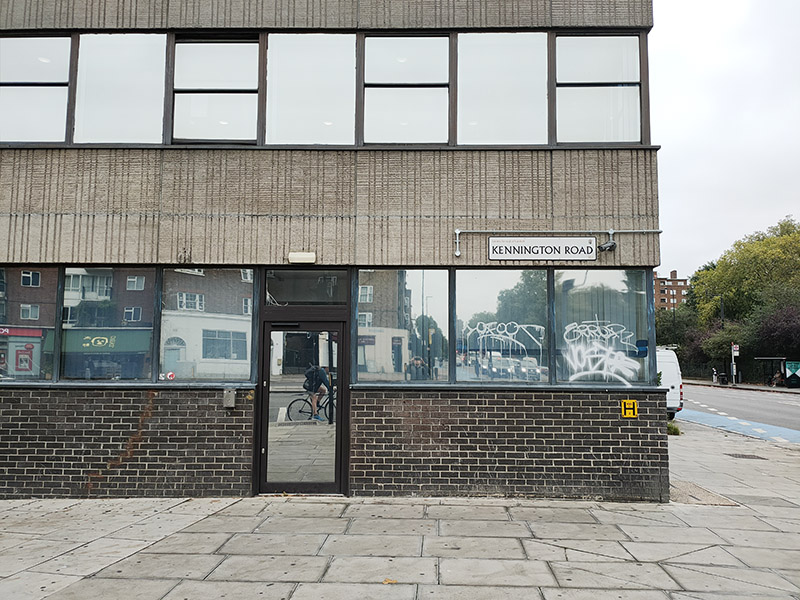
Having alighted from the no.59 bus at the southern end of Kennington Road we start today’s features rather inauspiciously with the abandoned south London outpost of the Department of Trade and Industry, although if you turn the corner into Kennington Park Road there’s a still active Job Centre Plus in part of the same building (can’t remember seeing one of those in any of the previous 78 jaunts).

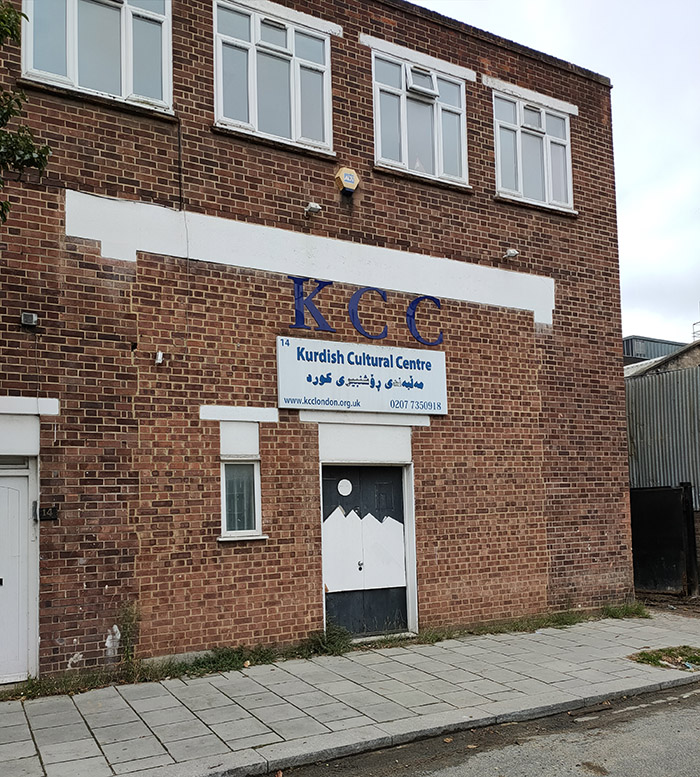
A short way up Kennington Park Road we turn left into Ravensdon Street and then double back down Stannary Street which takes us past the Kurdish Cultural Central. (Don’t worry, we’ve got some more photogenic buildings coming up later.)

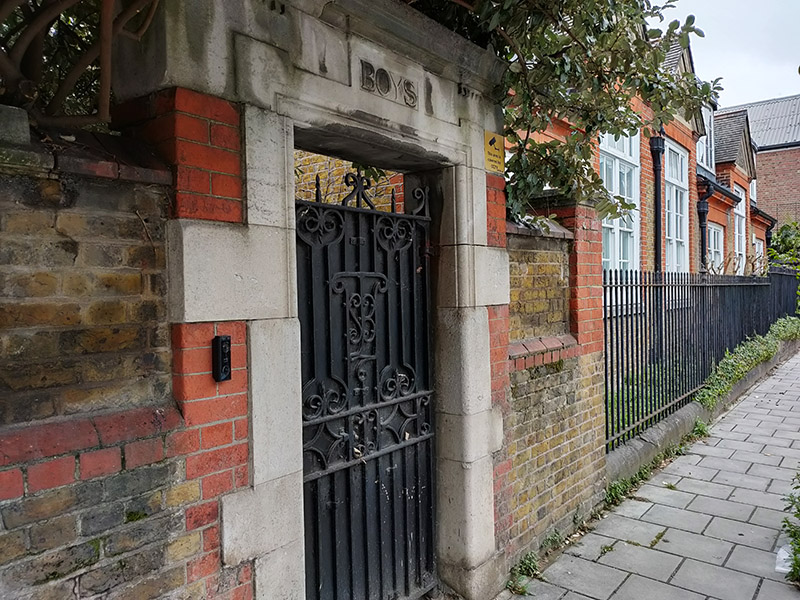
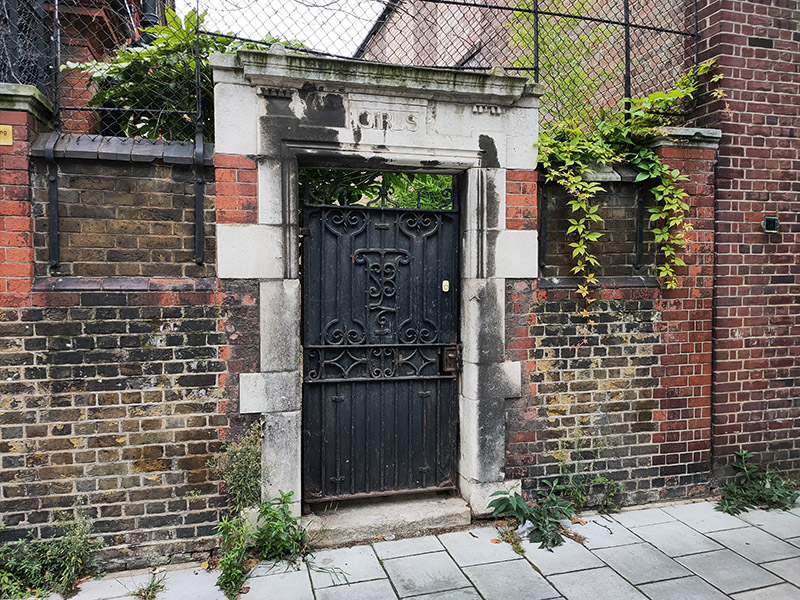
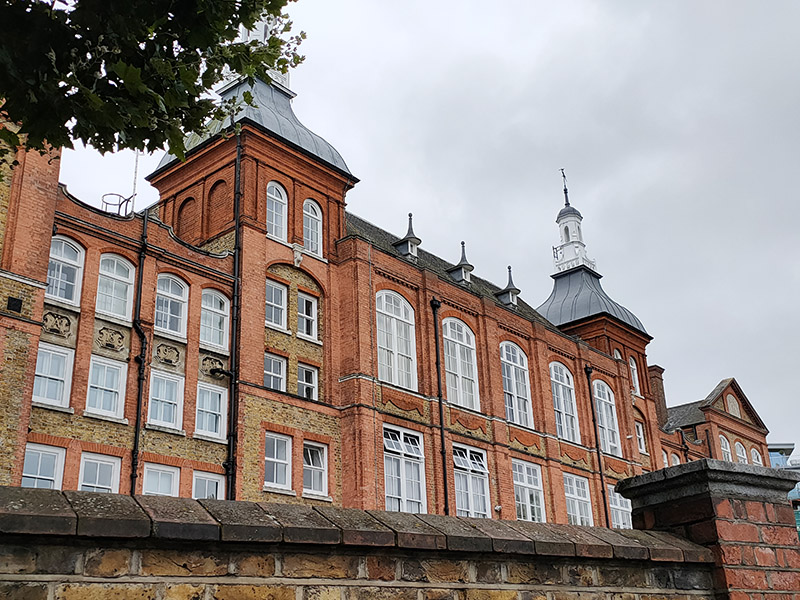
On the other side of Stannary Street is the back of the former Kennington Road School. This impressive Grade II listed Victorian edifice which faces onto Kennington Road is now a gated luxury apartment complex known (pour quelle raison ?) as The Lycee.

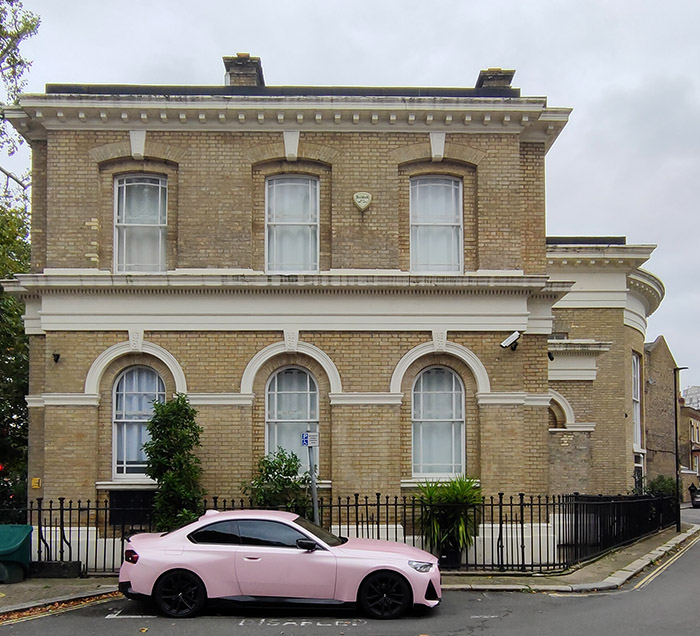
A little way further up Kennington Road we turn off into Milverton Street. As I’ve noted before, I don’t have much of an interest in cars but I was quite taken with this pink jobbie claiming a disabled parking space just off the main road.

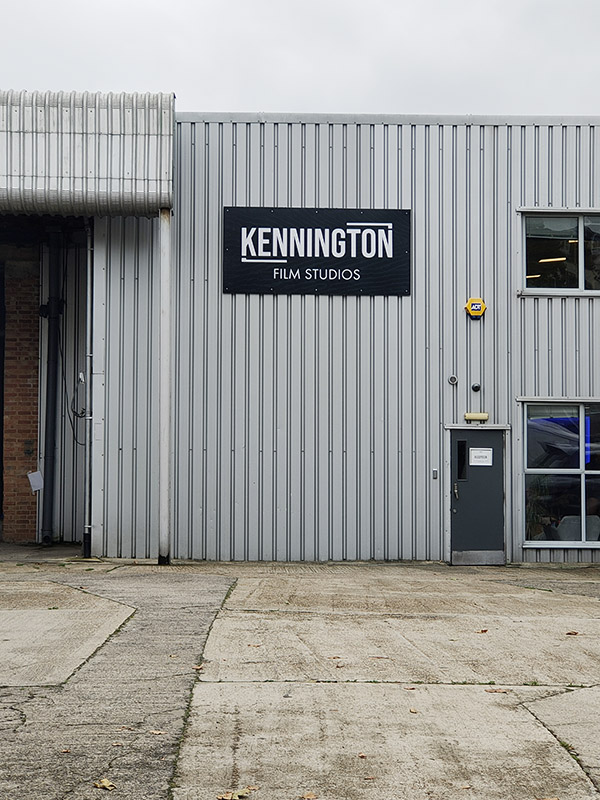
Immediately opposite here is the home of Kennington Film Studios, according to their website, “a commercial film & photography studio in Central London (really ?), offering 3 sound-treated studio spaces across 4,500sqft and 1 podcast/vodcast studio. In a former life, Channel 4’s Richard & Judy and the BBC’s Saturday Kitchen were apparently shot here.

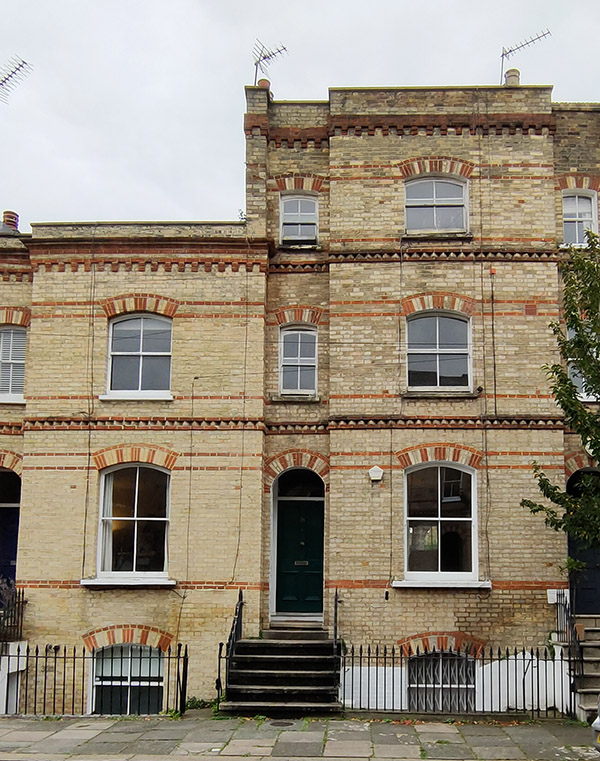
Cutting through the alleyway that is Aulton Place we return to Stannary Street then cross back over Ravensdon Street into Radcot Street which leads straight into Methley Street. These latter three streets form the main part of an estate that was built in 1868 to the design of architect, Alfred Lovejoy. The elegant three-storey terraces are distinguished by the alternating colours of the bricks in the arches above the windows and doorways. By the end of the 19th century however, when Charlie Chaplin briefly resided at no.39 (and is assumed to have attended Kennington Road School) the area had already become somewhat impoverished.

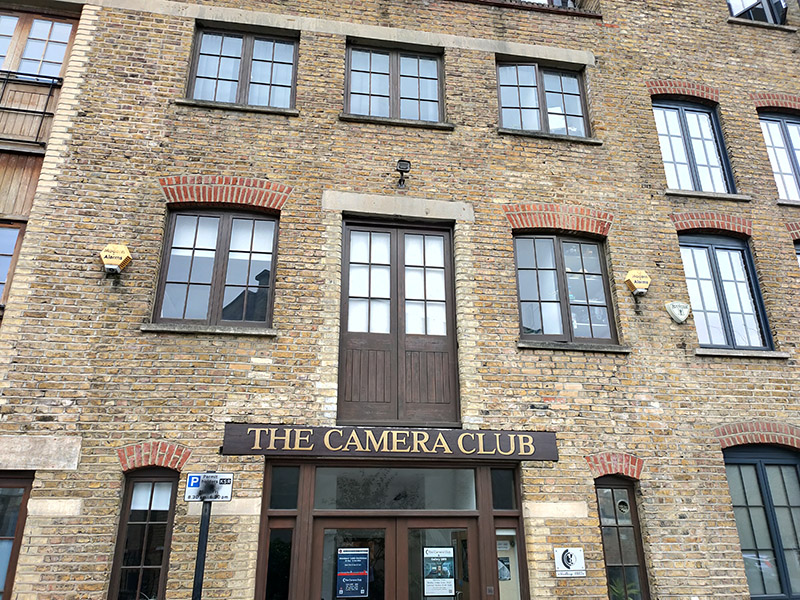
The building on the right above, which is in Bowden Street, although incorporating similar architectural stylings, was originally a pickle factory. I’m not sure when it ceased making pickles but the building became the home of The Camera Club in 1990. The Camera Club was founded in 1885 when the editor of Amateur Photographer magazine, J Harris Stone, called together the most prominent photographers of that time, to create a group that aimed at being “A Social, Scientific and Artistic Centre for Amateur Photographers and others interested in Art and Science.”

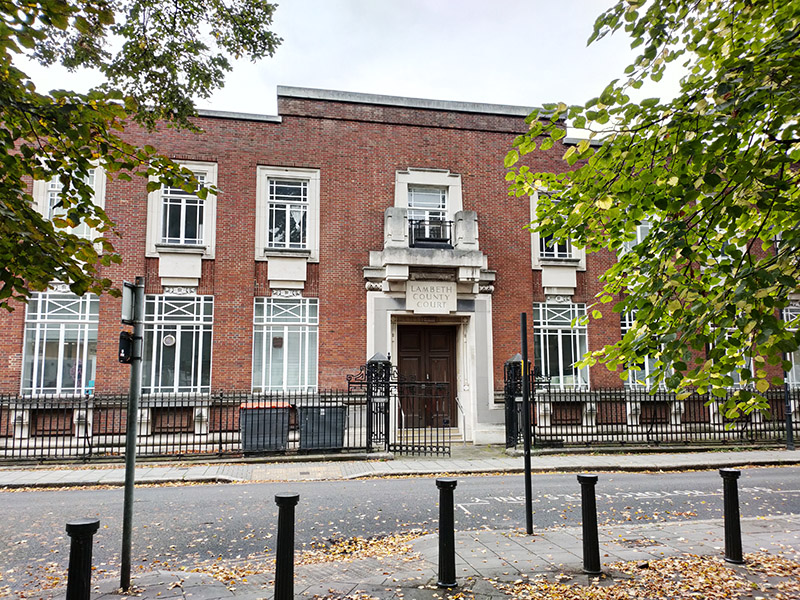
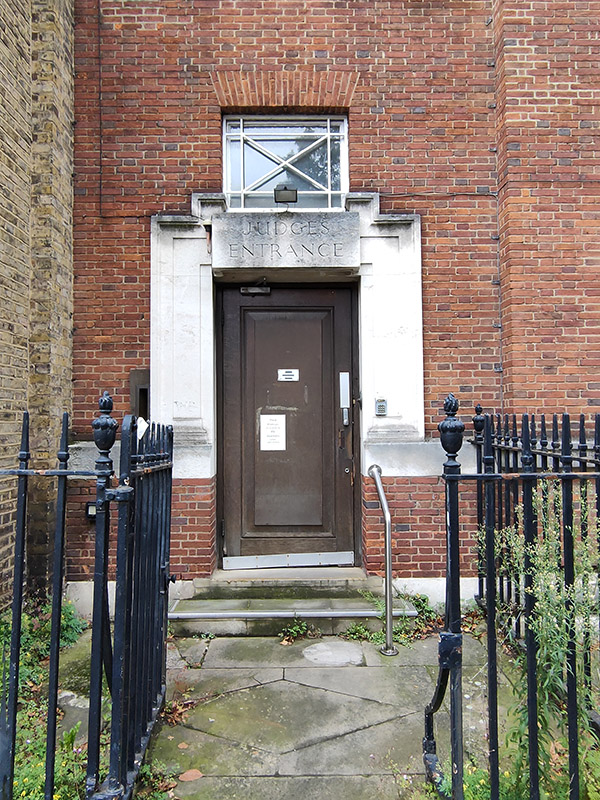
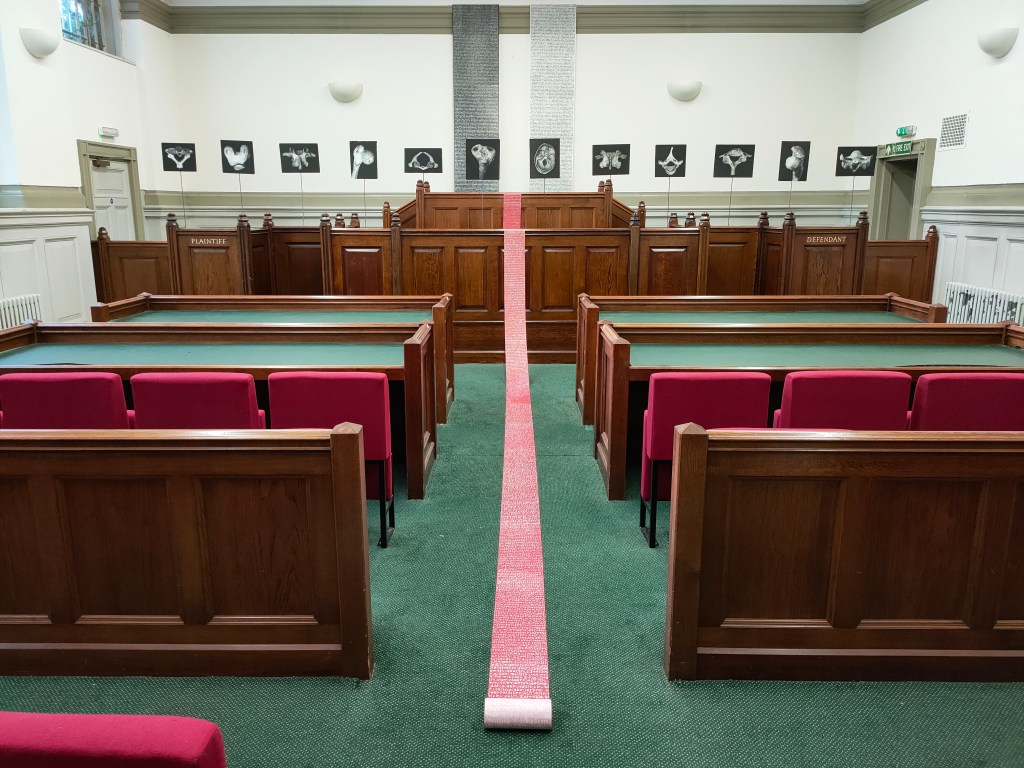
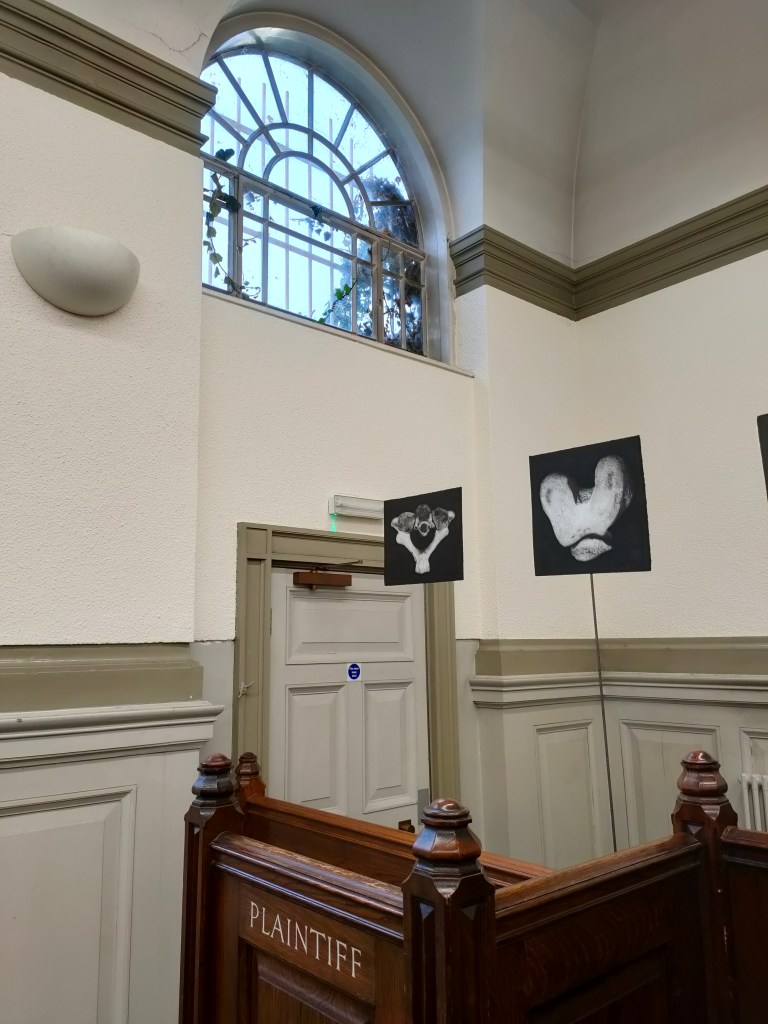
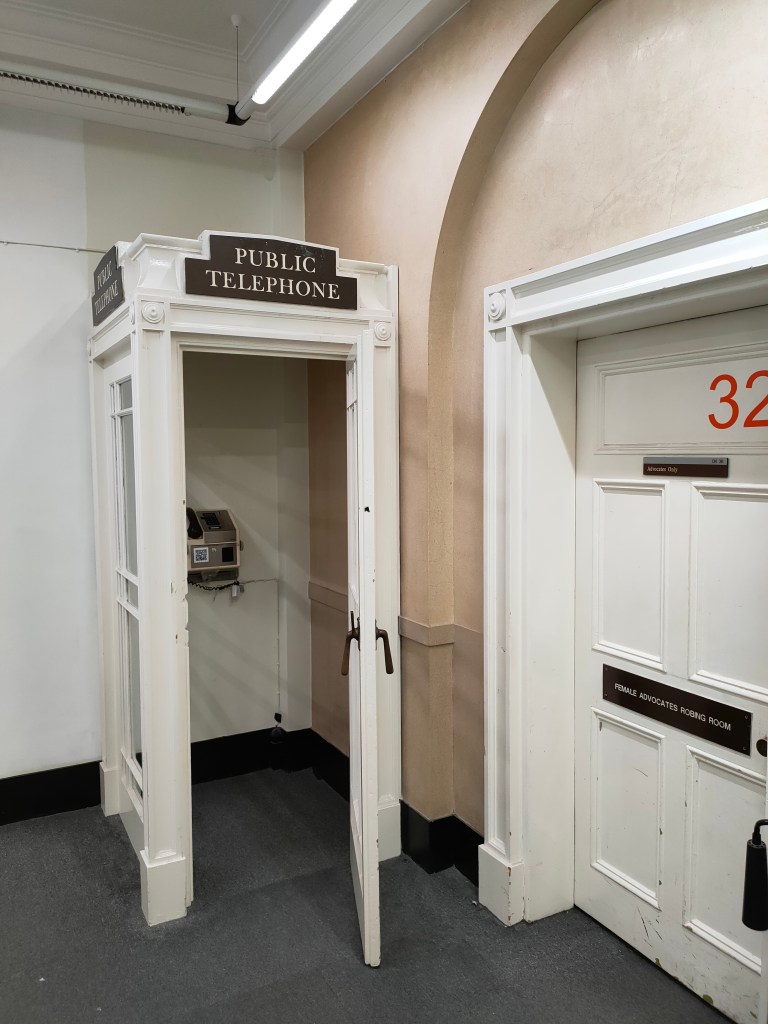
Opposite where Bowden Street joins onto Cleaver Street stands the former Lambeth County Court. Built in 1928, it was designed by John Hatton Markham of the Office of Works, in what Historic England describes as “an eclectic classical style”. The list entry goes on to state “Lambeth County Court was the first new county court built in a rebuilding programme begun in the late 1920s, in recognition of the inadequacy of many existing buildings, particularly in London, for facilitating the important work done by the courts; the lavishness of this example, by comparison with those built later, probably reflects the fact that it was built before the crash of 1929”. That listing (Grade II) was only granted in 2021, four years after the building ceased to act as a Court and a few months after I visited it when it was being used temporarily as art gallery space (the interior shots in the sequence below date from that visit). The site is actually owned by the Duchy of Cornwall and it appears that the listing put paid (for the time being) to their plans to redevelop into offices and apartments.

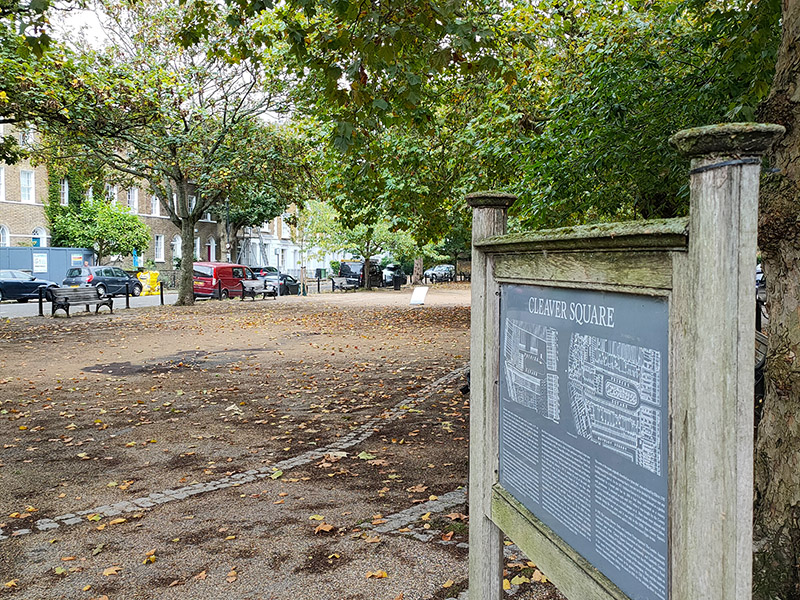
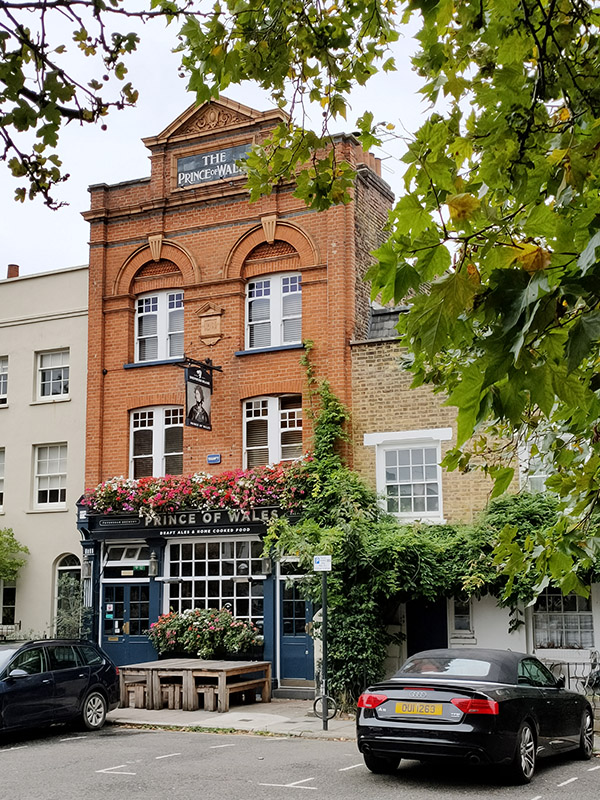
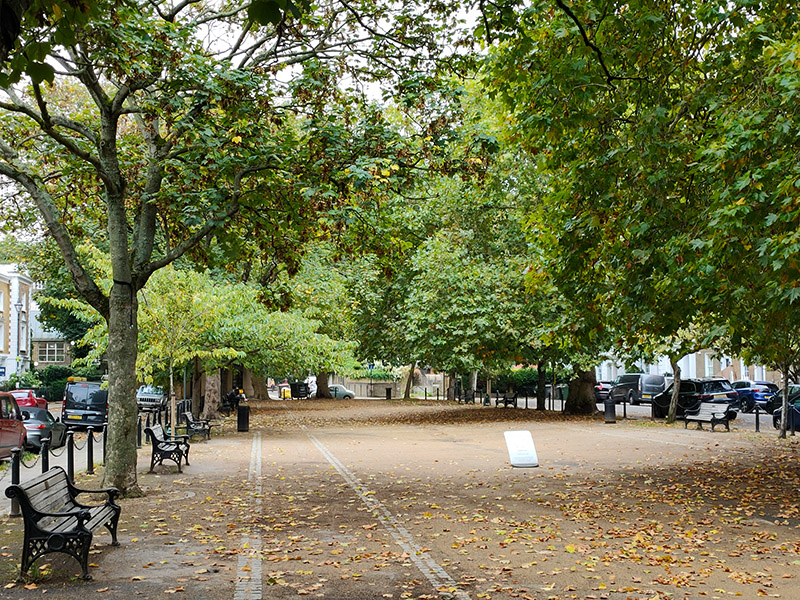
Turning right here brings us into Cleaver Square which was laid out in 1789 and was the first garden square south of the river. Until the middle of the 18th century, this was still open pasture forming part of an estate known as White Bear Field that was inherited by one Mary Cleaver in 1743. In 1780 Mary leased the land to Thomas Ellis, the landlord of the Horns Tavern on Kennington Common, who laid out and developed the square, originally naming it Princes Place. The houses around the square were built on a piecemeal basis between 1788 and 1853. As we alluded to earlier, by the 1870s the area had reduced in status, and the houses were overcrowded. The renaming as Cleaver Square occurred in 1937. The Prince of Wales pub in the north west corner originally dates from 1792 but was refaced in 1901.

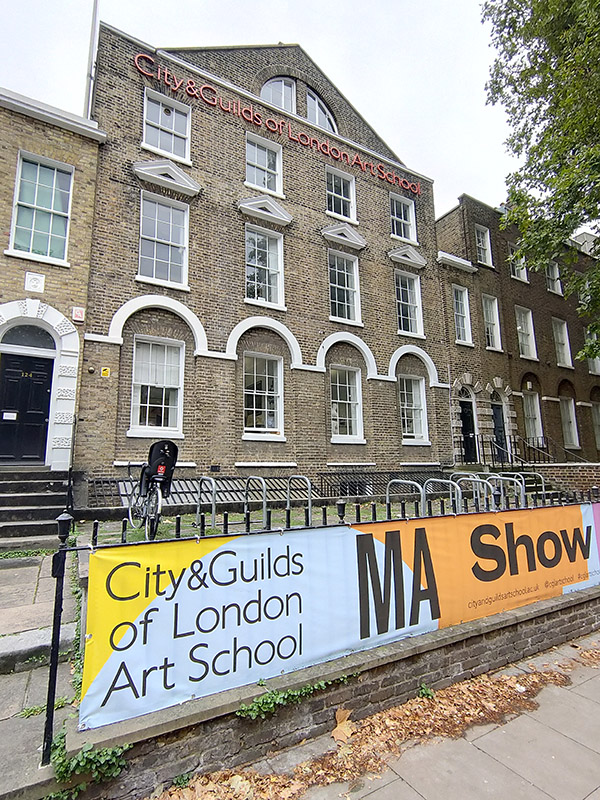
At its eastern end Cleaver Square rejoins Kennington Park Road and here you’ll find the City & Guilds of London Art School. This was founded in 1854 by the Reverend Robert Gregory under the name Lambeth School of Art. It moved to this location in Kennington post-1878 and the current name was adopted in 1938. After WWII restoration and carving courses were established to train people for the restoration of London’s war-damaged buildings. A Fine Art programme was only developed in the 1960’s.

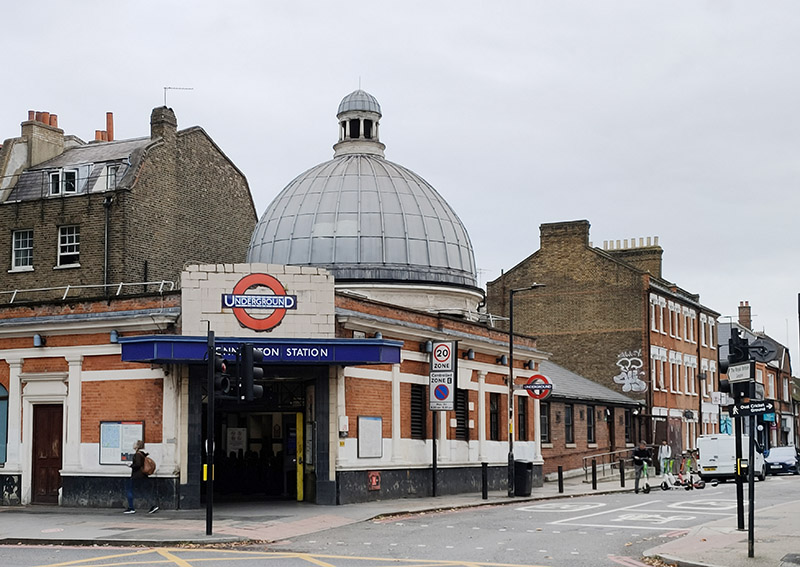
Continuing up Kennington Park Road we pass Kennington Tube Station. The station opened in 1890 as part of the City and South London Railway (CSLR), the world’s first underground electric railway which initially ran from King William Street to Morden. Since then surface building has remained largely unaltered although there have been several reconstructions and extensions underground. Travel between the surface and the platforms was originally by hydraulic lift, the equipment for which was housed in the dome. In 1900 King William Street station was closed and a new northern extension connecting London Bridge with Bank and Moorgate was created. Seven years later this was extended further to Kings Cross and Euston. After WW1 the Hampstead Tube which ran from Edgware to Embankment was extended to Kennington and merged with the CSLR to form what in 1937 came to be known as the Northern Line (with its two separate branches between Kennington and Camden). In 2021, after 6 years of construction, a new extension of the Charing Cross branch of the Northern Line was opened, running between Kennington and Battersea Power Station. It was the first major change to the tube network since the Jubilee Line extension in 1999.

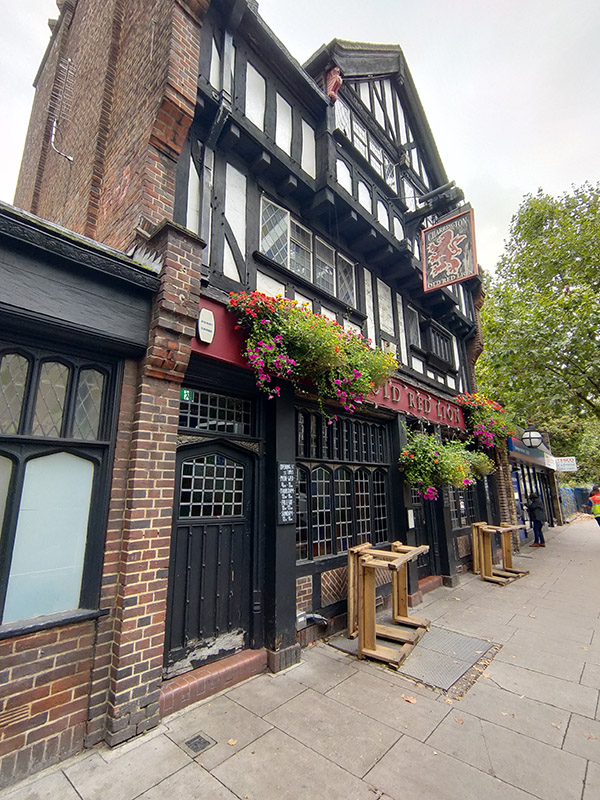
Further up the road from the tube station is the mock-tudor styled Old Red Lion pub which was built in 1933 by the London brewers Hoare and Co. (acquired later that same year by Charrington’s). This is another Grade II listing, on account of being one of the best preserved remaining examples of the interwar “Brewers Tudor” style of pub architecture with many original features still intact; including (for unknown reasons) a built-in painting of Bonnie Prince Charlie landing back in Scotland in 1745.

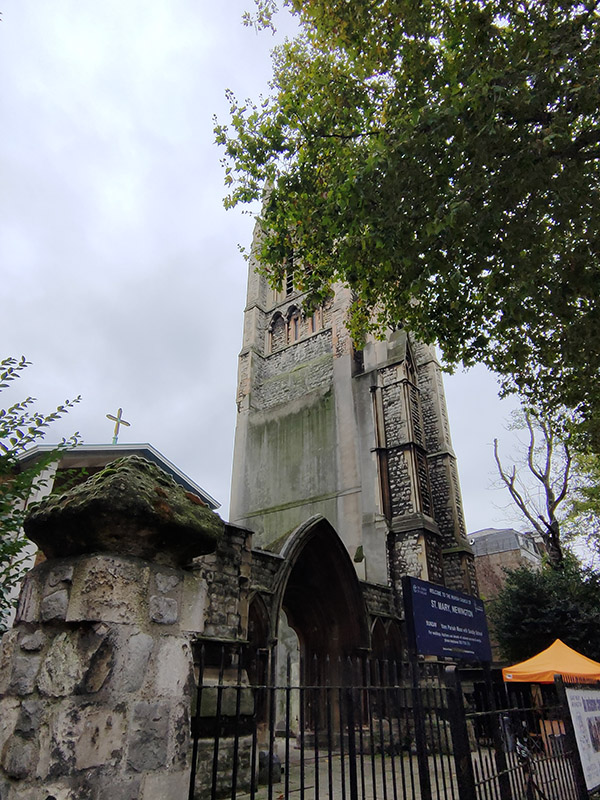
Opposite the pub on the east side is the parish church of St Mary Newington. For much of its history the parish of Newington was in the county of Surrey and was the County Town until Kingston-on-Thames superseded it in that role in 1893. The current operational church building was opened in 1958 and stands beside what remains of its predecessor, the latter having been burnt out in a 1941 air raid. That Victorian church was consecrated in 1876 and described, at the time, by Sir George Gilbert Scott (yes, him again) as “one of the finest modern churches in London”. The postcard from 1910 in the sequence below shows the church as it was when constructed; following the fire only the clock tower and the low section of the arcading between the two horse carts were left standing.

Turning west off Kennington Park Road we’re into an area of public housing starting with Cornwall Square which leads into Kennington Way which merges into White Hart Street that takes us out onto Kennington Lane. A right turn and then another into Cottington Street brings us to a green space which incorporates the small but perfectly-formed Queen Elizabeth Jubilee Garden.

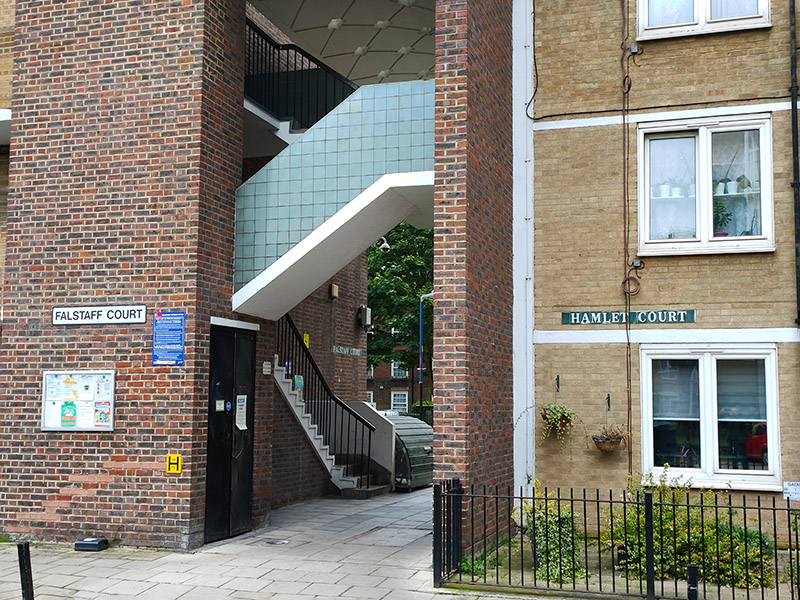
Beyond this, Opal Street takes us through a public housing estate where (and why not) the various blocks and access routes are all named after Shakespearean characters. So you’ve got Othello Close, Isabella House, Hamlet Court, Portia Court, Falstaff Court, Ariel Court and Dumain Court. If like me you couldn’t place the last one, he’s apparently a Lord at the court of the King of Navarre in Love’s Labours Lost.

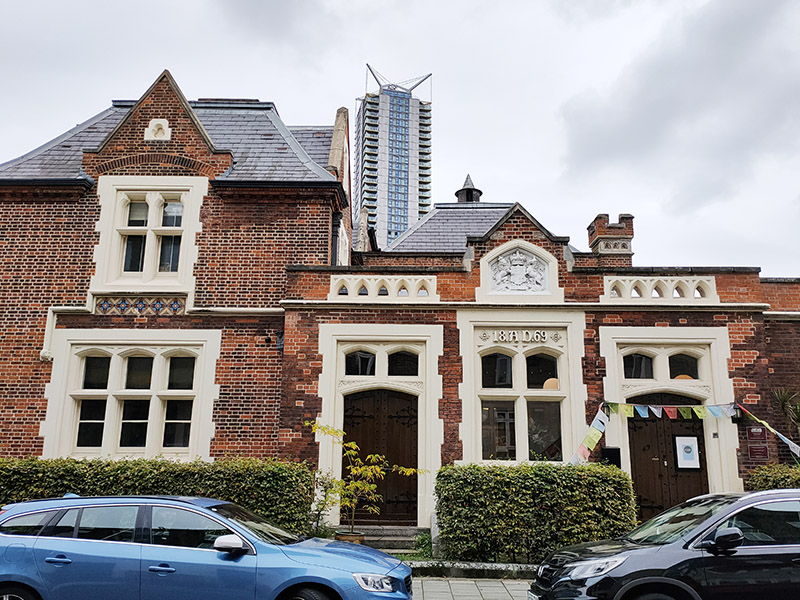
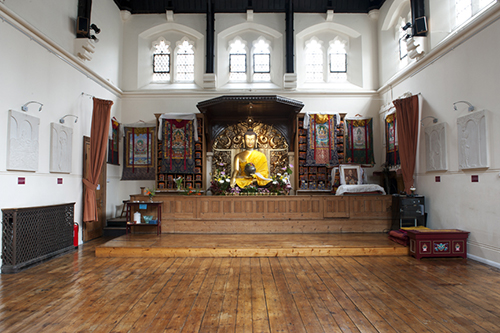
To the north of Kennington Lane, on Renfrew Road, is another Grade II listed former courthouse. Lambeth Magistrates’ Court (originally known as Lambeth Police Court) was built in 1869 and designed by Thomas Charles Sorby in the Gothic Revival style and is the earliest surviving example of a Criminal Magistrates Court in the Metropolitan area. Since 1978 it has been home to the Jamyang Buddhist Centre which “provides a place for the study and practice of Tibetan Buddhism in the Mahayana tradition following the lineage of His Holiness the Dalai Lama”. (Image on the right below from Jamyang.co.uk)

From Renfrew Road we move on to Gilbert Road followed by Wincott Street, Kempsford Road and Reedsworth Street which takes us back on to Kennington Lane.

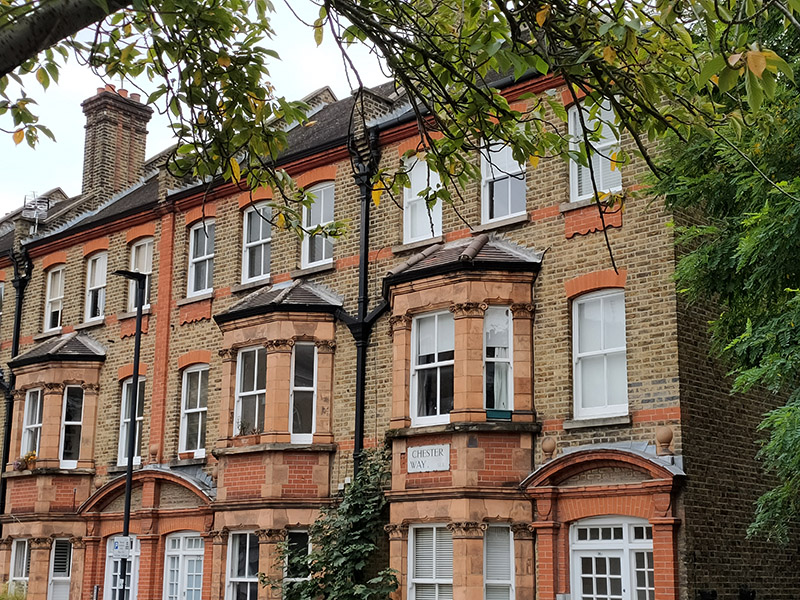
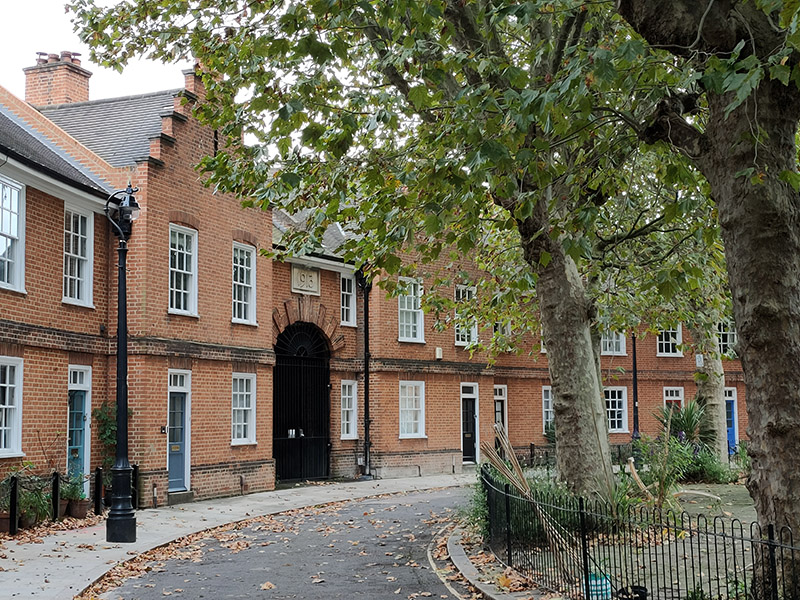
Chester Way, Denny Street and Denny Crescent nestle in the apex of Kennington Lane and Kennington Road and this little triangle forms another part of the Kennington Conservation area. The properties here were built immediately before WWI for the Duchy of Cornwall estate and the Dutch style 2-storey red brick cottages which comprise Denny Crescent are now all Grade II listed.

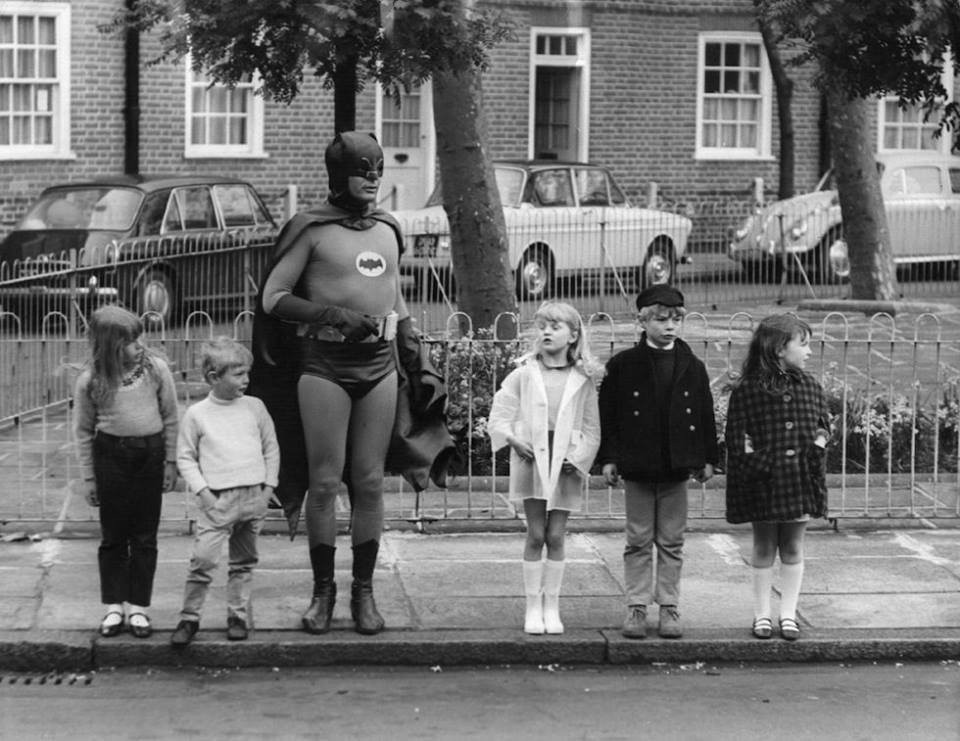
Couldn’t resist this photo of Adam West as Batman teaching Road Safety in Denny Crescent in 1967. (Credit to https://www.theundergroundmap.com for unearthing that one).

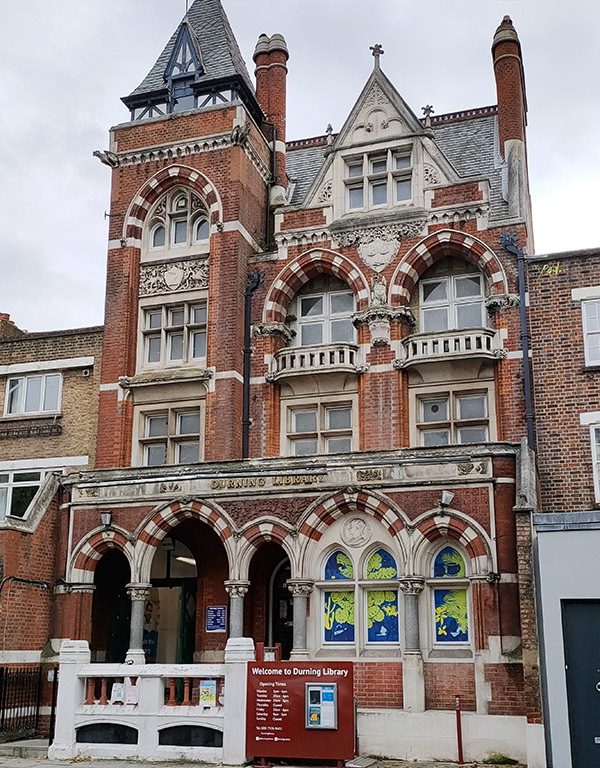
Back on the other side of Kennington Lane is the Durning Library which was purpose built in 1889, designed by Sidney R.J. Smith the architect of Tate Britain, (once again) in the Gothic Revival style. It was a gift to the people of Kennington from Jemima Durning Smith, the daughter of the Manchester cotton merchant, John Benjamin Smith, who in 1835 became the founding chairman of the Anti-Corn Law League, and Jemina Durning, an heiress from Liverpool. Amazingly, it still operates as a library today, despite having been under threat of closure for the last 25 years.

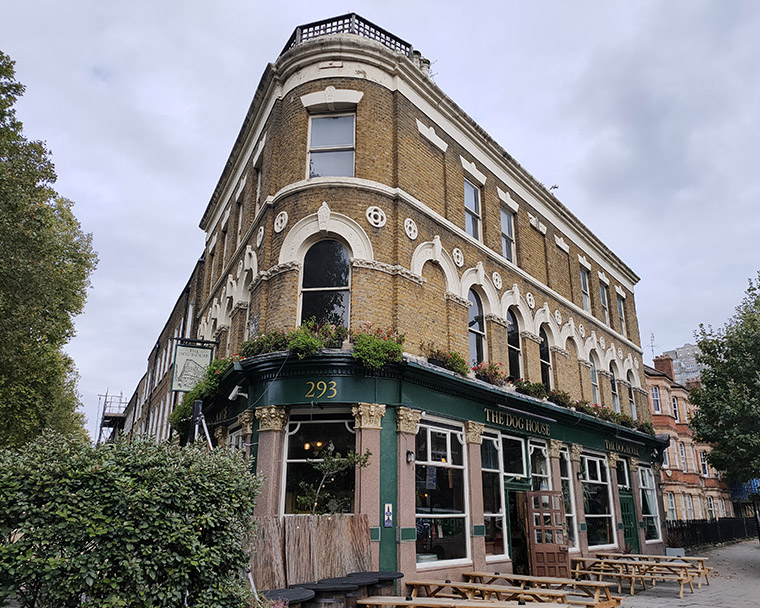
Bang on the junction of Kennington Lane and Kennington Road stands another grand Victorian-era pub – The Doghouse. It was previously known as The Roebuck (which is what you would probably have to be to get from here to Big Ben in 20 minutes as their website proclaims).

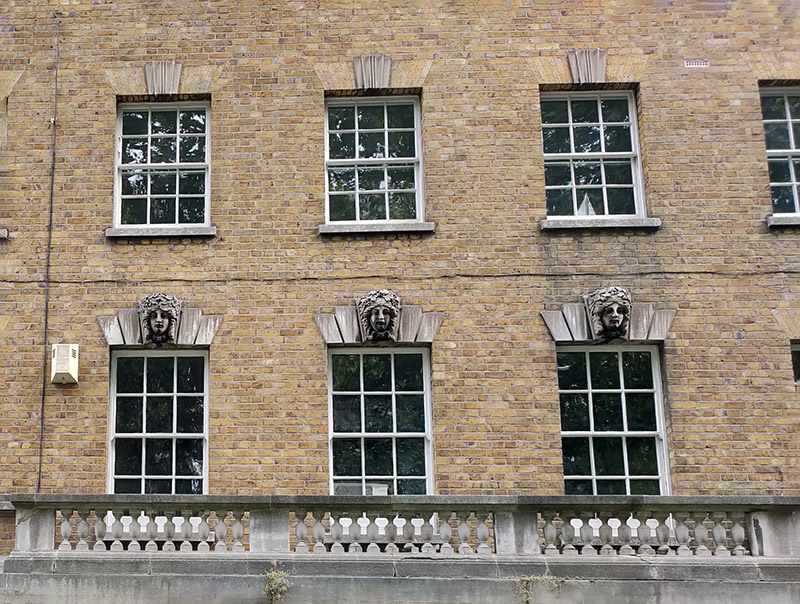
Kennington Road (aka the A23) was constructed in 1751, a year after Westminster Bridge was opened in order to improve communication from the bridge to routes south of the river Thames. With the growing popularity of Brighton as a resort in the later eighteenth century it became part of the route there, used by George IV on his excursions there and later for the London to Brighton Veteran Car Run. Many of the original Georgian terraces built alongside the new road still survive. Sadly, I was unable to find out any information on these carved heads adorning the windows of one of those terraces.

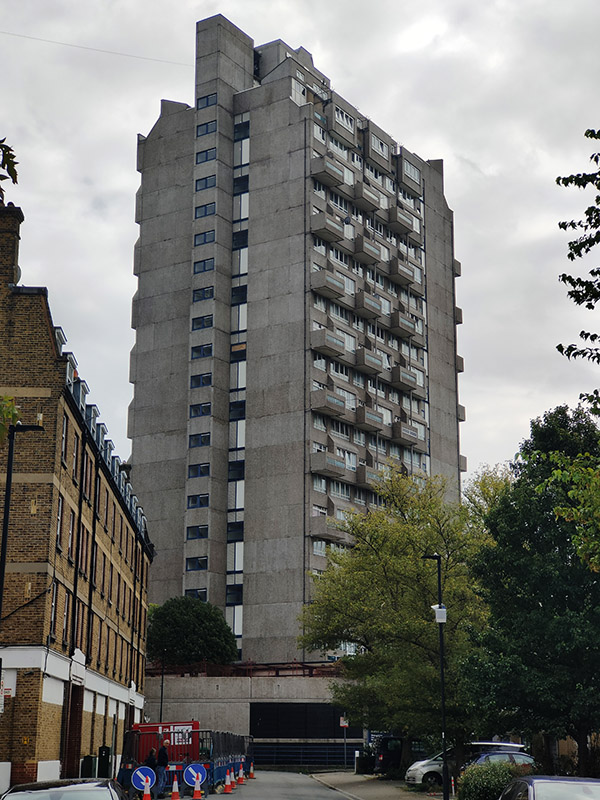
Turning back onto Reedworth Street offers a clear view of the monolithic 23-storey Fairford House erected in 1968. This is one of three towers which constitute the Cotton Gardens estate, the other two being Ebenezer and Hurley. They were designed by the architect George Finch and constructed by Wates using a pre-fabricated system. I guess I don’t really need to labour the contrast with some of the other residences highlighted here.

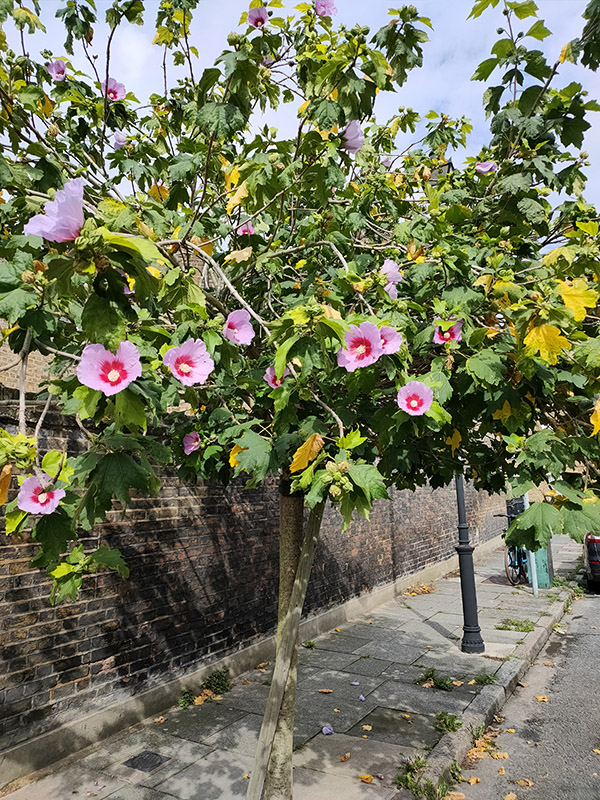
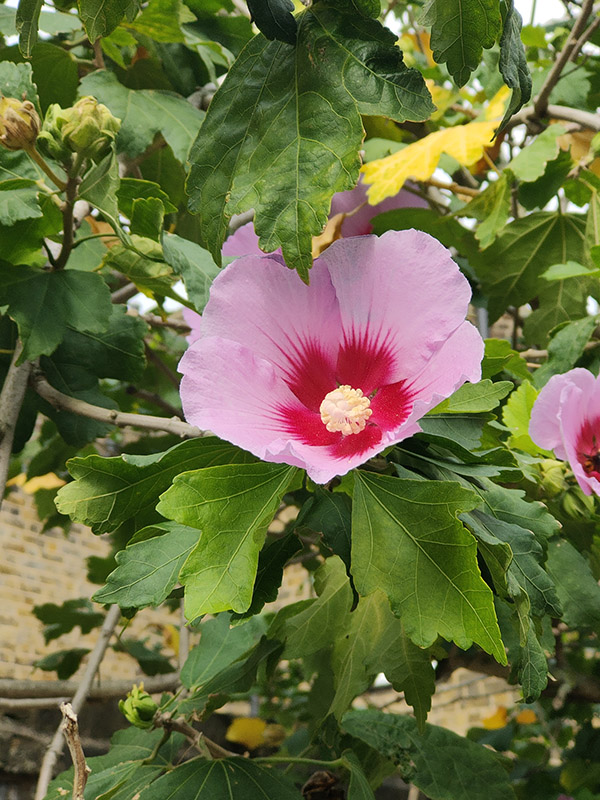
We’re retracing our steps a bit next; back along Kempsford Road then up the full length of Wincott Street to return to Kennington Road. Resuming northward we almost immediately turn off onto Bishops Terrace before making a tour of Oakden Street, Monkton Street and St Mary’s Gardens. A rare bit of horticultural content now. This shrub growing out of the pavement on one stretch of St Mary’s Gardens is widely known as the Rose of Sharon (aka Hibiscus Syriacus). The Latin name derives from the fact that it was originally collected for gardens in Syria though it is native to southern China. It is also the national flower of South Korea.

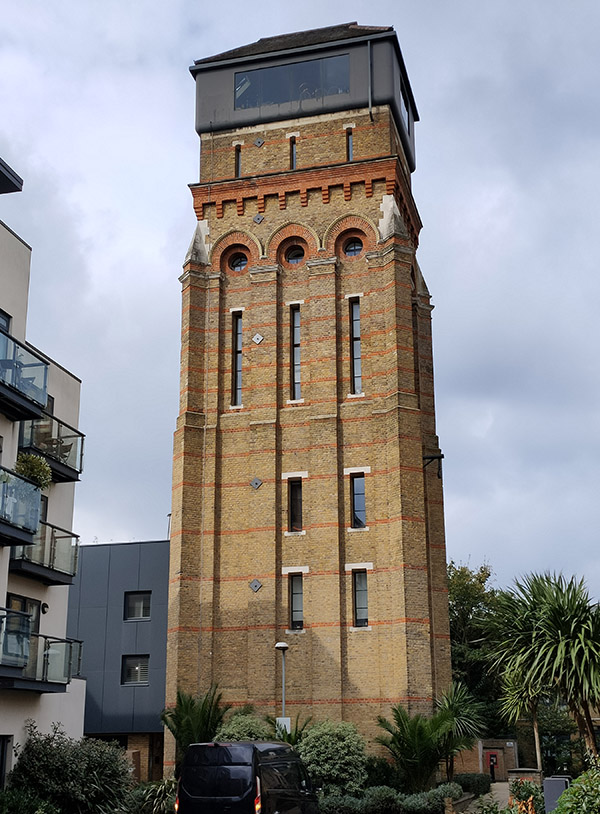
Sullivan Street and Walcot Square bring us back to Kennington Road for a final time before heading off towards Elephant and Castle along Brook Drive. We turn south again at Dante Road and make our way to the Cinema Museum on Dugard Way via George Mathers Road. On the way we pass the Osborne Water Tower House. The tower was built in 1867 to provide a 30,000-gallon water supply for the nearby Lambeth Workhouse where more than 800 destitute families were once housed and where seven-year-old Charlie Chaplin lived with his impoverished mother. It was rescued from dereliction in 2010 and converted into a five bedroom home at an estimated cost of around £2 million (which doesn’t include the £380k purchase price); a project that was featured on the TV show Grand Designs. The refurbishment included the restoration of the tower and the addition of a two-level glass cube on top giving views across central and south London with the largest sliding doors in Europe installed. Having been initially marketed at £3.6m it was eventually sold for £2.75m in 2021.

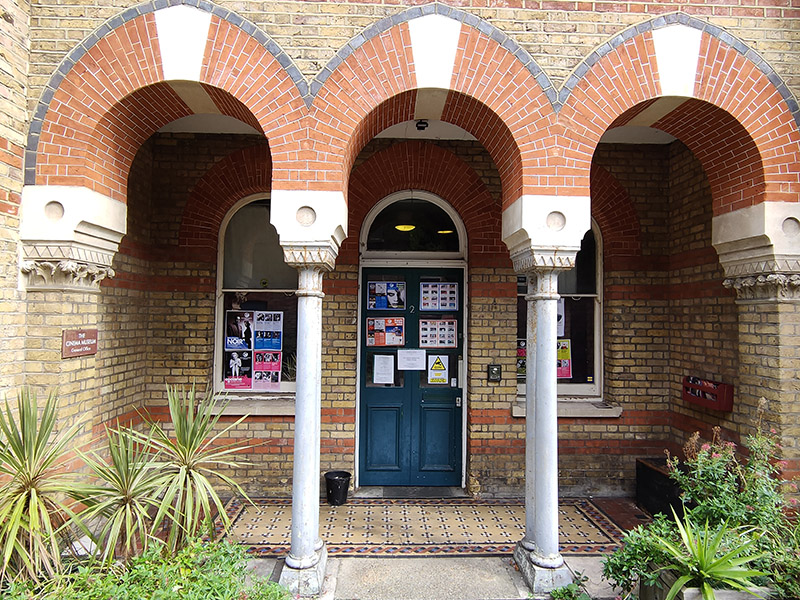
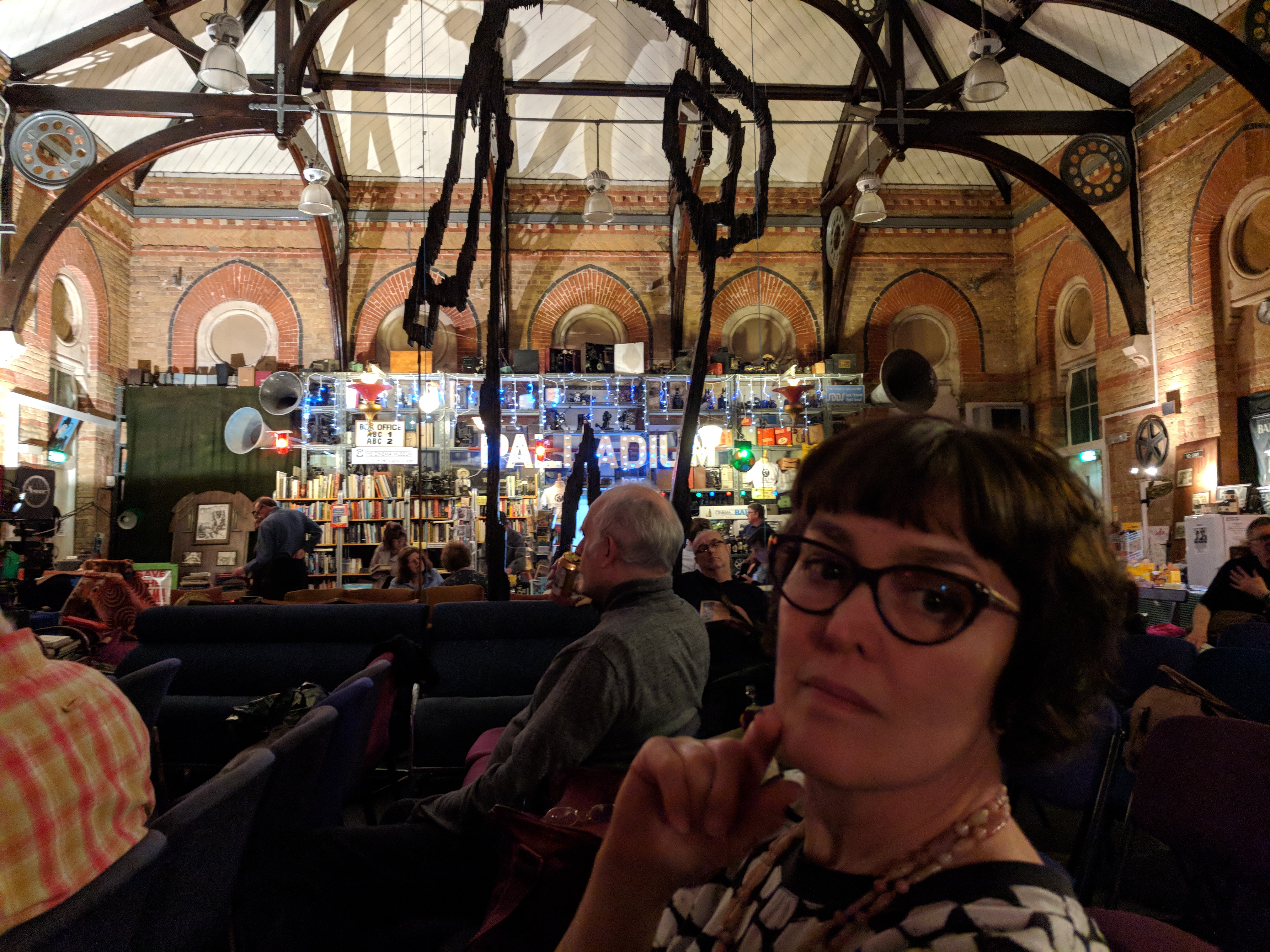
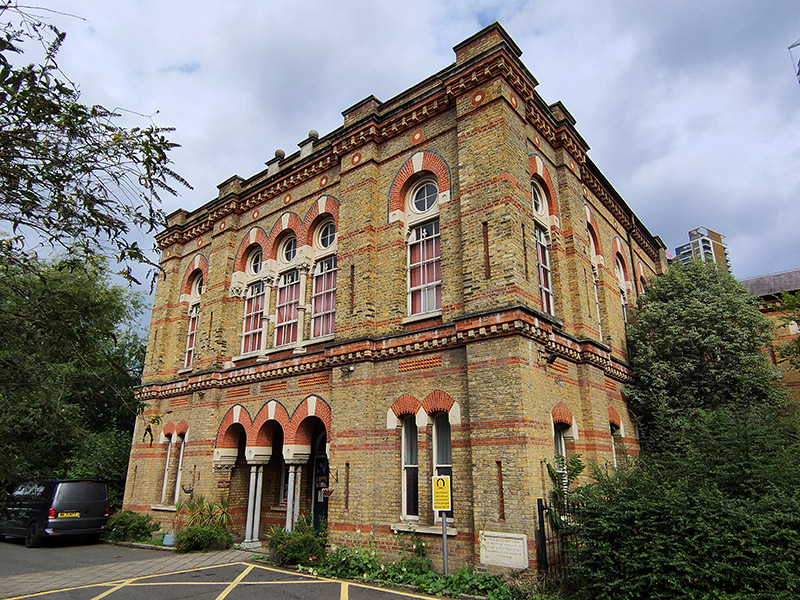
The Cinema Museum museum occupies the former Victorian workhouse building referred to above. It was founded in 1984 by avid collectors, Ronald Grant and Martin Humphries and is the only museum in the UK devoted to the experience of going to the cinema. It houses an extensive collection of memorabilia relating to the history of cinemas (as opposed to film) in the UK from plush velvet seats, impressive illuminated signs and elegantly tailored usher’s uniforms to movie stills, posters and cans of film. Understandably, much is made of the Charlie Chaplin connection. The museum puts on several screenings a month of classic and cult films, many on 16mm. I would particularly recommend the Kennington Noir programme which runs on the 2nd or 3rd Wednesday in the month. A few years ago I helped out a few times as a volunteer manning the bar but I decided that was best left to those who live locally. You can only visit the museum through a pre-booked guided tour or by attending one of the screen events so the interior shot below is from a pre-Covid visit with @eyresusan.

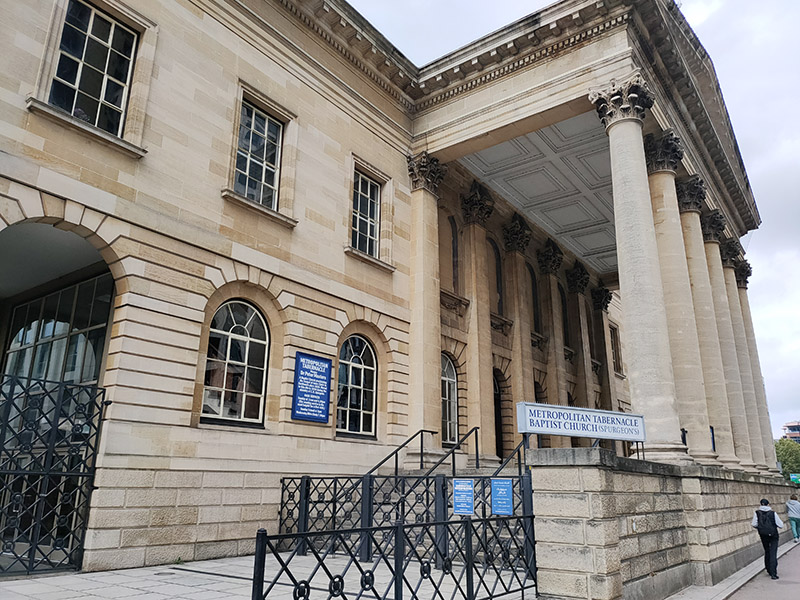
We return to Dante Road via Holyoak Road then cut through Longville Road to St Mary’s Churchyard and follow Churchyard Row, which runs alongside, down to Newington Butts which joins Kennington Park Road to the Elephant and Castle roundabout. Before being appropriated as the name for this short strip of road, Newington Butts it’s own hamlet within the parish of Newington. It is believed to have been named so because of an archery butts, or practice field in the area (in case you were thinking of something else). Standing on the western side of the Elephant and Castle junction is the Metropolitan Tabernacle Baptist Church. The Metropolitan Tab­ernacle is an independent reformed Baptist church whose history goes back to 1650, thirty years after the sailing of the Pilgrim Fathers. The present site was acquired for the Tabernacle, in the mid-19th century, partly because it was thought to be the site of the execution of the Southwark Martyrs (3 men who were burned at the stake for heresy in 1557during the reign of the Catholic, Queen Mary I). The pastor at the time was Charles Haddon Spurgeon (1834 – 1892) who preached to crowds of up to 10,000, had 63 volumes of his sermons printed and led the Tabernacle to independence from the Baptist Union. The original Spurgeon’s Tabernacle was burned down in 1898 and rebuilt along similar lines. It was later burned down for the second time when hit by an incendiary bomb in May 1941. In 1957 it was rebuilt on the original perimeter walls, but to a different design.

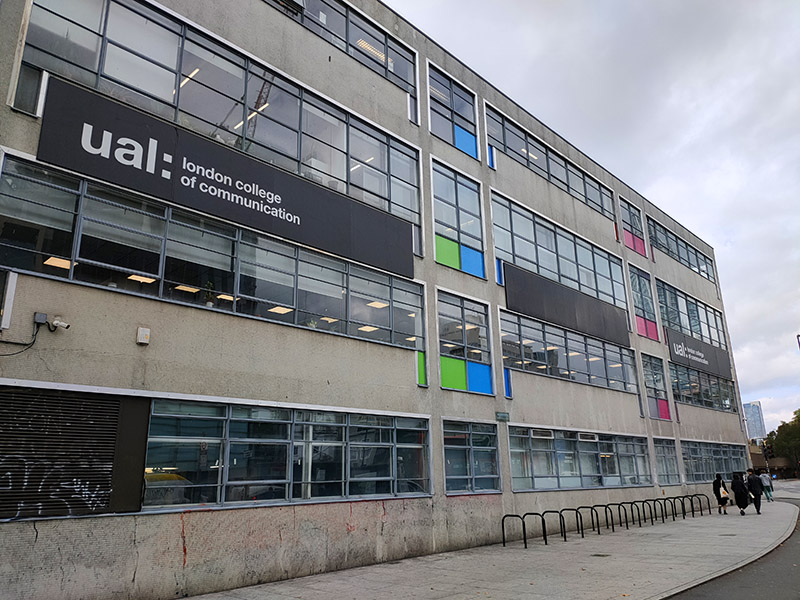
Right next door to the Tabernacle is the London College of Communication (LCC), part of the University of the Arts London. It took up residence here in 1962 when it was known as the London College of Printing and its emphasis was on the graphic arts. Since then it has developed courses in photography, film, digital media and public relations and it took on its current name in 2004 to reflect this expansion. (No Grade II listing for this one as yet :)).

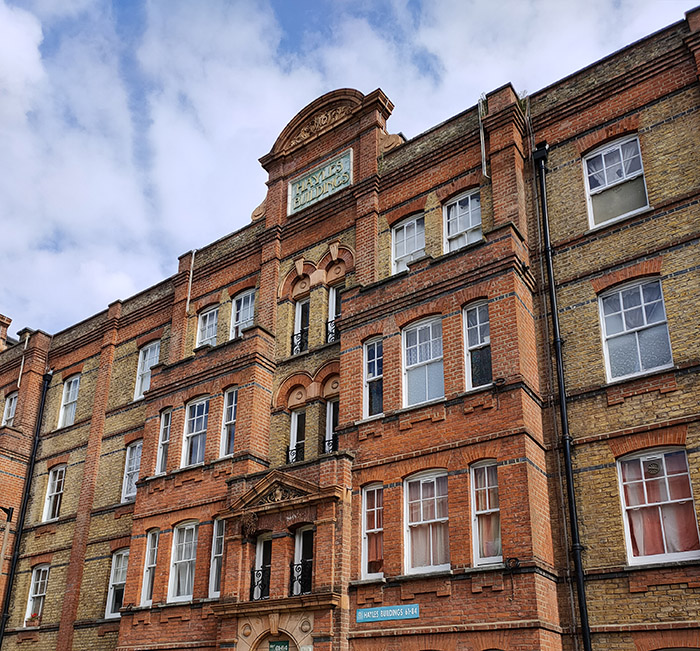
Beyond the LCC we turn onto St George’s Road and then make a series of crossings between this and Brook Drive. First up is Oswin Street followed by Elliotts Row. Hayles Buildings on the latter are artisans’ dwellings that were built in 1891 and 1902 by the Hayles Charity which today is part of the Walcot Foundation based in Lambeth.

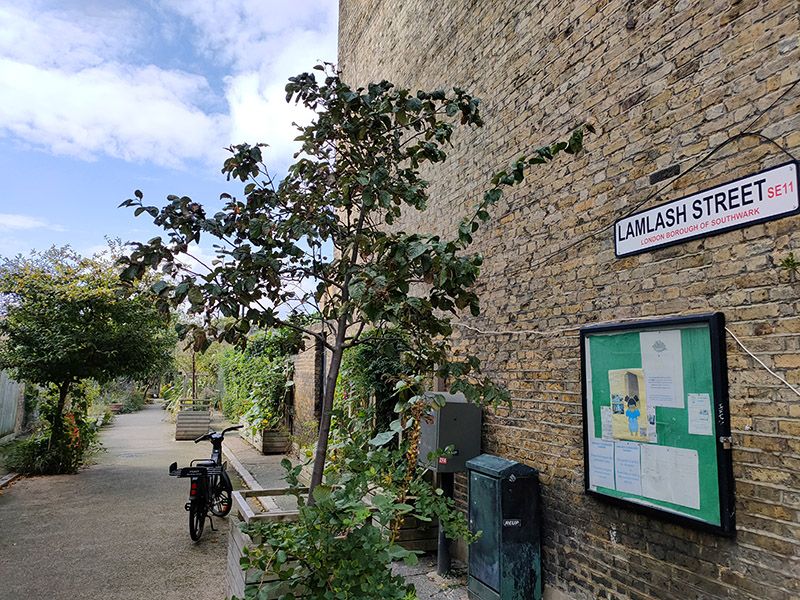
Lamlash Street which links Elliotts Row to Hayles Street has, rather charmingly, been turned into a community garden.

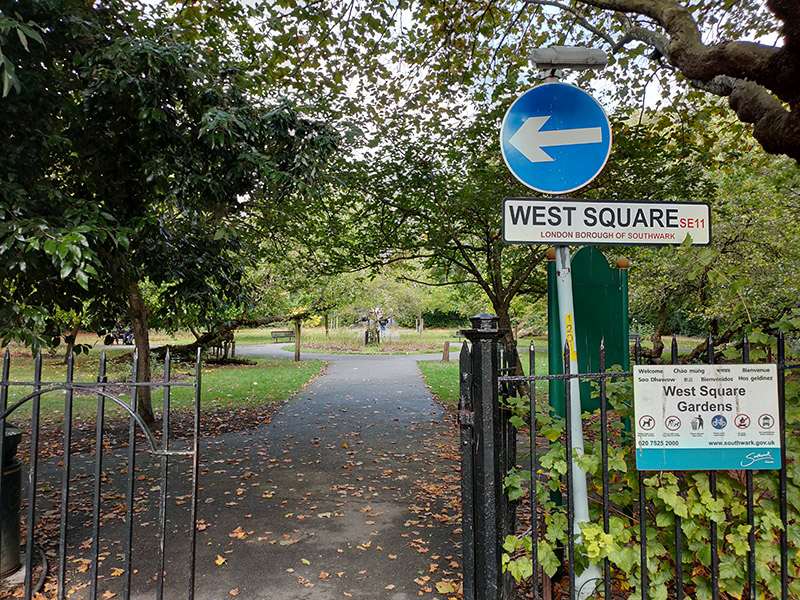
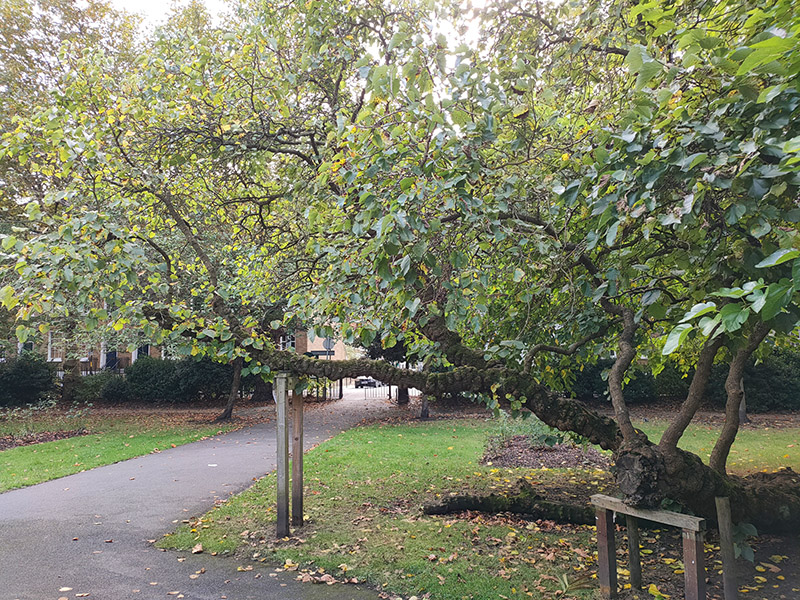
West Square, which together with Orient Street, Hedger Street and Austral Street forms another pair of connections between St George’s Road and Brook Drive, is four sides of (mainly) Georgian terraces surrounding a communal garden (open to the public for once). The name comes from Colonel Temple West who died in 1784, bequeathing the land to his wife and eldest son, who shortly thereafter granted leases to build houses on the site. The garden is notable for a number of splendid and ancient mulberry trees.

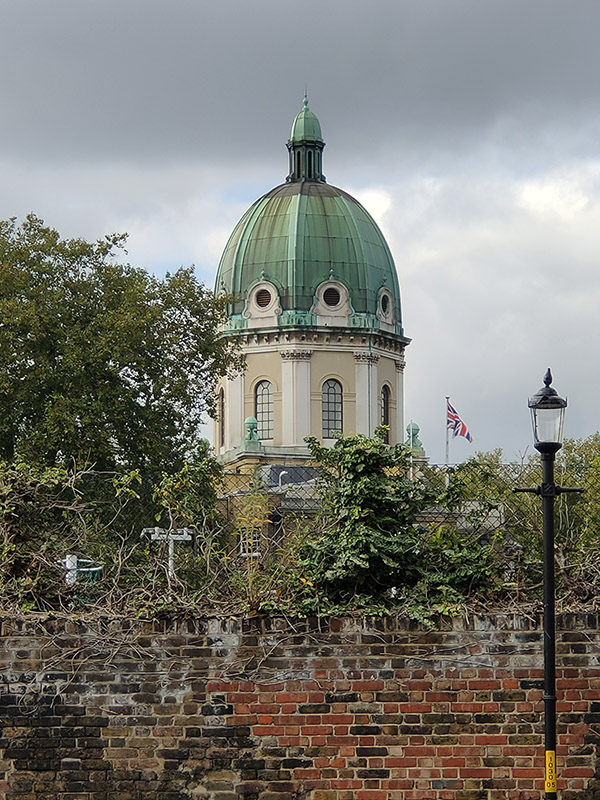
Geraldine Street, which leads off of the north-western corner of the square offers a good view of the dome of the Imperial War Museum (IWM).

….and from here we can cut through into Geraldine Mary Harmsworth Park which occupies the former site of the Bethlem Royal Hospital. The 15 acre site was purchased by Geraldine’s son Harold in 1926 and opened as a park dedicated to her eight years later. Geraldine had 14 children in total, 11 of whom survived infancy, which she had to bring up in increasingly straightened circumstances due to her husband’s alcoholism. Harold, her second son, and eldest son, Alfred, went on to become the owners of The Daily Mirror and The Daily Mail and Viscount Rothermere and Viscount Northcliffe, respectively. Much of the credit (or blame depending on your perspective) for the rise of so-called popular journalism in this country rests on their shoulders.

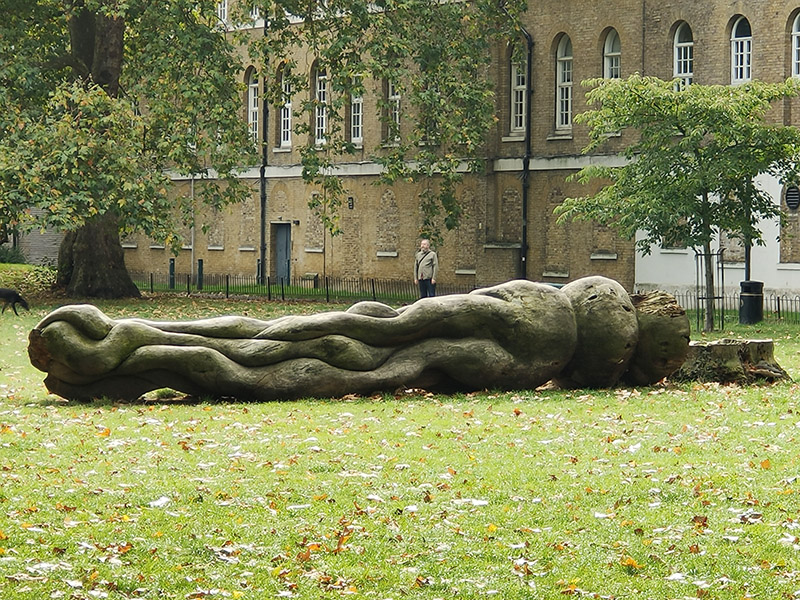
In 2015 Australian artist, Morganico, was commissioned to create a sculpture with peace as its theme out of a diseased plane tree in the park. Had I done this walk just a year earlier I might have seen it still standing but, unfortunately, in 2023 it had to be felled as it was starting to rot.

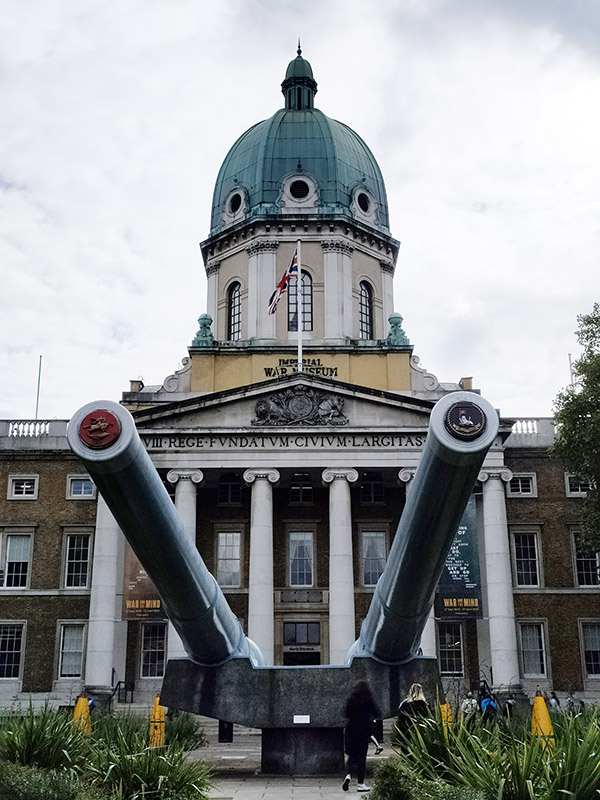
As you may have surmised, The Imperial War Museum is the final item on the agenda for today. In 1917 the Government of the time decided that a National War Museum should be set up to collect and display material relating to the Great War (which was still being fought). Because of the interest from Dominion nations, many of whose subjects had fought and died in the war, the museum was given the title of Imperial War Museum. It was formally established by Act of Parliament in 1920 and opened in the Crystal Palace by King George V on 9 June 1920. From 1924 to 1935 it was housed in two galleries adjoining the former Imperial Institute, South Kensington then on 7 July 1936 the Duke of York, shortly to become King George VI, reopened the museum in its present home, formerly the central portion of Bethlem Royal Hospital, at the bequest of the aforementioned Lord (Viscount) Rothermere (aka Harold Harmsworth).

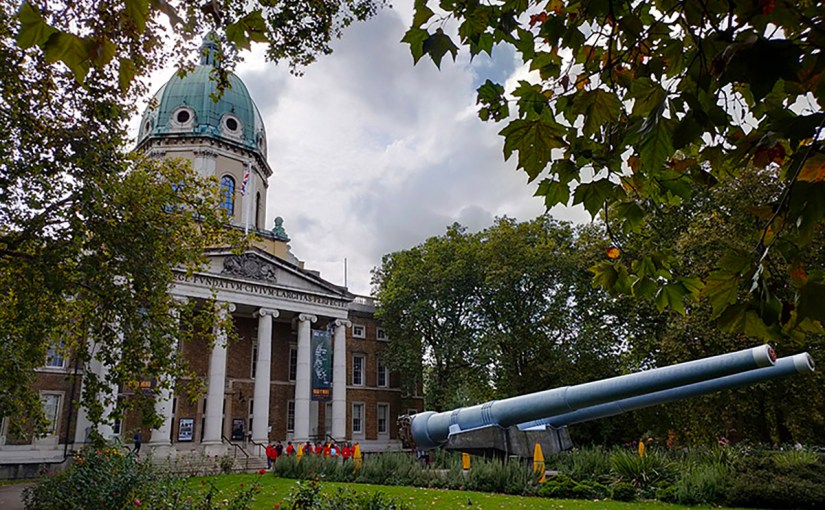
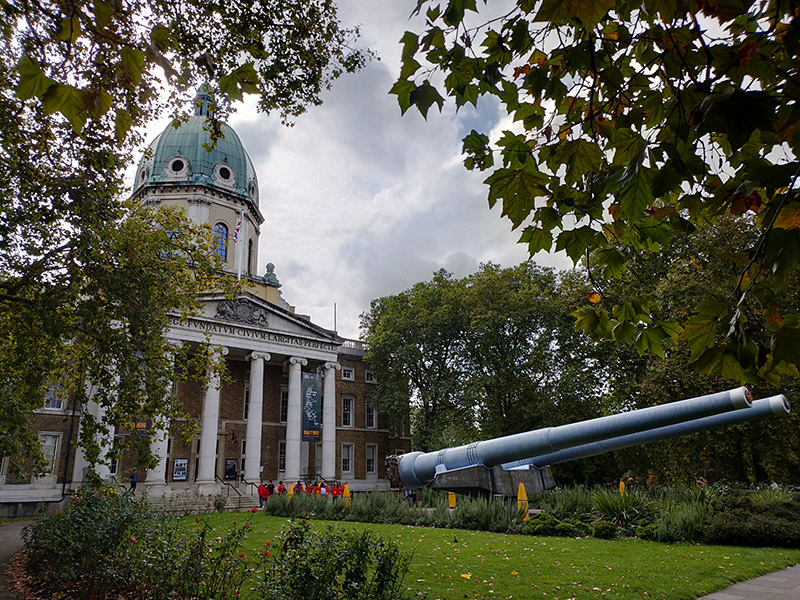
At the outset of the Second World War the IWM’s terms of reference were enlarged to cover both world wars and they were again extended in 1953 to include all military operations in which Britain or the Commonwealth have been involved since August 1914. In 2017 this remit expanded still further with an exhibition, People Power: Fighting for Peace, which told the story of how peace movements have influenced perceptions of war and conflict. The museum was itself the site of a disarmament demonstration, in 1983, organised by Southwark Greenham Women’s Peace Group.  The two guns in front of the museum were installed there in 1968. One came from HMS Ramillies which first saw action in 1920 during the Greco-Turkish War and was later used against Italian land forces and warships in 1940. The other, initially mounted on HMS Resolution, which also saw service during the Greco-Turkish War, was remounted in HMS Roberts, an important unit in the naval forces assembled for the invasion of Normandy in June 1944. 

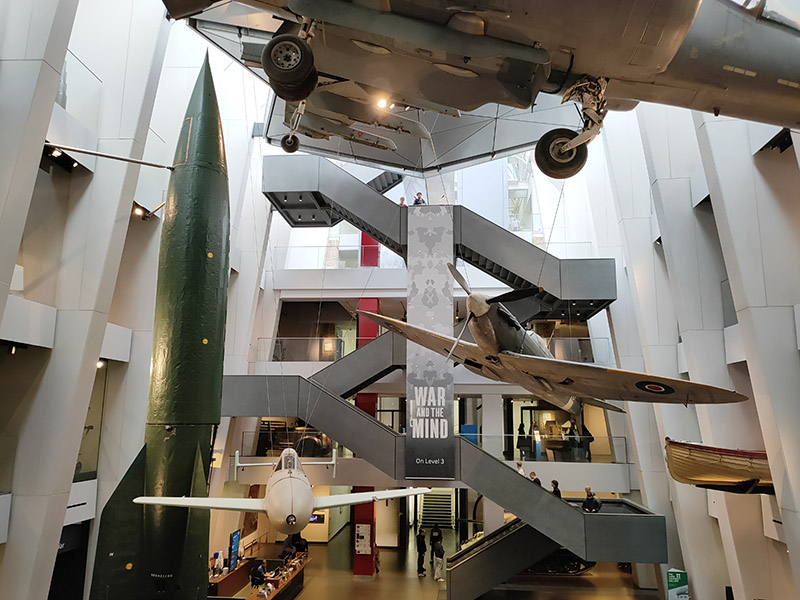
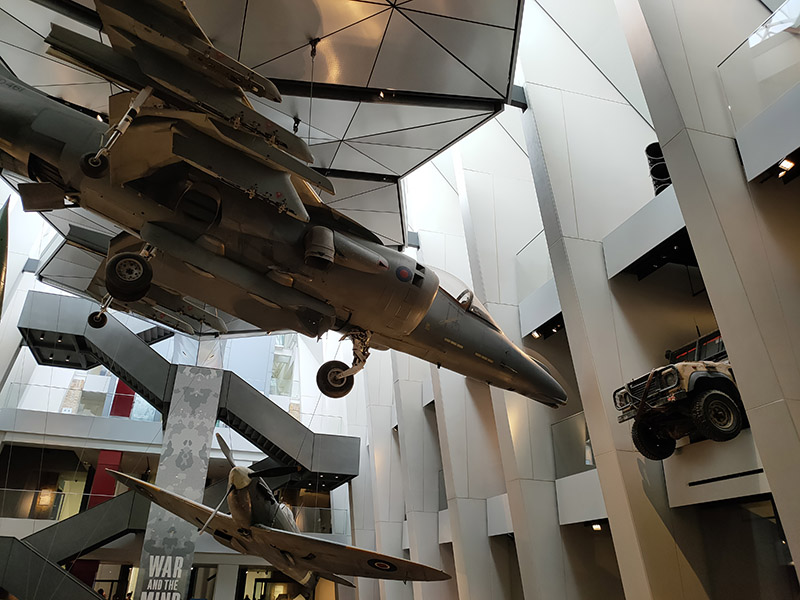
Finally, just going back to the subject of exhibitions; although I didn’t see the one mentioned above I have been to a couple of excellent ones this year including one on the day of this visit showcasing the work of war photographer, Tim Hetherington, who tragically died in April 2011 from injuries sustained when photographing unrest in Libya. The exhibition is closed now but some of the videos included in it, such as Liberian Graffiti, are available to view online.

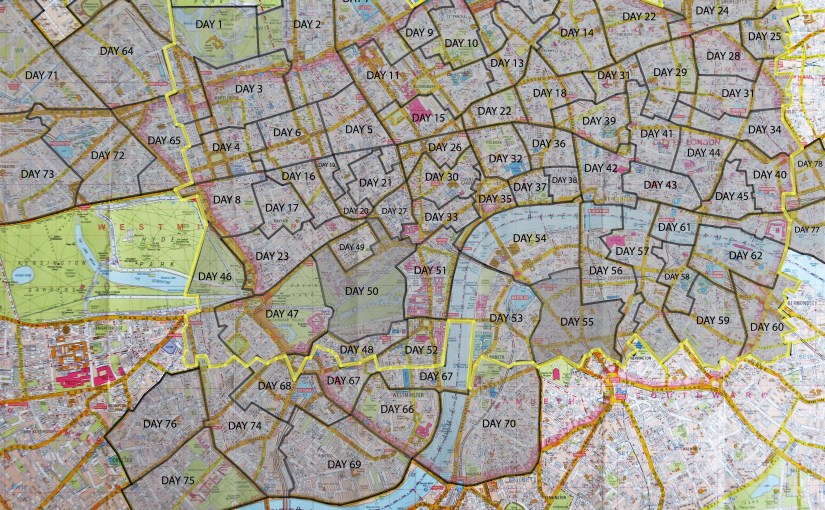
The Bigger Picture…

While I’m steeling myself for another trek around the streets of the capital I thought it might be an idea to present a brief overview of where this project has taken me to date.

I started out in July 2015 with the aim of walking every street featured in the large scale central section of the mini London A-Z. This is essentially the area within the yellow line in the map above. That original objective was eventually achieved in June 2019.

After a break of several months I decided to resume the walks with an extended target represented by the full compass of the map above (AZ Central London 2019); which is roughly equivalent to Zone 1 of the Tube and comprised of about 6,000 streets in total.

As you can see, in the five years since, I’ve probably got about halfway to that goal. These subsequent walks have been less frequent but have generally covered larger areas which is partly why the posts have become increasingly lengthy – rambling in more ways than one.

This map is quite biased towards West London and, as a result, my most recent excursions have actually taken me beyond its eastern border. When I do venture out again it looks like I’m going to have to bite the bullet and try and fill in some of those gaps south of the river.

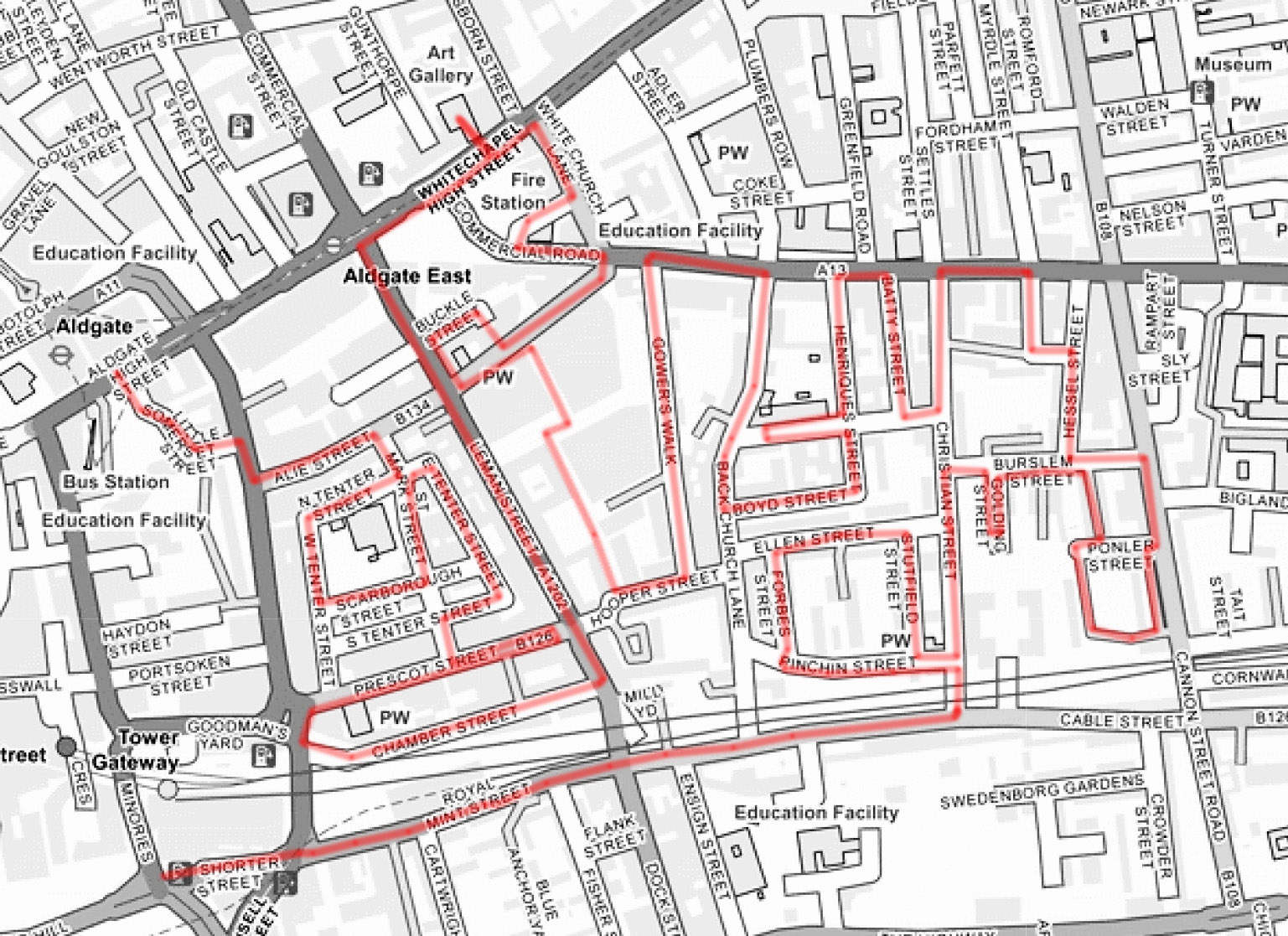
Day 78 – Whitechapel High Street – Commercial Road – Prescot Street -Leman Street

Continuing north from where we left off last time, but with a much less ambitious itinerary, today’s excursion sees us back in the East End. We’re visiting Aldgate East and Whitechapel, specifically the area bounded to the north by Commercial Road (A13) and to the south by Cable Street and stretching from Mansell Street to Cannon Street Road west to east.

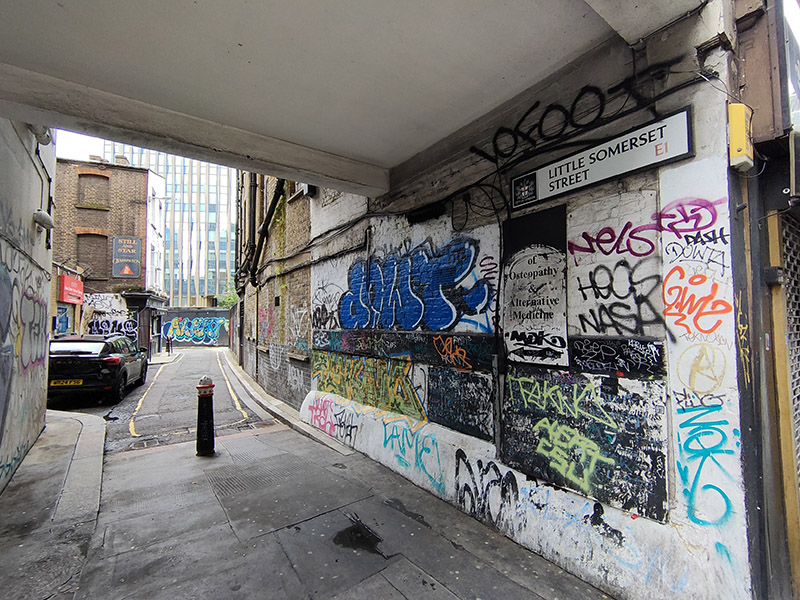
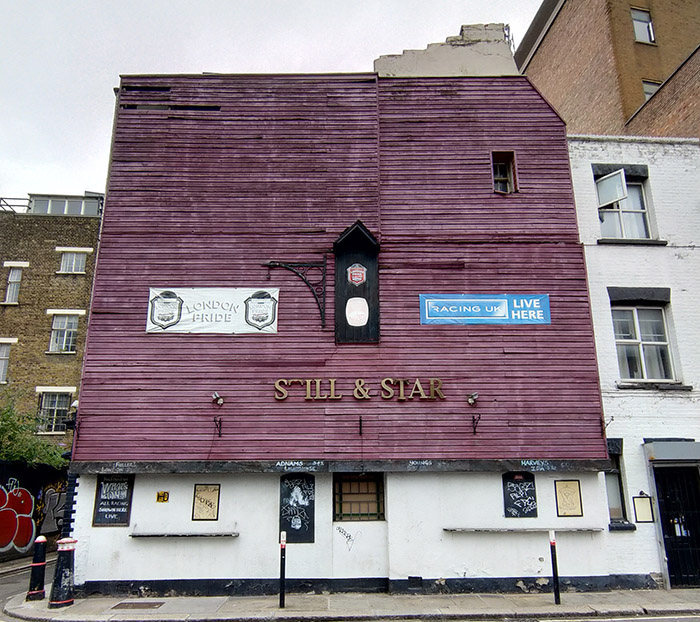
We start today’s journey at Aldgate tube station, crossing the road to cut through Little Somerset Street to Mansell Street, which replicates a very small part of the route we undertook on Day 20. This takes us past the Still and Star pub which at the time of that previous visit in 2017 was still a going concern. However, it was closed in 2020 and a application to demolish it and build an office development on the site was approved by the City of London (inside whose boundaries it just about lies). As you can see from the pictures below that development has yet to get underway; not unrelated to the pandemic I suspect. The loss of almost any pub is to be mourned but the demise of The Still and Star is especially sad as it was believed to be the sole example in the City of London of what is sometimes described as a ‘slum pub’ – in other words, a licensed premises converted from a private house. The name is also unique; apparently the pub originally had its own still, which was housed in the hayloft above, while ‘star’ refers to the Star of David, witnessing the Jewish population of Aldgate in the nineteenth century.

Mansell Street marks the actual boundary between the City of London and the borough of Tower Hamlets. Historically this was a pretty sharp dividing line but in recent years the office blocks and smart residential complexes have been encroaching beyond that line and starting to slightly change the tenor of an area that has for decades been home to a predominantly working class Bangladeshi community.

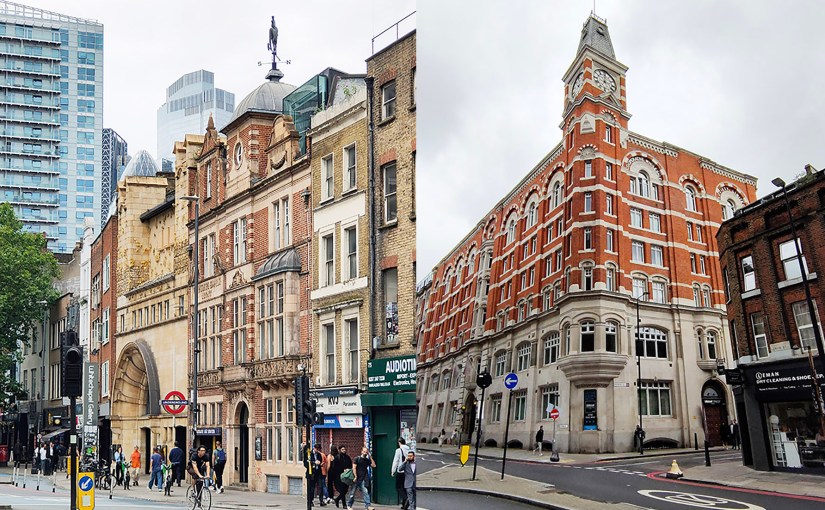
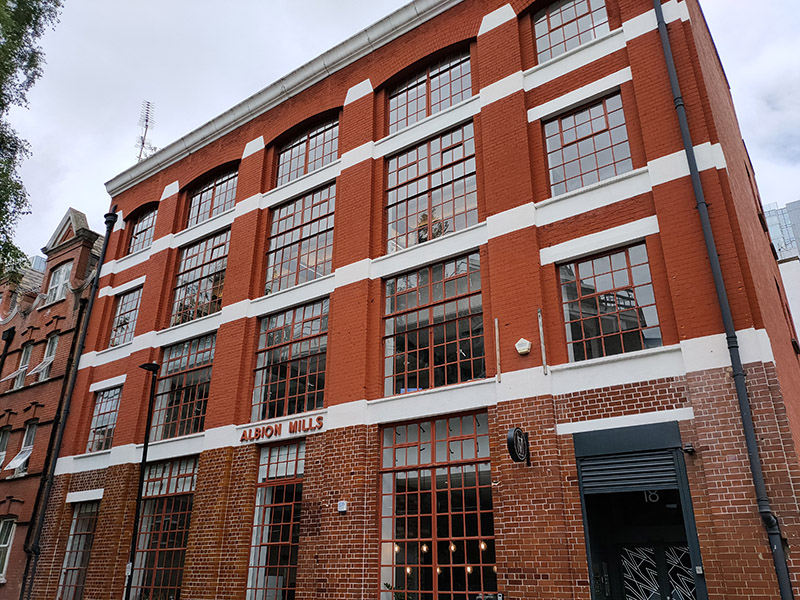
On the other side of Mansell Street we head east along Alie Street then turn right into a web of streets comprising Mark Street, North Tenter Street, West Tenter Street, East Tenter Street, South Tenter Street and Scarborough Street. The five-bay, four-storey, brick-faced warehouse at 18 East Tenter Street was built in 1905 for Israel Hyman and Sons, rag merchants. The architect was Gilbert Henry Lovegrove (1878–1951), a biographer of Sir John Vanbrugh, the builder S. Goodall of Stoke Newington. By the 1940s the building was being used as a ladies’ clothing factory called Albion Mills, a name that has been retained for its current incarnation as an office block.

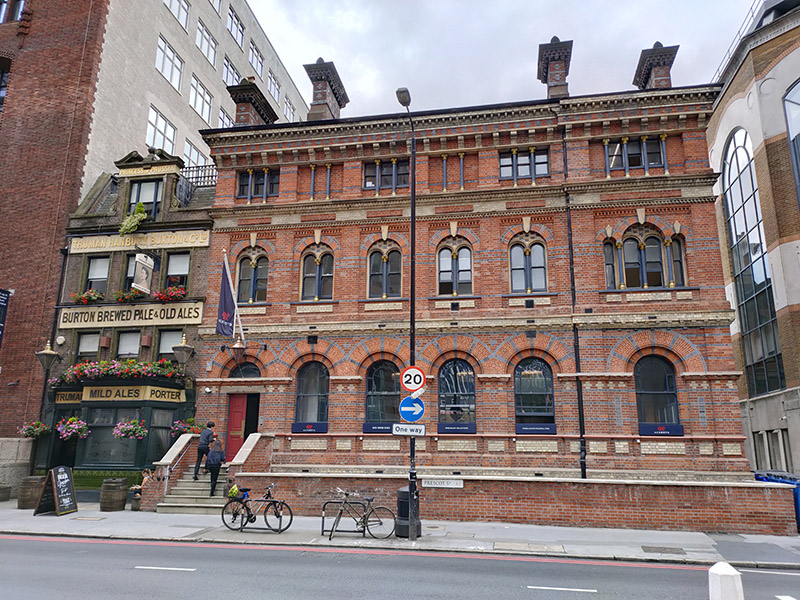
We leave the various Tenter Streets behind via Mark Street onto Prescot Street, coming face to face with the erstwhile Whitechapel County Court, designed by Charles Reeves and Lewis G Butcher and built in 1858-9 in the then-popular Italianate style. Next door to this stands the Princess of Prussia Pub. The present building dates from 1913. Its predecessor, built in the mid 18th century, became a pub in the same year the County Court opened (and subsequently provided most of its trade) and was named in homage to the marriage of Princess Victoria (one of Queen Victoria’s daughters) to Frederick William, Crown Prince of Prussia one year earlier.

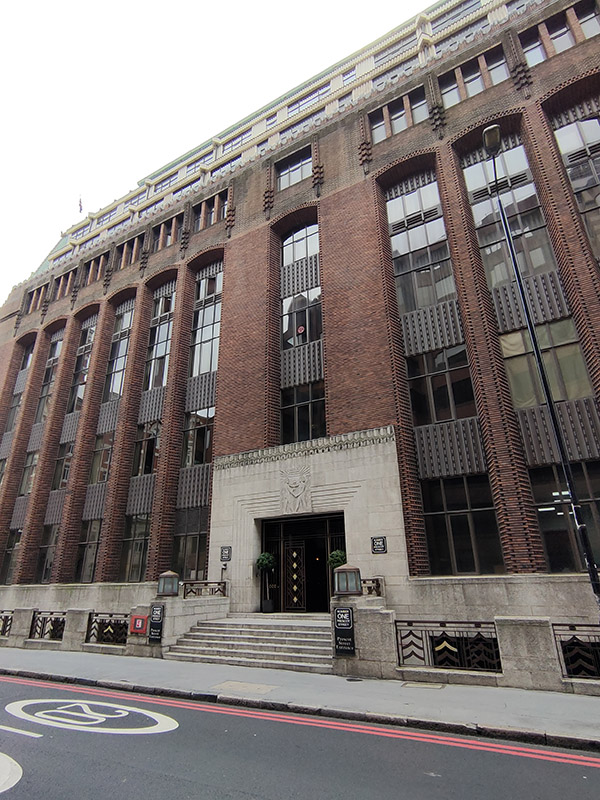
No. 1 Prescot Street is the imposing Grade II listed former Cooperative Wholesale Society building, once known as The Tea House. It was built between 1930 and 1933 to a design of architect, L G Ekins and is a rare example in Britain of the German Expressionist style of architecture. That rarity is hardly surprising in retrospect. Ironically, although this area suffered considerably in the Blitz, the Tea House survived intact.

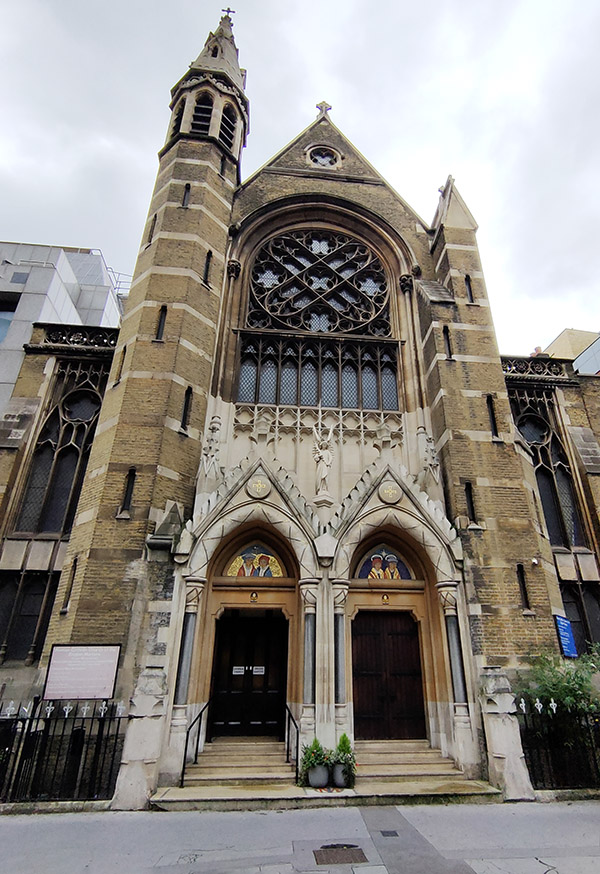
In the mid 1700s, Prescot Street was briefly home to the London Infirmary before it became the London Hospital (now the Royal London Hospital) and moved elsewhere in Whitechapel. The building, which no longer stands, was subsequently occupied by The Magdalen House for Reception of Penitent Prostitutes. An old alleyway, Magdalen Passage, in between the old County Court and the HQ of the Royal College of Psychiatrists, survives to commemorate the name. Further to the west at no.30 stands The Roman Catholic English Martyrs Church, designed by Edward Welby Pugin. The foundation stone was laid by the then Archbishop of Westminster, Cardinal Henry Manning in 1873.

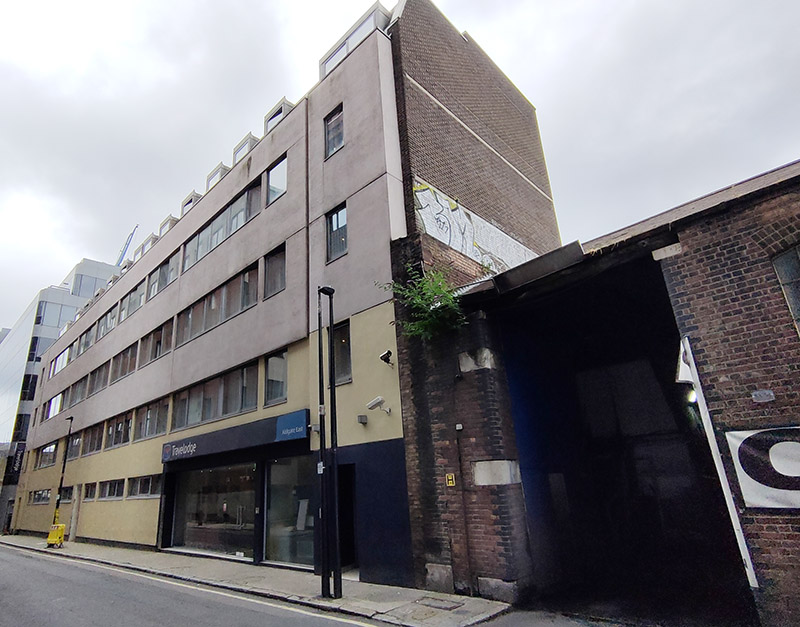
At the western end of Prescot Street we turn the corner and continue our eastward trajectory along Chamber Street which runs parallel to the DLR line and boasts, in the face of some stiff competition, the least inviting Travelodge I have yet to encounter (they’re so unproud of it it doesn’t even show up on Google maps).

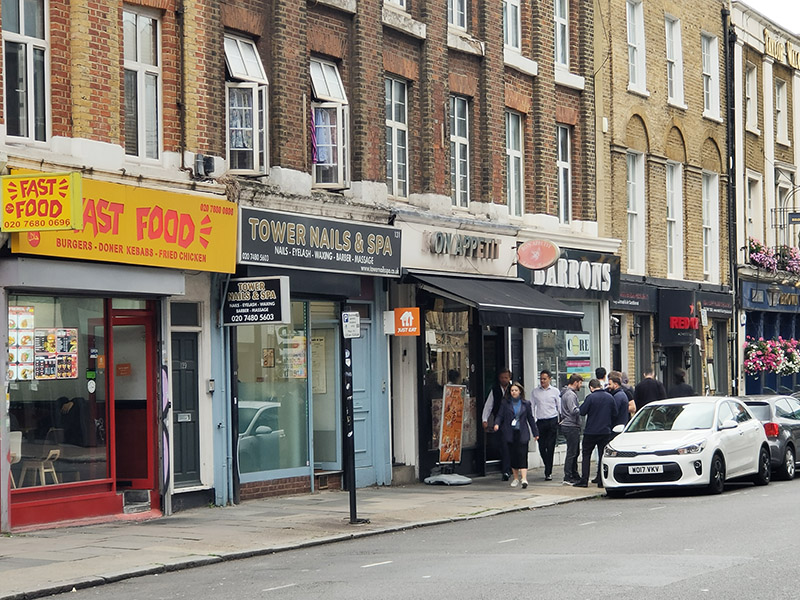
At the end of Chamber Street we turn left onto Leman Street, named after Sir John Leman (1544 –1632) a merchant from Beccles (near Lowestoft) who served as Lord Mayor of London in 1616 and who used the proceeds from his trading in dairy products to purchase and build on this part of Aldgate.

The southern end of Leman Street

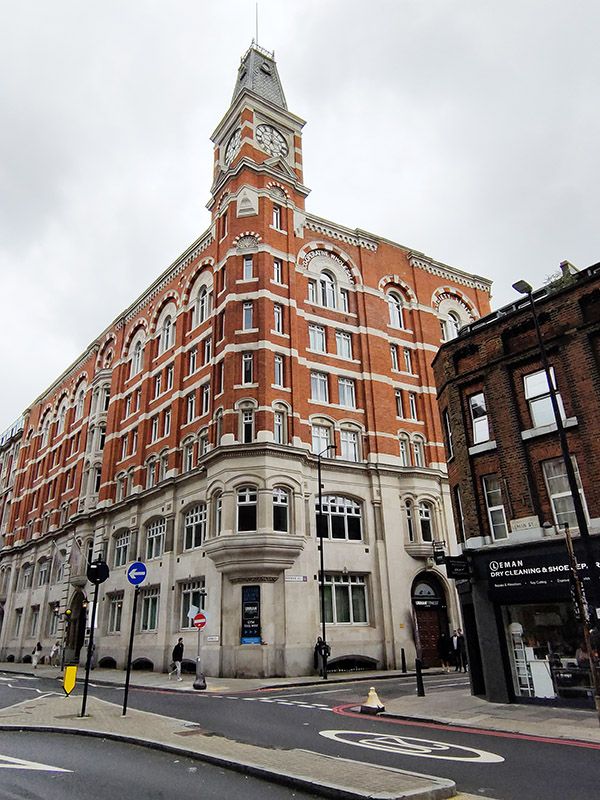
Prior to the construction of No.1 Prescot Street, the Cooperative Wholesale Society (what we now know as the Co-Op) had built an impressive London headquarters at 99 Leman Street in 1885-87. At the formal opening of the building, the CWS announced that it should “be their aim to make this beautiful building a common home for all the various movements having for their object the interest and advancement of the working people“. The building incorporated a sugar warehouse and so in time became known as Sugar House. In recent years it has been converted into luxury apartments which are listed at the kind of prices that would formerly have been unheard of in this area.

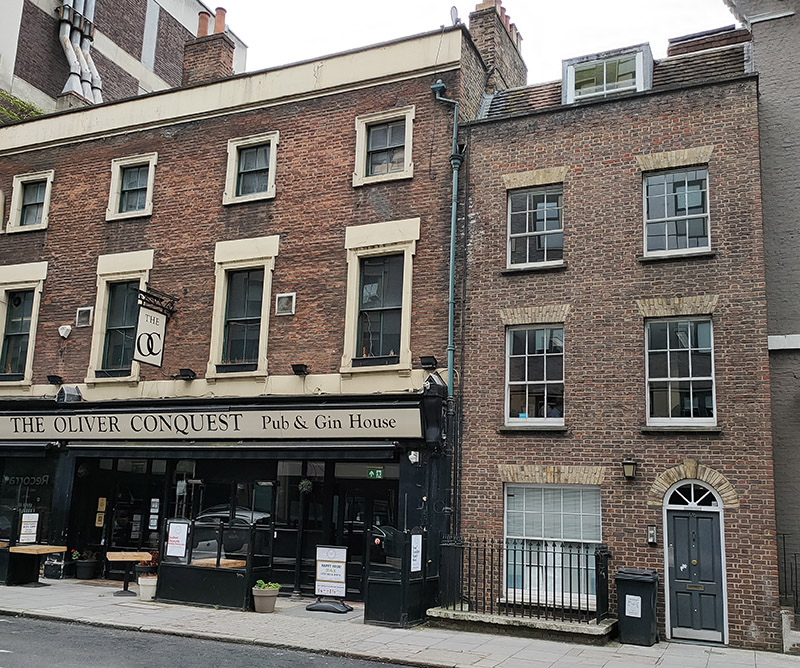
Further north on Leman Street is the Oliver Conquest pub. This dates from the mid 19th Century and was originally called the The Garrick as it was attached to the first Garrick Theatre, which was situated behind the pub. Benjamin Oliver Conquest was the theatre manager there in the early part of the 19th Century hence the name (nothing to do with Oliver Cromwell’s ravages of Ireland thankfully). This is another Grade II listing.

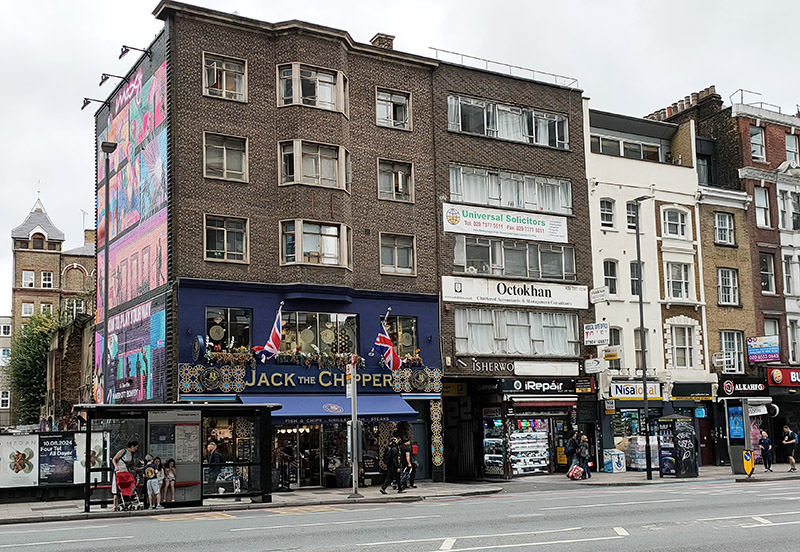
At the top of Leman Street we turn right onto Whitechapel High Street where we’re immediately confronted by another example of shameless association with the area’s most infamous character.

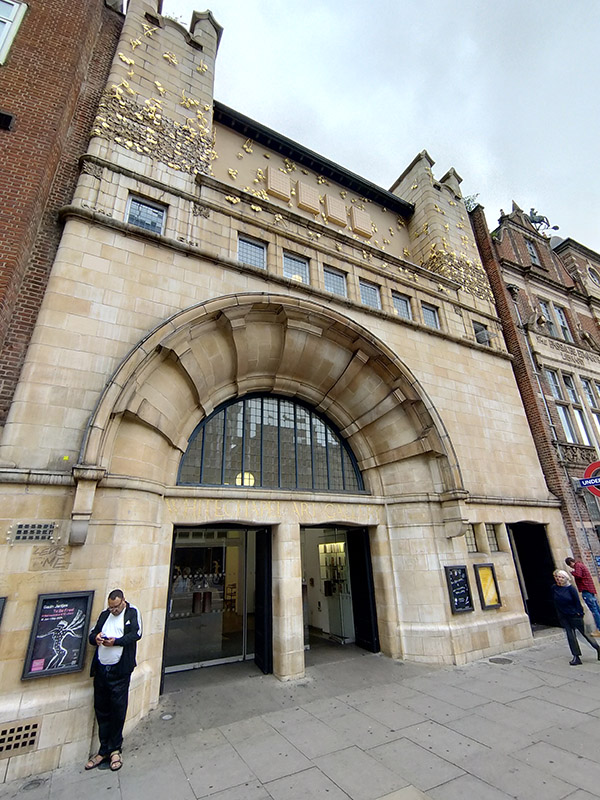
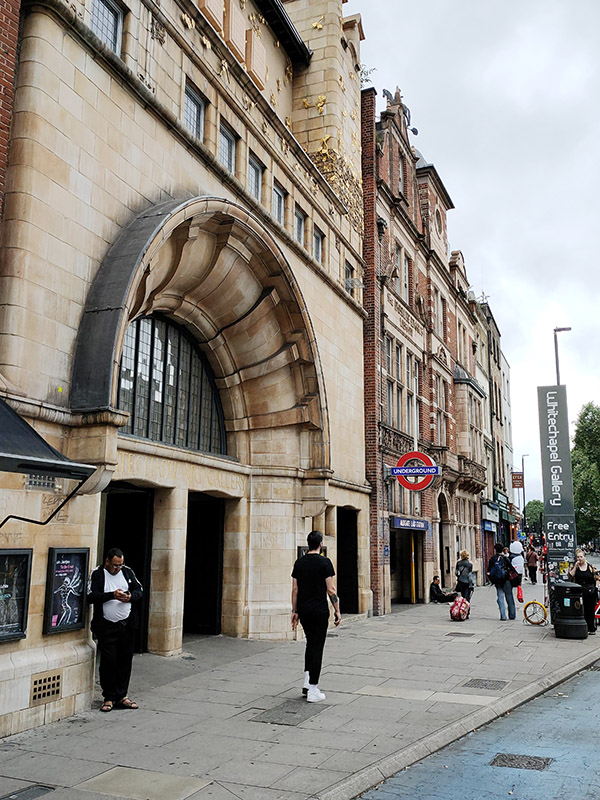
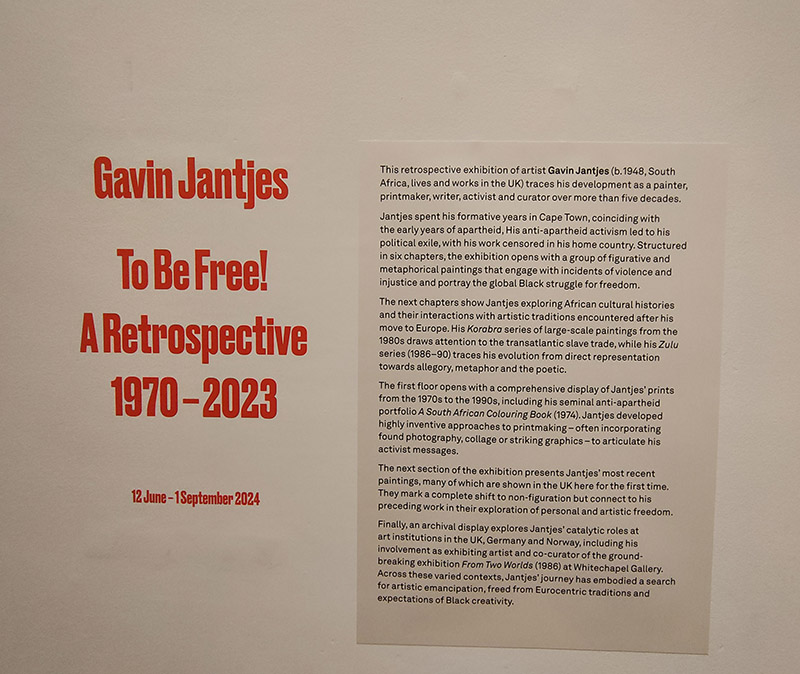
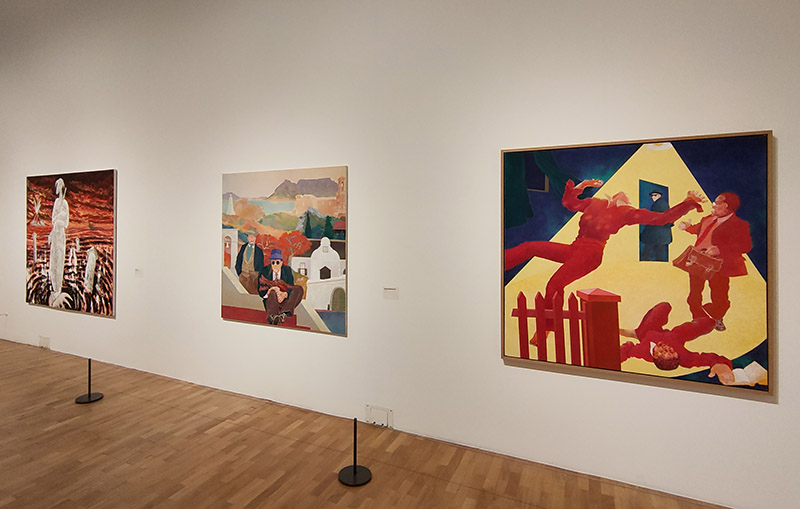
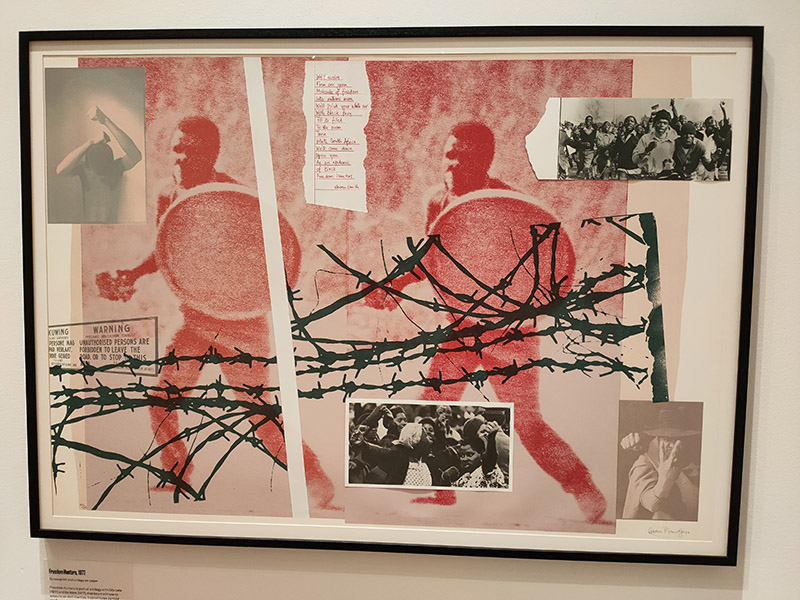
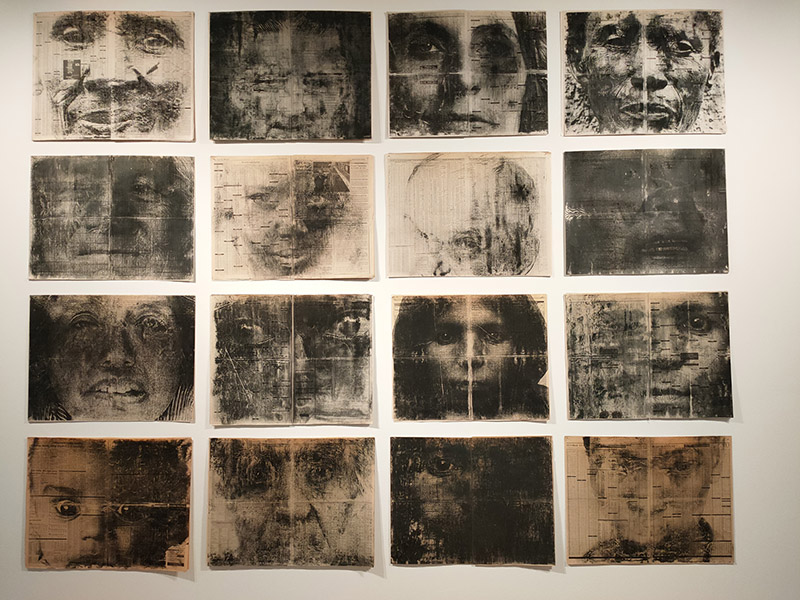
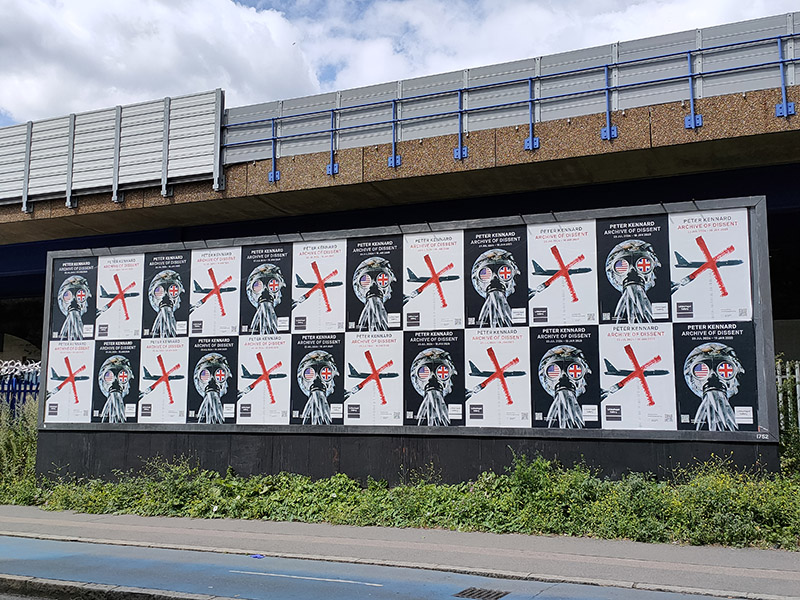
Fortunately, we only have to travel a a short way further for something altogether more edifying. Straddling one of the entrances to Aldgate East tube station, The Whitechapel Gallery was founded in 1901 to present “the finest art of the world for the people of the East End, London”. As a regular visitor over the last three decades I would say it’s made a pretty good fist of keeping to that aim. In 1939, Pablo Picasso’s iconic painting, Guernica, was presented at Whitechapel Gallery, during its only visit to Britain, and the Gallery has consistently premiered ground-breaking shows from artists as diverse as Barbara Hepworth (1954), Jackson Pollock (1958), Gilbert & George (1971), Frida Kahlo (1982) and Sonia Boyce (1988). In 2009 the gallery approximately doubled in size by incorporating the adjacent former Passmore Edwards library building. Its current exhibitions include Gavin Jantjes: To Be Free! A Retrospective 1970 – 2023 (until 1st September 2024) and Peter Kennard: Archive of Dissent (until January 2025). Both are worth seeing and the latter is free to visit.

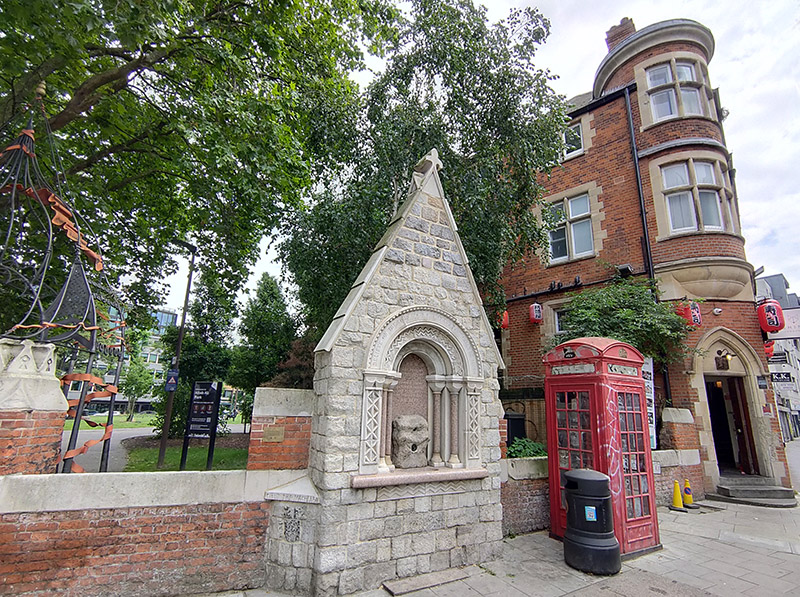
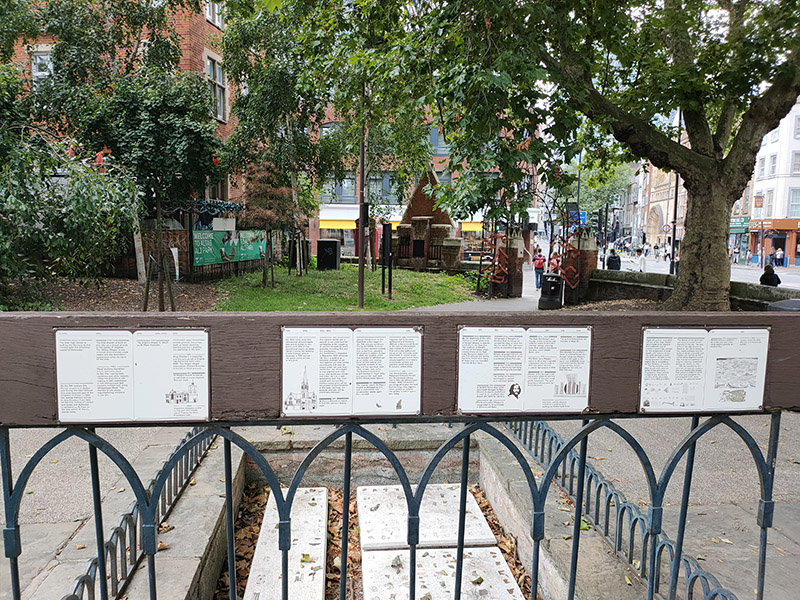
Beyond the gallery, to the east, is what was once the site of St Mary Matfelon church, popularly known as St Mary’s, Whitechapel. Reputedly, the church was covered in a lime whitewash, which gave rise to the district becoming known by the name, Whitechapel. Last rebuilt in the 19th century, the church was firebombed during the Blitz leading to its demolition in 1952. The site, including the church’s nave’s stone footprint and the graveyard – headstones removed – was subsequently turned into a public park. The park was renamed Altab Ali Park in 1998 in memory of Altab Ali, a 24-year-old British Bangladeshi leather clothing worker, who was murdered on 4 May 1978, in the adjacent Adler Street, by three teenage boys as he walked home from work. Ali’s murder was one of the many racist attacks that occurred in the area at that time. At the entrance to the park is an arch created by David Petersen, developed as a memorial to Altab Ali and other victims of racist attacks. 

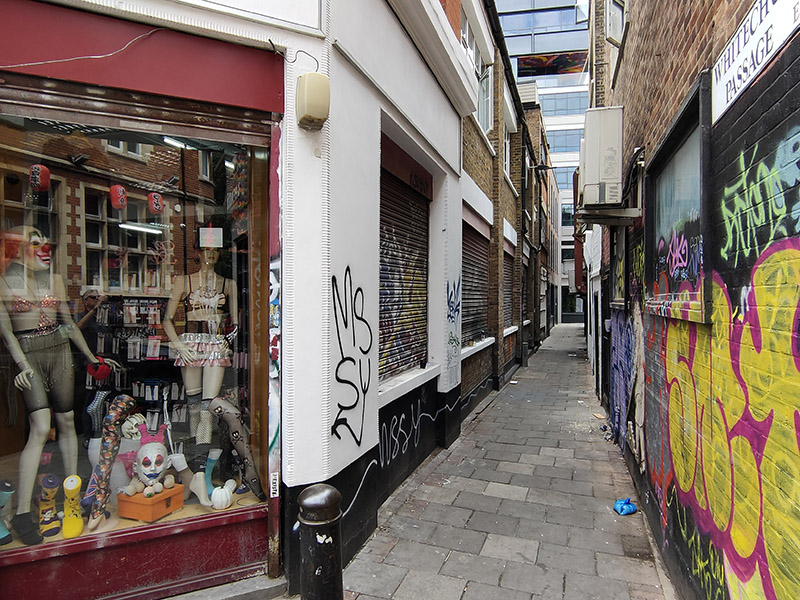
From here we turn southward down White Church Lane, striding swiftly past one of the most disturbing shop windows I’ve seen in a long while (if not ever).

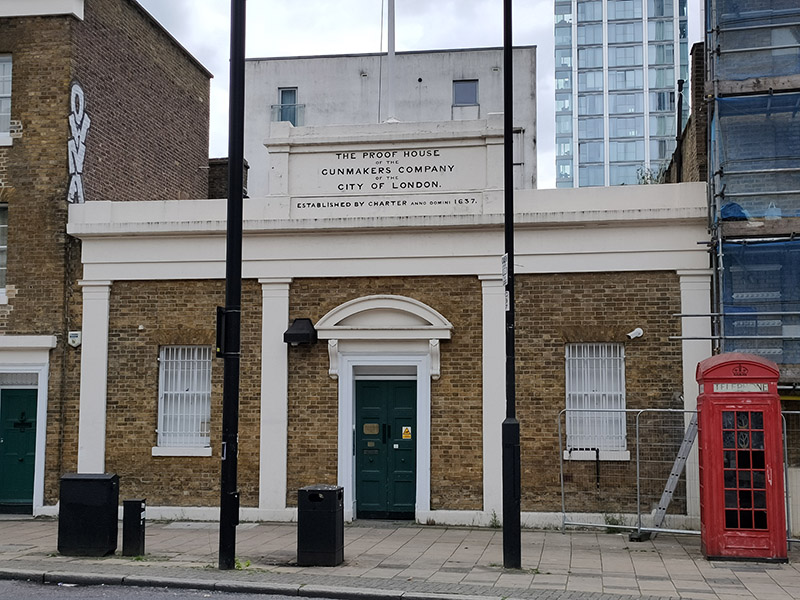
After a brief nod to Assam Street on the left we turn right down Manningtree Street which takes us onto the Commercial Road. At nos.48 -50 Commercial Road is the Proof House which is operated by the Worshipful Company of Gunmakers who have been at this location since 1675 (just 38 years after being granted their charter) though these buildings date from the 19th century. The Proof House has statutory powers to test and regulate the safety of firearms and no gun can be legally sold in the United Kingdom without having undergone proof. It also ensures and certifies that guns wanted for display purposes, rather than use, have been made permanently unusable in the manner required by law and investigates accidents caused by firearms malfunction.

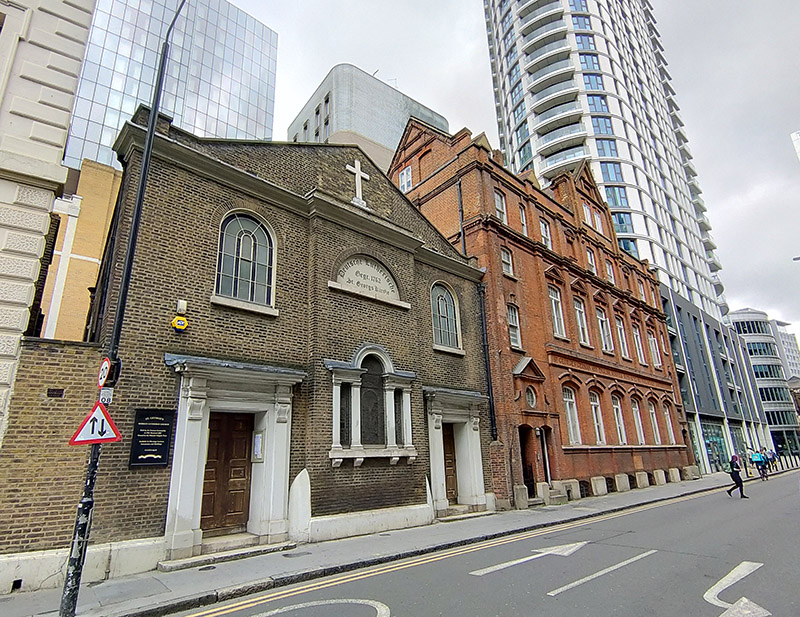
We head away from Commercial Road almost immediately via another stretch of Alie Street. A diversion onto Buckle Street takes us back to Leman Street from where we re-enter Alie Street at the site of St George’s German Lutheran Church. This is the oldest surviving German Lutheran church in the United Kingdom although it ceased to be a place of worship for yer actual German Lutherans in 1995. The founder was Dietrich Beckman, a successful sugar boiler who put up half the money required to buy the site and erect the church. This area of Whitechapel had many sugar refiners of German descent in the nineteenth century and they constituted most of the original congregation.

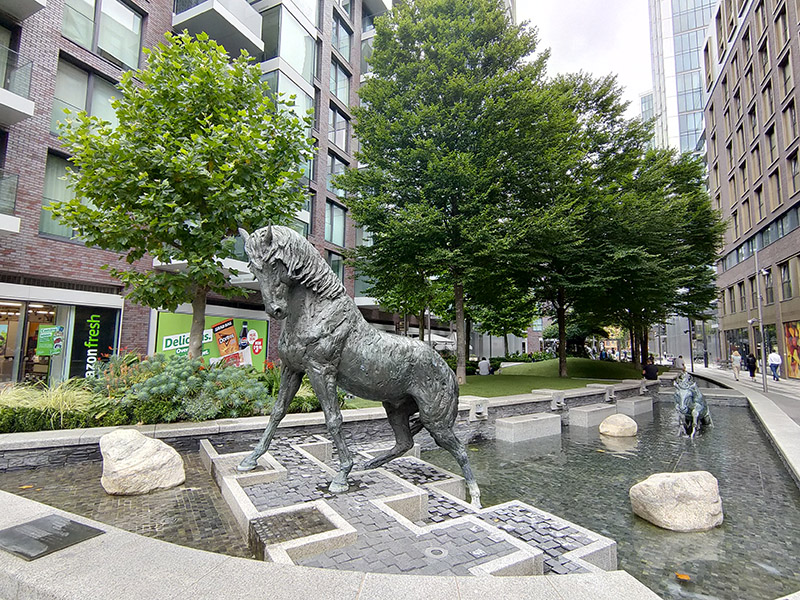
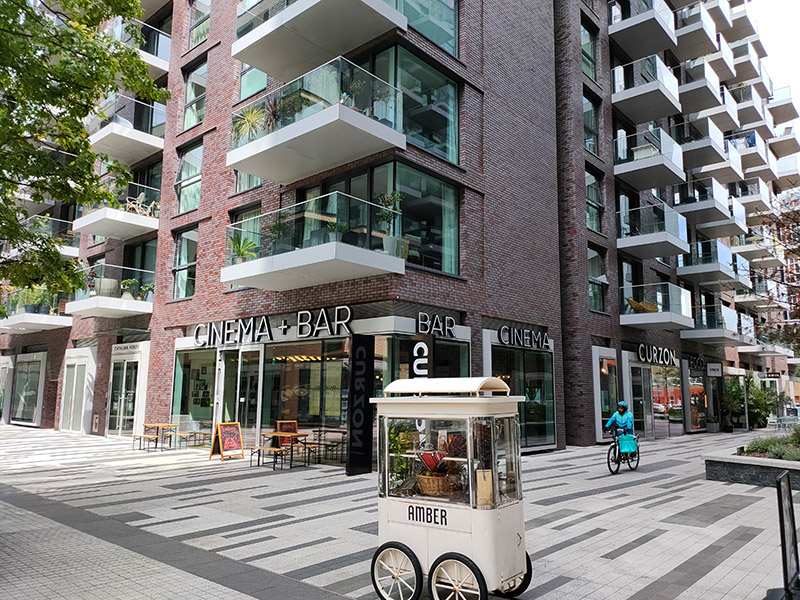
The area to the south of Alie Street was historically known as Goodman’s Fields and the name has been resurrected for the seven acre food, drink, health and entertainment destination created here on the site of an old postal sorting office within the last few years alongside 1000 new residential properties. There are two gyms, an escape room venue and a Curzon Cinema together with open spaces adorned with sculptural commissions. It looks like it’s been beamed here from another part of London altogether but all those properties have been sold.

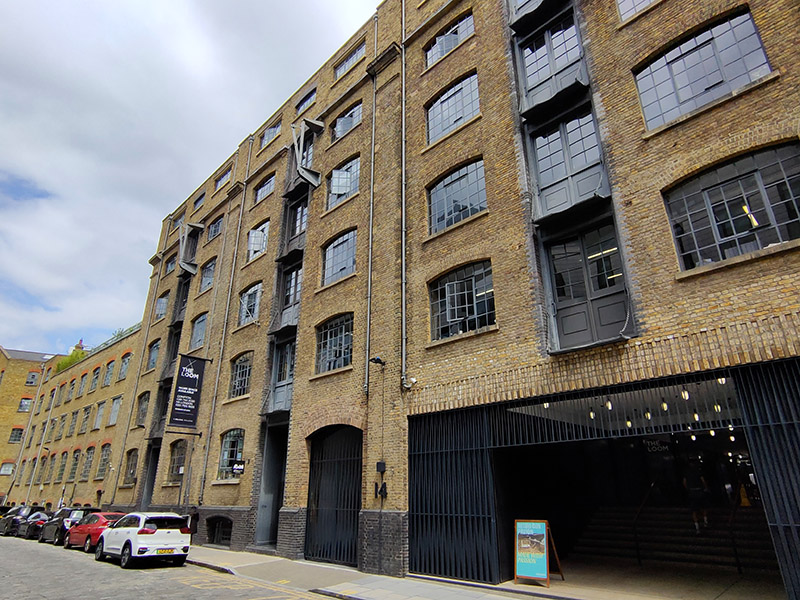
After a stroll through Goodman’s Fields we emerge onto Hooper Street where we turn east and then make our way back to Commercial Road via Gower’s Walk. A former Victorian wool warehouse here has been converted into (or reimagined as) 110,000 sq ft of modern and characterful work space for entrepreneurs, innovators and creative minds known as The Loom.

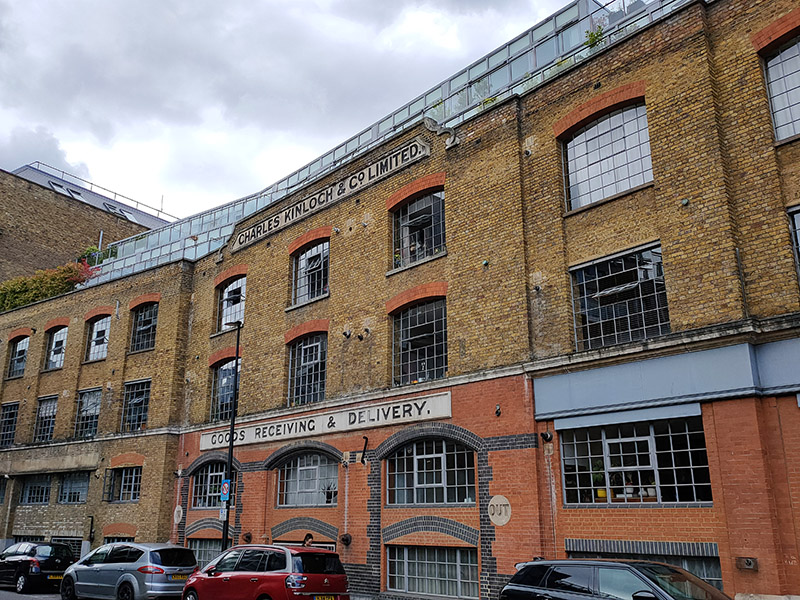
On returning to Commercial road we turn right then right again onto Back Church Lane. By the junction with Boyd Street stands another repurposed warehouse. This one, originally the property of Charles Kinloch & Co Ltd, wine and spirit merchants, is now apartments.

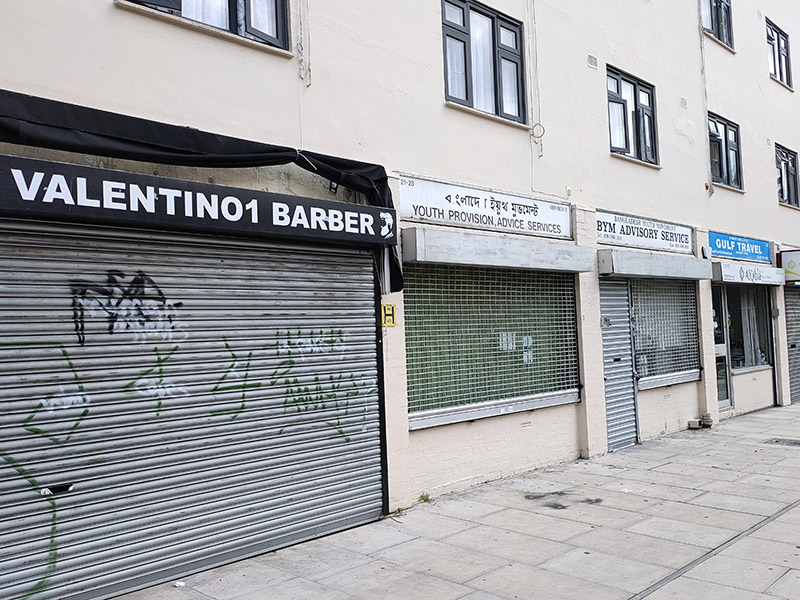
Boyd Street doglegs into Henriques Street where this parade is perhaps another indicator of change in the air.

Also on Henriques Street is a building of 1903 vintage that started life as the London School Board Combined Skills centre. In 2010 it was repurposed as An Information and Communications Technology (ICT) centre for young people, and named the Tommy Flowers Centre after the Post Office engineer (1905 – 1998) who in WW2 designed and built Colossus, the world’s first programmable electronic computer, to help decipher encrypted German messages and who was born in Tower Hamlets. After the war Flowers applied for a loan from the Bank of England to build another machine like Colossus but was denied the loan because the bank did not believe that such a machine could work. He couldn’t argue that he had already designed and built many of these machines because his work on Colossus was covered by the Official Secrets Act. Sadly, the Tommy Flowers Centre hasn’t survived in its original guise; for a time it became part of the Tower Hamlets Pupil Referral Unit but at present it appears to be disused.

Next street leading south from Commercial Road after Henriques Street is Batty Street which ends at Fairclough Street where we turn east onto Christian Street ( a road out of place and time if ever there was).

As I’ve probably mentioned before, this part of the East End has had a longstanding association with the garment industry going back to the tailor’s shops of the 19th century Jewish immigrants. Nowadays it’s the Bangladeshi community that has taken on the rag trade mantle and this is in full evidence on Commercial Road in the form of the numerous wholesale fashion outlets that cluster on both sides. Some of these, mainly on the south side, appear to be more than a little disingenuous regarding their international associations. If any of their import or export business actually involves Paris (or New York or Milan) I’d eat one of those frocks. By contrast the operators based on the north side (bottom picture below) are happy to proclaim their parochialism.

We do one more loop in and out of Commercial Road before we leave it behind. This takes in Umberston Street, Amazon Street and Hessel Street before leading us south on Cannon Street Road. Between 1883 and 1913 this was home to one of the eponymous schools originally established by the philanthropist Henry Raine (who we encountered in the previous post).

Two thirds of the way to the intersection with Cable Street we turn right onto Ponler Street and then do circuit of Estate Road which unsurprisingly encompasses a social housing estate. I would have expected this to include Walford House (nothing to do with Eastenders) which lies immediately to the west but it transpires this includes some now-private flats which astonishingly (for those of you who live outside of London have a current market value of around £200k.

There follows a sequence of streets with nothing of note to report. To the east of Christian Street we have Langdale Street, Burslem Street, Wicker Street and Golding Street and, to the west, Ellen Street, Strutfield Street and Forbes Street. The latter brings us out onto Pinchin Street which again runs parallel to the DLR line. Here we find a warehouse used by the firm of Pinchin Johnson & Associates Ltd from 1859. Pinchin Johnson was a major supplier of paints and coatings to industry and consumers in the first half of the 20th century and was one of the original constituents of the FT 30 index when this was set up in 1935, although the company had been in existence for 100 years by then. In 1960, PJA was acquired by Courtaulds who, in 1968, merged it with the International Paint business they had acquired earlier in the year.

And that’s us done for the day save for a long stroll along Cable Street and Royal Mint Street back to Tower Hill. (And for the first time in a long while we’ve managed to come in under 3,000 words).

Day 45 – Bishopsgate – Leadenhall Market – Lime Street – Monument

Today’s journey’s a little bit different from the usual in that it coincided with the Sunday of this year’s Open House Weekend so I was afforded the possibility of seeing inside a few places en route that would normally be off limits. Case in point is the Drapers’ Hall which we encountered towards the end of Day 44 so we’re going to rewind a bit and kick off with that again this time. From there we’re going to head north up to London Wall then drop south on Bishopsgate to Leadenhall Market before wending our way east and south to finish up at the Monument.

Day 45 Route

As noted, today’s starting point is the Drapers’ Hall on Throgmorton Street. We already covered the history of the Drapers’ Company and the external architectural features last time out so I’m just going to let the images of the interior pretty much speak for themselves (aside from the commentary I’ve added to the individual slides that is). Suffice to say, I had expected something pretty grandiose as befitting third place on the Order of Precedence but I wasn’t prepared for something quite this opulent (and on such a scale).

This slideshow requires JavaScript.

You will have noted that the Victorian artist, Herbert James Draper (1863 – 1920) had quite a prominent role in in the decoration of the Hall. Whether he got the commission on account of his name or because the guiding lights of the company appreciated his somewhat risqué interpretations of mythological and Shakespearean themes is not recorded (so far as I can tell). The thinking behind the tapestries and ceiling painting depicting scenes from the Legend of Jason and the Golden Fleece is rather easier to discern.

After leaving the hall we repeat the walk up Throgmorton Avenue to Austin Friars which leads east to the Dutch Church. Originally this was the site of a 13th century Augustinian priory (Austin Friars) before, in 1550, what is regarded as the oldest Dutch-language Protestant church in the world church was founded here. That first building survived right up until the Blitz destroyed it; the present church was built in the early 1950’s. Perkin Walbeck, the pretender to the English crown (he claimed to be the younger son of Edward IV, one of the Princes in the Tower murdered by Richard III), was buried in the original church following his execution by Henry VII. Today the church still acts as a focal point for the Dutch community in London.

Opposite the church is the Furniture Makers’ Hall – which is the one that I could claim entry to by virtue of ancestry. Typical ! If only my Grand-dads had been drapers instead of chairmakers.

IMG_20170823_163832

Looping round the rest of Austin Friars we emerge onto Old Broad Street opposite the City of London Club, the oldest Gentlemen’s club in, well, the City of London. This was founded in 1832 by a group of prominent bankers, merchants and ship owners and held its first meetings at the George and Vulture pub (see last post). The original membership numbered 600 and included the Duke of Wellington and Sir Robert Peel. If you should want to join then you need to make the acquaintance and get the support of at least six people who are already members (and ladies are equally welcome these days apparently).

IMG_20170823_164020

As you can see, these days the City of London Club, sits in the shadow of Tower 42, which until 1990 and the construction of One Canada Square at Canary Wharf was the tallest building in the UK. Nowadays it’s only the third highest skyscraper in the City of London having been eclipsed in recent years by the Heron Tower (we’ll stick with that name thank you) and 122 Leadenhall Street (a.k.a “the Cheesegrater”). Tower 42, of course, started life as the NatWest Tower (seen from above the shape of the building echoes the NatWest logo). It was designed by Richard Seifert (1910 – 20011) and built by John Mowlem & Co between 1971 and 1980 at a cost of £72m. At 183m the tower dwarfed everything around it at the time of construction and was extremely controversial. It was built around a massive central concrete core from which the floors are cantilevered (anchored at just one end) making it exceptionally strong but reducing the amount of office space that could have been available with an alternative structure. On a note with contemporary resonance; at the time of design, fire sprinkler systems were not mandatory in the UK and so weren’t installed. It was this omission, coupled with a fire in the tower during a 1996 refurbishment, that prompted the GLC to amend its fire regulations and require sprinkler installations in all buildings. Today the building is multi-tenanted with a high-end restaurant on the 24th floor and a champagne and seafood bar on the 42nd.

Moving on we duck into Pinners Alley (by the side of Pinners Hall where I worked from 1996 to 2004) heading west briefly before turning north up Austin Friars Passage – which I always though should’ve been the name of a second division 1970’s pro-rock band.

IMG_20170823_164254

At the other end is Great Winchester Street which is home to Deutsche Bank’s London HQ. Among the artworks in their lobby is one of Damien Hirst’s multi-coloured dot efforts (more of him later).

IMG_20170917_115458

Turning left we end up back on London Wall which as we head east morphs into Wormwood Street. At the junction with Bishopsgate (a.k.a the A10) we switch southward and drop all the way down to Leadenhall Market. On the way we pass a NatWest building of a different vintage altogether; this one built in the 1860’s to a design of the architect John Gibson (1817 – 1892) when the bank was known as the National Provincial Bank of England.

At Leadenhall Market I was able to tag along with a tour that had just started (courtesy of Open House again). I wish I had made a note of the guide’s name so I could give a well deserved shout-out as she was excellent. Anyway, Leadenhall Market dates back to the 14th century and stands on a site that was once the heart of Roman London. As early as 1321 it was a meeting place of the Poulterers while the Cheesemongers (I think we must have missed them on our travels) sold their wares here from 1397. In 1411 the Corporation of London acquired the freehold of the site and it became an established market for fish, meat, poultry and corn. The present wrought iron and glass roofed structure was designed by City Architect, Horace Jones (1819 – 1887) and erected in 1881. The Market has been used as a location in a number of films, most notably Harry Potter and the Philosopher’s Stone where it represented Diagon Alley and the Leaky Cauldron pub.

This slideshow requires JavaScript.

We leave the market via Whittington Avenue and, turning right on Leadenhall Street, pass the Lloyds of London building (not to be confused with the Lloyds Register building which we encountered previously). This iconic, Richard Rogers designed edifice, caused even more of a stir when it was put up (between 1978 and 1986) than the NatWest Tower had. In spite of this, 25 years after its completion it became the youngest structure ever to be granted Grade-I listed status. Lloyds is a leading example of what has been dubbed Bowellism, the practice of putting service areas of a building on its exterior so as to maximise space in the interior (c.f. Paris’s Pompidou Centre). The building consists of three main towers and three service towers around a central, rectangular space. Its core is the large Underwriting Room on the ground floor, which houses the Lutine Bell within the Rostrum. (It wasn’t taking part in Open House this year but the queues are normally prohibitive anyway).

The Lloyd’s building is at no.1 Lime Street; opposite at no.52 construction is underway of yet another skyscraper, The Scalpel. This time that’s an official designation, the developers yielding to the “if you can’t beat ’em join ’em” maxim. This one will top out at 38 storeys and be the new European HQ for insurers W.R Berkley (no me neither).

IMG_20170917_123428

Turn south down Lime Street and then return to the Market along Leadenhall Place. Take a left into Lime Street Passage and then traverse the Market a couple more times via Beehive Passage, Bull’s Head Passage and Ship Tavern Passage. This finds us back on Lime Street which we follow southward to Fenchurch Street. From here we go west back to Gracechurch Street then continue south before cutting round Talbot Court down onto Eastcheap. Turn east as far as Philpot Lane and use this to return northward, poking our noses into Brabant Court on the west side before arriving back on Fenchurch Street. This route takes us around no.20 Fenchurch Street, better known to you, me and everyone else as the “Walkie-Talkie” and the 2015 winner of Building Design Magazine’s Carbuncle Cup for the worst building in the UK. It is notorious of course because its concave shape makes it reflect sunlight into a concentrated beam that on reaching street level has been known to melt the bodywork of parked cars and facilitate the frying of eggs on the pavement. Those incidents took place in 2013, since when the glass exterior has been covered with a non-reflective film. In an interview with The Guardian the building’s architect, Rafael Vinoly, blamed the problem on global warming “When I first came to London years ago, it wasn’t like this … Now you have all these sunny days”.  The ‘sky garden’ at the top of the building was claimed to be London’s highest public park, but since opening there have been debates about whether it can be described as a ‘park’, and whether it is truly ‘public’ given the access restrictions. On the day there was a queue of about eighty or so people waiting to be allowed up.

IMG_20170917_124732

This time we strike eastward until we reach Cullum Street which curves back onto Lime Street. At the junction here that man Damien Hirst makes a second appearance in today’s post, lowering the tone of the neighbourhood with one of his giant anatomical models as part of Sculpture in the City.

IMG_20170917_123920

This time we make an easterly retreat from Lime Street along Fenchurch Avenue and after a short distance cut back to Fenchurch Street via Fen Court. There is a small garden here in what was once the churchyard of St Gabriel Fenchurch, lost in the Great Fire. The sculpture “The Gilt of Cain” by Michael Vissochi was unveiled by Archbishop Desmond Tutu in 2008 and commemorates the 200th anniversary of the abolition of the transatlantic slave trade. It takes its name from a poem of Lemn Sissay which is inscribed on the sculpture and combines Old Testament text with the language of the Stock Exchange.

You’re probably wondering by now where all the churches had got to but don’t worry, there are one or two on the menu today – though fewer than you’ve had to put up with in the last few posts. First up is All Hallows Staining which we reach by taking Star Alley south from Fenchurch Street through to Mark Lane. Mind you, all that remains of this one is its tower which was built around 1320 AD. The rest was demolished c.1870 when All Hallows merged with nearby St Olave Hart Street (see Day 40). The latter was badly damaged in WW2 so a prefab church was erected next to the tower and named St Olave Mark Lane (as you see the sign in the photo confusingly still refers to St Olave). The tower is maintained by the Worshipful Company of Clothworkers, whose hall sits in nearby Mincing Lane.

IMG_20170917_132720

Next we follow Mark Lane down to Great Tower Street which at its eastern extremity adjoins with Byward Street which as it heads west turns into Lower Thames Street. At the juncture here sits The Hung Drawn & Quartered pub which acts as a reminder of the public executions which once took place on nearby Tower Hill, including those of Thomases More and Cromwell.

IMG_20170917_133151

We leave Lower Thames Street almost immediately and wend our way through Bakers Hall Court, Harp Lane and Cross Lane to St Dunstan’s Hill where lie the ruins of the church of St Dunstan in the East, now set within a public garden that was laid out in 1967. St Dunstan’s wasn’t completely destroyed in the Great Fire so it was patched up in the immediate aftermath and then a Wren-designed tower and steeple were added at the end of the 17th century. Apart from a couple of walls this tower was all that remained intact after the WW2 bombing and it was decided not to rebuild again. Personally I like it as it is now – as do the birds.

This slideshow requires JavaScript.

Dropping back down onto Lower Thames Street it’s time for another Open House visit – to the Billingsgate Roman House and Baths (or rather the very partial remains thereof) located beneath a drab 1980’s office block. Discovered in 1848 during the construction of the Coal Exchange building (more of that in a while) these are the only remains of a Roman house accessible in London. It is believed that the house was originally built around the late 2nd century AD and the baths added in the following century. The latest theory is that at the time the baths were constructed the building had become a resting-place for travellers, essentially a Roman version of a hotel. I have to again commend the guides who were exceptionally informative and engaging. Visits to the site are restricted but you can book a tour through the Museum of London outside of Open House weekend.

Opposite here, straddling the area between Lower Thames Street and the river is another Open House destination, Custom House. An English Customs service on an ad hoc basis has existed since at least the middle of the 8th century and was formalised by King Edward I in 1275 as a means of beefing up the royal finances. The current Custom House is thought to be the fifth such to have been built on this site, chosen because beyond this point London Bridge has historically prevented ships from going further upriver. The present building was put up between 1813 and 1817 and initially designed by David Laing (1774 – 1856), Surveyor to the Customs. However within a few years of completion the ceiling of the Long Room had partially collapsed and the floor completely given way. The latter event occurred just a day after Sir Robert Smirke (1780 – 1867) had concluded an inspection of the premises and advised staff to evacuate. Smirke was then engaged to oversee the rebuilding and Laing’s career suffered the same fate as the floor. The Custom House now comprises a west wing built by Laing, a central block built by Smirke and an east wing dating from 1962-66. The southern façade, made of Portland stone, is much more aesthetically-pleasing than the northern face of yellow stock brick; this is because the building was designed to be seen from the river and impress shipfarers from overseas.

This slideshow requires JavaScript.

The Great Long Room was an innovation of Christopher Wren (prolific doesn’t even begin to do the man justice) for his version of the Custom House, built in 1671. This was to be the public room where all import and export business was to be transacted. Because of this room, the public rooms in Custom Houses around the world have become known as ‘Long Rooms’ irrespective of their shape or size. The current Long Room is the work of the aforementioned Sir Robert Smirke, it is 190 feet long and 63 feet wide and has one of the largest unsupported wooden ceilings in Europe.

IMG_20170917_151631
The Long Room

The Coal Exchange which I mentioned earlier was one of the glories of Victorian Architecture, built in 1847-49 to the designs of City architect, James Bunstone Bunning (1802 – 1863) and opened to great fanfare by Queen Vic herself. The interior was one of the earliest and most remarkable examples of cast-iron construction in the world, several years before the Crystal Palace. However that didn’t cut any ice with the town planners of the 1960’s who had little regard for Victorian extravagance. Despite the objections of the Victorian Society and Sir John Betjeman (naturally) the building was demolished in 1962 in preparation for a road-widening scheme that didn’t actually take place until the 1980s. Why do I mention this ? Because the alternative would have been to shave off that unlovely north face of the Custom House, an option which from a 21st century perspective appears immeasurably more appealing.

Coal Exchange

James Bunning was also responsible for the original Billingsgate Fish Market built just to west of the Custom House in 1850 but rendered obsolete by increased levels of trade within 25 years. Work on a new market building, designed by Horace Jones in the Italianate style, began in 1874 and was completed three years later. In 1982 the fish market was relocated to the Isle of Dogs and the building on Lower Thames Street was refurbished under the guidance of Richard Rogers (he gets about a bit as well). The Grade II listed building is now used as an events venue.

IMG_20170917_153833

Time we got moving again I think. Head up Idol Lane which runs to the west of St Dunstan’s and turn right on Great Tower Street before proceeding north (with a manly stride) up Mincing Lane. Next move is west along Plantation Lane which leads into Rood Lane. Venture northward first before doubling back towards Eastcheap. On the corner here stands the Guild church of St Margaret Pattens (unlike Parish churches Guild churches hold regular weekday services rather than serving a Sunday congregation). The church’s exterior is notable for its 200-ft high spire, Wren’s third highest and the only one that he designed in a medieval style. The name of the church derives from pattens, wooden-soled overshoes which historically enabled Londoners to walk about the city without sinking too deep into the mud and effluent which covered the streets. The church still has an affiliation with the Worshipful Company of Pattenmakers.

IMG_20170917_153041

Cross over Eastcheap and drop down St Mary at Hill back towards the river. At no.18 we find the Watermen’s Hall, home to the Company of Watermen and Lightermen (in a riverfaring context the Watermen were the equivalent of taxi-drivers and the Lightermen the truckers). The hall was built in 1780 by William Blackburn and is the only remaining Georgian hall in the City of London. The Watermen are not a Livery Company as such, hence no Worshipful before the name. This is because the Waterman are governed by statutes and Royal Charters that extend beyond the boundaries of the City of London. So unlike the Pattenmakers (no.70) they don’t appear in the Order of Precedence.IMG_20170917_153709

So we’re almost at our final stop and to get there we have to negotiate as follows: north up Lovat Lane, left turn into Botolph Alley, north up Botolph Lane, west along Eastcheap, south down Pudding Lane, left along St George’s Lane back to Botolph Lane, south this time and then west into Monument Street. Which, as you might have guessed, brings us to The Monument itself. As I’m sure you’re aware, this was erected in commemoration of the Great Fire of 1666 and the subsequent rebuilding of the City and was completed in 1677. The fire was alleged to have begun in a baker’s shop on Pudding Lane and the height of The Monument is equal to its distance from that starting point, 202 feet. The designers of the memorial were Sir Christopher Wren (goes without saying really) and his friend Dr Robert Hooke (1635 – 1703). They came up with the idea of a classic Doric column with 311 steps up to a viewing platform and a summit topped with a drum and copper urn from which flames emerge. A total of seven people died falling from the viewing gallery (six suicides and one who accidentally fell after leaning over the balcony to look at a live eagle kept in a cage) before it was enclosed in an iron cage in 1842. It costs £5 (cash only) if you want to ascend up to the platform.

Keeping my five pounds in my pocket I walk on by and finish today’s epic with a stroll up and down Fish Street Hill.

And that’s us finally just about done with the City of London. Next time we’ll be heading back west over to Hyde Park for a complete change of scene.


Day 40 – Aldgate – Tower Hill – Fenchurch Street

Shifting slightly further to the east for this excursion which starts out where we left off a couple of months back on Aldgate High Street then heads south down to Tower Hill, stopping short of the Tower itself, before snaking west and north through the City. Because this walk took place on Easter Sunday the area was atypically quiet apart from the inevitable tourist throng near the Tower and, less obviously, in the vicinity of the Gherkin.

Day 40 Route

So we set out on Aldgate High Street  opposite Aldgate tube station and proceed south down Little Somerset Street. Looking behind us gives a background glimpse of what’s to come later.

IMG_20170416_112536

Reaching Mansell Street we continue south turn right along Haydon Street and then when this adjoins onto the Minories head northward to return to Aldgate High Street opposite the church of St Botolph without Aldgate. This is the second time we’ve encountered St Botolph; he was “without Bishopsgate” a few posts back. In fact there were four medieval churches built in London in honour of this particular saint, all of which stood by one of the gates of the London Wall (more of that later). Aldersgate is the other one of those that survives while the church at Billingsgate wasn’t rebuilt after the Great Fire. St Botolph’s was often referred to as the “Church of Prostitutes” in the late Victorian period. To escape arrest by the police the local ladies of the night would parade around the island in a sea of roadways on which the church stands.

IMG_20170416_113557

Turn south again, this time down Jewry Street which is the site of the Sir John Cass Foundation. John Cass (1661 – 1718) was both a Sheriff and Alderman of the City of London and in 1710 set up a school for 50 boys and 40 girls which originally occupied buildings in the churchyard.  After his death, despite his will being incomplete and contested, his wish to leave the majority of his estate to the school was upheld though it took thirty years. So the Foundation came into being in 1748 and in 1899 a Technical Institute was created alongside the school and this moved into the new-build premises on Jewry Street, becoming the Sir John Cass College in 1950.

After nipping briefly into Saracens Head Yard we take the next right turn, Carlisle Avenue, which takes us into Northumberland Alley which meets its end at the wonderfully-named Crutched Friars. Crutched Friars is one of the alternative names of the Roman Catholic order Fratres Cruciferi (Cross-bearing brethren). Crutched refers to the crucifix-surmounted staff which they carried about with them. Next up, turning north again, is Rangoon Street, which is barely more than an alcove, before we switch eastward down India Street. Turn right next down Vine Street (not the one which forms part of the Orange set of properties in Monopoly – that’s over near Piccadilly) then veer off to the left, down Crosswall which takes us into Portsoken Street. This latter skirts one side of a charming small park wedged in amongst some less than charming buildings.

IMG_20170416_114946

At the end of Portsoken Street we swing round Mansell Street and Goodman’s Yard to loop back onto Minories and then turn south under the railway bridge and past Tower Gateway station, one of the two western termini of the DLR.

IMG_20170416_115538

So we’re now onto Tower Hill and moving west parallel to the north side of the Tower of London. Here there is one of the most substantial surviving sections of the London Wall built around the city  by the Romans in around 200 AD. In total the wall was about 4km long enclosing some 330 acres and including the four city gates (mentioned previously) with a further entrance to the legionary fortress at Cripplegate.

Turn north into Cooper’s Row and head up past Trinity Square Gardens back to Crosswall (whose name now makes perfect sense). Duck through American Square onto the southern section of Vine Street which seems to lead nowhere but then suddenly and bizarrely emerges into a crescent of replica Georgian houses (some rebuilt immediately post WW2 others as part of a 1980s redevelopment) called, simply and literally, Crescent.

IMG_20170416_120510

Double back and cut through a series of alleyways leading out onto Cooper’s Row again. Cross over and proceed west along Pepys Street before turning south down Savage Gardens. This returns us to Trinity Square, to No. 10 Trinity Square in fact, which links neatly back to the previous post for this is the first permanent HQ of the Port of London Authority. It was built in the Beaux Arts style by John Mowlem & Co to a design of Sir Edwin Cooper and was opened by then Prime Minister, David Lloyd-George, in 1922. The façade of the building is interspersed with Corinthian columns and high above the front entrance is a sculpture of Old Father Thames, holding his trident and pointing east in homage to the trade between nations. In 1946 the General Assembly of the United Nations held its inaugural reception here, in what is now known as the UN ballroom. In the 1970’s the PLA moved out to Tilbury and no. 10 was renovated; becoming the home of insurance broker Willis Faber until 2008. Two years after they left a Chinese Investment company bought the Grade II-listed building and after a six year multi-million pound renovation it was brought back to life as a Four Seasons Hotel. In the interim it had a walk-on part in the James Bond Skyfall film as a location for a meeting between M (Dame Judi Dench) and Gareth Mallory (Ralph Fiennes).

This slideshow requires JavaScript.

Moving on clockwise round the square we come first to Trinity House which is the home of the organisation that began life as The Corporation of Trinity House (or to give it its full name The Master Wardens and Assistants of the Guild Fraternity or Brotherhood of the Most Glorious and Undivided Trinity and of Saint Clement in the Parish of Deptford Strond in the County of Kent), under Royal Charter of 1514 with a remit to regulate pilotage on the River Thames and provide for aged mariners. Today Trinity House is the UK’s largest maritime charity dedicated to safeguarding shipping and seafarers as well as incorporating the General Lighthouse Authority (GLA) for England & Wales. The GLA is responsible for a range of aids to navigation from lighthouses to radar beacons but, confusingly, is separate from HM Coastguard (which looks after all aspects of search and rescue).

The building itself dates to 1796 and was designed by architect Samuel Wyatt.

IMG_20170416_121211

On the east of the square at no.43 is a blue plaque commemorating Reverend Philip “Tubby” Clayton (1885 – 1972), founder of the international Christian movement Toc H. And next door at no.41 is a memorial to Viscount Wakefield of Hythe (1859 – 1941) who founded the Castrol lubricants company and was a Lord Mayor of London and also Tubby’s mate.

IMG_20170416_121349

We now take a stroll through Trinity Square Gardens which is dominated by the Merchant Navy Memorial. The original, post WW1, section was designed by Sir Edwin Lutyens with sculpture by Sir William Reid-Dick and was unveiled by Queen Mary on 12 December 1928.  It commemorates almost 12,000 Mercantile Marine casualties who have no grave but the sea, including almost 1,200 lost when the Lusitania was sunk in 1915. The WW2 extension, which commemorates almost 24,000 casualties, was designed by Sir Edward Maufe, with sculpture by Charles Wheeler and was unveiled by Queen Elizabeth II on 5 November 1955.

This slideshow requires JavaScript.

Leaving the gardens on the west side we find ourselves back outside Ten Trinity Square, which as I mentioned is now a Four Seasons hotel having opened a mere three months back in January 2017. On impulse born of curiosity I decide to head inside for a lunchtime cocktail at the Rotunda bar. I have the place to myself pretty much and the very amiable bartender rustles me up a concoction called (appropriately) a Shivering Timbers which will set me back £15 plus service. Still it’s just about worth it to take in the elaborately refurbished interior (and make a luxurious and desperately need toilet stop). As well as the hotel the building incorporates 41 private residences and a private members’ club. At the time of speaking £440 a night for the cheapest room doesn’t include access to the spa and swimming pool as these won’t be open for a few more weeks.

This slideshow requires JavaScript.

Leaving the hotel, head west along Muscovy Street and then turn north up Seething Lane before returning eastward along Pepys Street and via another section of Savage Gardens find ourselves back on Crutched Friars. From here we continue north up Lloyds Avenue most of the buildings on which were built under a redevelopment of derelict East India Company warehouses at the turn of the 20th century. Coronation House at no. 4, built in 1904,  eventually became absorbed into the Lloyd’s Register building which stood on the corner with Fenchurch Street.

IMG_20170416_131130

Lloyd’s Register (not to be confused with Lloyds of London) began life in 1760 in a London coffee house as a marine classification society. Nowadays it operates as a global provider of risk assessment and technical consultancy services across numerous industrial sectors but is still wholly owned by the charitable Lloyd’s Register Foundation.

It moved into the premises at 71 Fenchurch Street, designed by Thomas Colcutt, in 1901. Almost 100 years later it moved again – just a few yards further along Fenchurch Street – to a glass, steel and concrete skyscraper designed by the Richard Rogers Partnership (who of course had previously been responsible for the much better known Lloyd’s of London building – of which we shall hear more another time).

We’re going east again now on Fenchurch Street and at the junction with Leadenhall Street where it turns into Aldgate High Street we find the Aldgate Pump. This historic water pump, which has stood on this spot since 1876, marks the start of the A11 road that eventually leads to Norwich. It’s also considered by many to be the symbolic start of the East End. The wolf’s head is supposed to commemorate the last wolf shot in the City of London though there appears to be no record of when that might have been.

IMG_20170416_131442

Moving on we make a sharp left into Mitre Street and then cut through St James’s Passage to join Dukes Place. Turn the corner and we’re on to Houndsditch. Head up here as far as Creechurch Lane which we follow back across Dukes Place as far as the junction with Heanage Lane which we take back up to Bevis Marks (which Dukes Place merges into and which gets several mentions in Dickens’s Old Curiosity Shop). From here we take the next right, going north, Goring Street to return to Houndsditch. Turn left then left again down the top section of St Mary Axe to revisit Bevis Marks. Turn south this time and then loop round Bury Street past Cunard Place and back onto the lower stretch of Creechurch Lane. Here on the corner with Leadenhall Street stands the actual Cree Church, the Church of St Katharine Cree to be precise. The church was founded in 1280 and the present building dates from around 1630. It is the only remaining Jacobean church in London having survived both the Great Fire and the Blitz practically unscathed.

IMG_20170416_133106

Crossing over Leadenhall Street we squeeze through the alley known as Fenchurch Buildings and having traversed Fenchurch Street again navigate a couple more alleys in the form of St Katharine’s Row and French Ordinary Court which take us round the back of Fenchurch Street Station and onto Hart Street. Turning west we reach another medieval church that eluded the clutches of the Great Fire, St Olaves. This one dates all the way back to 1450 in its present form (more or less – it wasn’t so lucky in the Blitz and had to be extensively restored after the war). The fabulously macabre entrance to the churchyard was a 1658 addition. The church is dedicated to the patron saint of Norway, King Olaf II and the Norwegian connection continued during and after WW2 when King Haakon VII of Norway worshipped here in exile and then in 1954 presided over the rededication ceremony. Samuel Pepys was buried here in 1703 and it is also, weirdly, recorded as the last resting place of the pantomime character Mother Goose (?). Her internment apparently took place in 1586 according to the parish registers and the event is commemorated by a plaque on the outside of the church.

This slideshow requires JavaScript.

Leaving St Olaves behind we move northward again next, up New London Street into London Street (both doing less than nothing to deserve such names) and round Fenchurch Place to the front of Fenchurch Street Station, gateway to Essex. The station opened in 1841 initially to serve the London and Blackwall Railway but was reconstructed after just 13 years when the London, Tilbury and Southend Railway began operations. It’s one of the smallest termini in London and uniquely has no interchange with the underground.

IMG_20170416_134003

Back on Fenchurch Street we continue west for a bit and then proceed north up Billeter Street resurfacing on Leadenhall Street. Keep the westerly trajectory before turning north again up the bottom-most section of St Mary Axe. On the right here is yet another of the City churches that survived the double whammy of the Great Fire and the Blitz. The present St Andrew Undershaft was built in 1532 in the Perpendicular style (a subdivision of Gothic, so-called because of its fondness for vertical lines). The church’s name derived from the shaft of the maypole that was set up opposite the church – though only until 1547 when it was seized by a mob and destroyed as a “pagan idol” (now that’s a show I’d like to see).

IMG_20170416_134926

Continuing north we arrive at the foot of St Mary Axe’s most famous resident, no. 30 more commonly known as “The Gherkin”.  The Gherkin, designed and engineered by Norman Foster and Partners and the Arup Group respectively, was completed in December 2003 and opened in April 2004. 41 storeys and 180 metres tall, it stands on the site of the former Baltic Exchange which was irretrievably damaged by the IRA bomb of 1992. It has a floor area of just over half a million square feet including a restaurant on the 39th floor. In November 2014 the building was bought by the Safra Group, controlled by the Brazilian billionaire Joseph Safra, for £700m (£150m than the price originally anticipated). The sculpted head you can see below is another work in the Sculpture in the City 2016 series; “Laura” by Jaume Plensa.

This slideshow requires JavaScript.

After a circuit round the base of the Gherkin we meander off to the west again down the dead end that is Undershaft. Doubling back and then turning left down Great St Helens we pass in front of St Helen’s Bishopsgate which, you’ve guessed it, also survived the Great Fire and the Blitz (it’s almost like there was some kind of divine providence at work here). Wasn’t so fortunate when it came to that IRA bomb in 1992 however; that took the roof off and also destroyed one of the City’s largest medieval stained glass windows. The church started out as a priory for Benedictine nuns in the early 13th century and was Shakespeare’s parish church when he lived in the area in the 1590s. The artwork on display outside the church, Shan Hur’s “Broken Pillar #12” has been left in place from the 2015 Sculpture in the City collection.

This slideshow requires JavaScript.

At the end of Great St Helens we emerge onto Bishopsgate and head north towards Liverpool Street station. Final point of interest on today’s journey stands at no.110 bounded on its other three sides by Camomile Street, Outwich Street and Houndsditch. Completed in 2011 the building was originally known as the Heron Tower after its owners Heron International but in 2014 its primary tenant pressed for the name to be changed to the pitifully naff Salesforce Tower. The City of London eventually ruled that it should officially be called simply 110 Bishopsgate. Whatever its name the building stands 230 metres tall (including the 28 metre mast) with 46 floors. It currently holds the record as the City of London’s tallest structure, having eclipsed Tower 42 when construction reached the 44th floor.

Situated on floors 38 and 39, Sushi Samba restaurant is one of the top restaurant destinations for the young, aspiring (and easily impressed) denizens of the Home Counties and for those without a head for heights, the lobby contains a 70,000 litre aquarium.

IMG_20170416_134711

And I think that’s us finally done for this time around (and I really expected this one would reverse the trend for longer and longer posts).


Day 35 – Victoria Embankment – Aldwych – Somerset House

Not that many actual streets ticked off today but a reasonable distance covered and yet again a wealth of material to relay. It was also a fabulously bright (if cold) day as you will gather from the photographs. We start with a stroll through Victoria Embankment Gardens before doubling back and then dodging the joggers on the riverside promenade up to Waterloo Bridge. After that we head north to Aldwych and circle round to get back to Somerset House before ducking down onto the Embankment again and continuing eastward as far as Temple tube.

day-35-route

The Victoria Embankment, as you might surmise from the name, is one of the great engineering feats of the Victorian era. The driving force behind this was the desire to improve the capital’s sanitation system by the creation of a new super sewer running west to east into which all other sewers would empty rather than into the Thames. This scheme gained the backing of Parliament when the dry summer of 1858 created what was known as “the Great Stink” with the raw sewage building up in the river making the atmosphere in the Houses of Parliament intolerable. Work began in 1864 and was completed in 1870.  Embankment walls were built close to the low-water mark and the area behind them filled in, making made space not only for the sewer but also for a road and for the new, partially underground, District Line. It also allowed for the creation of Victoria Embankment Gardens where our journey today begins.

p1060263

Prior to the construction of the Embankment this gateway on the topside of the gardens stood on the north bank of the river. Known as the York Watergate it was built in 1826 for our old friend George Villiers, first Duke of Buckingham and, as we have reported previously, King James I’s “favourite”. Built as a point of access from Villiers’ garden to the river, the Watergate was created by Sir Balthazar Gerbier who modelled it on the Fontaine de Medicis at the Palais de Luxembourg.

First of several statues in the gardens is that of Robert “Rabbie” Burns (1759 -1796) to all intents and purposes the national poet of Scotland. This is the only statue of Burns in England whereas there are 16 in the USA and 9 in Canada. Oddly the Soviet Union was the first country to put him on a commemorative stamp (in 1956). There is also a crater on Mercury named after him.

p1060262

In the middle of the gardens stands this memorial to the Imperial Camel Corps which was comprised of battalions made up of British, Australian, New Zealand and Indian soldiers and formed part of the Egyptian Expeditionary Force in WWI. In total the brigade deployed around 4,800 camels which, fully loaded, could cross the desert at between three and six miles an hour. The corps was disbanded after the war.

p1060267

Continuing east through the gardens there are further memorials to : Sir Wilfred Lawson (1829 -1906) Liberal politician and temperance campaigner; Robert Raikes (1736 – 1811) philanthropist and founder of the Sunday school movement and Sir Arthur Sullivan (of popular duo Gilbert & Sullivan) who we have encountered before hereabouts. On the south side there is also Portland stone monument (listed grade II) designed by Edward Lutyens (1869-1944), erected to the memory of Major General Lord Cheylesmore, soldier, administrator, and philanthropist which incorporates a small water garden complete with Koi carp (and very popular with the local pigeons). On the north side in contrast there’s a rather odd little lilting hut whose function is not entirely clear. All in all the collection of memorials in the gardens is pretty random; though none the worse for that.

This slideshow requires JavaScript.

Leaving the gardens and heading back west along the Embankment we pass the monument created by Blomfield and Victor Rousseau as an expression of thanks to the British nation from the people of Belgium for this country’s part in the liberation of Europe in 1944-5.

p1060277

Back at Embankment tube station we cross the road to the riverside walk. You have to feel a bit sorry for W.S Gilbert (the other half of Gilbert & Sullivan) since, whereas his musical partner gets a full bust job with a half-naked floozy draped across the plinth, all he gets is this somewhat unremarkable plaque on the wall by Hungerford Bridge.

p1060278

In 1878 Victoria Embankment became the first street in Britain to be permanently lit by electricity. The lampposts with their distinctive entwined fish (sturgeons apparently) on the bases were designed by George John Vulliamy.

Vuilliamy also designed the faux-Egyptian cast- bronze Sphinxes that flank the most famous landmark on this stretch of the north bank of the Thames, Cleopatra’s Needle. This hieroglyph covered obelisk was created in the Ancient Egyptian city of Heliopolis around 1450 BC. It stands 21 metres tall and weighs 224 tons. So it was no mean feat to transport it over to England in 1877 from Alexandria (where Cleopatra had had it moved by the Romans in 12 BC). The sponsor of this enterprise, at a cost of £10,000, was the renowned anatomist Sir William James Erasmus Wilson. The Needle was housed inside a massive iron cylinder which was then converted into a kind of floating pontoon, named Cleopatra, so that it could be towed by ship, the Olga to be precise. Disaster struck when a storm in the Bay of Biscay caused the pontoon to list uncontrollably and the rescue boat sent across from the Olga capsized with the loss of its volunteer crew of six. Cleopatra was left “abandoned and sinking” but remarkably stayed afloat and was found four days later by Spanish trawlers and then towed into port by a Scottish steamer. Its journey was eventually completed in the wake of the paddle tug Anglia, under the command of one Captain David Glue.

This slideshow requires JavaScript.

As you can imagine the tribulations of Cleo’s transportation were front page news at the time as you can see here daily-news-19-october-1877-cleopatras-needle.

The presence of cormorants along the river attests to the cleanliness of the water in the Thames these days and the concomitant increase in fish stocks.

p1060291

As we reach Waterloo Bridge there is yet another memorial, this time to the Victorian novelist and historian Walter Besant (1836 -1901). These days little more than a footnote in literary history, Besant’s work was extremely popular in his own lifetime. His novel, All Sorts and Conditions of Men, about the working-class inhabitants of London’s East End slums sold 250,000 copies and introduced a vogue for so-called “slum fiction” in the last decades of the Victorian era.

p1060292

Climb the steps up onto Lancaster Place and head up to Aldwych on the other side of the road from Somerset House.

p1060293

The Waldorf Hotel on Aldwych was established in 1908 by William Waldorf Astor of the fabulously wealthy and well-connected Astor Family who had arrived in England in the late 18th century from Walldorf in Germany (natch !) before heading west to America. At the time he had the Waldorf’s namesake in New York built in 1890 Astor was reputedly the richest man in America.

p1060298

Opposite the Waldorf, now part of the Hilton empire, stands India House; home to the Indian High Commission in London (or embassy if you prefer). Designed by Sir Herbert Baker the building was inaugurated in 1930 by King George V. The decorations on the outside of the building represent the various states of India, as they were under the Raj. The closest one in the picture below signifies Madras. Every time I go past here there seems to be some form of demonstration going on but I didn’t manage to ascertain what this one was about.

Duck round the corner down the steps into India Place where there is a bust of Nehru which was unveiled by John Major in 1991. That year also saw the fatal stabbing of 26 year old D.C Jim Morrison, just yards away, trying to arrest a thief while off duty. His killer has never been found.

India Place morphs into Montreal Place and emerges on the Strand opposite to north entrance to Somerset House.

p1060301

Turning east we almost immediately pass by the church of St Mary-le-Strand which now sits on a traffic island in the middle of the Strand (stranded you could say). This is another one of the churches built at the start of the 18th century under the “Commission for the building of fifty new churches”. The steeple was completed in September 1717, but the church was not consecrated for use until 1723. Bonnie Prince Charlie is alleged to have renounced his Roman Catholic faith here in favour of Anglicanism during a secret visit to London in 1750.

Beyond the church we turn left up Melbourne Place then left again to arrive at the front of Bush House The building, opened in 1925, was designed by the American architect Harvey Corbett and financed by an Anglo-American trading organisation headed by Irving T. Bush, hence the name. By the end of that decade Bush House had been declared the ‘most expensive building in the world’, having cost around $10 million. The BBC World Service (or the Empire Service as it was then), with which the building is indelibly associated, first moved some of its operations here in 1940 and had fully taken the place over by the late 1950’s. Given the nature and purpose of the World Service the inscription made above the main portico by the original owners, “to the friendship of English-speaking peoples” was always something of an embarrassment to the BBC. By 1972 more than 750 hours of programming a week in 40 languages from French to Somali were being broadcast from Bush House. In 2012 the BBC departed and World Service staff were transferred to new offices on the Broadcasting House site. The building has been taken over by King’s College as an extension to its Strand campus.

p1060304

p1060305

Doubling back round the arc of Aldwych brings us to Australia House which is, yes you’ve guessed it, the home of the Australian High Commission – both the oldest Australian diplomatic mission and the longest continuously occupied foreign mission in London. Construction of the building began in 1913 but it was only fully completed just after the end of WWI (for obvious reasons). The two sculptural groups that flank the entrance are named The Awakening of Australia and The Prosperity of Australia and are the work of the Australian artist Harold Parker. The flashing chap on the roof is Phoebus driving the horses of the sun the creation of another Australian sculptor, Bertram Mackennal. The building’s luxuriant interior (merely glimpsed below) was used at the setting for Gringott’s Wizarding bank in the first Harry Potter film.

This slideshow requires JavaScript.

Turning the corner back onto the Strand we pass what was the entrance to the now disused Aldwych tube station (originally called Strand station).  The station sat on a branch line of the Piccadilly Line and although there were various plans to extend this it remained just a single-stop shuttle from Holborn up until closure in 1994 (having only operated during peak hours for the 32 years previous to that). Due to its self-contained nature (and the fact it was closed most of the time) the station was always in high demand for film and TV productions. This has continued post-closure with Atonement, 28 Weeks Later, Mr Selfridge and Sherlock amongst the productions to have shot scenes here.

p1060313

Next block along is the rather unlovely main campus building of King’s College.

p1060311

And once past that we’re back at the northern entrance to Somerset House. This riverside site was once occupied by a palace built by Edward Seymour, Duke of Somerset in 1547 and lived in by Elizabeth the First during the five years prior to her coronation. When Anne of Denmark (wife of James I) moved in in 1603 it was renamed Denmark House in her honour. The palace survived the ravages of the Great Fire but after decades of neglect following the departure of its last royal resident, Catherine of Braganza, in 1693 it was demolished in 1775. Within a year work had started on a replacement designed by Sir William Chambers. The new Somerset House (initially just the North Wing) opened in 1779 with the Royal Academy of Arts as its first occupant. The South Wing was completed in 1786 and the East and West Wings two years after that. At which time the Navy Board and the Stamp Office moved in. 1836 saw the establishment of the General Register Office, responsible for the recording of births, deaths and marriages, with which Somerset House became synonymous. Then in 1849 the Inland Revenue was created from the merger of the Board of Taxes and the Board of Excise and took over Somerset House for the next 15o years or so. The Registry Office actually moved out as long ago as 1970 and HMRC finally left for good in 2011. In between times the Courtauld Gallery moved into the North Wing in 1989 and in 1997 the Somerset House Trust was established to preserve and develop Somerset House for public use. The Riverside Terrace was first opened to the public in 2000, the same year that saw the first installation of a temporary ice rink in the piazza that was once, ignominiously, relegated to the status of a car park for Inland Revenue employees.

This slideshow requires JavaScript.

Arriving to find the dismantling of the ice rink in full flow I initially cursed my sense of timing (again) but on reflection the photographs are probably more interesting than they would otherwise have been. The (free) exhibition on in the South Wing – until 26 February 2017 – is the Eye of Modern Mali a retrospective of work by the late Malian photographer, Malick Sidibe, and is highly recommended. Superb accompanying music as well.

p1060324
View across the Thames from River Terrace

Leave Somerset House via the Riverside Terrace and head down the steps on the east side of Waterloo Bridge to return to the Embankment. At the intersection with Temple Place stands this sadly rather obscured memorial to the godfather of Civil Engineering, Isambard Kingdom Brunel (1806 – 1859).

p1060326

Veer left up Temple Place and then again into Surrey Street which features some splendid red-brick terrace houses dating form the late 1760’s.

p1060327

In the bottom right of the picture above you can see the entrance to Surrey Steps which leads down into Strand Lane which, according to the signage, is the site of a “Roman Bath”.

p1060328

The provenance of the bath appears to be a matter of debate but most sources believe it actually originated as the feeder cistern for a grotto-fountain built in the gardens of the first Somerset House for Anne of Denmark in 1612 (some time after the Romans left Britain I think it’s fair to say). Shortly after the construction of the Georgian terraces, the owner of no.33, a Mr James Smith , converted the derelict cistern into a spring-fed cold bath which he opened to the public. It was only in the 1830’s when the management of the bath was taken on by one Charles Scott that the spurious Roman connection began to be advertised. The National Trust took possession of the Bath in 1948 and opened it to the public in 1951 following restoration. Nowadays visitors are only by appointment, otherwise you just have to peer through the very murky basement window to get a view of the bath (that’s if the outside light switch is working).

p1060329

Back on Surrey Street is the old Norfolk Hotel which was patronised at different times by both the agents of the Special Operations Executive French Section and Joseph Conrad, author of The Secret Agent.

p1060330

At the top of Surrey Street we turn right then head south again down Arundel Street. The Arundel House which now stands at the end of the eastern side of the street is a 19th century Tudor revival-style building which is currently the HQ for the International Institute of Strategic Studies. It takes its name from the Arundel House which occupied this riverside site in the middle ages and was the townhouse of the Bishops of Bath & Wells.

p1060333

We’ve now arrived at Temple tube station and the small elevated garden which sits on top of it affords good views of the Thames down towards London Bridge and the back of Arundel Great Court a 1970’s carbuncle that is in the throes of a long-running demolition and re-development project. In front of the garden on Temple Place is one of the so-called Cabmen’s Shelters. These green huts dotted around central London were originally put up between 1875 and 1914 by an eponymous charity with the aim of providing drivers of hansom cabs with somewhere they could get refreshments (non-alcoholic) without having to leave their vehicles prey to theft. Because they were situated on public highways the huts were not allowed to be larger than a horse and cart. All of the remaining huts are Grade II listed.

This slideshow requires JavaScript.

So after all that it’s one final scoot along the Embankment back to Waterloo Bridge and we’re done.

p1060325


Day 29 – Bunhill Fields – Whitecross Street – Barbican

This walk begins opposite where the last one finished, on the western side of City Road at Bunhill Fields, the last remaining historic burial ground in central London. It then winds its way westwards and southwards, taking in Whitecross Street market before ending up at the behemoth of modernist architecture that is the Barbican Centre and estate.

Day 29 Route

Bunhill Fields is the final resting place for an estimated 120,000 souls, a large proportion of them interred at the time of the great plague of 1665 when the area first came into use as a burial ground. As the ground was never consecrated by the Church of England it became a popular burial site for Nonconformists and Radicals among whose number were  John Bunyan (1628 – 1688), the author of The Pilgrim’s Progress and a Baptist, Daniel Defoe (1660 -1731), writer of Gulliver’s Travels and Moll Flanders and a Presbyterian, and William Blake (1757 – 1827), poet, artist and religious iconoclast.

P1050759
Tomb of John Bunyan

P1050760
Memorials to Daniel Defoe and William Blake

The last burial here took place in 1854 and the site was configured into its current layout in the 1860’s with a public garden area created alongside a hundred years later. The burial ground now contains 2,333 monuments, mostly simple headstones (of which there are 1,920) arranged in a grid formation. Among the more extravagant memorials is that of Dame Mary Page, wife of Sir Gregory Page, first baronet, wealthy City merchant and East India Company director. As you can see below, the tomb is unusual in bearing an inscription setting out the graphic detail of the disease that brought about the lady’s demise – believed to be what is now known as Meigs’ Syndrome.

This slideshow requires JavaScript.

After a circuit of Bunhill Fields we head north up City Road a short distance before turning left into Featherstone Street and proceeding west to Bunhill Row with a brief deviation into Mallow Street. Cross over into Banner Street just off the south side of which sits the Bunhill Fields Quaker Friends House, originally the caretaker’s house of a set of Quaker mission buildings, the rest of which were destroyed in WWII. The surrounding gardens and playground occupy the site of the old ‘Quaker Burying Ground’ where the movement’s founder, George Fox, is buried along with many thousand early adherents.

P1050770

At the next intersection with we turn north for the first of several visits to Whitecross Street. This has been home to an eponymous market since the 17th century though by the late 19th century the area had become a by-word for poverty and alcohol, known colloquially as Squalors’ Market. When I used to visit it occasionally ten years or more ago it was very much in the “pile it cheap and high” tradition of street markets with just the odd food stall among the DVDs, kitchen implements and cut-price clothing. Nowadays the “street food” has effectively taken over completely and the market is more-or-less just a lunchtime affair. Naturally (in keeping with established tradition) I got here just as all the stalls were packing up.

We hit Old Street just opposite St Luke’s and resume west as far as Golden Lane where we turn south then east along Garrett Street back to Whitecross Street. The restaurants that line the street have gone pretty upmarket and edged out most of the old-school retailers. The second-hand record store run by a couple of aging Teddy Boys is long gone but one or two of the old guard cling on as you can see.

P1050774

Whitecross Street and its offshoots have also succumbed to the encroachment of “street art” (spreading west from its Shoreditch heartland). Topically and appositely, the latest manifestation is an image of someone very cross and very white.

This slideshow requires JavaScript.

Next up it’s the western stretch of Banner Street which returns us to Golden Lane where we look in on Nags Head Court before turning back east along Roscoe Street. Loop round Baird Street then continue east along Chequer Street (through another Peabody Trust estate). On the return to Bunhill Row we dip south briefly then make a right into Dufferin Street and complete a circuit of Dufferin Avenue and Cahill Street before crossing Whitecross again, this time into Fortune Street. Where this meets Golden Lane once more we encounter what can only be a sign of things to come.

P1050781

Turning south we arrive at no.1 Golden Lane which is now offices of UBS Bank but started life in 1896 as the home of the Cripplegate Institute; a charitable foundation set up by the City of London Parish of the same name. The building, designed by architect Sidney Smith, who was also responsible for what is now known as Tate Britain, incorporated a reference library, news and magazine rooms and classrooms for teaching such subjects as photography, dressmaking and first aid. In 1898 a theatre, staging mainly amateur productions, was opened in the building. The institute left the premises in 1987 and relocated to Chiswick, having sold the building for £4.5m.

P1050782

At its southern end Golden Lane emerges into Beech Street, a lengthy stretch of which forms the Barbican Tunnel. Heading east again we pass the Barbican Cinema which is now housed in a separate building from the rest of the arts complex.

P1050784

Passing this we turn back into Whitecross Street where the last vestiges of the old 3-for-a-fiver style street market are huddled in a concrete forecourt to a Waitrose supermarket. I once bought a checkered trilby hat here for £6 and still get occasional use out of it when the sun deigns to make a proper effort.

P1050786

Next right is Errol Street which forks right again into Lambs Buildings where you can find the home of the Royal Statistical Society in a converted Victorian Sunday School building. In 1833 the British Association for the Advancement of Science (BA) created a statistical section following a presentation by the Belgian statistician Adolphe Quetelet to its fellows. This proved so popular that, a year later, a Statistical Society was founded by Charles Babbage, Thomas Malthus and Richard Jones with the Marquis of Lansdowne as President. Florence Nightingale became the first female member in 1858. I failed miserably to come up with any interesting actual statistics about the RSS but a mildly interesting fact is that Harold Wilson was its President in 1972-73 whilst leader of the opposition to Ted Heath.

P1050787

Just around the corner is St Joseph’s Catholic Church featuring the memorial Cardinal Hume Quiet Garden.

Turning left we’re back on Bunhill Row which was originally called Artillery Walk (as it runs along the western side of the grounds of the Honourable Artillery Company – as featured in the last post). John Milton lived here for a time, during which he completed Paradise Regained.

P1050790

We go south from here onto Chiswell Street and then complete a circuit of Lamb’s Passage, Sutton’s Way and Whitecross Street (for one final time) before crossing into Silk Street and entering the Barbican Centre just as the rain starts to fall.

P1050803

The Grade II listed Barbican is Europe’s largest multi-arts and conference venue and one of London’s best examples of Brutalist architecture. It was developed from designs by architects Chamberlin, Powell and Bon as part of a utopian vision to transform an area of London left devastated by bombing during the Second World War. Although the first proposals were submitted in 1955 it wasn’t until 1971 that construction started and 1982 when the Queen formally opened the building. For a whistle-stop  history of the Barbican site from medieval times to the present day I would recommend this animated video inspired by an essay from the pen of Peter Ackroyd. The image below shows how things looked in 1955, with only the church of St Giles Cripplegate having miraculously survived the carnage wrought by the German air raids.

bombedchurch

The following selection of images feature :

  • a spatial installation in the foyer (until 10/09/2016), exploring the theme of collision, in which two revolving arms narrowly evade each other in a mobile of light and sound in constant motion.
  • the Barbican Muse – a sculpture, created by artist Matthew Spender, of a woman holding the separate masks of tragedy and comedy.
  • the Guildhall School of Music and Drama – founded in 1880 and taking up residence in the Barbican complex in 1977.
  • the “lakeside” terrace (thronged on this day with graduating students from King’s College)
  • the residential tower blocks (now some of last remaining from their era)

This slideshow requires JavaScript.

Nip in to see the latest exhibition in the art gallery which is a retrospective of work by the Icelandic performance artist, Ragnar Kjartansson which you can catch until the first week of September 2016. Centrepiece of the exhibition is a work entitled Take Me Here by the Dishwasher: Memorial for a Marriage (2011) a live performance featuring ten guitar-strumming troubadours singing for up to eight hours a day against a backdrop of a clip from an Icelandic softcore film of the Seventies starring the artist’s parents.

This slideshow requires JavaScript.

Leave the Barbican by the Silk Street entrance again, head east and loop round Milton Street and Moor Lane. This area is home to several of the monolithic glass skyscrapers that have come to dominate the City and these days there are as many residential as there are office blocks and I find myself asking if there isn’t perhaps a finite pool of people who can stump up £3.75m plus for an apartment, however stunning the view.

This slideshow requires JavaScript.

Moor Lane backs onto another massive instalment of the Crossrail redevelopment.

P1050810

Fore Street takes us round to the southern side of the Barbican complex where we find the aforementioned St Giles Cripplegate church.  It is believed that there has been a church on this site since Saxon times though it was during the Middle Ages that it was dedicated to St Giles. The name “Cripplegate” refers to one of the gates through the old City wall, which had its origins in Roman times as a fortification to protect the Roman city from attackers. There is no definitive explanation of the origin of the word ‘Cripplegate’ but it is thought unlikely that it relates to cripples despite the fact that St Giles is their patron saint (along with beggars and blacksmiths).  It is more likely that the word comes from the Anglo-Saxon “cruplegate” which means a covered way or tunnel, which would have run from the town gate of Cripplegate to the original Barbican, a fortified watchtower on the City wall. Sections of the old wall can still be seen near the church.

The church was designated a Grade I listed building on 4 January 1950 and it was extensively restored in 1966. Against the northern flank of the church is one of 14 artworks located around central London which were organised during Lent 2016 into a trail telling the story of the Passion of Christ under the umbrella title Stations of the Cross. Some of these (like the Jean Cocteau mural reported on a couple of posts back) are longstanding features of the city but the one you can see below, station no.9 by G.Roland Biermann, is one of four freshly commissioned pieces in 2016.

This slideshow requires JavaScript.

As you see, after an absence of several weeks, some more of my pigeon friends have managed to inveigle themselves into this final collection of images.

Leaving the many fascinations of the Barbican behind we finish for today by walking down Wood Street to London Wall (which we will return to on other occasion).


Day 1 – Regent’s Park – Marylebone – Baker Street

 Today’s Route

Day 1 Map


Inner Circle

P1040192

Disillusioned with the failure of the Simply Red reunion Mick Hucknall embarks on a new career

P1040197

The Garden of St John’s Lodge – A Little Gem

P1040195 P1040196


Queen Mary’s Gardens

P1040198 P1040199

A drone-free oasis

P1040200 P1040202

Can’t remember ever having been round this part of the park before – the gardens really are quite impressive and the wildfowl exceptionally numerous, especially the geese and you don’t want to get too close to those guys

  P1040208

The herons can be pretty unnerving with their sentry-like stillness. If “The Birds” ever became a reality I wouldn’t want to find myself anywhere near here.

P1040210

P1040214

P1040217

                                                                       crap selfie of the day

P1040220

                                                                        Oi ! Over here mate !


Outer Circle

P1040223Bowen

Elizabeth Bowen Writer 1899 – 1973

“Novelist and short-story writer who employed a finely wrought prose style in fictions frequently detailing uneasy and unfulfilling relationships among the upper-middle class”.  As famous for her 32-year affair with a Canadian diplomat seven years her junior as documented in Love’s Civil War: Elizabeth Bowen and Charles Ritchie: Letters and Diaries 1941–1973 (edited by Victoria Glendinning),


Park Road

P1040225steiner

The Rudolf Steiner House

Rudolf Joseph Lorenz Steiner – Austrian mystic, philosopher, social reformer, architect, and esotericist. Born: February 27, 1861, Donji Kraljevec, Croatia  Died: March 30, 1925, Dornach, Switzerland. Anthroposophy, a philosophy which he founded postulates the existence of an objective, intellectually comprehensible spiritual world that is accessible by direct experience through inner development.
 

P1040227 P1040226

The London Business School – what goes on behind the blue door ?

P1040232jose

José Francisco de San Martin – 1778 – 1850

was an Argentine General, governor and patriot who led his nation during the wars of Independence from Spain.


Gloucester Place

P1040228 P1040229

The Gloucester Arms

Closed in August 2005, it is now a branch of the Francis Holland School though much of the exterior pub decor still remains.


Ivor PlaceP1040230

Proverbs 6:23

For the commandment is a lamp; and the law is light; and reproofs of instruction are the way of life:

– King James Bible “Authorized Version”, Cambridge Edition


Glentworth Street

P1040231

Cyprian (Latin: Thascius Caecilius Cyprianus) (c. 200 – September 14, 258) was bishop of Carthage and an important Early Christian writer. He was born around the beginning of the 3rd century in North Africa, perhaps at Carthage, where he received a classical education. After converting to Christianity, he became a bishop soon after in 249. He was executed by beheading during the reign of the Roman Emperor Valerian.


Balcombe Street

P1040236

Flat 22b – infamous site of the 1975 Balcombe Street siege in which four members of the provisional IRA (responsible amongst other things for the murder of Ross McWhirter) took a middle-aged couple hostage for six days before giving themselves up to the Met.

P1040237 P1040238

Pub of the day – excellent crab sandwich


Siddons Lane

P1040235

Bentley1919

Bentley was founded in 1919 by Walter Owen Bentley, or “W.O.” as he was known


Dorset Square

P1040239dodie

Dodie Smith – 1896 – 1990

Writer of “A Hundred and One Dalmations” and “I Capture The Castle” and joint author of the script for the 1944 film “The Uninvited”.

  The Uninvited


York Street

 P1040242P1040241

St Mary’s Church

Not keen on people sleeping in the doorway


Montagu Place

P1040243

Who’d have expected the Swiss of all people to have their embassy in a 1970’s office block (though the side façade is significantly more prepossessing). The Swedish consulate across the road is even less impressive.


Crawford Street

P1040244

On Crawford Street, once well-known for its antique dealers, is the long-established (200 years as of 2014) pharmacy of Meacher Higgins & Thomas


Baker Street

P1040234 P1040233

The queue outside the Sherlock Holmes Museum. Not sure what these people are expecting to see. Are they under the impression that it will be memorabilia of real person.

P1040246

219 Baker Street (Ability Parkview) features the retained central tower and a section of the Baker Street facade of Abbey House, which served as the headquarters for the Abbey Road Building Society (then known as Abbey National and now Abbey) from 1932 until 2002. The prominent clock tower on the Baker Street frontage is topped by a 13 metre (43 feet) tall flagpole. The site of Ability Parkview covers the address of 221B Baker Street, the fictional home of Sherlock Holmes. However, the address only came into existence when Baker Street was extended to the north in 1930, long after Sir Arthur Conan Doyle’s books were written. The retained 1920s east façade and open clock tower are art deco/art moderne in style and were designed by J. J. Joass.