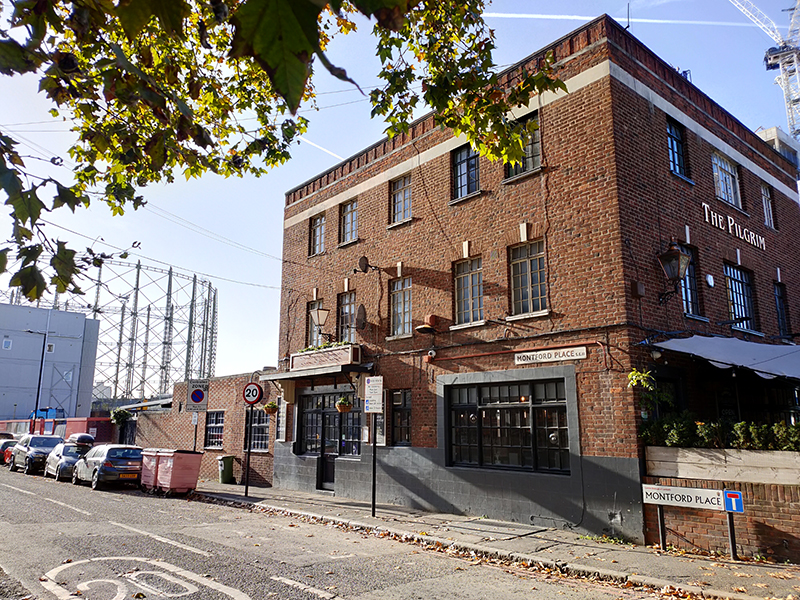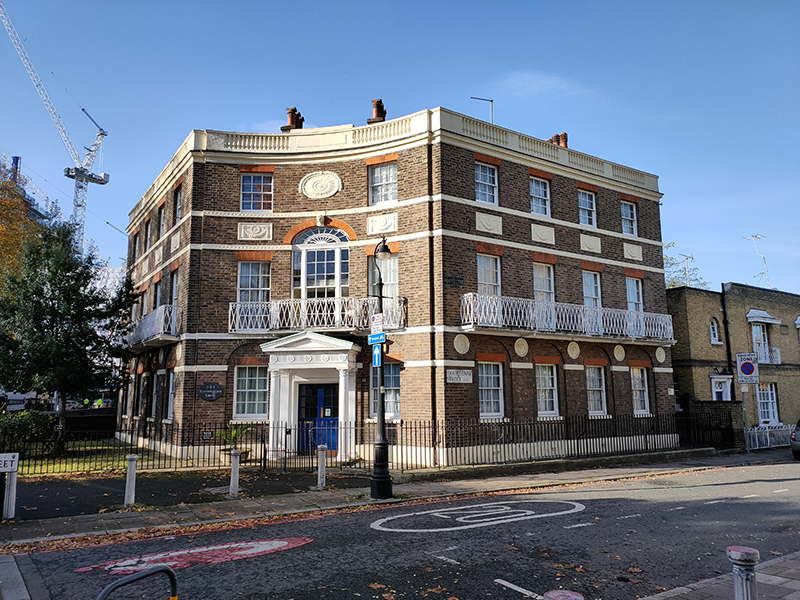
Day 79 – Kennington Road – Kennington Park Road – Kennington Lane – Imperial War Museum

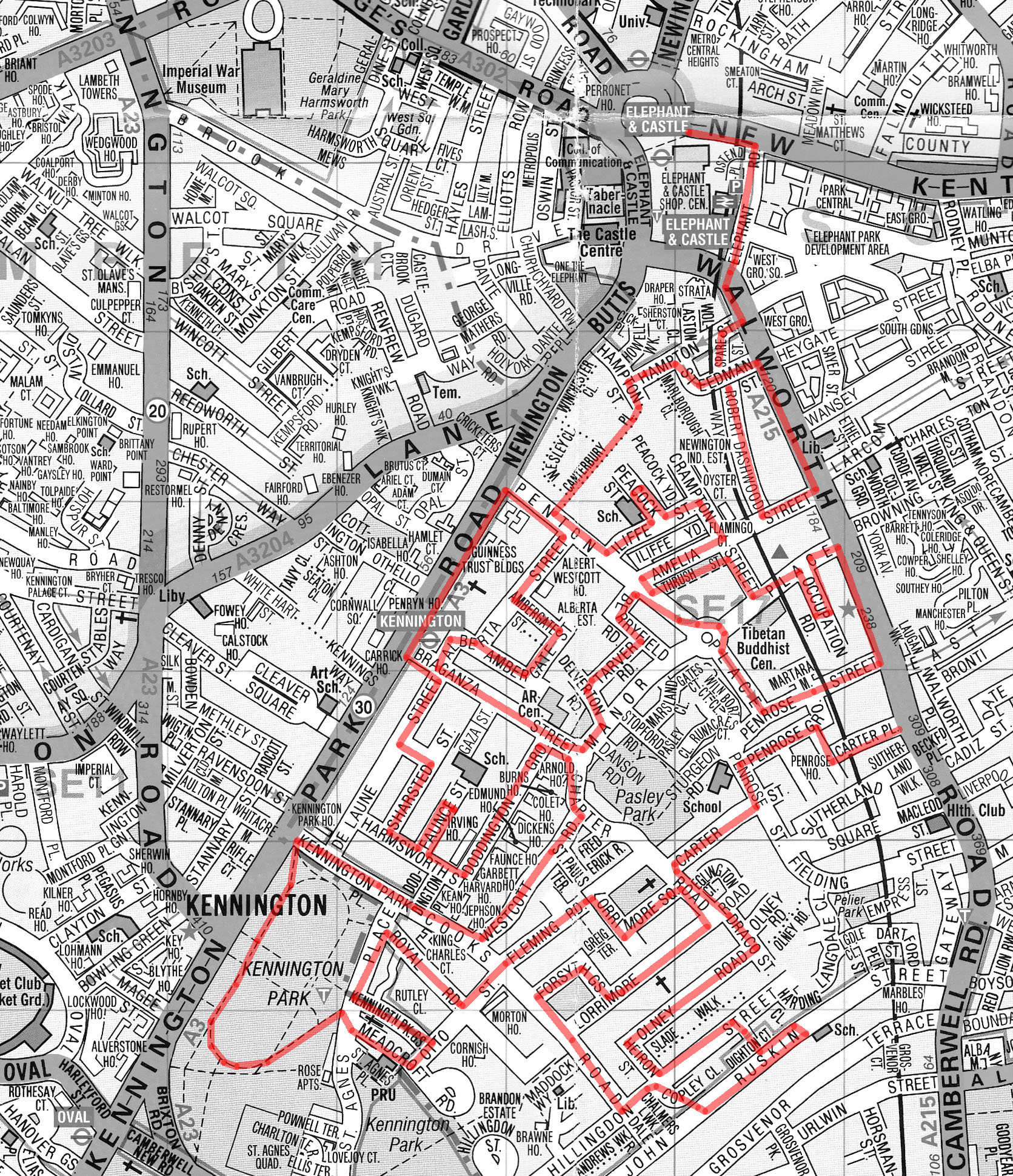
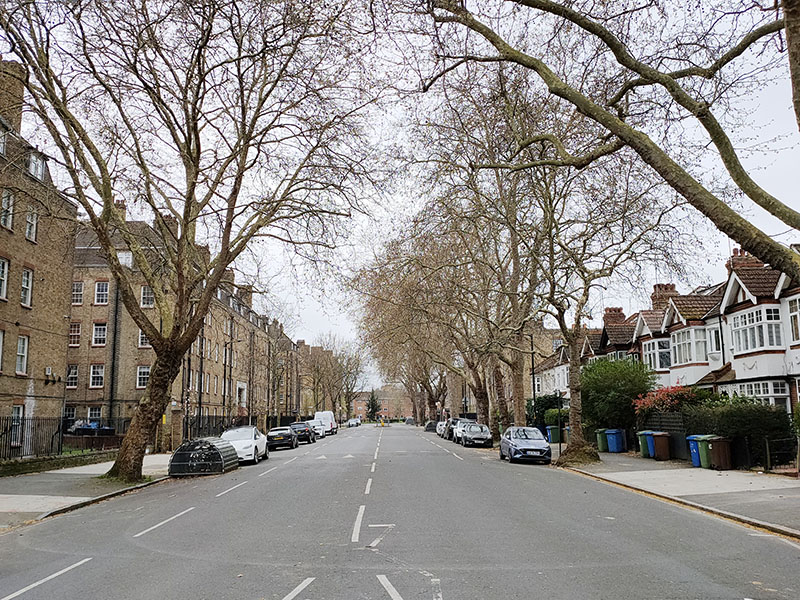
As promised, we’ve ventured back south of the river for today’s outing and specifically, as the more insightful amongst you may have twigged, we’re talking Kennington. The route stretches from the axis of Kennington Road and Kennington Park Road to the south to the Imperial War Museum in the north, taking in all the streets within the wedge formed by those two main roads. It’s a mainly residential area with a familiar mix of historic terraces and squares cheek by jowl with high-rise estates. In recent times, Kennington has been on something of an upward curve as those Victorian and Georgian terraces became available to young professionals at a significant discount to similar properties in other areas of London.

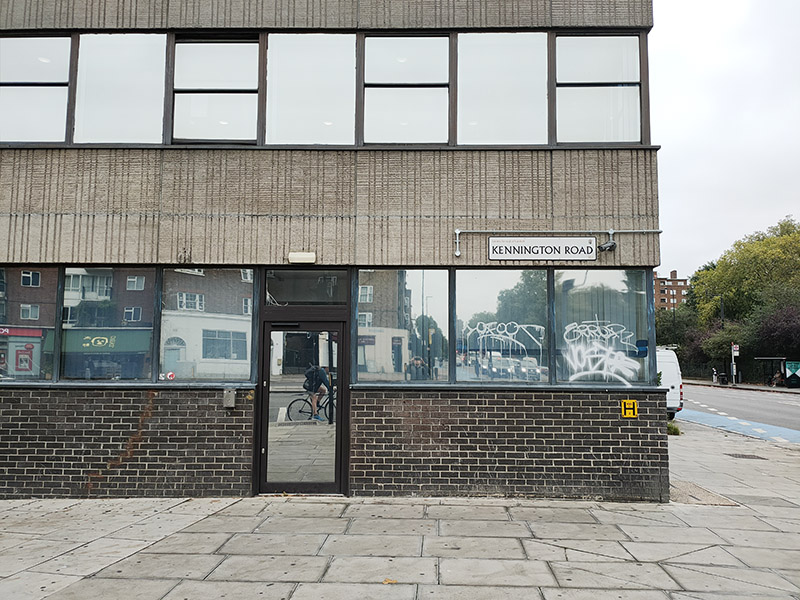
Having alighted from the no.59 bus at the southern end of Kennington Road we start today’s features rather inauspiciously with the abandoned south London outpost of the Department of Trade and Industry, although if you turn the corner into Kennington Park Road there’s a still active Job Centre Plus in part of the same building (can’t remember seeing one of those in any of the previous 78 jaunts).

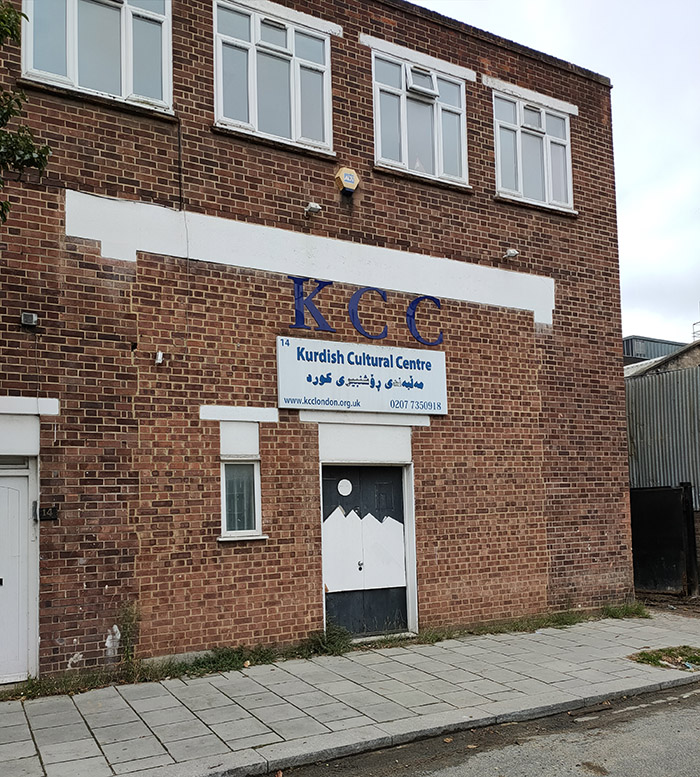
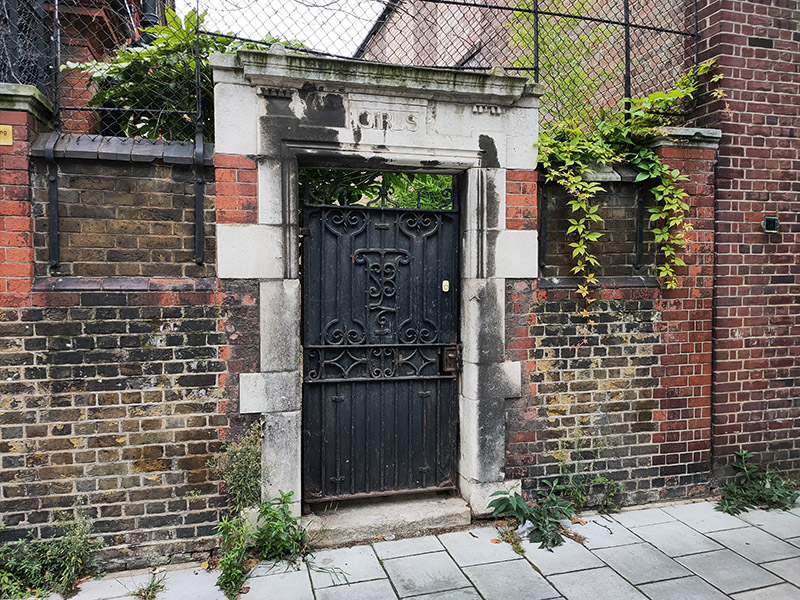
A short way up Kennington Park Road we turn left into Ravensdon Street and then double back down Stannary Street which takes us past the Kurdish Cultural Central. (Don’t worry, we’ve got some more photogenic buildings coming up later.)

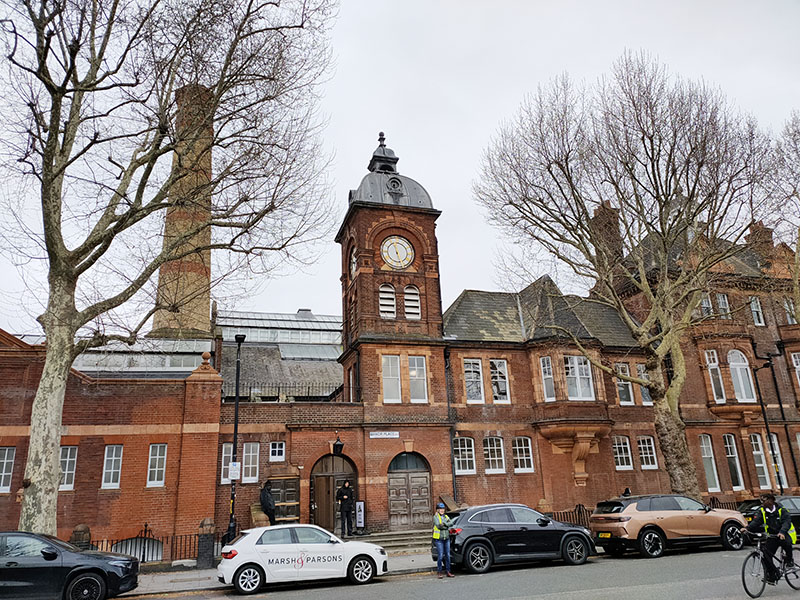
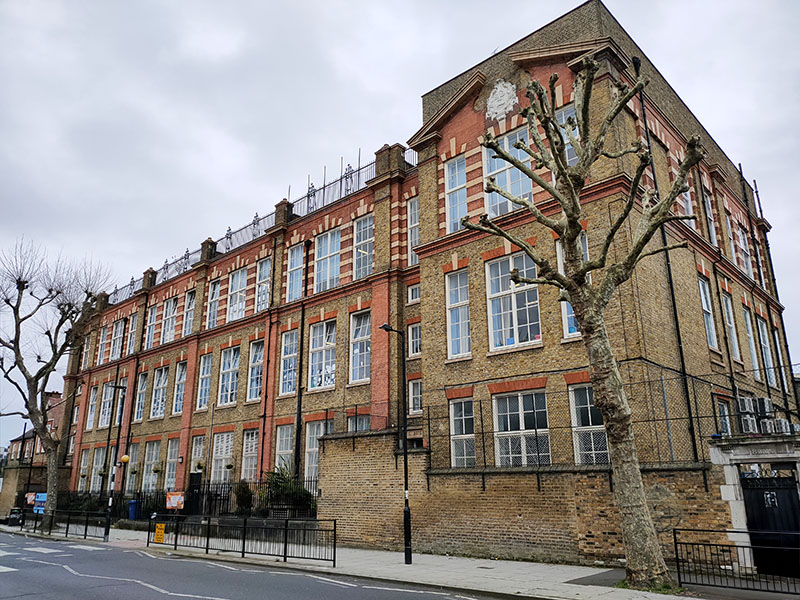
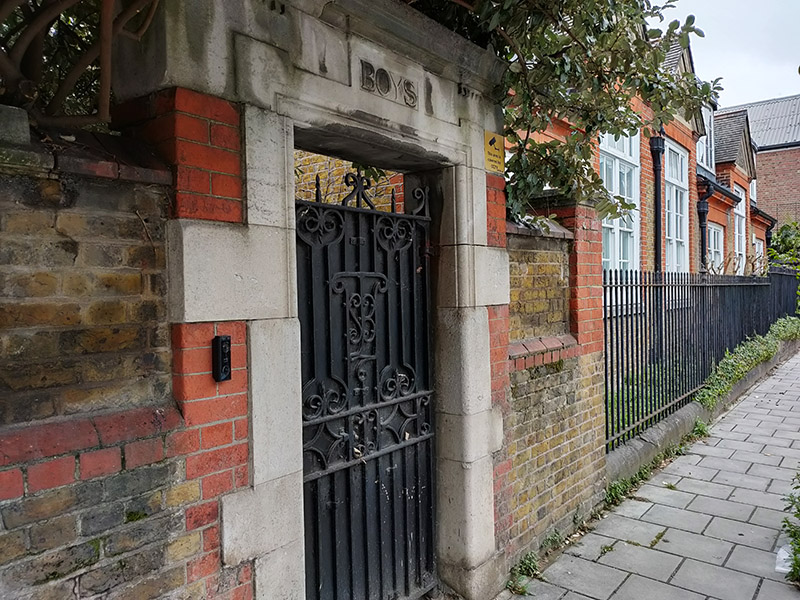
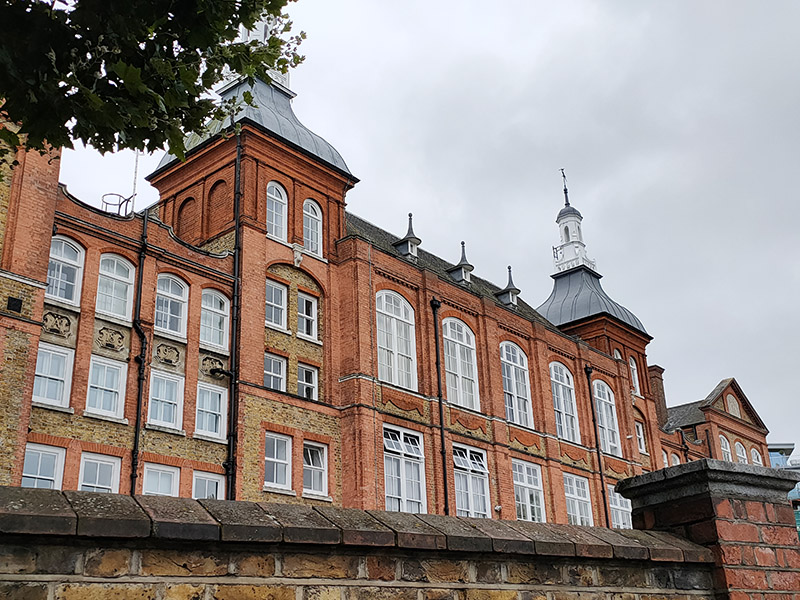
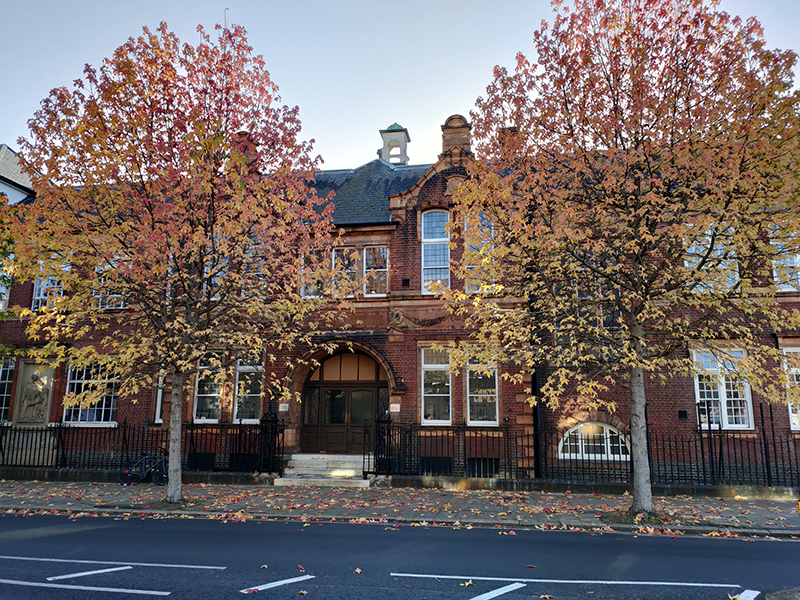
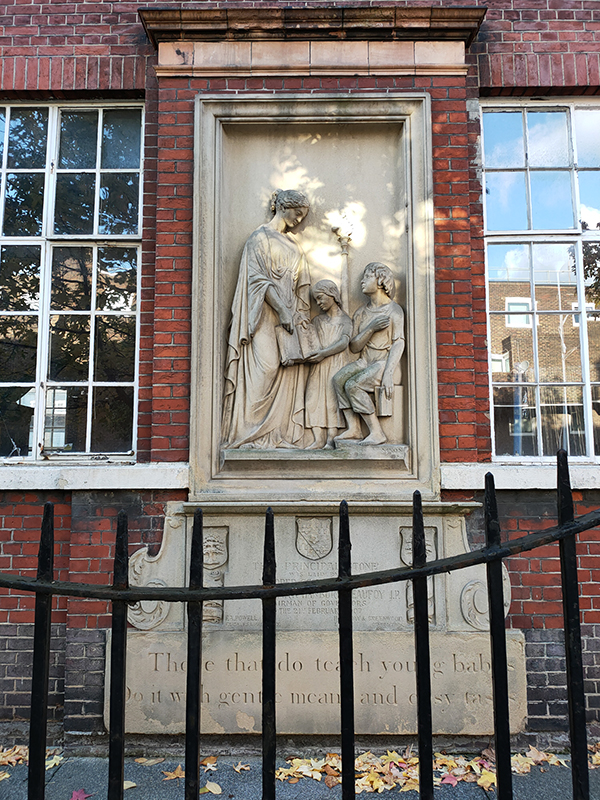
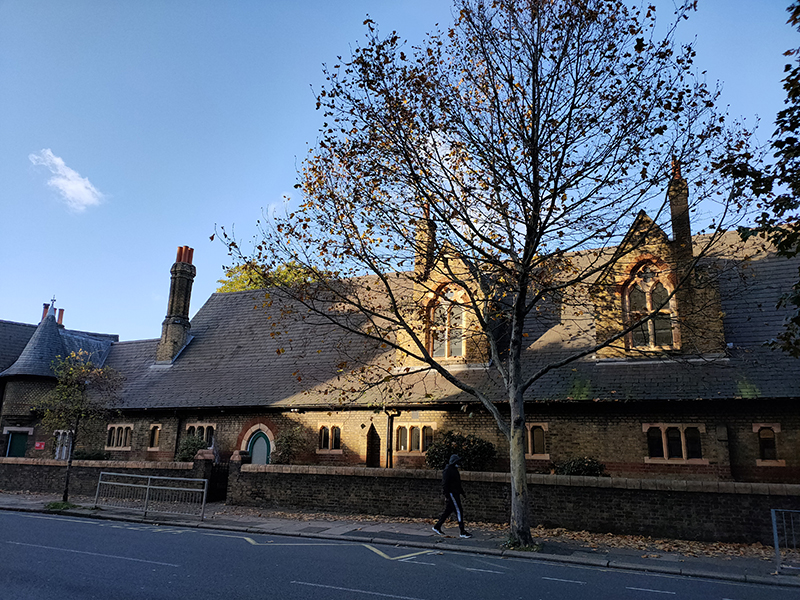
On the other side of Stannary Street is the back of the former Kennington Road School. This impressive Grade II listed Victorian edifice which faces onto Kennington Road is now a gated luxury apartment complex known (pour quelle raison ?) as The Lycee.

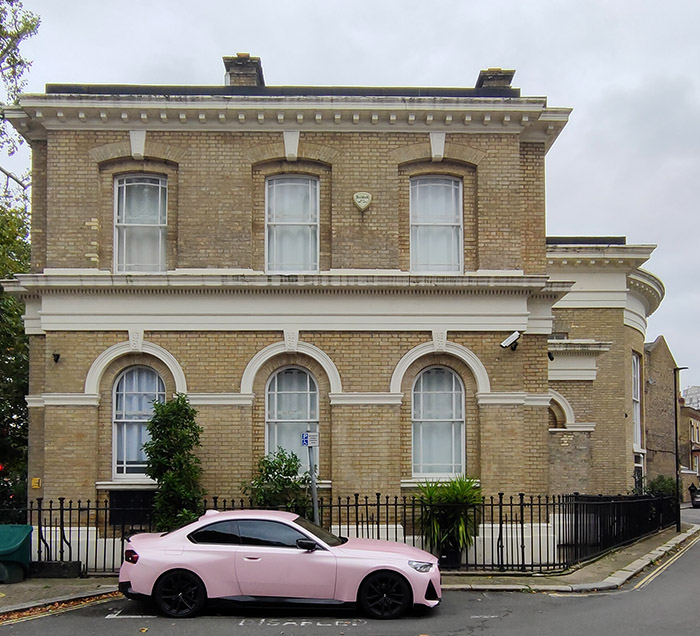
A little way further up Kennington Road we turn off into Milverton Street. As I’ve noted before, I don’t have much of an interest in cars but I was quite taken with this pink jobbie claiming a disabled parking space just off the main road.

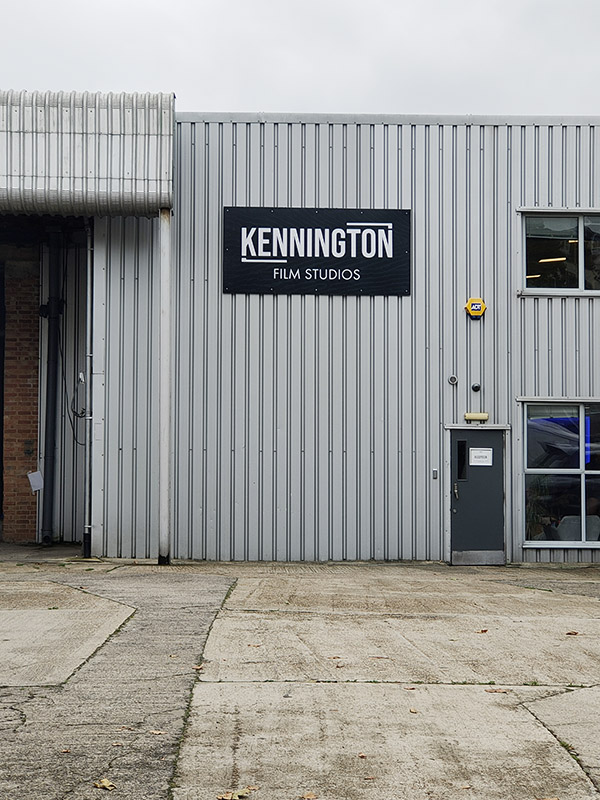
Immediately opposite here is the home of Kennington Film Studios, according to their website, “a commercial film & photography studio in Central London (really ?), offering 3 sound-treated studio spaces across 4,500sqft and 1 podcast/vodcast studio. In a former life, Channel 4’s Richard & Judy and the BBC’s Saturday Kitchen were apparently shot here.

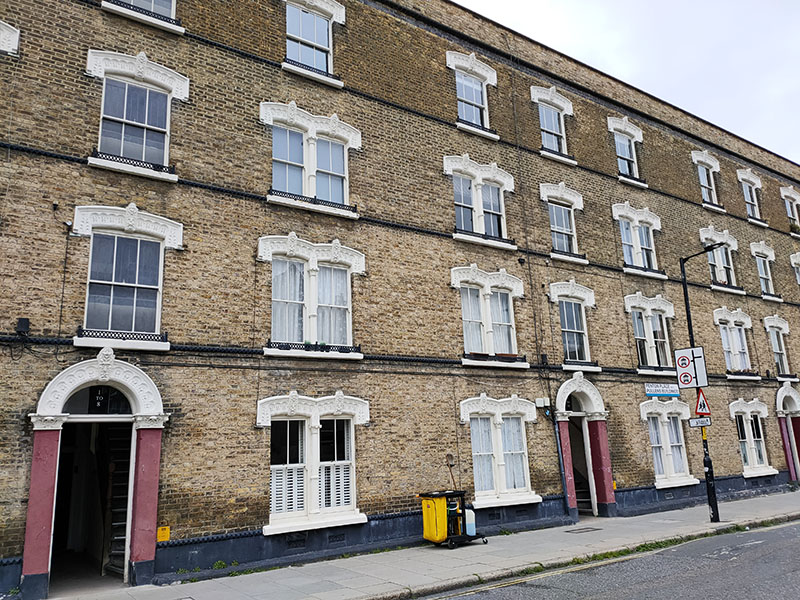
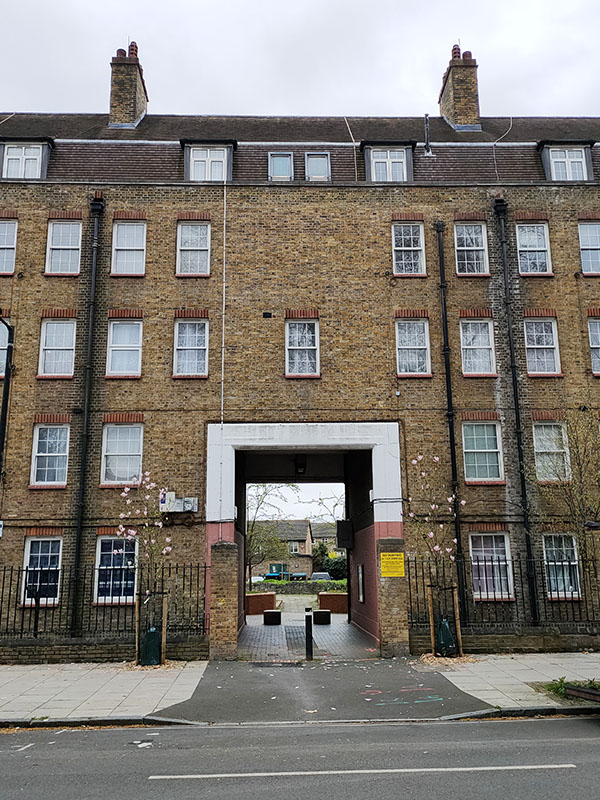
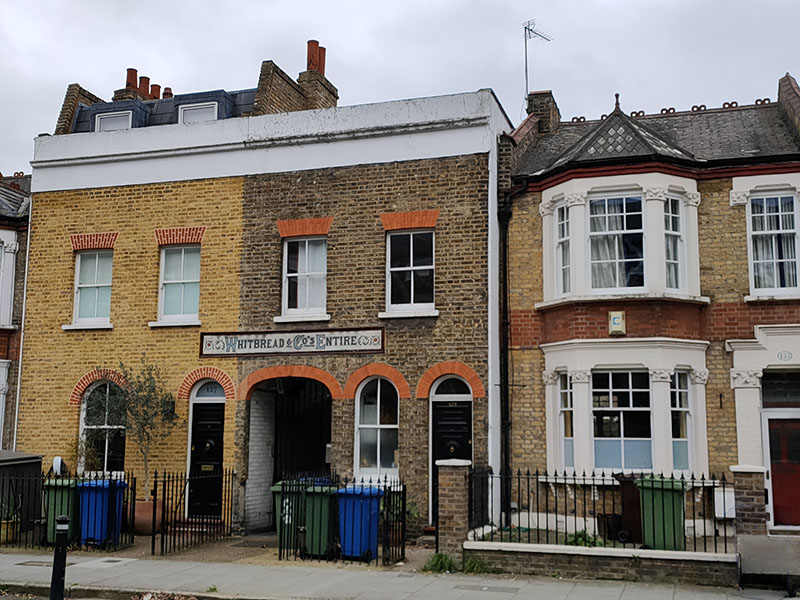
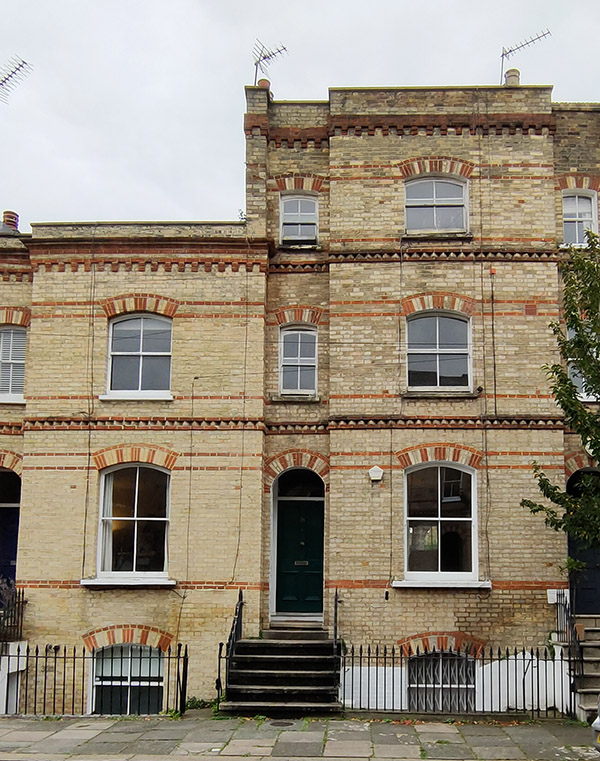
Cutting through the alleyway that is Aulton Place we return to Stannary Street then cross back over Ravensdon Street into Radcot Street which leads straight into Methley Street. These latter three streets form the main part of an estate that was built in 1868 to the design of architect, Alfred Lovejoy. The elegant three-storey terraces are distinguished by the alternating colours of the bricks in the arches above the windows and doorways. By the end of the 19th century however, when Charlie Chaplin briefly resided at no.39 (and is assumed to have attended Kennington Road School) the area had already become somewhat impoverished.

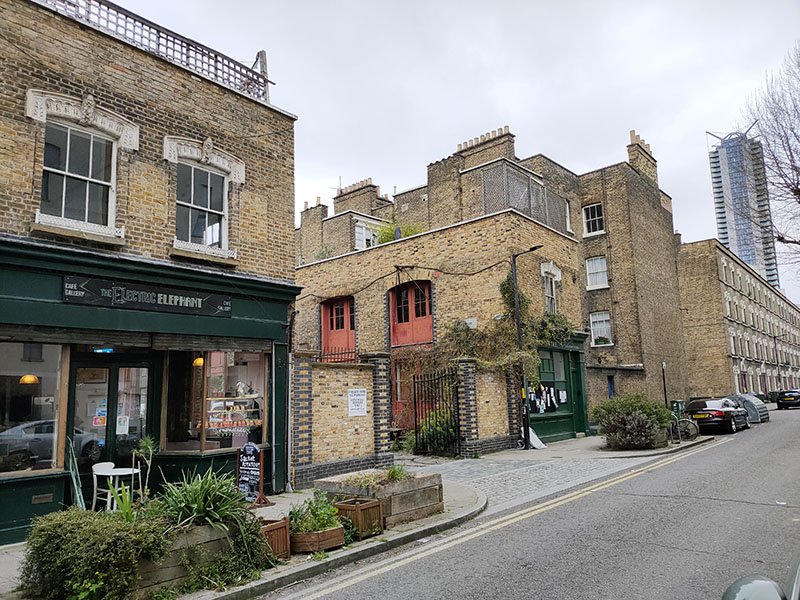
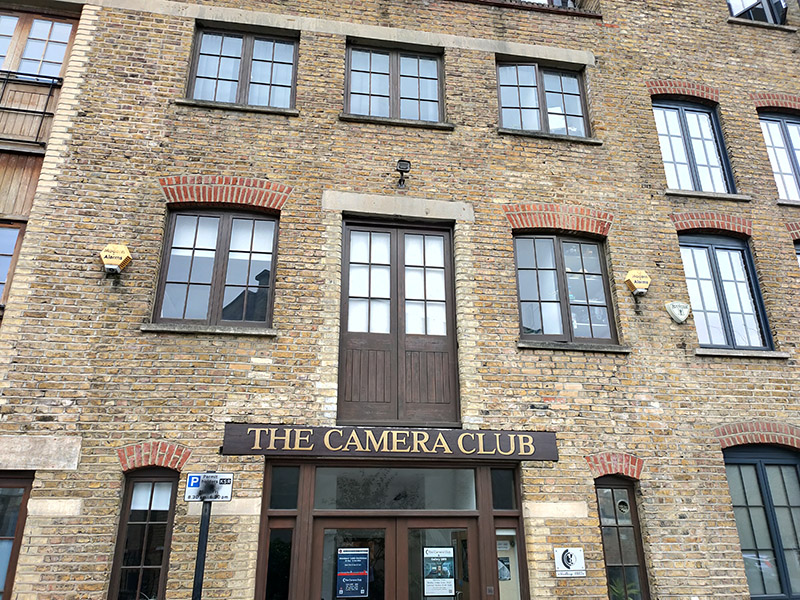
The building on the right above, which is in Bowden Street, although incorporating similar architectural stylings, was originally a pickle factory. I’m not sure when it ceased making pickles but the building became the home of The Camera Club in 1990. The Camera Club was founded in 1885 when the editor of Amateur Photographer magazine, J Harris Stone, called together the most prominent photographers of that time, to create a group that aimed at being “A Social, Scientific and Artistic Centre for Amateur Photographers and others interested in Art and Science.”

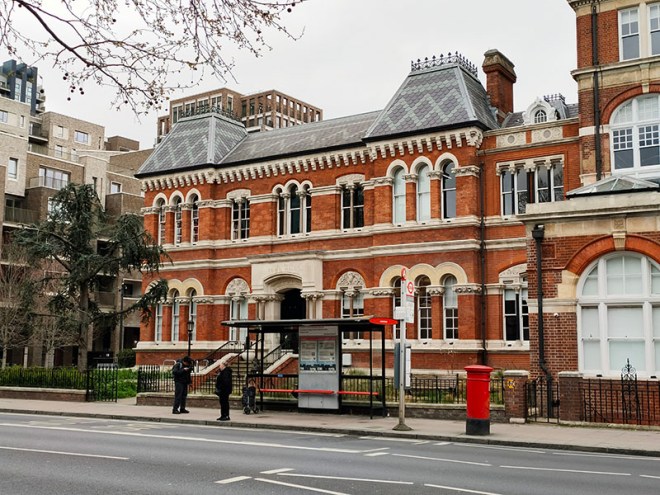
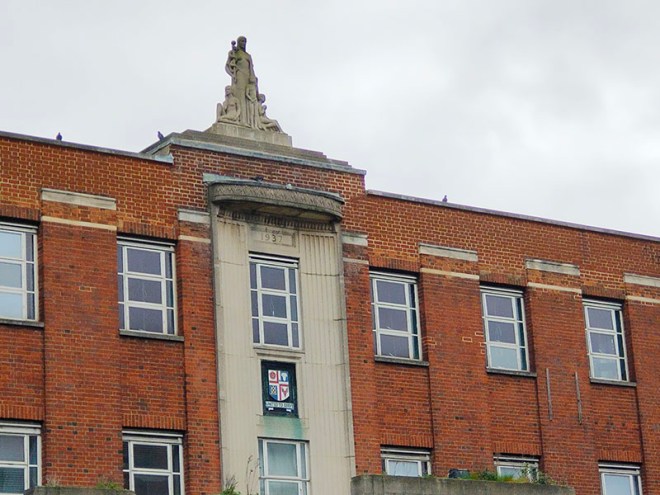
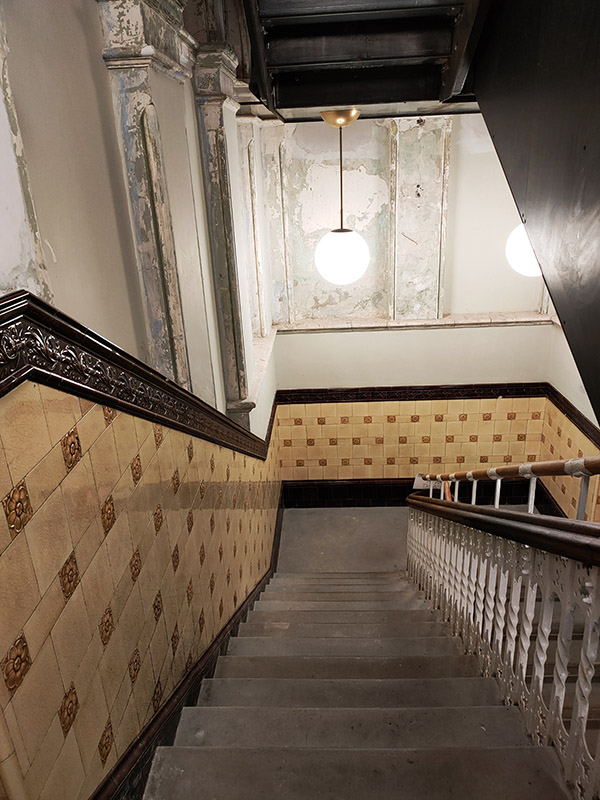
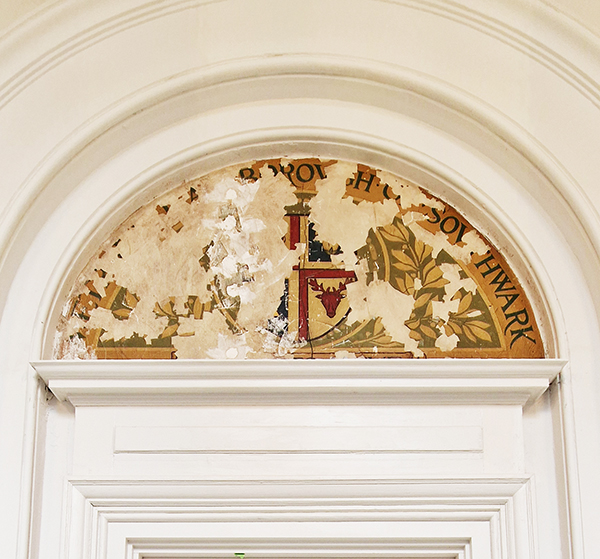
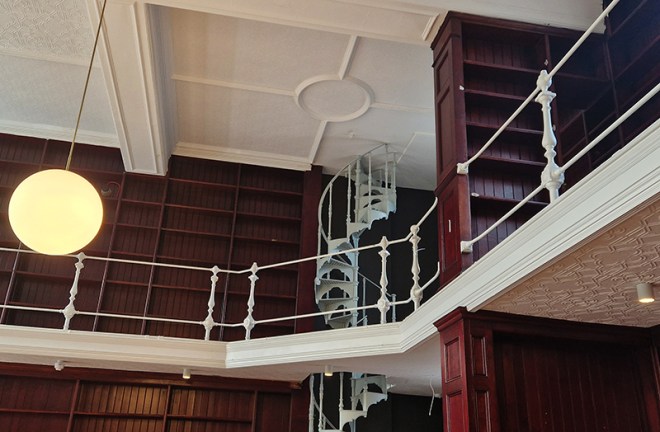
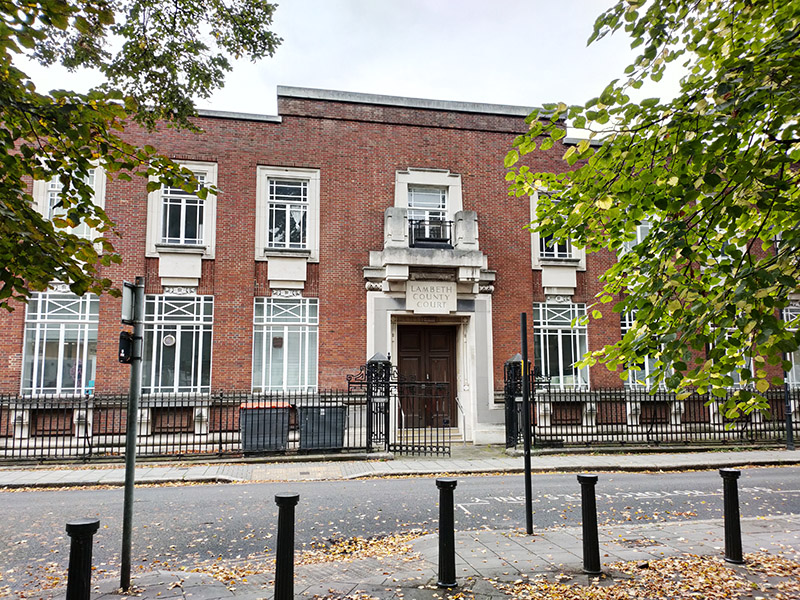
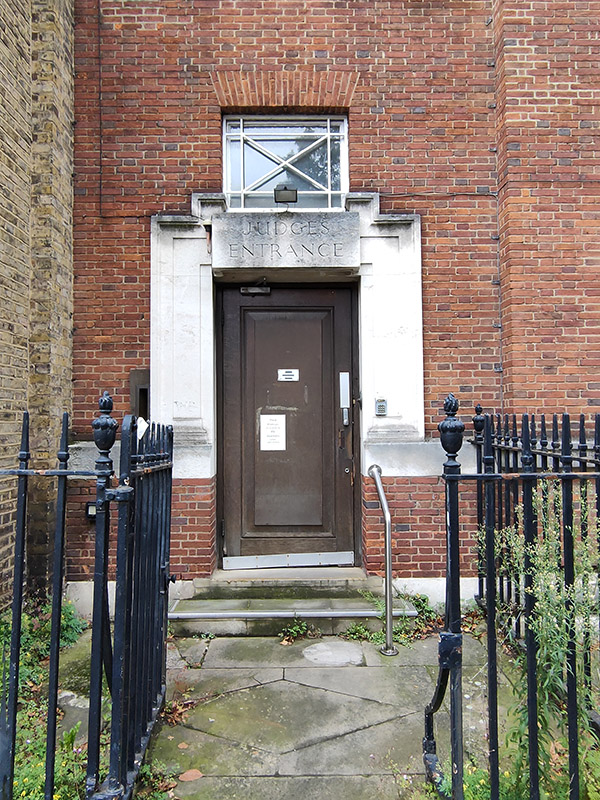
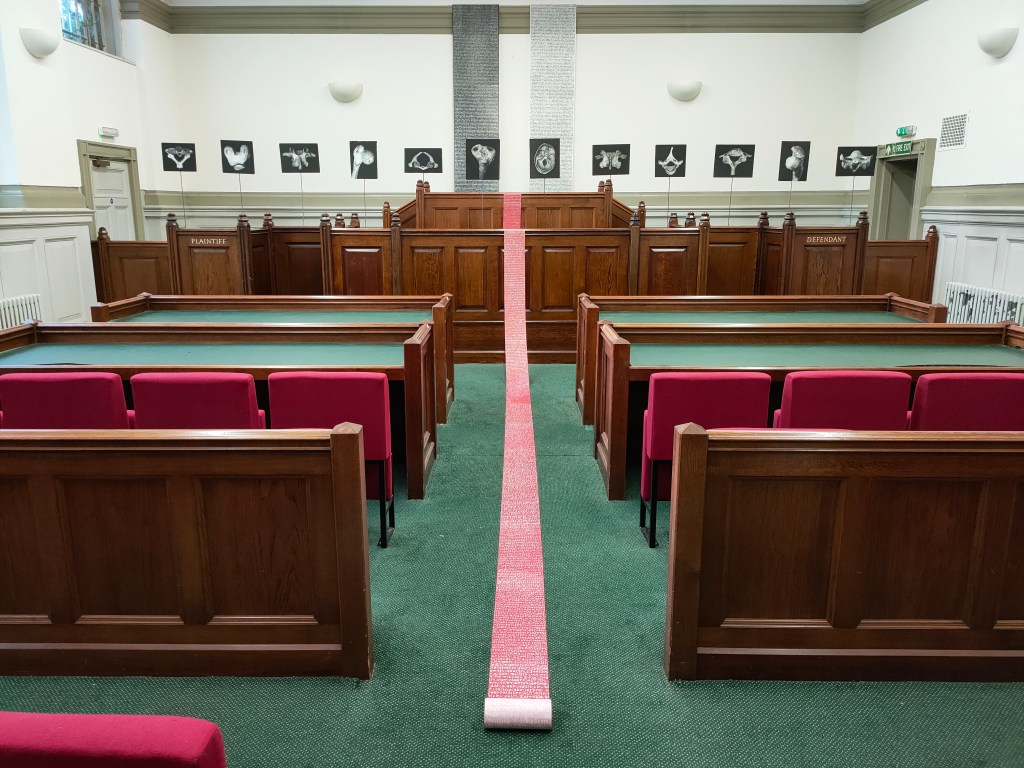
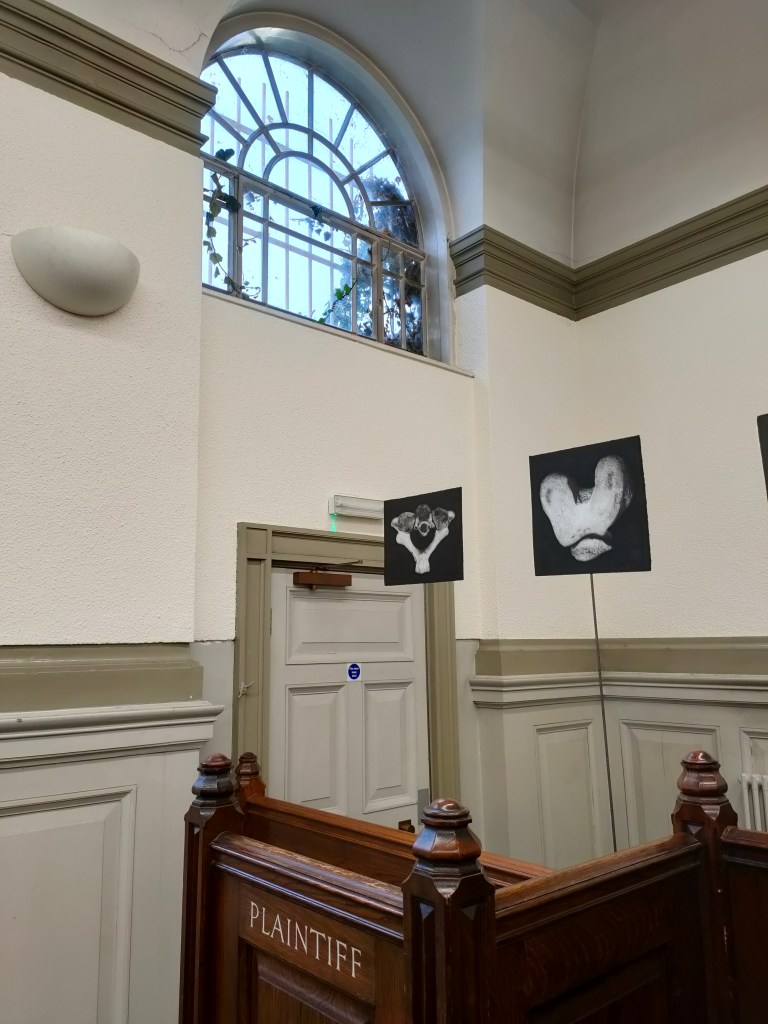
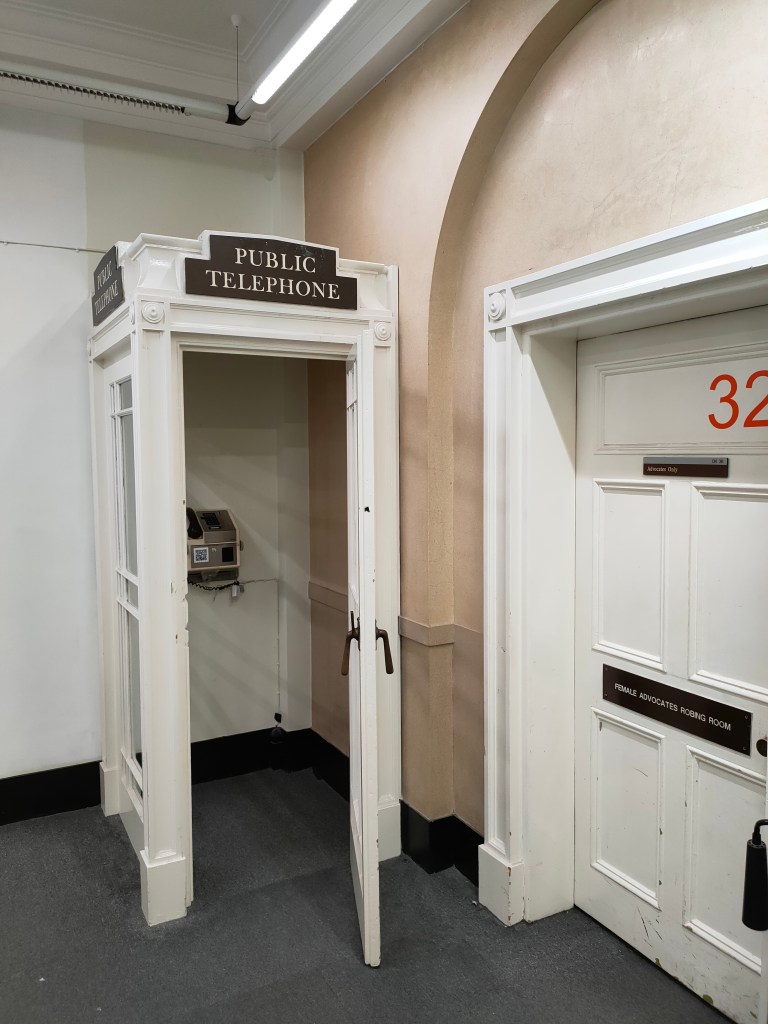
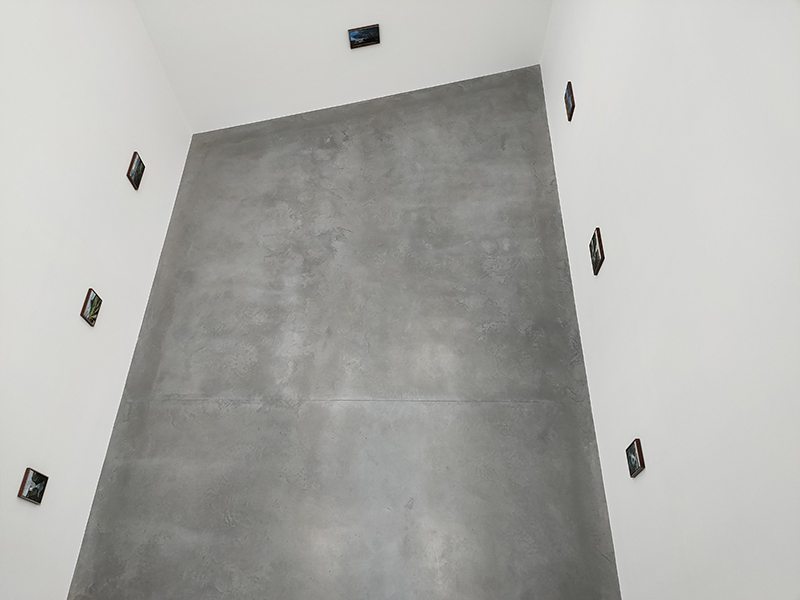
Opposite where Bowden Street joins onto Cleaver Street stands the former Lambeth County Court. Built in 1928, it was designed by John Hatton Markham of the Office of Works, in what Historic England describes as “an eclectic classical style”. The list entry goes on to state “Lambeth County Court was the first new county court built in a rebuilding programme begun in the late 1920s, in recognition of the inadequacy of many existing buildings, particularly in London, for facilitating the important work done by the courts; the lavishness of this example, by comparison with those built later, probably reflects the fact that it was built before the crash of 1929”. That listing (Grade II) was only granted in 2021, four years after the building ceased to act as a Court and a few months after I visited it when it was being used temporarily as art gallery space (the interior shots in the sequence below date from that visit). The site is actually owned by the Duchy of Cornwall and it appears that the listing put paid (for the time being) to their plans to redevelop into offices and apartments.

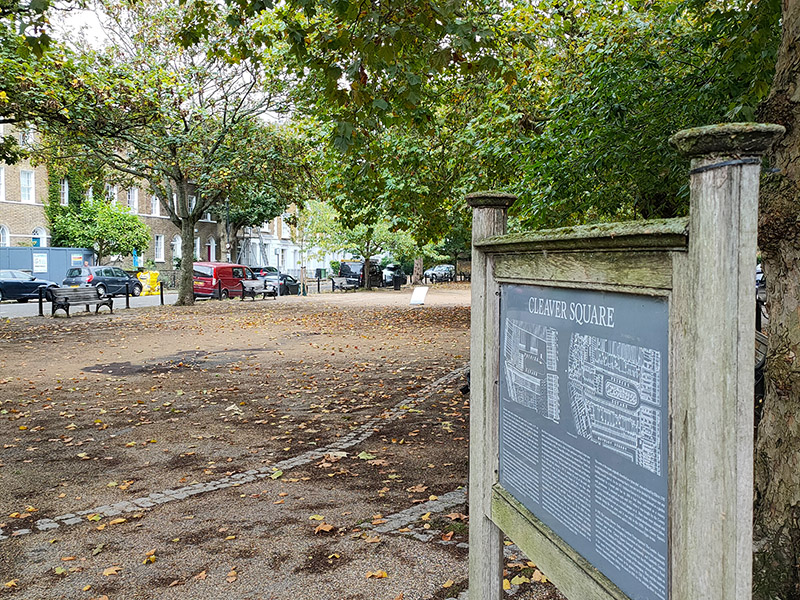
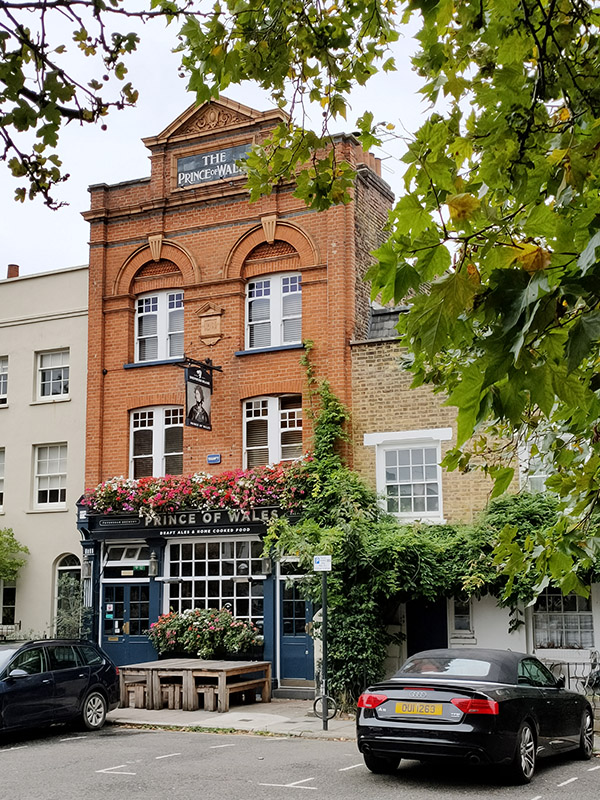
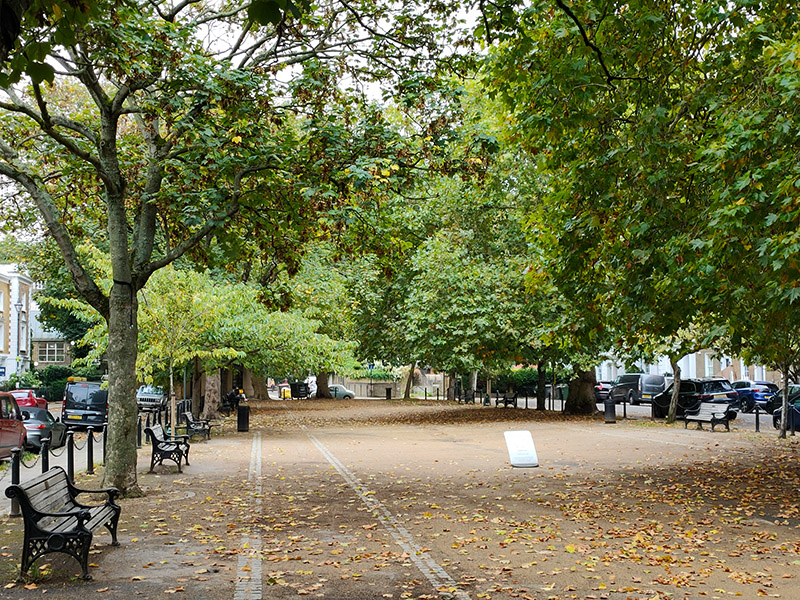
Turning right here brings us into Cleaver Square which was laid out in 1789 and was the first garden square south of the river. Until the middle of the 18th century, this was still open pasture forming part of an estate known as White Bear Field that was inherited by one Mary Cleaver in 1743. In 1780 Mary leased the land to Thomas Ellis, the landlord of the Horns Tavern on Kennington Common, who laid out and developed the square, originally naming it Princes Place. The houses around the square were built on a piecemeal basis between 1788 and 1853. As we alluded to earlier, by the 1870s the area had reduced in status, and the houses were overcrowded. The renaming as Cleaver Square occurred in 1937. The Prince of Wales pub in the north west corner originally dates from 1792 but was refaced in 1901.

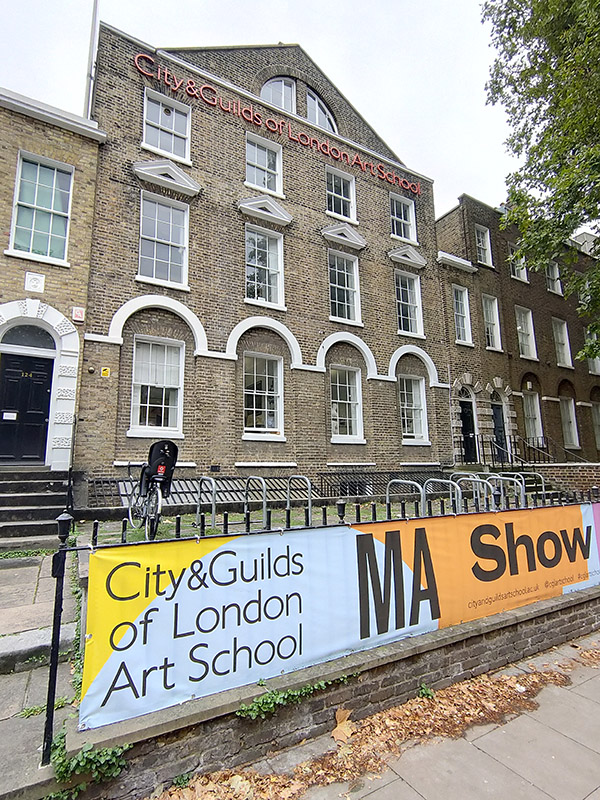
At its eastern end Cleaver Square rejoins Kennington Park Road and here you’ll find the City & Guilds of London Art School. This was founded in 1854 by the Reverend Robert Gregory under the name Lambeth School of Art. It moved to this location in Kennington post-1878 and the current name was adopted in 1938. After WWII restoration and carving courses were established to train people for the restoration of London’s war-damaged buildings. A Fine Art programme was only developed in the 1960’s.

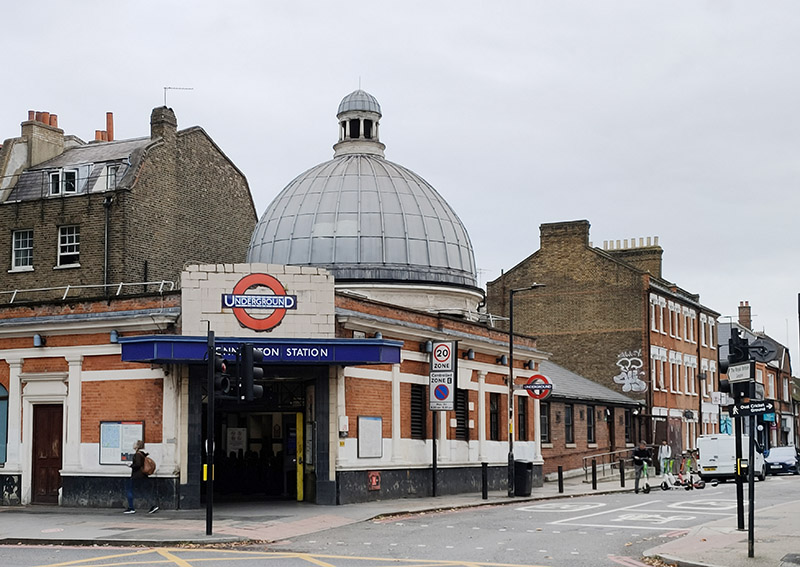
Continuing up Kennington Park Road we pass Kennington Tube Station. The station opened in 1890 as part of the City and South London Railway (CSLR), the world’s first underground electric railway which initially ran from King William Street to Morden. Since then surface building has remained largely unaltered although there have been several reconstructions and extensions underground. Travel between the surface and the platforms was originally by hydraulic lift, the equipment for which was housed in the dome. In 1900 King William Street station was closed and a new northern extension connecting London Bridge with Bank and Moorgate was created. Seven years later this was extended further to Kings Cross and Euston. After WW1 the Hampstead Tube which ran from Edgware to Embankment was extended to Kennington and merged with the CSLR to form what in 1937 came to be known as the Northern Line (with its two separate branches between Kennington and Camden). In 2021, after 6 years of construction, a new extension of the Charing Cross branch of the Northern Line was opened, running between Kennington and Battersea Power Station. It was the first major change to the tube network since the Jubilee Line extension in 1999.

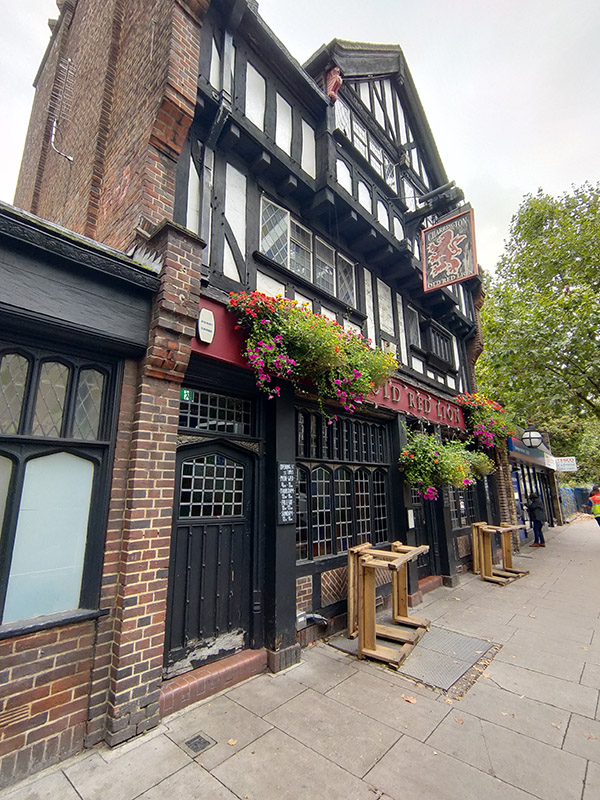
Further up the road from the tube station is the mock-tudor styled Old Red Lion pub which was built in 1933 by the London brewers Hoare and Co. (acquired later that same year by Charrington’s). This is another Grade II listing, on account of being one of the best preserved remaining examples of the interwar “Brewers Tudor” style of pub architecture with many original features still intact; including (for unknown reasons) a built-in painting of Bonnie Prince Charlie landing back in Scotland in 1745.

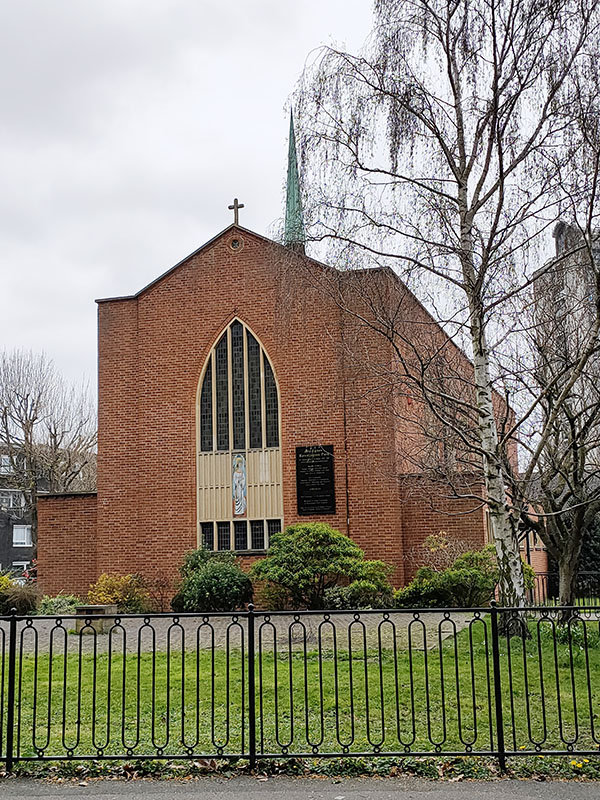
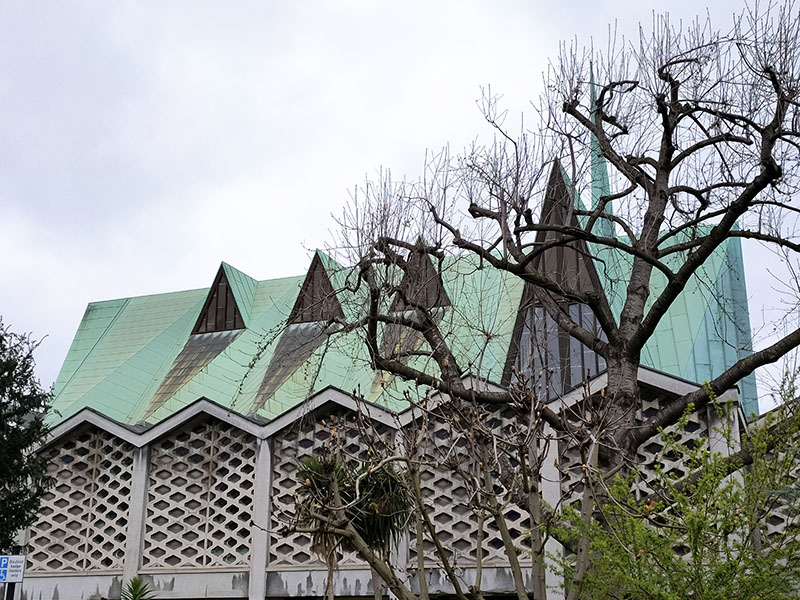
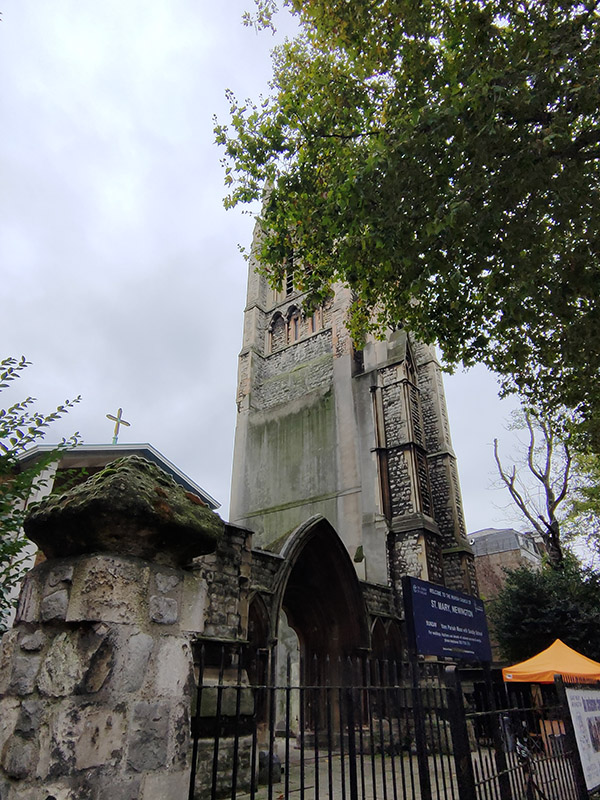
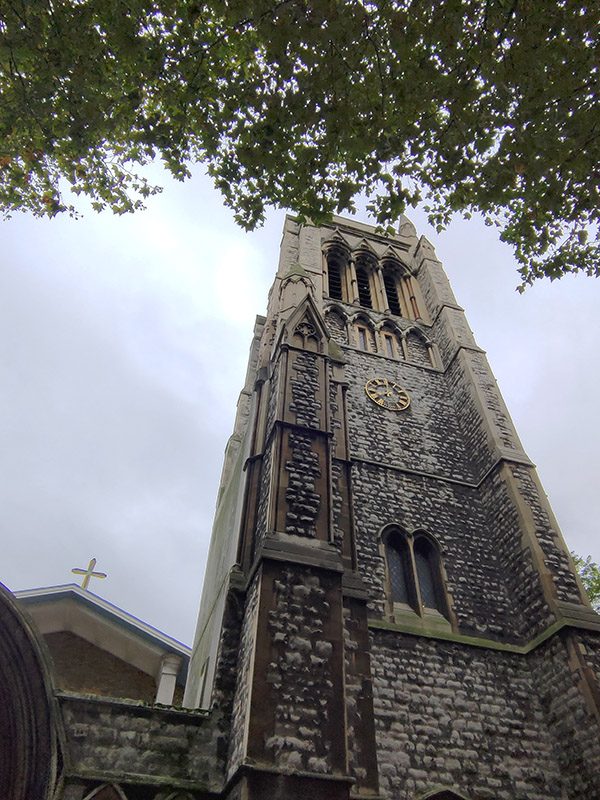
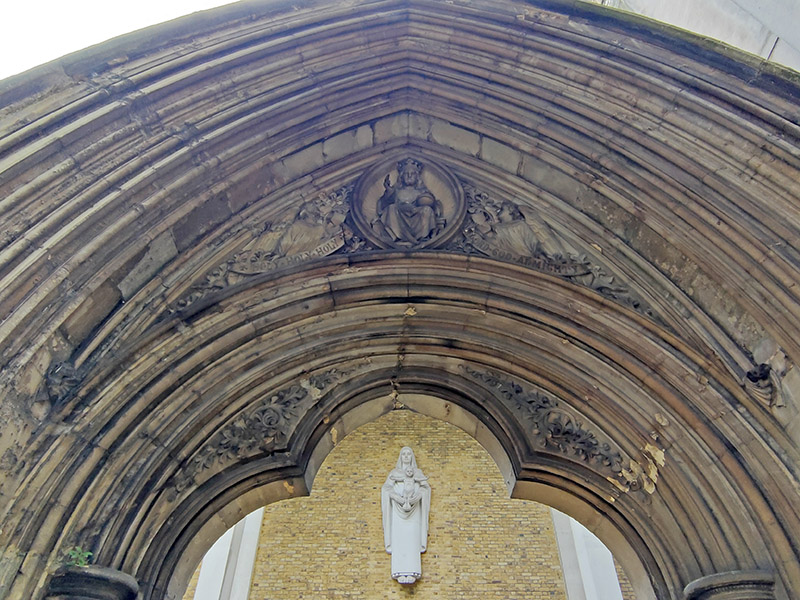
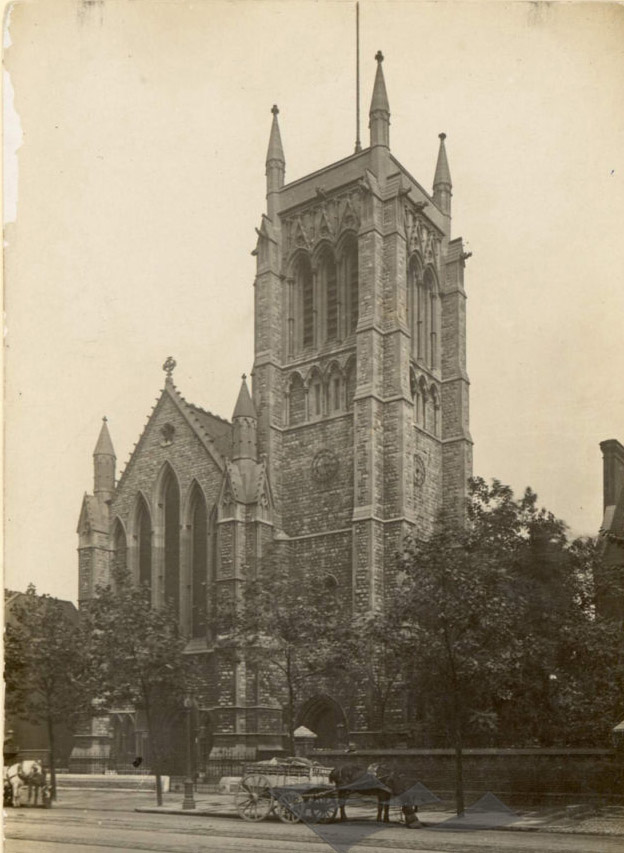
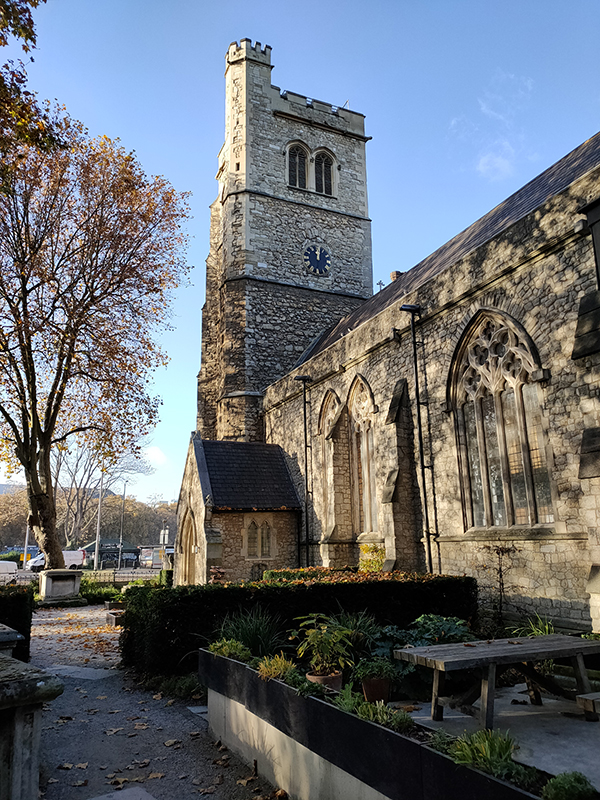
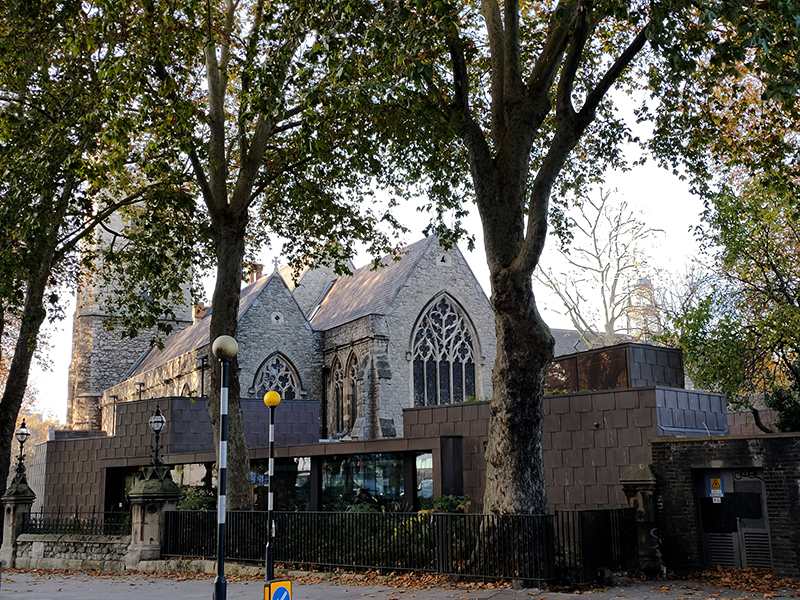
Opposite the pub on the east side is the parish church of St Mary Newington. For much of its history the parish of Newington was in the county of Surrey and was the County Town until Kingston-on-Thames superseded it in that role in 1893. The current operational church building was opened in 1958 and stands beside what remains of its predecessor, the latter having been burnt out in a 1941 air raid. That Victorian church was consecrated in 1876 and described, at the time, by Sir George Gilbert Scott (yes, him again) as “one of the finest modern churches in London”. The postcard from 1910 in the sequence below shows the church as it was when constructed; following the fire only the clock tower and the low section of the arcading between the two horse carts were left standing.

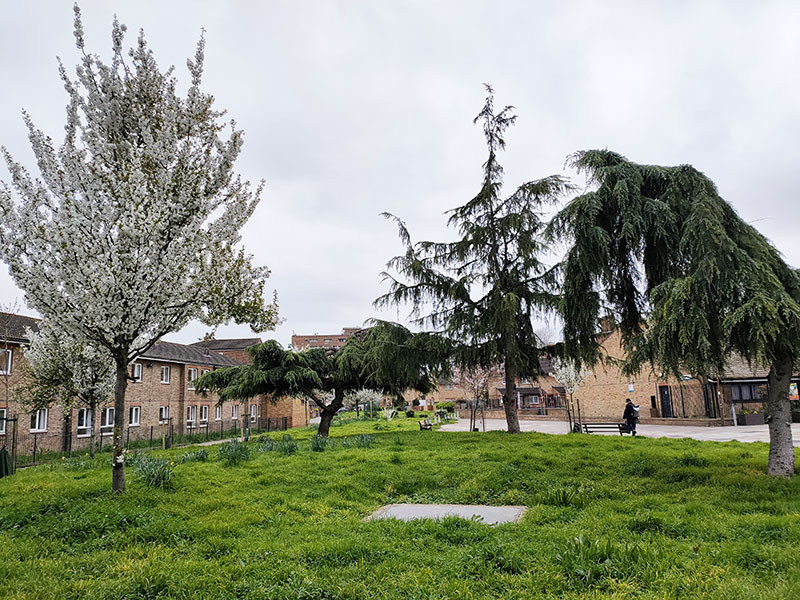
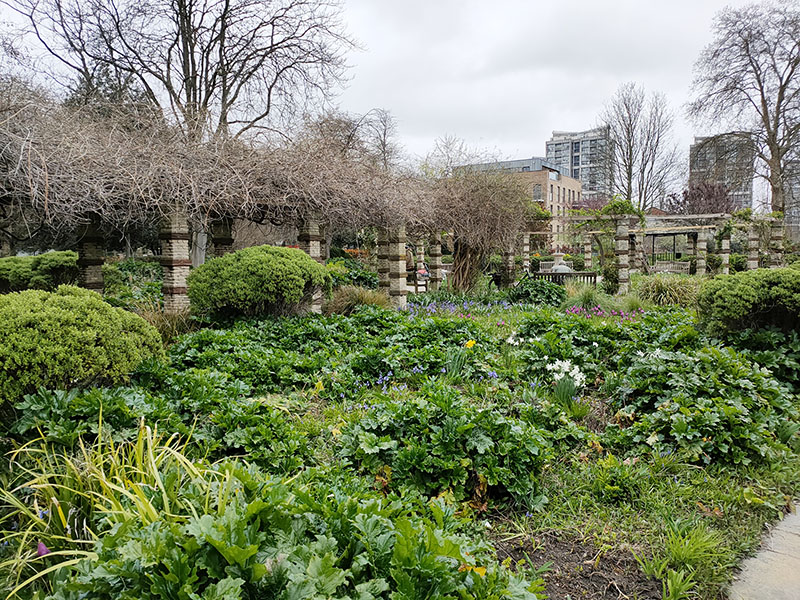
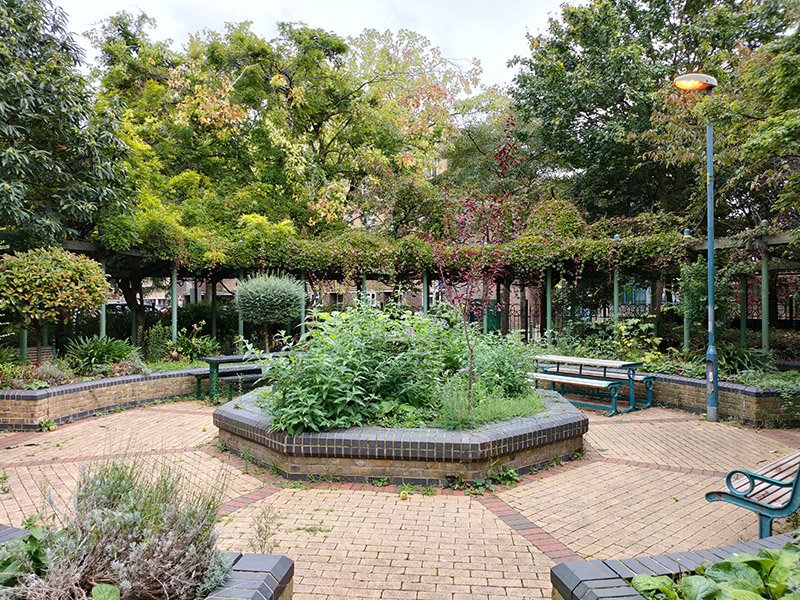
Turning west off Kennington Park Road we’re into an area of public housing starting with Cornwall Square which leads into Kennington Way which merges into White Hart Street that takes us out onto Kennington Lane. A right turn and then another into Cottington Street brings us to a green space which incorporates the small but perfectly-formed Queen Elizabeth Jubilee Garden.

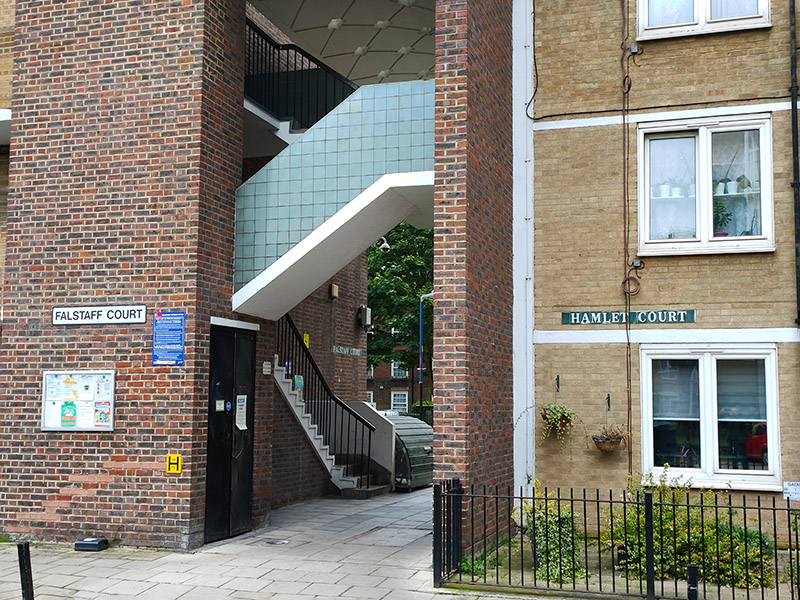
Beyond this, Opal Street takes us through a public housing estate where (and why not) the various blocks and access routes are all named after Shakespearean characters. So you’ve got Othello Close, Isabella House, Hamlet Court, Portia Court, Falstaff Court, Ariel Court and Dumain Court. If like me you couldn’t place the last one, he’s apparently a Lord at the court of the King of Navarre in Love’s Labours Lost.

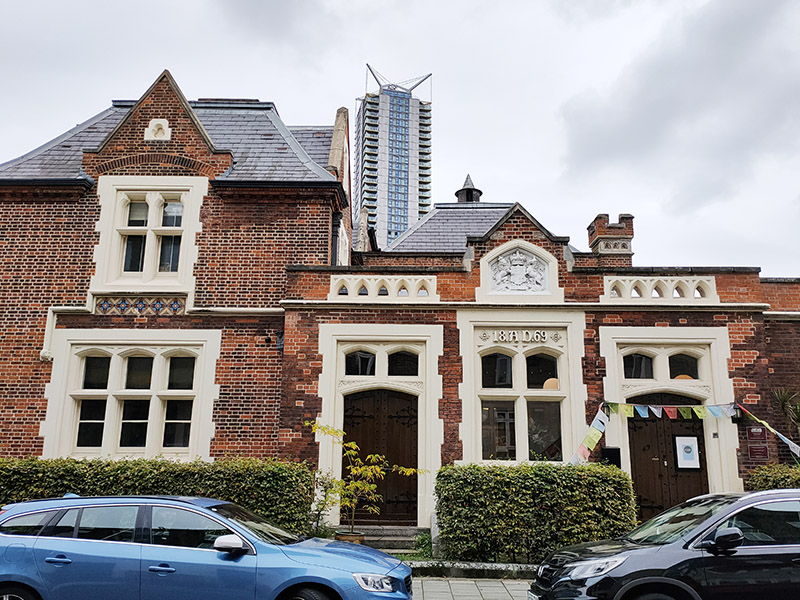
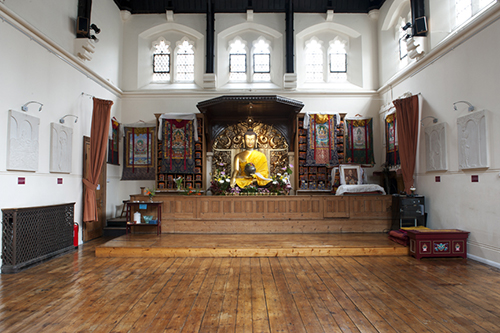
To the north of Kennington Lane, on Renfrew Road, is another Grade II listed former courthouse. Lambeth Magistrates’ Court (originally known as Lambeth Police Court) was built in 1869 and designed by Thomas Charles Sorby in the Gothic Revival style and is the earliest surviving example of a Criminal Magistrates Court in the Metropolitan area. Since 1978 it has been home to the Jamyang Buddhist Centre which “provides a place for the study and practice of Tibetan Buddhism in the Mahayana tradition following the lineage of His Holiness the Dalai Lama”. (Image on the right below from Jamyang.co.uk)

From Renfrew Road we move on to Gilbert Road followed by Wincott Street, Kempsford Road and Reedsworth Street which takes us back on to Kennington Lane.

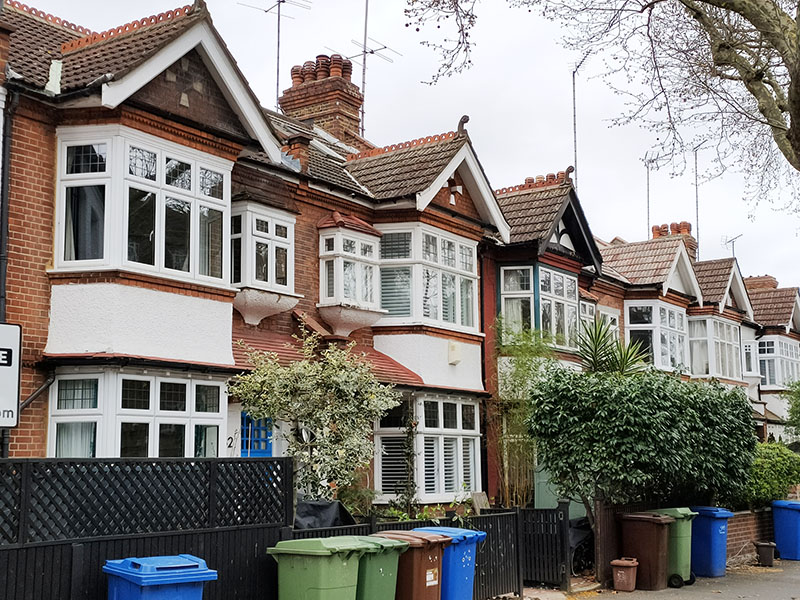
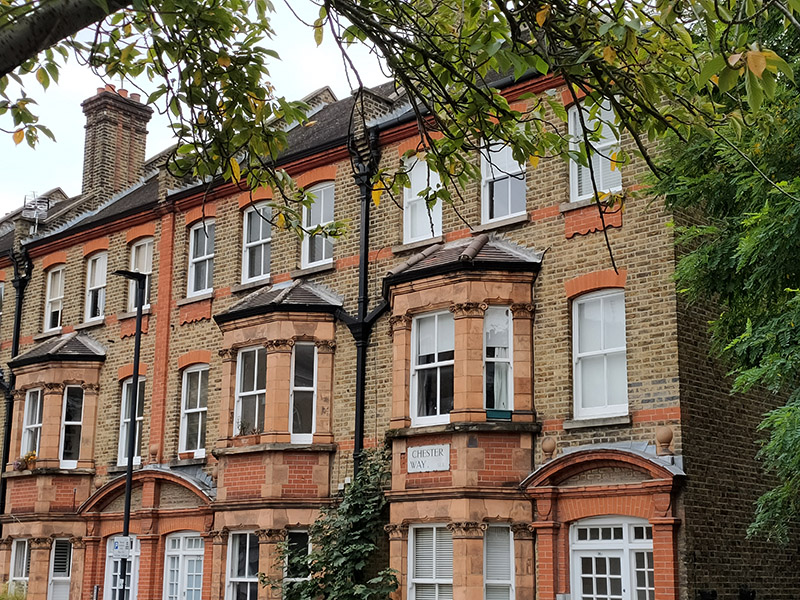
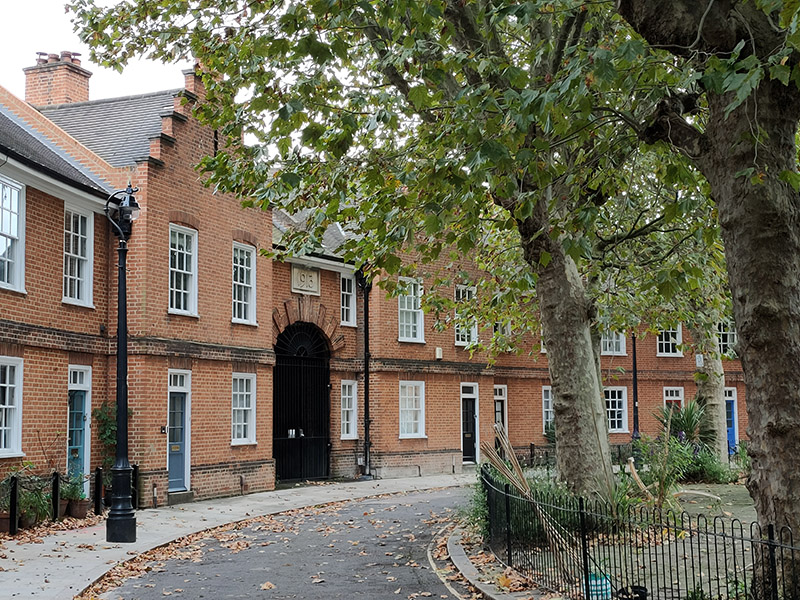
Chester Way, Denny Street and Denny Crescent nestle in the apex of Kennington Lane and Kennington Road and this little triangle forms another part of the Kennington Conservation area. The properties here were built immediately before WWI for the Duchy of Cornwall estate and the Dutch style 2-storey red brick cottages which comprise Denny Crescent are now all Grade II listed.
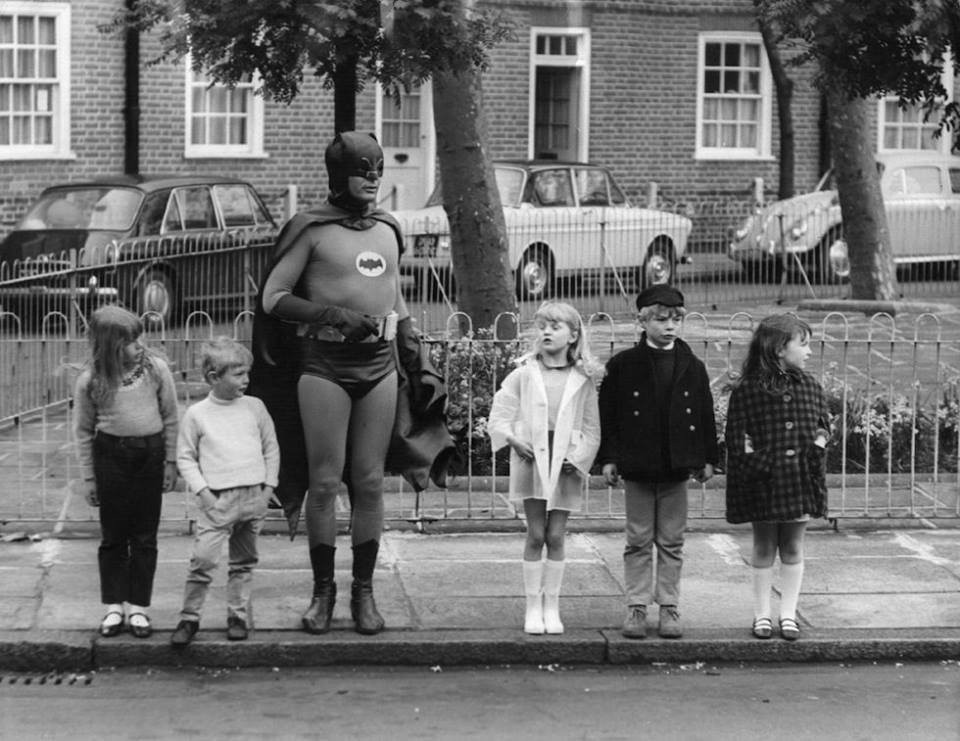
Couldn’t resist this photo of Adam West as Batman teaching Road Safety in Denny Crescent in 1967. (Credit to https://www.theundergroundmap.com for unearthing that one).

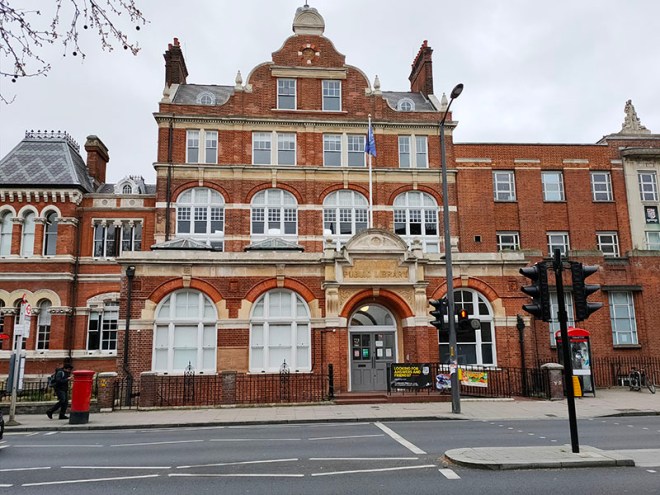
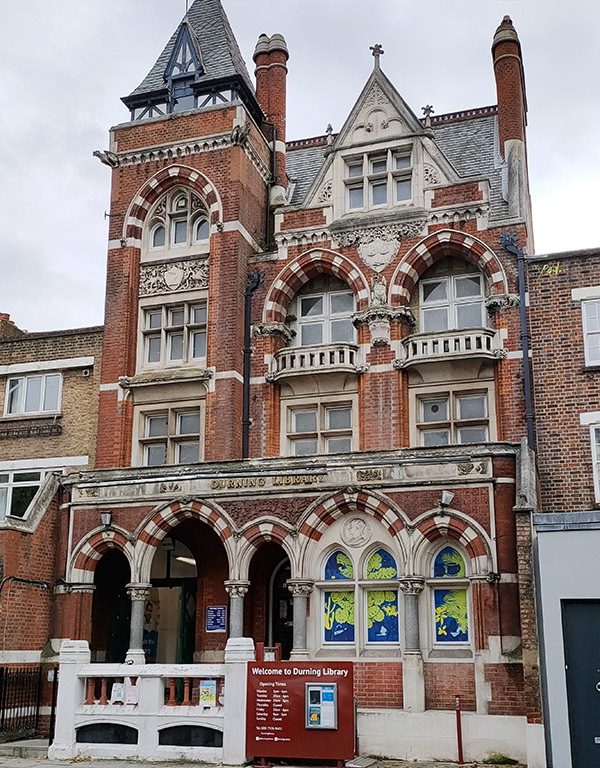
Back on the other side of Kennington Lane is the Durning Library which was purpose built in 1889, designed by Sidney R.J. Smith the architect of Tate Britain, (once again) in the Gothic Revival style. It was a gift to the people of Kennington from Jemima Durning Smith, the daughter of the Manchester cotton merchant, John Benjamin Smith, who in 1835 became the founding chairman of the Anti-Corn Law League, and Jemina Durning, an heiress from Liverpool. Amazingly, it still operates as a library today, despite having been under threat of closure for the last 25 years.
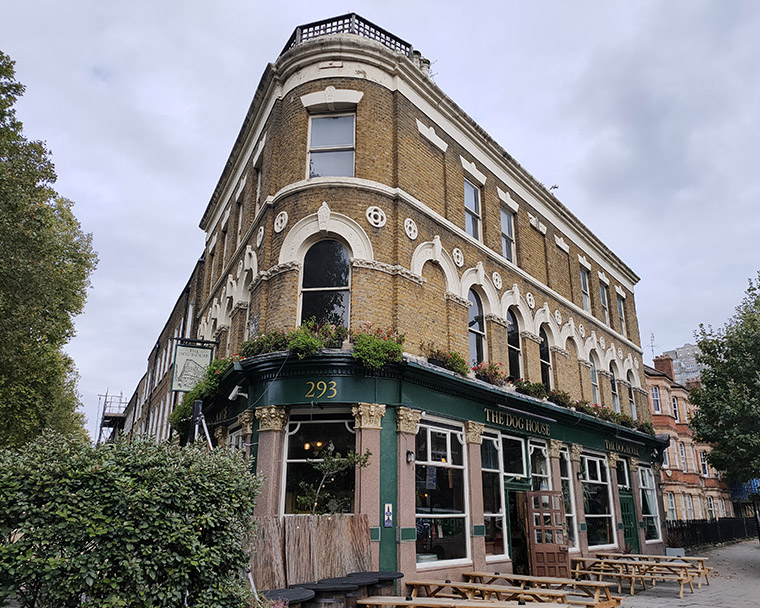
Bang on the junction of Kennington Lane and Kennington Road stands another grand Victorian-era pub – The Doghouse. It was previously known as The Roebuck (which is what you would probably have to be to get from here to Big Ben in 20 minutes as their website proclaims).

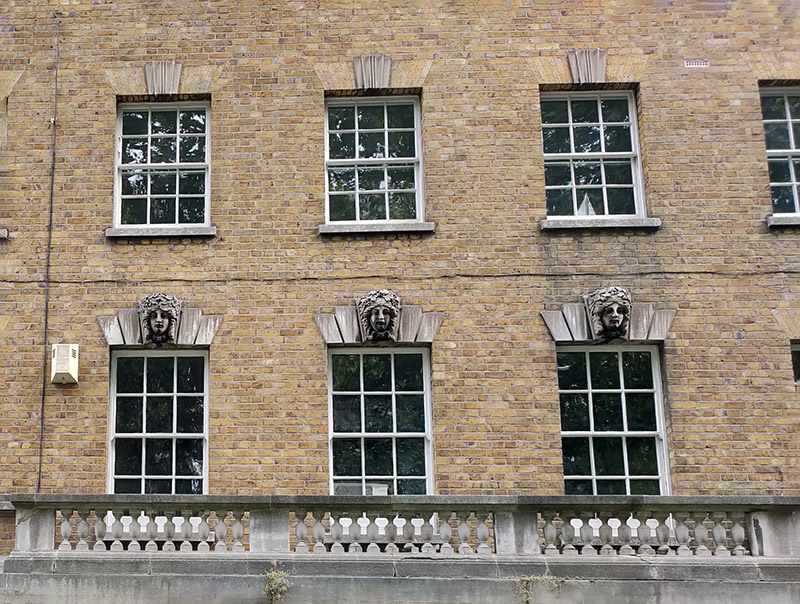
Kennington Road (aka the A23) was constructed in 1751, a year after Westminster Bridge was opened in order to improve communication from the bridge to routes south of the river Thames. With the growing popularity of Brighton as a resort in the later eighteenth century it became part of the route there, used by George IV on his excursions there and later for the London to Brighton Veteran Car Run. Many of the original Georgian terraces built alongside the new road still survive. Sadly, I was unable to find out any information on these carved heads adorning the windows of one of those terraces.

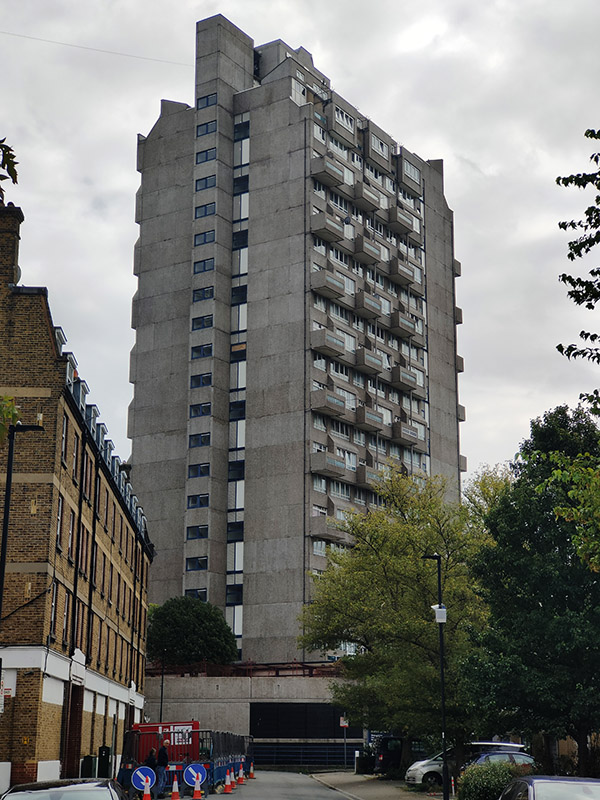
Turning back onto Reedworth Street offers a clear view of the monolithic 23-storey Fairford House erected in 1968. This is one of three towers which constitute the Cotton Gardens estate, the other two being Ebenezer and Hurley. They were designed by the architect George Finch and constructed by Wates using a pre-fabricated system. I guess I don’t really need to labour the contrast with some of the other residences highlighted here.

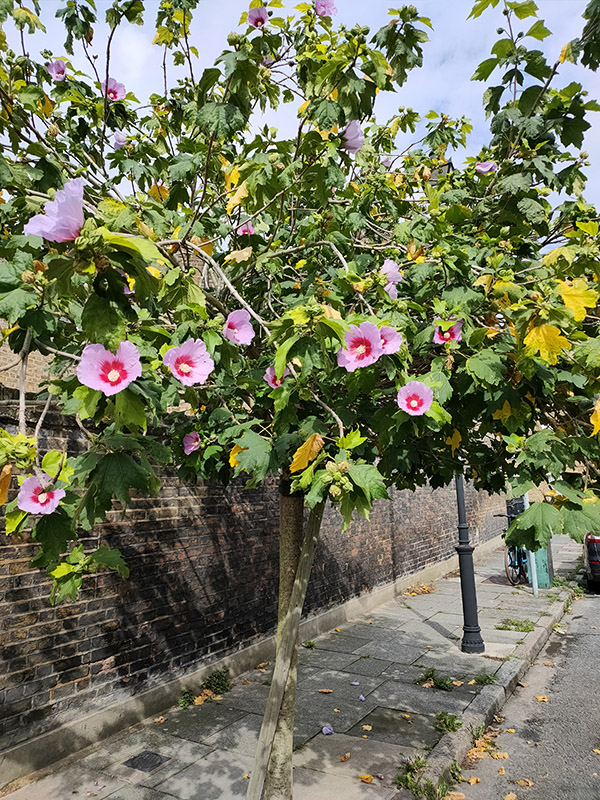
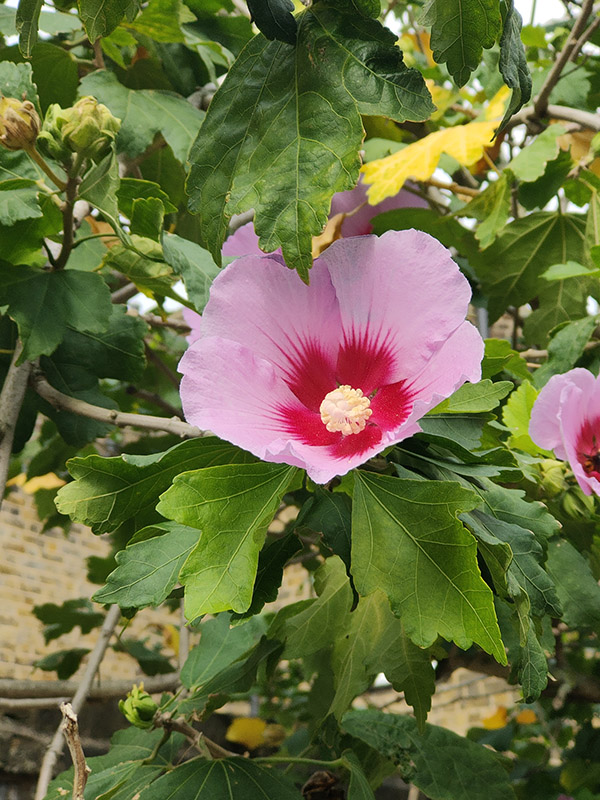
We’re retracing our steps a bit next; back along Kempsford Road then up the full length of Wincott Street to return to Kennington Road. Resuming northward we almost immediately turn off onto Bishops Terrace before making a tour of Oakden Street, Monkton Street and St Mary’s Gardens. A rare bit of horticultural content now. This shrub growing out of the pavement on one stretch of St Mary’s Gardens is widely known as the Rose of Sharon (aka Hibiscus Syriacus). The Latin name derives from the fact that it was originally collected for gardens in Syria though it is native to southern China. It is also the national flower of South Korea.
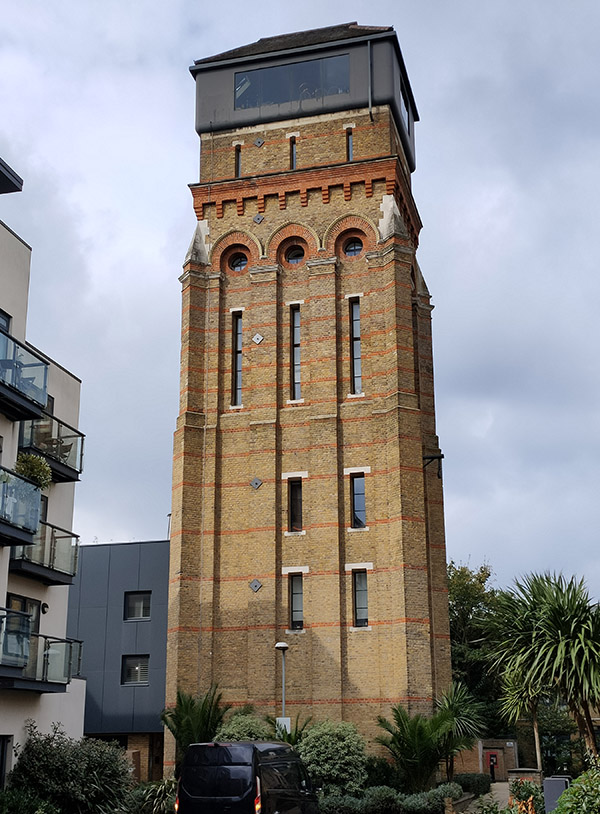
Sullivan Street and Walcot Square bring us back to Kennington Road for a final time before heading off towards Elephant and Castle along Brook Drive. We turn south again at Dante Road and make our way to the Cinema Museum on Dugard Way via George Mathers Road. On the way we pass the Osborne Water Tower House. The tower was built in 1867 to provide a 30,000-gallon water supply for the nearby Lambeth Workhouse where more than 800 destitute families were once housed and where seven-year-old Charlie Chaplin lived with his impoverished mother. It was rescued from dereliction in 2010 and converted into a five bedroom home at an estimated cost of around £2 million (which doesn’t include the £380k purchase price); a project that was featured on the TV show Grand Designs. The refurbishment included the restoration of the tower and the addition of a two-level glass cube on top giving views across central and south London with the largest sliding doors in Europe installed. Having been initially marketed at £3.6m it was eventually sold for £2.75m in 2021.
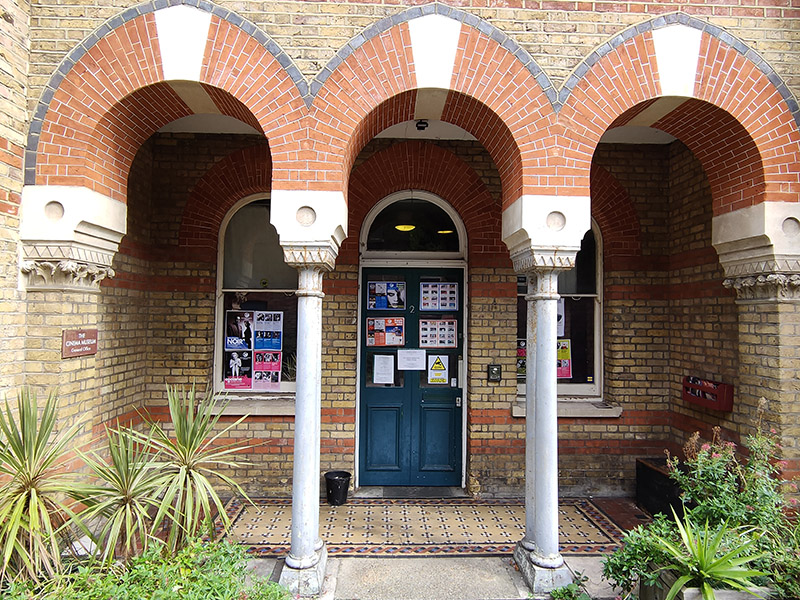
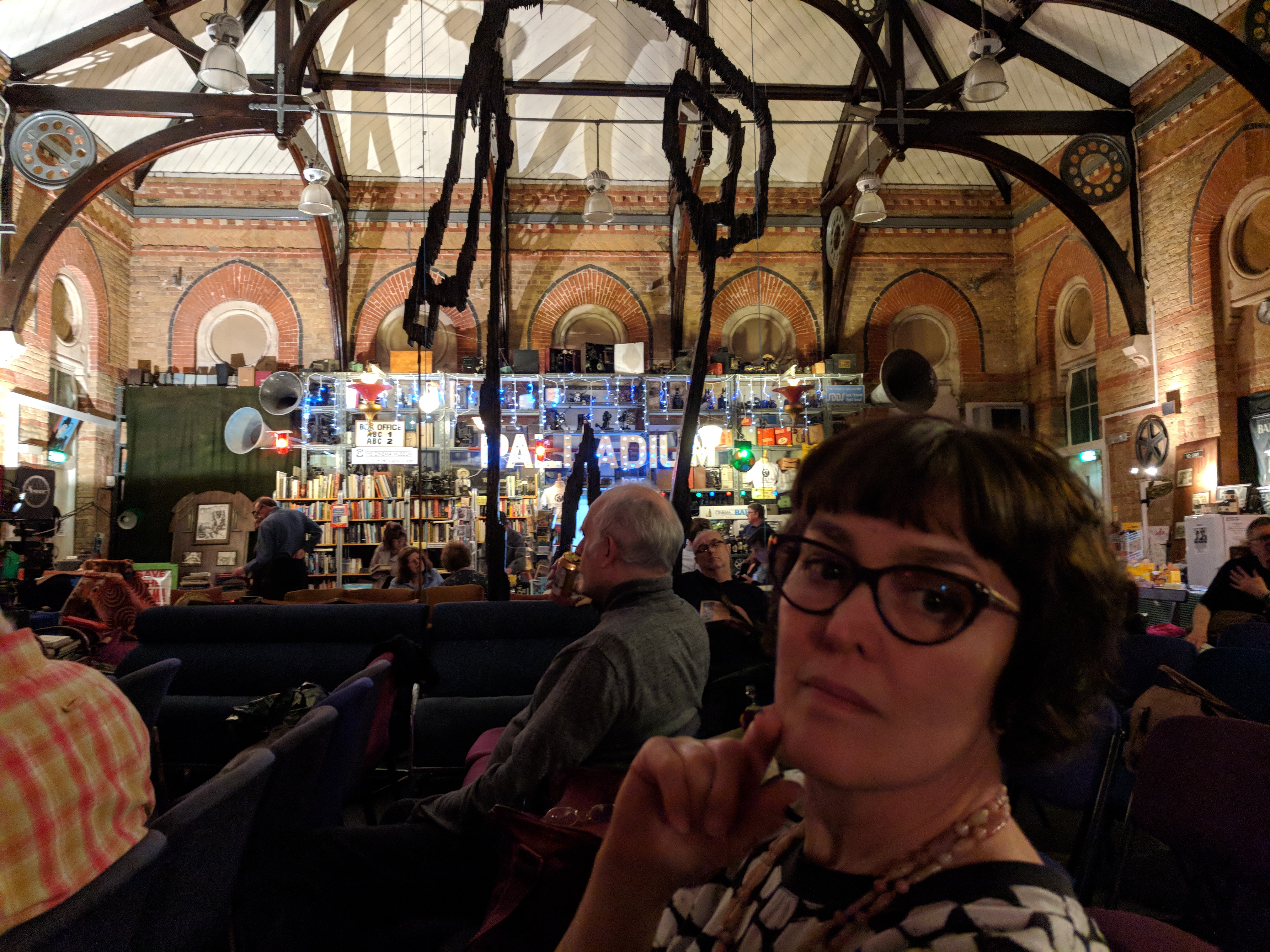
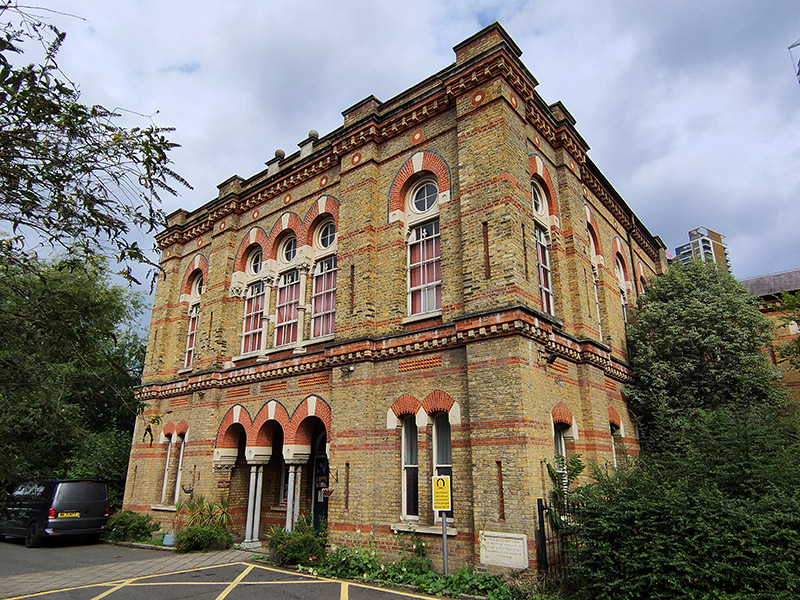
The Cinema Museum museum occupies the former Victorian workhouse building referred to above. It was founded in 1984 by avid collectors, Ronald Grant and Martin Humphries and is the only museum in the UK devoted to the experience of going to the cinema. It houses an extensive collection of memorabilia relating to the history of cinemas (as opposed to film) in the UK from plush velvet seats, impressive illuminated signs and elegantly tailored usher’s uniforms to movie stills, posters and cans of film. Understandably, much is made of the Charlie Chaplin connection. The museum puts on several screenings a month of classic and cult films, many on 16mm. I would particularly recommend the Kennington Noir programme which runs on the 2nd or 3rd Wednesday in the month. A few years ago I helped out a few times as a volunteer manning the bar but I decided that was best left to those who live locally. You can only visit the museum through a pre-booked guided tour or by attending one of the screen events so the interior shot below is from a pre-Covid visit with @eyresusan.

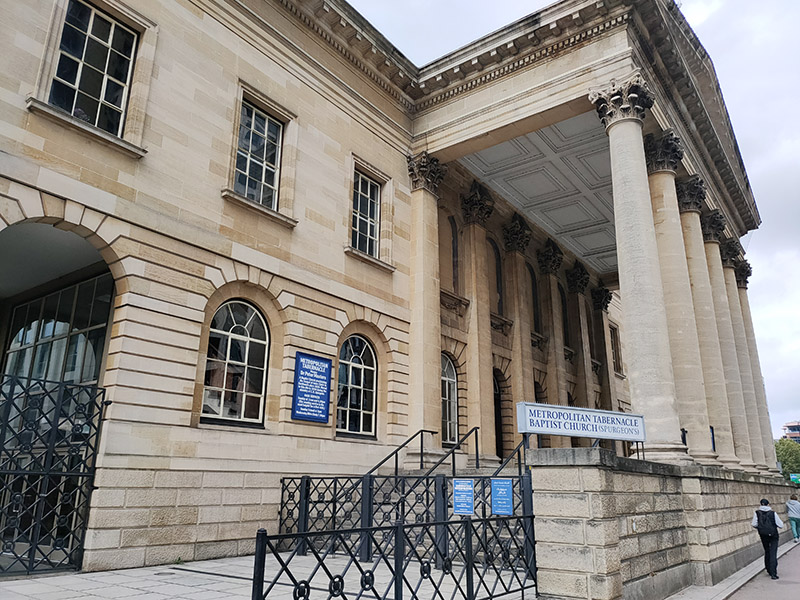
We return to Dante Road via Holyoak Road then cut through Longville Road to St Mary’s Churchyard and follow Churchyard Row, which runs alongside, down to Newington Butts which joins Kennington Park Road to the Elephant and Castle roundabout. Before being appropriated as the name for this short strip of road, Newington Butts it’s own hamlet within the parish of Newington. It is believed to have been named so because of an archery butts, or practice field in the area (in case you were thinking of something else). Standing on the western side of the Elephant and Castle junction is the Metropolitan Tabernacle Baptist Church. The Metropolitan Tab­ernacle is an independent reformed Baptist church whose history goes back to 1650, thirty years after the sailing of the Pilgrim Fathers. The present site was acquired for the Tabernacle, in the mid-19th century, partly because it was thought to be the site of the execution of the Southwark Martyrs (3 men who were burned at the stake for heresy in 1557during the reign of the Catholic, Queen Mary I). The pastor at the time was Charles Haddon Spurgeon (1834 – 1892) who preached to crowds of up to 10,000, had 63 volumes of his sermons printed and led the Tabernacle to independence from the Baptist Union. The original Spurgeon’s Tabernacle was burned down in 1898 and rebuilt along similar lines. It was later burned down for the second time when hit by an incendiary bomb in May 1941. In 1957 it was rebuilt on the original perimeter walls, but to a different design.

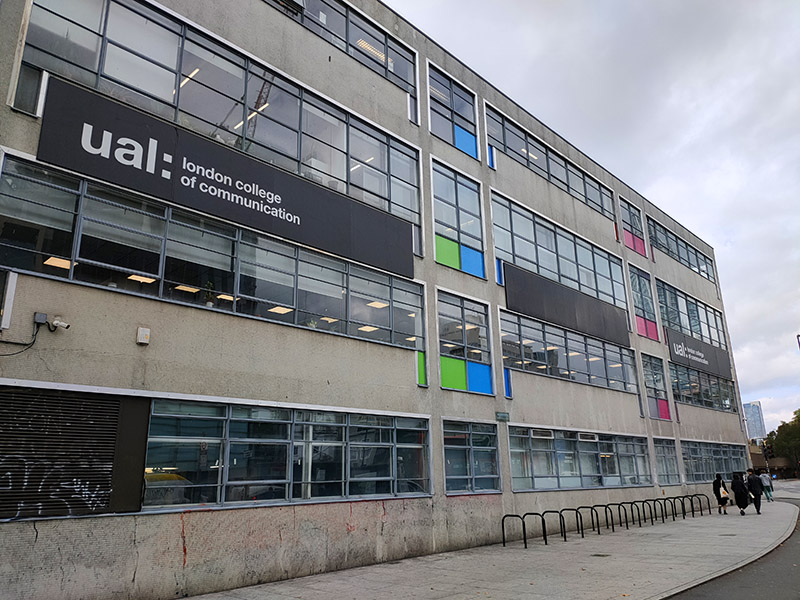
Right next door to the Tabernacle is the London College of Communication (LCC), part of the University of the Arts London. It took up residence here in 1962 when it was known as the London College of Printing and its emphasis was on the graphic arts. Since then it has developed courses in photography, film, digital media and public relations and it took on its current name in 2004 to reflect this expansion. (No Grade II listing for this one as yet :)).

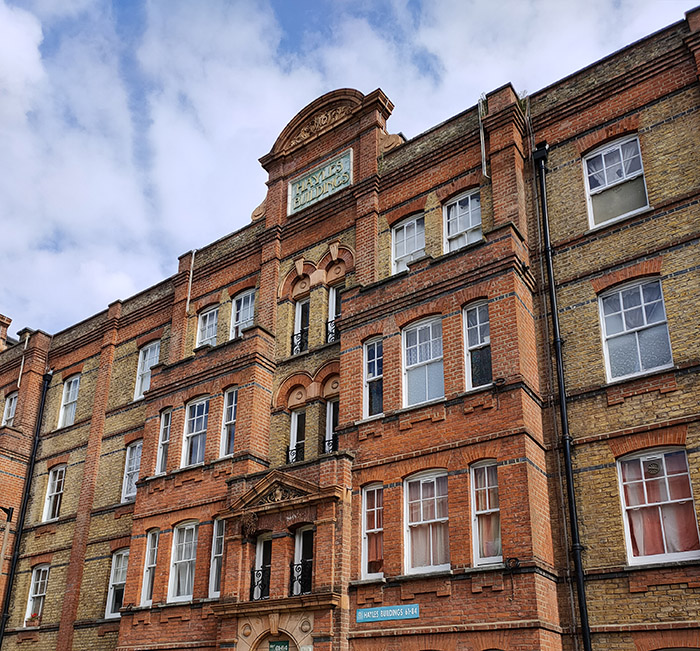
Beyond the LCC we turn onto St George’s Road and then make a series of crossings between this and Brook Drive. First up is Oswin Street followed by Elliotts Row. Hayles Buildings on the latter are artisans’ dwellings that were built in 1891 and 1902 by the Hayles Charity which today is part of the Walcot Foundation based in Lambeth.

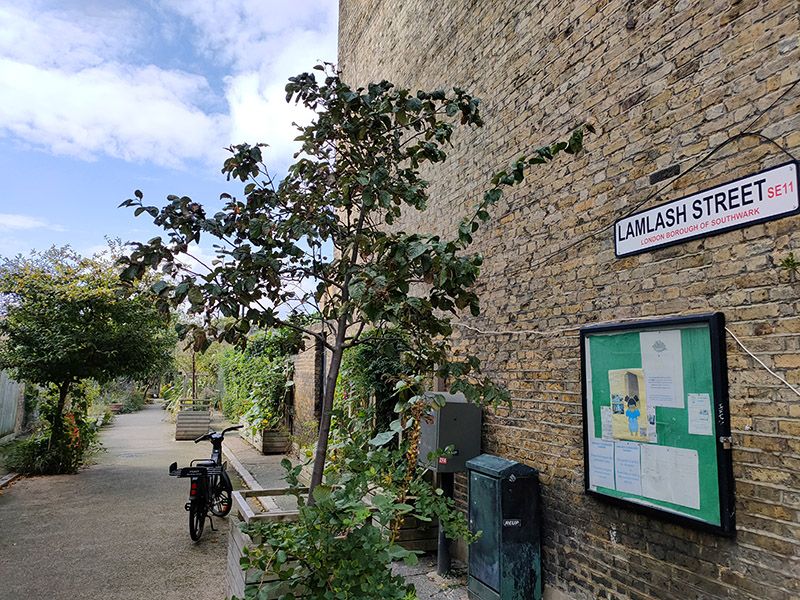
Lamlash Street which links Elliotts Row to Hayles Street has, rather charmingly, been turned into a community garden.

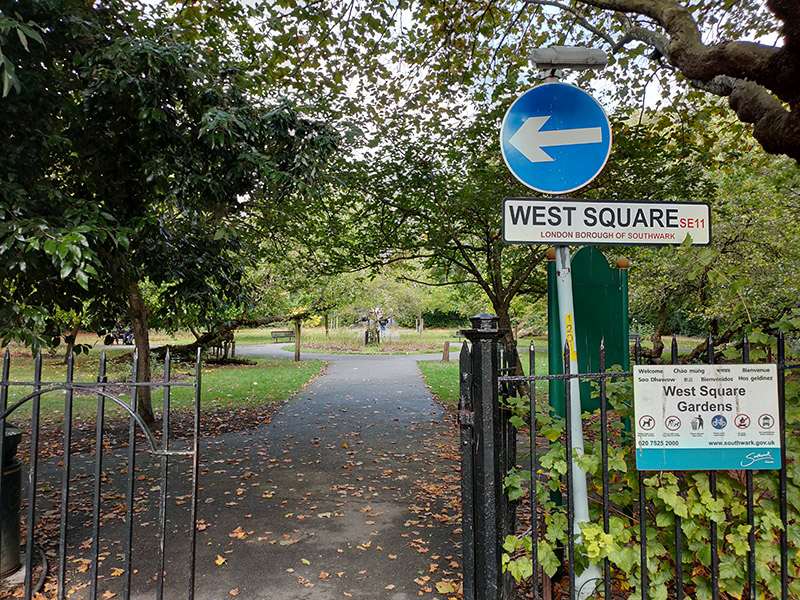
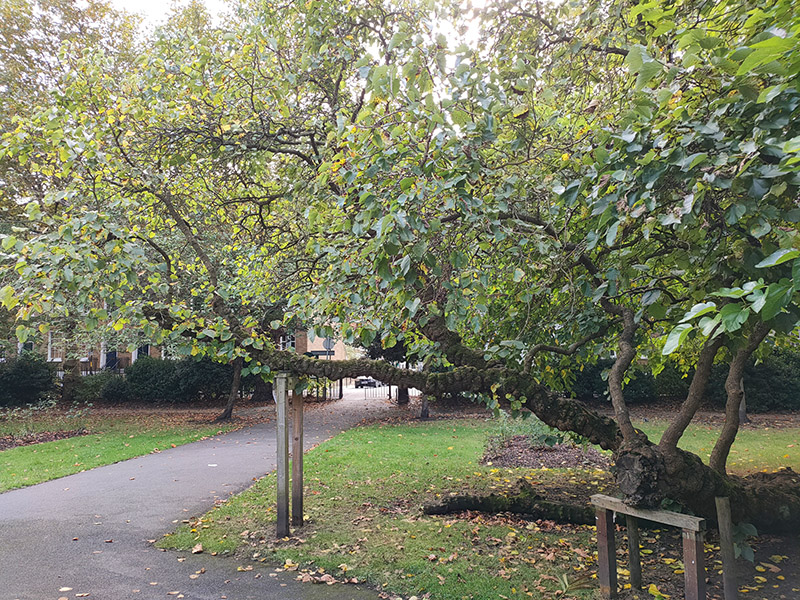
West Square, which together with Orient Street, Hedger Street and Austral Street forms another pair of connections between St George’s Road and Brook Drive, is four sides of (mainly) Georgian terraces surrounding a communal garden (open to the public for once). The name comes from Colonel Temple West who died in 1784, bequeathing the land to his wife and eldest son, who shortly thereafter granted leases to build houses on the site. The garden is notable for a number of splendid and ancient mulberry trees.

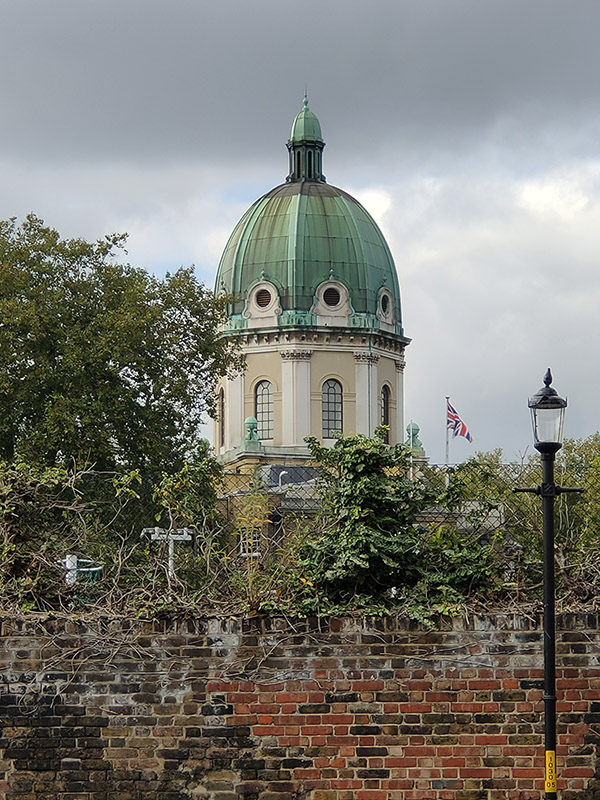
Geraldine Street, which leads off of the north-western corner of the square offers a good view of the dome of the Imperial War Museum (IWM).

….and from here we can cut through into Geraldine Mary Harmsworth Park which occupies the former site of the Bethlem Royal Hospital. The 15 acre site was purchased by Geraldine’s son Harold in 1926 and opened as a park dedicated to her eight years later. Geraldine had 14 children in total, 11 of whom survived infancy, which she had to bring up in increasingly straightened circumstances due to her husband’s alcoholism. Harold, her second son, and eldest son, Alfred, went on to become the owners of The Daily Mirror and The Daily Mail and Viscount Rothermere and Viscount Northcliffe, respectively. Much of the credit (or blame depending on your perspective) for the rise of so-called popular journalism in this country rests on their shoulders.

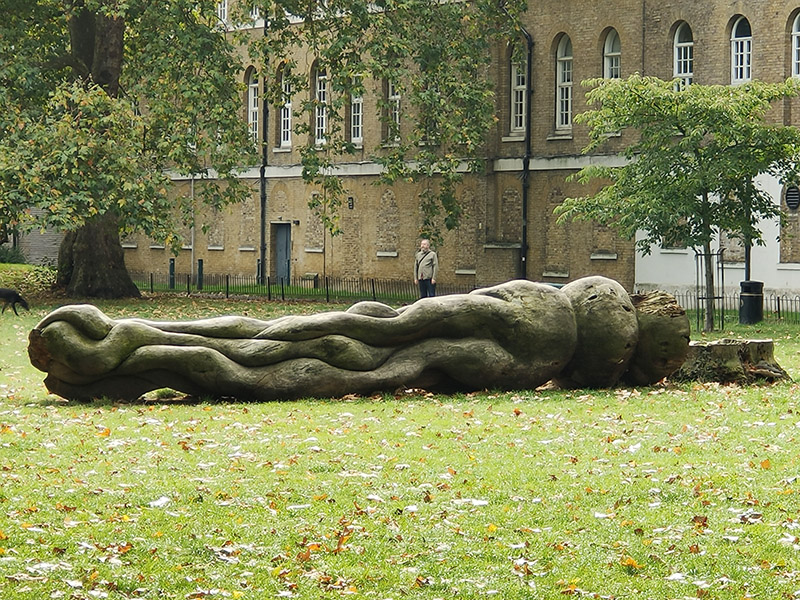
In 2015 Australian artist, Morganico, was commissioned to create a sculpture with peace as its theme out of a diseased plane tree in the park. Had I done this walk just a year earlier I might have seen it still standing but, unfortunately, in 2023 it had to be felled as it was starting to rot.

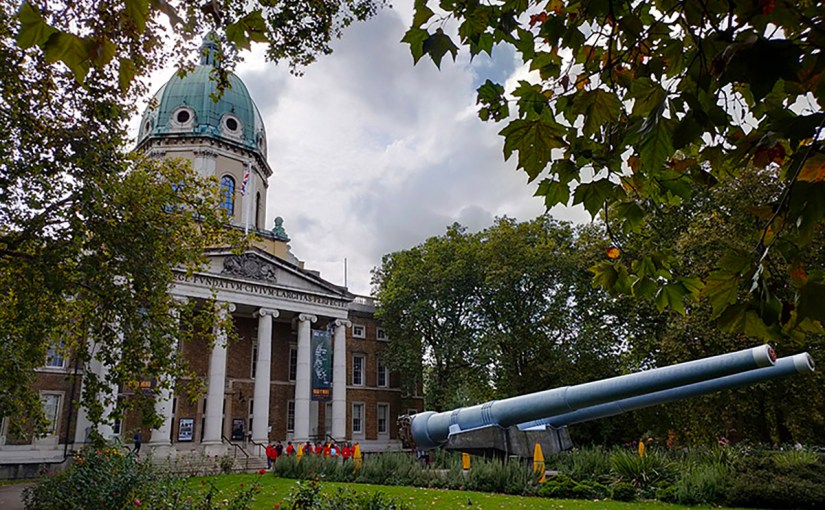
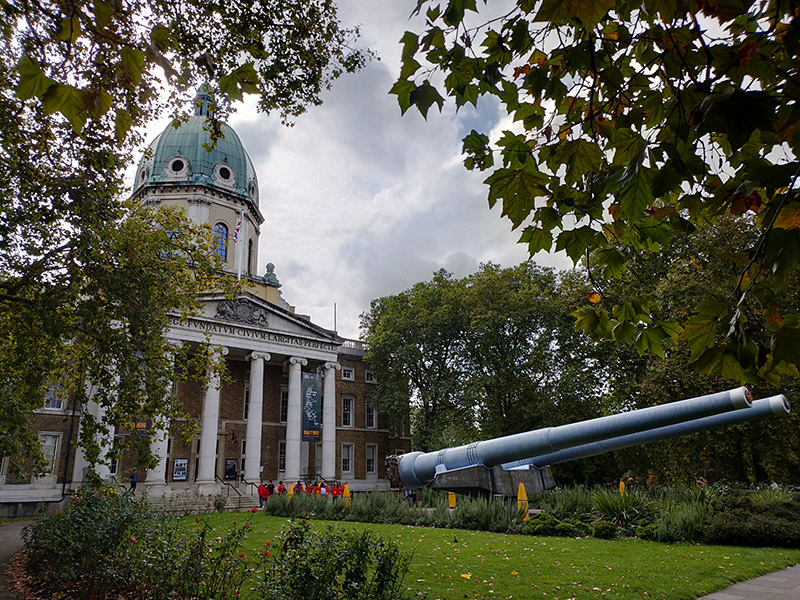
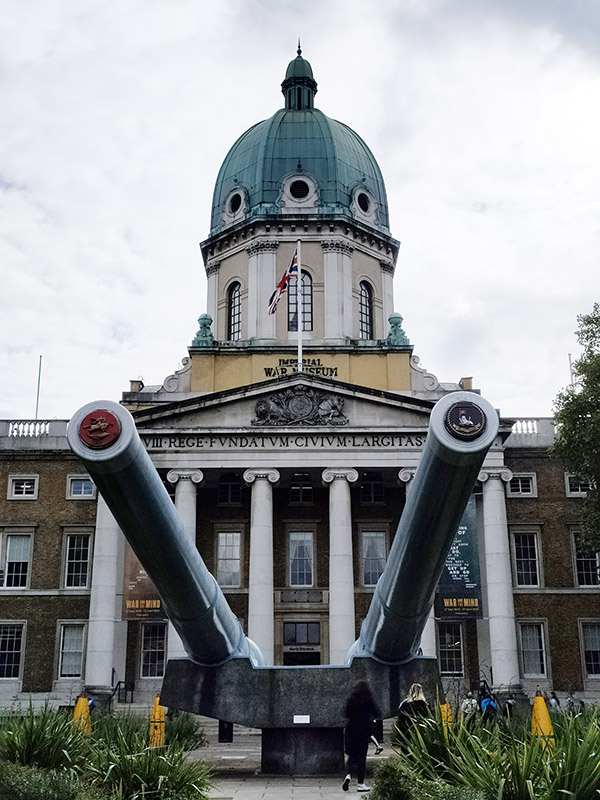
As you may have surmised, The Imperial War Museum is the final item on the agenda for today. In 1917 the Government of the time decided that a National War Museum should be set up to collect and display material relating to the Great War (which was still being fought). Because of the interest from Dominion nations, many of whose subjects had fought and died in the war, the museum was given the title of Imperial War Museum. It was formally established by Act of Parliament in 1920 and opened in the Crystal Palace by King George V on 9 June 1920. From 1924 to 1935 it was housed in two galleries adjoining the former Imperial Institute, South Kensington then on 7 July 1936 the Duke of York, shortly to become King George VI, reopened the museum in its present home, formerly the central portion of Bethlem Royal Hospital, at the bequest of the aforementioned Lord (Viscount) Rothermere (aka Harold Harmsworth).

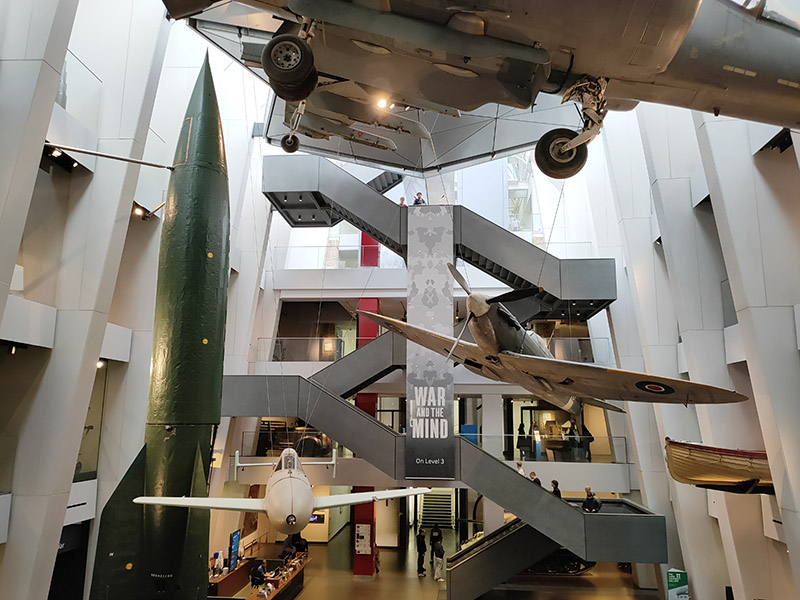
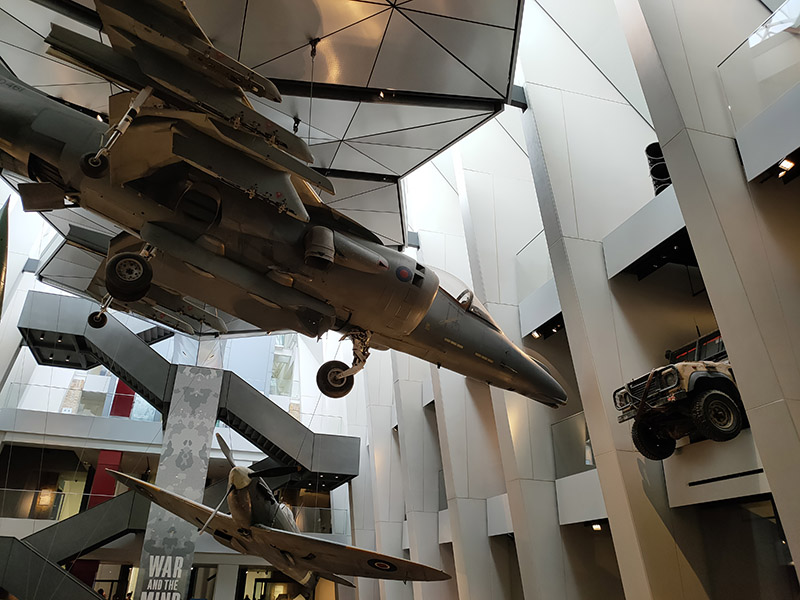
At the outset of the Second World War the IWM’s terms of reference were enlarged to cover both world wars and they were again extended in 1953 to include all military operations in which Britain or the Commonwealth have been involved since August 1914. In 2017 this remit expanded still further with an exhibition, People Power: Fighting for Peace, which told the story of how peace movements have influenced perceptions of war and conflict. The museum was itself the site of a disarmament demonstration, in 1983, organised by Southwark Greenham Women’s Peace Group.  The two guns in front of the museum were installed there in 1968. One came from HMS Ramillies which first saw action in 1920 during the Greco-Turkish War and was later used against Italian land forces and warships in 1940. The other, initially mounted on HMS Resolution, which also saw service during the Greco-Turkish War, was remounted in HMS Roberts, an important unit in the naval forces assembled for the invasion of Normandy in June 1944. 

Finally, just going back to the subject of exhibitions; although I didn’t see the one mentioned above I have been to a couple of excellent ones this year including one on the day of this visit showcasing the work of war photographer, Tim Hetherington, who tragically died in April 2011 from injuries sustained when photographing unrest in Libya. The exhibition is closed now but some of the videos included in it, such as Liberian Graffiti, are available to view online.

Day 70 Part 2 – Black Prince Road – Lambeth Road – Albert Embankment

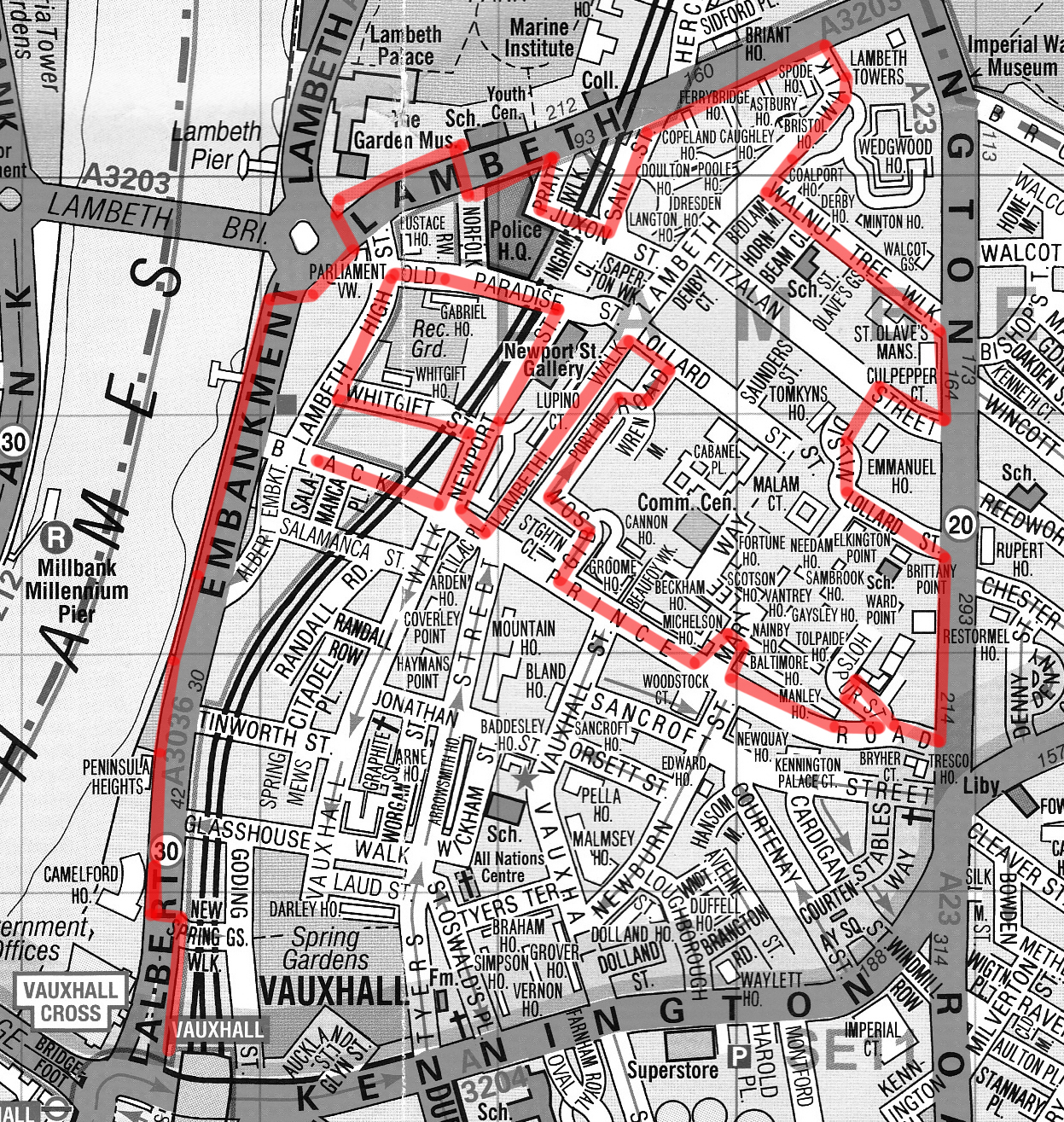
On to the second leg of this excursion and this time we’re knocking off the triangle of streets bounded by Black Prince Road, Kennington Road and Lambeth Road then heading back down the Albert Embankment to Vauxhall station.

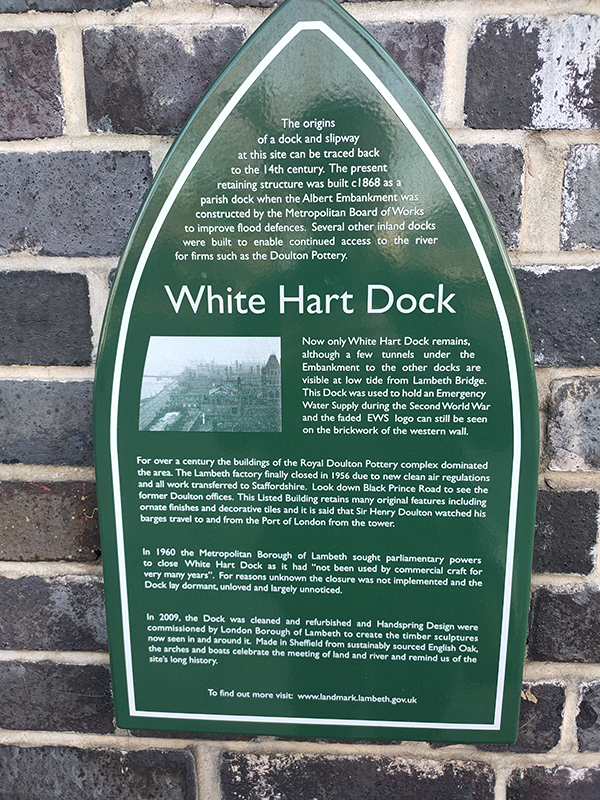
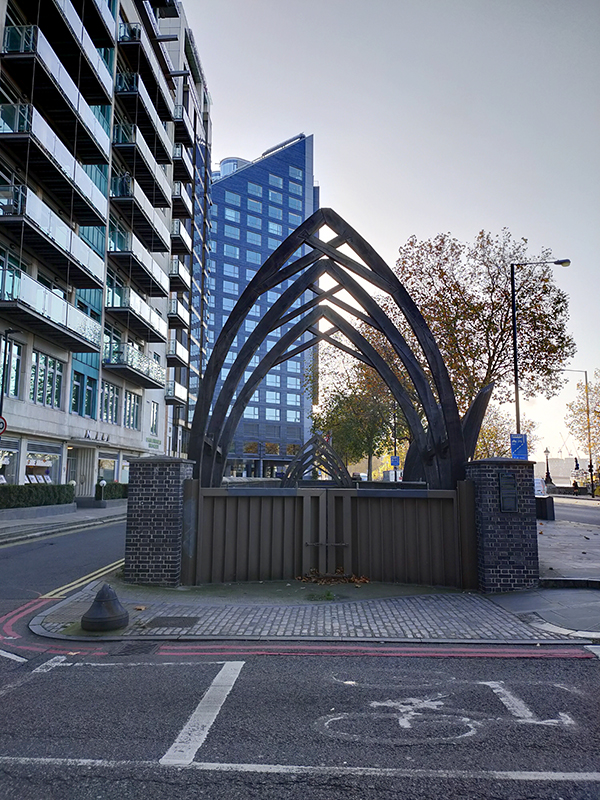
We start on the Albert Embankment at White Hart Dock. The origins of a dock and slipway at this site can be traced back to the 14th century. The present structure was built c.1868 as a parish dock when the Albert Embankment was constructed by the Metropolitan Board of Works to improve flood defences. Several other inland docks were built to enable continued access to the river for firms such as the Doulton Pottery (see below) but now only White Hart Dock remains. It was used to hold an Emergency Water Supply during the Second World War and the faded EWS logo can still be seen on the brickwork of the western wall. In 1960 the Borough of Lambeth sought to close White Hart Dock as it had “not been used by commercial craft for very many years” but the proposal wasn’t implemented and the Dock just fell dormant and largely unnoticed. Then in 2009, the Dock was cleaned and refurbished and Handspring Design were commissioned by Lambeth BC to create the timber sculpture now seen in and around it. Made in Sheffield from sustainably sourced English Oak, the arches and boats celebrate the meeting of land and river and remind us of the site’s long history.

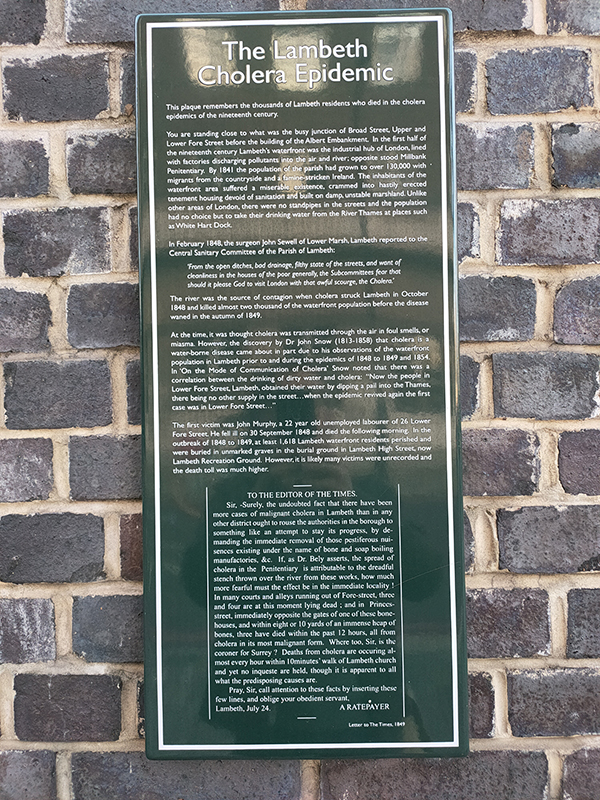
There is also a plaque here (possibly the wordiest you’ll find in the whole of London) commemorating the victims of the mid-nineteenth century Lambeth Cholera Epidemic. During 1848 and 1849 at least 1,600 nearby residents (who took their water directly from the river) died of cholera and were buried in unmarked graves. It was by studying this tragedy and the 1854 outbreak in Soho (which we covered many moons ago) that Dr John Snow (1813 – 1858) was able to conclude that cholera was a waterborne disease rather than one transmitted through the air.

Heading away from the river on Black Prince Road named as you will recall (if you were paying attention last time) after Edward of Woodstock, the eldest son of Edward III. Edward junior never made it onto the regnal throne as he died of dysentery at the age of 46. Instead, on the death of Edward III, succession passed to the Black Prince’s 10 year old younger son, Richard (II). At the junction with Lambeth High Street stands the formidable Southbank House which is the only surviving part of the Doulton Pottery complex that dominated this area from the early Victorian era until the mid 1950’s. This Grade II listed gothic extravaganza with its striking pink and sandy-coloured terracotta ornamentation was built in 1876-78, probably to a design of architect, Robert Stark Wilkinson. The building housed the pottery’s museum and art school as well as serving as company HQ. During WW2 the pottery’s industrial buildings presented an easy target for German bombers and the resulting destruction hastened the process of transferring production facilities to Stoke-On-Trent which had begun in the the 1930’s. New clean air regulations finally sounded the death knell for the Lambeth factory in 1956 and demolition of all the buildings apart from the HQ followed shortly thereafter.

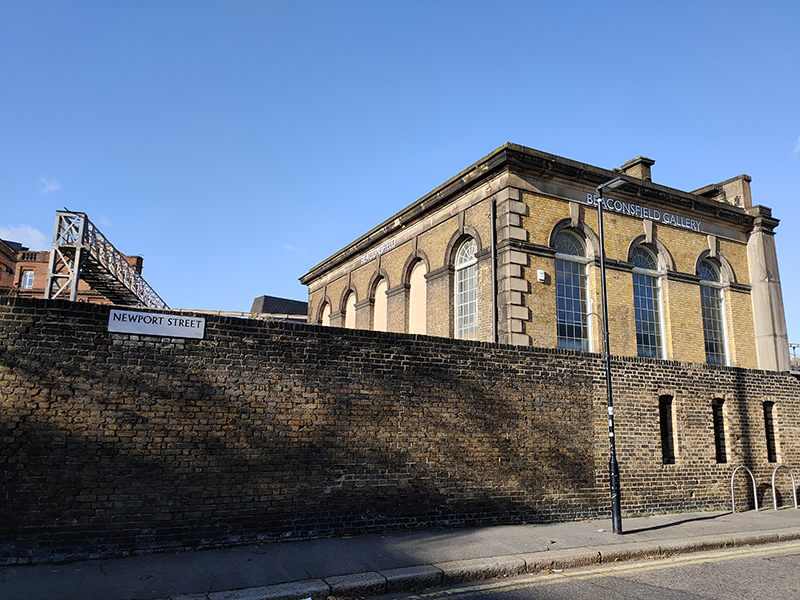
Beyond Southbank House and after passing under the railway we turn left into Newport Street. Adjacent to the railway, the Beaconsfield Contemporary Art Gallery occupies the southern (girls) wing and only remaining part of the former Lambeth Ragged School. This was built 1849-1851 by Henry Beaufoy, whose family wealth came from the vinegar trade, in memory of his late wife, Eliza. Originally the plot had been owned by South-Western Railway and in 1903 the decision was made to sell the site back to them. One year later most of the school was knocked down when the railway was widened. Network Rail still own the freehold for the site. Beaconsfield took over the lease from the London Fire Brigade in 1994 and worked with LKM Architects to restore the building and transform it into a contemporary art space. 

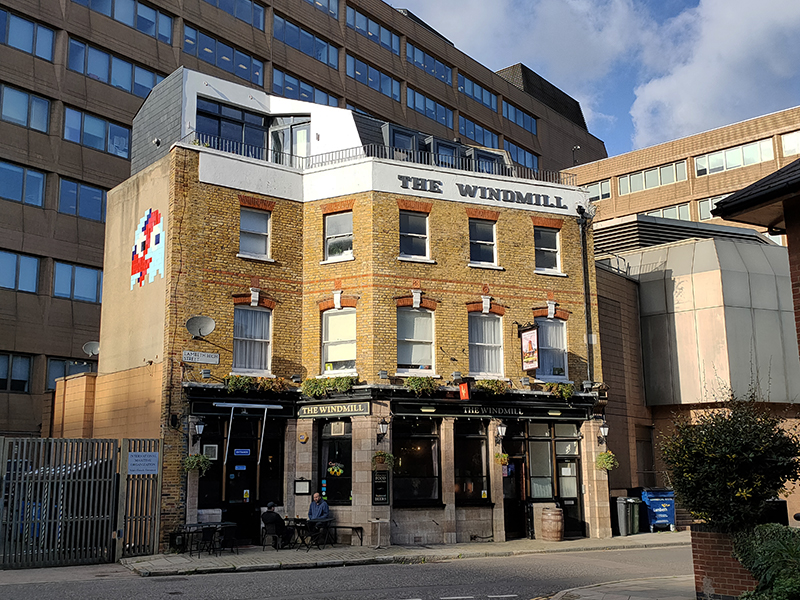
We turn left after the gallery, back under the railway, along Whitgift Street, named after John Whitgift who was Archbishop of Canterbury from 1583 to 1604. At the end we turn right into Lambeth High Street past the Windmill pub, renowned for its extensive selection of rums apparently.

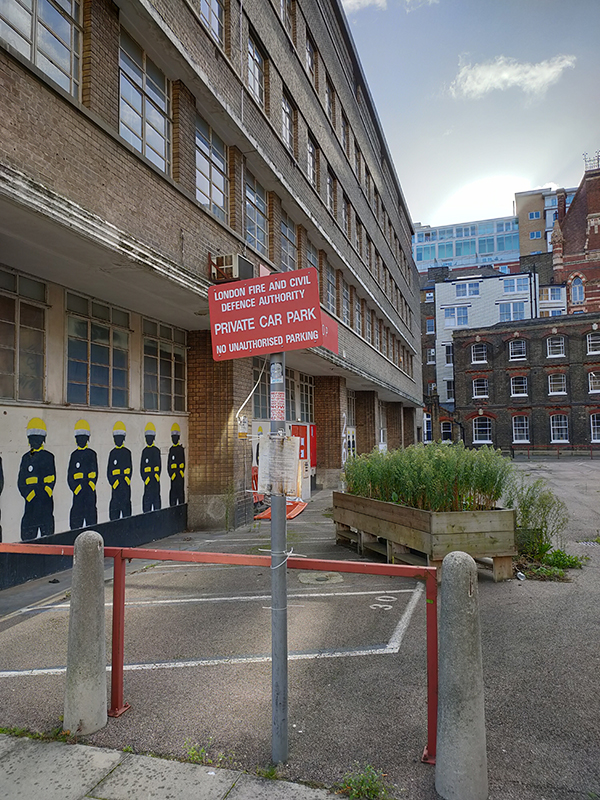
The building behind the pub was formerly the headquarters of the London Fire Brigade and looking back down Lambeth Hight Street towards the rear of Southbank House there is some vestigial evidence of this.

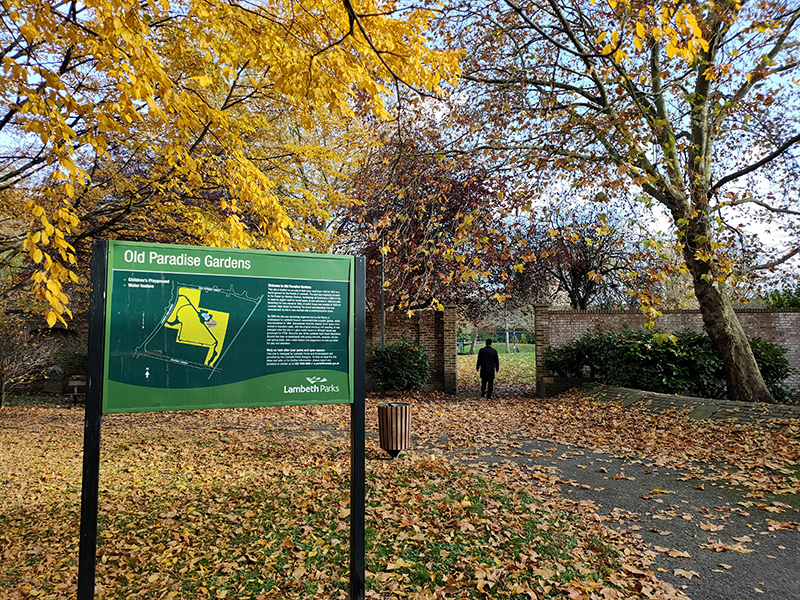
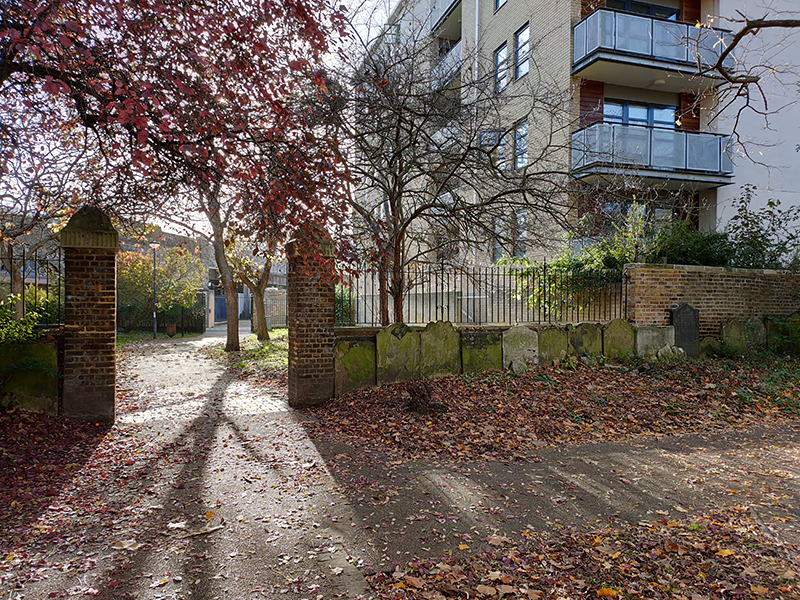
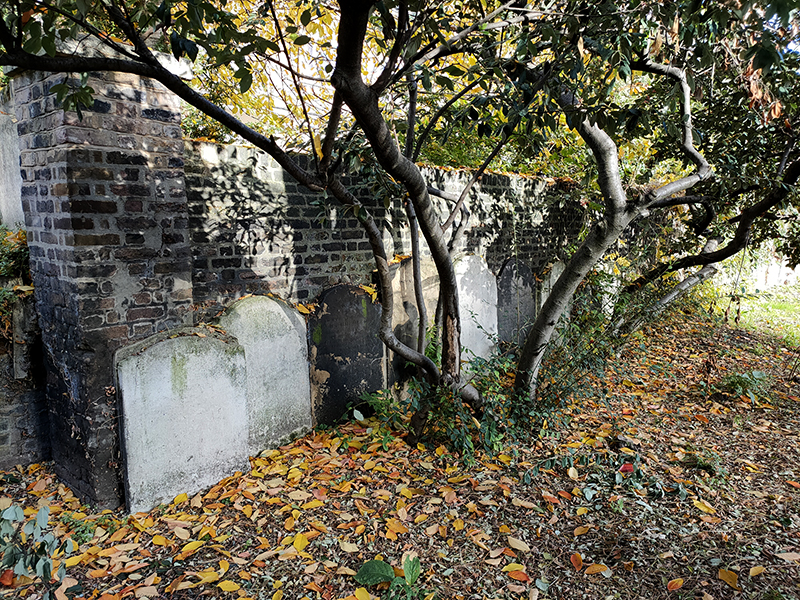
To the east of Lambeth High Street at its top end lie the Old Paradise Gardens. These public gardens were opened in 1884 on the site of what had been the burial ground for St Mary’s Church from 1703 to 1853. The old gravestones can still be seen around the perimeter of the gardens, the walls of which are Grade II listed. Originally known as Lambeth High Street Recreation Ground the gardens were renamed in 2013 following refurbishment.

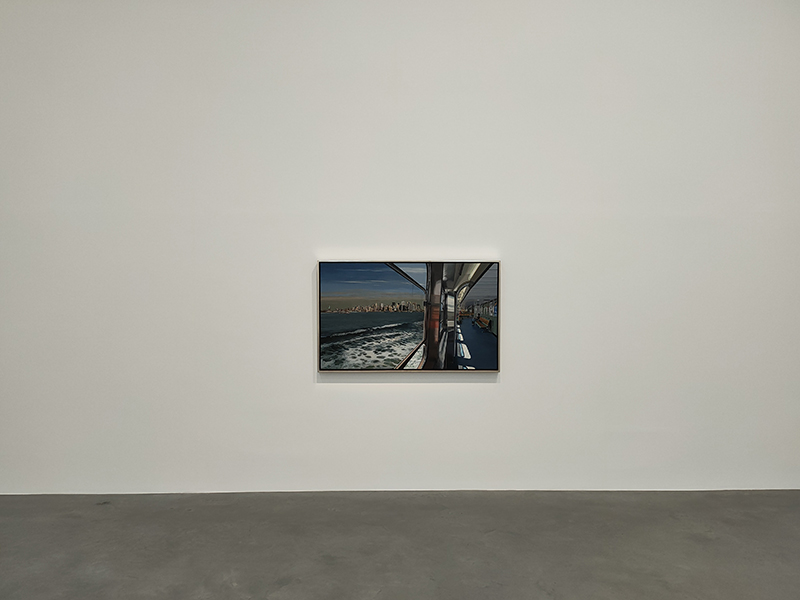
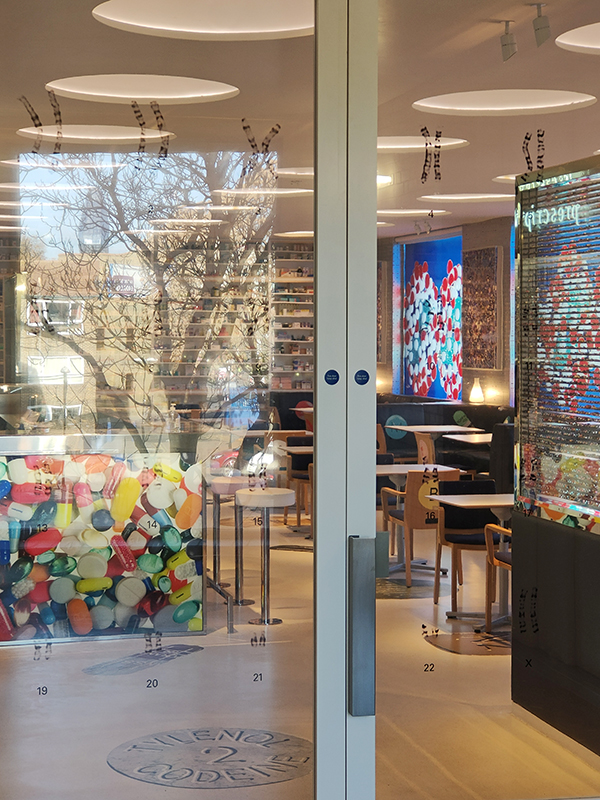
Just beyond the gardens is Old Paradise Street which takes us east to the top end of Newport Street home to the eponymous gallery, created through the conversion of three listed buildings, which were purpose-built in 1913 to serve as scenery painting studios for the booming Victorian theatre industry in London’s West End. With the addition of two new buildings, the gallery now spans half the length of the street. It opened in 2015 for the purpose of displaying works from Damien Hirst’s private art collection to the public free of charge. The current exhibition, which runs until 12 December 2021, features the hyper-realistic paintings of Richard Estes, a mixture of vignettes of American urban life and panoramic landscapes.

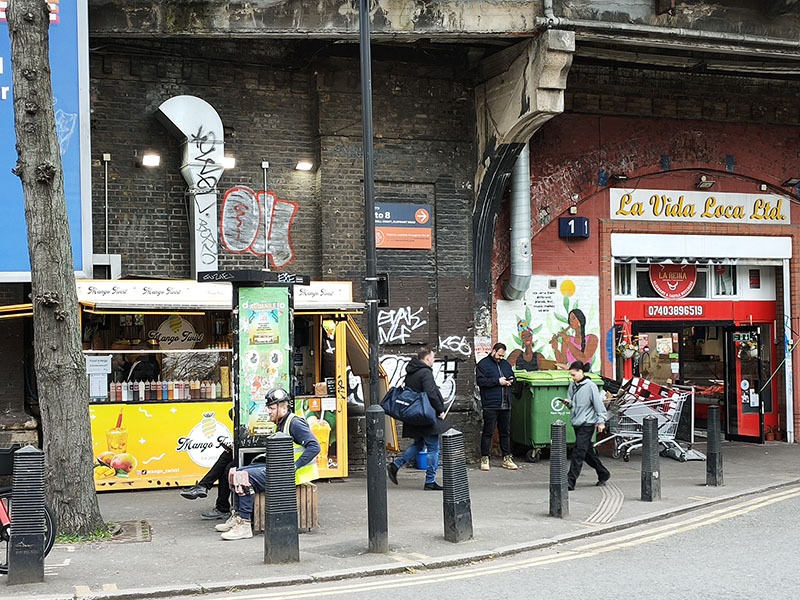
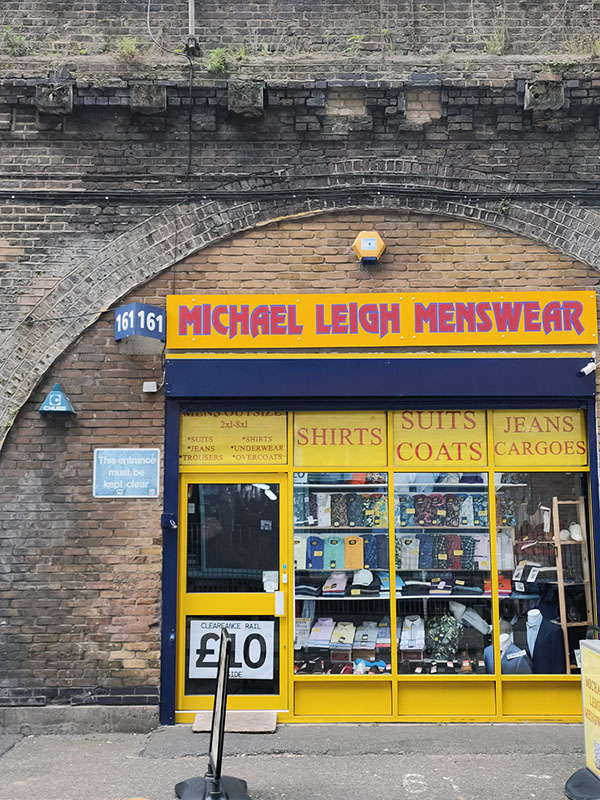
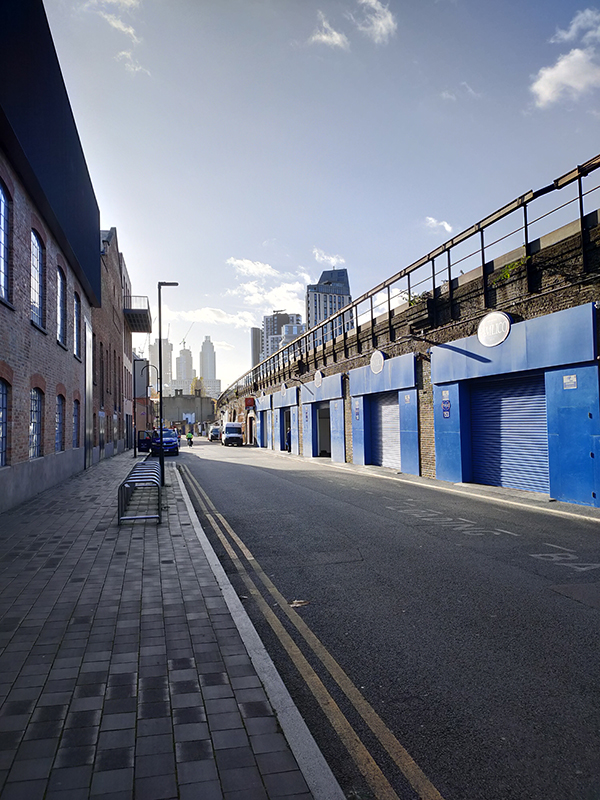
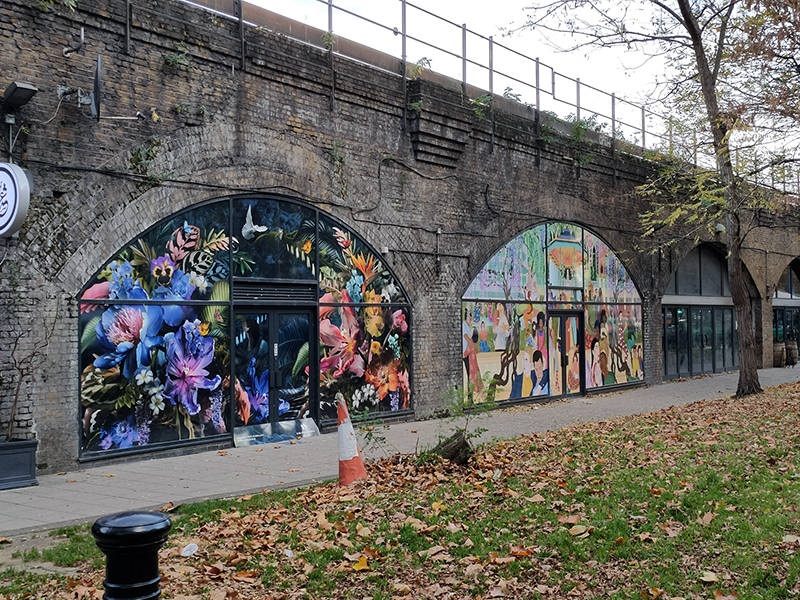
The railway arches on the other side of the street are all part of the Pimlico Plumbers empire.

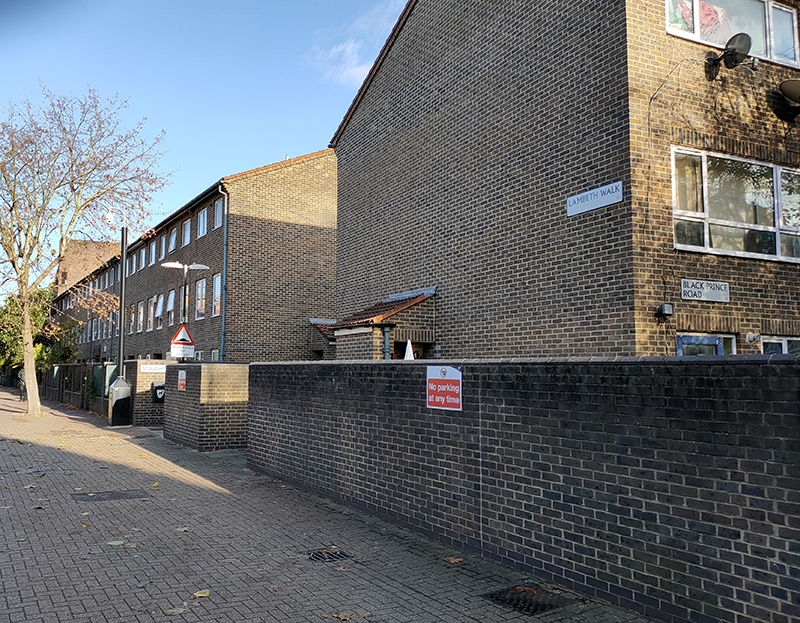
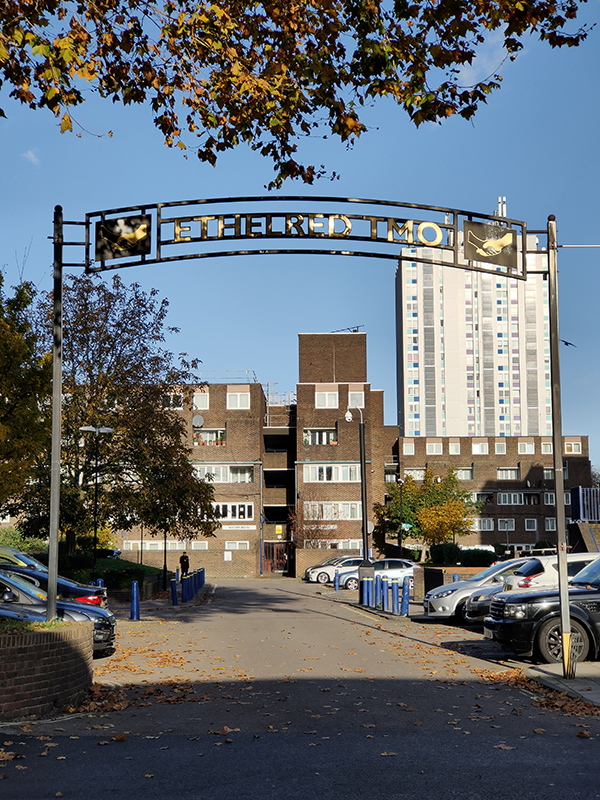
Beyond these, heading south again, we’re back on Black Prince Road and moving eastward into what was one of the largest conglomerations of social housing in the capital. Or at least it was when the various apartment blocks and towers where originally constructed in the late sixties and early seventies. These days there is a significant interspersal of private ownership. We make an immediate loop of Lambeth Walk, Lollard Street and Gibson Road (and we’ll come on to the cultural resonance of the former later on) to start with. Then further east on Black Prince Road, Marylee Way provides the main route into the Ethelred Estate. In 2012 the residences in Ethelred and its sister estates, Thorlands and Magdalen, still owned by Lambeth Council (around 1,300 leaseholds and tenancies) were transferred to Housing Association, WATMOS. This was after a ballot of tenants in which 51.1% voted in favour. Hopefully it’s working out better than Brexit.

The estates are to the north of Black Prince Road. Of note on the south side is the Beaufoy Institute, built in 1907 by Henry’s nephew, Mark Hanbury Beaufoy, as a technical school for boys and also to replace his uncle’s Ragged School which had been torn down three years earlier. The Beaufoy vinegar-making dynasty began in 1741 when the family switched from the distilling of gin, apparently horrified by the damage it caused and its toxic ingredients. Their malt vinegar was used on ships as a ‘fumigator, antiseptic and preservative’ and the Beaufoys acquired a lucrative Navy contract. They also produced ‘sweets’ or ‘mimicked’ wines from raisins with added sugar and by 1872 were advertising cordials and non-alcoholic drinks as well. The Beaufoy vinegar works were bombed in 1941, and the Institute was requisitioned for use by women manufacturing munitions. It returned to use as a school after the war, before being eventually acquired by Lambeth Council. It was bought by the London Diamond Way Buddhist Centre in 2012.

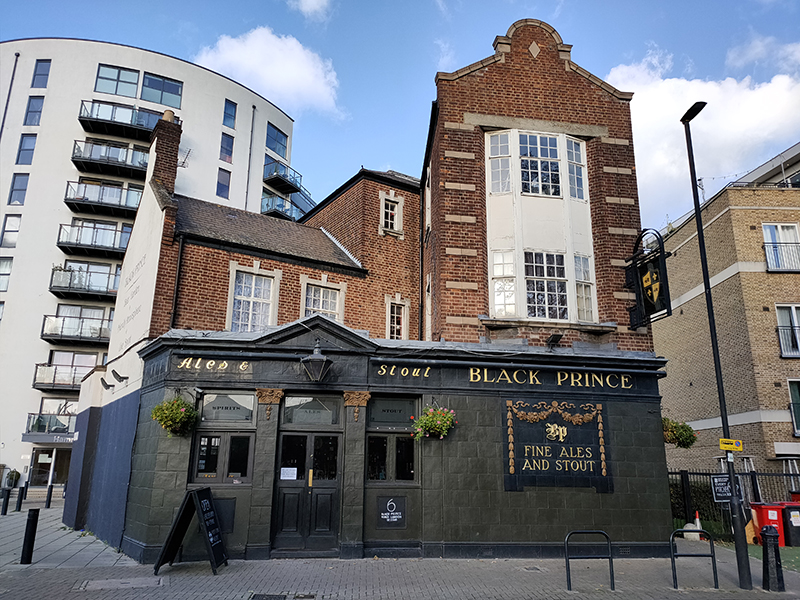
At the eastern end of the street named after him the Black Prince is also commemorated with a pub on the corner with Hotspur Street.

We turn north up Kennington Road then dip into the estates and back out again via Lollard Street, Distin Street and Fitzalan Street. Further up Kennington Road we veer off along Walnut Tree Walk which returns us to Lambeth Walk. En route we encounter Hornbeam Close and Bedlam Mews, which some local vandals have decided merits some retrospective nominative determinism.

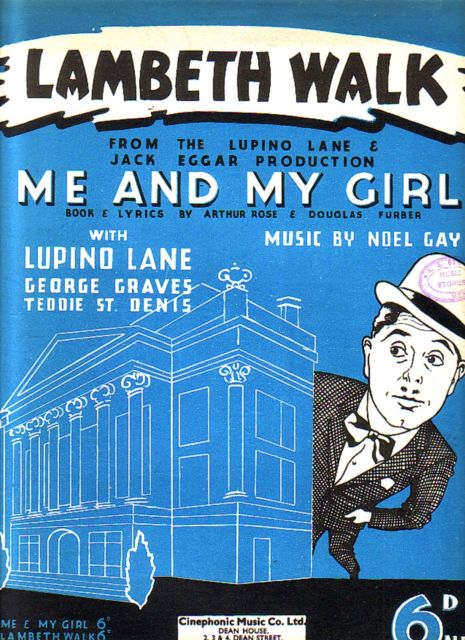
Lambeth Walk is, of course, best known for being the title of one of the songs in the 1937 musical Me and My Girl. The contemporaneous musical, with music by Noel Gay and original book and lyrics by Douglas Furber and L. Arthur Rose, tells the story of an unapologetically unrefined cockney gentleman named Bill Snibson, who learns that he is the 14th heir to the Earl of Hareford. It was revived several times in the 1940’s and made a triumphant return to the West End in 1984 in a version revised by Stephen Fry and starring Robert Lindsay and Emma Thompson.

I have to say that if the song didn’t already exist I doubt anyone would be inspired to write it by the present-day Lambeth Walk.

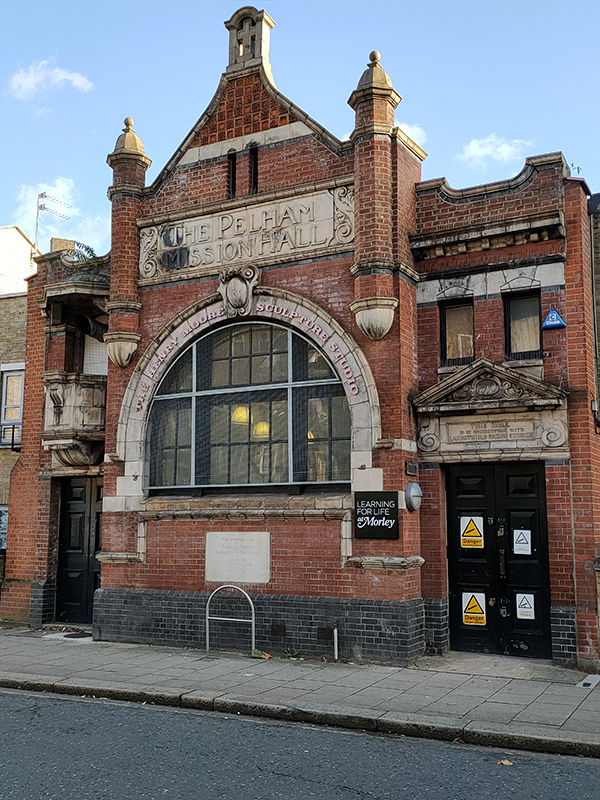
It does however boast Pelham Hall which was built as Lambeth Mission Hall in about 1910 and is distinguished with an exterior pulpit.  The building is now home to the the sculpture department of Morley College.

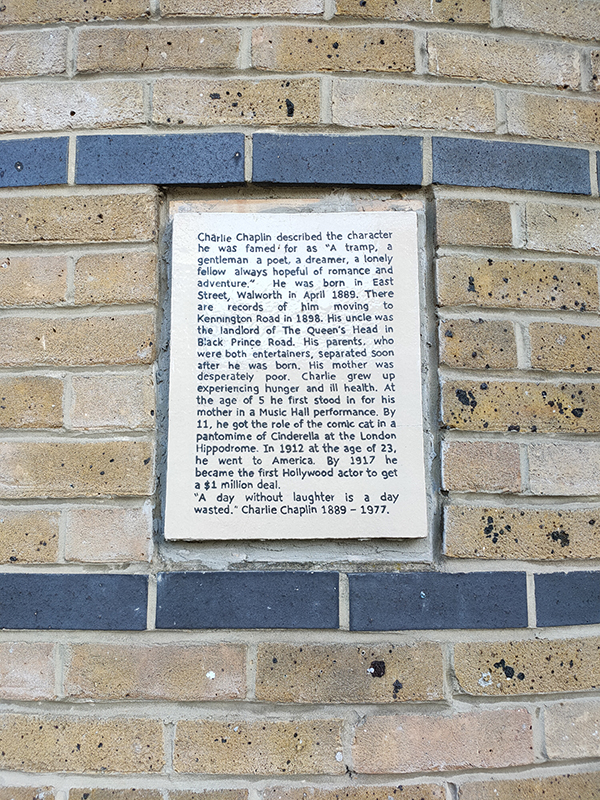
On the wall of the adjacent Chandler Hall Community Centre is a stone plaque dedicated to Charlie Chaplin who lived in the area in his youth and whose uncle ran the (long since departed) Queens Head pub in Black Prince Road. No. 5 Lambeth Walk, on the junction with China Walk, was built in 1958 to replace the Victorian municipal swimming baths which a V2 bomb had destroyed in 1945. The new building had no pool but provided slipper baths and laundry facilities for the local community. In the early 1990’s it was reconfigured for use as a GP practice.

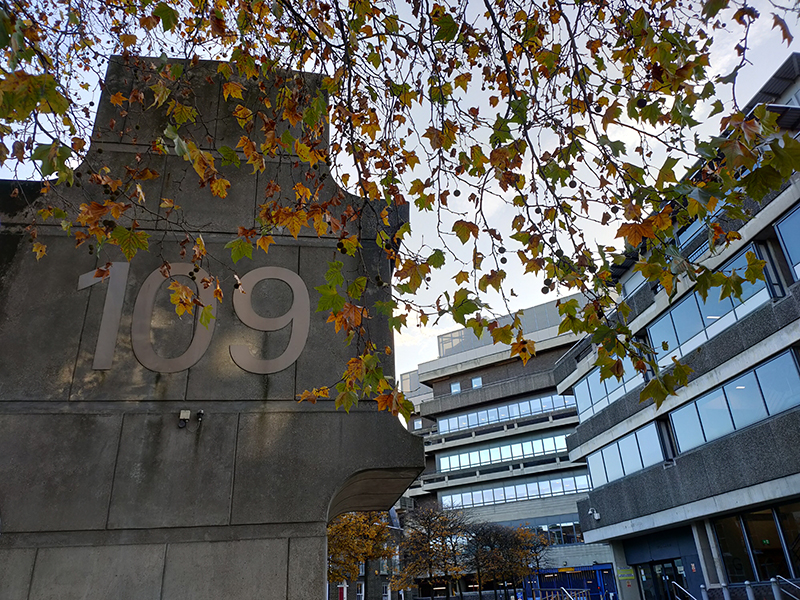
Lambeth Walk doglegs into Lambeth Road where he turn left and head down towards Lambeth Bridge. At 109 Lambeth Road is the building that houses the Metropolitan Police’s Forensic Science Laboratory. It also hosts the Met’s 24 hour emergency call centre and its Lost Property office (inter alia). And it does more than nearly any other building of its era to give Brutalist architecture a bad name (not that it’s not intrinsically a bad name to start with).

Across the road, in stark contrast, is the former Holy Trinity Primary School (1880) now part of Fairley House School (for children with learning difficulties).

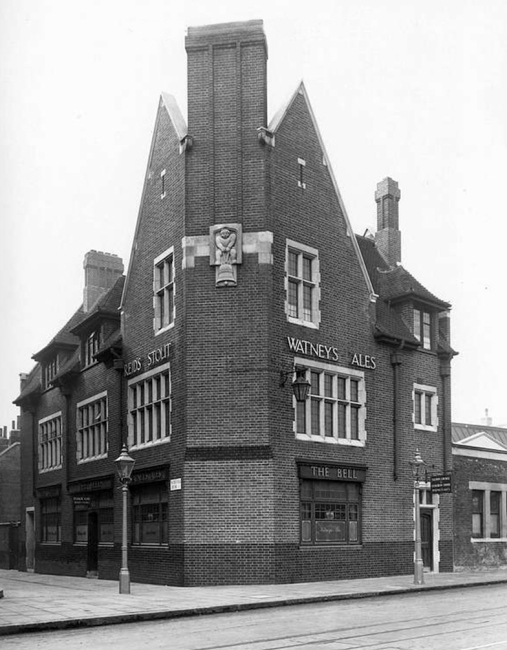
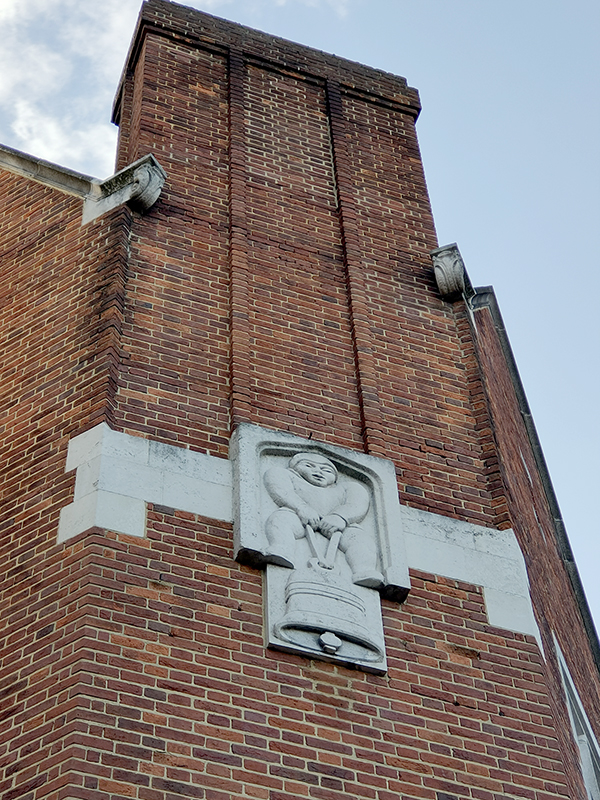
Back on the same side of the road as the Met and just beyond it stands the Bell Building which is a poster child for the sympathetic redevelopment of former public houses into residential space. Crucially the emblematic exterior sculpture of a man lifting a heavy bell has been retained.

Crossing the road again we’re in front of the former St Mary’s Church which was saved from demolition in 1977 by Rosemary and John Nicholson who turned it into The Garden Museum. The church is the burial place of John Tradescant The Elder (c1570 – 1638), the first great gardener and plant-hunter in British history. Tradescant was gardener to Robert Cecil, 1st Earl of Salisbury then to George Villiers, 1st Duke of Buckingham (remember him) and finally to Charles I, after Buckingham’s assassination. His son, John Tradescant The Younger (1608 – 1662), followed in his footsteps as royal head gardener and is buried beside him. The first church on this site predates the Norman Conquest and is mentioned in the Domesday Book. The present church was originally built in 1337 and the bell tower still largely retains its 14th century form. The rest of the building was substantially rebuilt in the Victorian era.

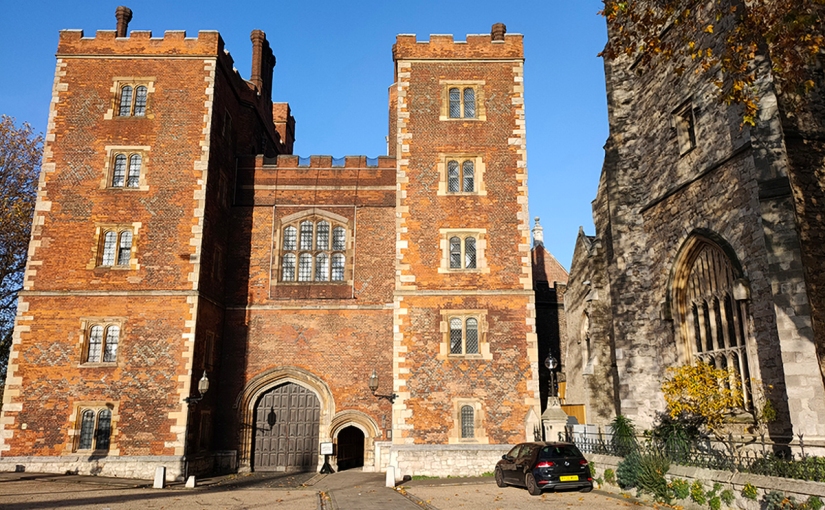
Turn to the right beyond St Mary’s and you’re face to face with Lambeth Palace or, more specifically, Morton’s Tower. You can’t go beyond this gateway as a rule since, as it rather pompously states on the website, this is “a working palace and a family home” and therefore not open to the public except on rare special occasions. The Tower was built by John Morton, Archbishop of Canterbury in 1486–1501 and is one of the few surviving examples of the early Tudor style of brick building. From the time of its completion onward the “Lambeth Dole” of bread, broth and money (which originated in the 13th century) was dispensed to beggars at the gate. In his 1785 History of Lambeth Palace archivist Andrew Ducarel writes that in his day it was regularized and consisted of a weekly allowance of 15 quartern loaves, 9 stone of beef and 5s., which were divided amongst around 30 poor parishioners and distributed three times a week. The practice was discontinued after 1842 and replaced with direct pecuniary grants to the poor.

After negotiating the roundabout at the nexus of Lambeth Road and Lambeth Bridge we set off on the final stage of today’s journey, southward along the Albert Embankment to Vauxhall Station. Almost immediately on the left is the headquarters of the International Maritime Organization and just beyond that the former HQ of the London Fire Brigade (as referenced earlier). Commissioned by the London County Council, the building was designed by EP Wheeler, architect to the LCC, with sculpture work by Gilbert Bayes, Stanley Nicholas Babb and FP Morton. It was opened by King George VI in 1937. Despite not being one of the prime examples of 1930’s architecture in the capital it has acquired a Grade II listing. In 2020 a plan to redevelop the building into a new home for the LFB Museum and erect two towers of over 20 storeys each immediately behind creating over 400 flats and a 200 bedroom hotel was submitted to public inquiry. Although the scheme had the support of the London Fire Commissioner and Lambeth Council it was vetoed by the Secretary of State for Housing in the summer of 2021. (The main objection being, I think, that it would spoil the views from the Palace of Westminster).

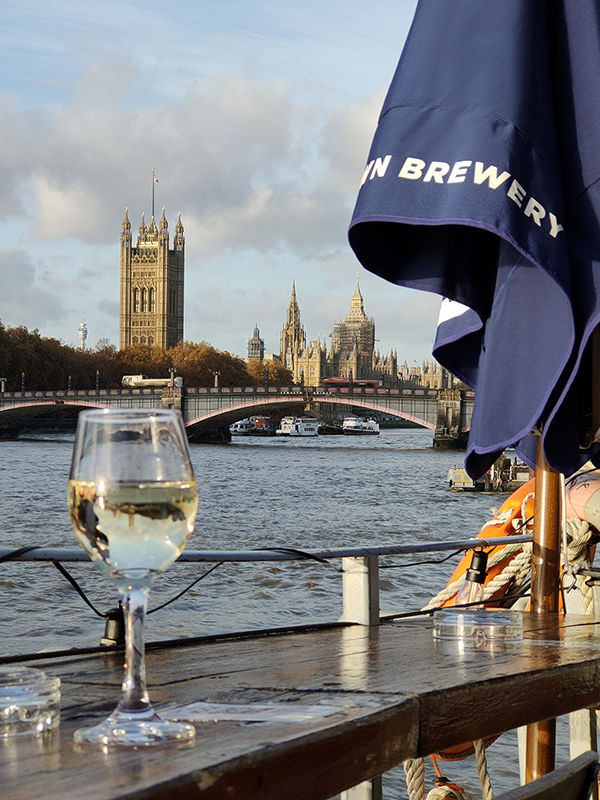
Time for the pub of the day finally, and in the face of plenty of stiff competition, the sunny skies tipped the balance in favour of the Tamesis Dock, a converted 1930’s Dutch barge, permanently moored on the river opposite the Millbank Tower.

These floating bars tend to charge over the odds but this one was pretty reasonable and thanks to the mild weather (for mid- November) I was able to enjoy a glass of wine and some baked goats cheese up on the deck, in glorious isolation and with a great view of the Houses of Parliament. Until I drew the attention of the local gulls that is.

Lambeth Council actually designated the Albert Embankment riverfront an Area of Conservation in 2001 but as noted earlier this hasn’t stopped them approving plans for redevelopment. The Corniche Building, designed by Foster & Partners, was completed in spring 2020 and along with the adjacent Dumont and Merano residential blocks has created 472 new luxury apartments close to the river.

As we approach Vauxhall Bridge the railway converges with the Albert Embankment and the river moves away.

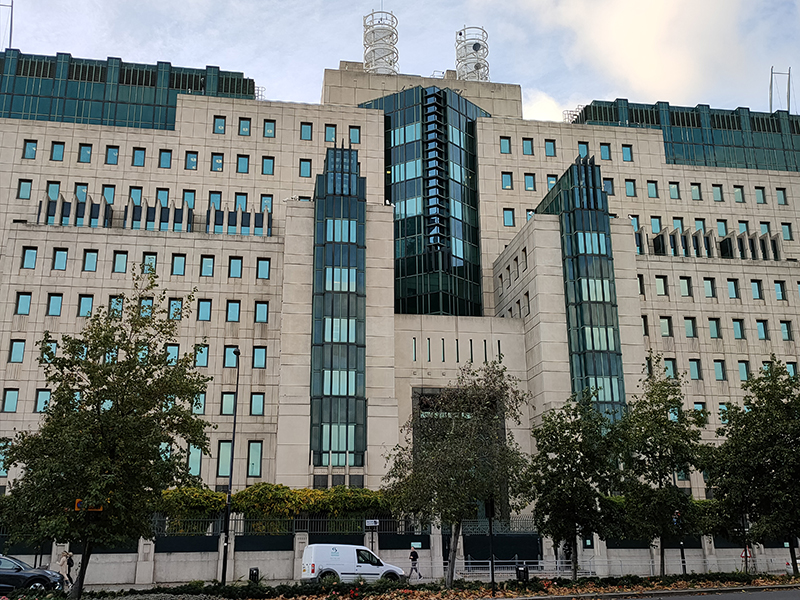
The space between the road at the river here at Vauxhall Cross is famously occupied by the MI6 Headquarters. Officially the organisation that operates out of these premises is called the Special Intelligence Service (SIS). The MI6 pseudonym was used extensively during WW2 especially if an organisational link needed to be made with MI5 (the Security Service) but it is no longer applied by the secret services themselves. Of course it’s still the go-to appellation as far as the media and popular culture are concerned. SIS moved to Vauxhall Cross in 1994 from its previous home, Century House, on Westminster Bridge Road (see Day 55). Architect Terry Farrell won the competition to design the new HQ and he took his inspiration from 1930s architecture such as Battersea and Bankside power stations, as well as Mayan and Aztec temples. The building has 60 different roof areas and six perimeter and internal atria, and also incorporates specially designed doors and 25 different types of glass to meet the Service’s specific needs. Vauxhall Cross has, of course, featured in many of the films in the James Bond franchise made since it was opened. The building was first featured in GoldenEye in 1995 and is depicted as coming under attack in The World Is Not Enough (1999) and Skyfall (2012). In fact in the latter the front of the building is completely destroyed in an explosion. A 15 metre high model of the building was constructed at Pinewood Studios to create this illusion which was cheered by MI6 staff at a special screening of Skyfall at Vauxhall Cross. Filming for the 24th film in the series, Spectre, took place on the Thames near Vauxhall Cross in May 2015, with the fictional controlled demolition of the building playing a key role in the finale sequence of the film.

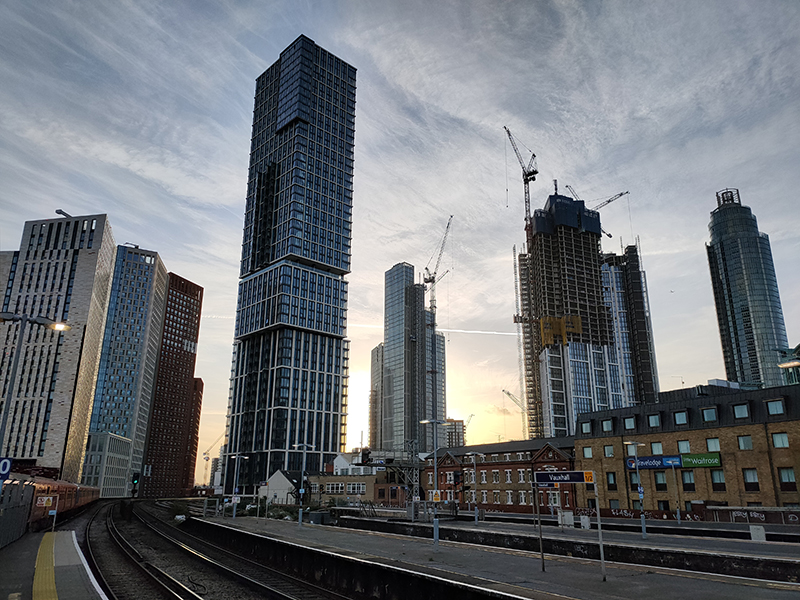
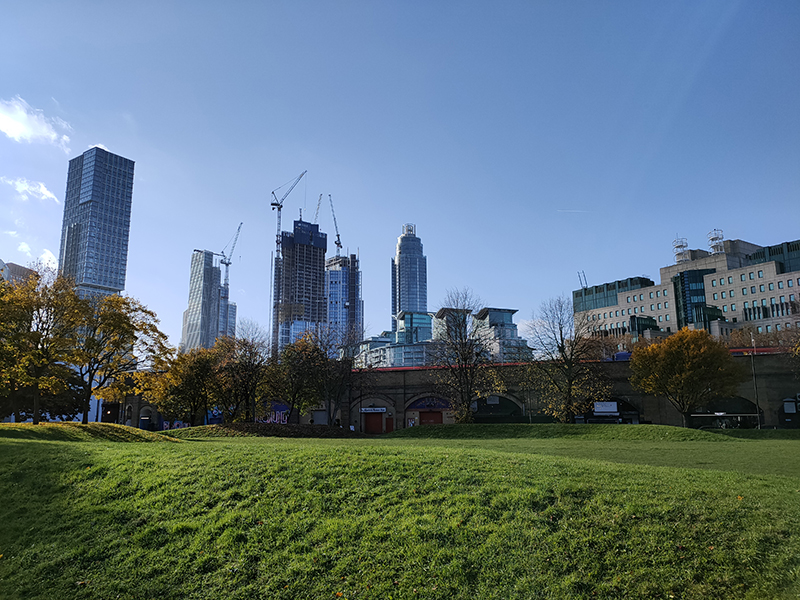
The light is beginning to fade as we head up onto platform 8 of Vauxhall Station and before the train arrives to take us back to the suburbs there’s just time to contemplate how very different this view would have looked just a couple of years ago.

Day 70 Part 1 – Vauxhall

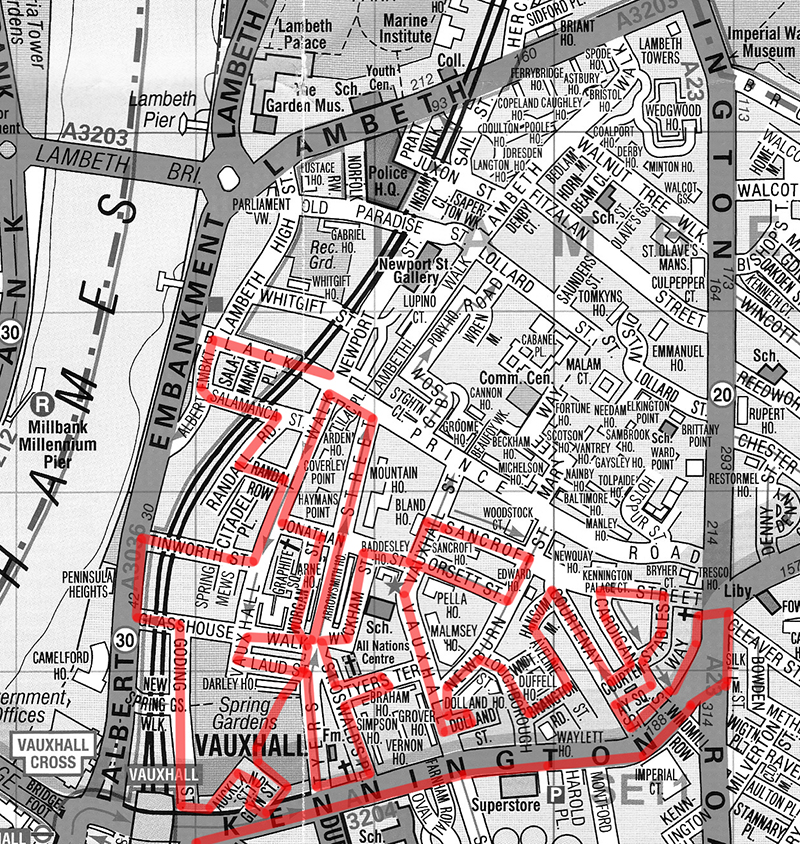
As George McCrae sang, aeons ago now, It’s Been So Long. But we’re back finally and with a double header no less. In returning south of the river and working my way through the (roughly) rectangular area bounded by Kennington Lane, Kennington Road, Lambeth Road and the Albert Embankment I bit off more than can be chewed over in a single post. So for this initial instalment we’re sticking to the southern half of the quadrilateral; let’s call it Vauxhall.

Starting point for today is Vauxhall overground station, from where we head east along Kennington Lane. By the river and further west, Vauxhall these days is redevelopment central with new high-rise apartment blocks sprouting like knotweed but we’re saving all that for another time.

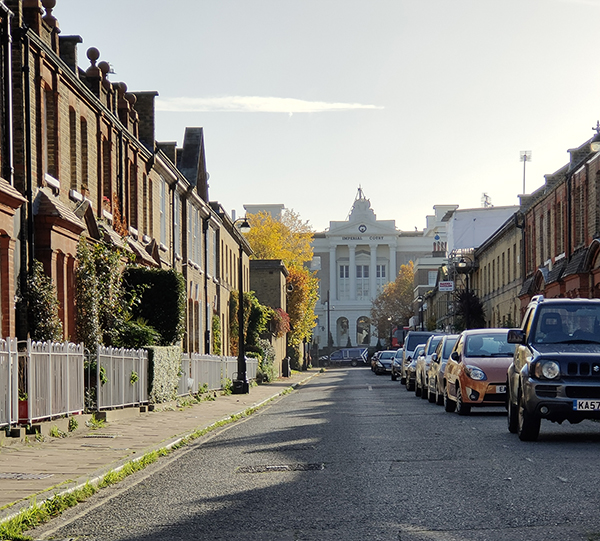
The grandiose Imperial Court, like so many large former commercial or public buildings, is now a community of private apartments. However, its origins lie in the creation in 1794 of the Friendly Society of Licensed Victuallers which was established to educate the children of publicans affected by long term illness, incapacity, or poverty. The original school was demolished in 1835 and the current neo-classical building was erected the following year after a design by H & E Rose. In 1921 the school moved to Slough and Imperial Court became the HQ of the Navy, Army, and Air Forces Institutes, or ‘NAAFI’ which was formed to provide catering services and recreational activities for the British Armed Forces and their families posted overseas. In 1980 the building became Grade II listed and in 1992 the NAAFI moved out and the inevitable happened.

The area between Cardigan Street and Sancroft Street, to the east of Kennington Lane, is strongly held to be the site of Kennington Palace, built by the eldest son of Edward III, Edward of Woodstock aka the first Duke of Cornwall aka The Black Prince (1330 – 1376). Edward junior built his palace here during the 1340s and 1350s at the end of which its main structures were a large Hall orientated east-west and measuring approximately 88 feet long by 53 feet wide and the so-called ‘Prince’s Chamber’, of a similar size but two or three storeys high. In 1531 the Palace was largely demolished by Henry VIII to provide materials for his own Palace at Whitehall.

This plaque is on the exterior of Edinburgh House which stands on the site of the Palace’s stable block. Originally a 1960’s office block, Edinburgh House, has been reconfigured to provide separate office space and studio units.

The land on which the palace stood was within the Manor of Kennington which formed part of The Duchy of Cornwall, a private estate (largely comprised of land in Cornwall) established under charter by Edward III in 1337 in favour of Prince Edward and every future Duke of Cornwall (i.e. the eldest surviving son of the Monarch and heir to the throne). The current Duke of Cornwall, Prince Charles, is the longest serving Duke in history. The houses which now occupy the area north of Edinburgh House, were built at the turn of the 20th century and are mostly subject to preservation orders. The majority were sold to a housing association in 1990 but the Duchy still directly owns 23 houses and 16 flats. Our route through the so-called (by estate agents at least) Kennington Triangle is a circuit of Courtenay Street, Courtenay Square, Stables Street, Sancroft Street and Cardigan Street.

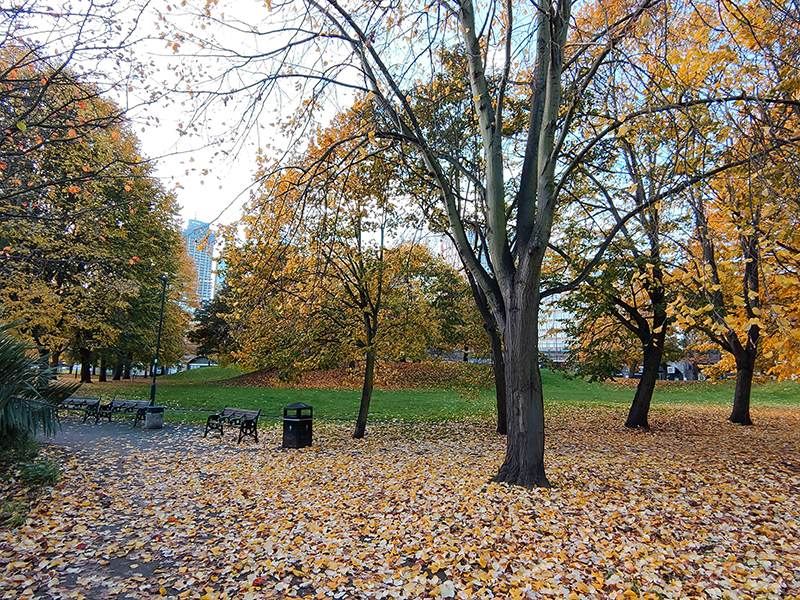
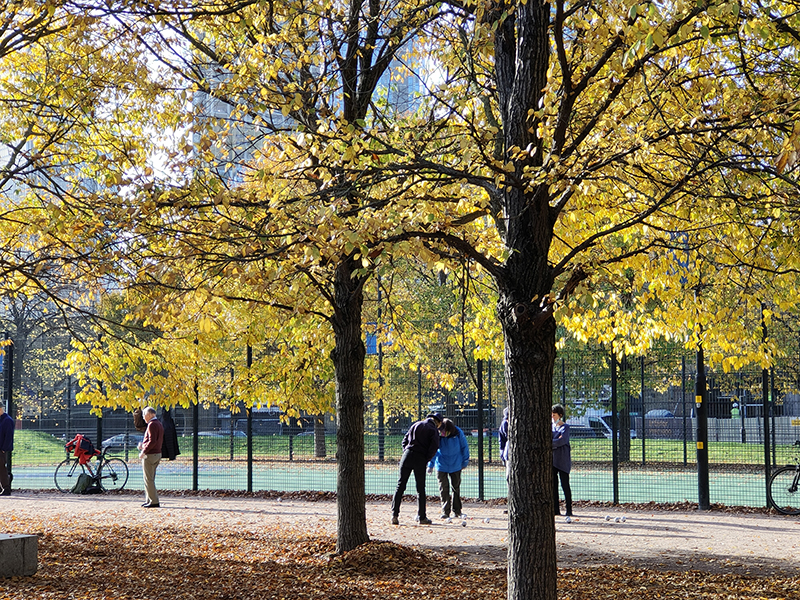
At the top end of Courtenay Street, after a quick look in on Hansom Mews, a sequence of Aveline Street, Brangton Road, Loughborough Street and Newburn Street brings us out onto Vauxhall Street and back within touching distance of Kennington Lane. We make the rapid acquaintance of Dolland Street before heading east along Vauxhall Street then completing a circuit of Orsett Street, and some more of both Newburn Street and Sancroft Street. I should have noted at the beginning what a beautiful day for a walk this was; uniformly blue skies and sunlit autumn leaves.

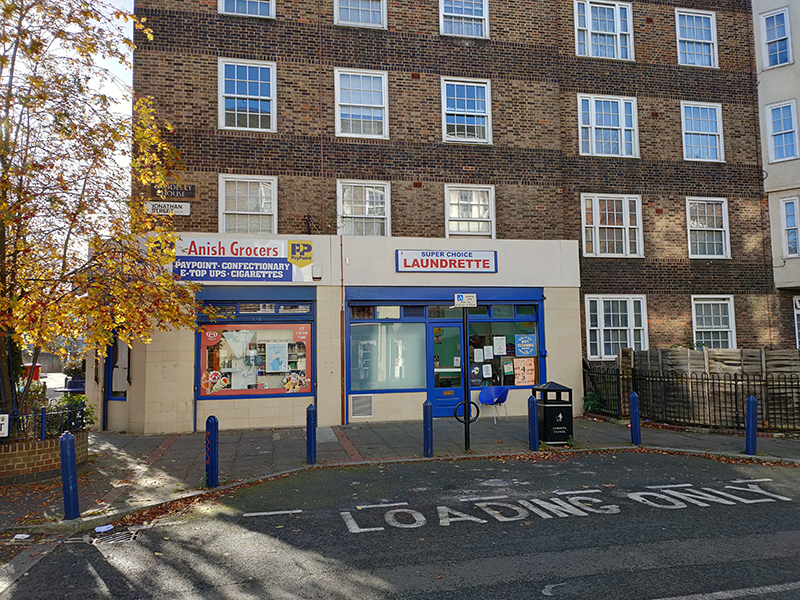
We turn a short way back down Vauxhall Street as far as the laund(e)rette of the day and then make a right into Jonathan Street.

Almost immediately we turn left down Wickham Street at the end of which the Hope Church is making its message loud and clear.

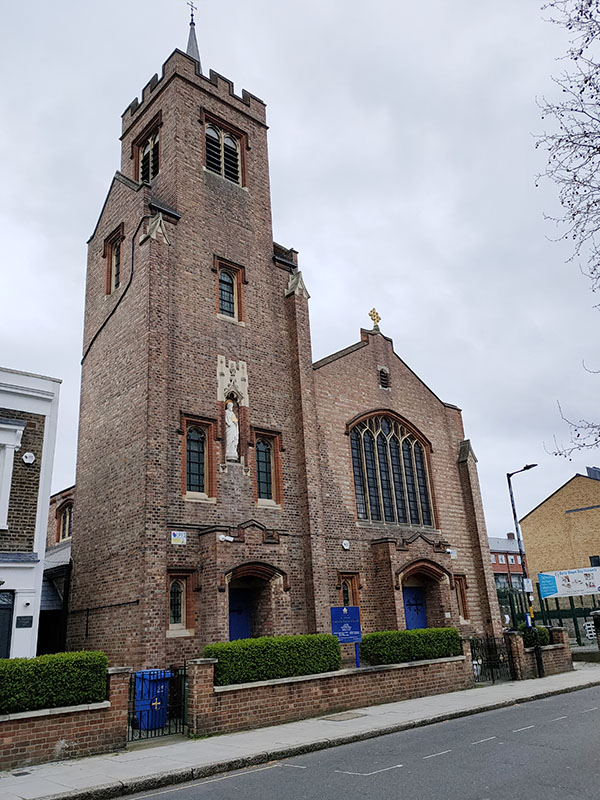
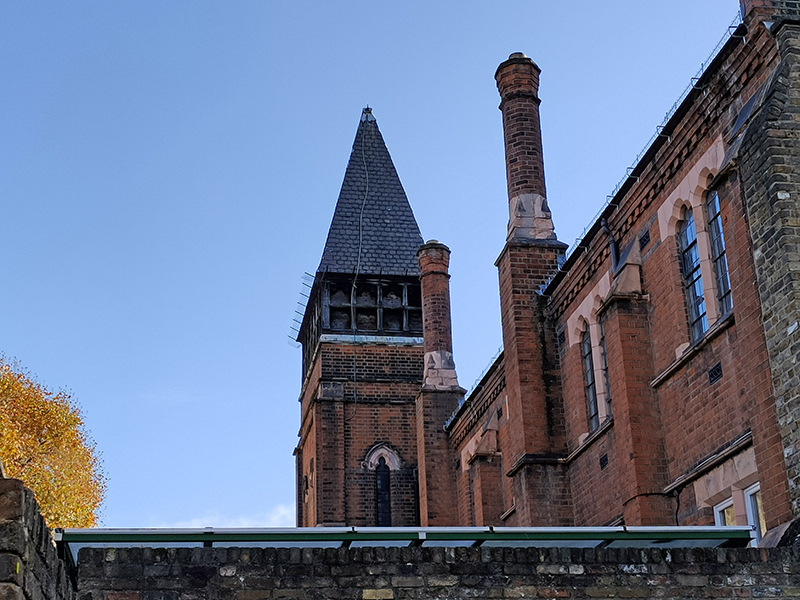
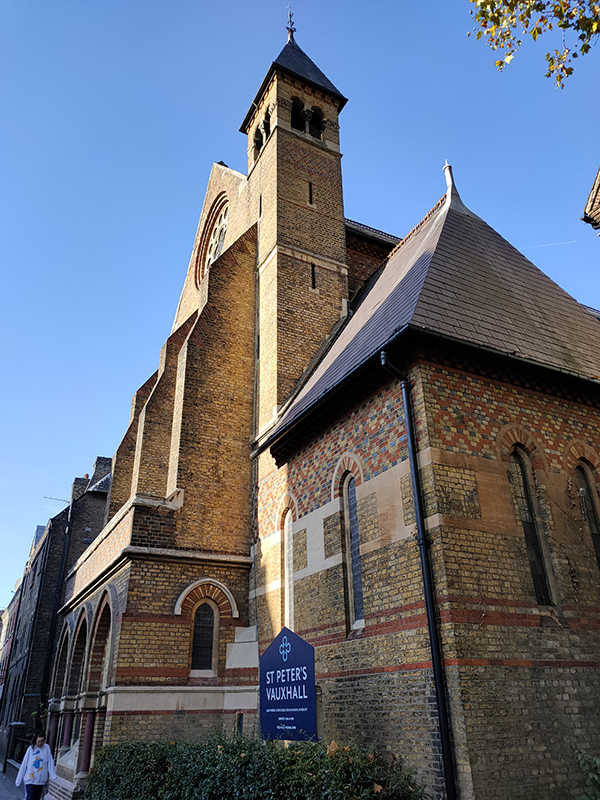
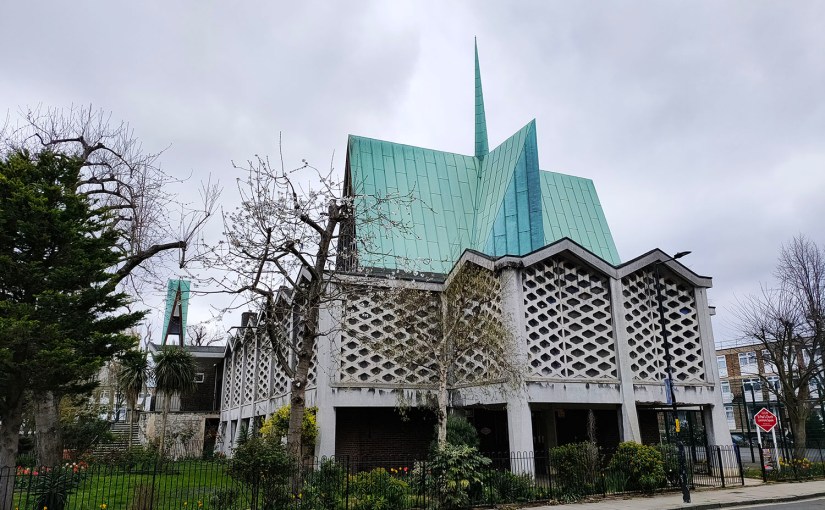
Next, St Oswalds Place (with a diversion into Tyers Terrace) takes us back onto Kennington Lane and St Peter’s Church. The church was erected in 1863-4 (on the site of the Vauxhall Pleasure Gardens’ Neptune Fountain) by the notable Victorian gothic revival architect John Loughborough Pearson (1817-1897). The driving force behind the church was the (long-lived) Reverend Robert Gregory (1819 -1911) and it was built adjacent to a new school he had established just a couple of years previously, also on land reclaimed from the Vauxhall Gardens. The school was designed in what was called a thirteenth-century Gothic style and consisted of separate boys’ and girls’ schoolrooms, a headmaster’s house, and an art school. The foundation stone was laid in 1860, by the Prince of Wales, later Edward VII. Gregory’s art school achieved great renown. The two major employers in the area,  Maudslay’s engineering works and Doulton’s pottery factory, needed, respectively, skilled draughtsmen and designers and artists and the school set out to train its pupils accordingly.

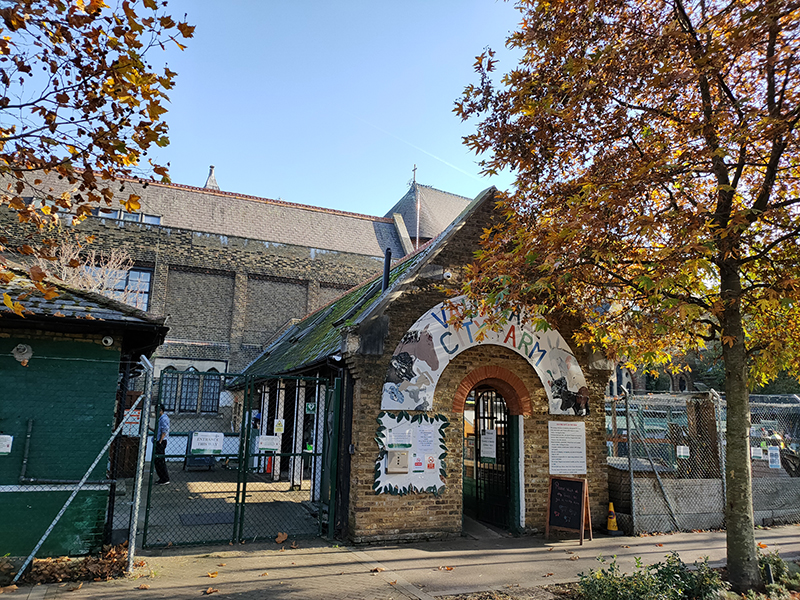
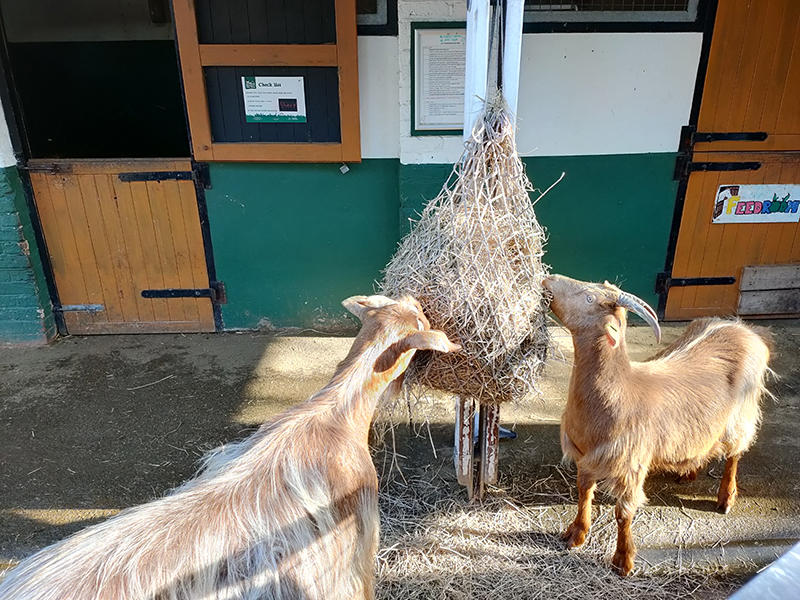
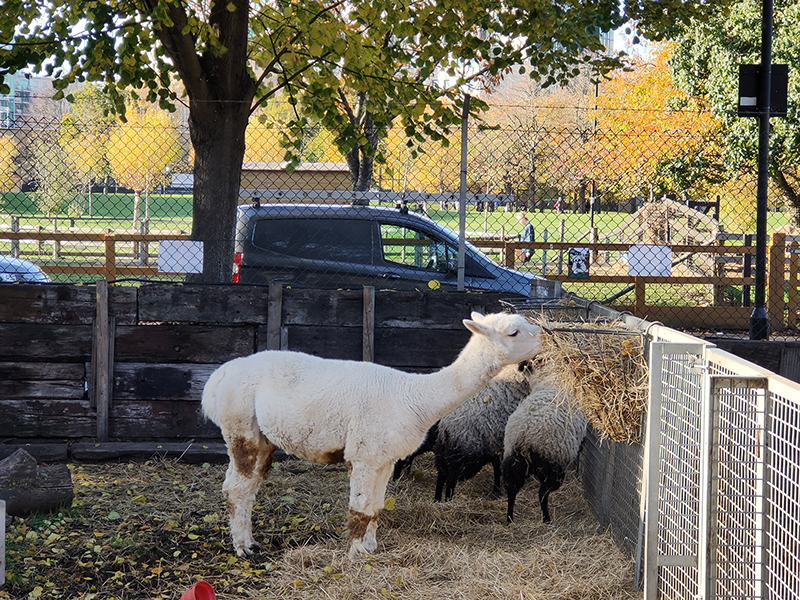
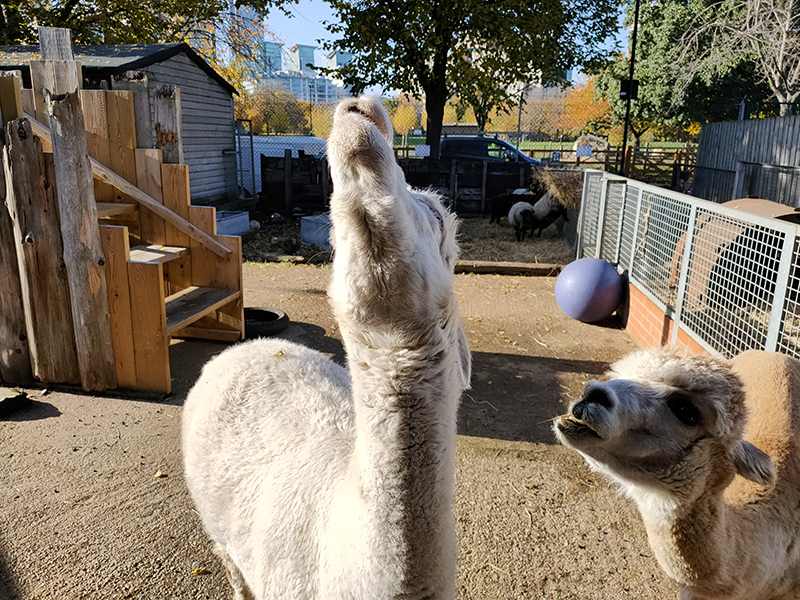
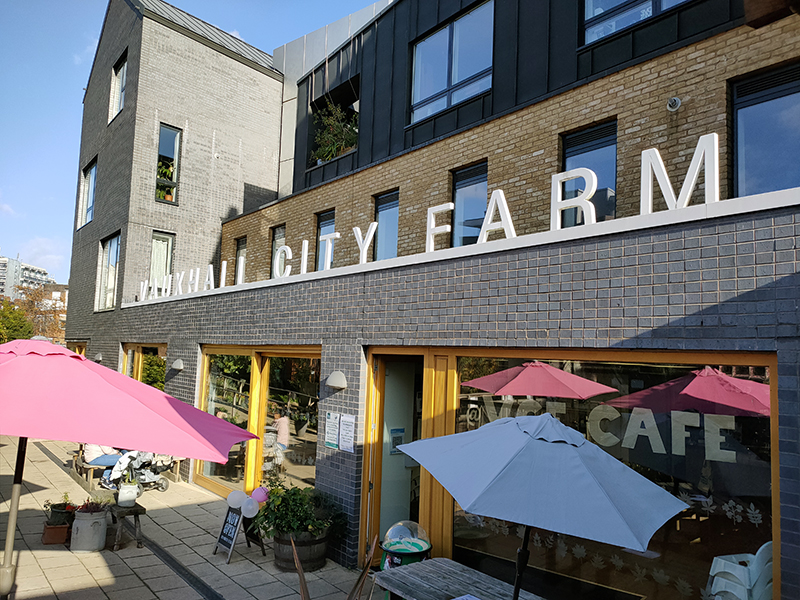
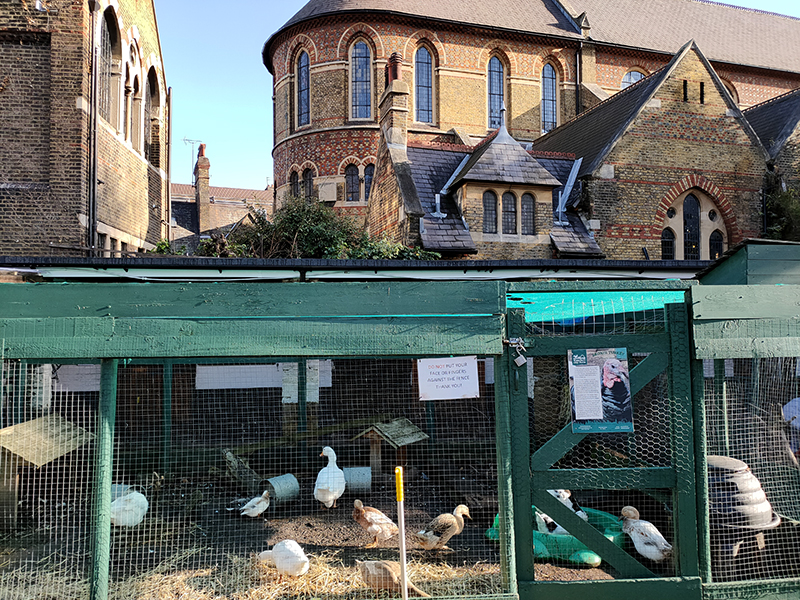
 To the west of the church, on Tyers Street, we find the Vauxhall City Farm. The farm began life as Jubilee City Farm in 1976, instigated by a group of architects squatting in nearby St Oswalds Place. Together with local residents they commandeered a plot of land cleared as part of a spate of demolitions in the early 1970s’ and used it for growing vegetables and keeping livestock. A year later the operation was registered as a charity under its present name. Today, the farm is home to over 100 animals, a riding centre, education and youth projects, and a cafe. And it is still run solely by volunteers. I ventured inside for a quick look around (and to make a donation) feeling more than a little self-conscious. I was given a bag of Grass Nuts to feed to the alpacas but made a bit of a hash of that and most of them ended up on the floor (though they were still eaten). Lovely place; though probably best to visit with kids (if you have them).

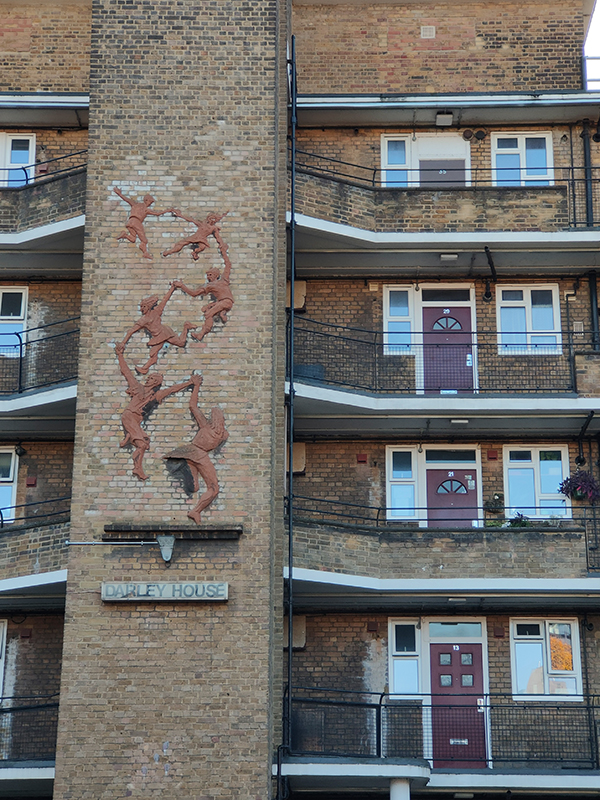
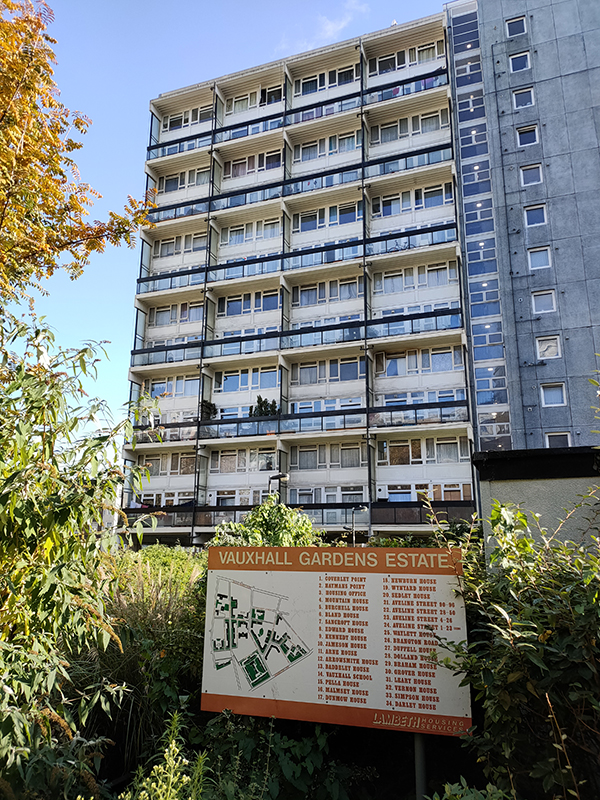
After leaving the farm we make a loop to the left off of Tyers Street, taking in Laud Street, Vauxhall Walk and Glasshouse Walk. The former runs past the back of Darley House, a post-war 1940’s built public housing block. The central column is adorned with a sculpture by artist Peter Peri entitled Following The Leader. The work was intended as a memorial to children killed in the Blitz, which hit this area quite hard.

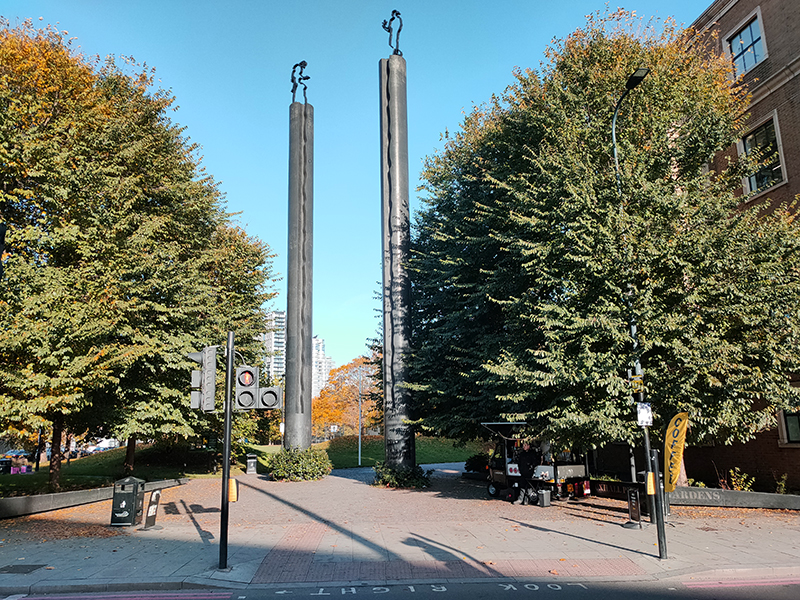
We turn left at the top of Tyers Street and left again to head south on Vauxhall Walk and Worgan Street until we reach Vauxhall Pleasure Gardens (formerly Spring Gardens). The original Spring Gardens were established here after the Restoration of 1660 (covering a wider area than the present day gardens). At that time Vauxhall was still quite a rural environment and a boat-trip was required to visit the gardens where impromptu live entertainers joined the many purveyors of food and drink. In the evenings the resident nightingales competed for airtime with the sounds of amorous liaisons, as noted by regular visitor Samuel Pepys. In 1729, ‘Vauxhall Spring-Gardens’, was sub-let to a new tenant, the entrepreneurial Jonathan Tyers (1702-1767), who saw an opportunity to provide a new type of paid entertainment for Londoners. He also figured out that charging an admission fee (of one shilling) would discourage the pickpockets and ladies of the night. Thus was created the first and best-known of London’s “Pleasure Gardens”. Over the next 130 years Vauxhall Pleasure Gardens played host to concerts by Handel, firework displays, operas, balloon rides, circus acts and much more besides. Despite Tyers’ wish to create a nexus of wholesome family entertainment, the Gardens remained synonymous with after dark activities of a more salacious nature. All good things come to an end though and in 1859 the Gardens were permanently closed and the site redeveloped into housing.

By the 1970s, those houses, badly war-damaged and suffering from long neglect, were demolished as part of the so-called slum-clearances. A dozen or so acres of the cleared site were grassed over by the new owner, the London Borough of Lambeth, and the resulting park, first opened to the public on 9 October 1976, was originally called Spring Gardens. Then in 2012, after a campaign by local supporters, was re-named Vauxhall Pleasure Gardens, and a new monumental entrance to the park was created by local architects DSDHA near the site of the old Coach Entrance to the gardens on Kennington Lane. 

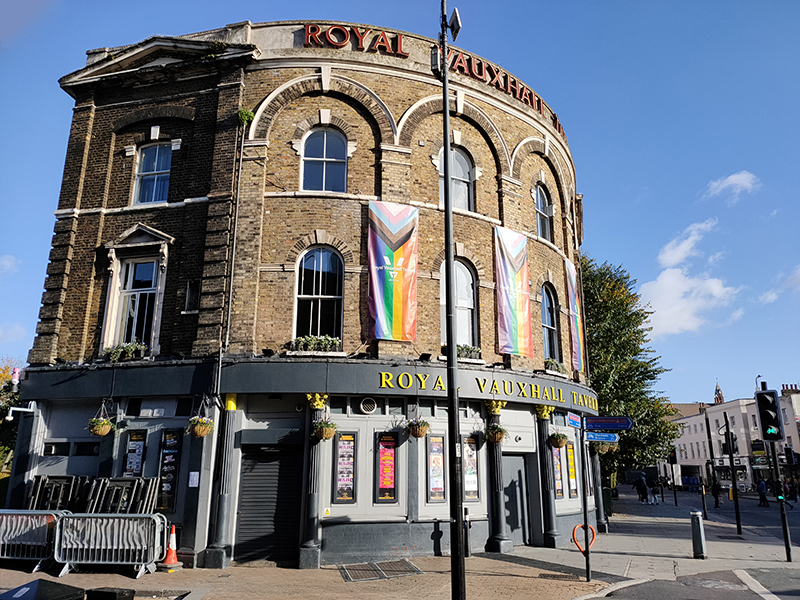
At the southern end of the gardens an apex of Auckland Street and Glyn Street interrupt the alignment with Kennington Lane and it the the south-western corner sits the renowned Royal Vauxhall Tavern. The RVT actually opened the year after the Pleasure Gardens closed, in 1860. Its close association with London’s gay community dates back to the 1940’s while its iconic drag shows were first staged in the 1970’s. In 2014 the pub became the first building to be listed in recognition of its significant role in LGBTQ history.

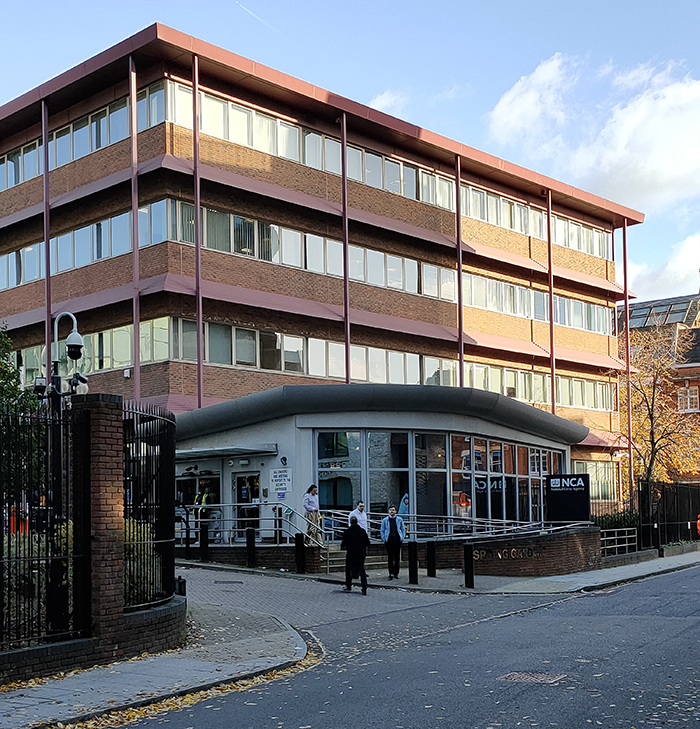
From here we proceed north up Goding Street then duck under the railway via Glasshouse Walk to the Albert Embankment before heading back under the railway courtesy of Tinworth Street. Here we find the headquarters of the National Crime Agency (“NCA”). The NCA was formed in 2013 to replace the Serious Organised Crime Agency (“SOCA”). In addition to organised crime its remit covers trafficking (of the human, weapons and drugs kind), cybercrime and economic crime with cross-border implications. It has around 1,800 active officers and an annual budget approaching £460m (which is a 43% reduction on the combined budgets of the various agencies whose responsibilities it assumed).

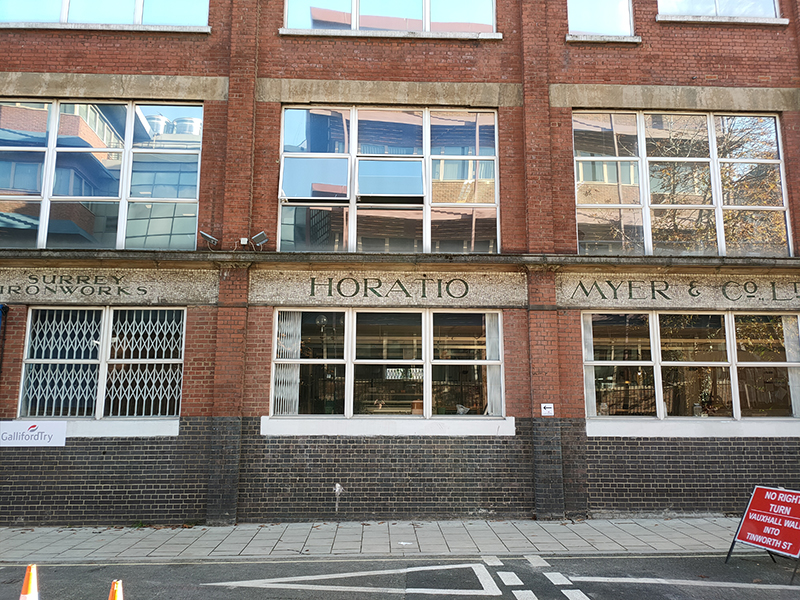
Beyond the NCA, back on Vauxhall Street, stands the building that from 1877 to 1982 produced iron bedsteads for Horatio Myer & Co. Ltd.

On the east side of Vauxhall Walk, a bit further north, is the 1960’s section of the Vauxhall Gardens Estate which also includes Darley House and a number of 1930’s blocks that stretch down to Kennington Lane.

In conclusion of this Part 1 we make a Z shaped return to the Albert Embankment formed by Randall Row, Randall Road and Salamanca Street.