Day 81 – Knightsbridge – Brompton Road – Exhibition Road

We’ve switched the focus back west again this time with another visit to the Royal Borough of Kensington and Chelsea; specifically, the area immediately south of Hyde Park in between Sloane Street and Exhibition Road. It’s a packed programme which includes visits to Harrods (somewhat reluctantly), the V&A Museum and the Brompton Oratory.

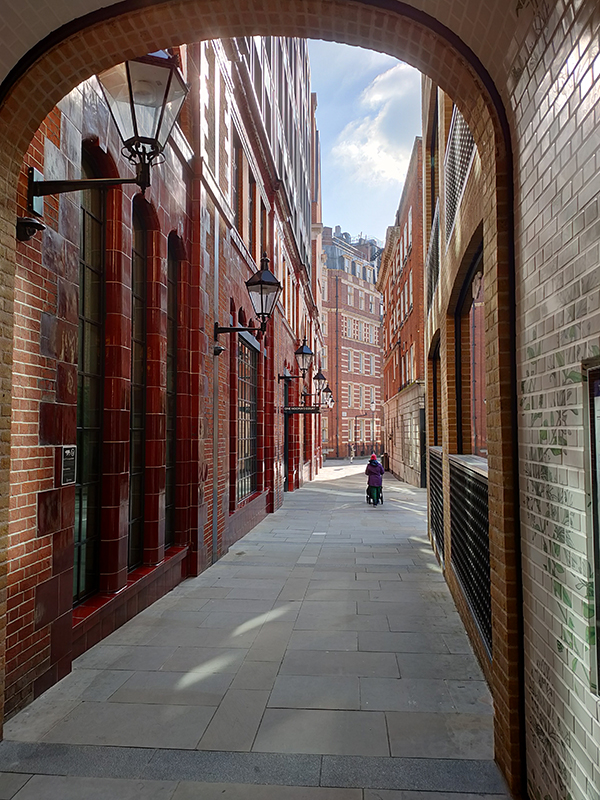
We begin at Knightsbridge Underground Station, which was originally built in 1906 in the classic Leslie Green style. In the 1930’s, coinciding with the introduction of escalators, a new ticket hall and entrance were incorporated into the building on the corner of Brompton Road and Sloane Street and an additional entrance, closer to Harrods, was created with a long subway linking the two. The photographs below show the original familiar ox-blood tiling on display in Hooper’s Court and Basil Street. In 2017 a new step-free access to the tube station from Hooper’s Court was given the go-ahead but as of the time of writing construction of this is still “on-going”.
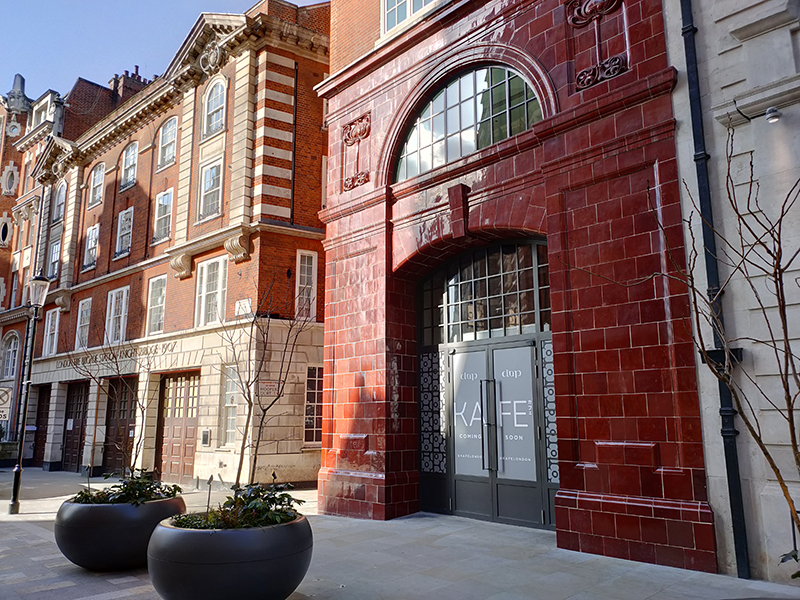
As it happens, 2017 was when this blog last found itself in this vicinity (Day 46 to be precise) and, memory being what it is, the first part of today’s walk ends up being something of a reprise. From the Harrods exit we proceed up the Brompton Road, cut down Hooper’s Court into Basil Street and then work our way around Rysbrack Street, Stackhouse Street, Pavilion Road, Hans Crescent, Hans Road, Herbert Crescent, Hans Street and the eastern wing of Hans Place. Things kick off in earnest on the west side of Hans Place which is where you’ll find the Ecuadorean Embassy.

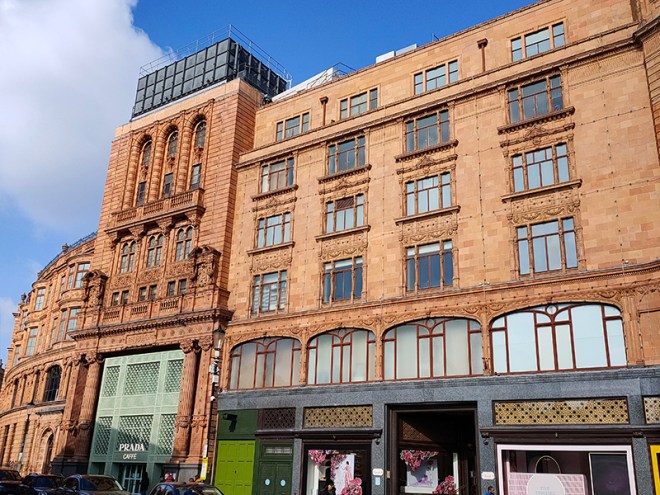
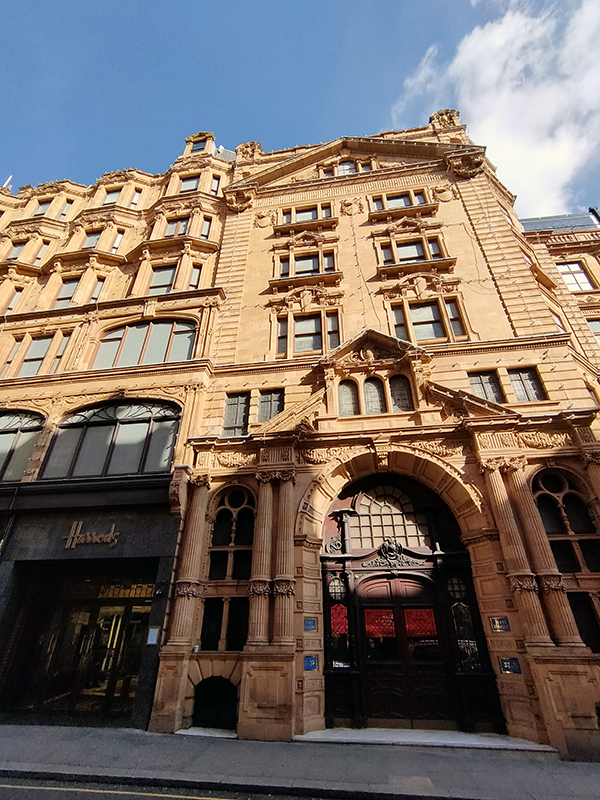
I didn’t fully comprehend the scale of Harrods until I walked all the way around its outside. Occupying a 20,000 square metre site with a total selling space, across 7 floors, of over 100,000 square metres this is the largest department store in Europe. The business was established by Charles Henry Harold (1799 – 1885), initially in Southwark, then relocating to the Brompton Road in 1849 and expanding rapidly from a single room to a collection of adjoining buildings. When those buildings burnt to the ground in 1883 the current building was swiftly erected on the same site. Designed by architect, Charles William Stephens, the new store had a palatial style, featuring a frontage clad in terracotta tiles adorned with cherubs, swirling Art Nouveau windows and was topped with a baroque-style dome.
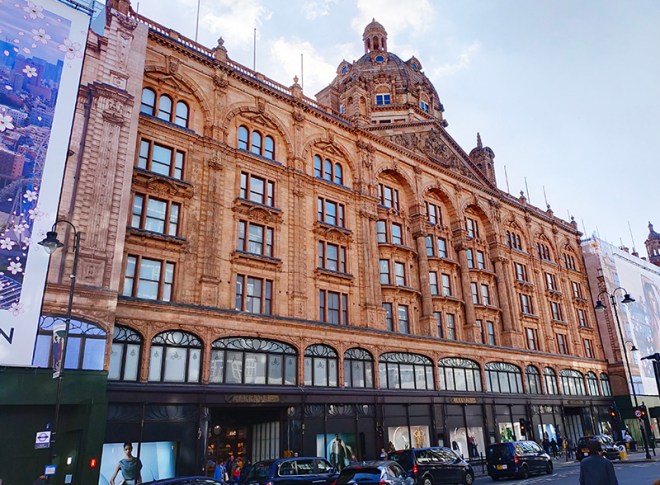
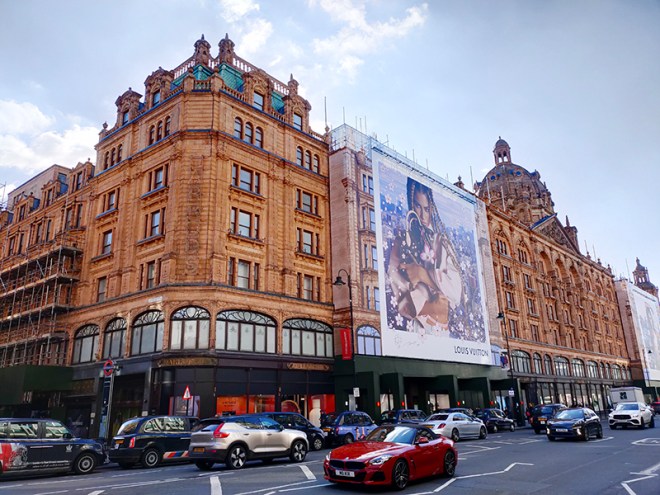
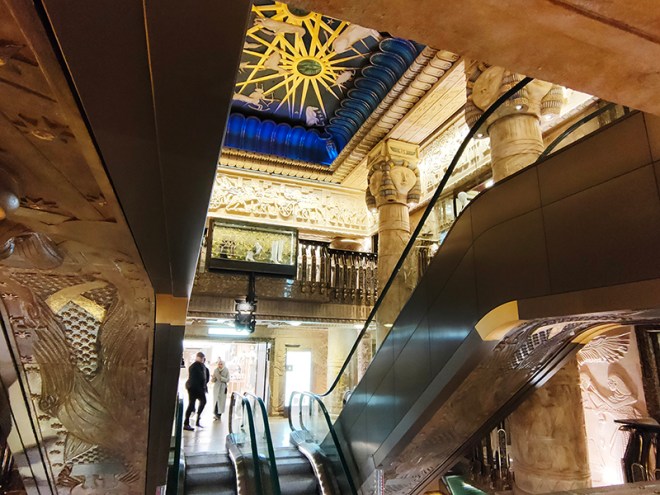
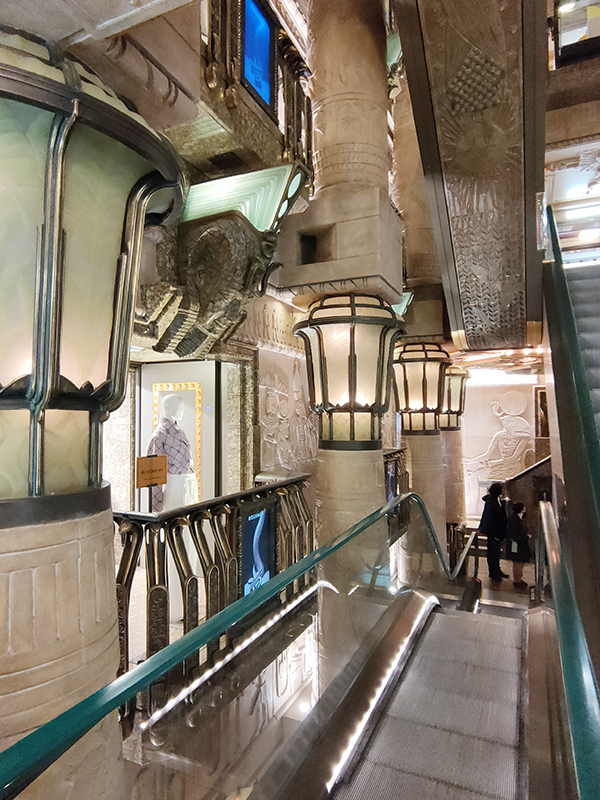
In 1899 the company went public and remained independent until 1959 when it was acquired by and merged into House of Fraser. In 1985 HoF fell into the private ownership of the Al-Fayed Brothers after a bitter struggle with Tiny Rowlands’ Lonrho Group. When HoF was relisted in 1994 Harrods was split off and became a private company once again. In 1989, Harrods introduced a dress code for customers and among the would-be patrons who fell foul of this were both Kylie Minogue and Jason Donovan, a Scout troop, a woman with a Mohican hair cut and the entire first team of FC Shakhtar Donetsk. This no longer appears to be enforced by the current owners, the Qatari Investment Authority, who bought out the now thoroughly disgraced Mohamed Al-Fayed in 2010. As already noted, I had qualms about stepping inside Harrods especially as its key interior feature, the Egyptian-themed central escalator was commissioned by Al-Fayed, whose face adorns the many pharaonic statues you pass. However, it is a tour-de-force of kitsch excess so, as long as you don’t actually buy anything, it’s worth experiencing as a one-off.
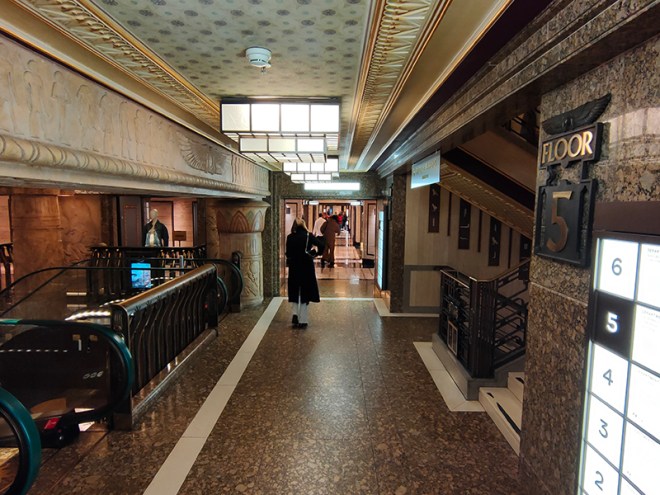
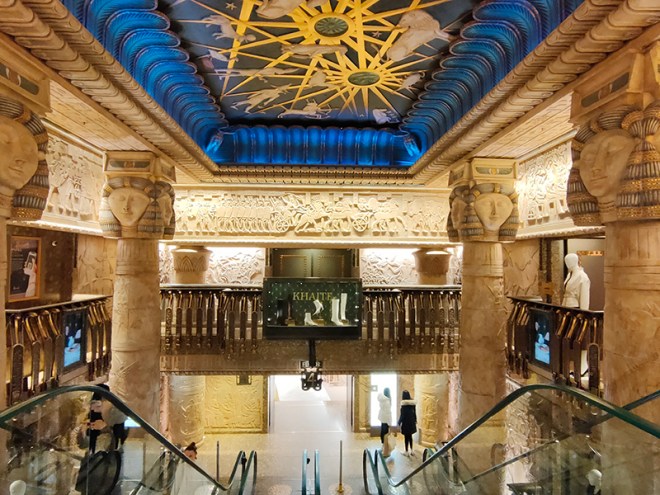
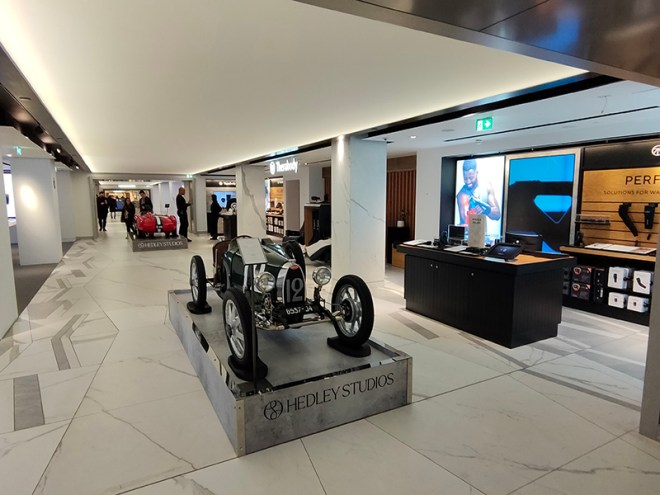
The store wasn’t exactly heaving and, aside from visitors from the Gulf petro-states, it’s hard to see who would be interested in buying stuff here that is available far cheaper elsewhere. There is, of course, merchandise which is unique to this particular emporium but surely even the tackiest of billionaires would baulk at throwing away £25,000 on this.
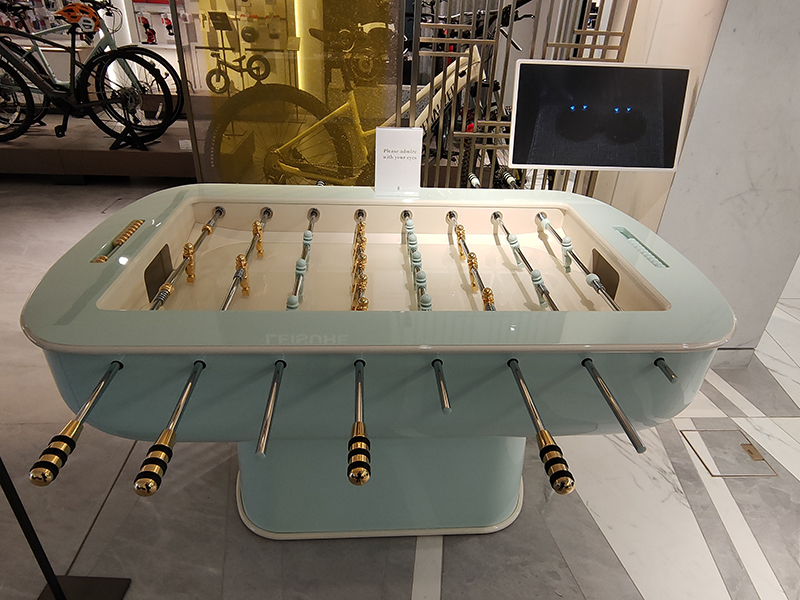
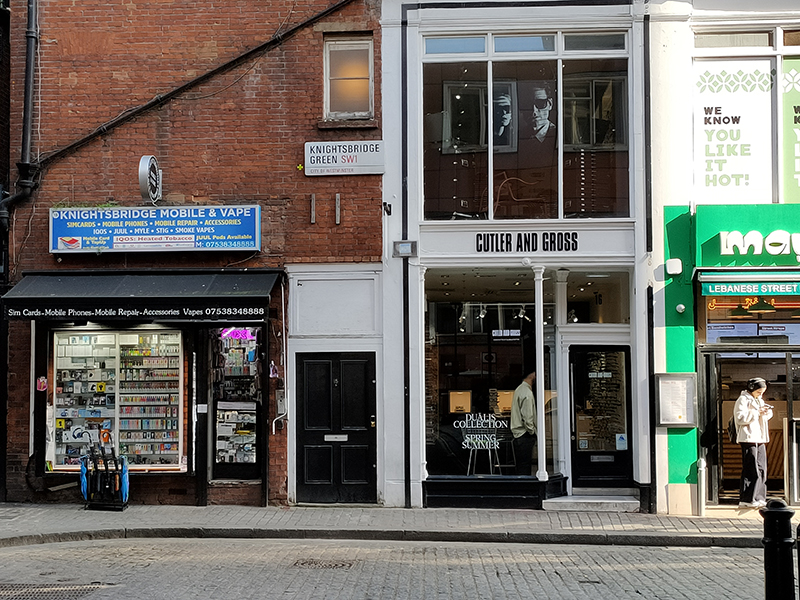
Having entered Harrods from the Hans Road entrance I exited via the main entrance on Brompton Road and headed back towards the tube station before cutting through Knightsbridge Green onto Knightsbridge (the road). There’s absolutely no trace of greenery on Knightsbridge Green but it does boast one of these (yes even here).
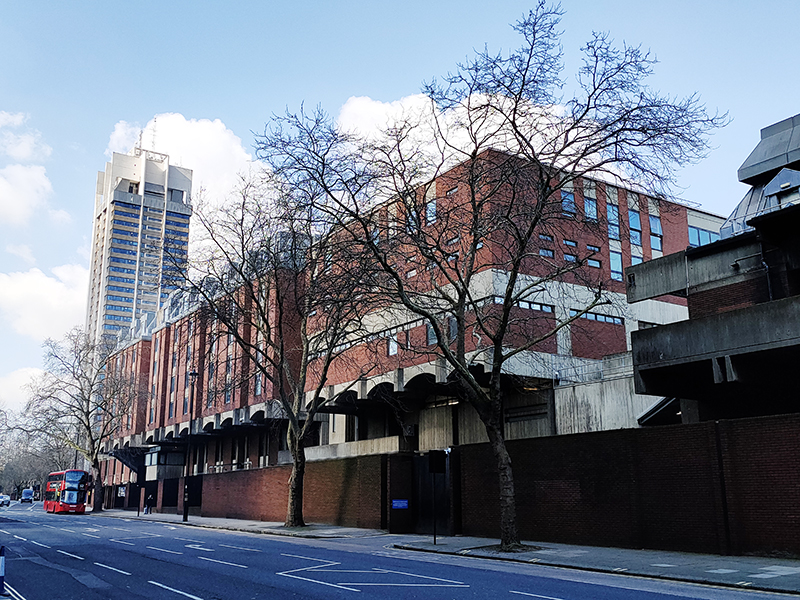
Once out onto Knightsbridge we’re confronted by the blot on the horizon that is the Hyde Park Barracks (aka Knightsbridge Barracks). This site, only 1.2km from Buckingham Palace, has been a home to the Horse Guards since 1795 but the current buildings, designed by Sir Basil Spence (1907 – 1976), were completed in 1970. They provide accommodation for 23 officers, 60 warrant officers and non-commissioned officers, 431 rank and file, and 273 horses. The most prominent feature is the 33-storey, 94-metre residential tower. The barracks have been described as “the ugliest building in London” by critic A.A Gill and were voted no.8 in a list of Britain’s top ten eyesores compiled from a poll of the readers of Country Life magazine. Loath as I am to align myself with either I find it hard to disagree.
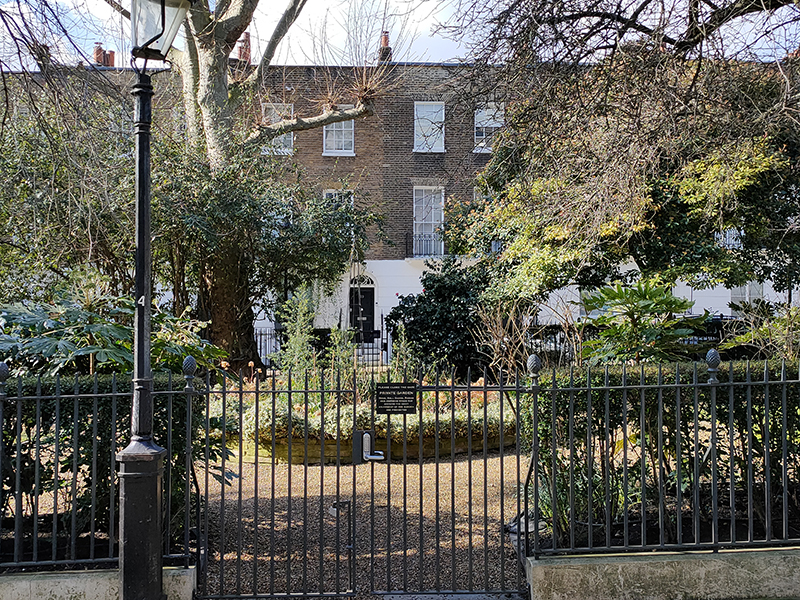
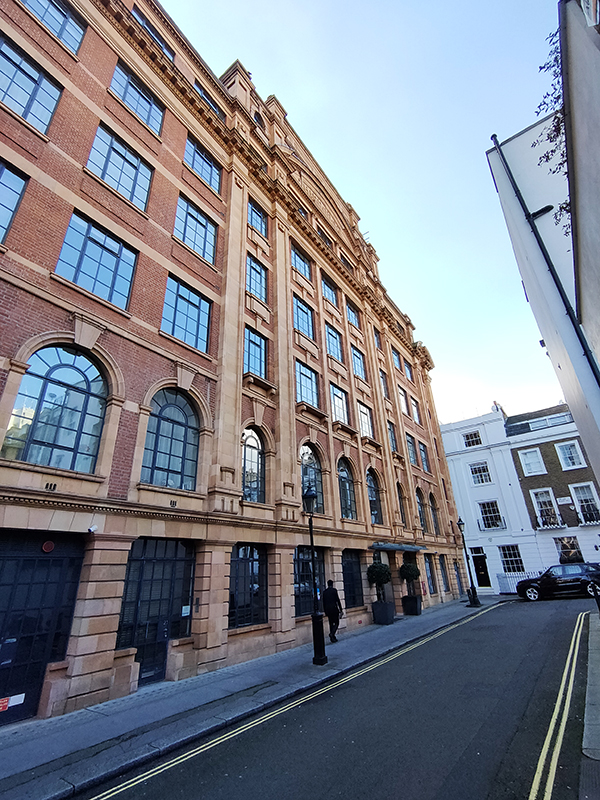
Heading south on Trevor Street we enter Trevor Square, the first of many, many residential squares built around private gardens that we’ll encounter today. This one dates from the 1820’s and is named after Arthur Hill-Trevor, 3rd Viscount Dungannon who agreed to demolish his Powis House in 1811 to make way for the new development. At the southern end stands the former Harrods Depositary building which was subject to a residential redevelopment in 2002.
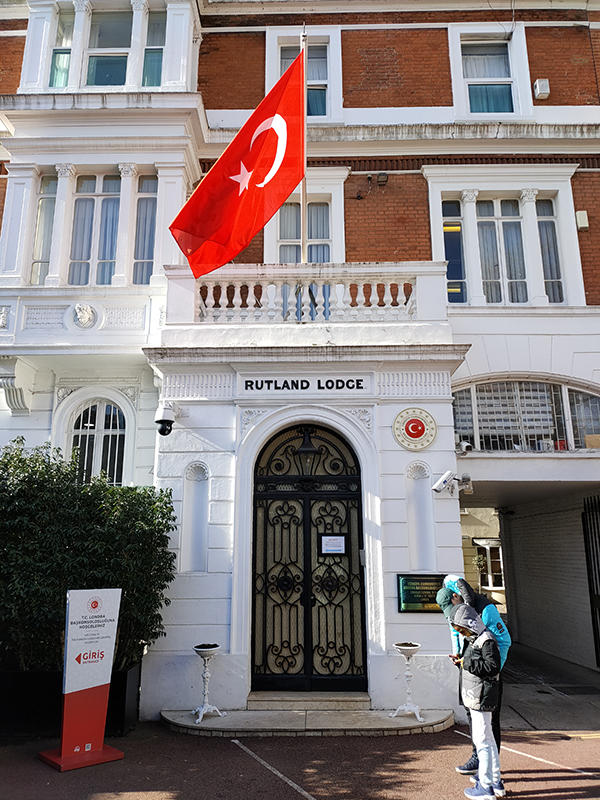
From Trevor Square we loop round Lancelot Place and Raphael Street back onto Brompton Road then follow Trevor Place up to Knightsbridge once more. Next stop, continuing west, is Rutland Gardens at the far end of which is the Turkish consulate. I assume none of the several Bentleys parked end to end down the street are related to this but I could be mistaken.
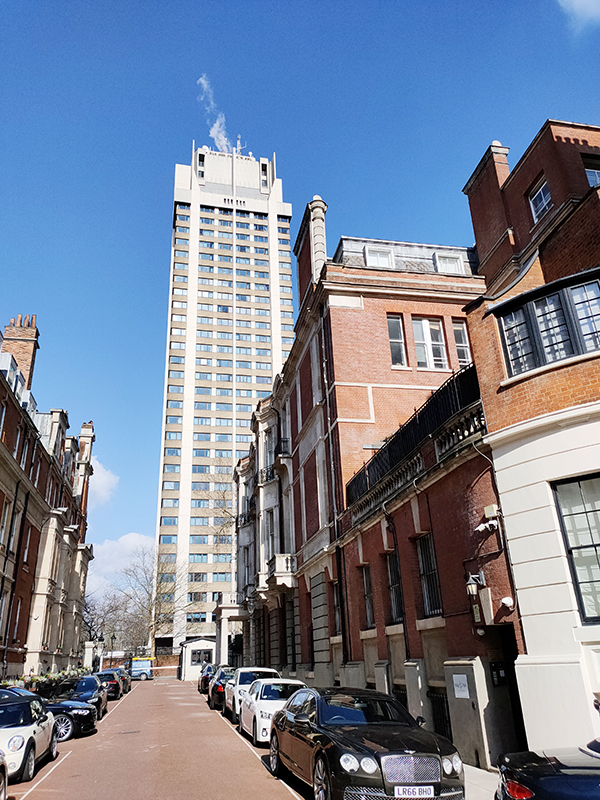
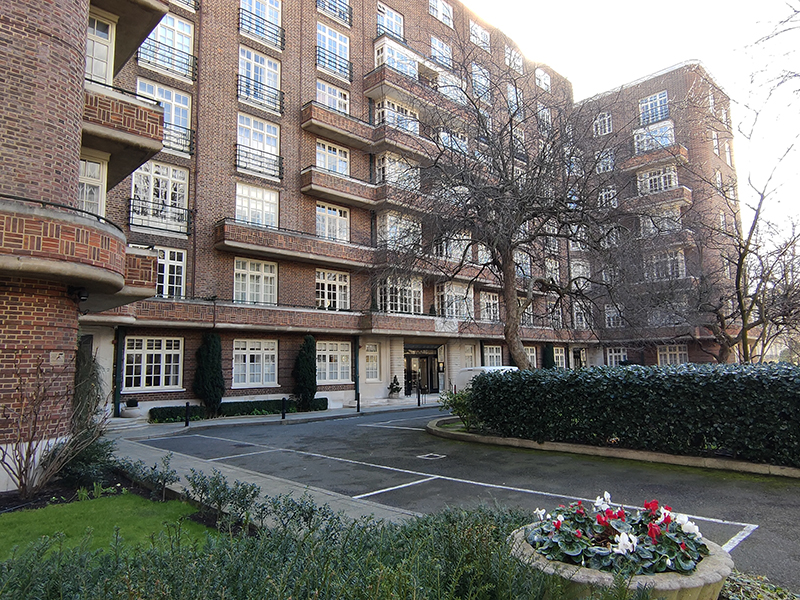
We return to Knightsbridge and as it merges into Kensington Road we turn south on Rutland Gate. Proceeding down the eastern section of this two-pronged thoroughfare we pass the Grade II Listed Eresby House from 1934.
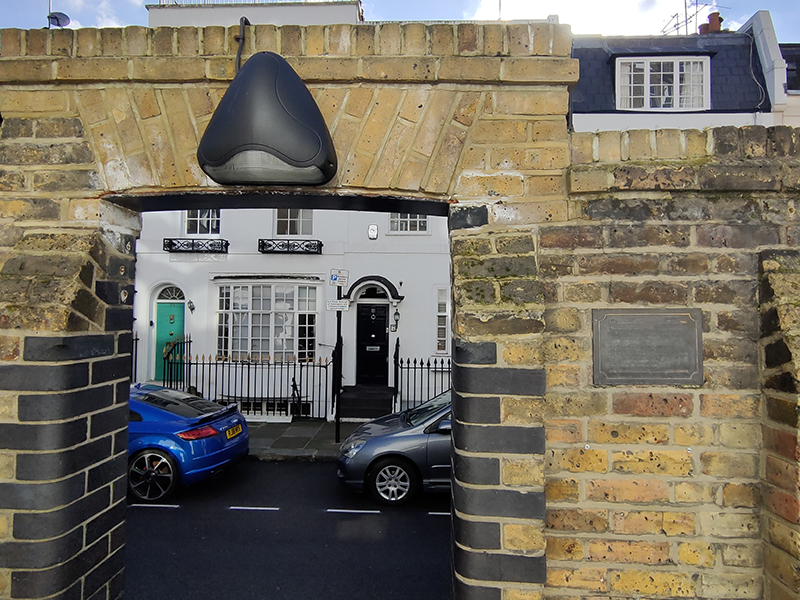
At the bottom of Rutland Gate we turn left into Rutland Mews East which we exit from onto Rutland Street via “The Hole In The Wall” which is explained thus in the metal plaque on the wall beside it. This boundary wall of the Rutland Estate was destroyed by a bomb, during World War II, on 25 September 1940. At the request of residents a right of way was established when the wall was rebuilt by the City of Westminster in 1948 and has come to be known as ‘the hole in the wall.
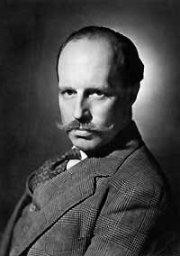
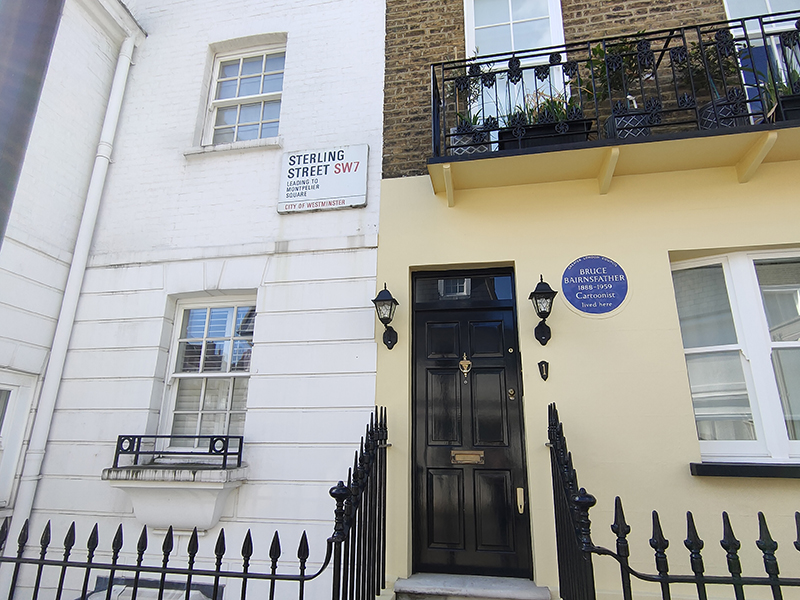
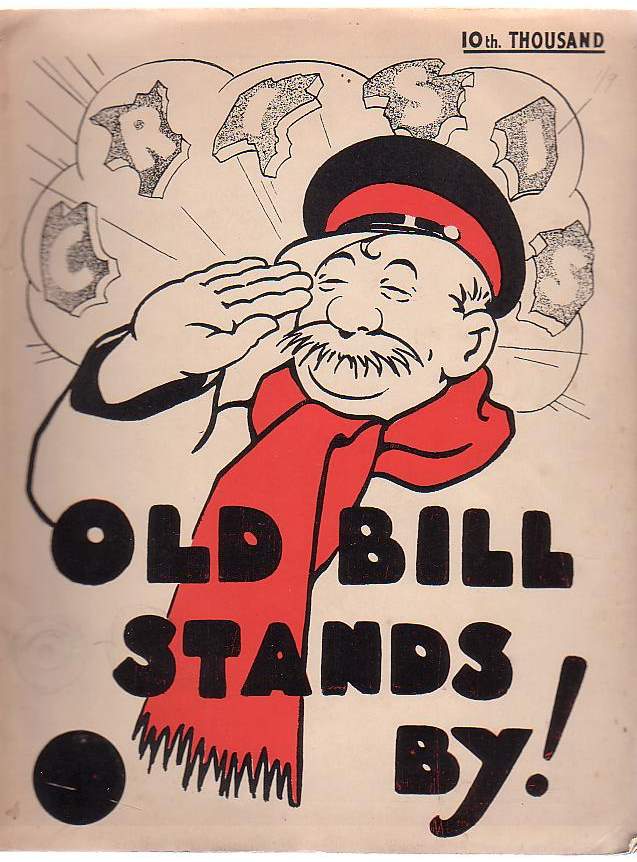
Heading up Montpelier Walk we swing right into Montpelier Square and circumnavigate this get to Sterling Street. No.1 Sterling Street has a blue plaque commemorating the humorist and cartoonist, Bruce Bairnsfather (1887 – 1959). Bairnsfather was commissioned into the Royal Warwickshire Regiment in 1914 as a second lieutenant and served with a machine gun unit in France until 1915, when he was hospitalised with shell shock sustained during the Second Battle of Ypres. While in recovery he developed his humorous series for the Bystander weekly tabloid about life in the trenches, featuring “Old Bill”, a curmudgeonly soldier with trademark walrus moustache and balaclava. The character became hugely popular during WW1, a success that continued through the inter-war years. And because many police officers at that time sported a similar type of facial hair it is probable that he was the inspiration for the police becoming known as “The Old Bill”.
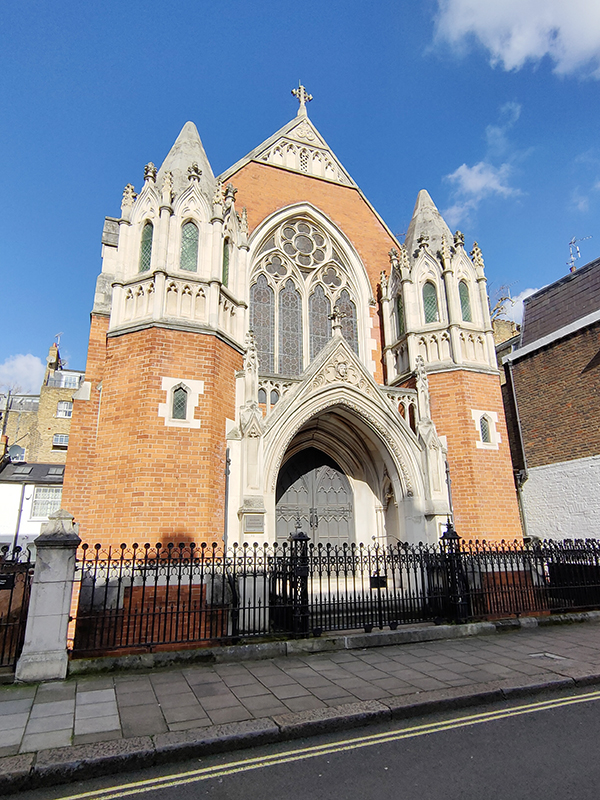
Turning into Montpelier Place we pass the Deutsche Evangelische Christuskirche, established in 1904 to serve West London’s German Lutheran community. It was funded by Baron Sir John Henry Schroder (neé von Schröder) who had moved to England at the age of 16 to join the London office of the eponymous Merchant Banking firm created by his father. He was awarded his Baronetcy in 1892. The dedication of the church was attended by two of Queen Victoria’s grand-daughters and one of her sons-in-law.
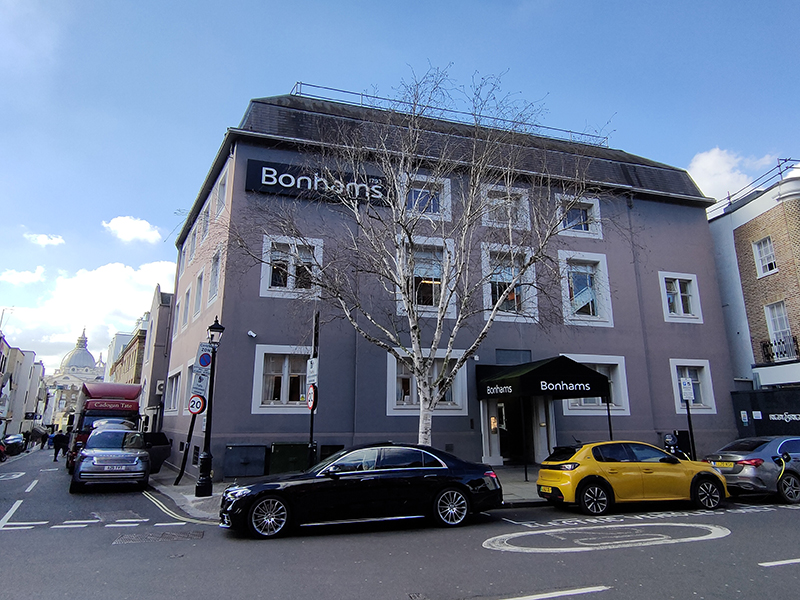
Following Montpelier Street back towards the Brompton Road we turn west onto Cheval Place just after Bonham’s Auctioneers. This is the international firm’s second auction house in London, after the flagship saleroom in Bond Street. The presence of a chauffeur-driven car parked on double yellow lines tends to be the rule rather than the exception in this part of town.
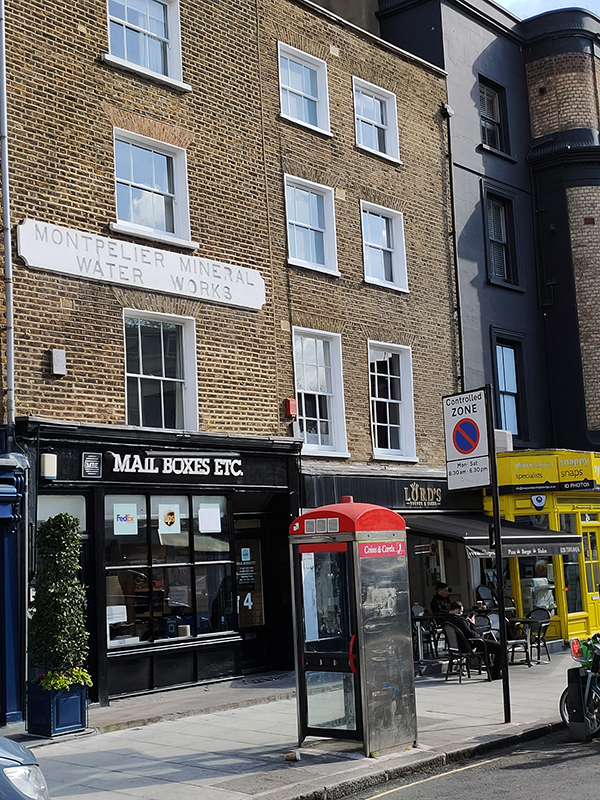
On the other side of Montpelier Street there’s a sign on one of the buildings that reads Montpelier Mineral Water Works. Unfortunately, I haven’t been able to discover anything about this save that Montpelier Mineral Water was a genuine product once upon a time.
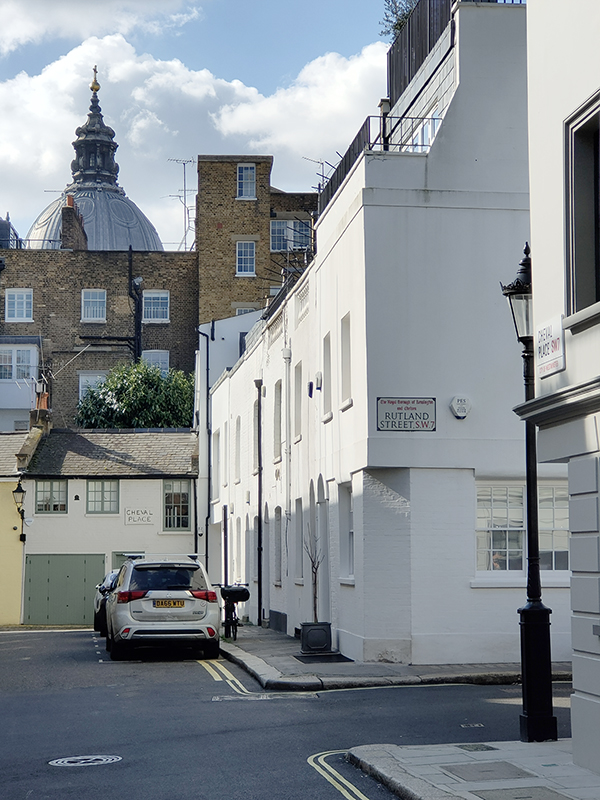
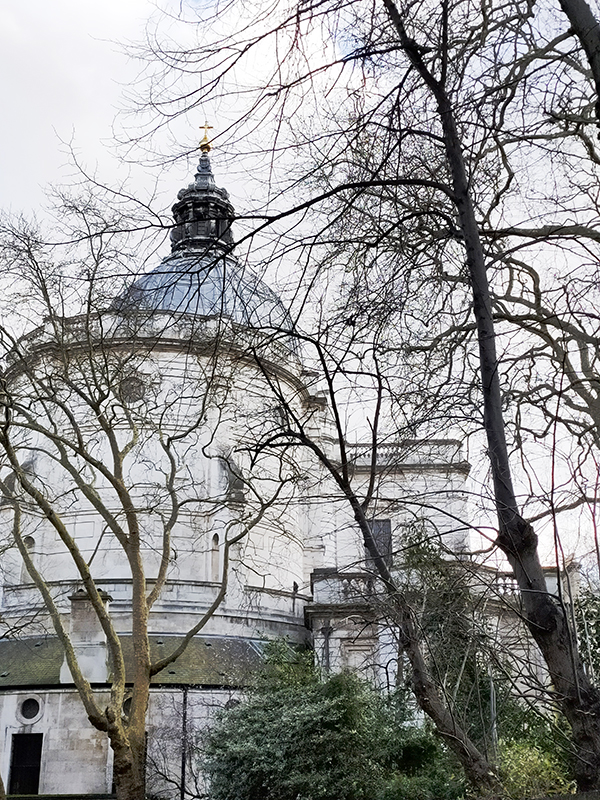
Anyway, back to Cheval Place which runs parallel to the Brompton Road and affords a view of the dome of Brompton Oratory, of which more later.
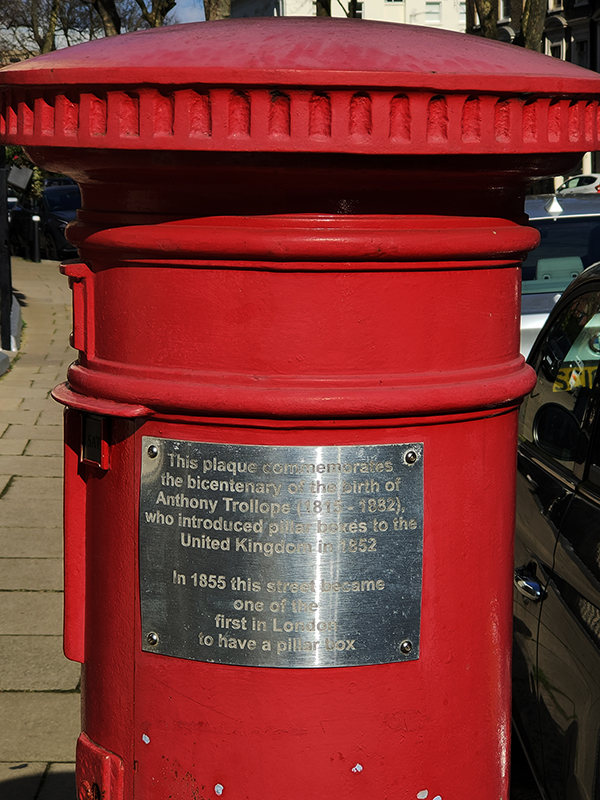
After a quick look at Fairholt Street we follow Rutland Street back round to the Hole In the Wall and on the other side make our way up the other leg of Rutland Gate. About half way up is one of several postboxes in London adorned with a plaque commemorating the bicentenary of the birth of novelist Anthony Trollope (1815 – 1882). In 1850’s, Trollope worked as a surveyor in the Post Office (going on to attain a senior position within the management hierarchy. At that time letters had to be taken to the local receiving house (early form of post office) or handed to a Bellman who walked the streets in uniform, ringing a bell to attract attention. Trollope was given the task of finding a solution to the problem of collecting mail on the Channel Islands where the usual practice was proving unsatisfactory. He recommended a device he may have seen in use in Paris: a “letter-receiving pillar” out of cast iron and around 1.5m high. The first four such pillar boxes were erected in David Place, New Street, Cheapside and St Clement’s Road in Saint Helier in 1852. In the beginning, there was no standard design for the boxes and numerous foundries created different sizes, shapes and colours. In 1859, a bronze green colour became standard on the basis that this would be unobtrusive. However, it soon became clear that it was too unobtrusive, since people kept walking into them and red became the standard colour in 1874.
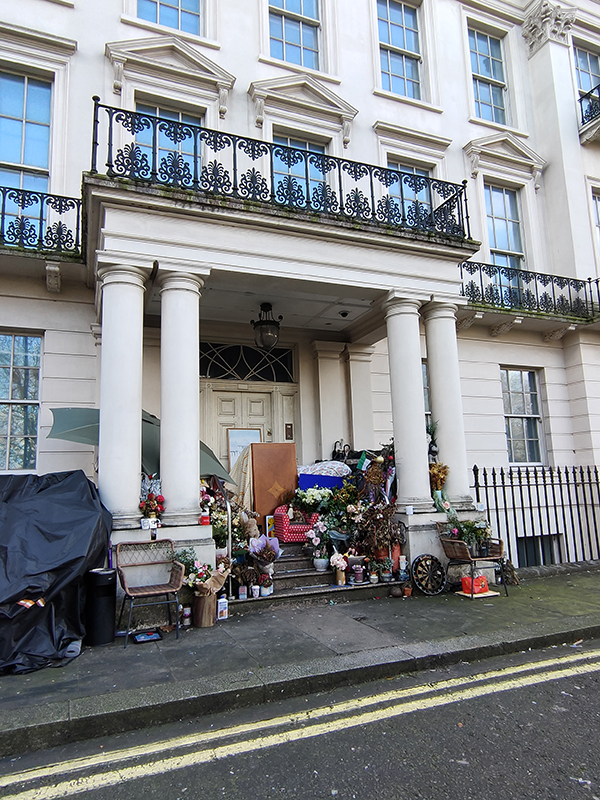
Arriving at the junction of Rutland Gate and Knightsbridge we encounter something of a mystery. 2–8a Rutland Gate is a large white stuccoed house originally built as a terrace of four houses in the mid 19th-century and converted into a single property in the 1980s. In 2012, the house was described as having seven storeys and 45 bedrooms, with a total size of 5,600 m2 and including a swimming pool, underground parking, several lifts, bulletproof windows and substantial interior decoration of gold leaf. In April 2020, it was bought by a Chinese businessman for a reputed £210 million, making it quite probably the most expensive house ever sold in the UK. But then in 2022 it was reported that it had been put on the market again. Either way it doesn’t look like anyone is in residence at the present time although someone has made themselves at home out front.
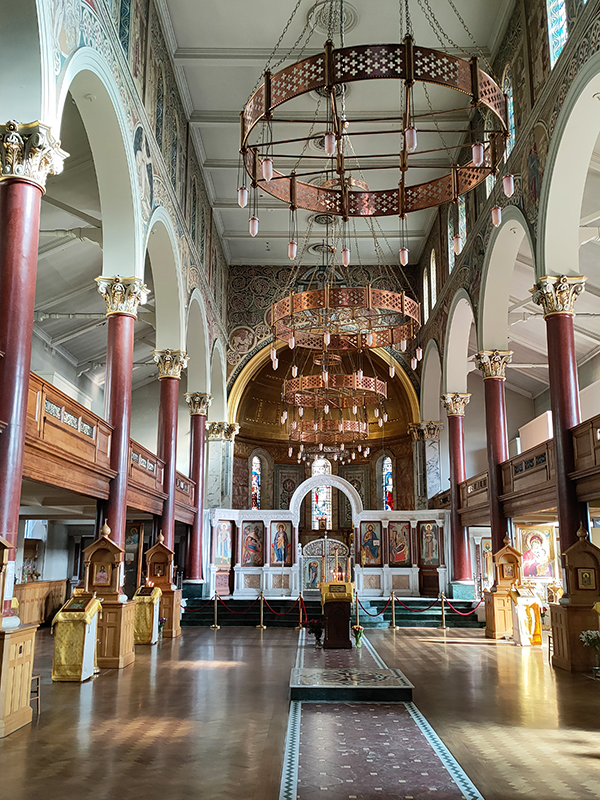
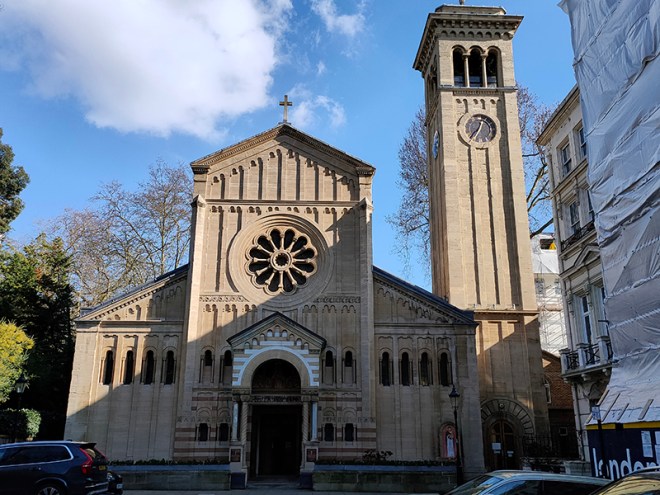
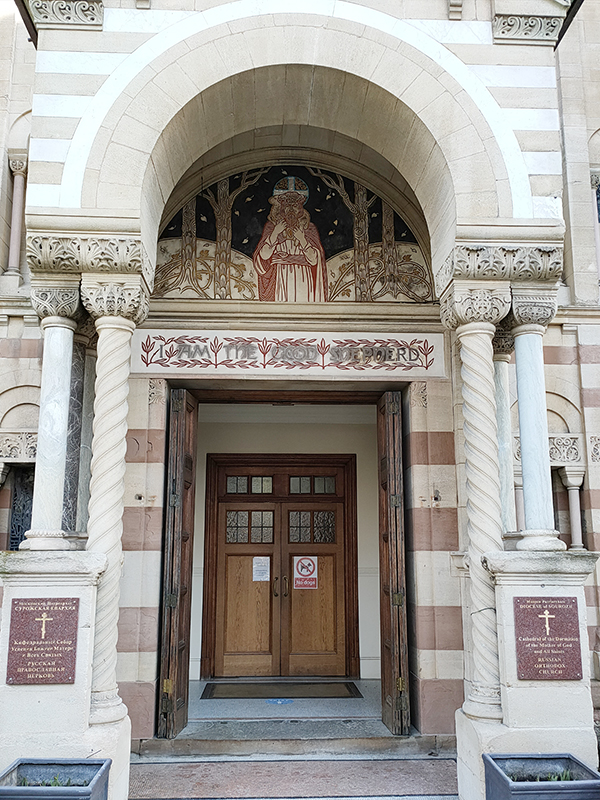
We continue west along Princes Gate and turn south into Ennismore Gardens on the east side of which we find the Russian Orthodox Cathedral of the Dormition of the Mother of God and All Saints home to the Russian Orthodox Diocese of Sourozh. This former Anglican church dates back to 1849 when architect Lewis Vulliamy proposed a design in the Lombard style instead of the conventional Gothic of the time. His vision wasn’t fully realized for lack of finance but in 1891 the church was remodelled such that the main façade is a very close copy of that of the Basilica of San Zeno in Verona. In the mid-1950’s the building was let to the Russian Orthodox Church and in 1978 the Sourozh Diocese bought it outright. It has a Grade II* listing. The interior is very lavish with plenty of gold (leaf) on show and filled with icons (which they ask you not to photograph up close). There are also a large number of framed texts, which my A Level Russian from nearly half a century ago allows me to read but not understand.
At nos. 61-62 Ennismore Gardens is the consular section of the Libyan Embassy (though there’s nothing on the building to identify it as such other than the flag). The website of the Royal Borough of Kensington & Chelsea has it listed under the splendid alternative name, The People’s Bureau of the Great Socialist People’s Libyan Arab Jamahiriya, though the page hasn’t been updated since 2016.
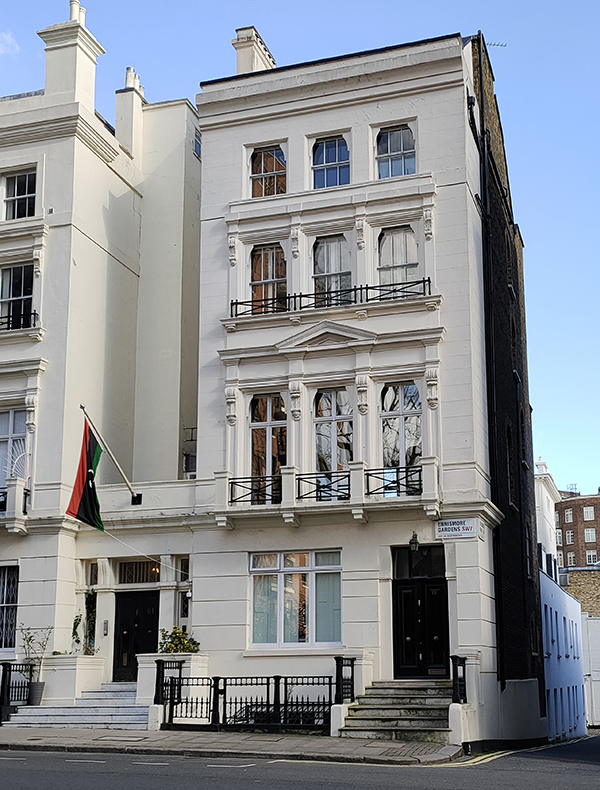
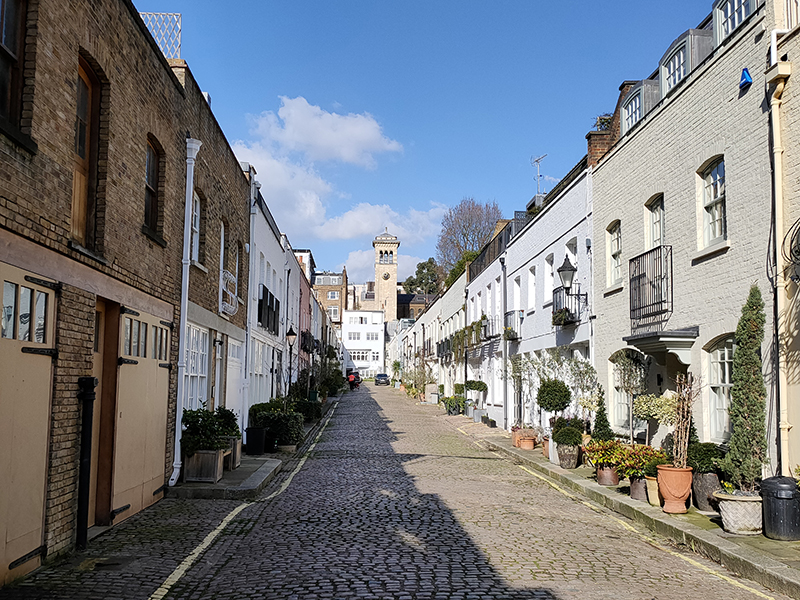
We complete a full circuit of the actual garden square bit of Ennismore Gardens and then swing round the very picturesque Ennismore Mews into Ennismore Street.
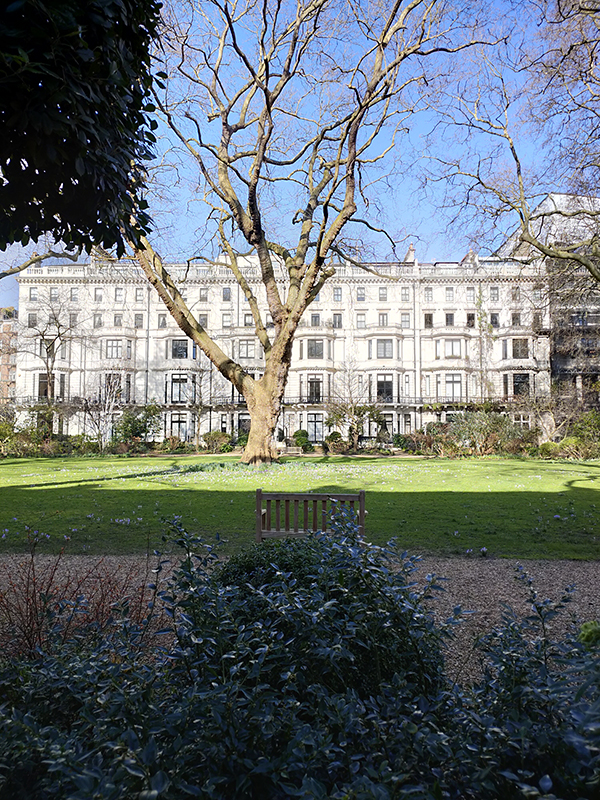
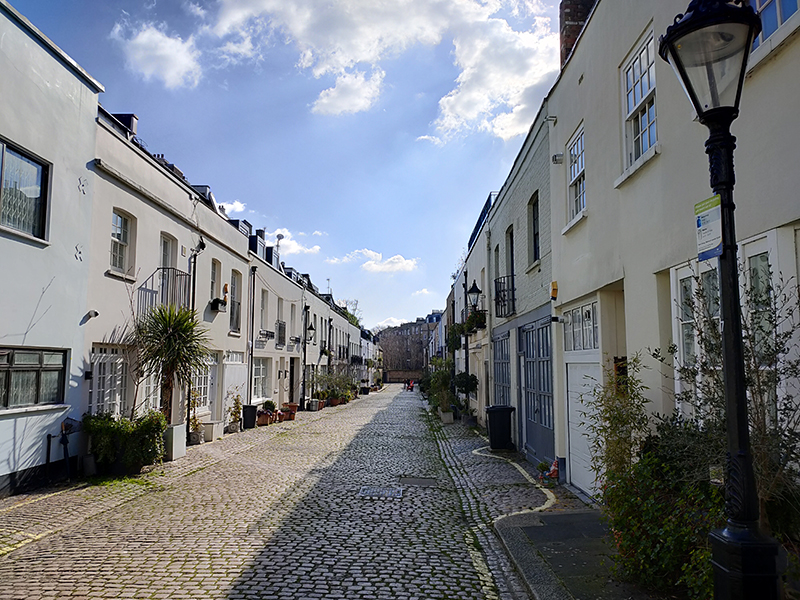
Heading west, Ennismore Street becomes Ennismore Garden Mews (which is also very picturesque). At the entrance to the mews, which were built between 1868 and 1874 by Peter and Alexander Thorn on land belonging to the 3rd Earl of Listowel, stands a Grade II listed arch, featuring paired Ionic columns supporting an entablature (I had to look that up too).
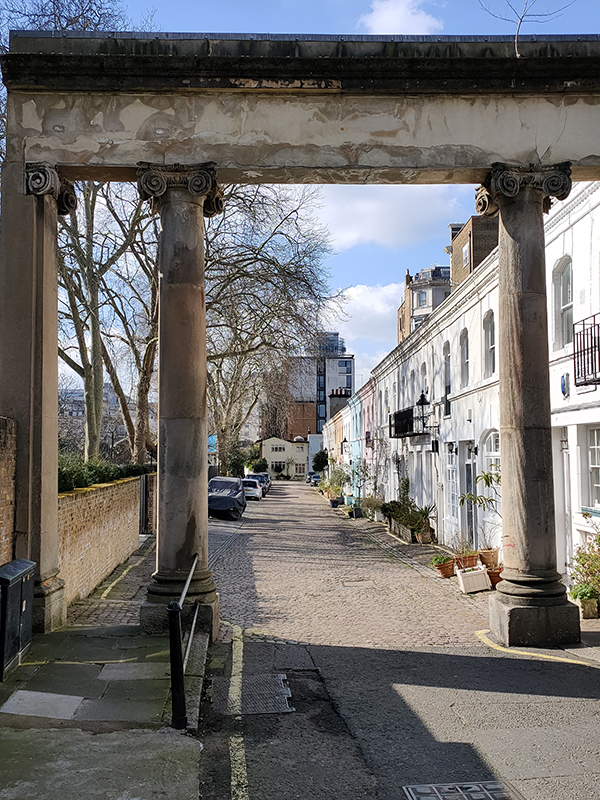
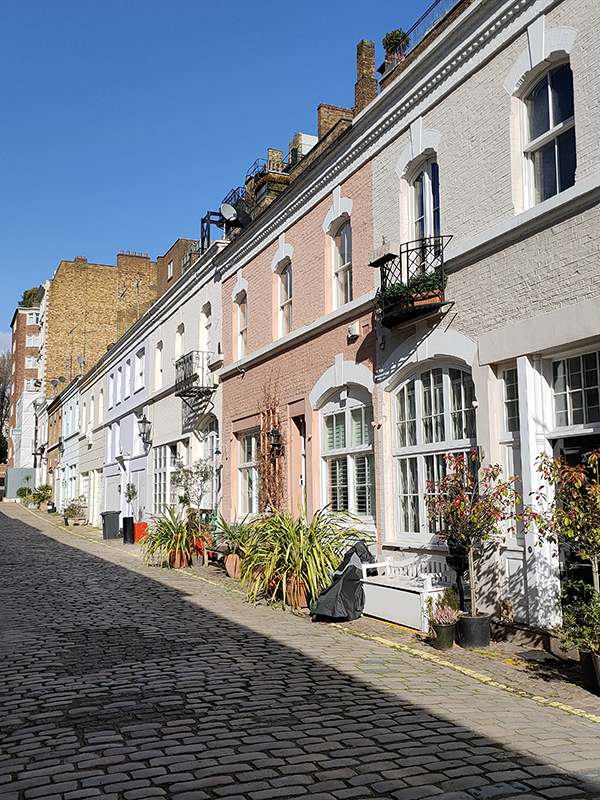
To the south of the mews lies Holy Trinity Brompton, a Grade II listed Anglican church that was consecrated by the Bishop of London in 1829.
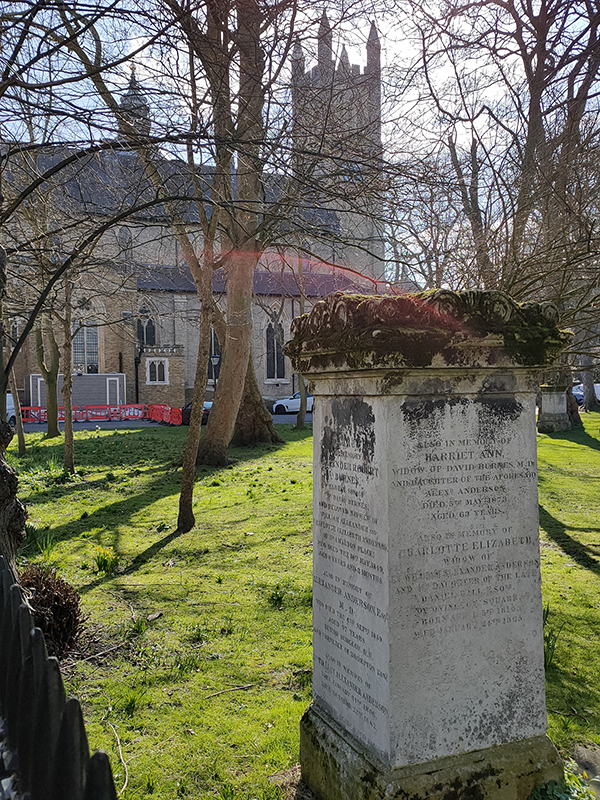
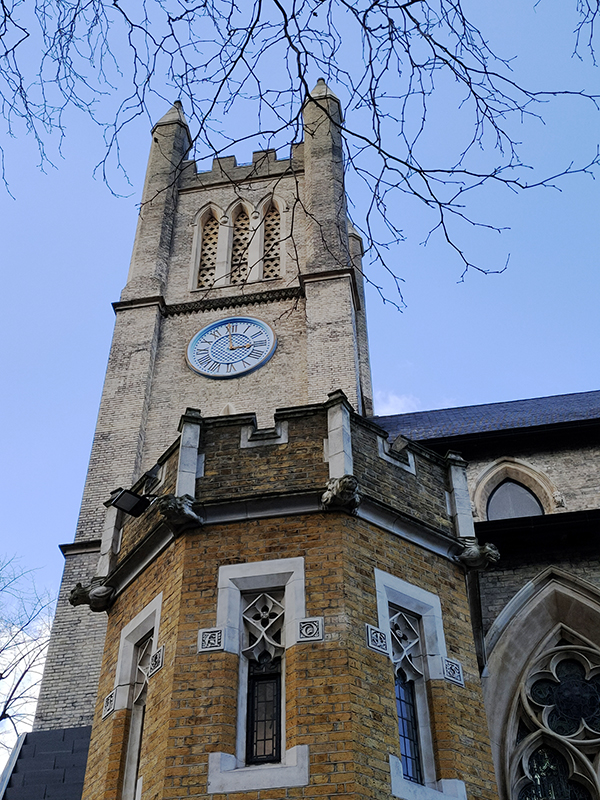
Beyond the churchyard, Ennismore Garden Mews takes a northward turn up to Prince’s Gardens. Princes Gardens Square was developed between the 1850’s and the 1870’s by by Sir Charles James Freake, one of the most successful speculative builders in Victorian London. Apart from those on the north side of the square and those fronting onto Exhibition Road all of Freake’s original white stuccoed townhouses were demolished in the 1950’s to make way for the expansion of the Imperial College campus. One of those remaining on Exhibition Road has since 1962 played host to the London branch of the Goethe-Institut (the German equivalent of the British Council).
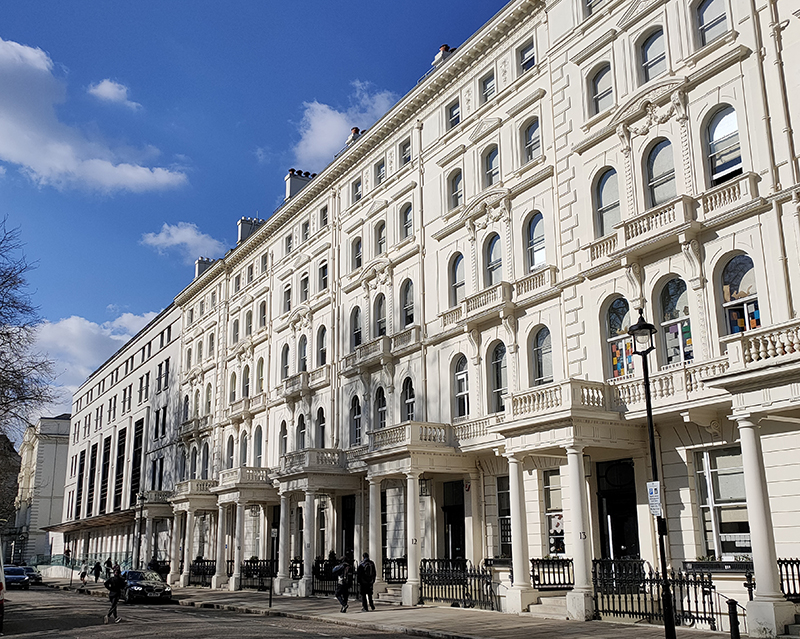
We head south down Exhibition Road, concentrating solely on its east side first encountering the fabulous Art Deco apartment block, 59-63 Prince’s Gate, which was designed by Adie, Button & Partners and completed in 1935.

Immediately adjacent is the modernist Hyde Park Chapel of The Church of Jesus Christ of Latter-day Saints (in other words Mormon HQ London). This site, bombed during World War II, was originally identified as a suitable location for a Chapel in London by the then Mormon President in 1954 and was completed and dedicated in 1961.
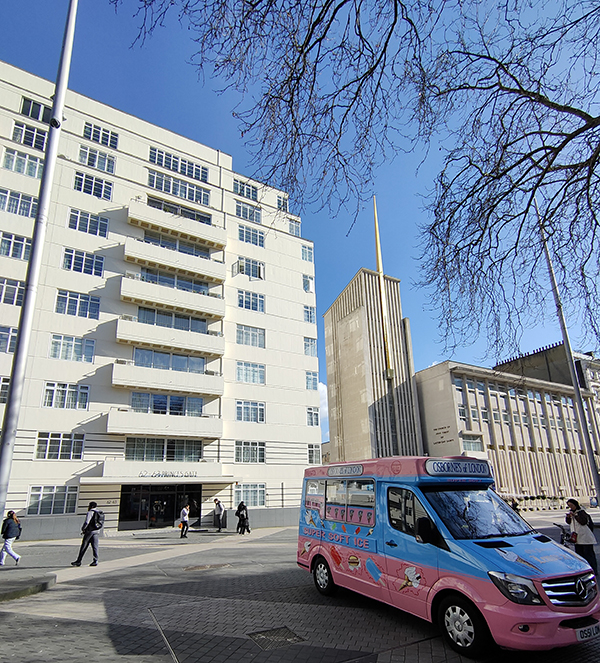
First ice-cream van sighting of the year and March still a day away.

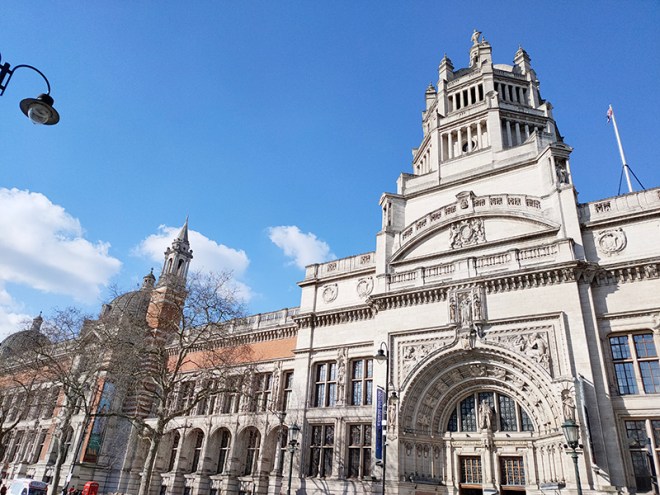
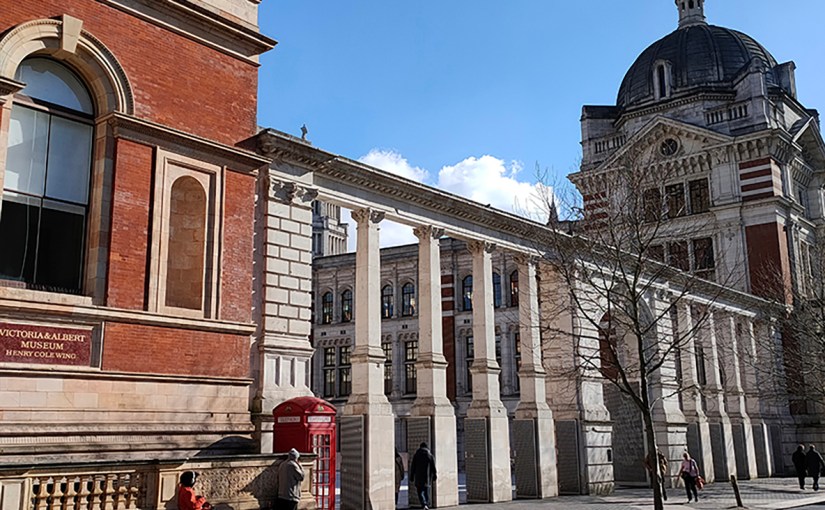
Two blocks further south and we reach the Victoria & Albert Museum which we enter via the Henry Cole Wing on Exhibition Road, designed by one of the museum’s in-house architects, Henry Scott. Constructed of brick and adorned with terracotta sculpture in an imitation Italian Renaissance style, it was completed in 1873.
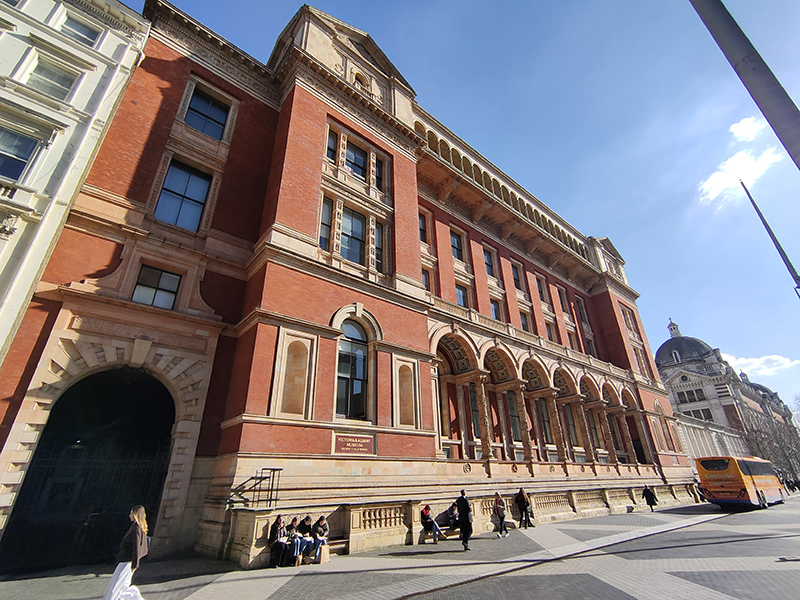
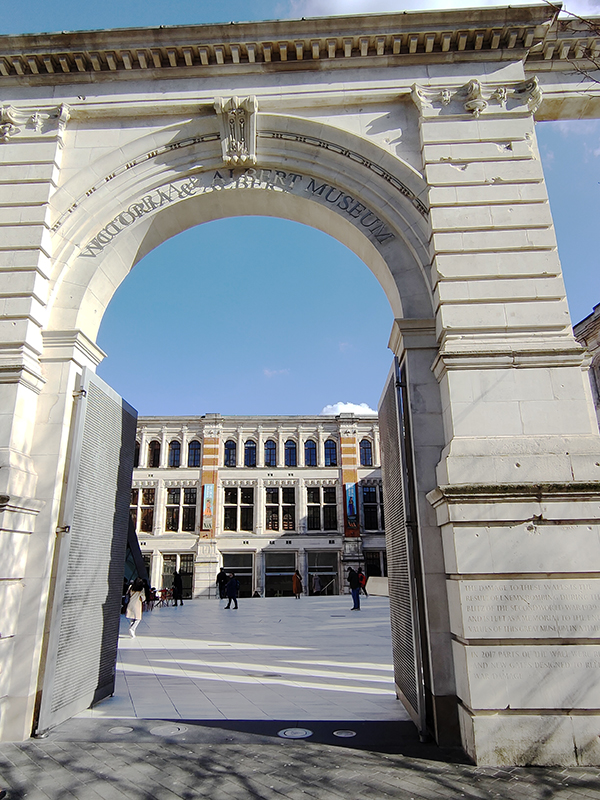
The origins of the V&A lie in the Great Exhibition of 1851 after which, its creator and champion, Prince Albert, urged that the profits of the Exhibition be used to develop a cultural district of museums and colleges in South Kensington devoted to art and science education. The V&A, originally known as the Museum of Manufactures, was the first of these institutions. It was founded in 1852 and moved to its current home, comprised of two buildings (one a temporary iron structure) five years later, at which time it was renamed as The South Kensington Museum. The first Director of the museum was Henry Cole (1808 – 1882) who had been one of the driving forces behind the Great Exhibition. Over the next 40 years the museum grew in piecemeal fashion including the construction of the North Court and South Court. Then in the late 1880’s a competition was held to select a new professional architect to complete the Museum. The design of the winner, Aston Webb (1849 -1930), called for long galleries punctuated by a three-storey octagon surmounted by a small cupola, and on the west, a large square court (eventually octagonal) balanced by the Architectural Courts on the east. In May 1899, in what was to be her last public ceremony, Queen Victoria laid the foundation stone for Aston Webb’s new scheme. The occasion also marked the changing of the Museum’s name to the Victoria and Albert Museum. As the building neared completion, a Committee of Re-arrangement looked at the question of how all the empty new galleries and courts should be filled. It decreed that the whole collection should be displayed by material (all the wood, together, all the textiles, all the ceramics etc.) in a huge three-dimensional encyclopaedia of materials and techniques. One of the last things to be completed was the inscription round the main door arch, which was adapted from Sir Joshua Reynolds: “The excellence of every art must consist in the complete accomplishment of its purpose”. The Museum was finally finished on 26 June 1909, more than 50 years after work had started on the original structures.
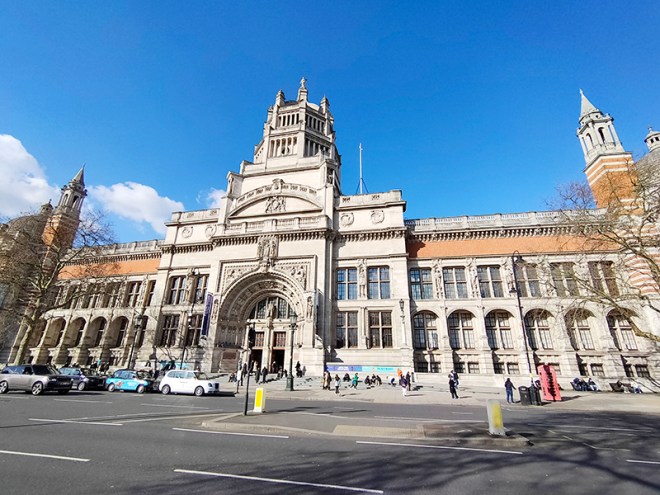
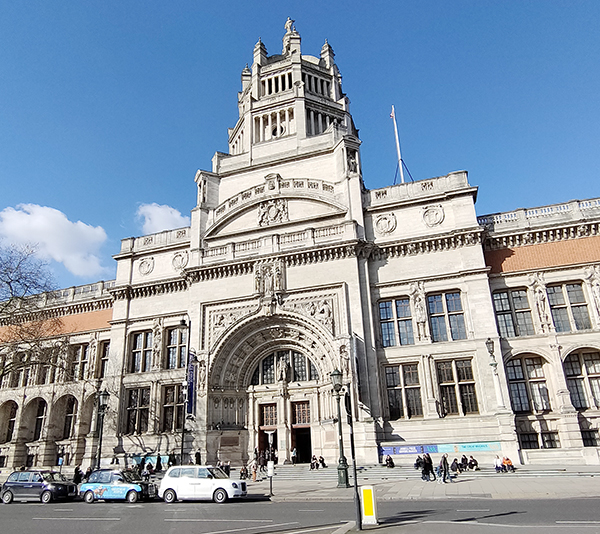
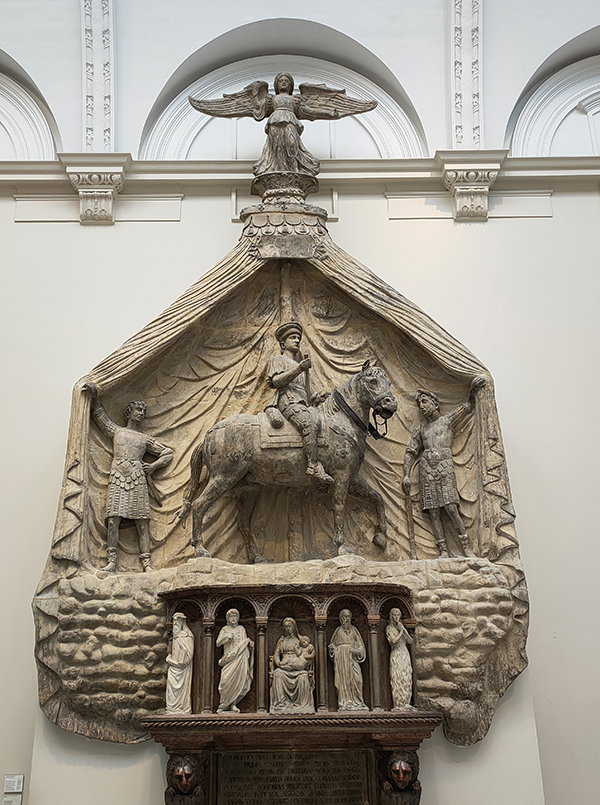
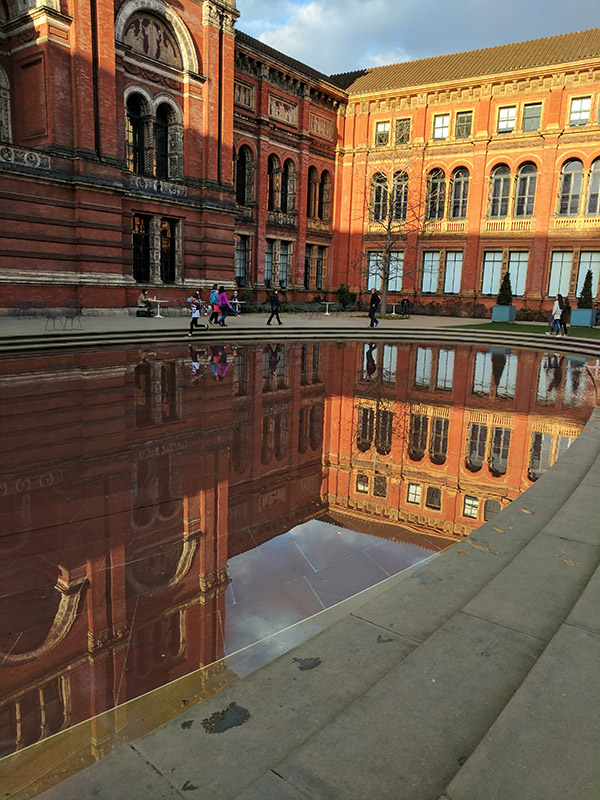
I’ve visited the V&A on numerous occasions over the years and yet I’m still staggered by the scale of some of the exhibits on display. One of these monumental objects is the Rood-loft (or Choir Screen) from St John’s Cathedral in ‘s-Hertogenbosch, Germany created in the 1610’s. Carved from two types of alabaster and two types of stone it stands 7.8m tall and over 10m wide. The rood-loft was acquired by the V&A from the art dealer Murray Marks who had purchased it from the cathedral authorities. It was probably removed from the cathedral in 1866 because it obstructed the congregation’s view of the high altar and because its style clashed with that of the Gothic church. In 1871 it was purchased outright, transported to England in sections and was rebuilt on the south wall of the Cast Court. During 1923-4 it was dismantled again and reconstructed in Gallery 50. I’ve looked very closely every time and still can’t see the joins.  One of the highlights of the museum is the John Madejski Garden, which was sadly closed for renovations at the moment so the photo in the slideshow below is from a previous visit. Originally this was a courtyard; the pool, lawns and planting which can be seen today were created by the landscape architect Kim Wilkie in 2005.
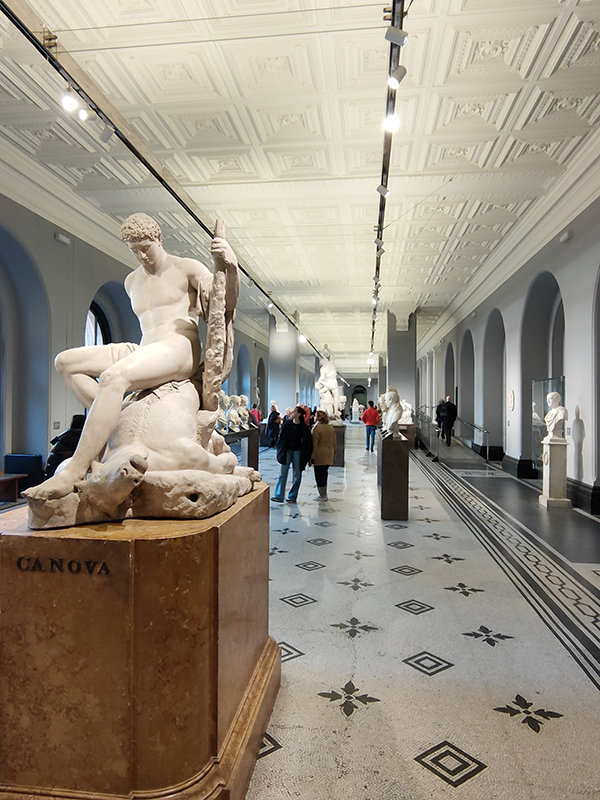
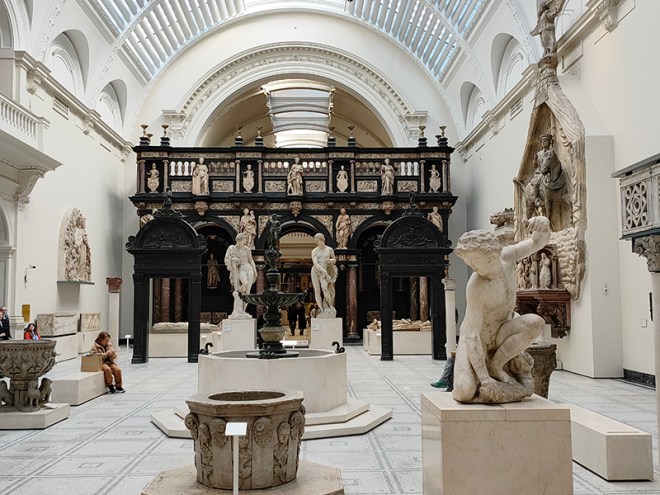
Henry Cole lived and worked at 33 Thurloe Square, directly opposite the museum. In addition to his achievements relating to the Museum and the Great Exhibition, Cole is credited with devising the concept of sending greetings cards at Christmas, introducing the world’s first commercial Christmas card in 1843.

We continue east along the south side of Thurloe Place before turning right onto the stretch of the Brompton Road that heads off towards Chelsea. This takes us past Empire House, built between 1911 and 1918 in a florid free baroque style with sculpted decoration on Portland stone, as the new UK HQ and showroom of the Continental Tyre and Rubber Company Ltd. Continental only occupied the building until around 1925 at which point it was sold and converted into shops and flats by the architect Henry Branch.

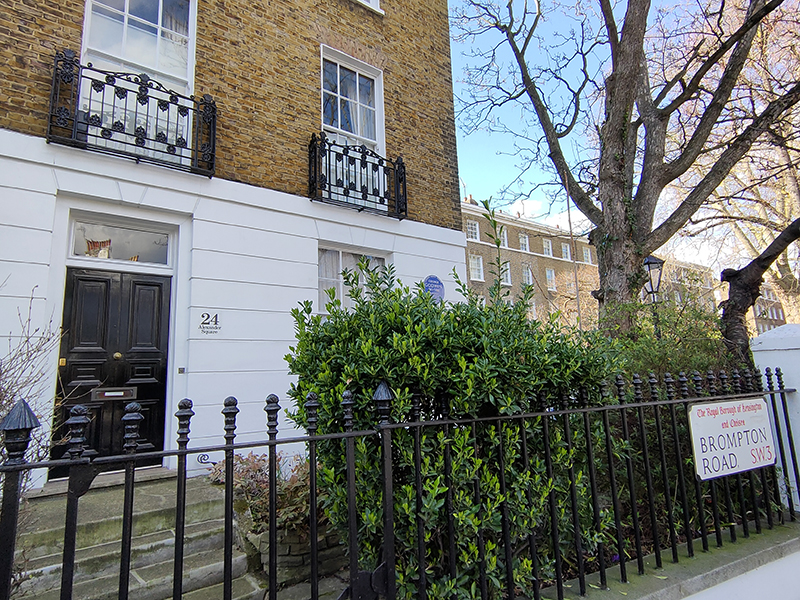
At no.24 Alexander Square, fronting the Brompton Road, a blue plaque commemorates the architect George Godwin (1813 -1888). His works included churches, housing and public buildings, and large areas of South Kensington and Earl’s Court, including five public houses. His memorial in Brompton Cemetery is Grade II listed, unlike any of the buildings he created.
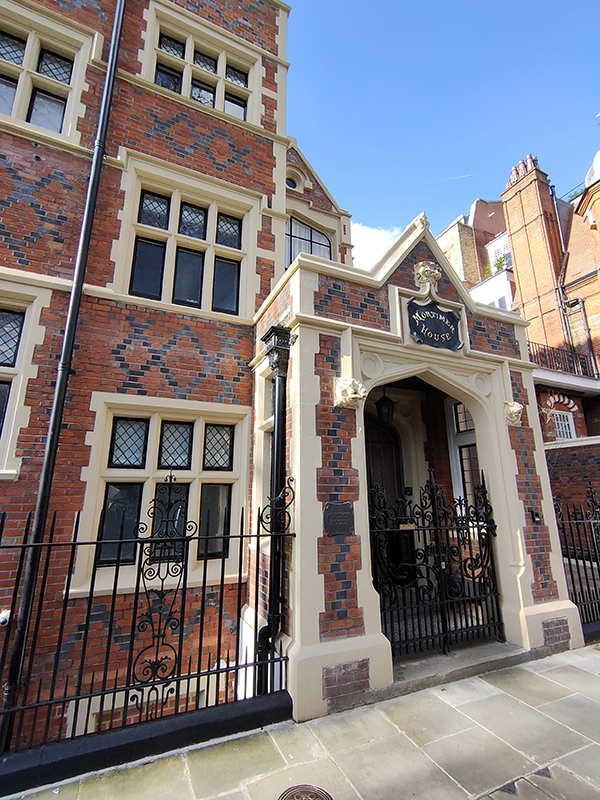
Opposite here, on the corner of Brompton Road and Egerton Gardens, stands Mortimer House built by the one-time Governor of the Bank of England, Edward Howley Palmer, in the mid-1880s. The house is built in the late 19th-century Tudorbethan style in red and blue interspersed brickwork, with various decorations including gables and statues of griffins and bears with shields. Tall groups of brick chimney stacks surmount the property. The stables of the house have a conical roof and are now garages. A swimming pool in a conservatory was added in the late 20th century. Mortimer House was home to the chairman of British American Tobacco, Sir Frederick Macnaghten, in the 1950s and 1960s and continues to be privately owned.
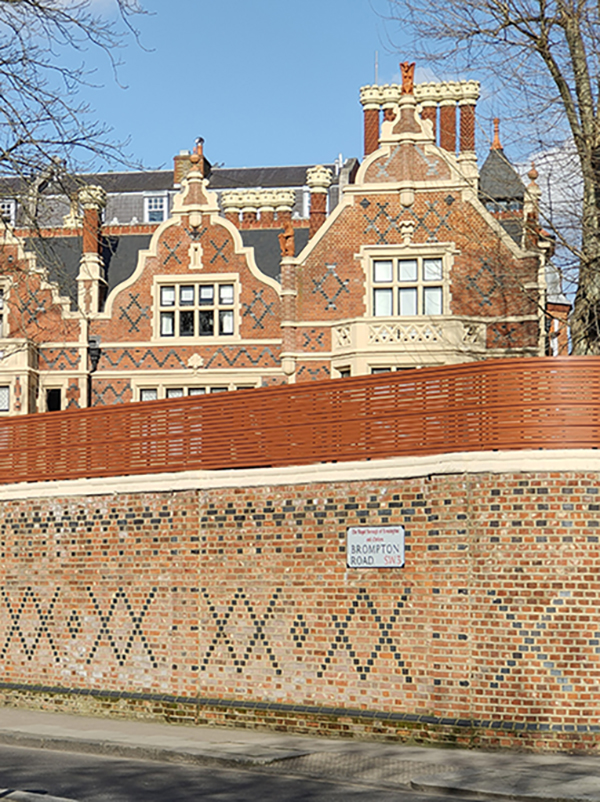
In December 2013 Edgerton Crescent was named the “most expensive street in Britain” for the second successive year, with an average house price of £7.4 million. Since then it’s relinquished that particular title but is still very desirable. David Frost lived here in the late 1960’s apparently.
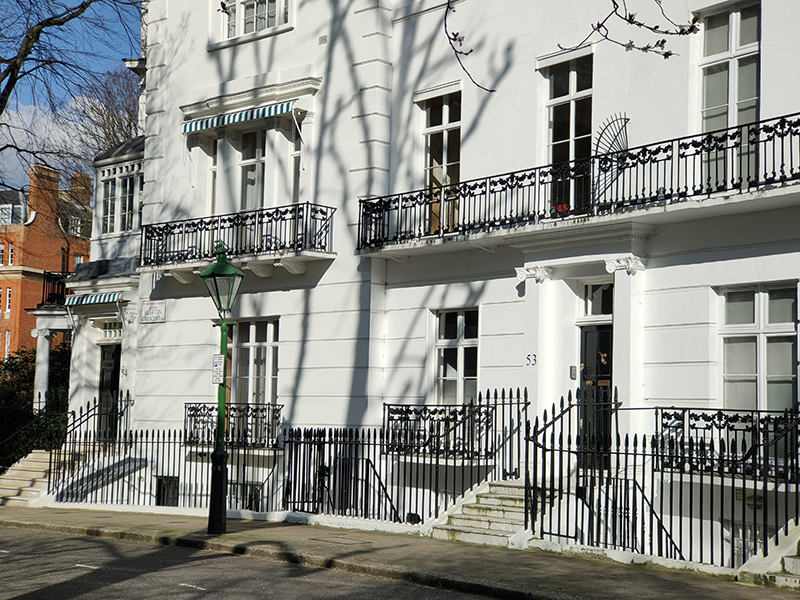
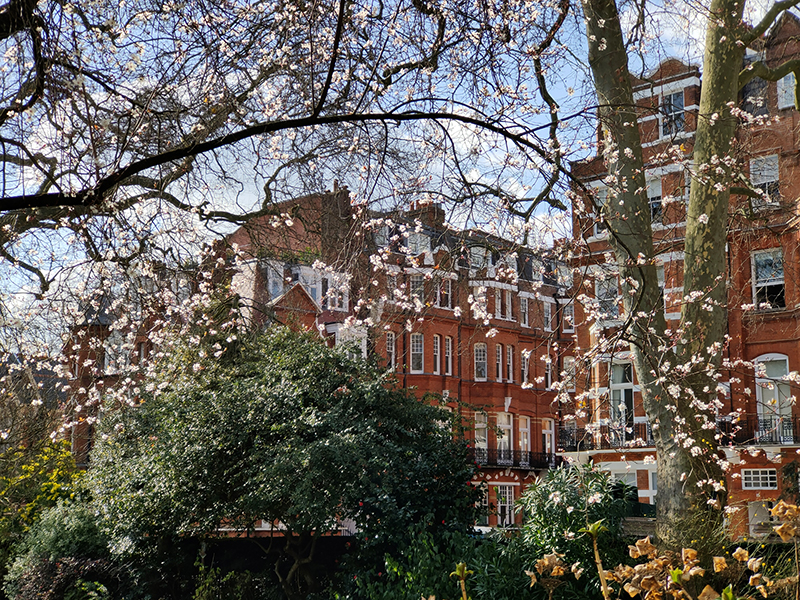
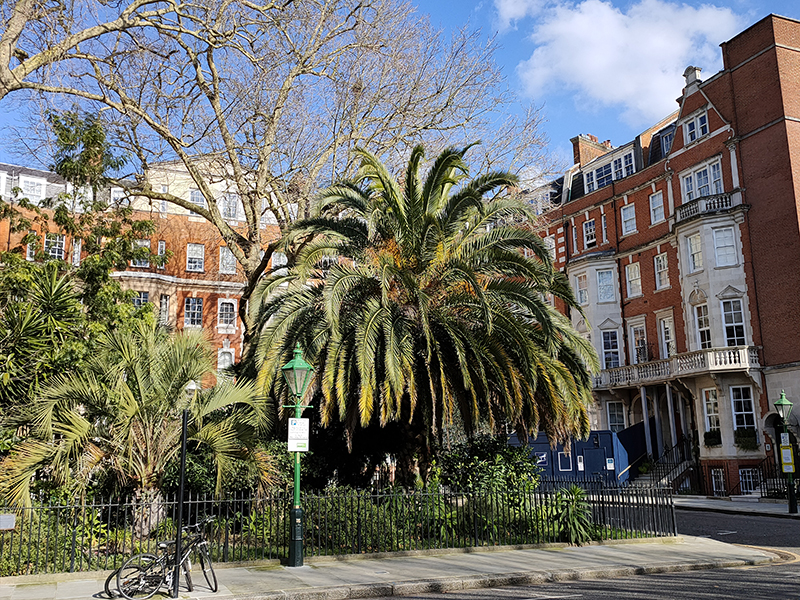
Having followed the crescent back to Edgerton Gardens we loop round into Edgerton Terrace which we look up and down taking particular note of the splendid palm tree adorning the small garden around which Edgerton Place curves.
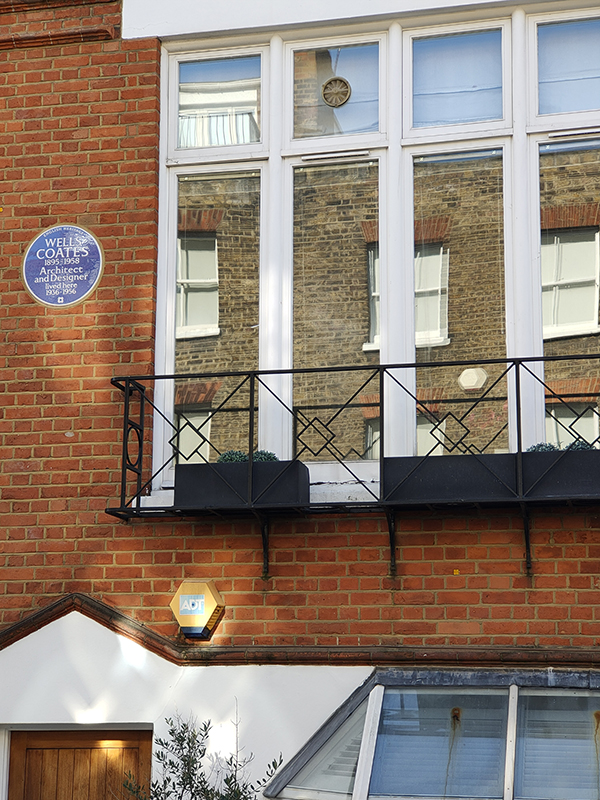
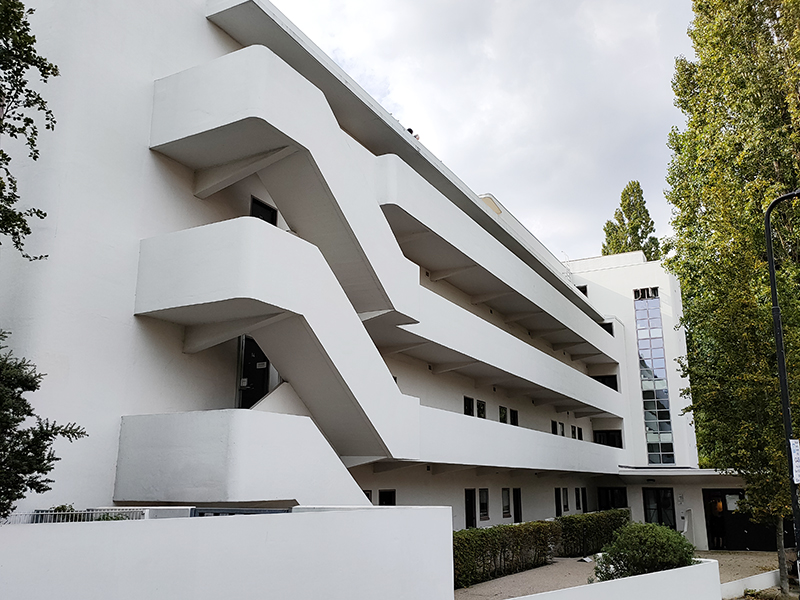
The final section of Edgerton Gardens leads into Yeoman’s Row which has a blue plaque at no.18 for the modernist architect Wells Coates (1895 – 1958) who is perhaps best known for the Isokon Building in Hampstead (which is a must visit if you ever get the chance).
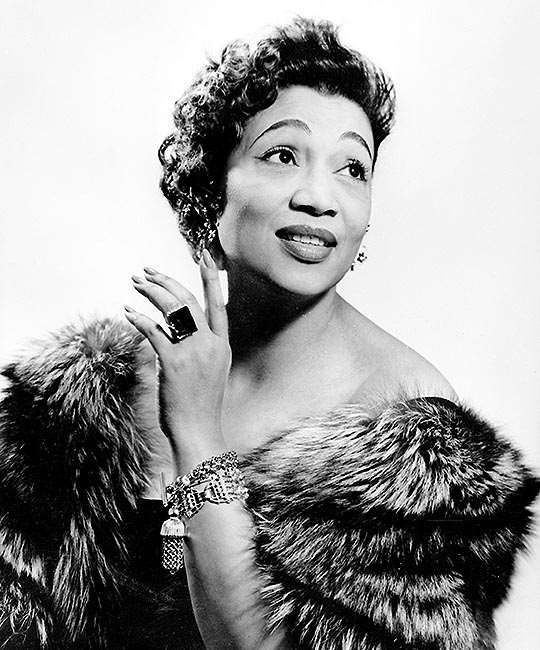
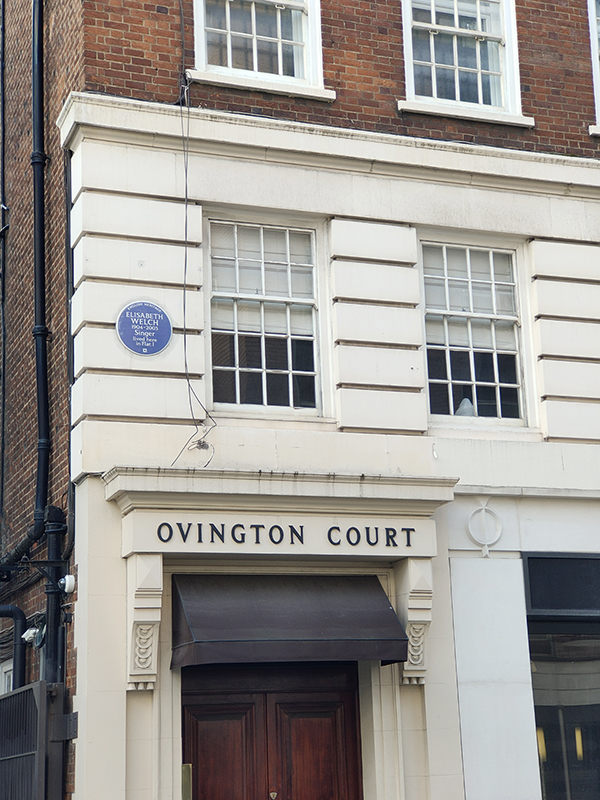
At the end of Yeoman’s Row, Glynde Mews takes us onto Walton Street from where the next links back to Brompton Road are Ovington Square and Ovington Gardens. At the top end of the latter there’s another blue plaque, this one in honour of the American singer and actress, Elizabeth Welch (1904 – 2003). Although American-born, to a father of Indigenous American and African American ancestry and a mother of Scottish and Irish descent, she was based in Britain for most of her career. During WWII, she remained in London during the Blitz, and entertained the armed forces as a member of Sir John Gielgud’s company. After the war she performed in many West End shows as well as making numerous appearances on television and radio. She featured in the Royal Variety Performance twice; did Desert Island Discs twice, and in 1979 was cast as a Goddess by Derek Jarman, singing “Stormy Weather” in his film version of Shakespeare’s The Tempest.
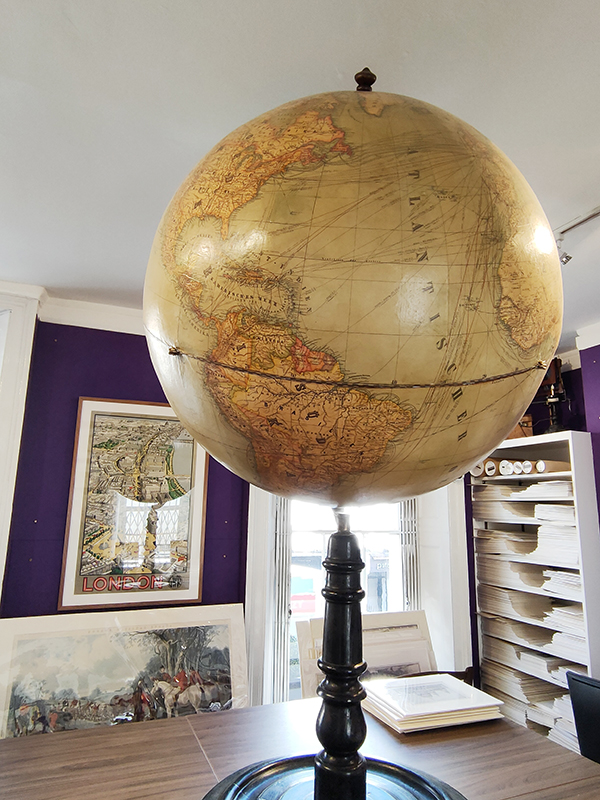
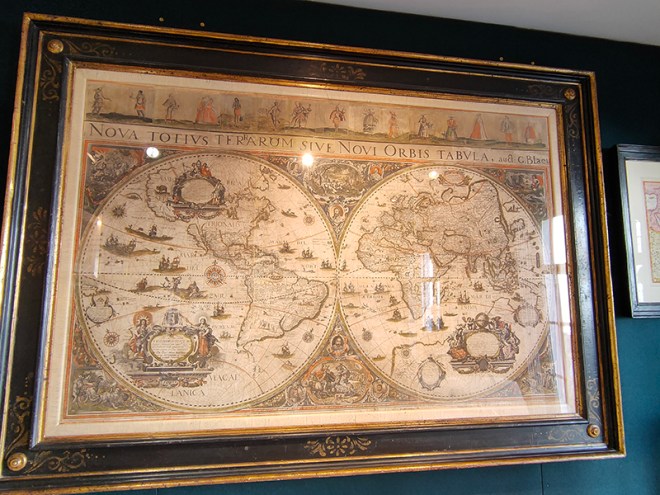
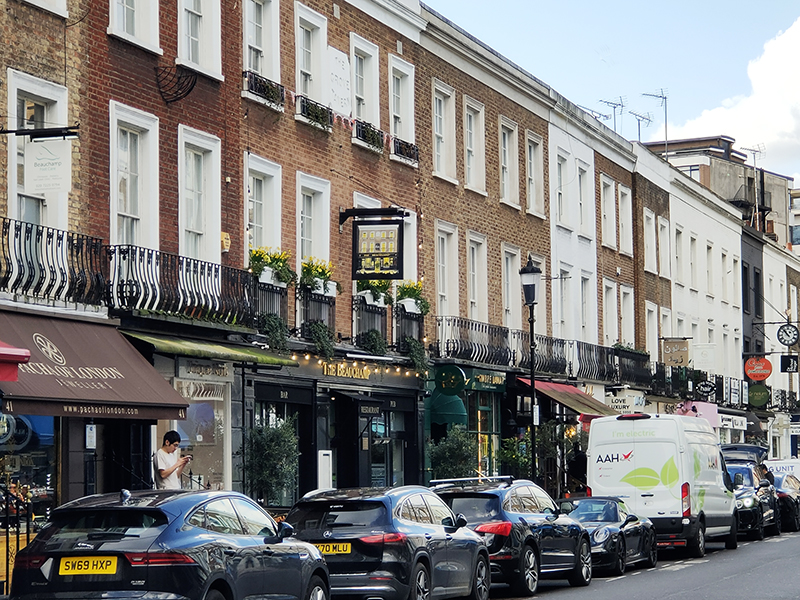
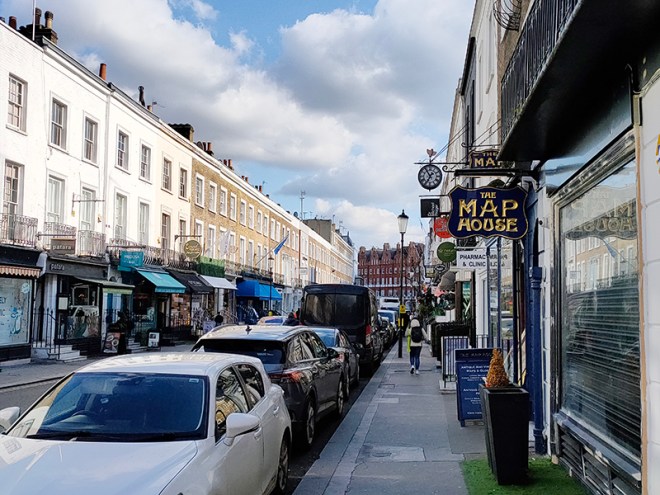
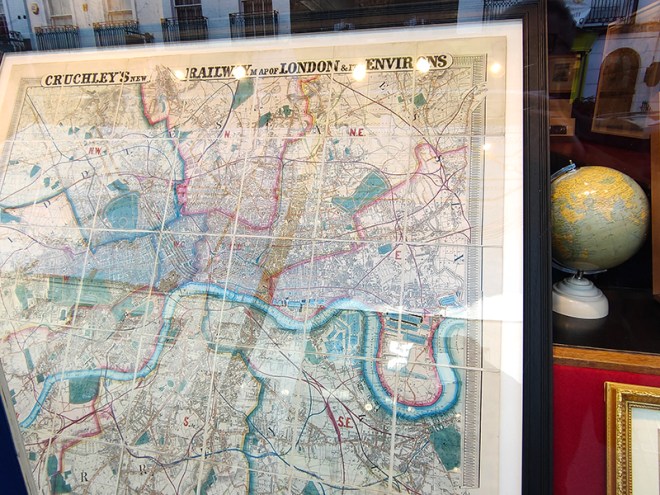
Next on the right, continuing east, is Beauchamp Place where there were a couple of unscheduled stops I couldn’t resist. First up was the Map House which has been selling and supplying maps to collectors, motorists, aviators, explorers, Prime Ministers and the Royal Family since 1907. That was the year Sifton, Praed & Company Ltd. (trading as The Map House) was established in St. James’s Street. The Map House moved to its present location at No. 54 Beauchamp Place in 1973 and it continues to house the most comprehensive selection of original antique and vintage maps, globes, and engravings offered for sale anywhere in the world; over 10,000 maps alone. There are some fascinating examples out on display which all are welcome to come in and check out.
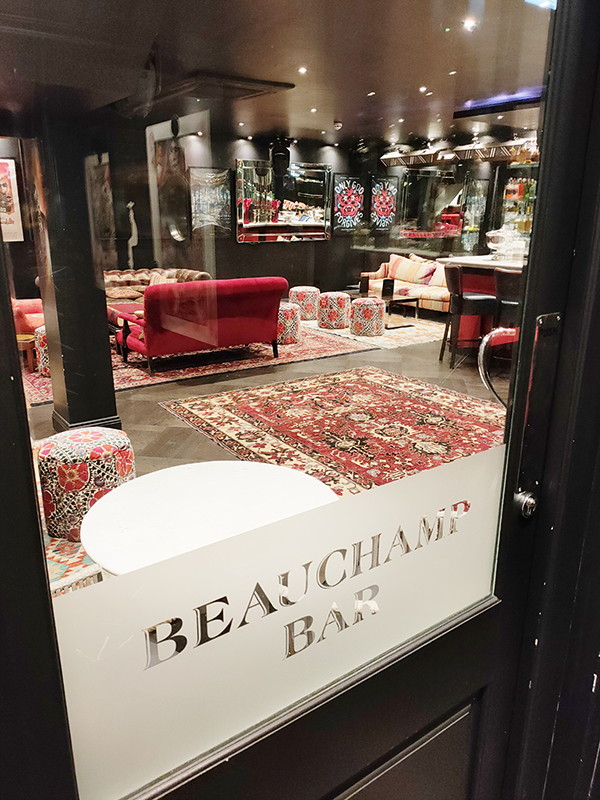
I wasn’t going to stop off for a drink today but given that it was my mother’s maiden name I couldn’t pass by the opportunity to make the Beauchamp the pub of the day.
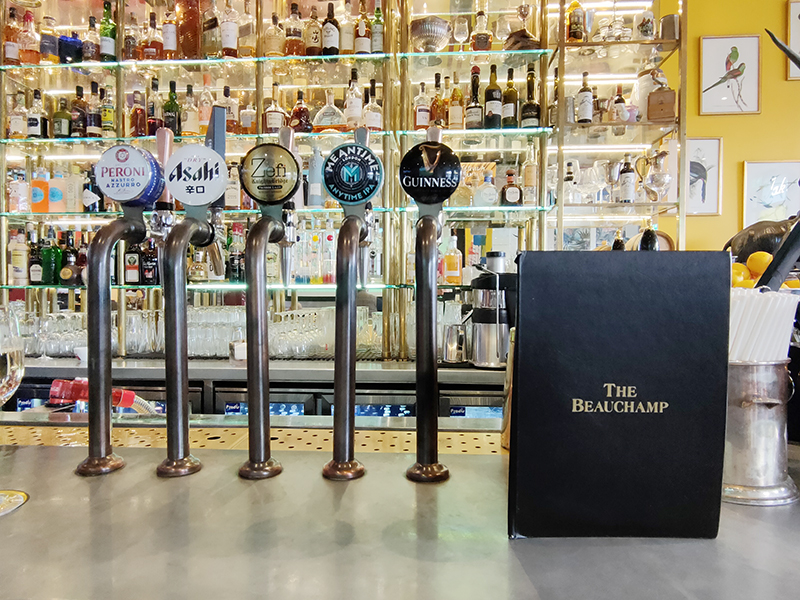
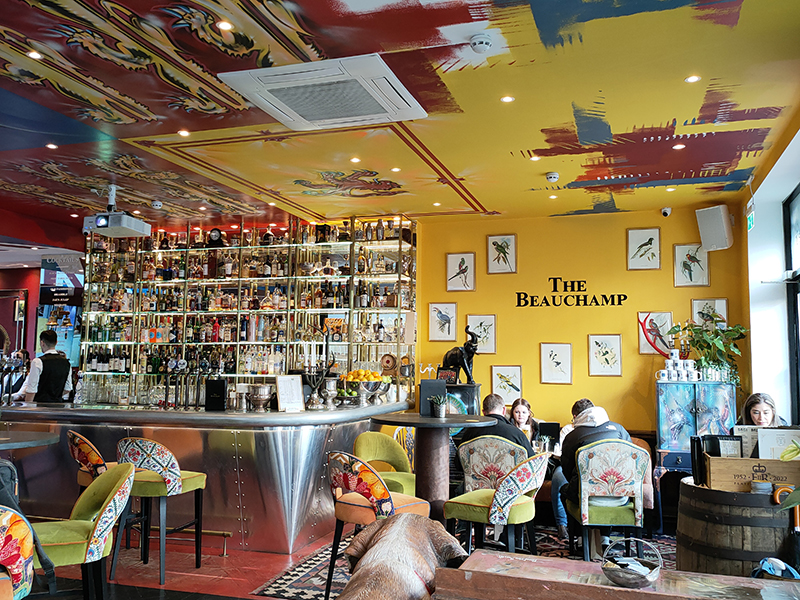
Beauchamp Place is named after  Edward Seymour, Viscount Beauchamp, who was a nephew of Jane Seymour (Henry VIII’s third wife) and therefore cousin to Edward VI. It also afforded a celebrity spot of the day in the shape of Alexander Armstrong, of Pointless fame.

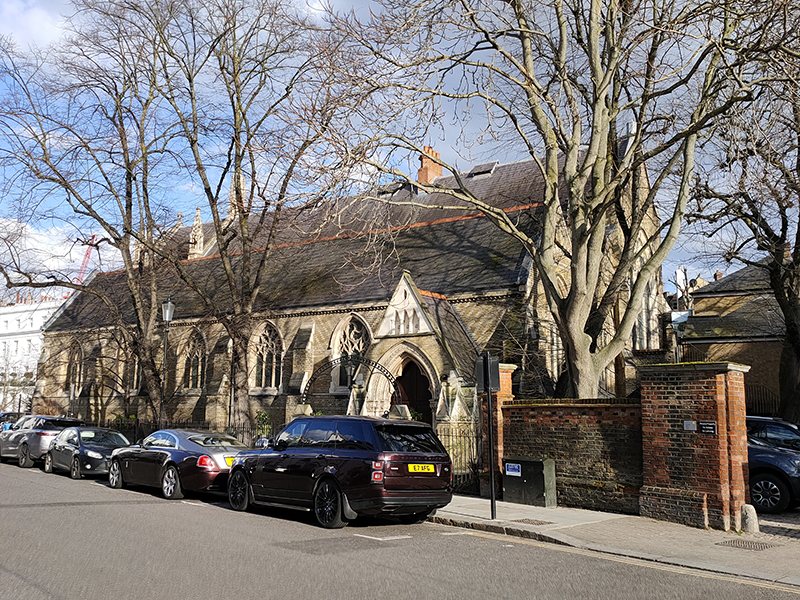
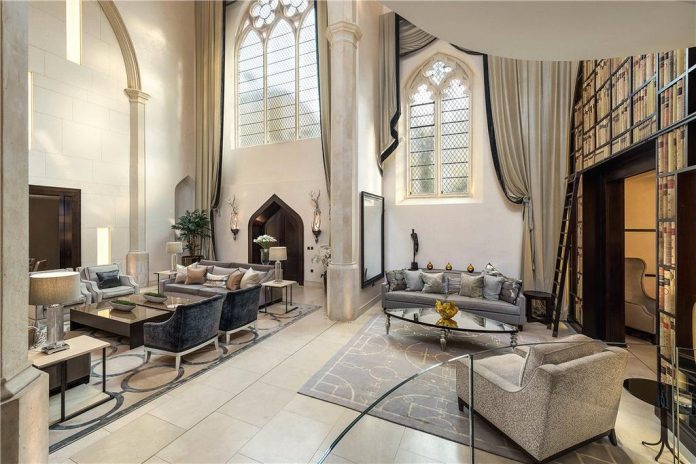
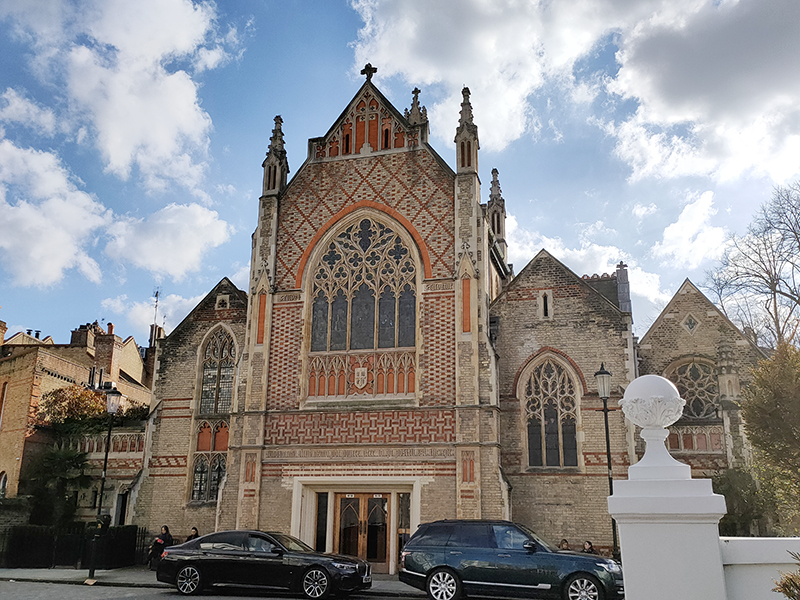
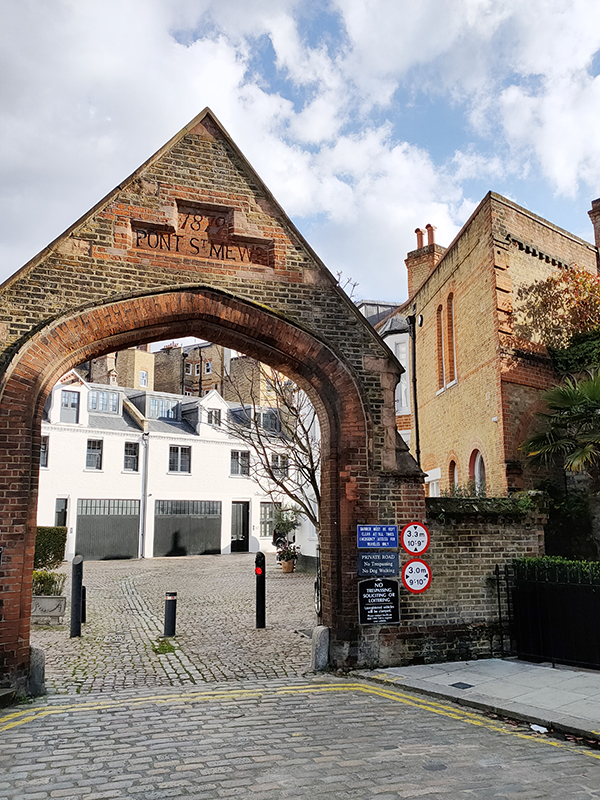
Leaving all this behind, we turn east onto Walton Street and head back towards Harrods. Facing onto Walton Place and surrounded on its other sides by Pont Mews is the Grade II listed St Saviours Church designed by George Basevi (1794-1845). Basevi was also responsible for the design of the Fitzwilliam Museum in Cambridge. The church was built in the Early Decorated style of the Gothic Revival on a site donated by the Earl of Cadogan and consecrated in 1840. The building was sold by the Diocese of London in 1998 for a reported £1 million and converted into a private home. (Also reportedly) it was owned by Alain Boublil, writer of Les Misérables and Miss Saigon, for 6 years before selling in 2009 for £13.5 million to a Thai businessman who spent an additional £10 million on a major renovation. In 2019 it was listed for sale at £55m but is currently on the market for £44m.
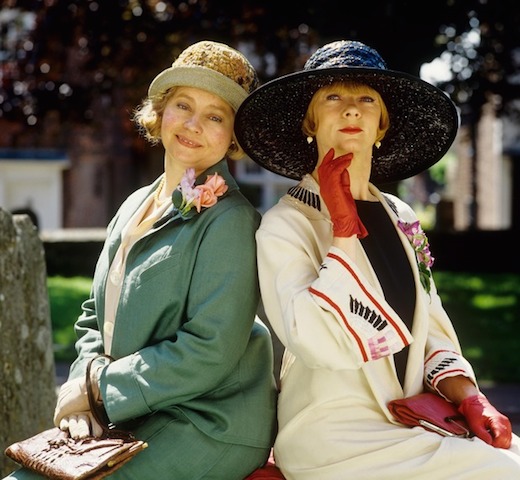
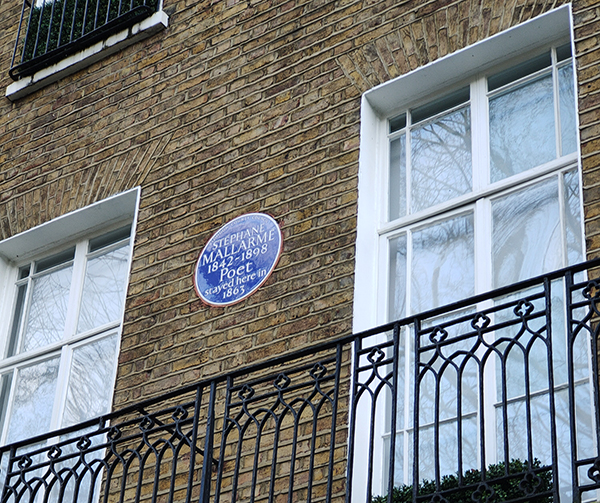
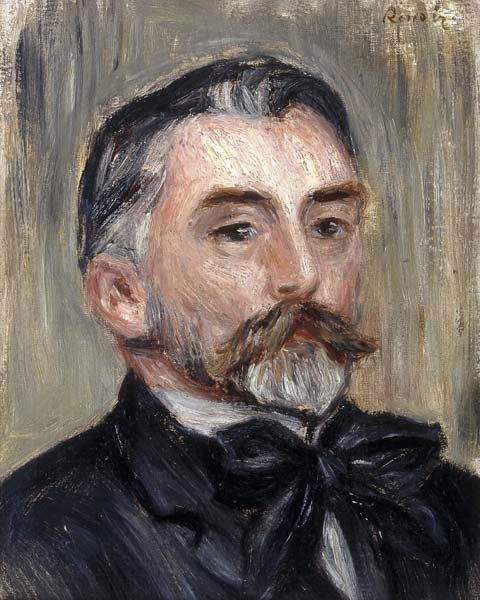
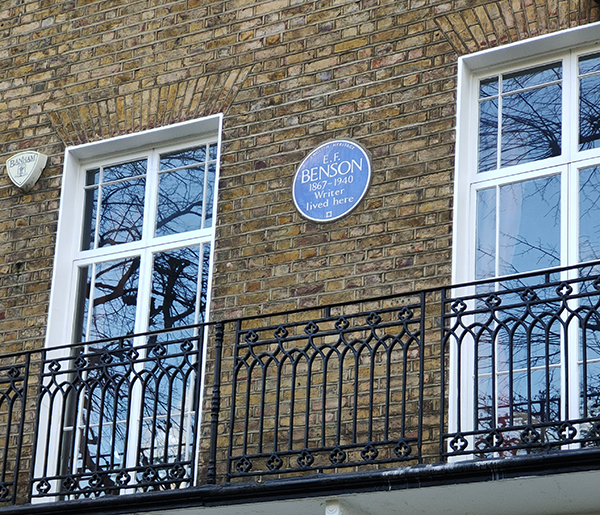
We return to the Brompton Road again via Hans Place and turn to the west. After visiting Brompton Place and Beaufort Gardens we cross over to the north side of Brompton Road and make our way down to Brompton Square which boasts three blue plaques. No. 25 was home to the writer Edward Frederic Benson (1867 – 1940) who is probably best known for his Mapp and Lucia series of novels and short stories. These have been adapted twice for TV; in 1985 with Prunella Scales and Geraldine McEwan in the title roles and in 2014 with Miranda Richardson and Anna Chancellor. French Poet and critic, Stephane Mallarmé (1842 – 1898) stayed at no.6 in 1863 while studying for an English teaching certificate. Mallarmé’s poetry has been the inspiration for several musical pieces, notably Claude Debussy’s Prélude à l’après-midi d’un faune (1894) and Maurice Ravel’s Trois poèmes de Mallarmé (1913) and his work has remained influential throughout the 20th and into the present century.
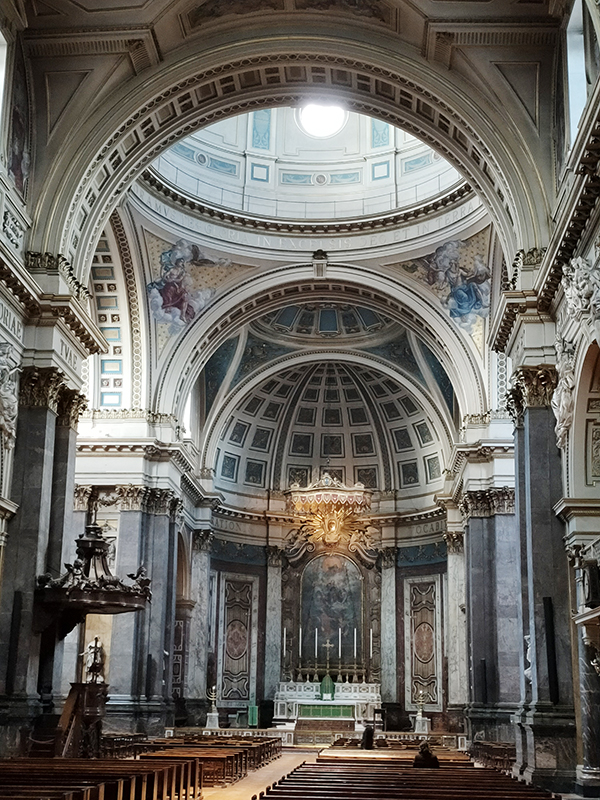
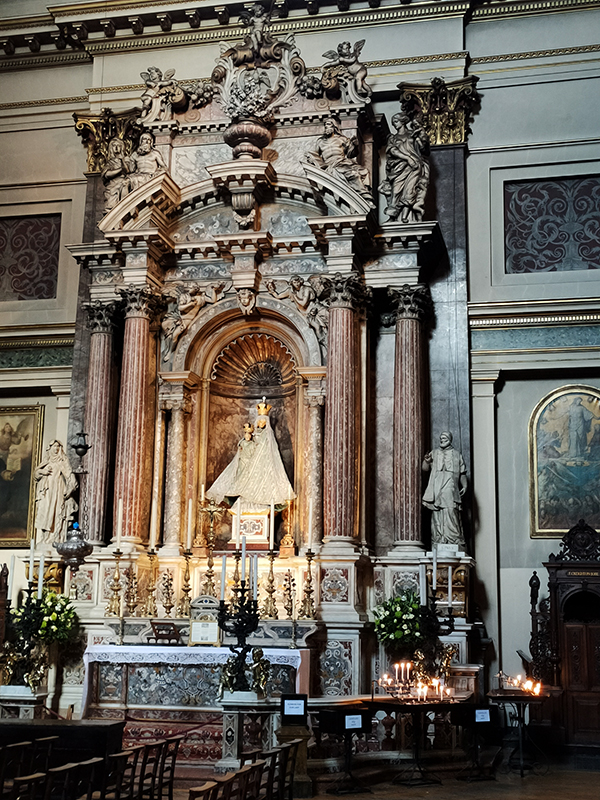
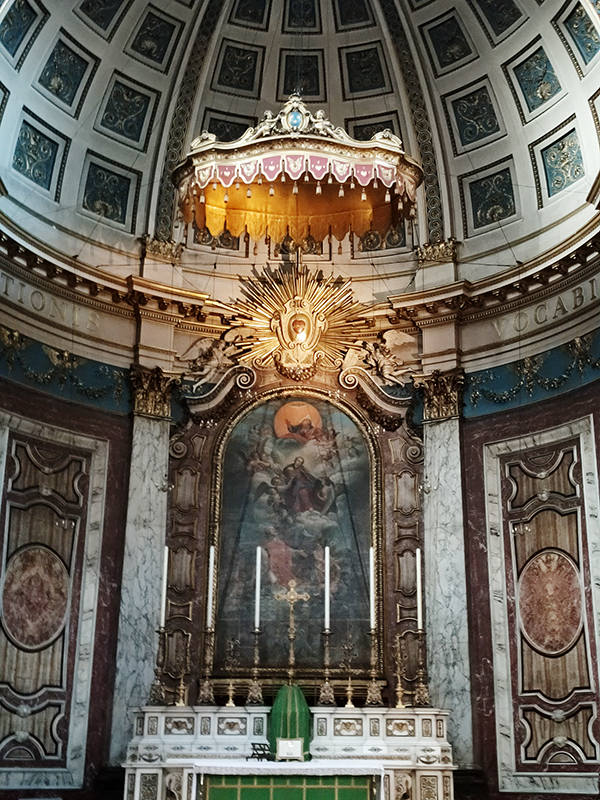
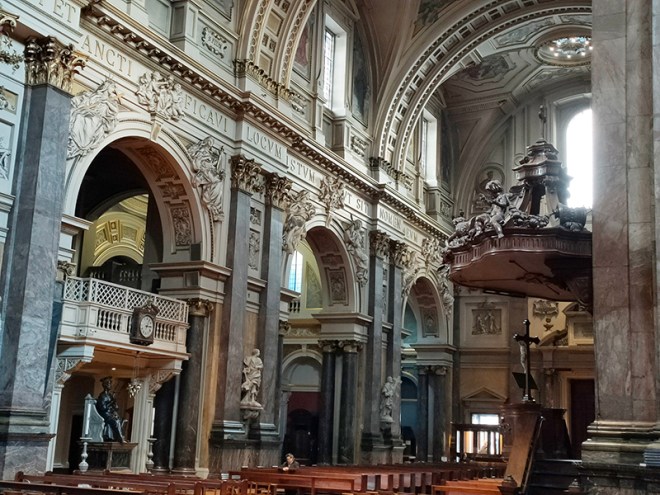
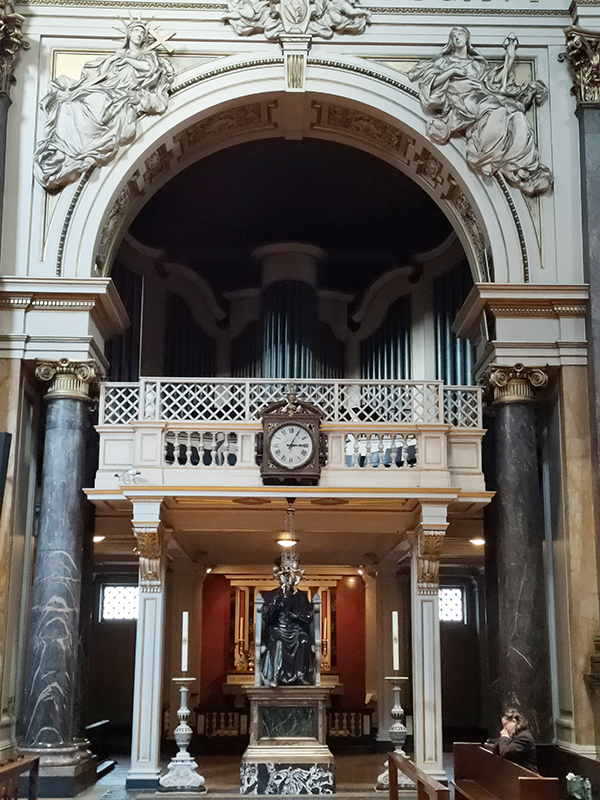
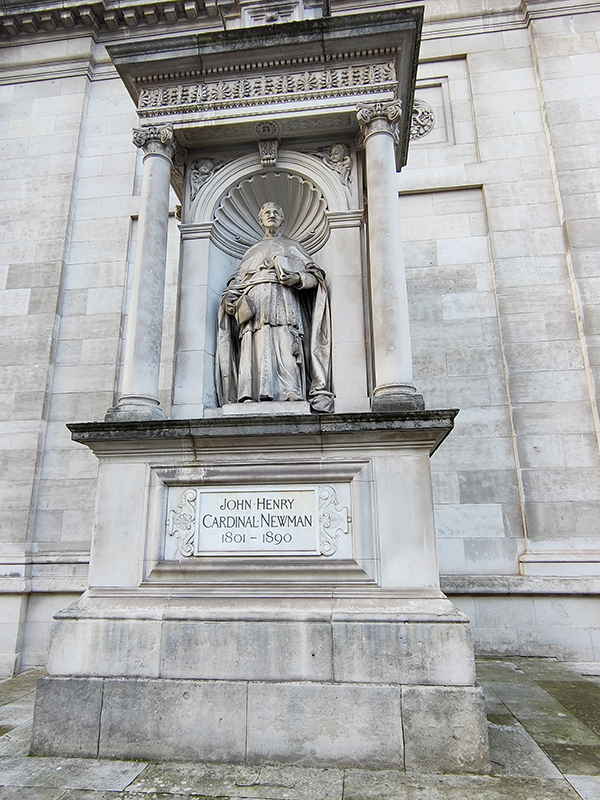
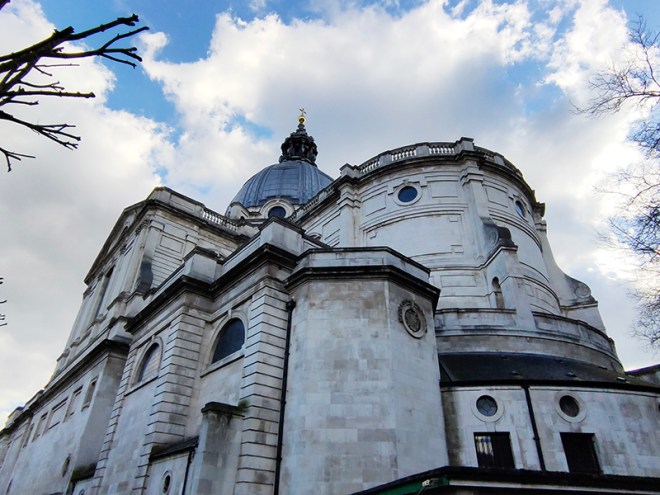
After a quick run up Cottage Place which leads to Holy Trinity Church (see above) we turn our attention to what is commonly known as Brompton Oratory. This famous Roman Catholic church should correctly be referred to as the Church of the Immaculate Heart of Mary. It is the second-largest Catholic church in London, with a nave exceeding in width even that of St Paul’s Cathedral (Anglican). The Oratory was founded by John Henry Newman (1801 – 1890), following his conversion to Catholicism in 1845, along with a group of other converts, including Father Frederick William Faber. The design, in the Renaissance style, by Herbert Gribble, a twenty-nine year old recent convert from Devon, was judged the winner in a competition for which Gribble was awarded a prize of £200 by the Fathers.  The foundation stone was laid in June 1880 and the neo-baroque building was privately consecrated on the 16th April 1884. The façade at the South end was not added until 1893 and the outer dome was completed in 1895-96 to a design of George Sherrin.  The last major external work was the erection of the adjacent memorial to Newman in 1896 (six years after his death).
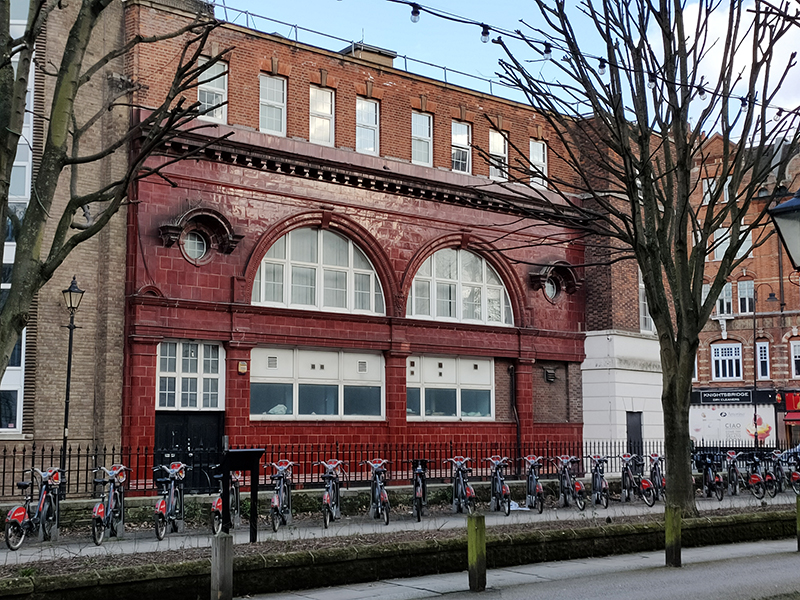
Before we head home via South Kensington tube there is on final point of interest which is the side entrance to the disused Brompton Road tube station on Cottage Place. Brompton Road was opened in 1906 by the Great Northern, Piccadilly and Brompton Railway, located between Knightsbridge and South Kensington on the Piccadilly Line. From the outset it saw little passenger usage and within a few years some services were passing through without stopping. In 1934 when Knightsbridge station was modernised with escalators and provided with a new southern entrance Brompton Road was closed. And, since that brings us full circle, we’ll sign off there. This one’s been a bit of a monster so huge thanks if you’ve managed to stick with it to the bitter end.
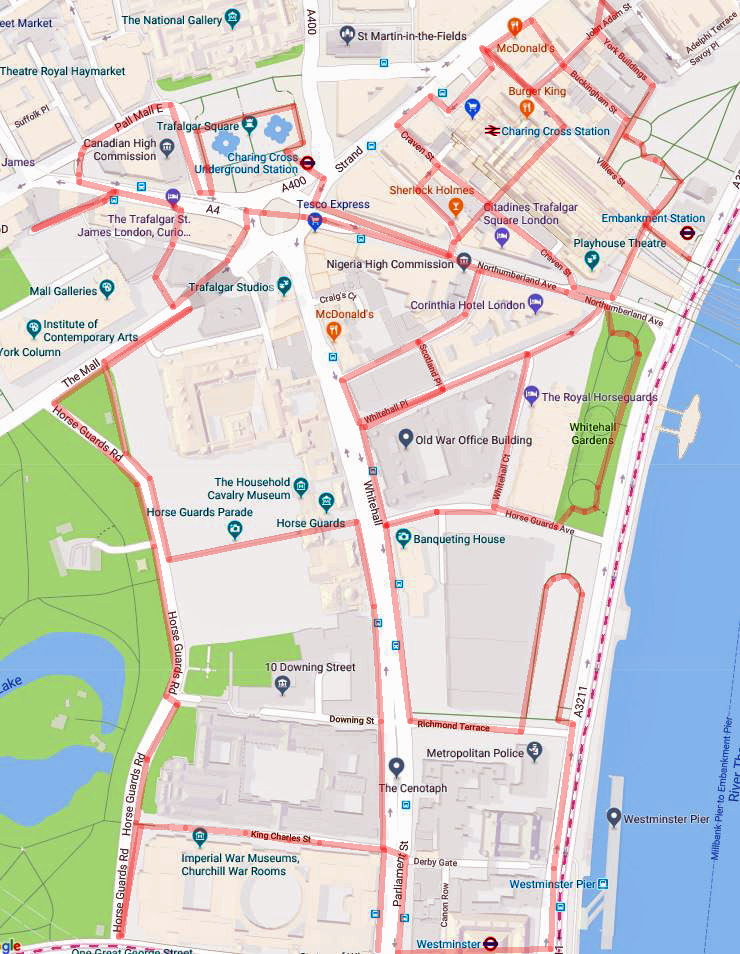
Day 51 (part 1) – Trafalgar Square – Northumberland Avenue – Whitehall

So, technically this should probably be Day 51 and Day 52 (part1) as I had to have two cracks at it. First time out I only got as far as covering the few missing streets east of Charing Cross station when I realised I’d lost my wallet somewhere en route. I retraced my steps a couple of times to no avail and then it started to pour with rain so I gave it up as a bad job and went to see Black Panther at the cinema instead. When I resumed several weeks later the weather couldn’t have been more different; hottest day of the year in fact. Less than ideal for fighting my way through the wilting hordes of tourists loitering in Trafalgar Square and wandering up and down Whitehall.

Day 51 Route

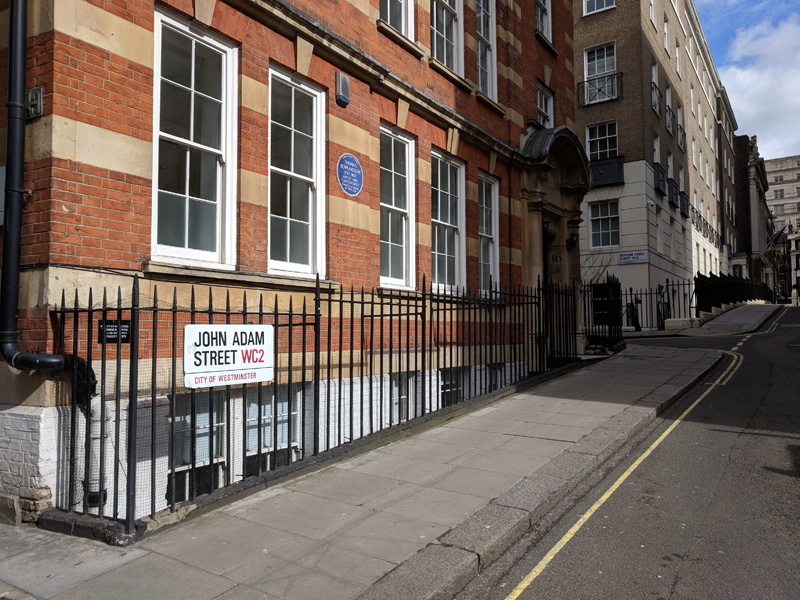
That ill-fated first foray kicked off at Embankment Tube from where we weaved through the Victoria Embankment Gardens to the York Watergate which we originally encountered quite a few posts back. As a reminder, this was built in 1626 by Inigo Jones for George Villiers, Duke of Buckingham and marks the original northern bank of the Thames prior to the construction of the Embankment. On the other side we follow Watergate Walk east to York Buildings then turn north up to John Adam Street. At no.16 a blue plaque identifies this as a one-time residence of the Georgian artist and caricaturist Thomas Rowlandson (1756 – 1827).

IMG_20180329_112339

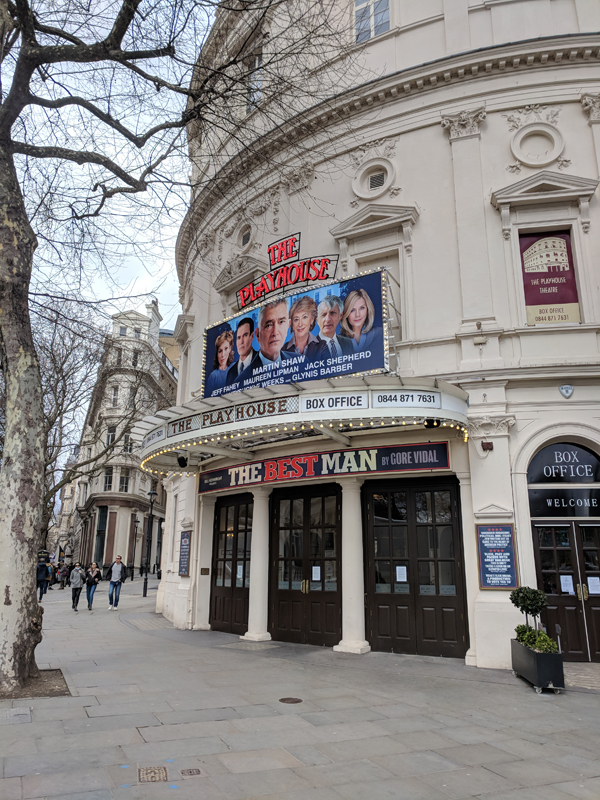
After a quick visit to the dead-end that is Durham House Street we head west on John Adam Street before cutting through Buckingham Arcade up to the Strand. Keep left and then turn left down Villiers Street just for a few paces before turning left again down York Place and allowing Buckingham Street to take us back down to the Watergate. This time we cross back over Villiers Street and follow Embankment Place west beneath the railway. At the end of the tunnel we emerge onto Northumberland Avenue and swing north before forking right into Craven Street by the Playhouse Theatre. It’s been a while since we had a West End theatre on our route and this one is a bit of an outlier stuck down here by the river. It opened for business in 1907, reconstructed from the ashes of the Avenue Theatre of 1882 which suffered extensive damage when part of the roof of Charing Cross Station collapsed on it in 1905. The interior was being remodelled at the time and sadly six workmen lost their lives. The Playhouse was used by the BBC as a studio from 1951 until the mid-Seventies when it fell into dereliction and was threatened with demolition before being rescued in the late 80’s.

IMG_20180329_113111

No.25 Craven Street has a blue plaque commemorating the Moby Dick writer Herman Melville (1819 – 1891). Inspired by the five years he spent as a seafarer, working on merchant ships and as an ordinary seaman in the US Navy, Moby Dick was published in 1851. In the UK it originally came out under the title The Whale in three separate volumes.

It was at this point that things went pear-shaped as described above and three weeks went past before I picked up where I left off.

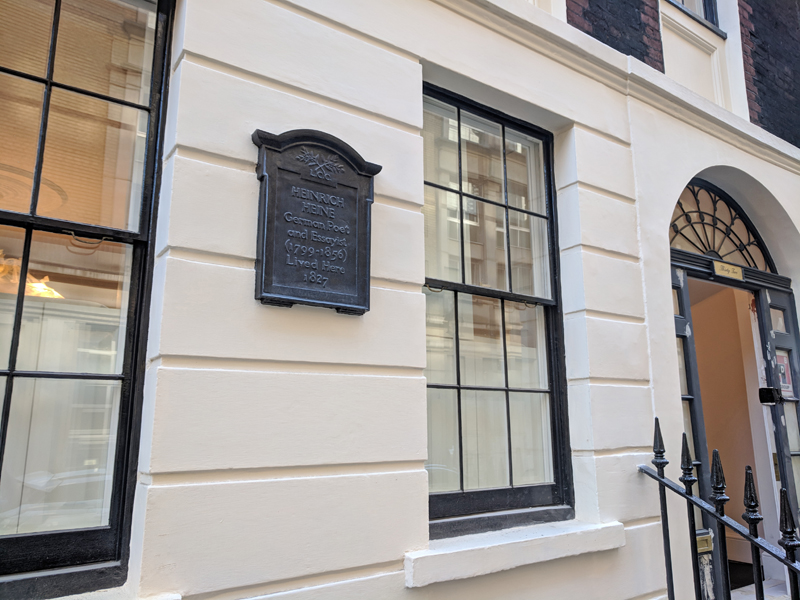
Another one-time literary resident of Craven Street was the German poet, Heinrich Heine (1797 – 1856) who lived here in 1827 having left Germany to avoid the fallout from his latest work which contained a satire on German censorship.

IMG_20180419_144610

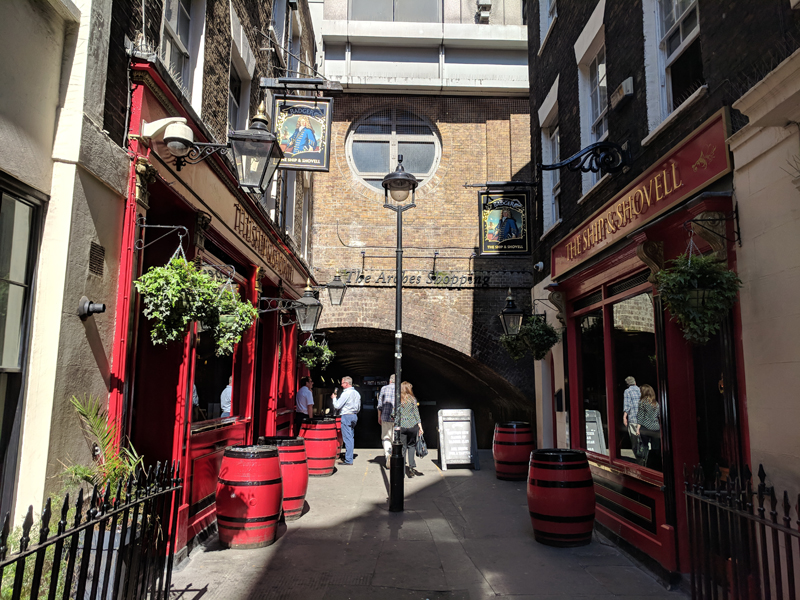
Next we head back under the railway through the Arches, first passing between the two halves of the Ship and Shovell pub. As I heard some chap ahead of me explain to his partner, this is the only pub in London divided in this way. The pub takes its name from the brilliantly-monickered 17th century admiral, Sir Cloudesley Shovell (so not a sanitising misprint).

IMG_20180419_144657

The Arches is also home to the iconic gay nightclub, Heaven, which opened in 1979 replacing a roller-disco called Global Village. The club has also played host to many live performances over the years including the first London gig by New Order in 1981.  Goth pioneers, Bauhaus were filmed here in 1982 performing their classic Belo Legosi’s Dead, footage of which was used in the Catherine Deneuve / David Bowie film The Hunger.

At the other end of the Arches we turn northward back up to Charing Cross Station. Charing Cross was opened by the South Eastern Railway in 1864. After the aforementioned roof collapse of 1905 it was extensively rebuilt, and at the same time the tube lines were constructed. The Charing Cross monument which stands in front of the station is an 1865 replica of one of the 12 Eleanor Crosses built by Edward I to mark the funeral route of his wife Eleanor of Castile who died in 1290. The original Charing Cross was demolished on the orders of Cromwell’s Parliament in 1647. By the 21st century the replica itself needed serious renovation work which was completed during 2009/10.

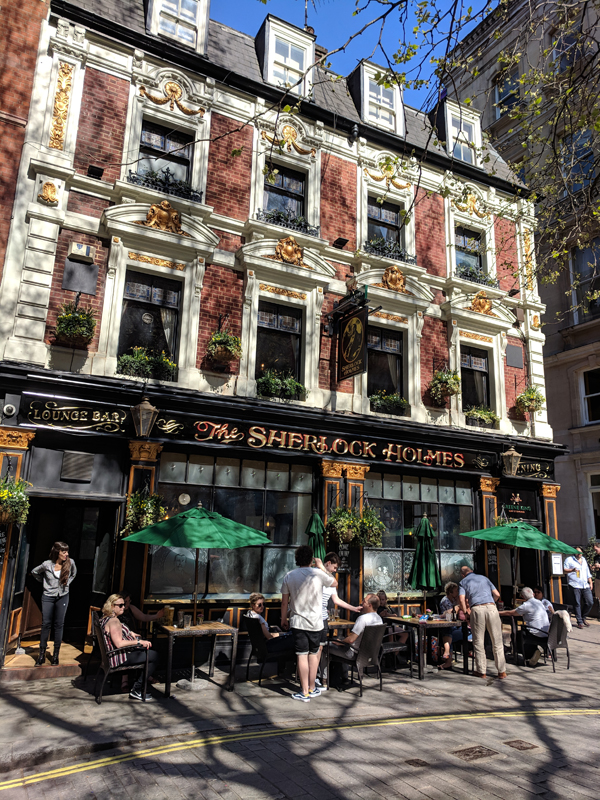
To the west of the station we turn south down Craven Street again then take a right along Corner House Street into Northumberland Street. Continuing south takes us past the Sherlock Holmes pub, which houses a collection of memorabilia relating to the eponymous detective that originally formed an exhibit of the 1951 Festival of Britain.  Whitbread, then owners of what was then called the Northumberland Arms, acquired the collection in 1957 and refurbished and renamed the pub to be its permanent home.

IMG_20180419_145348

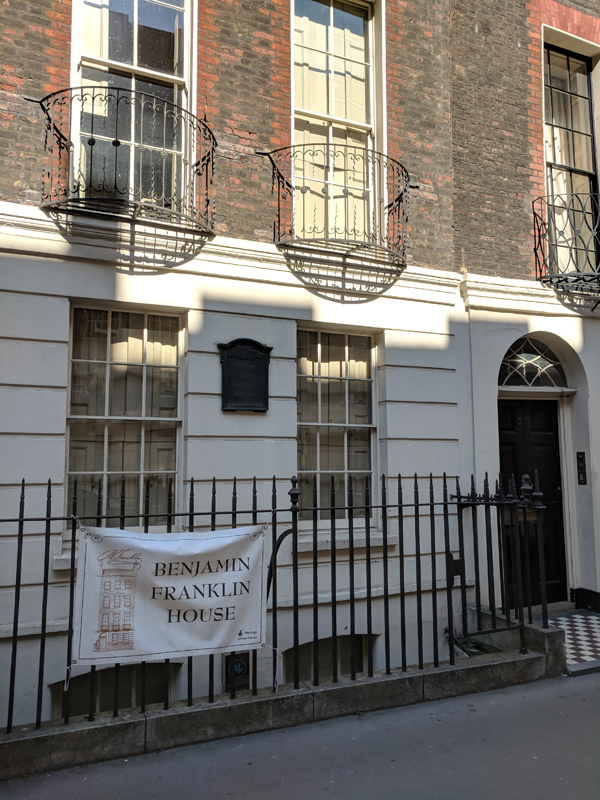
We nip down Craven Passage to make a final visit to Craven Street, the section which contains at no.36 the 1730 built house where Benjamin Franklin (1706 – 1790) lived from 1757 to 1775. During this time Franklin’s main occupation was mediating unrest between Britain and America, but he also served as Deputy Postmaster for the Colonies and pursued his love of science (exploring bifocal spectacles, the energy-saving Franklin stove, inoculation, air baths and cures for the common cold).

IMG_20180419_145530

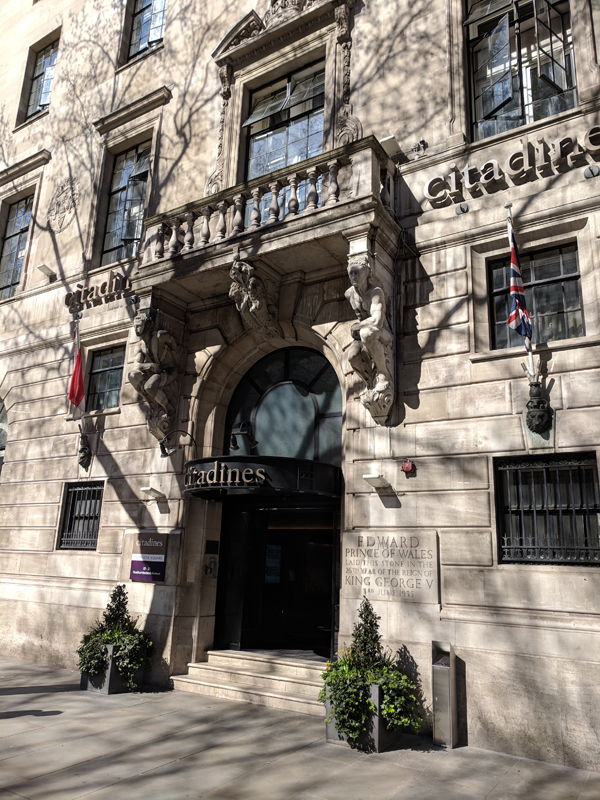
Having made the return trip along Craven Passage we head up the eastern side of Northumberland Avenue towards Trafalgar Square. No.18/21 is now the Citadines Hotel but it was built in 1934 as the headquarters of the Royal Commonwealth Society, “a meeting place for gentlemen interested in colonial and Indian affairs”. The building is unremarkable except for the pair of nude male statues supporting the balcony above the entrance and the keystone over the door which features a pair of mythical merlions, half lion half fish creatures that crop up in Etruscan and Indian art as well as Western heraldry. IMG_20180419_145803

On the corner with the Strand stands the Grand Buildings, a 1990’s redevelopment of the 1879 Grand Hotel which is adorned with carvings of endangered animals and human faces by sculptor Barry Baldwin.

And so we come to Trafalgar Square, created in the 1840’s and named in commemoration of victory against the French and Spanish in the naval Battle of Trafalgar in 1805. By this time the National Gallery, which we covered way back in Day 33, was already in situ on the north side. When its architect, William Wilkins, died in 1840 responsibility for the layout of the square was handed to Charles Barry (1795 – 1860). The final designs included a terraced area in front of the National Gallery, four sculptural plinths and two ornamental fountains at an estimated budget of £11,000. When construction work  began the earth removed was used to level Green Park. The hero of Trafalgar was of course Lord Horatio Nelson (1758 – 1805) and a memorial in his honour was planned as a separate project. A competition was held and won by the architect William Railton, who proposed a 218ft Corinthinan column topped by a statue of Nelson and guarded by four sculpted lions. The design was approved, but received widespread objections from the public. Construction still went ahead but with the height reduced to 145ft. The column was completed and the statue raised in November 1843. The four lions were only installed at the base in 1867 having been designed by Sir Edwin Landseer in collaboration with Baron Marochetti (a French sculptor ironically). The two plinths on the south side of the square are occupied by statues of General Sir Charles James Napier (1782 – 1853) and Major-General Sir Henry Havelock (1795 – 1857) both of whose reputations rest on their service during various campaigns in India. On that basis  the opprobrium that Ken Livingstone received when, in 2000, he suggested they be replaced by more familiar figures seems more than harsh.

This slideshow requires JavaScript.

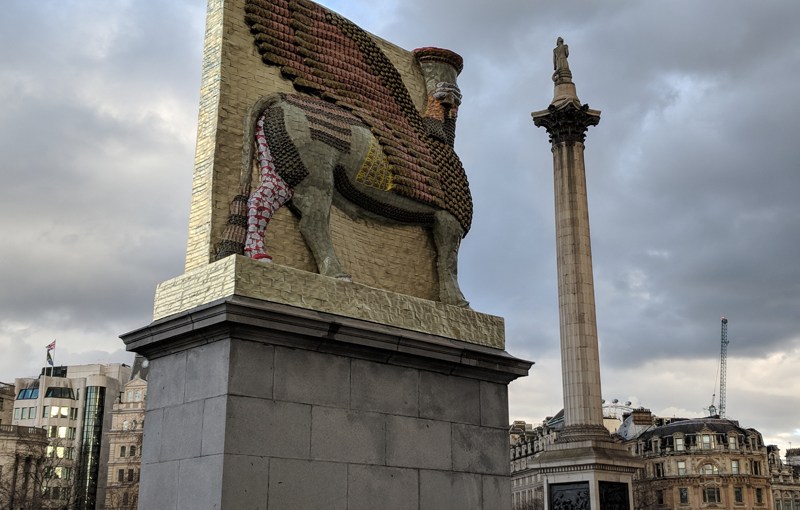
An equestrian statue of George IV stands on the plinth in the north-eastern corner while the fourth plinth in the north-west corner, which was originally reserved for a similar equestrian statue of William IV, was left empty right up until the end of the last century. Since 1998 it has been used to show specially commissioned works of art. By coincidence the latest such work, and the 12th in the series, was unveiled on the day of my aborted first excursion, 28 March 2018. The Invisible Enemy Should Not Exist by Michael Rakowitz is a recreation of the statue of a Lamassu, a deity with a human head and the body of a winged bull, that guarded the ancient city of Nineveh (in modern day Iraq) and was destroyed by ISIS in 2015. Rakowitz’s sculpture is made from 10,500 empty Iraqi date syrup cans and is a welcome return to form following David Shrigley’s little admired giant erect thumb.

As you can probably tell the photos above were taken on that earlier date.

Across the road on the west side stands the Canadian High Commission which, on the latter date. was subject to additional security on account of President Trudeau’s attendance for the meeting of the Heads of Commonwealth. What came to be known as Canada House was built between 1824 and 1827 to designs by Sir Robert Smirke, the architect of the British Museum. The Canadians acquired the building in 1923. In 1993 their government of the time closed it as a cost-cutting measure but the succeeding government reversed that decision four years later and then got the Queen to officially re-open the building.

On the other side of Canada House in the apex of Pall Mall East and Cockspur Street is an equestrian statue of George III. The so-called “Mad King” presumably wasn’t deemed suitable for a starring role in the Square itself.

IMG_20180419_151614

On the other side of Cockspur Street, the Embassies of Brazil and Kazakhstan stand side by side, the former somewhat more imposing than the latter.

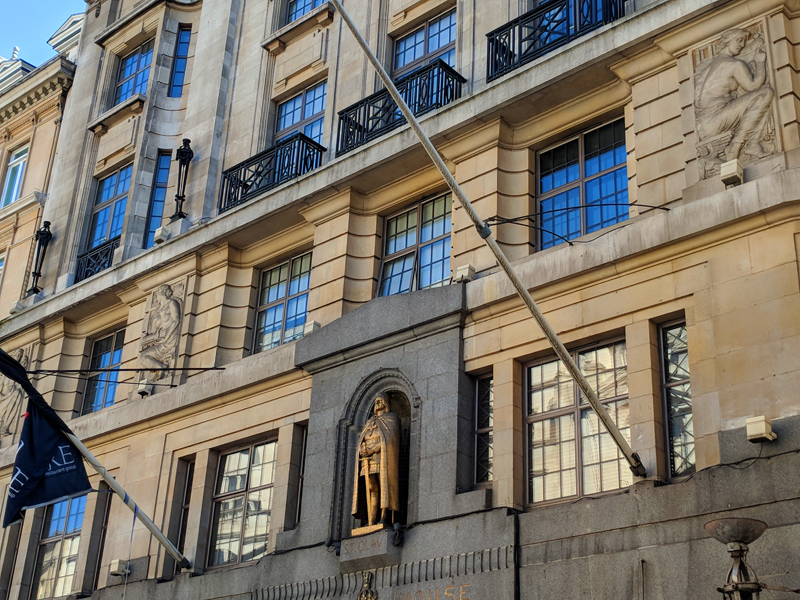
There’s a former Embassy at 21-24 Cockspur Street as well. Built at the time of the First World War with sculptural adornments by Louis Roselieb (later Roslyn) it became Norway House after the war. The name remains even though the Norwegians decamped to Belgrave Square in 1949.

IMG_20180419_152010

 Warwick House Street is another road to nowhere…

IMG_20180419_152147

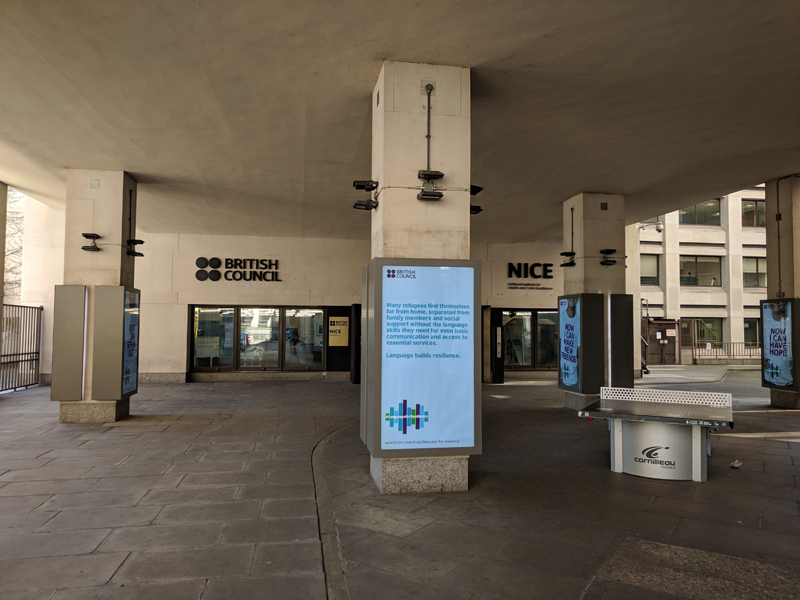
….as is Cockspur Court which leads off from Spring Gardens by the side of the HQ of the British Council and the offices of NICE (National Institute for Health and Care Excellence though why they don’t rename it the National Institute for Clinical Excellence to fit the acronym heaven knows).

IMG_20180419_152444

Anyway in front of this lovely building is a cut-through down onto the Mall right by Admiralty Arch. The Arch was commissioned by Edward VII in memory of his mother Queen Victoria. It was designed by Aston Webb and completed in 1912. The sculptural figures, Navigation and Gunnery, at the end of the two wings are the work of Thomas Brock. The building originally served as official residence for the First Sea Lord and later housed various government offices. In 2011 as part of the Cameron government’s austerity programme it was put up for sale and acquired (for a reported £75m) by a Spanish real estate developer who (well I’ll go to the foot of our stairs !) are currently converting it into a Luxury Hotel and Private Members’ club.

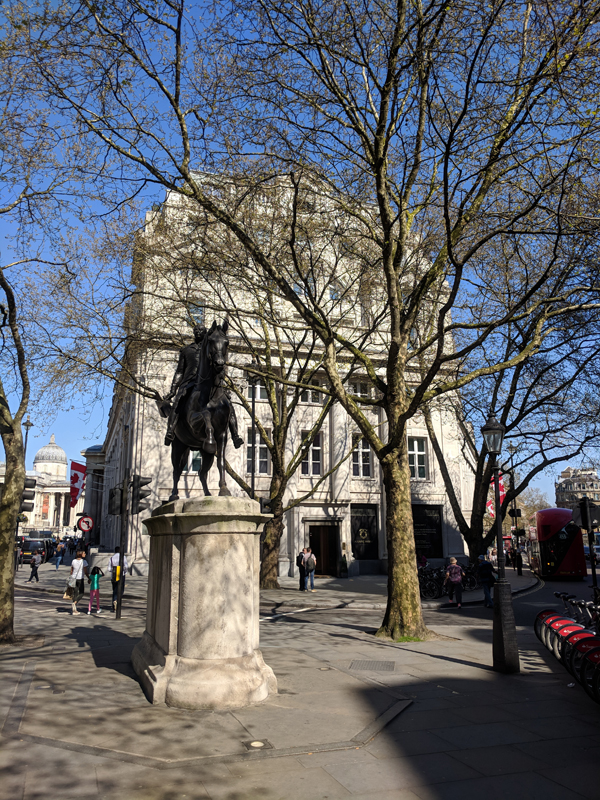
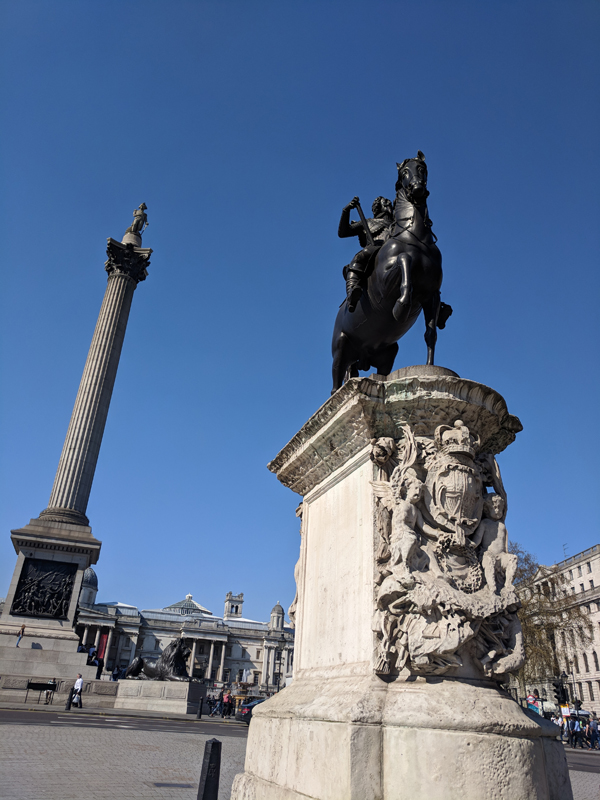
Turning left underneath the Arch we circle round the equestrian statue of Charles I which stands on its own separate island to the south of Trafalgar Square and head back down the west side of Northumberland Avenue.

IMG_20180419_153406

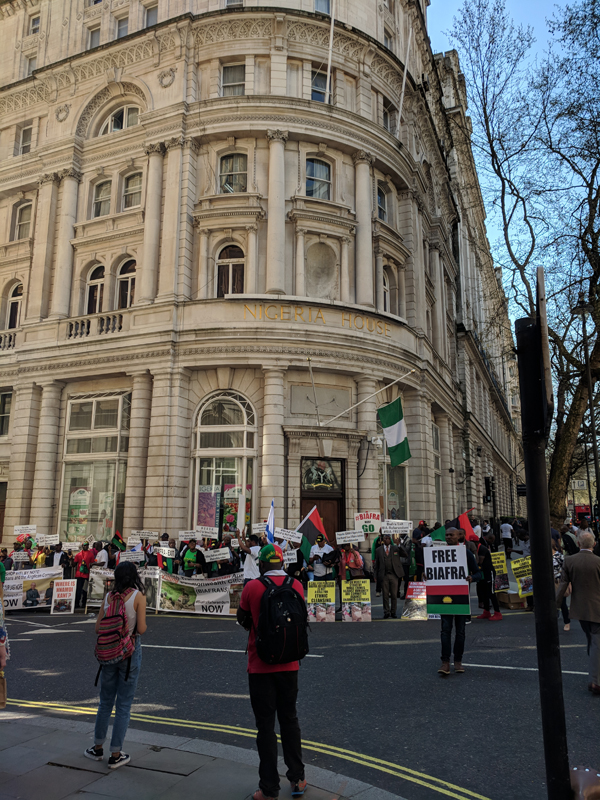
About half way down is the Nigerian High Commission which was under siege from marchers demonstrating for an independent Biafra. While familiar with the horrors of the Biafran War (1967 – 1970) I am ashamed to say I was unaware that the struggle for secession by the tiny home state of the Igbo people continues to this day.

IMG_20180419_153730

We continue to the end of Northumberland Avenue then turn right through Whitehall Gardens which are laid out in front of what is now the Royal Horseguards Hotel but was built as a block of luxury residential apartments, modelled in the style of a French chateau, in 1884 by the Liberal MP and property developer Jabez Balfour. The building’s construction was the centrepiece of an elaborate pyramid scheme fraud by Balfour, through the Liberator Building Society which he controlled. In 1892 the Society collapsed, leaving thousands of investors penniless.

This slideshow requires JavaScript.

At the southern end of the gardens we turn west on Horse Guards Avenue then swing right into Whitehall Court which takes from the memorial to the Brigade of Gurkhas to the memorial to the Royal Tank Regiment on the junction with Whitehall Place.

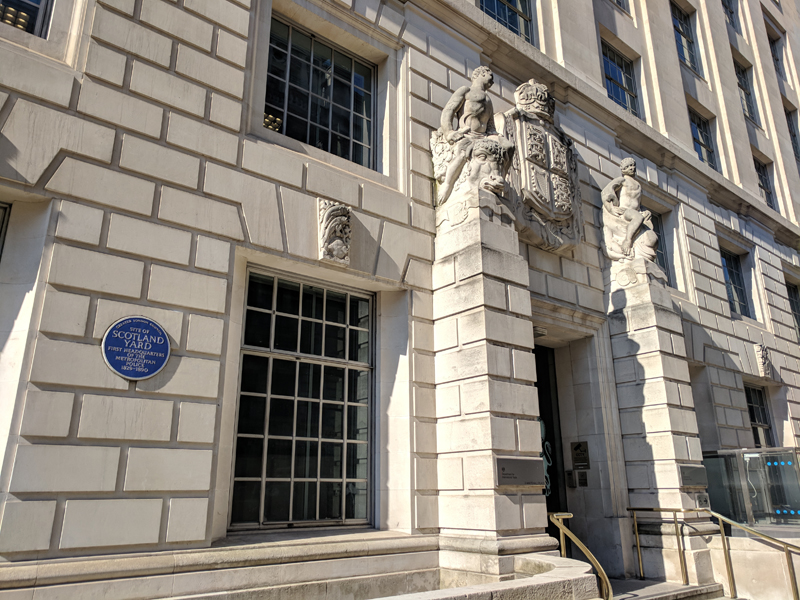
We turn left up Whitehall Place the right into Scotland Place which leads out into Great Scotland Yard where the rear (and what became the public) entrance to the original headquarters of the Met Police is to be found. The Met was formed in 1829 with the passing of Robert Peel’s Metropolitan Police Act and took over 4 Whitehall Place, formerly a private house, as its base of operations. The commemorative blue plaque is sited at this front entrance. The Met expanded into several adjoining properties during the 19th century and then in 1890 moved to a new location on the Victoria Embankment (more of which later).

IMG_20180419_160813

Proceeding west (m’lud) on Great Scotland Street takes us onto Whitehall itself. Whitehall is of course synonymous with the upper echelons of the UK Civil Service and the first of many government departments residing here is the Department for International Trade, where I imagine they have their work quite cut out at the moment. Beyond the DIT and covering the entire block between Whitehall Place and Horse Guards Avenue is the Old War Office Building. This massive 1906 neo-Baroque edifice took five years to build at a then whopping cost of £1.2m. Its approximately 1,000 rooms spread across seven miles linked by 2.5 miles of corridors became the new home for the Imperial General Staff. The building was a focal point for military planning throughout the major conflicts of the 20th century, housing numerous secretaries of state, including Winston Churchill. When the War Office as an institution was abolished in 1964 the building continued to be used by the Ministry of Defence up until 2013 when it was announced that it would be put up for sale on the open market. It was acquired by the Hinduja Group and OHL Developments for more than £350m and I guess I really don’t need to spell out what they intend to do with it. You have to wonder though whether once the whole of central London has been turned into luxury hotels anyone will bother coming to patronise those hotels.

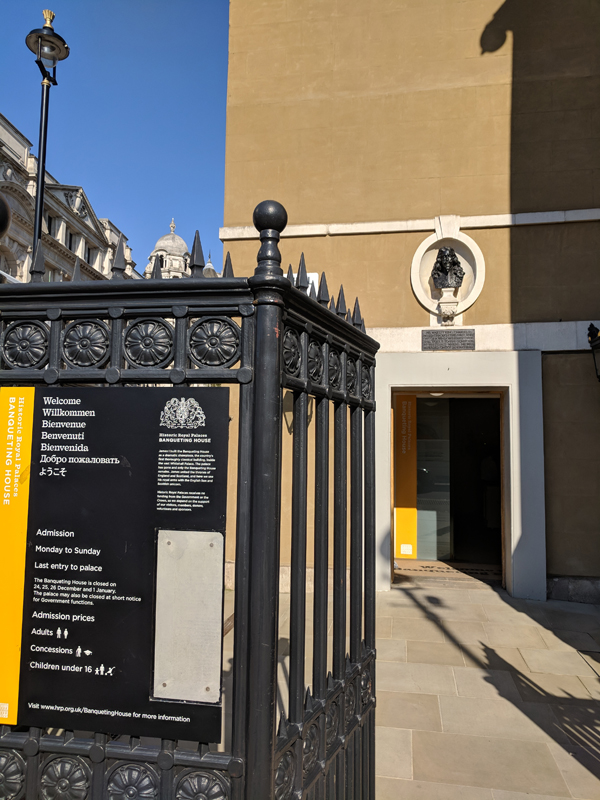
Next stop heading south down Whitehall is Banqueting House which Charles I appointed Inigo Jones to design and was completed in 1622. The USP of the Banqueting House is its carved and gilded ceiling containing 9 paintings by Rubens that were installed in 1636. Unfortunately the building was closed to visitors when I got there so you’ll have to visit the link above to see the ceiling in all its glory.

IMG_20180419_161616

Behind and extending beyond the Banqueting House lies the monolithic and more than a touch 1984-ish Ministry of Defence building. This covers the site where once stood the Palace of Whitehall, main residence of English Monarchs from 1530 to 1698 when most of the structures other than the Banqueting House were destroyed by fire. Subsequently it was occupied by Georgian townhouses a number of which were taken over as government offices. The decision to construct a new large-scale government building was taken as far back as 1909 but the outbreak of WW1 put the plans on hold. A new Neoclassical design of architect Vincent Harris was agreed in 1933 but work didn’t start until five years later and was halted again almost immediately by the onset of WW2. Construction recommenced after the war and in 1951 the Board of Trade moved into the completed northern end. It was another eight years before the Air Ministry occupied the southern end. When the MOD as we know it today was created in 1964 it took over the entire building. The northern portico entrance to the building, on Horse Guards Avenue, is flanked by two large statues, Earth and Water, each weighing 40 tonnes, by the sculptor Sir Charles Wheeler (1892 – 1974) who was also responsible for some of the fountain figures in Trafalgar Square. During the 1950s, building staff nicknamed the statues “Mr and Mrs Parkinson”, after Cyril Northcote Parkinson, the Board of Trade civil servant who devised Parkinson’s Law which states “work expands so as to fill the time available for its completion”. More recent MOD staff refer to the statues as the “two fat ladies”.
This slideshow requires JavaScript.

The southern entrance is on Richmond Terrace which is flanked on its other side by the Department of Health which occupies Richmond House the façade and wings of which date back to 1822.

IMG_20180419_162150

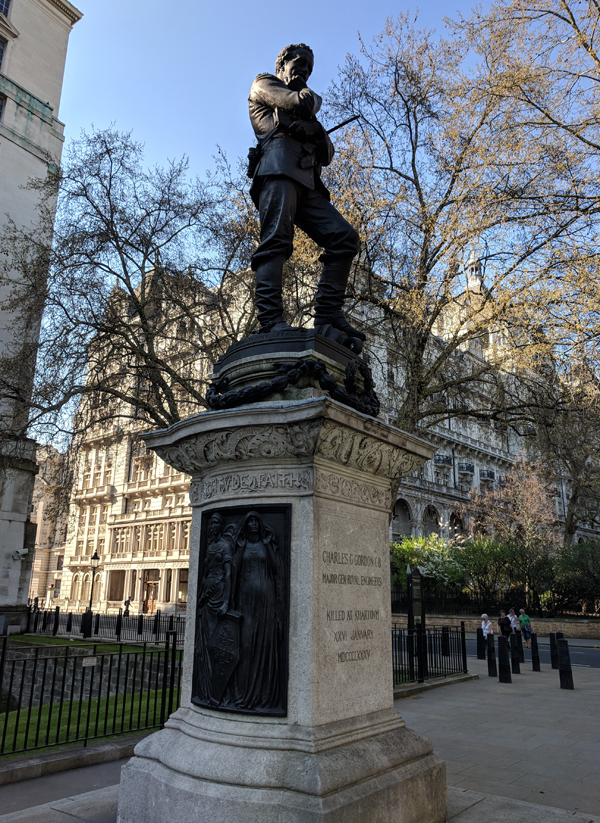
There are several more memorials in the section of Victoria Embankment Gardens behind the MOD including another statue of General Charles Gordon (1822 – 1885). Gordon’s heroic but ultimately doomed defence of Khartoum against the Muslim revolt of 1884 seized the Victorian popular imagination and his death, after nearly a year withstanding the siege, just two days before relief forces arrived led to an “unprecedented wave of public grief”.

IMG_20180419_162537

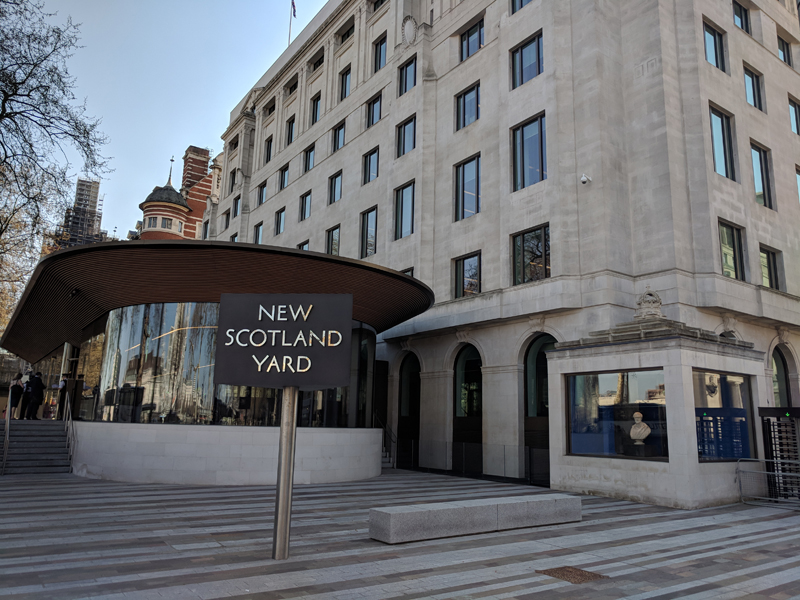
We’ll wrap things up for this time on the corner of Richmond Terrace and Victoria Embankment where you’ll find New Scotland Yard (or re-New Scotland Yard as it should probably be called). After leaving 4 Whitehall Place in 1890 the Met moved to a new building at this location on the Victoria Embankment which became known as New Scotland Yard. In 1906 and 1940 respectively two further buildings were added but by the Sixties even that wasn’t room enough for the burgeoning force and a new New Scotland Yard was built at 10 Broadway in Victoria opening in 1967. Then in 2014 (as we covered in Day 48) the Broadway building was sold to the Abu Dhabi Financial Group and two years later the Met returned to the Victoria Embankment moving into a redeveloped Curtis Green Building (the third building of the original New Scotland Yard). The new New Scotland Yard building was to have been opened by Queen Elizabeth II on 23 March 2017, but that same day it was announced that the Royal opening would be postponed, due to the preceding day’s terrorist attack at Westminster.

IMG_20180419_163254


Day 44 – Bank – Threadneedle Street – Cornhill – Lombard Street

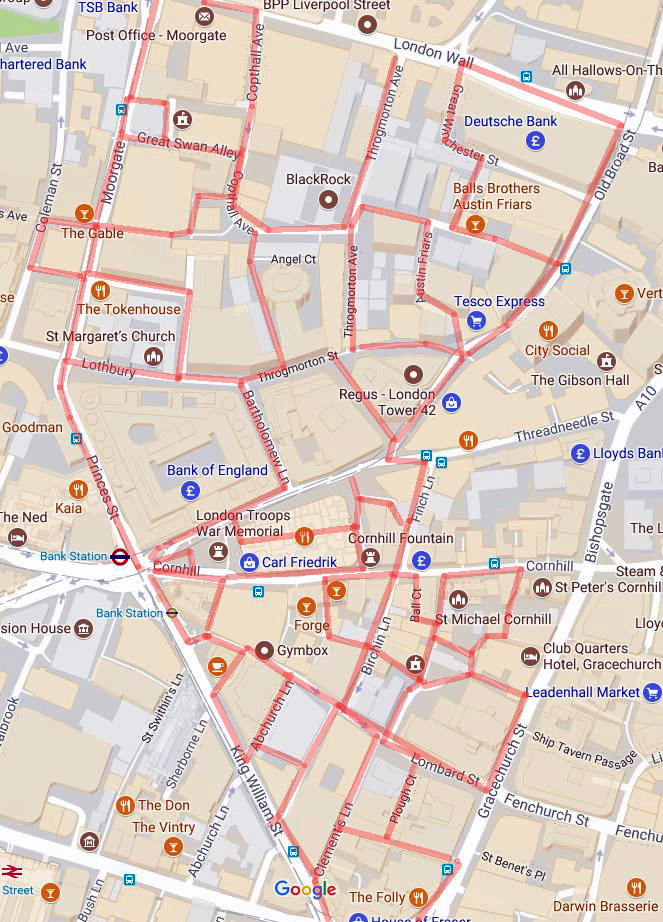
So we’re back after a bit of an extended summer break and we’re still in the City of London. Today’s expedition is all about the streets that radiate eastward from the Bank tube station junction, Threadneedle Street, Cornhill, Lombard Street and King William Street but also extends north up to Moorgate and London Wall. Might not look like a very wide area on paper but on pavement, once you’ve added in all the courts and alleyways, there’s a fair bit of shoe leather laid to rest. Highlights en route today include the Bank of England and the Royal Exchange along with the inevitable Wren churches and a couple more of those Livery Companies.

Day 44 Route

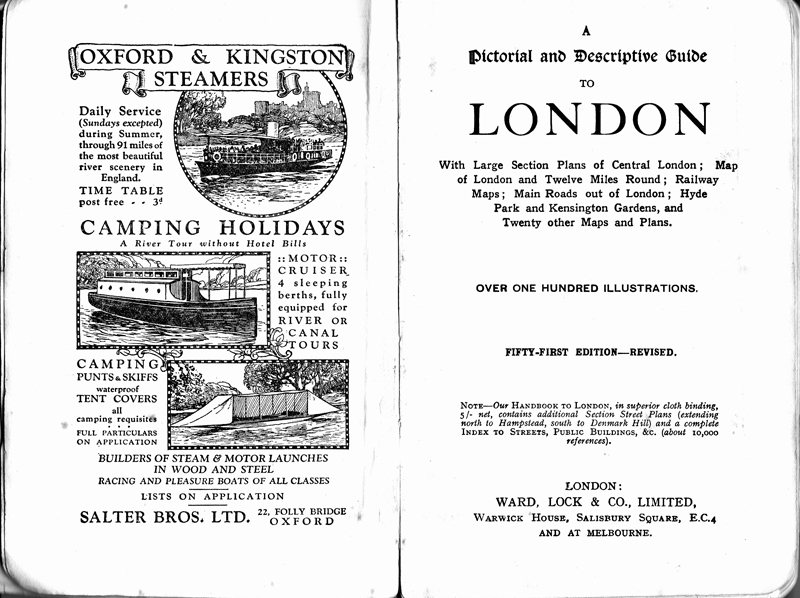
I’ve referenced it fleetingly in previous posts but for this outing I’m going to delve into this a bit more extensively as a source for the commentary (I don’t know the exact year of publication but it was some time in the 1930’s). Direct extracts will appear in italics.

Guide

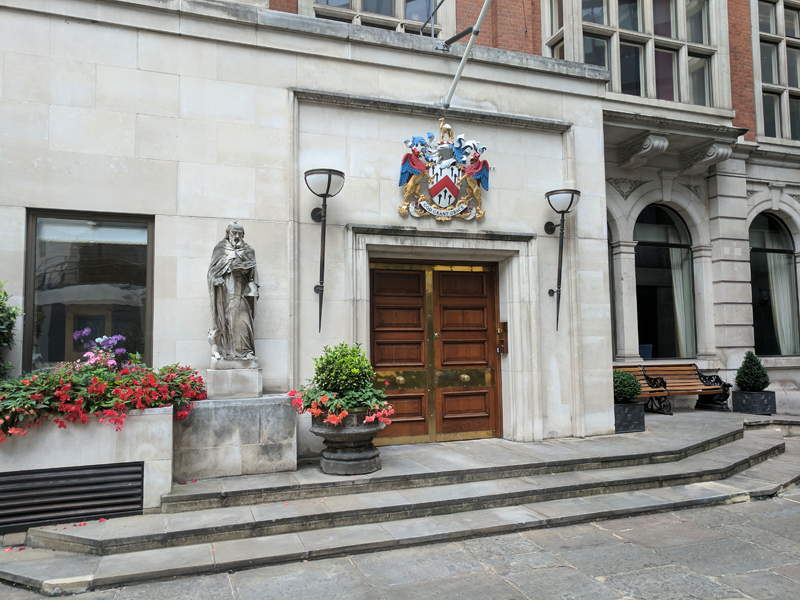
We begin today from Bank underground station from where exit 1 leads us up to Princes Street heading northward. Set back from the west side of Princes Street is Grocers’ Hall, home to The Grocers’ Company, another of the original Twelve Great Livery Companies and proudly ensconced at no.2 in the Order of Precedence (appropriately in a “Nation of Shopkeepers”). This mob started out as the Ancient Guild of Pepperers as far back as 1100 then in the 14th century founded a new fraternity of spice traders in the City of London which came to be known as the Company of Grossers. It took them three years before they realised that this might cause a few sniggers come the 21st century and changed it to Grocers in 1376. They received their Royal Charter from Henry VI in 1428.  The current hall, the fifth, was built in 1970, its predecessor having survived WW2 only to be burnt down in 1965 reportedly due to a poorly situated lightbulb being left on in a cupboard.

IMG_20170823_135141

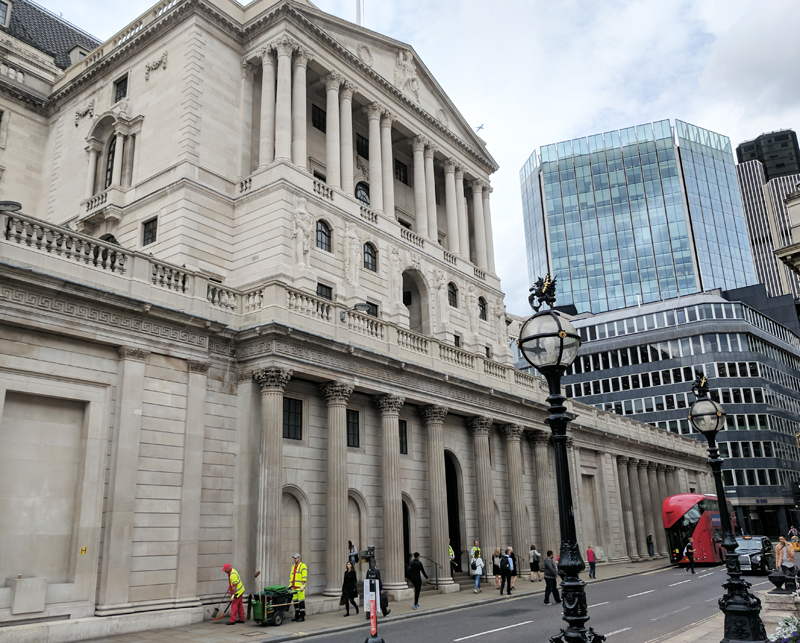
At the top of Princes Street we turn right into Lothbury and proceed along the back of the Bank of England where there is a statue of Sir John Soane (whose wonderful museum we visited on a previous excursion), architect and surveyor to the Bank from 1788 to 1833 during which time it doubled in size to 3.5 acres. It first moved to this site between Threadneedle Street and Lothbury in 1734, having previously leased the Grocers’ Hall (see above) from 1695, the year following its foundation. When the Bank was rebuilt between 1925 and 1939 by Sir Herbert Baker, the outer walls erected by Soane in 1828 were retained while all the interior buildings were demolished. Regarding these walls it will be observed that, for the purposes of security, they are completely windowless, all the rooms being lighted from interior courts; but even a Raffles who succeeded in passing this barrier would be baffled at the extraordinary series of defences surrounding the vaults, which include concentric walls of steel and concrete between which armed guards patrol day and night.

On the other side of Lothbury stands St Margaret’s Church, the first of a number of post-Great Fire Christopher Wren rebuilding jobs we’ll encounter today.

Right next door to the church is 7 Lothbury, built in 1868 and designed in a Venetian Gothic style by architect George Somers Clarke (1825 – 1882) as a head office for the General Credit and Discount Company. In the 1960’s it was taken over by the Overseas Bankers’ Club but despite a Grade II listing had fallen into disrepair by the early 21st century. It has now been converted for residential use.

Turn left next up Tokenhouse Yard then left again along King’s Arms Yard to Moorgate. Across the street is another Grade II listed building, Basildon House, which dates from the late 1800s and is in a Baroque style with Grecian details.

IMG_20170823_140756

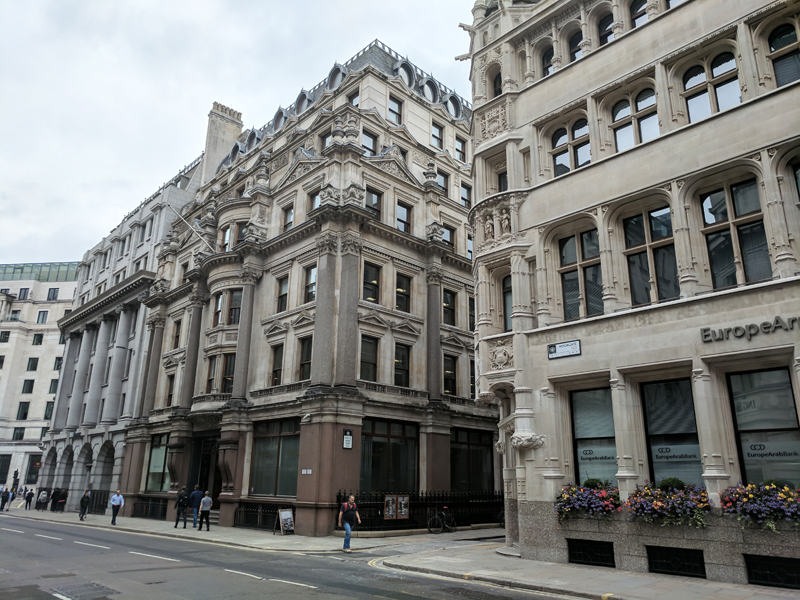
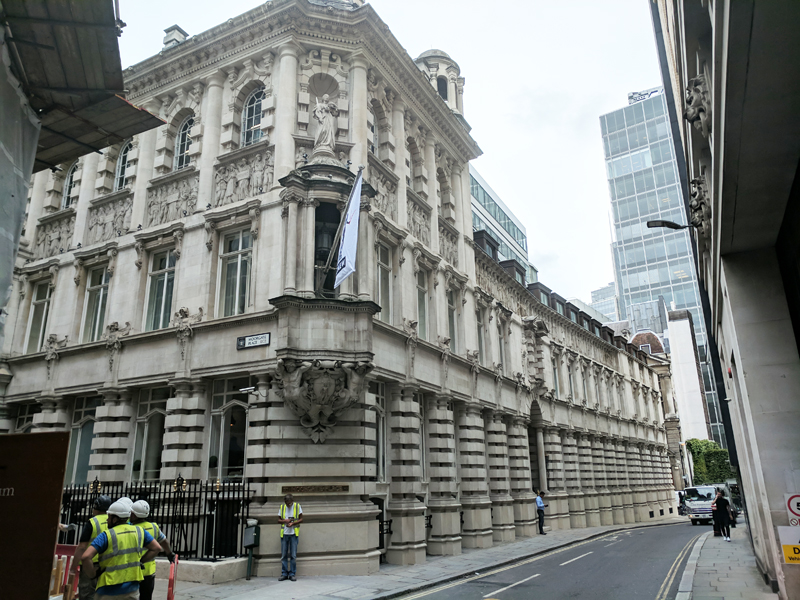
Head north a short way then look in on Great Bell Alley on the westside before crossing back over and proceeding east down Telegraph Street. Loop round Whalebone Court and Copthall Court into Copthall Avenue and after a few paces north turn west again along Great Swan Alley. This is the site of the headquarters of the Institute of Chartered Accountants, though technically the address is no.1 Moorgate Place which is about half way along the street. Chartered Accountants’ Hall was built between 1890 and 1893 and is another Victorian neo-Baroque job courtesy of architect John Belcher. The façade on Great Swan Alley is part of an extension to the original building completed in 1930-31. In 1964-70 a much more extensive redevelopment was undertaken which included the creation of a Great Hall with five stories of office space above it. The ICAEW was granted a royal charter in 1880 and today has over 147,000 members. Presumably that’s one of them in the photo below (no not the guy the yellow jacket – he looks more like a Certified Accountant).

IMG_20170823_142629

After this it’s back to Moorgate and a continuation northward up to London Wall where we turn east and then head south once more all the way down Copthall Avenue. Swing round to the east and head up and back down the top section of Throgmorton Avenue with just a cursory glance at the Carpenters’ Hall – royal charter granted in 1477 and no.26 in order of precedence. Return along Copthall Avenue and then stroll down Angel Court to Throgmorton Street. Turn right a short distance to arrive at Bartholomew Lane which skirts the east flank of the Bank of England and houses the entrance to the museum. The Bank of England museum has two main things going for it; one it’s free and two it’s not that big. This does mean it can get quite crowded but it’s worth putting up with that.

The Bank was the brainchild of Scottish entrepreneur William Paterson (1658 – 1719). The aim was to provide a secure and continuous loan to the nation (at a healthy profit of course). Public subscriptions raised £1.2 million in a few weeks, which formed the initial capital stock of the Bank of England and was lent to Government in return for a Royal Charter. The Royal Charter was sealed on 27 July 1694, and the Bank started its role as the Government’s banker and debt manager. I’m not going to write at length about the history of the Bank but it does make for interesting reading so it’s worth clicking on the link.

This slideshow requires JavaScript.

Just a bit about the gold held by the Bank to finish off with – as I know that’s what you’re really interested in. The Bank itself only owns two of the gold bars in its vaults (one of which is actually on display in the museum). The rest are stored on behalf of HM Treasury, other central banks and some commercial firms. As of April 2017 the vaults held a total of 164.7 million Fine Troy Ounces of gold (about 5.1m kg or c.400,000 gold bars). Gold is currently trading at around £1,000 an ounce so I guess you can just about do the math as they say.

After leaving the museum we return to Bank station along Threadneedle Street. The Bank has of course long been known colloquially as “the Old Lady of Threadneedle Street”.

IMG_20170823_153417

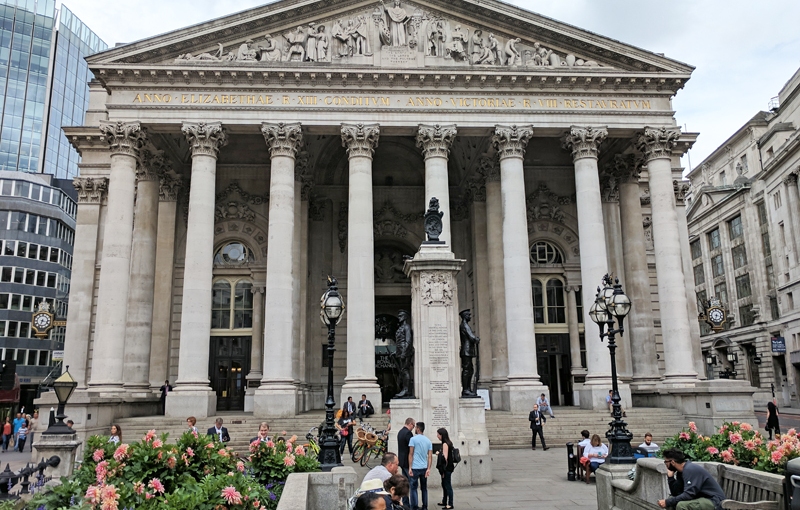
Across the street from the Bank, in the angle of Threadneedle Street and Cornhill, is the Royal Exchange, founded by Sir Thomas Gresham (1519 – 1579) in 1566 as London’s first purpose built centre for trading stocks and commodities. The first exchange, opened by Queen Elizabeth I in 1871, came to grief in the Great Fire and its successor also burnt down in 1838. The present building, designed by Sir William Tite and inspired by the Pantheon in Rome, was opened by Queen Victoria in 1844. After WW2, during which the building was damaged, the traders moved out and the building fell into disuse until the 1980s’ when it was repaired and taken over by LIFFE (the London International Financial Futures Exchange). By the turn of the millennium LIFFE had also moved on and the building was extensively remodelled to transform it into a luxury shopping and dining destination. In front of the building stands a memorial, designed by Sir Aston Webb, to London troops who fell in the Great War.  Close by is an equestrian statue of the Duke of Wellington (riding without stirrups) by Chantrey cast from bronze from captured enemy cannons in 1844 . Historically the steps of the Royal Exchange have been one of the places from which the accession of a new monarch is proclaimed. It remains to be seen if this tradition is maintained.

This slideshow requires JavaScript.

Walk through the Royal Exchange, without pausing to sample the fine dining though I did have a look in the Paul Smith sample store. Outside the eastern entrance on Royal Exchange Buildings are statues to George Peabody, founder of the Peabody Trust (several of whose housing estates we have encountered on previous journeys – and which look more and more like exemplary models of social housing with the passage of time) and Paul Julius Reuter, founder of the eponymous News Agency which had its first home nearby.

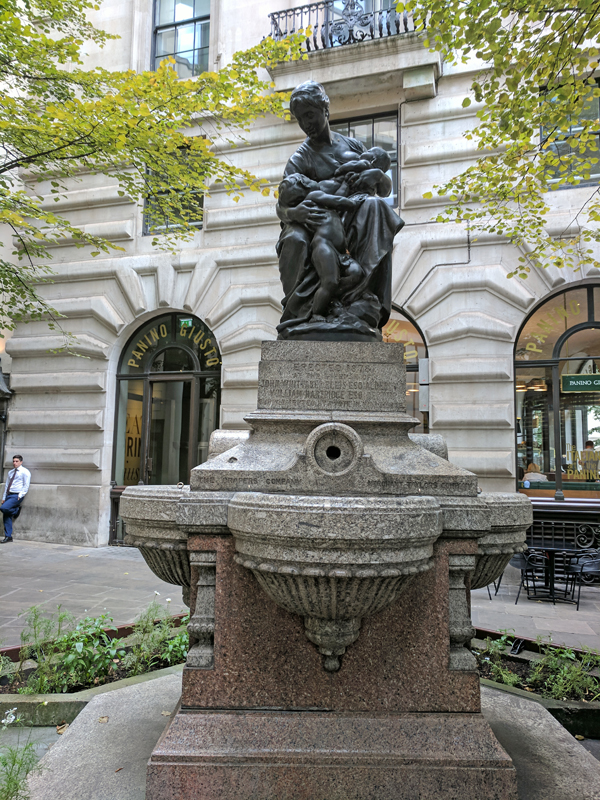
East of the Peabody statue, at the entrance to Royal Exchange Avenue, is a former drinking fountain dating to 1878 adorned by a sculpture entitled La Maternité by Jules Dalou (this was originally in marble but that weathered badly and so was replaced by a bronze copy in 1897). This was partly paid for by the Merchant Taylors’ Company, whose hall is just round the corner but falls into one of today’s blind spots.  So the Livery Company which is either 6th or 7th on the OOP (they alternate each year with the Skinners) miss out on their write up.

IMG_20170823_154145

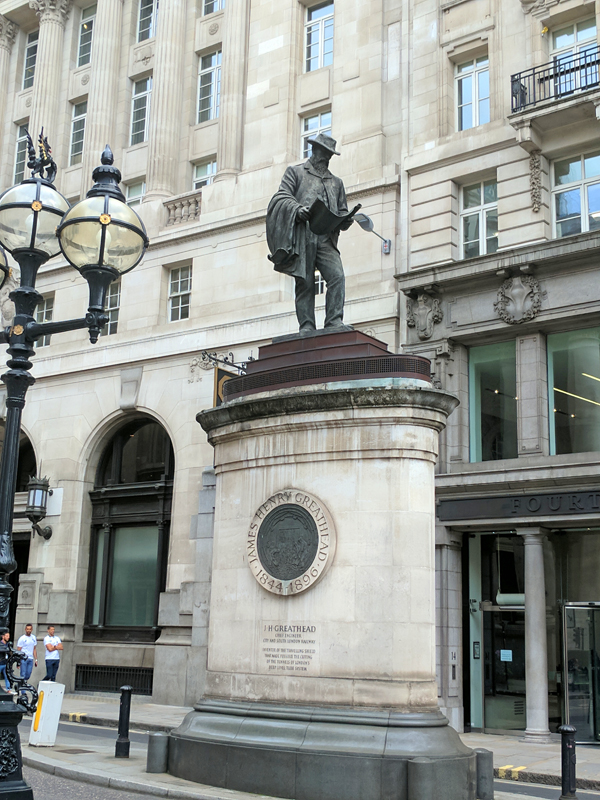
Walk down Royal Exchange Avenue into Finch Lane, turn south down to Cornhill and then head back towards Bank. In the middle of Cornhill is a statue of James Henry Greathead (1844 – 1896), a Civil Engineer who was instrumental in the creation of the London Underground and patented a number of inventions that facilitated the tunnelling operations. The statue was erected in 1994 and is positioned on a plinth which hides a ventilation shaft for the Underground.

IMG_20170823_153459

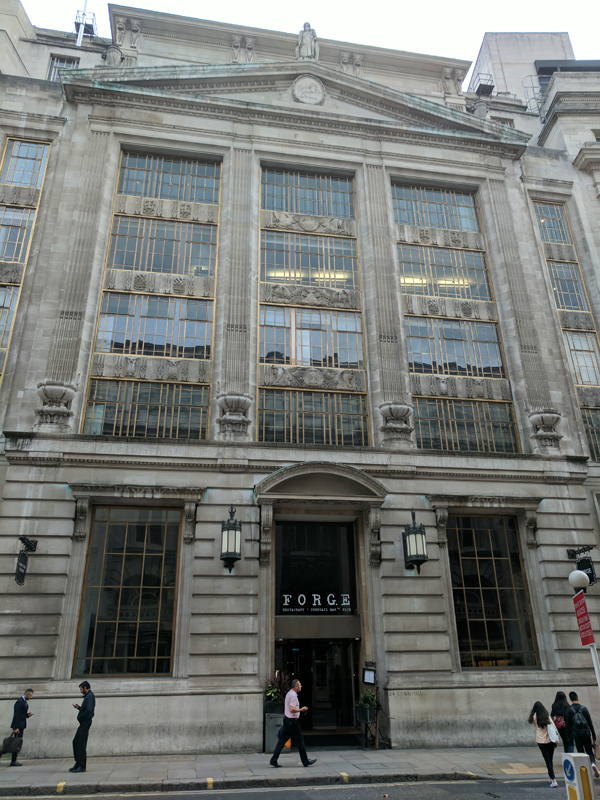
Just a little way further back no. 24 Cornhill (now a cocktail bar and restaurant) has a Grade II listed façade designed by that man Sir Aston Webb (1849 – 1930) again. Webb’s most famous works are the façade of Buckingham Palace and the main V&A building.

IMG_20170823_154516

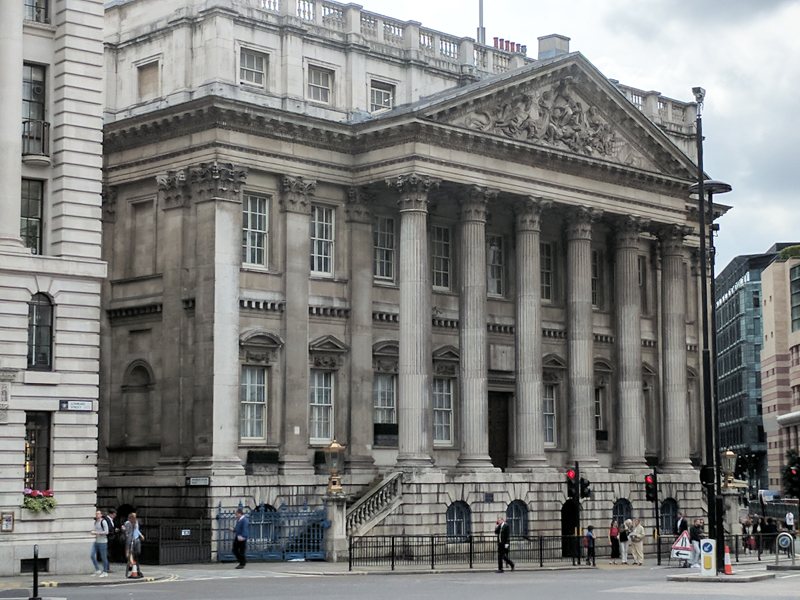
As we approach Bank station once more the Mansion House hoves into view. We pretty much circumvented this last time out so for the sake of completeness here are a few 80 year-old snippets about this official residence of the Lord Mayor of the City of London. It was built between 1739 and 1753, mainly, it is said from fines levied on stalwart Nonconformists. It has a fine Corinthian portico from the platform of which official announcements are often made. The chief room is the Egyptian Hall where the somewhat lavish hospitality expected from London’s chief citizen is exercised. The Lord Mayor receives a salary of £10,000 a year, but if rumour speaks correctly he is generally out of pocket at the end of his year of office.
IMG_20170823_153557

Just before we reach the Bank intersection we cut down Pope’s Head Alley to Lombard Street then turn right to where this apexes with King William Street. Here stands the church of St Mary Woolnoth, which surprise. surprise is not part of the Christopher Wren portfolio but one of the Queen Anne churches designed by that other great ecclesiastical architect, Nicholas Hawksmoor. Today the church is used by London’s German-speaking Swiss community and doubles up as the official London church of the government of British Columbia (why that is even a thing heaven knows).

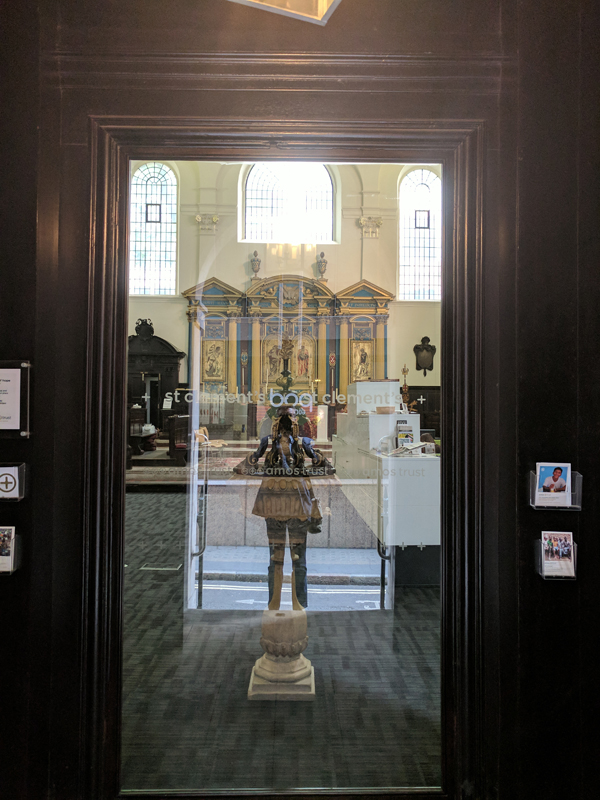
Next up we switch between Lombard Street and King William Street for a while courtesy of Post Office Court, Abchurch Lane, Nicholas Passage and Nicholas Lane before we find ourselves heading south down Clement’s Lane at the bottom of which is the decidedly underwhelming St Clement’s Church (of “Oranges and Lemons” say fame). Clement was a disciple of Saint Peter and was ordained as Bishop of Rome in AD 93. Legend has it that his was martyred by being tied to an anchor and thrown into the Black Sea, hence his status as patron saint of sailors. The church is currently home to the administrative offices of the human rights’ charity the Amos Trust. So in lieu of shots of the interior here’s a reflection of the day.

IMG_20170823_160548

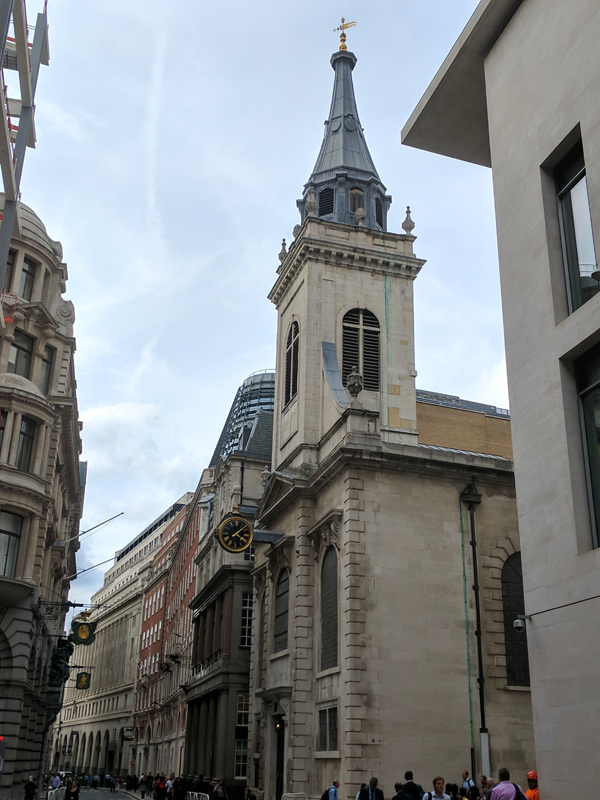
Back on King William Street we turn east and swing round past House of Fraser into Gracechurch Street. Continue north before turning west down Lombard Court and then cutting up Plough Court to return to Lombard Street. To the left here is the Church of St Edmund King & Martyr, reconstructed to a design of Wren incorporating a tower ornamented at the angles by flaming urns in allusion to the Great Fire that destroyed the medieval church.

IMG_20170823_161239

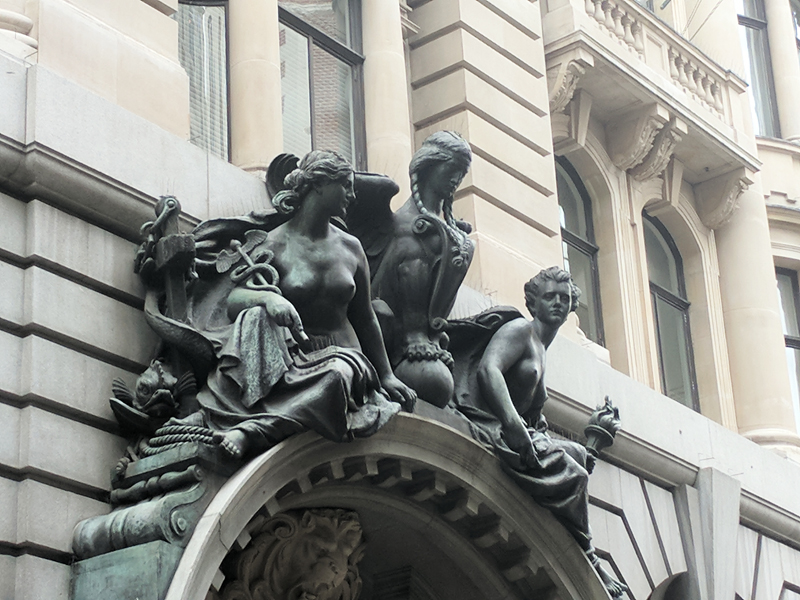
Across the street the entrance to the Royal Insurance Building is guarded by this bronze sculpture of three “allegorical” female figures – the lady on the left holds an anchor to represent the power of the sea, the one on the right a flaming torch to represent, well, fire and the sphinx in the centre (according to some sources) signifies the uncertainty of the future. The work is by Francis William Doyle Jones (1873 – 1938) and is entitled, with commendable literalness, Chimera with Personifications of Fire and the Sea.

IMG_20170823_161339

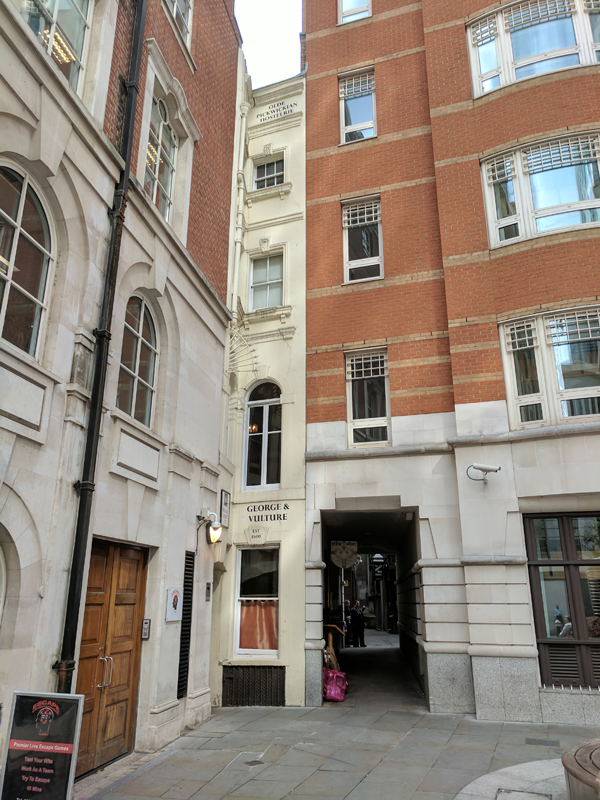
We double back a short distance and then proceed north into George Yard as far as the George & Vulture pub. This self-proclaimed Old Pickwickian Hostelrie dates from 1748 and is reputed to have been one of the meeting places of the notorious Hell-Fire Club. Dickens was a regular punter and the inn is mentioned at least 20 times in The Pickwick Papers.IMG_20170823_161505

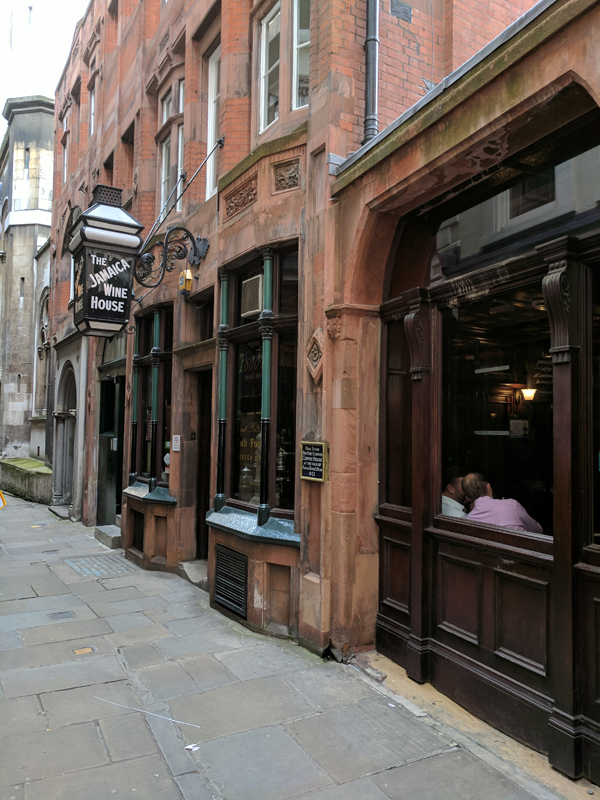
Just before the pub we turn left down Bengal Court then cross Birchin Lane and follow Cowpers Court back to Cornhill. Turn eastward here as far as Ball Court on the south side which doglegs round to St Michael’s Alley where, opposite the George & Vulture is another legendary City drinking-hall, The Jamaica Wine House. Known locally as “the Jampot” this was originally the first coffee house in London, opening in 1652 and counting Samuel Pepys amongst its clientele.

IMG_20170823_162311

Taking St Michael’s Alley back to Cornhill we reach St Michael’s Church  rebuilt by Wren after the Fire and restored by Sir G.G. Scott. It has a fine Gothic tower, modelled on Magdalen Tower, Oxford and a pulpit carved by Grinling Gibbons. The organ of St Peter’s Church, almost next door, was played several times by Mendelssohn and in the vestry his autograph is treasured. The church was founded, according to an ancient tablet in the vestry, by “Lucius, the first Christian king of this land called Britaine”. Many remains of Roman London have been discovered hereabouts and many authorities place here the site of the Roman forum.

Beginning with St Peter’s Alley we trace a double loop southward additionally involving Corbet Court, St Michael’s Alley again (this is at least three alleys for the price of one) and Bell Inn Yard. That brings us back to Gracechurch Street where we drop further south to Lombard Street and then proceed west to Birchin Lane which takes us north again. After a quick detour exploring the labyrinth that is Change Alley we resume northward, crossing over Cornhill into Finch Lane then over Threadneedle Street into Old Broad Street. Almost immediately veer left down Threadneedle Walk to return to Throgmorton Street generally crowded by bare-headed individuals of varying degrees of frivolity, whose presence betrays the whereabouts of that important institution, the Stock Exchange in Capel Court. The Stock Exchange referred to is the one that was created in 1801 as the first purpose-built and regulated “Subscription Room” for brokers to ply their trade. Prior to that they had gravitated away from the Royal Exchange to conduct their business in the coffee-houses of Change Alley and beyond. Capel Court no longer exists as such; in 1972 a new Stock Exchange Tower was opened on Old Broad Street and the original site redeveloped. However, come the ‘Big Bang’ and the introduction of electronic trading in 1986, the Tower became something of a white elephant and when an IRA bomb blew a whole in the 26-storey building four years later the writing was firmly on the wall. It closed permanently in 1992 and it was another 20 years before this unloved totem of the “Brutalist” era was stripped back to its core and redeveloped as a 21st century glass-clad monolith. In 2004 the London Stock Exchange eventually found a new home in Paternoster Square. Coincidentally the company I worked for made the same journey from Old Broad Street the same year.

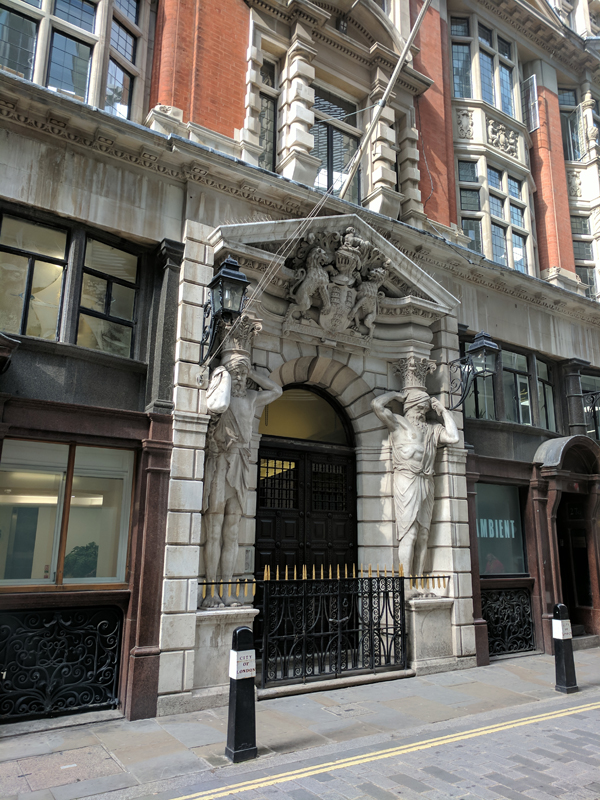
Bit of a digression there but back to Throgmorton Street and the Drapers’ Hall. The first hall here was bought from King Henry VIII in 1543 for the sum of 1,800 marks (c.£1,200) and had previously been the home of Thomas Cromwell (up until his execution in 1840). The hall was rebuilt after the Great Fire and again in 1772 after another fire. In the 1860’s the frontage and the interior were redesigned by Herbert Williams. Further changes at the end of the 19th century included the creation of the two Atlantes (male equivalents of Caryatids); turbaned and muscular Djinns that guard either side of the entrance. These are believed to be the work of sculptor H.A Pegram (1862 – 1937).

IMG_20170823_163459

The full title of the Drapers’ Company is “The Master and Wardens and Brethren and Sisters of the Guild or Fraternity of the Blessed Mary the Virgin of the Mystery of Drapers of the City of London”. The word Mystery comes from the Latin “misterium” meaning professional skill. You wouldn’t get away with that if you were much lower than no.3 on the Order of Precedence. We follow Drapers’ Hall and its gardens all the way up  Throgmorton Avenue to where it joins Copthall Avenue.

This slideshow requires JavaScript.

There is a bit more to come  but since we’ve just about breached the 3,000 word barrier we’ll continue from this juncture next time.