Day 82 – Midland Road – York Way – Copenhagen Street – Caledonian Road

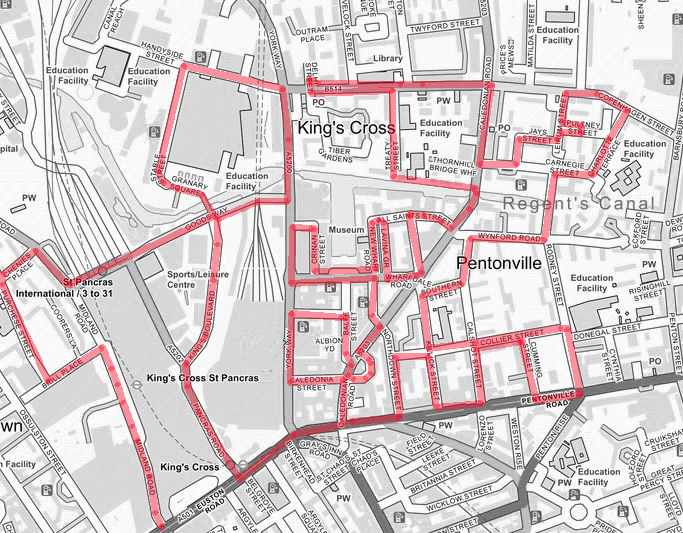
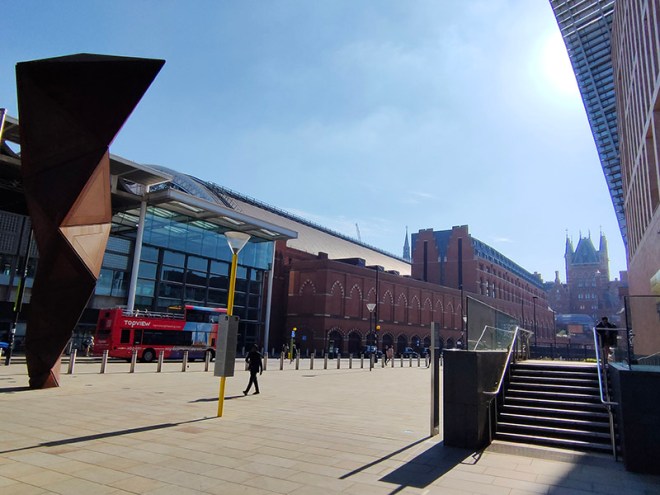
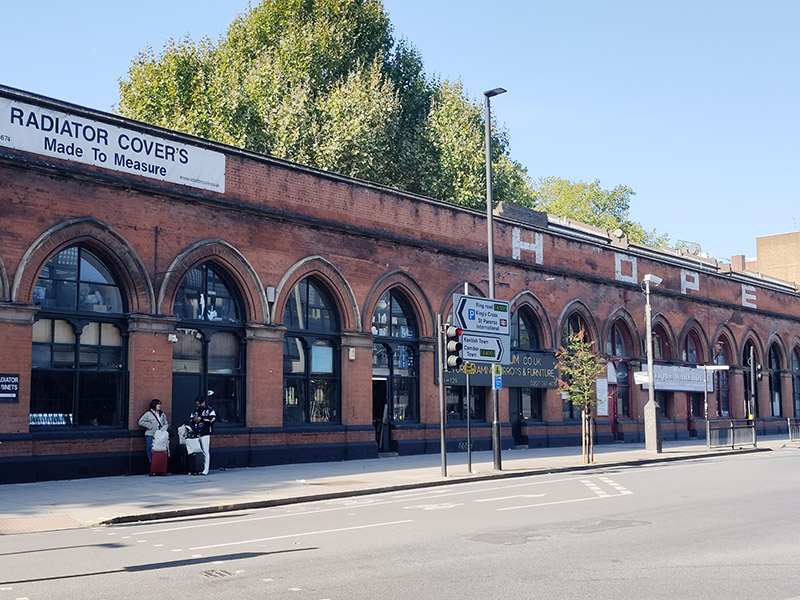
Following an extended summer break, today’s walk sees us return to the area around King’s Cross for the first time in ten years, during which, I think it’s fair to say, quite a bit has changed. We visit the area to the north of KX station which has undergone a massive make-over in the last couple of decades then venture eastward into Pentonville, bordered to the south by the eponymous Road and to the north by Copenhagen Street. All of which is intersected by the Regent’s Canal.

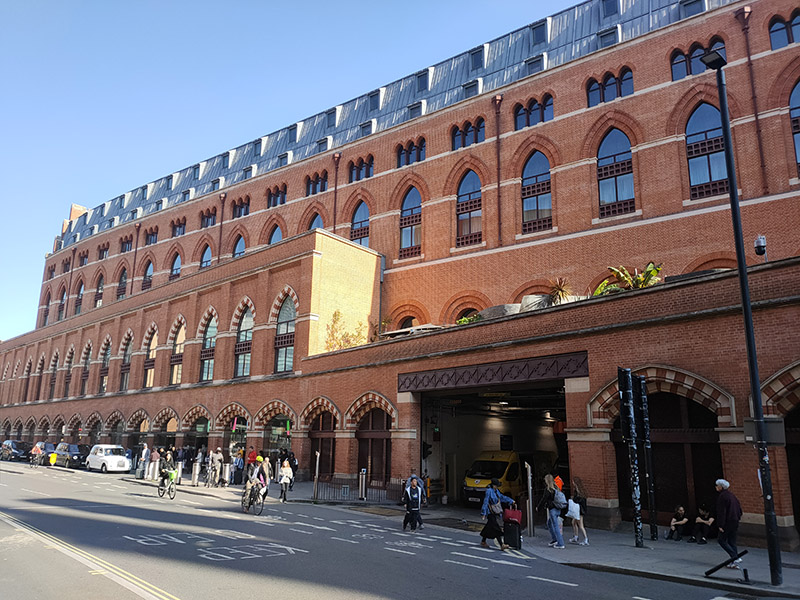
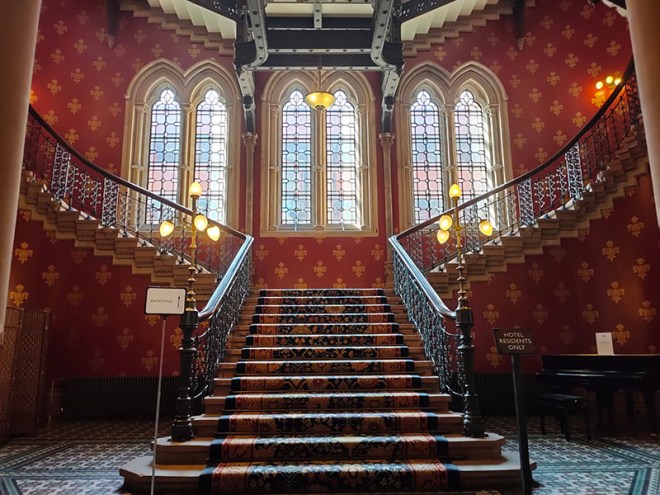
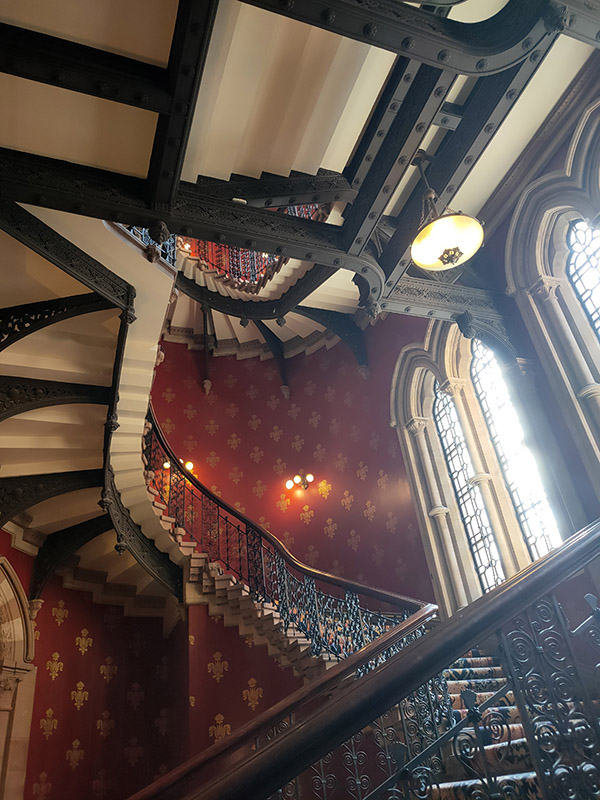
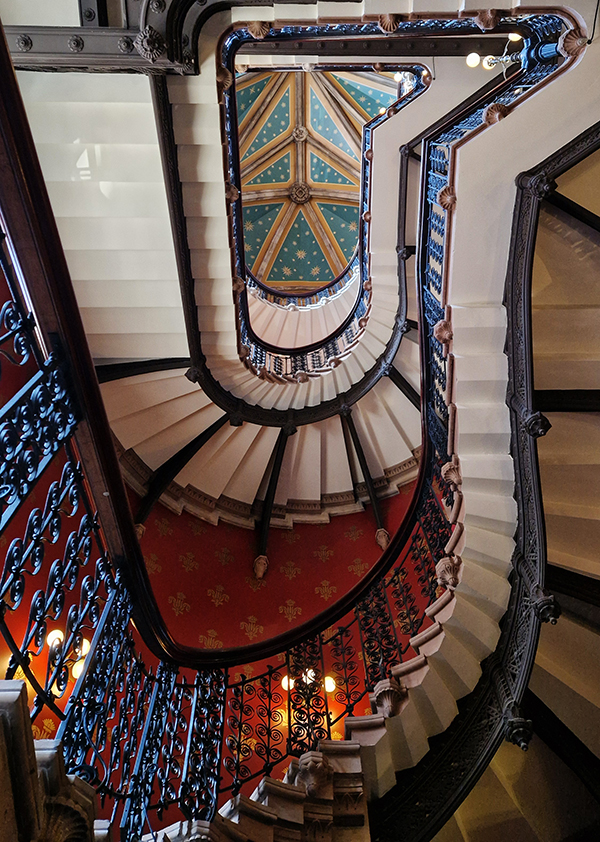
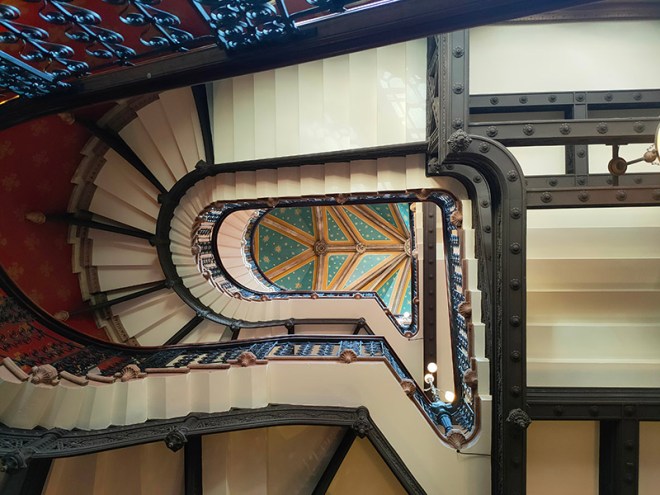
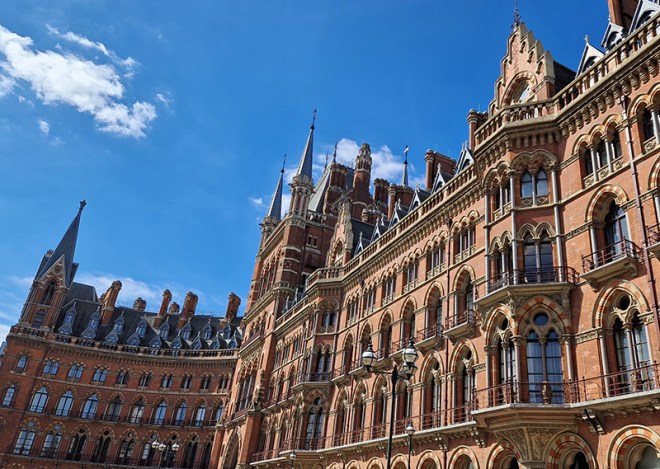
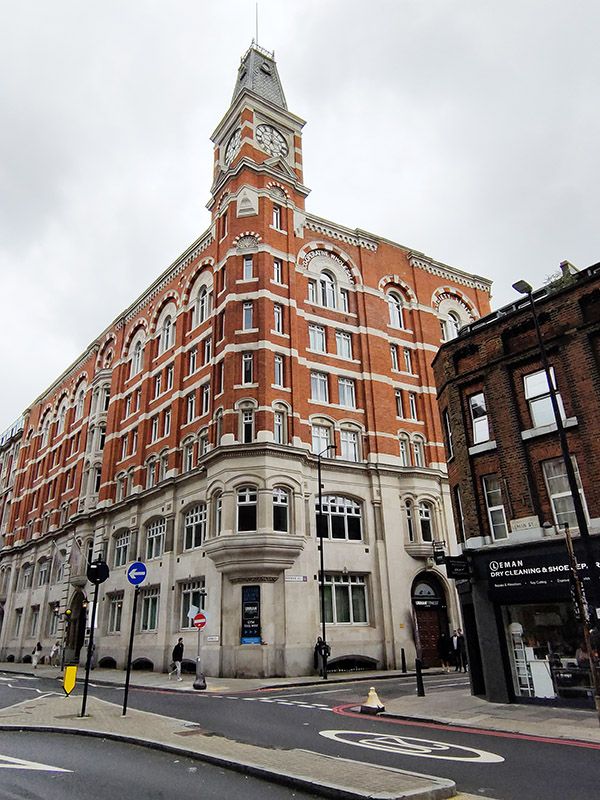
We kick off at the southern end of Midland Road which runs northward between the British Library and St Pancras International (both of which we dealt with back on Day 9). We also covered the always astonishing Renaissance Hotel (née Midland Grand Hotel) back then but as a bit of a bonus we’ll take another look at that at the end of this post.

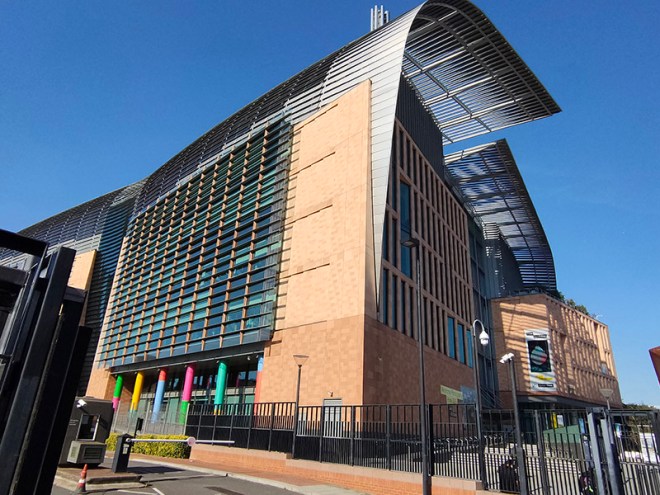
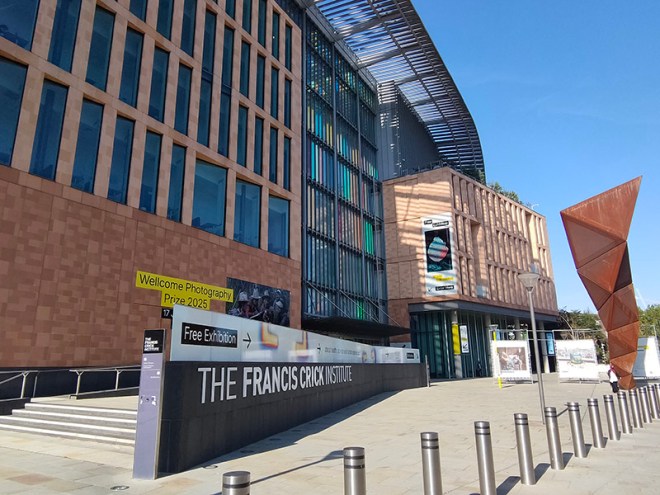
Adjacent to the British Library, to the north, is the Francis Crick Institute, named after the British scientist who along with James Watson identified the structure of DNA in 1953, drawing on the work of Maurice Wilkins, Rosalind Franklin and others. The Crick, as it is generally known, is home to a partnership between six of the world’s leading biomedical research organisations: the Medical Research Council, Cancer Research UK, Wellcome, UCL (University College London), Imperial College London and King’s College London. The genesis of this partnership was the 2007 Cooksey report which looked at ways to consolidate and enhance medical research in the UK. The institute was officially opened by Queen Elizabeth in November 2016 and was fully operational by the spring of 2017. It now houses over 2000 people and more than 100 research groups.

Beyond the Crick we turn left into Brill Place then follow Purchese Street and Chenies Place back round to Pancras Road which takes over from Midland Road.

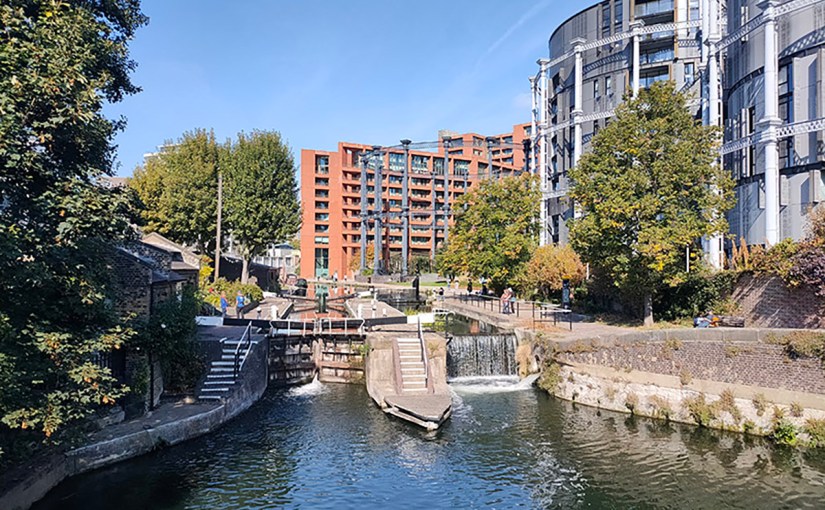
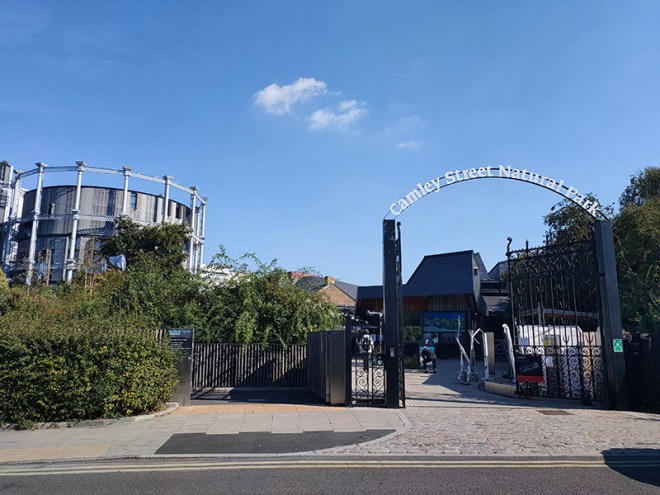
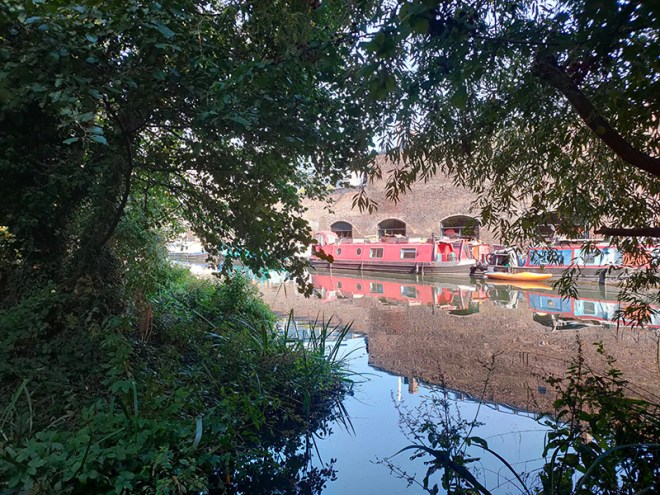
Pancras Road partially veers east in the form of a tunnel under the rail lines out of St Pancras then morphs into Goods Way. To the north of Goods Way, sandwiched in between Camley Street and the Regent’s Canal is the Camley Street Natural Park, a little patch of wilderness in the city. The site was once a coal drop for the railways into King’s Cross Station, which was demolished in the 1960s. As it was subsequently colonised by nature the London Wildlife Trust ran a campaign in the 1980’s to save the site from development and create a nature reserve which opened in 1985. Nice café if you’re in the vicinity. They’ll even do you an Aperol Spritz (which I think demonstrates that we’ve now reached peak Aperol Spritz).
After polishing off an Earl Grey tea and ham and cheese croissant at the café we cross the canal via the Somerstown Bridge and enter the heart of the King’s Cross regeneration.

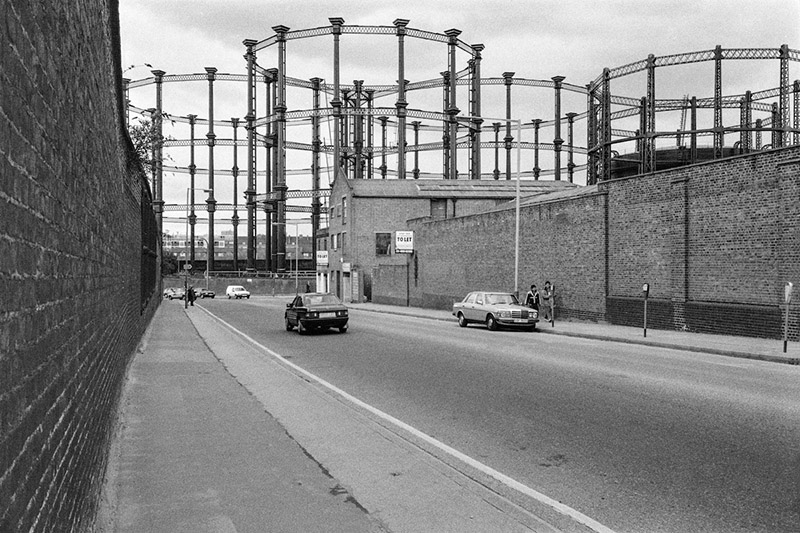
A potted history : In the early 19th century, prior to the arrival of the railways, this area had already developed into an industrial hub with the opening of the canal in 1820 and the Pancras Gasworks in 1824. A number of other “polluting” businesses such as paint manufacture and refuse sorting were also established in the area giving it a somewhat tarnished reputation. In an attempt to offset this, a huge memorial to, the recently deceased, King George IV was erected at a major crossroads in 1836. The memorial attracted ridicule and was demolished in 1845 to ease the flow of traffic, but the new name for the area – ‘King’s Cross’ – stuck. King’s Cross station opened in 1852 and St Pancras station followed around 15 years later. In the latter years of the 19th century both the railways and the gasworks were expanded leading to the demolition of much of the surrounding housing. After WWII and nationalisation of the railways in 1948, the transport of freight by rail suffered a rapid decline and in the southern part of the Goods Yard, most of the rail lines were lifted in the 1980s. Although six gasholders remained in service until 2000, the area went from being a busy industrial and distribution district to a place that was synonymous with urban sleaze and decay, consisting mainly of derelict and disused buildings, railway sidings, warehouses and contaminated land. At the same time it became something of a hub for artists and creative organisations and was closely associated with the illegal rave scene in the 1990’s.

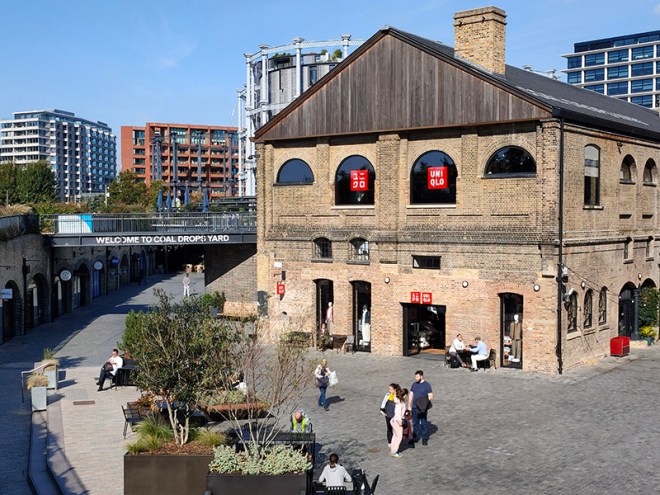
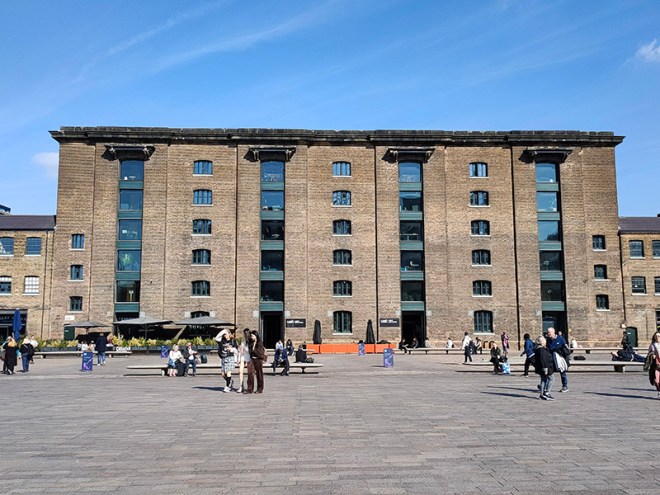
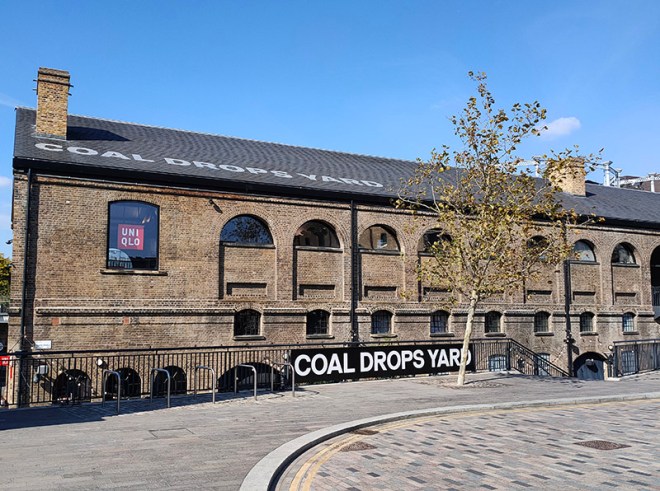
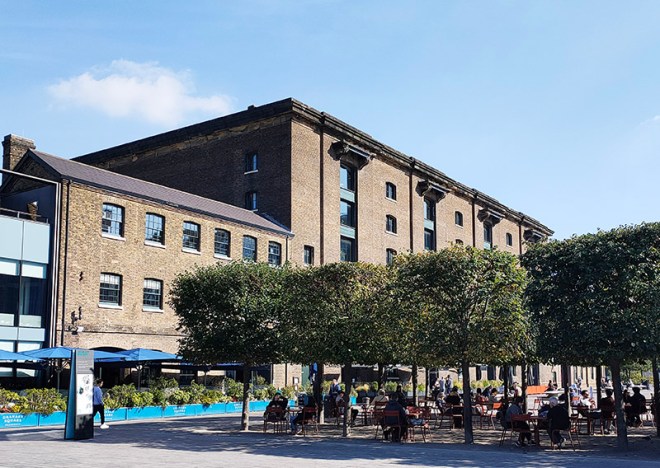
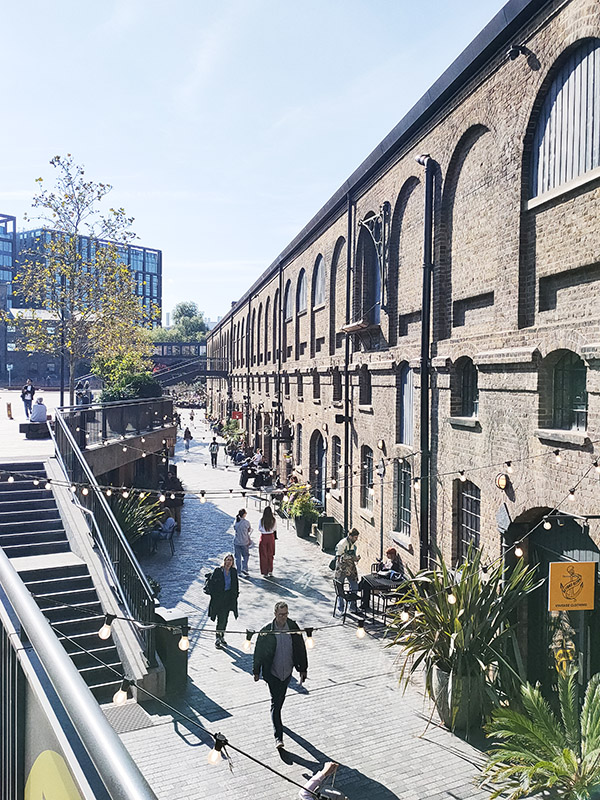
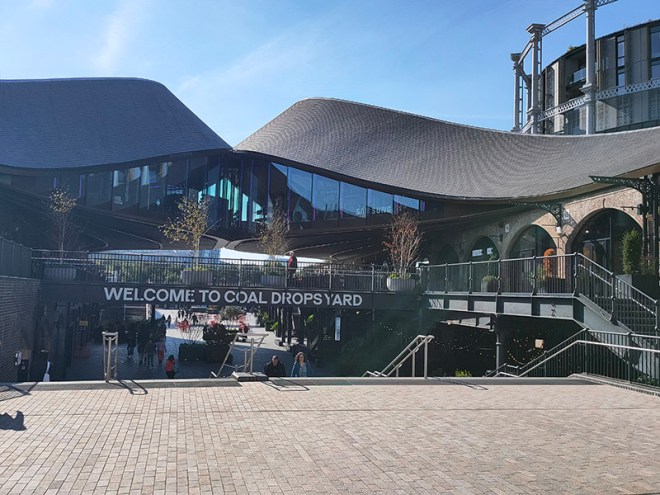
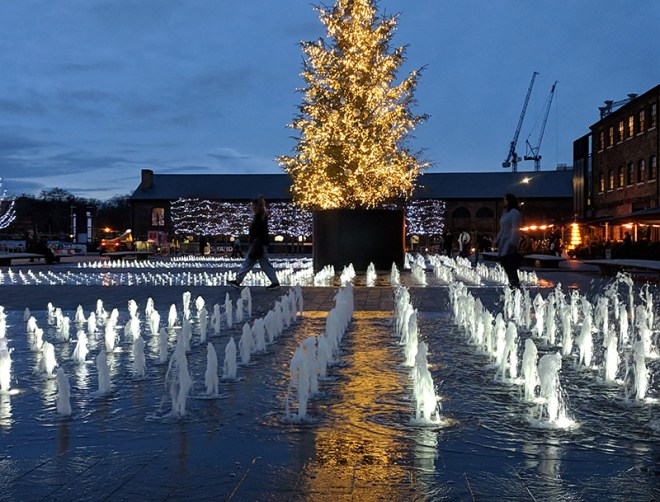
The 1996 decision to move the Channel Tunnel Rail Link from Waterloo to St Pancras became the catalyst for redevelopment by landowners, London & Continental Railways Limited and Excel (now DHL). It took another ten years though before outline planning permission was granted for 50 new buildings, 20 new streets, 10 new major public spaces, the restoration and refurbishment of 20 historic buildings and structures, and up to 2,000 homes. Early infrastructure works began in 2007, with development starting in earnest in late 2008. Much of the early investment was focused in and around the Victorian buildings that once formed the Goods Yard. In September 2011, the University of the Arts London moved to the Granary Complex, and parts of the development opened to the public for the first time. Since then the historic Coal Drops have been redeveloped as a shopping destination, and companies such as Google, Meta, Universal Music and Havas have chosen to locate here. New public streets, squares and gardens have opened, among them Granary Square with its spectacular fountains and Gasholder Park. In January 2015, the UK government and DHL announced the sale of their investment in the King’s Cross redevelopment to Australian Super, Australia’s biggest superannuation/pension fund. I must confess here that there is a part of me which wishes I had thought to undertake this project before all of the above happened.

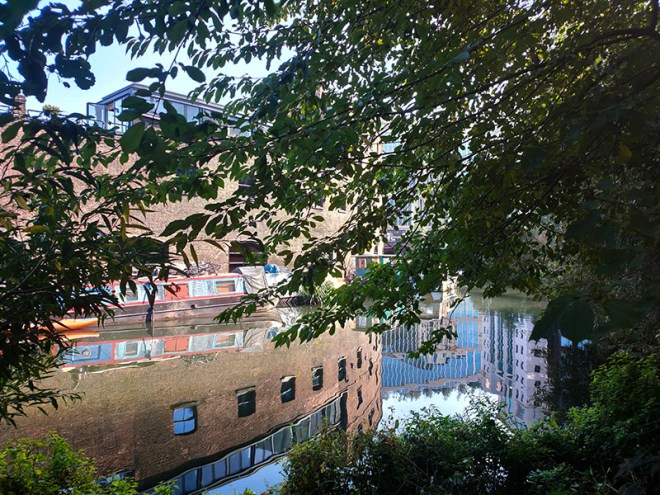
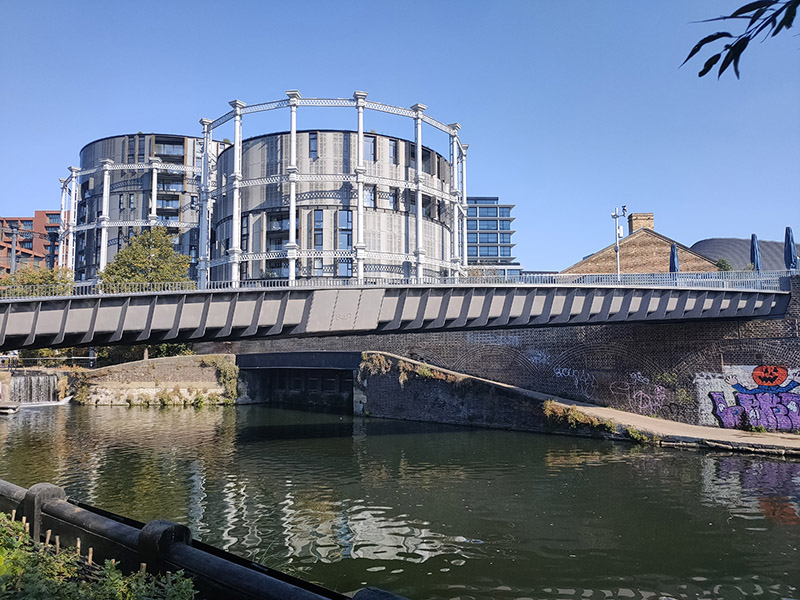
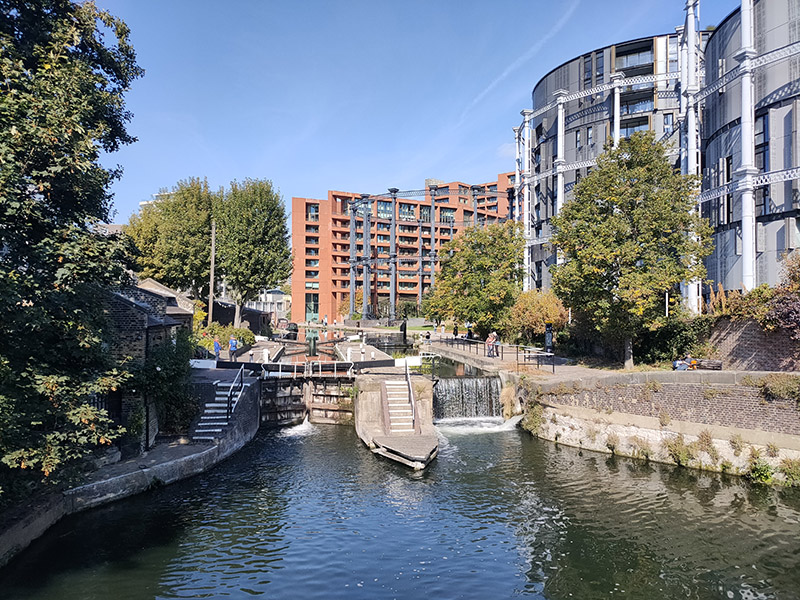
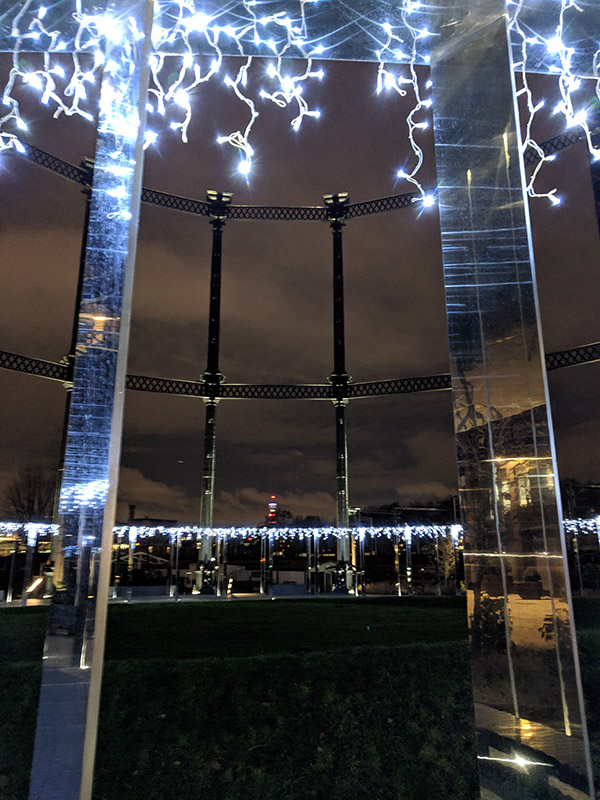
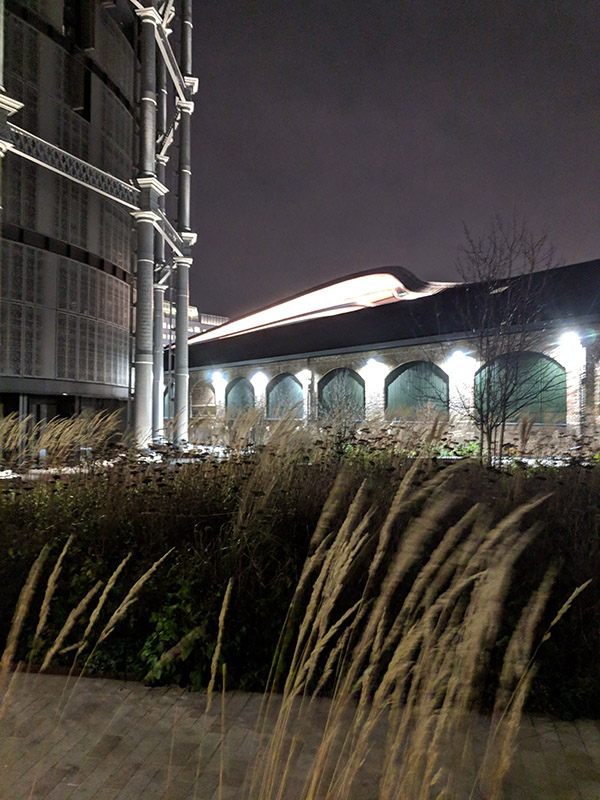
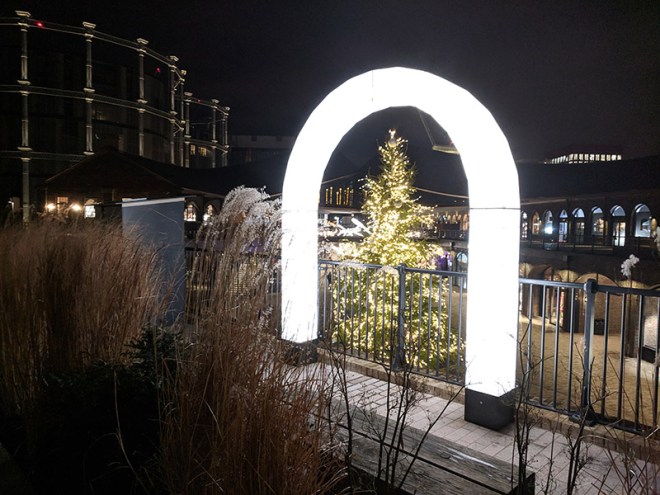
Three of the Gasholders built for the Pancras Gasworks in 1860-67, known as the ‘Siamese Triplet’, because their frames are joined by a common spine, escaped demolition and were awarded Grade II listed status. As part of the renewal programme these were painstakingly restored over a five year period by a specialist engineering firm in Yorkshire and upon their return to King’s Cross, erected on the northern bank of Regent’s Canal and developed into 145 apartments, designed by Wilkinson Eyre Architects, and completed in 2018. (The photos below are from a previous visit in December 2020).

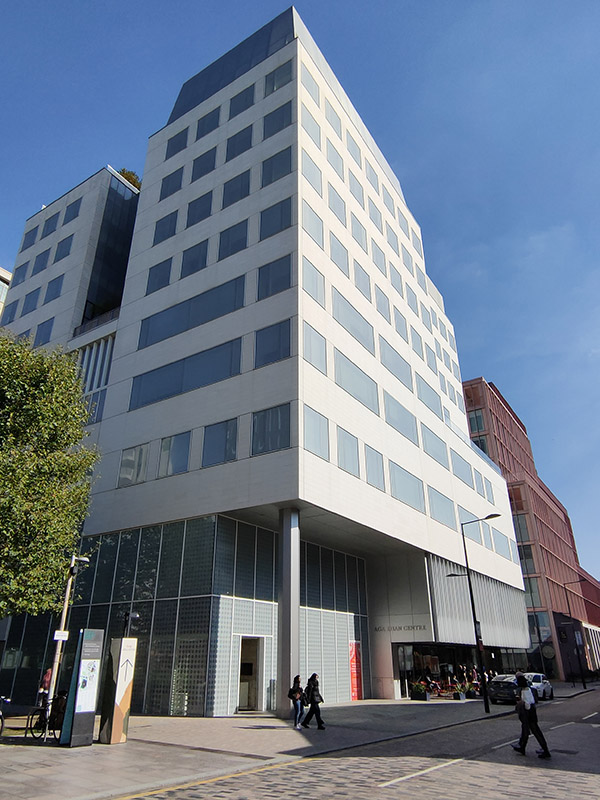
Stable Street runs through the middle of the development area as far as Handyside Street. At their intersection stands the Aga Khan Centre, the UK home for three organisations founded by His Late Highness Aga Khan IV, the hereditary spiritual leader of the Shi‘a Ismaili Muslims. The building was designed by the Japanese architect, Fumihiko Maki, who unfortunately passed away in 2024. The building is influenced by Islamic architectural history and is clad in detailed pale limestone, referencing the grand Portland stone buildings across London.

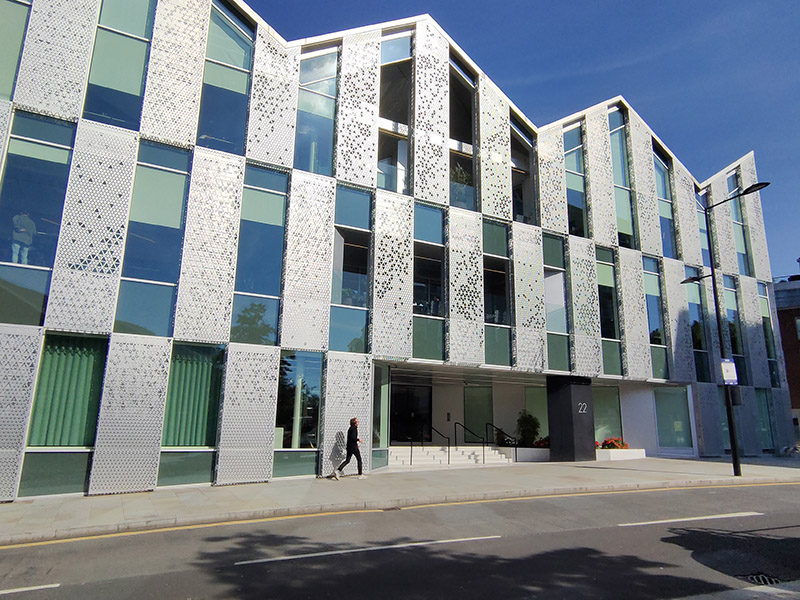
The striking Q1 office building at 22 Handyside was built over three listed railway tunnels so the design involved a lightweight structure with a diagonal orientation clad in perforated panels of anodized aluminium.

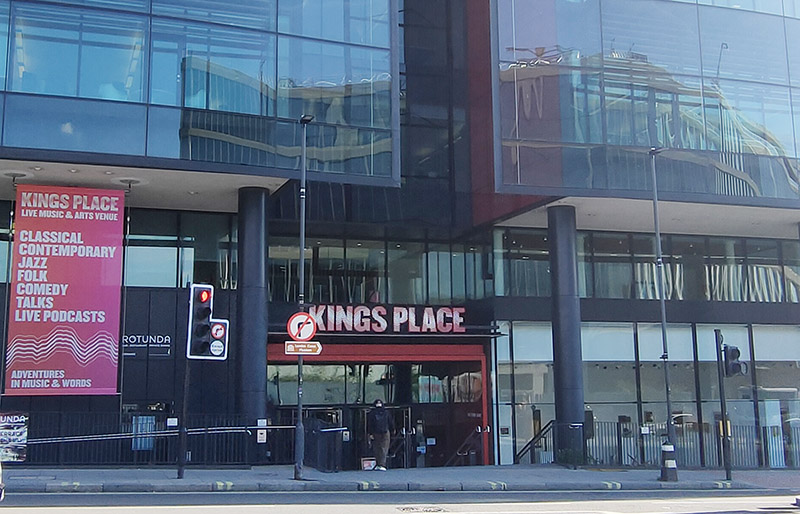
We head back south on York Way. Prominent on the east side is King’s Place music and arts venue which has been hosting an excellent programme of classical, contemporary and jazz concerts since 2008 and is also home to the London Podcast Festival. Dixon Jones were the architects for the building, which contains the first new public concert hall to be built in Central London since the completion of the Barbican Concert Hall in 1982.

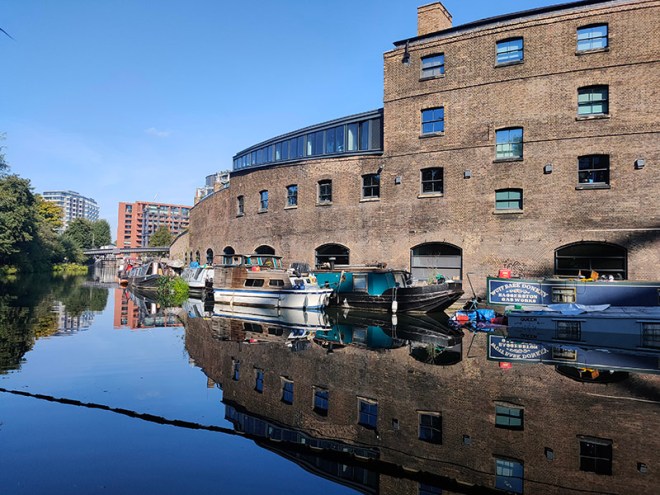
Returning to Goods Way we follow the canal along to Granary Square then turn down onto Kings Boulevard, almost the whole length of which, as far as the north end of King’s Cross Station, is flanked by Google’s new UK HQ. Construction on this, the first wholly owned and designed Google building outside the US, began way back in 2018. Designed by Heatherwick Studio and Bjarke Ingels Group (BIG), the purpose-built 11-storey building, which is 72 metres tall at its highest point and 330 metres long has been dubbed a “landscraper”. The 861,100sq ft of office space will, upon completion, make it the 8th largest building in Europe by office space and provide the potential to house 7,000 Google employees. Those employees are expected to start moving in later in 2025.

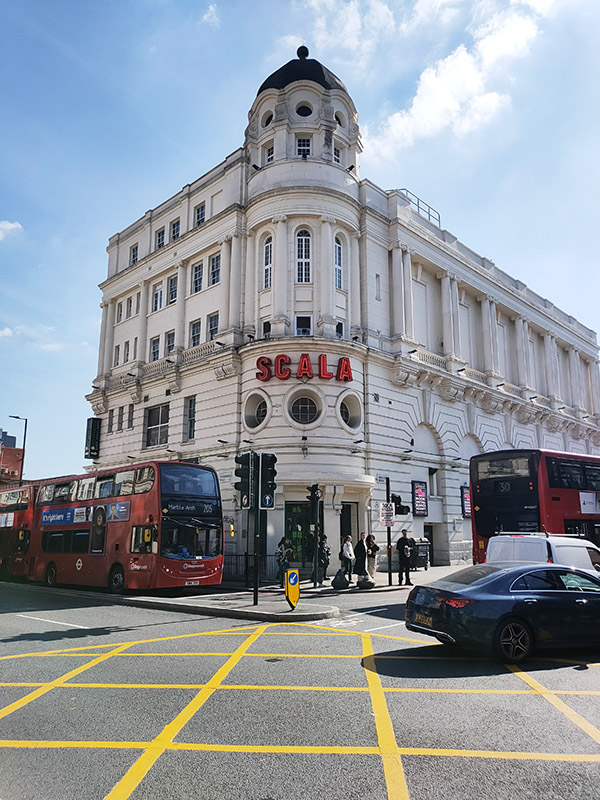
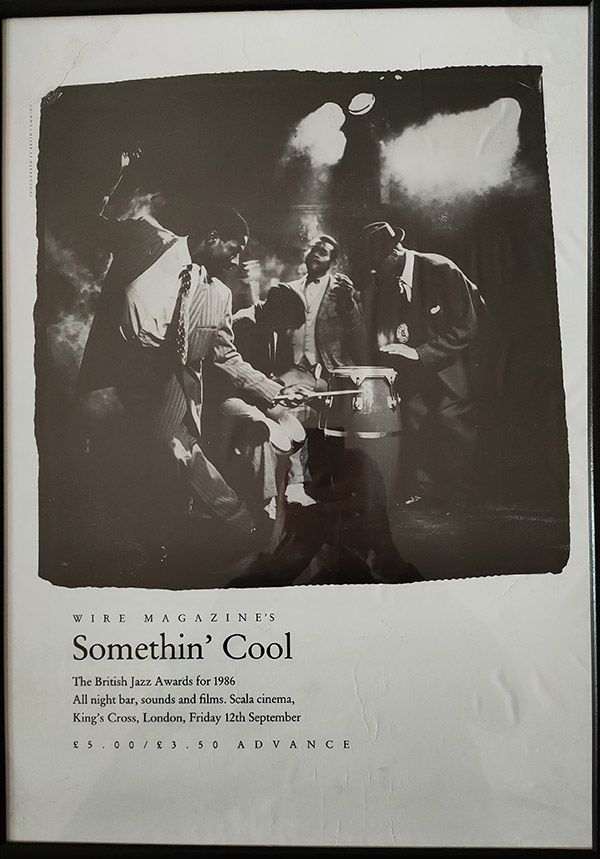
We round Kings Cross Station via Pancras Road and the fag end of Euston Road and find ourselves at the start of Pentonville Road opposite the Scala. I wrote about this back in Day 12 but at that time (towards the end of 2015) the building was swathed in scaffolding so there were no photographs included. I can now belatedly rectify that and also mention (which I didn’t before) that my one visit to the Scala was to attend the 1986 British Jazz Awards all-nighter (an event about which the internet is entirely ignorant it seems – this framed poster still hangs on my bedroom wall).

Across the road from the Scala we enter the Caledonian Road at its southern end then complete a circuit of Caledonia Street, York Way, Railway Street and Balfe Street. Nos. 17 and 17a on the latter are Grade II listed. These mid-19th century terraces must have had some remarkable changes of fortune during their lifetime and I doubt they have ever been more desirable than they are now.

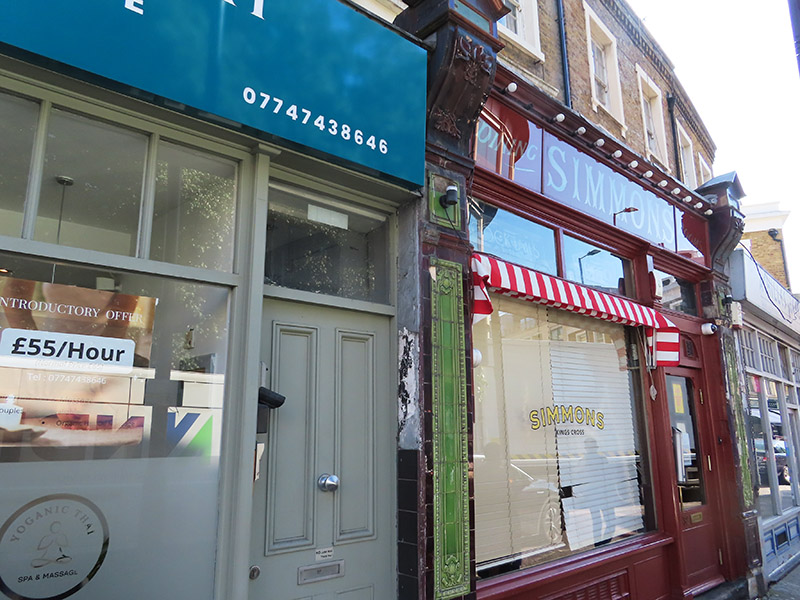
Back on Caledonian Road, the first of the Simmons chain of bars (opened in 2012) has cutely retained the façade of the old style tearoom that preceded it.

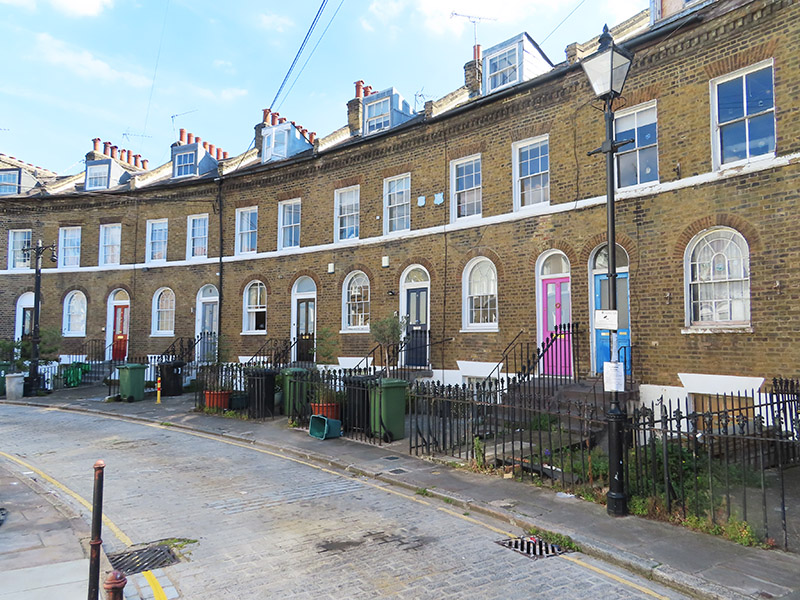
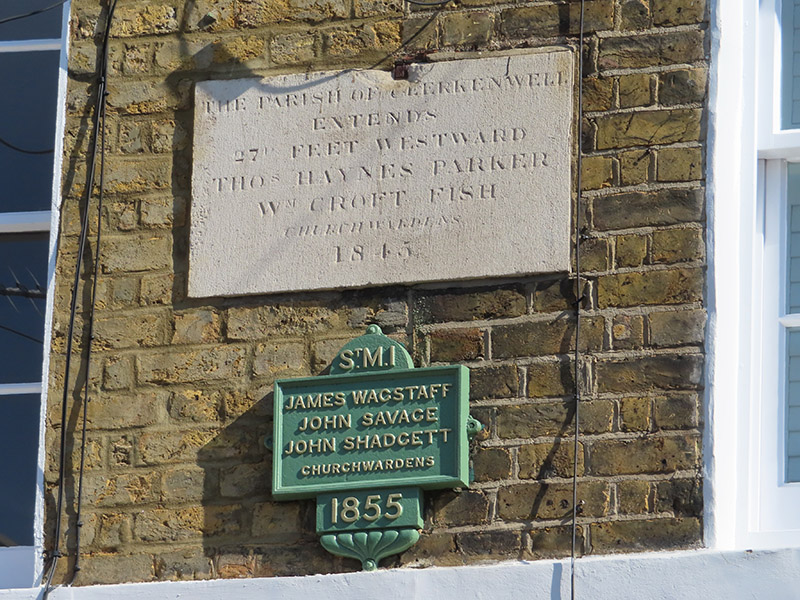
From here we swing left round Keystone Crescent (formerly Caledonian Crescent). Built by the son of a Shoreditch bricklayer, Robert James Stuckey, in 1846 this has the smallest radius of any crescent in Europe and is unique in having a matching inner and outer circle. The change of name was effected in 1917 by Robert’s grandson, Algernon, for reasons undocumented. The 24 houses in the Crescent are all Grade II listed; one of them has parish marker plaques that include the names of the local church wardens in 1845 and 1855 and another (no.28) operates as a Private Members’ Speakeasy.
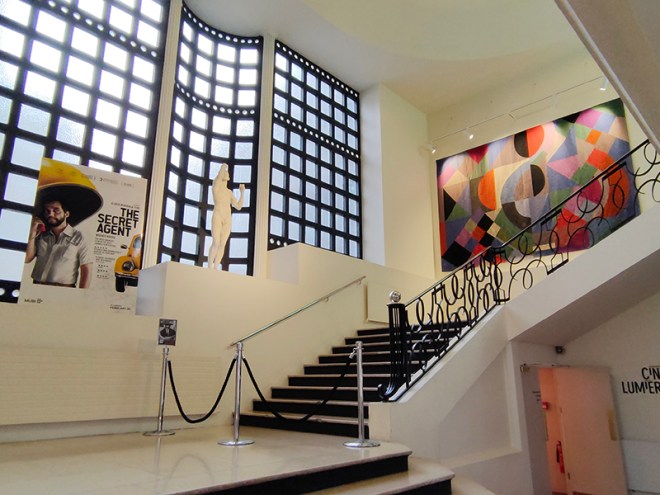
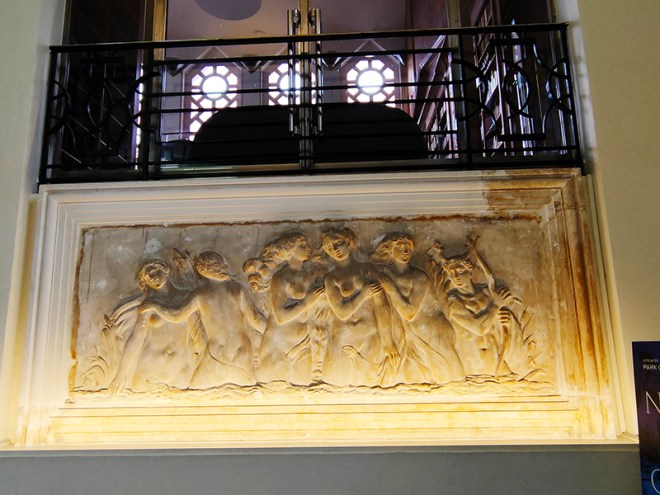
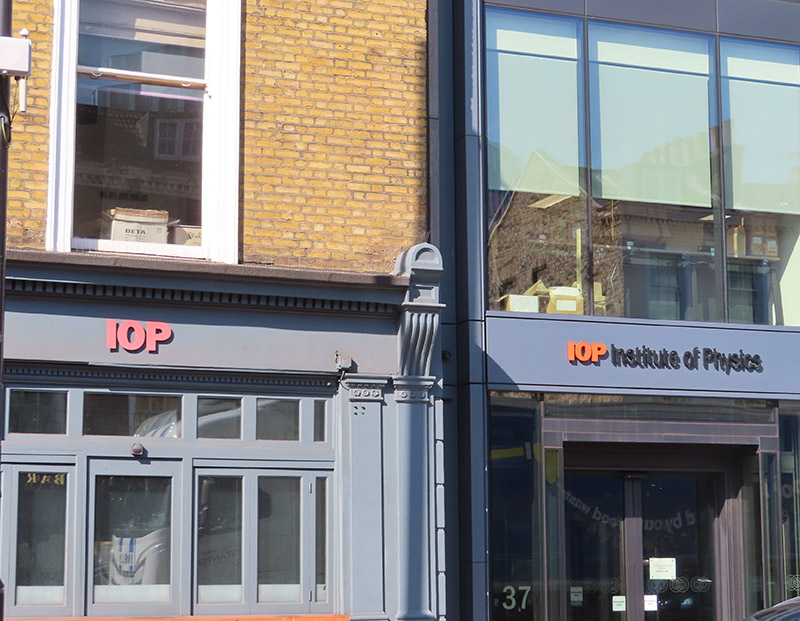
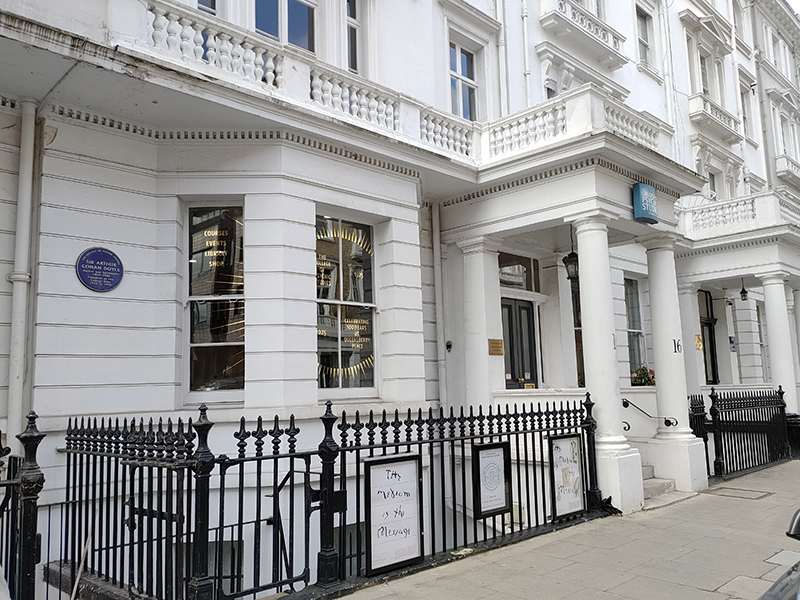
At the other end of the Crescent we’re back on Caledonian Road, naturally enough, and on the opposite side of the road to the Institute Of Physics which I wasn’t able to get a proper shot of due to the ridiculous volume of traffic. Just as well it’s not much to look at then. The IOP as it exists today was formed through the merger of the The Physical Society of London and the Institute of Physics in 1960. The former had been established in 1874, after Professor Frederick Guthrie, of the Royal College of Science, wrote to physicists to suggest a “society for physical research”. The latter was incorporated by the Board of Trade in 1920 with The Royal Microscopical Society and the Roentgen Society as its associate societies. To be honest, it’s not at all clear why two bodies were needed or what the difference between them was. But that’s Physicists for you.
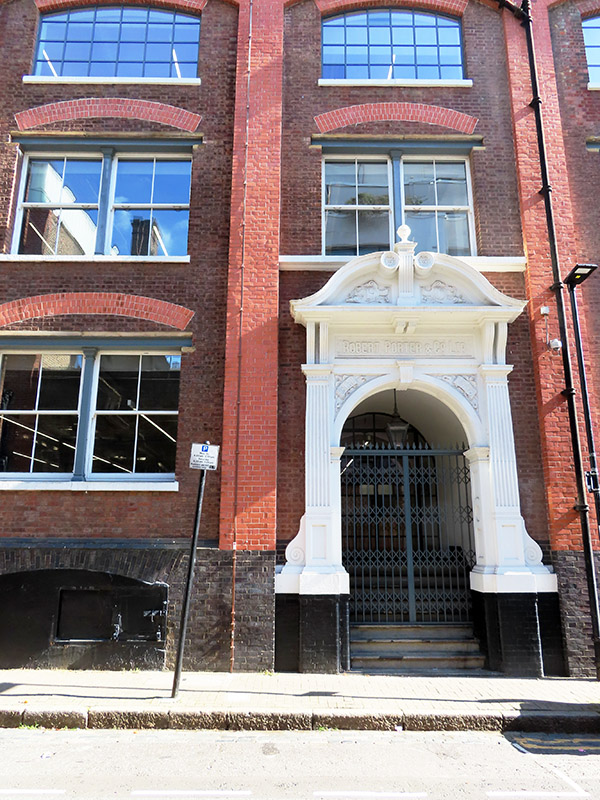
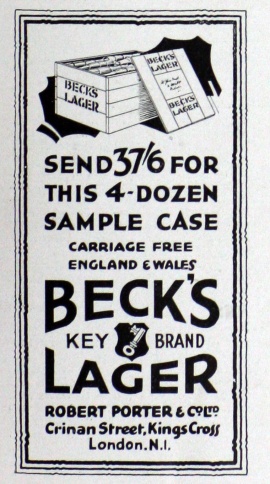
We make our way back to York Way via Northdown Street and Wharfdale Road then just before we reach King’s Place again we turn east onto Crinan Street which loops back to Wharfdale Road. Crinan Street is home the former Robert Porter & Co. Beer Bottling Plant. For some reason I always think of lager as being quite a recent arrival to these shores but (the aptly named) Mr Porter was bottling a Beck’s lager at least as far back as 1927.

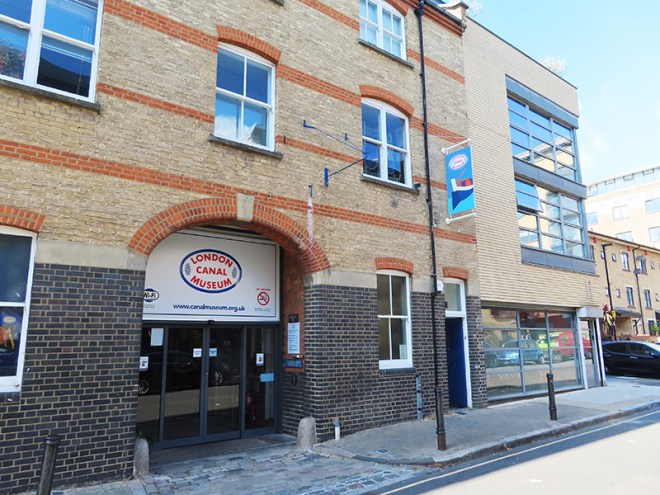
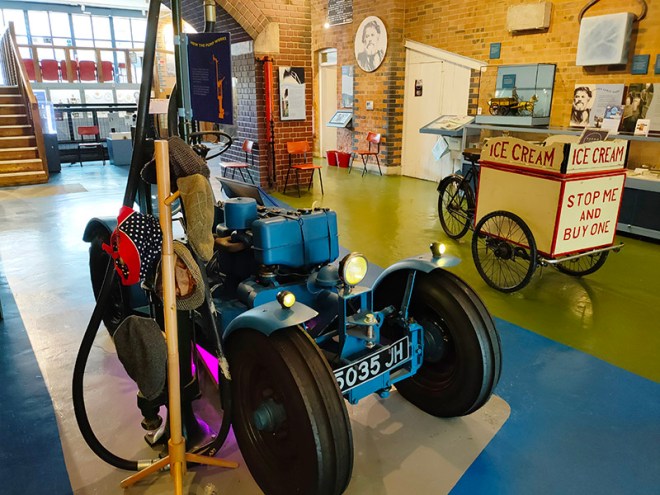
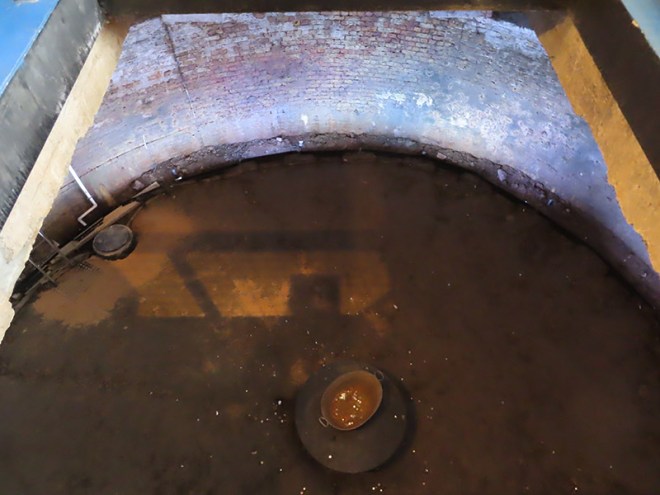
Next up is New Wharf Road where you will find the London Canal Museum. Naturally enough, the museum deals with the story of London’s canals but as it is housed in a former ice warehouse built in about 1862-3 for Carlo Gatti (1817 – 1878), the famous ice cream maker, it also, perhaps more interestingly, features the history of the ice and ice cream trade in this country. Gatti came to London from the Italian speaking part of Switzerland in 1847 and began his business life selling refreshments from a stall, a kind of waffle sprinkled with sugar, and chestnuts in winter. Within a couple of years he had opened his own café and restaurant which included a chocolate-making machine that he later exhibited at the Great Exhibition of 1851. Gatti was one of the first people to offer ice cream for sale to the public and, initially, he made this using cut ice from the Regent’s Canal. Subsequently though, as he concentrated on the ice trade business, he began importing ice that originated in the Norwegian Fjords. The ice well he had built at 12-13 New Wharf Road to cater for his first import of Norwegian ice, a consignment of 400 tons, is still on view at the museum. The museum is small but well worth the relatively modest admission charge. The staff are particularly knowledgeable and communicative.

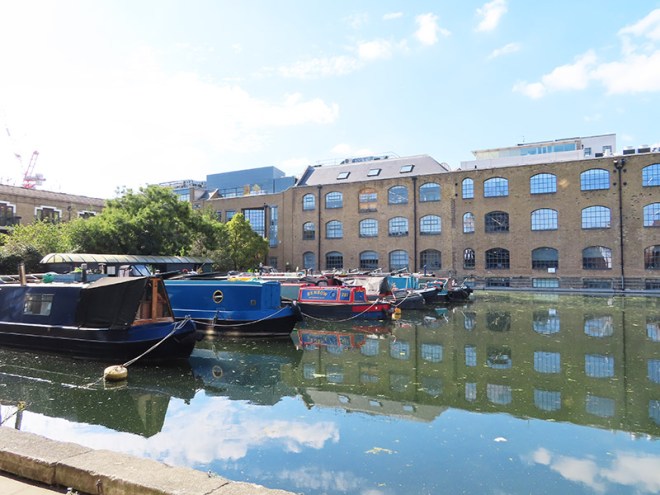
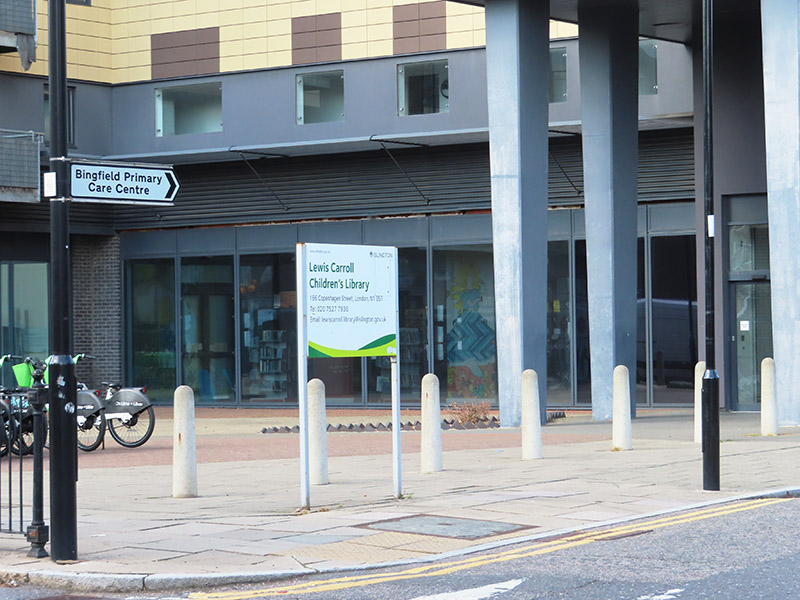
Beyond the museum, New Wharf Street forms a junction with All Saints Street from where we go down Lavina Grove and up Killick Street before re-joining the Caledonian Road. Crossing over the Regent’s Canal again we follow the north bank towpath as far as Treaty Street then continue north onto Copenhagen Street. Here we go west as far as (the miniscule) Delhi Street, York Way Court and Tiber Gardens before doubling back eastward past the Lewis Carroll Children’s Library. The Library opened originally in 1952 and was renovated in 2008 at which time it acquired murals inspired by Carroll’s Alice In Wonderland. Unlike traditional public libraries, the library maintains a unique access policy requiring adults to be accompanied by a child to enter, ensuring the space remains dedicated to its young users. Big up to Islington Council for keeping it going.

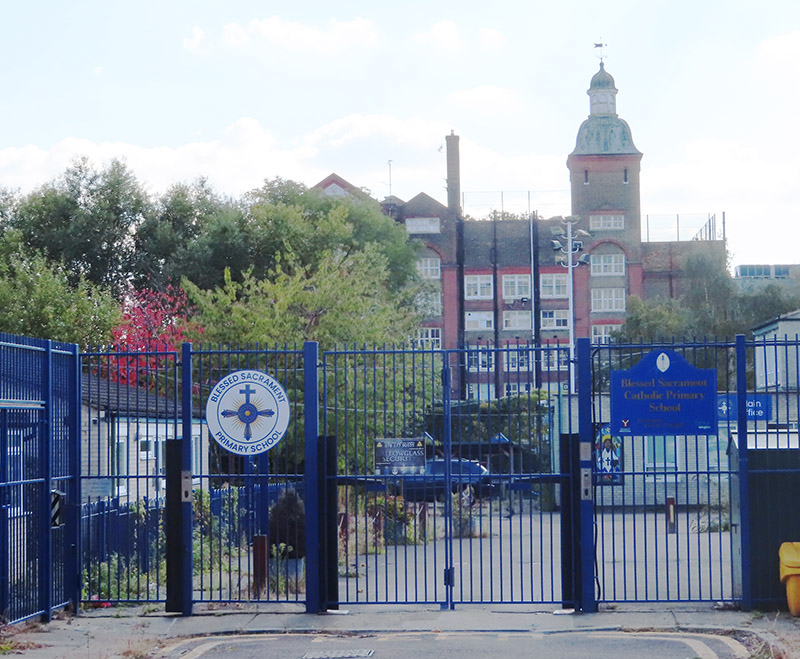
On the other side of Copenhagen Street is a stark illustration of the falling school pupil numbers in certain Inner London boroughs. Islington Council decided to discontinue Blessed Sacrament Roman Catholic Primary School, Boadicea Street with effect from 31 July 2024. The school had 210 places but only 76 pupils as at the October 2023 School Census. The School Roll Projections forecast roll numbers for this area to continue to fall across the next five years by a further three to six per cent a year.

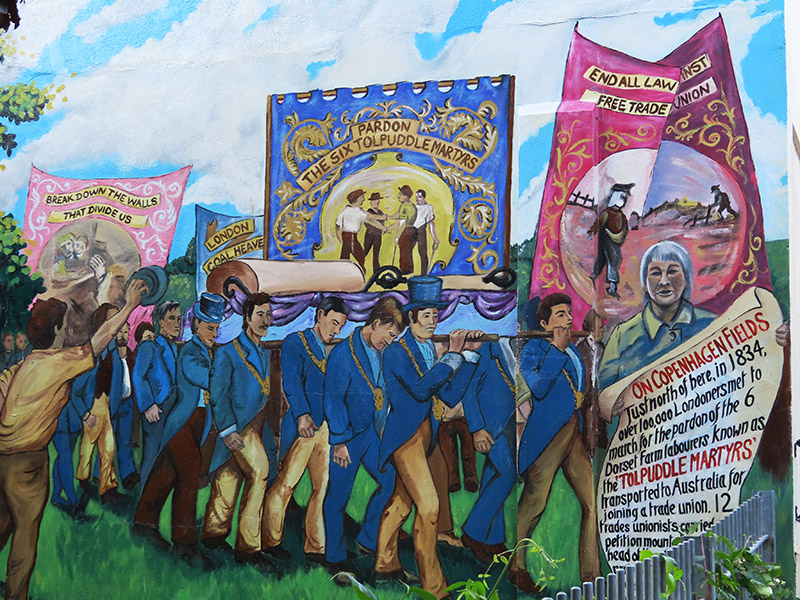
A short way further east at Edward Square there is a mural commemorating the 1834 protest at Copenhagen Fields (which was a bit further north of here) by up to 100,000 people in support of the Tolpuddle Martyrs. The mural was painted by Dave Bangs in 1984 to celebrate the 150th anniversary of the demonstration and used local people as models.

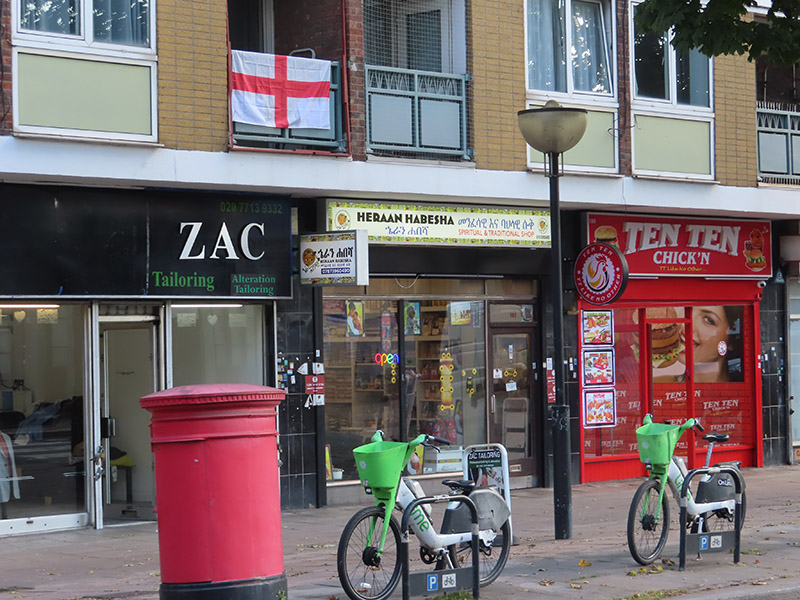
Continuing east past Julius Nyere Close, named after the first President of post-colonial Tanzania, we turn south onto another section of the Caledonian Road. You’d probably need to go quite a bit further east to come across another St George’s flag. I guess the owner of this one is either ignorant of or unfazed by the irony of its positioning.

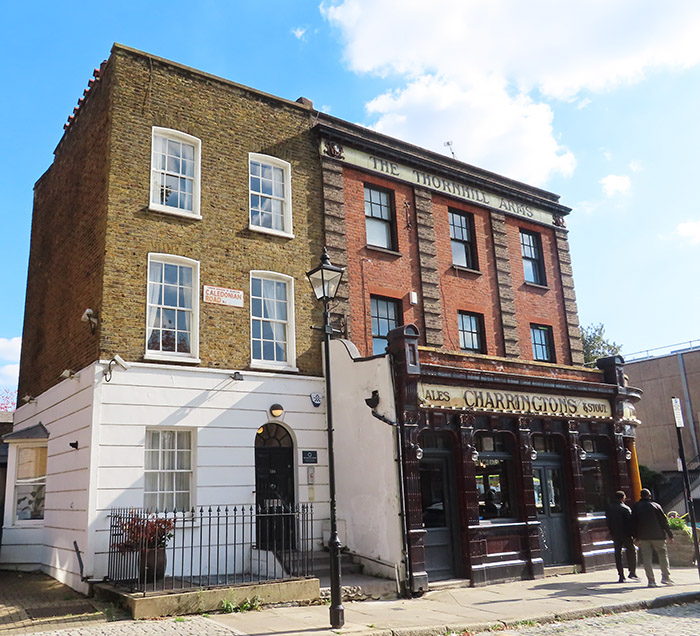
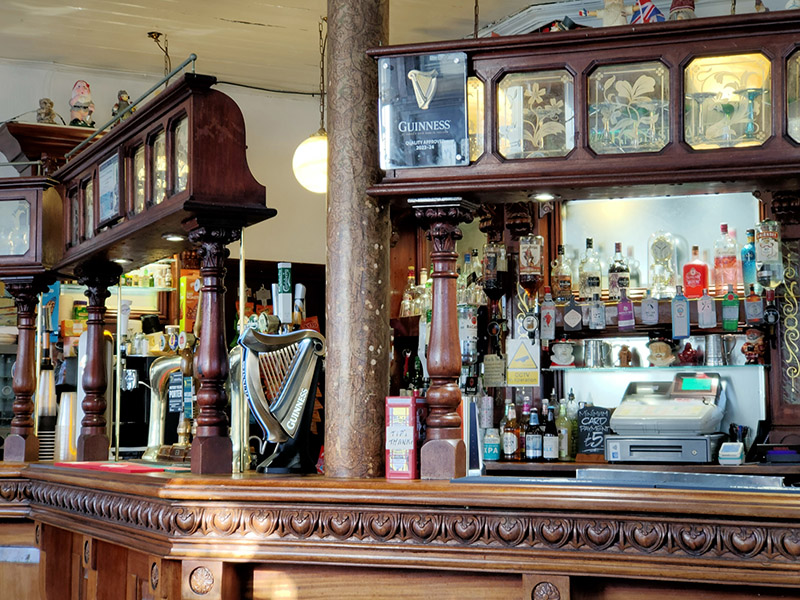
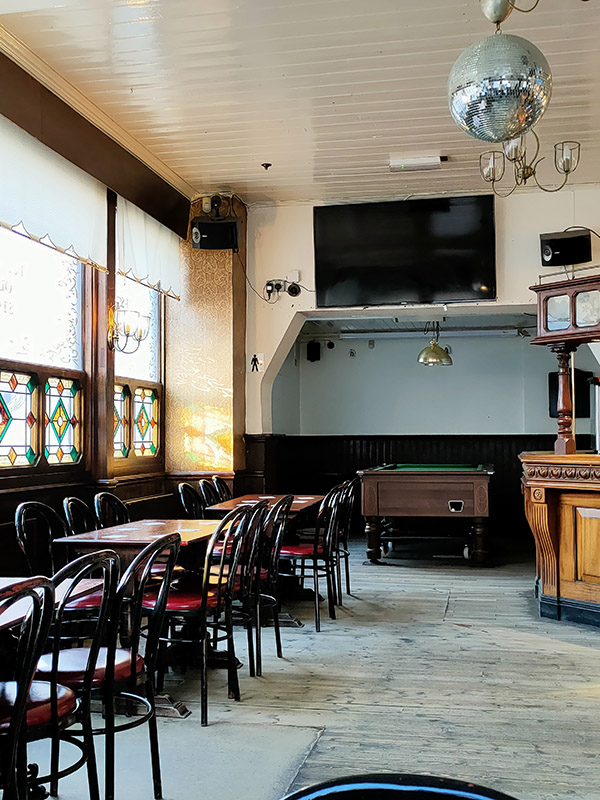
Turning off the east side of Caledonian Road we’re into public housing territory and work our way via Carnegie Street, Bayan Street, Jay Street, and Leirum Street back to Copenhagen Street. From here we take a route back south encompassing Charlotte Terrace, Pulteney Street, Muriel Street. This brings us onto Wynford Road where, just past Fife Terrace, we reach today’s pub of the day, The Thornhill Arms. This is one of those classic Charrington pubs, dating from the mid-nineteenth century with the iconic crimson glazed tiling on the lower floor and red brick with rusticated red/grey brick pilasters forming the exterior of the upper floors. Inside, the building contains many period features including what appears to be part of the original bar. There are tragically few of these pubs remaining in their original incarnation so I was relieved to find that this one wasn’t abandoned as I thought when I passed it heading up the Caledonian Road earlier in the walk.

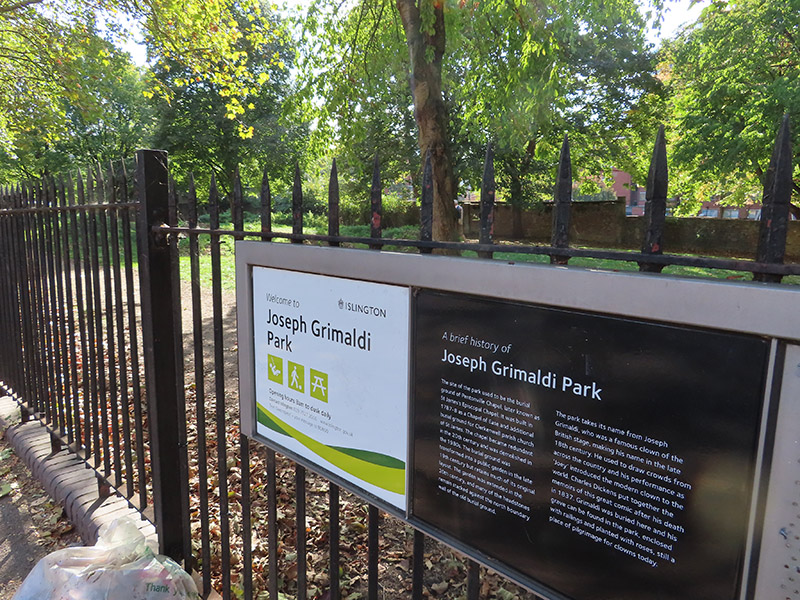
After a swift half we plough on back south on Calshot Street, Southern Street and Killick Street before switching east again along Collier Street. In between Cumming Street and Rodney Street is a contender for one of the most unkempt bits of green space in the capital. In fairness, I didn’t walk around all of Joseph Grimaldi Park, named after the most popular actor and entertainer of the Regency Era, but the part I did see just comprised a series of weed-covered mounds. Grimaldi died in 1837 and was buried here in what was then St. James’s Churchyard. Unfortunately, I was put off venturing into the park so I didn’t come across Grimaldi’s grave or the musical artwork that was installed in his honour as part of a 2010 re-landscaping. Tears of a Clown indeed.

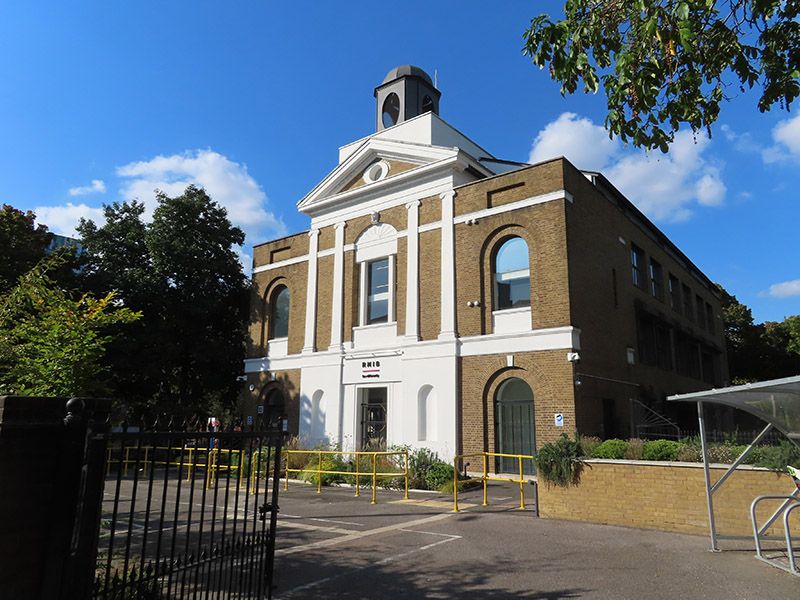
In between the park and the Pentonville Road is the headquarters of the Royal National Institute of Blind People (RNIB). The RNIB moved into the Grimaldi Building, an office building designed by Allies and Morrison Architects to reflect the shape of the church that once graced the site, in 2023. Prior to that their HQ was in Judd Street, south of King’s Cross.

For the final part of today’s excursion it’s just a case of winding our way back to King’s Cross station utilising the streets in between Collier Street and Pentonville Road that we’ve already visited other sections of, namely Calshot Street, Killick Street and Northdown Street. For the sake of completeness we’ll also give the 40 metre long Afflect Street a mention.

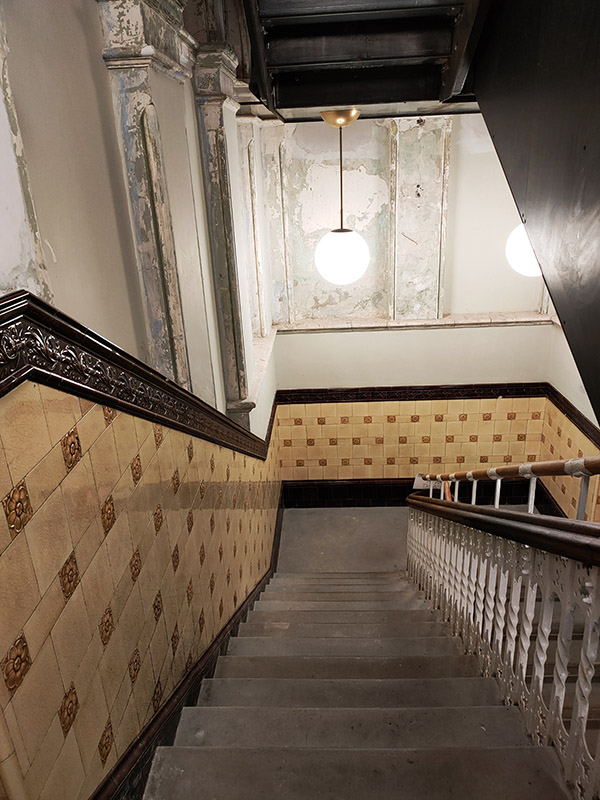
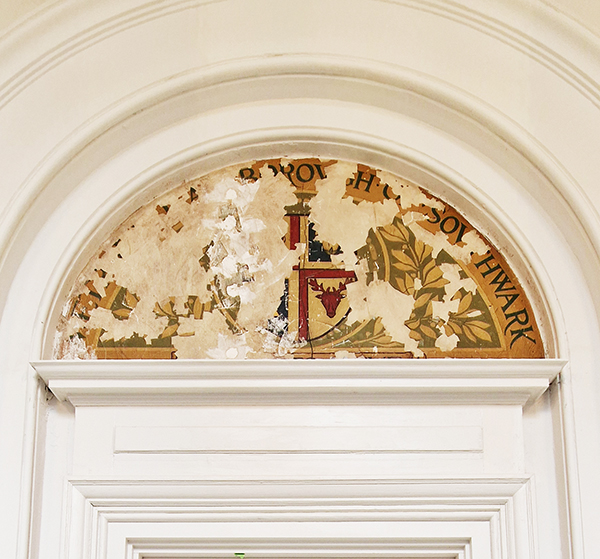
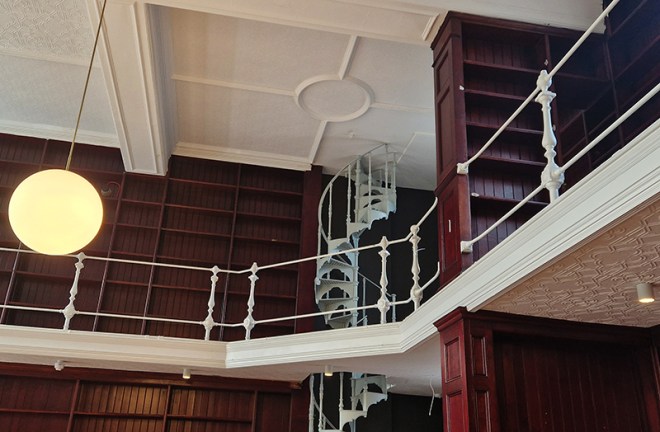
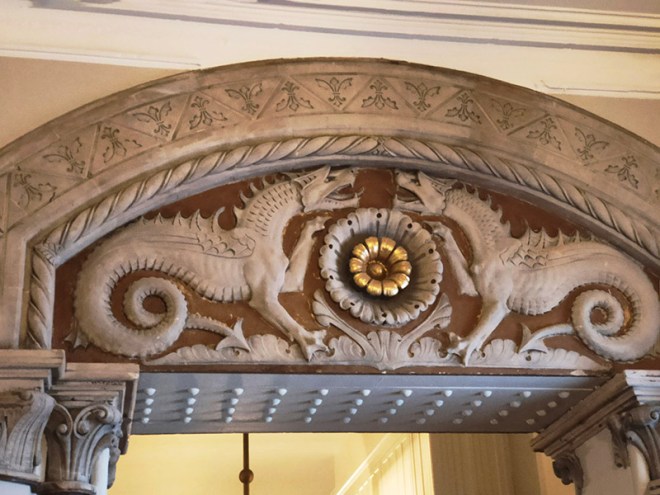
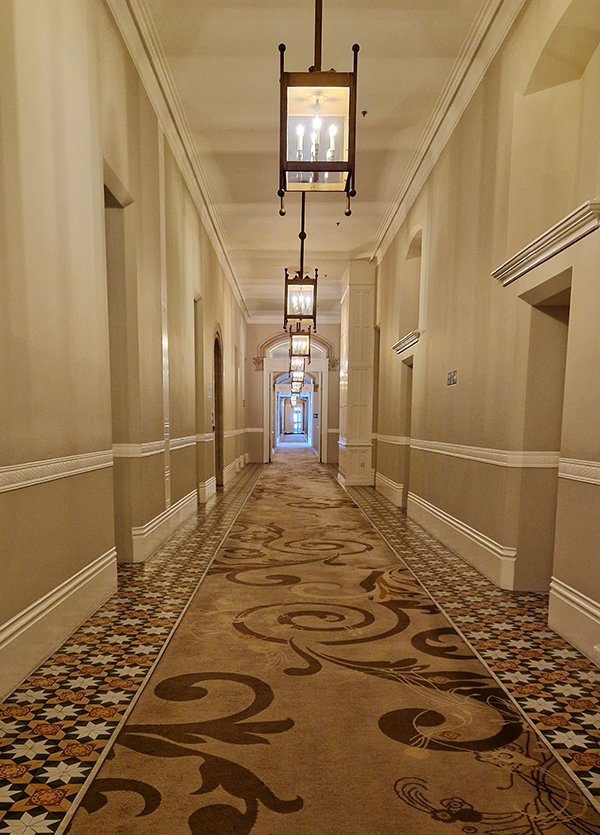
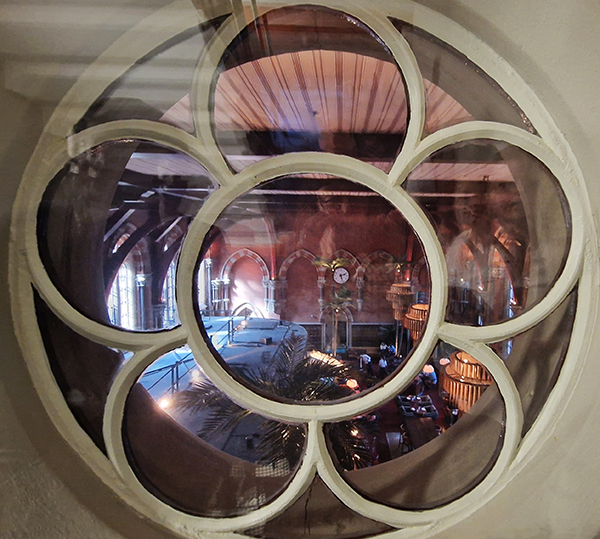
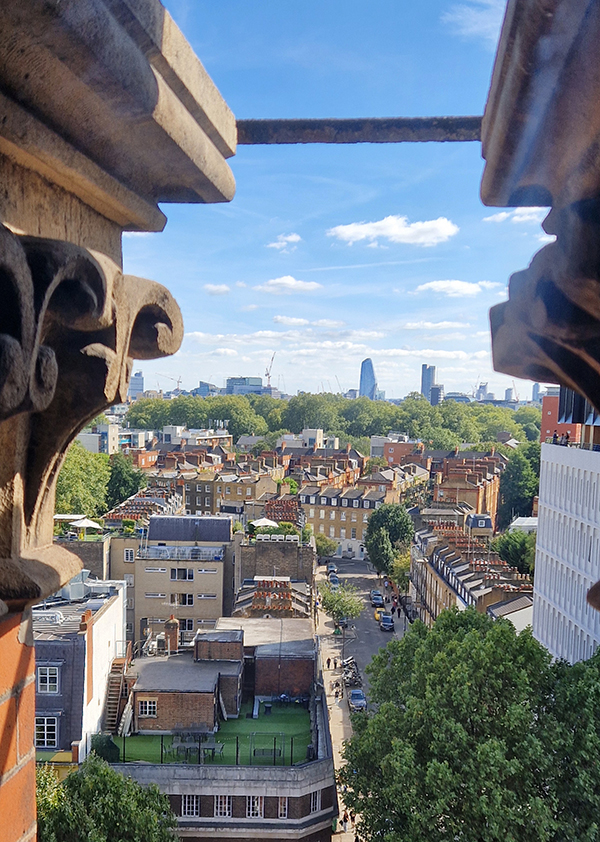
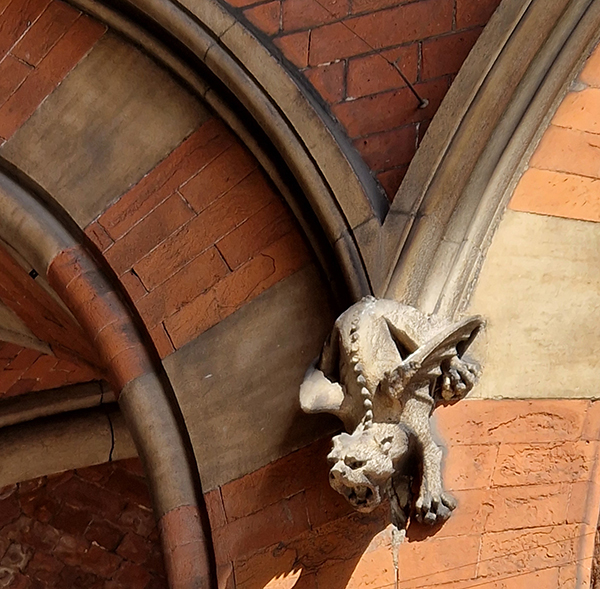
As noted at the start of the post, we’ll finish today with George Gilbert Scott’s 1873 masterpiece, The Midland Grand Hotel, now brought back to life (fittingly) as The Renaissance Hotel, St Pancras. So here are a few highlights of a tour of the inside of the hotel I took during Open House weekend 2024.

Day 81 – Knightsbridge – Brompton Road – Exhibition Road

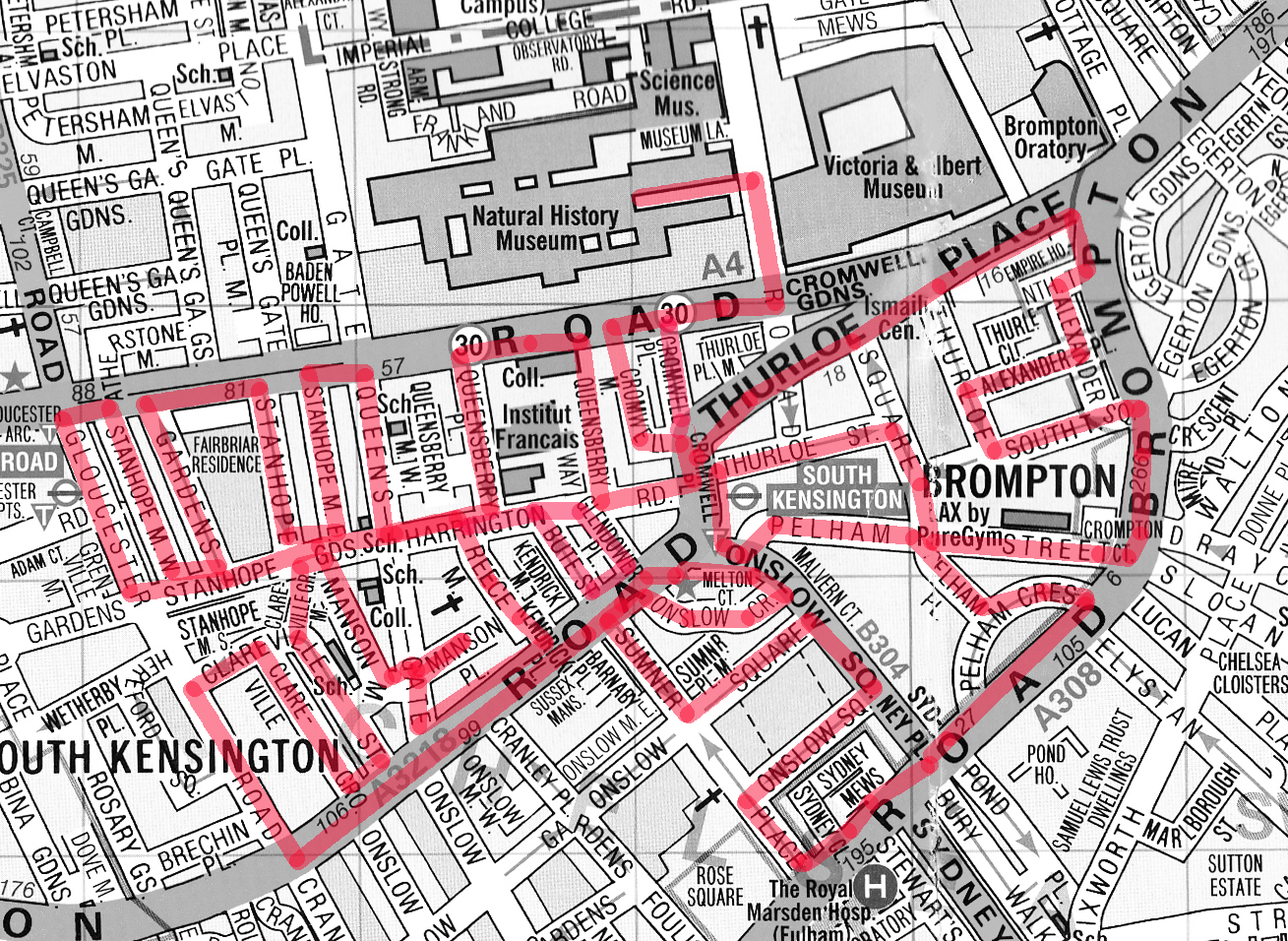
We’ve switched the focus back west again this time with another visit to the Royal Borough of Kensington and Chelsea; specifically, the area immediately south of Hyde Park in between Sloane Street and Exhibition Road. It’s a packed programme which includes visits to Harrods (somewhat reluctantly), the V&A Museum and the Brompton Oratory.

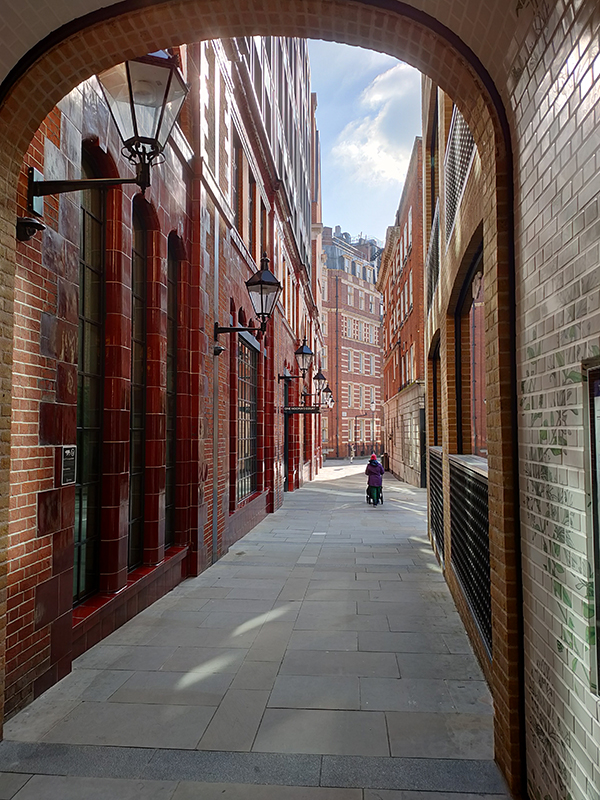
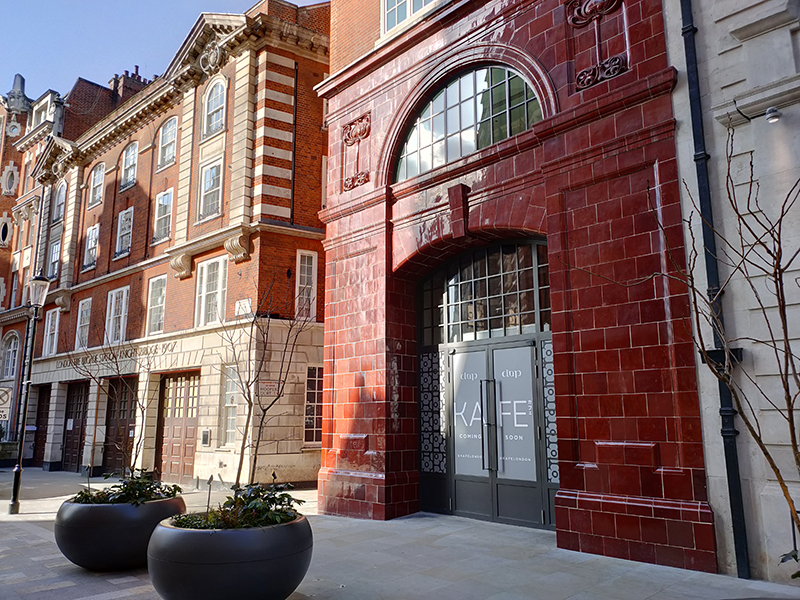
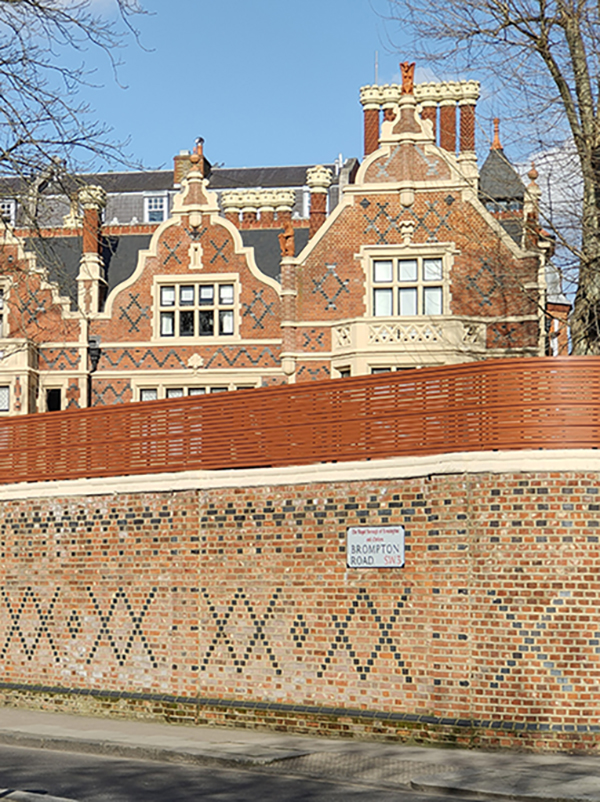
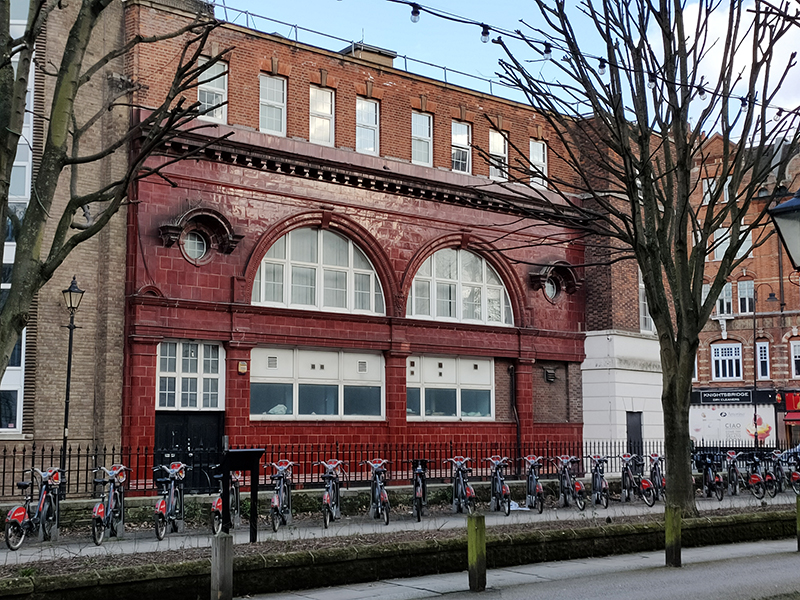
We begin at Knightsbridge Underground Station, which was originally built in 1906 in the classic Leslie Green style. In the 1930’s, coinciding with the introduction of escalators, a new ticket hall and entrance were incorporated into the building on the corner of Brompton Road and Sloane Street and an additional entrance, closer to Harrods, was created with a long subway linking the two. The photographs below show the original familiar ox-blood tiling on display in Hooper’s Court and Basil Street. In 2017 a new step-free access to the tube station from Hooper’s Court was given the go-ahead but as of the time of writing construction of this is still “on-going”.

As it happens, 2017 was when this blog last found itself in this vicinity (Day 46 to be precise) and, memory being what it is, the first part of today’s walk ends up being something of a reprise. From the Harrods exit we proceed up the Brompton Road, cut down Hooper’s Court into Basil Street and then work our way around Rysbrack Street, Stackhouse Street, Pavilion Road, Hans Crescent, Hans Road, Herbert Crescent, Hans Street and the eastern wing of Hans Place. Things kick off in earnest on the west side of Hans Place which is where you’ll find the Ecuadorean Embassy.

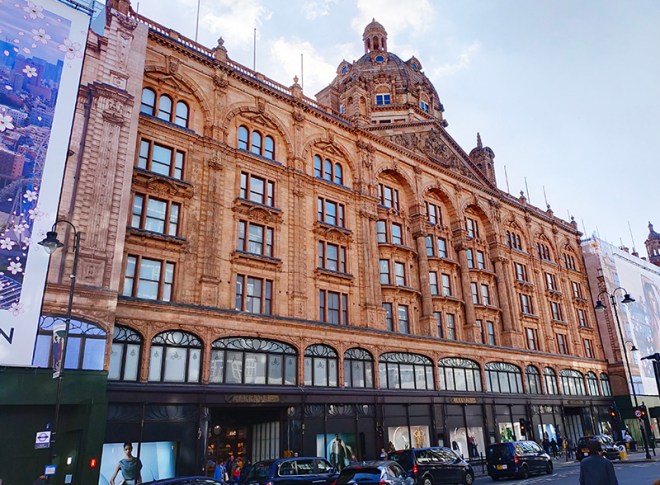
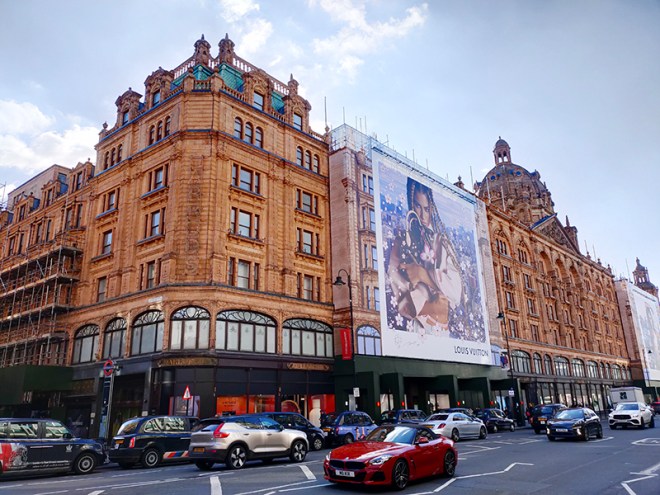
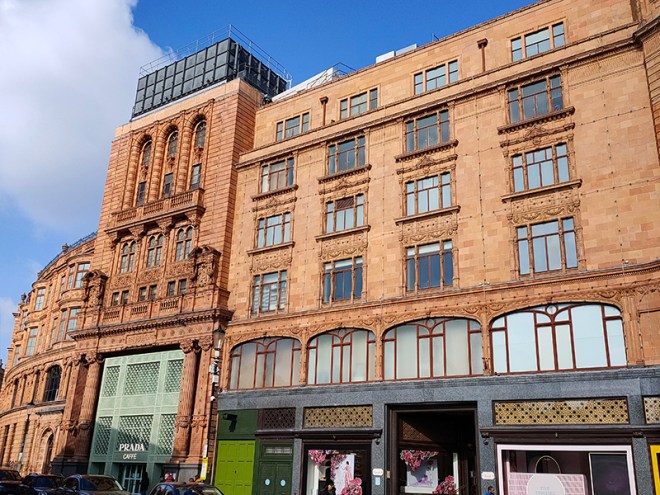
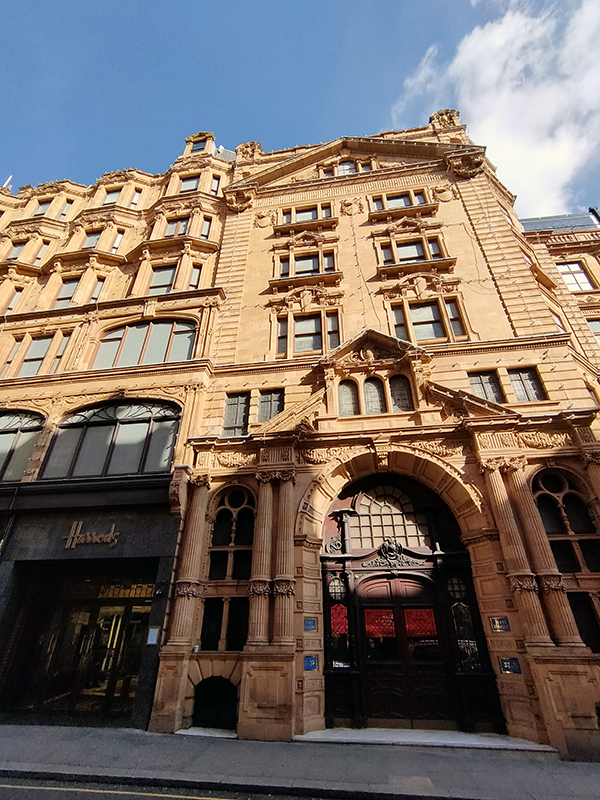
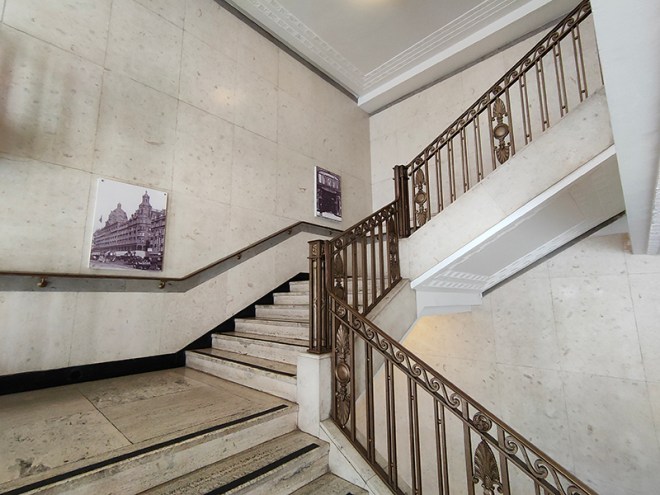
I didn’t fully comprehend the scale of Harrods until I walked all the way around its outside. Occupying a 20,000 square metre site with a total selling space, across 7 floors, of over 100,000 square metres this is the largest department store in Europe. The business was established by Charles Henry Harold (1799 – 1885), initially in Southwark, then relocating to the Brompton Road in 1849 and expanding rapidly from a single room to a collection of adjoining buildings. When those buildings burnt to the ground in 1883 the current building was swiftly erected on the same site. Designed by architect, Charles William Stephens, the new store had a palatial style, featuring a frontage clad in terracotta tiles adorned with cherubs, swirling Art Nouveau windows and was topped with a baroque-style dome.

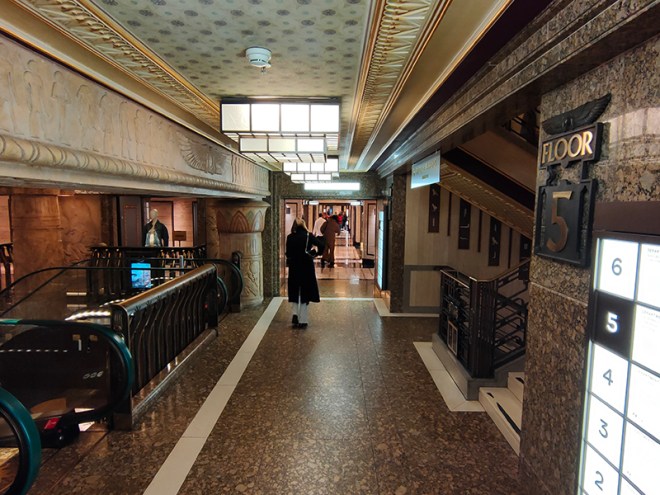
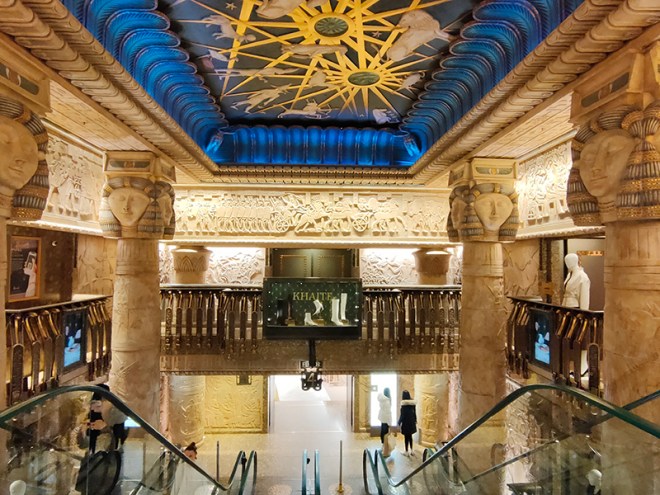
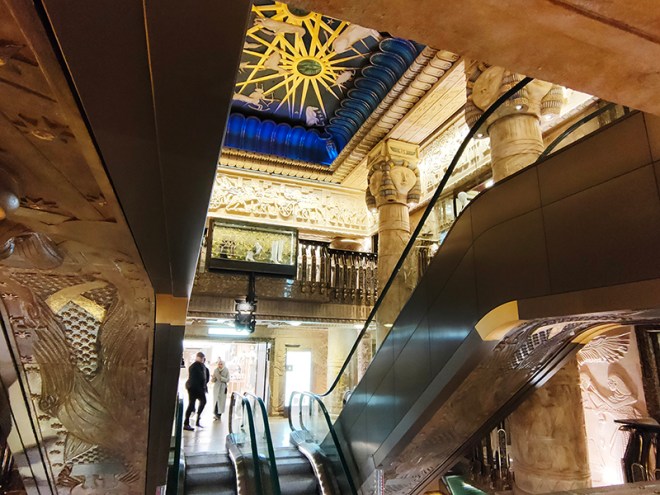
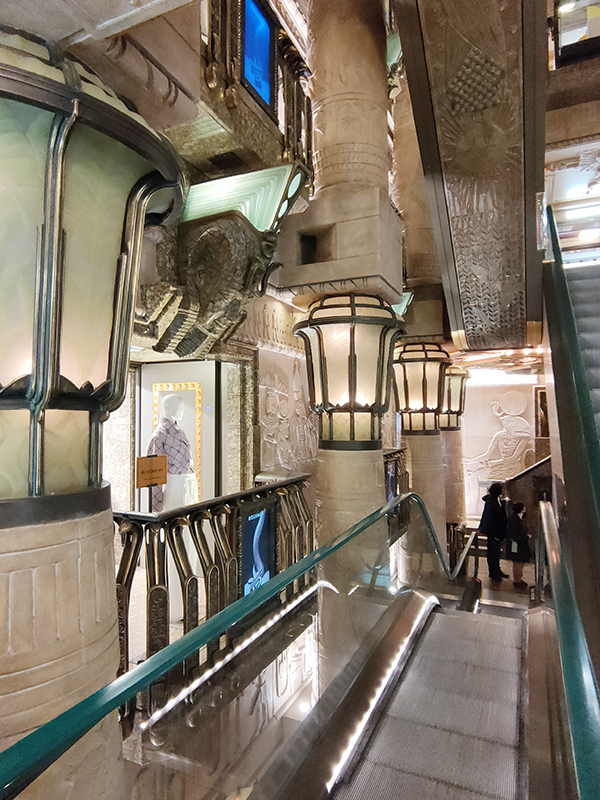
In 1899 the company went public and remained independent until 1959 when it was acquired by and merged into House of Fraser. In 1985 HoF fell into the private ownership of the Al-Fayed Brothers after a bitter struggle with Tiny Rowlands’ Lonrho Group. When HoF was relisted in 1994 Harrods was split off and became a private company once again. In 1989, Harrods introduced a dress code for customers and among the would-be patrons who fell foul of this were both Kylie Minogue and Jason Donovan, a Scout troop, a woman with a Mohican hair cut and the entire first team of FC Shakhtar Donetsk. This no longer appears to be enforced by the current owners, the Qatari Investment Authority, who bought out the now thoroughly disgraced Mohamed Al-Fayed in 2010. As already noted, I had qualms about stepping inside Harrods especially as its key interior feature, the Egyptian-themed central escalator was commissioned by Al-Fayed, whose face adorns the many pharaonic statues you pass. However, it is a tour-de-force of kitsch excess so, as long as you don’t actually buy anything, it’s worth experiencing as a one-off.

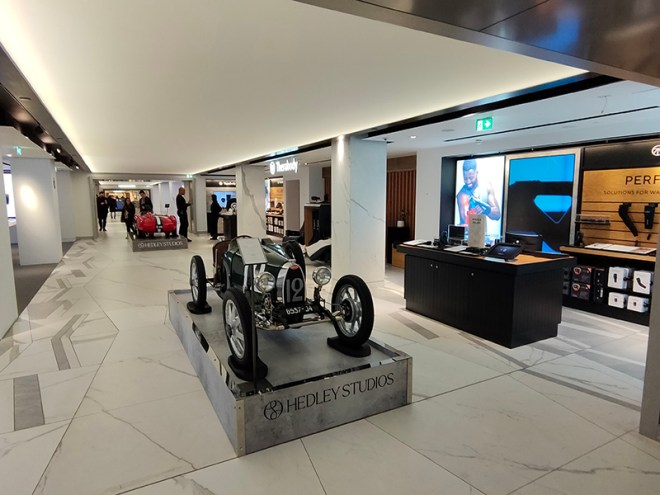
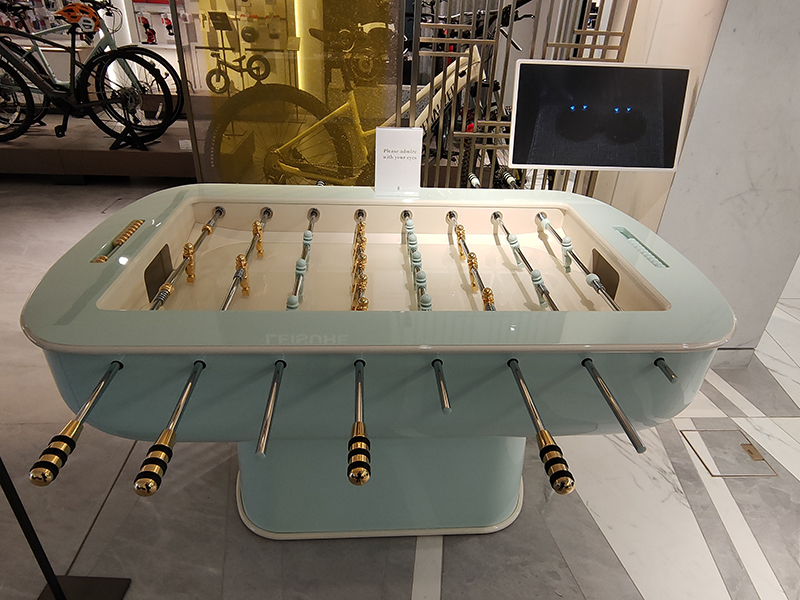
The store wasn’t exactly heaving and, aside from visitors from the Gulf petro-states, it’s hard to see who would be interested in buying stuff here that is available far cheaper elsewhere. There is, of course, merchandise which is unique to this particular emporium but surely even the tackiest of billionaires would baulk at throwing away £25,000 on this.

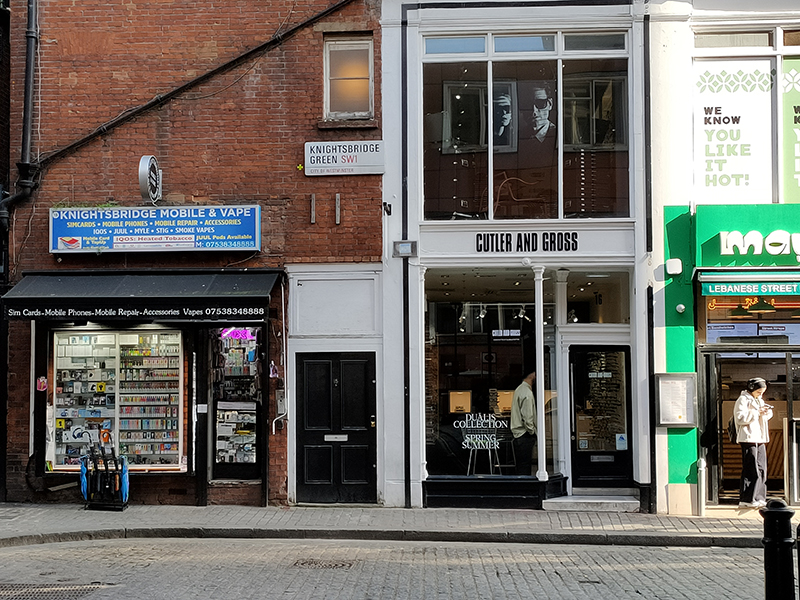
Having entered Harrods from the Hans Road entrance I exited via the main entrance on Brompton Road and headed back towards the tube station before cutting through Knightsbridge Green onto Knightsbridge (the road). There’s absolutely no trace of greenery on Knightsbridge Green but it does boast one of these (yes even here).

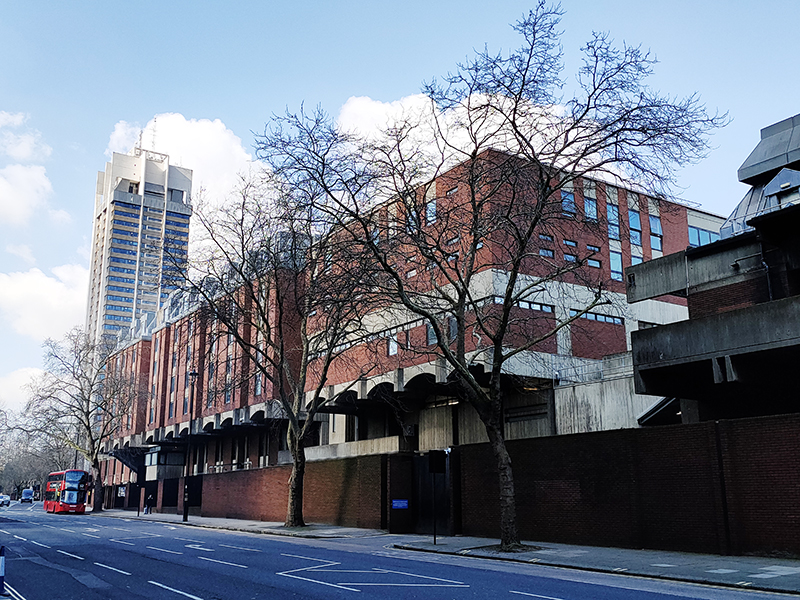
Once out onto Knightsbridge we’re confronted by the blot on the horizon that is the Hyde Park Barracks (aka Knightsbridge Barracks). This site, only 1.2km from Buckingham Palace, has been a home to the Horse Guards since 1795 but the current buildings, designed by Sir Basil Spence (1907 – 1976), were completed in 1970. They provide accommodation for 23 officers, 60 warrant officers and non-commissioned officers, 431 rank and file, and 273 horses. The most prominent feature is the 33-storey, 94-metre residential tower. The barracks have been described as “the ugliest building in London” by critic A.A Gill and were voted no.8 in a list of Britain’s top ten eyesores compiled from a poll of the readers of Country Life magazine. Loath as I am to align myself with either I find it hard to disagree.

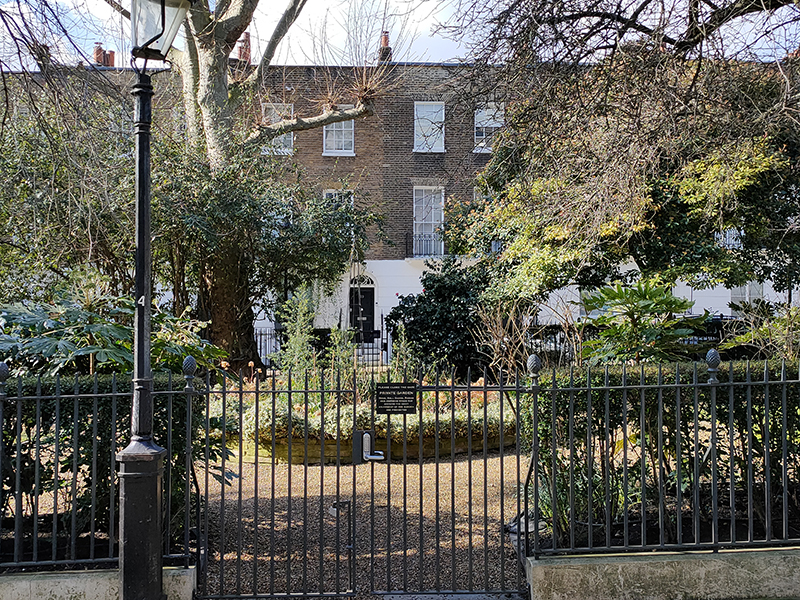
Heading south on Trevor Street we enter Trevor Square, the first of many, many residential squares built around private gardens that we’ll encounter today. This one dates from the 1820’s and is named after Arthur Hill-Trevor, 3rd Viscount Dungannon who agreed to demolish his Powis House in 1811 to make way for the new development. At the southern end stands the former Harrods Depositary building which was subject to a residential redevelopment in 2002.

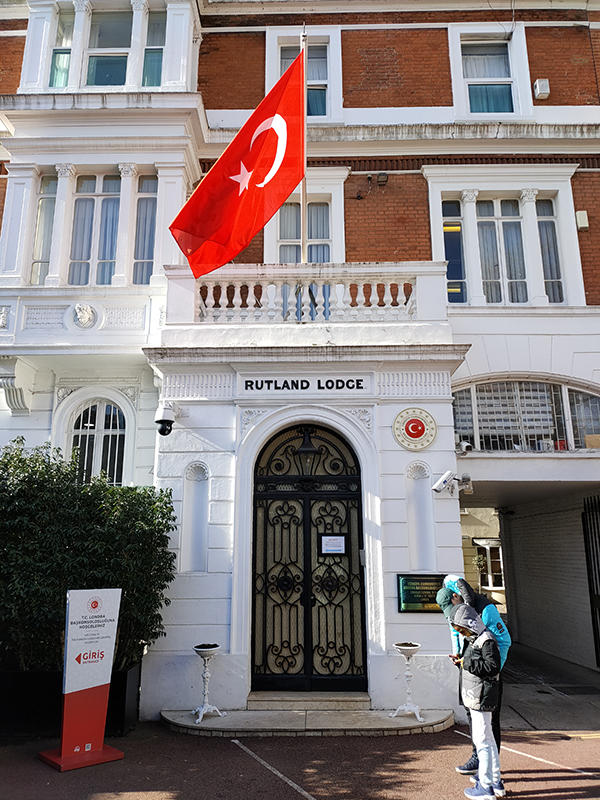
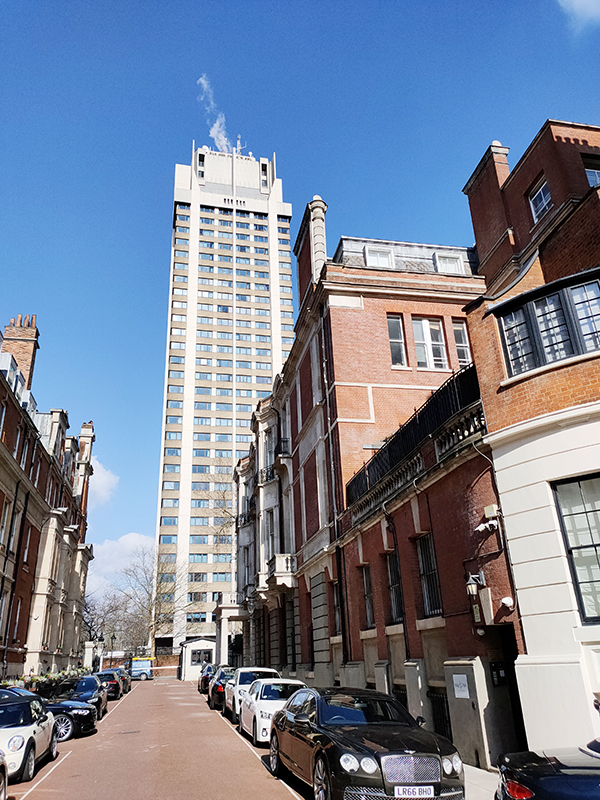
From Trevor Square we loop round Lancelot Place and Raphael Street back onto Brompton Road then follow Trevor Place up to Knightsbridge once more. Next stop, continuing west, is Rutland Gardens at the far end of which is the Turkish consulate. I assume none of the several Bentleys parked end to end down the street are related to this but I could be mistaken.

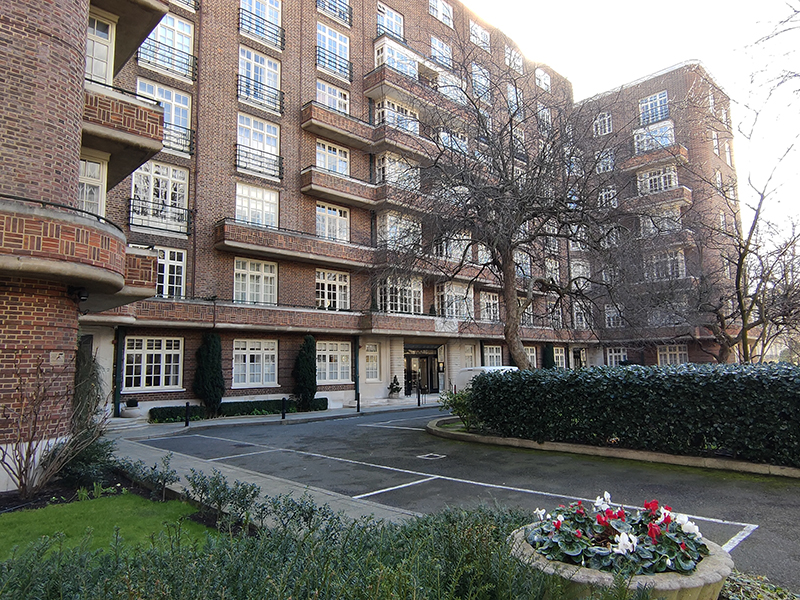
We return to Knightsbridge and as it merges into Kensington Road we turn south on Rutland Gate. Proceeding down the eastern section of this two-pronged thoroughfare we pass the Grade II Listed Eresby House from 1934.

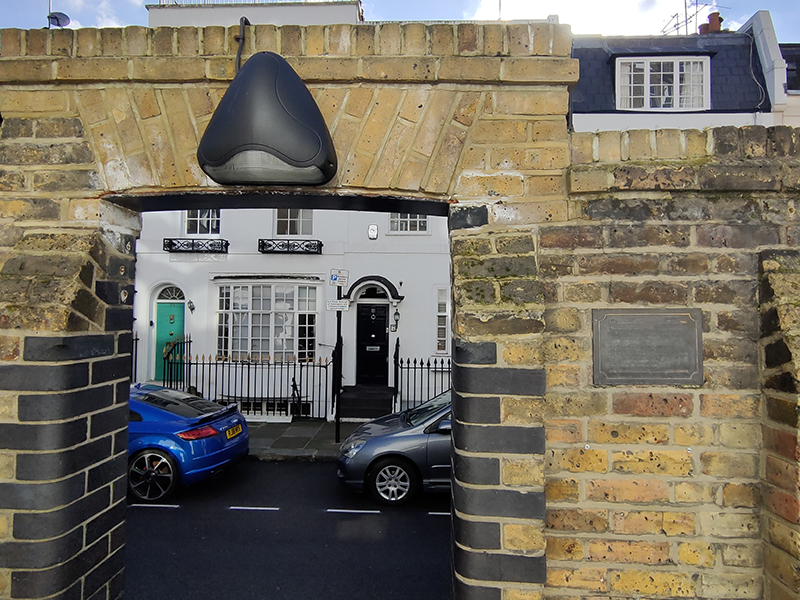
At the bottom of Rutland Gate we turn left into Rutland Mews East which we exit from onto Rutland Street via “The Hole In The Wall” which is explained thus in the metal plaque on the wall beside it. This boundary wall of the Rutland Estate was destroyed by a bomb, during World War II, on 25 September 1940. At the request of residents a right of way was established when the wall was rebuilt by the City of Westminster in 1948 and has come to be known as ‘the hole in the wall.

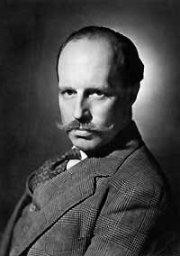
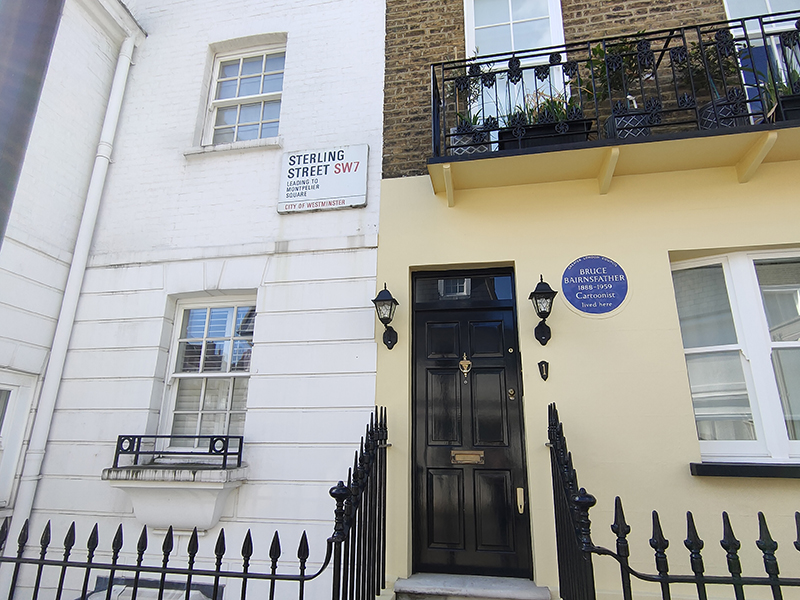
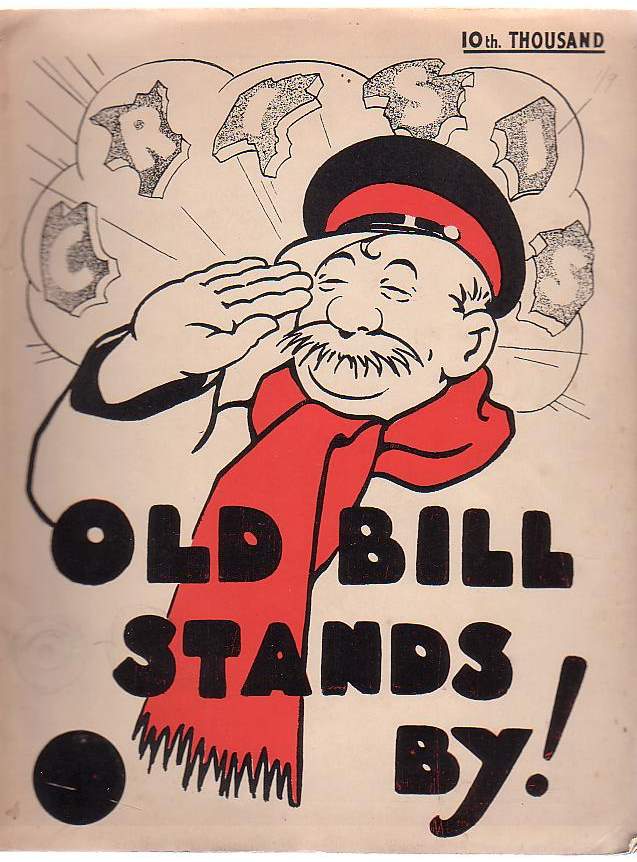
Heading up Montpelier Walk we swing right into Montpelier Square and circumnavigate this get to Sterling Street. No.1 Sterling Street has a blue plaque commemorating the humorist and cartoonist, Bruce Bairnsfather (1887 – 1959). Bairnsfather was commissioned into the Royal Warwickshire Regiment in 1914 as a second lieutenant and served with a machine gun unit in France until 1915, when he was hospitalised with shell shock sustained during the Second Battle of Ypres. While in recovery he developed his humorous series for the Bystander weekly tabloid about life in the trenches, featuring “Old Bill”, a curmudgeonly soldier with trademark walrus moustache and balaclava. The character became hugely popular during WW1, a success that continued through the inter-war years. And because many police officers at that time sported a similar type of facial hair it is probable that he was the inspiration for the police becoming known as “The Old Bill”.

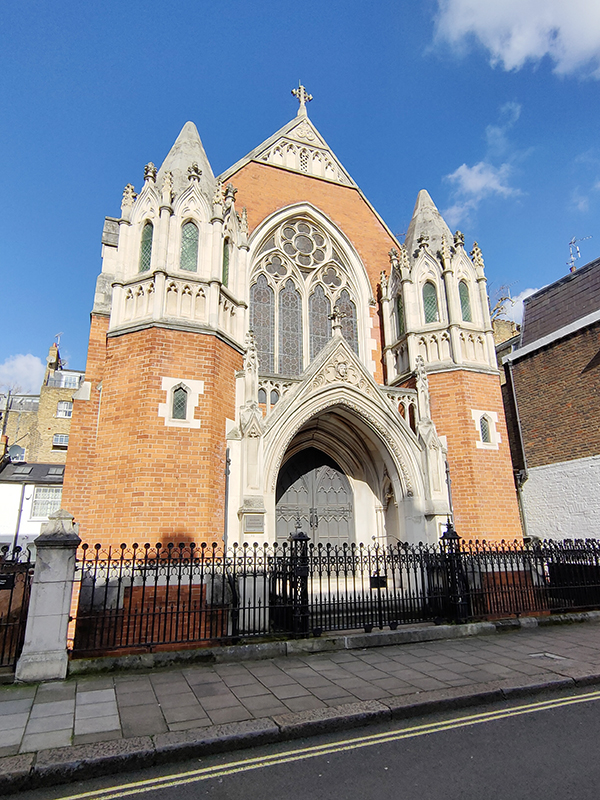
Turning into Montpelier Place we pass the Deutsche Evangelische Christuskirche, established in 1904 to serve West London’s German Lutheran community. It was funded by Baron Sir John Henry Schroder (neé von Schröder) who had moved to England at the age of 16 to join the London office of the eponymous Merchant Banking firm created by his father. He was awarded his Baronetcy in 1892. The dedication of the church was attended by two of Queen Victoria’s grand-daughters and one of her sons-in-law.

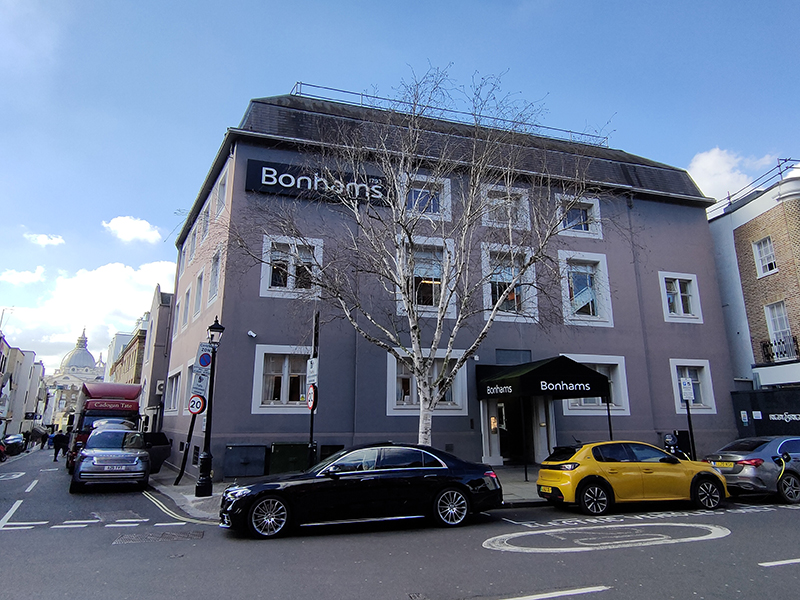
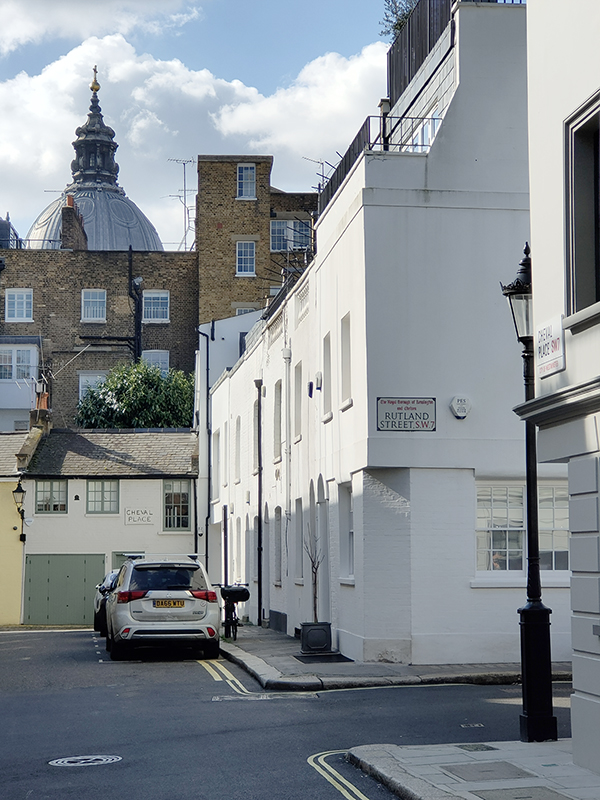
Following Montpelier Street back towards the Brompton Road we turn west onto Cheval Place just after Bonham’s Auctioneers. This is the international firm’s second auction house in London, after the flagship saleroom in Bond Street. The presence of a chauffeur-driven car parked on double yellow lines tends to be the rule rather than the exception in this part of town.

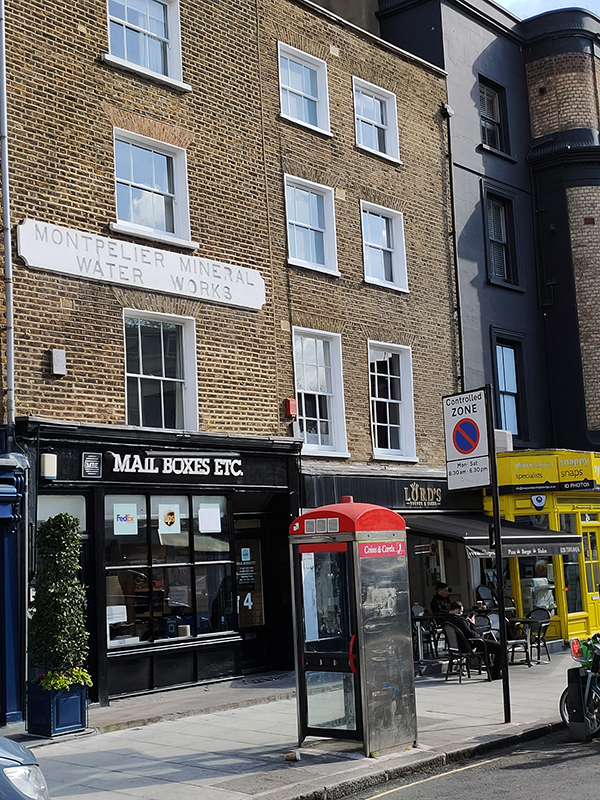
On the other side of Montpelier Street there’s a sign on one of the buildings that reads Montpelier Mineral Water Works. Unfortunately, I haven’t been able to discover anything about this save that Montpelier Mineral Water was a genuine product once upon a time.

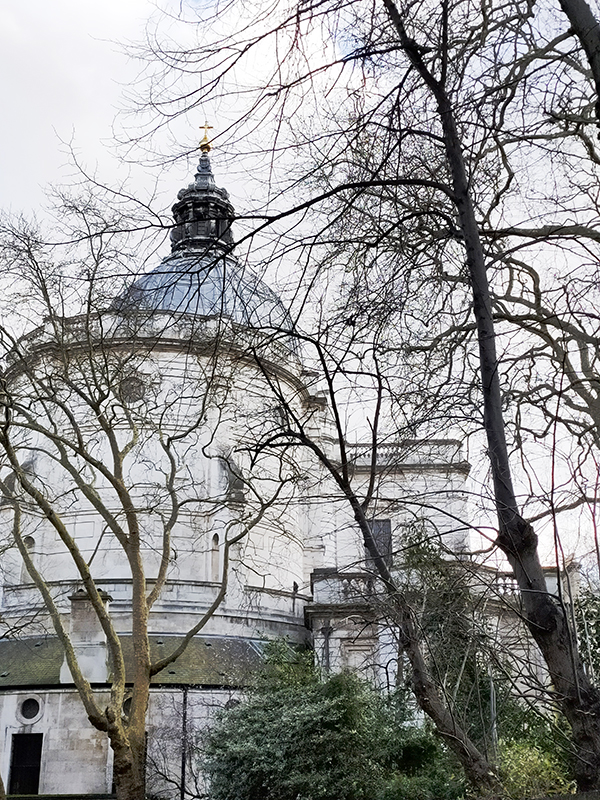
Anyway, back to Cheval Place which runs parallel to the Brompton Road and affords a view of the dome of Brompton Oratory, of which more later.

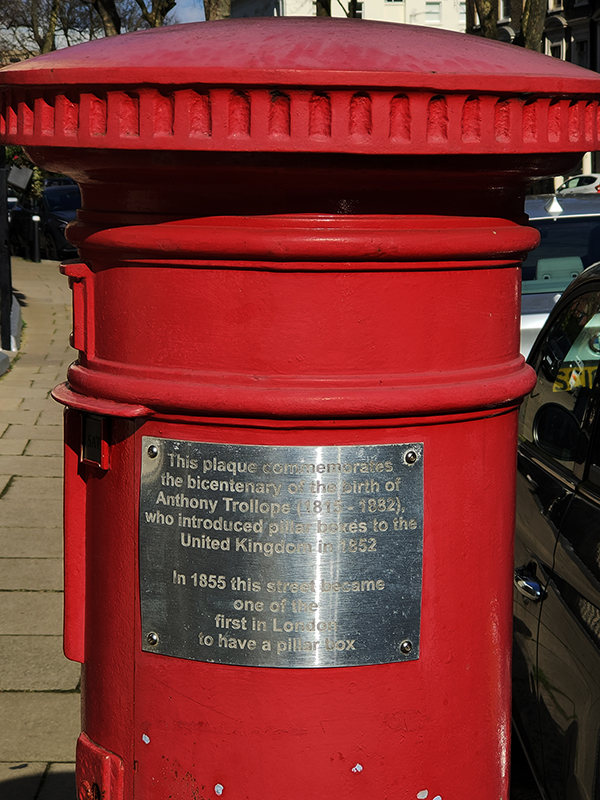
After a quick look at Fairholt Street we follow Rutland Street back round to the Hole In the Wall and on the other side make our way up the other leg of Rutland Gate. About half way up is one of several postboxes in London adorned with a plaque commemorating the bicentenary of the birth of novelist Anthony Trollope (1815 – 1882). In 1850’s, Trollope worked as a surveyor in the Post Office (going on to attain a senior position within the management hierarchy. At that time letters had to be taken to the local receiving house (early form of post office) or handed to a Bellman who walked the streets in uniform, ringing a bell to attract attention. Trollope was given the task of finding a solution to the problem of collecting mail on the Channel Islands where the usual practice was proving unsatisfactory. He recommended a device he may have seen in use in Paris: a “letter-receiving pillar” out of cast iron and around 1.5m high. The first four such pillar boxes were erected in David Place, New Street, Cheapside and St Clement’s Road in Saint Helier in 1852. In the beginning, there was no standard design for the boxes and numerous foundries created different sizes, shapes and colours. In 1859, a bronze green colour became standard on the basis that this would be unobtrusive. However, it soon became clear that it was too unobtrusive, since people kept walking into them and red became the standard colour in 1874.

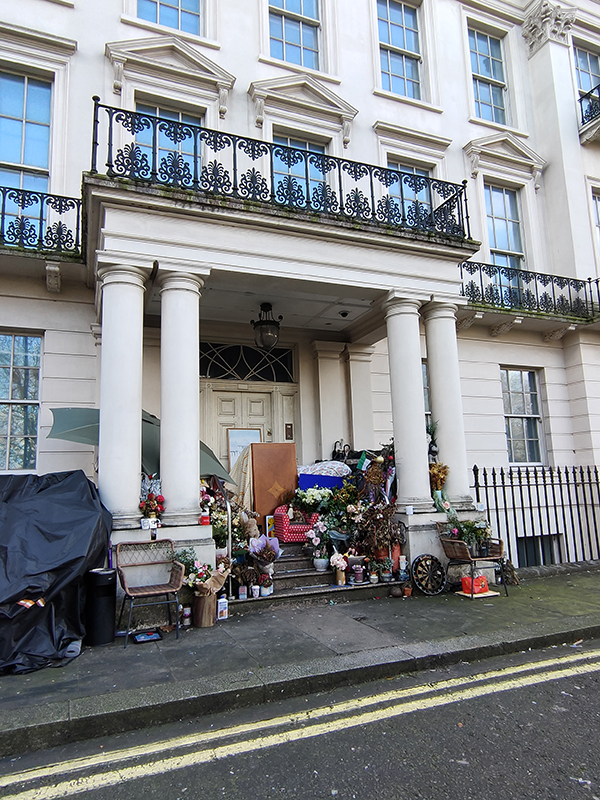
Arriving at the junction of Rutland Gate and Knightsbridge we encounter something of a mystery. 2–8a Rutland Gate is a large white stuccoed house originally built as a terrace of four houses in the mid 19th-century and converted into a single property in the 1980s. In 2012, the house was described as having seven storeys and 45 bedrooms, with a total size of 5,600 m2 and including a swimming pool, underground parking, several lifts, bulletproof windows and substantial interior decoration of gold leaf. In April 2020, it was bought by a Chinese businessman for a reputed £210 million, making it quite probably the most expensive house ever sold in the UK. But then in 2022 it was reported that it had been put on the market again. Either way it doesn’t look like anyone is in residence at the present time although someone has made themselves at home out front.

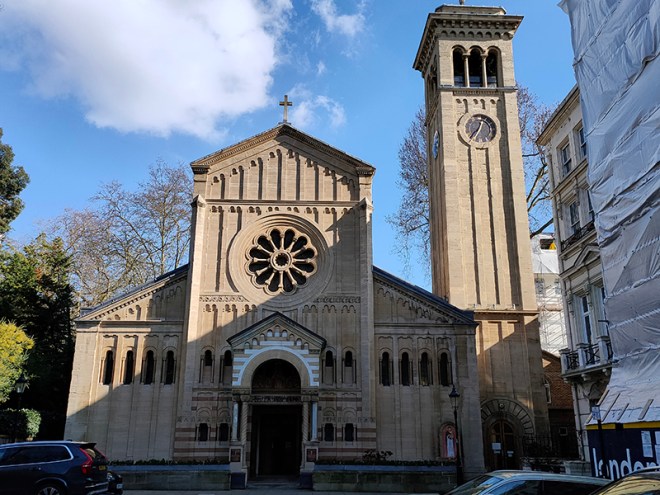
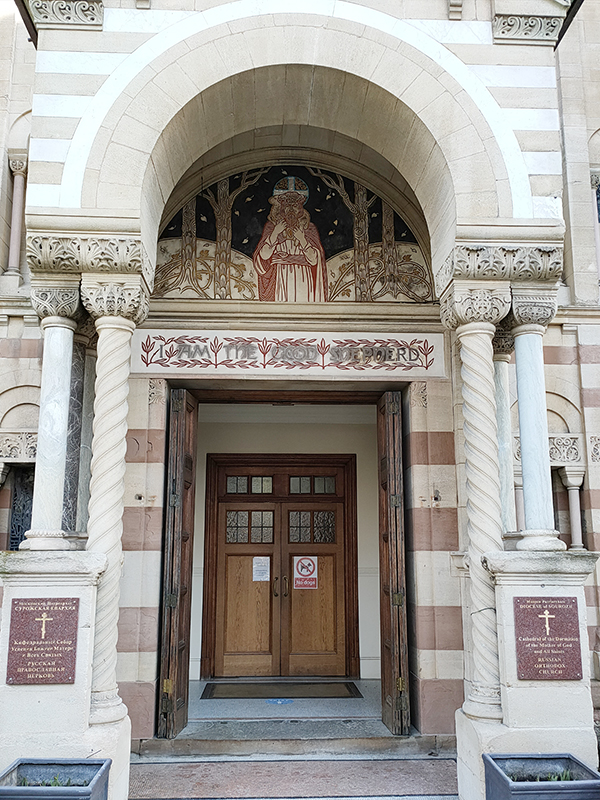
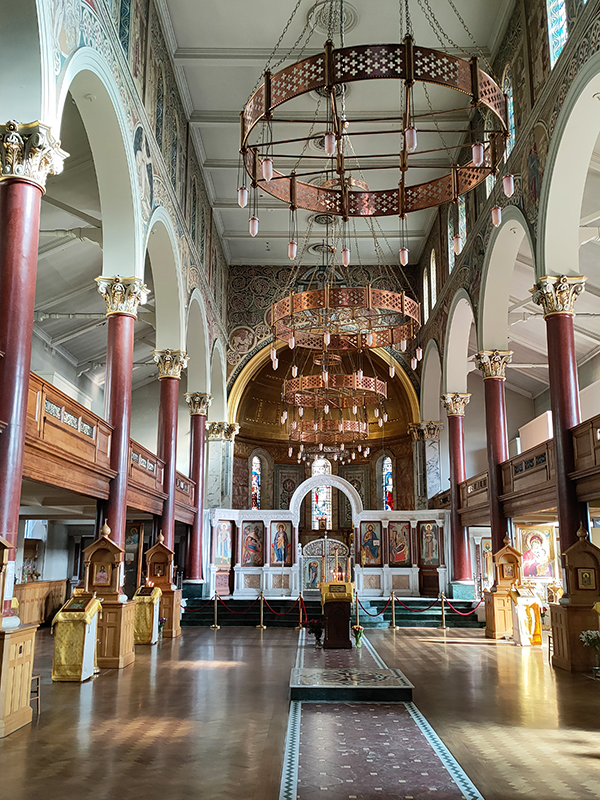
We continue west along Princes Gate and turn south into Ennismore Gardens on the east side of which we find the Russian Orthodox Cathedral of the Dormition of the Mother of God and All Saints home to the Russian Orthodox Diocese of Sourozh. This former Anglican church dates back to 1849 when architect Lewis Vulliamy proposed a design in the Lombard style instead of the conventional Gothic of the time. His vision wasn’t fully realized for lack of finance but in 1891 the church was remodelled such that the main façade is a very close copy of that of the Basilica of San Zeno in Verona. In the mid-1950’s the building was let to the Russian Orthodox Church and in 1978 the Sourozh Diocese bought it outright. It has a Grade II* listing. The interior is very lavish with plenty of gold (leaf) on show and filled with icons (which they ask you not to photograph up close). There are also a large number of framed texts, which my A Level Russian from nearly half a century ago allows me to read but not understand.

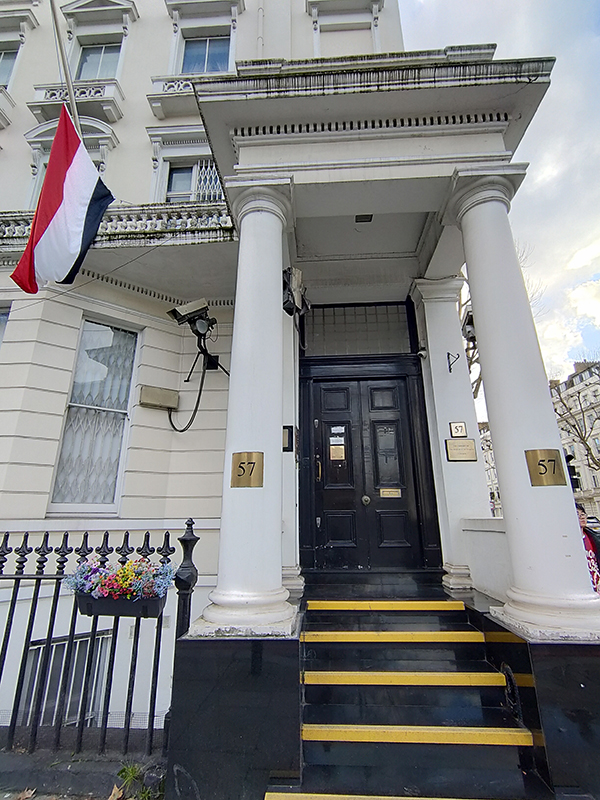
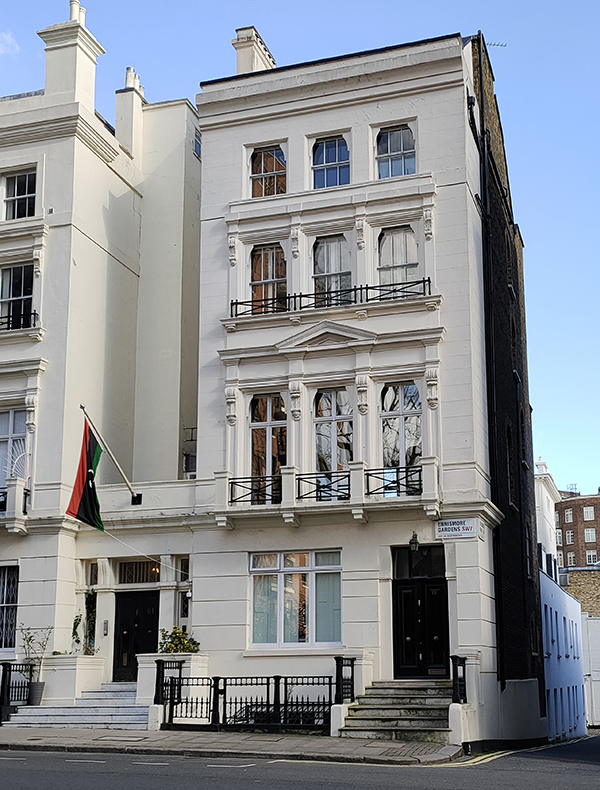
At nos. 61-62 Ennismore Gardens is the consular section of the Libyan Embassy (though there’s nothing on the building to identify it as such other than the flag). The website of the Royal Borough of Kensington & Chelsea has it listed under the splendid alternative name, The People’s Bureau of the Great Socialist People’s Libyan Arab Jamahiriya, though the page hasn’t been updated since 2016.

We complete a full circuit of the actual garden square bit of Ennismore Gardens and then swing round the very picturesque Ennismore Mews into Ennismore Street.

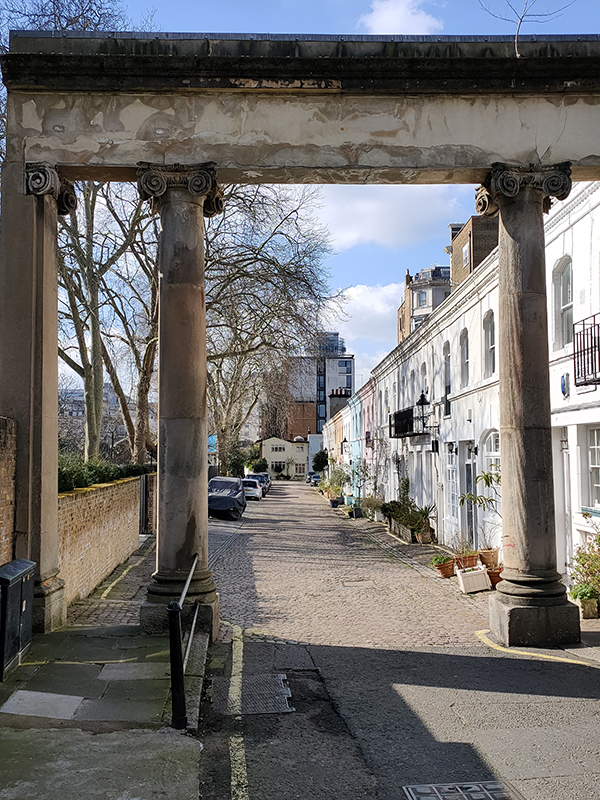
Heading west, Ennismore Street becomes Ennismore Garden Mews (which is also very picturesque). At the entrance to the mews, which were built between 1868 and 1874 by Peter and Alexander Thorn on land belonging to the 3rd Earl of Listowel, stands a Grade II listed arch, featuring paired Ionic columns supporting an entablature (I had to look that up too).

To the south of the mews lies Holy Trinity Brompton, a Grade II listed Anglican church that was consecrated by the Bishop of London in 1829.

Beyond the churchyard, Ennismore Garden Mews takes a northward turn up to Prince’s Gardens. Princes Gardens Square was developed between the 1850’s and the 1870’s by by Sir Charles James Freake, one of the most successful speculative builders in Victorian London. Apart from those on the north side of the square and those fronting onto Exhibition Road all of Freake’s original white stuccoed townhouses were demolished in the 1950’s to make way for the expansion of the Imperial College campus. One of those remaining on Exhibition Road has since 1962 played host to the London branch of the Goethe-Institut (the German equivalent of the British Council).

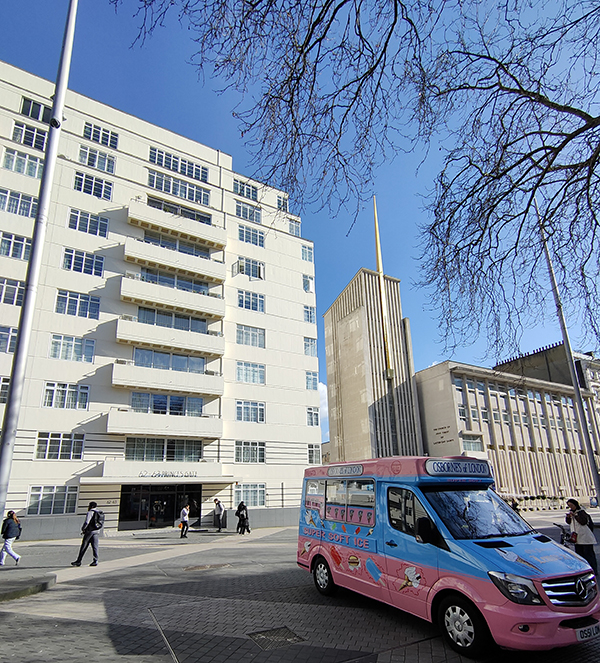
We head south down Exhibition Road, concentrating solely on its east side first encountering the fabulous Art Deco apartment block, 59-63 Prince’s Gate, which was designed by Adie, Button & Partners and completed in 1935.

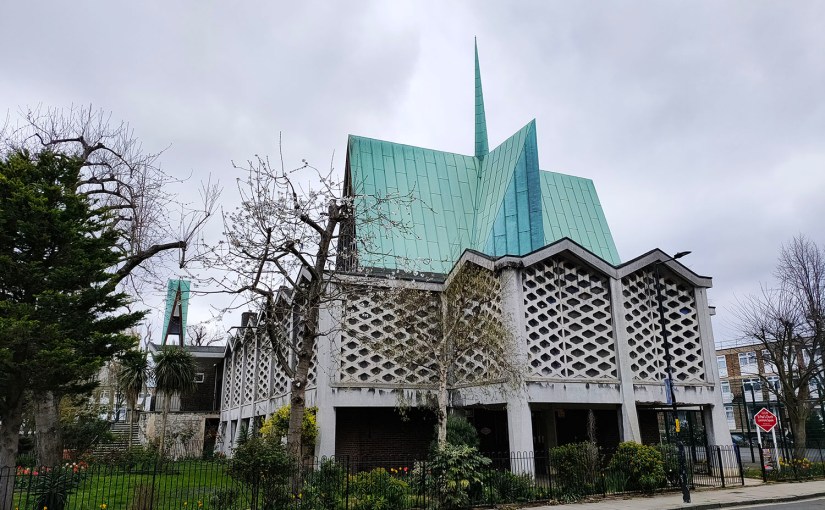
Immediately adjacent is the modernist Hyde Park Chapel of The Church of Jesus Christ of Latter-day Saints (in other words Mormon HQ London). This site, bombed during World War II, was originally identified as a suitable location for a Chapel in London by the then Mormon President in 1954 and was completed and dedicated in 1961.

First ice-cream van sighting of the year and March still a day away.

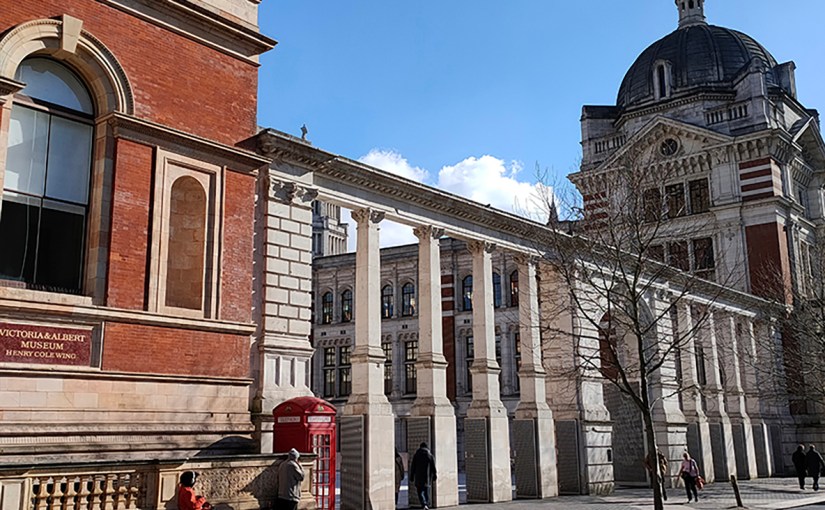
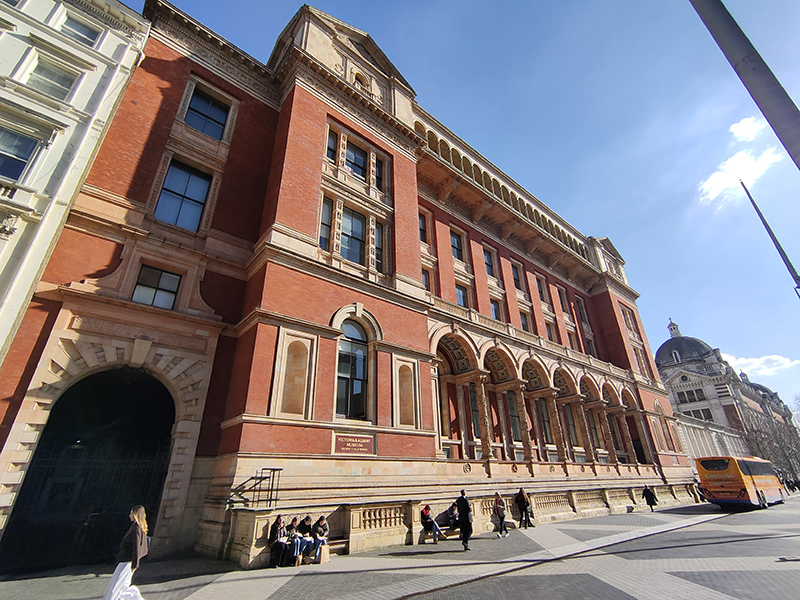
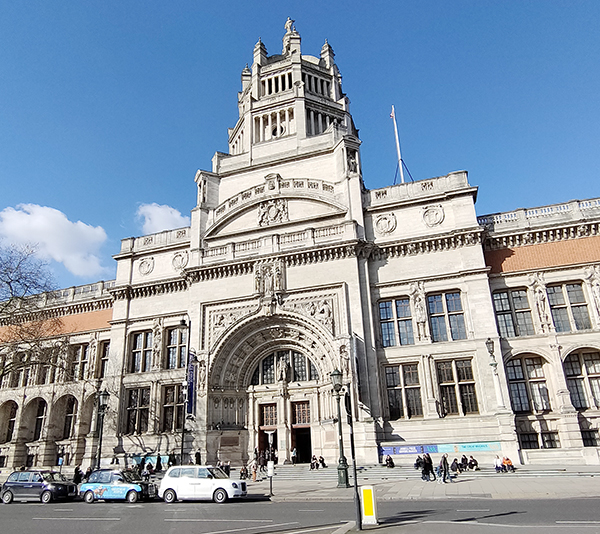
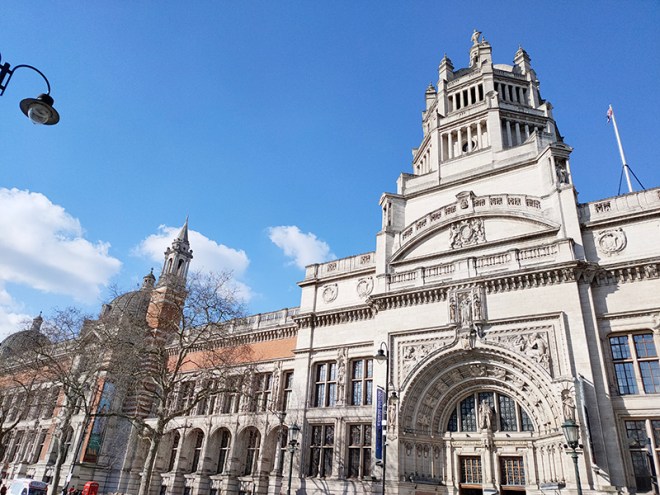
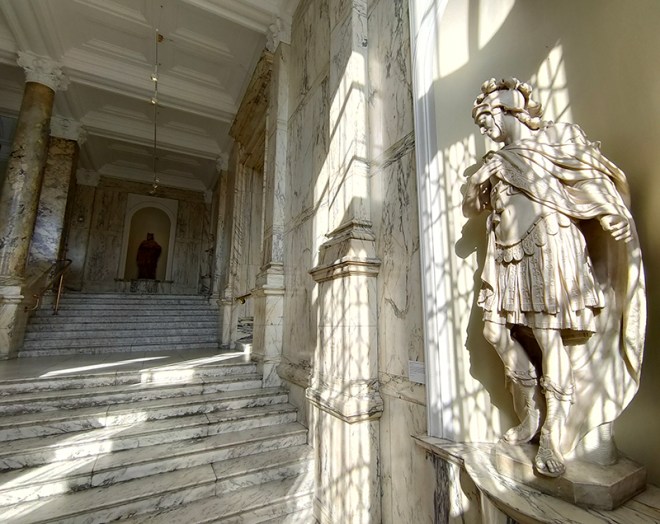
Two blocks further south and we reach the Victoria & Albert Museum which we enter via the Henry Cole Wing on Exhibition Road, designed by one of the museum’s in-house architects, Henry Scott. Constructed of brick and adorned with terracotta sculpture in an imitation Italian Renaissance style, it was completed in 1873.

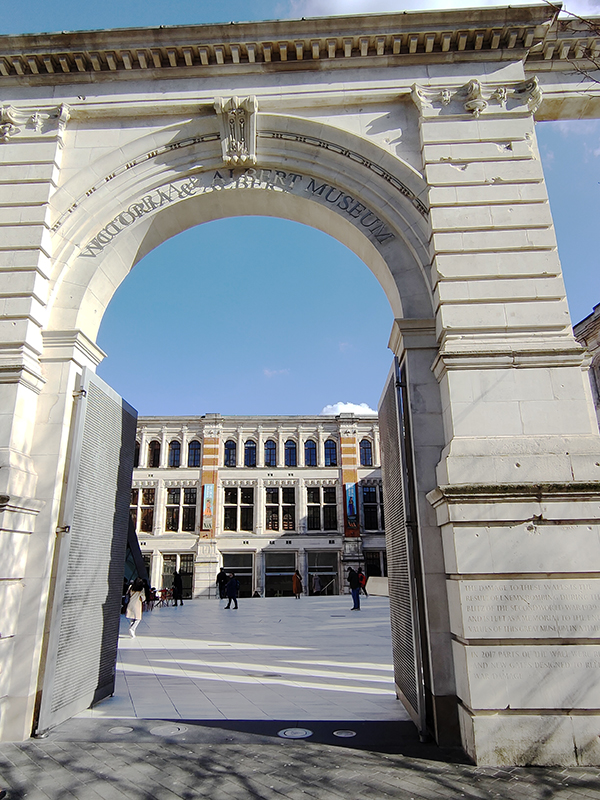
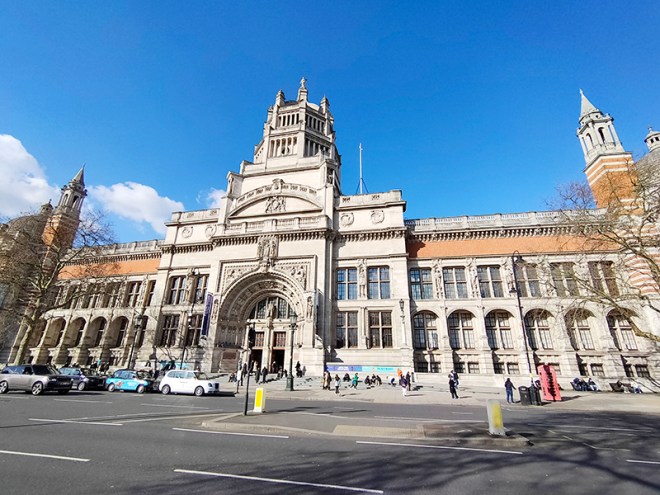
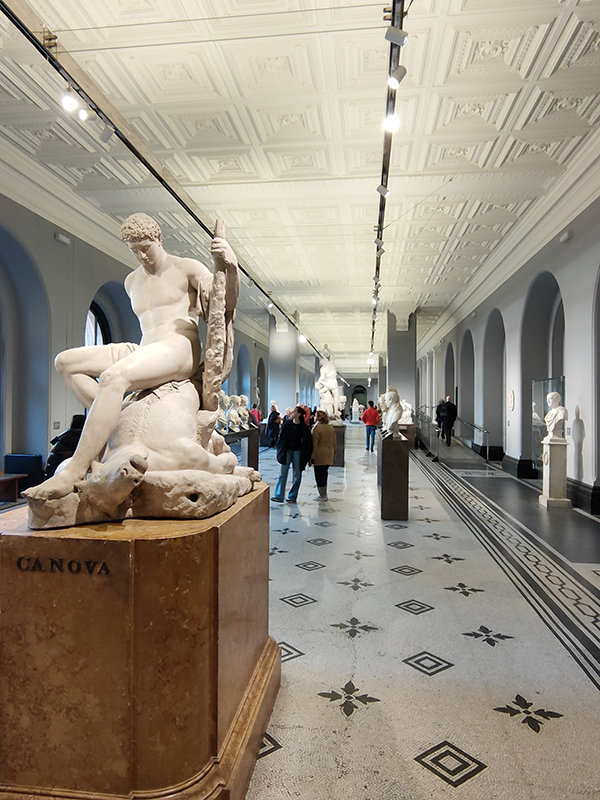
The origins of the V&A lie in the Great Exhibition of 1851 after which, its creator and champion, Prince Albert, urged that the profits of the Exhibition be used to develop a cultural district of museums and colleges in South Kensington devoted to art and science education. The V&A, originally known as the Museum of Manufactures, was the first of these institutions. It was founded in 1852 and moved to its current home, comprised of two buildings (one a temporary iron structure) five years later, at which time it was renamed as The South Kensington Museum. The first Director of the museum was Henry Cole (1808 – 1882) who had been one of the driving forces behind the Great Exhibition. Over the next 40 years the museum grew in piecemeal fashion including the construction of the North Court and South Court. Then in the late 1880’s a competition was held to select a new professional architect to complete the Museum. The design of the winner, Aston Webb (1849 -1930), called for long galleries punctuated by a three-storey octagon surmounted by a small cupola, and on the west, a large square court (eventually octagonal) balanced by the Architectural Courts on the east. In May 1899, in what was to be her last public ceremony, Queen Victoria laid the foundation stone for Aston Webb’s new scheme. The occasion also marked the changing of the Museum’s name to the Victoria and Albert Museum. As the building neared completion, a Committee of Re-arrangement looked at the question of how all the empty new galleries and courts should be filled. It decreed that the whole collection should be displayed by material (all the wood, together, all the textiles, all the ceramics etc.) in a huge three-dimensional encyclopaedia of materials and techniques. One of the last things to be completed was the inscription round the main door arch, which was adapted from Sir Joshua Reynolds: “The excellence of every art must consist in the complete accomplishment of its purpose”. The Museum was finally finished on 26 June 1909, more than 50 years after work had started on the original structures.

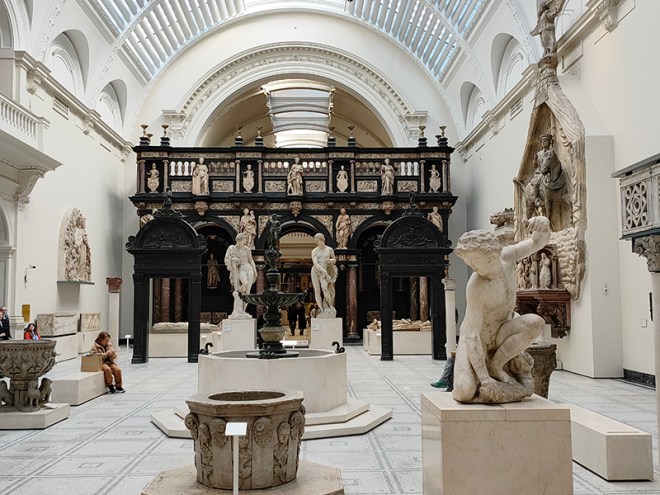
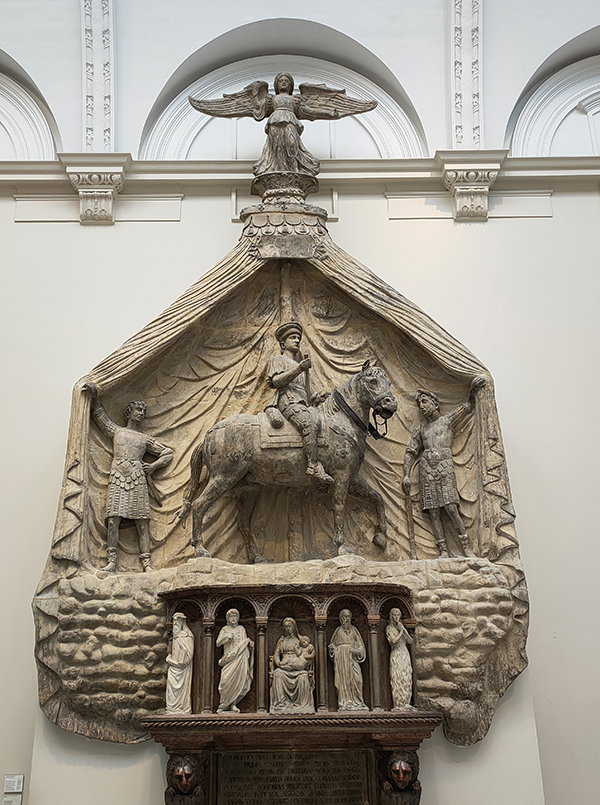
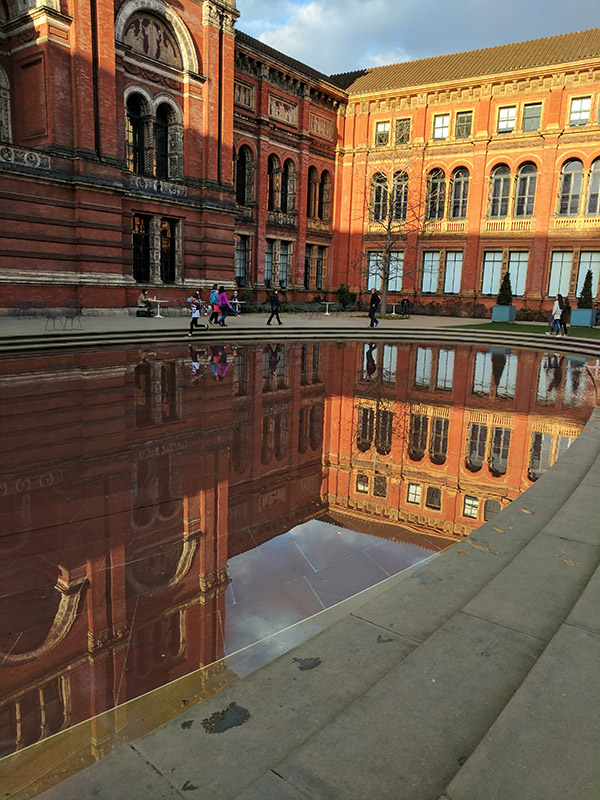
I’ve visited the V&A on numerous occasions over the years and yet I’m still staggered by the scale of some of the exhibits on display. One of these monumental objects is the Rood-loft (or Choir Screen) from St John’s Cathedral in ‘s-Hertogenbosch, Germany created in the 1610’s. Carved from two types of alabaster and two types of stone it stands 7.8m tall and over 10m wide. The rood-loft was acquired by the V&A from the art dealer Murray Marks who had purchased it from the cathedral authorities. It was probably removed from the cathedral in 1866 because it obstructed the congregation’s view of the high altar and because its style clashed with that of the Gothic church. In 1871 it was purchased outright, transported to England in sections and was rebuilt on the south wall of the Cast Court. During 1923-4 it was dismantled again and reconstructed in Gallery 50. I’ve looked very closely every time and still can’t see the joins.  One of the highlights of the museum is the John Madejski Garden, which was sadly closed for renovations at the moment so the photo in the slideshow below is from a previous visit. Originally this was a courtyard; the pool, lawns and planting which can be seen today were created by the landscape architect Kim Wilkie in 2005.

Henry Cole lived and worked at 33 Thurloe Square, directly opposite the museum. In addition to his achievements relating to the Museum and the Great Exhibition, Cole is credited with devising the concept of sending greetings cards at Christmas, introducing the world’s first commercial Christmas card in 1843.

We continue east along the south side of Thurloe Place before turning right onto the stretch of the Brompton Road that heads off towards Chelsea. This takes us past Empire House, built between 1911 and 1918 in a florid free baroque style with sculpted decoration on Portland stone, as the new UK HQ and showroom of the Continental Tyre and Rubber Company Ltd. Continental only occupied the building until around 1925 at which point it was sold and converted into shops and flats by the architect Henry Branch.

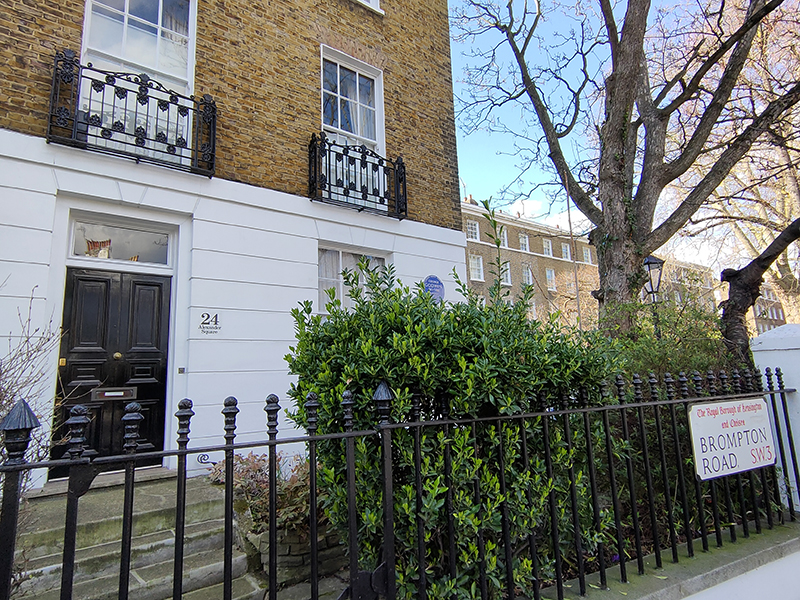
At no.24 Alexander Square, fronting the Brompton Road, a blue plaque commemorates the architect George Godwin (1813 -1888). His works included churches, housing and public buildings, and large areas of South Kensington and Earl’s Court, including five public houses. His memorial in Brompton Cemetery is Grade II listed, unlike any of the buildings he created.

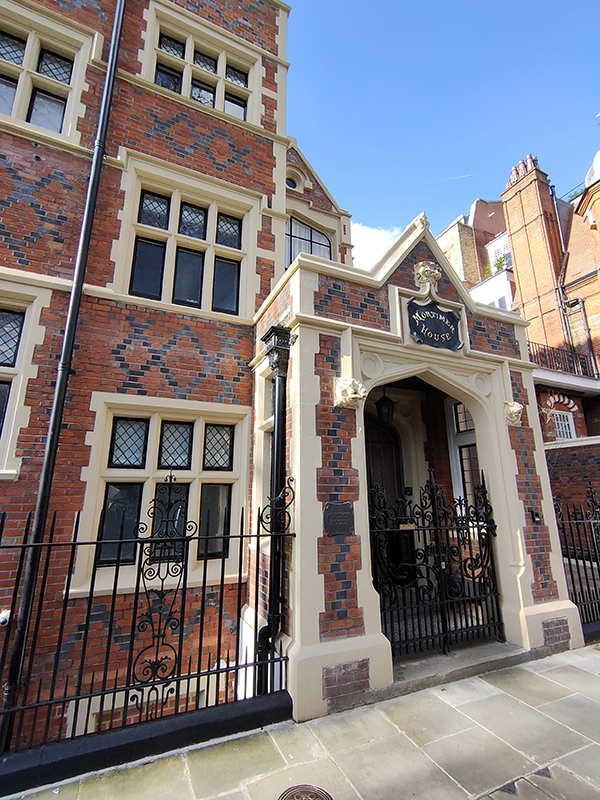
Opposite here, on the corner of Brompton Road and Egerton Gardens, stands Mortimer House built by the one-time Governor of the Bank of England, Edward Howley Palmer, in the mid-1880s. The house is built in the late 19th-century Tudorbethan style in red and blue interspersed brickwork, with various decorations including gables and statues of griffins and bears with shields. Tall groups of brick chimney stacks surmount the property. The stables of the house have a conical roof and are now garages. A swimming pool in a conservatory was added in the late 20th century. Mortimer House was home to the chairman of British American Tobacco, Sir Frederick Macnaghten, in the 1950s and 1960s and continues to be privately owned.

In December 2013 Edgerton Crescent was named the “most expensive street in Britain” for the second successive year, with an average house price of £7.4 million. Since then it’s relinquished that particular title but is still very desirable. David Frost lived here in the late 1960’s apparently.

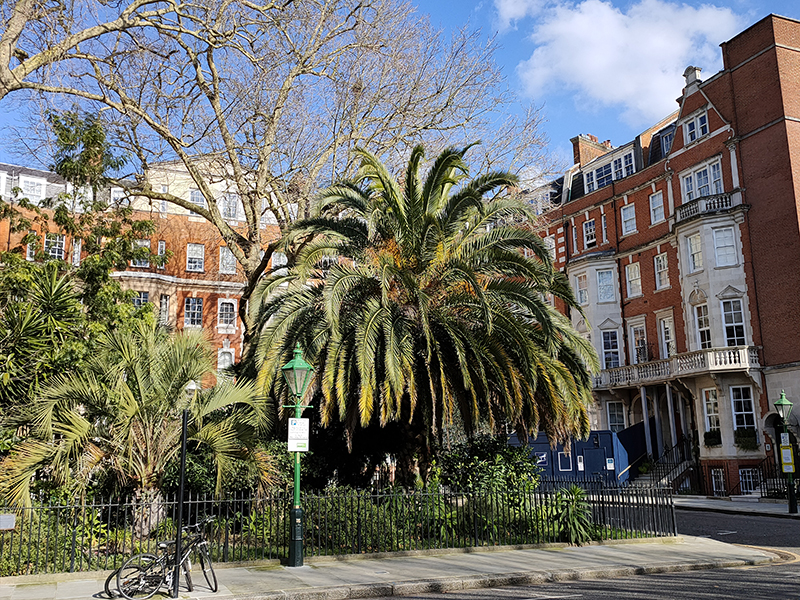
Having followed the crescent back to Edgerton Gardens we loop round into Edgerton Terrace which we look up and down taking particular note of the splendid palm tree adorning the small garden around which Edgerton Place curves.

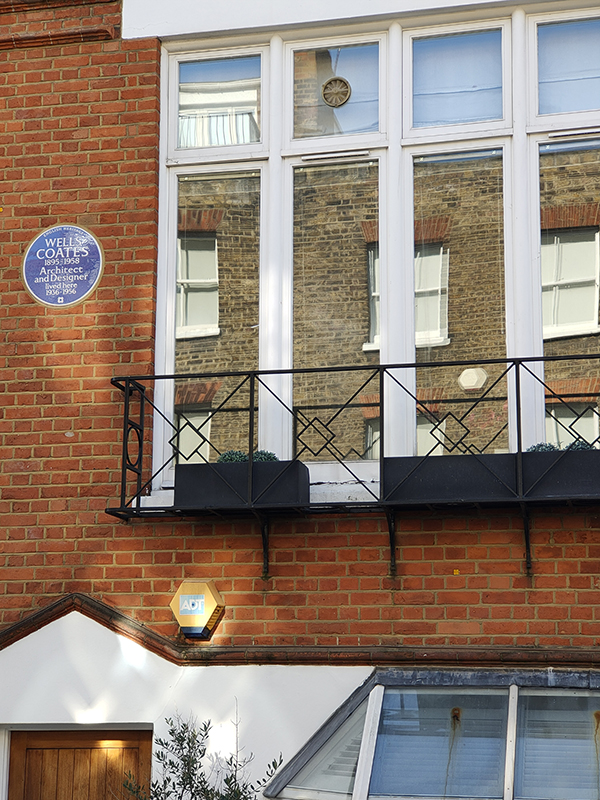
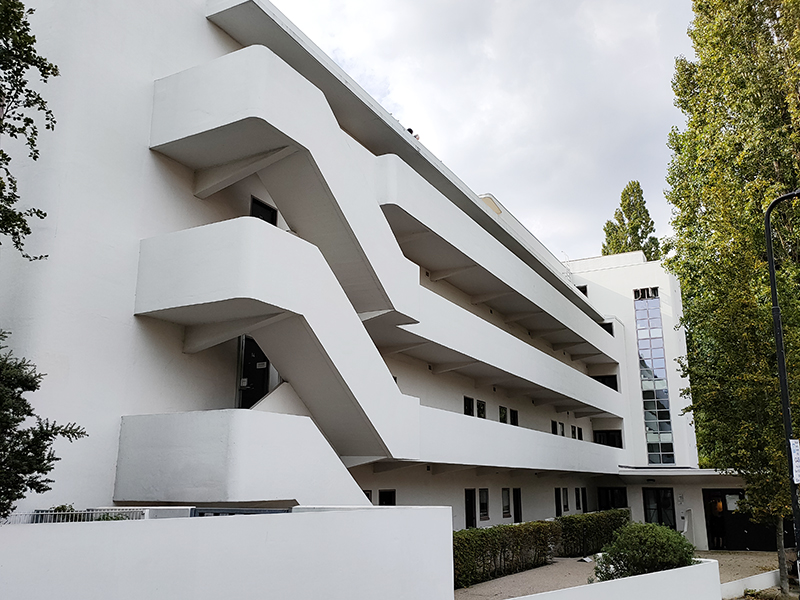
The final section of Edgerton Gardens leads into Yeoman’s Row which has a blue plaque at no.18 for the modernist architect Wells Coates (1895 – 1958) who is perhaps best known for the Isokon Building in Hampstead (which is a must visit if you ever get the chance).

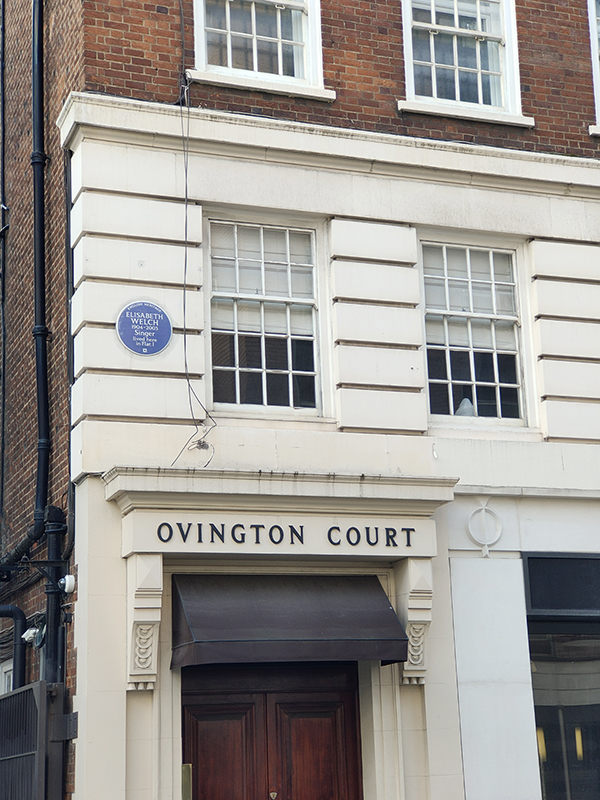
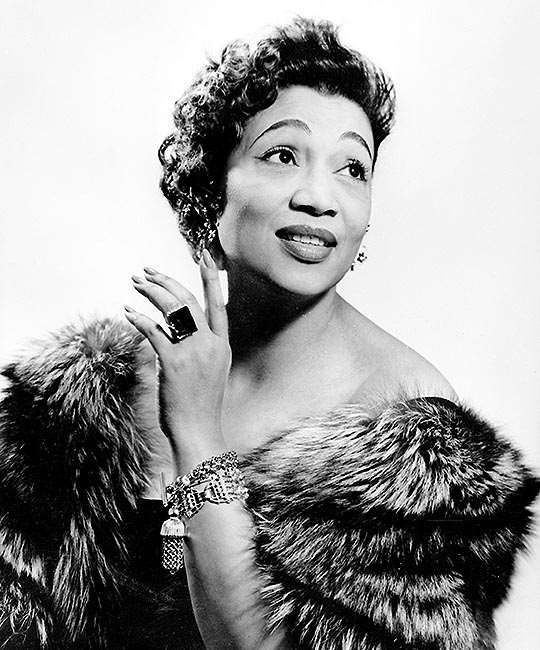
At the end of Yeoman’s Row, Glynde Mews takes us onto Walton Street from where the next links back to Brompton Road are Ovington Square and Ovington Gardens. At the top end of the latter there’s another blue plaque, this one in honour of the American singer and actress, Elizabeth Welch (1904 – 2003). Although American-born, to a father of Indigenous American and African American ancestry and a mother of Scottish and Irish descent, she was based in Britain for most of her career. During WWII, she remained in London during the Blitz, and entertained the armed forces as a member of Sir John Gielgud’s company. After the war she performed in many West End shows as well as making numerous appearances on television and radio. She featured in the Royal Variety Performance twice; did Desert Island Discs twice, and in 1979 was cast as a Goddess by Derek Jarman, singing “Stormy Weather” in his film version of Shakespeare’s The Tempest.

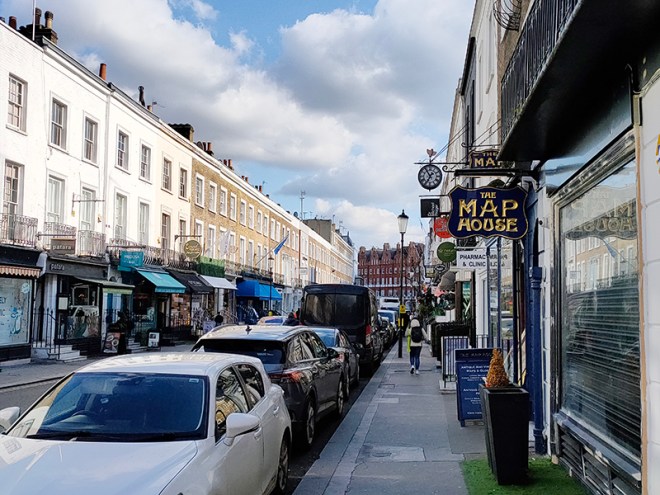
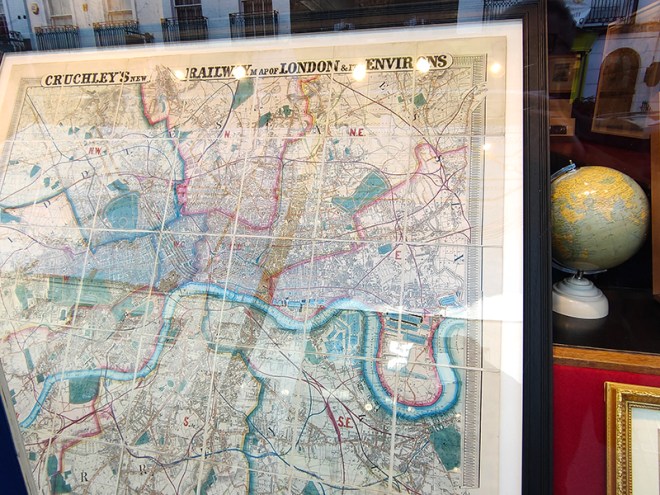
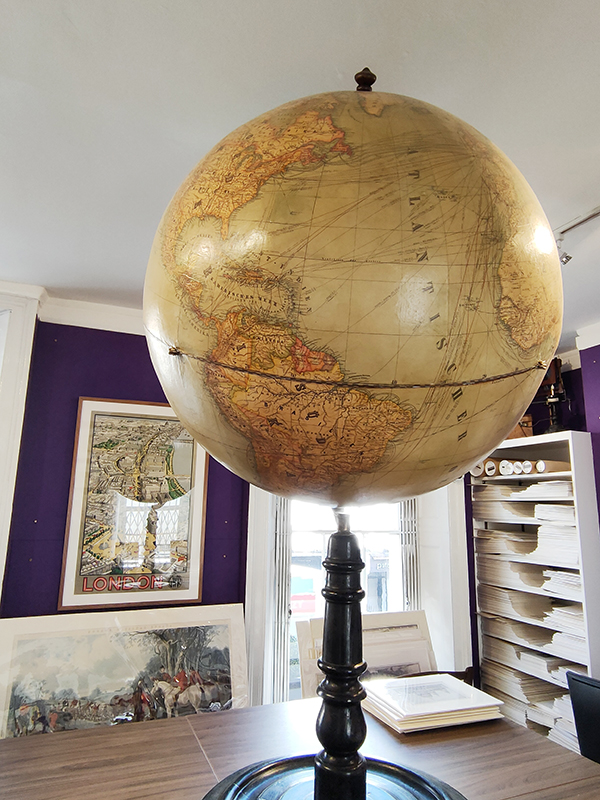
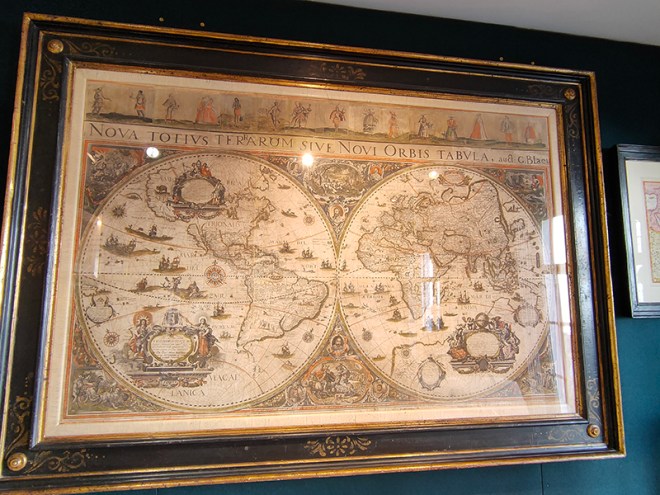
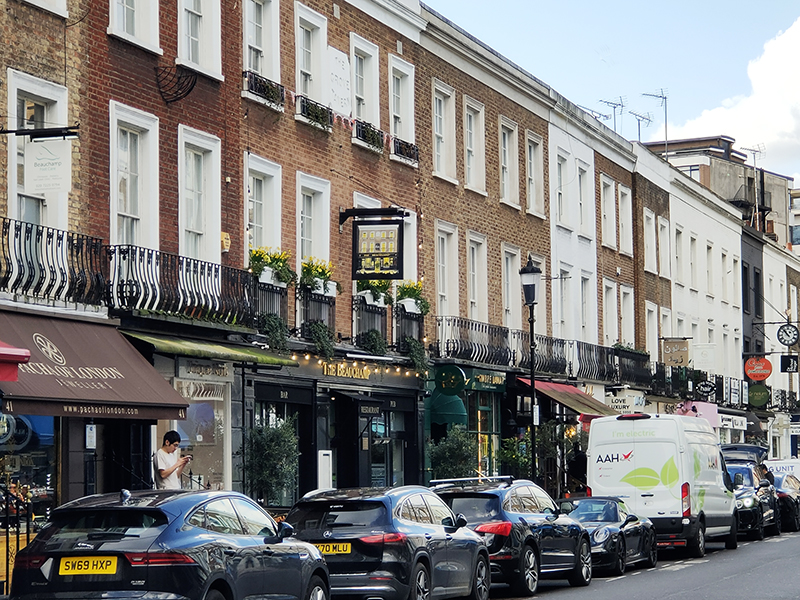
Next on the right, continuing east, is Beauchamp Place where there were a couple of unscheduled stops I couldn’t resist. First up was the Map House which has been selling and supplying maps to collectors, motorists, aviators, explorers, Prime Ministers and the Royal Family since 1907. That was the year Sifton, Praed & Company Ltd. (trading as The Map House) was established in St. James’s Street. The Map House moved to its present location at No. 54 Beauchamp Place in 1973 and it continues to house the most comprehensive selection of original antique and vintage maps, globes, and engravings offered for sale anywhere in the world; over 10,000 maps alone. There are some fascinating examples out on display which all are welcome to come in and check out.

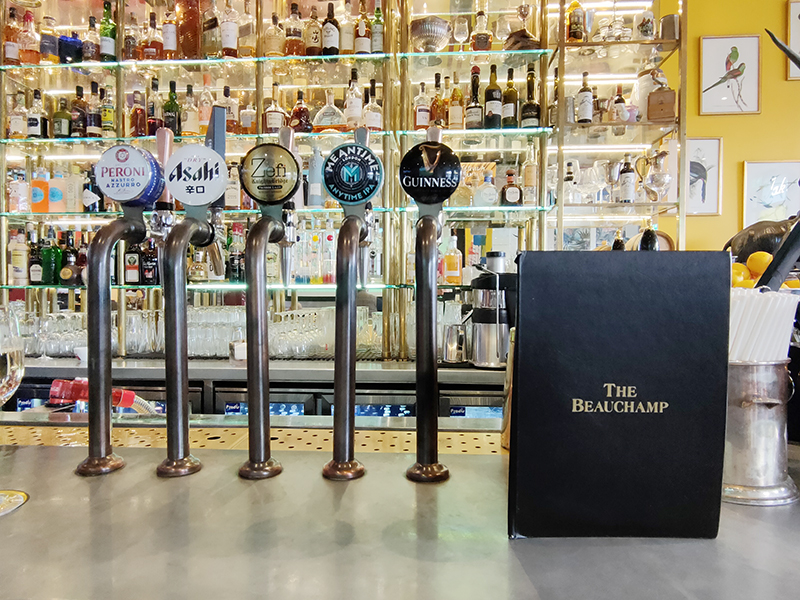
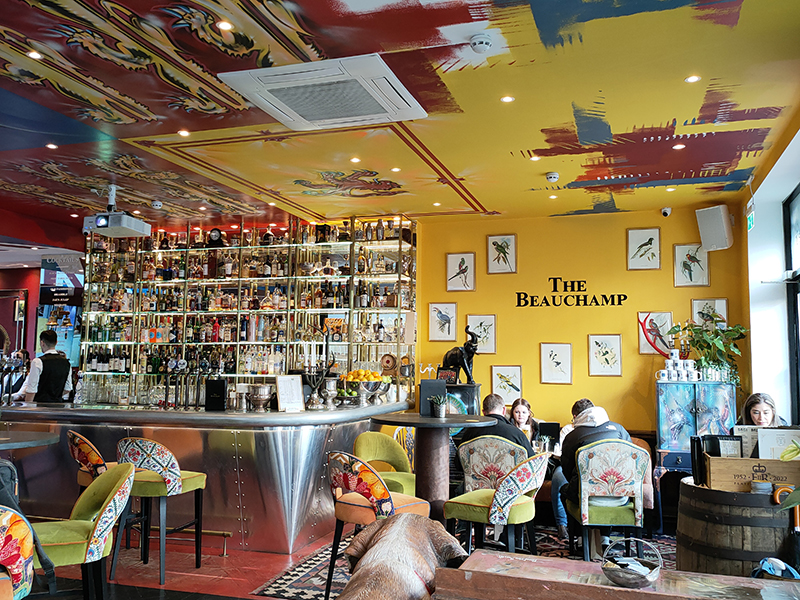
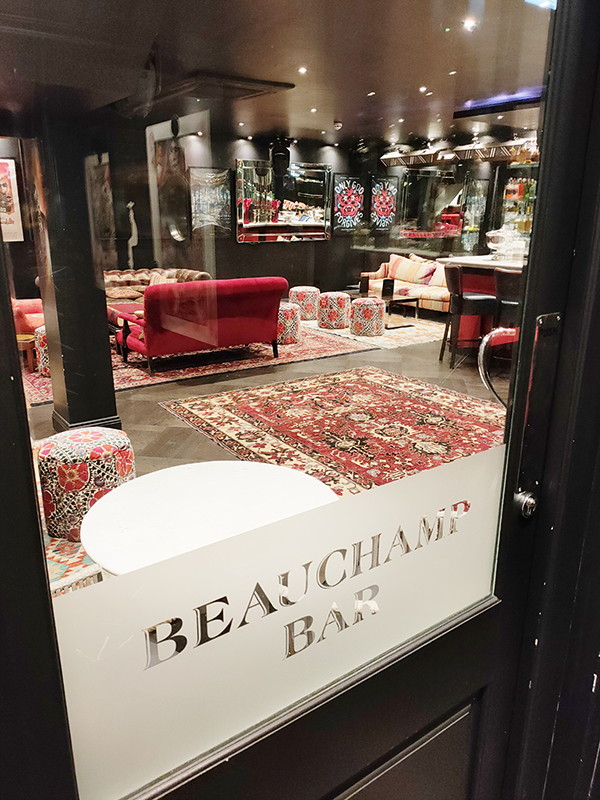
I wasn’t going to stop off for a drink today but given that it was my mother’s maiden name I couldn’t pass by the opportunity to make the Beauchamp the pub of the day.

Beauchamp Place is named after  Edward Seymour, Viscount Beauchamp, who was a nephew of Jane Seymour (Henry VIII’s third wife) and therefore cousin to Edward VI. It also afforded a celebrity spot of the day in the shape of Alexander Armstrong, of Pointless fame.

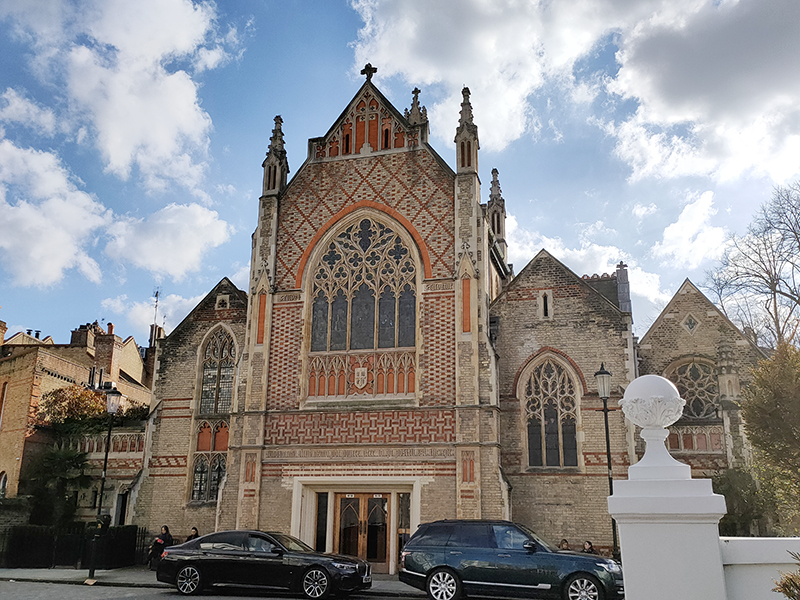
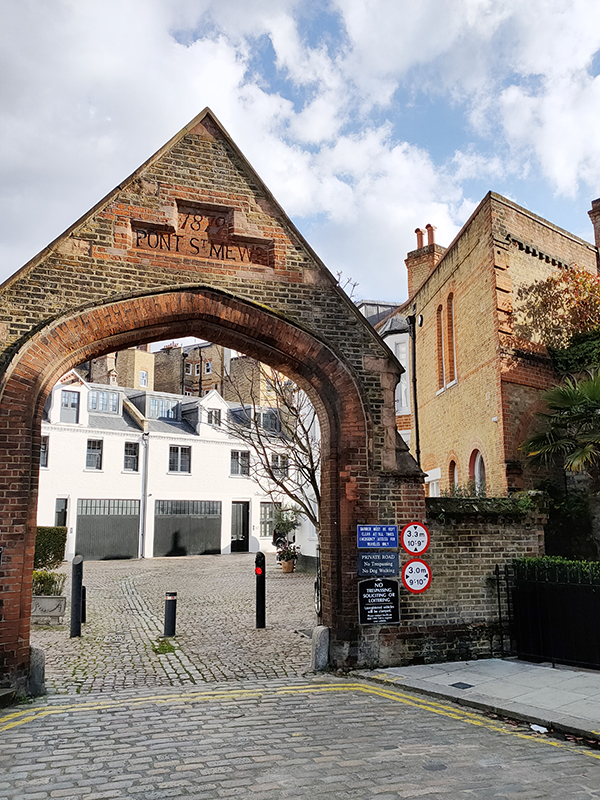
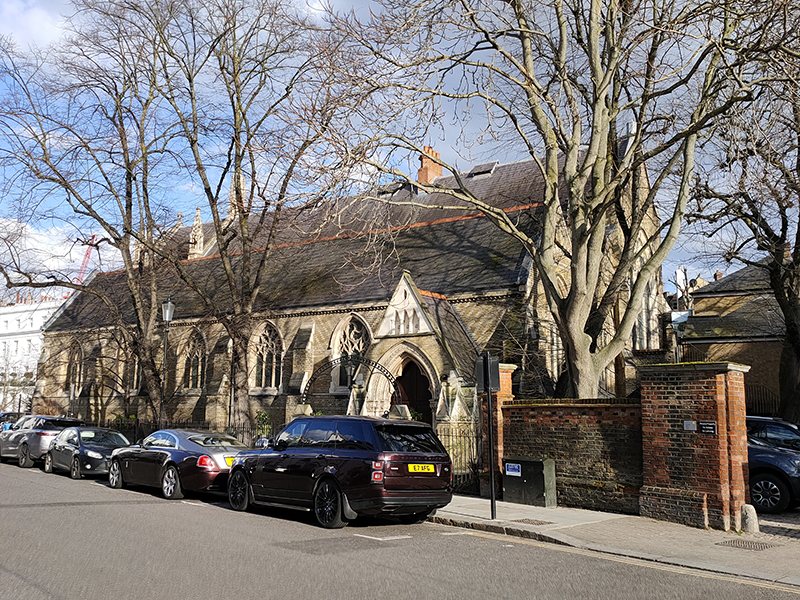
Leaving all this behind, we turn east onto Walton Street and head back towards Harrods. Facing onto Walton Place and surrounded on its other sides by Pont Mews is the Grade II listed St Saviours Church designed by George Basevi (1794-1845). Basevi was also responsible for the design of the Fitzwilliam Museum in Cambridge. The church was built in the Early Decorated style of the Gothic Revival on a site donated by the Earl of Cadogan and consecrated in 1840. The building was sold by the Diocese of London in 1998 for a reported £1 million and converted into a private home. (Also reportedly) it was owned by Alain Boublil, writer of Les Misérables and Miss Saigon, for 6 years before selling in 2009 for £13.5 million to a Thai businessman who spent an additional £10 million on a major renovation. In 2019 it was listed for sale at £55m but is currently on the market for £44m.

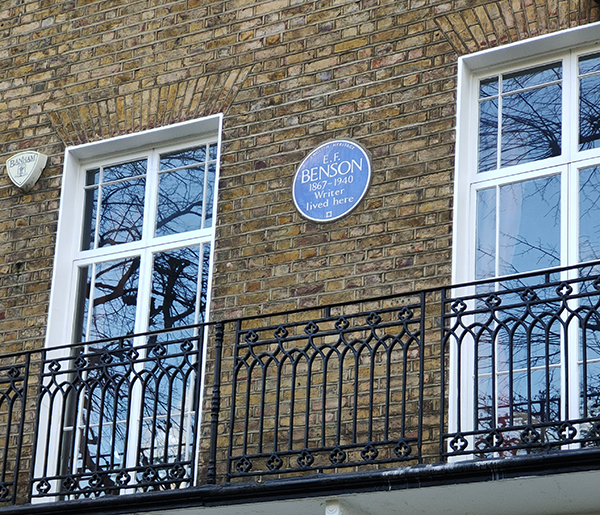
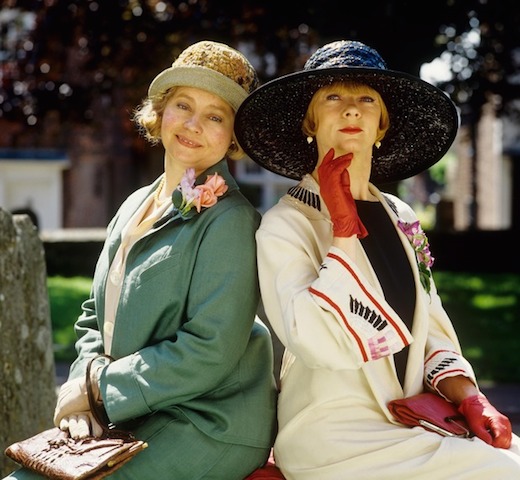
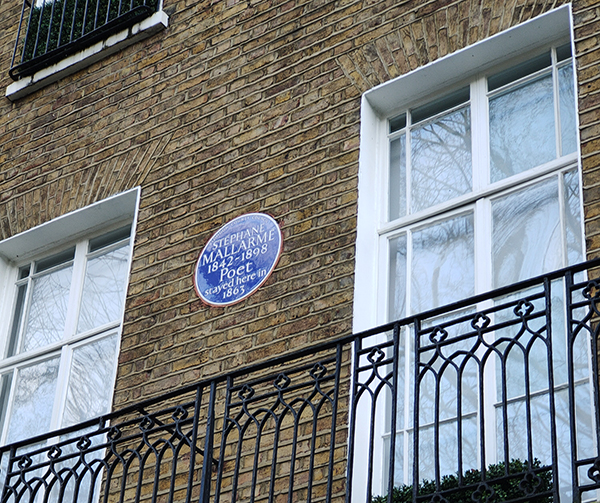
We return to the Brompton Road again via Hans Place and turn to the west. After visiting Brompton Place and Beaufort Gardens we cross over to the north side of Brompton Road and make our way down to Brompton Square which boasts three blue plaques. No. 25 was home to the writer Edward Frederic Benson (1867 – 1940) who is probably best known for his Mapp and Lucia series of novels and short stories. These have been adapted twice for TV; in 1985 with Prunella Scales and Geraldine McEwan in the title roles and in 2014 with Miranda Richardson and Anna Chancellor. French Poet and critic, Stephane Mallarmé (1842 – 1898) stayed at no.6 in 1863 while studying for an English teaching certificate. Mallarmé’s poetry has been the inspiration for several musical pieces, notably Claude Debussy’s Prélude à l’après-midi d’un faune (1894) and Maurice Ravel’s Trois poèmes de Mallarmé (1913) and his work has remained influential throughout the 20th and into the present century.

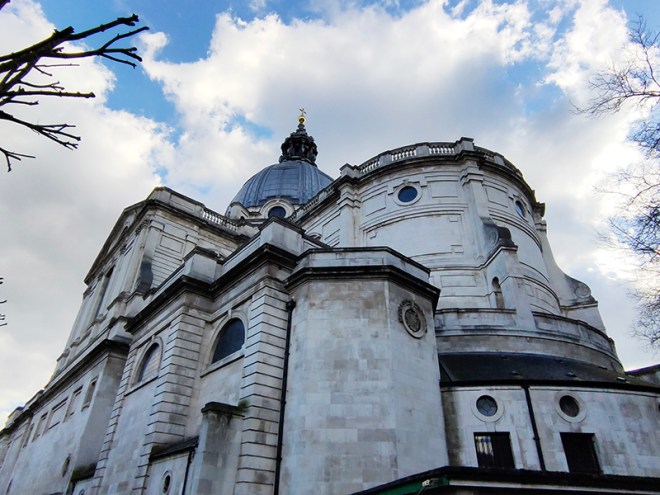
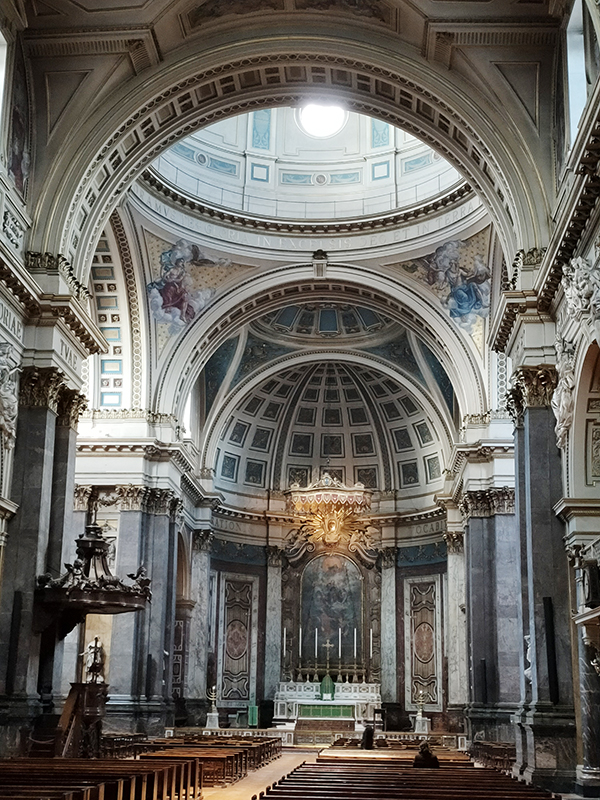
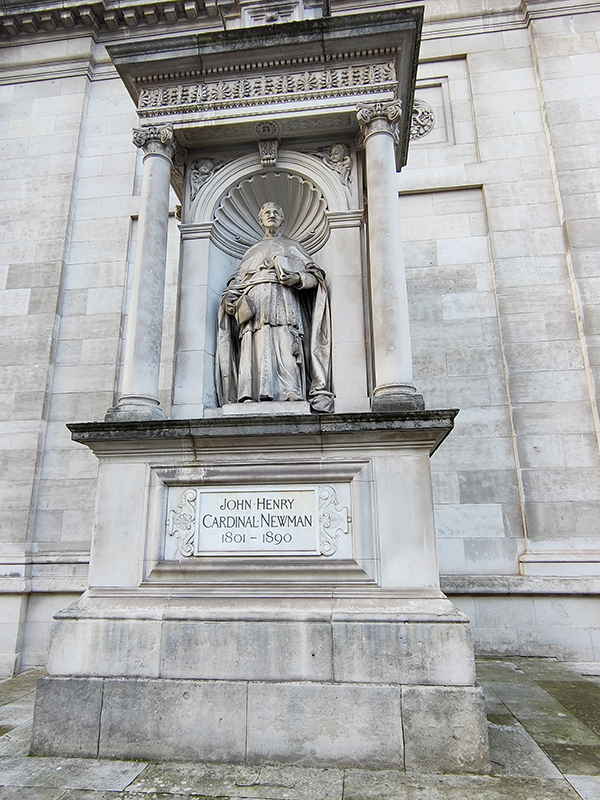
After a quick run up Cottage Place which leads to Holy Trinity Church (see above) we turn our attention to what is commonly known as Brompton Oratory. This famous Roman Catholic church should correctly be referred to as the Church of the Immaculate Heart of Mary. It is the second-largest Catholic church in London, with a nave exceeding in width even that of St Paul’s Cathedral (Anglican). The Oratory was founded by John Henry Newman (1801 – 1890), following his conversion to Catholicism in 1845, along with a group of other converts, including Father Frederick William Faber. The design, in the Renaissance style, by Herbert Gribble, a twenty-nine year old recent convert from Devon, was judged the winner in a competition for which Gribble was awarded a prize of £200 by the Fathers.  The foundation stone was laid in June 1880 and the neo-baroque building was privately consecrated on the 16th April 1884. The façade at the South end was not added until 1893 and the outer dome was completed in 1895-96 to a design of George Sherrin.  The last major external work was the erection of the adjacent memorial to Newman in 1896 (six years after his death).

Before we head home via South Kensington tube there is on final point of interest which is the side entrance to the disused Brompton Road tube station on Cottage Place. Brompton Road was opened in 1906 by the Great Northern, Piccadilly and Brompton Railway, located between Knightsbridge and South Kensington on the Piccadilly Line. From the outset it saw little passenger usage and within a few years some services were passing through without stopping. In 1934 when Knightsbridge station was modernised with escalators and provided with a new southern entrance Brompton Road was closed. And, since that brings us full circle, we’ll sign off there. This one’s been a bit of a monster so huge thanks if you’ve managed to stick with it to the bitter end.

Day 80 – Elephant & Castle – New Kent Road

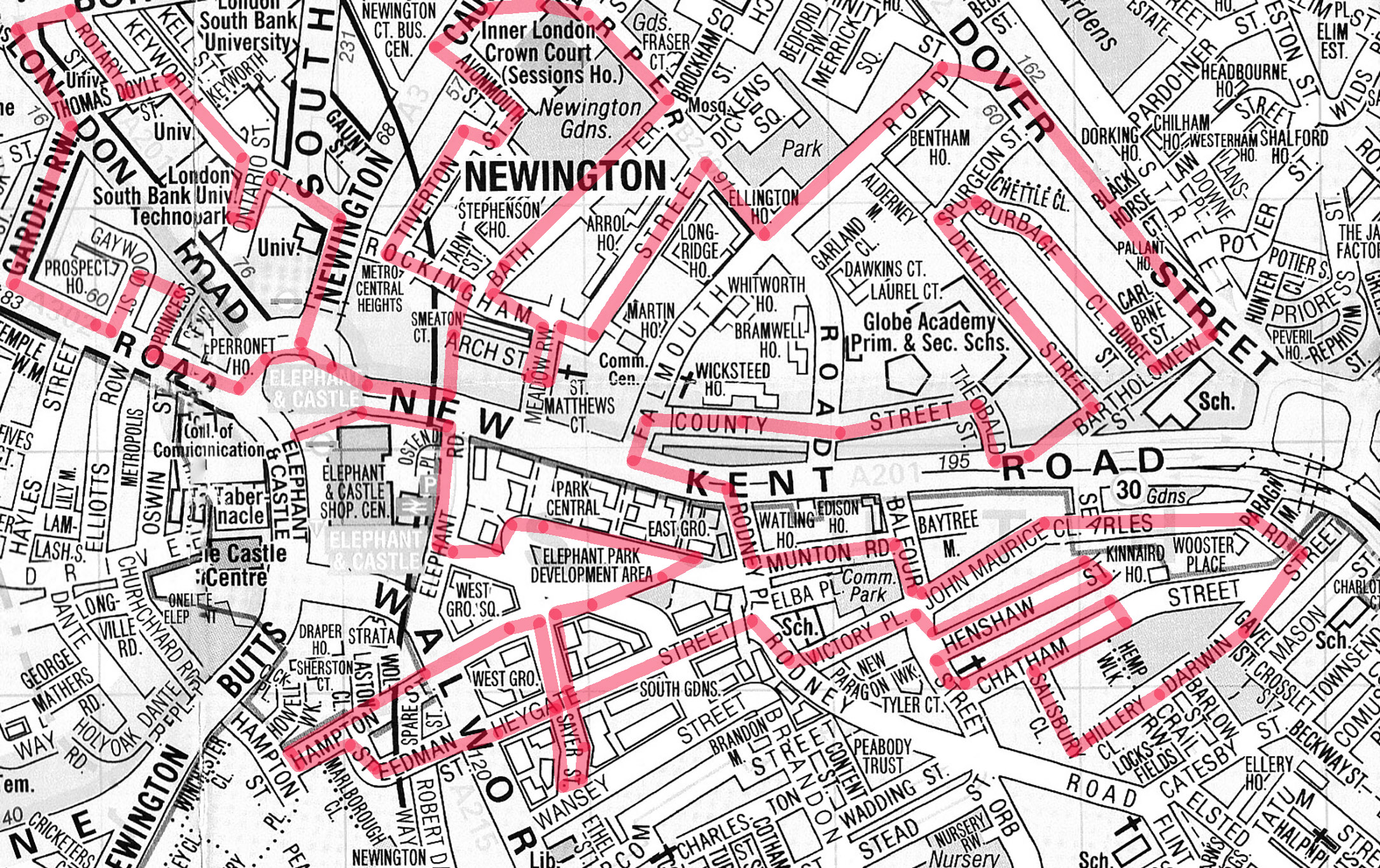
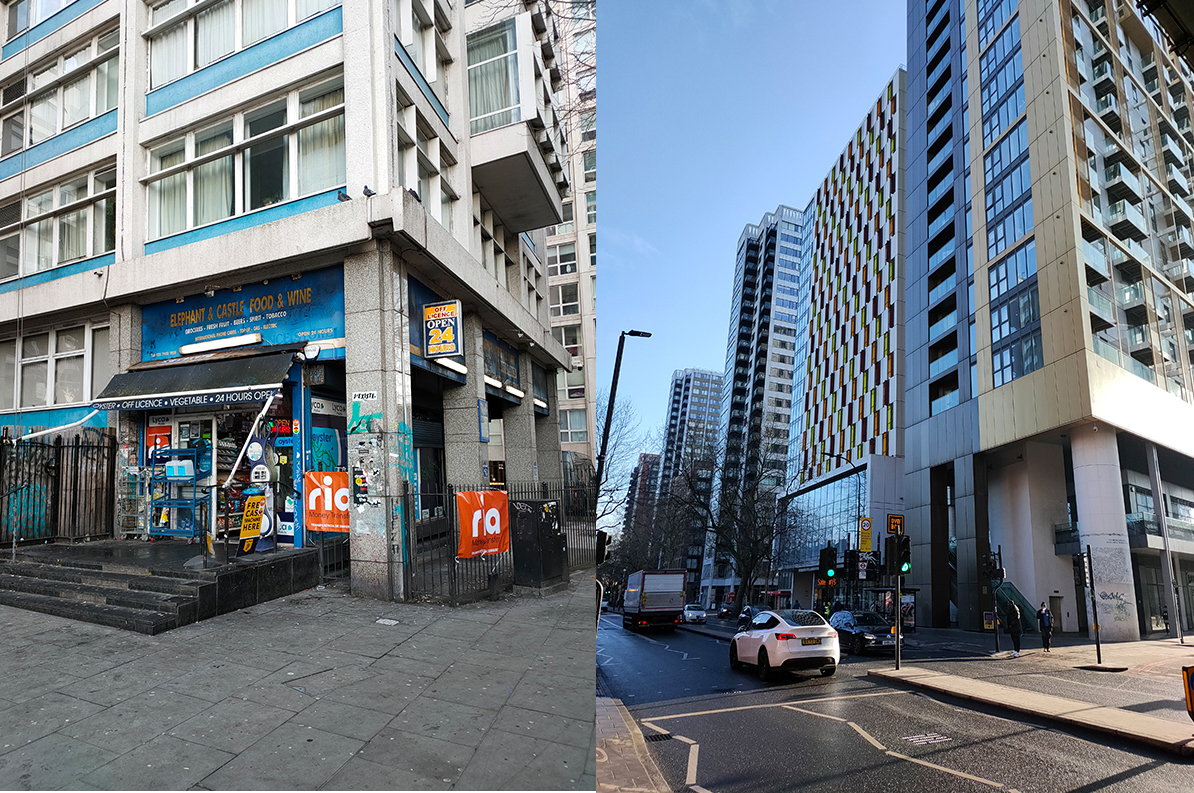
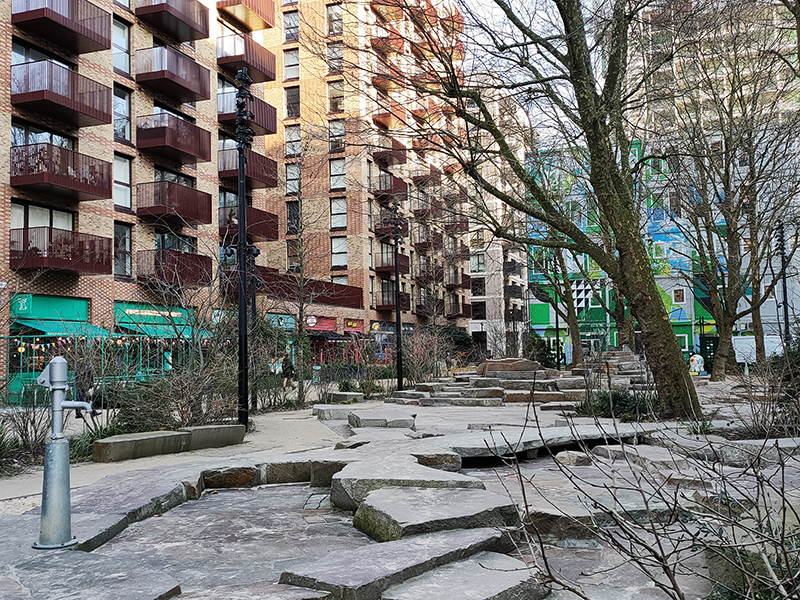
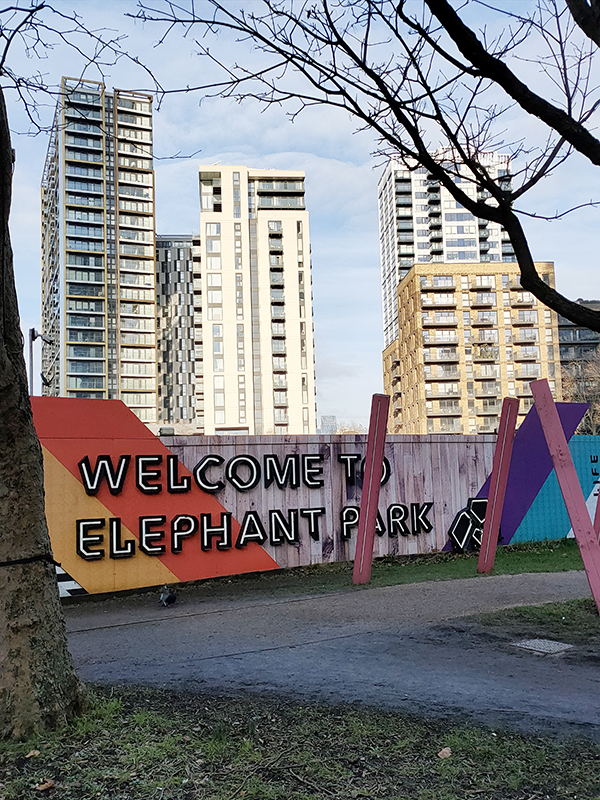
Today’s excursion takes us on a tour of the very differing areas on either side of the New Kent Road and as such is one for both fans of pre- and post-war public housing developments and fans of tearing down the latter. This is because the area to the immediate east of Elephant & Castle and south of new Kent Road has been the site of arguably the largest regeneration project in the capital this century. In the 2010’s the massive and infamous Heygate Estate, built in 1974, along with other adjacent post-war social housing was demolished and the site has subsequently been redeveloped as Elephant Park, a mix of new private and social high-rise housing including, what is claimed to be “the largest new green space to be created in London for 70 years”. More details on that later.

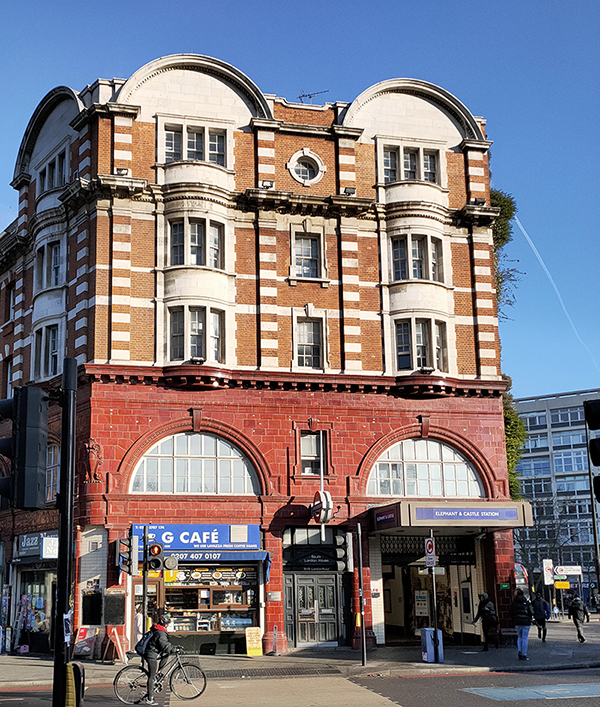
We’re starting out today at the Bakerloo Line entrance/exit of Elephant & Castle Tube Station. This dates from 1906 and is in the classic Leslie Green style with façade of oxblood red tiles. The Northern Line station to the south was originally built sixteen years earlier but that has been rebuilt several times over the years whereas the Bakerloo Line building remains pretty much as when constructed. A girl, named Mary Ashfield Eleanor Hammond, born at the station on 13 May 1924 was the first baby to be born on the Underground network. Her second name, Ashfield, was from Lord Ashfield, chairman of the railway, who agreed to be the baby’s godfather, but also said that “it would not do to encourage this sort of thing as I am a busy man”.

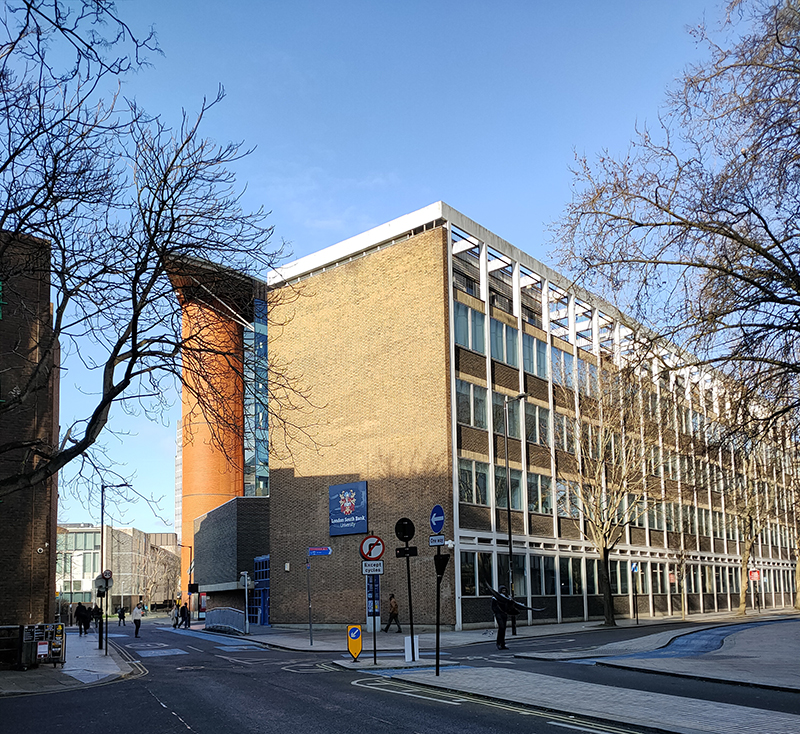
We follow the roundabout to Newington Causeway and then complete an outstanding section to the north-west of E&C that includes most of the London South Bank University (including its Technopark).  Founded in 1892 as the Borough Polytechnic Institute, LSBU attained university status in the year of its centenary; 70% of UK students are Londoners and 80% of the total student body are classified as mature (over the age of 21 at entry). Circumventing the campus takes us via Keyworth Street, Ontario Street, Thomas Doyle Street, Rotary Street, Garden Row, Gaywood Street and Princess Street.

Arriving back the roundabout we head round on to the New Kent Road (NKR)where from the very off the new division between north and south of the road is starkly apparent.

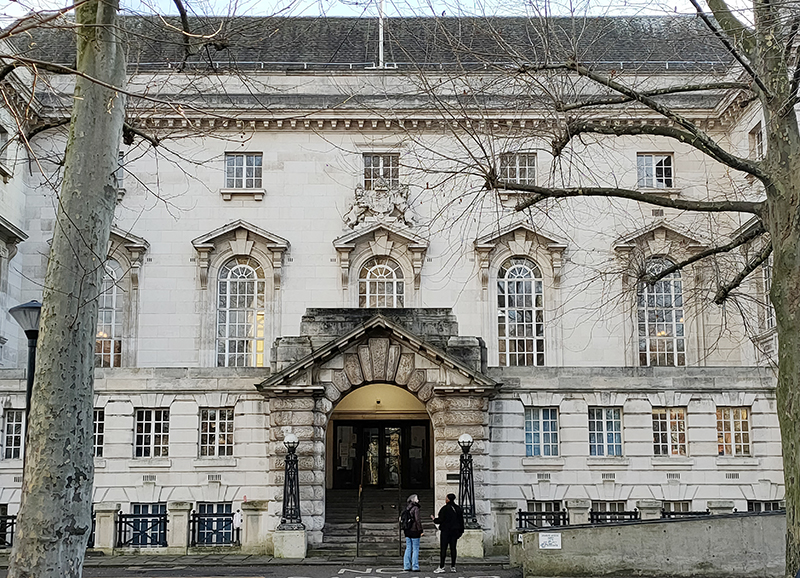
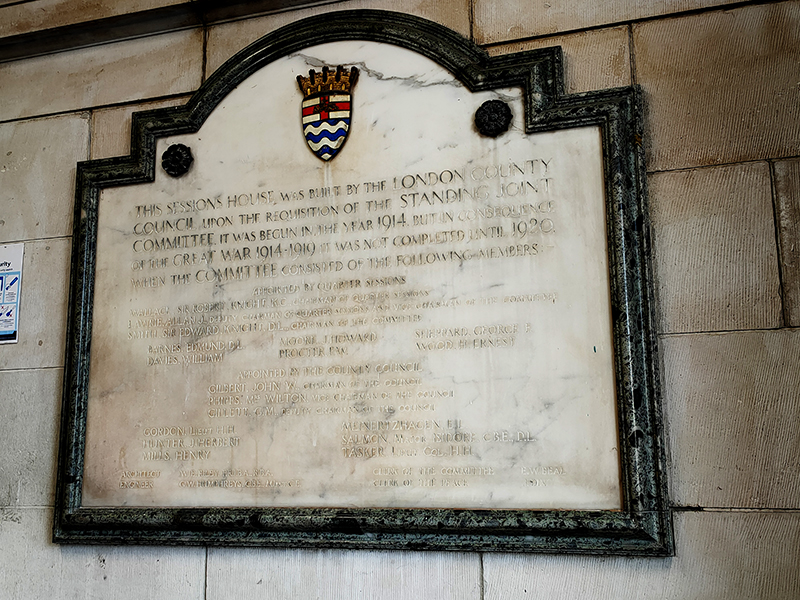
We soon pass the beneath the southbound Thameslink rail line and immediately turn left down Arch Street which runs down onto Rockingham Street from where Tiverton Street and Avonmouth Street take us back onto Newington Causeway and Sessions House, the home of the Inner London Crown Court (2.5* on Google). A Surrey County Sessions House originally stood on this site from 1791, a sessions house historically being a courthouse where criminal trials (sessions) were held four times a year on quarter days. By the mid-19th century however it was sitting regularly and operating as the main County Court. Following local government reorganisation in 1889 the Sessions House was no longer within the bounds of Surrey and fell under the aegis of the London County Council which decided to rebuild and expand the facility. The current building was designed by the London county architect, W. E. Riley, in the classical style. Work began in 1914 but due to the First World War wasn’t completed until 1920. Following the Courts Act of 1971 the building was designated as a Crown Court venue which meant it could hear cases relating to more serious criminality.

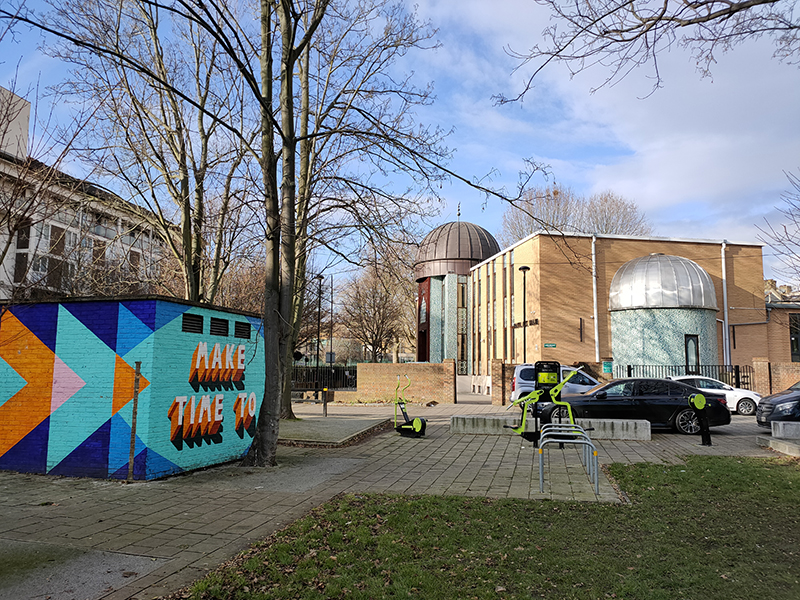
Beyond the court we turn right onto Harper Road and proceed as far as the Baitul Aziz Mosque and Islamic Cultural Centre.

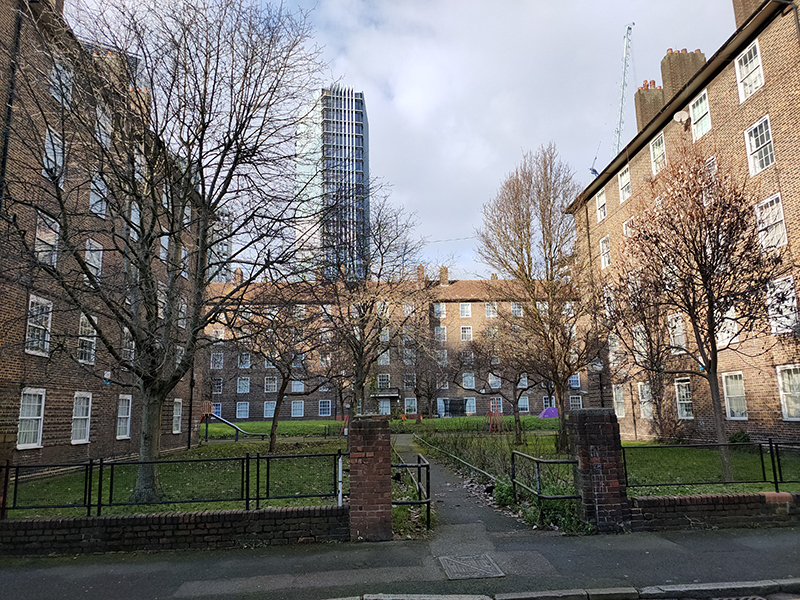
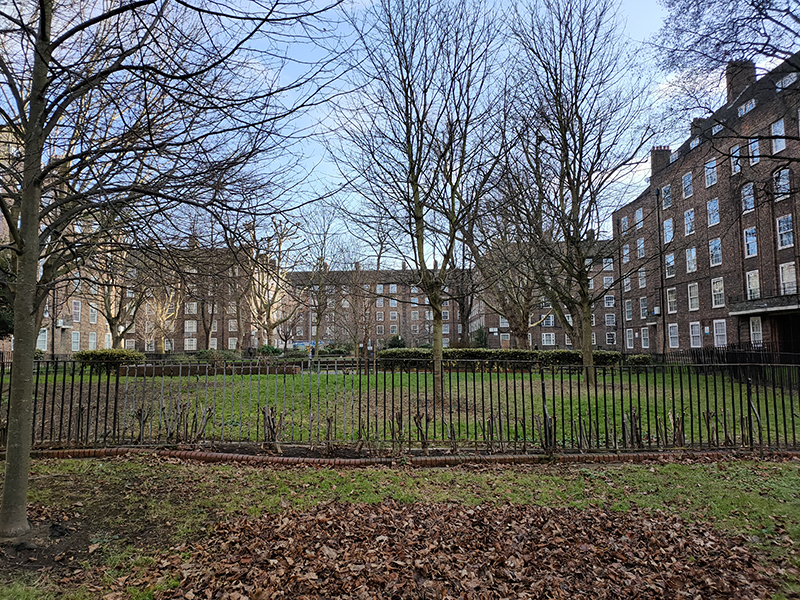
Then we head up Bath Terrace back to Rockingham Street and follow this, via Meadow Row, as it loops round to the north to return us to Harper Road. This part of the route takes us through the heart of the enormous 1930’s built Rockingham Estate. The following is an extract from one of the contributions to the BBC’s archive of WW2 reminiscences. In 1936 my mother and father moved to a newly built London County Council flat on the Rockingham Estate at the Elephant & Castle. We were allocated number 34 Banks House, which was at the foot of the stairs leading to four further levels. Forty-five flats in all. These were luxurious to what most people had been used to at the time – three bedrooms, a living room, kitchen, bath and separate lavatory. The blocks were surrounded by lawns and shrubbery. Since 2019 both Southwark Council and the Mayor’s Office have funded initiatives aimed at tackling crime and anti-social behaviour on the Estate and based on this visit I would say it looks in a reasonable state considering it’s getting on for 90 years old.

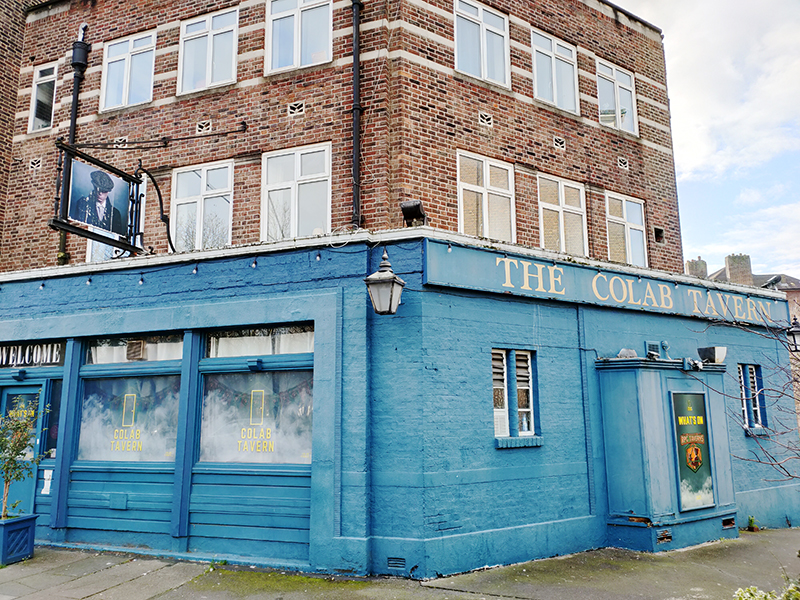
On the corner of Rockingham Street and Harper Road stands the Colab Tavern which (and this is the first of few misconceptions today) at first sight, based partly on the picture of Tommy Shelby on the sign, seems to be a place to steer clear of. Turns out though that this is one of the venues run by an eponymous Theatre Company that specialises in immersive and interactive theatre. (Having said that you might still want to give it a wide berth given that the company’s current production is a drag panto parody of Die Hard called Dead Hard).

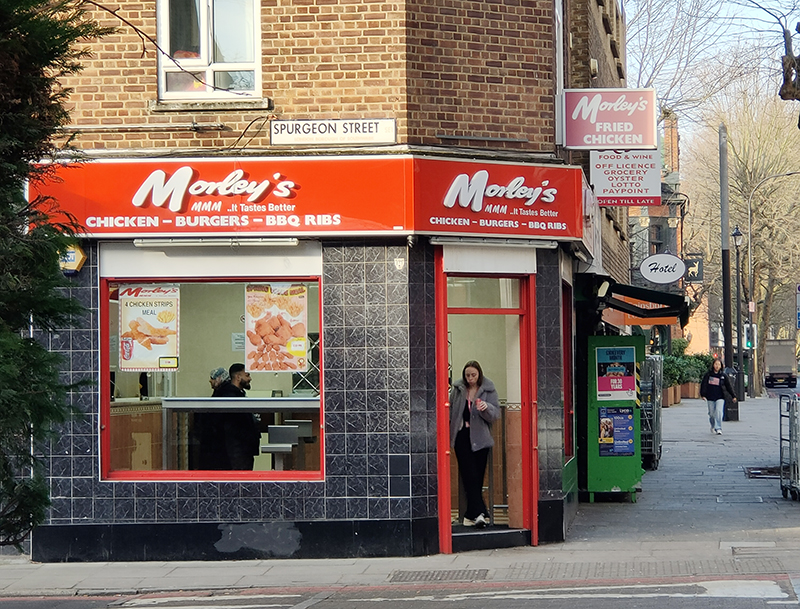
We turn left off Harper Road onto Falmouth Road which takes us down to Dover Street (the start of the A2) where we swing right towards the Bricklayers Arms roundabout. On the corner with Spurgeon Street is a rare example of a chicken shop that doesn’t try to trade under a name that has a tenuous association with KFC. I’ve also included this as a facile contrast and compare to the eating establishments that we’ll encounter on the other side of NKR.

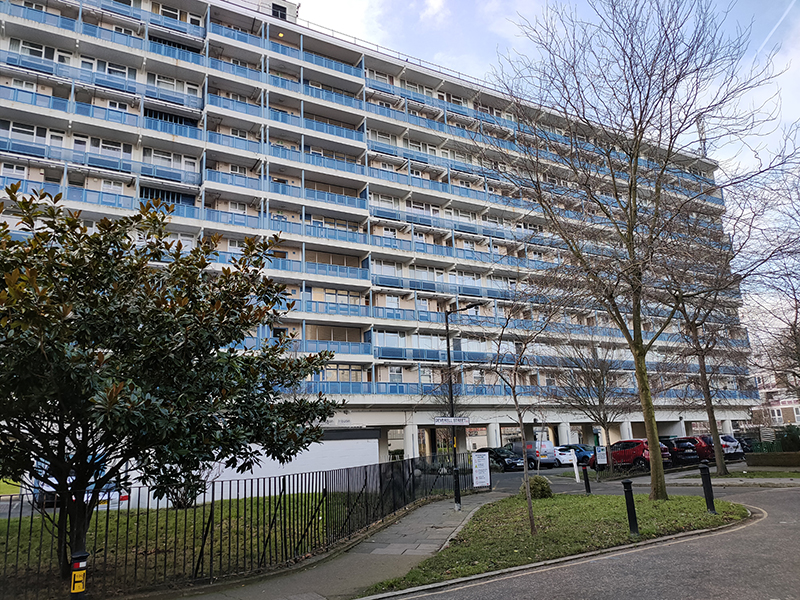
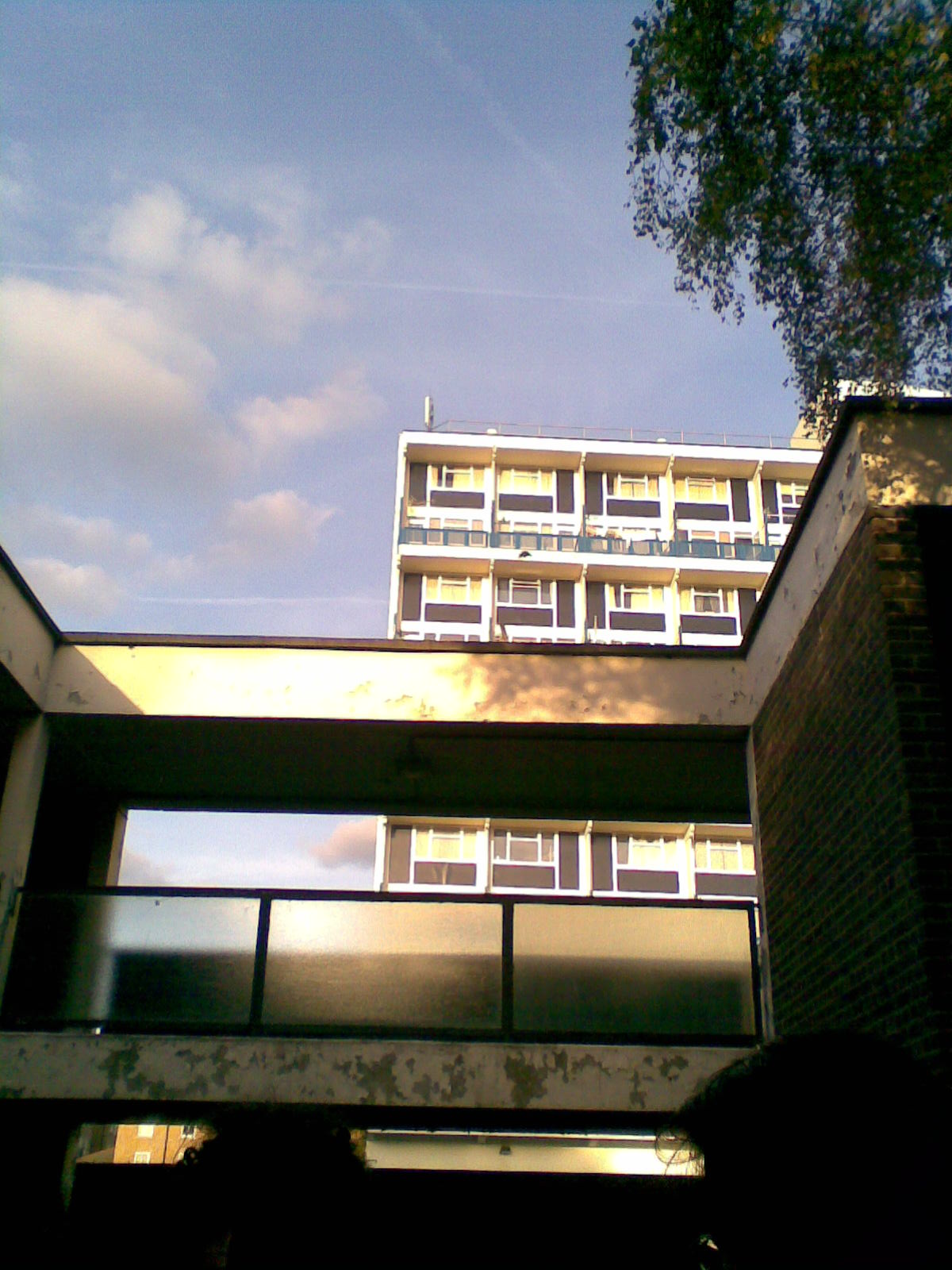
Just before the roundabout we take a right onto Bartholomew Street then immediately right again down Burge Street which beyond the Cardinal Bourne Street cul-de-sac turns into Burbage Close. Coming out onto Spurgeon Street we turn left then return to Bartholomew Street via Deverell Street. Looming before us here is the giant Symington House, an eleven-storey ‘slab’ block on the Lawson Estate completed in 1962. It subsequently fell on hard times and in the 1980s, the Greater London Council (GLC) offered it to the private sector for just £1, to no avail. Though the GLC then modernised the building, in 2008 it was condemned by Southwark Borough Council. The booming London property market, however, saved it from demolition. The following year one of the flats became home to an installation by the artist Roger Hiorns, who had previously worked as a postman in the area. To make the piece, entitled Seizure, 75,000 litres of copper sulphate solution were poured into the flat. When it was drained a month later, every surface was covered with luminous blue crystals. Seizure was moved to the Yorkshire Sculpture Park when the flats were finally redeveloped. (The bottom pictures below were taken when I visited the installation in 2009.)

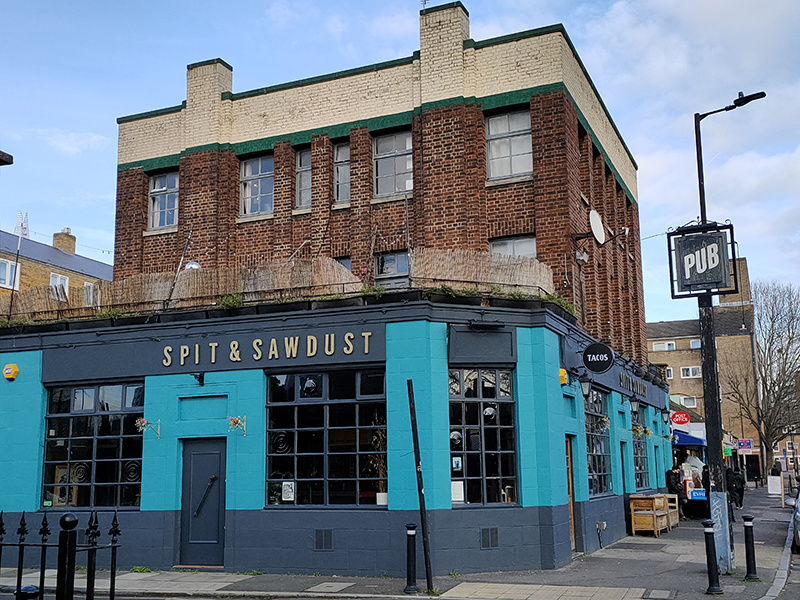
At the end of Deverell Street there’s another old pub reimagined (this time through the prism of post-modern irony).

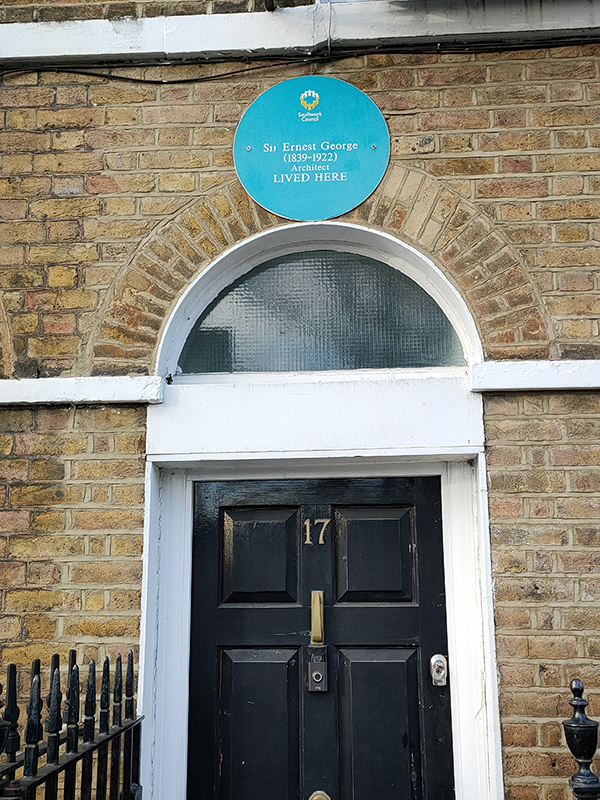
I wasn’t in all honesty expecting to see any plaques on today’s route but at no. 17 Bartholomew Street Southwark Council have erected one in honour of the architect Sir Ernest George (1839 – 1922) who spent part of his life in this Georgian terrace house. Amongst George’s works were the current Southwark Bridge (1921), and the Memorial to Heroic Self-Sacrifice in London’s Postman’s Park.

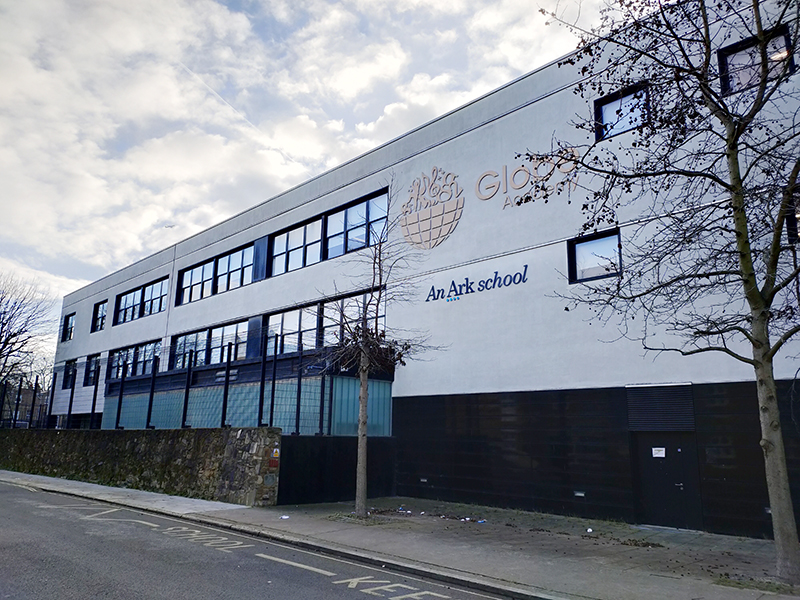
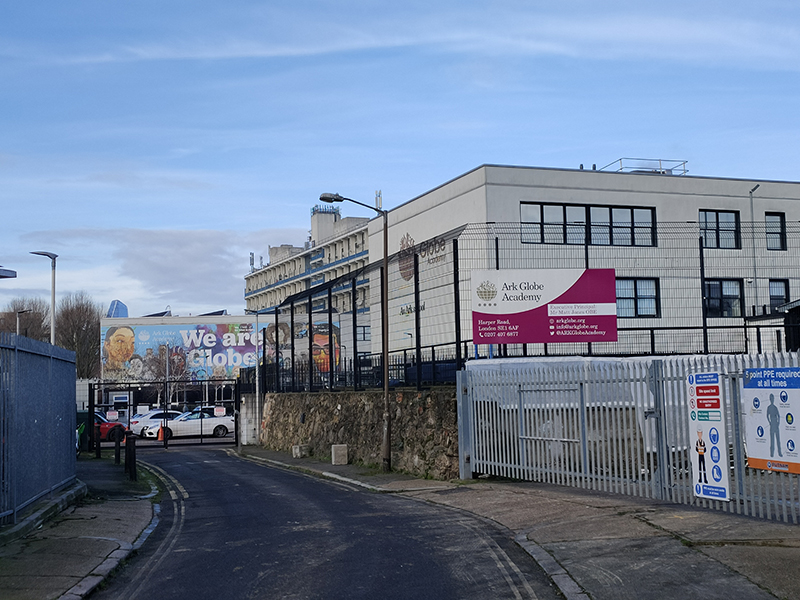
Next up we’re back on NKR and soon turning north again on Theobald Street which runs along the rear of the Ark Globe Academy School. This is one of 39 schools run by the Ark Charitable Trust which was founded in 2002 and is a so-called all-through establishment, so basically primary and secondary school combined. According to the Department of Education website it currently has 1,315 pupils out of a capacity of 1,645 and the Ofsted inspection of 2021 classified it as Good in 4 categories and Outstanding in 2.

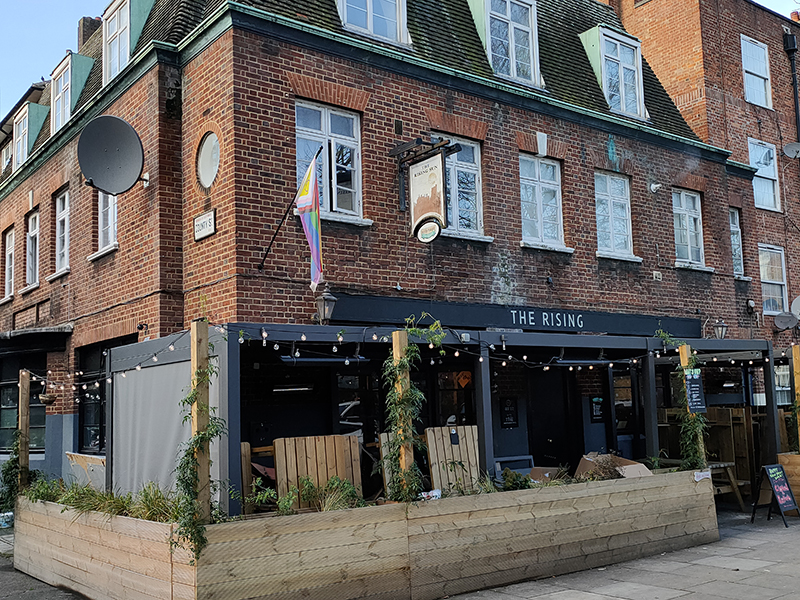
We proceed next along County Street, which runs parallel to NKR on the north side, passing yet another reconstructed boozer. Jumping to conclusions again , I assumed that part of the lettering above the door had just fallen off and in doing so had turned the Rising Sun into something rather more unwelcoming. It transpires though that this is a deliberate renaming of what is now a dedicated LBGTQ bar.

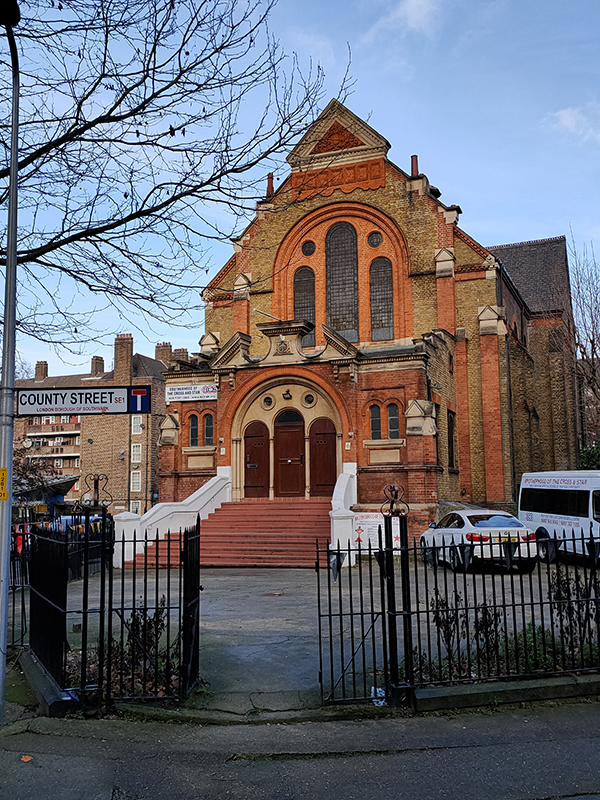
At the western end of County Street there’s another case of redenomination that could be easily misconstrued (if you have a suspicious mind like mine). The Grade II listed chapel on the corner with Falmouth Road was built as the Welsh Presbyterian Star and Cross Church in 1888. It is constructed of red brick and gauged brickwork with Queen Anne and Romanesque influences. It currently serves as the London base for the Brotherhood of the Cross and Star (see what I mean). According to their website, the Brotherhood of the Cross and Star (BCS) is not a church or new religious movement (or a group of Marvel supervillains from the 1970’s). It is the fulfilment of Biblical scripture relating to the manifestation of God’s reign on earth recorded from Genesis to Revelation and was established in Nigeria in 1956 under the spiritual leadership of Olumba Olumba Obu. As far as the building goes, the complete gallery survives internally and the stained glass is good quality but the external fabric is in urgent need of repair. Reportedly, the congregation is actively engaged in discussion with potential funders to develop a repair project.

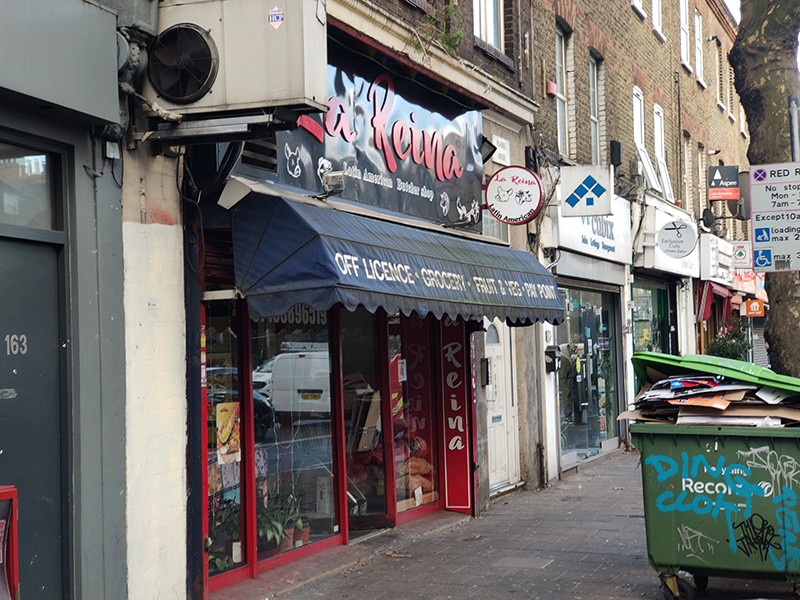
One final look at the north side of the NCR before we cross over into the brave new world. This part of South London has long been a stronghold of the Latin American diaspora and here, in between another Chicken Shop and a Lebanese Grill, they have their own butcher shop, La Reina (“the Queen”).

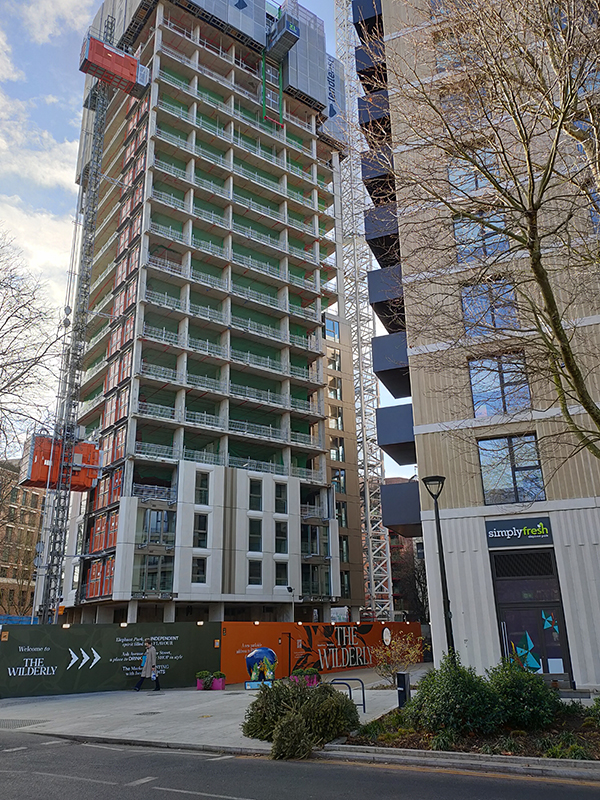
We cross over the NKR and enter its southern vicinity via Rodney Place where the final residential development of the Elephant Park scheme, the Wilderley, is well underway. Designed by architects HOK, The Wilderly is comprised of two buildings, The Tower (25 storeys) and Mansion Collections (11 storeys). Studios, one, two and three-bedroom residences are launching for sale in January 2025 with prices starting from £630,000 (but you do get access to a Wellness Studio and Gym and a Sanctuary Garden for that). The presence of a Simply Fresh outlet further underlines that we’re not in Kansas any more, Toto.

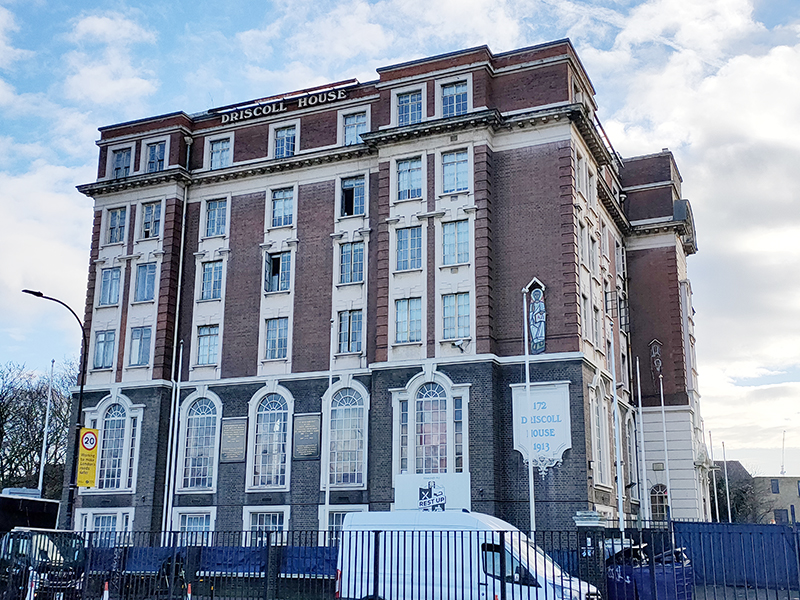
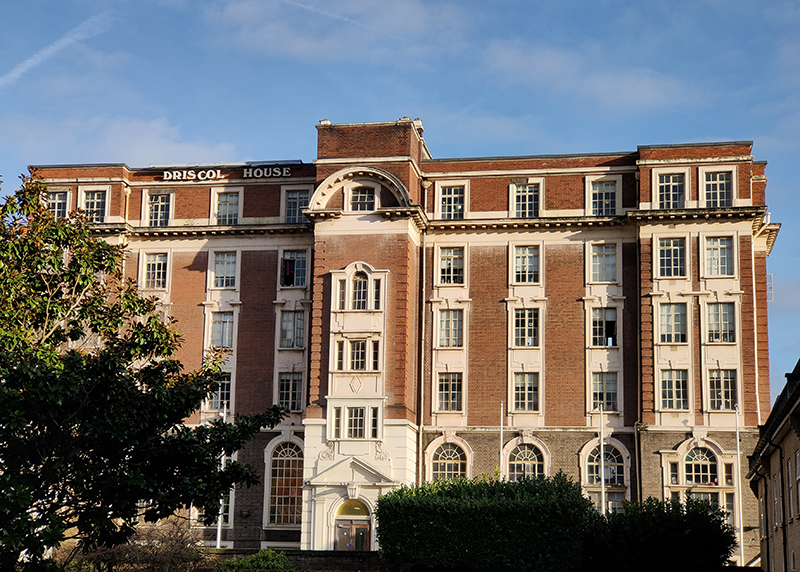
There’s still a bit of old London to explore before we get to Elephant Park in earnest however. Heading east on Munton Road and then turning left into Balfour Street we find ourselves at the rear of Driscoll House, the front of which faces onto the NKR. Built in 1913 as a women’s hostel, one of the very few, this was originally called Ada Lewis House, after the widow of money-lender and philanthropist, Samuel Lewis. Upon his death in 1901, Lewis left an endowment of £670,000 (equivalent to £30m today) to set up a charitable trust to provide housing for the poor. The building was acquired in 1965 by Terence Driscoll, founder of the International Language Club in Croydon who renamed it after himself. He repurposed it as an ultra-budget hotel (initially just for female guests) with around 200 very small bedrooms and communal bathrooms and toilets. In 1978, the policy was changed so that male as well as female guests were accepted. One floor was however reserved for female guests, and it was frowned on for men even to appear in the corridors of that floor. Up until the hotel’s closure in 2007 (a week after Terence Driscoll’s funeral), a single room cost just £30 per night or £150 per week, including breakfast and evening meal on weekdays, and breakfast, lunch and evening meal on weekends, which made it just about the cheapest place to stay in London. Following a successful campaign to save the building from demolition and have it listed it was refurbished and reopened as a hostel in 2012. The building currently houses refugees pending processing and is almost exclusively used for this purpose by the Home Office.

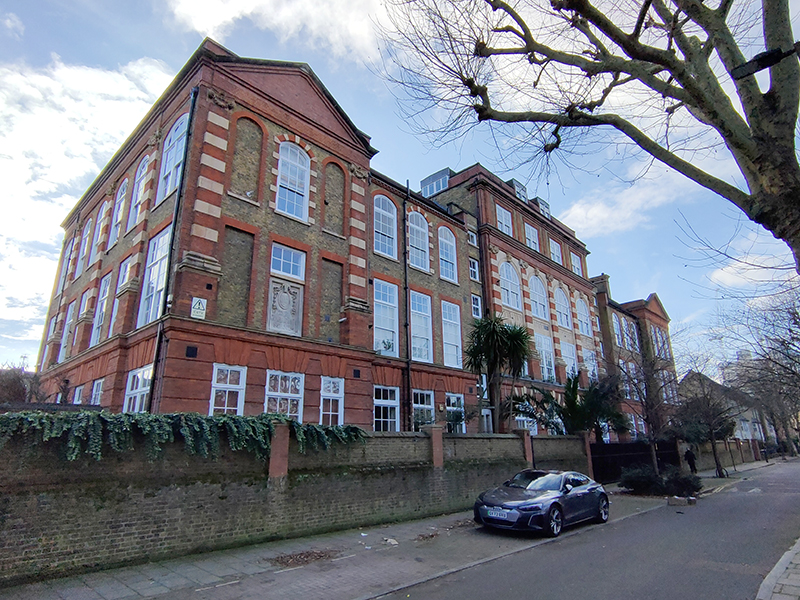
Switching southward on Balfour Street we head down to John Maurice Close and follow this east until it merges into Searles Road. This is home to what was formerly the Paragon School, built in 1900 following the demolition of The Paragon estate, six blocks of four storey semi-detached houses linked by a single-story colonnade, designed by Michael Searles (1750 – 1813) and built in1789-90 for the Rolls family. Searles went on to use the same name for a, now Grade I listed, 14-house perfect crescent in Blackheath. When the school opened it had no hot water or indoor sanitation and its headmaster was paid £26 a year. The school closed in 1988 and was for a number of years run by Southwark Council as a centre for Evening Classes and art studios before finally being sold for private development and converted into a residential building named The Paragon.

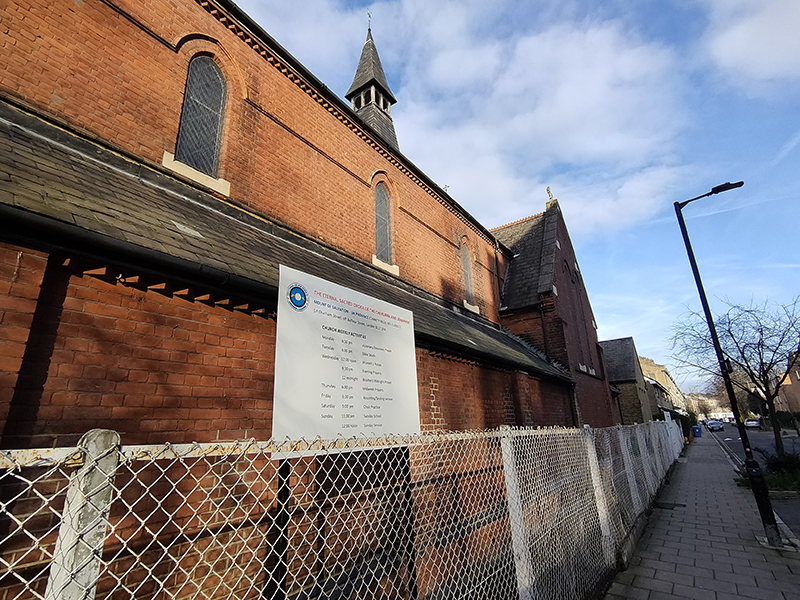
At the end of Searles Road we turn west on Darwin Street which eventually gives way to Hillery Close from where we take Salisbury Close up to Chatham Street. On the corner with Balfour Street the former Lady Margaret Church (1884 – 1977) became a branch of yet another Nigerian-based church, the fantastically-named Eternal Sacred Order of the Cherubim and Seraphim (ESOCS), founded in 1925 by Saint Moses Orimolade Tunolase. I wasn’t able however to find any concrete evidence that ESOCS is still active in this location.

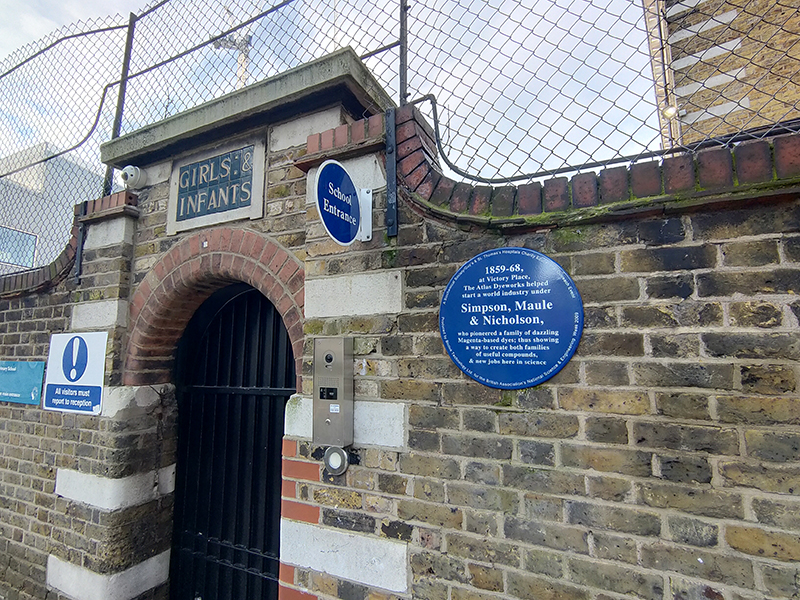
After a quick look at Henshaw Street we continue west along Victory Place. Outside Victory Primary School (1913) is a plaque commemorating The Atlas Dyeworks which previously stood on this site and whose owners George Simpson, George Maule and Edward Nicholson, pioneered the production of Magenta-based dyes. Magenta, familiar to anyone with an inkjet printer, was originally called fuchsine and patented in 1859 by the French chemist François-Emmanuel Verguin. It was renamed to celebrate the Italian-French victory at the Battle of Magenta fought between the French and Austrians on 4 June 1859 near the Italian town of Magenta in Lombardy. That same year Simpson, Maule and Nicholson created an almost identical shade which they named roseine. A year later they also switched the name to Magenta having, according to some reports, acquired Verguin’s patent for £2,000. Some claim that Magenta is not technically a colour as it doesn’t have a wavelength of light and therefore is just a creation of the human brain. Notwithstanding that, it sits exactly halfway between red and blue on the RGB colour chart and in 2023 a shade of Magenta, Viva, was named as Pantone colour of the year.

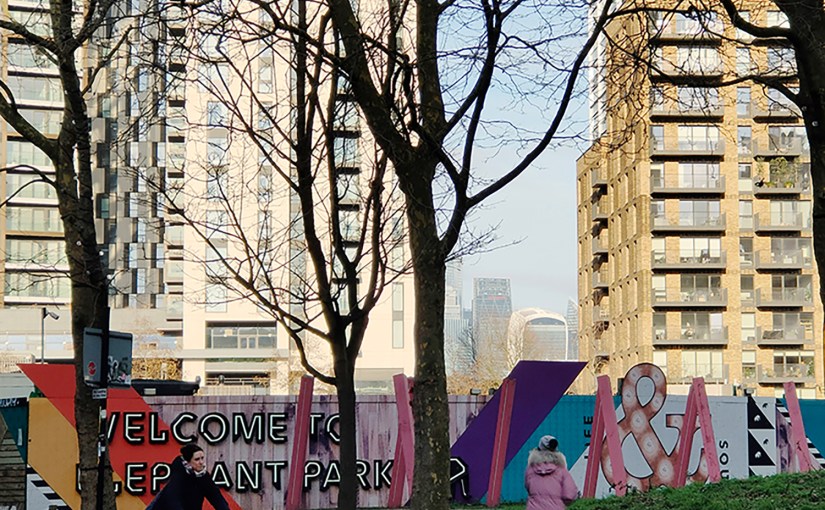
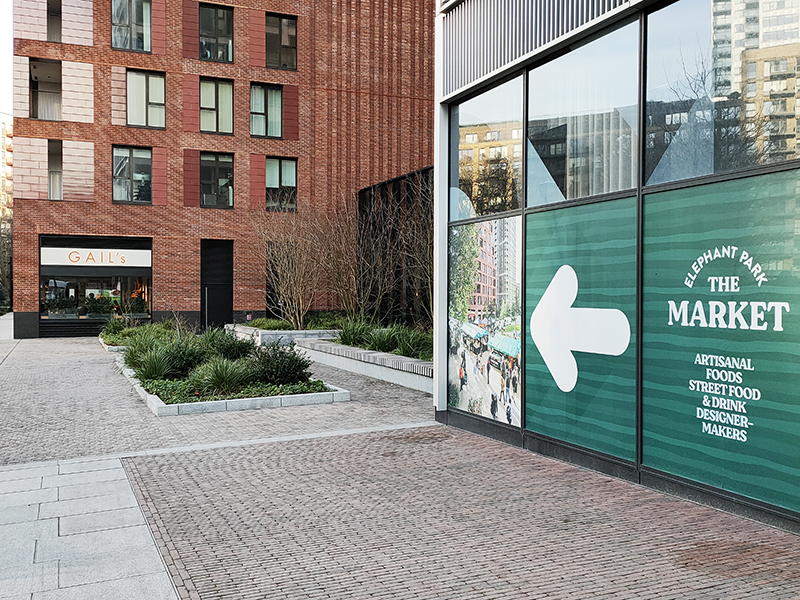
And so, we finally head into the Elephant Park development area, having first skirted round it’s southern boundary via Heygate Street, Steedman Street and Hampton Street, crossing twice over the Walworth Road in the process. This 170 acre site was earmarked for a master-planned redevelopment budgeted at £1.5 billion from the mid 2000’s onward. As mentioned at the start, this led to the demolition of the brutalist Heygate Estate and adjacent social housing to be replaced with a mix of social and private-sector housing and green space of which Elephant Park forms a major part. Developer, Lendlease, has so far delivered 2,303 apartments and 8,600 sqm of retail space with a further 222 apartments, 1,000 sqm of office space and 400 sqm of retail space on the way. They have also recently opened the two-acre central park and Elephant Springs, an “urban oasis” featuring fountains, waterfalls, and slides (though as you can see below this is closed for the winter).

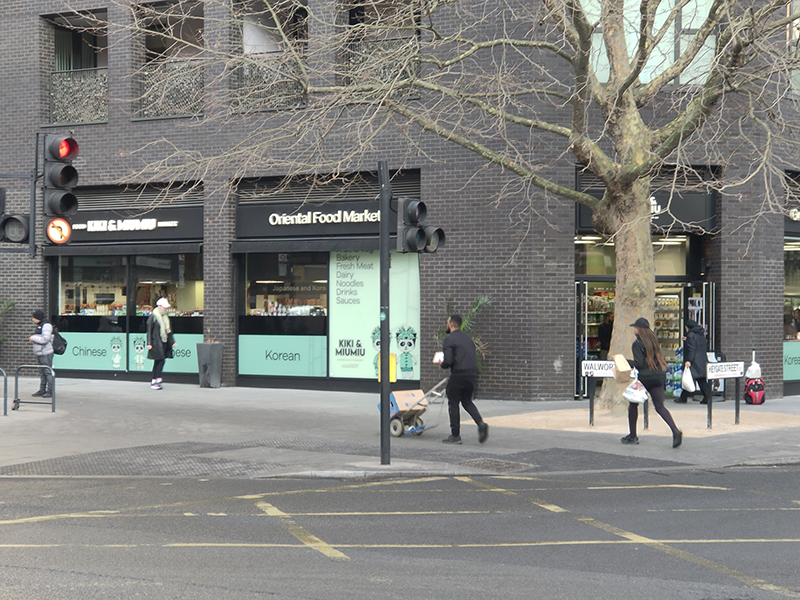
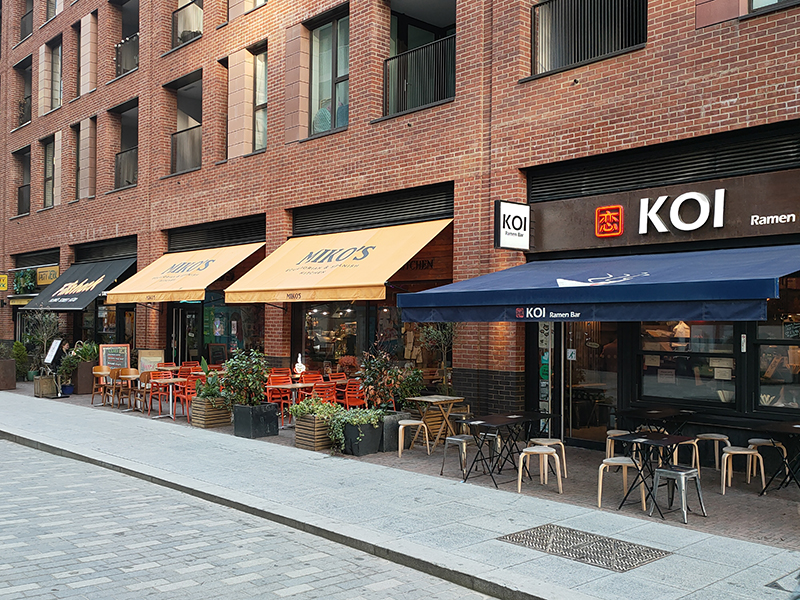
The area around Elephant & Castle has historically been very working class in character and in recent decades increasingly ethnically diverse. Driven by the development the demographics have been changing however with an influx of city workers and members of the South East Asian communities; both of whom are well catered for by the restaurants and bars of Elephant Park. (I never thought I would see the day when the Elephant & Castle hosted a Gail’s Bakery).

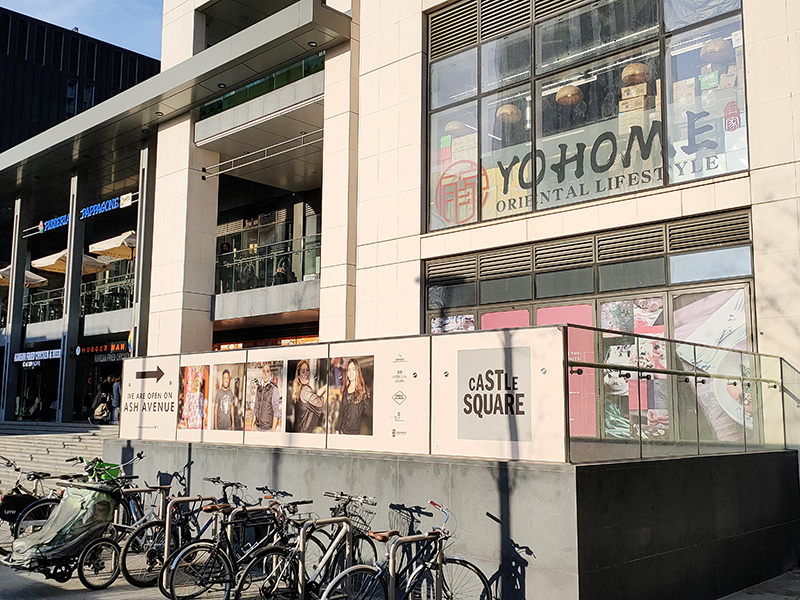
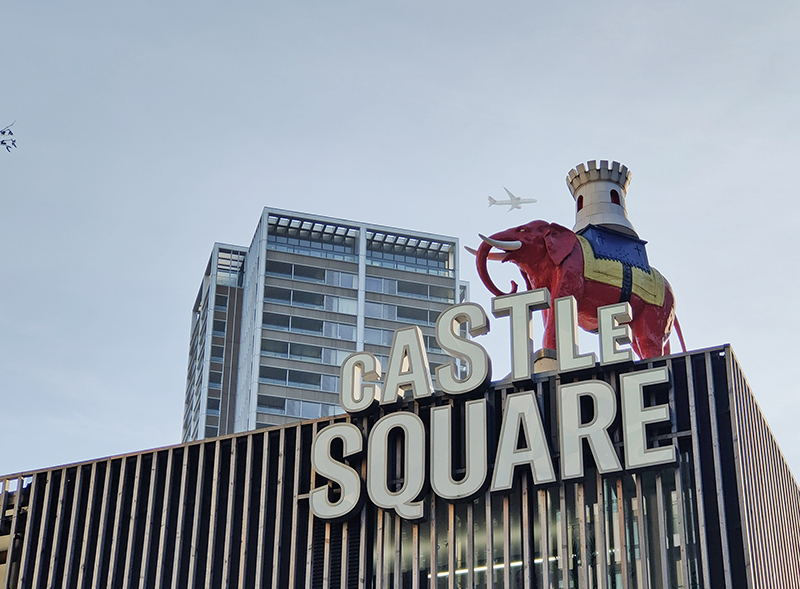
Elephant Park is traversed by Deacon Street and Ash Avenue. At the western end of the latter is Castle Square, a new public space and retail destination which is home to many of the traders formerly based in the old E & C shopping centre. The statue from the original Victorian Elephant & Castle pub which was demolished in 1959 now sits atop the main hub of Castle Square.

That shopping centre, designed by Boissevain & Osmond for the Willets Group, was opened in March 1965 and was the first covered shopping mall in Europe. It never quite lived up to the original ambitions of its developers to create “the Piccadilly of the South” though. In due course it came to be frequently voted the ugliest building in London (if not the whole of the UK) and its destruction in October 2020 was very much unlamented. That was definitely not the case for the adjacent Coronet Cinema which was demolished at the same, having survived since 1932. The current, since 2015, owners of the site, Delancey, are in the midst of a redevelopment plan for a new “town centre”, which is due to be completed in 2026. This is scheduled to include new housing at both affordable and market rent; a combination of shops, restaurants and leisure facilities, with existing shopping centre independent traders getting first right of refusal to return to the affordable retail spaces; a state-of-the-art new home for London College of Communication and a new entrance to the Northern Line Underground providing both escalator and lift access and designed to safeguard for any future Bakerloo line extension. Watch this space (see below).
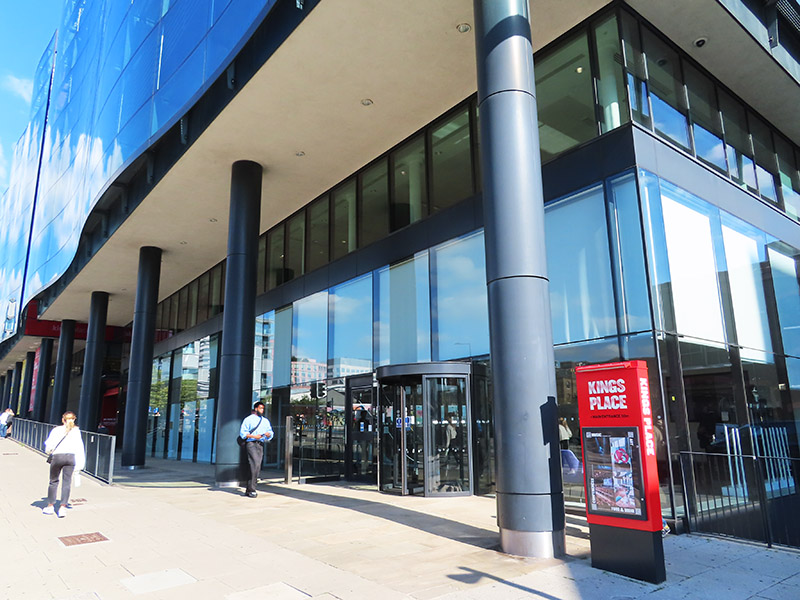
So that just about wraps things up for this time and its via the existing access to the Northern Line that we exit (pursued by an Elephant).

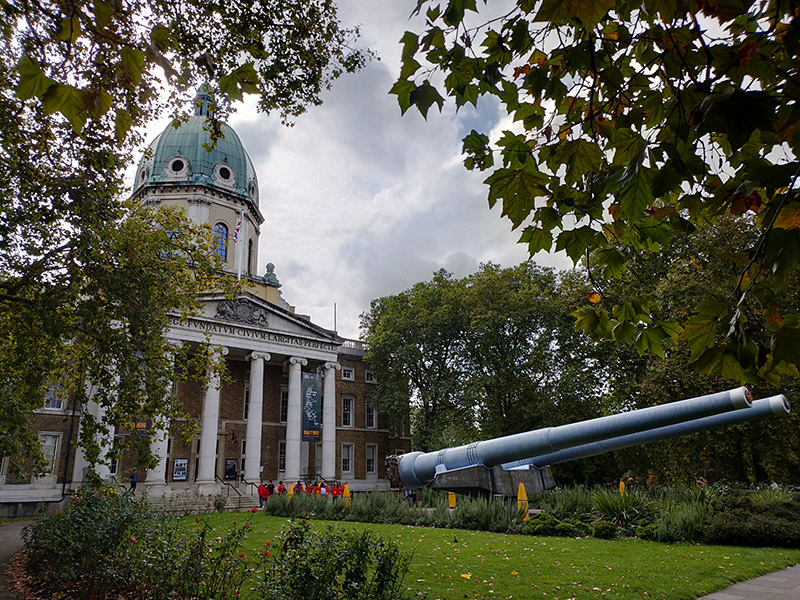
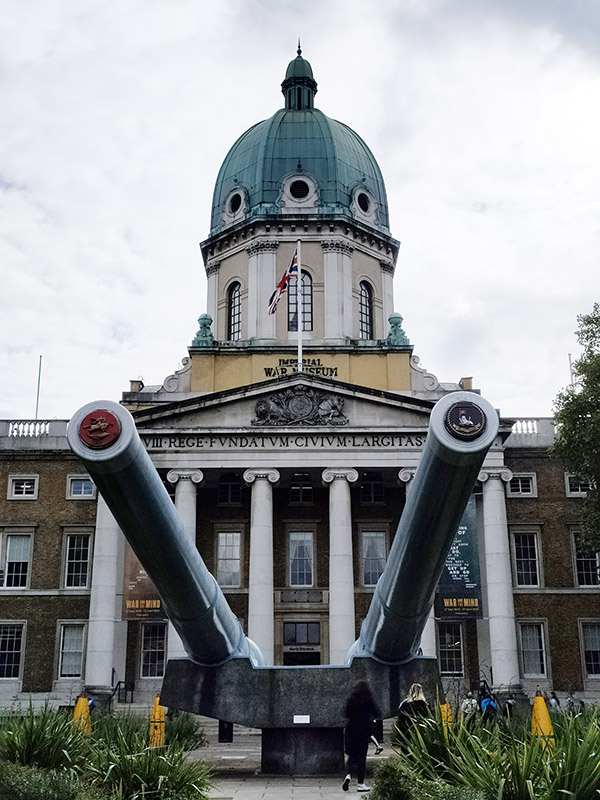
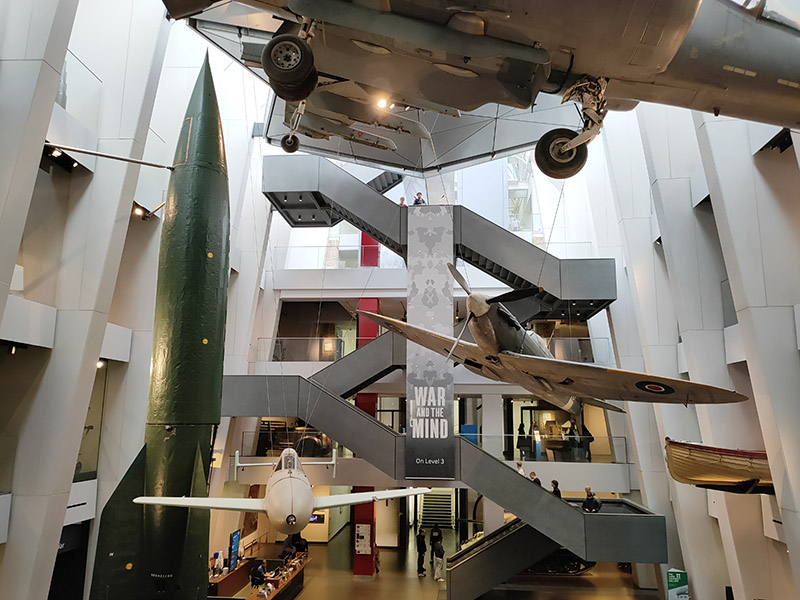
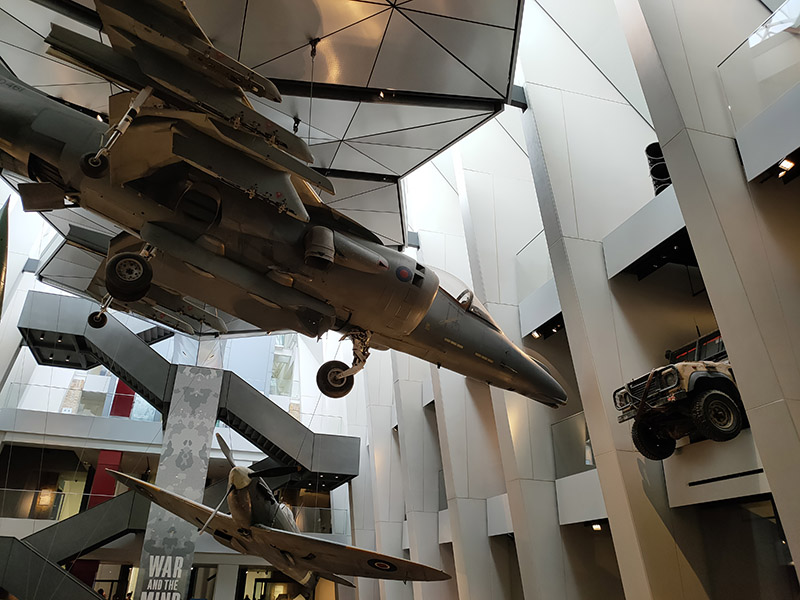
Day 79 – Kennington Road – Kennington Park Road – Kennington Lane – Imperial War Museum

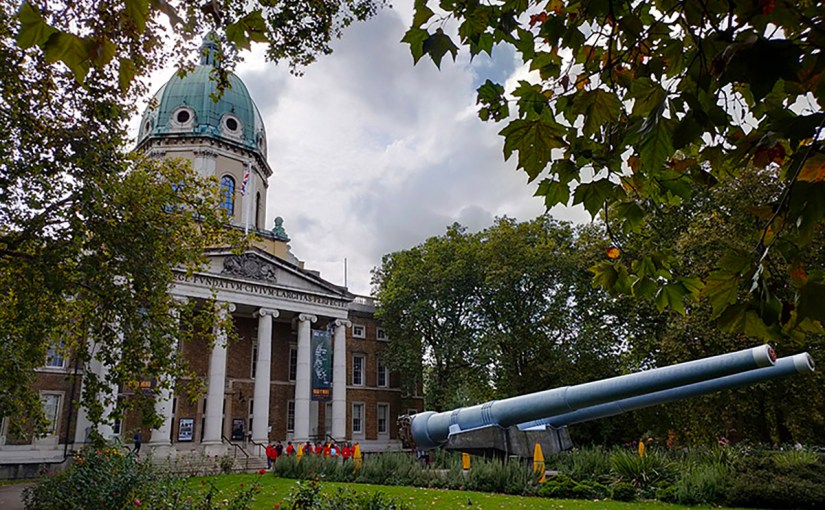
As promised, we’ve ventured back south of the river for today’s outing and specifically, as the more insightful amongst you may have twigged, we’re talking Kennington. The route stretches from the axis of Kennington Road and Kennington Park Road to the south to the Imperial War Museum in the north, taking in all the streets within the wedge formed by those two main roads. It’s a mainly residential area with a familiar mix of historic terraces and squares cheek by jowl with high-rise estates. In recent times, Kennington has been on something of an upward curve as those Victorian and Georgian terraces became available to young professionals at a significant discount to similar properties in other areas of London.

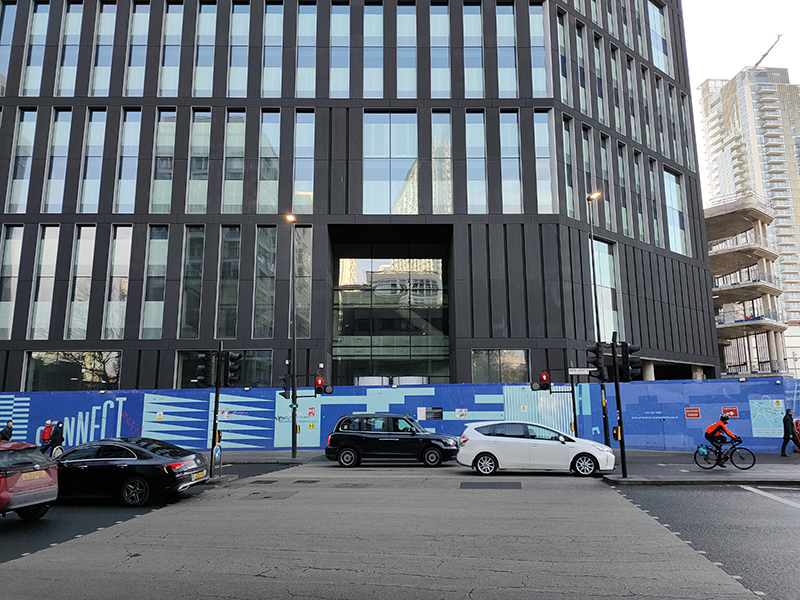
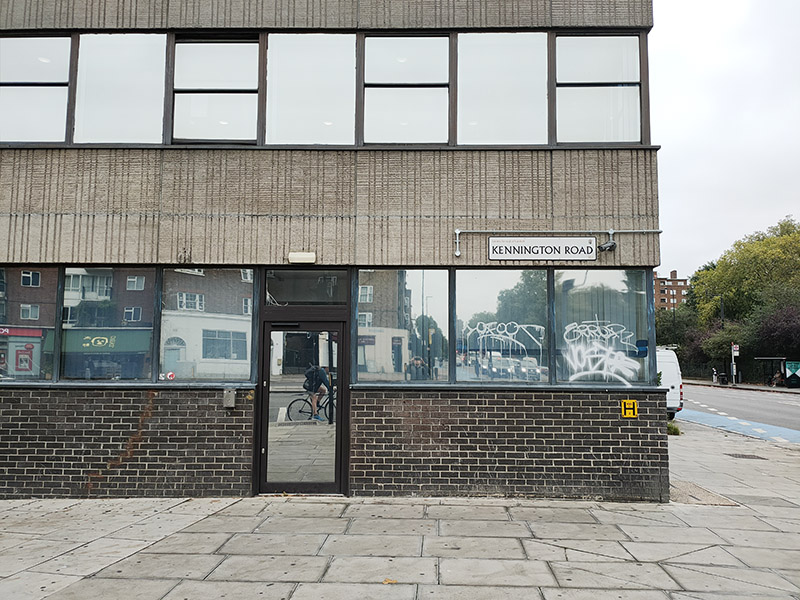
Having alighted from the no.59 bus at the southern end of Kennington Road we start today’s features rather inauspiciously with the abandoned south London outpost of the Department of Trade and Industry, although if you turn the corner into Kennington Park Road there’s a still active Job Centre Plus in part of the same building (can’t remember seeing one of those in any of the previous 78 jaunts).

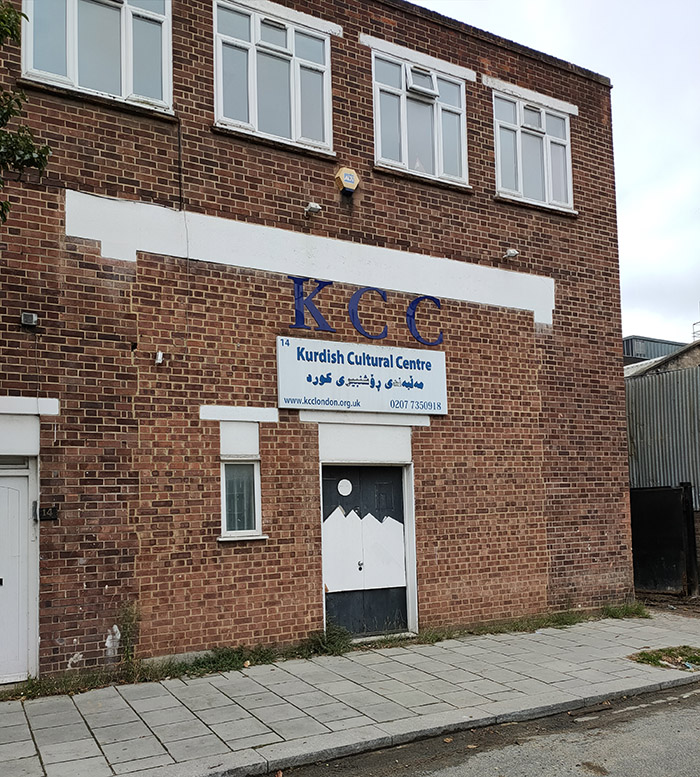
A short way up Kennington Park Road we turn left into Ravensdon Street and then double back down Stannary Street which takes us past the Kurdish Cultural Central. (Don’t worry, we’ve got some more photogenic buildings coming up later.)

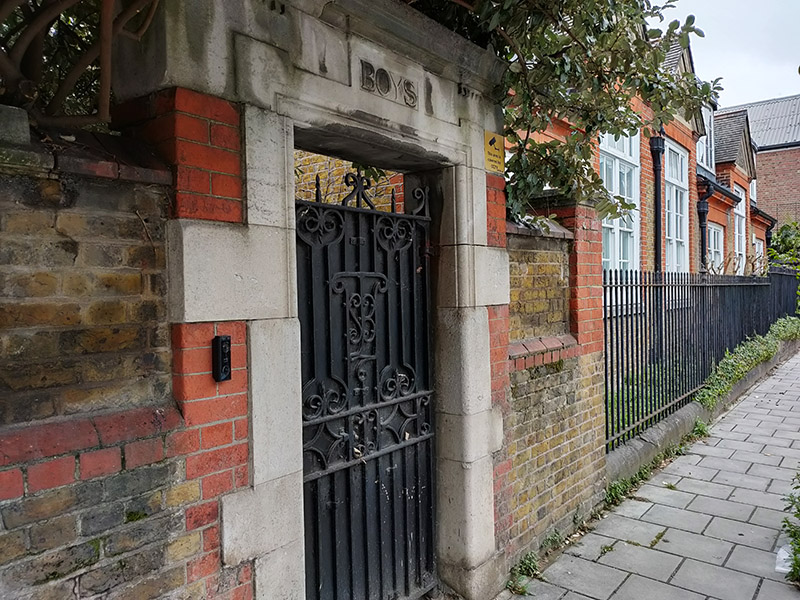
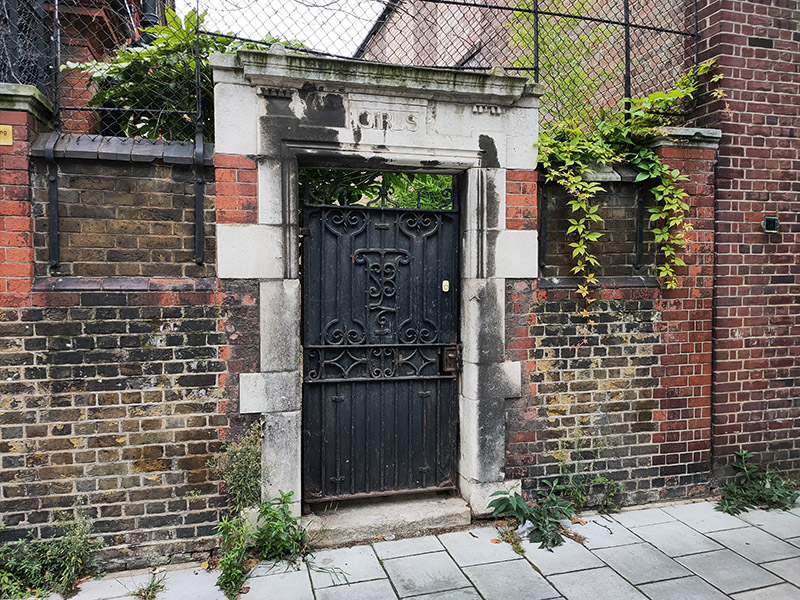
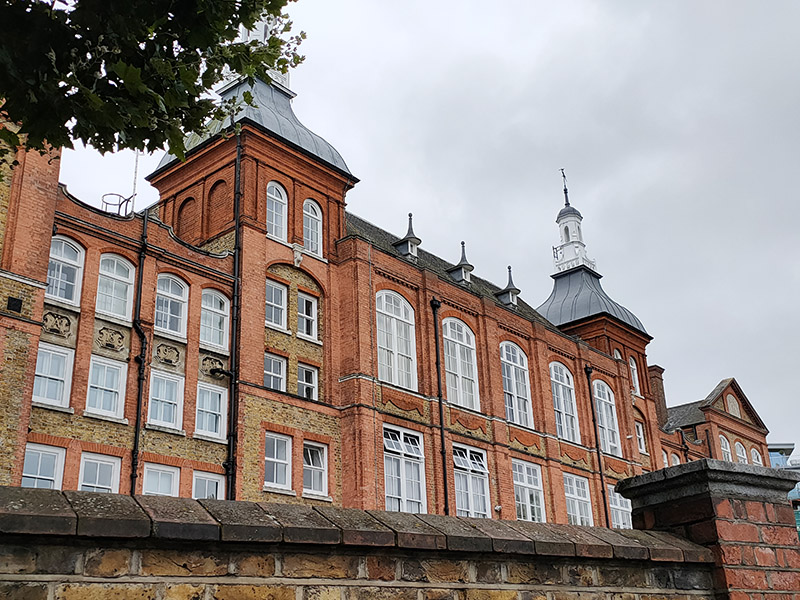
On the other side of Stannary Street is the back of the former Kennington Road School. This impressive Grade II listed Victorian edifice which faces onto Kennington Road is now a gated luxury apartment complex known (pour quelle raison ?) as The Lycee.

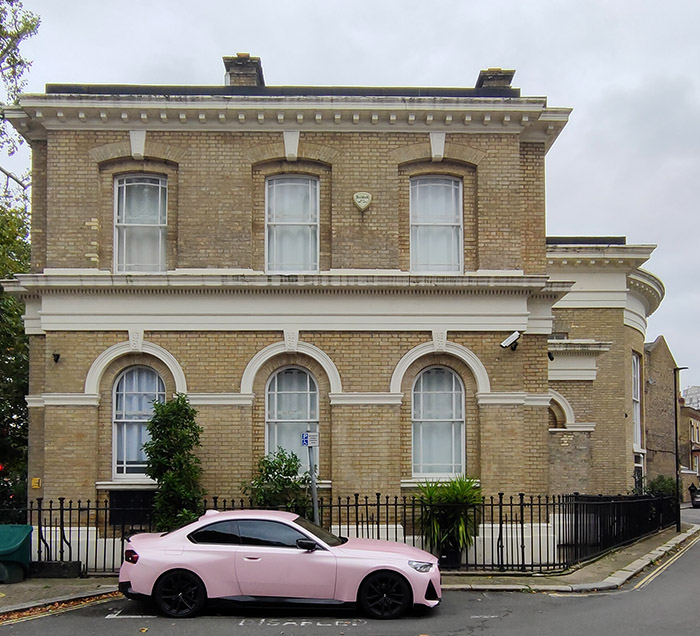
A little way further up Kennington Road we turn off into Milverton Street. As I’ve noted before, I don’t have much of an interest in cars but I was quite taken with this pink jobbie claiming a disabled parking space just off the main road.

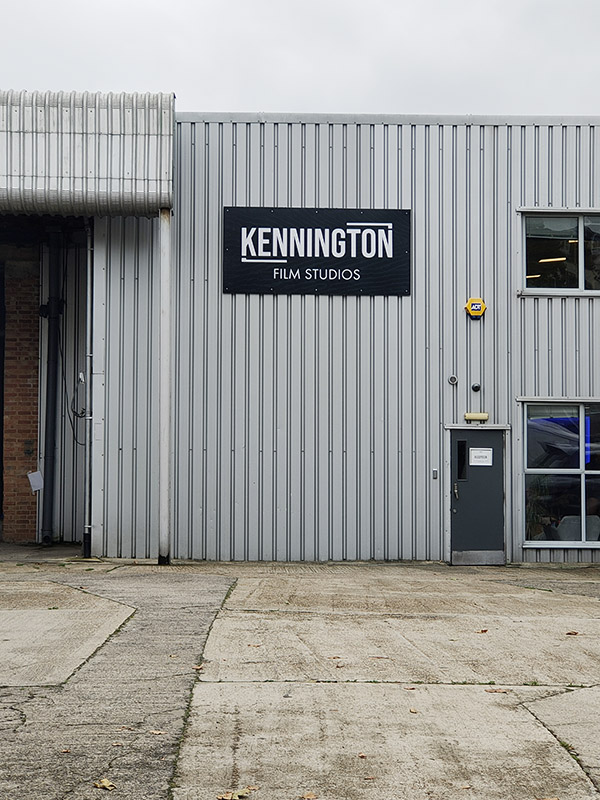
Immediately opposite here is the home of Kennington Film Studios, according to their website, “a commercial film & photography studio in Central London (really ?), offering 3 sound-treated studio spaces across 4,500sqft and 1 podcast/vodcast studio. In a former life, Channel 4’s Richard & Judy and the BBC’s Saturday Kitchen were apparently shot here.

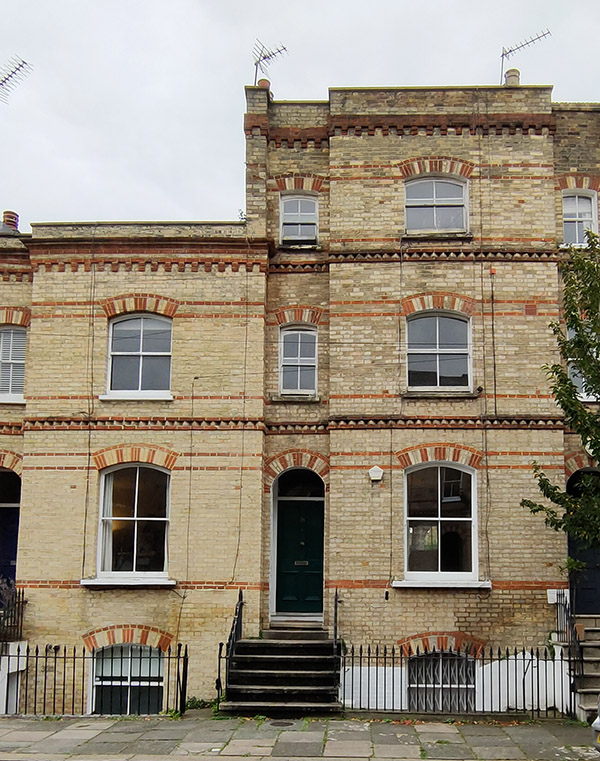
Cutting through the alleyway that is Aulton Place we return to Stannary Street then cross back over Ravensdon Street into Radcot Street which leads straight into Methley Street. These latter three streets form the main part of an estate that was built in 1868 to the design of architect, Alfred Lovejoy. The elegant three-storey terraces are distinguished by the alternating colours of the bricks in the arches above the windows and doorways. By the end of the 19th century however, when Charlie Chaplin briefly resided at no.39 (and is assumed to have attended Kennington Road School) the area had already become somewhat impoverished.

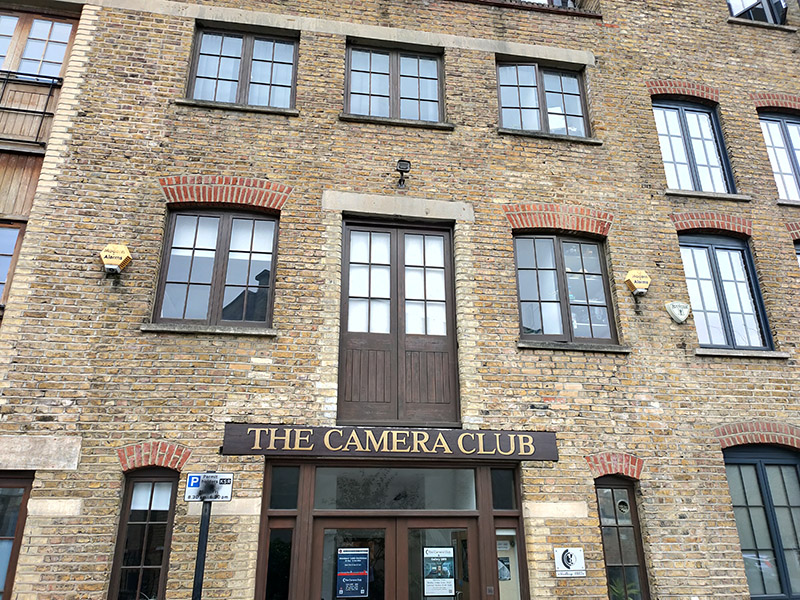
The building on the right above, which is in Bowden Street, although incorporating similar architectural stylings, was originally a pickle factory. I’m not sure when it ceased making pickles but the building became the home of The Camera Club in 1990. The Camera Club was founded in 1885 when the editor of Amateur Photographer magazine, J Harris Stone, called together the most prominent photographers of that time, to create a group that aimed at being “A Social, Scientific and Artistic Centre for Amateur Photographers and others interested in Art and Science.”

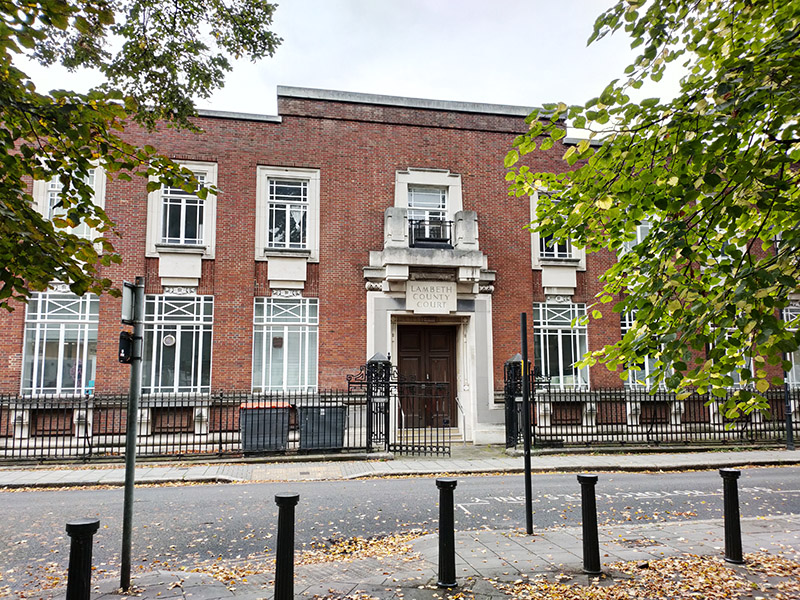
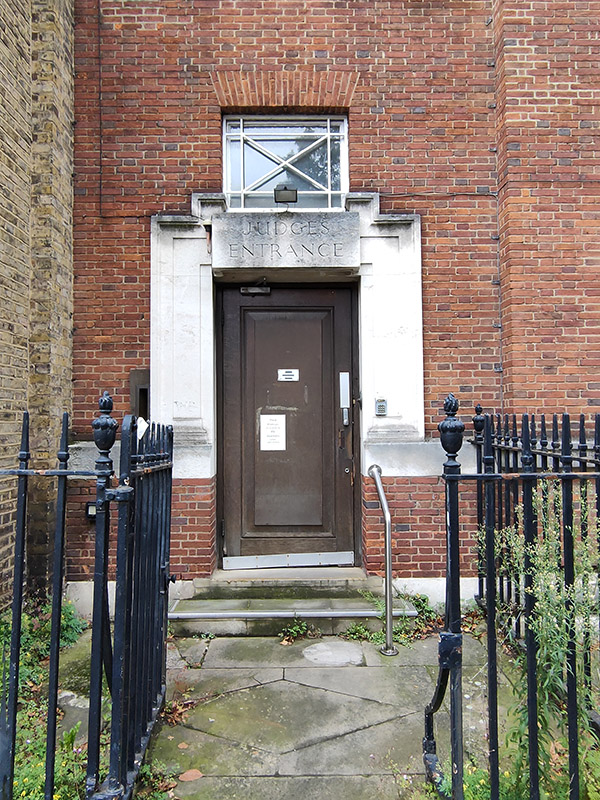
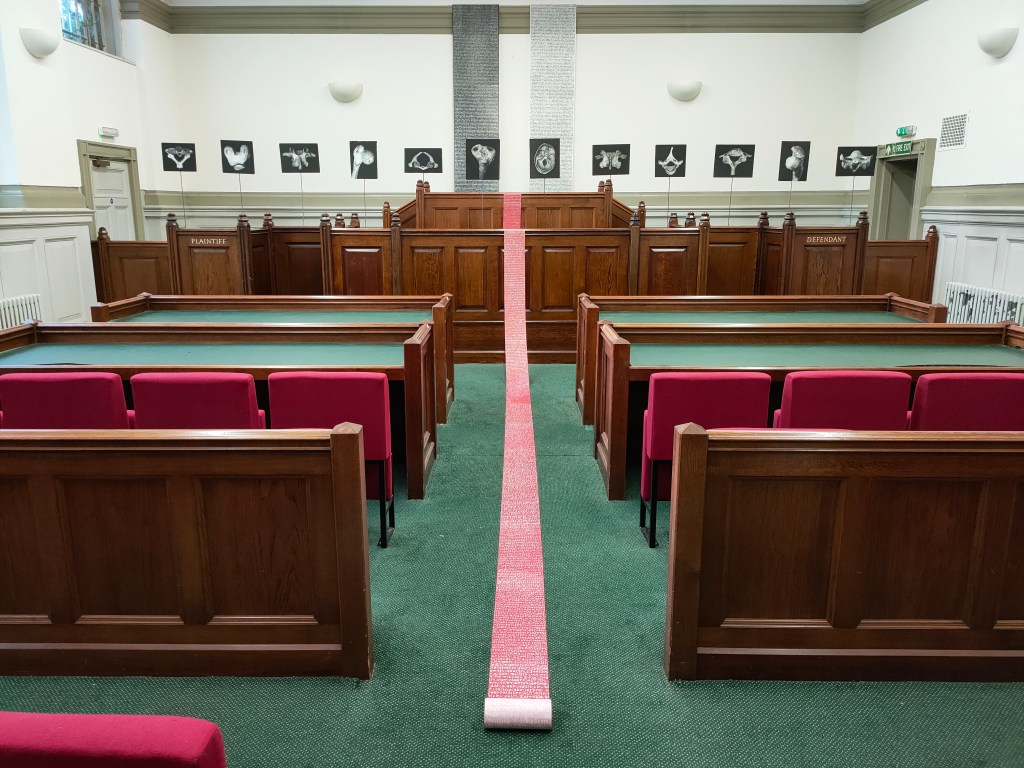
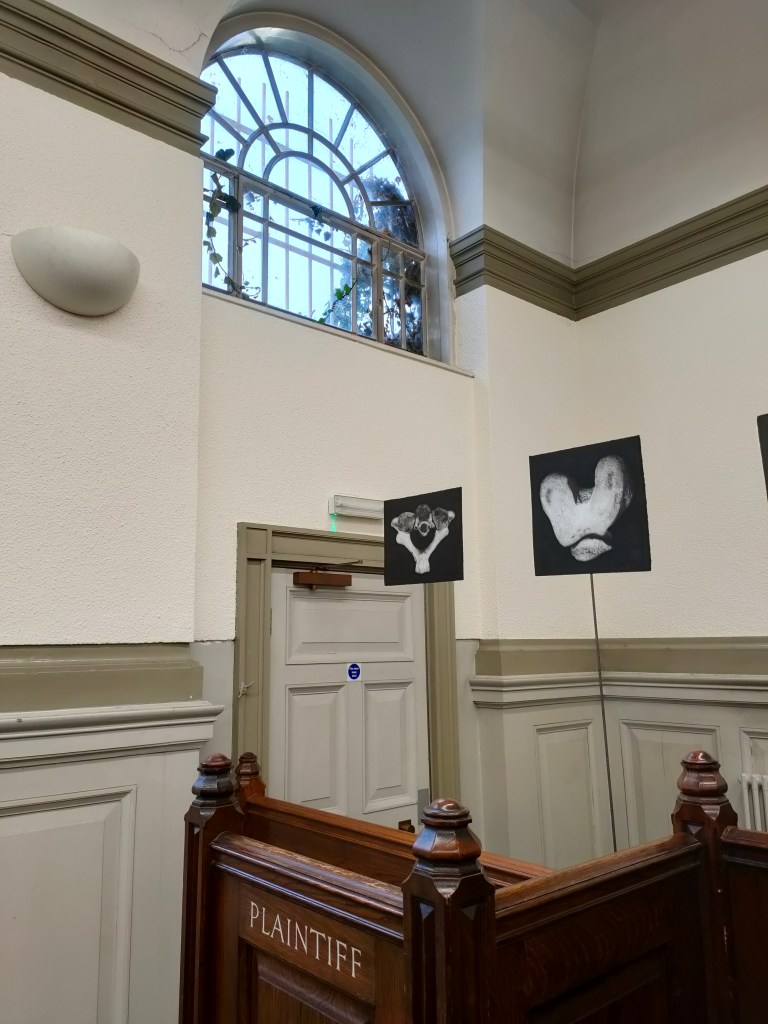
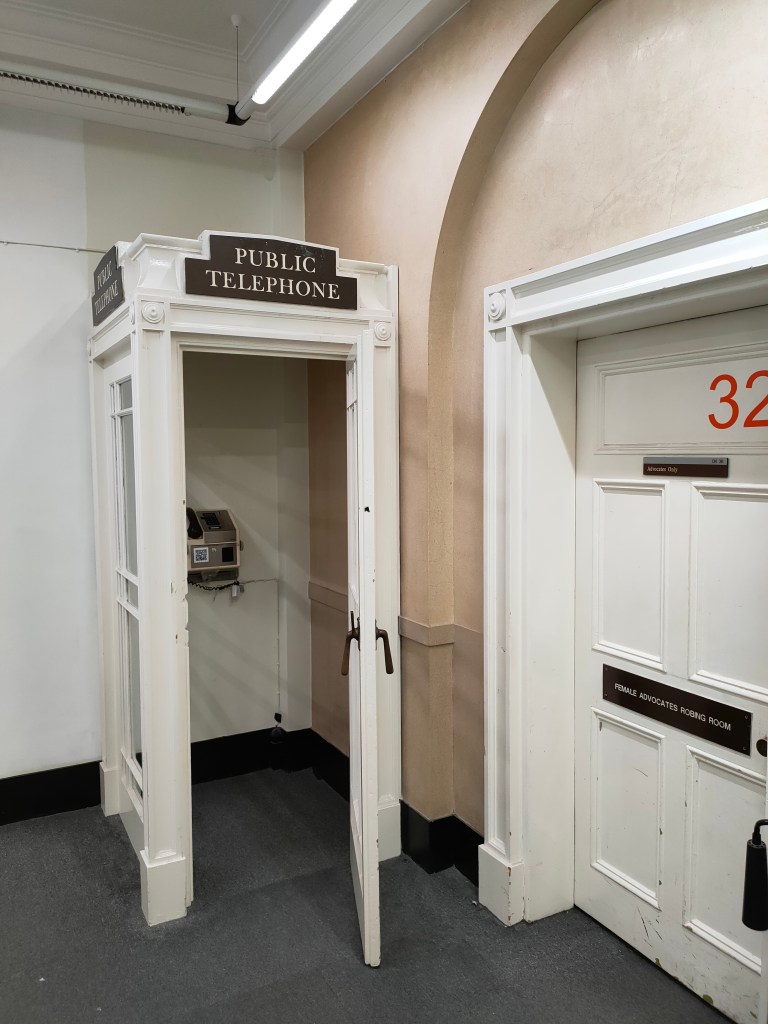
Opposite where Bowden Street joins onto Cleaver Street stands the former Lambeth County Court. Built in 1928, it was designed by John Hatton Markham of the Office of Works, in what Historic England describes as “an eclectic classical style”. The list entry goes on to state “Lambeth County Court was the first new county court built in a rebuilding programme begun in the late 1920s, in recognition of the inadequacy of many existing buildings, particularly in London, for facilitating the important work done by the courts; the lavishness of this example, by comparison with those built later, probably reflects the fact that it was built before the crash of 1929”. That listing (Grade II) was only granted in 2021, four years after the building ceased to act as a Court and a few months after I visited it when it was being used temporarily as art gallery space (the interior shots in the sequence below date from that visit). The site is actually owned by the Duchy of Cornwall and it appears that the listing put paid (for the time being) to their plans to redevelop into offices and apartments.

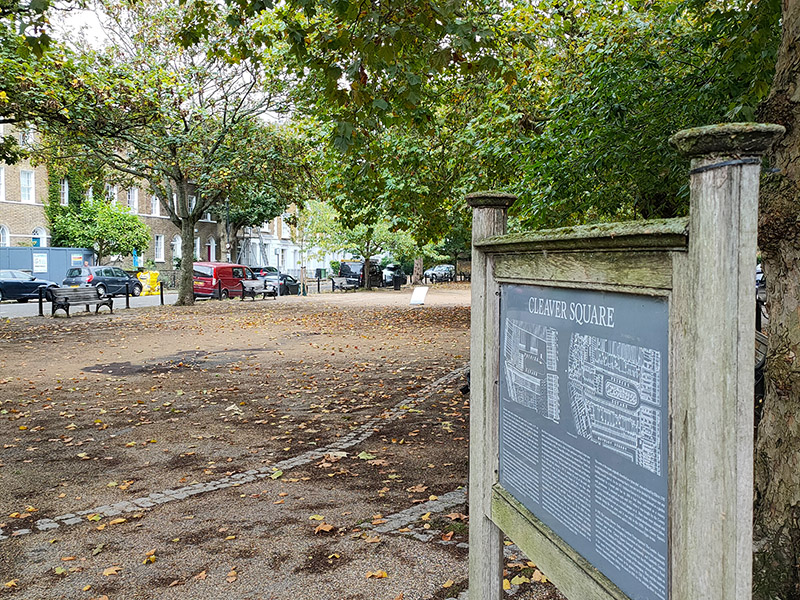
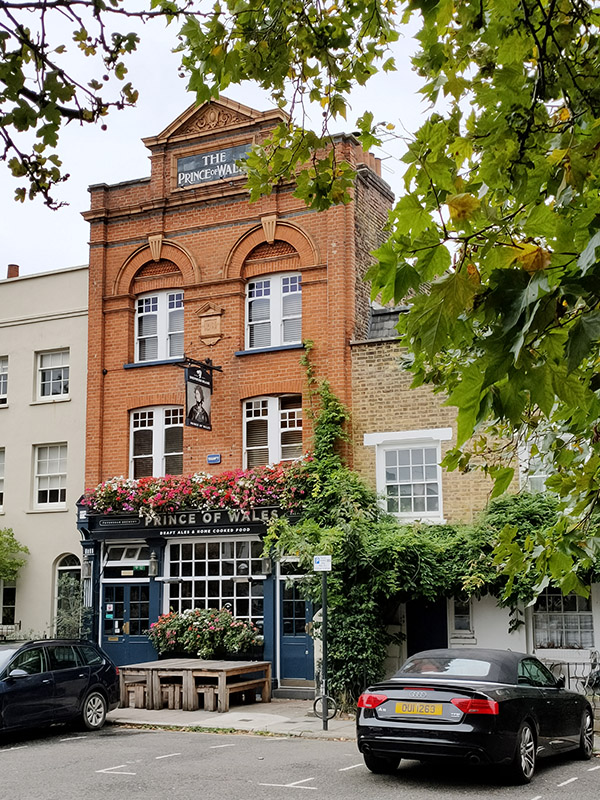
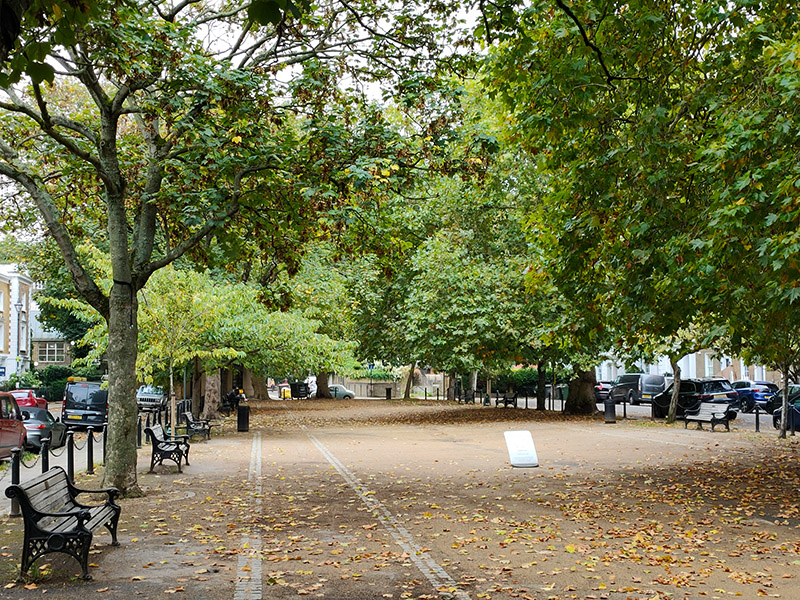
Turning right here brings us into Cleaver Square which was laid out in 1789 and was the first garden square south of the river. Until the middle of the 18th century, this was still open pasture forming part of an estate known as White Bear Field that was inherited by one Mary Cleaver in 1743. In 1780 Mary leased the land to Thomas Ellis, the landlord of the Horns Tavern on Kennington Common, who laid out and developed the square, originally naming it Princes Place. The houses around the square were built on a piecemeal basis between 1788 and 1853. As we alluded to earlier, by the 1870s the area had reduced in status, and the houses were overcrowded. The renaming as Cleaver Square occurred in 1937. The Prince of Wales pub in the north west corner originally dates from 1792 but was refaced in 1901.

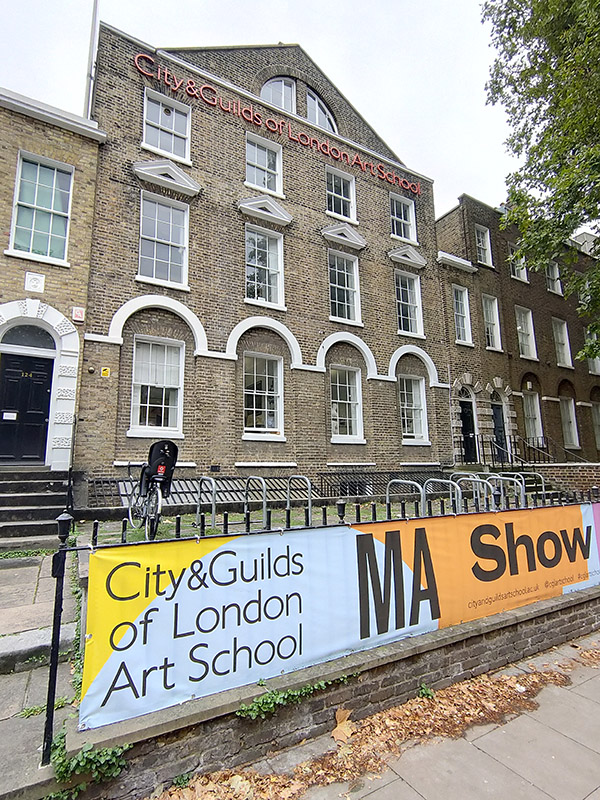
At its eastern end Cleaver Square rejoins Kennington Park Road and here you’ll find the City & Guilds of London Art School. This was founded in 1854 by the Reverend Robert Gregory under the name Lambeth School of Art. It moved to this location in Kennington post-1878 and the current name was adopted in 1938. After WWII restoration and carving courses were established to train people for the restoration of London’s war-damaged buildings. A Fine Art programme was only developed in the 1960’s.

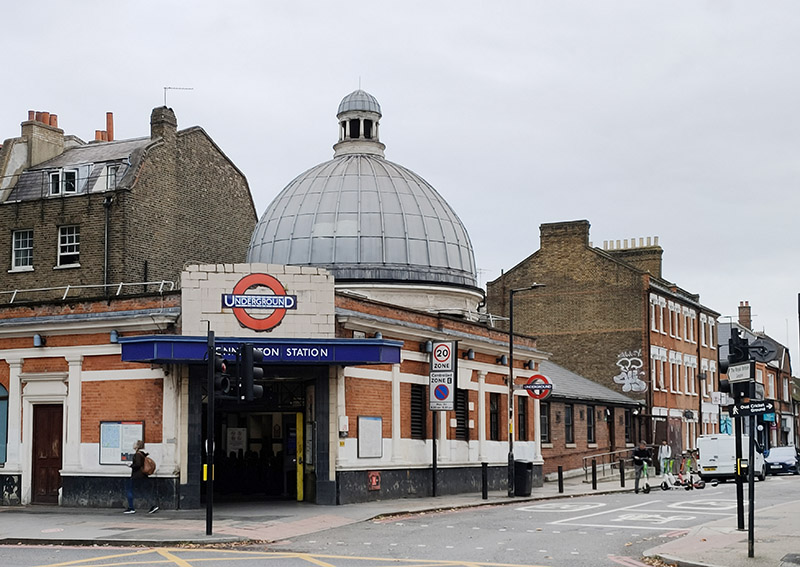
Continuing up Kennington Park Road we pass Kennington Tube Station. The station opened in 1890 as part of the City and South London Railway (CSLR), the world’s first underground electric railway which initially ran from King William Street to Morden. Since then surface building has remained largely unaltered although there have been several reconstructions and extensions underground. Travel between the surface and the platforms was originally by hydraulic lift, the equipment for which was housed in the dome. In 1900 King William Street station was closed and a new northern extension connecting London Bridge with Bank and Moorgate was created. Seven years later this was extended further to Kings Cross and Euston. After WW1 the Hampstead Tube which ran from Edgware to Embankment was extended to Kennington and merged with the CSLR to form what in 1937 came to be known as the Northern Line (with its two separate branches between Kennington and Camden). In 2021, after 6 years of construction, a new extension of the Charing Cross branch of the Northern Line was opened, running between Kennington and Battersea Power Station. It was the first major change to the tube network since the Jubilee Line extension in 1999.

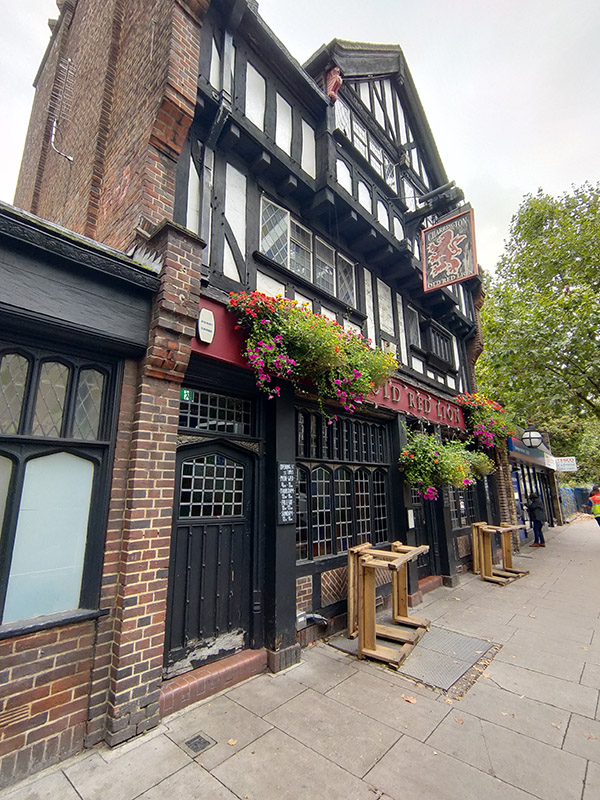
Further up the road from the tube station is the mock-tudor styled Old Red Lion pub which was built in 1933 by the London brewers Hoare and Co. (acquired later that same year by Charrington’s). This is another Grade II listing, on account of being one of the best preserved remaining examples of the interwar “Brewers Tudor” style of pub architecture with many original features still intact; including (for unknown reasons) a built-in painting of Bonnie Prince Charlie landing back in Scotland in 1745.

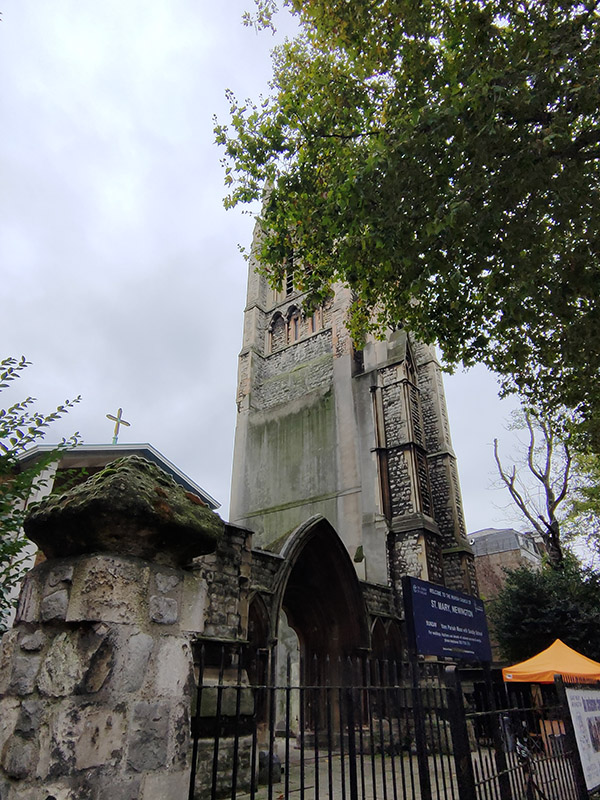
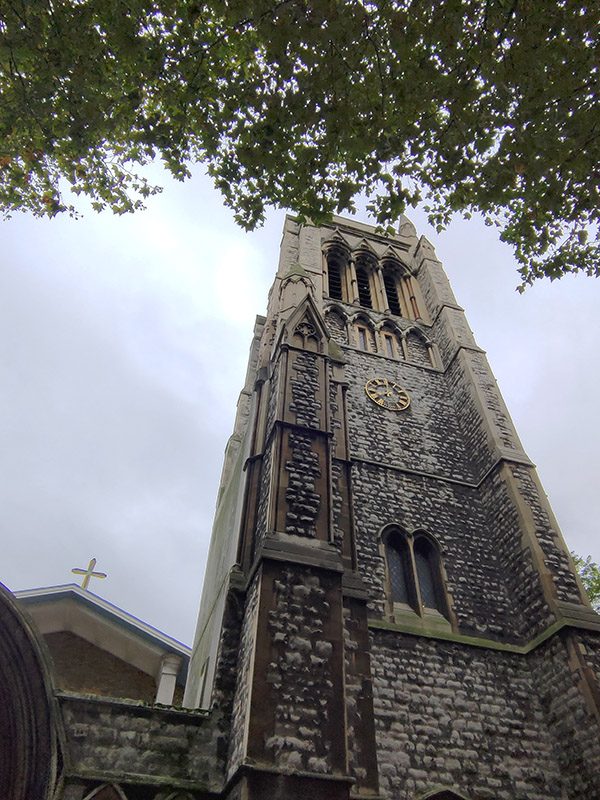
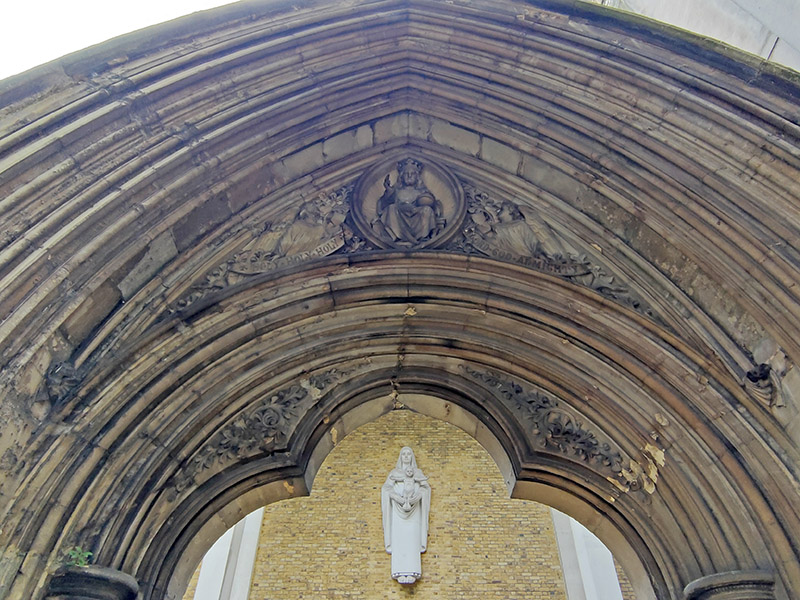
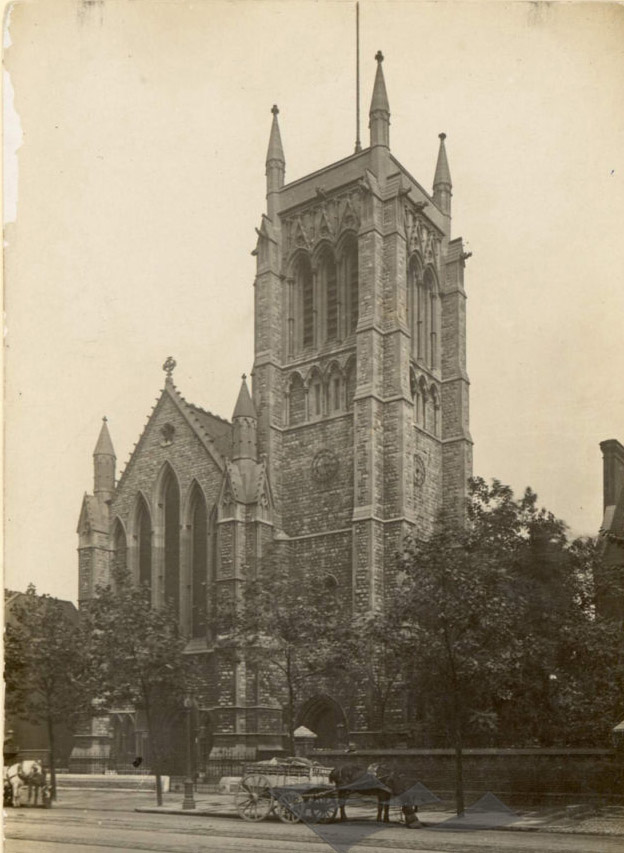
Opposite the pub on the east side is the parish church of St Mary Newington. For much of its history the parish of Newington was in the county of Surrey and was the County Town until Kingston-on-Thames superseded it in that role in 1893. The current operational church building was opened in 1958 and stands beside what remains of its predecessor, the latter having been burnt out in a 1941 air raid. That Victorian church was consecrated in 1876 and described, at the time, by Sir George Gilbert Scott (yes, him again) as “one of the finest modern churches in London”. The postcard from 1910 in the sequence below shows the church as it was when constructed; following the fire only the clock tower and the low section of the arcading between the two horse carts were left standing.

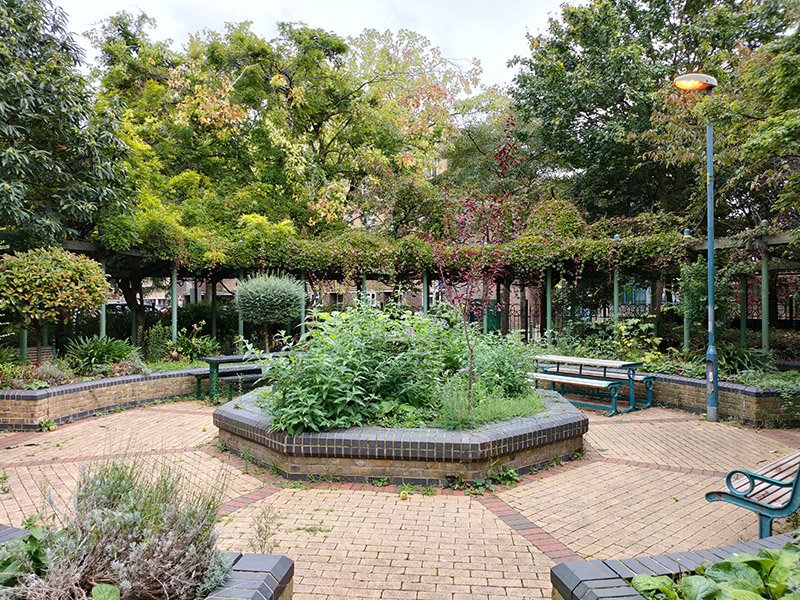
Turning west off Kennington Park Road we’re into an area of public housing starting with Cornwall Square which leads into Kennington Way which merges into White Hart Street that takes us out onto Kennington Lane. A right turn and then another into Cottington Street brings us to a green space which incorporates the small but perfectly-formed Queen Elizabeth Jubilee Garden.

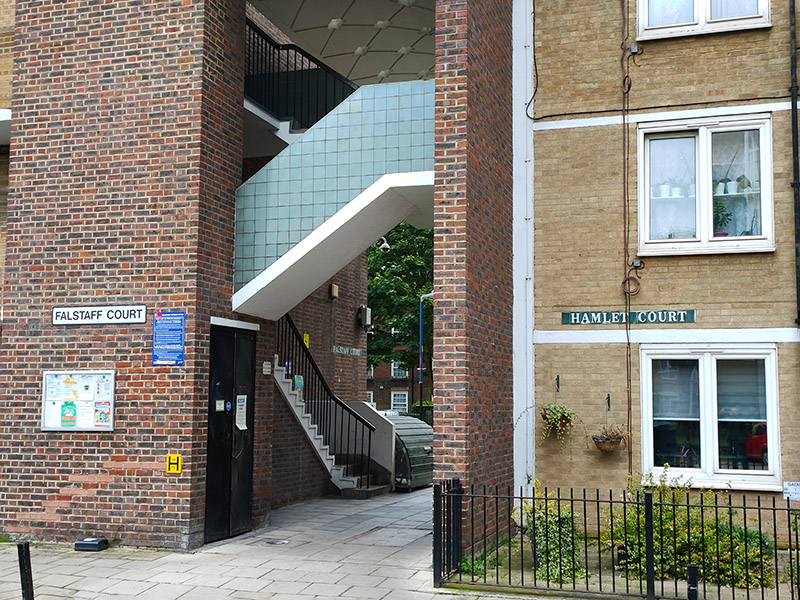
Beyond this, Opal Street takes us through a public housing estate where (and why not) the various blocks and access routes are all named after Shakespearean characters. So you’ve got Othello Close, Isabella House, Hamlet Court, Portia Court, Falstaff Court, Ariel Court and Dumain Court. If like me you couldn’t place the last one, he’s apparently a Lord at the court of the King of Navarre in Love’s Labours Lost.

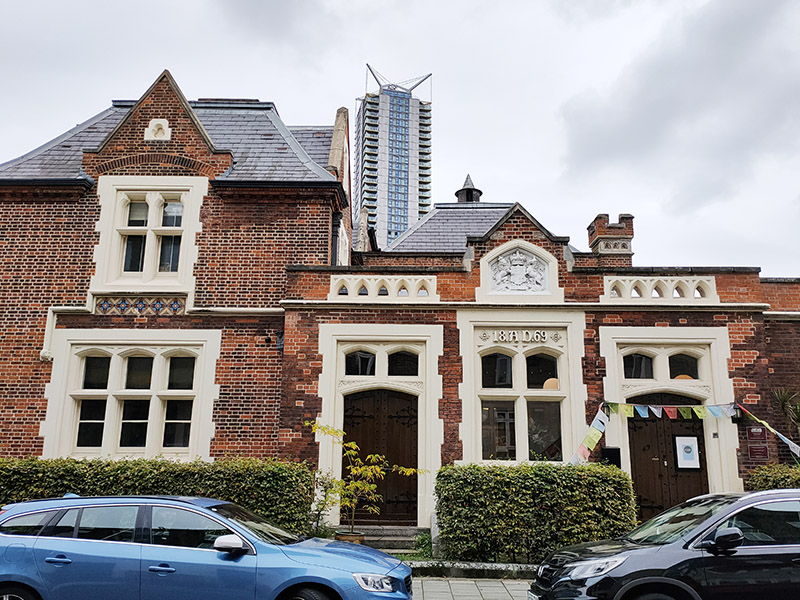
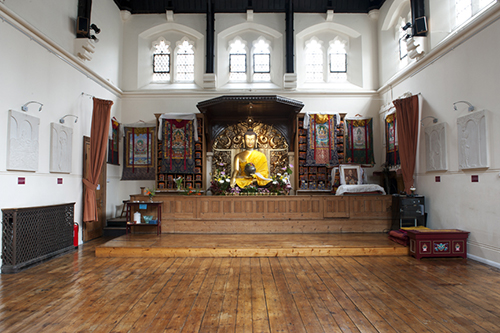
To the north of Kennington Lane, on Renfrew Road, is another Grade II listed former courthouse. Lambeth Magistrates’ Court (originally known as Lambeth Police Court) was built in 1869 and designed by Thomas Charles Sorby in the Gothic Revival style and is the earliest surviving example of a Criminal Magistrates Court in the Metropolitan area. Since 1978 it has been home to the Jamyang Buddhist Centre which “provides a place for the study and practice of Tibetan Buddhism in the Mahayana tradition following the lineage of His Holiness the Dalai Lama”. (Image on the right below from Jamyang.co.uk)

From Renfrew Road we move on to Gilbert Road followed by Wincott Street, Kempsford Road and Reedsworth Street which takes us back on to Kennington Lane.

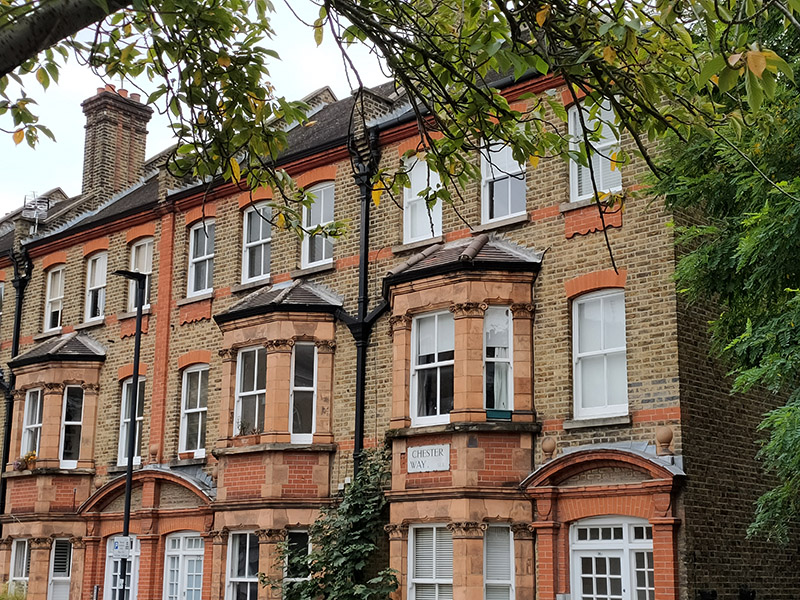
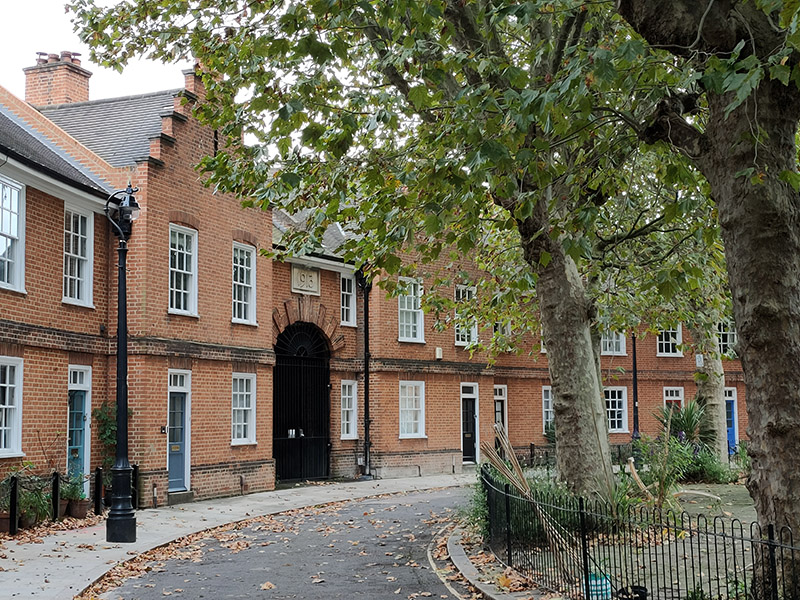
Chester Way, Denny Street and Denny Crescent nestle in the apex of Kennington Lane and Kennington Road and this little triangle forms another part of the Kennington Conservation area. The properties here were built immediately before WWI for the Duchy of Cornwall estate and the Dutch style 2-storey red brick cottages which comprise Denny Crescent are now all Grade II listed.
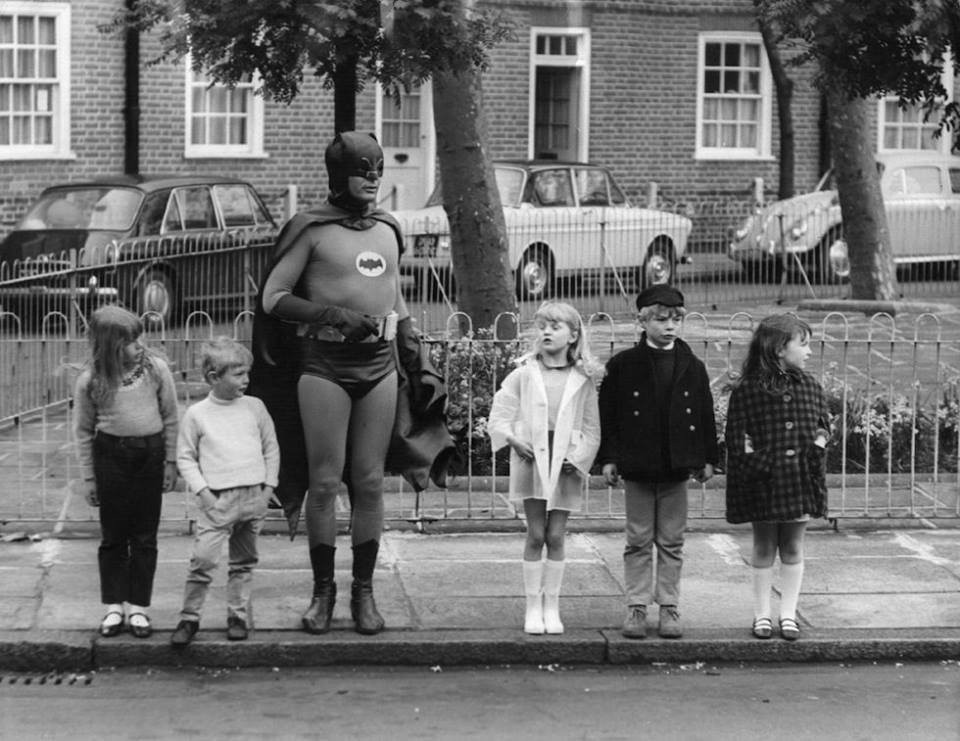
Couldn’t resist this photo of Adam West as Batman teaching Road Safety in Denny Crescent in 1967. (Credit to https://www.theundergroundmap.com for unearthing that one).

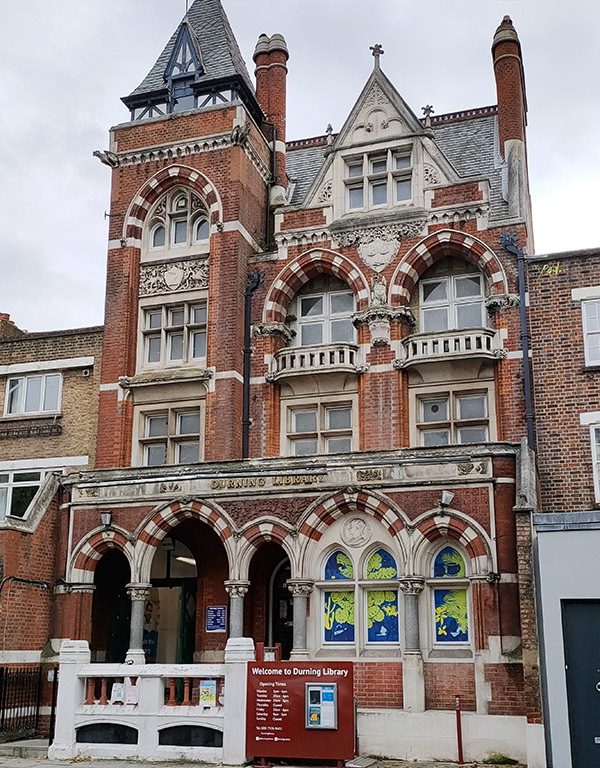
Back on the other side of Kennington Lane is the Durning Library which was purpose built in 1889, designed by Sidney R.J. Smith the architect of Tate Britain, (once again) in the Gothic Revival style. It was a gift to the people of Kennington from Jemima Durning Smith, the daughter of the Manchester cotton merchant, John Benjamin Smith, who in 1835 became the founding chairman of the Anti-Corn Law League, and Jemina Durning, an heiress from Liverpool. Amazingly, it still operates as a library today, despite having been under threat of closure for the last 25 years.
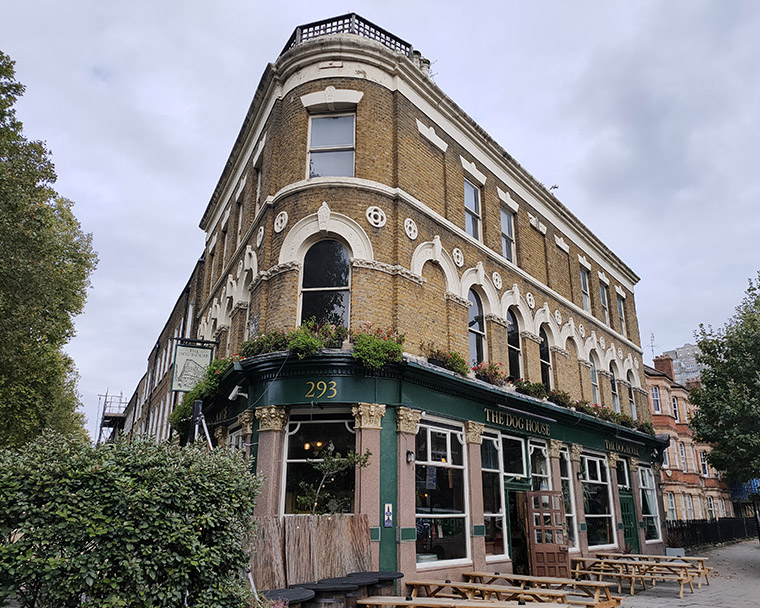
Bang on the junction of Kennington Lane and Kennington Road stands another grand Victorian-era pub – The Doghouse. It was previously known as The Roebuck (which is what you would probably have to be to get from here to Big Ben in 20 minutes as their website proclaims).

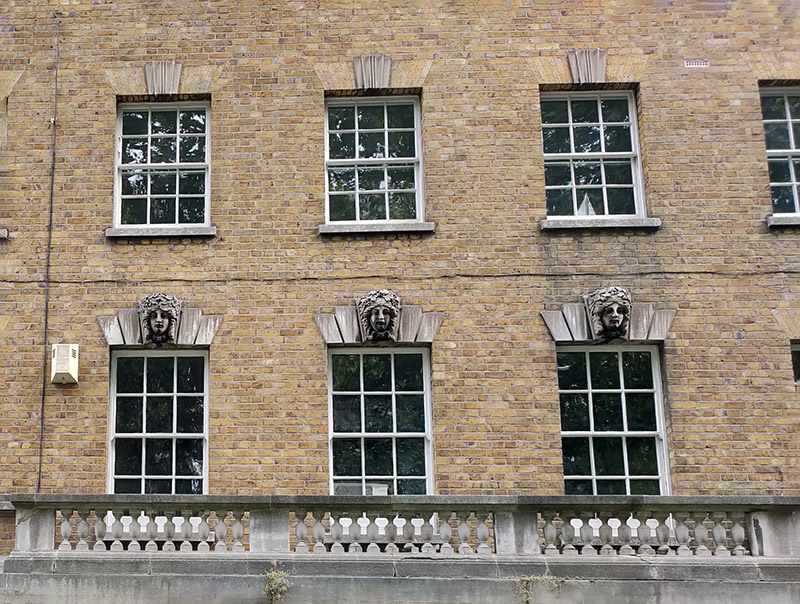
Kennington Road (aka the A23) was constructed in 1751, a year after Westminster Bridge was opened in order to improve communication from the bridge to routes south of the river Thames. With the growing popularity of Brighton as a resort in the later eighteenth century it became part of the route there, used by George IV on his excursions there and later for the London to Brighton Veteran Car Run. Many of the original Georgian terraces built alongside the new road still survive. Sadly, I was unable to find out any information on these carved heads adorning the windows of one of those terraces.

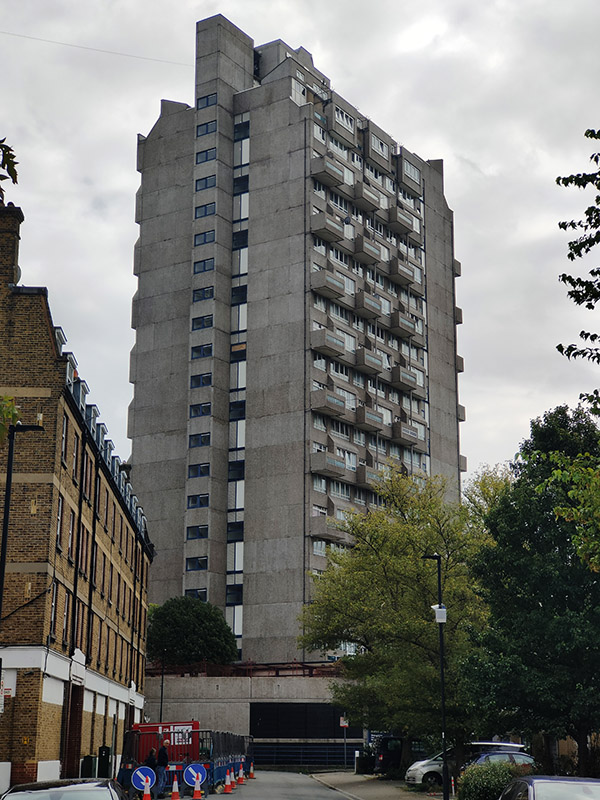
Turning back onto Reedworth Street offers a clear view of the monolithic 23-storey Fairford House erected in 1968. This is one of three towers which constitute the Cotton Gardens estate, the other two being Ebenezer and Hurley. They were designed by the architect George Finch and constructed by Wates using a pre-fabricated system. I guess I don’t really need to labour the contrast with some of the other residences highlighted here.

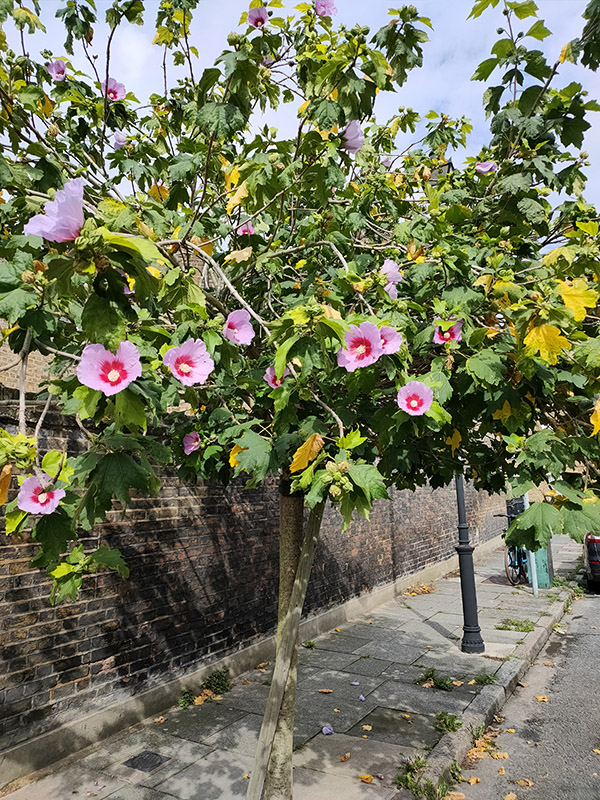
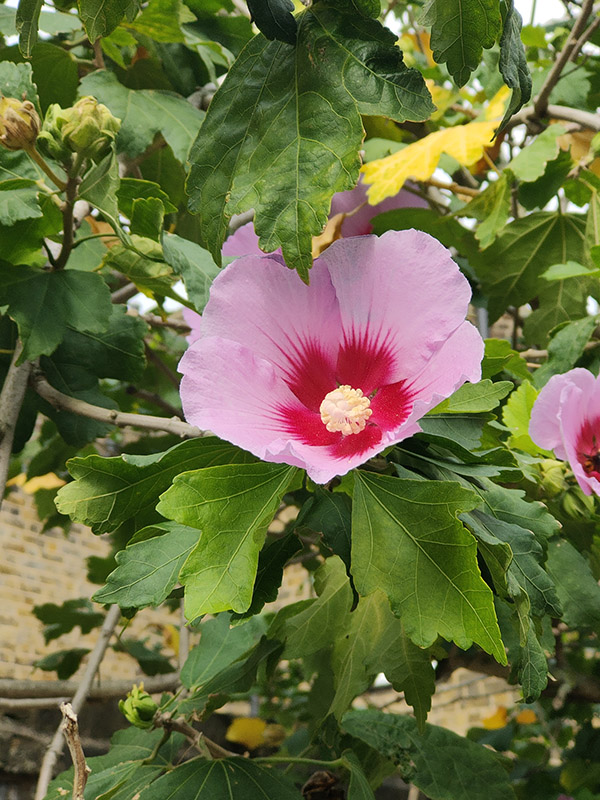
We’re retracing our steps a bit next; back along Kempsford Road then up the full length of Wincott Street to return to Kennington Road. Resuming northward we almost immediately turn off onto Bishops Terrace before making a tour of Oakden Street, Monkton Street and St Mary’s Gardens. A rare bit of horticultural content now. This shrub growing out of the pavement on one stretch of St Mary’s Gardens is widely known as the Rose of Sharon (aka Hibiscus Syriacus). The Latin name derives from the fact that it was originally collected for gardens in Syria though it is native to southern China. It is also the national flower of South Korea.

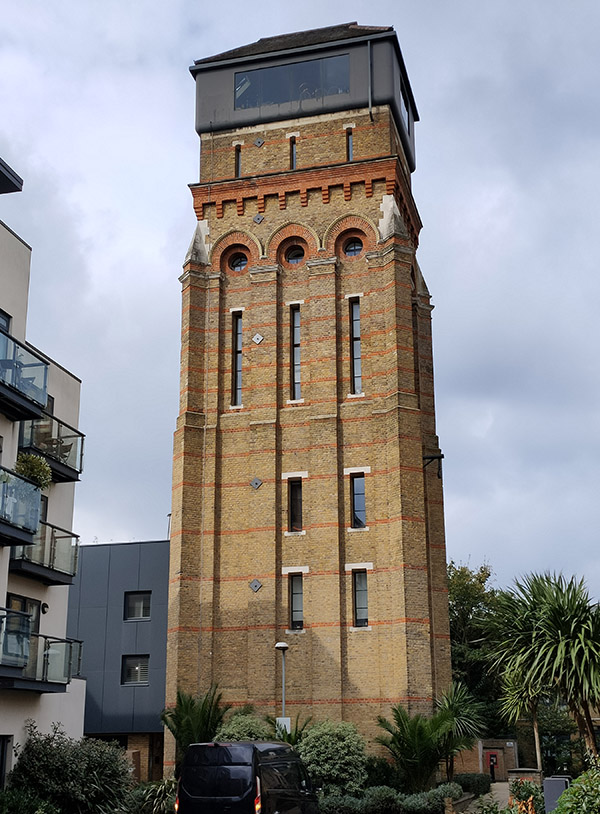
Sullivan Street and Walcot Square bring us back to Kennington Road for a final time before heading off towards Elephant and Castle along Brook Drive. We turn south again at Dante Road and make our way to the Cinema Museum on Dugard Way via George Mathers Road. On the way we pass the Osborne Water Tower House. The tower was built in 1867 to provide a 30,000-gallon water supply for the nearby Lambeth Workhouse where more than 800 destitute families were once housed and where seven-year-old Charlie Chaplin lived with his impoverished mother. It was rescued from dereliction in 2010 and converted into a five bedroom home at an estimated cost of around £2 million (which doesn’t include the £380k purchase price); a project that was featured on the TV show Grand Designs. The refurbishment included the restoration of the tower and the addition of a two-level glass cube on top giving views across central and south London with the largest sliding doors in Europe installed. Having been initially marketed at £3.6m it was eventually sold for £2.75m in 2021.

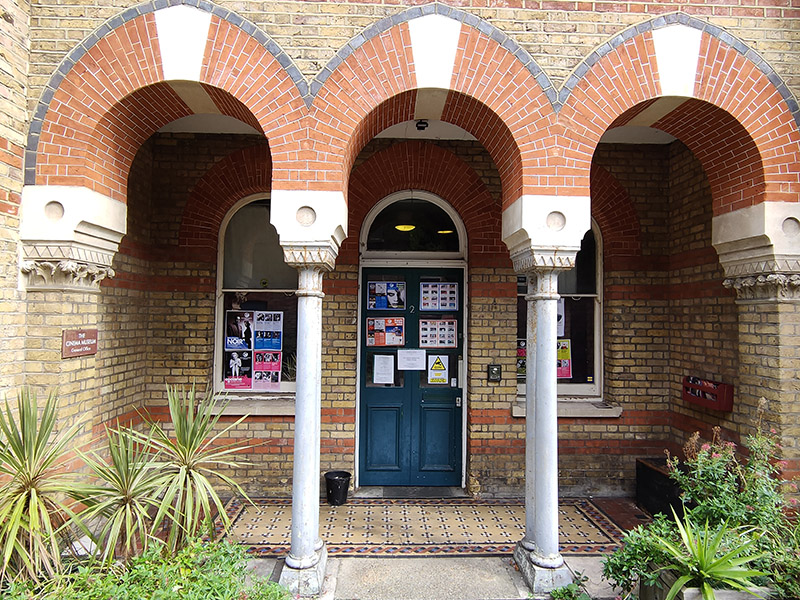
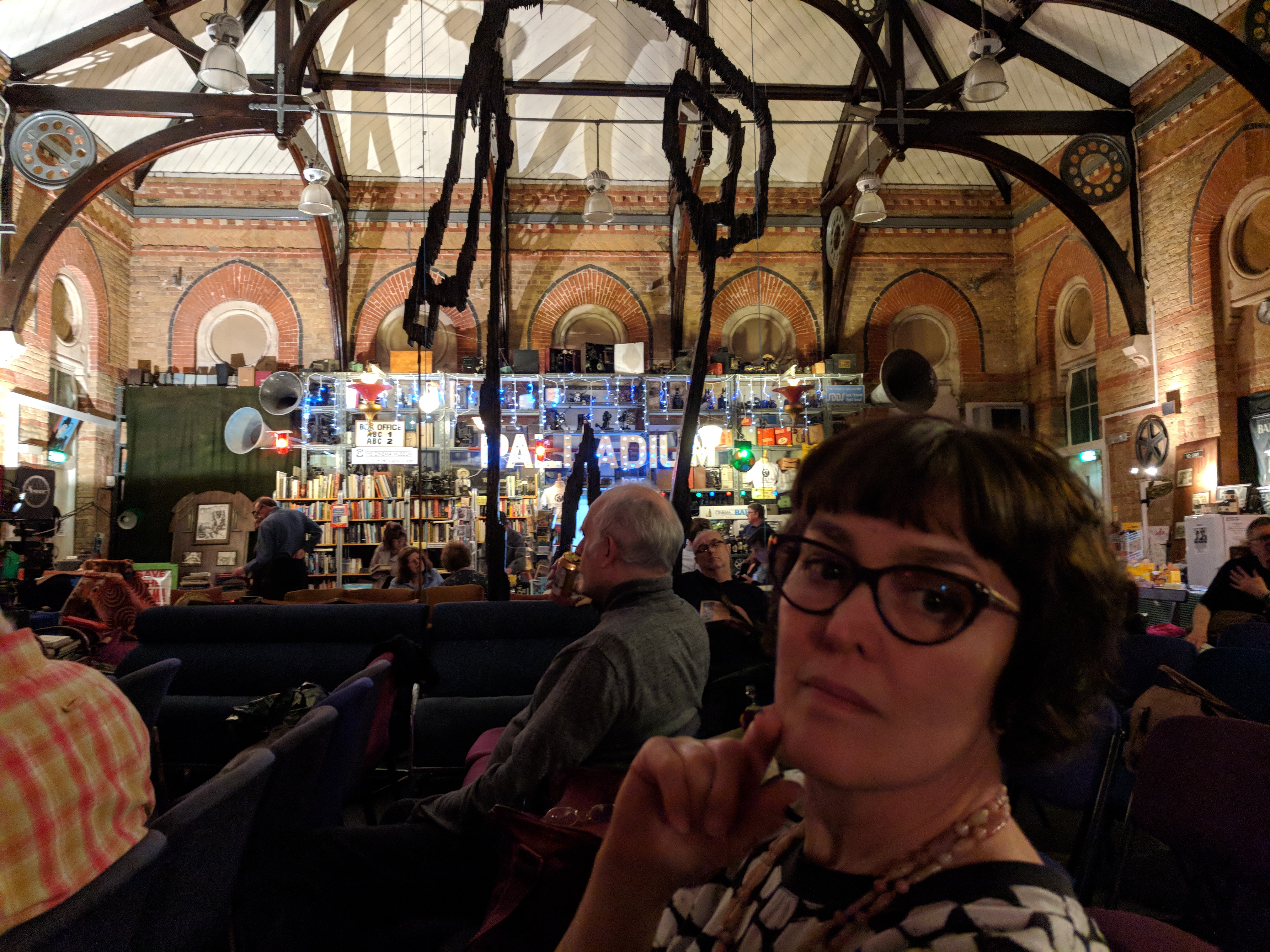
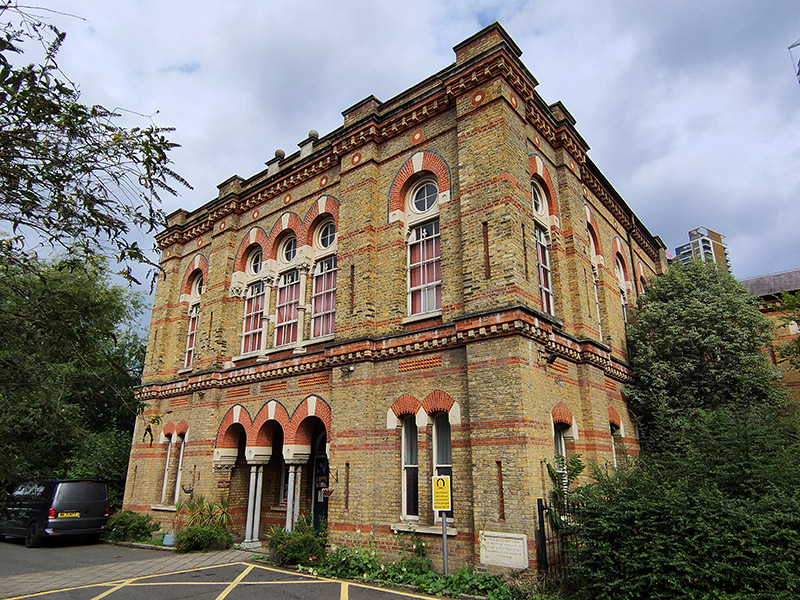
The Cinema Museum museum occupies the former Victorian workhouse building referred to above. It was founded in 1984 by avid collectors, Ronald Grant and Martin Humphries and is the only museum in the UK devoted to the experience of going to the cinema. It houses an extensive collection of memorabilia relating to the history of cinemas (as opposed to film) in the UK from plush velvet seats, impressive illuminated signs and elegantly tailored usher’s uniforms to movie stills, posters and cans of film. Understandably, much is made of the Charlie Chaplin connection. The museum puts on several screenings a month of classic and cult films, many on 16mm. I would particularly recommend the Kennington Noir programme which runs on the 2nd or 3rd Wednesday in the month. A few years ago I helped out a few times as a volunteer manning the bar but I decided that was best left to those who live locally. You can only visit the museum through a pre-booked guided tour or by attending one of the screen events so the interior shot below is from a pre-Covid visit with @eyresusan.

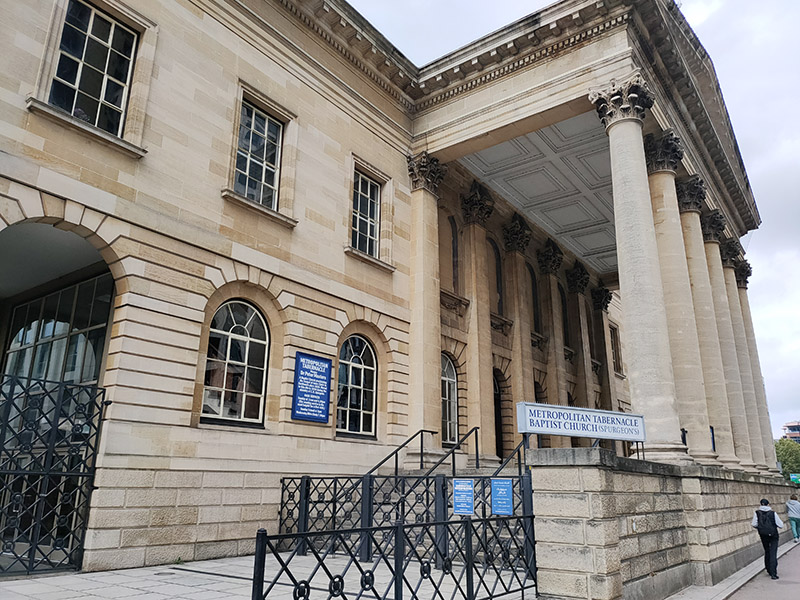
We return to Dante Road via Holyoak Road then cut through Longville Road to St Mary’s Churchyard and follow Churchyard Row, which runs alongside, down to Newington Butts which joins Kennington Park Road to the Elephant and Castle roundabout. Before being appropriated as the name for this short strip of road, Newington Butts it’s own hamlet within the parish of Newington. It is believed to have been named so because of an archery butts, or practice field in the area (in case you were thinking of something else). Standing on the western side of the Elephant and Castle junction is the Metropolitan Tabernacle Baptist Church. The Metropolitan Tab­ernacle is an independent reformed Baptist church whose history goes back to 1650, thirty years after the sailing of the Pilgrim Fathers. The present site was acquired for the Tabernacle, in the mid-19th century, partly because it was thought to be the site of the execution of the Southwark Martyrs (3 men who were burned at the stake for heresy in 1557during the reign of the Catholic, Queen Mary I). The pastor at the time was Charles Haddon Spurgeon (1834 – 1892) who preached to crowds of up to 10,000, had 63 volumes of his sermons printed and led the Tabernacle to independence from the Baptist Union. The original Spurgeon’s Tabernacle was burned down in 1898 and rebuilt along similar lines. It was later burned down for the second time when hit by an incendiary bomb in May 1941. In 1957 it was rebuilt on the original perimeter walls, but to a different design.

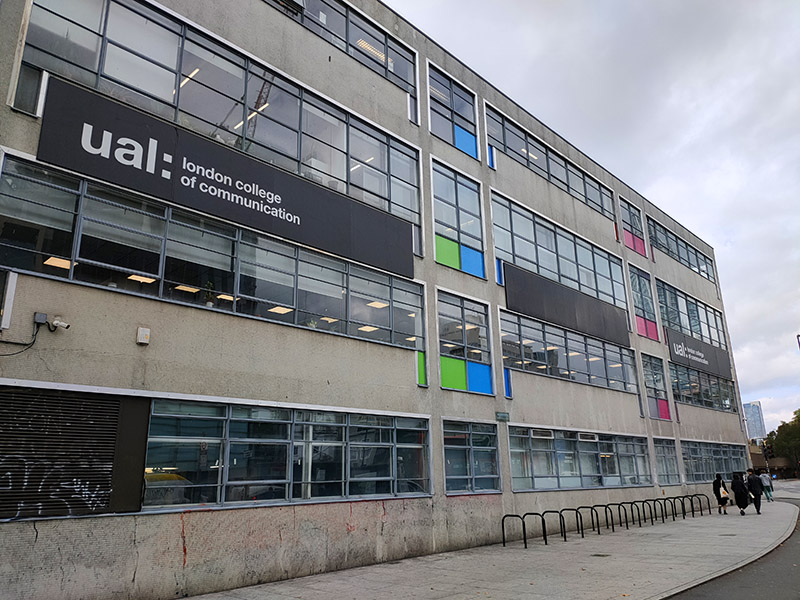
Right next door to the Tabernacle is the London College of Communication (LCC), part of the University of the Arts London. It took up residence here in 1962 when it was known as the London College of Printing and its emphasis was on the graphic arts. Since then it has developed courses in photography, film, digital media and public relations and it took on its current name in 2004 to reflect this expansion. (No Grade II listing for this one as yet :)).

Beyond the LCC we turn onto St George’s Road and then make a series of crossings between this and Brook Drive. First up is Oswin Street followed by Elliotts Row. Hayles Buildings on the latter are artisans’ dwellings that were built in 1891 and 1902 by the Hayles Charity which today is part of the Walcot Foundation based in Lambeth.

Lamlash Street which links Elliotts Row to Hayles Street has, rather charmingly, been turned into a community garden.

West Square, which together with Orient Street, Hedger Street and Austral Street forms another pair of connections between St George’s Road and Brook Drive, is four sides of (mainly) Georgian terraces surrounding a communal garden (open to the public for once). The name comes from Colonel Temple West who died in 1784, bequeathing the land to his wife and eldest son, who shortly thereafter granted leases to build houses on the site. The garden is notable for a number of splendid and ancient mulberry trees.

Geraldine Street, which leads off of the north-western corner of the square offers a good view of the dome of the Imperial War Museum (IWM).

….and from here we can cut through into Geraldine Mary Harmsworth Park which occupies the former site of the Bethlem Royal Hospital. The 15 acre site was purchased by Geraldine’s son Harold in 1926 and opened as a park dedicated to her eight years later. Geraldine had 14 children in total, 11 of whom survived infancy, which she had to bring up in increasingly straightened circumstances due to her husband’s alcoholism. Harold, her second son, and eldest son, Alfred, went on to become the owners of The Daily Mirror and The Daily Mail and Viscount Rothermere and Viscount Northcliffe, respectively. Much of the credit (or blame depending on your perspective) for the rise of so-called popular journalism in this country rests on their shoulders.

In 2015 Australian artist, Morganico, was commissioned to create a sculpture with peace as its theme out of a diseased plane tree in the park. Had I done this walk just a year earlier I might have seen it still standing but, unfortunately, in 2023 it had to be felled as it was starting to rot.

As you may have surmised, The Imperial War Museum is the final item on the agenda for today. In 1917 the Government of the time decided that a National War Museum should be set up to collect and display material relating to the Great War (which was still being fought). Because of the interest from Dominion nations, many of whose subjects had fought and died in the war, the museum was given the title of Imperial War Museum. It was formally established by Act of Parliament in 1920 and opened in the Crystal Palace by King George V on 9 June 1920. From 1924 to 1935 it was housed in two galleries adjoining the former Imperial Institute, South Kensington then on 7 July 1936 the Duke of York, shortly to become King George VI, reopened the museum in its present home, formerly the central portion of Bethlem Royal Hospital, at the bequest of the aforementioned Lord (Viscount) Rothermere (aka Harold Harmsworth).

At the outset of the Second World War the IWM’s terms of reference were enlarged to cover both world wars and they were again extended in 1953 to include all military operations in which Britain or the Commonwealth have been involved since August 1914. In 2017 this remit expanded still further with an exhibition, People Power: Fighting for Peace, which told the story of how peace movements have influenced perceptions of war and conflict. The museum was itself the site of a disarmament demonstration, in 1983, organised by Southwark Greenham Women’s Peace Group.  The two guns in front of the museum were installed there in 1968. One came from HMS Ramillies which first saw action in 1920 during the Greco-Turkish War and was later used against Italian land forces and warships in 1940. The other, initially mounted on HMS Resolution, which also saw service during the Greco-Turkish War, was remounted in HMS Roberts, an important unit in the naval forces assembled for the invasion of Normandy in June 1944. 

Finally, just going back to the subject of exhibitions; although I didn’t see the one mentioned above I have been to a couple of excellent ones this year including one on the day of this visit showcasing the work of war photographer, Tim Hetherington, who tragically died in April 2011 from injuries sustained when photographing unrest in Libya. The exhibition is closed now but some of the videos included in it, such as Liberian Graffiti, are available to view online.

The Bigger Picture…

While I’m steeling myself for another trek around the streets of the capital I thought it might be an idea to present a brief overview of where this project has taken me to date.

I started out in July 2015 with the aim of walking every street featured in the large scale central section of the mini London A-Z. This is essentially the area within the yellow line in the map above. That original objective was eventually achieved in June 2019.

After a break of several months I decided to resume the walks with an extended target represented by the full compass of the map above (AZ Central London 2019); which is roughly equivalent to Zone 1 of the Tube and comprised of about 6,000 streets in total.

As you can see, in the five years since, I’ve probably got about halfway to that goal. These subsequent walks have been less frequent but have generally covered larger areas which is partly why the posts have become increasingly lengthy – rambling in more ways than one.

This map is quite biased towards West London and, as a result, my most recent excursions have actually taken me beyond its eastern border. When I do venture out again it looks like I’m going to have to bite the bullet and try and fill in some of those gaps south of the river.

Day 78 – Whitechapel High Street – Commercial Road – Prescot Street -Leman Street

Continuing north from where we left off last time, but with a much less ambitious itinerary, today’s excursion sees us back in the East End. We’re visiting Aldgate East and Whitechapel, specifically the area bounded to the north by Commercial Road (A13) and to the south by Cable Street and stretching from Mansell Street to Cannon Street Road west to east.

We start today’s journey at Aldgate tube station, crossing the road to cut through Little Somerset Street to Mansell Street, which replicates a very small part of the route we undertook on Day 20. This takes us past the Still and Star pub which at the time of that previous visit in 2017 was still a going concern. However, it was closed in 2020 and a application to demolish it and build an office development on the site was approved by the City of London (inside whose boundaries it just about lies). As you can see from the pictures below that development has yet to get underway; not unrelated to the pandemic I suspect. The loss of almost any pub is to be mourned but the demise of The Still and Star is especially sad as it was believed to be the sole example in the City of London of what is sometimes described as a ‘slum pub’ – in other words, a licensed premises converted from a private house. The name is also unique; apparently the pub originally had its own still, which was housed in the hayloft above, while ‘star’ refers to the Star of David, witnessing the Jewish population of Aldgate in the nineteenth century.

Mansell Street marks the actual boundary between the City of London and the borough of Tower Hamlets. Historically this was a pretty sharp dividing line but in recent years the office blocks and smart residential complexes have been encroaching beyond that line and starting to slightly change the tenor of an area that has for decades been home to a predominantly working class Bangladeshi community.

On the other side of Mansell Street we head east along Alie Street then turn right into a web of streets comprising Mark Street, North Tenter Street, West Tenter Street, East Tenter Street, South Tenter Street and Scarborough Street. The five-bay, four-storey, brick-faced warehouse at 18 East Tenter Street was built in 1905 for Israel Hyman and Sons, rag merchants. The architect was Gilbert Henry Lovegrove (1878–1951), a biographer of Sir John Vanbrugh, the builder S. Goodall of Stoke Newington. By the 1940s the building was being used as a ladies’ clothing factory called Albion Mills, a name that has been retained for its current incarnation as an office block.

We leave the various Tenter Streets behind via Mark Street onto Prescot Street, coming face to face with the erstwhile Whitechapel County Court, designed by Charles Reeves and Lewis G Butcher and built in 1858-9 in the then-popular Italianate style. Next door to this stands the Princess of Prussia Pub. The present building dates from 1913. Its predecessor, built in the mid 18th century, became a pub in the same year the County Court opened (and subsequently provided most of its trade) and was named in homage to the marriage of Princess Victoria (one of Queen Victoria’s daughters) to Frederick William, Crown Prince of Prussia one year earlier.

No. 1 Prescot Street is the imposing Grade II listed former Cooperative Wholesale Society building, once known as The Tea House. It was built between 1930 and 1933 to a design of architect, L G Ekins and is a rare example in Britain of the German Expressionist style of architecture. That rarity is hardly surprising in retrospect. Ironically, although this area suffered considerably in the Blitz, the Tea House survived intact.

In the mid 1700s, Prescot Street was briefly home to the London Infirmary before it became the London Hospital (now the Royal London Hospital) and moved elsewhere in Whitechapel. The building, which no longer stands, was subsequently occupied by The Magdalen House for Reception of Penitent Prostitutes. An old alleyway, Magdalen Passage, in between the old County Court and the HQ of the Royal College of Psychiatrists, survives to commemorate the name. Further to the west at no.30 stands The Roman Catholic English Martyrs Church, designed by Edward Welby Pugin. The foundation stone was laid by the then Archbishop of Westminster, Cardinal Henry Manning in 1873.

At the western end of Prescot Street we turn the corner and continue our eastward trajectory along Chamber Street which runs parallel to the DLR line and boasts, in the face of some stiff competition, the least inviting Travelodge I have yet to encounter (they’re so unproud of it it doesn’t even show up on Google maps).

At the end of Chamber Street we turn left onto Leman Street, named after Sir John Leman (1544 –1632) a merchant from Beccles (near Lowestoft) who served as Lord Mayor of London in 1616 and who used the proceeds from his trading in dairy products to purchase and build on this part of Aldgate.

The southern end of Leman Street

Prior to the construction of No.1 Prescot Street, the Cooperative Wholesale Society (what we now know as the Co-Op) had built an impressive London headquarters at 99 Leman Street in 1885-87. At the formal opening of the building, the CWS announced that it should “be their aim to make this beautiful building a common home for all the various movements having for their object the interest and advancement of the working people“. The building incorporated a sugar warehouse and so in time became known as Sugar House. In recent years it has been converted into luxury apartments which are listed at the kind of prices that would formerly have been unheard of in this area.

Further north on Leman Street is the Oliver Conquest pub. This dates from the mid 19th Century and was originally called the The Garrick as it was attached to the first Garrick Theatre, which was situated behind the pub. Benjamin Oliver Conquest was the theatre manager there in the early part of the 19th Century hence the name (nothing to do with Oliver Cromwell’s ravages of Ireland thankfully). This is another Grade II listing.

At the top of Leman Street we turn right onto Whitechapel High Street where we’re immediately confronted by another example of shameless association with the area’s most infamous character.

Fortunately, we only have to travel a a short way further for something altogether more edifying. Straddling one of the entrances to Aldgate East tube station, The Whitechapel Gallery was founded in 1901 to present “the finest art of the world for the people of the East End, London”. As a regular visitor over the last three decades I would say it’s made a pretty good fist of keeping to that aim. In 1939, Pablo Picasso’s iconic painting, Guernica, was presented at Whitechapel Gallery, during its only visit to Britain, and the Gallery has consistently premiered ground-breaking shows from artists as diverse as Barbara Hepworth (1954), Jackson Pollock (1958), Gilbert & George (1971), Frida Kahlo (1982) and Sonia Boyce (1988). In 2009 the gallery approximately doubled in size by incorporating the adjacent former Passmore Edwards library building. Its current exhibitions include Gavin Jantjes: To Be Free! A Retrospective 1970 – 2023 (until 1st September 2024) and Peter Kennard: Archive of Dissent (until January 2025). Both are worth seeing and the latter is free to visit.

Beyond the gallery, to the east, is what was once the site of St Mary Matfelon church, popularly known as St Mary’s, Whitechapel. Reputedly, the church was covered in a lime whitewash, which gave rise to the district becoming known by the name, Whitechapel. Last rebuilt in the 19th century, the church was firebombed during the Blitz leading to its demolition in 1952. The site, including the church’s nave’s stone footprint and the graveyard – headstones removed – was subsequently turned into a public park. The park was renamed Altab Ali Park in 1998 in memory of Altab Ali, a 24-year-old British Bangladeshi leather clothing worker, who was murdered on 4 May 1978, in the adjacent Adler Street, by three teenage boys as he walked home from work. Ali’s murder was one of the many racist attacks that occurred in the area at that time. At the entrance to the park is an arch created by David Petersen, developed as a memorial to Altab Ali and other victims of racist attacks. 

From here we turn southward down White Church Lane, striding swiftly past one of the most disturbing shop windows I’ve seen in a long while (if not ever).

After a brief nod to Assam Street on the left we turn right down Manningtree Street which takes us onto the Commercial Road. At nos.48 -50 Commercial Road is the Proof House which is operated by the Worshipful Company of Gunmakers who have been at this location since 1675 (just 38 years after being granted their charter) though these buildings date from the 19th century. The Proof House has statutory powers to test and regulate the safety of firearms and no gun can be legally sold in the United Kingdom without having undergone proof. It also ensures and certifies that guns wanted for display purposes, rather than use, have been made permanently unusable in the manner required by law and investigates accidents caused by firearms malfunction.

We head away from Commercial Road almost immediately via another stretch of Alie Street. A diversion onto Buckle Street takes us back to Leman Street from where we re-enter Alie Street at the site of St George’s German Lutheran Church. This is the oldest surviving German Lutheran church in the United Kingdom although it ceased to be a place of worship for yer actual German Lutherans in 1995. The founder was Dietrich Beckman, a successful sugar boiler who put up half the money required to buy the site and erect the church. This area of Whitechapel had many sugar refiners of German descent in the nineteenth century and they constituted most of the original congregation.

The area to the south of Alie Street was historically known as Goodman’s Fields and the name has been resurrected for the seven acre food, drink, health and entertainment destination created here on the site of an old postal sorting office within the last few years alongside 1000 new residential properties. There are two gyms, an escape room venue and a Curzon Cinema together with open spaces adorned with sculptural commissions. It looks like it’s been beamed here from another part of London altogether but all those properties have been sold.

After a stroll through Goodman’s Fields we emerge onto Hooper Street where we turn east and then make our way back to Commercial Road via Gower’s Walk. A former Victorian wool warehouse here has been converted into (or reimagined as) 110,000 sq ft of modern and characterful work space for entrepreneurs, innovators and creative minds known as The Loom.

On returning to Commercial road we turn right then right again onto Back Church Lane. By the junction with Boyd Street stands another repurposed warehouse. This one, originally the property of Charles Kinloch & Co Ltd, wine and spirit merchants, is now apartments.

Boyd Street doglegs into Henriques Street where this parade is perhaps another indicator of change in the air.

Also on Henriques Street is a building of 1903 vintage that started life as the London School Board Combined Skills centre. In 2010 it was repurposed as An Information and Communications Technology (ICT) centre for young people, and named the Tommy Flowers Centre after the Post Office engineer (1905 – 1998) who in WW2 designed and built Colossus, the world’s first programmable electronic computer, to help decipher encrypted German messages and who was born in Tower Hamlets. After the war Flowers applied for a loan from the Bank of England to build another machine like Colossus but was denied the loan because the bank did not believe that such a machine could work. He couldn’t argue that he had already designed and built many of these machines because his work on Colossus was covered by the Official Secrets Act. Sadly, the Tommy Flowers Centre hasn’t survived in its original guise; for a time it became part of the Tower Hamlets Pupil Referral Unit but at present it appears to be disused.

Next street leading south from Commercial Road after Henriques Street is Batty Street which ends at Fairclough Street where we turn east onto Christian Street ( a road out of place and time if ever there was).

As I’ve probably mentioned before, this part of the East End has had a longstanding association with the garment industry going back to the tailor’s shops of the 19th century Jewish immigrants. Nowadays it’s the Bangladeshi community that has taken on the rag trade mantle and this is in full evidence on Commercial Road in the form of the numerous wholesale fashion outlets that cluster on both sides. Some of these, mainly on the south side, appear to be more than a little disingenuous regarding their international associations. If any of their import or export business actually involves Paris (or New York or Milan) I’d eat one of those frocks. By contrast the operators based on the north side (bottom picture below) are happy to proclaim their parochialism.

We do one more loop in and out of Commercial Road before we leave it behind. This takes in Umberston Street, Amazon Street and Hessel Street before leading us south on Cannon Street Road. Between 1883 and 1913 this was home to one of the eponymous schools originally established by the philanthropist Henry Raine (who we encountered in the previous post).

Two thirds of the way to the intersection with Cable Street we turn right onto Ponler Street and then do circuit of Estate Road which unsurprisingly encompasses a social housing estate. I would have expected this to include Walford House (nothing to do with Eastenders) which lies immediately to the west but it transpires this includes some now-private flats which astonishingly (for those of you who live outside of London have a current market value of around £200k.

There follows a sequence of streets with nothing of note to report. To the east of Christian Street we have Langdale Street, Burslem Street, Wicker Street and Golding Street and, to the west, Ellen Street, Strutfield Street and Forbes Street. The latter brings us out onto Pinchin Street which again runs parallel to the DLR line. Here we find a warehouse used by the firm of Pinchin Johnson & Associates Ltd from 1859. Pinchin Johnson was a major supplier of paints and coatings to industry and consumers in the first half of the 20th century and was one of the original constituents of the FT 30 index when this was set up in 1935, although the company had been in existence for 100 years by then. In 1960, PJA was acquired by Courtaulds who, in 1968, merged it with the International Paint business they had acquired earlier in the year.

And that’s us done for the day save for a long stroll along Cable Street and Royal Mint Street back to Tower Hill. (And for the first time in a long while we’ve managed to come in under 3,000 words).

Day 77 Part 2 – Pennington Street – Wapping High Street – St Katharine Docks

When you left us last time we’d made our way back north from the river and the Wapping Wharves to The Highway, the main road that stretches from Tower Hill to the entrance to the Limehouse Tunnel. From here we’ll head west for a bit then double back past the former site of the infamous News International Wapping printworks before winding back towards the river and following Wapping High Street west to St Katharine Docks.

On the north side of the Highway off Cannon Street Road stands the impressive St George In The East Church. The church is one of six in London designed by Nicholas Hawksmoor (1661-1736) built following the passing, in 1711, of an Act for the building of Fifty New Churches in the Cities of London and Westminster or the Suburbs thereof. This was prompted by the accession of Queen Anne to the throne in 1702 under the terms of the Acts of Settlement designed to ensure the Protestant succession. St George’s was built between 1714 and 1729 and gave its name to both the local ecclesiastical parish and its civil counterpart, the third tier of local government, though it was superseded in the latter role when the Metropolitan Borough of Stepney was established in 1927. The church was hit by a bomb during the WWII Blitz on London’s docklands in May 1941. The original interior was destroyed by the fire, but the walls and distinctive “pepper-pot” towers stayed up. In 1964 a modern church interior was constructed inside the existing walls, and a new flat built under each corner tower. The church was Grade I listed in 1950 and in 1980 featured in the film, The Long Good Friday. Not sure which is the greater honour.

Back on the south side of The Highway, once known as the Ratcliffe Highway incidentally, sits the marooned and very derelict former Old Rose pub. This closed down in 2011 and has been left to rot ever since. The building dates from the early 19th century which means that the mysterious stone plaque embedded in eastern wall, which reads “This is the Corner of Chigwell Streate 1678” must have been salvaged from a different building. Presumably one that stood here, as the Old Rose is at the top of what is now called Chigwell Hill. It was only a few years after the building became licensed premises that the so-called Ratcliffe Highway Murders took place in the very near vicinity. On 8 December 1811 a young draper and ex-sailor Timothy Marr, his wife Celia, their young son Timothy, and their shop boy James Gowan were brutally killed at 29 St George’s Street (now the location of a car showroom adjacent to the Rose) while their maidservant had been sent out to pay a baker’s bill and buy a dozen oysters. Twelve days later the publican of the Kings Arms in New Gravel Lane (now Wapping Lane) John Williamson, his wife Elizabeth and a servant Bridget Harrington were also killed at home. The murders were never satisfactorily solved. A sailor named John Williams was arrested as the prime suspect; it was said that he had a grudge against Marr from their time together at sea, but he was found hanging in his prison cell the night before the trial. This was taken to be proof of his guilt and investigations petered out, even though it had been assumed that there must have been two people involved in each killing. Extraordinarily, to allay public anxiety, the Home Secretary, after consultation with the senior Shadwell magistrate, ordered Williams’ body to be drawn through the streets on a cart, for a suicide’s burial.

After continuing west along The Highway we turn left into Virginia Street which, like Breezer’s Hill, Artichoke Hill and the aforementioned Chigwell Hill, bridges the gap between The Highway and Pennington Street. This western end of Pennington Street was once home to the News International Wapping plant which was at the centre of an industrial dispute that, alongside the Miners’ Strike, defined the conflict between the Trade Unions and Thatcherite laissez-faire capitalism in the 1980’s. The 54 week long strike was sparked by the decision of Rupert Murdoch’s News International group to move print production of their UK newspapers from Fleet Street to the new plant in January 1986. At Wapping new computer facilities would allow journalists to input copy directly, rather than relying on print union workers who used older “hot-metal” Linotype printing methods. As a consequence 90% of those typesetters would lose their jobs. News International’s strategy in Wapping had strong government support, and the company enjoyed almost full production and distribution capabilities and was able to rely on a sufficiently large coterie of journalists (including NUJ members) who defied the picket. NI was therefore content to allow the dispute to run its course and, with thousands of workers having gone for over a year without jobs or pay, the strike eventually collapsed on 5 February 1987. In 2010 News International closed the Wapping plant and moved all the staff to nearby Thomas More Square. Two years later, following the demise of The News of The World, and having rebranded as News UK, the company sold the Wapping site to Berkeley Group for £150m. They left Wapping altogether in 2014, decamping to offices forming part of The Shard development.

The photo above was taken from the eastern end of Pennington Street. In the distance on the left you can see the Pennington Street Warehouse, a 313 metre long bonded warehouse constructed around 1805 with a semi-basement of brick vaulted cellars. This now Grade II listed (1973) building was originally used to store fortified luxury commodities such as ivory, spices, coffee and cocoa as well as wine, spirits and wool. It is the only substantial building to survive from the former London Dock. Following the departure of News International, as part of the redevelopment of the London Dock site by St George (part of the Berkeley Group) it was converted into new state-of-the-art office and studio spaces which opened in 2018. (The image top left below is of the old wool warehouses on Breezer’s Hill which date from the mid nineteenth century).

Having traversed the length of Pennington Street we turn south onto Wapping Lane and head down to Tobacco Dock. Tobacco Dock is a Grade I listed warehouse that also formed part of the London Docks.  It was designed by Scottish civil engineer and architect John Rennie and completed in 1812, serving primarily as a store for imported tobacco. At full capacity, the warehouse could accommodate 24,000 hogsheads of tobacco. In 1857 Tobacco Dock was the location of an extraordinary rescue. A colourful local business on the bustling Ratcliff Highway was Charles Jamrach’s Exotic Animal Emporium. This eccentric German businessman had a roaring trade in all manner of unusual animals and birds. One day his Bengal tiger escaped and went wandering down the road. A little boy, who had never before seen such a creature, reached out to stroke the cat. Unsurprisingly the tiger responded by grabbing the boy by his neck and carrying him off into Tobacco Dock. Jamrach gave chase and incredibly managed to fend off the beast with his bare hands. The boy was rescued unharmed and the tiger shipped off to the famous animal collector George Wombwell, earning Jamrach the handsome sum of £300. Unfortunately for him, records show that the boy’s parents sued the animal dealer for the same amount. He wrote bitterly about the incident in his memoirs! After the London Docklands ceased seaborne trade, the warehouse and surrounding areas fell into dereliction until it was turned into a shopping centre which opened in 1989 at a cost of £47 million. It was the intention of the developers to create the “Covent Garden of the East End” but this was never a realistic possibility and it went into administration. By the mid-1990’s only a sandwich shop remained as the sole tenant. In 2003 English Heritage placed Tobacco Dock on its “at risk” register and it stood largely empty until it was used as a barracks for military personnel providing security to the 2012 London Olympics. In the same year the company Tobacco Dock Ltd launched the building as an events and conferencing space for up to 10,000 people. The only event I could find listed for 2024 is something called Meatopia (live-fire chefs ?) happening on the August bank holiday weekend. It’s sold out apparently. Moored in a dry dock in front of Tobacco Dock are two replica ‘pirate ships’ built to entertain the children whose parents were expected to visit the ill-fated shopping centre. The Sea Lark is apparently a copy of a 330 tonne tobacco and spice ship built at Blackwall Yard in 1788 while the Three Sisters is a copy of an 18th century American merchant schooner captured by the Admiralty during the Anglo-American War.

From Tobacco Dock we follow the so-called “ornamental canal” and then work our way back to Wapping Lane, through the new-ish housing developments, via Waterman Way and Reardon Street with nods to the cul-de-sacs of Stevedore Street and President Drive. To the east of Wapping Lane on Raine Street is Raine’s House, named for Henry Raine (1679–1738), a wealthy local brewer and devout churchgoer, who built it in 1719 as a school where poor children could get a free education. The statues in the window niches are replicas, the originals having moved with the school when it relocated to the north of the Highway in 1883.

Round the corner is St Peter’s Church designed by F.H Pownall. It was established in 1856 as an Anglo-Catholic mission to the poor of London by Reverend Charles Lowder and a group of fellow priests belonging to the Society of the Holy Cross. The Society had been founded a year earlier with the purpose of providing its members with a rule for living and a vision of a disciplined priestly life.

From Raine Street we make our way east on Farthing Fields and Pearl Street then do an about-turn and follow Prussom Street, Penang Street, Clegg Street and Hilliards Court down to Wapping High Street. We switch between the High Street and Cinnamon Street a couple of times using Clave Street and Wapping Dock Street before Cinnamon Street feeds us back onto Wapping Lane. Heading north here takes us past today’s Laund(e)rette of the day and several other refreshingly old- school local businesses.

Taking the next turn on the left into Watts Street brings us to today’s pub of the day, Turner’s Old Star. The Star is a real blast from the past. Apparently it was refurbished in 1987 but from the looks of it that was only to update it as far as the Seventies (nowt wrong with that mind). That was also when the pub was renamed in honour of the painter J.M.W Turner who created the pub in the first place. In 1833 Turner met Sophia Booth, a widowed landlady from Margate who was to become his mistress until his death in 1851. When Turner inherited two cottages in the dockland area of Wapping, he converted them into a tavern and installed Mrs. Booth as proprietor. He named the tavern ‘The Old Star’. To maintain his secrecy during their life together Turner adopted her surname. This, combined with his five-foot height and portly physique was to earn him the nickname ‘Puggy Booth’. Refreshments – half of lager and a packet of crisps – not much sustenance for four hours of walking ! Just the two other customers.

After leaving the pub we continue northward up Meeting House Alley before turning left onto Chandler Street and then heading back south on Reardon Street with a brief detour into Vinegar Street. This walk coincided with the start of the RSPB’s Big Garden Bird Watch weekend so in recognition of that here are some Cockney sparrers spotted at this point.

At the bottom of Reardon Street we make a right into Tench Street and loop round past the John Orwell Sports Centre (the eponym of which seems to be unknown to the internet).

On the corner of Tench Street and Green Bank is the Turk’s Head which closed as a pub in the 1970’s but has retained all of its old signage. Confusingly an Anglo-French restaurant called Bistro Bardot now operates from the premises. A sign outside divulges that “During World War II it was run by its eccentric landlady, Mog Murphy, and stayed open all hours for service personnel seeking news of their loved ones. After a vigorous campaign in the 1980s led by Maureen Davies and the wild women of Wapping, the Turk’s Head Company, a charity they set up to improve local life, bought the derelict building from the Council and restored it.” The adjacent St John’s Church is another Grade II listing in the area. The present building was originally erected in 1756 but suffered extensive damage in WWII, with only a fragmentary rectangular shell remaining. The tower was restored in 1964 by the London County Council and the remainder converted into flats in the 1990’s. The exterior of the church appears briefly in Episode 23 of Season 4 of Friends, “The One With Ross’ Wedding”.

Further along Green Bank, this chimney is all that remains of the old D&W Gibbs factory. Gibbs was a manufacturer of soap, shaving soap and toothpaste founded in 1712. Gibbs SR toothpaste was the very first product advertised on ITV when it started in 1955 though by that time the company was part of the industrial behemoth, Unilever, (The initials ‘SR’ are short for sodium ricinoleate, an ingredient effective in the treatment of gum infections). An earlier brand, French Dentifrice, gained infamy when it was used by British troops in France the First World War – not only to clean their teeth, but also to polish the brass buttons on their tunics and the regimental badges on their caps.

Green Bank returns us once more to Wapping Lane from where we follow Brewhouse Lane down to Wapping High Street, on the way passing Tower Buildings, another Grade II listed edifice, erected in 1864 by the Improved Industrial Dwellings Company. It is a rare surviving example of a Victorian tenement block built to house working class families.

We arrive on Wapping High Street right by Phoenix Wharf, the alleyway beside of which runs down to the river and Wapping Pier. The words delusions of grandeur spring readily to mind here.

Just west of Phoenix Wharf is Wapping Police Station where The Marine Policing Unit (MPU) is based. There has been a police building for river police at this site since 1798. The MPU is responsible for policing 47 miles of the River Thames in London between Dartford and Hampton Court. It also provides a response to over 250 miles of waterways and other bodies of water across the rest of London, such as lakes, reservoirs and canals. Prior to 1839 the Marine Police Force was an independent operation and up until 1878 it relied on rowing galleys to conduct its patrols. It was only following the loss of over 600 lives when the steam collier Bywell Castle collided with the pleasure steamer Princess Alice in that year that the force acquired its own steam-powered vessels.

Next up are three traverses between Wapping High Street and Green Bank courtesy of Reardon Path, Dundee Street and Scandrett Street. The latter brings us back up to St John’s Church and the “bluecoat” school that was founded by the parish in 1760. As we have seen on previous excursions, bluecoat schools were charitable institutions established between the 16th and late 18th centuries. The first such school was founded by Edward VI at Christ’s Hospital in Newgate Street in 1552. Around 60 similar institutions were set up over the next two hundred years. They were known as “bluecoat schools” because of the distinctive blue uniform originally worn by their pupils which comprised a blue frock coat and yellow stockings with white bands.

Opposite the southern end of Scandrett Street is the final wharf building of the day, Oliver’s Wharf, which was built in 1870 by architects Frederick and Horace Francis to store tea and other cargo. In 1972 it became the first of Wapping’s warehouses to be converted into luxury apartments. Beside the Wharf is another historic riverside pub, the Town of Ramsgate (which also claims to be the oldest Thameside hostelry). It acquired its present name in 1811 in deference to the fishermen of Ramsgate who landed their catches at Wapping Old Stairs. They chose to do so as to avoid the river taxes which had been imposed higher up the river close to Billingsgate Fish Market. At the beginning of the 20th century there were up to 20 pubs on Wapping High Street and now this is the only one remaining. Like seemingly everything else in the area of a certain vintage it has a Grade II listing and, like the Prospect of Whitby, it has a mock gallows.

A short way beyond the pub the Thames Path resumes alongside the river with great views of Tower Bridge and the Shard looking west.

But we’re not following the path eastward we’re taking a more circuitous route to St Katharine’s Dock which involves heading back through the developments in the old London Dock area by way of Knighten Street, Vaughan Way (several times), Sampson Street, Lilley Close, Codling Close, Torrington Place, Smeaton Street, Lime Close, Hermitage Wall and Kennet Street; then working our way back to St Katharine’s Way via Nesham Street, Thomas More Street and Stockholm Way. A hundred metres or so to the west we arrive at St Katharine Docks. These Docks were named after the former hospital of St Katharine’s by the Tower, built in the 12th century, which stood on the site and which was demolished along with 1,250 slum dwellings when construction of the docks began in 1827. The scheme was designed by engineer Thomas Telford (1757 – 1834) and was his only major project in London. To create as much quayside as possible, the docks were designed in the form of two linked basins (East and West), both accessed via an entrance lock from the Thames. Steam engines designed by James Watt and Matthew Boulton kept the water level in the basins about four feet above that of the tidal river. By 1830, the docks had cost over £2 million to build. Although well used, the Docks were not a great commercial success, being unable to accommodate large ships. They were amalgamated with the London Docks in 1864. During WWII all the warehouses around the eastern basin were destroyed by German bombing and the area they had occupied remained derelict until the 1960s. St Katharine Docks completely ceased commercial activity in 1968 and the site was sold to the GLC who leased it to the developers Taylor Woodrow. Most of the original warehouses around the western basin were demolished and replaced by modern commercial buildings in the early 1970s, beginning with the bulky Tower Hotel and followed by the World Trade Centre Building and Commodity Quay. Development around the eastern basin was completed in the 1990s with the docks themselves becoming a marina which is still in regular use today.

Once beyond the docks we’re out onto the stretch of St Katharine’s Way that runs parallel to the eastern side of the Tower of London and this delivers us back to Royal Mint Court which is more or less where we started the day and which we mentioned briefly at the beginning of the previous post. We noted then that this was the site of the Royal Mint from 1809 to 1967. In actual fact, 1967 only saw the start of the transfer of operations to a new facility in Wales. Minting on some scale continued here until 1975 and the Royal Mint only moved out of the main Johnson-Smirke building (designed by James Johnson and completed by Robert Smirke), in the year 2000. At that time the land was still property of the Crown Estate. The subsequent ownership of the site is somewhat serpentine to say the least; but by 2014 it was effectively in the hands of Delancey (a vehicle owned by BVI incorporated funds controlled by billionaire George Soros) and LRC Group (a property investment company founded by Israeli businessman Yehuda Barashi). Four years later Delancey and LRC sold Royal Mint Court to the People’s Republic of China who envisaged building a new fortified embassy here. You probably won’t be surprised to learn that ground has still to be broken on this project. Concerns and objections were raised by local residents and councillors and Historic England (there are remains of a medieval abbey on the site) and in both the Commons and the Lords. At the same time allegations were raised about possible fraud connected with the sale of the freehold from the Crown Estate to Delancey in 2010 and misinformation supplied to the Treasury Select Committee that reviewed the sale. As of August 2023 the PRC had temporarily shelved its plans having failed to meet the deadline for filing an appeal against Tower Hamlets Council’s original rejection of their plans. The PRC would now have to resubmit its planning application, but the Chinese government is looking for assurances that the UK central government will use its powers to get the application approved. Watch this space (see below).

Day 77 Part 1 – Cable Street – The Highway – Wapping Wall

It’s been a lengthy lay-off but the weather was good, the trains were running and the diary was free so there were no longer any excuses. After several excursions round the exclusive environs of Kensington and Chelsea it was time for a change though; so this return to the fray sees us heading out east to sample the contrasting delights of Shadwell and Wapping. Specifically, we’re talking the area between Cable Street and the north bank of the Thames between Shadwell Basin and St Katharine’s Dock adjacent to Tower Bridge. Out with the blue plaques therefore and in with the pubs, both live and demised, and the converted warehouses. Over four hours walking so a lot to cram in, which means this walk will be covered over two posts.

We start out from Tower Hill tube station and head east along Shorter Street which swiftly merges in Royal Mint Street. The Royal Mint was, of course, once situated within the Tower of London. It moved to the site between Royal Mint Street and East Smithfield, which became known as Royal Mint Court, in 1809 and resided here until 1967 when production was transferred to Llantrisant in Wales. We’ll return to Royal Mint Court at the end of today’s post but for now we’ll just note the presence of the Wapping Telephone Exchange at the north side of the site. I hadn’t realised that telephone exchanges still existed in the modern world but it appears that some of them will remain in active use for a few more years at least. That being the case, this building falls outside the scope of the redevelopment plans to be revealed later.

A bit further along the street stands the Artful Dodger pub. This was formerly part of the Ind Coope estate and originally called the Crown & Seven Stars. It dates from 1904 and is Grade II listed. The change of name occurred in 1985. Unpretentious, traditional and friendly according to reviews though one Twitter post from 5 years ago referred to “people selling fags out of carrier bags and a menacing atmosphere” then awarded it 10/10.

After the pub we turn south down Cartwright Street then cut through Crofts Street into Blue Anchor Yard and back up to Royal Mint Street. A few steps further east John Fisher Street runs down to The Highway (aka the A1203) with a brief detour into Flank Street. We then switch back north via Dock Street. On the east side of Dock Street stands the former St Paul’s Church for Seamen which was consecrated in 1847 and lasted as a place of worship until 1990. Since 2002 it has been home to a private nursery. Apparently, the west window which depicts scenes of Jesus in relation to the Sea of Galilee was installed in memory of Captain Sir John Franklin who led the ill-fated expeditionary voyage of the Erebus and the Terror (as realised in the TV series of the latter name). Almost directly opposite the church is the Sir Sydney Smith pub, named after the British Admiral of the Napoleonic Wars who is the only person known to have been present at both the Battle of Trafalgar and the Battle of Waterloo. The pub has been serving thirsty Eastenders since 1809.

At the top of Dock Street, at the western end of Cable Street is the Jack the Ripper Museum. Since I find the whole Jack the Ripper industry pretty unsavoury, I didn’t venture into the museum and I’m not going to dwell on the man himself here. I will however offer a few words about Elizabeth Stride (1843 – 1888), the Ripper’s third victim, who is remembered in a blue plaque (the only one today) on the front of the museum. She was born as Elizabeth Gustafsdotter in rural Sweden and moved to London in her early twenties. In 1869 she married John Thomas Stride, a ship’s carpenter who was 22 years her senior. Within five years the marriage had hit the rocks although they continued to live together on and off until 1881. For the last three years of her life while living in various common lodging houses she was involved with a dock labourer named Michael Kidney. They separated for the final time, following an argument, just days before her murder in Berner Street (now Henriques Street) which is a few hundred yards north of the museum. Due to the tempestuous nature of his relationship with Stride and inconsistencies between her murder and those of the Ripper’s other victims, suspicion originally fell on Kidney. In the end, though, the inquest verdict was “Wilful murder by some person or persons unknown.”

Just off Ensign Street, which is next right after the museum, is Graces Alley where you will find the famous Wilton’s Music Hall. Wilton’s began life as five individual houses built in the 1690’s. The largest house (1 Graces Alley) became an ale house in the early 18th century, serving the Scandinavian sea captains and wealthy merchants who lived in the area. In 1839 a concert room was built behind the pub and soon after it was was licensed for a short time to legally stage full-length plays under the name of the Albion Saloon. John Wilton bought the business around 1850 and by 1859 had created his ‘Magnificent New Music Hall’ with mirrors, chandeliers, decorative paintwork and the finest heating, lighting and ventilation systems of the day. The entertainment comprised of madrigals and excerpts from opera along with the latest attractions from the West End and circus, ballet and fairground acts. However, Wilton sold up in 1868 and after a serious fire in 1877 the Music Hall closed its doors within four years despite having been faithfully rebuilt. In 1888 the building was bought by the East London Methodist Mission who renamed it ‘The Mahogany Bar Mission’ (reflecting one of its incarnations as an alehouse). The Mission survived until 1956 when the building became a rag sorting warehouse for a few years. Then in the early 1960s the London County Council drew up plans for demolition and redevelopment of the whole area between Cable Street and the Highway including Wilton’s. A campaign was launched to save the building led by theatre historian John Earl who persuaded the poet John Betjeman and the newly formed British Music Hall Society to back the campaign. Eventually, The Greater London Council (successor to the LCC) bought the building and agreed to leave it standing. The building was grade 2* listed in 1971 and a year later John Earl, together with Peter Honri, an actor and music hall historian, founded the first trust to raise funds to buy the lease. A successor charitable trust acquired the freehold in 1986. For the next almost twenty years the building remained in a state of dereliction whilst still playing host to sporadic theatrical productions and video shoots. Only in late 2004 did The Wilton’s Music Hall Trust fully open the building to the public, secure its ownership and present a wider arts programme. Finally, between 2013 and 2015, with the support of the Heritage Lottery Fund a full restoration project was undertaken which enabled Wilton’s to became structurally sound for the first time since the renovations of the 19th century. (The interior shots in the slideshow below were taken during an Open House visit in 2014 before the restoration was fully complete).

After a brief diversion into Fletcher Street, we double back onto Ensign Street and follow this down to The Highway before making our way to Swedenborg Gardens via Wellclose Street and Wellclose Square. The gardens are named after Emanuel Swedenborg (1688 – 1772) a Swedish inventor, thinker, scientist and theologian, best known for his book on the afterlife, Heaven and Hell . Swedenborg travelled widely in western Europe and spent time in London living in this area which was then known as ‘Prince’s Square’. When he died he was buried in the churchyard of the Swedish Church in the square. In the 1960’s the square (by then known as Swedenborg Square) was demolished to make way for the St George’s public housing estate which incorporates the gardens. A hundred years ago this part of the East End was largely populated by Jewish immigrants so there is a certain poignancy in seeing Palestinian flags flying from the lampposts in what is now a predominantly Bangladeshi Muslim.

On the other side of the estate we head back to The Highway on Crowder Street then return to Cable Street via Cannon Street Road. A hundred metres or so further east we arrive at the Grade II listed St George’s Town Hall which is where the inquest into the death of Elizabeth Stride was held. At that time it was still functioning as the Vestry Hall for the Church of St George In The East (more of which later) having been built for that purpose in 1860. In 1900 it was co-opted as Stepney Town Hall. The building ceased to function as the local seat of government when the enlarged London Borough of Tower Hamlets was formed in 1965. It was renovated fairly recently and is now principally used as a wedding venue. On the side of the building is a mural, dating from the 1980’s, which commemorates the so-called Battle of Cable Street. This catch-all term refers to a series of clashes which took place on Sunday 4 October 1936 between the Metropolitan Police, who had been sent to protect a march by members of Oswald Mosley‘s British Union of Fascists, and a consortium of anti-fascist demonstrators, including local trade unionists, communists, anarchists, British Jews, supported in particular by Irish workers, and socialist groups. Sources at the time estimated that the fascist rally attracted around 2,000 to 3,000 participants while the counter-demonstrators numbered anywhere from 100,000 to 250,000. Around 7,000 police officers were in attendance including the whole of the Met’s mounted police division. About 150 demonstrators were arrested, with the majority of them being anti-fascists, although some escaped with the help of other demonstrators. Around 175 people were injured including police, women and children. Following the battle, the Public Order Act 1936, which outlawed the wearing of political uniforms and forced organisers of large meetings and demonstrations to obtain police permission, was put on the statute. The events of that day are generally seen as sounding the beginning of the end for Mosley and his blackshirts though ironically the BUF experienced an brief increase in membership in the immediate aftermath.

We continue along Cable Street as far as Shadwell Tube Station which in its original incarnation, which opened in 1876, was one of the earliest London Underground stations. It was part of the East London Line up until 2007 when that line was carved out of the Underground system and subsumed into the new London Overground network which became operational in 2010.

We make a loop of Dellow Street and Bewley Street and call in on Sage Street before saying farewell to Cable Street via the south-heading King David Street. We make a final foray eastward along Juniper Street and Redcastle Close then take Glamis Road down to The Highway once more. Here we make a brief detour to the west to take a look at St Pauls’ Shadwell Church before continuing down towards the river on Glamis Road. A church has stood on this site since 1656. In 1670 it was renamed after St Paul’s Cathedral. Captain James Cook was a member of the congregation and his eldest son was baptised here in 1763. Also baptised at St Paul’s was Jane Randolph, mother of Thomas Jefferson. The original church was demolished in 1817 and the present building, a Waterloo church designed by John Walters, was erected in 1821. It was Grade II listed in 1950. The church stands in the charismatic and evangelical Anglican traditions so the interior is nothing to write home about.

As I said, we’re heading down towards the river now but before we get there we’ve got Shadwell Basin to take a look around. Shadwell Basin was originally constructed between 1828 and 1832 as part of the eastward expansion of the London docks. The new docks were granted access to the river via entrances at both Shadwell and Wapping. By the 1850s, the London Dock Company had recognised that the entrances at both Wapping and Shadwell were too small to accommodate the newer and larger ships coming into service so the company built a new larger entrance and a new basin at Shadwell. Regardless of this, The London Docks had outlived their usefulness by the early 20th century. New steam-powered ships were built too large to fit into them, so cargoes were unloaded downriver and then ferried by barge to warehouses in Wapping. This uneconomic and inefficient system was one of the main reasons that The London Docks complex closed to shipping in 1969. Purchased by the London Borough of Tower Hamlets, Shadwell Basin and the western part of the London Docks fell into a derelict state, mostly a large open tract of land and water. The site was acquired in 1981 by the London Docklands Development Corporation (LDDC) and redevelopment of Shadwell Basin took place in 1987 resulting in 169 houses and flats being built around the retained historic dock. Today Shadwell Basin is a maritime square of 2.8 hectares used for recreational purposes (including sailing, canoeing and fishing) and surrounded on three sides by a waterside housing development of four and five storey residential buildings. The development was added to the National Heritage List for England by Historic England as Grade II listed in 2018, part of a listing of postmodern buildings.

Once across the Bascule Bridge (see slideshow) Glamis Road morphs into Wapping Wall with Wapping Hydraulic Power Station to the west. This was built in 1890, originally operating using steam but later converted to use electricity. Before the adoption of electricity, hydraulic power was London’s main power system, generating everything from bridges to private households in Kensington and Mayfair. In the heyday of hydraulic power, more than 33 million gallons of water a week were pumped beneath the streets of London. It was transmitted along 186 miles of underground, cast iron piping. The Power Station closed in 1977 and after a certain amount of conversion eventually reopened as an arts centre and restaurant. In 2013 the building was sold to new owners who are still awaiting planning permission for redevelopment. In the meantime, at least part of its upkeep is funded by the that old stand-by, location-hire for film and video. For a view of the interior check out this.

Where Wapping Wall reaches the River Thames lies the Prospect of Whitby Inn, reputedly London’s oldest riverside tavern, dating back to 1520. It was formerly known as The Pelican and later as the Devil’s Tavern, on account of its dubious reputation. All that remains from the building’s earliest period is the 400-year-old stone floor, and the pub features eighteenth century panelling and has a nineteenth century facade. In its early years it was a meeting place for sailors, smugglers and cut-throats and according to the 16th century antiquarian, John Stow, “The usual place for hanging of pirates and sea-rovers, at the low-water mark, and there to remain till three tides had overflowed them”. Charmingly, the pub still displays a noose overhanging the river’s edge. (Although it is widely accepted that the actual execution site was further along the river). Following a fire in the early 19th century, the tavern was rebuilt and renamed The Prospect of Whitby, after a Tyne collier that used to berth next to the pub and transported sea coal from Newcastle upon Tyne to London.

To the west of the PoW are a series of Victorian Wharf buildings, the various warehouses comprising which were built between the 1860’s and 1890’s. The first of these we encounter, Metropolitan Wharf was one of the last to be converted into luxury penthouse apartments and contemporary office space. Its riverside dock is credited as being the “real” execution site used by the Admiralty to hang pirates for over 400 years up until 1830.

The adjacent New Crane Wharf was built in in 1873 then rebuilt 12 years later after a fire. Like its neighbour its buildings are Grade II listed and these were converted for retail and commercial use in 1989-90.

After a quick circuit of Monza Street and Milk Yard we leave Wapping Wall (and the wharves for the time being) behind and head back north up Garnet Street, calling in on Riverside Road and Benson Quay before we reach The Highway once more. And that’s where we’re going to sign off for this post. We’ll be back shortly with the lowdown on the rest of today’s excursion including the story of the “Battle of Wapping”.

To be continued.

Day 76 – King’s Road – Sydney Street – Sloane Avenue – Cadogan Square

For today’s expedition, just like Real Madrid, we’re getting stuck into Chelsea. Specifically, the area north of the King’s Road bounded by Sydney Street to the west and Sloane Street to the east. Away from the main thoroughfares it’s a relatively quiet mainly residential quarter equally comprised of streets of terraced houses (some of the most expensive in London) and large mansion blocks. There are plenty of high-end stores scattered in between and some impressive churches. Not quite such well-known names as last time as far as former residents go but some interesting characters nonetheless.

Once again the starting point is Sloane Square and this time we’re leaving via the north west corner, on Symons Street to be precise. This feeds into Culford Gardens continuing westward then we take a left turn down Blacklands Terrace onto the King’s Road. John Sandoe opened his eponymous bookshop here in 1957 with Félicité Gwynne, sister of the cookery writer Elizabeth David (who we shall meet again later).

A sequence of Lincoln Street, Coulson Street, Anderson Street and Tryon Street bring us to the eastern end of Elystan Place which on a western trajectory merges into Cale Street. The next run of streets occupy the space between that duality and the King’s Road. After Markham Street we have to backtrack along the King’s Road to visit Bywater Street and Markham Square. The latter is a prime example of the terraced housing in this part of town, immaculately maintained and with brightly painted exteriors.

No.47 Markham Square was the one-time residence of Dame Maud McCarthy (1858 – 1949), who was matron-in-chief of the British Expeditionary Force in France and Flanders during WW1. The square, unsurprisingly, also boasts a well-planted private garden.

The branch of Pizza Express at 152 King’s Road occupies the building known as The Pheasantry, which got its name from the business of one Samuel Baker who developed new breeds of oriental pheasants here in the mid-19th century. The Grecian-inspired architectural stylings, including caryatids and quadringa, were added in 1881 by the artist and interior decorator Amédée Joubert. From 1916, part of the building was used for a ballet academy run by the dance teacher Serafina Astafieva (1876–1934), great niece of Leo Tolstoy. Then in 1932, the basement became a bohemian restaurant and drinking club patronised by actors and artists such as Augustus John, Dylan Thomas, Humphrey Bogart, and Francis Bacon. The drinking club closed in 1966 after the death of the owner Mario Cazzini, and the building was converted into apartments and the basement into a nightclub. The nightclub went on to host early gigs by Lou Reed, Queen and Hawkwind. The 1972 gig by Queen, which had been intended as a showcase for the band, did not go well. One attendee remembered that the band were “unpolished” and since the venue was mainly a disco, “once the disco had stopped and Queen went on everyone went to the bar.” (Oh, happy days). The Pheasantry name lives on under Pizza Express in the form of a basement jazz and cabaret venue.

To the west of The Pheasantry we turn north on Jubilee Place then return via Godfrey Street and Burnstall Street. The latter was once home to actress Diana Dors (1931 – 1984). Britain’s answer to the American “blonde bombshells” of the 1950’s was born in Swindon as Diana Mary Fluck. She made her screen debut in the British noir The Shop at Sly Corner (1947) in a walk-on role that developed into a speaking part. During the signing of contracts she changed her contractual surname to Dors, the maiden name of her maternal grandmother, later commenting “They asked me to change my name. I suppose they were afraid that if my real name, Diana Fluck, was in lights and one of the lights blew …”. Diana had an extremely varied career though she was rarely offered quality roles in films and by the 1970’s was restricted to a series of abysmal sex comedies and TV work. Her most acclaimed role was probably playing a Ruth Ellis-style character in 1956’s Yield To The Night. Dors had supposedly been close friends with Ellis, who was the last woman to be hanged in Britain, the year before the film was released. To say that Dors’ personal life was colourful doesn’t come close to covering it. At 10 Burnsall Street in the 1960s’ she hosted lavish “adult” parties that lasted until dawn, with guests including the Kray Twins, press coverage of which provoked the Archbishop of Canterbury Geoffrey Fisher to denounce Dors as a “wayward hussy” and her home as a “den of scandal”.

We make our way back up to Cale Street and then down to the King’s Road for the final time today taking in Danube Street, Astell Street, St Luke’s Street, Britten Street and Chelsea Manor Street (with a nod to Hemus Place). Britten Street once hosted the Anchor Brewery, which shut down in 1907, the site is now occupied by an office block called Anchor House but the brewery’s original arch (and anchor) remain in situ.

After that final incursion onto King’s Road we head north up Sydney Street and soon find ourselves in the splendid gardens attached to the imposing St Luke’s Church. St Luke’s, which was consecrated in 1824 and bears a striking resemblance to King’s College Chapel in Cambridge, is regarded as one of the first Neo-Gothic churches to be built in London. The nave, at 60ft in height, is the tallest of any parish church in the capital and the tower reaches a height of 142 feet. The architect was James Savage, one of the foremost authorities on medieval architecture of his time. Charles Dickens was married here on 2nd April 1836 to Catherine Hogarth, eldest daughter of George, who was editor of ‘The Evening Chronicle’ in which Dickens’ Sketches by Boz appeared. The large burial ground which surrounded the church was converted into a public garden in 1881, the gravestones being placed to form a boundary wall.

After visiting the church we continue north on Sydney Street up to Fulham Road then immediately make a loop down Bury Walk and up Pond Place. After heading east about a hundred metres on Fulham Road we turn right onto Elystan Street then right onto Ixworth Place to complete a circuit round the Samuel Lewis Trust Dwellings. Samuel Lewis was born in Birmingham in 1837. He began work at 13 and in due course became a salesman of steel pens, then opened a jeweller’s shop, and finally entered the money-lending business, becoming the go-to money-lender for most of Britain’s aristocracy. When he died, in London in 1901, he left an endowment of £670,000 to set up a charitable trust to provide housing for the poor, a huge sum at the time and one that equates to £30 million at today’s values. The estate in Chelsea was the second of eight to be built between 1`910 and the start of WW2.

We circle back to Elystan Street via Marlborough Street then turn south past one of many parades of tastefully presented shops.

If you look closely you’ll see that the middle emporium is called Chelsea Green Shoe Repairs. In all innocence I initially took this to be a pitch for ecological credibility; however when I reached to the nexus of Cale Street and Elystan Place a short distance further south I realised that there is an actual Chelsea Green. Though, to put it kindly, that nomenclature is somewhat stretching a point; my back garden is bigger (and greener) and that’s not saying much.

Forking left off of Elystan Place into Sprimont Place there is more distinctive architecture in the form of The Gateways, a 1934 housing development designed by Wills and Kaula that now has a Grade II Listing.

Sprimont Place emerges onto Sloane Avenue, on the east side of which stand two very different high rise residential buildings though both date from the 1930’s and were designed by the same architect, George Kay Green (1877 – 1939). The Art Deco eleven-storey Sloane Avenue Mansions was completed first, in 1933. Neighbouring Nell Gwynn House was finished four years later and has a Cubist design which utilises Egyptian, Aztec, and Mayan patterns and decoration. From the outset, each apartment had built-in central heating and there was a restaurant in the basement, a hairdressing salon, and a bar in the lobby. Above the main entrance, at the level of the 2nd floor, is a statue of Nell Gwynn, with a Cavalier King Charles spaniel at her feet. This is reputedly the only statue of any Royal mistress to be found in London.

We return to Elystan Street down Whitehead’s Grove then back to Sloane Avenue via Petyward. On the intersection of Makin Street with Sloane Avenue there is a combined Kwik-Fit and 24-hour petrol station which at first sight appears totally incongruous in this context. But then you realise that all those Chelsea tractors have to have somewhere to fuel up.

Rounding the garage we proceed north up Lucan Place to the point at which Fulham Road turns into Brompton Road and where stands Michelin House, one of the most distinctive and iconic buildings in the whole of the capital. Michelin House was constructed as the first permanent UK headquarters and tyre depot for the Michelin Tyre Company Ltd, opening for business in January 1911. The building was designed in an Art Nouveau style by one of Michelin’s employees, François Espinasse. It has three large stained-glass windows based on Michelin advertisements of the time, all featuring the Michelin Man aka “Bibendum” and around the front of the original building at street level there are a number of decorative tiles showing famous racing cars of the time that used Michelin tyres. When Michelin moved out of the building in 1985, it was purchased by publisher Paul Hamlyn and the restaurateur/retailer Sir Terence Conran who embarked on a major redevelopment that included the restoration of some of the original features. The new development, which opened in 1987, also featured offices for Hamlyn’s company Octopus Publishing, as well as Conran’s Bibendum Restaurant & Oyster Bar, and a Conran Shop. The dining experience is nowadays run by Chef Claude Bosi and the prices are not for the fainthearted.

From the east side of Bibendum we follow Sloane Avenue back south almost all the way to the King’s Road. Instead we turn east onto Bray Place then take Blacklands Terrace up to Draycott Place, passing the Spanish Consulate as we resume eastward.

St Mary’s Church on the corner of Drayton Terrace and Cadogan Street looks rather humdrum in comparison with St Luke’s but, as you would expect from a Roman Catholic house of worship, the glories are all interior. The original St Mary’s was built close to the present site in 1812 and was one of the first Catholic chapels in the country since the Reformation. The foundation stone of the present church was laid in 1877. It was designed by John Francis Bentley (1839-1902), an English church architect chiefly known for Westminster Cathedral. For many years the church served the spiritual needs of the Roman Catholic residents of the Royal Chelsea Hospital. One of the special features of the interior is the hanging rood which has a figure of Christ, robed and crowned and the symbols of the four Evangelists.

From the church we head east on Cadogan Street into Cadogan Gardens then take a right into the southernmost section of Pavilion Road which is the area’s home of al- fresco dining and is one of the few places I’ve seen so far making any effort to prepare for the forthcoming Coronation.

Having completed the full circuit of Cadogan (private of course) Gardens we return to Draycott Place and proceed west to the southern end of Draycott Avenue.

Flat 14, Avenue Court on Draycott Avenue was home between 1949 and 1955 to the New Zealand-born reconstructive surgeon, Sir Archibald McIndoe (1900 – 1960) who is feted for his work with seriously burned aircrew of the RAF during WW2. The painting below was done by artist Anna Zinkeisen in 1944 and depicts McIndoe operating at the Queen Victoria Hospital in East Grinstead.

We wend our way northward to the east of Draycott Avenue taking in Rawlings Street, Rosemoor Street, Denyer Street to reach today’s pub of the day, The Admiral Codrington on Mossop Street. The pub is named after Sir Edward Codrington (1770 – 1851) who served in the Battle of Trafalgar and the Battle of Navarino (Greek war of independence). As a consequence of the ships under his command destroying the Turkish and Egyptian fleets in the latter engagement, Codrington is a popular figure in Greece. His reputation in this country however is tarnished by the fact that he and his siblings inherited a slave plantation in Antigua from their uncle. The other two pubs named after him, in Coventry and south-east London, have both closed and I suspect, if this remains open, it may need to do so under a different name in future. In any event I enjoyed my Chicken Milanese sandwich and half a Madri.

The pub faces onto an empty 4 hectare lot that was formerly the site of the John Lewis Clearing Depot which was built in the 1930’s. John Lewis closed the depot in 2010 and acquired permission to redevelop the site a year later, however, according to the bar staff, the building was only demolished about 18 months ago. It is reported that Mike Ashley (Sports Direct) was behind two companies that acquired the site from John Lewis for £200m in 2015. There is little sign of any construction work going on at the moment. Anyway, after leaving the pub we swing round Ives Street and drop onto Donne Place where maverick inventor Sir Clive Sinclair (1940 – 2021) lived at no.32 from 1982 to 1987, a period that covered both the heyday of the ZX Spectrum home computer and the unfortunate failure of the Sinclair C5 electric vehicle.

From Donne Place we visit Bulls Gardens and Richard’s Place on the way to Milner Street. We then traverse between Milner Street and Walton Street on First Street, Hasker Street and Ovington Street. No.10 Milner Street, which is also known as Stanley House, was built in 1855 in an Italianate style built by the Chelsea speculator John Todd for his own occupation. From 1945 it was home to the interior designer Michael Inchbald and his wife Jacqueline, who founded the Inchbald School of Design in the basement in 1960. The house was Grade-II listed in 1969, an honour it shares with the other Stanley House in the area, at 550 King’s Road (which is for another day).

No launderette of the day this time (unsurprisingly) so we’ll have to make to do with the Elite Dry Cleaners at the top of Ovington Street. Come on you Reds !

Round the corner on Walton Street, the building at No. 1a started life as a school then became a magistrate’s court and finally a private mansion. In 2018 it was sold for over £50m following the death of the previous owner Canadian cable TV mogul David Graham, who had infuriated neighbours by submitting plans to triple its size by digging down 50ft to create a four-storey basement with 45ft pool, hot tub, sauna, massage room, ballroom, covered courtyards, staff accommodation, parking and car lift. The proposal was thrown out by Kensington and Chelsea council.

After looking in on Lennox Gardens Mews we navigate the loop that is Lennox Gardens and arrive at St Columba’s Presbyterian Church on Pont Street. The Church of Scotland originally built a kirk here in 1884 but that was hit by a German incendiary bomb in May 1941 and burnt to the ground. It took 14 years before the rebuilt church that we see today was open for worship. As you might expect the interior of the church is even more spartan than that of your typical C&E.

From Pont Street we make a tour of Cadogan Square, Clabon Mews and the northern section of Pavilion Road before returning to Milner Street. At 72 Cadogan Square there is a blue plaque commemorating the war correspondent and writer , Martha Gellhorn (1908 – 1998). Gellhorn met Ernest Hemingway during a 1936 Christmas family trip to Key West, Florida. Gellhorn had been hired to report for Collier’s Weekly magazine on the Spanish Civil War, and the pair decided to travel to Europe together. They celebrated Christmas of 1937 in Barcelona then, moving on to Germany, she reported on the rise of Adolf Hitler. In the spring of 1938, months before the Munich Agreement, she was in Czechoslovakia. After the outbreak of World War II, she described these events in the 1940 novel A Stricken Field. The same year she married Hemingway. Subsequently, Gellhorn reported on the war from Finland, Hong Kong, Burma, Singapore, and England. In June 1944, she applied to the British government for press accreditation to report on the Normandy landings; her application, like those of all female journalists, was denied. So, posing as a nurse she got herself onto a hospital ship where she promptly locked herself in a bathroom. Consequently, she was the only woman to land at Normandy on D-Day, becoming a stretcher-bearer for the wounded. A year later she and Hemingway divorced.

Final church of the day is St Simon Zelotes on the corner of Milner Street and Moore Street. This was designed by Joseph Peacock in the High Victorian tradition and completed in 1851. The church is named for Simon the Zealot, one of the less well-known of Jesus’s apostles. Very little of substance seems to have been recorded about Simon. He is variously reported as having been martyred by either crucifixion or being sawn in half but other accounts have him dying peacefully in his sleep. Despite this obscurity he is regarded as a saint by nearly all the major Christian faiths.

Final street of the day is Halsey Street, which also hosts a final blue plaque. I mentioned Elizabeth David (1913 – 1992) right and the start of this post and mentioned that we’d be returning to her later. Well, here she is at no. 24 where she lived and worked from 1947 until her death. Before she settled down to become one of the most influential cookery writers of the 20th century David had an eventful personal life. In the 1930s she studied art in Paris, became an actress, and ran off with a married man with whom she sailed in a small boat to Italy, where their boat was confiscated. They reached Greece, where they were nearly trapped by the German invasion in 1941, but escaped to Egypt, where they parted. She then worked for the British government, running a library in Cairo. After returning to England, she published her first cookery book, A Book of Mediterranean Food, in 1950 when rationing was still in force and many of the ingredients she championed were unavailable. Nonetheless, the book was a success and she went on to write seven more over the next three and a half decades becoming a major influence on British cooking, both domestic and professional. 

Day 75 – King’s Road – Flood Street – Royal Hospital Chelsea

Continuing where we left off last time, today’s journey takes us west and south from Sloane Square into the area tucked in between the King’s Road and the Chelsea Embankment. A good proportion of this is taken up by the Royal Hospital Chelsea and its grounds, a visit to which concludes this outing. Before then we’ve got plenty else to cover including Chelsea Old Town Hall, Chelsea Physic Garden and a wealth of literary connections.

We start out from Sloane Square tube station again and head westward through the square and onto King’s Road. King’s Road derives its name from its function as a private road used by King Charles II to travel to Kew. It remained a private royal road until 1830. In the 1960’s it became synonymous with Mod culture and Swinging London and although its glory days are behind it now it remains one of the capital’s most fashionable shopping areas.

Immediately to the south is Duke of York Square, a retail quarter developed by Cadogan Estates after purchasing the site from the MOD in 1998. It includes one of the largest European stores of fashion retailer, Zara amongst its 33 outlets.

Beyond the square, the building known as the Duke of York’s Headquarters is now home to the Saatchi Gallery. The building was completed in 1801 to the designs of John Sanders, who also designed the Royal Military Academy Sandhurst. It was originally called the Royal Military Asylum and was a school for the children of soldiers’ widows. In 1892 it was renamed the Duke of York’s Royal Military School. In 1909, the school moved to new premises in Dover, and the Asylum building was taken over by the Territorial Army and renamed the Duke of York’s Barracks. The Duke of York in question being Frederick, second son of George III, the so-called “Grand Old Duke of York” and Asylum used in its archaic sense of “sanctuary or refuge”. Saatchi moved his gallery here in 2008 having leased the building from Cadogan Estates. It’s probably the only major Art Gallery in London I’ve never visited, having no wish to patronise a vanity project of Charles Saatchi, a man who will have one or two things to answer for come judgement day. And as it’s currently between exhibitions I have an excuse for not rectifying the omission.

Having returned to King’s Road we take the next left, Cheltenham Terrace which runs down to Leonard’s Terrace and then head back up on Walpole Street. Next up on the south side is the grand and leafy Royal Avenue, an open-ended square with a clear view of Chelsea Hospital in the distance. No.29 was once home to the American theatre and film director Joseph Losey (1909 – 1984) who relocated to the UK in 1953 having been blacklisted by Hollywood. Unlike many of the victims of the McCarthyism, Losey had actually been a member of the American Communist Party. His number was up once RKO pictures, where he has under contract, was bought by Howard Hughes. Once in the UK, Losey worked on everything from crime features to melodrama to horror before achieving major critical and commercial success with a trio of films scripted by Harold Pinter, The Servant (1963), Accident (1967) and The Go-Between (1971). He died here in 1984, four weeks after completing his final film.

Back on St Leonard’s Terrace at no.18 is a Blue Plaque commemorating the first of the literary icons we’ll be encountering today, Abraham “Bram” Stoker (1847 – 1912). Stoker’s fame largely rests upon his authorship of the classic gothic horror tale Dracula which was published in 1897. I would imagine, like me, you’d be hard pushed to name any of his other novels. Born in Dublin, Stoker moved to London following his marriage in 1878 and for 27 years worked as business manager of the Lyceum Theatre which was in the charge of the most famous actor of the day, Henry Irving. The precise sources of inspiration for Dracula are still subject to debate but prior to writing the novel he had spent several years researching Eastern European folklore and mythology though he never actually visited that part of the world.

Returning to the King’s Road and continuing west we arrive at Wellington Square which despite an absence of plaques also has a number of literary ghosts. A. A. Milne, creator of Winnie-the-Pooh, lived there in the early 1900s as well as the notorious occultist Aleister Crowley in the 1920s. It is also considered to be the location Ian Fleming had in mind when he described his creation, James Bond, as living “in a ground floor flat in a square lined with plane trees in Chelsea off the King’s Road”.

Next southward turning is Smith Street with yet another figure honoured at no.50. P. L. Travers (1899-1996) lived here for seventeen years and the house inspired the depiction of the Banks’s family home in the Disney film of her most famous creation, Mary Poppins. Travers was born as Helen Lyndon Goff in Queensland, Australia. She took the stage name Pamela Travers when she started an acting career in her late teens. After a few years, she gave up acting for journalism and moved to England in 1924. Ten years later she wrote Mary Poppins, the first in a series of eight books featuring the eponymous “supernanny”; the last of which she wrote in 1988 at the age of 1989. Under financial duress, Travers eventually ceded to years of pressure and sold the film rights to Disney. She famously disapproved of the musical which was released in 1964, particularly the animated sequences. The relationship between Travers and Walt Disney was itself given a cinematic treatment in 2013’s Saving Mr Banks.

From Smith Street we cut along Smith Terrace to Radnor Walk and head back to King’s Road again. Just around the corner is the Chelsea Potter Pub which dates from 1842 and was reputedly a regular haunt of Jimi Hendrix and The Rolling Stones in the late sixties. It has added resonance since the appointment of Graham Potter as manager of Chelsea F.C of course, and the beard gives the connection added flavour. Though by the time this is published…

Beyond the pub we turn left again down Shawfield Street then west along Redesdale Street emerging on Flood Street opposite the Hall of Remembrance which is attached to Christ Church (which we will come to in due course).

From here we head north back to the King’s Road for just about the final time today. I took the photo below left on account of the splendid tiling. Today this building houses an antique centre but back in the sixties it was home to the Top Gear fashion boutique.

On the other side of the northern end of Flood Street is the Chelsea Methodist Church, the only church with an entrance on King’s Road. The original 1903 building was badly damaged in a 1941 bombing raid; the present church formed part of a 1983 redevelopment and was opened by Cardinal Hume the following year.

Almost the last stop on King’s Road is Chelsea Old Town Hall which it was a real treat to visit. So many of these old municipal buildings are inaccessible to the public these days. Surprisingly, there seems to be a dearth of information about the buildings despite their Grade II listed status. The oldest part of the complex is the Vestry Hall to the rear which was designed by J.M Brydon in 1886. The north elevations that front onto King’s Road are part of the 1906-08 extension by Leonard Stokes constructed in a neo-classical style. The building ceased to be a seat of local government in 1965 when the boroughs of Chelsea and Kensington merged. The Brydon building houses the Kensington and Chelsea Register Office which has hosted the weddings of, amongst others, Marc Bolan and June Child (1970), Judy Garland and Mickey Deans (1969), Roman Polanski and Sharon Tate (1968) and James Joyce and Nora Barnacle (1933). One section of the Stokes building is taken up by Chelsea Library. Many of the other rooms are hired out for functions and events, including the splendid main hall with its original Victorian wall paintings depicting representations of Art, Science, History and Literature. Unfortunately, I haven’t been able to discover who was responsible for creating these. Even if you don’t need to (and are qualified to do so) it’s also worth visiting the Gents’ toilet (see picture).

Just beyond the Town Hall is a building which dates back to 1722 and was originally the Six Bells pub (as evidenced by the eponymous sign that remains on the outside) which backed on to the bowling green of the local bowls club. Both pub and bowling green have now been consumed by the Ivy Chelsea restaurant which has gotten itself a little too excited about the upcoming Valentine’s Day.

We finally say goodbye (for now) to the King’s Road via Oakley Street then veer left down Margaretta Terrace to reach Phene Street which runs east into Oakley Gardens. At no.33 Oakley Gardens there’s another literary commemoration, somewhat more obscure this time. George Gissing (1857 – 1903) wrote 23 novels in all the most highly regarded of which are Demos, New Grub Street and The Odd Women. Gissing’s relationships with women don’t seem to bear much scrutiny. He parted from his first wife Nell on account of her chronic ill-health then, subsequent to her death in 1888, he married Edith who he also separated from, nine years later, blaming her uncontrolled violent rages. Five years further on, Edith was certified insane and confined to an asylum. Before then, Gissing had met Gabrielle Fleury, a Frenchwoman with whom he lived until his death. Gabrielle eventually outlived him by fifty years.

Exiting Oakley Gardens onto Chelsea Manor Street we return northward past the NHS Day Clinic in what was formerly the Violet Melchett Infant Welfare Centre named after Violet Mond, Baroness Melchett (1867 – 1945) and financed by her husband, politician and businessman, Sir Alfred Mond.

Further up the street we make a quick detour onto Chelsea Manor Gardens for a view of the facade of the Vestry Hall before turning back south.

Flood Walk takes us back to Flood Street and after dropping in on Alpha Place we head east on Redburn Street. Unfortunately there’s no time to take in a pub of the day today as there a fair number of fine looking hostelries in the area such as The Cooper’s Arms on the corner of Flood Street and Redburn Street.

Redburn Street leads into Tedworth Gardens and the adjacent Tedworth Square. Our next literary icon was a one-time resident at no.23 in the latter. Mark Twain (1835 – 1910) was the pen name of Samuel Langhorne Clemens described in his New York Times obituary as “the greatest humorist the United States has produced” and by William Faulkner as “the father of American literature”. Twain is best known, of course, for The Adventures of Tom Sawyer (1876) and The Adventures of Huckleberry Finn (1884) which he wrote at his family home in Hartford, Connecticut. The two years he spent in England came after the conclusion of a year long around-the-world lecture tour which he undertook in 1895 as a means to pay off creditors, having lost most of the money earned through his writing by unsuccessfully investing in new inventions and technology, particularly the Paige typesetting machine

Next we make our way back west to the actual Christ Church following Ralston Street, Tite Street, Christchurch Street, Christchurch Terrace and Caversham Street. The church was consecrated in 1839 having been built to a design by Edward Blore (1789-1879). It was intended as a church for the many servants and tradesmen who worked in and for the grand houses of Belgravia and as such was designed to accommodate the maximum number of people at minimum cost. The construction cost was just over £4,000, paid for by the Hydman Trust, the Hydman family having originally made their money from sugar plantations in the West Indies. Philanthropy really does begin at home.  In 1843, a new school was built on land donated by Lord Cadogan, directly opposite the church. The school still exists as a Church of England Primary School.

From the church we make a full circuit of St Loo Avenue, Cheyne Gardens, Cheyne Walk and the southernmost section of Flood Street. The literary connections continue unabated with a blue plaque commemoration the death of novelist George Eliot (1819 – 1880) at no.4 Cheyne Walk. George Eliot was the pen name employed by Mary Ann Evans, born the third child of a West Midlands’ mill owner and his wife. Of the seven novels she wrote, The Mill on the Floss (1860), Silas Marner (1861) and Middlemarch (1871–72) are probably the most celebrated (or at least the most studied by English Lit. undergraduates).  Following the success of her first complete novel, Adam Bede, public curiosity as to the author’s identity and the emergence of a pretender to the authorship, one Joseph Liggins, led Mary Ann to acknowledge that she stood behind the pseudonym George Eliot. She continue to publish her novels under the pen name nonetheless. From 1854 to 1878 Mary Ann lived with the philosopher and critic George Henry Lewes (1817–78). Although Mary considered that she and Lewes were effectively husband and wife, he was in fact already married to Agnes Jervis, although in an “open relationship”. In addition to the three children they had together, Agnes also had four children by Thornton Leigh Hunt, the first editor of the Daily Telegraph. It was her association with Lewes, in addition to her denial of the Christian faith, that led to her burial in Highgate Cemetery rather than Westminster Abbey.

No.72 Flood Street, The Rossetti Studios, is a Grade II listed building containing artist studios which was built in the Queen Anne Revival style in 1894 to a design of Edward Holland. The studios were named after pre-raphaelite artist, Dante Gabriel Rossetti whose own studio was based nearby.

After returning to Christ Church we head down Christchurch Street to Royal Hospital Road for a visit to Chelsea Physic Garden. The garden occupies four acres beside the Thames and was established in 1673 by the Worshipful Society of Apothecaries as a base for conducting plant finding expeditions in surrounding areas and teaching their apprentices to identify plants, both those that might cure and those that might kill. The river access allowed plants arriving from around the world to be introduced to the British Isles via the Garden and its international reputation was quickly established through a global seed exchange scheme, known as Index Seminum, which it initiated in the 1700s and continues to this day. The Garden’s unique microclimate and location has facilitated the cultivation of plants not typically found outside in the UK. Early February is obviously not the best time to visit but there was still plenty of green stuff on show.

Beyond the garden we turn right onto Swan Walk which runs down to Chelsea Embankment. Round the corner at no.9 Chelsea Embankment is a rare non-literary related blue plaque. This one is for George Robinson, Marquess of Ripon (1827 – 1909), politician and Viceroy of India. Robinson was actually born at 10 Downing Street, the second son of F. J. Robinson, 1st Viscount Goderich who was Prime Minister at the time (though his premiership only lasted 144 days; I studied that period of history at A level and have no recollection of his tenure. Still, compared with Liz Truss it’s quite a stellar effort). Robinson junior’s political career was an extensive one; he served as a member of every Liberal cabinet between 1861 and 1908. In between administrations he managed to fit in a four year stint as Viceroy of India (1880 -84) during which time he did at least attempt to get progressive legislation to improve the rights of native Indians passed.

Turning off the Embankment onto Tite Street we immediately double back along Dilke Street for a short glimpse of the ill-named Paradise Walk. My partner, artist Susan Eyre, featured this in an ongoing art project based around unlikely places which include Paradise in their name.

We return to Tite Street to take us back to Royal Hospital Road. The imposing red brick terrace on the west side of the street is home to three more blue plaques more or less adjacent to each other. At no. 38 we have Lord Hayden-Guest (1877 – 1960), author, journalist, Labour politician and physician; at no.34 Oscar Wilde (1854 – 1900) dramatist and celebrated wit; and at no.30 composer, Philip Arnold Heseltine a.k.a Peter Warlock (1894 – 1930). We’ve had an overload of blue plaques today so just a few words about each of these three. Haden-Guest was once described by Bertrand Russell as “a theosophist with a fiery temper and a considerable libido”. Oscar Wilde wrote both The Picture of Dorian Gray and The Importance of Being Earnest while living at no.34 and it was from here he left to serve his jail term for ‘gross indecency’ in 1895. Peter Warlock died here from coal gas poisoning; the inquest returning an open verdict. Previous to this he had penned the following words as his own epitaph :

Here lies Warlock the composer
        Who lived next door to Munn the grocer.
    He died of drink and copulation,
        A sad discredit to the nation.

We cross over Royal Hospital Road and loop round the two sections of Ormonde Gate and we arrive at the West Road entrance to Royal Hospital Chelsea ready for our tour conducted by a Chelsea Pensioner. Guide, John, definitely looks the part with his grey whiskers and multi-bemedalled red tunic. He also knows his stuff as he regales us with facts and stories for at least half an hour longer than the scheduled 90 minutes. To deal with the history first: in 1681 Charles II issued a royal warrant for the building of the Hospital to provide for elderly and injured soldiers, Sir Christopher Wren was commissioned to design and erect the building and Sir Stephen Fox was charged with securing the necessary funds.  In 1692 work was finally completed and the first batch of Chelsea Pensioners, 476 in total, were in residence by March of that year. By the time of completion, Charles II had died (in 1685) and his successor James II had been deposed in “the glorious revolution” of 1688. This is why the Latin inscription on the exterior of the main building, composed by Wren himself, translates as ‘For the succour and relief of men broken by age and war, started by Charles II, extended by James II and completed by William and Mary, King and Queen 1692’.

Upgrades to the accommodation, the ‘berths’ – were enlarged in 1954-55 and again in 1991 to resize them from 6ft square to 9ft square, mean that the modern day capacity is only 300 pensioners. Due to an annual death rate of around 10% there are always slightly fewer than that; currently 278 of which 16 are women. To be eligible for admission as a Chelsea Pensioner you must be a former non-commissioned officer or soldier of the British Army who is over 66 years of age, “unencumbered by spouse” and “of good character”.

Since 1913 the Royal Horticultural Society’s Chelsea Flower Show has been held annually on the South Grounds, between Figure Court and the Chelsea Embankment.

Tour over, we leave the RCH via Light Horse Court and the East Road entrance. Crossing Royal Hospital Road, we make a circuit of Franklin’s Row, Turks Row and Sloane Court West emerging back on Royal Hospital Road opposite the Margaret Thatcher Infirmary, a state of the art care home and hospice for Chelsea Pensioners, designed by Sir Quinlan Terry and opened in 2009.

From here it only remains to work our way back to Sloane Square tube station via Sloan Court East, Lower Sloane Street and Sloane Gardens.