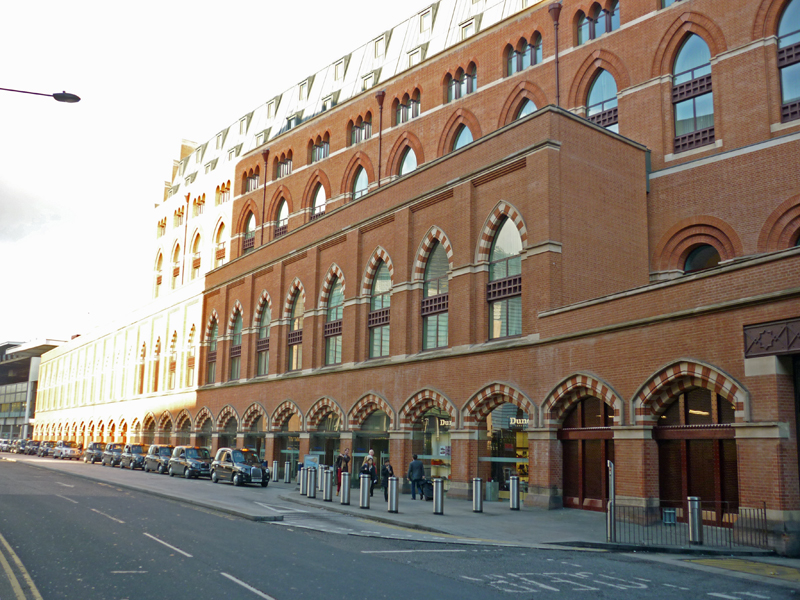
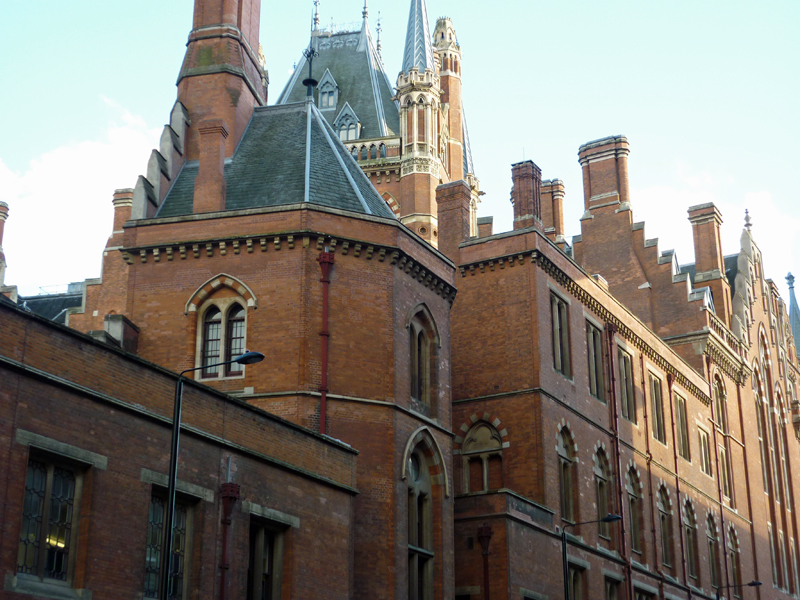
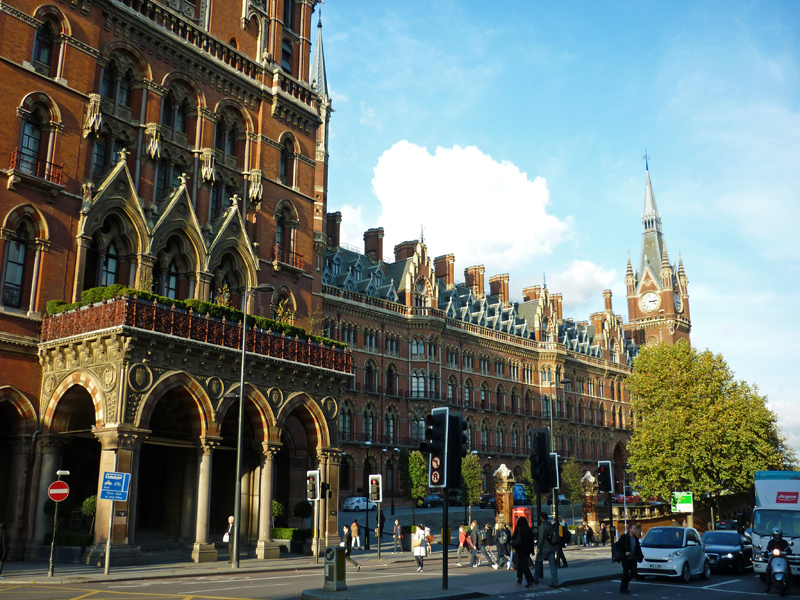
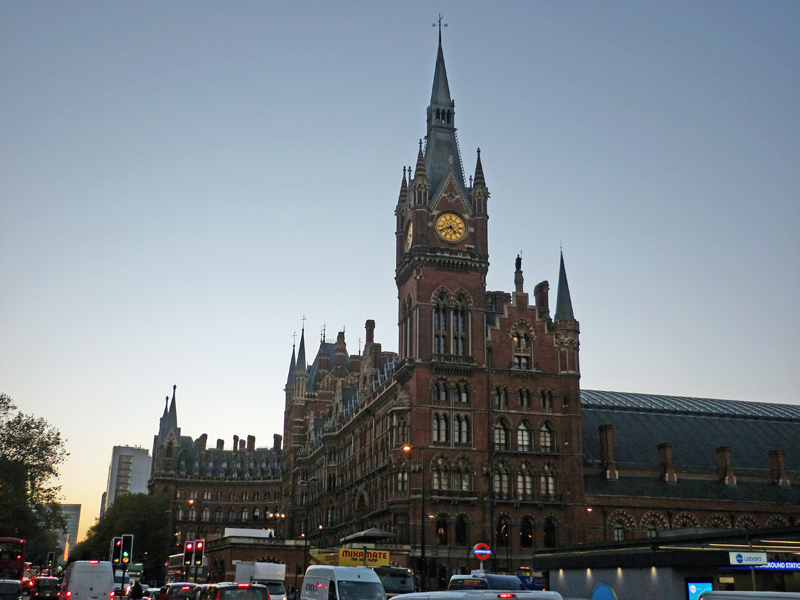
Day 12 – Gray’s Inn Road -Pentonville Road – New River Head – Charles Dickens Museum

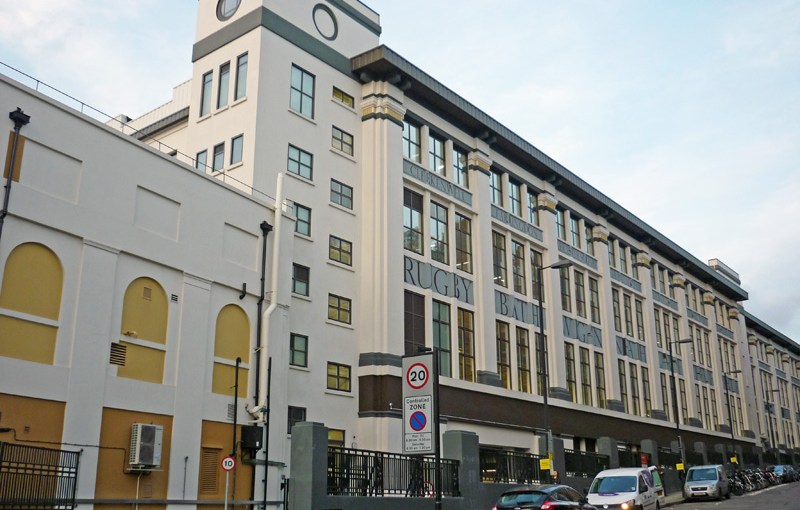
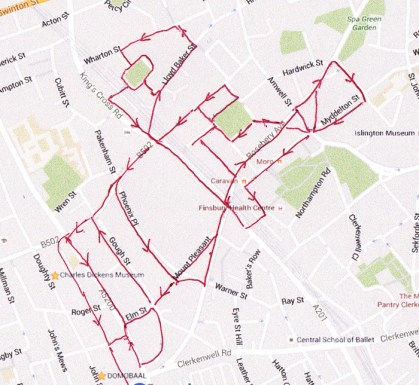
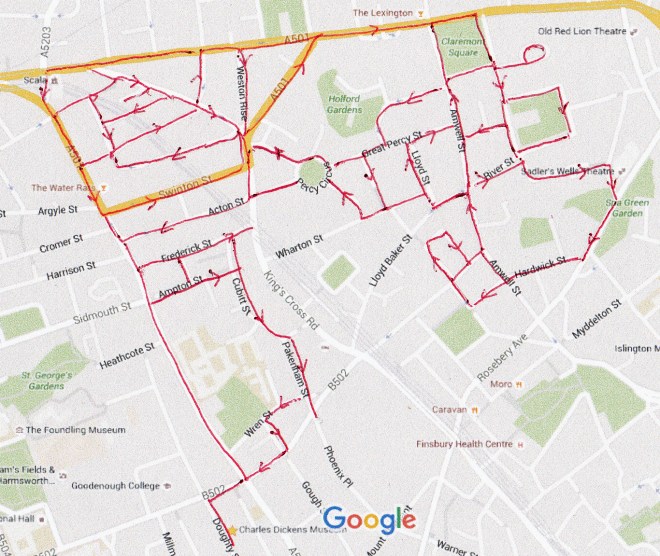
Bit of a meandering one today, largely covering the triangular area bounded by King’s Cross Road, Pentonville Road and Roseberry Avenue then returning to Gray’s Inn Road and ending up at the Charles Dickens Museum. Much of this area is comprised of the site known as New River Head which is integral to the story of London’s water supplies. This trip also takes us for the first time into the London Borough of Islington.

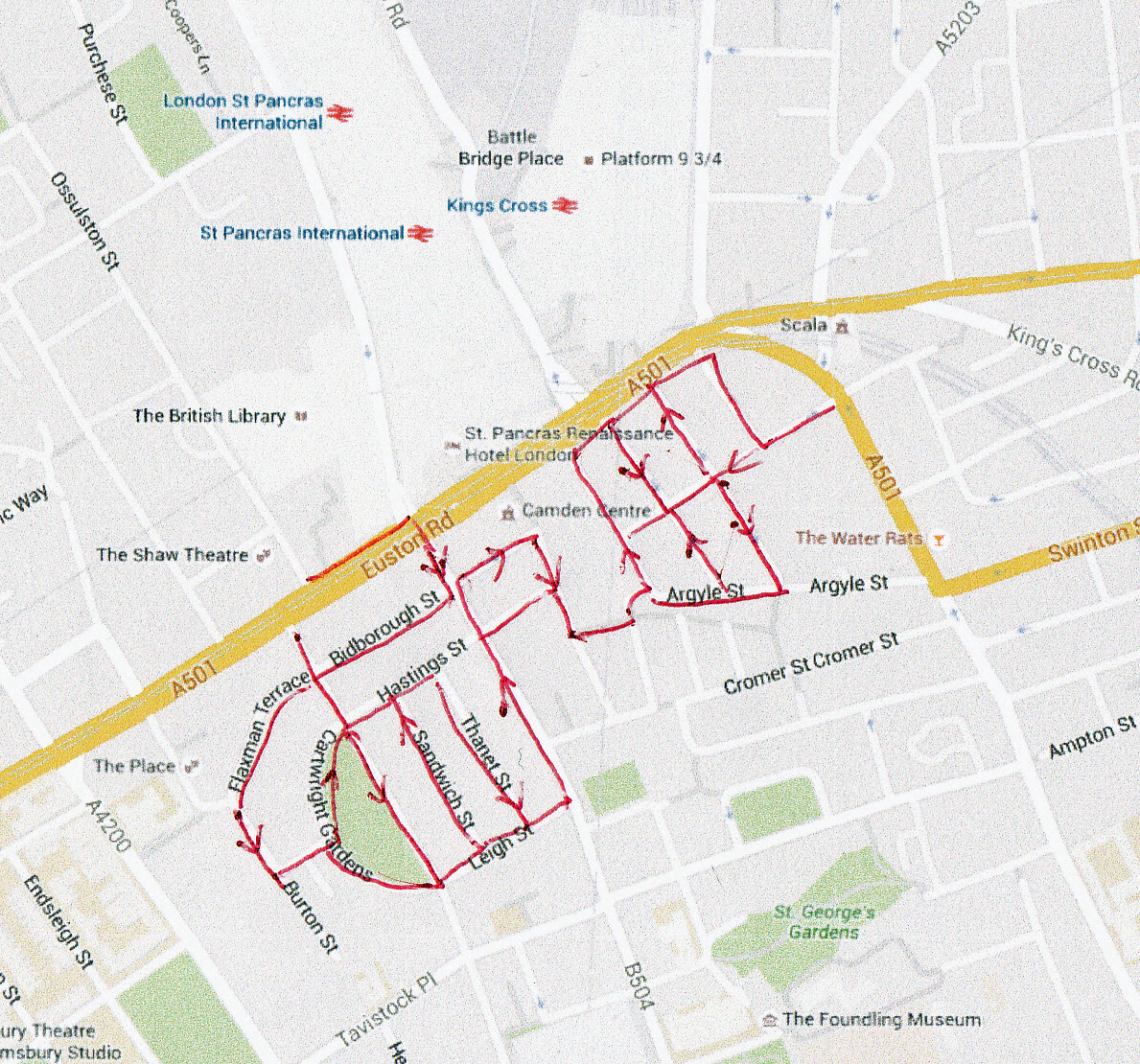
Day 12 Route

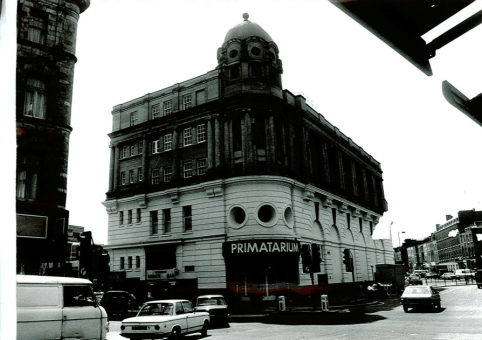
Begin within a return visit to Kings Cross and take the Scala on the corner of Pentonville Road and King’s Cross Bridge Road as the starting point. Originally opening as a cinema in 1920, the Scala has had many incarnations including a brief ill-fated stint in the late seventies as a Primatarium (a specially made-up word I suspect). This monkeying around lasted all of 18 months before the venue reverted to being a cinema and also hosting live music performances. That continued until 1993 when the Scala Cinema Club went into receivership after losing a court case over an illegal screening of Stanley Kubrick’s A Clockwork Orange. After a radical make-over it was resurrected in 1999 as a concert and club venue. Unfortunately the building is completely swathed in scaffolding for repainting at present.

primatarium

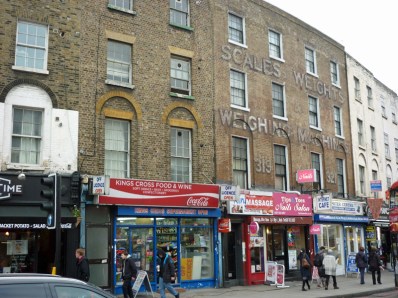
Cut through onto the top end of Gray’s Inn Road where the familiar un-tarted up Kings Cross lives on.

P1040704

On the opposite side of the road is Willing House, now a Travelodge but originally built around 1910 in a ‘Free Baroque’ style for the Willing family, whose fortune was founded on billboard sites.

P1040705

The streets which intersect between Gray’s Inn and King’s Cross Road have little of real interest but the photos below give some flavour of St Chad’s Place, Field Street, Leeke Street, Swinton Street, Wicklow Street and Britannia Street.

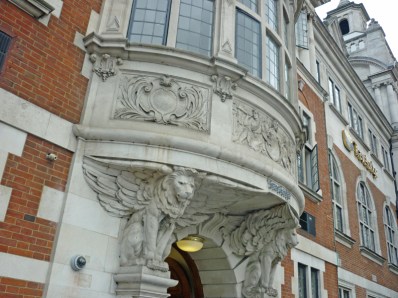
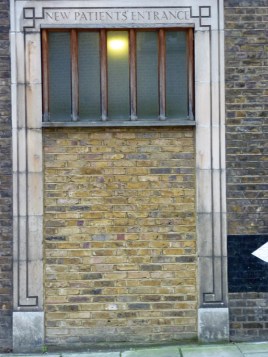
One thing of note on Wicklow Street is this indication that the Royal National Throat, Nose and Ear Hospital isn’t that keen on taking on any additional patients.

P1040712

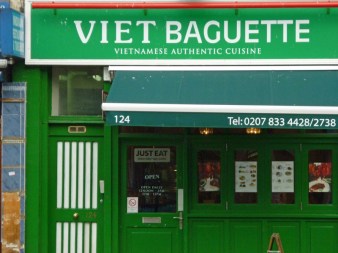
After that lot it’s back out onto King’s Cross Road and a break for lunch; finally catching up with the vogue for Vietnamese Banh Mi rolls (after everyone else has moved on no doubt).

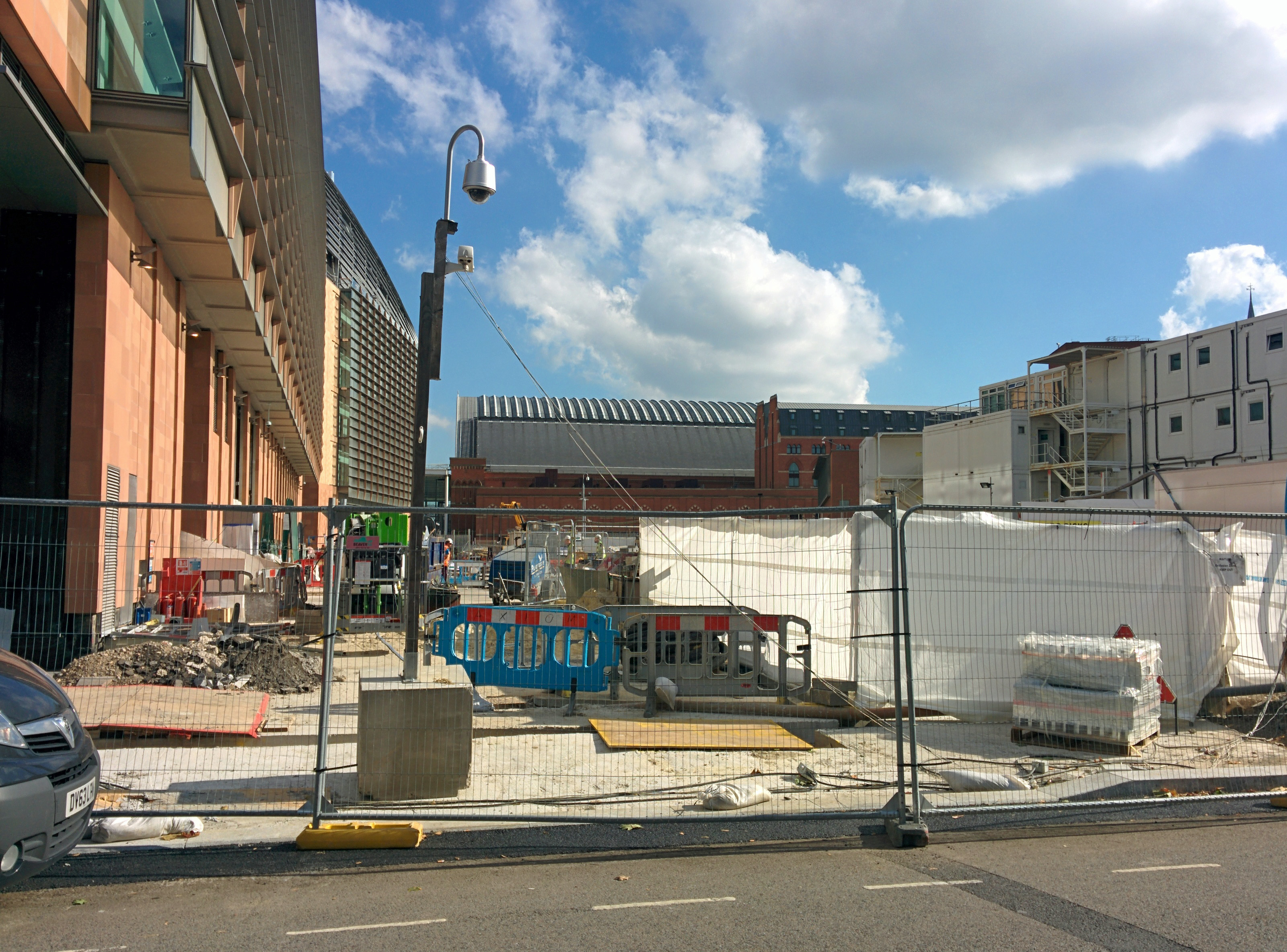
P1040713

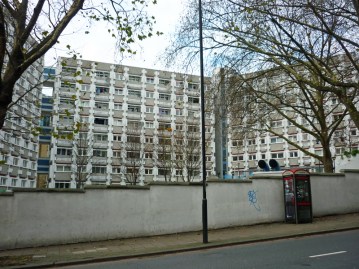
Cut up onto Pentonville Road again via Lorenz Street then back down Weston Rise and up Penton Rise. Somehow it’s never really registered with me before that a Rise is so-called because it does just that. On the west side of this incline is the 1960’s GLC built Weston Rise Estate which is garnished at its southern end by a somewhat incongruous tropical garden.

P1040715

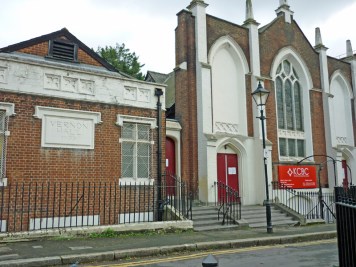
On the other side is Vernon Square, home to Kings Cross Baptist Church and behind which is another SOAS campus.

P1040714

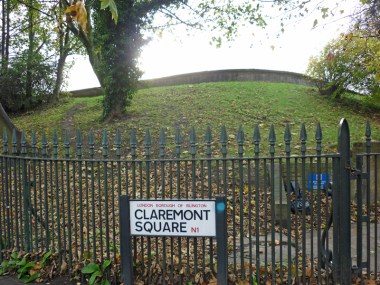
Heading further east along the Pentonville Road brings us to Claremont Square in the middle of which is the eponymous reservoir originally dug at the start of the 18th century then covered in 1855 following The Metropolis Water Act of three years earlier, prompted by the cholera epidemic of 1846, which required this of all reservoirs within London. The reservoir fell into disuse in the 1990s, but came back into service in 2003 to provide a kind of header tank or balancing reservoir for the London Ring Main

P1040717

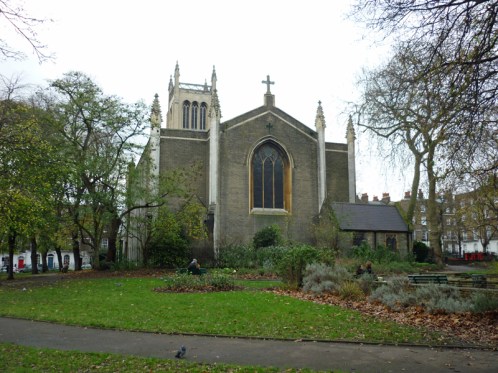
Claremont Close loops off the square and then Mylne Street leads off the south-east corner down to Myddleton Square. This, the largest square in this part of London, is named after Sir Hugh Myddleton  one of the main architects of the New River project – of which more in a minute. In its centre sits St Mark’s Church, Clerkenwell, consecrated on 1st January 1828. The church is unusual in that there is no graveyard in its grounds. The congregation have also shared the church with the World Community for Christian Meditation since 2002.

P1040718

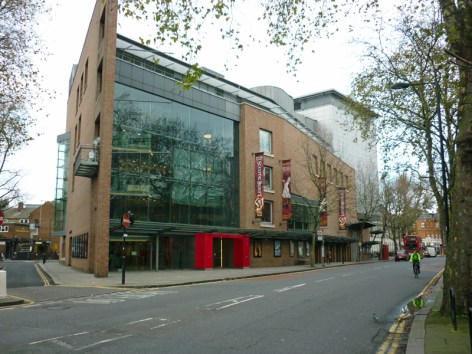
Having circumvented the square, Ingelbert Street takes us into Amwell Street and then River Street returns us to the square from where Myddleton Passage cuts through to Arlington Way. Here we emerge opposite the west side of Sadler’s Wells Theatre on Roseberry Avenue, London’s premier contemporary dance venue. The current building which opened in 1998 is the sixth theatre on this site; the first erected in 1683. Current offering is Matthew Bourne’s “Sleeping Beauty” which I can thoroughly recommend.

P1040720

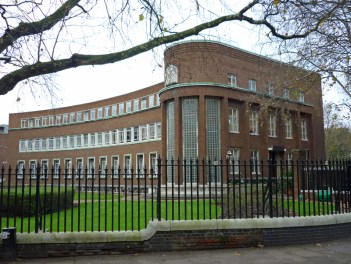
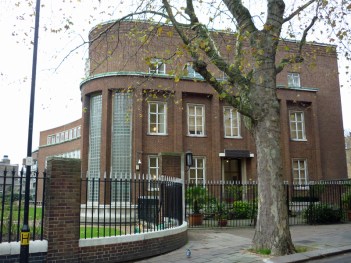
Immediately to the west of Sadler’s Wells is the area known as New River Head which derives its name from being the site of the mouth of the New River, the channel cut at the start of the 17th century to supply London with water from springs out in Hertfordshire. This was all carried out under the auspices of the New River Company which became a very substantial property owner over the next couple of centuries before being taken over by the Metropolitan Water Board in 1904. It was the latter which constructed the Laboratory Building (below) in 1938 as a home for the testing of water quality. This archetypal 1930’s creation was converted to residential use in the 1990’s.

P1040722P1040721

On the apex of Roseberry Avenue and Hardwick Street sits the equally impressive New River Head Building which was opened in 1920 as the headquarters of the MWB. This also succumbed to conversion into luxury private residences in the nineties.


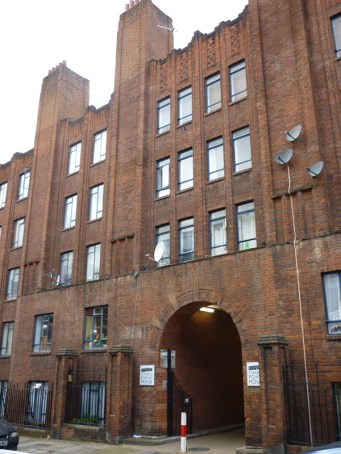
Hardwick Street leads into Amwell Street again and crossing over into Merlin Street we find Charles Rowan House  with its distinctive turrets and atypically Expressionist feel. This was originally built in the 1920’s as married quarters for Met policemen and was converted into council housing in 1974.

P1040727

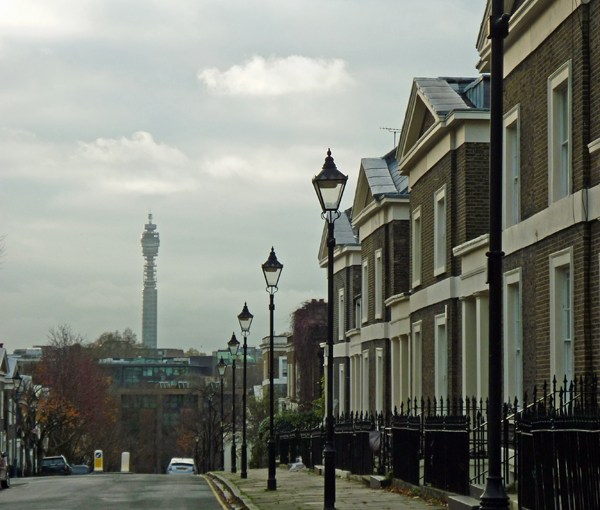
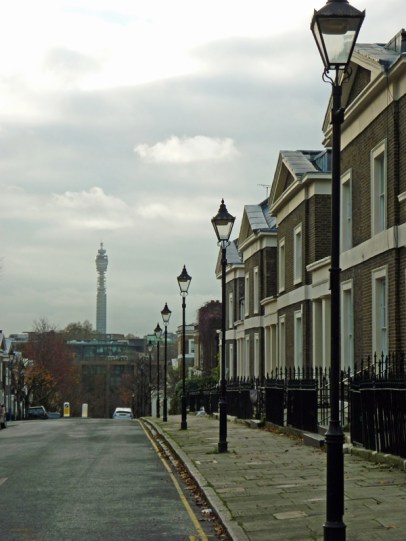
Next up is Wilmington Street, then Fernbury Street and Naoroji Street (named after Dadabhai Naoroji (1825 – 1917) the so-called “Grand Old Man of India” and the first Asian to sit as a British MP). A bit more of Amwell Street then left into Lloyd Baker Street and right into Lloyds Street. The elevation comes into its own here with this view across to the BT Tower in the west.

P1040729

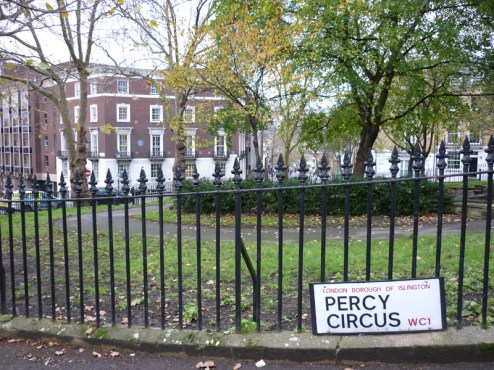
From Great Percy Street we dip back into Amwell Street then loop back via Cruikshank Street and Holford Street. Cumberland Gardens and Prideaux Place are the next stops before arriving at Percy Circus. Like Great Percy Street, this takes its name from Robert Percy Smith, Governor of the New River Company from 1827 to his death in 1845. It is also the least central of the London Circuses. At No. 16 is yet another blue plaque commemorating a brief residency of Lenin.

P1040730

Next down Vernon Rise back to King’s Cross Road and again zig-zag between this and Gray’s Inn Road taking in Acton Street, Frederick Street, Ampton Place, Ampton Street, Cubitt Street, Pakenham Street and Wren Street. This brings us to St Andrews Gardens opposite which on GIR is the London Welsh Centre – a hub for Welsh cultural activities in the capital not a rugby player.

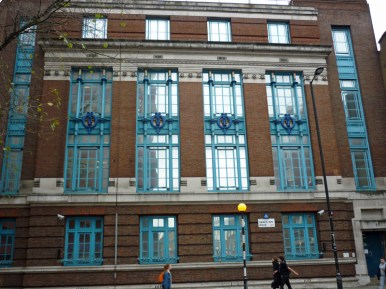
Just a bit further up the road is the old Kings Cross telephone exchange with its distinctive blue façade.

P1040731

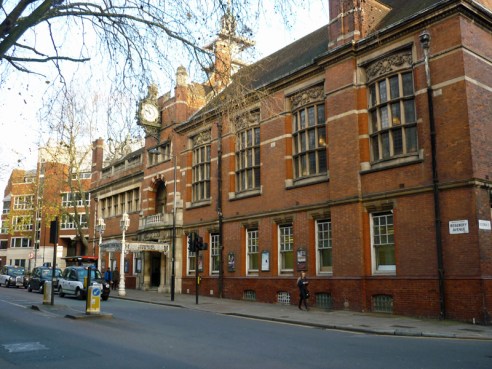
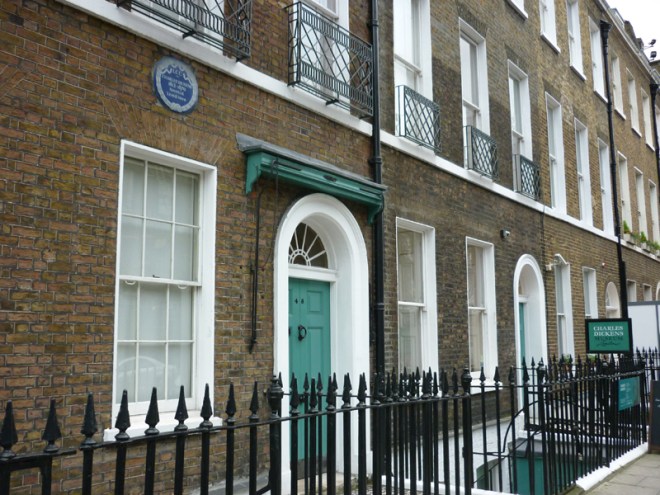
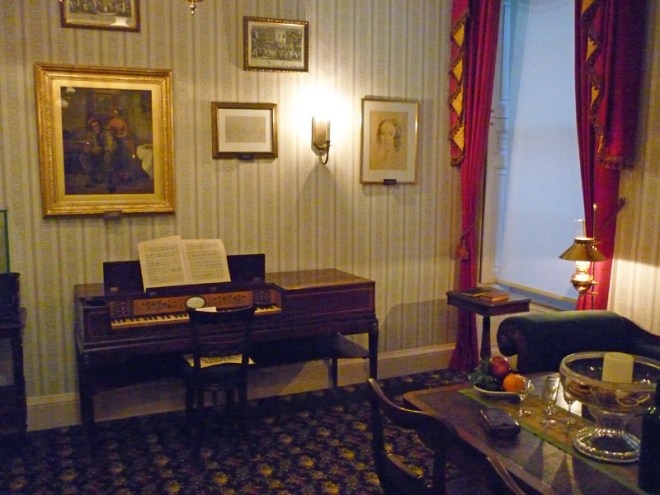
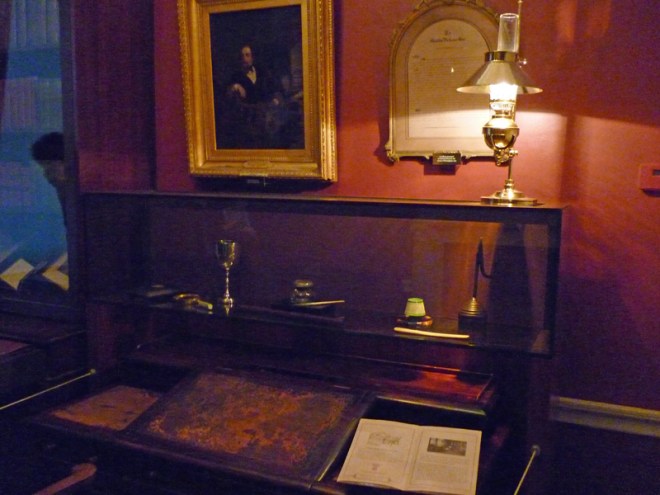
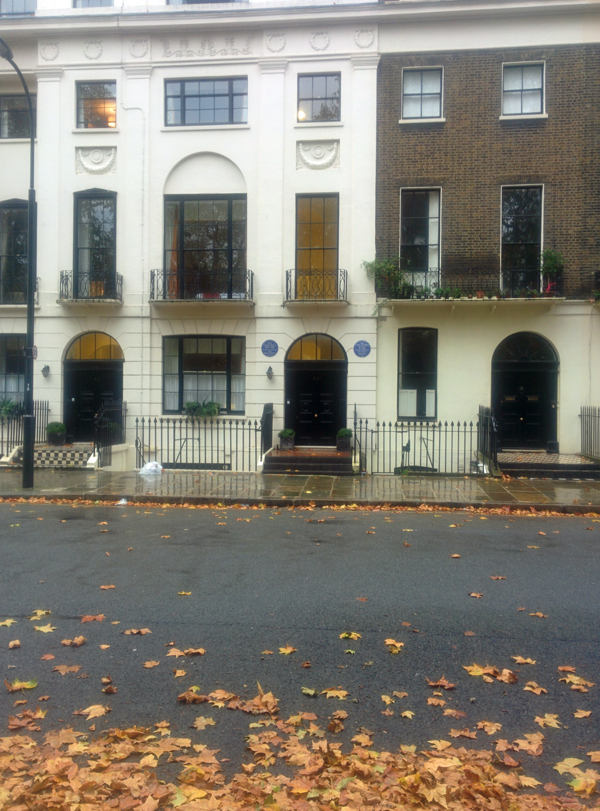
Wander down to Doughty Street to  rendezvous with final stop of the day, the Charles Dickens Museum at no.48. Dickens only lived in this Georgian terraced house from 1837 to 1839 but two of his daughters were born here. it was where he wrote Oliver Twist and it also sadly witnessed to the death of his 17 year old sister-in-law. The museum first opened in 1925 and, as you would expect, is home to the world’s most important collection of Dickens memorabilia, including the writing desk you see below. To be honest I can’t say it was the most scintillating museum experience I’ve ever had – perhaps I should have waited a week for the Christmas decorations to go up.

P1040734
48 Doughty Street
P1040736
Drawing Room
P1040735
Study


Day 11 (part 2) – Tottenham Court Road – University College London – Bloomsbury

Second leg of today’s walk resumes at the north side of Russell Square then concentrates on the constellation of buildings and institutions that constitute the “Bloomsbury Site” of the University of London, principally UCL.  This was originally an area of eleven acres stretching from Woburn Square to the British Museum and its acquisition, from the Duke of Bedford (see last post) in 1927, was partially funded by the Rockefeller Foundation. It ends with visits to the two wonderful in-house museums belonging to UCL, the Grant Museum of Zoology and the Petrie Museum of Egyptian Archaeology.

Day 11 Route pt2

We begin by heading north up Bedford Way then after turning left into Gordon Square venture south again via Woburn Square and Thornhaugh Street before returning to Russell Square and exiting that by the south-west corner. This takes us into Montague Place which runs along the back of the British Museum (more of which in a later post).

P1040656

As mentioned above the creation of this new hub for the University of London in the thirties was facilitated by an endowment from the Rockefeller Foundation – £400,000 which was a pretty immodest sum back then. The centrepiece of the development was the (still) imposing Senate House on Malet Street. Construction of this iconic Art Deco edifice (often claimed as London’s first skyscraper) began in 1932 and although some staff moved in during 1936 it wasn’t fully completed until 1937 by which time it had been scaled back from the original designs due to a shortfall in funds.

The building was used by the Ministry of Information during WWII and this, combined with its monolithic appearance no doubt, inspired both Graham Greene’s “Ministry of Fear” (adapted for the cinema by Fritz Lang) and George Orwell’s Ministry of Truth as featured in “1984”.

There is even an actual Room 101 inside on the first floor though there is not thought to be any direct correlation between this and Orwell’s home of nightmares made flesh (despite the fact that his wife worked for the MoI during the war).

The right-hand image below is of a map in The Chancellor’s Hall showing the location of all the constituent colleges of the University of London in 1939. The actual painting, by MacDonald Gill, is 4m across.

The building mainly functions as the administrative centre for the University of London but also houses its main library. On the left below is the Senate Room itself; these days used only a handful of times a year for meetings of the actual Senate (which is largely ceremonial) though it is available for hire.

To the north of the Senate House is Torrington Square where reside  Birkbeck College and The School of Oriental and African Studies (SOAS). Opposite the latter is the Brunei Gallery (no prizes for guessing where the funding for that came from) which is well worth a visit, not only for its exhibitions but also its Japanese roof garden.

Across the road at the top end of the square is the southern end of  Church of Christ the King, Bloomsbury

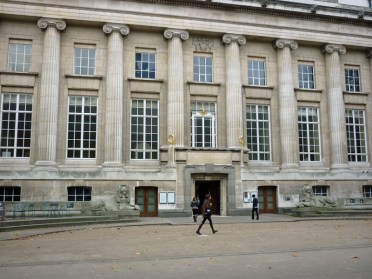
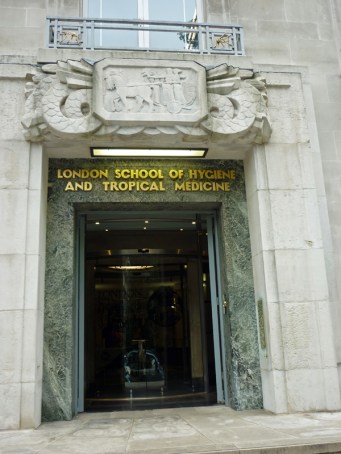
Here we turn left along Byng Place then head back down Malet Street until we get to Keppel Street which is where London School of Hygiene & Tropical Medicine lives.

130922 Open House (4)

The creation of this new building for the school, following the granting of its Royal Charter in 1924, was another result of the munificence of the Rockefeller Foundation. The building, which was opened in July 1929, was one of the first constructed around a steel frame. The facade of Portland stone incorporates above the main entrance a carving of Apollo and Artemis riding a chariot. As you can also see above, the first floor balconies are  decorated with a selection of gilded bronze studies of insects and animals infamous for their roles in the transmission of disease.

The sculpted panel above is by Eric Kennington (1888 – 1960) who is mainly known for his work as an official artist in both World Wars. The bust in the library is of Sir Richard Doll (1912 – 2005) considered to be the foremost epidemiologist of the 20th century.

Cross over to Store Street with its uniformly fronted independent shops, galleries and coffee shops and on the corner with Ridgmont Street come across the site of the old Bloomsbury Service Station which was redeveloped in 2012 incorporating the style and some of the features of the original 1926 building into what is now offices and a Byron hamburger joint.

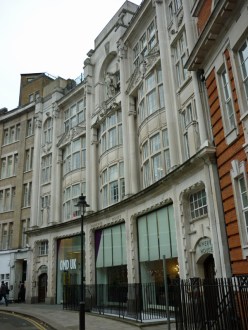
Next up Chenies Street, North Crescent and Alfred Place. The middle one of those is largely comprised of Minerva House, a grade II listed former car showroom and workshop.

P1040664

Back on Store Street, South Crescent to be precise, is the Building Centre. Established in 1931, this is now not-for-profit organisation is dedicated to providing education, information and support in relation to all aspects of the built environment. Worth a visit just to see the 3D map which highlights all the current new-build projects in London.

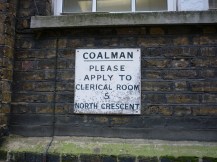
We now take a first dip into Tottenham Court Road and the next turning on the right is Alfred Mews where we come across this somewhat redundant instruction.

P1040668

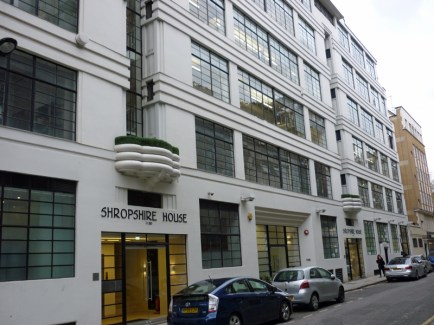
Criss-cross between Tottenham Court Road and Gower Street via Torrington Place, Huntley Street, Chenies Mews and Capper Street. Last of these features another great surviving example of the Art Deco form in Shropshire House which dates from 1932.

P1040671

Another cul-de-sac off of TCR is Queen’s Yard where behind this unprepossessing entrance can be found the Government Art Collection. One of the small selection, of the over 100,000 works in the collection, on display is the splendid 4’33” (Prepared Pianola for Roger Bannister) by Mel Brimfield


On University Street, where we turn next, there is, appropriately, a pub named after the philosopher, Jeremy Bentham (1748 – 1832),  who left his body to be publicly dissected by his friend, Dr Thomas Southwood Smith, and preserved as an ‘auto-icon’. Jeremy the auto-icon was bequeathed to UCL in 1850 and has remained there ever since.


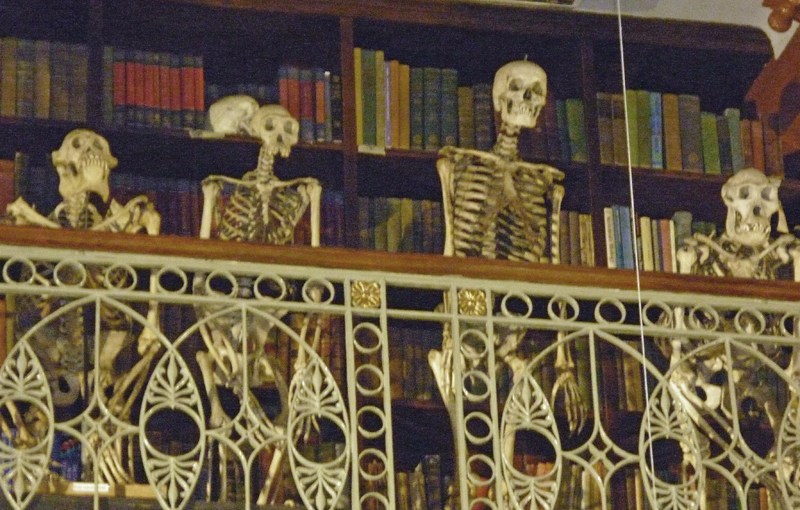
The Grant Museum of Zoology sits on the corner of University Street and Gower Street and houses around 68,000 remarkable zoological specimens.


Founded in 1828 as a teaching collection, the Museum is packed full of skeletons, mounted animals and specimens preserved in fluid. Many of the species concerned are now endangered or extinct. Below are a selection of my personal favourites.

This slideshow requires JavaScript.


After leaving the museum we head down Gower Street, stopping briefly for a look at the UCL Main Building also known as the Octagon Building.

To get to the final stop for today, the Petrie Museum of Egyptian Archaeology we veer off to the left and left again into Malet Place. The museum was set up as a teaching resource for the Department of Egyptian Archaeology and Philology at UCL. Both the department and the museum were created in 1892 through the bequest of the writer Amelia Edwards (1831-1892). The collection, of over 80,000 Egyptian and Sudanese artefacts dating from prehistory through the time of the pharaohs to the Islamic era, was considerable extended due to the extraordinary excavating career of the first Edwards Professor, William Flinders Petrie (1853-1942) after whom the museum is named. Of course the export of such antiquities from their place of discovery has long been illegal so the collection is a static one. It is also quite astonishing.

This slideshow requires JavaScript.

2015 is actually the centenary of the museum opening to the public and in recognition of that here is one final exhibit to hopefully whet your appetite for a visit.

P1040695

This is a fragment from the “Book of the Dead” papyrus belonging to a man named Khnumemheb. It shows the ‘weighing of the heart’ scene in which the deceased’s heart is weighed against the feather of truth while Ammut, the monstrous devourer of the dead, sits beneath the balance awaiting the judgement.


And on that cheery note…until next time.


Day 11 (part 1) – Russell Square – Queen Square – Great Ormond Street – Lambs Conduit Street

Covered a lot of territory today so I’m going to split this up into two separate posts. This first one starts near Russell Square tube station then takes in the Brunswick Centre before moving south through Queen Square, east along Great Ormond Street and back west via Theobalds Road to Russell Square itself. As you might imagine this part of town is largely known for the hospitals which cluster together here. When we move west of Russell Square on the second leg of this walk it’s all about the University of London.

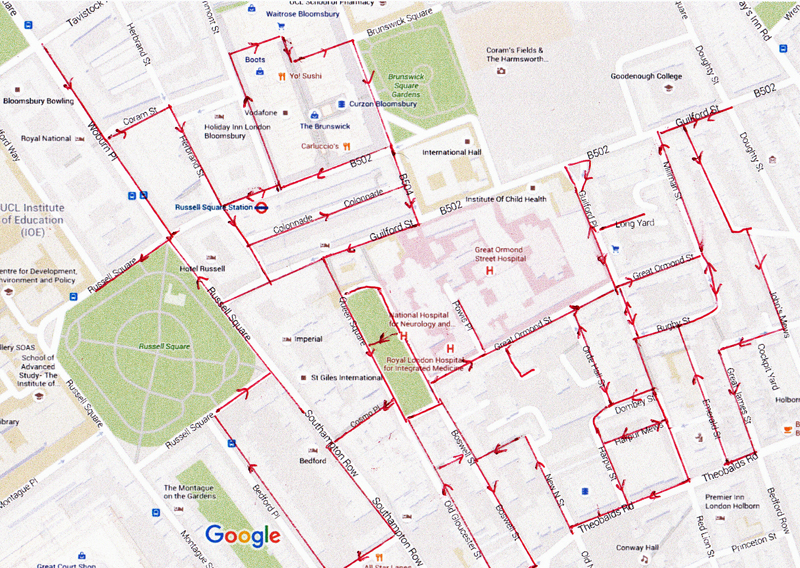
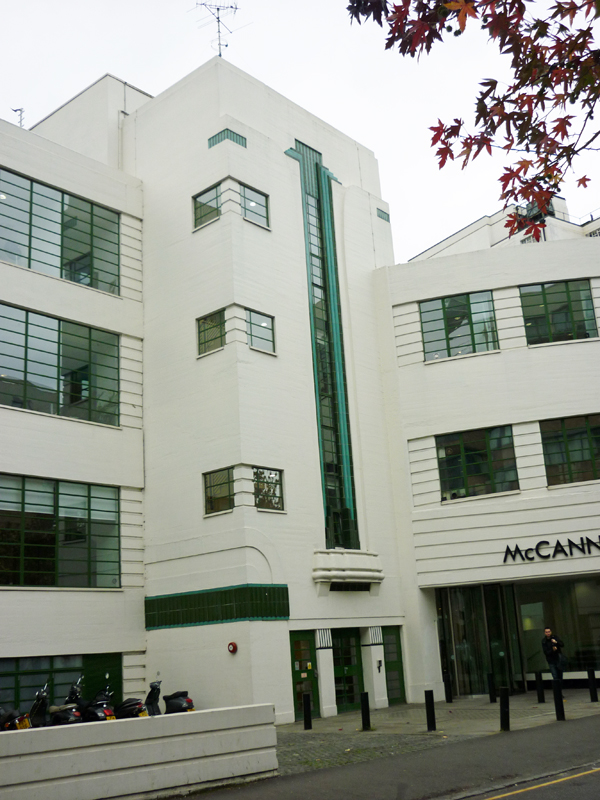
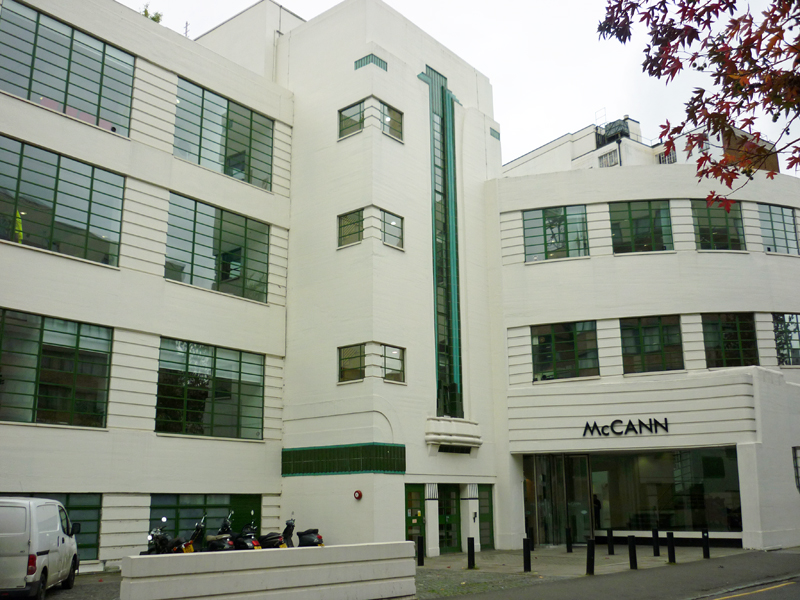
Day 11 Route pt1 Starting point for today is Woburn Place from where we turn left into Coram Street and then turn south down Herbrand Street.  Here on the right, opposite a particularly unlovely Hilton hotel, is the McCann building, a superb example of 1930’s Art Deco created in 1931 by Wallis Gilbert & Partners who were also responsible for the much loved Hoover factory. The building was originally a Daimler car hire garage.

P1040625 P1040624

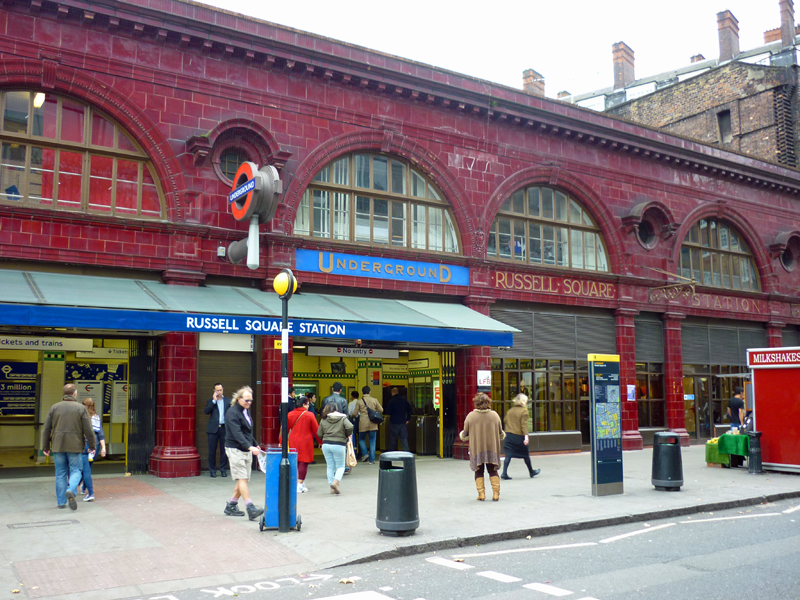
Turning left at the next junction along Bertrand Street takes us past Russell Square station, one of the best examples of the classic Leslie Green-designed underground stations with their iconic claret tiling.

P1040626

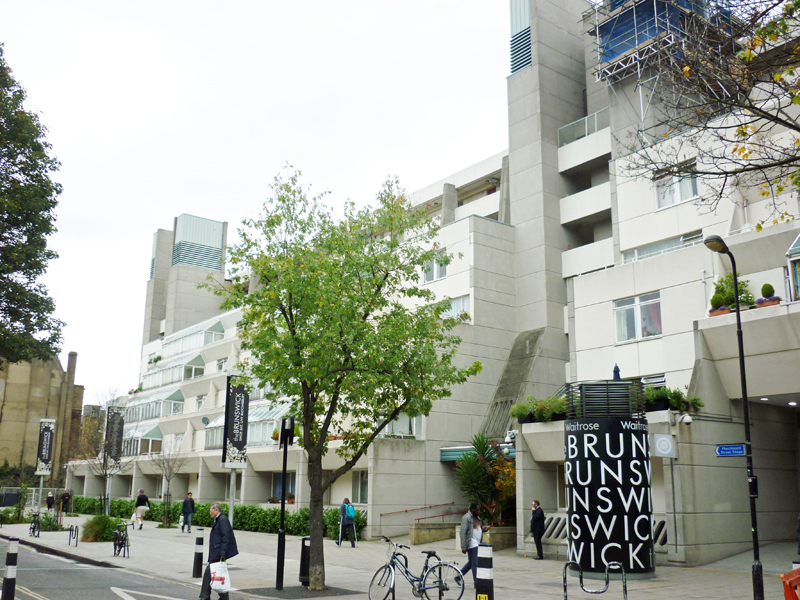
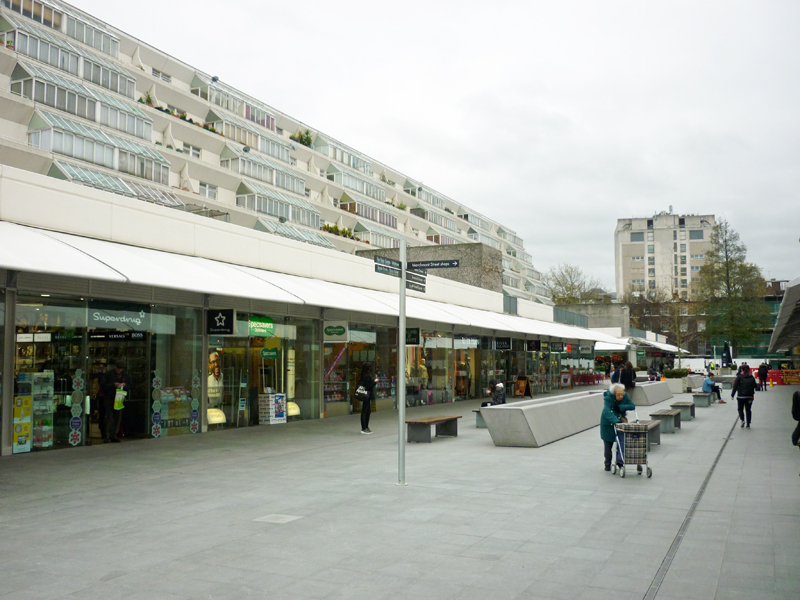
Heading north again, this time on another stretch of Marchmont Street, and from there turn right into the Brunswick Centre, a residential and retail development designed in the 1960’s and finally completed in 1972. It’s one of the few constructions of that era to have achieved Grade II-listed status and still divides opinion. I’m quite fond of it as it reminds me of my first halls of residence at UEA, though by the time I was working near here in the mid-eighties it was already quite tired; with the flavour of a down-at-heel provincial high street. In recent times it’s been spruced up of course and now looks like any generic semi-prosperous high street.

P1040627 P1040628

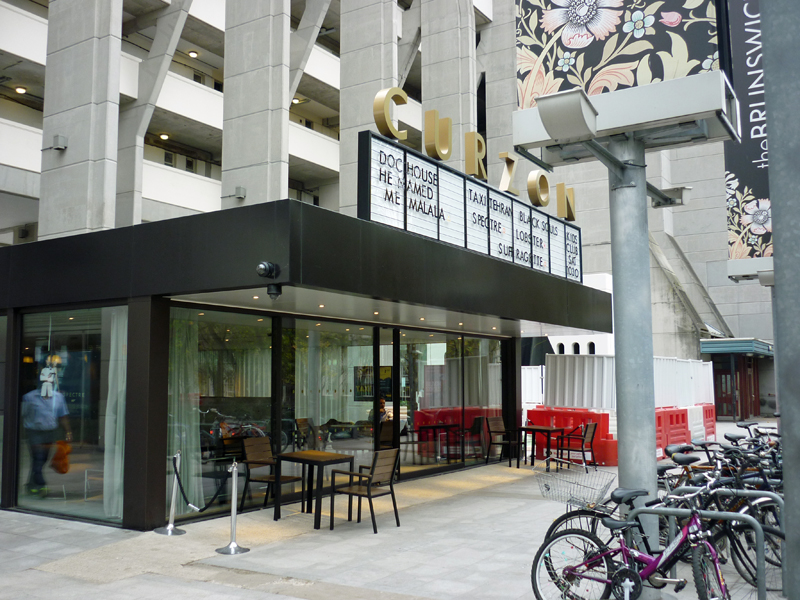
I used to frequent the bunker-like cinema on the east side of the square back in the day when it was still the Renoir (fell asleep in Screen 2 during a showing of Tarkovsky’s “Stalker” in 1986). It’s recently been done-up and re-branded as the Curzon Bloomsbury (progress eh ?).

P1040629

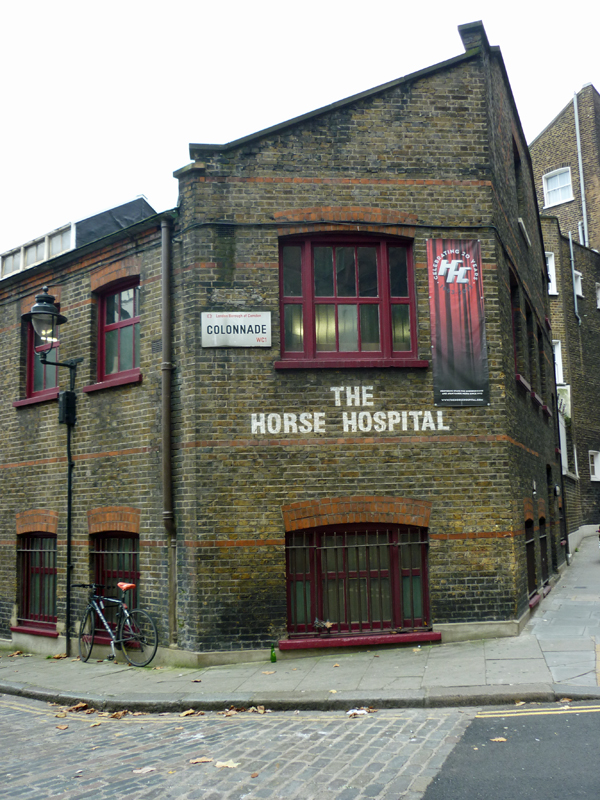
Back past the tube station and hang a left into the final bit of Herbrand Street before reaching Colonnade (our first and for all I know the only example of a one-word named London thoroughfare) on the corner of which sits the Horse Hospital. Originally built at the end of the 18th century as a functioning two-storey horse stable it has housed one of London’s most alternative arts venues since 1993. Unfortunately this bastion of the avant-garde and the underground is currently under threat of closure following the decision in 2014 of the building’s owners to put it up for sale (for a cool £2.5 million). In order to try and safeguard its future the HH has set up a fighting fund and crowdfunding support campaign and is running a number of fundraising events involving artists who have been associated with the venue.

P1040630 Horse Hospital

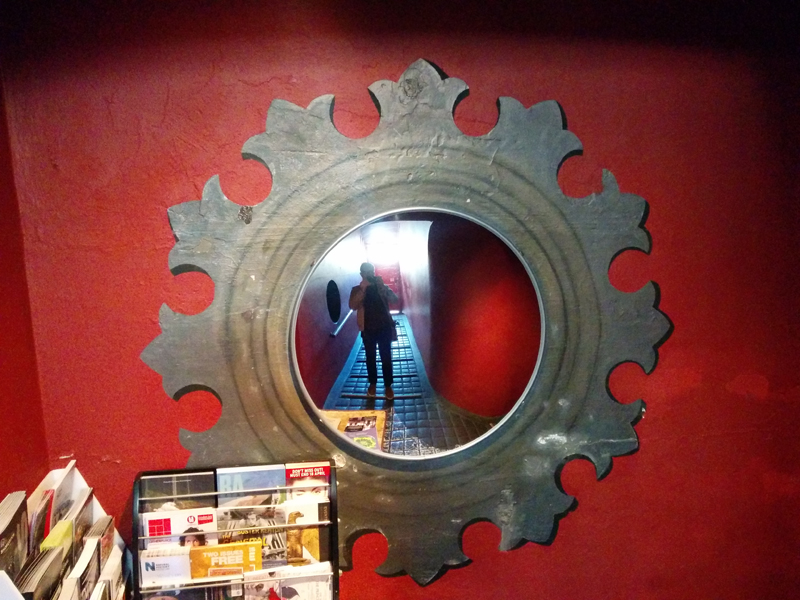
Unfortunately the right-hand picture above can’t really count as the selfie-of-the-day as it was taken on a visit earlier this year during Horse Hospital opening hours.

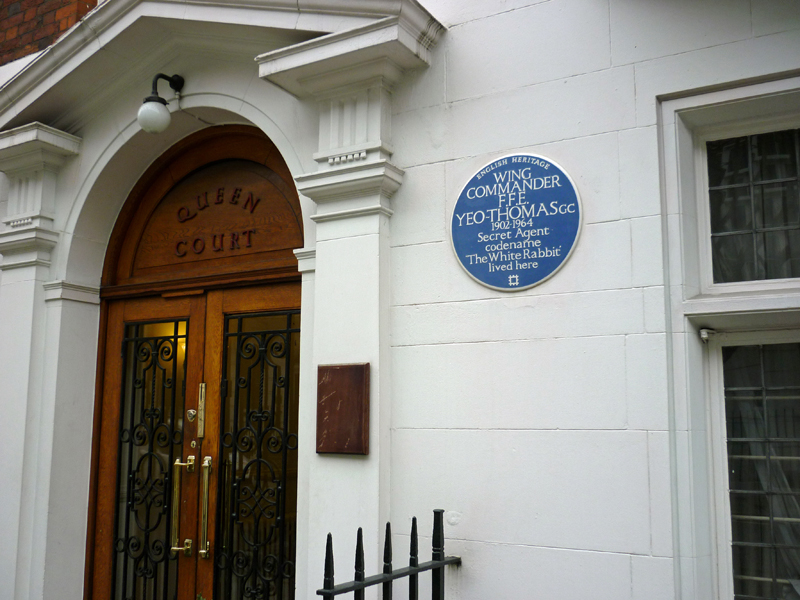
After the Colonnade it’s right into Grenville Street and right again back on to Guilford Street. A short way along at Queen’s Court there is a blue plaque commemorating Wing Commander Forest Frederick Edward Yeo-Thomas (1902 – 1964), the British secret agent known as “The White Rabbit“. Recruited by the British SOE during WWII to act as liaison with the French Free Resistance he was instrumental in securing vital support for the latter by appealing directly to Churchill. Check out the link  and I think you’ll agree that they don’t really make ’em like that anymore (eat your heart out Mr Bond).

P1040631

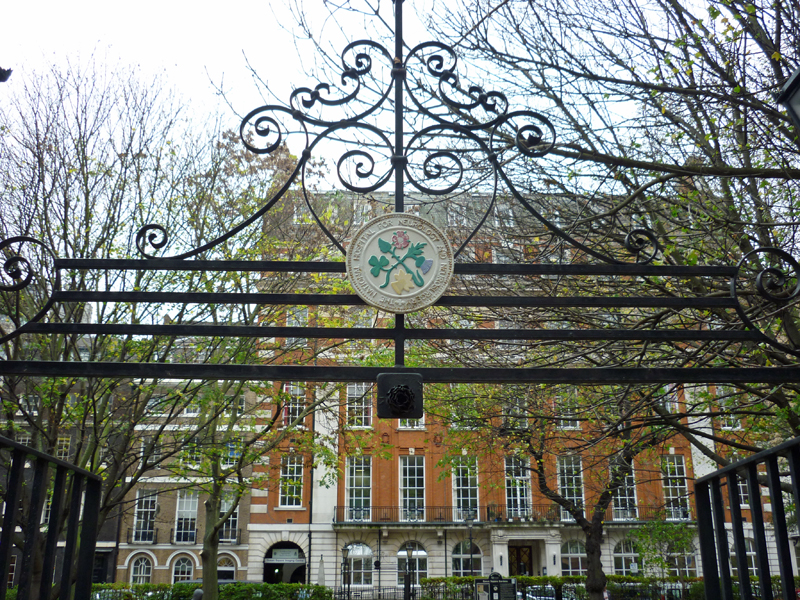
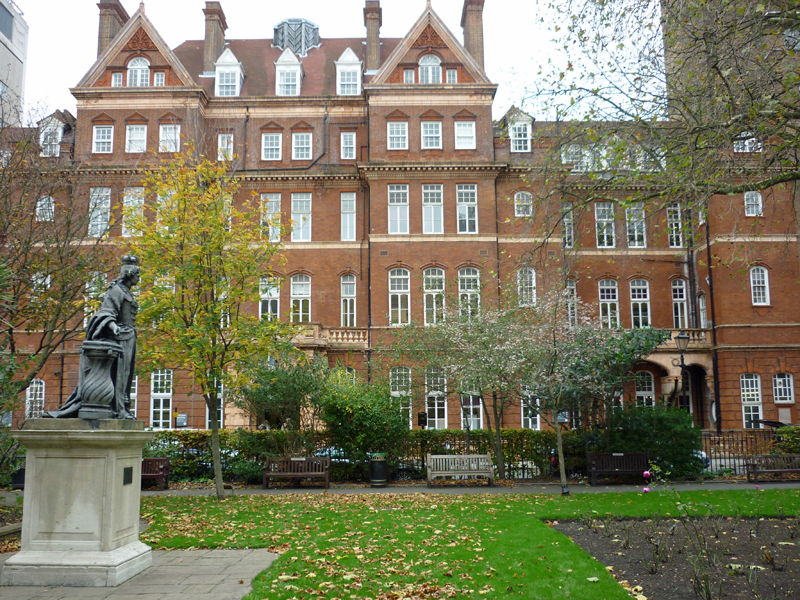
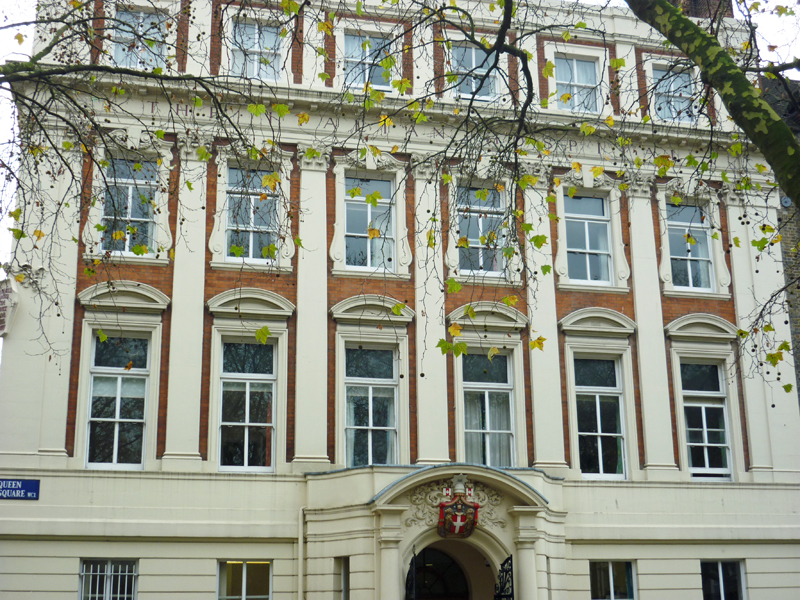
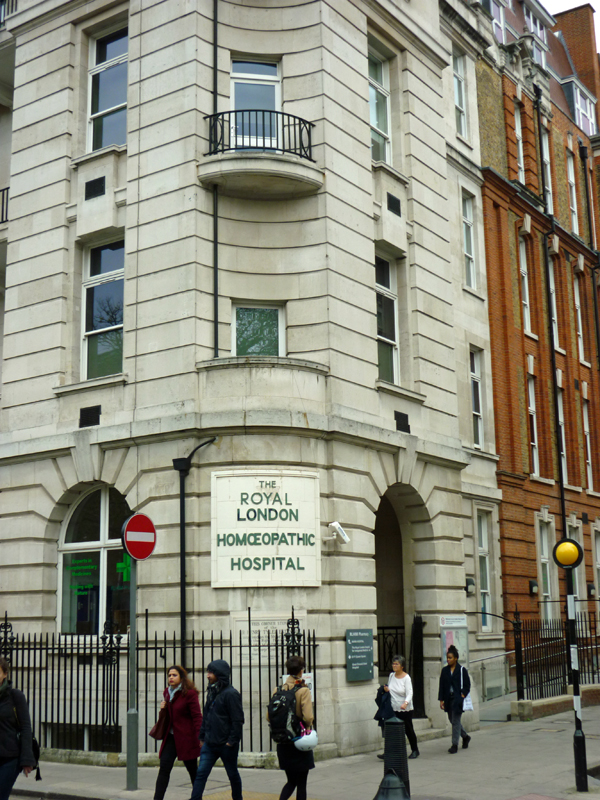
South into Queen Square which is flanked on its east side by the National Hospital for Neurology and Neurosurgery. At its bottom end sits the former Italian Hospital which is now part of Great Ormond Street. Between the two is the Royal London Hospital for Integrated Medicine which (as you can see from the picture below) was formerly the Royal London Homeopathic Hospital. In light of recent announcements about NHS blacklisted treatments it might need to get on with completing the airbrushing. The statue in the gardens is believed to be of Queen Charlotte wife of George III.

P1040632 P1040633

P1040636 P1040638

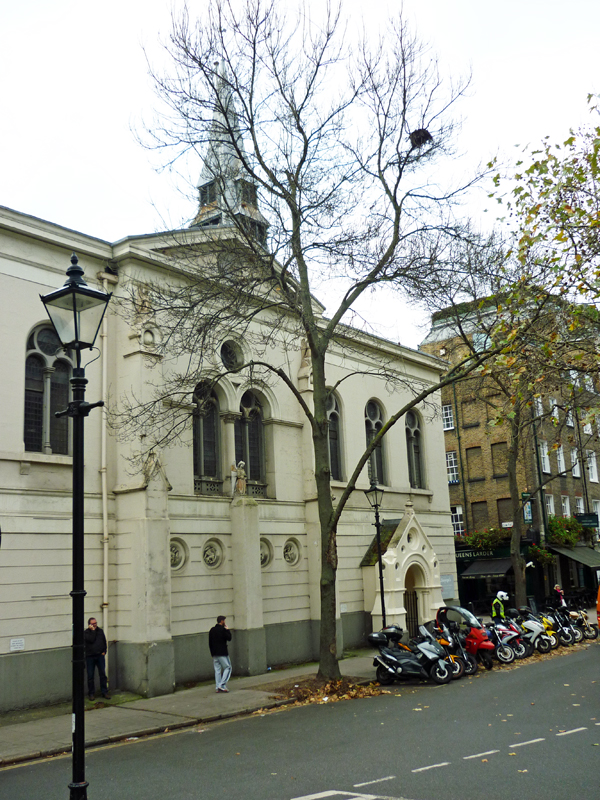
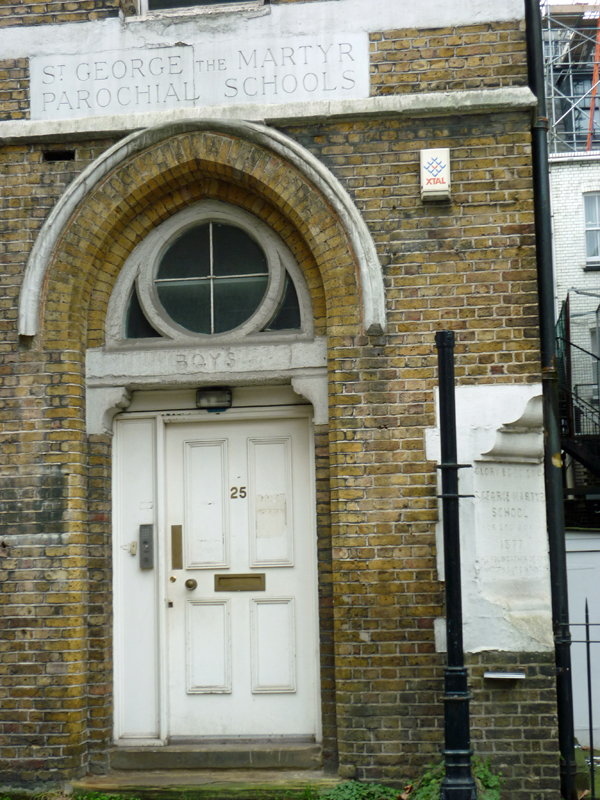
At the South-West corner of the square we find the Church of St George the Martyr, dating back to 1706 (though it has been seriously remodelled at least twice since then). Its major claim to fame is that it played host to the wedding of Ted Hughes and Sylvia Plath in 1956. Adjacent to the church is the derelict site of an eponymous charity school opened just four years after the church. A St George the Martyr C of E primary school still exists nearby having moved to a new-built site in 1976.

P1040635 P1040634

We leave the square via Great Ormond Street itself and pass the main entrance to the world-famous children’s hospital. The hospital first opened in 1852 and, as is well known, has benefitted from ownership of the universal rights to Peter Pan since being given them by J.M Barrie in 1929. This has contributed no-doubt to the many breakthroughs in paediatric medicine that have occurred here – including the first successful bone marrow transplant in 1979.

P1040640 P1040639

Opposite the hospital at the entrance to Barbon Close is a vestigial sign advertising the presence of G. Bailey & Sons Horse & Motor Contractors a business which sadly closed its doors in 1951. Oddly though a company of the same name was founded just two years ago in 2013 and has its registered office nearby in Theobalds Road.

Next up is Lambs Conduit Street with its boutique designer shops and high-end coffee houses. Sadly the public conveniences at its north end where it morphs into Guilford Place rather let the side down. In the background you might just be able to make out the Young’s pub, the Lamb, which has been around in one form or another for the best part of 300 years.

P1040641So, doubling back, we check out Long Yard then turn left into the final part of Great Ormond St before going north on Millman Street and then south again down Doughty Mews.

P1040642

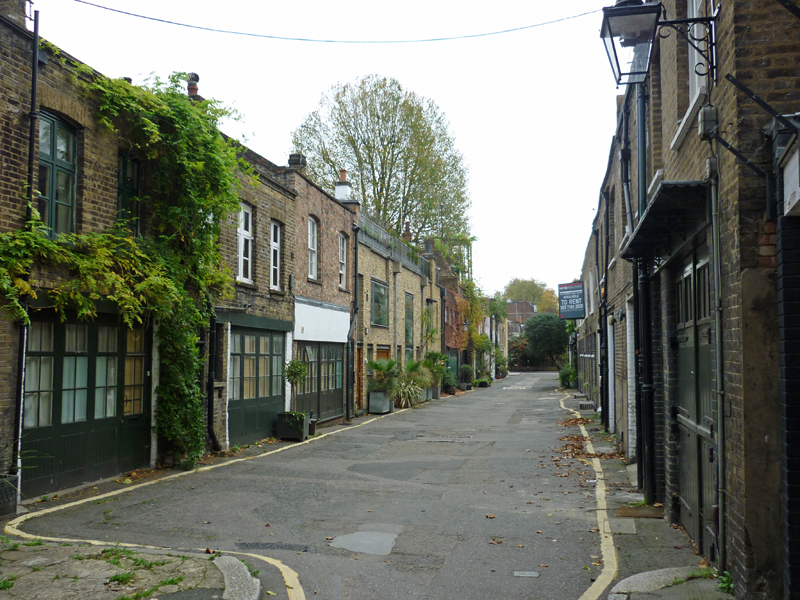
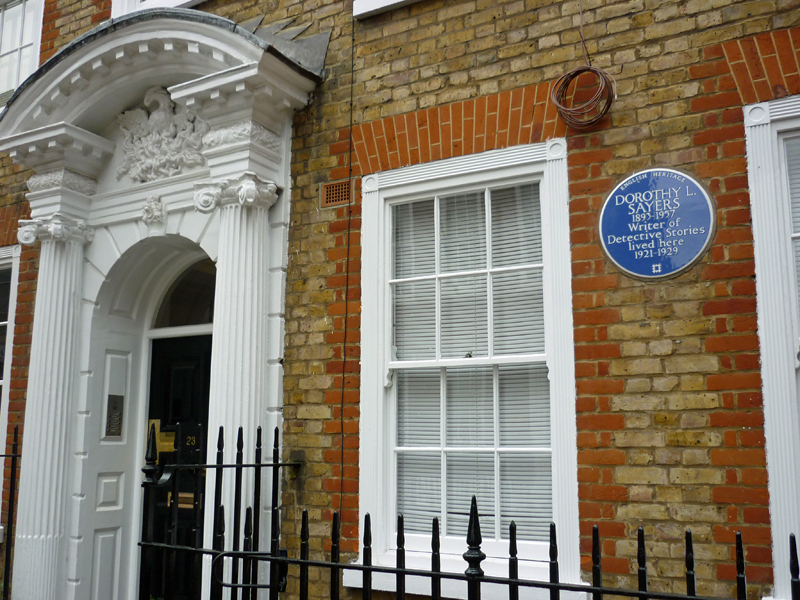
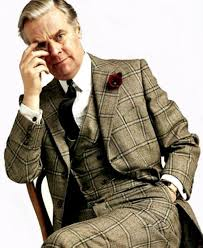
On mews leads to another, John Mews this time, from where we turn right into Northington Street. This runs into Great James Street where No.23 was home in the 1920’s to Dorothy L. Sayers (1893 – 1957) one of the queens of detective fiction and the creator of Lord Peter Wimsey, perhaps most famously portrayed by Ian Carmichael on British TV in the early seventies.

P1040643 carmichael

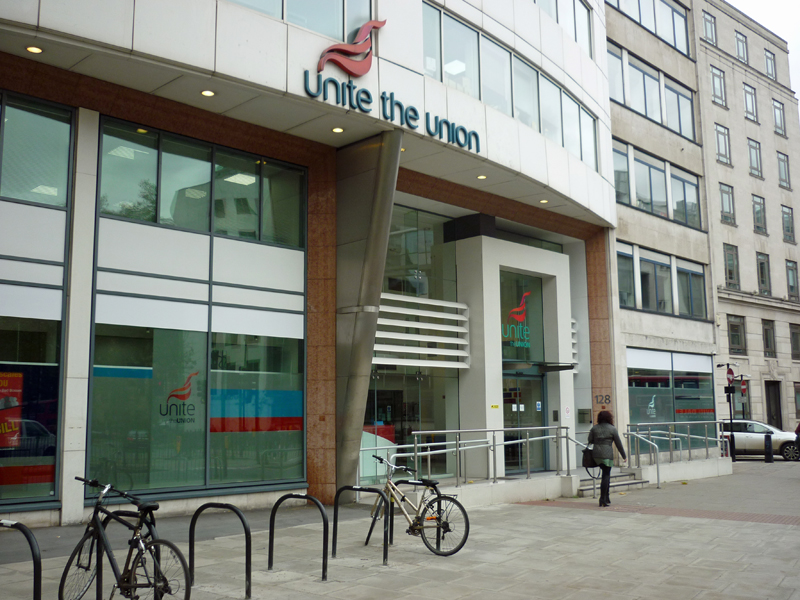
This takes us down onto a stretch of Theobalds Road from where we head north again up Emerald Street and then visit Rugby Street, Dombey Street , Orde Hall Street and Harpur Street before returning to Theobalds Road and passing the London HQ of mega-union, Unite.

P1040644 P1040649

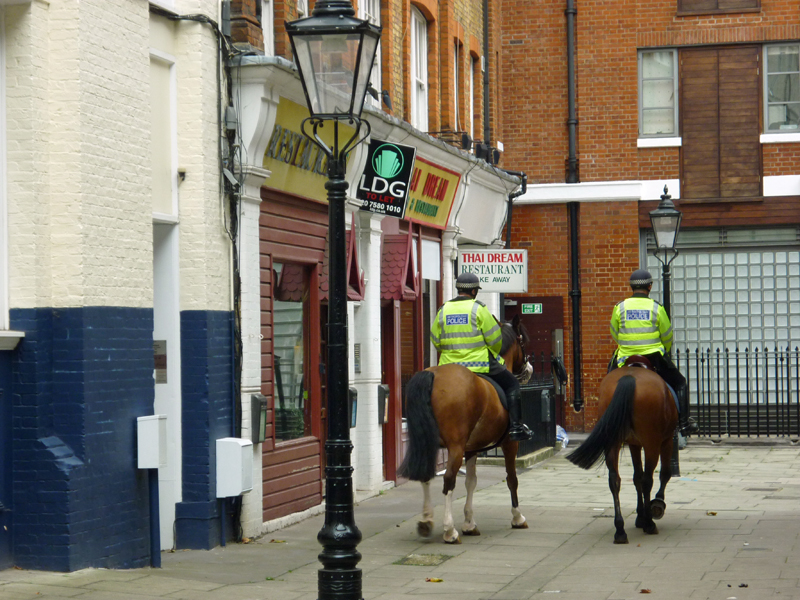
Next up is New North Street at the top of which we turn left into an alley which cuts through to Boswell Street and encounter a couple of mounted policemen on patrol.

P1040648

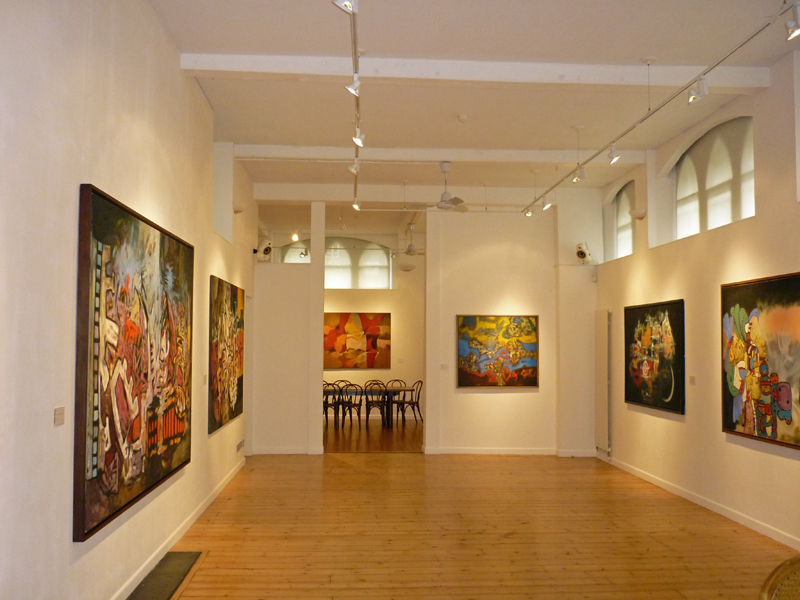
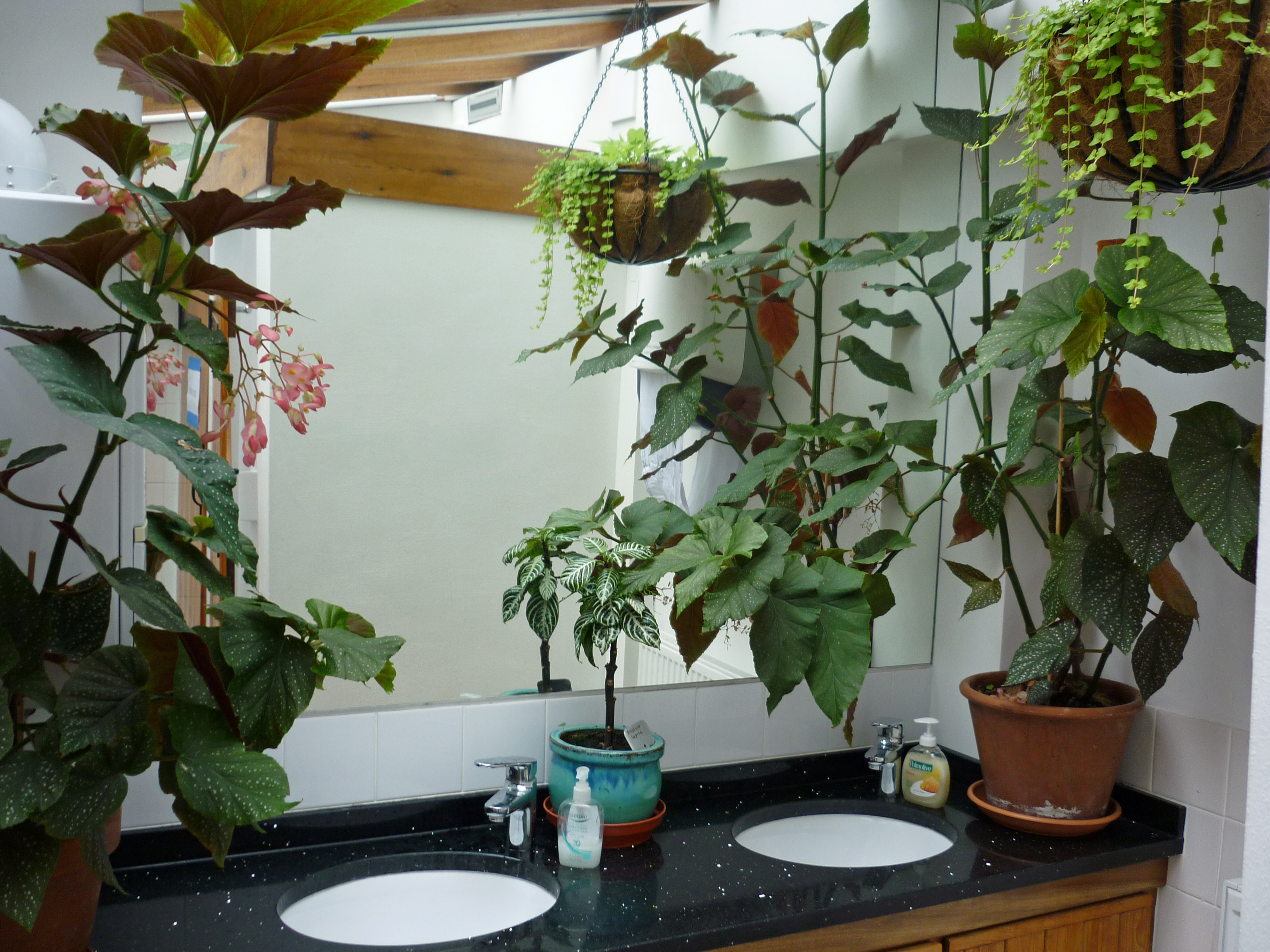
Gage Street then takes us through to Old Gloucester Street, home to the October Gallery which is not only a commendably internationally-flavoured art space but also has exceedingly nice washroom facilities.

P1040651 P1040652

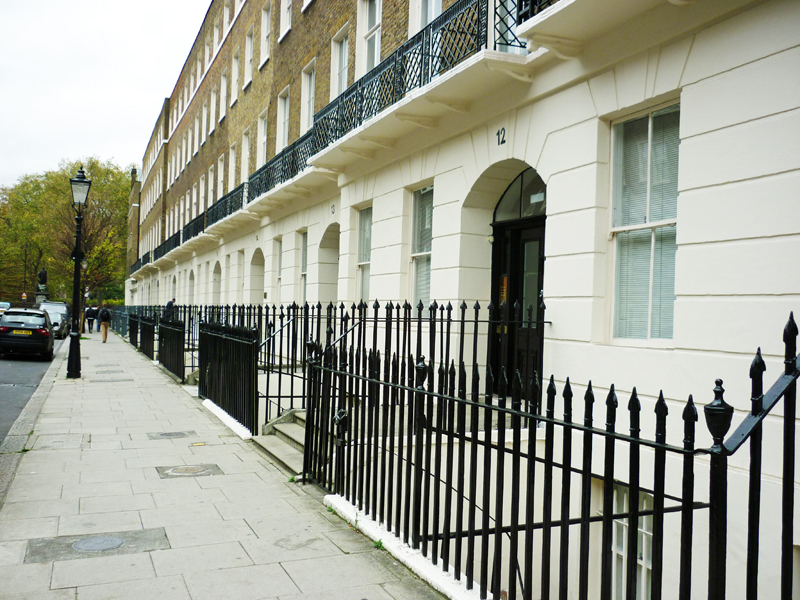
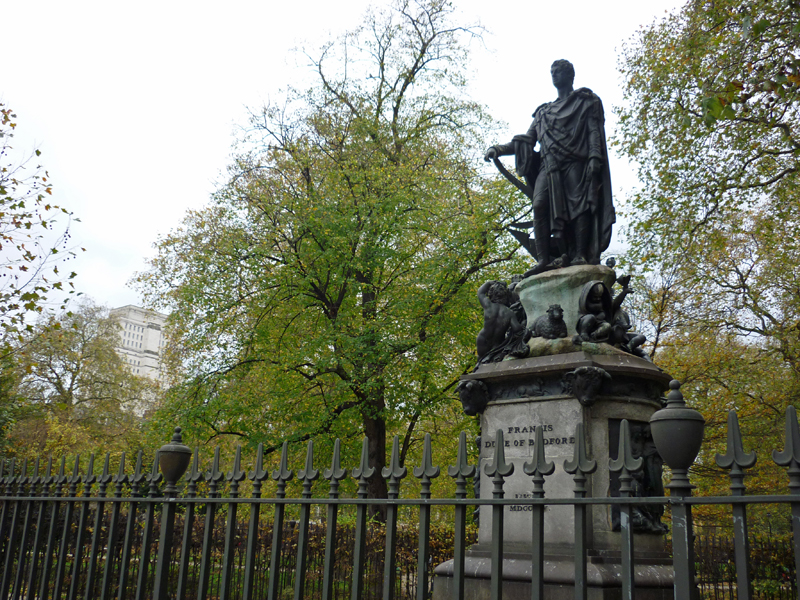
We emerge again into Queen Square and quick left into Cosmo Place brings us out onto Southampton Row. Head south until we reach Bloomsbury Place which links up with Bedford Place. This is one of those streets full of white-fronted, black-railinged townhouses that Hollywood thinks everyone in London lives in. In reality they’re mostly hotels or offices. The top end of Bedford Place comes out opposite Russell Square gardens and the statue of the man who commissioned their creation, the fifth Duke of Bedford. And that completes the first half of today’s circuit.

P1040653 P1040654

Day 10 – St Pancras – Foundling Museum – Coram’s Fields

Pretty grim autumn day so another curtailed trek. Pick things up at Kings Cross again then cover the remaining streets in the St Pancras district before flirting with Bloomsbury once more and finishing off with a visit to the Foundling Museum.

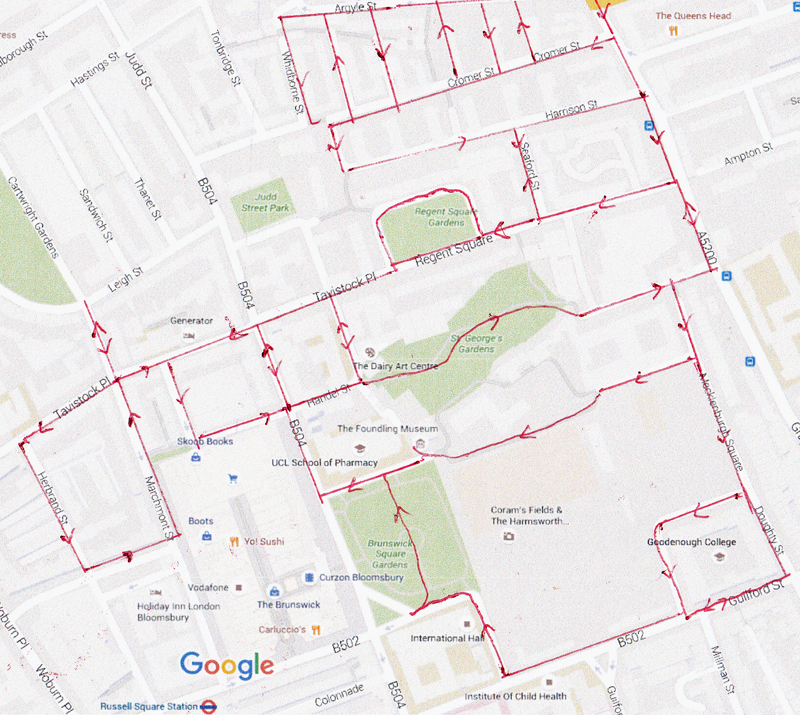
Day 10 Route

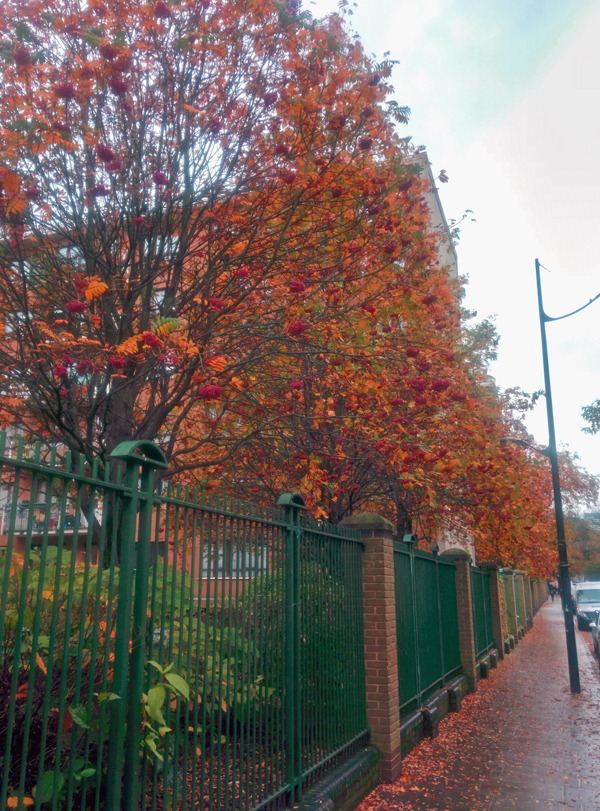
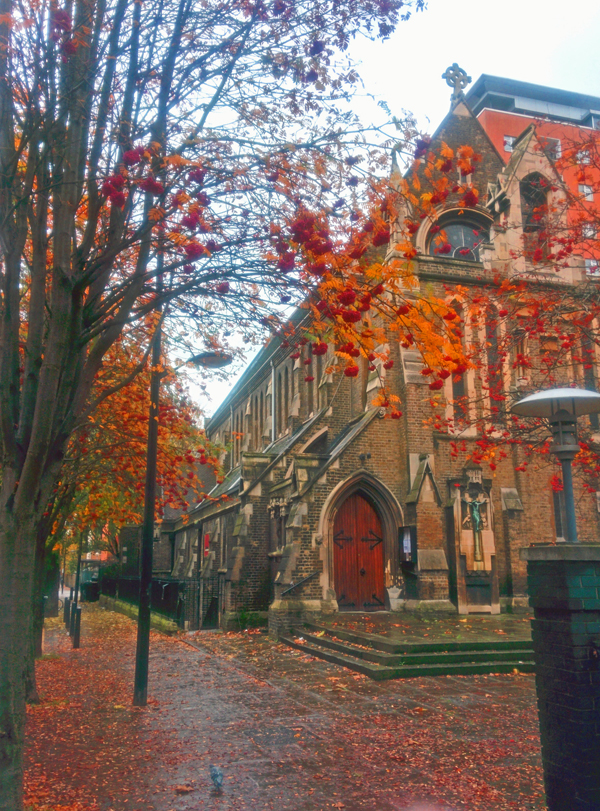
Quick stroll down Gray’s Inn Road then hook a right into Cromer Street where the Rowan trees are resplendent in their Autumn finery.

IMG_20151105_113447 IMG_20151105_114344

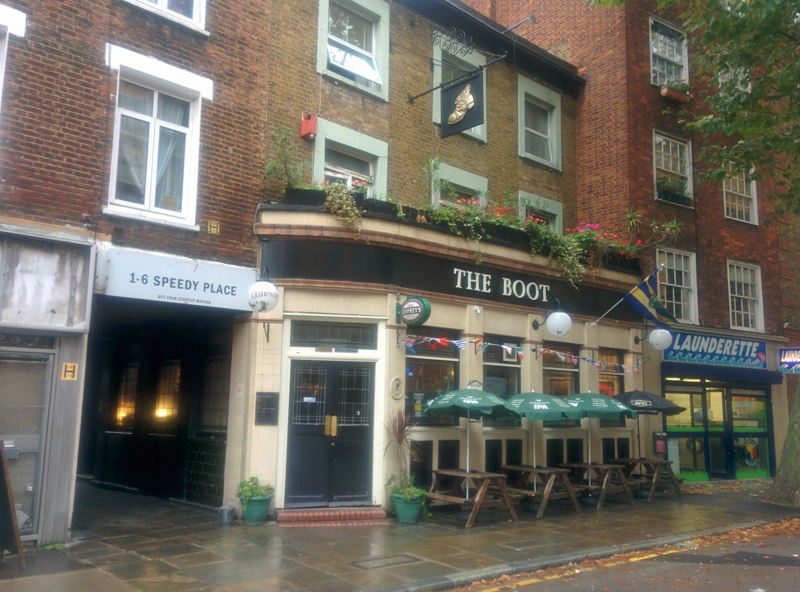
On the north side, Loxham Street, Tankerton Street and Midhope Street don’t detain us long and Speedy Place lives up to its name. The main purpose of the picture below is for Mr Pedant here to highlight the correct spelling of the word, launderette. Most of these establishments that remain use the deliberately misspelt form from the 1985 film “My Beautiful Laundrette”.

IMG_20151105_114249IMG_20151105_114934

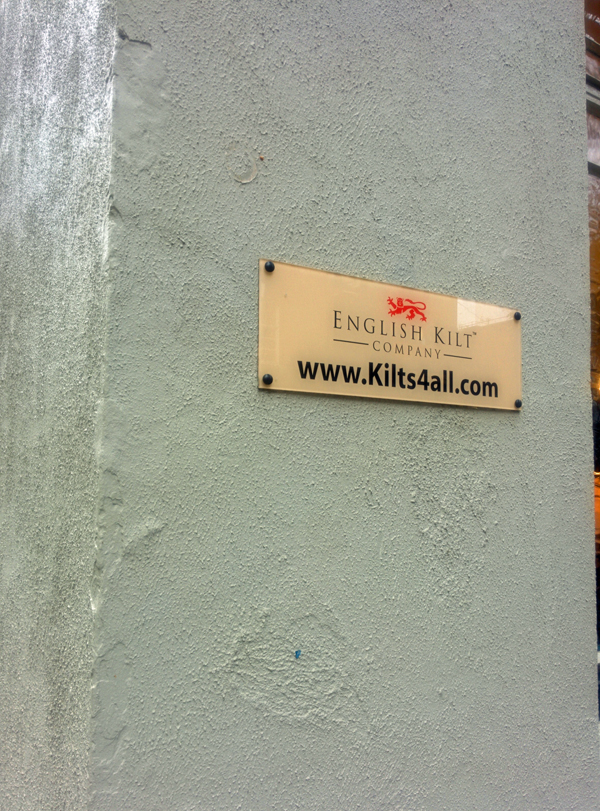
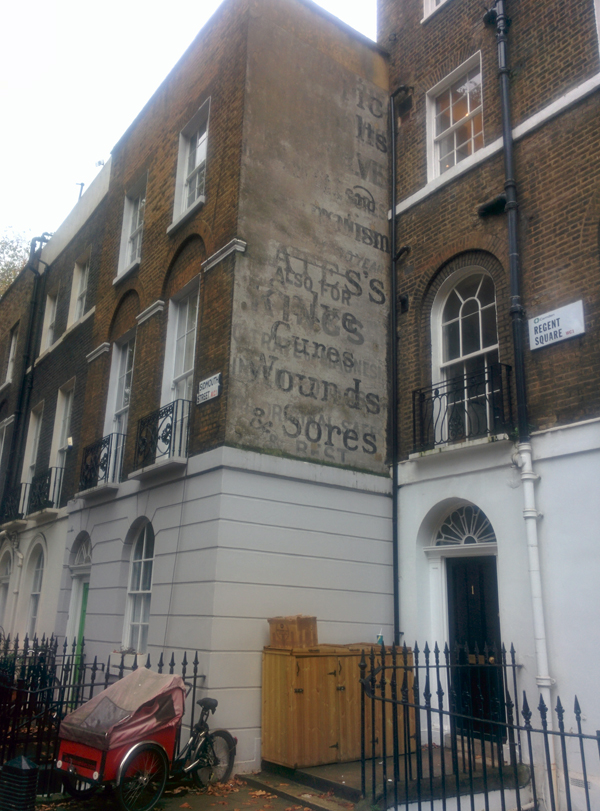
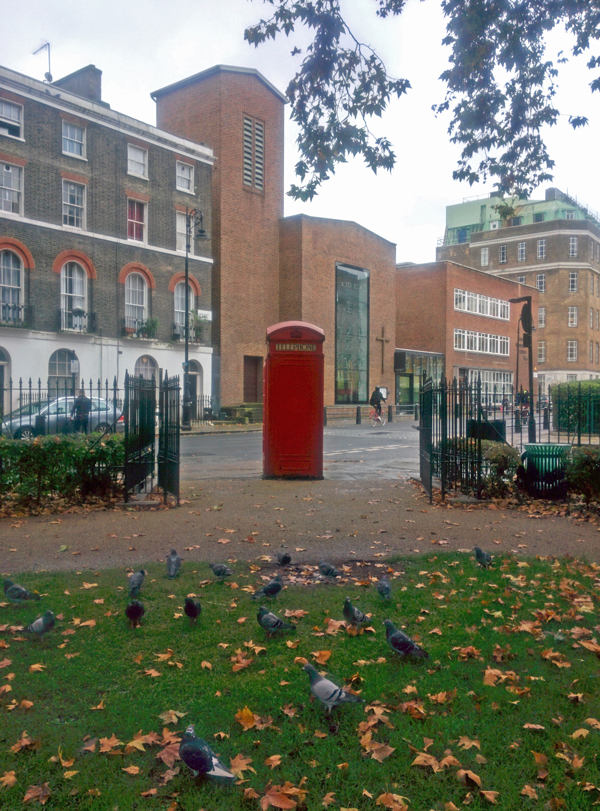
Turn east down Harrison Street, home to the unexpected English Kilt Company, back to Gray’s Inn Road then west again down Sidmouth Street. Brief detour down Seaford Street before arriving at Regent Square. Unfortunately only the southern terrace remains of the original 1829 construction. The other 19th century buildings failed to survive the WWII bombings and were replaced by flats in the 1950s. At the south-entrance to the gardens an oddly-situated red phonebox channels the spirit of the Tardis.

IMG_20151105_115720 IMG_20151105_120015

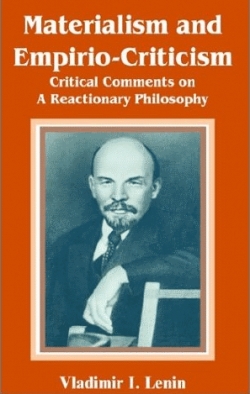
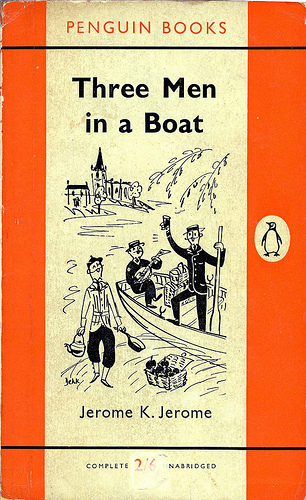
Tavistock Place leads off this south-west corner and here we encounter one of the more incongruous blue plaque proximities. No.36 and No.32 were home, respectively, to Vladimir Ilyich Lenin (1870-1924) in 1908 while he was reading at the British Museum and writing ‘Materialism and Empirio-criticism’ and Jerome K. Jerome (1859-1927), author of the quintessentially English “Three Men In A Boat”, during 1884-85. Both of these were only recently put up, courtesy of the local Marchmont Association – the former not without a touch of controversy.

lenin3men

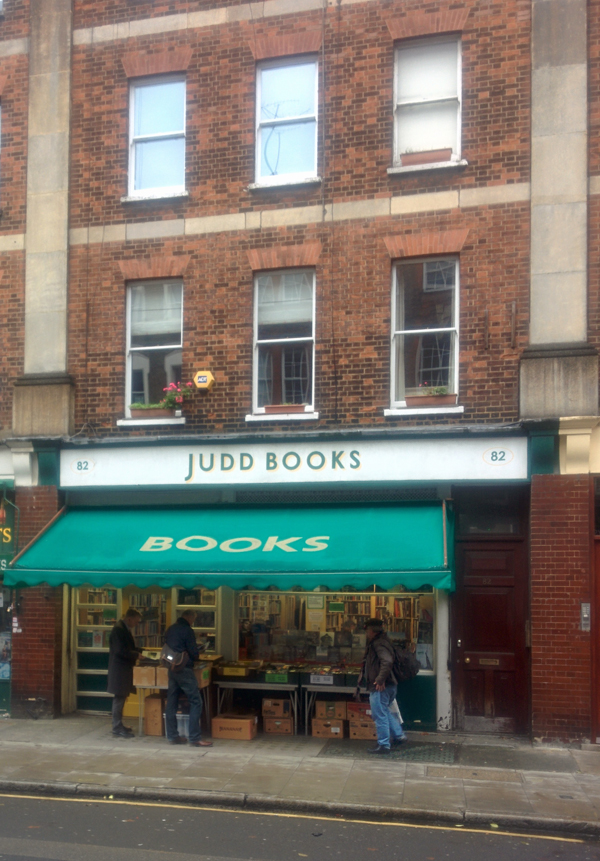
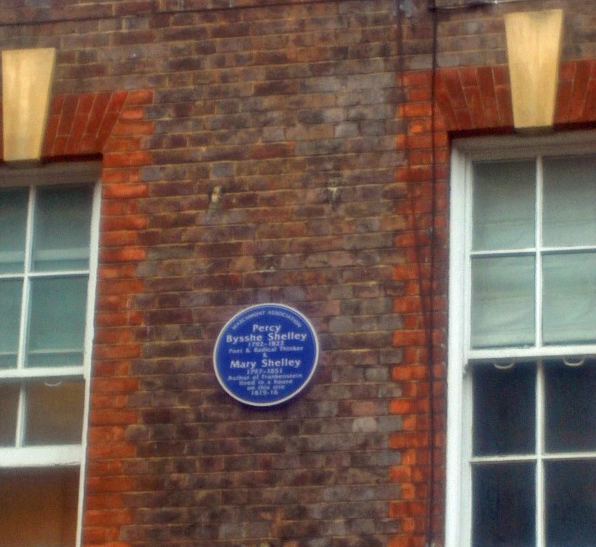
On the north stretch of Marchmont Street we take a break to browse through the extensive selection on display at the impressive Judd Books which is just opposite another plaque – this time commemorating the fact that Percy Bysse Shelley and Mary Shelley spent a couple of years (1815-16) in a house on the site.

IMG_20151105_122812 IMG_20151105_122739

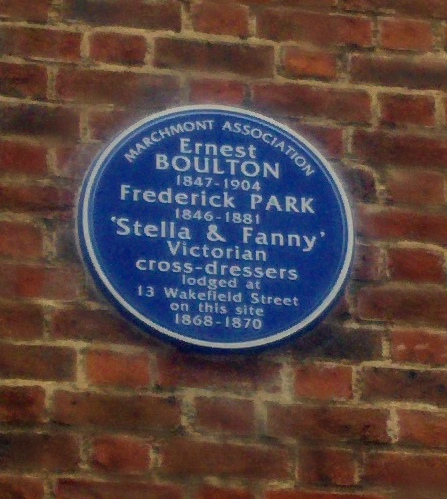
Herbrand Street, Kenton Street (not I guess named after the character in the Archers or vice versa) and Handel Street bring us to Wakefield Street site of another plaque courtesy of the (actually quite sinister-sounding) Marchmont Association. This one is in honour of the celebrated Victorian transvestites, Ernest Boulton and Frederick Park, also known respectively as Lady Stella Clinton and Miss Fanny Winifred Park or collectively as “Stella and Fanny”. The following is from the information board in Regent Square Gardens – “In April 1870 they were arrested as they left the Strand Theatre having been seen together in a box dressed as women and winking and smiling at gentlemen sitting in the stalls. During their trial it emerged that Boulton enjoyed a close friendship with Lord Arthur Pelham-Clinton, the third son of the Duke of Newcastle and MP for Newark. Boulton and Park appeared at trial wearing extravagant costumes, the former in a cherry coloured silk evening dress with white lace trim. They were acquitted to huge cheers from the public galleries”.

IMG_20151105_124743

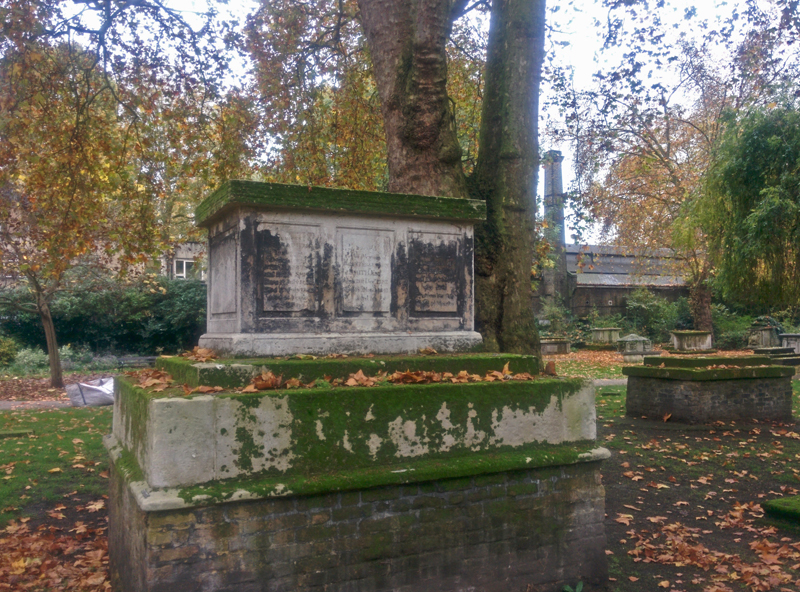
Wakefield Street is also the western entrance to St George’s Gardens, established in 1713 as a pair of burial grounds to serve the parishes of St. George the Martyr Queen Square and St. George’s Bloomsbury. They were the first Anglican burial grounds to be set away from the churches they served. The gardens contain the tomb of Oliver Cromwell’s grand daughter, Anna Gibson. They are also a reminder of the dark history of body-snatching – the first recorded case took place here. Having become very run-down by the late 1990’s the gardens were restored with help from a lottery grant and reopened in 2001.

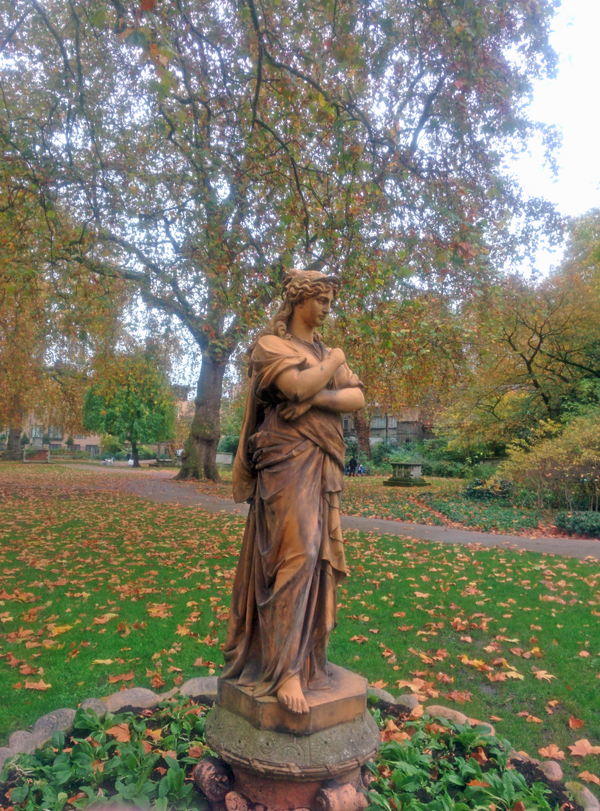
IMG_20151105_125025

Euterpe, the Muse of Instrumental Music. Terracotta figure, one of nine muses which decorated the facade of the Apollo Inn (1898) on the corner of Tottenham Court Road and Torrington Place.

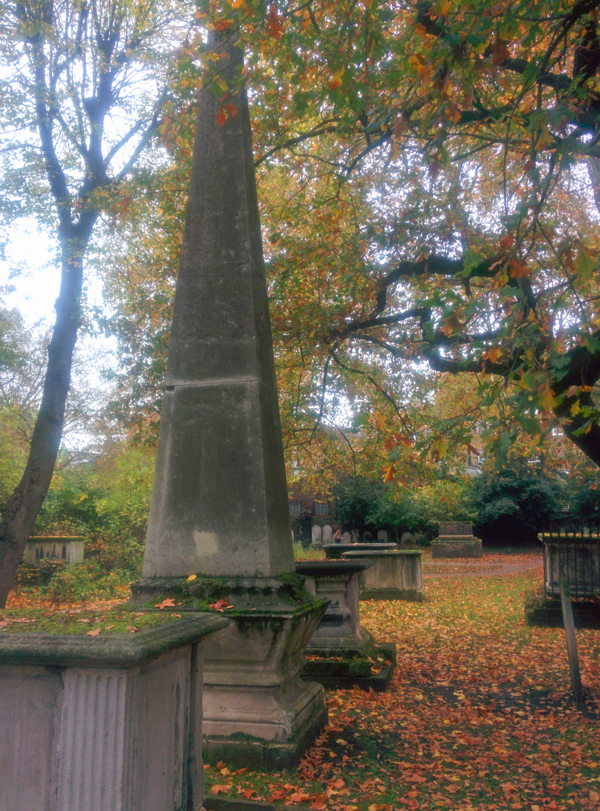
The obelisk below was reputedly built by a Thomas Falconer in 1729 but it is not known whose death it commemorates.

IMG_20151105_125436 IMG_20151105_125203

Exit the east side of the gardens into Heathcote Street then turn right into Mecklenburgh Street and again to follow the alley which runs along the north side of Coram’s Fields to reach the Foundling Museum.

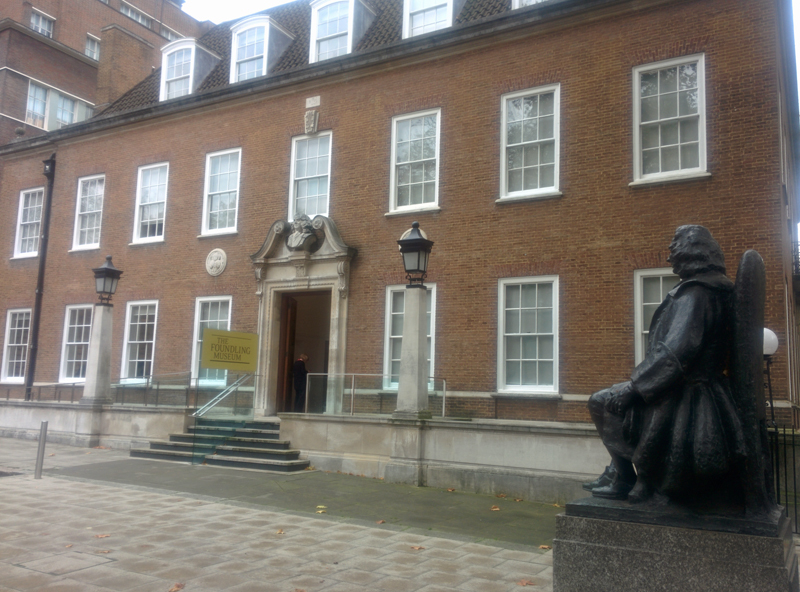
The museum, which opened in 2004, explores the history of the Foundling Hospital, the UK’s first children’s charity and first public art gallery. The Foundling Hospital, which continues today as the children’s charity Coram, was established in 1739 by the philanthropist Thomas Coram to care for babies at risk of abandonment.

IMG_20151105_130116IMG_20151105_133020

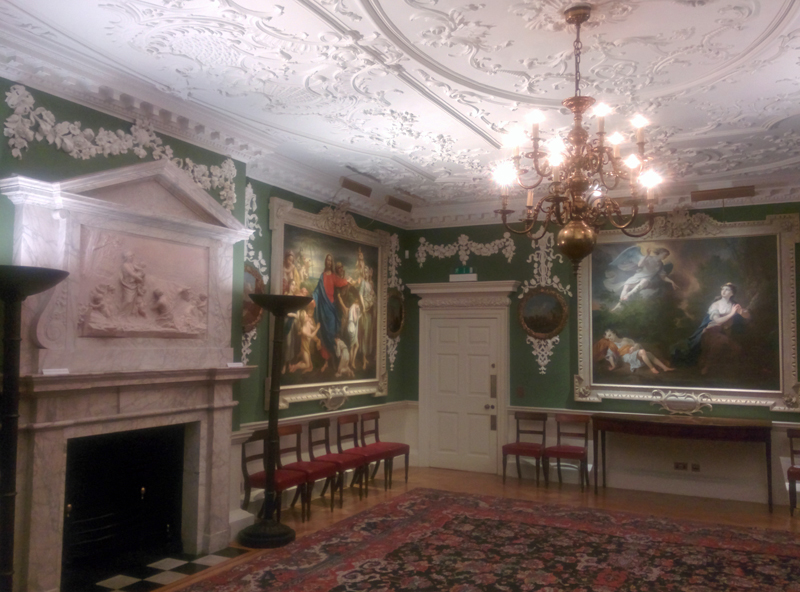
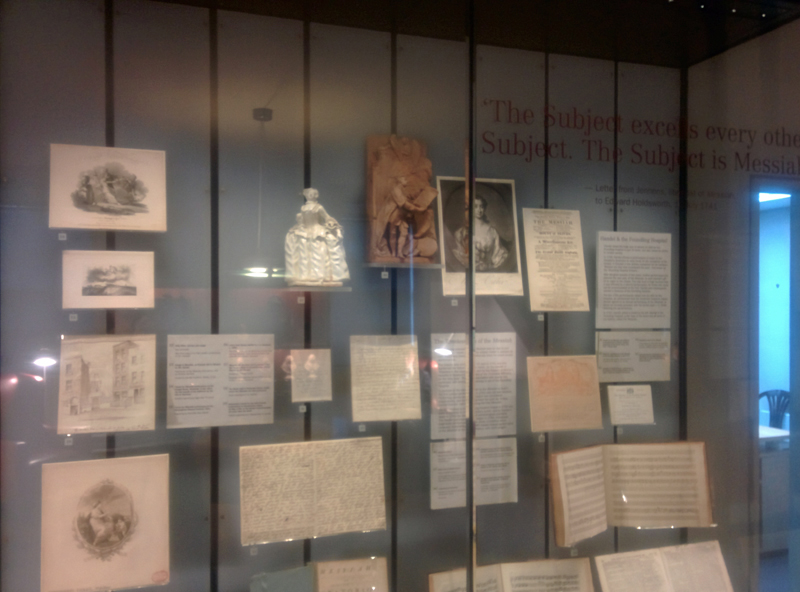
Among the prominent benefactors of the hospital were the artist William Hogarth and composer George Frederic Handel. The former encouraged the leading artists of the day to donate work in order to set up the inaugural public art gallery and the latter donated an organ (musical rather than biological) and conducted annual benefit performances of The Messiah. The second floor of the museum houses the largest collection of material and memorabilia relating to Handel (including the original manuscript score of The Messiah) which was put together by one Gerald Coke. The donated Victorian artworks are showcased in the second floor gallery. Not really my thing unfortunately – though the gallery did present the opportunity for the latest Selfie of the Day.

IMG_20151105_131520 IMG_20151105_133053

The permanent exhibition on the ground floor tells the moving story of the Foundling Hospital while the lower ground floor is running an exhibition on the phenomenon of the Victorian “Fallen Woman”. This includes a large collection of the written petitions submitted by women who had fallen pregnant out of wedlock and would be unable to take care of the baby once it was born. These petitions were reviewed by the Governors of the hospital and only in cases where the woman was perceived to have been respectable (i.e. not complicit in her own undoing) would the child be accepted.

IMG_20151105_135904

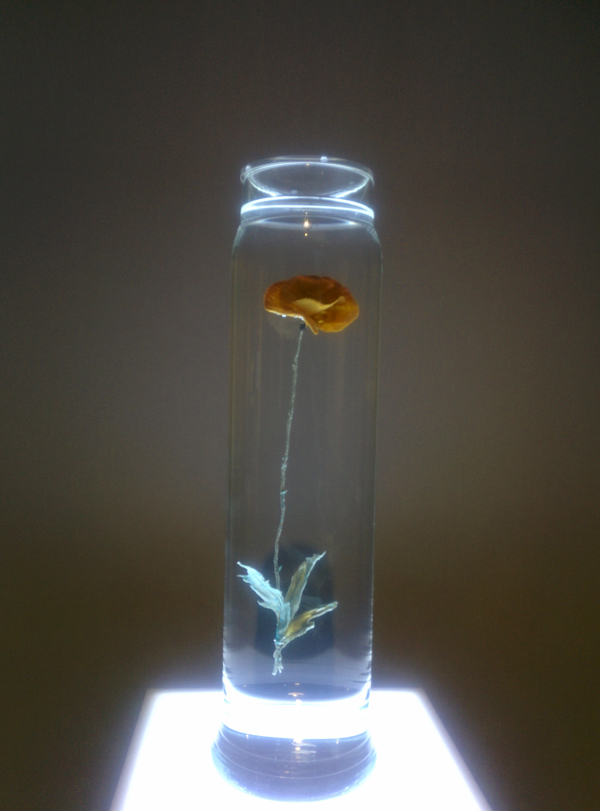
Until the end of November you can find the above artwork, Papever Rhoeas, created by artist Patrick Hartley in the ground floor gallery. This representation of a single poppy is composed of lamb’s heart muscle tissue, horsehair and vintage suture cotton and presented in a glass-blown jar designed in the form of a used World War One artillery shell.

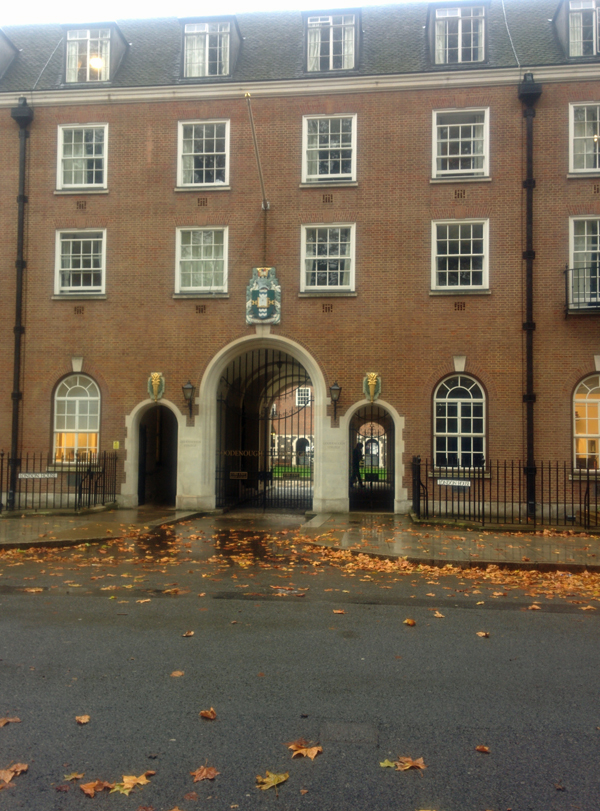
By the time I leave the museum, having stopped on for lunch in the café, the rain is tipping down. I retrace my steps back to Mecklenburgh Square , the Square (Grade II listed) and its garden were part of the Foundling Estate and named after the wife of King George III, Charlotte of Mecklenburgh- Strelitz. The south side of the square is occupied by Goodenough College, named not for the modest expectations placed upon would-be students  but after its founder, Frederick Craufurd Goodenough, a Chairman of Barclays Bank, who in 1930 formed a Trust to raise funds for a hall of residence for male students from the British ‘Dominions’.

IMG_20151105_144814 IMG_20151105_144942

As the rain continues to lash down I hurry on down to Guilford Street and after a detour into Doughty Street head west past the southern entrance to Coram’s Fields. This seven-acre site which includes a Youth Centre, Children’s Centre, Community Nursery, Sports Programme and a city farm is run by its own charitable trust and is not connected with the charitable legacy of the aforementioned Thomas Coram. Adults not-accompanying children are not allowed in except to use the football pitches on the north side.

IMG_20151105_145512 IMG_20151105_130155

A right turn into Lansdowne Terrace brings us to Brunswick Square and the western exit from this out opposite the Brunswick Centre from where we shall resume things next time.

Day 9 – British Library – St Pancras – Kings Cross

A pretty short one today; partly due to the fact that I dropped my phone shortly after leaving the house, and then cut my thumb open on the smashed screen. I also lingered rather longer than anticipated in the British Library, from where this walk begins before crossing the Euston Road and making a brief foray into the St Pancras area south of the eponymous station.

Day 9 Route

Before we kick off though the shaded area in the map below shows what we’ve covered so far. As someone once said – this could take a while.

Covered So far copy

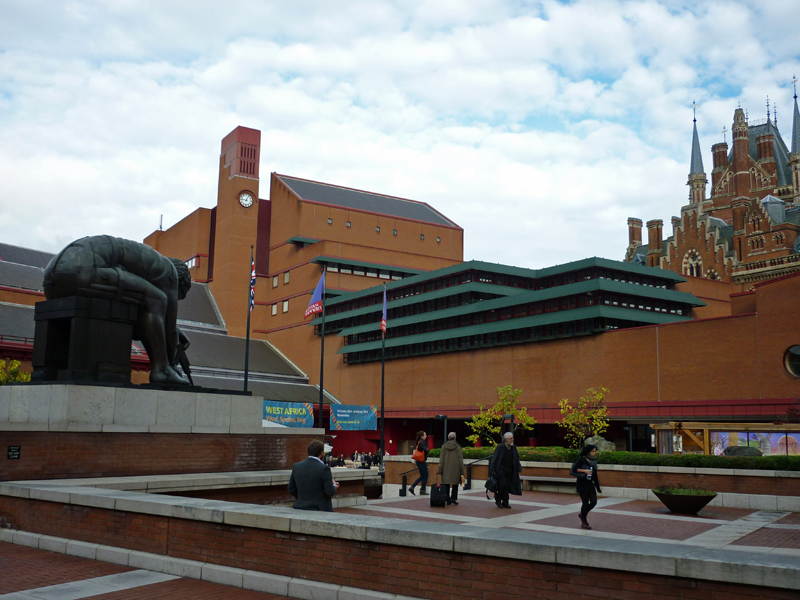
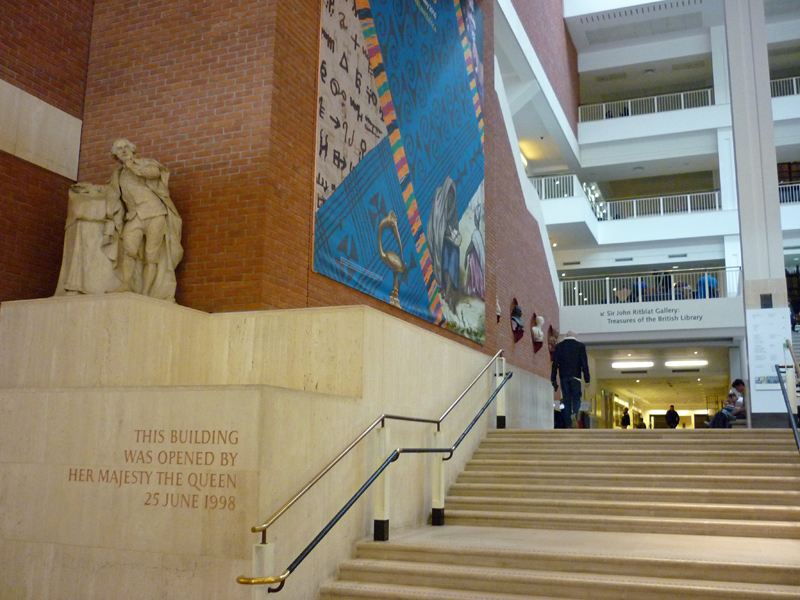
As already noted, the starting point today is the British Library which divorced itself from the British Museum and moved to this purpose-built site on the Euston Road in 1997 (the largest public building constructed in the UK in the 20th century). I don’t think it’s in any way controversial to describe the building itself as uninspiring – not helped by the unflattering comparison with its majestic neighbour, the Renaissance (formerly Midland Grand) Hotel of which more in a minute. Someone must like it though as it was granted Grade 1 listed status this year.

The BL collection comprises more than 150 million items adding around 3 million each year. This takes up 625km of shelf space and requires a further 12km every year.

P1040590 P1040592

The statue in the picture above on the left is a representation of Sir Isaac Newton by artist Eduardo Paolozzi “after the style of William Blake”. Funding for this was provided by a grant from pools companies, Littlewoods, Vernons and Zetters. This was  just one year after the start of the National Lottery which was ultimately responsible for forcing the three pools companies to merge into one and effectively disappear off the public radar.

P1040595 P1040593

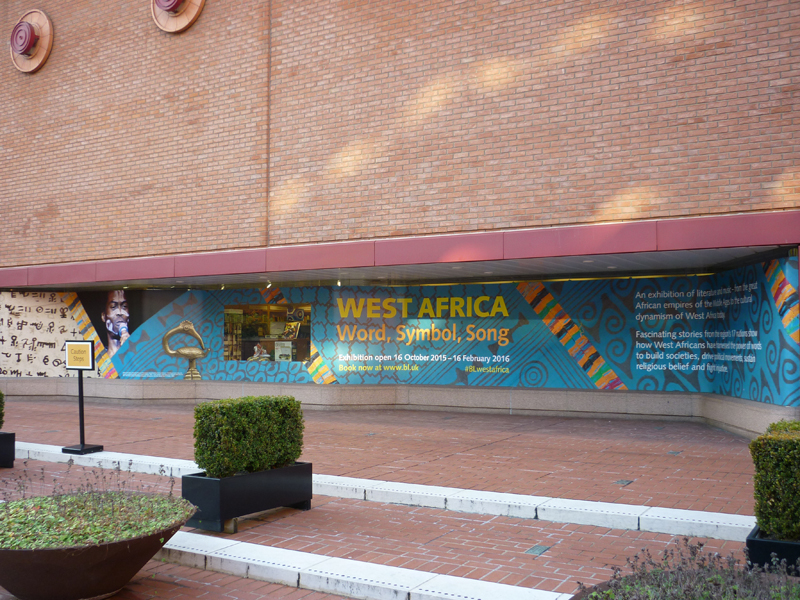
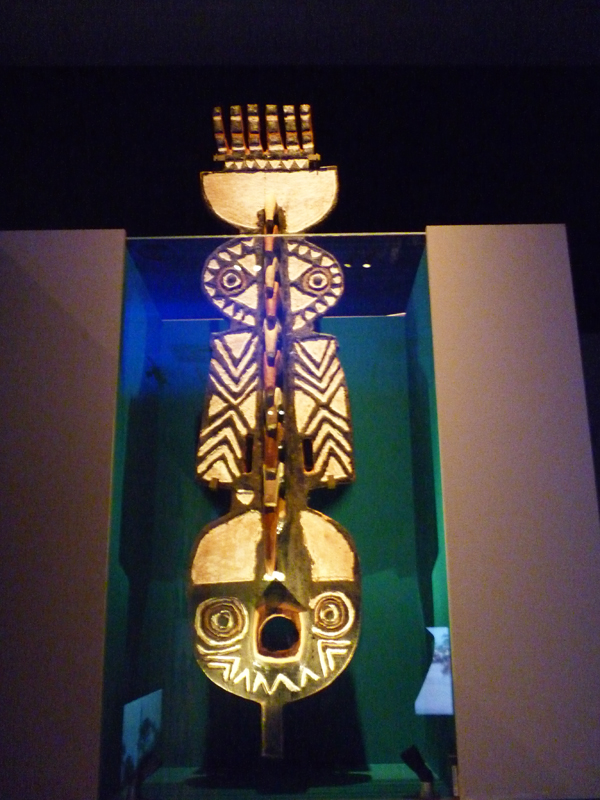
As I said I spent longer than intended at the BL. This was down to visiting the recently-opened “West Africa: Word, Symbol, Song” exhibition, which I can thoroughly recommend (it’s on until 16 February 2016).

The mask in the right-hand picture above is of a kind used in masquerade rituals in Burkina Faso and northern Mali. The black and white pattern represents the importance of learning – black signifying the deep knowledge of the elders and the white the lack of knowledge of the youth. ( I think we can all get with that particular message).

Anyway, I finally leave the library and make a quick up-and-down Midland Road which separates the library from St Pancras International Station and the aforementioned Renaissance Hotel. The original St Pancras Station opened in 1868 and the Midland Grand Hotel eight years later. The hotel was the “wonder of the age” when it opened but after the First World War, during which it was bombed, it gradually fell out of favour and closed in 1935. From then until 1985, when it was declared unsafe, it was used as railway company offices. In the 1960’s there was a proposal to demolish both the hotel and St Pancras station but a vociferous public campaign led instead to listed status in 1967.

P1040596 P1040597

Latterly, of course, the arrival of the Channel Tunnel and the decision to site the eventual London terminus for Eurostar services at St Pancras led to the redevelopment of the site between 2004 and 2007 and the rebirth of the station as St Pancras International and the hotel, which Betjeman had feared “too beautiful and too romantic to survive” as the Renaissance Hotel. The pictures above show how the architectural motifs of the original building were carried over into the new construction.

P1040601 P1040619

Further evidence for the case that it is nigh on impossible to take a photo of anything in London without a bloody white van getting into the frame.

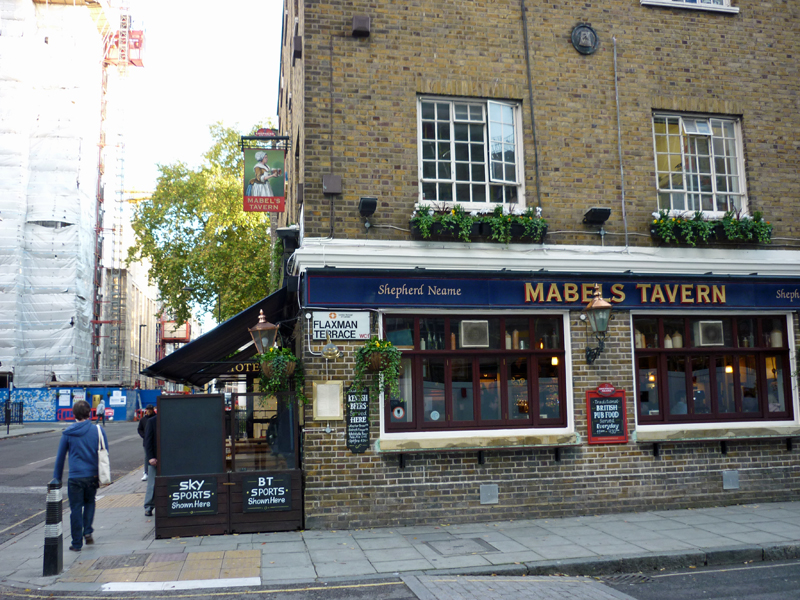
So crossing Euston Road we venture down Judd Street before taking a right into Bidborough Street which leads into Marbledon Place and today’s pub of the day, Mabel’s Tavern. Very nice pint of Shepherd Neame Bishop’s Finger and a sausage sandwich but how many screens blasting out Sky Sports News do you really need.

P1040602

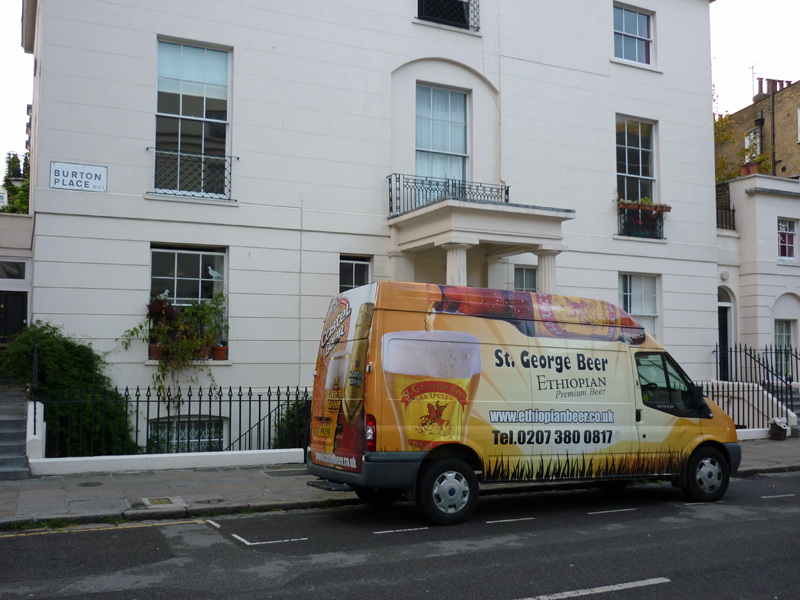
On leaving the pub it’s a revisit of Flaxman Terrace before turning left into Burton Street and then right into Burton Place where we come across this van promoting St George Ethiopian beer. Having never seen this stocked anywhere I was half-inclined to view this as some kind of elaborate art installation with the name being a stab at political comment on cultural misappropriation. However it transpires that St George is not thought to have ever been anywhere near Ethiopia and is merely a shared patron saint and that the brewery named after him has been going since 1922.

P1040603

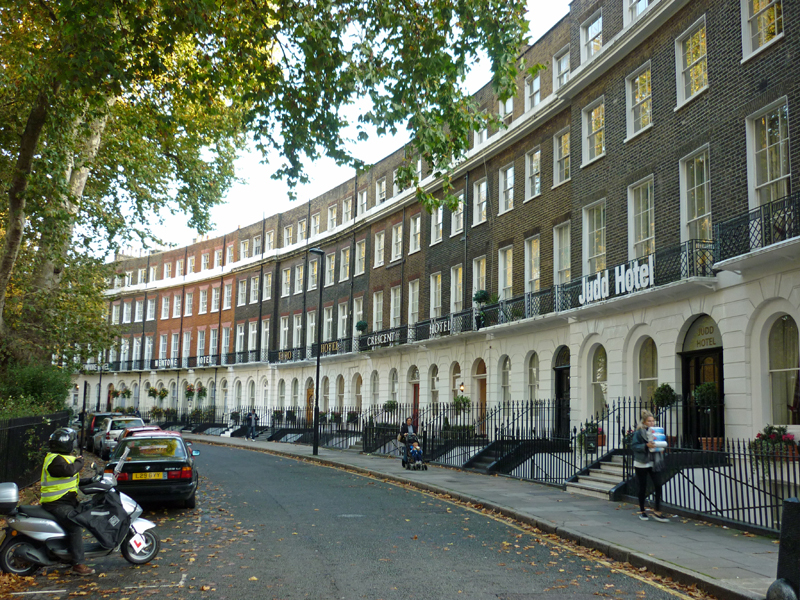
Burton Place leads into Cartwright Gardens. This whole area is awash with budget hotels (though in London the term is purely relative) but this particular crescent is wall-to-wall with them.

P1040604

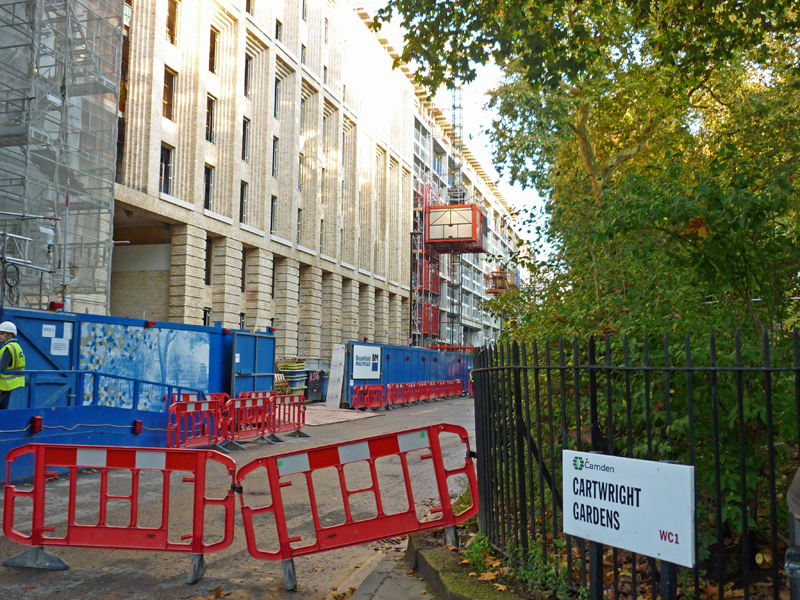
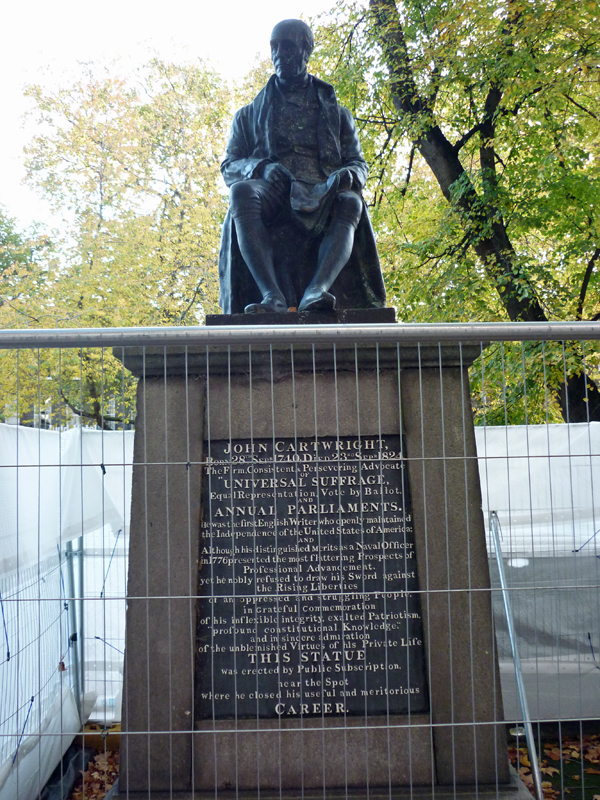
Cartwright Street is closed off due to a massive redevelopment of student halls so we have to traverse the actual gardens which are themselves undergoing a make-over. Hence the caging off of the statue of the man after whom the gardens were named. John Cartwright (1740 – 1824) was a political reformer who campaigned for universal suffrage well before the concept became reasonably acceptable. His status as all-round good bloke is evidenced by the fact that this statue was paid for by public donation.

P1040605 P1040606

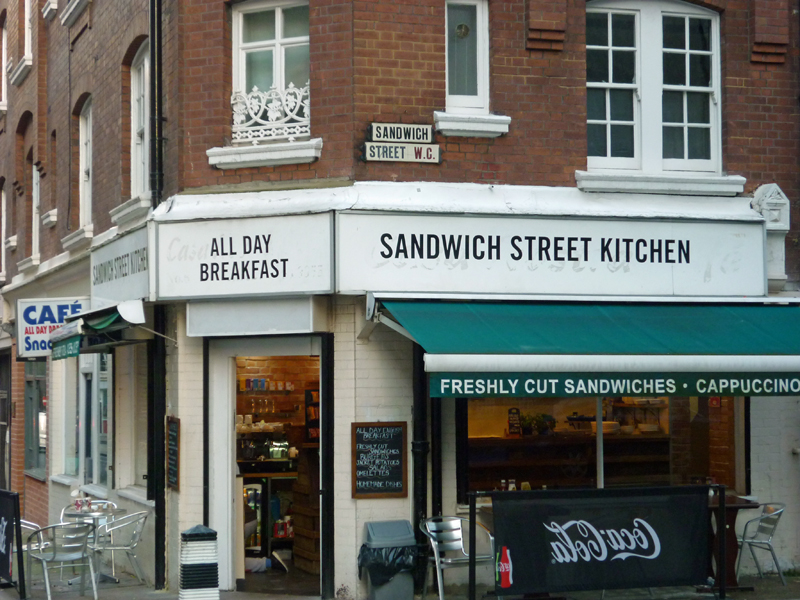
Next up is Sandwich Street which is obviously where I should have had lunch.

P1040607

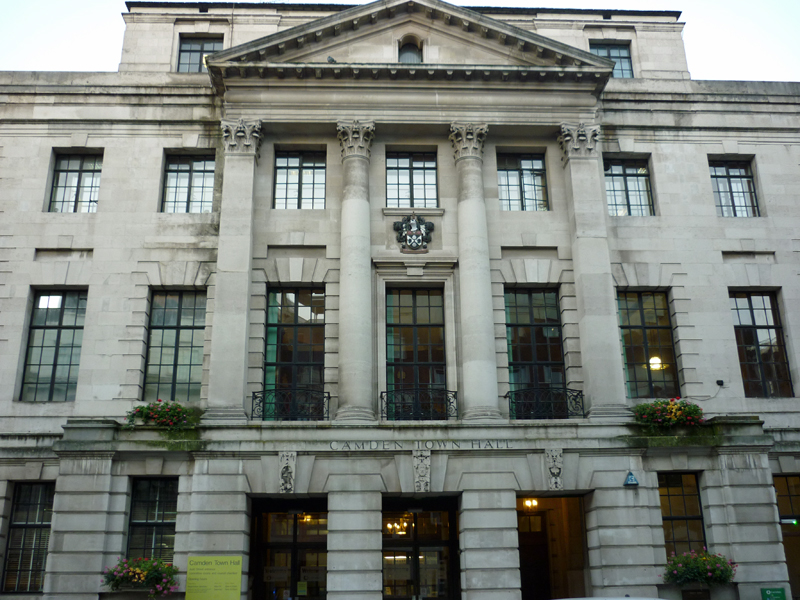
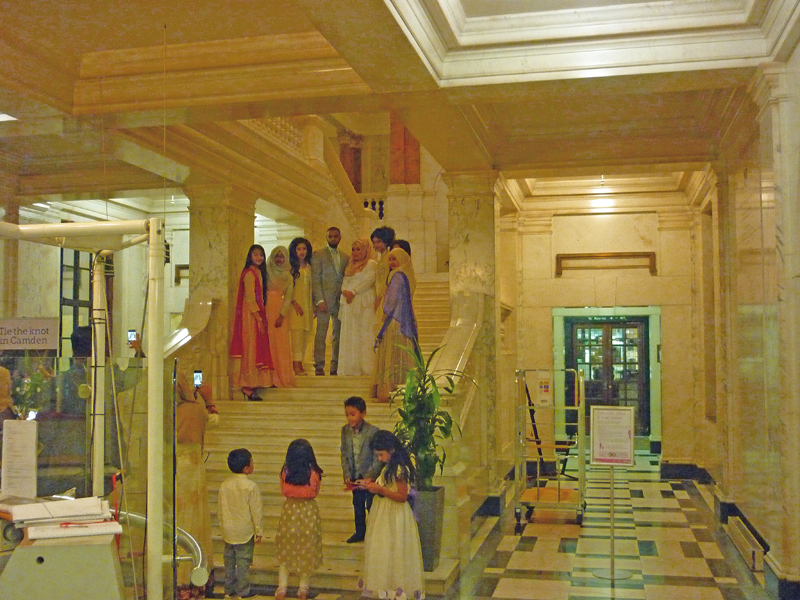
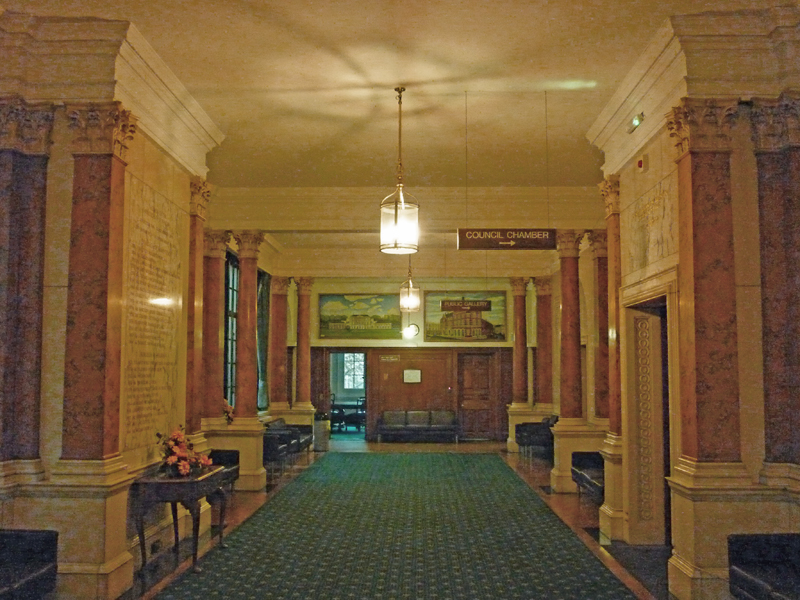
Then on to Thanet Street and via Leigh Street back to Judd Street where there’s just time to pay a visit to Camden Town Hall. As well as, naturally, being home to Camden Borough Council this Grade-II listed neo-classical thirties building is now a much-used venue for civil marriage and wedding ceremonies (as exampled below).

P1040613 P1040608

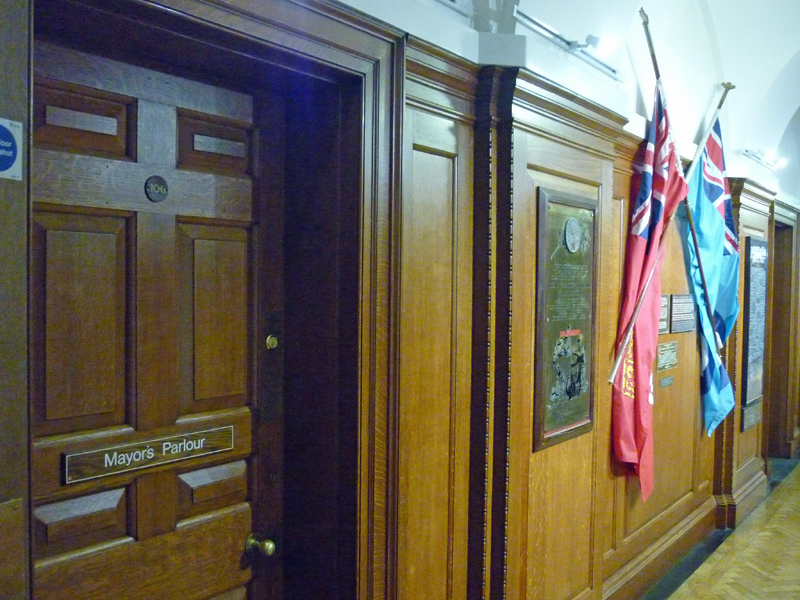
There is public access to the first floor where the council chambers are located and also the Mayor’s parlour (which his or her office is quaintly referred to). The plaque you can see in the picture below celebrates residents of the borough who fought on the right (i.e. the left) side in the Spanish Civil War. The flags commemorate the wartime contribution of Canadian airmen.

P1040610 P1040612

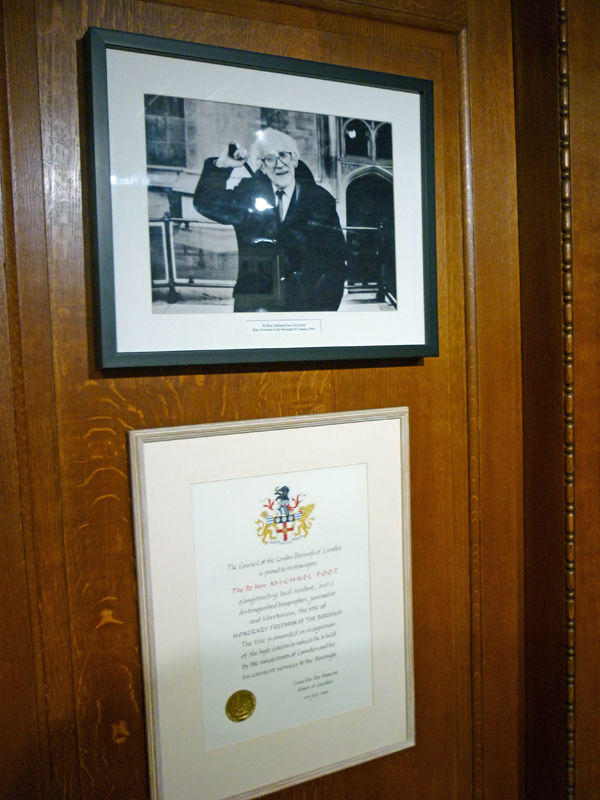
Fittingly, given the rise of Jeremy Corbyn, there is also a commemoration of the granting of the freedom of the borough to Michael Foot (the last genuinely socialist leader of the Labour party).

P1040611

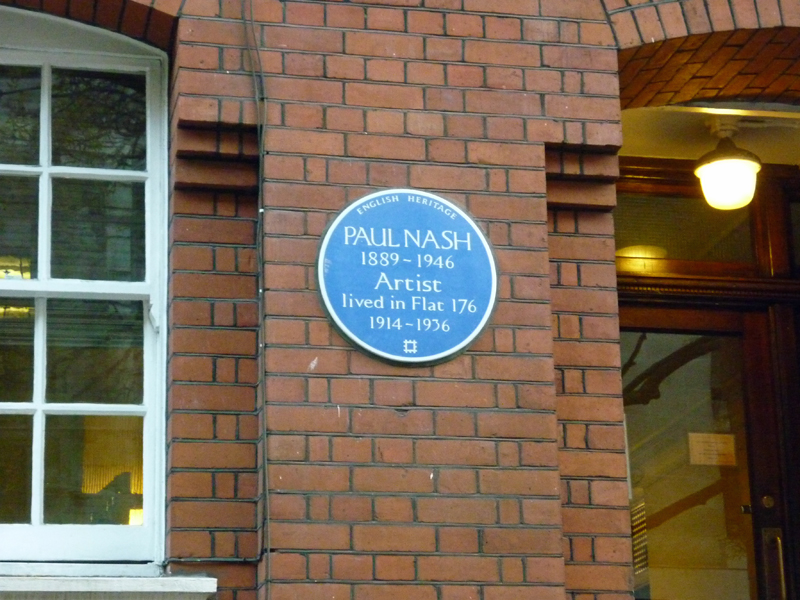
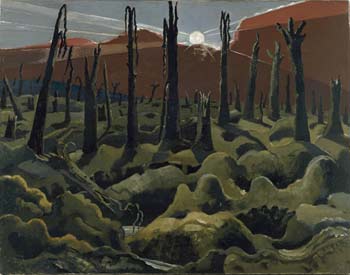
 Back on the eastern side of Bidborough Street are the Victoria mansions which were home for 22 years to the British surrealist painter and wartime artist, Paul Nash (1889 – 1946). Nash is best known for his haunting, proto-Modernist WW1 landscapes.

P1040614 Paul Nash WW1

The remainder of the streets bounded by Gray’s Inn Road to the east and Euston Road to the north are unremarkable save for the already-remarked upon proliferation of lower-end hotels. So via Tonbridge Street, Argyle Walk, Whidborne Street, Argyle Street, Belgrove Street, St Chad’s Street, Argyle Square, Crestfield Street and Birkenhead Street we end emerge again opposite Kings Cross Station just as the early evening gloom is setting in.

P1040617

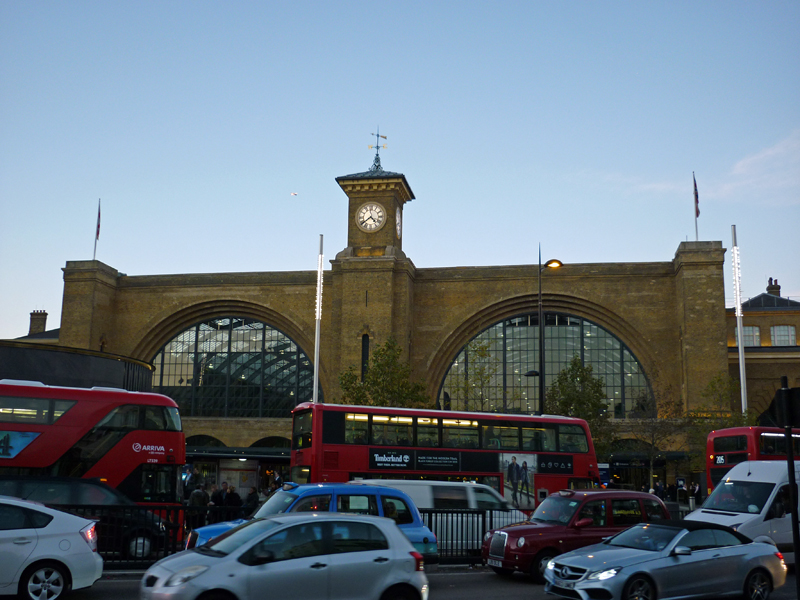
Gateway to the major cities of Yorkshire, North-East England and Scotland, Kings Cross (or King’s Cross – either is used) has a strong history in popular culture. In fact it’s probably better known today for being the home of Harry Potter’s fictional platform 9 and 3/4 than for the tragic fire of 1987 in which 31 people died. It also featured prominently in the great Ealing comedy of 1955, The Ladykillers.

According to folklore, King’s Cross was also the site of Queen Boudicca’s final battle and she is buried somewhere under one of the platforms.

Day 8 – Marble Arch – Hyde Park – Park Lane – Mayfair – Grosvenor Square

Today’s route involves a first trip to the two most expensive properties on the Monopoly Board, Park Lane and Mayfair via the underside of Oxford Street, the Marble Arch gyratory system and the eastern edge of Hyde Park. It also takes in that little bit of central London which is all about the US of A, Grosvenor Square.

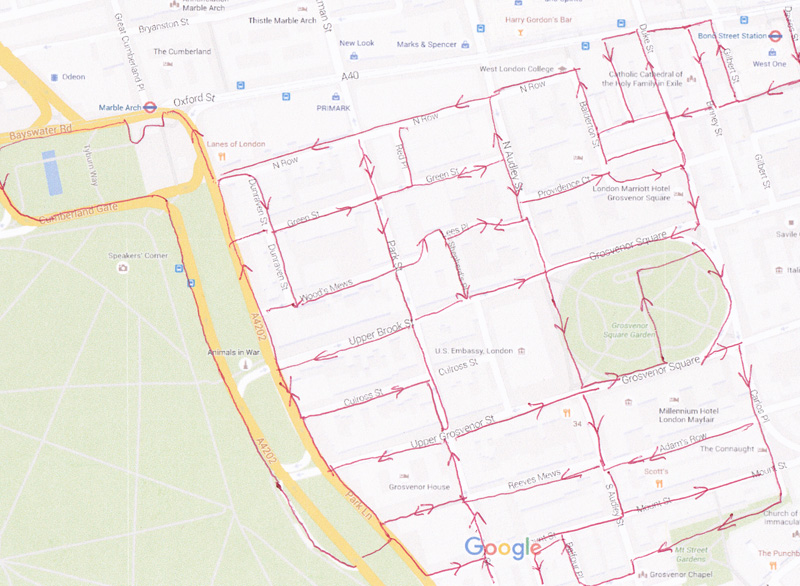
Day 8 Route

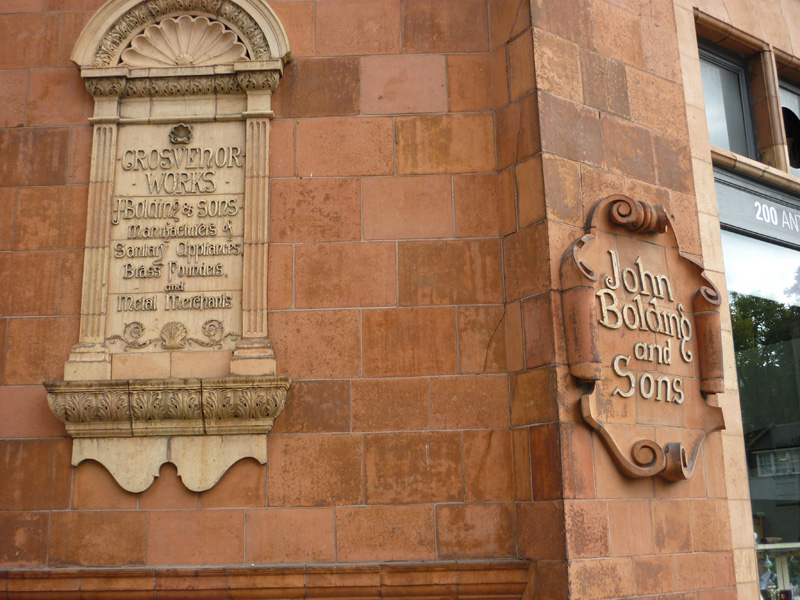
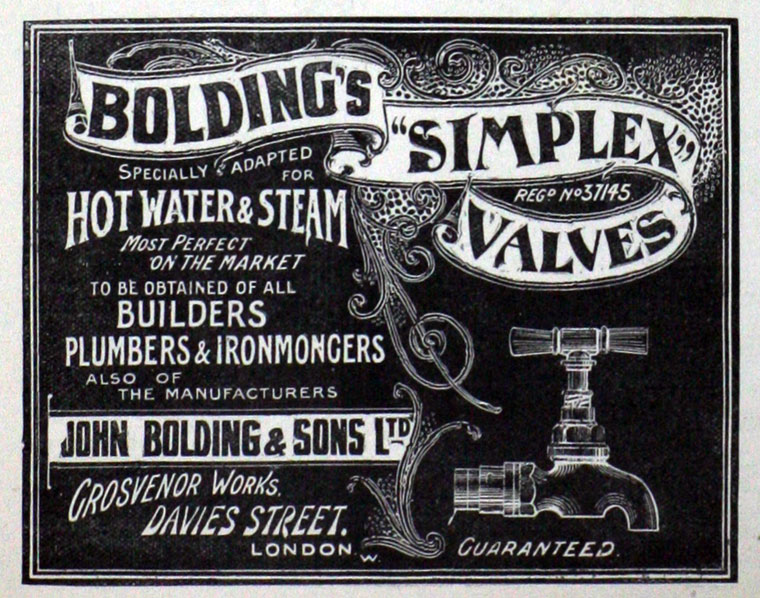
Start at Bond Street tube station and immediately venture south down Davies Street where on the intersection with South Molton Lane we find the Grosvenor Works, which is now occupied by Grays Antiques but was from the late 19th century home to John Bolding & Sons makers of sanitary appliances (bathroom fittings in other words).

P1040535 Im18980806ILN-Bolding

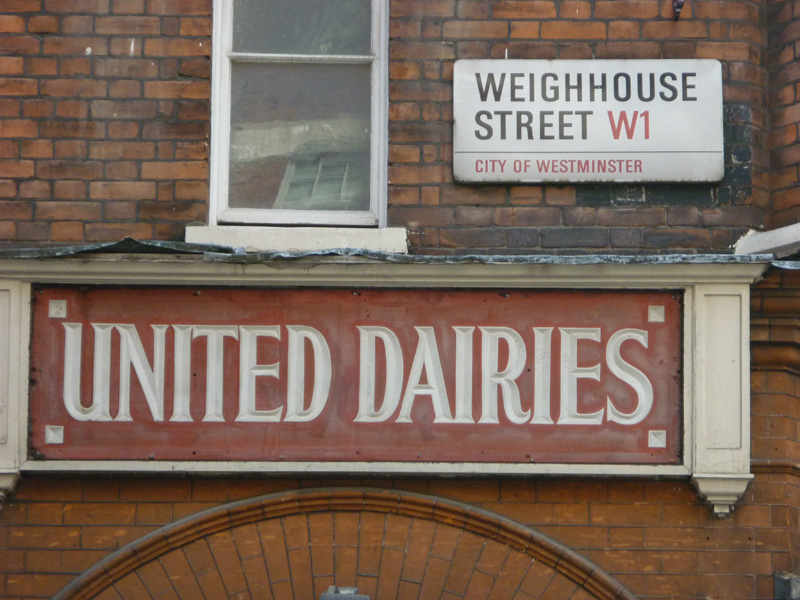
Turning right along Weighhouse Street there is another reminder of London’s industrial and commercial past – this United Dairies signage on a building currently undergoing redevelopment. United Dairies effectively ceased to exist in 1959 when it was merged into what became Unigate – so this must have at least been obsolete for longer than I’ve been around.

P1040537

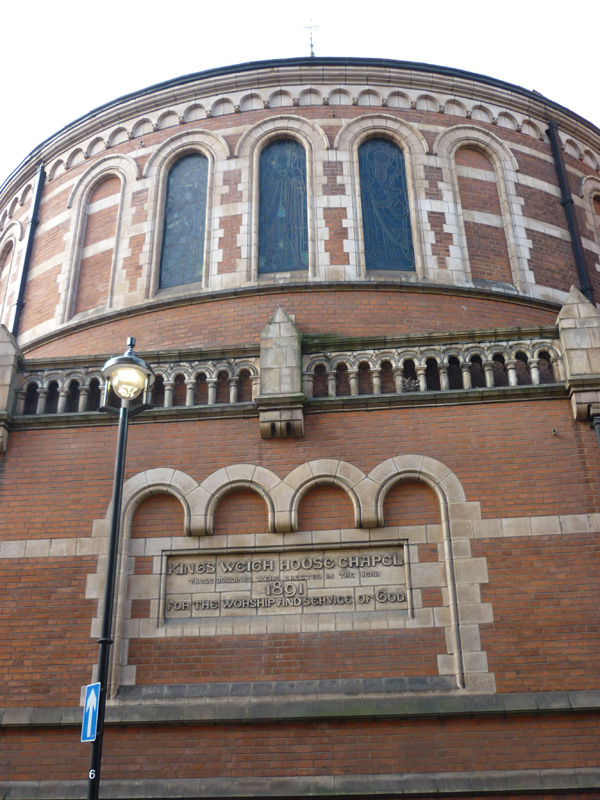
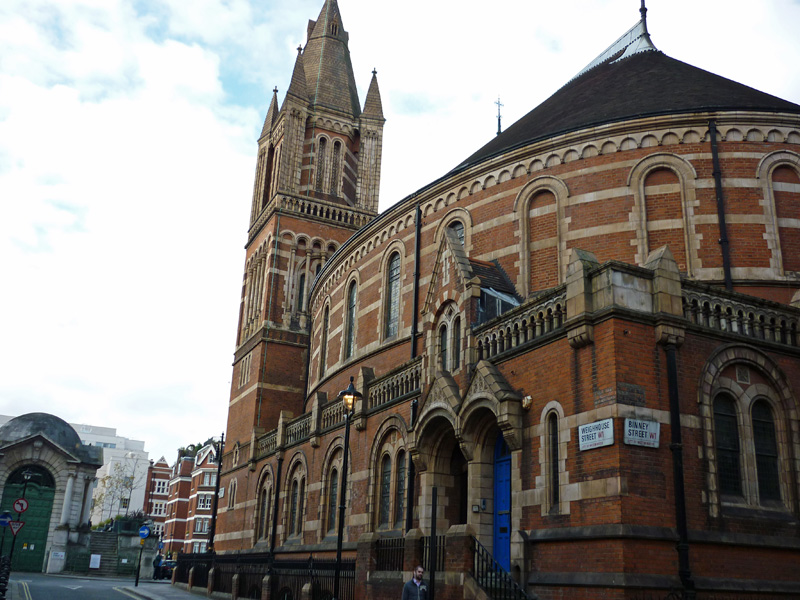
Up Gilbert Street and down Binney Street where, sandwiched between this and Duke Street, is the former King’s Weigh House Chapel which nowadays operates as the catchily-entitled Ukrainian Catholic Cathedral of the Holy Family in Exile. Designed by the eminent Victorian architect, Alfred Waterhouse, the chapel’s original name derives from the fact that its dissenter congregation’s original place of worship, in Eastcheap, was above the office for checking the weight of merchandise.

P1040536 P1040538

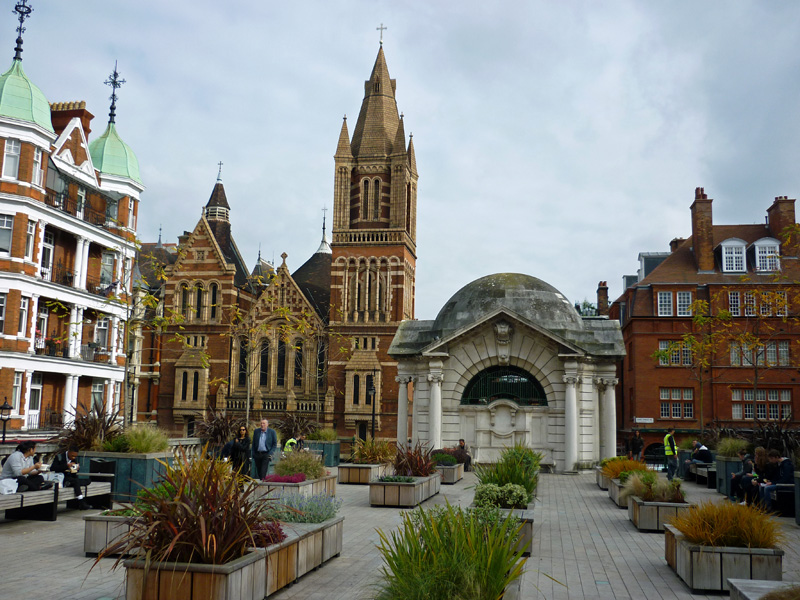
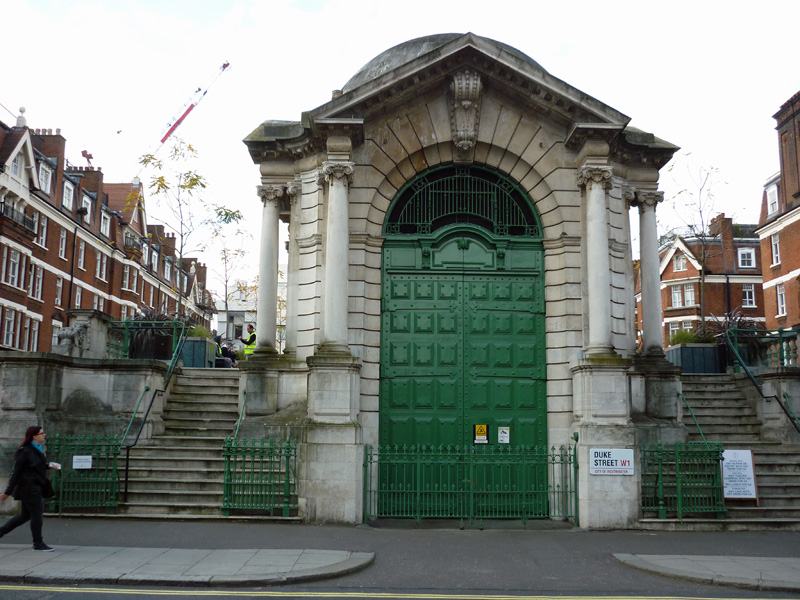
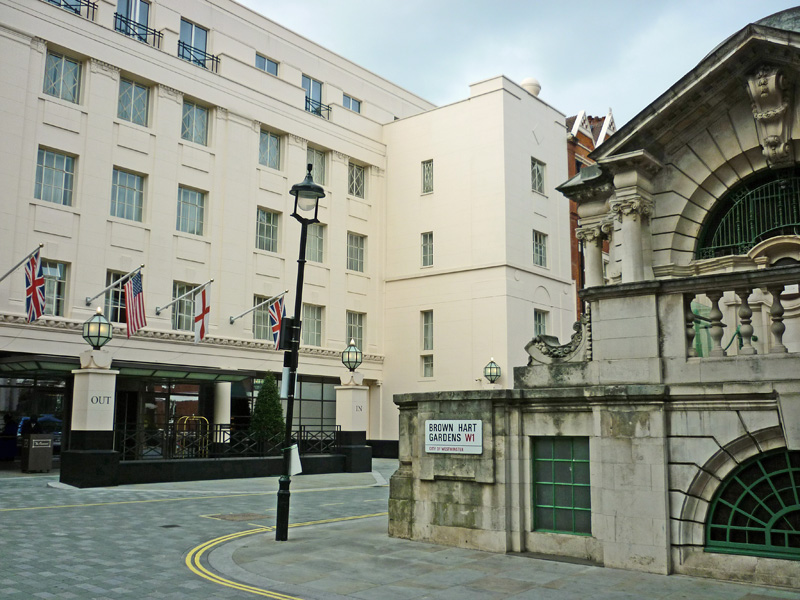
Head up Duke Street to Oxford Street again and then down Lumley Street (no sign of Joanna) to arrive back west of the church in Brown Hart Gardens. The eponymous gardens in the middle of this square are laid out on a raised terrace and replaced the original communal street level gardens which made way for the construction of what must be one of the world’s grandest electricity substations at the turn of the last century. The substation was completed in 1905 to the design of C. Stanley Peach in a Baroque style from Portland stone featuring a pavilion and steps at either end, a balustrade and Diocletian windows along the sides to light the galleries of the engine rooms. The overlaying of a paved Italian garden was carried out at the insistence of the then Duke of Westminster.

P1040541 P1040539

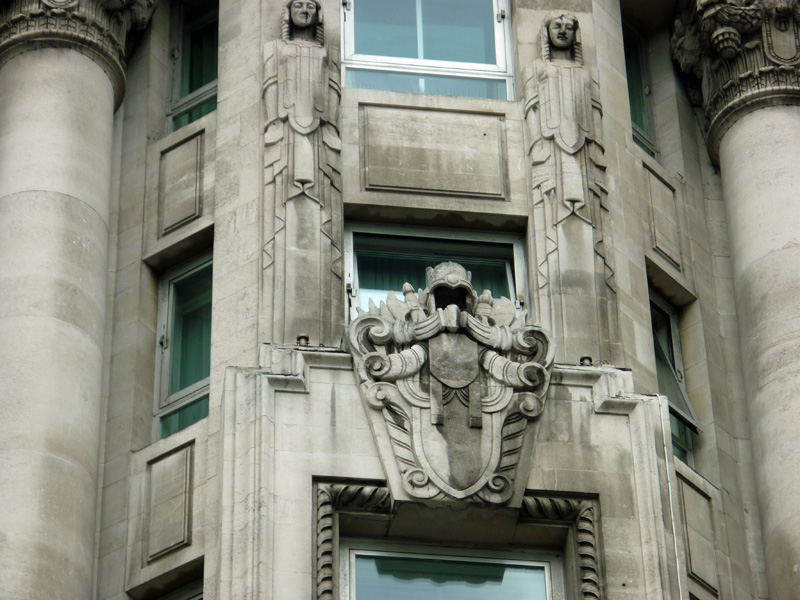
The gardens have very recently been renovated and the terrace is now, like every other tarted up bit of the capital, graced with a posh café. The western end of the square is occupied by another five-star hotel – the Beaumont.

P1040543

We now head north on Balderton Street and turn left into North Row, which runs parallel with Oxford Street and has nothing of interest to detain us until we reach Marble Arch. Pause at the corner of Park Lane to note the detailing on the southern exterior of the Cumberland Hotel where Jimi Hendrix kept a room in the late sixties and which now has a suite (though not the same one) named in his honour.

P1040544

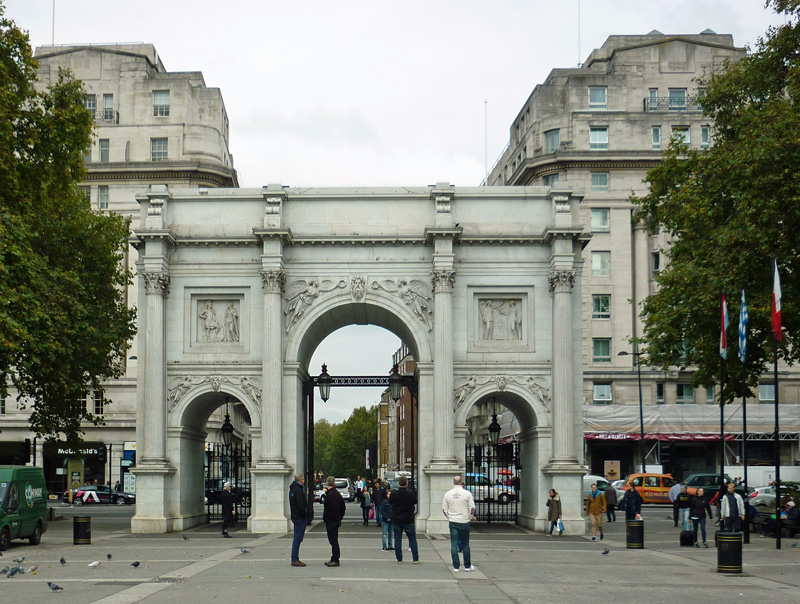
Cross the road to take a closer look at Marble Arch itself. This was originally designed by our old friend John Nash to be one of the state entrances to Buckingham Palace but was relocated in 1851 upon the widening of Park Lane and now sits isolated and underwhelming amid the traffic visited only by hordes of pigeons and a few less discerning tourists.

P1040545 P1040546

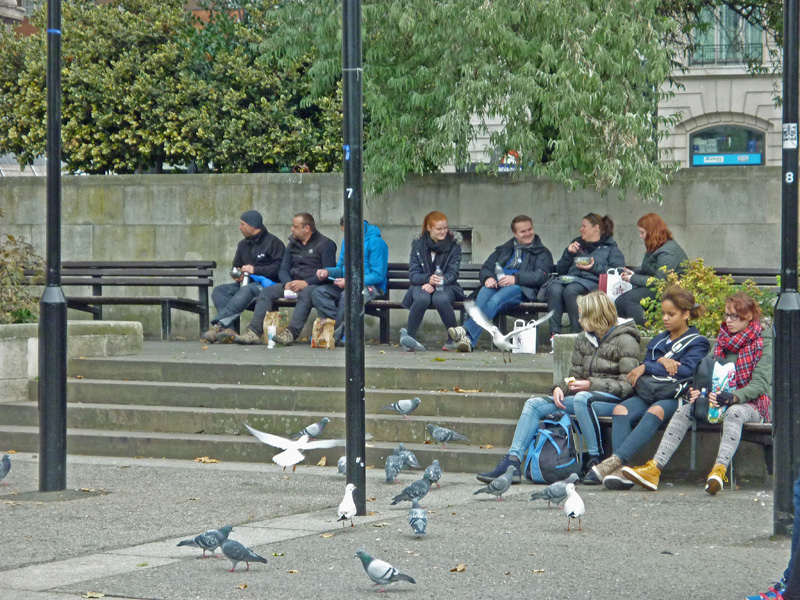
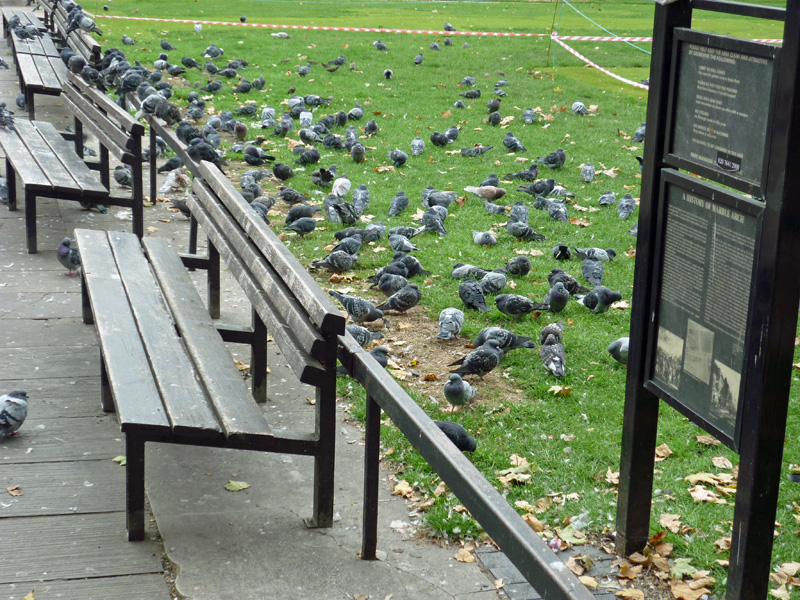
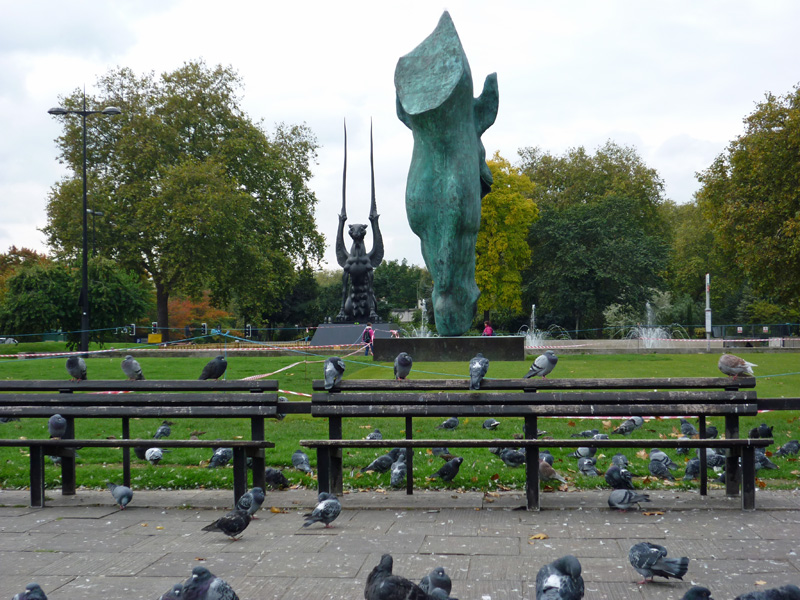
Yes, if you were wondering where all the pigeons went after being driven away from Trafalgar Square here’s your answer. As a consequence the sign in the photo below which exhorts members of the public to keep the area clean is a perfect exercise in futility. The statue you can see in the far distance is a very recent addition to the area. The work, called ‘She Guardian’, comprises four tonnes of bronze, sculpted over two years by Russian artist Dashi Namdakov. Unfortunately (or perhaps not) its positioning means only the hardiest tourist (or pigeon) will ever get close enough to experience its true majesty.

P1040549 P1040548

These little guys have even gone so far as to hide away down a disused subway entrance to escape its awesome majesty.

P1040550 P1040551

We make our escape too; skirting round Cumberland Gate to enter Hyde Park at Speakers’ Corner. In accordance with an 1872 act of parliament anyone can still turn up unannounced to speak on any subject, as long as the police consider their speeches lawful. Though on this particular day no-one had made the effort.

P1040552 P1040554

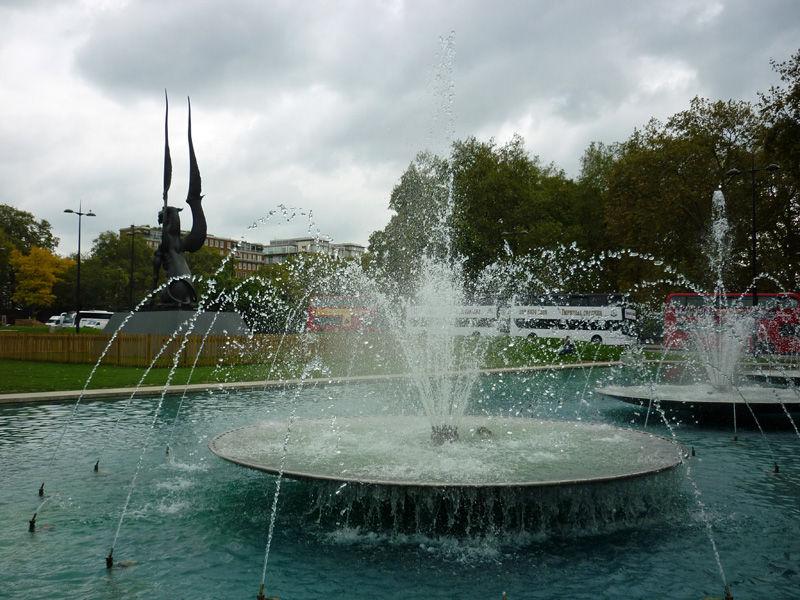
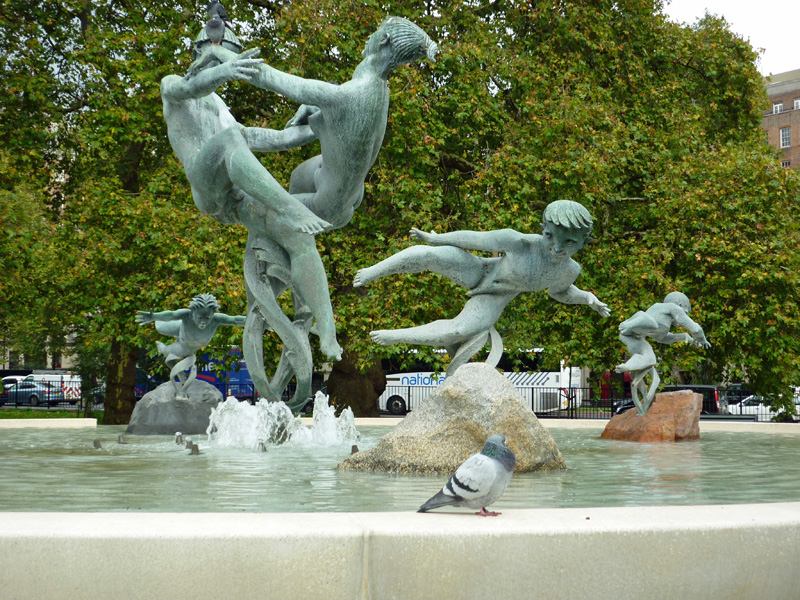
Dodge the joggers and cyclists en route through the park to exit by the Joy of Life fountain, a 1963 creation of T.B Huxley-Jones. Take the subway under Park Lane to emerge on the edge of Mayfair by Mount Street. On this stretch of Park Lane we have at no.93 the Grade I listed former London residence of Disraeli from 1839 to 1872. And at no. 100 the Grade II listed Dudley House, one of the few surviving aristocratic private palaces in London. It didn’t exactly come as shock to learn that this 17-room mansion is now owned by a member of the extended Qatari royal family.

P1040556 P1040561

For the next stretch of the walk we weave in and out of Park Lane and the parallel running Park Street which isn’t exactly short of high-end apartment blocks.

P1040557 P1040559

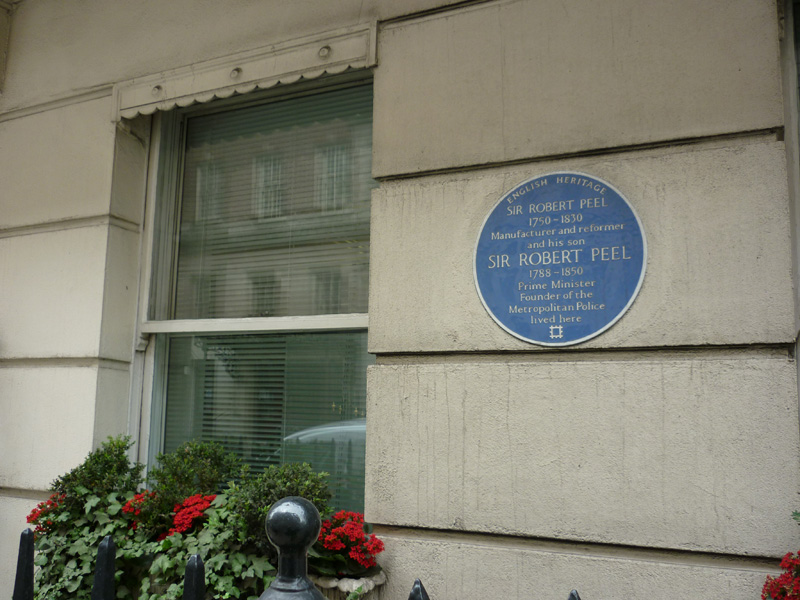
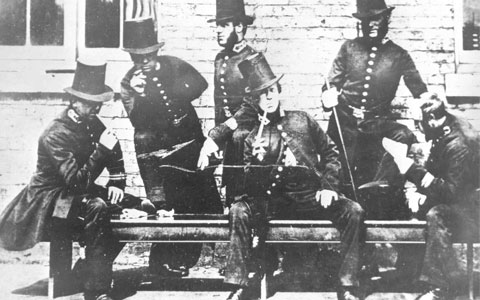
No. 16 on the interconnecting Upper Grosvenor Street was once the residence of Sir Robert Peel. Although he served twice as Conservative Prime Minister in the 1840’s Peel was one of the great political reformists, playing a key role in the repeal of the Corn Laws, Catholic emancipation and the 1832 Reform Act by supporting the Whig government from the opposition benches. Such Liberal tendencies have not exactly endeared him to certain elements of subsequent generations of Conservatives. His best-known legacy is probably the creation of the Metropolitan Police and the designation of its members as either “Peelers” or “Bobbies”.

P1040555 museum-peelers-480

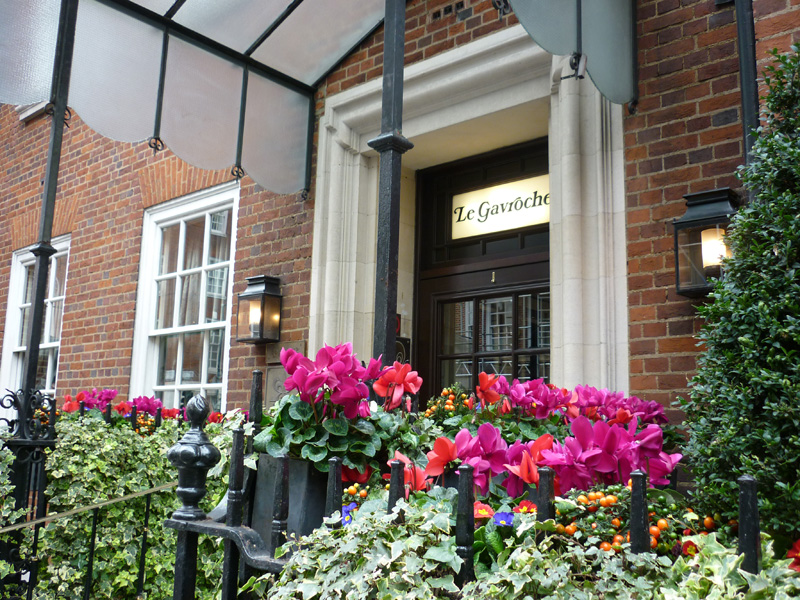
Culross Street, Upper Brook Street, Woods Mews and Green Street are the other interlinking streets. The second of these is home to Michael Roux Jr.’s Michelin two-star, Le Gavroche at no. 43.

P1040560

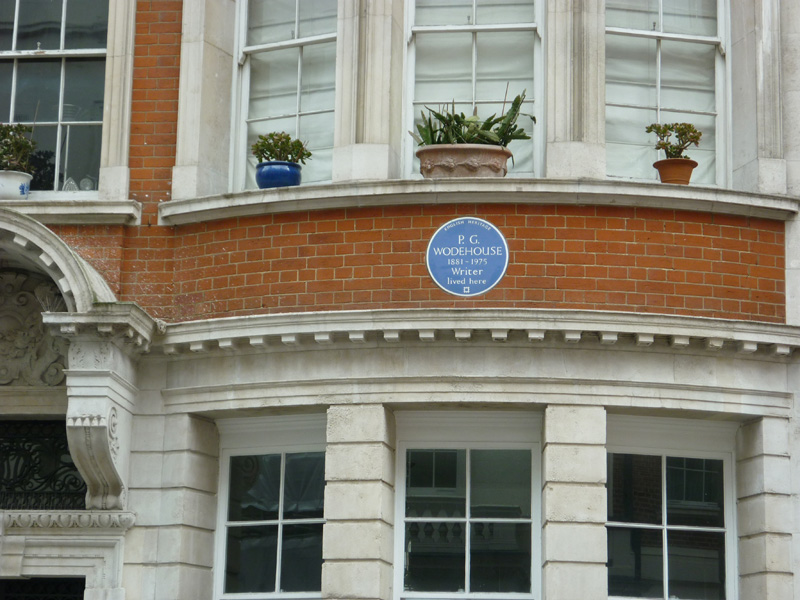
Reaching the top of Park Lane again we cut back down Dunraven Street where no.17 announces itself as the former home of the immortal P.G Wodehouse. There are very few surer ways of fending off a bout of the glums than a good dose of Jeeves and Wooster. If you’re not familiar with the radio adaptations featuring the late greats Richard Briers and Michael Hordern I urge you to seek them out.

P1040562 p-g-wodehouse-4

Continue via Lees Place and Shepherds Place to North Audley Street where at no.13a we find the former St Mark’s Church. Dating from 1828 and designed in the (by now familiar) Greek revival style the building ceased to be a parish church over 30 years ago and after an long period of abandonment and aborted re-usage attempts is now re-branded as One Mayfair and owned by the same events company that previously brought you One Marylebone. The adjacent red-brick No. 13 was originally the vicarage and is still today used as a private home.

P1040563 P1040566

P1040567

Nearby Providence Court provides a prime example of the vogue for redevelopment that involves propping up historic frontages and completely rebuilding behind them.

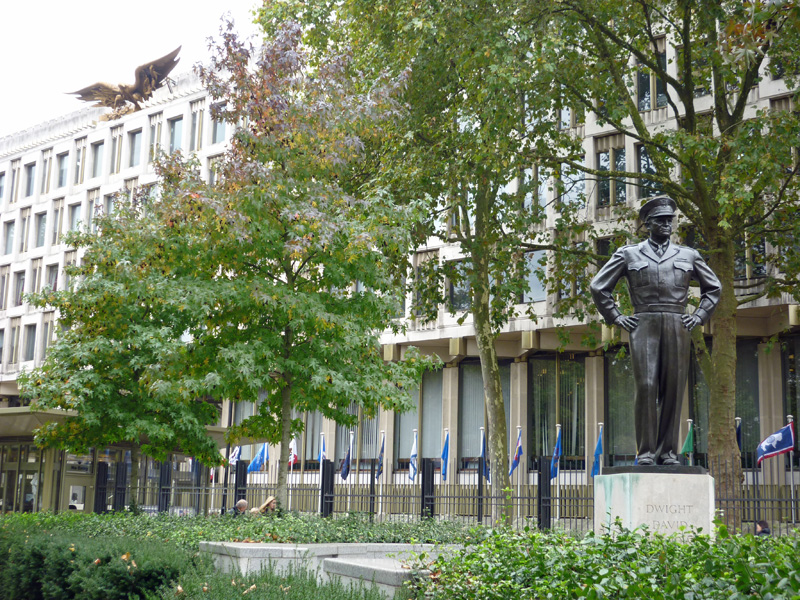
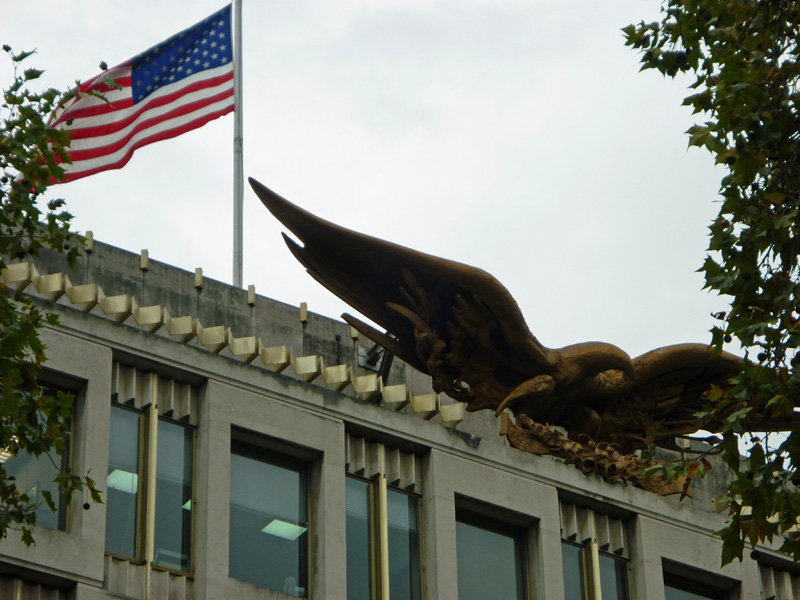
P1040568George Yard takes us back to Duke Street from where it is a short hop to Grosvenor Square. As already noted this is dominated by the monstrous incongruity that is the American embassy. Chap with his hands on his hips is Dwight Eisenhower. He’s joined at the southern end of the building by Ronald Reagan whose statue was unveiled in 2011. I suppose the thinking was that the one was a hero of the Second World War and the other of the Cold War, though the equivalency escapes me.

P1040570 P1040572

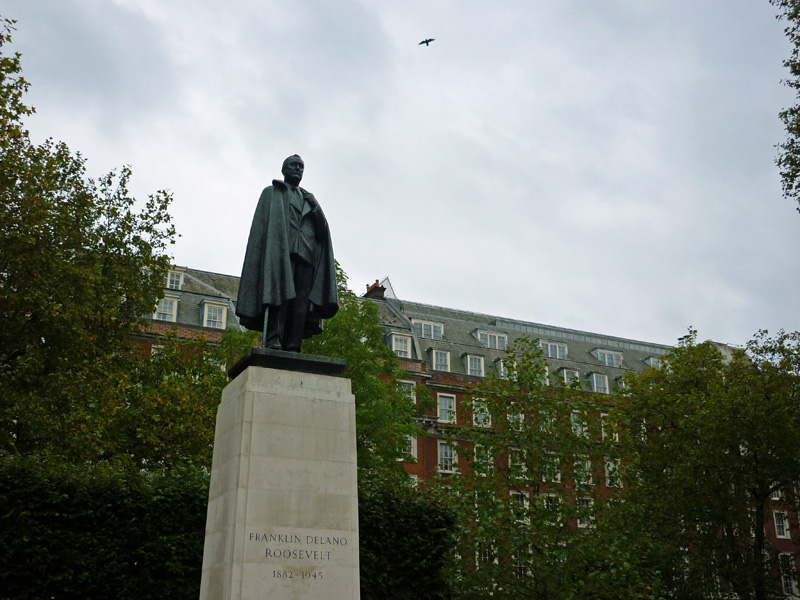
Pride of place in the gardens in the centre of the square goes to a statue of Franklin D. Roosevelt and on the eastern side there is a pavilion and memorial garden created to honour the victims of September 11. The building in the background is the significantly more discrete Italian Embassy.

P1040575 P1040576

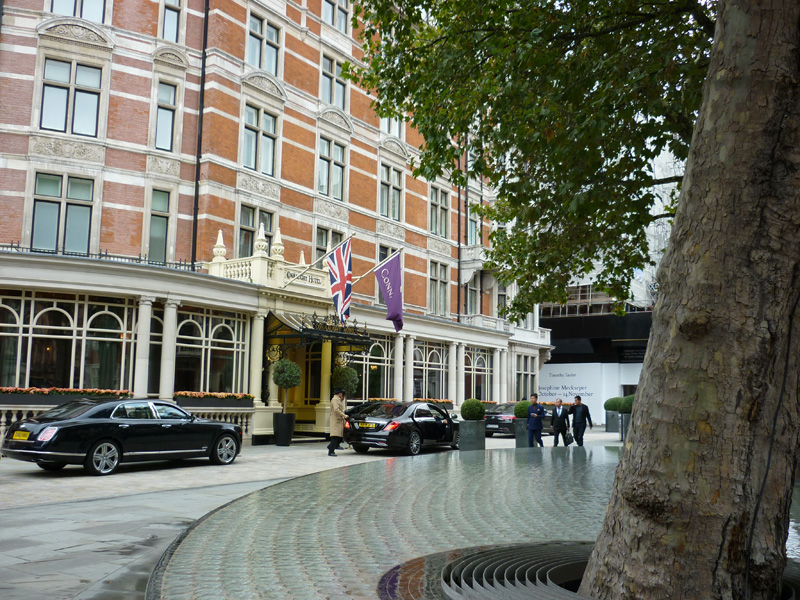
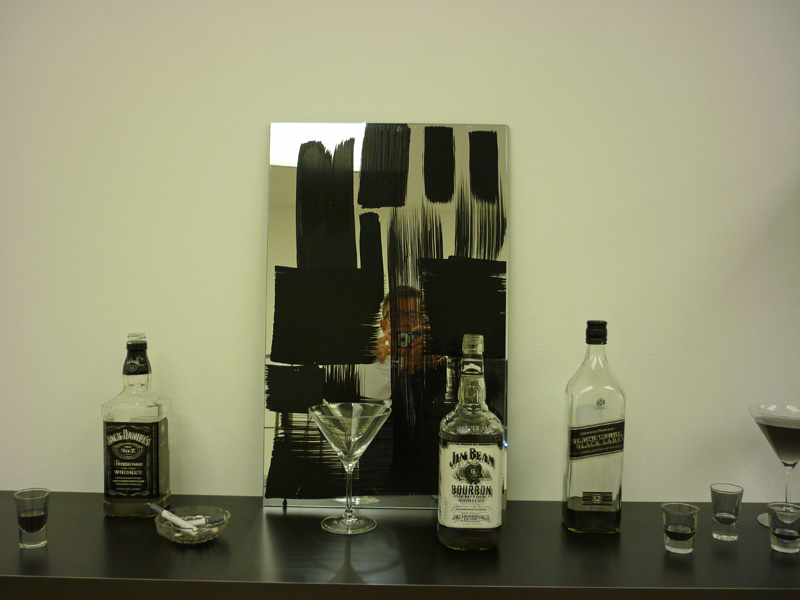
Leave the square via Carlos Place which is the location of the Connaught Hotel and also the Timothy Taylor gallery where one of the works in the current exhibition provides today’s selfie of the day.

P1040577 P1040588

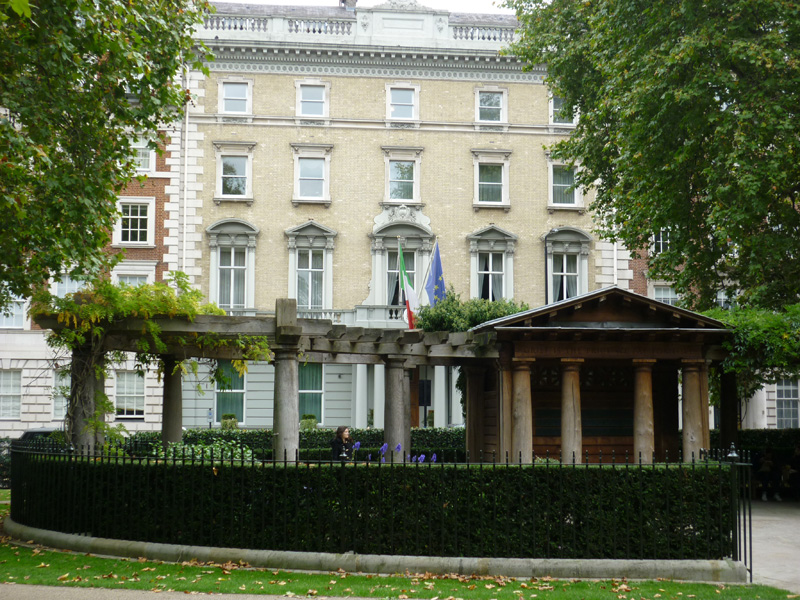
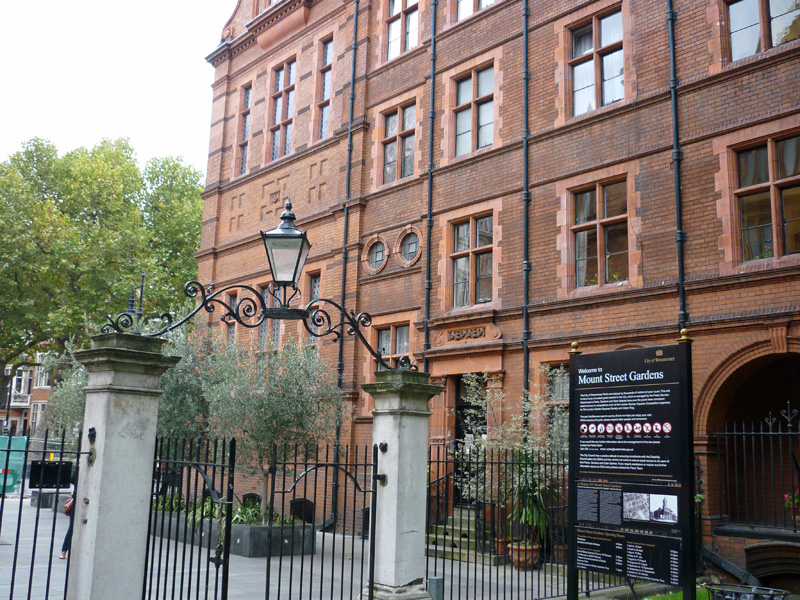
Duck through Mount Street Gardens, created in 1889 out of a former burial ground, passing the rear of the Jesuit Church of the Immaculate Conception before entering onto South Audley Street. Here we find the 120-year old Mayfair Library which is still just that, a public library run by Westminster Council. It’s quite difficult to imagine any of the residents of this part of town popping in to borrow an actual book so perhaps it’s not surprising that the library has expanded its services to include offering itself as an approved venue for wedding ceremonies.

P1040579 P1040580

P1040581 P1040582

Opposite the library is the Grosvenor Chapel which was built in the 1730’s and whose Anglican congregation was swelled during the Second World War by the presence of American servicemen and women.

P1040583 P1040584

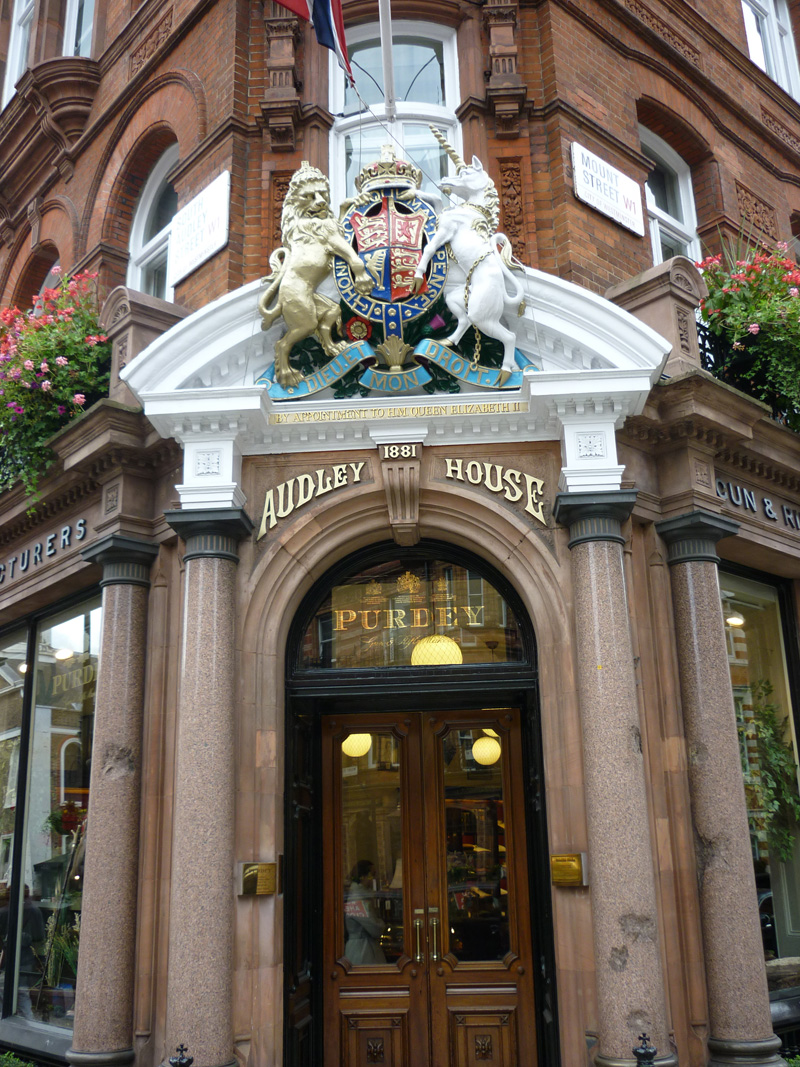
South Audley Street is also, at no. 57, home to James Purdey and Sons, Gun and Rifle makers by Royal appointment. Still no sign of Joanna (tenuous cultural cross-reference of the day).

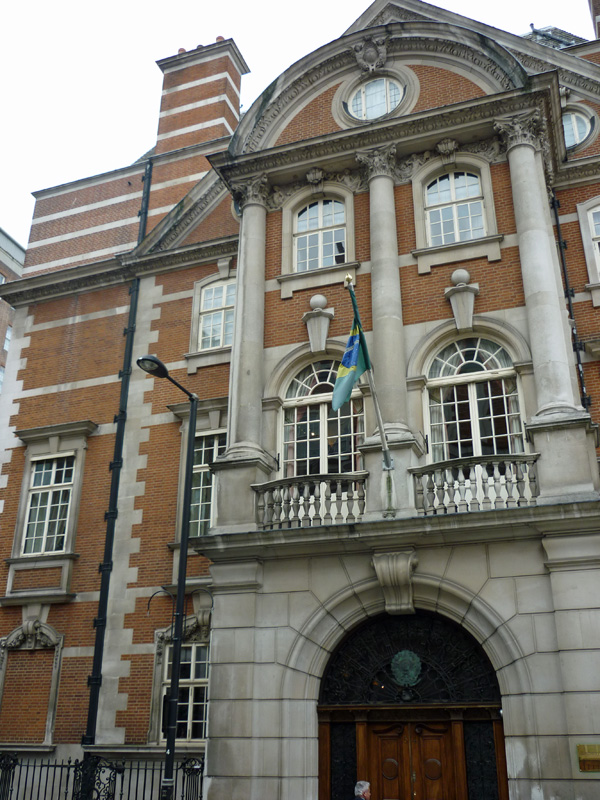
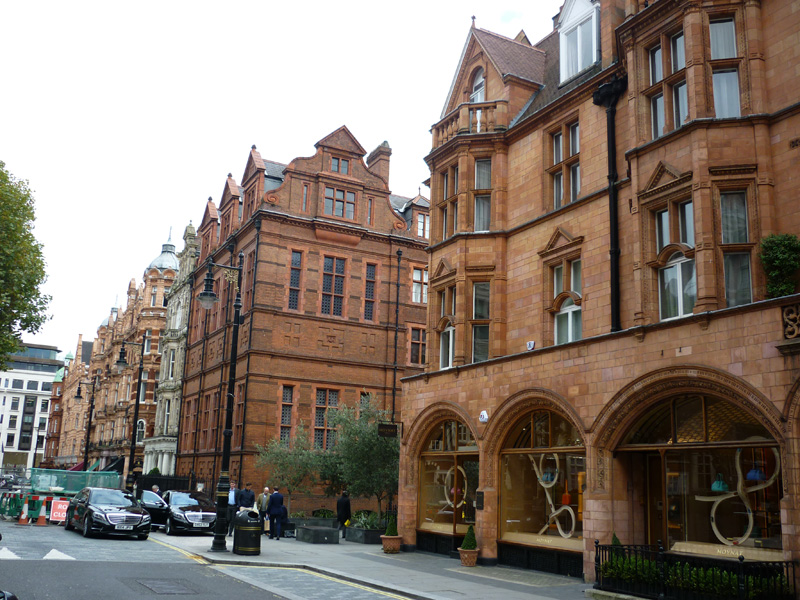
P1040586Right, we’re nearly done now. Aldford Street and Rex Place bring us back to Mount Street and a stretch which is the location of the Brazilian Embassy proper and a swathe of high-end boutiques and restaurants (which in fairness the buildings do deserve).

P1040585 P1040587

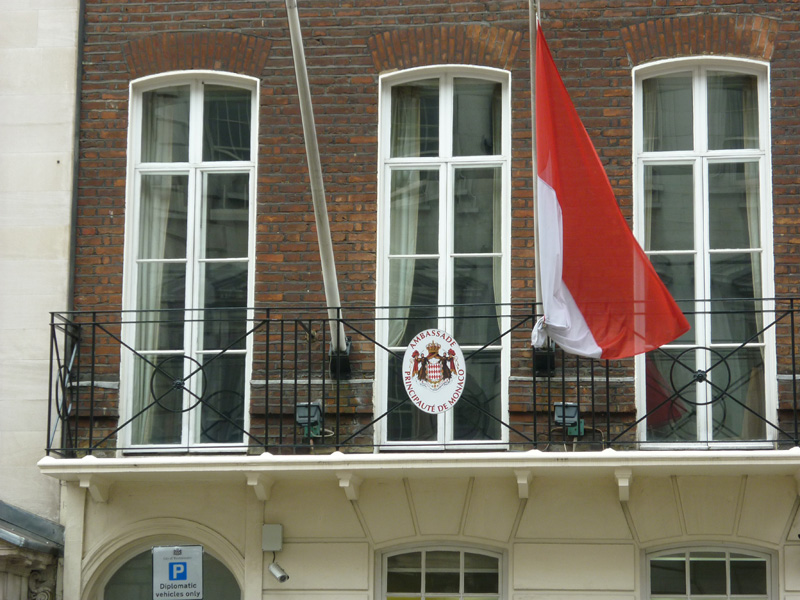
Finish off with Adams Row, Reeves Mews and then Grosvenor Street where the final pause of the day is to clock the embassy of the Principality of Monaco at no.7. Not quite sure why they feel the need for an embassy as most of their residents will be too scared to visit London in case they get asked to pay some tax (God forbid!)

P1040589

Day 7 – Euston – Somers Town – Bloomsbury

Today’s route sees us heading north again to cover the area around Euston Station starting in the locality of Somers Town which bridges the gape between Euston and Kings Cross. We then head across the Euston Road encroaching into Bloomsbury before finishing off in the streets surrounding University College London.

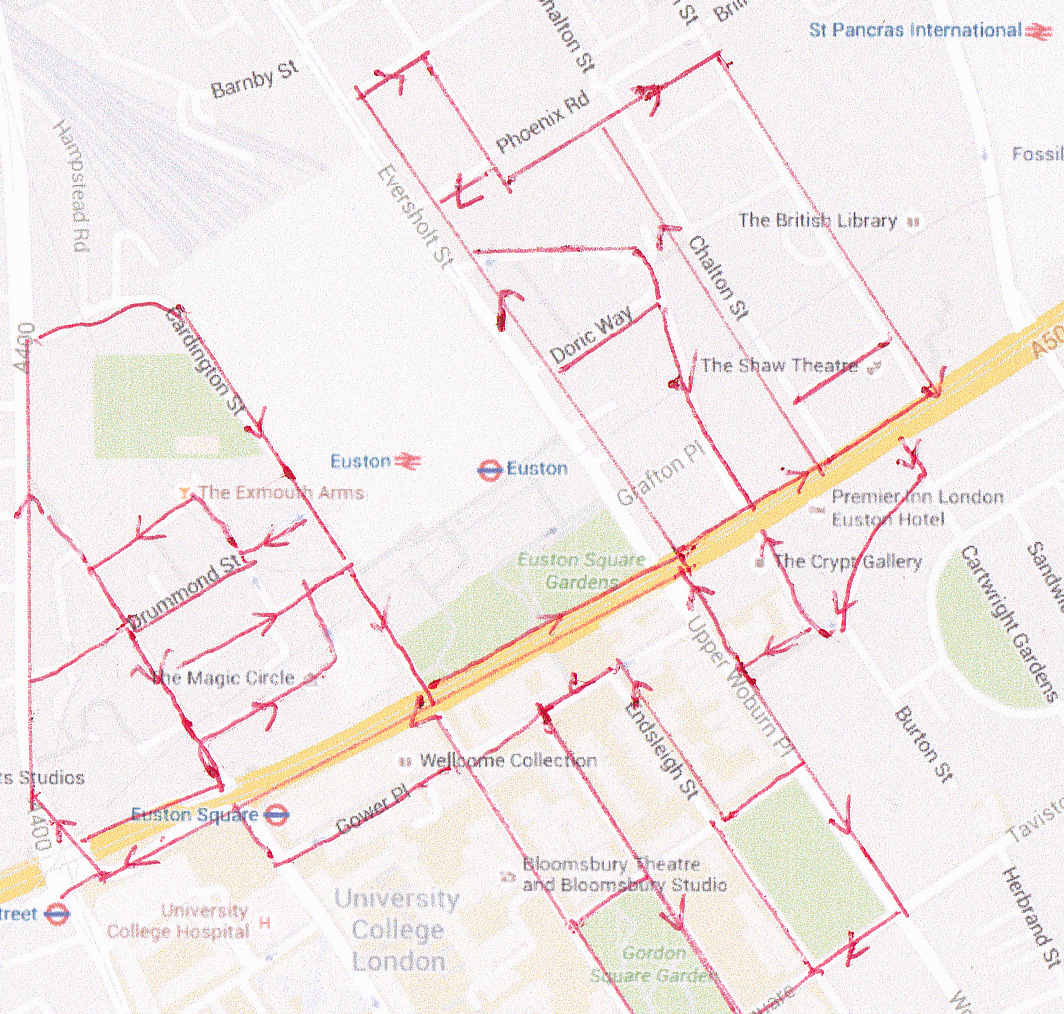
Day 7 Route

From Euston Station we head north along Eversholt Street which is somewhat reminiscent of the vicinity of Kings Cross before it was tarted up. Though it does have the impressive 1930’s built Euston House at no.24, originally the HQ of the London, Midland and Scottish Railway it later became the home of the British Railways Board (now of fond memory).

IMG_20150930_105125

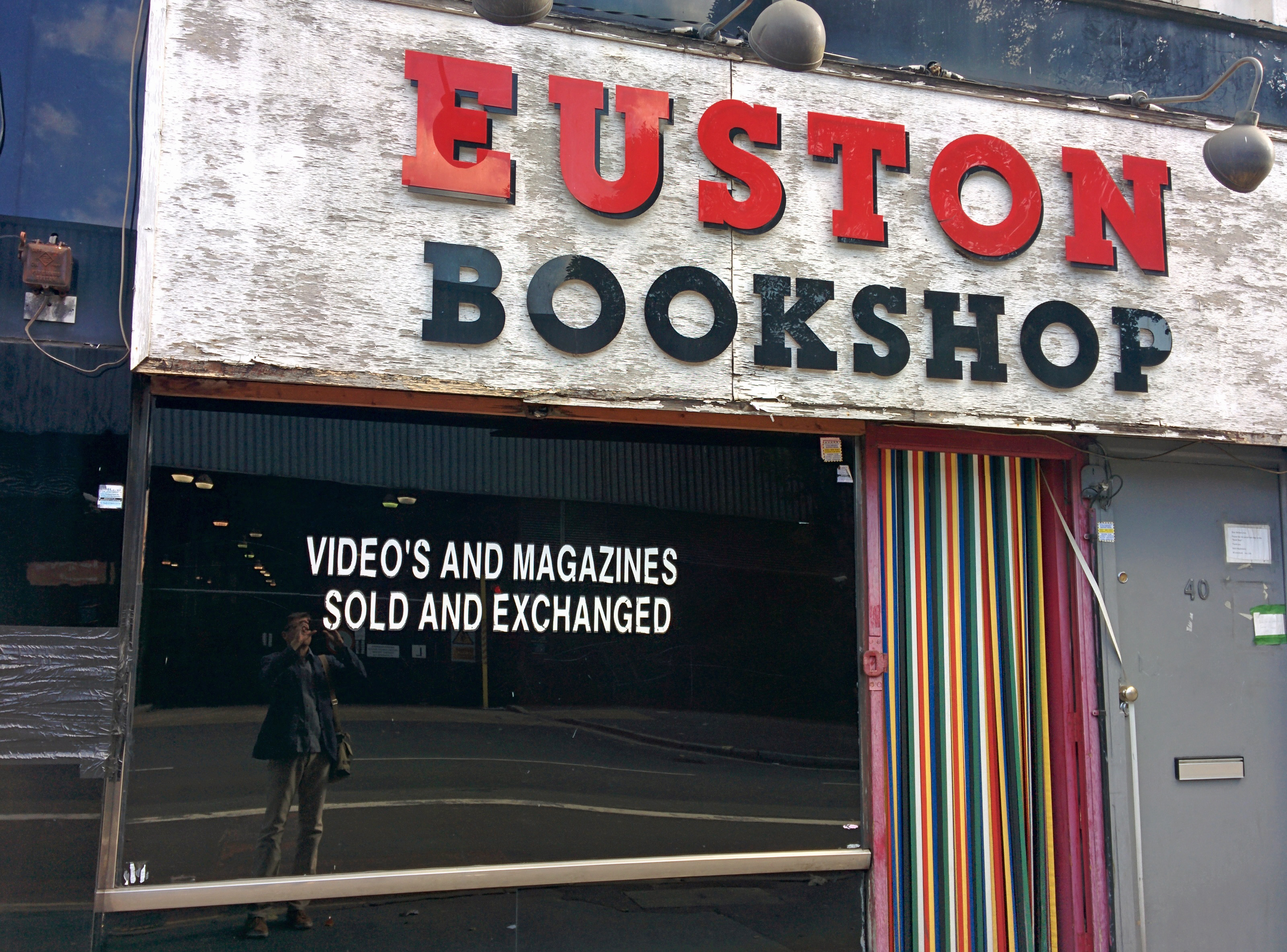
Further up it looks more like this. I don’t think I’ve seen one of those multi-coloured plastic strip curtains since about 1981. Interesting to note that the misused apostrophe isn’t a particularly modern phenomenon – though whoever put this up has obviously hedged their bets.

IMG_20150930_105903

Turn eastward along Polygon Street where at no.16 is the site of the  the former Jubilee pub closed in 2003 but nice to see the splendid frontage still in situ. We are now venturing into Somers Town which like the area immediately east of Regents Park still has a good stock of social housing and a bit of an old-school community feel. Right down Werrington Street and left along Pheonix Road and we hit Ossulton Street which heading south flanks the new British Library.

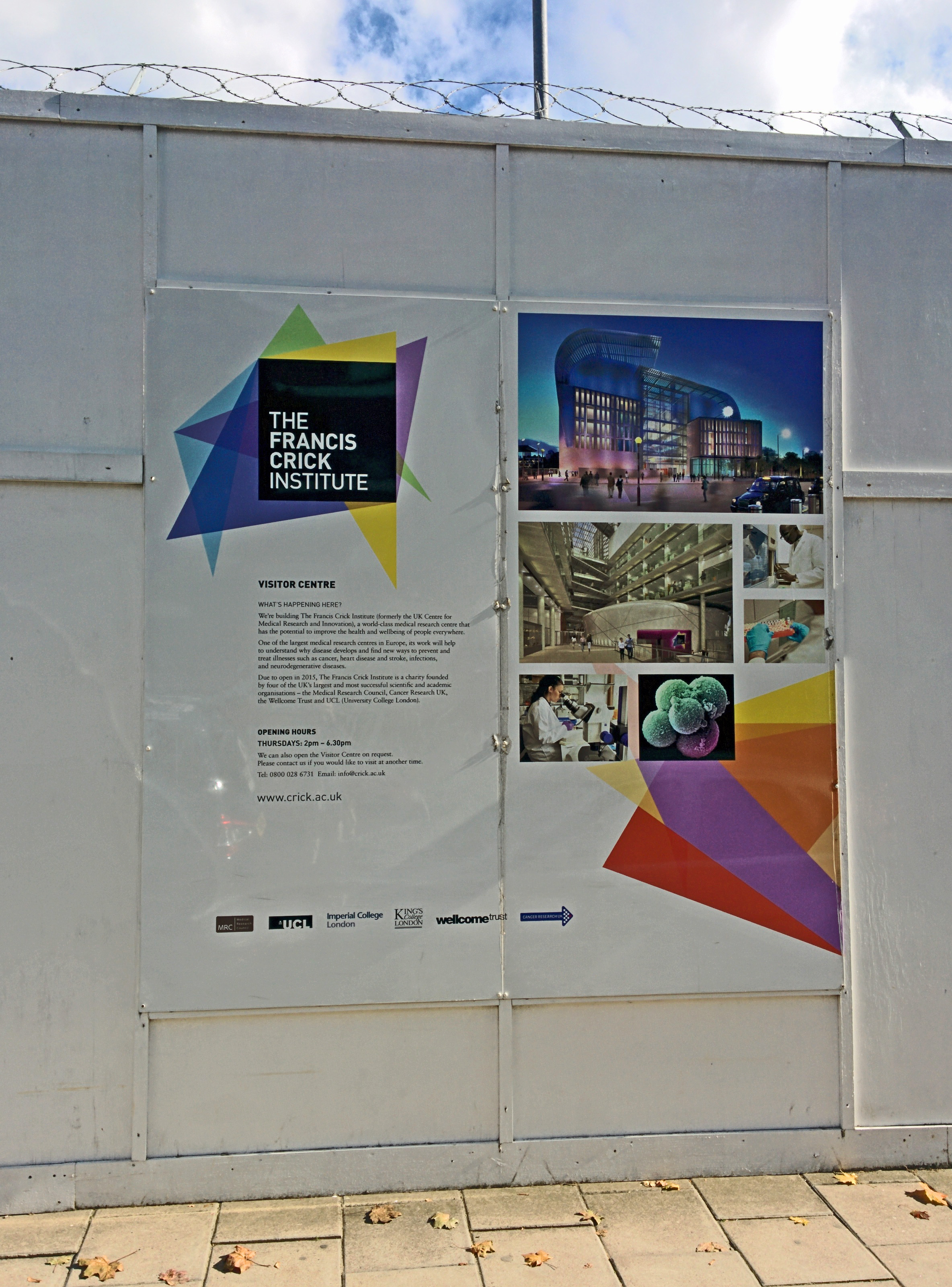
The site just to the north of the library is supposedly being redeveloped as the Francis Crick Institute, intended to be one of the largest medical research centres in Europe. I say supposedly because the poster below proclaims an opening in 2015 and as you can see from the other photo there’s still basically just an empty space.

IMG_20150930_110457 IMG_20150930_110531

Quick right onto Euston Road and back northward on Chalton Street, a pleasingly tree-lined thoroughfare with an interesting mix of retail and hospitality outlets. Including one with a secret garden – though it’s obviously not that secret once you advertise it on your billboard.

IMG_20150930_111127 IMG_20150930_111316

IMG_20150930_111951

Drummond Crescent, Doric Way, Churchway and Grafton Place complete the set of streets east of Euston and somewhere amongst these is this rather novel storage solution.

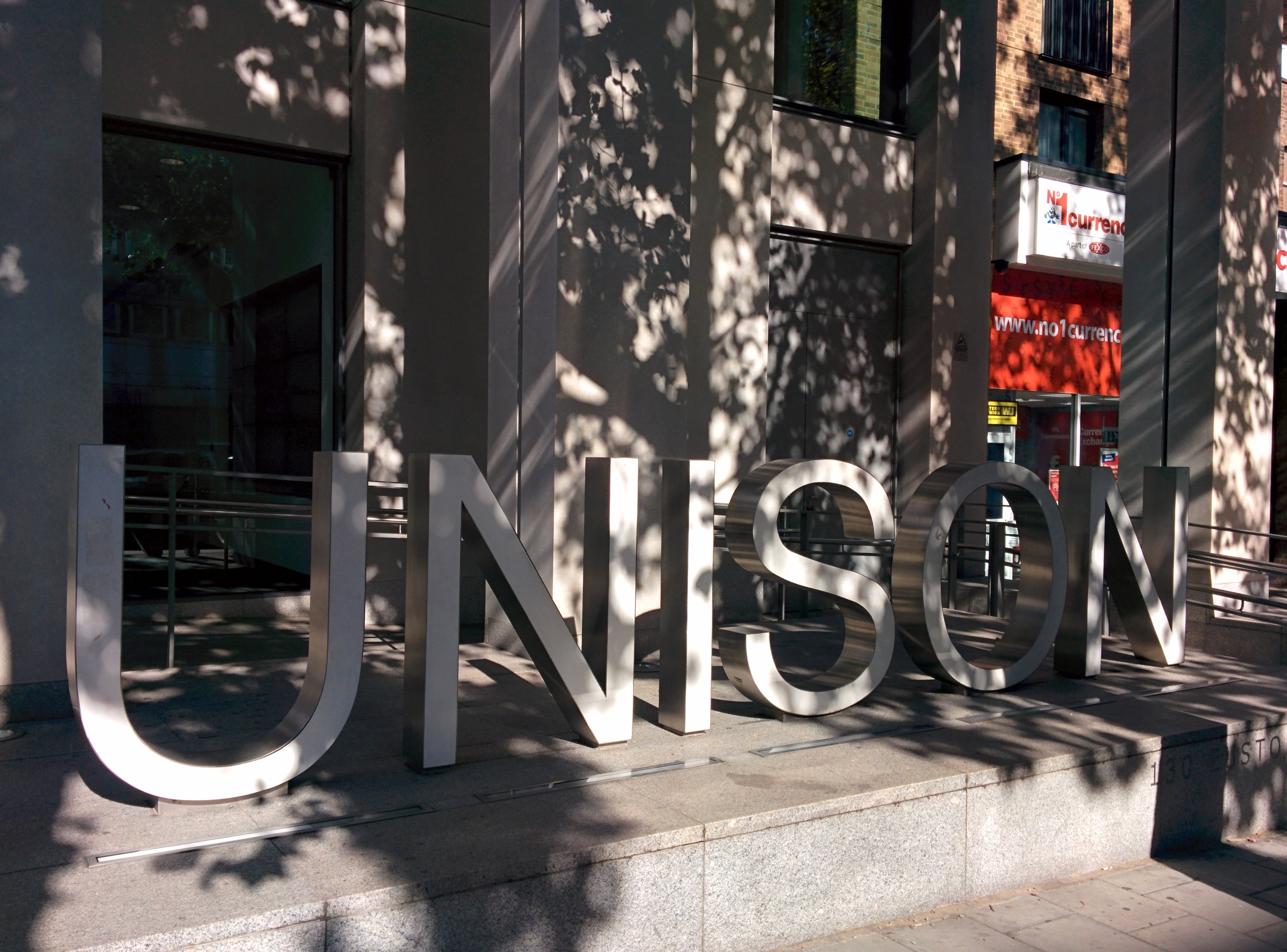
Then we’re back out by the supremely unlovely Euston Station from where heading east along Euston Road we pass the headquarters of the Unison Trade Union at no. 130.

IMG_20150930_112622 IMG_20150930_112851

 IMG_20150930_113545

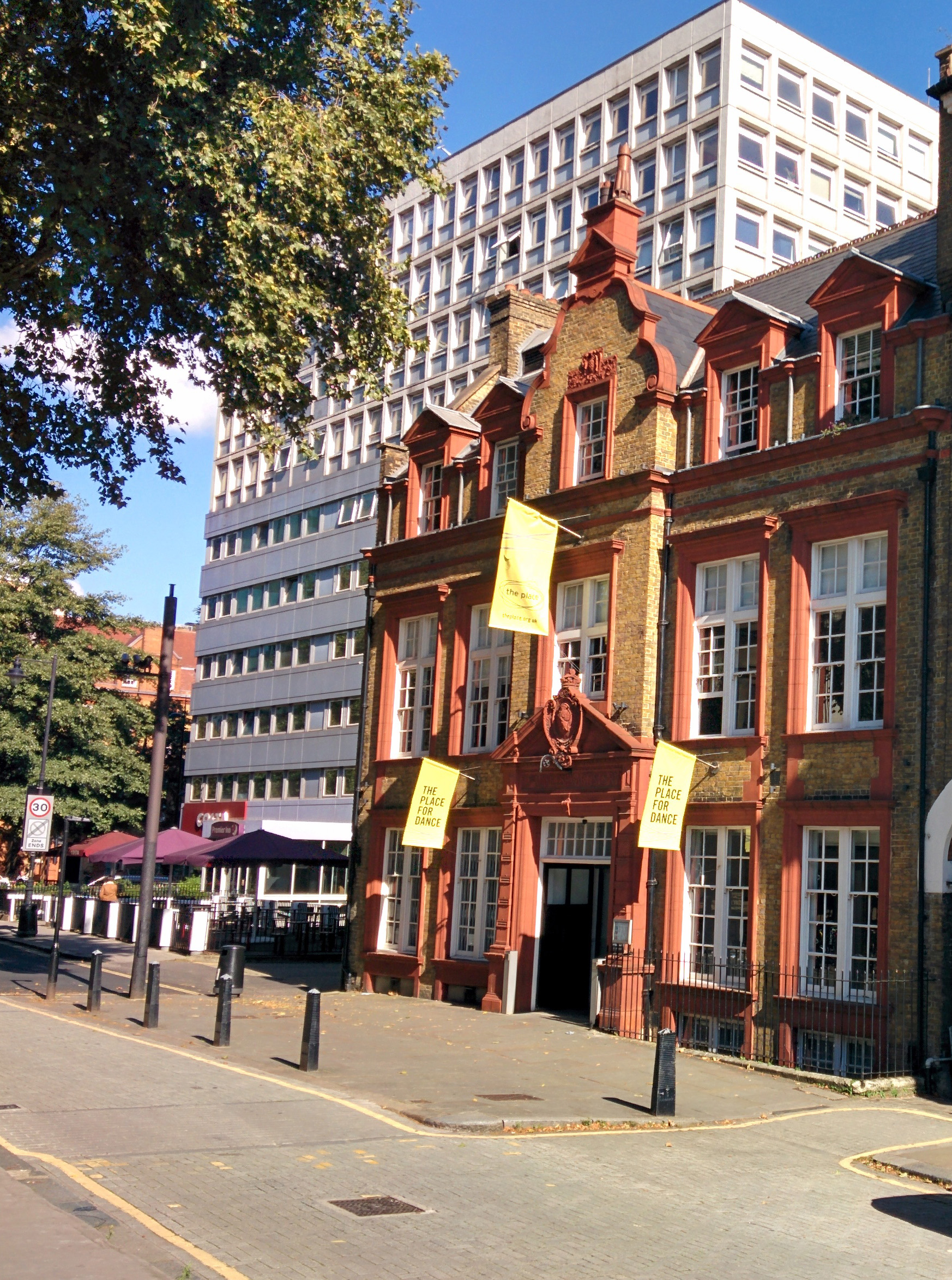
Cross over Euston Road and skirt round the back along Flaxman Terrace which segues into Dukes Road where we find The Place, home of contemporary dance.

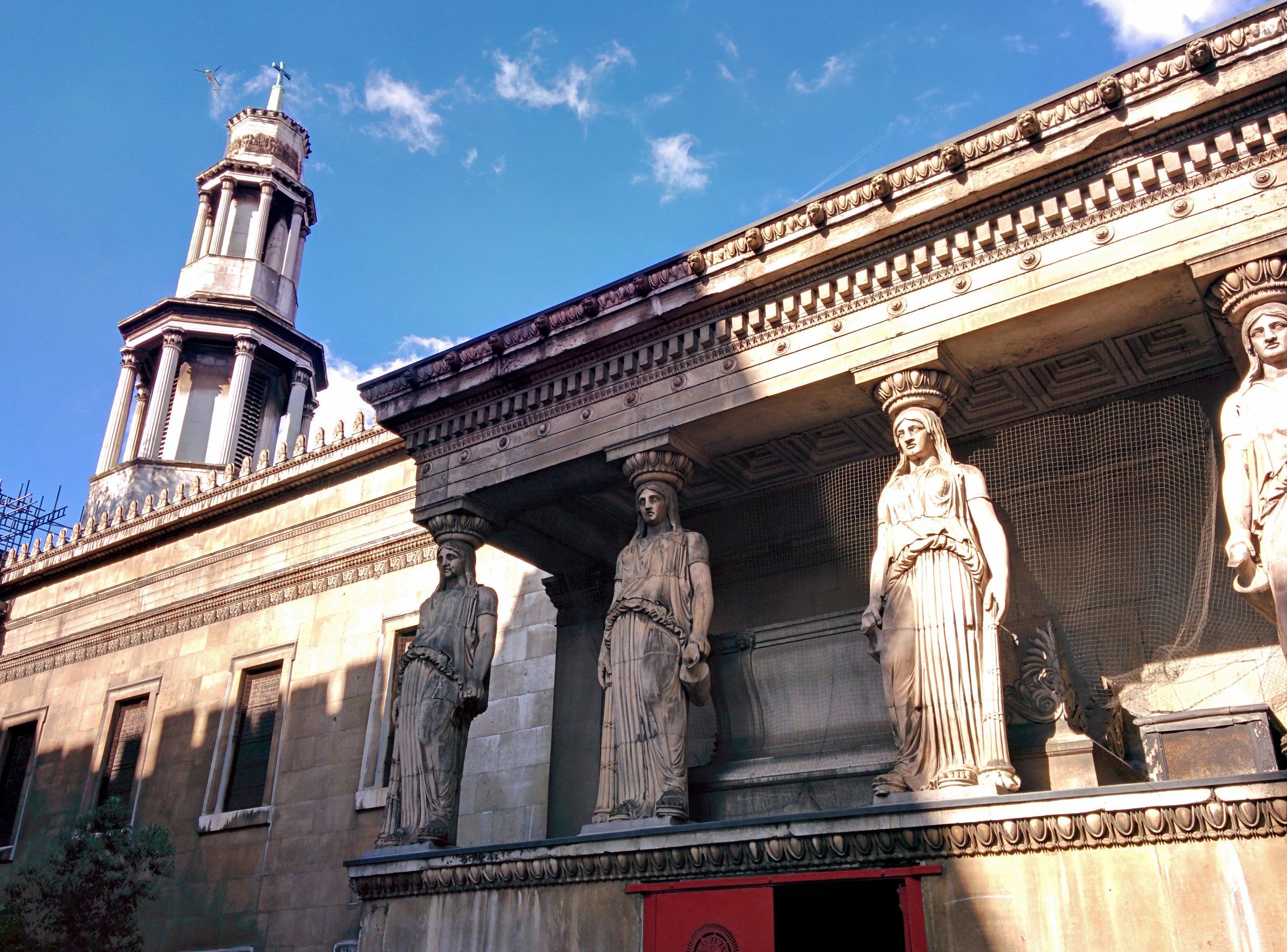
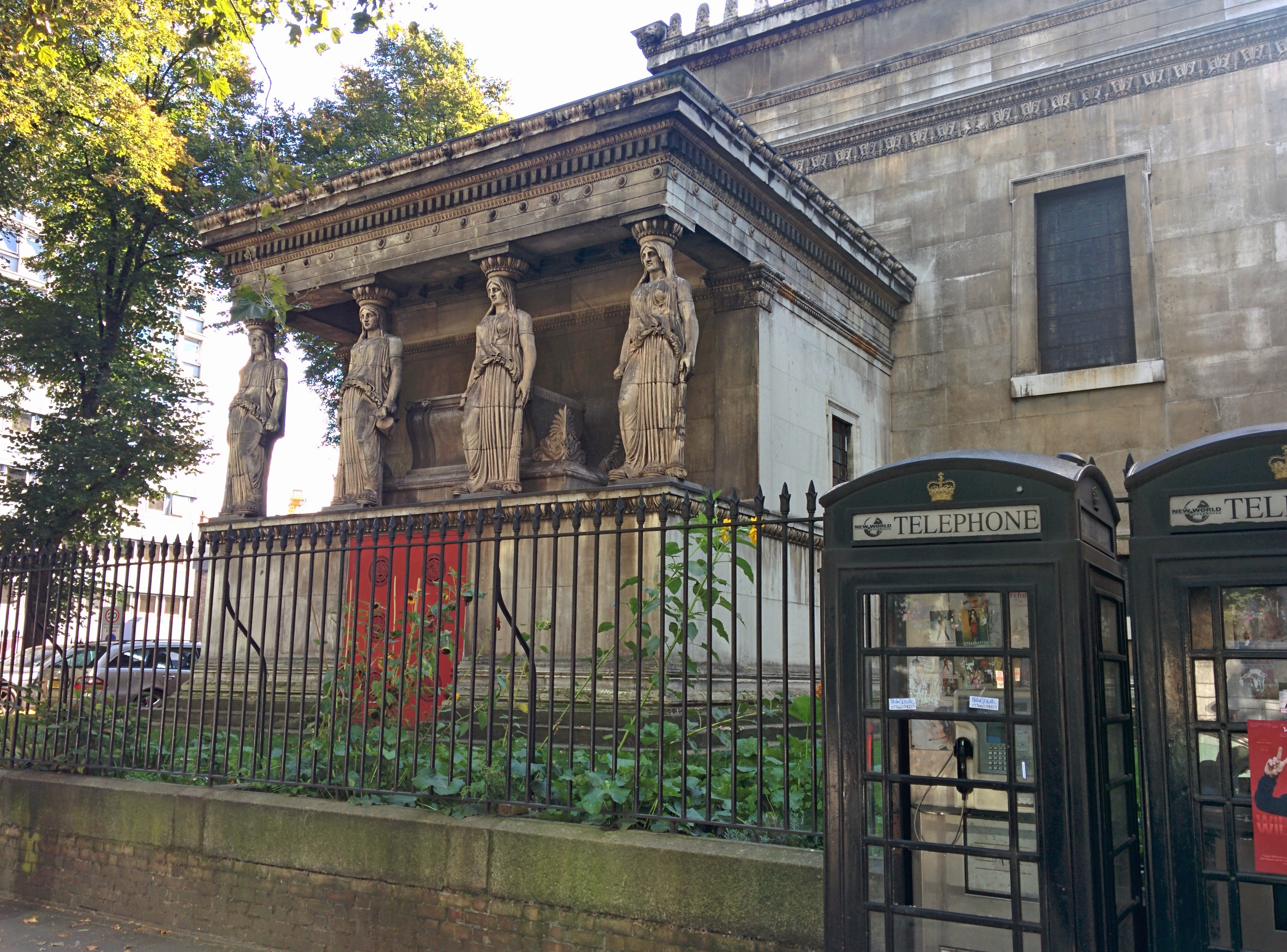
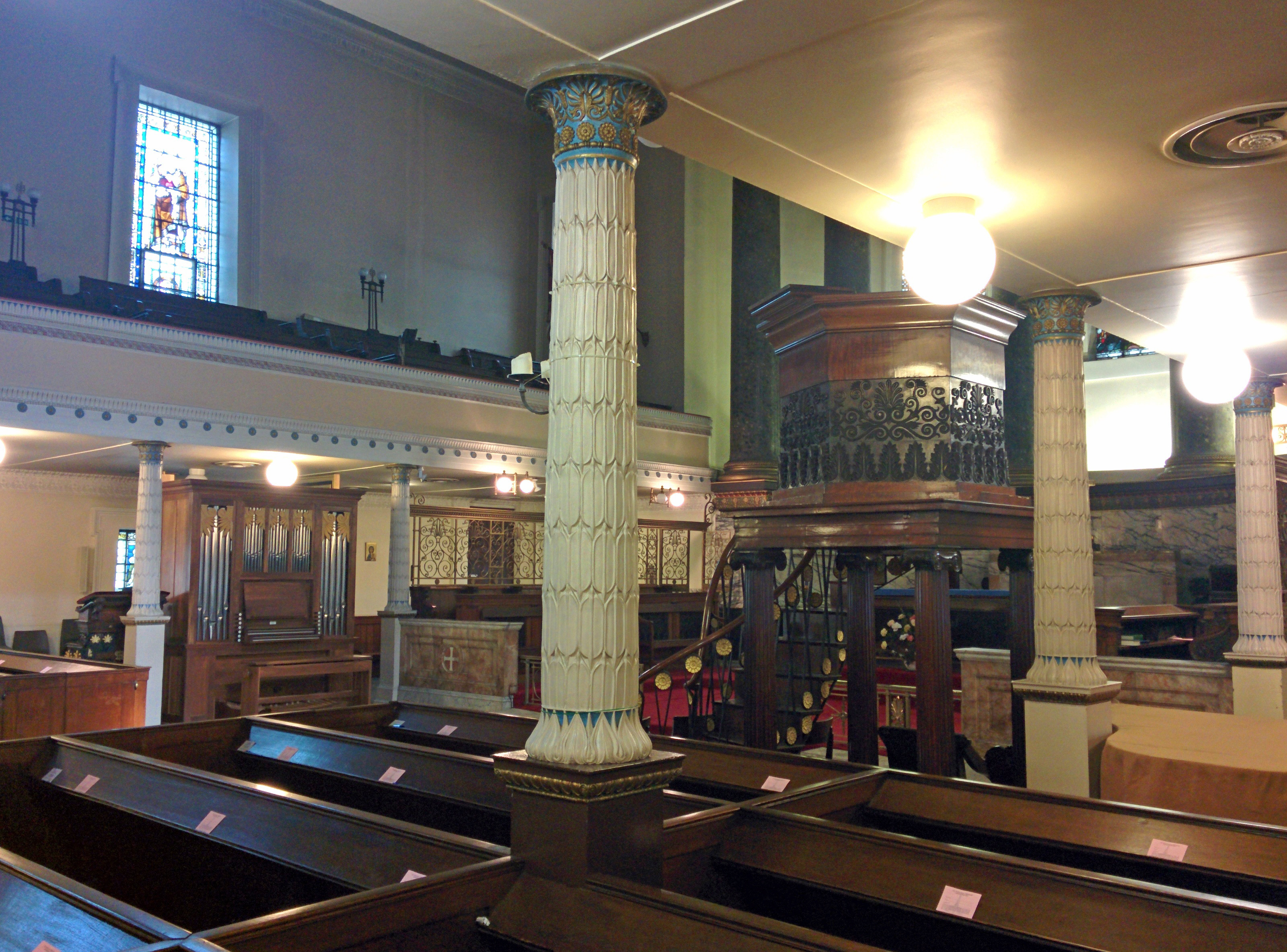
Opposite is the back entrance to the imposing neo-classical St Pancras New Church. Built in 1819–22 to the designs of William and Henry William Inwood; the most impressive features of this Grade-I listed building are the two tribunes on either side of the eastern end with their four terracotta caryatids modelled on those at the Erechtheum in Athens.

IMG_20150930_114537 IMG_20150930_114341

Inside the entrance to the church is a plaque commemorating a family of worshippers who were amongst those lost when the Steamship City of Boston sank en route from Halifax, Nova Scotia to Liverpool in 1870.

IMG_20150930_114233 IMG_20150930_114121

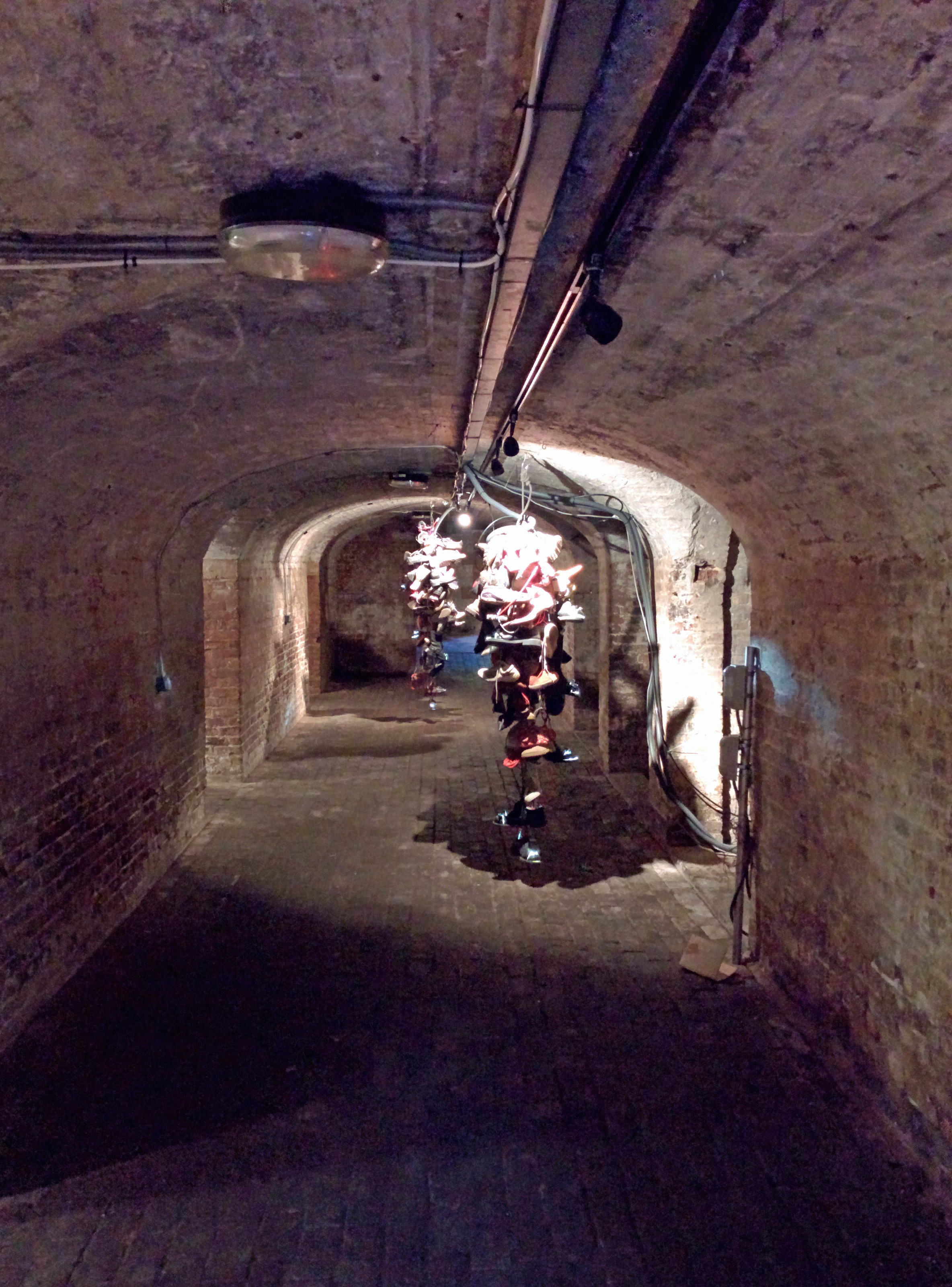
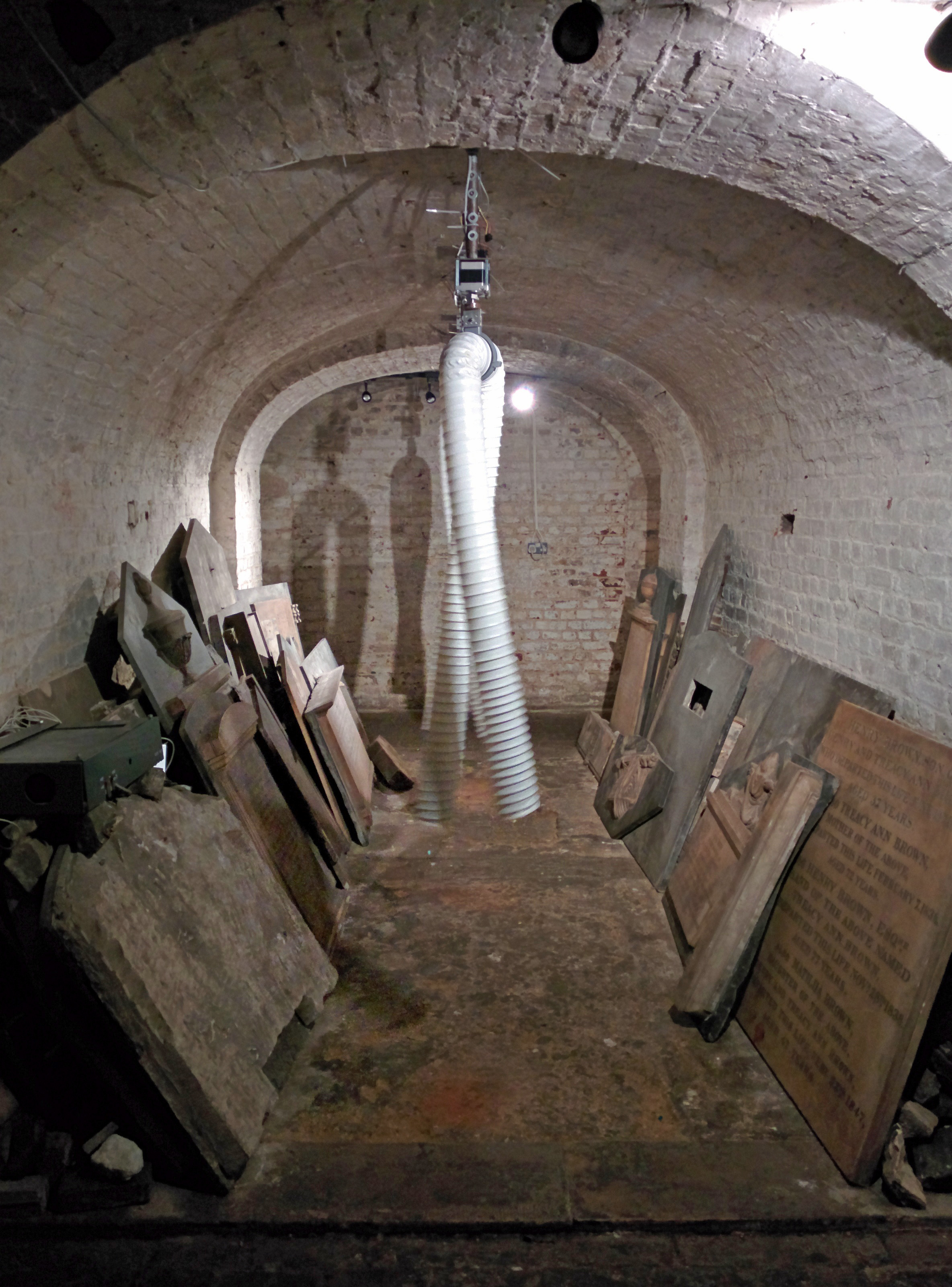
The crypt, which extends the whole length of the church, was designed to contain 2,000 coffins, but fewer than five hundred interments had taken place by 1854, when the practice was ended in all London churches. It served as an air-raid shelter in both world wars and is now used as an art gallery. The kinetic installations in the pictures below are the work of Irish-French artist Malachi Farrell.

IMG_20150930_114707 IMG_20150930_115114

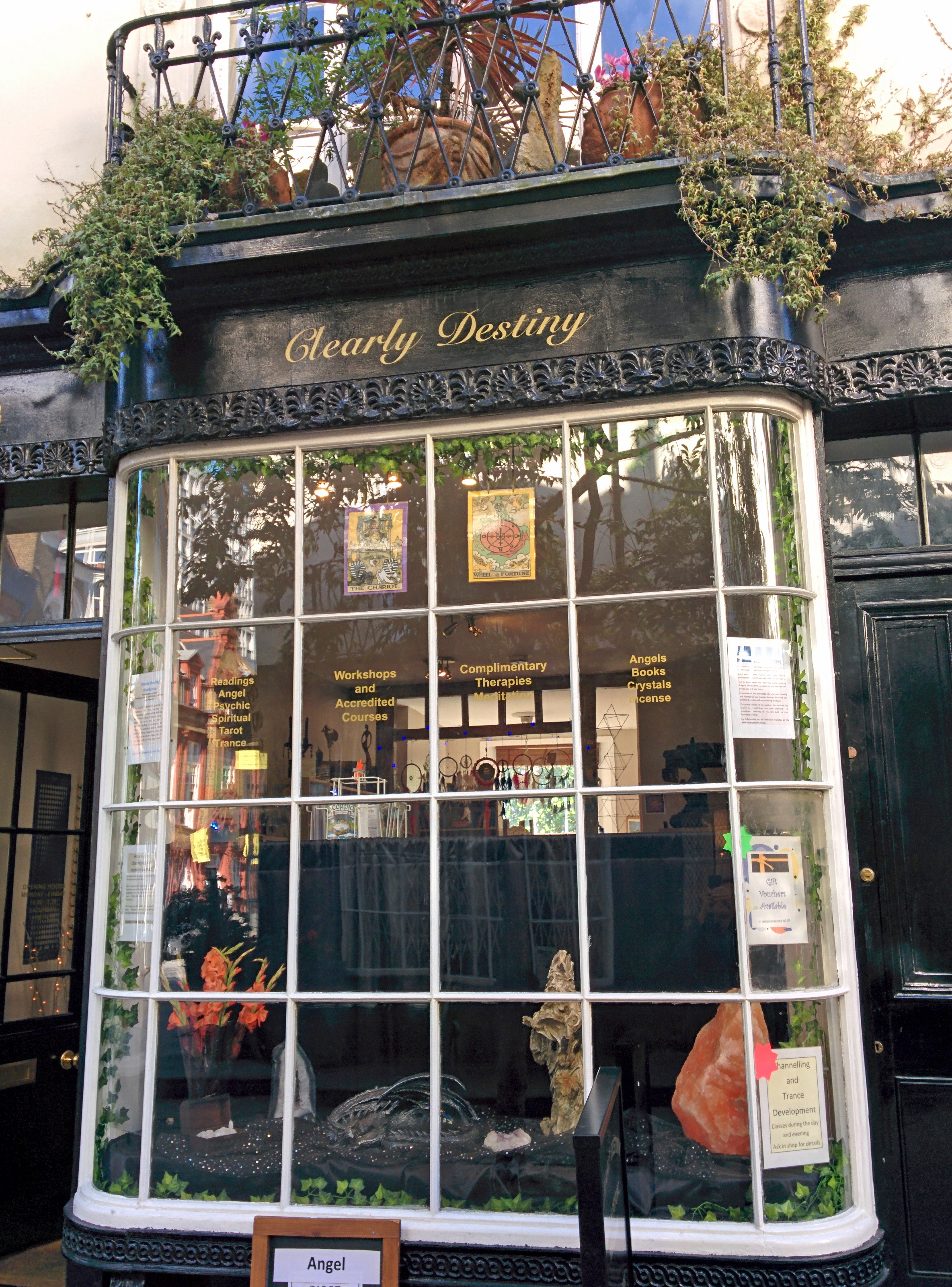
Running parallel to the south side of the church is the self-consciously quaint Woburn Walk which trumpets its Georgian origins along with the facts that WB Yeats is a former resident and Dickens used to buy his tobacco here. It’s a popular location for anachronistic TV and advertising shoots most notably episodes of Poirot. As you can see it’s not all about the past – the future is catered for as well, if you dare seek to know it !

IMG_20150930_113740 IMG_20150930_113637

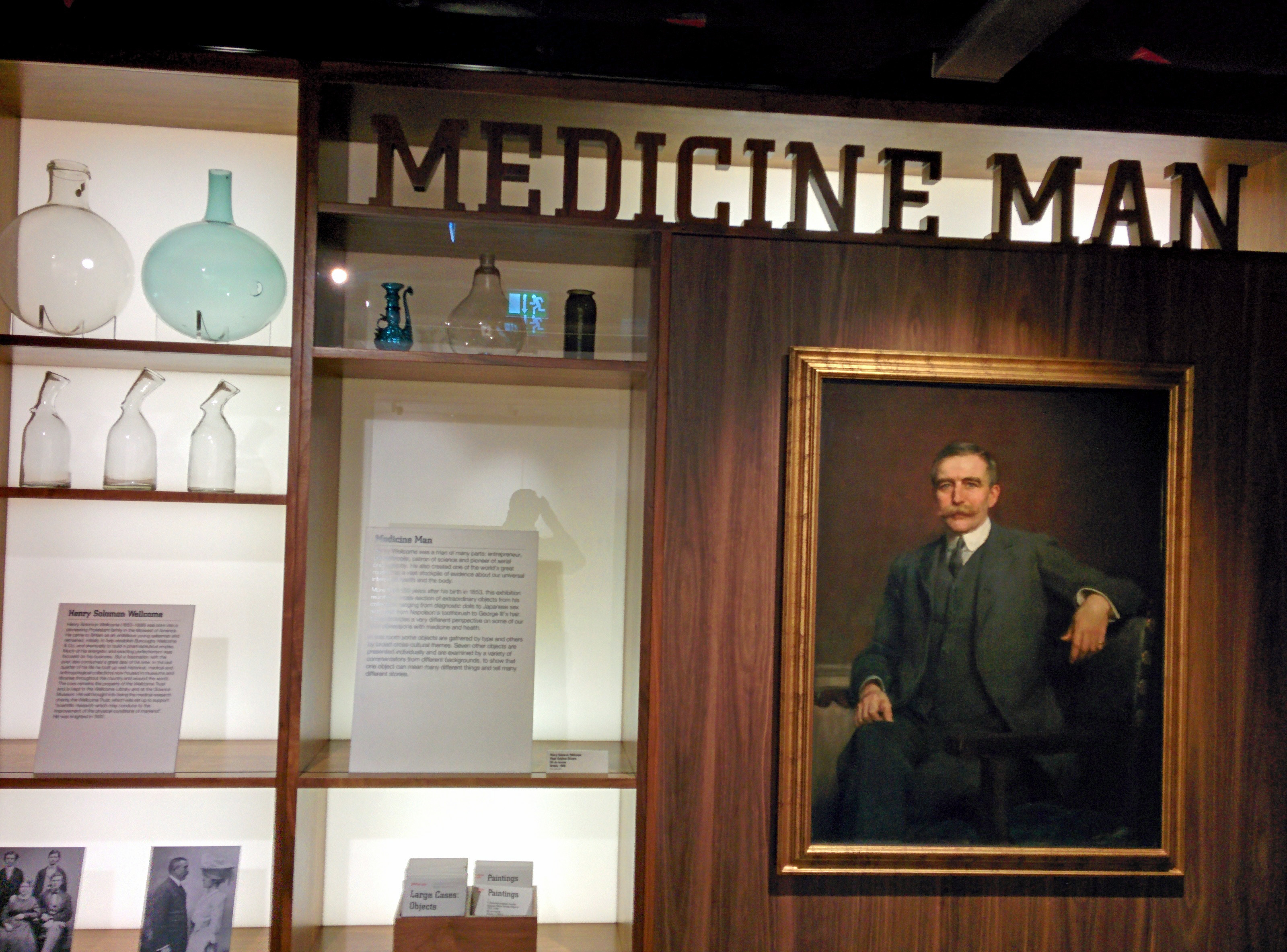
Moving back westward along the south side of the Euston Road we pass Friends House, the Quakers’ top joint, before reaching the Wellcome Collection. This is part of the Wellcome Trust, founded in 1936 by the munificent Henry Solomon Wellcome as a global charitable foundation dedicated to improving health. As well as its permanent collection of medical-related artefacts the Collection also puts on regular free artistic and historical exhibitions. If you’re quick you can still (up until 18 October) catch the work of Alice Anderson who has “mummified” an astonishing array of items using layers of thin copper wire.

IMG_20150930_124942 IMG_20150930_122821

IMG_20150930_123008

IMG_20150930_125044

Crossing on to the north side of Euston Road we encounter the headquarters of the Royal Society of General Practioners, yet another grand London edifice at the disposal of members of the medical profession.

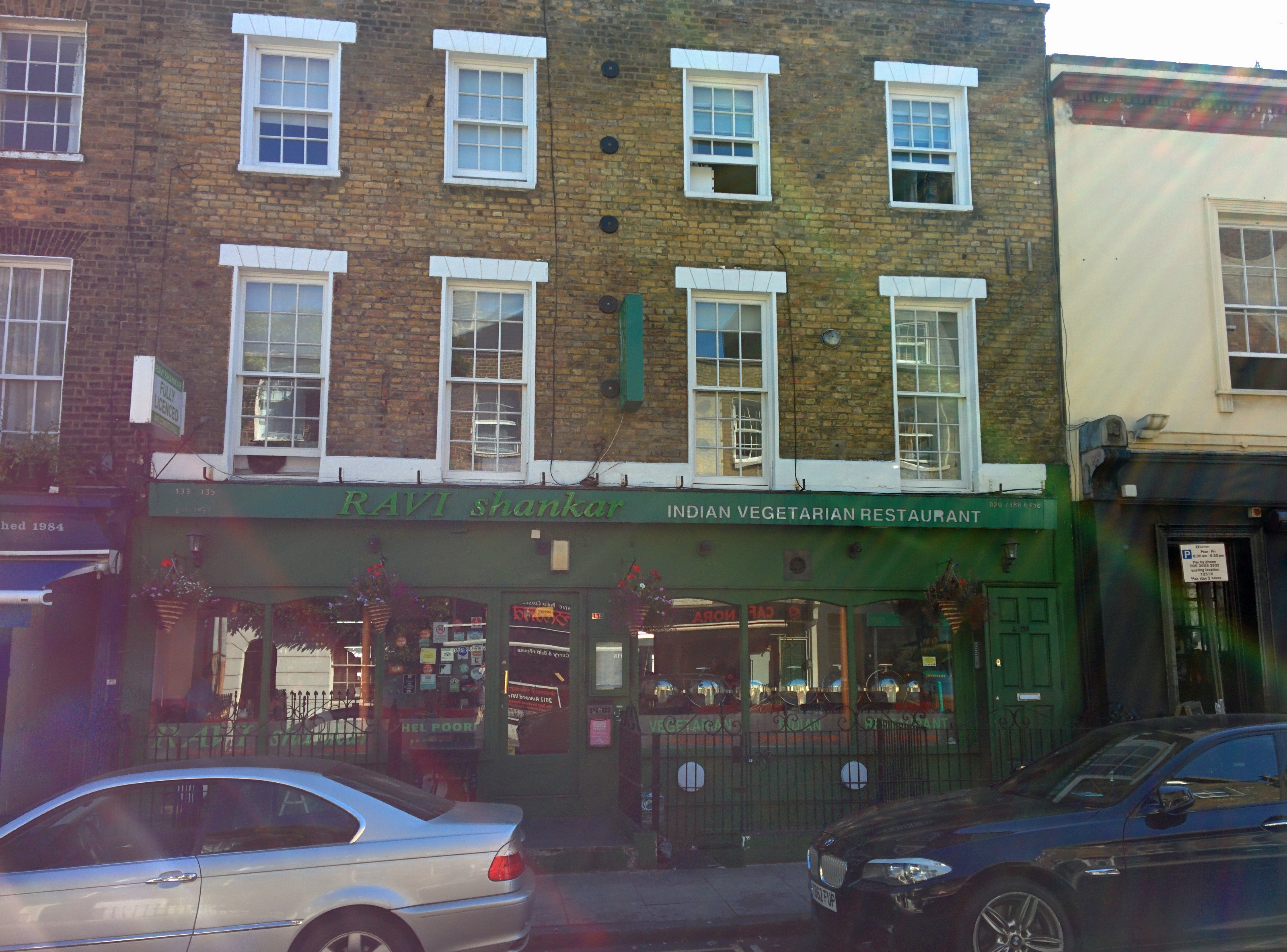
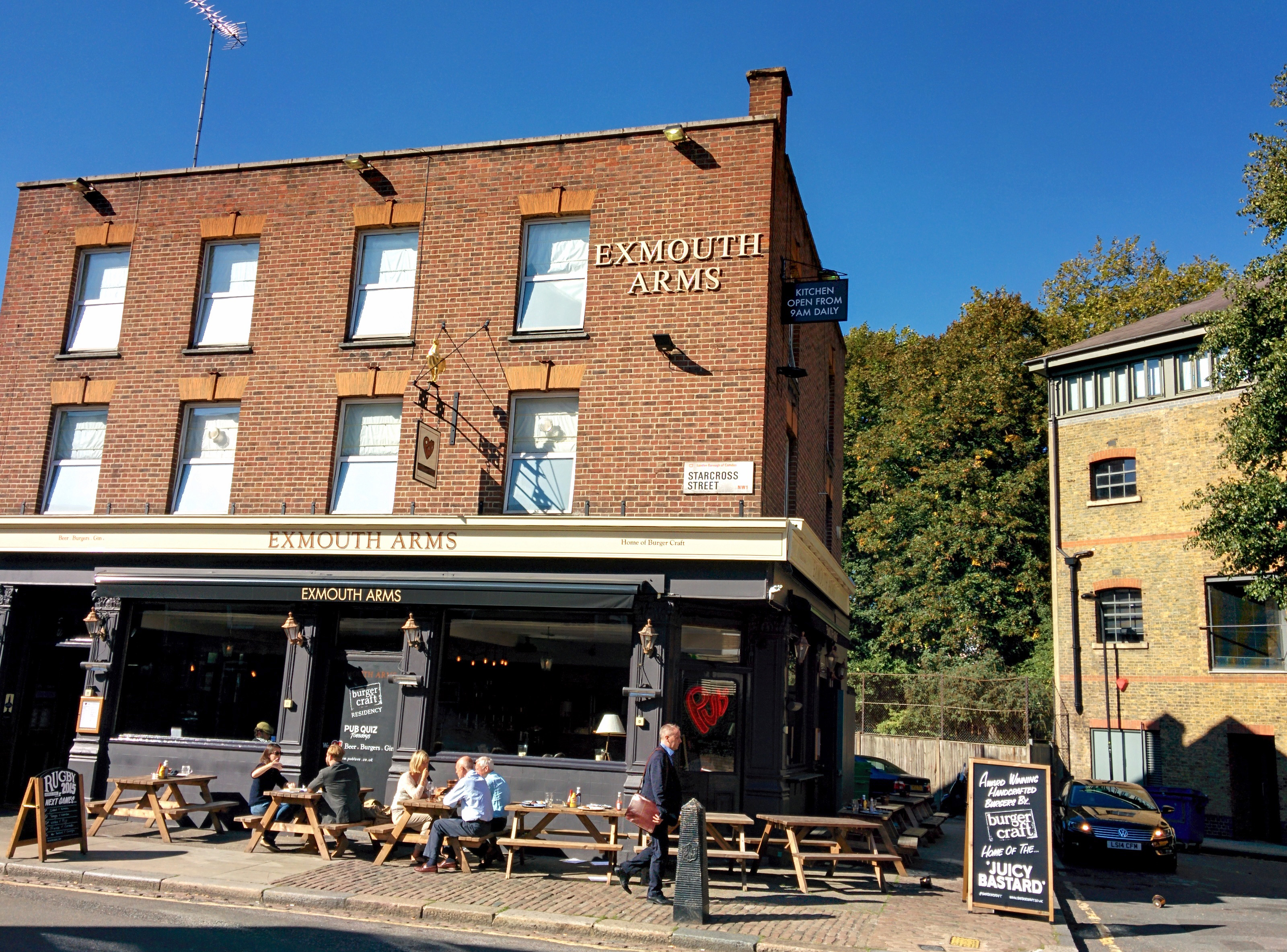
From here we head back north along Hampstead Road before doubling back down Cardington Street then turning onto Drummond Street, which used to be wall-to-wall Indian vegetarian restaurants but now only has a couple left. Cobourg Street adjoins Starcross Street where we pause at the pub of the day, the Exmouth Arms, for a pint and a burger (though not your actual Juicy Bastard I’m sorry to say).

IMG_20150930_135513 IMG_20150930_135110

North Gower Street leads back to Drummond Street and on the corner of this and Melton Street sits one of those red-tiled disused former tube stations. This was one of two separate tube stations built to service Euston just after the start of the 20th century. This one, which was part of the Charing Cross, Euston and Hampstead Railway was only in use from 1907 to 1914 when both the original stations were closed (though the other one did reopen in the twenties). The current Euston underground station dates from 1968 like the Victoria Line on which it sits.

IMG_20150930_135752

We turn right onto Euston Street and then circle back to the station via Stephenson Way where I completely (and perhaps aptly) fail to spot the (Harry Potter-ishly named) Centre for the Magic Arts which is the home of the Magic Circle. I guess they must keep it shrouded in some kind of invisibility cloak during the daytime..

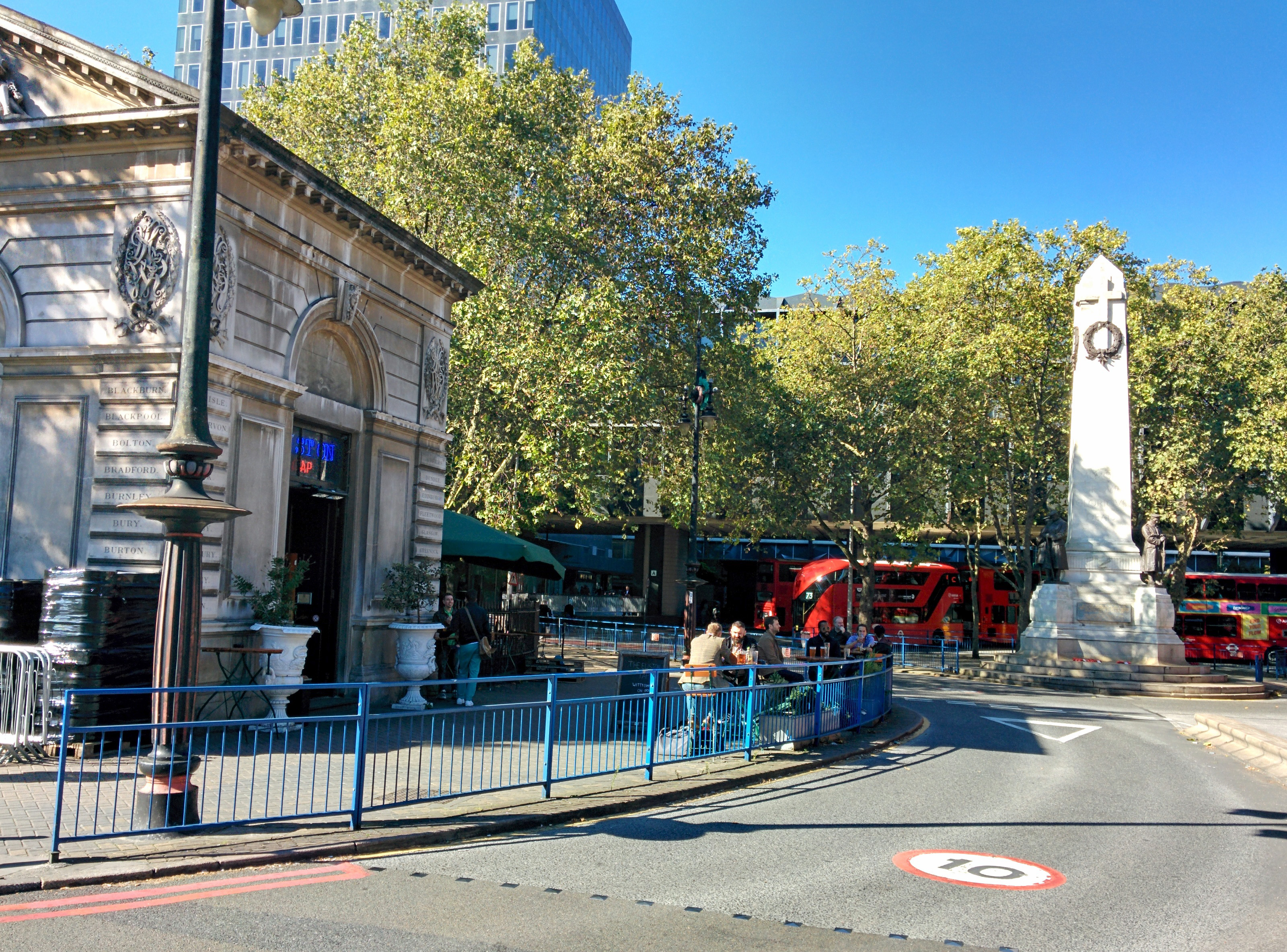
At the Euston Road entrance to the station can be found the last remnants of the original station which was built in the 1830’s and demolished (surprise, surprise) in the 1960’s. The two lodges which originally flanked the grandiose Euston Arch (despite being Grade-II listed this failed to survive the redevelopment) are now in use as bars. The war memorial in the background below also made it beyond the decade of destruction.

IMG_20150930_141139

Turning south again on Upper Woburn Place we find the home of the British Medical Association ( I refer you to my earlier comment). This photo doesn’t do it justice and I’ve missed off the plaque noting that Dickens (him again) lived on this site for ten years or so from around 1860. On the upside what’s not to like about those trousers ?

IMG_20150930_141753

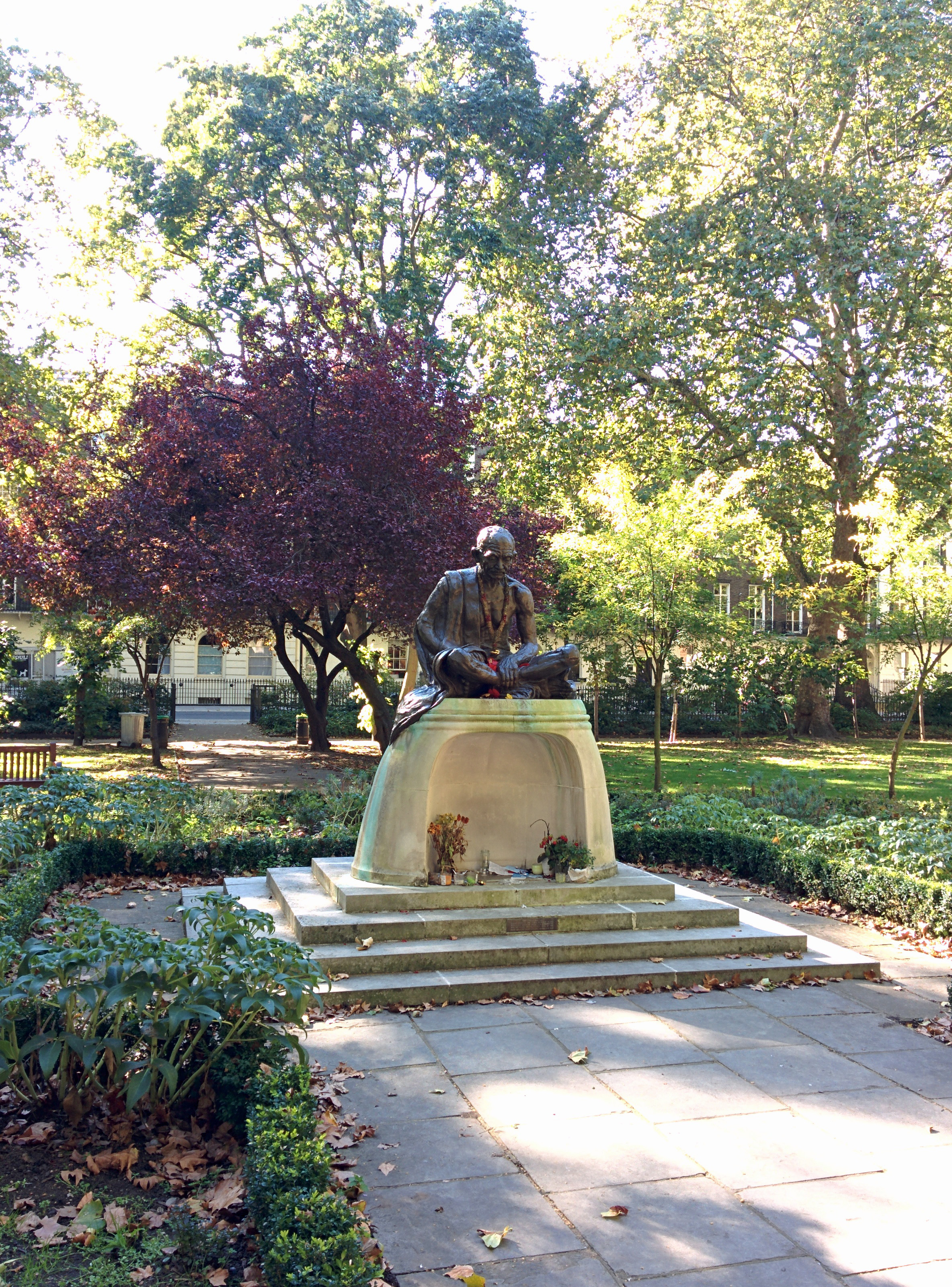
We arrive at Tavistock Square which encircles and eponymous garden whose centrepiece is this statue of Mahatma Gandhi, sculpted by the Polish artist, Fredda Brilliant (real name), and installed in 1968 ( as big a year round these parts as it was in Paris seemingly).

IMG_20150930_142054

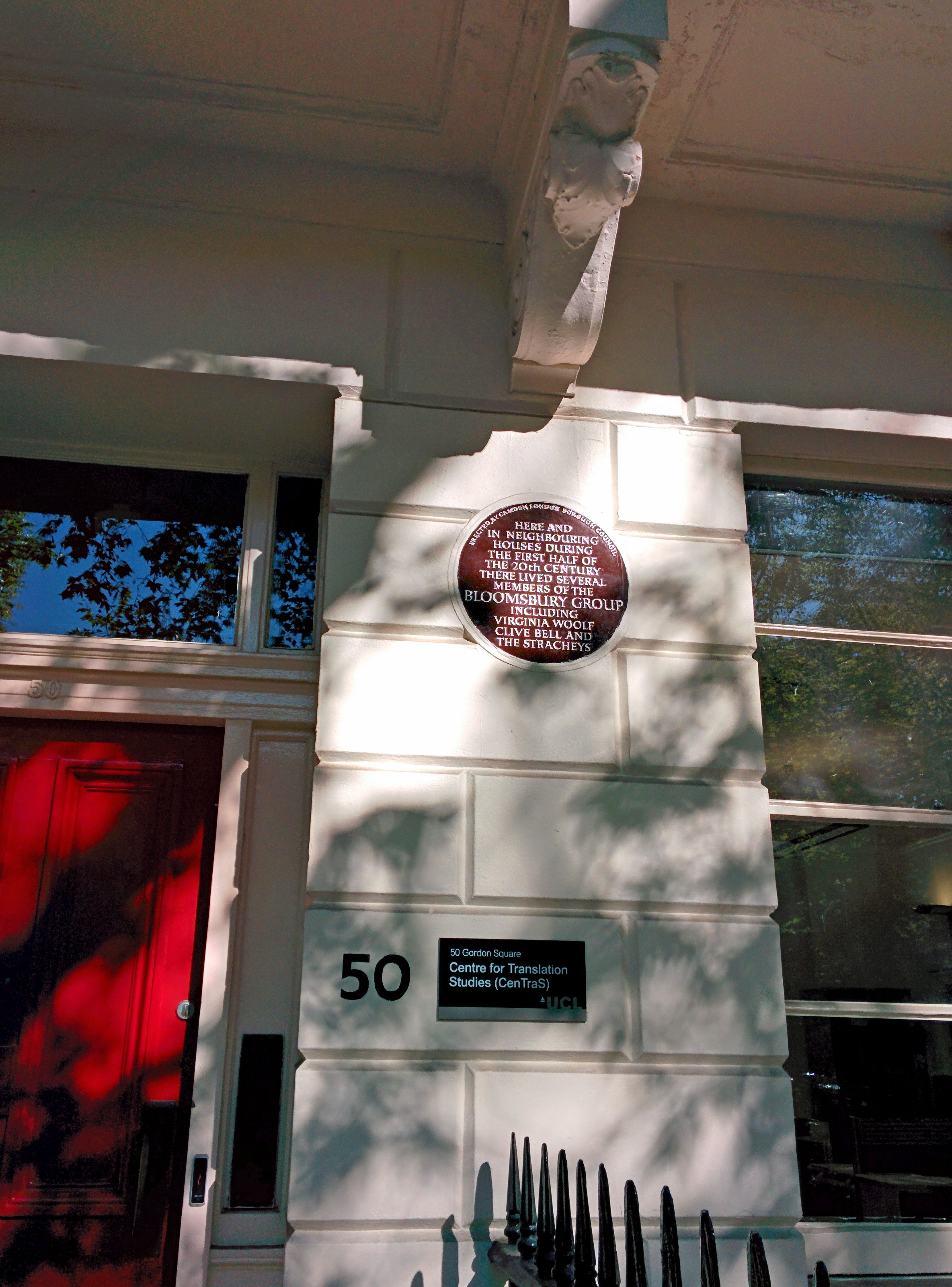
Via Endsleigh Street, Endsleigh Gardens and Taviton Street we reach Gordon Square. This is now firmly within the bailiwick of Bloomsbury as evidenced by the plaque at no 50. celebrating the whole Bloomsbury set and another at no.51 dedicated to Lytton Strachey (1880 – 1932) alone. Thankfully I managed to avoid the recent TV series on the set and I won’t dwell on them here though I suspect they will crop up again in a subsequent post.

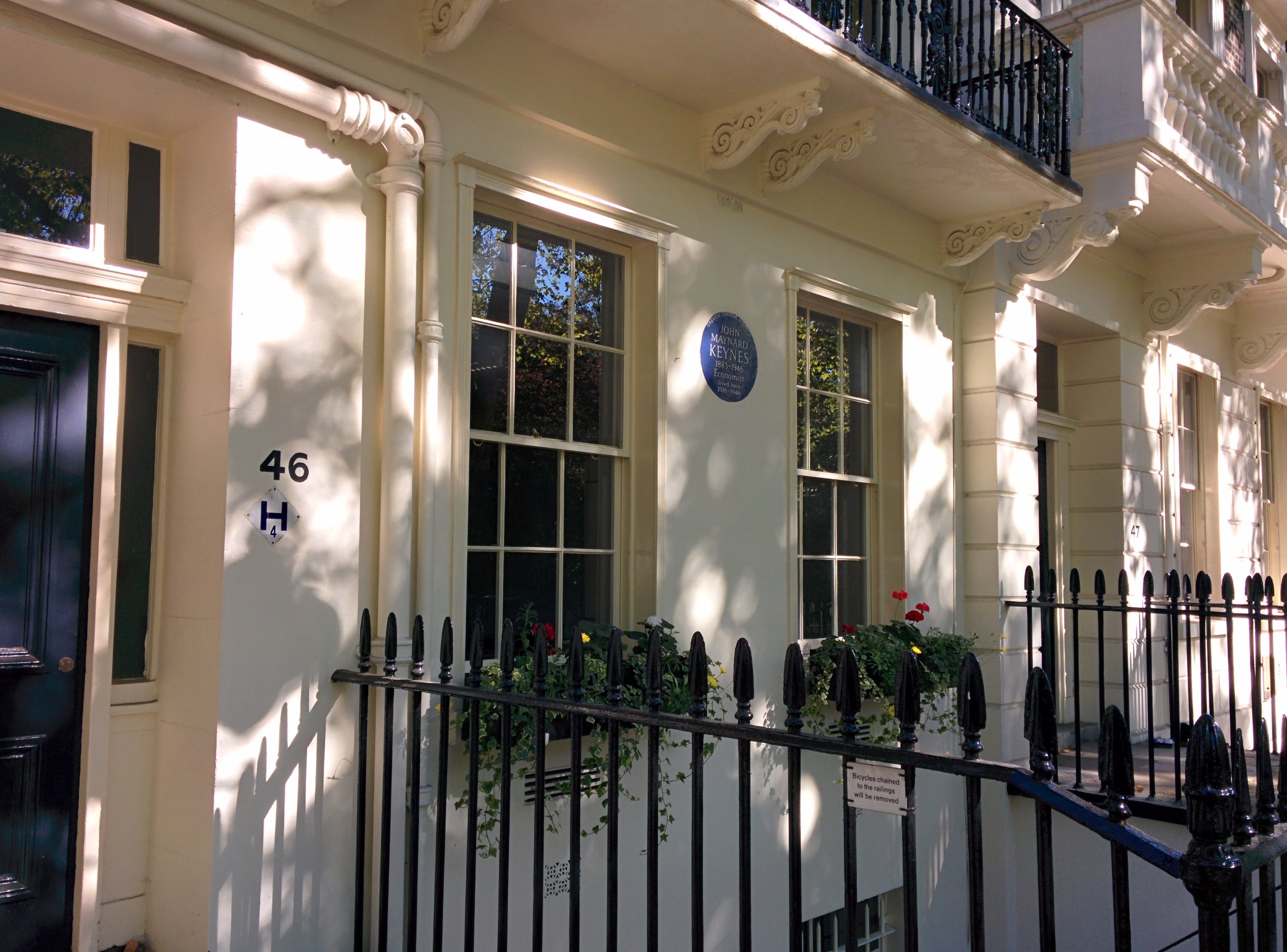
More interestingly, no.46 was home to the great economist John Maynard Keynes (1883 – 1946) from 1916 until his death. In 1999, Time magazine included Keynes in their list of the 100 most important and influential people of the 20th century, commenting that: “His radical idea that governments should spend money they don’t have may have saved capitalism.” As we know just nine years later that idea came into its won once more.

IMG_20150930_143240 IMG_20150930_143116john-maynard-keynes-1

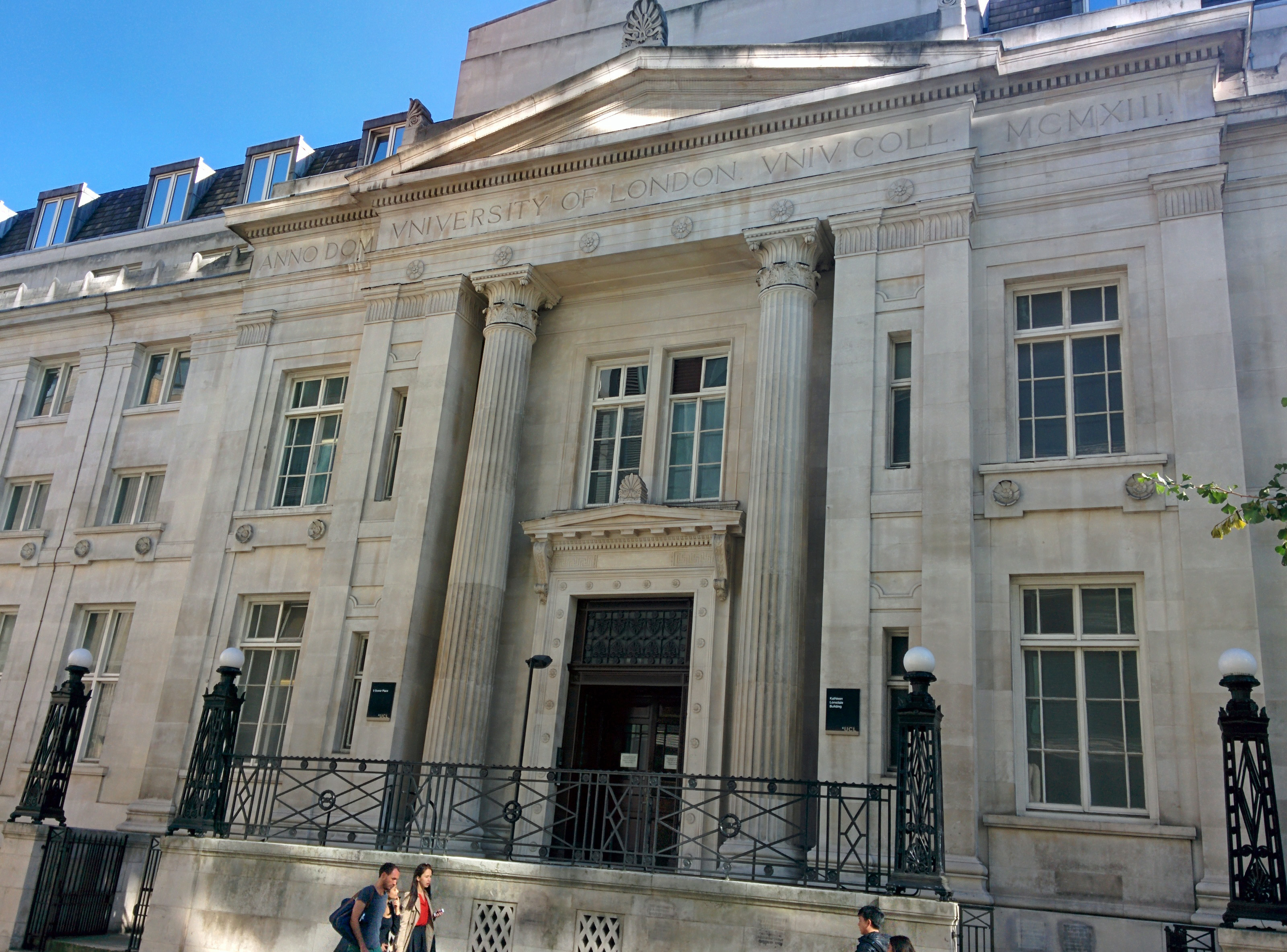
On the other side of the square is Dr Williams’ Library. The gardens in between are much frequented by students of University College London whose campus occupies a large site to the west of Gordon Street and a smaller one to the east.

IMG_20150930_143352 IMG_20150930_143507

So large in fact that bypassing it takes us, via Gower Place and Beaumont Way, all the way back to Warren Street tube and the end of today’s journey.

IMG_20150930_144532 IMG_20150930_144927

Day 6 – Wigmore Street- Portland Place – Cavendish Square

Today’s Route finishes off the area to the north of Oxford Street, covering the stretch between Bond Street and Oxford Circus tube stations. Main focus is on the southern portion of Portland Place home of BBC HQ and the Langham Hotel but also foreign embassy central.

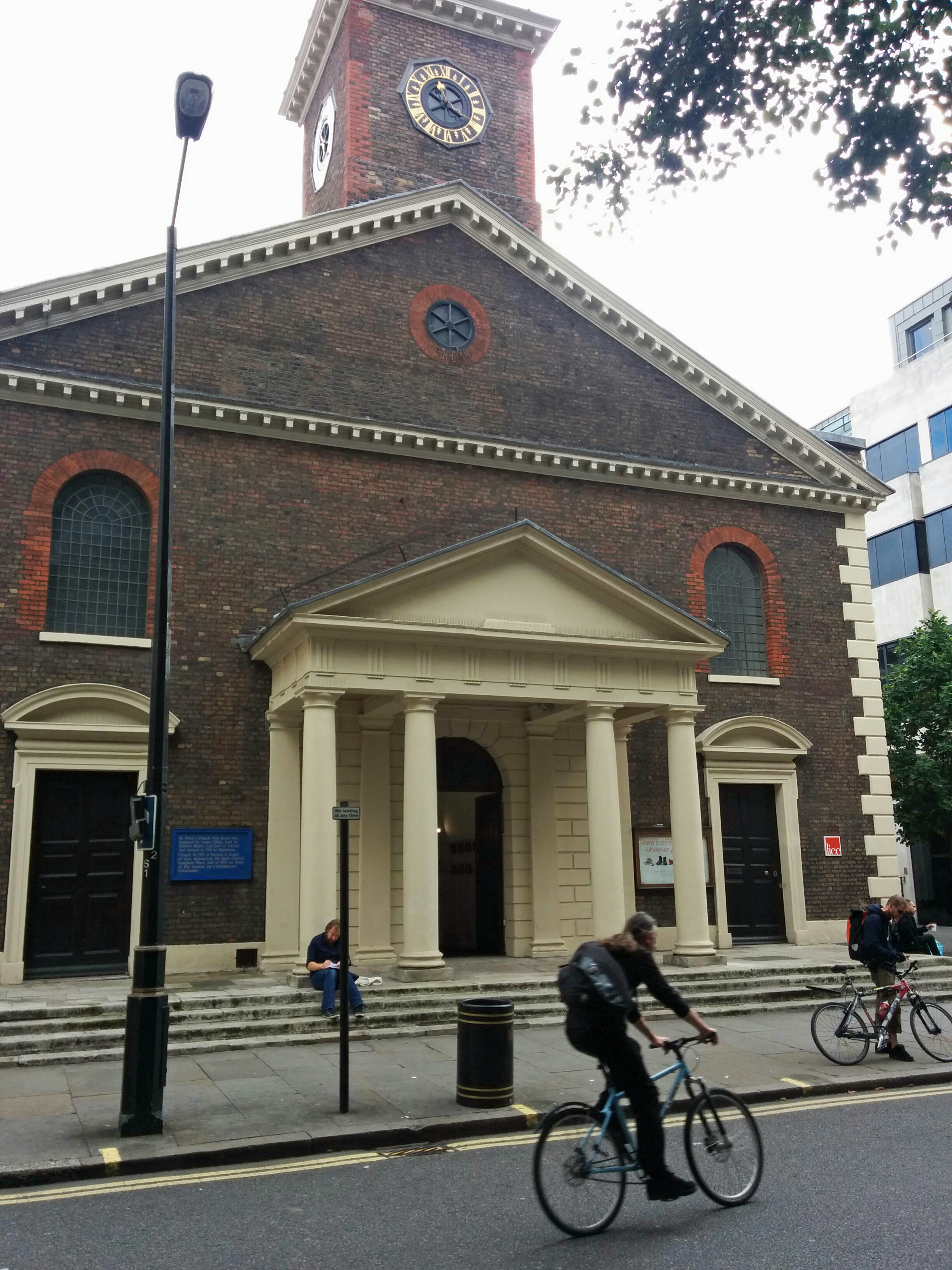
Day 6 RouteStarting point is Bond Street tube from where we head north on Marylebone Lane then right at Wigmore Street and south again on Welbeck Street to Vere Street. Here we find St Peter’s Church once known as the Oxford Chapel. This is now the base for the London Institute of Contemporary Christianity.

IMG_20150904_111828

The Brazilian Consulate General (different from the embassy) is also located here at no.3. IMG_20150904_112202

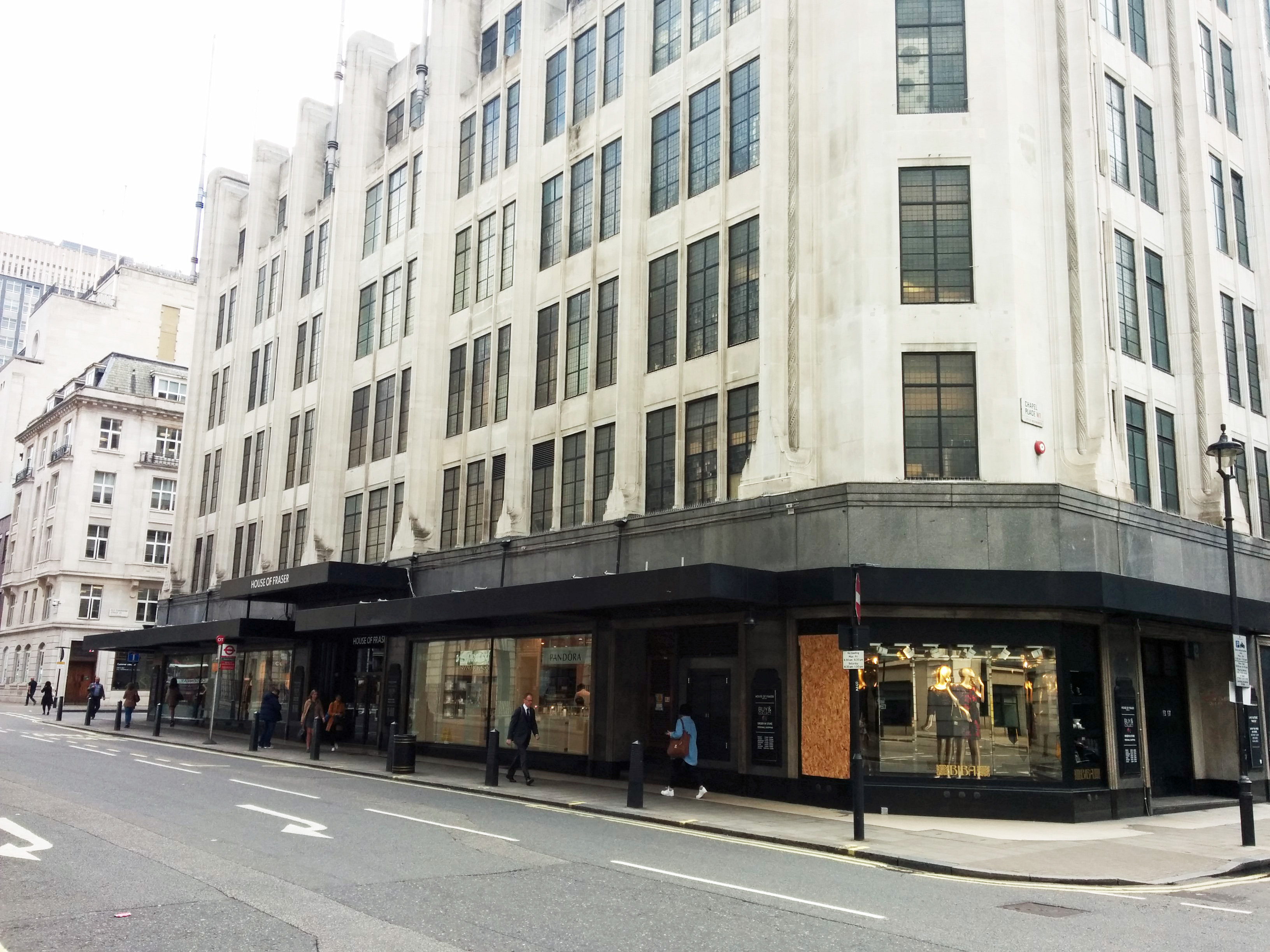
Chapel Place skirts up the side of House of Fraser at no.350 Oxford Street. Up until its rebranding in 2001 this was the main branch of DH Evans. (DH Evans was named after Welshman Dan Harries Evans and opened on Oxford Street in the last century. It was quickly expanded but Mr Evans died penniless in 1928 after a series of unsuccessful property deals. House of Fraser is unfortunately not after the misanthropic Dad’s Army character though it did originate in Glasgow – in 1849 as Athur and Fraser).

IMG_20150904_112511

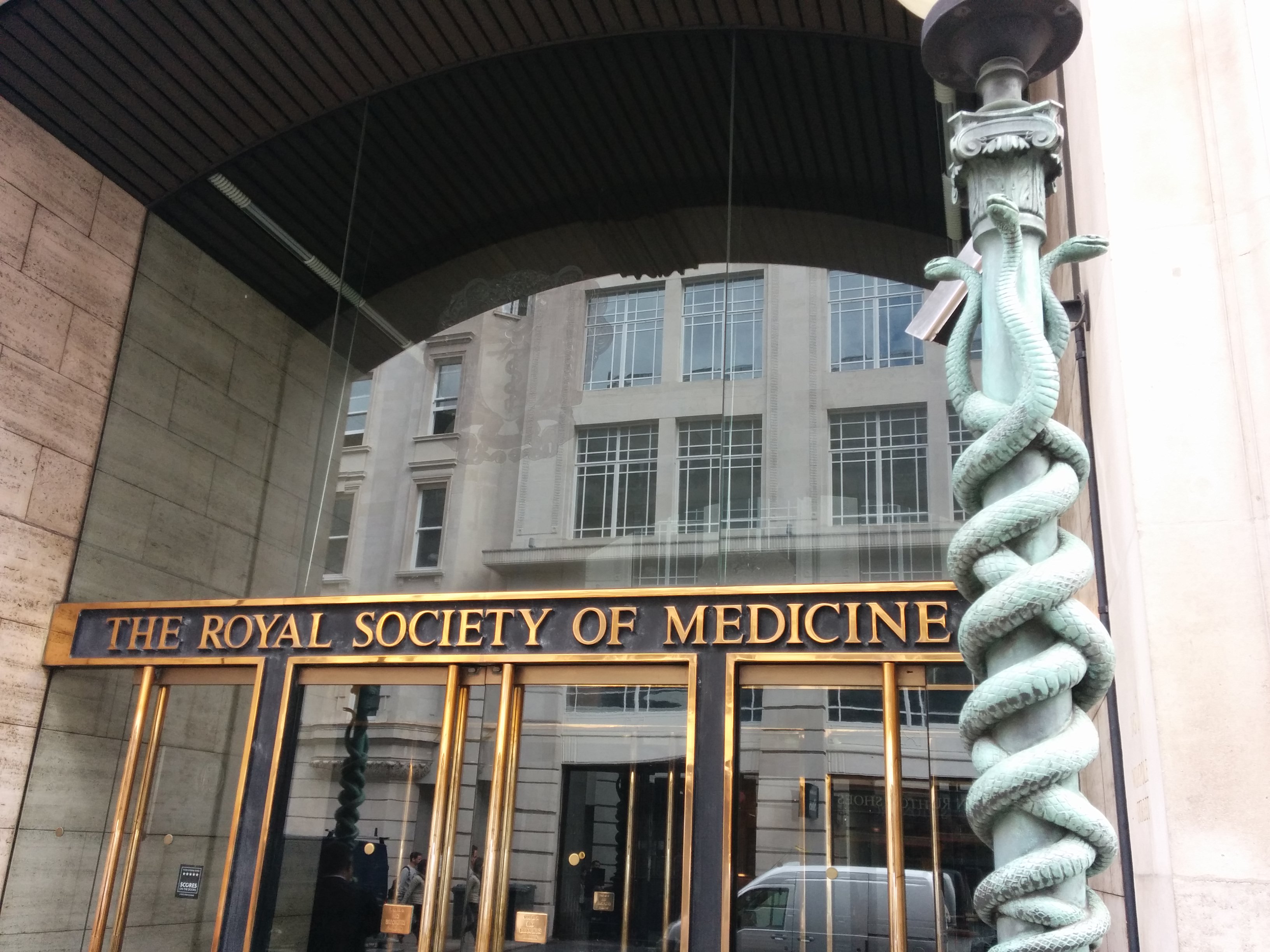
IMG_20150904_112713 This brings us to the bottom end of Wimpole Street (see previous post). Since 1912 No.1 has been the home of the Royal Society of Medicine. Both Charles Darwin and Sigmund Freud are Honorary Fellows of the Society and five of its former presidents have diseases named after them. The symbol of the serpent entwined around a staff derives from the rod wielded by the Greek god Asclepius, a deity associated with healing and medicine.

Somewhat ironically No.1A houses the London HQ of Coca Cola.IMG_20150904_114303

Further down the street we find the London Eye Hospital
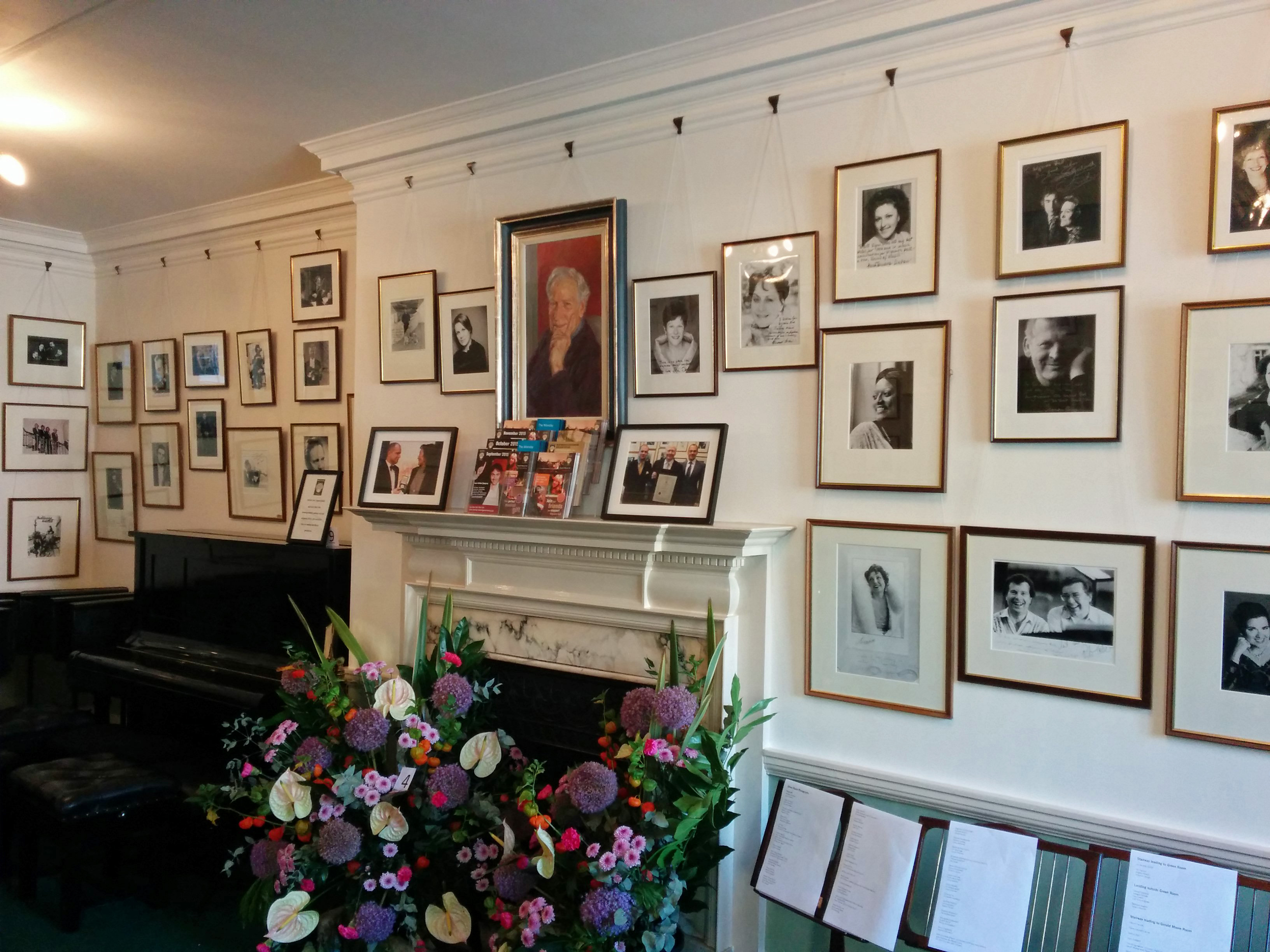
IMG_20150904_113207At the intersection with Wigmore Street (again) is the world-renowned Wigmore Hall London’s premier venue for chamber music. Rather shamefully I have only ever been here once which was when my A level Russian group (all three of us) came up to hear the poet Yevgeniy Yevtushenko. So that would be have been either 1976 or 1977 and I suspect none of us managed to follow a word.

The stage and green room at the Wigmore Hall

IMG_20150919_122721

IMG_20150919_122918

This rather splendid edifice opposite the Wigmore Hall at no.33 brings us back into the realm of department stores as this is where Debenhams began. (Its genesis was actually at no.44 but it moved to no.33 in 1851 as Debenham and Freebody and properly took off from that point.)

IMG_20150919_123840

IMG_20150904_114857

IMG_20150904_114953

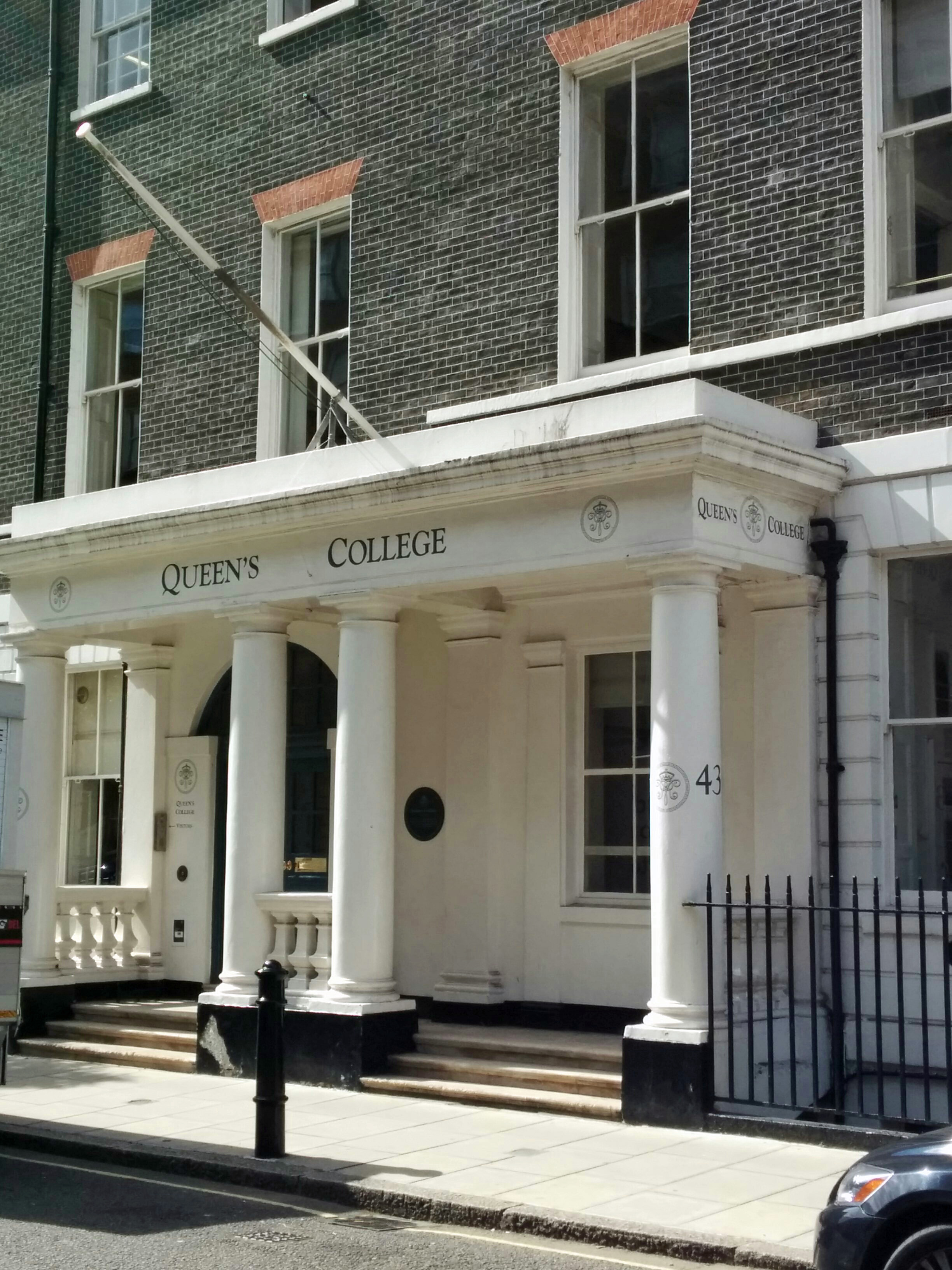
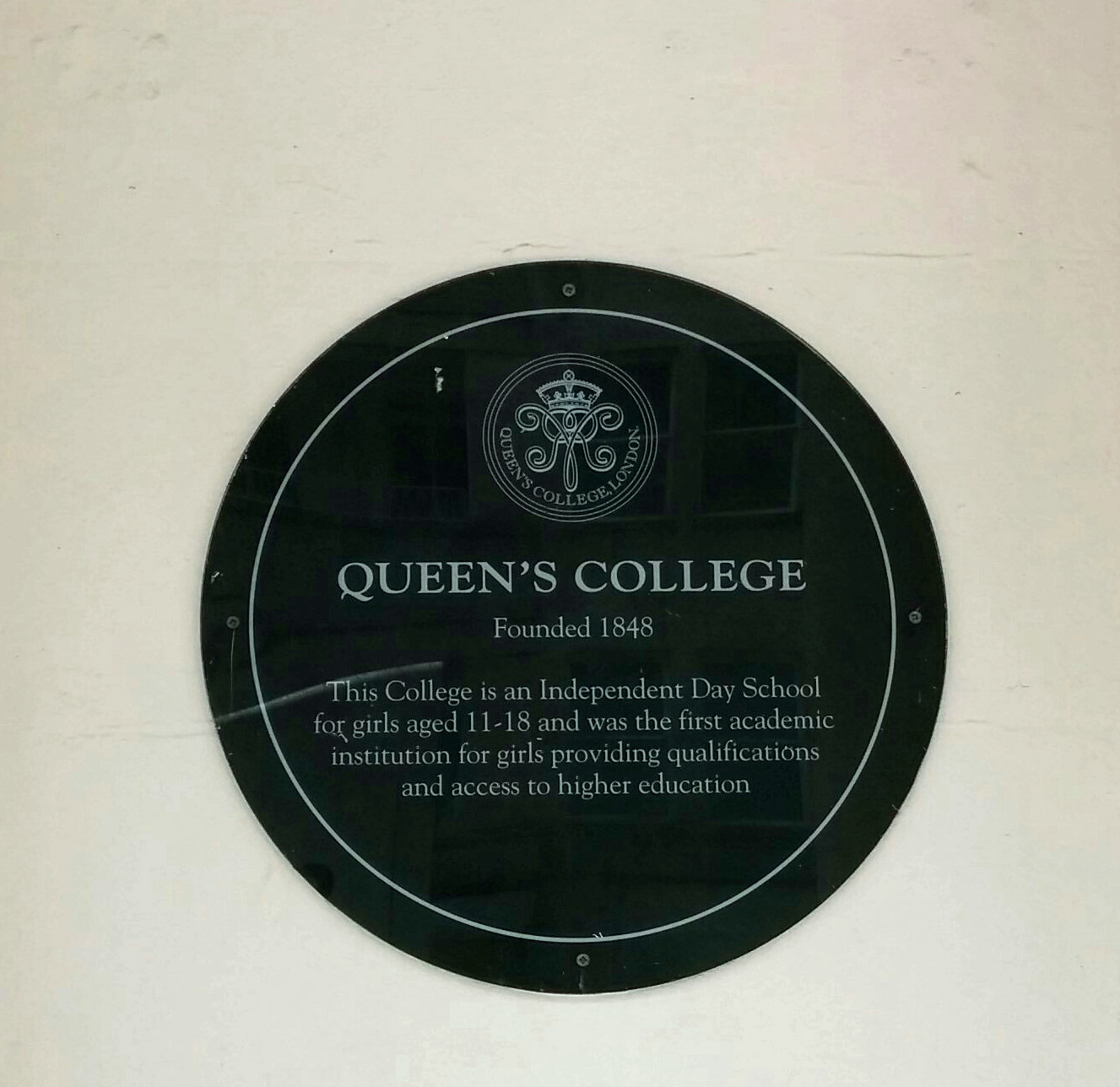
Via Queen Anne Street we reach yet another stretch of Harley Street and here at No.43-49 is sited Queen’s College which was founded in 1848 as the first academic institution providing girls aged 11-18 with a secondary education that would allow them to go on to university.

In a flat at the very grand no.2 Mansfield Street resided the music patron and philanthropist, Sir Robert Mayer (1870 -1985), who was one of the founders of the London Philharmonic Orchestra and (as you can see) lived to be 105. When he appeared on Desert Island Discs at the age of a hundred he picked Son of My Father by Chicory Tip as his favourite track.
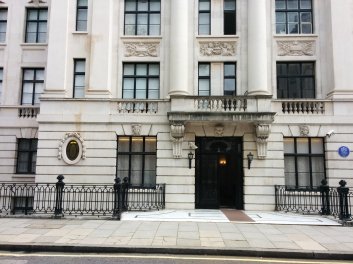
IMG_20150904_115450

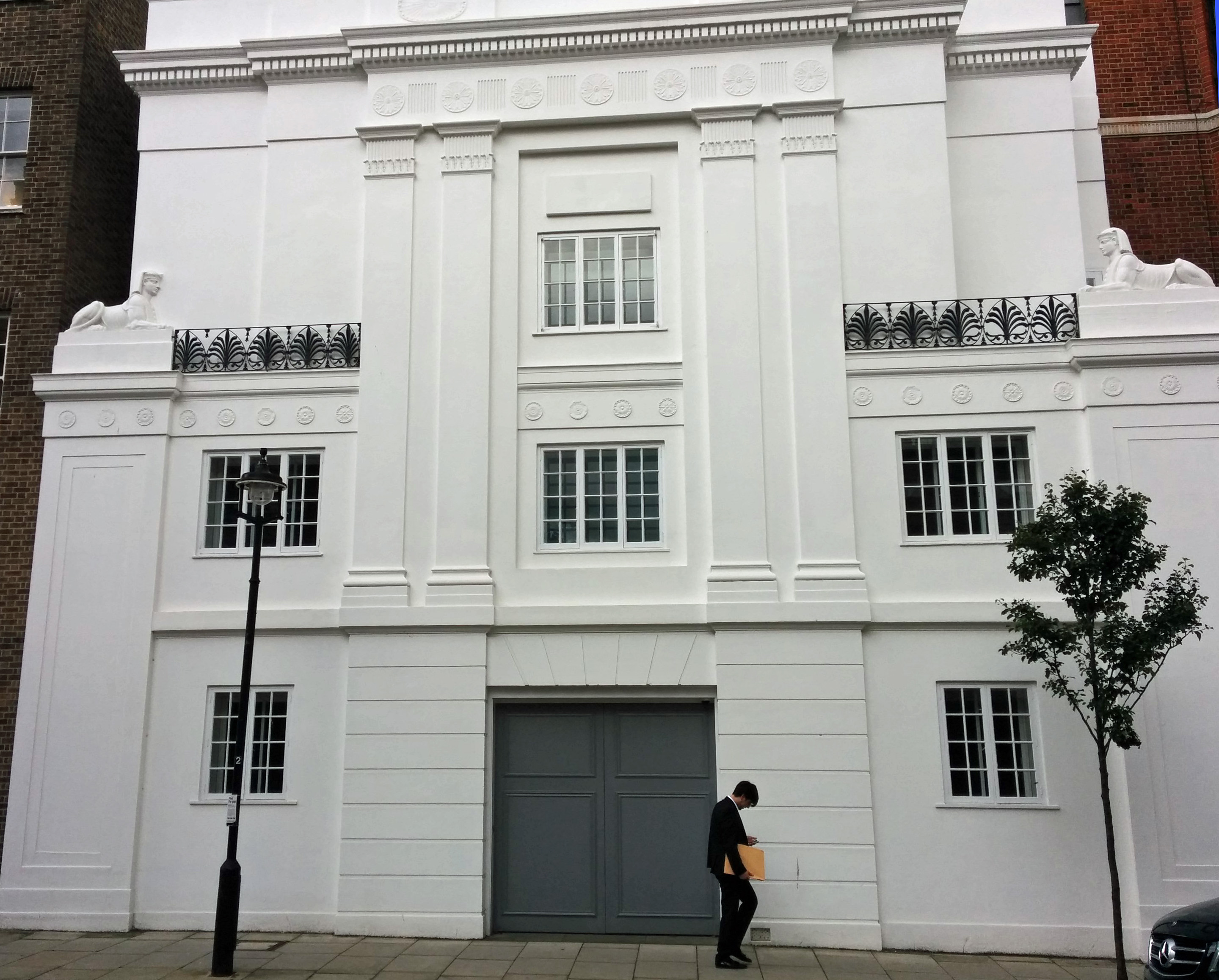
IMG_20150904_120025This rather enigmatic grade II listed building at no. 10 Duchess Street is now part of the British Medical Association and originates from around 1770 as designed by Robert Ada. At the end of the 18th century the house was acquired by Thomas Hope, a wealthy Dutch designer and collector. His remodelling of the interior based on a series of themes included an Egyptian Room but whether this was inspired by or led to the creation of the sphinxes on the exterior is unclear.

IMG_20150904_120608 IMG_20150904_120827

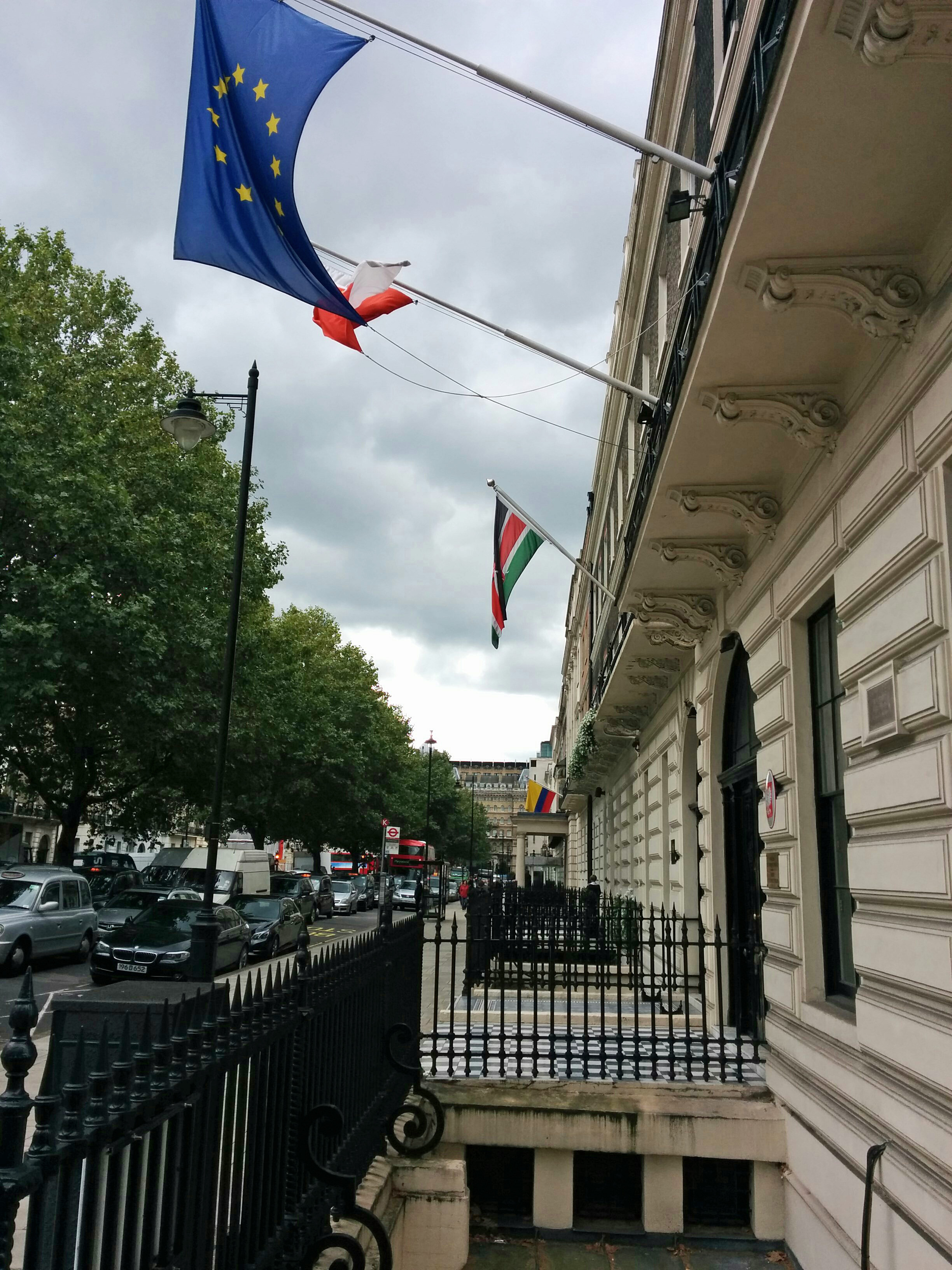
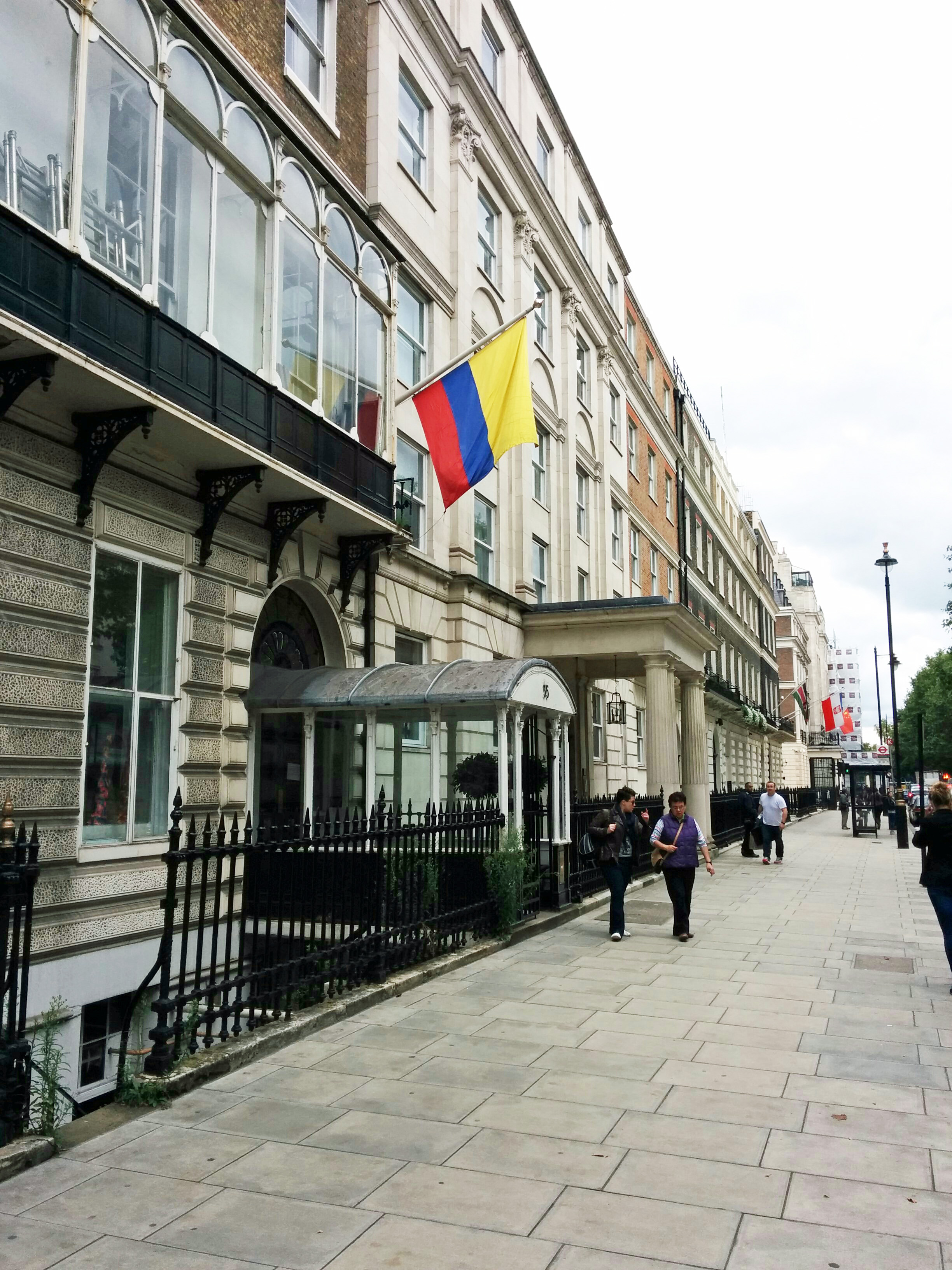
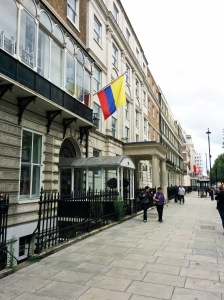
Back out now on to the lower end of Portland Place with its cluster of embassies. So high numbers to low we have China down at no. 49, Poland a non-mover at no. 47, Kenya bubbling under at no. 45, Columbia a new entry at no.35, Sweden climbing to no.27 and Portugal smashing in at no.3.

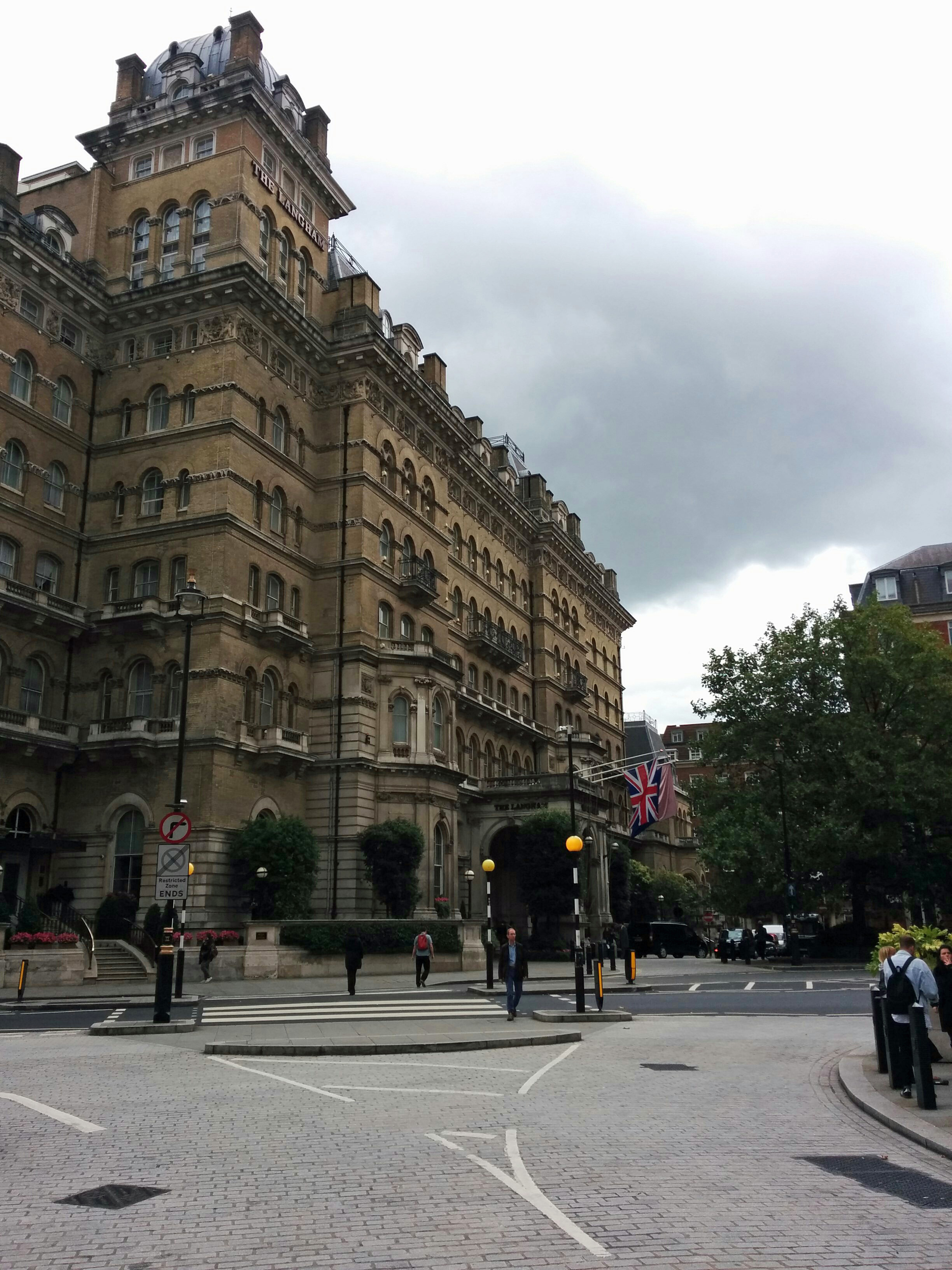
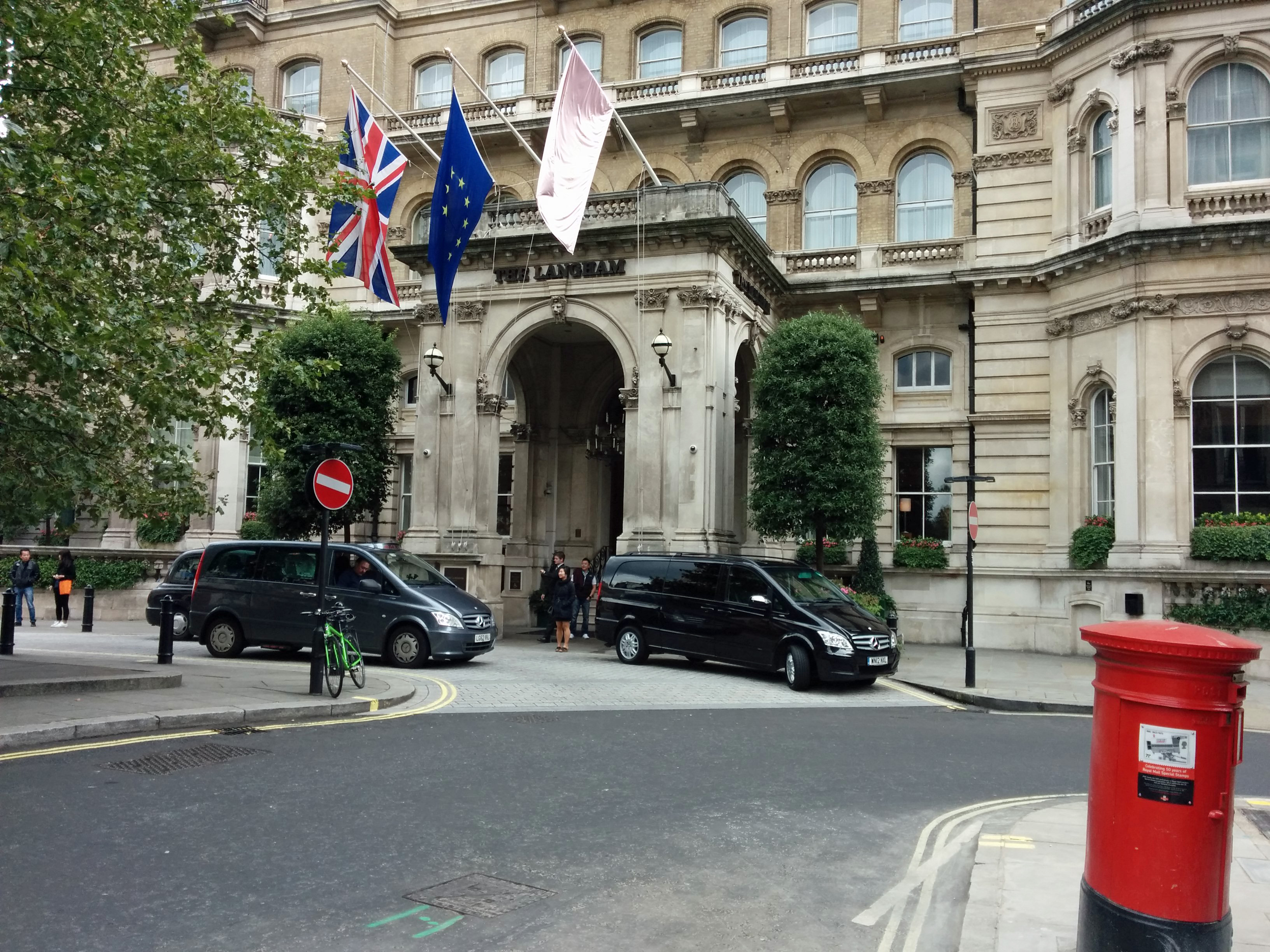
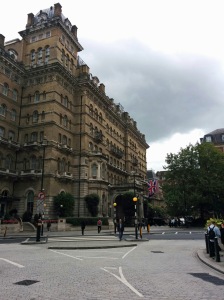
Adjacent to Portugal on the eponymous Langham Street lies the Langham Hotel opened in 1865 and mooted as the first of Europe’s so-called “Grand Hotels”. It was built at a cost of £300,000 which today would get you about 12 nights in the penthouse Sterling Suite.
IMG_20150904_123850 IMG_20150904_121200

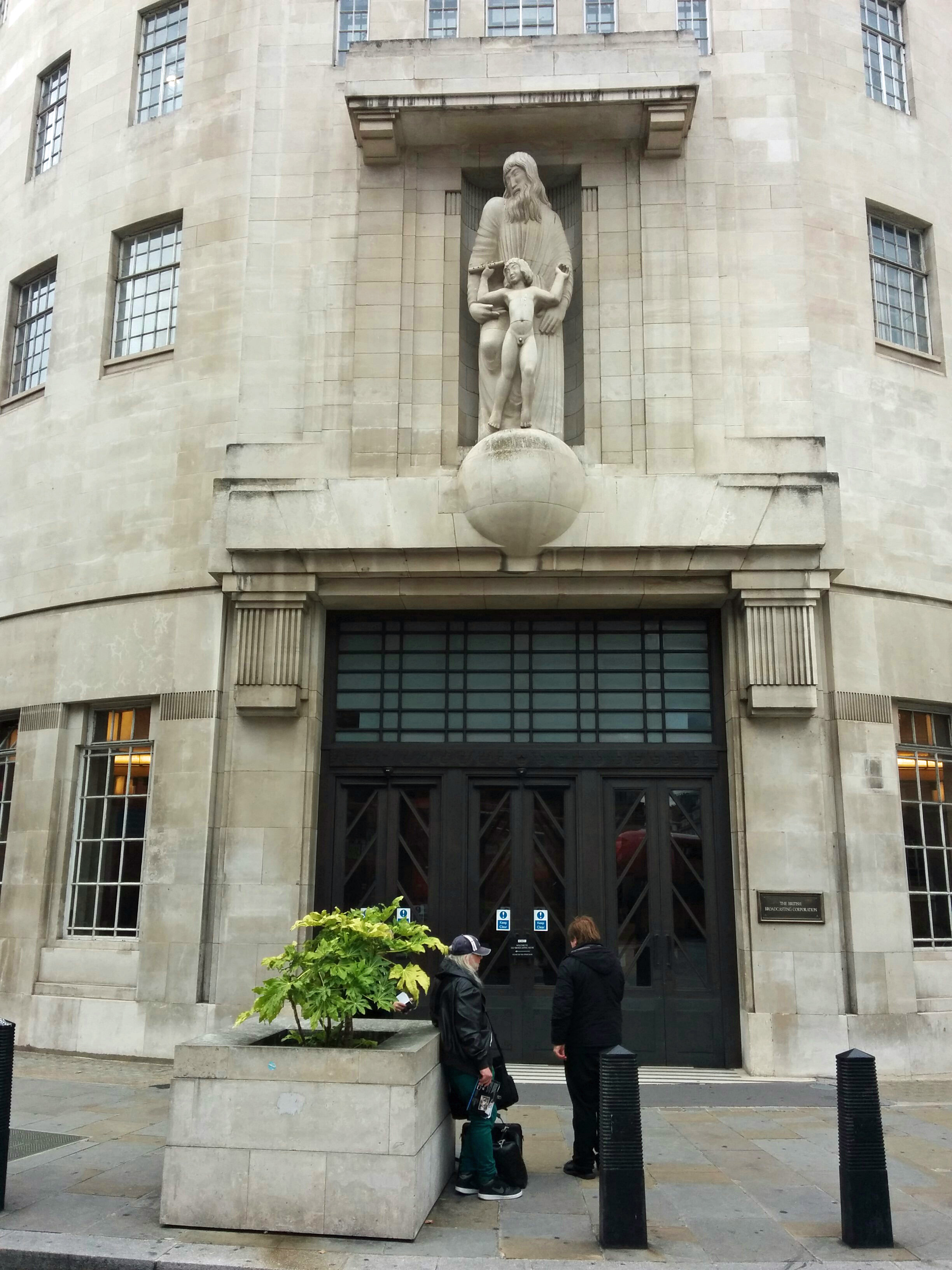
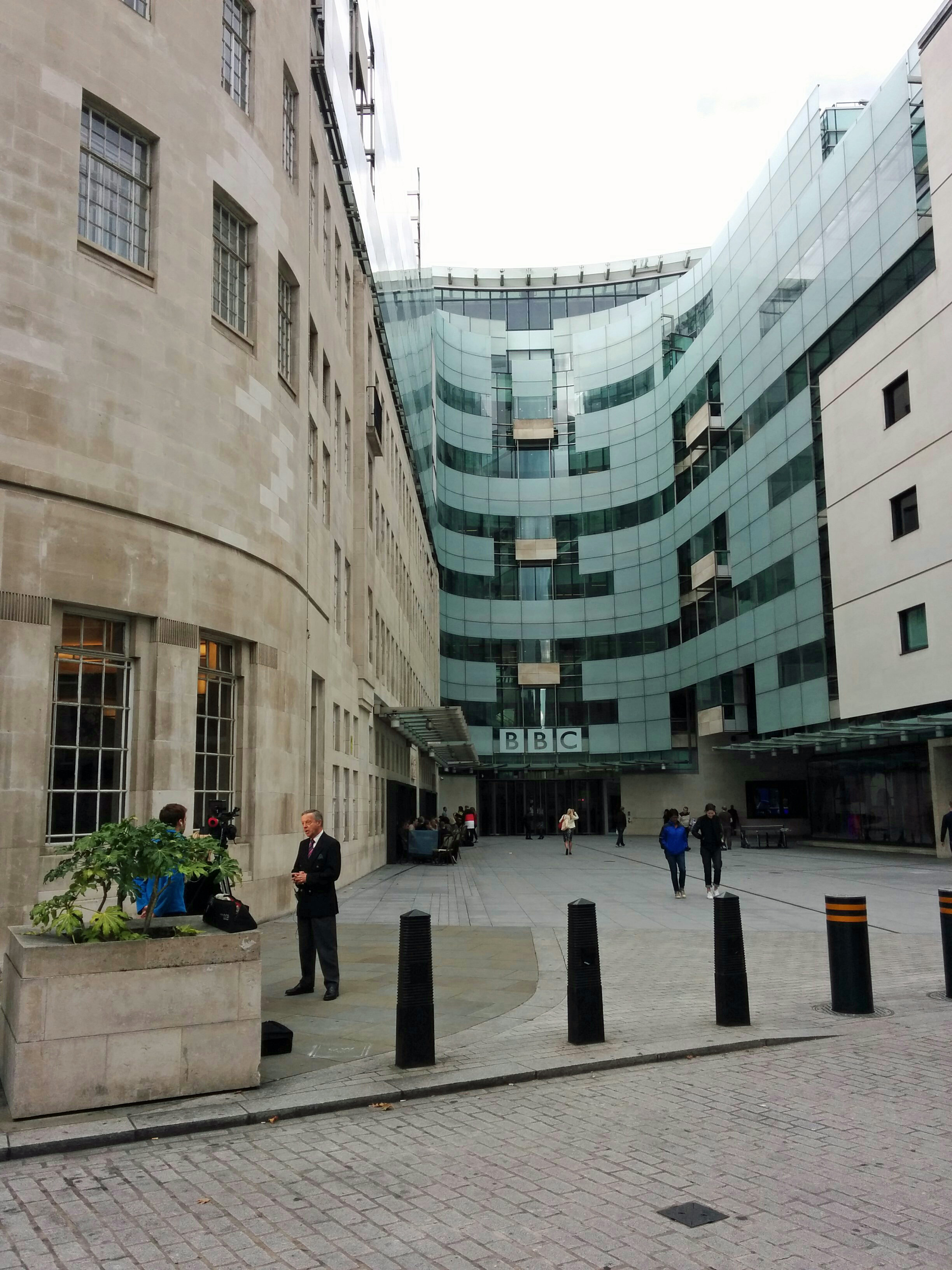
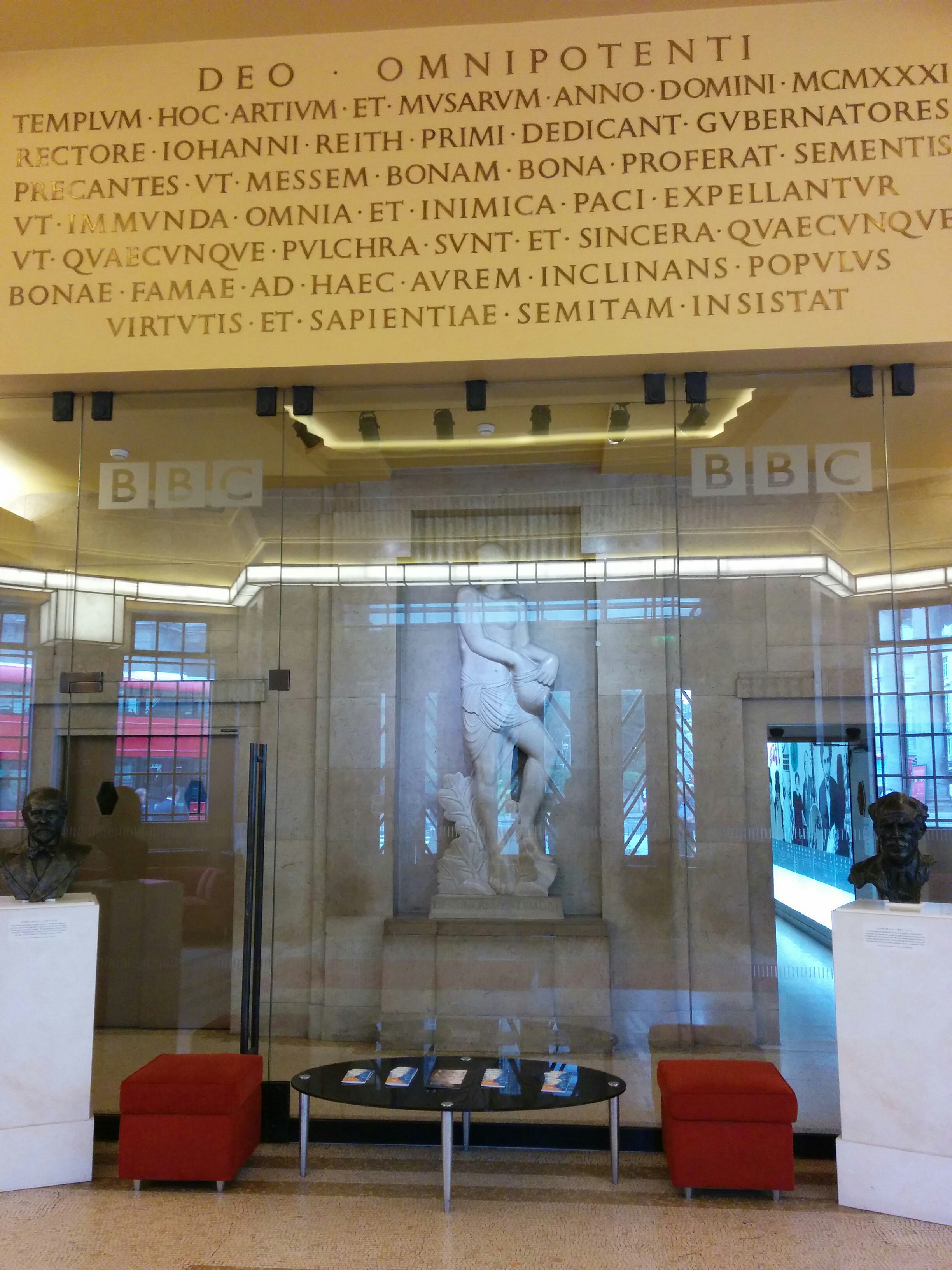
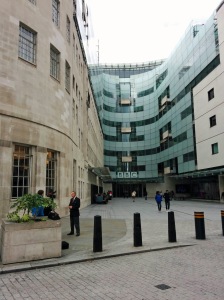
Notwithstanding that the most famous occupant of Portland Place is of course the good old BBC Broadcasting House. W1A 1AA being possibly the most iconic post code in the country – at least for those of us old enough to have written actual letters to BBC television programmes. Built in classic art deco style in 1932 the building was extensively restored and redeveloped in the early years of the 21st Century and as well as being the administrative HQ of the BBC is home to its news and radio services.

IMG_20150904_121540 IMG_20150904_121623

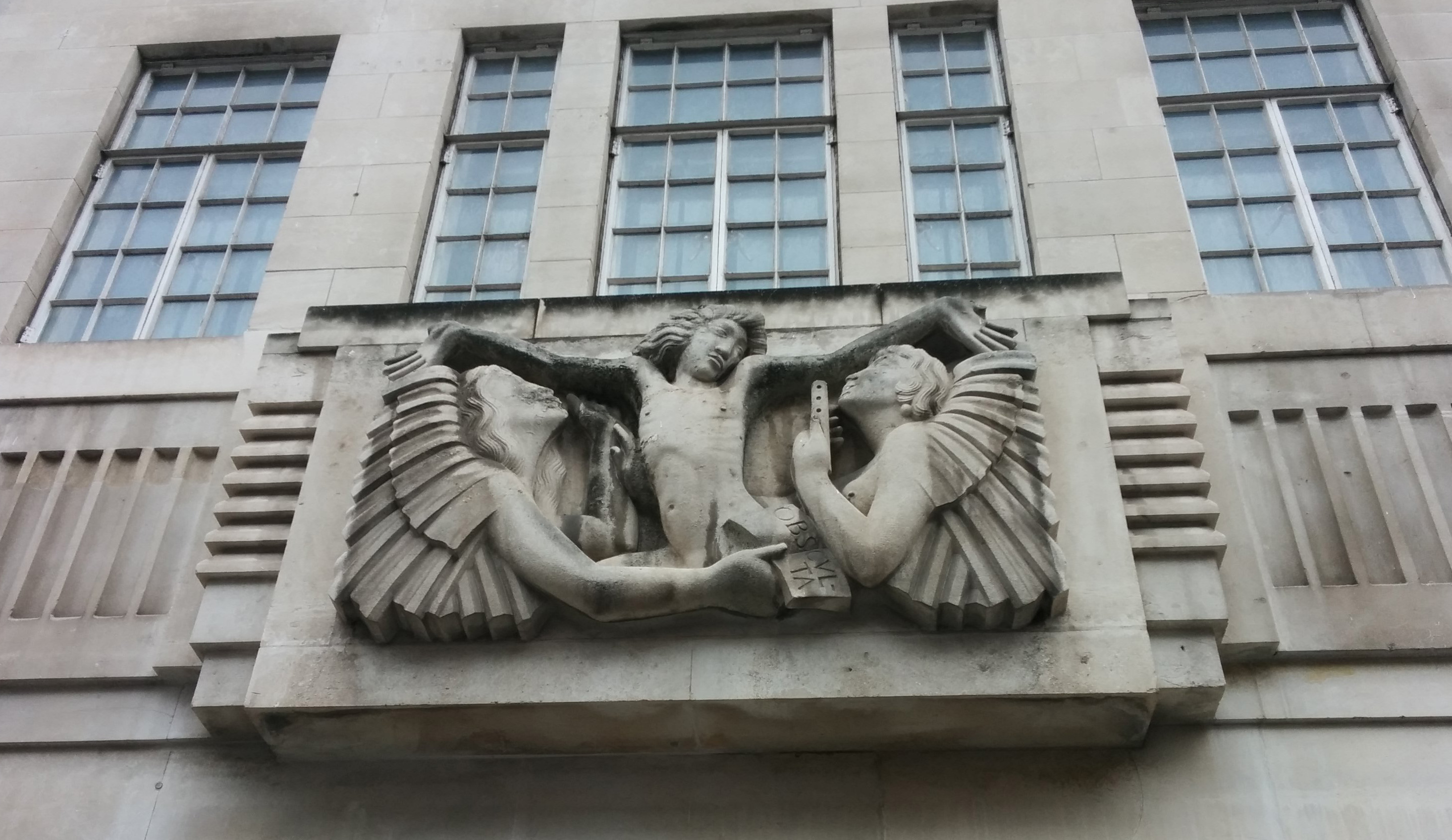
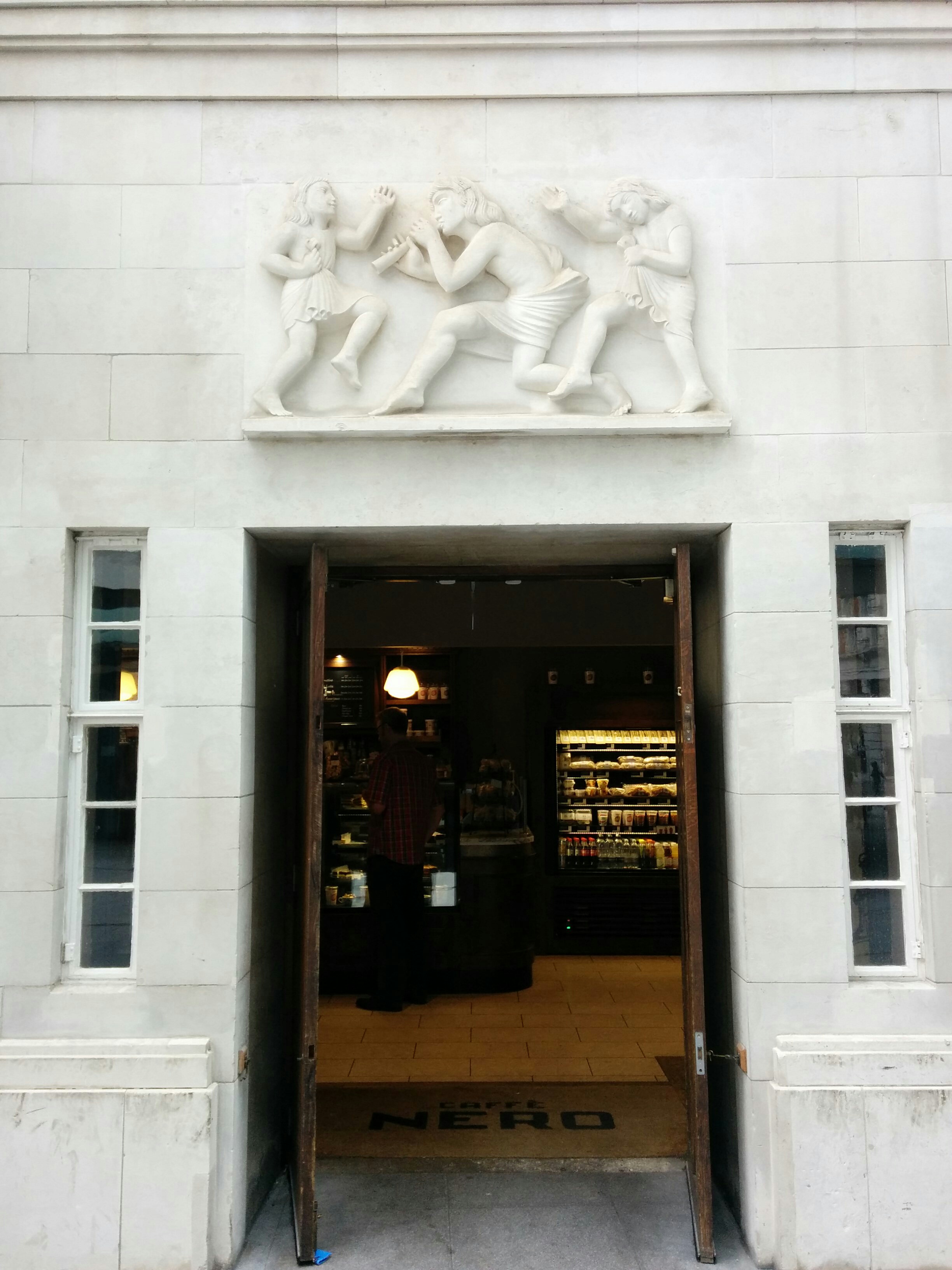
The statues on the exterior of the building are the work of the supremely talented but infamous Eric Gill (1882 – 1940). Suffice to say, were Eric Gill  alive today his activities would be of more than passing interest to Operation Yewtree. There are probably few more prominent examples of the vexed question of whether or not it is possible to continue to admire the work of an artist whose personal mores turn out to be abhorrent.
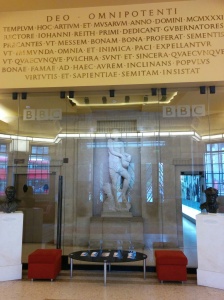
IMG_20150904_122001 IMG_20150904_122107

IMG_20150904_123613 IMG_20150904_123451

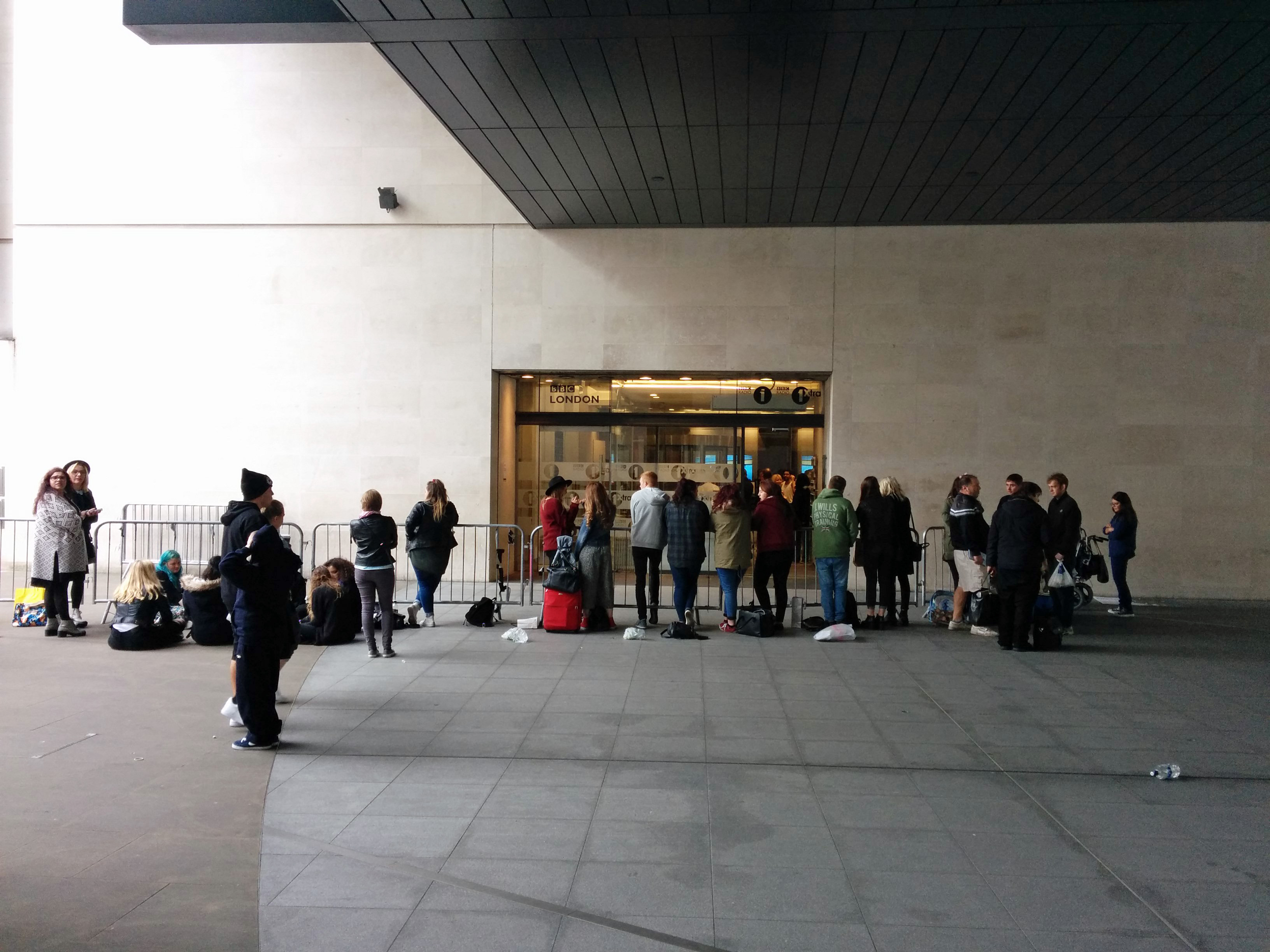
Round the back of the new development (on Middleton Place) is the home of Radio 1 and Radio 1-Xtra. And on this day there was a posse of young hopefuls looking out for the visiting James Bay, one of the new breed of sensitive male singer-songwriters (Ed Sheeran you have a lot to answer for). At another entrance (presumably Radio 6) was a collection of trainspottery middle-aged men clutching record bags but I never did find out who they were hoping to meet.

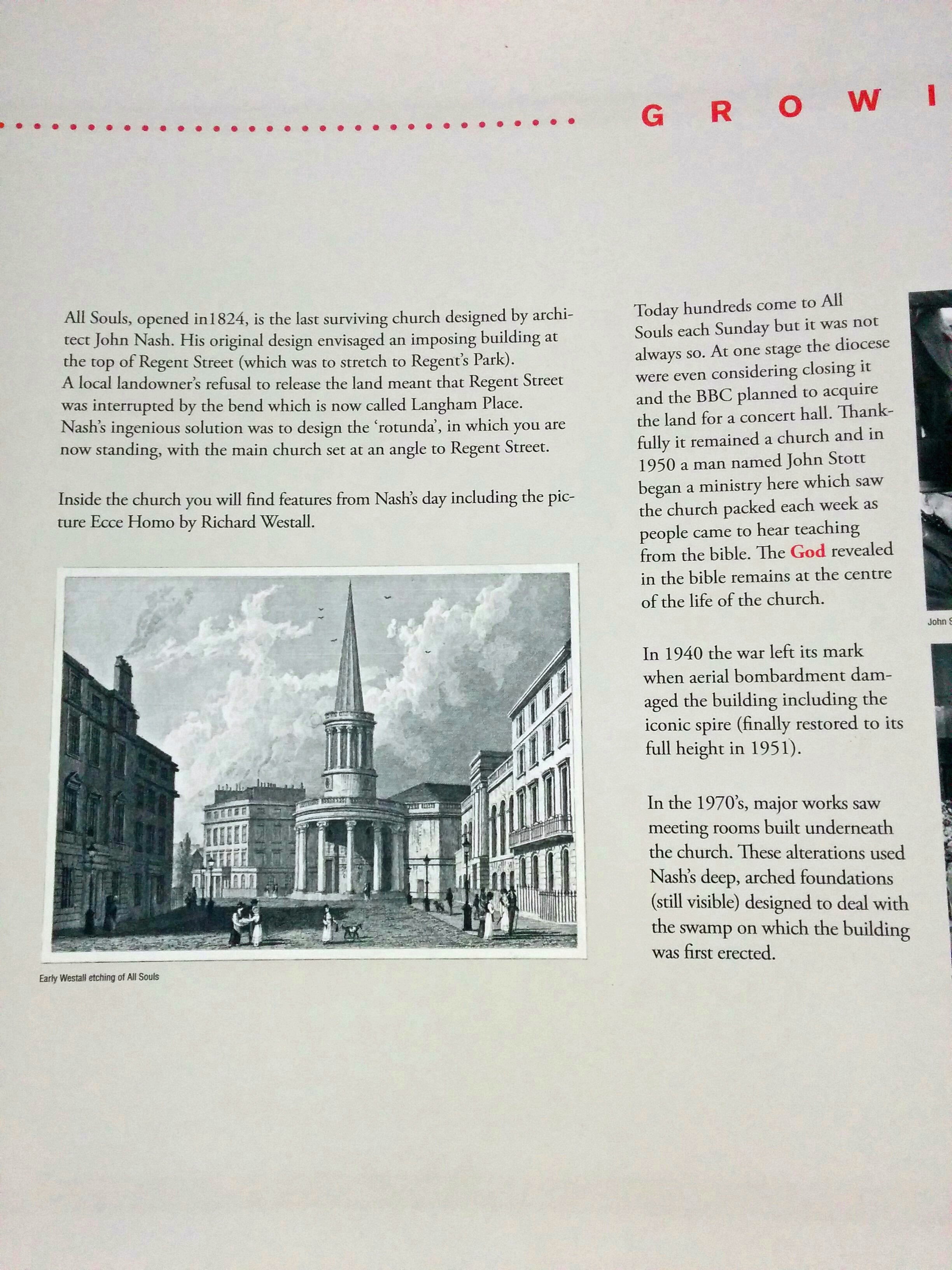
Just next door to the BBC on is All Souls, the last remaining church designed by John Nash (1752 – 1835), which opened in 1824.

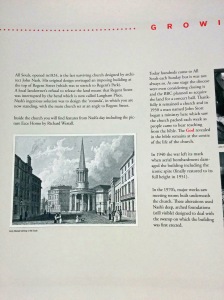
IMG_20150904_123650IMG_20150904_124020


IMG_20150904_124334

Not to be confused of course with either the mathematician John Nash who was the subject of “A Beautiful Mind” or the pop reggae singer Johnny Nash of ” I Can See Clearly” fame.

East of here the walk takes in the man stretch of Langham Street where the attractively tiled Grange Langham Court makes a bit of a show of itself before moving on to Hallam Street, Gildea Street, Girfield Street and a bit more of Great Portland Street without arousing further interest before heading back via Riding House Street where another embassy, that of Algeria, sits at No.1 (with a bullet).

IMG_20150904_123033

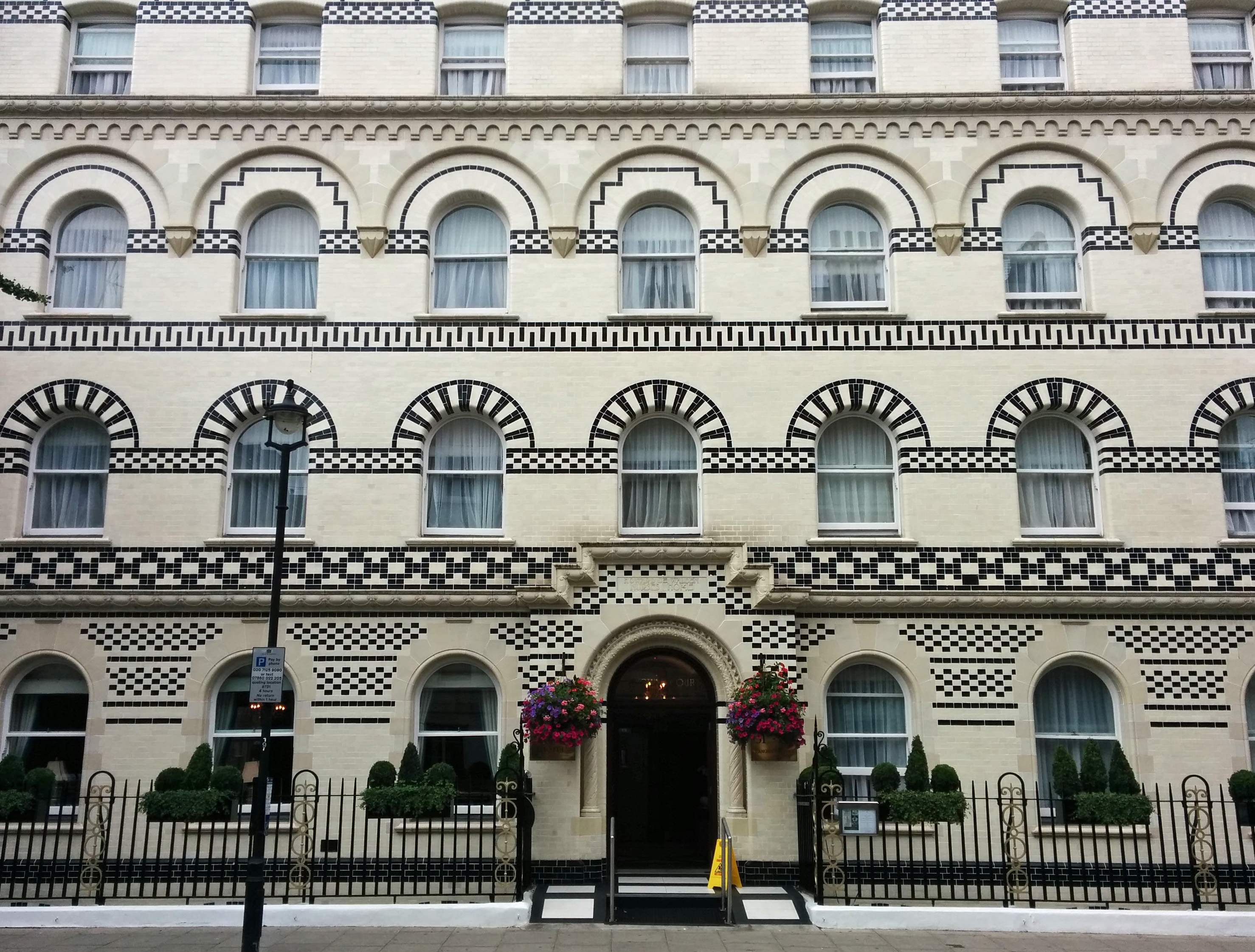
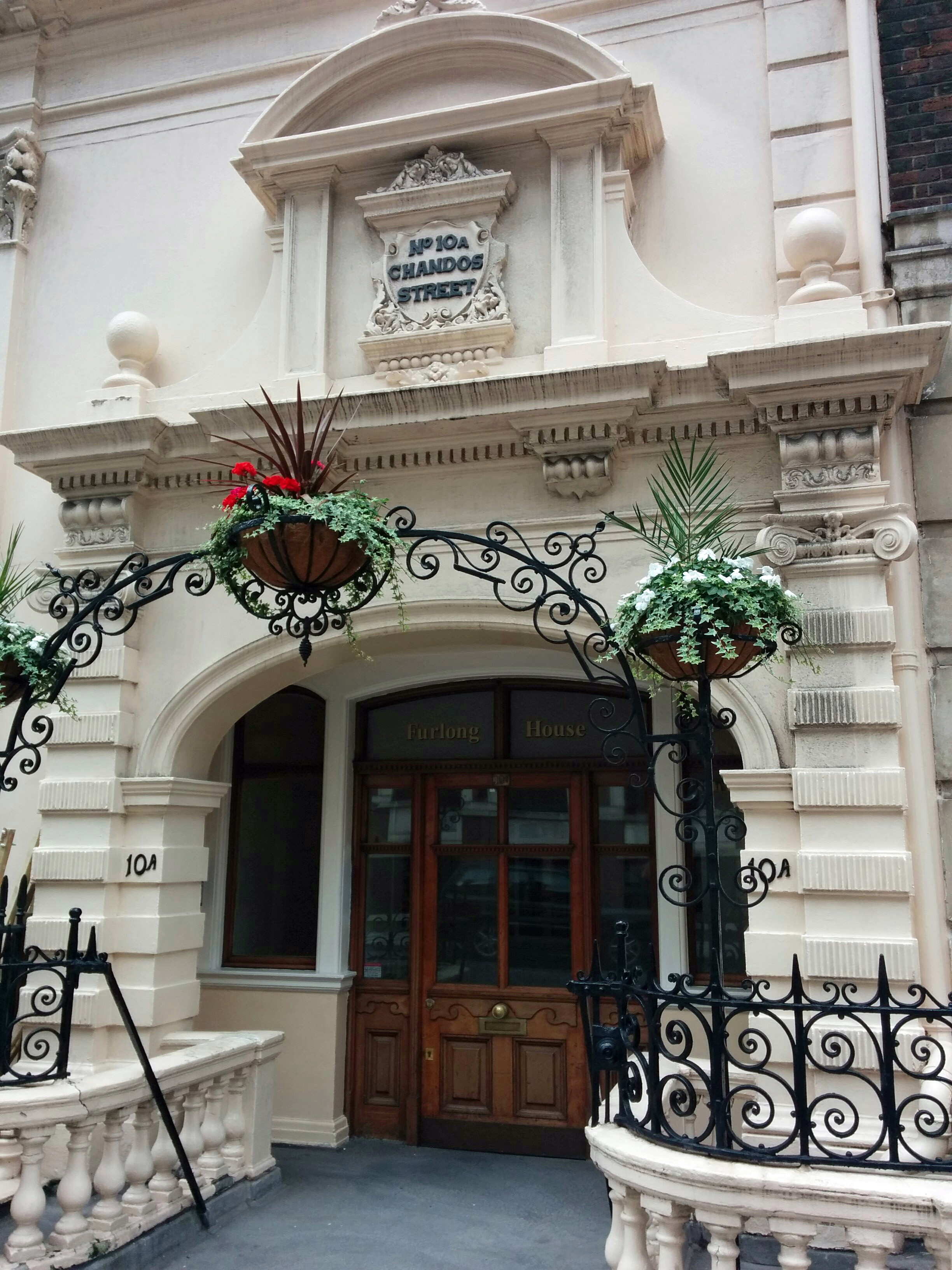
This is the point where Portland Place merges into Regent Street (north) but we head straight across and on to Cavendish Place. Chandos Street to the north is home at no.11 to the Medical Society of London founded in 1773. No.10a next door is built in the same style and although just offices of a financial company makes a nicer picture.

IMG_20150904_125021

IMG_20150904_125243

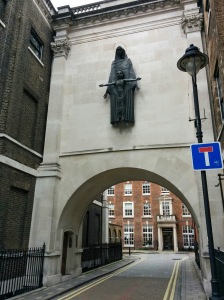
A little way further along, the entrance to Deans Mews is framed by this arch with its “levitating” sculpture of the Madonna and Child. This, the work of sculptor Jacob Epstein, was constructed from lead that was salvaged from the nearby roof of a building bombed in the Second World War and weighs in the region of three tons.

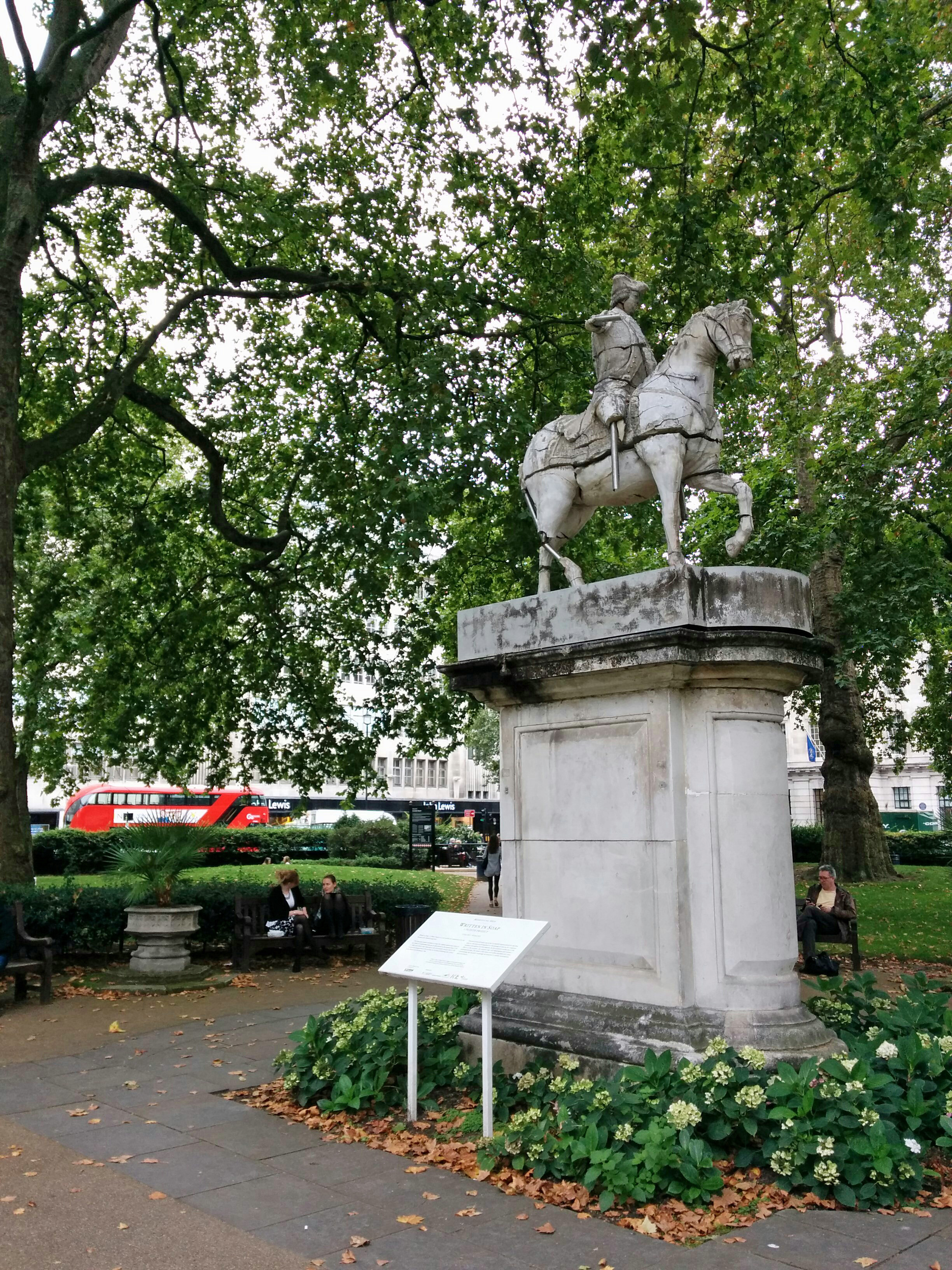
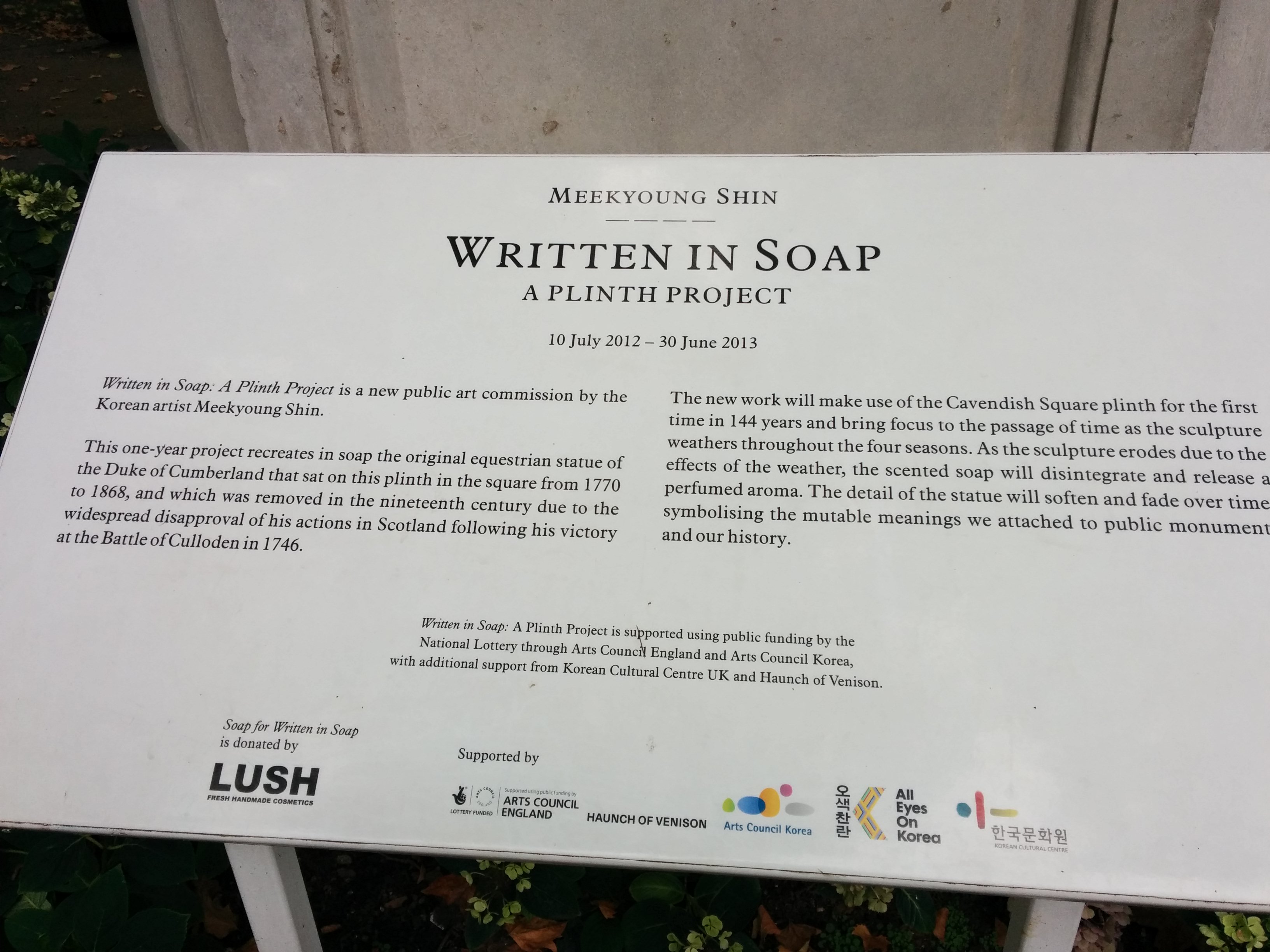
Almost final stop on this journey is Cavendish Square named after Henrietta Cavendish-Holles, the wife of the second Earl of Oxford. The statue on the centre of the square, ignored by the lunching office workers, is a recent art project which has recreated in soap the original statue of the Duke of Cumberland which stood on the plinth from 1770 to 1868 but was removed in the late nineteenth century due to posthumous disapproval of the Duke’s actions during the Battle of Culloden.
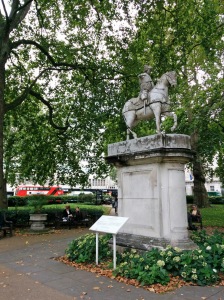
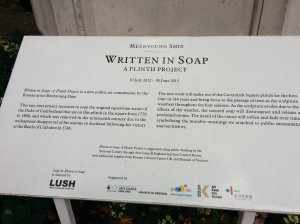
IMG_20150904_131249 IMG_20150904_131220

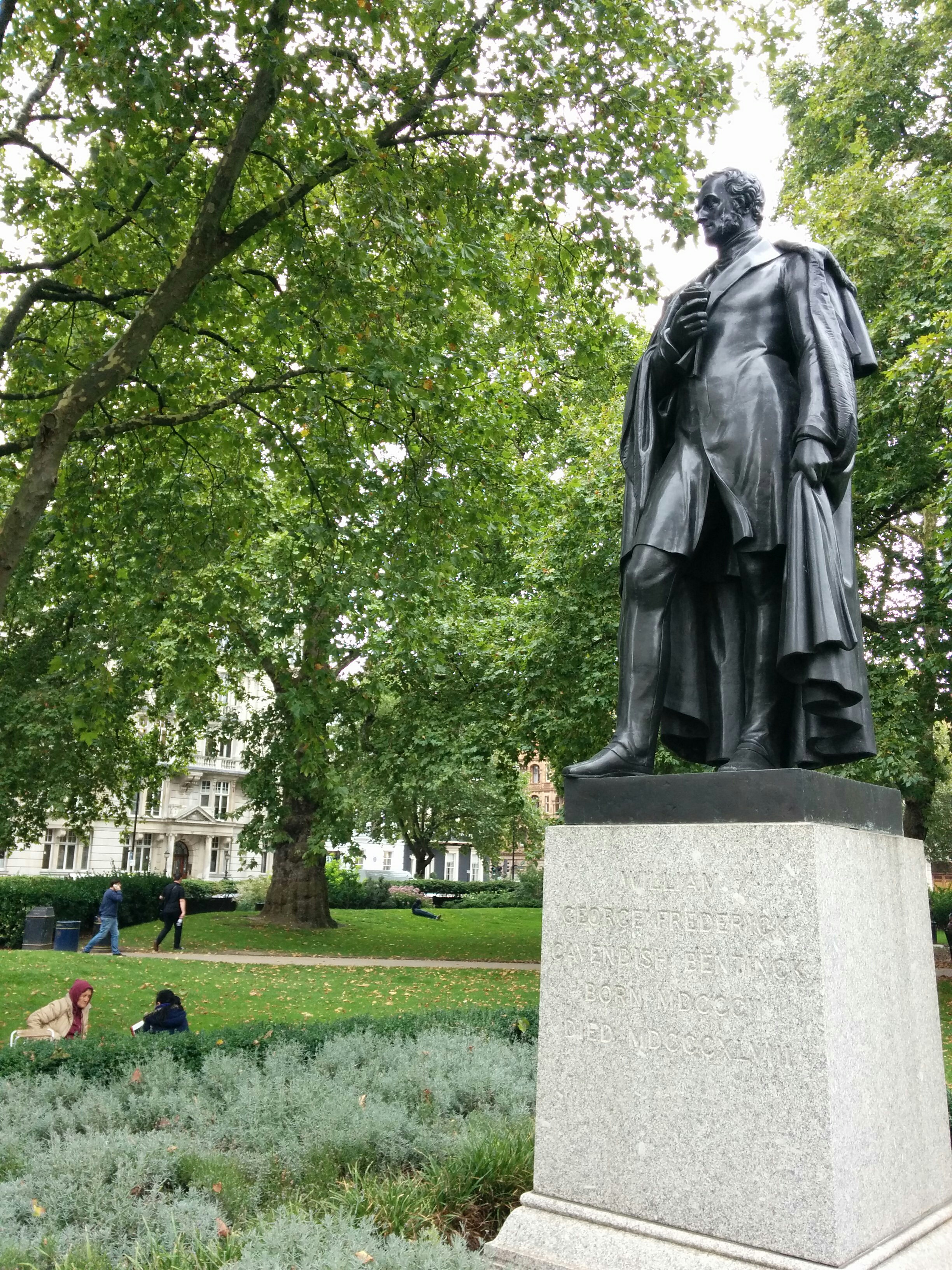
IMG_20150904_131425The bronze statue on the south side of the square is of Lord William George Frederick Cavendish-Scott-Bentinck (1802 – 1848). Bentinck was a conservative MP best known for his part in the corn laws-related downfall of Sir Robert Peel and also a prominent racehorse owner and notorious gambler. He died, unmarried, aged 46 of a suspected heart attack and was buried in (our old friend) St Marylebone Parish Church.

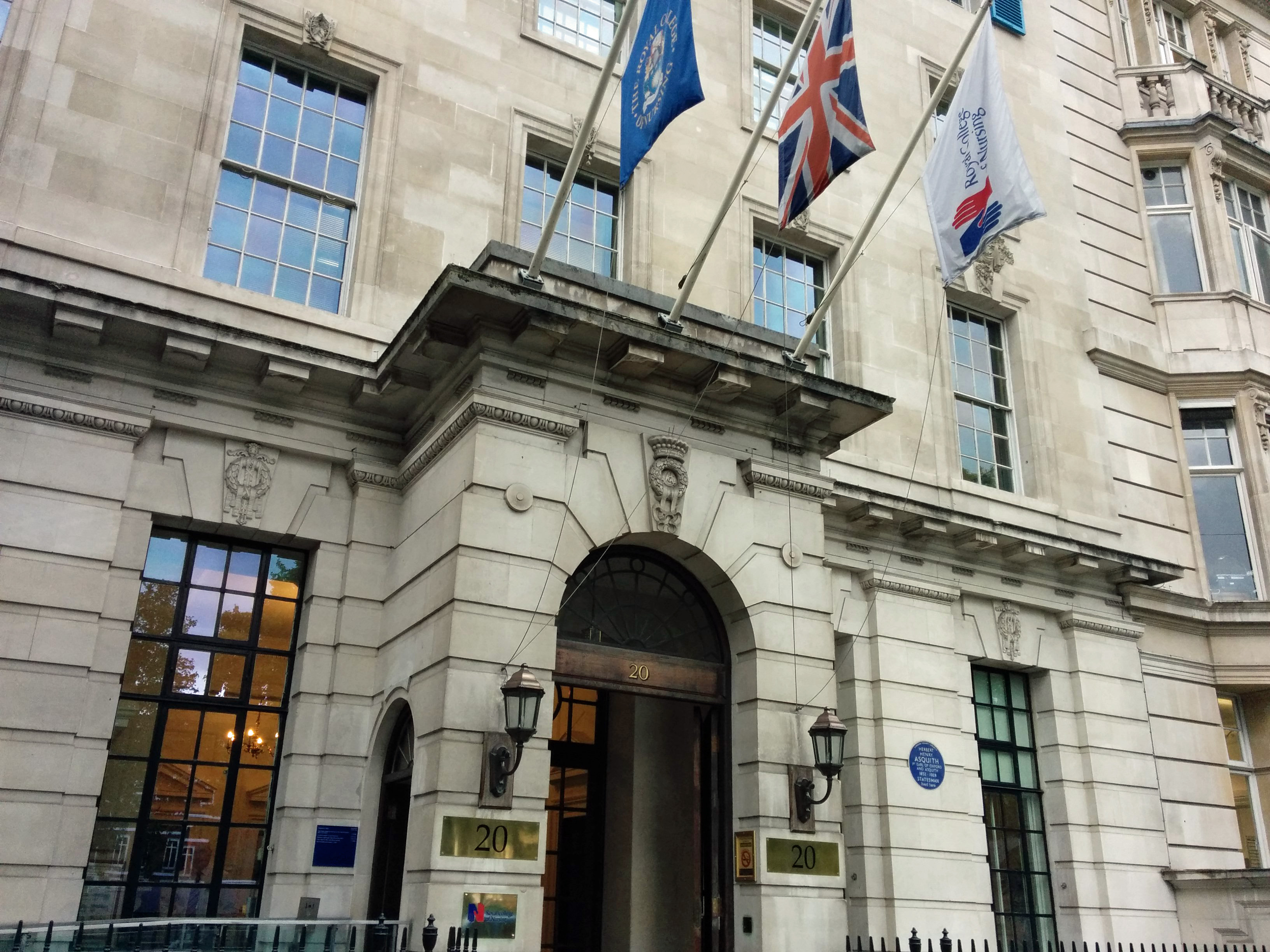
IMG_20150904_130311On the west side of the square is found The Royal College of Nursing, at no.20 which was at one time the home of Herbert Henry Asquith, Prime Minister from 1908 to 1916. The RCN, which was founded in 1916, took over the house that same year when Asquith left office and found he could no longer afford its upkeep.

Asquith was married twice but during his term in office he also developed a romantic obsession with Venetia Stanley who went on to marry Edwin Montagu, a Liberal Cabinet Minister. He sent her over 560 letters and Churchill who was at the time the First Lord of the Admiralty, viewed this endless letter writing as “England’s greatest security risk”. However within days of his rejection by Venetia, Asquith started an intense relationship with her older sister Sylvia, which lasted for several years.

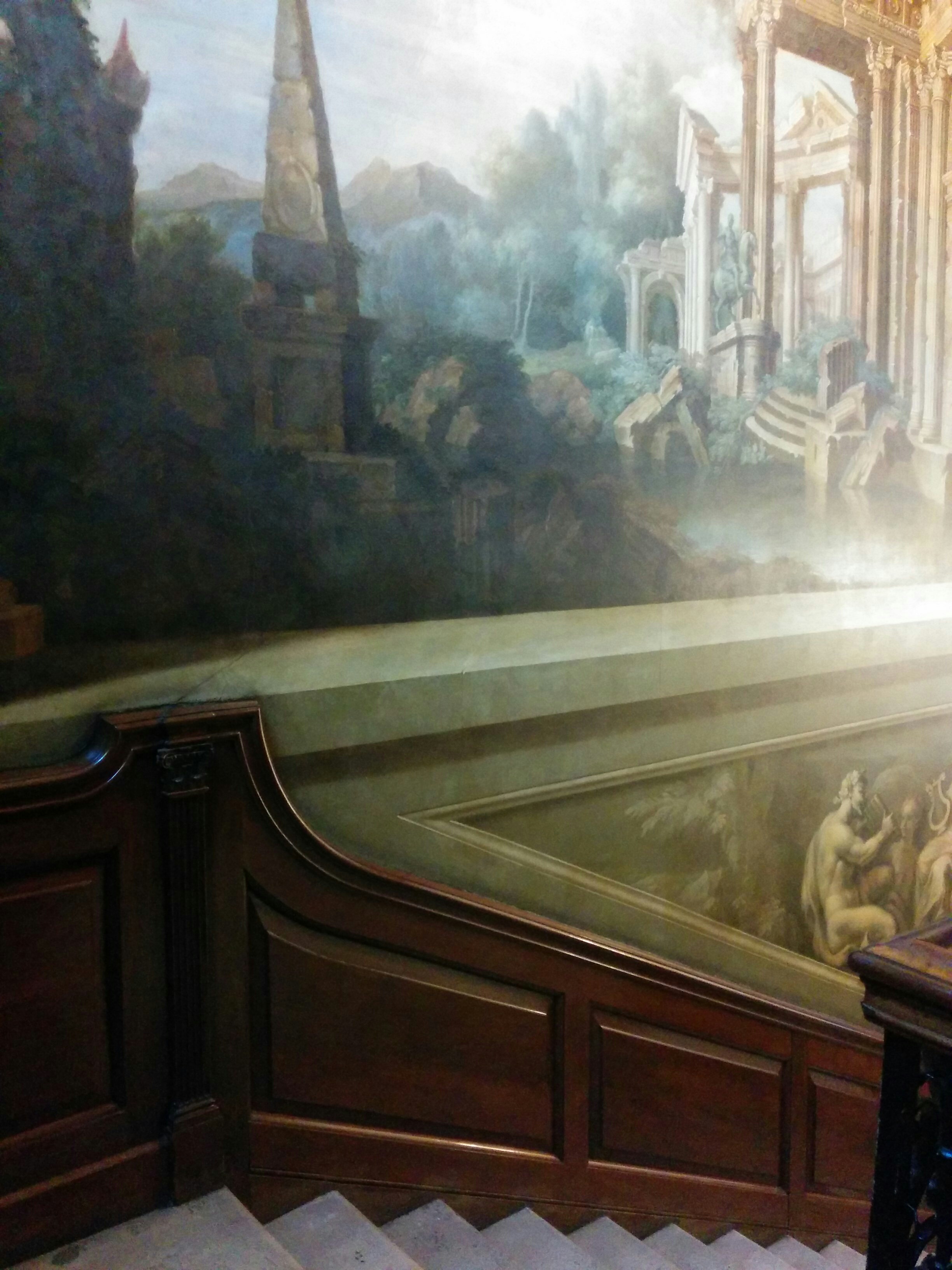
Returning to the building itself its most prominent feature is the extensive mural painted alongside and above the main staircase depicting scenes of ancient Rome. The mural is believed to date from around 1730 and be the work of Sir James Thornhill, father-in-law of Hogarth.

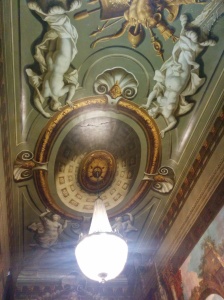
IMG_20150919_160733 IMG_20150919_160703

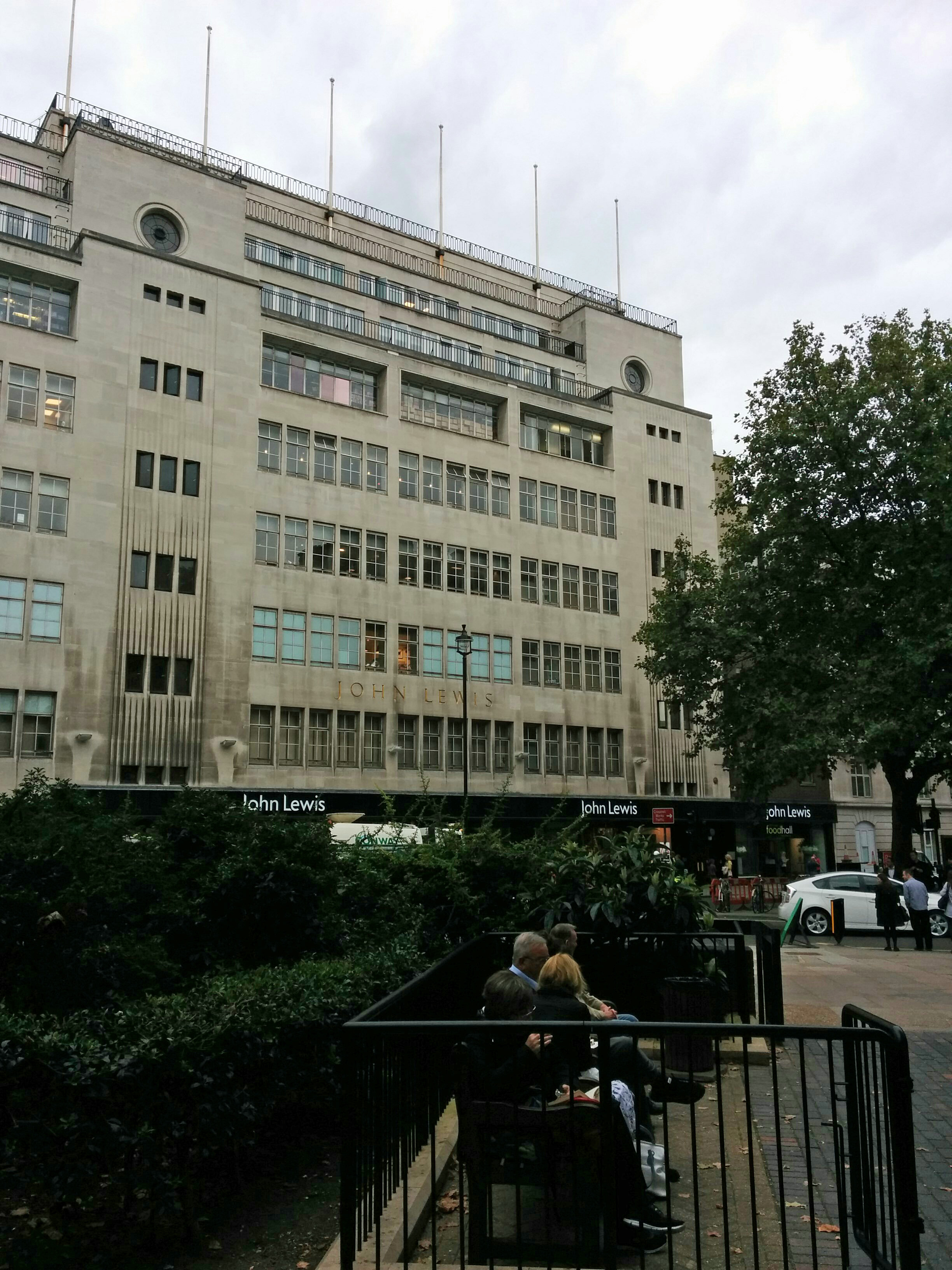
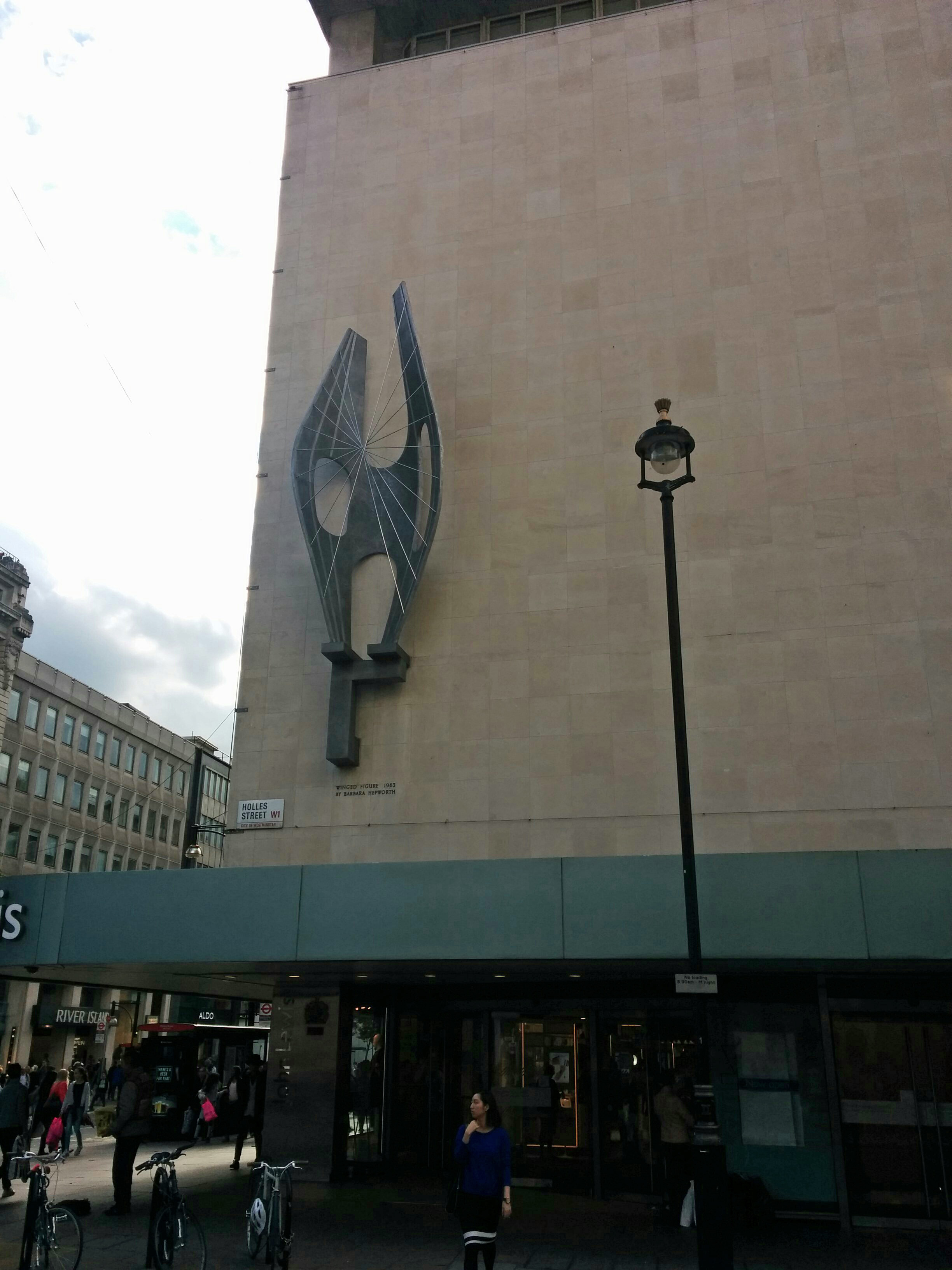
We end again back on Oxford Street emerging by John Lewis at no. 300. The original John Lewis store in Oxford Street was bombed to the ground during the Blitz (though amazingly without any casualties). It took until 1960 before the present building was completed and opened. The iconic Winged Figure statue by Barbara Hepworth was unveiled in 1963, John Lewis having commissioned the Yorkshire-born artist to create a work that evoked common interest and ownership.

IMG_20150904_131338 IMG_20150919_163525

Day 5 – Fitzrovia – North of Oxford Street East

Today’s route covers the area to the west of Tottenham Court Road and North of Oxford Street and takes in most of the rest of Fitzrovia. Back in the 90’s some genius tried to re-brand this area as “NoHo” but there was NoHope of that succeeding despite the prevalence of media businesses. Most well-known thoroughfare is probably Charlotte Street; once renowned for its many Greek restaurants. It appears sadly that those have all gone now (I guess plate-smashing and austerity aren’t a good mix), replaced by clutch of high-end eating establishments – all doing great business on a Friday lunchtime.

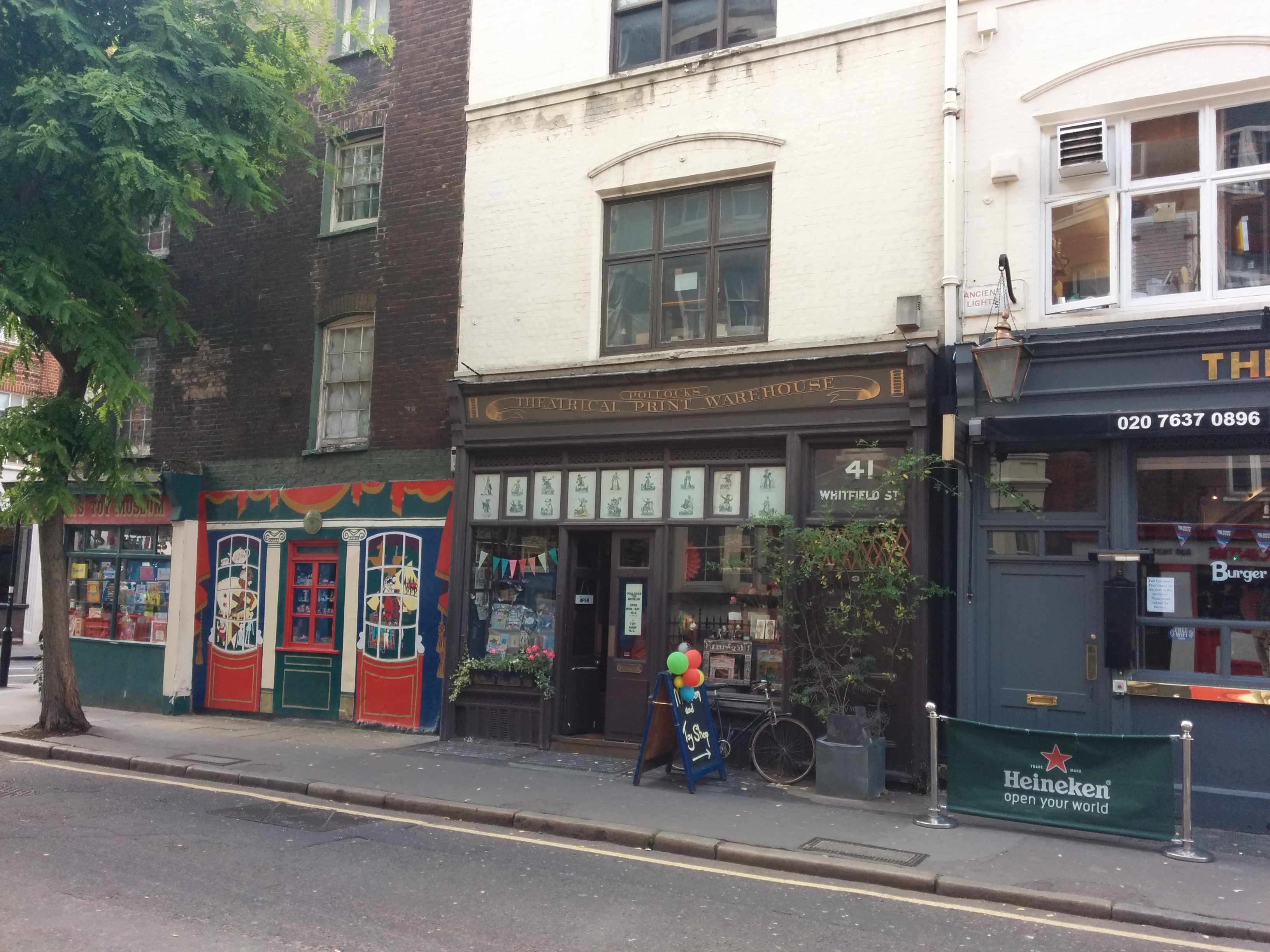
A lot of this post will focus on the compact but fascinating Pollock’s Toy Museum in Whitfield Street – more than worth £6 of your hard-earned if you’re ever in the vicinity.

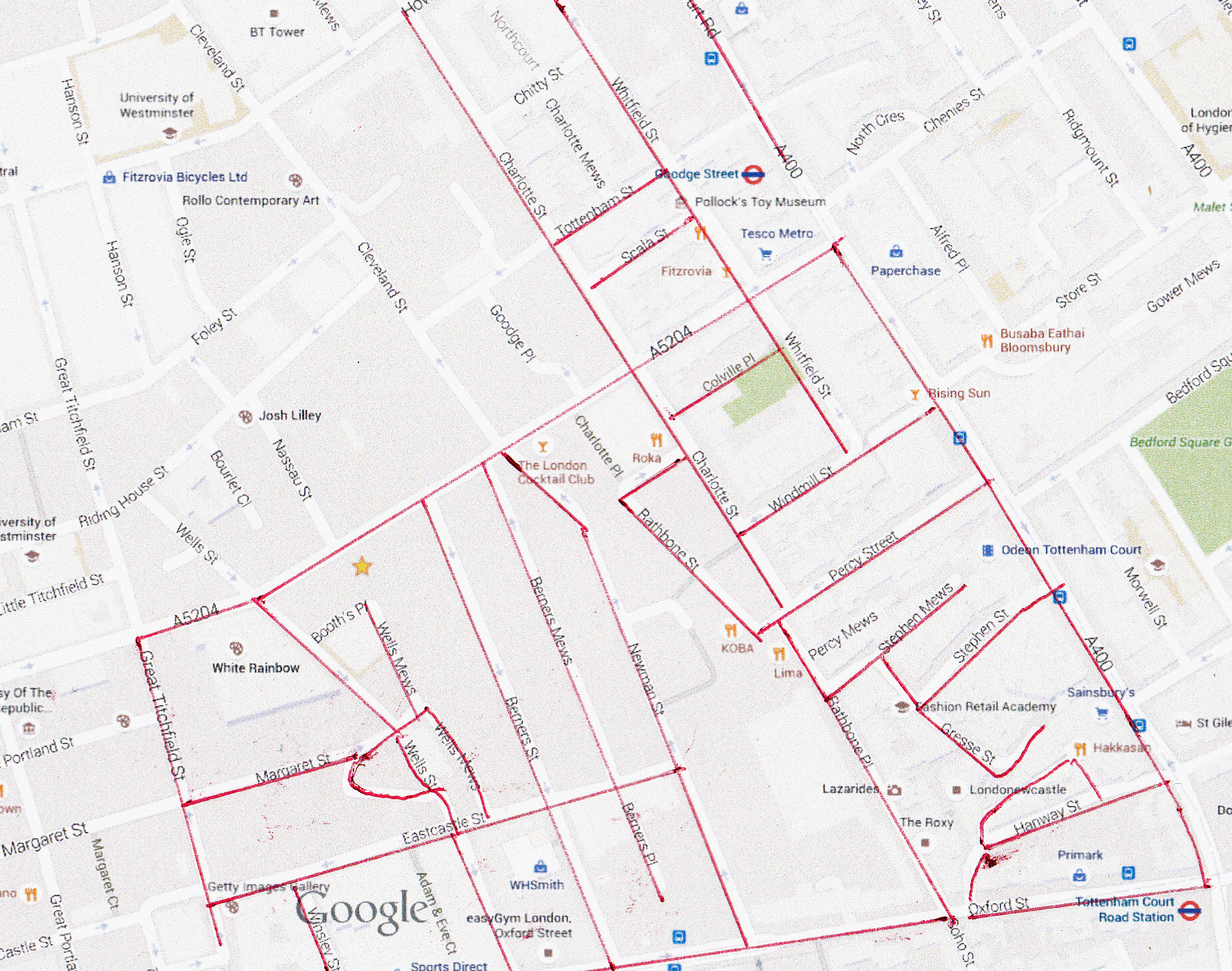
Day 5 Route

IMG_20150828_111827

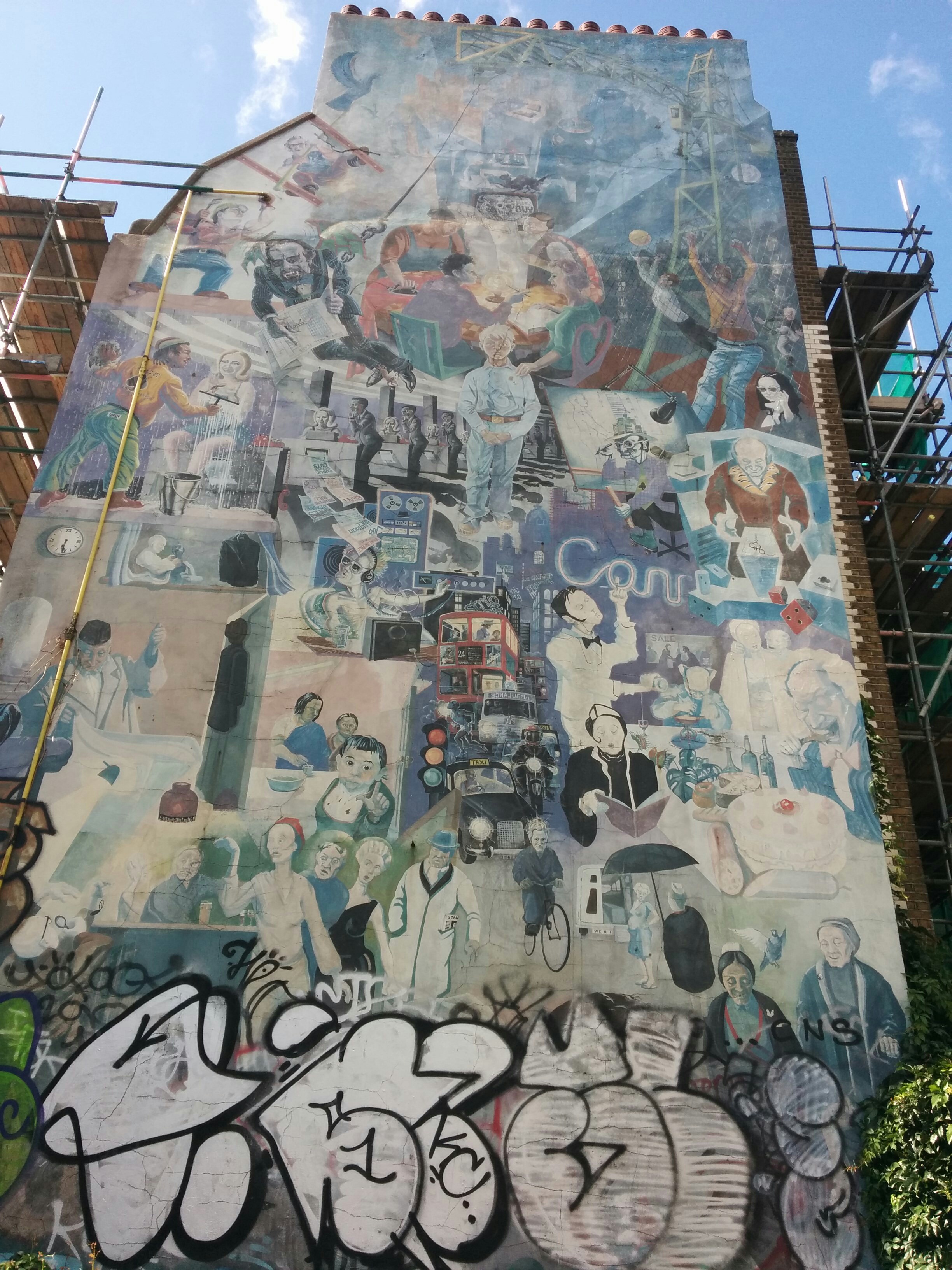
We begin at Goodge Street tube station just adjacent to which in Whitfield Gardens can be found the Fitzrovia Mural depicting life in the area at the start of the 1980s.

Head north up Tottenham Court Road then turn left into Grafton Way and again into Whitfield Street. At no.108 is Marie Stopes House, former home of the lady herself.  Marie Charlotte Carmichael Stopes (1880 – 1958) led a very colourful and varied life and although her fame today rests on her pioneering work in the field of birth control she was also (and first) a renowned palaeontologist.

IMG_20150828_112554240px-Marie_Stopes_in_her_laboratory,_1904

The address of the aforementioned Pollocks Toy Museum is actually 1 Scala Street but it does front onto Whitfield Street.

IMG_20150828_121541IMG_20150828_113155

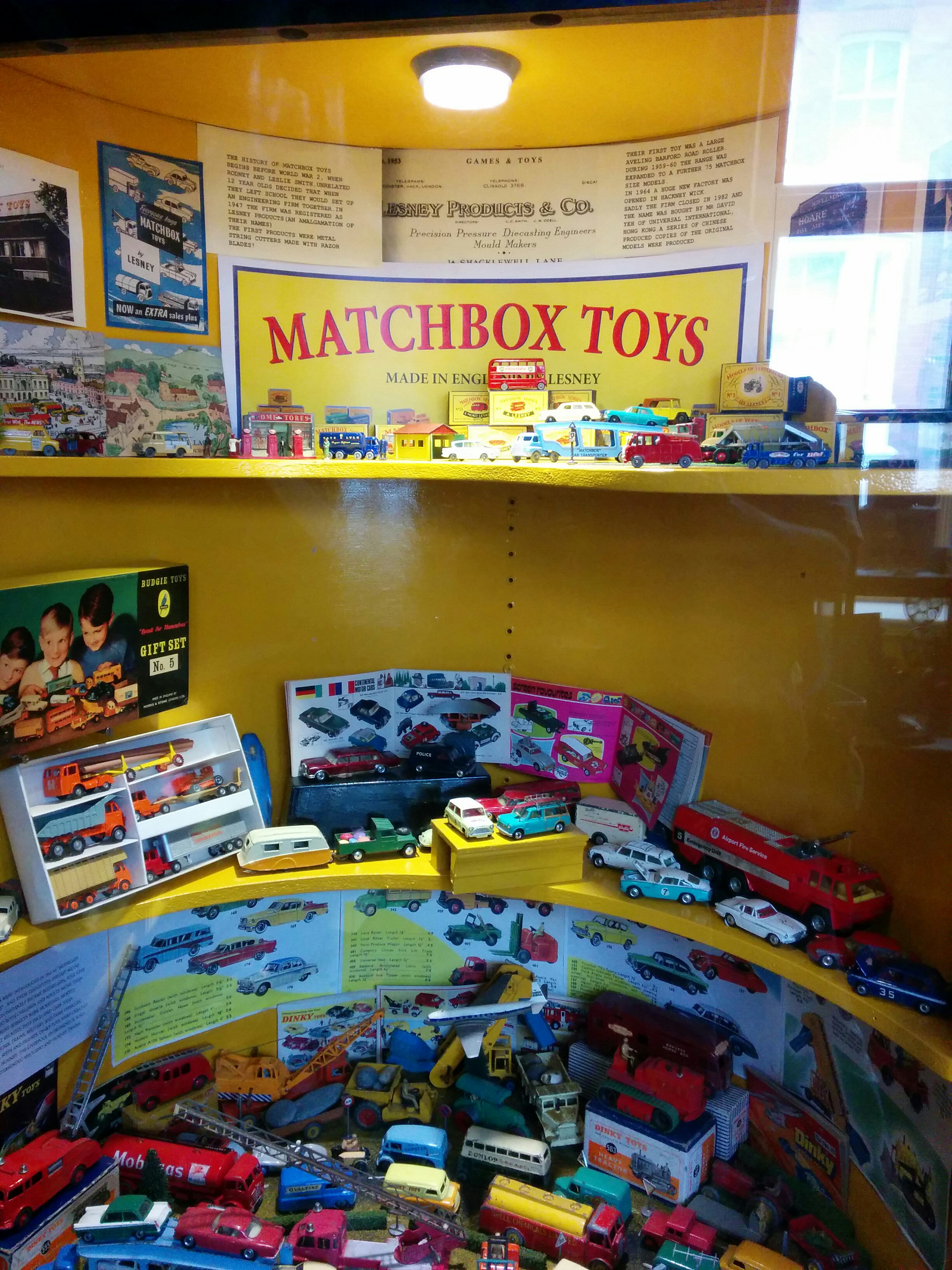
The museum’s collection mainly focuses on Victorian toys with a particular interest in model theatres and dolls but as you can see below there is plenty of nostalgia prompts for us kids of the sixties and seventies.

 IMG_20150828_114242 IMG_20150828_114811

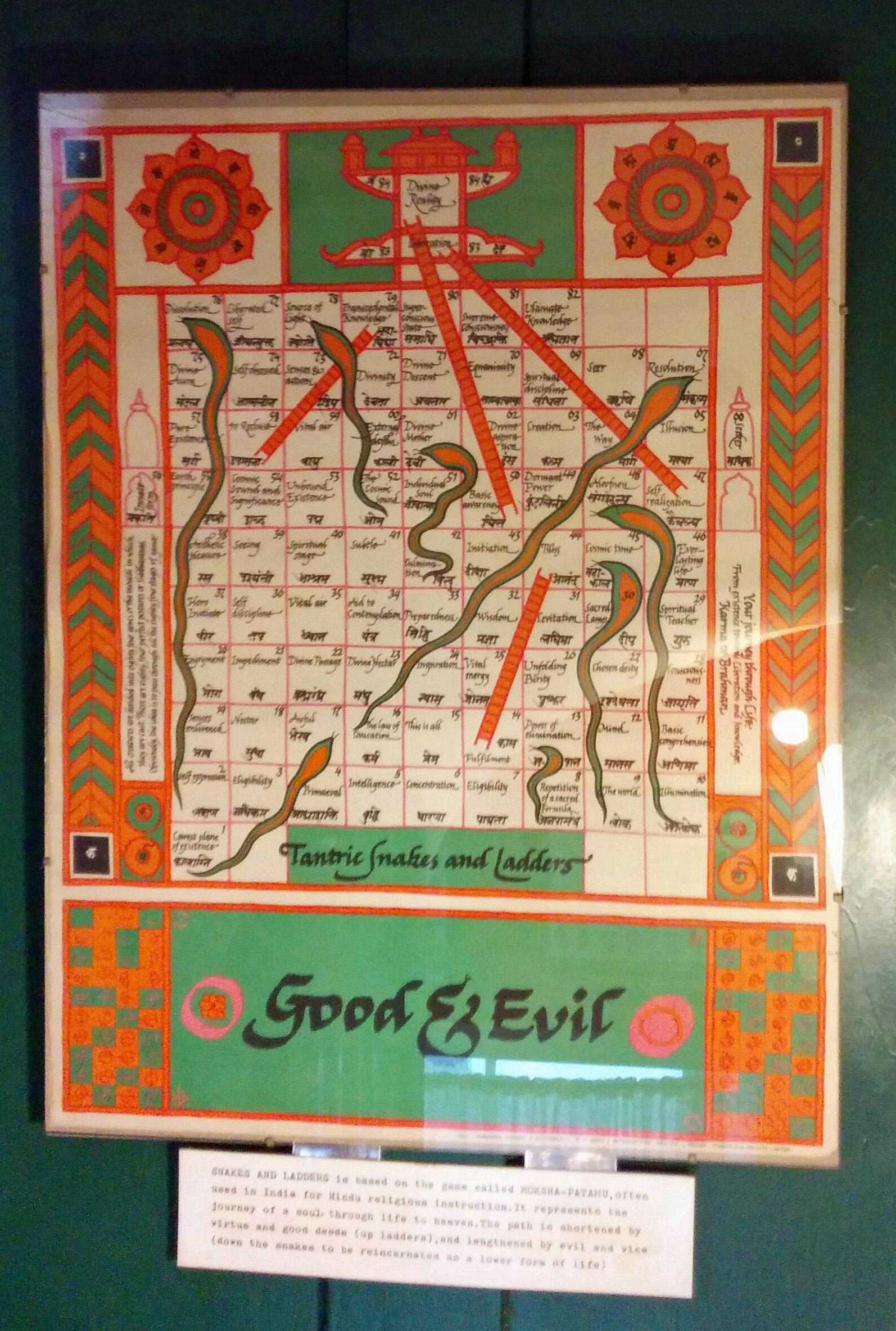
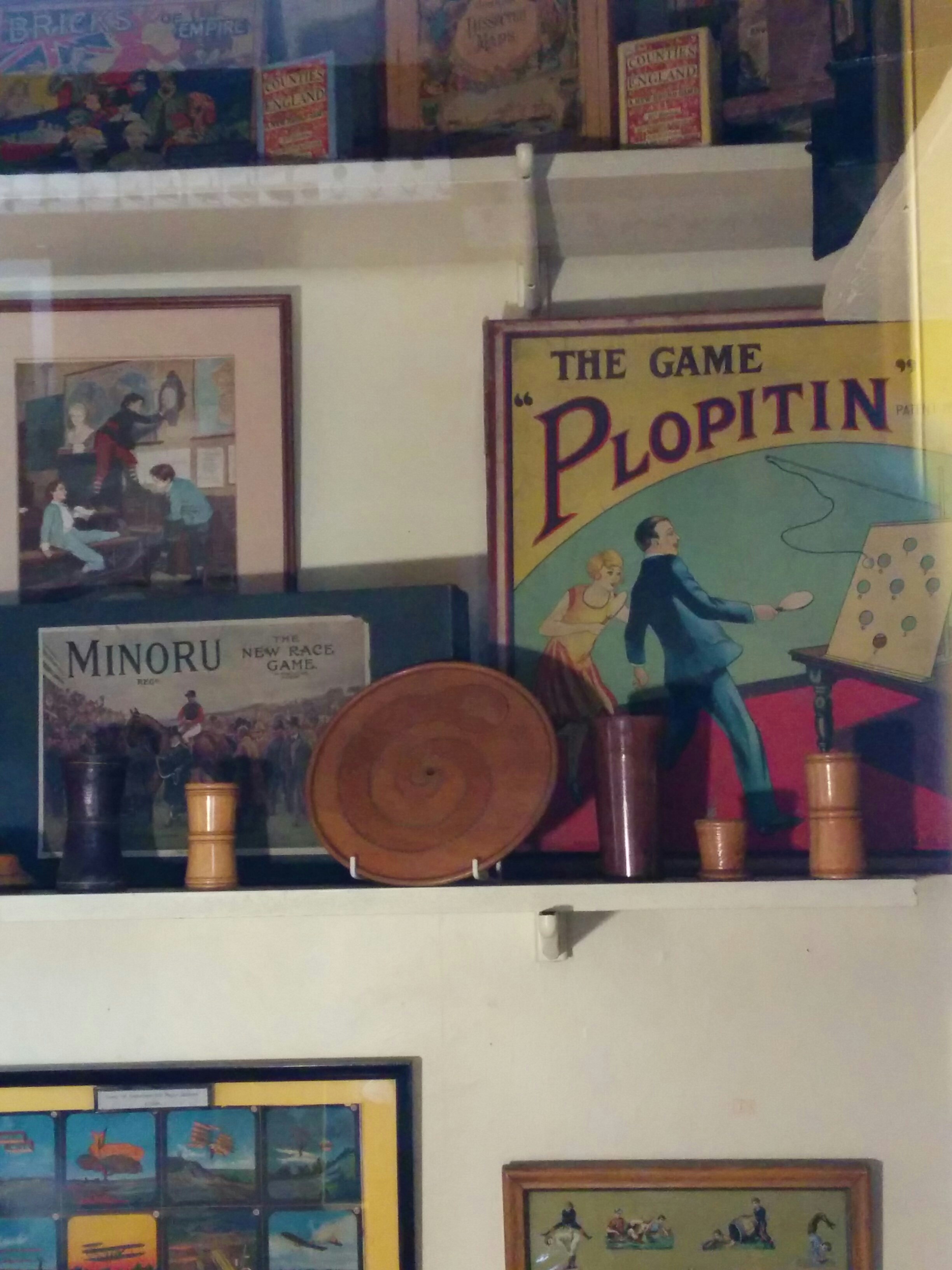
The following two items greatly intrigued me. I wasn’t previously aware that Snakes and Ladders originated as a game used for Hindu religious instruction. Apparently it represents the journey of a soul towards heaven with the ladders rewarding good deeds and the snakes punishing evil ones. The unfortunately named Plopitin looks like some weird 1930s forerunner of swingball. If you’ve got a £150 spare there’s one currently going on ebay

http://www.ebay.co.uk/itm/1930S-RARE-VINTAGE-BOXED-THE-GAME-OF-PLOPITIN-/261704562321

IMG_20150828_115223 IMG_20150828_114914

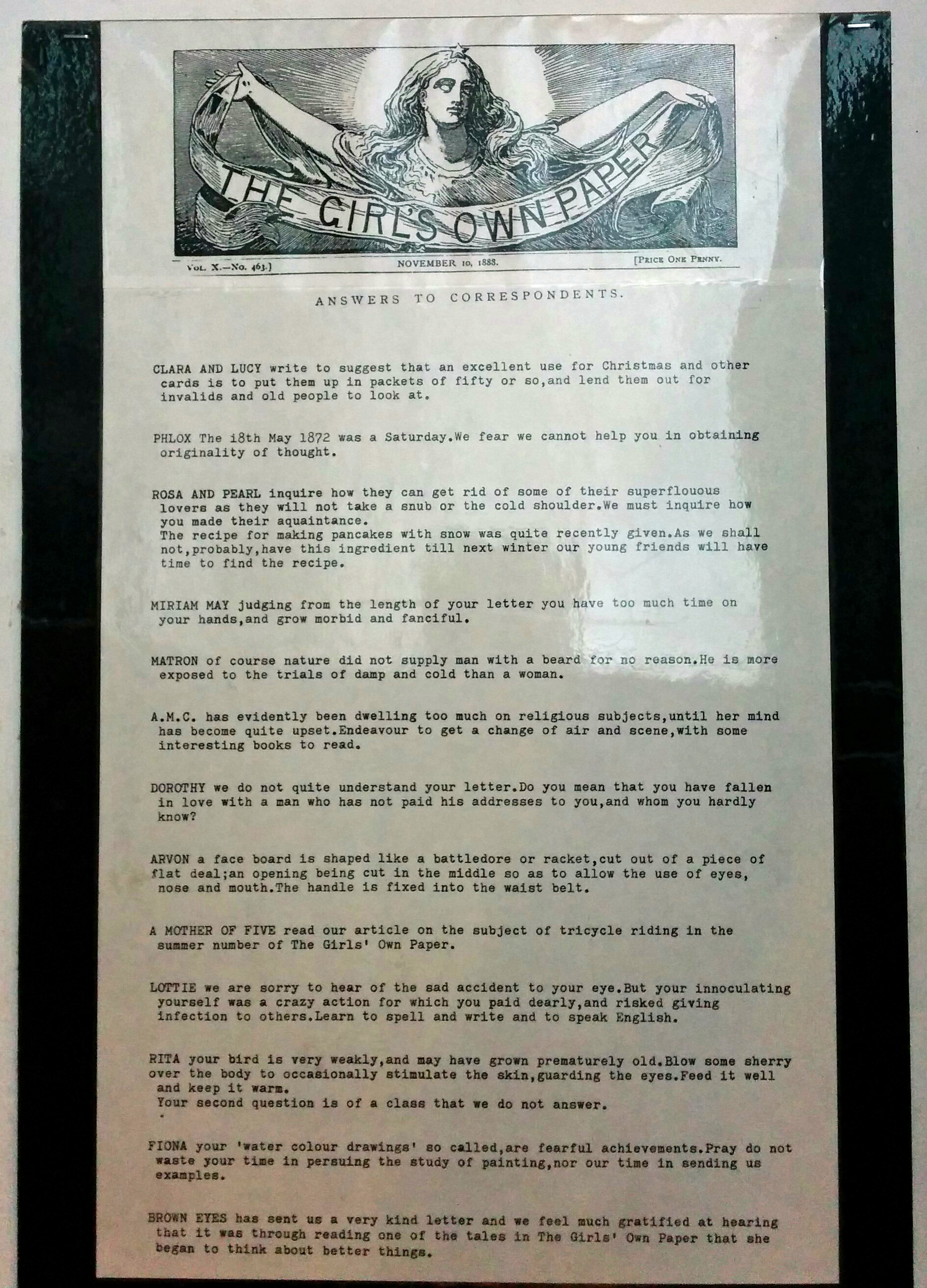
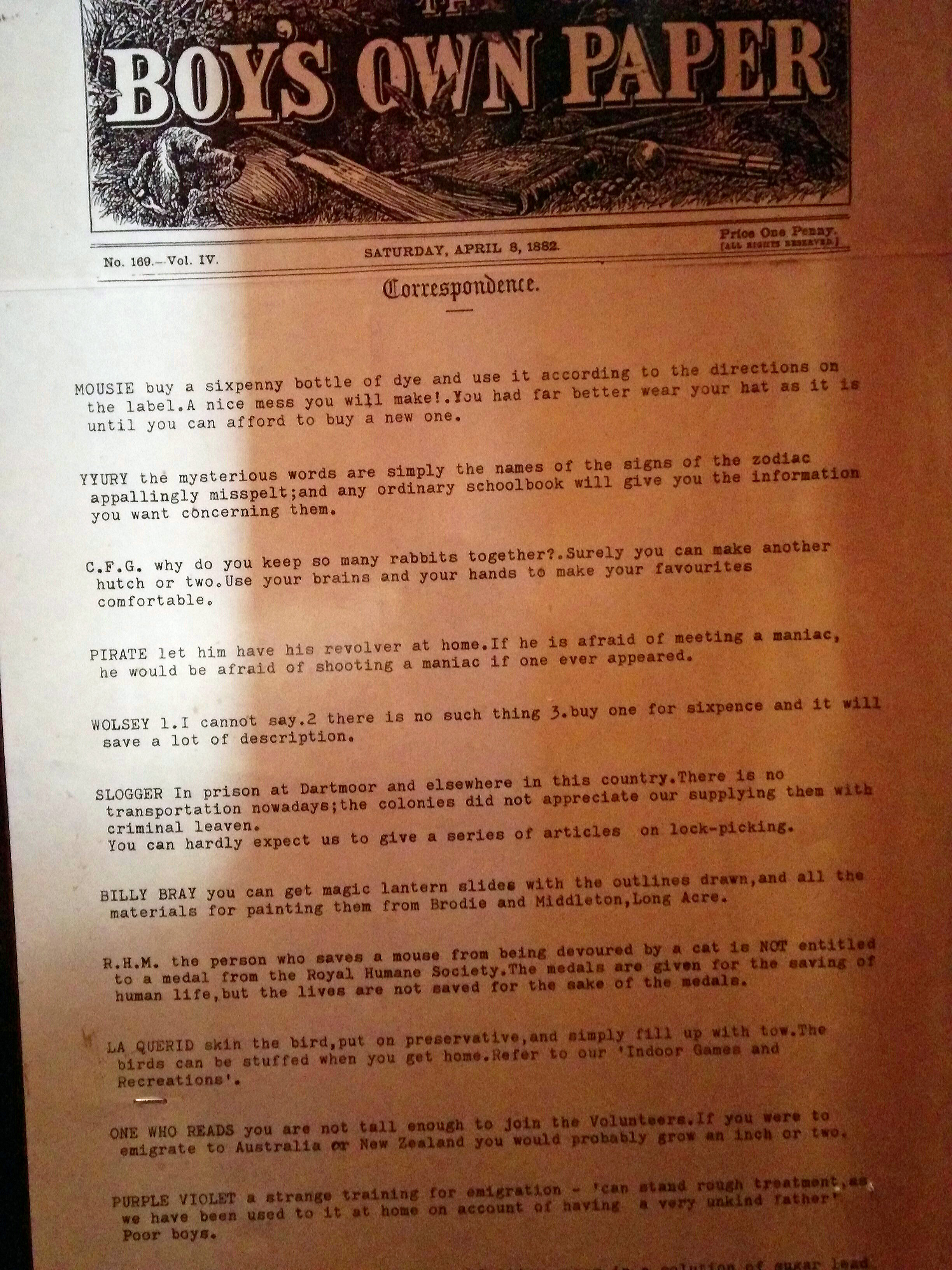
Just about my favourite things though were these two prints which are facsimiles from 1883 editions of the Victorian publications, the Girl’s Own Paper and the Boy’s Own Paper. At the end of each paper was as section which printed replies to correspondence received from readers – the letters themselves were never published. I’d urge you to take a closer look at these because they are supremely amusing.

IMG_20150828_113834 IMG_20150828_121352

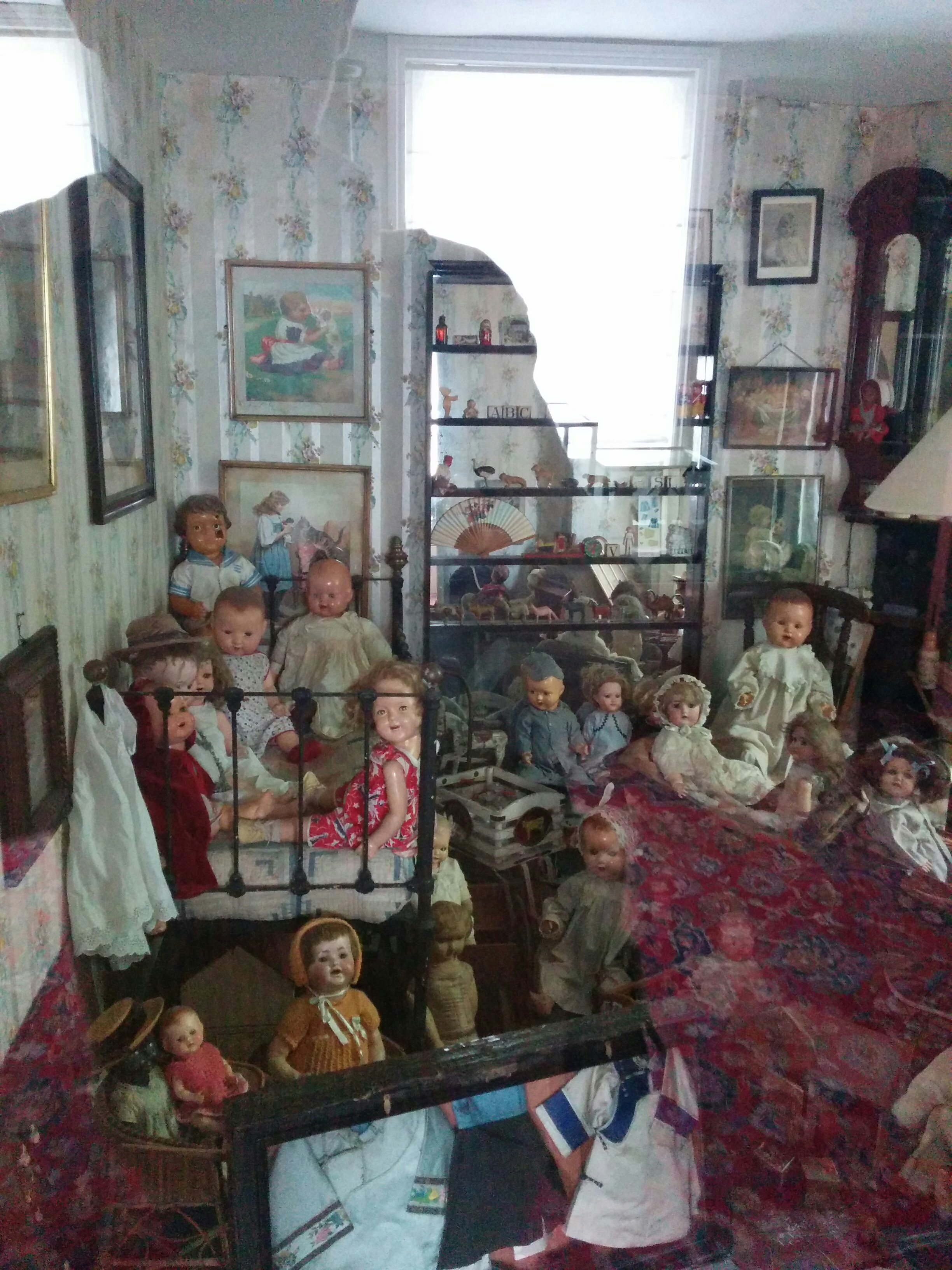
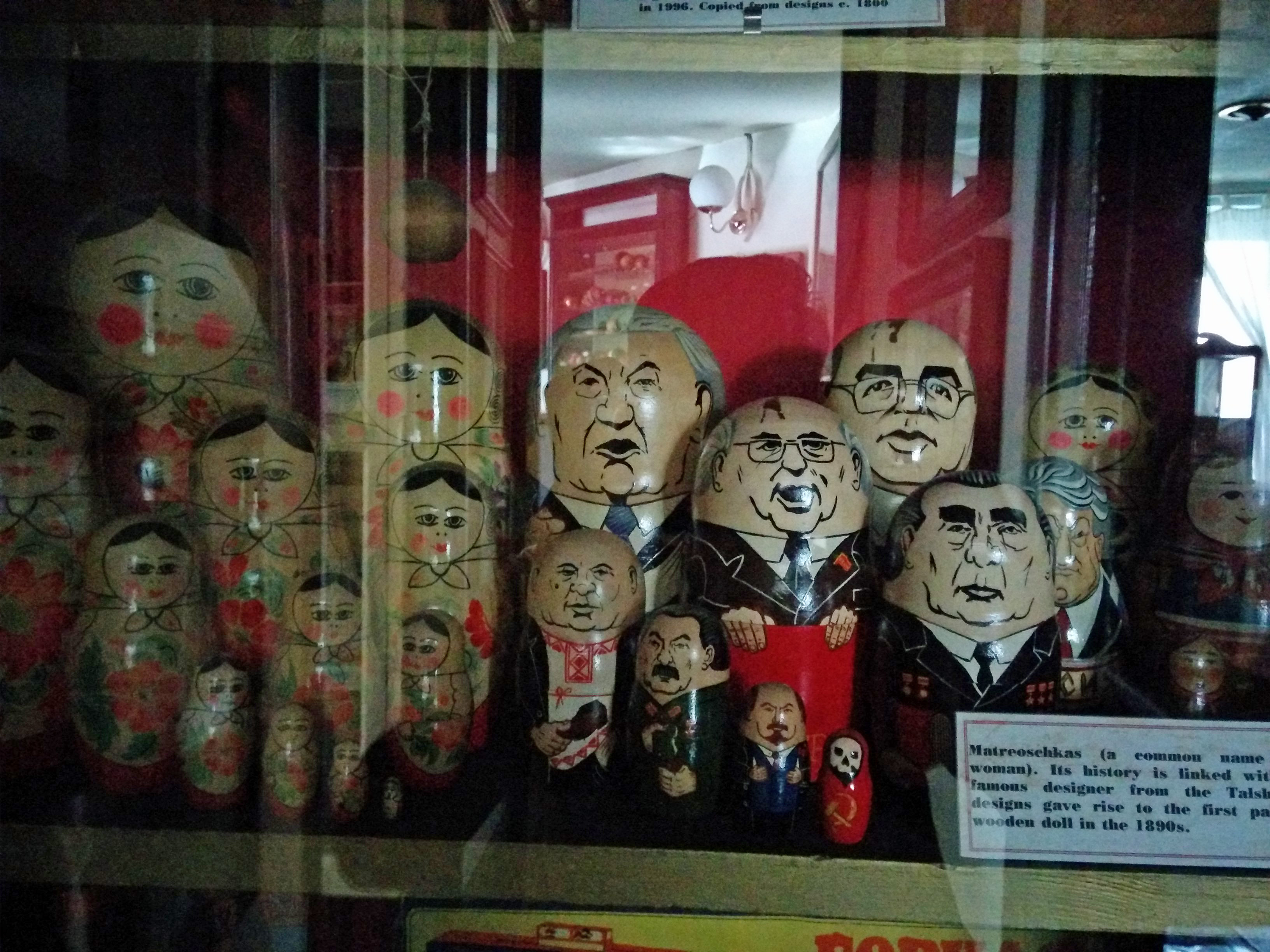
I can’t believe I’m alone in finding dolls like these incredibly creepy. As for the Russian Matryoshkas I’m ok on the smaller ones at the front but having trouble identifying the three at the back. Looks to me like there are two alternative Gorbachevs.

IMG_20150828_120409 IMG_20150828_115725

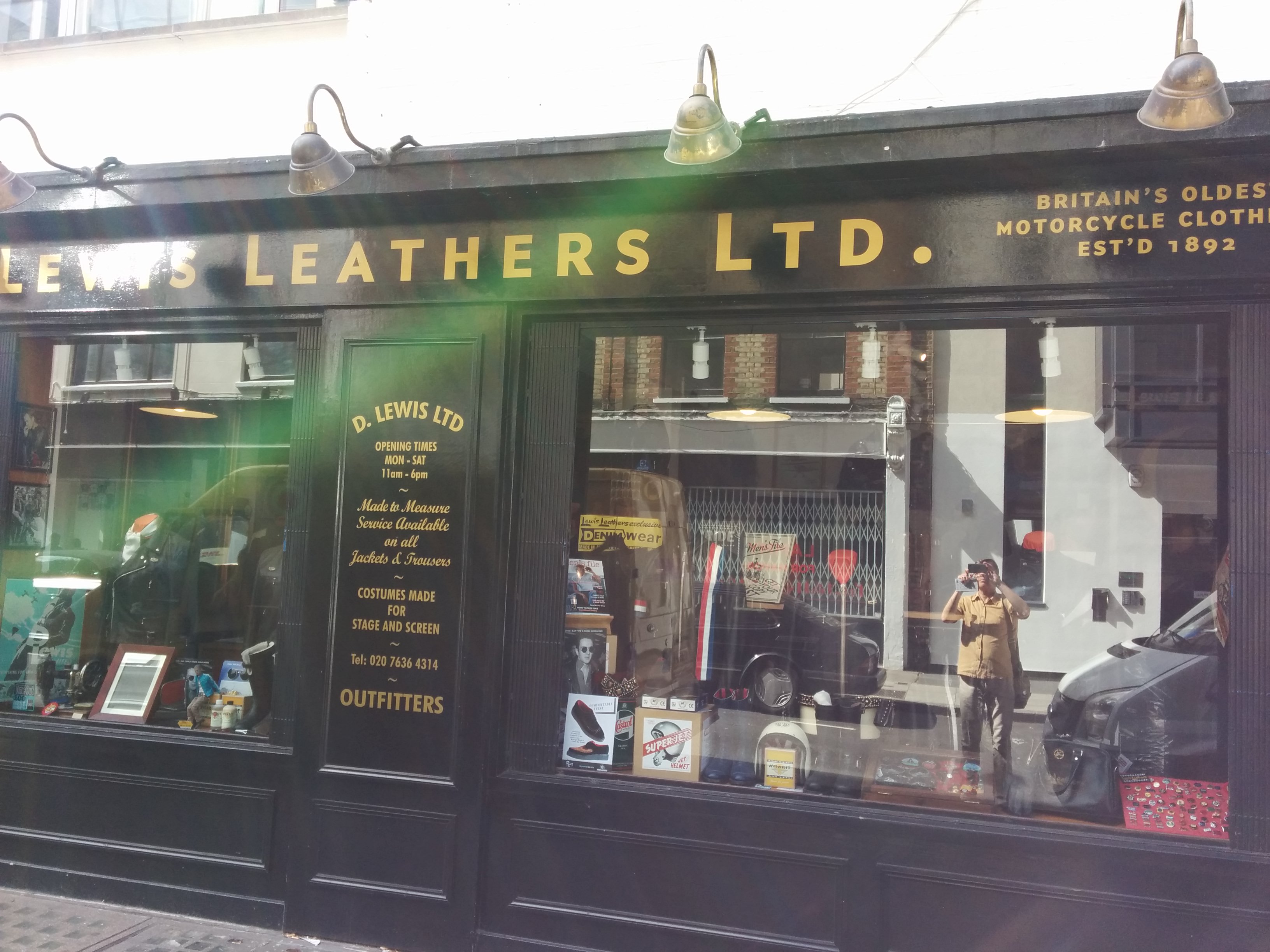
Anyway moving on…At the end of the street is Lewis Leathers, proclaimed as Britain’s oldest purveyors of motorcycle clothing. I thought it was the motorcyclists that wore the clothing but that may be just me being pedantic. Inadvertent crap selfie of the day. 

IMG_20150828_121841

IMG_20150828_122142

Above right is the charmingly out-of-context Colville Place which cuts between Whitfield Street and Charlotte Street. This is home to the Movie Poster Art Gallery which also features original artwork for LP sleeves such as this one for the brilliant A Certain Ratio’s Sextet album from 1982. If you’re unfamiliar with ACR then I strongly suggest that you Spotify them.

IMG_20150828_122110

I’ve already mentioned Charlotte Street and its culinary delights. It’s also home to Saatchi & Saatchi of which the less said the better probably. Quick mention of the Darren Baker gallery which currently has an interesting selection of work on display and where the assistant was atypically friendly.

IMG_20150828_125226

On to Goodge Street and then in succession, Tottenham Street , Goodge Place, Charlotte Place and Newman Passage.

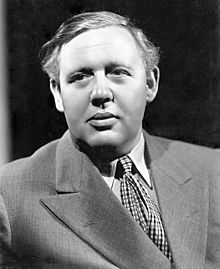
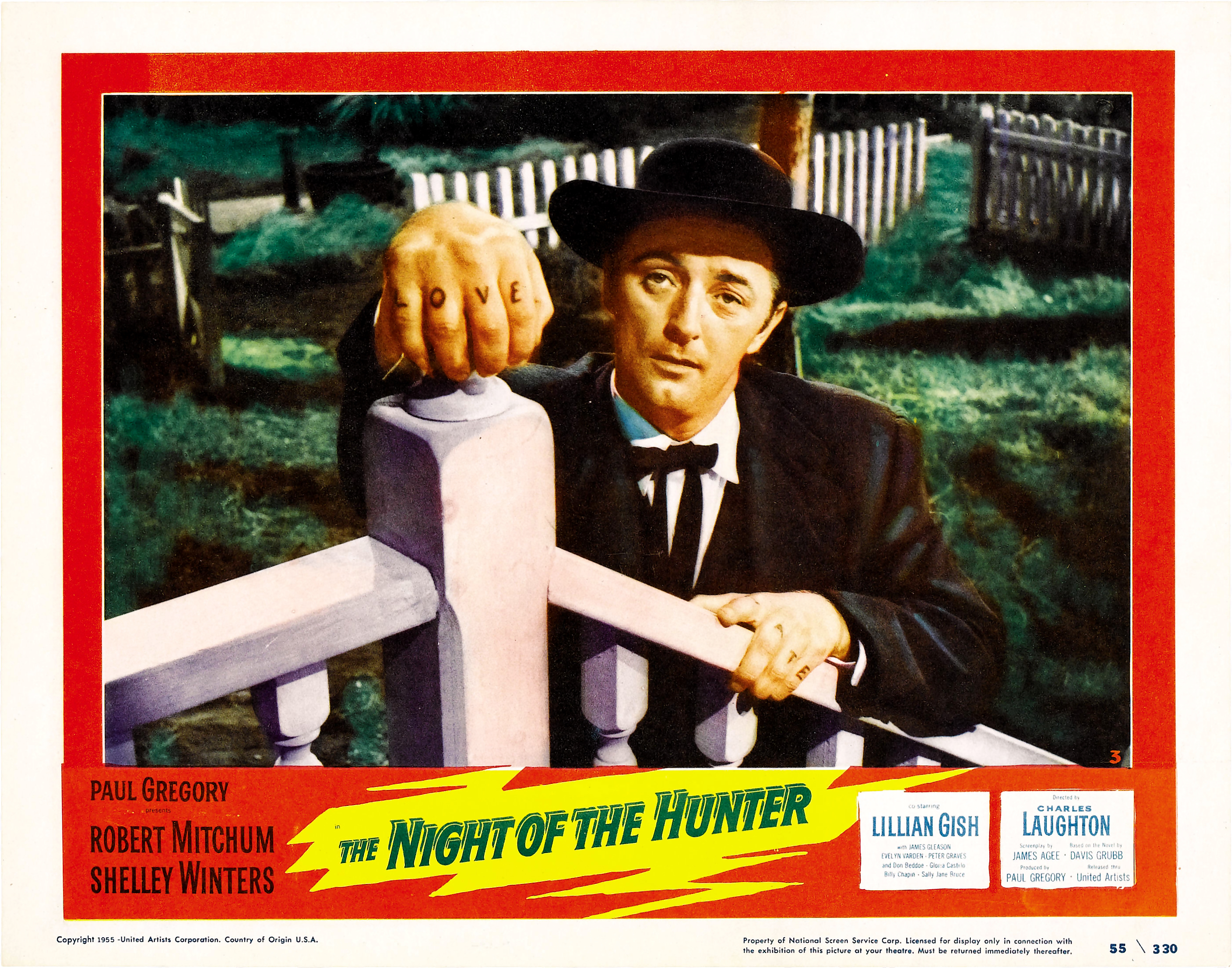
No 15. Percy Street was for a time the residence of actor Charles Laughton (1899 – 1962). No matinee idol, Laughton is probably best known for his portrayal of the Hunchback of Notre Dame though he also starred in Mutiny on the Bounty and The Barretts of Wimpole Street (see previous post). Nowadays his acclaim, as far as film buffs are concerned, rests on his solitary directorial effort, the startling Night of the Hunter.

220px-Charles_Laughton-publicity2

poster_thenightofthehunter

Next door at No.14 lived (though not contemporaneously) the poet, Coventry Kersey Dighton Patmore (1823 – 1896) about which nothing was quite as interesting as his name.

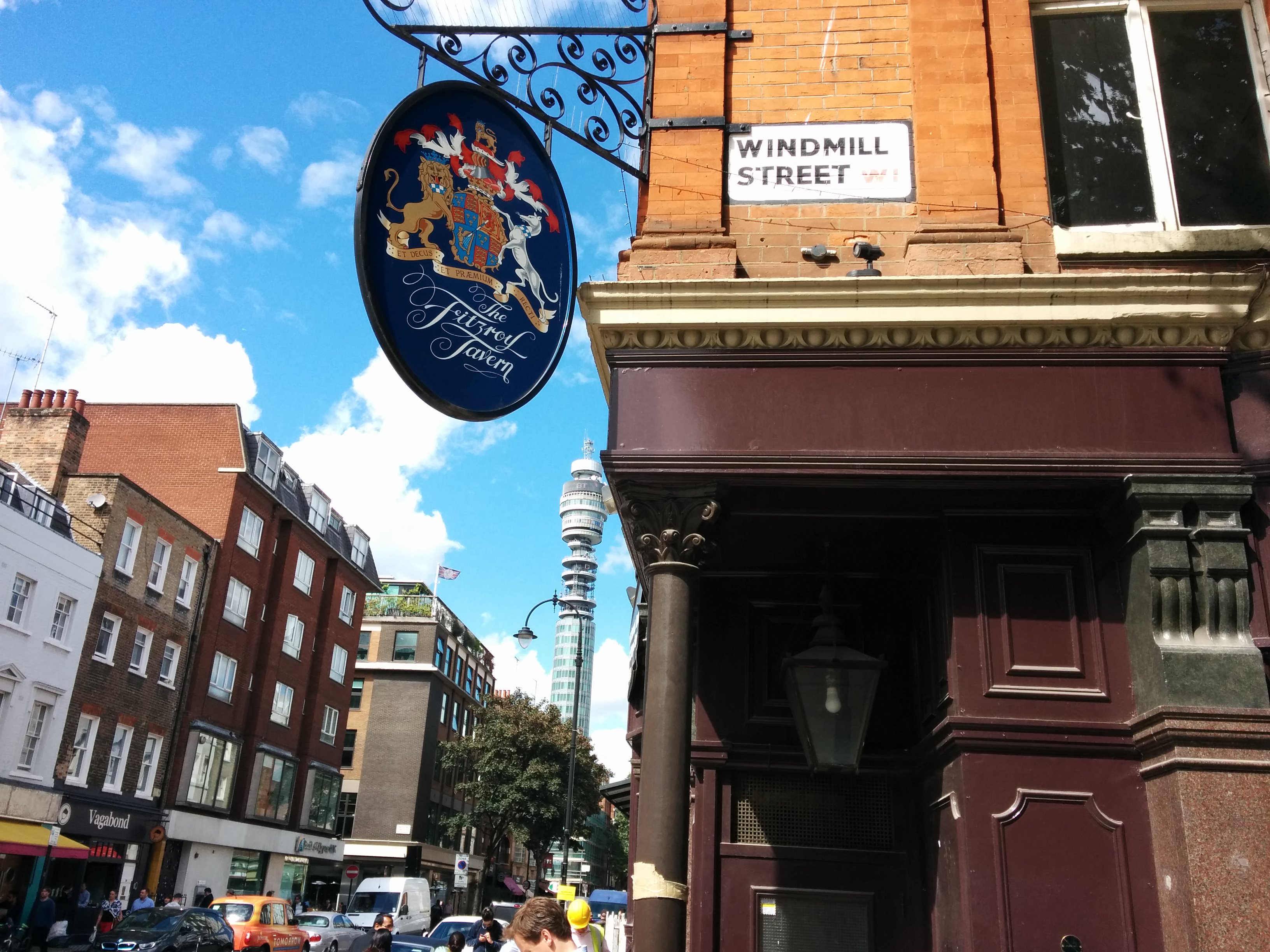
On the corner of Charlotte Street and Windmill Street is the famous Fitzroy Tavern which is unfortunately closed for major refurbishment until 2016 which means that the pub of the day is the nearby Rising Sun, quite possibly the last unreconstructed boozer in the vicinity. Which means that there are free tables and who can argue with just over a tenner for a pint of Czech lager and a plate of ham, egg & chips.

IMG_20150828_131002 IMG_20150828_140353

Had I hung on till I got round the corner into Rathbone Place I could have drunk in the footsteps of Dylan Thomas and George Orwell in the Wheatsheaf,

Stephen Street is home to the British Film Institute and in Gresse Sreet is the grandly named Fashion Retail Academy (where you can learn how to flog frocks in Next).

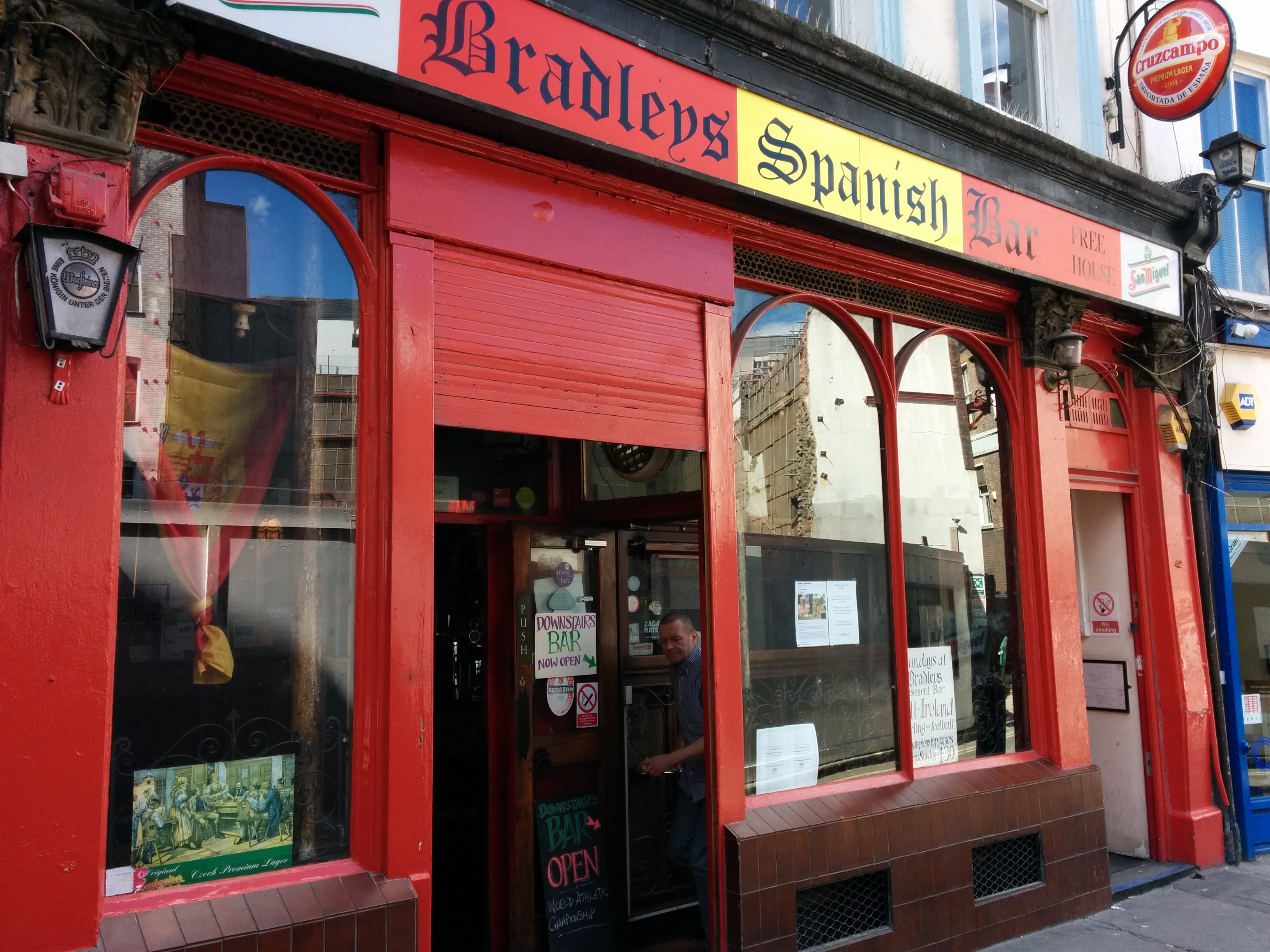
Duck back down onto Oxford Street and up Hanway Street leading to Hanway Place. On the former lies Bradleys Spanish Bar which is for my money the best drinking place within coughing distance of Oxford Street and one of the few bars that still has a working jukebox.

IMG_20150828_141751

North again on Newman Street and into Mortimer Street. The architecturally striking Radiant House occupies nos. 34-38 though there seems to be a dearth of information about its origins.

IMG_20150828_144422

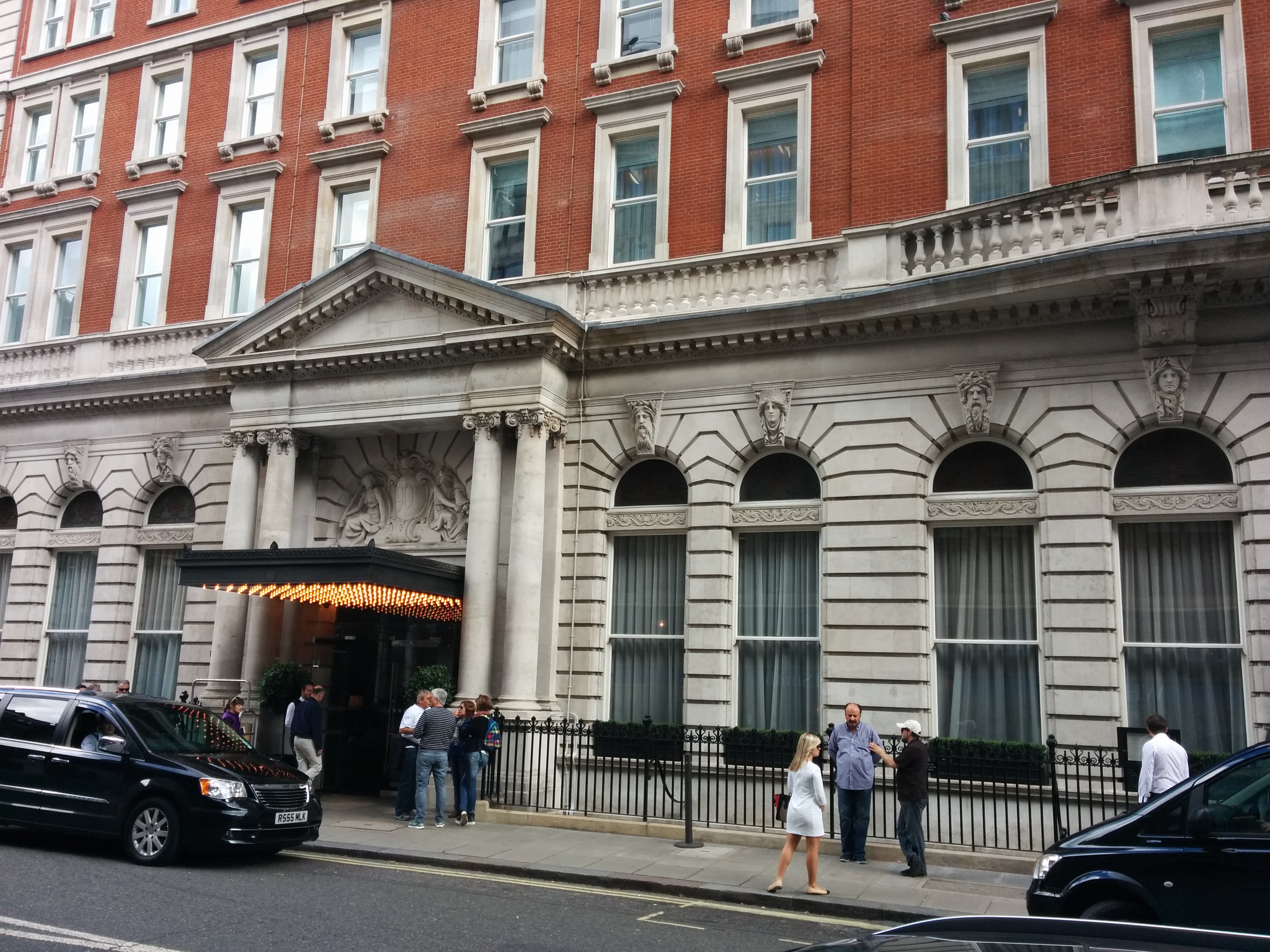
At No. 10 Berners Street is the 5 star Edition Hotel (part of the Marriott Group). The building dates from 1835 and the site has been a hotel since 1904, simply the Berners Hotel in its previous incarnation.

IMG_20150828_143421IMG_20150828_143817

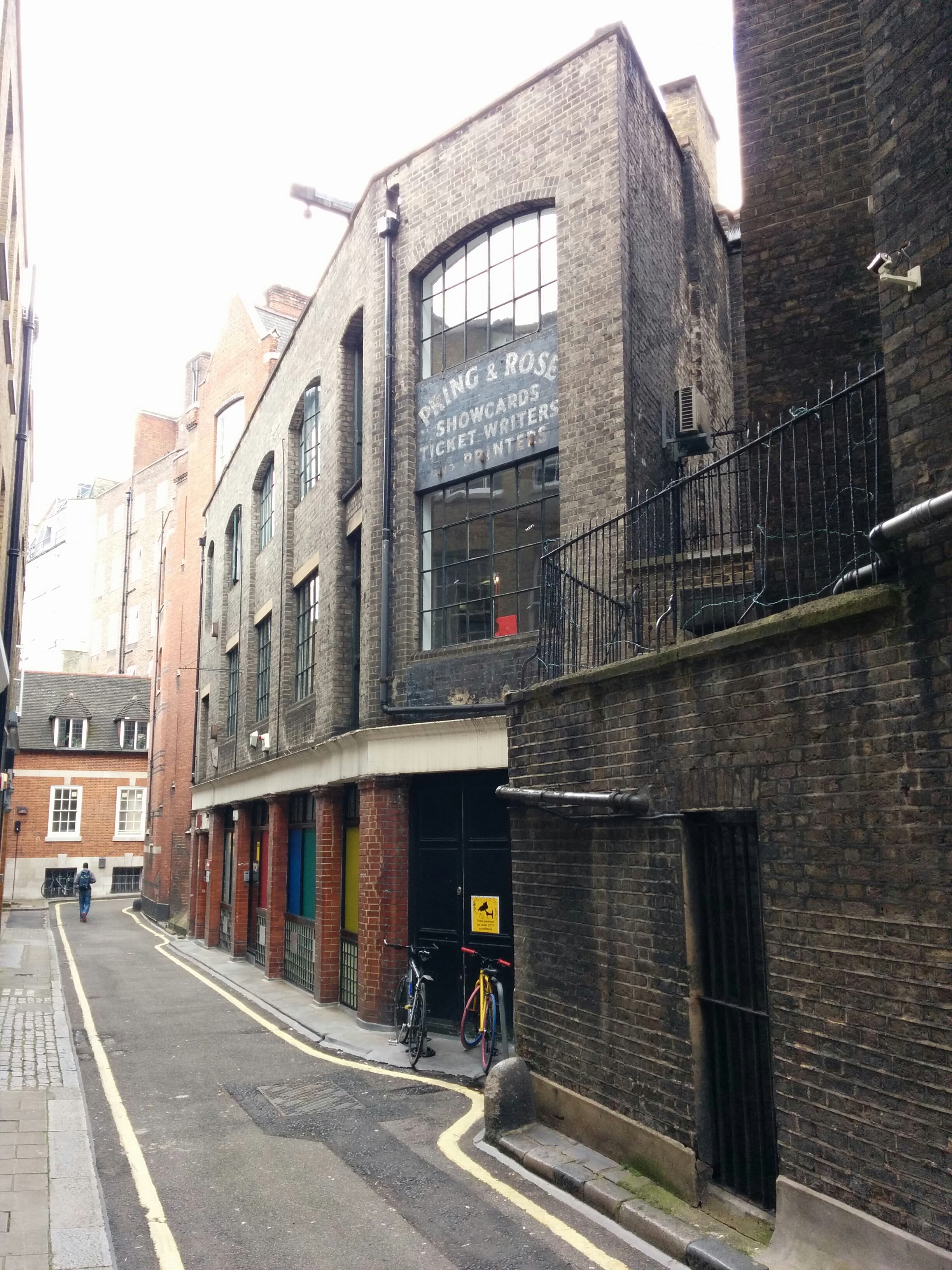
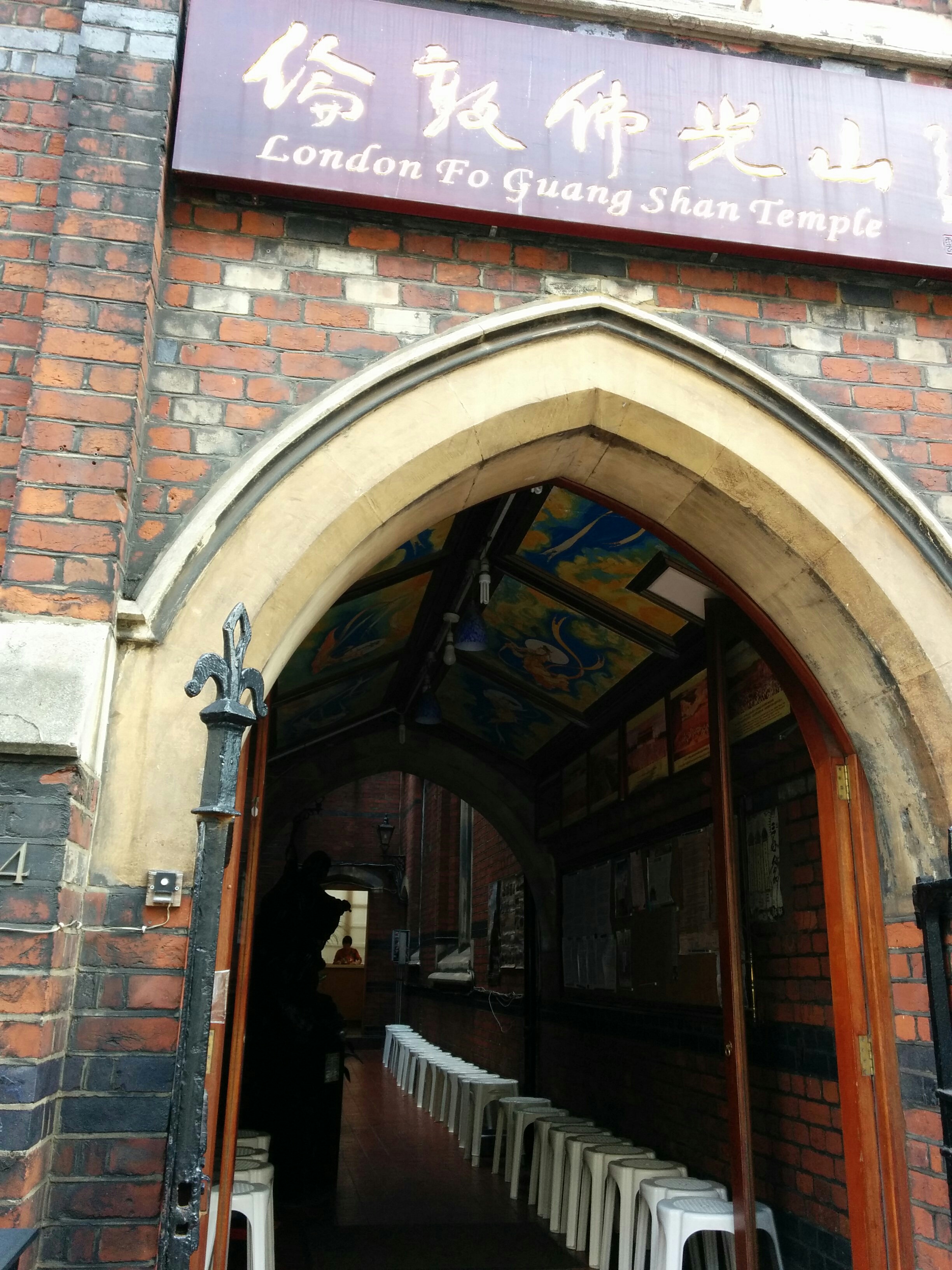
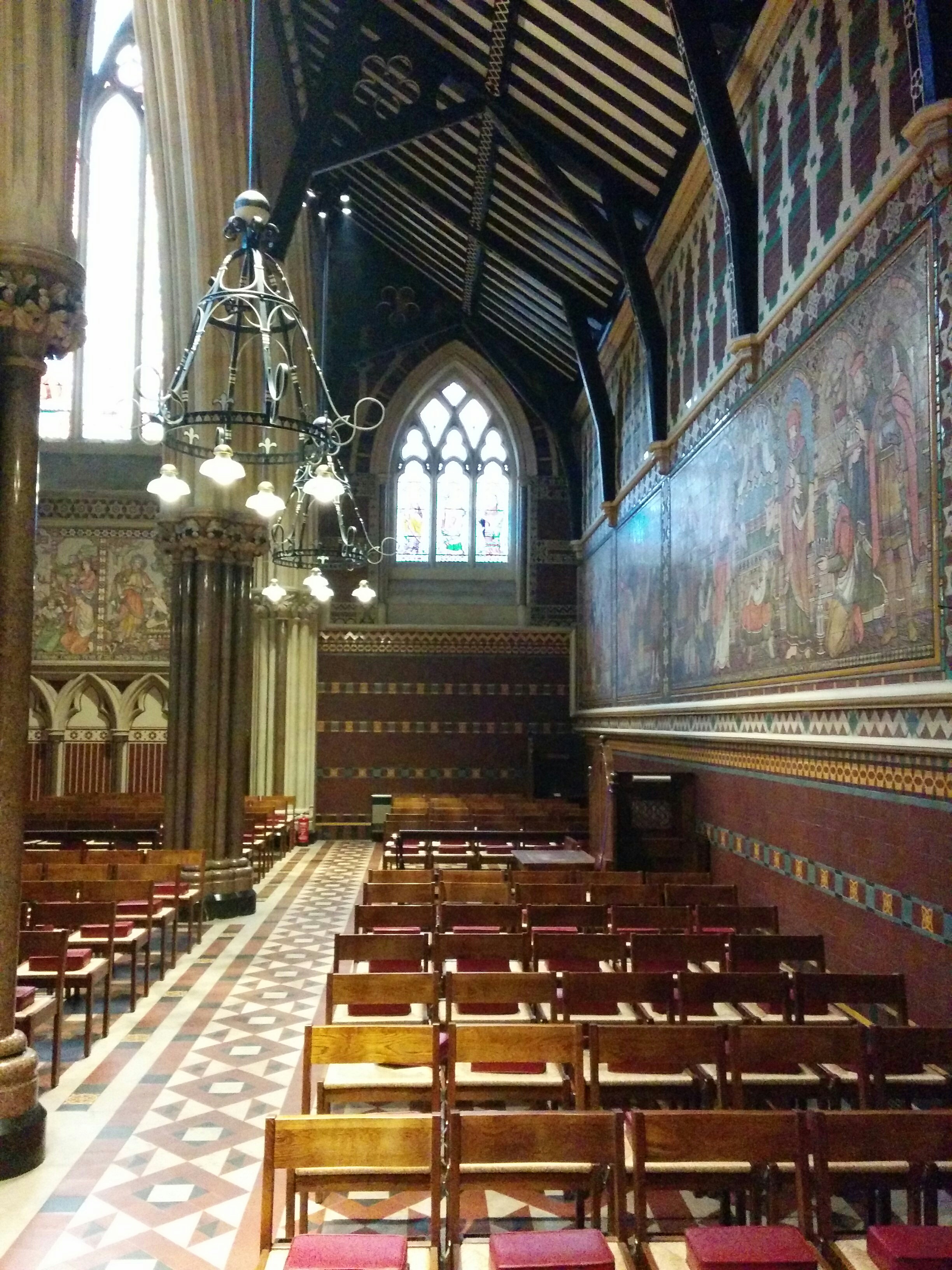
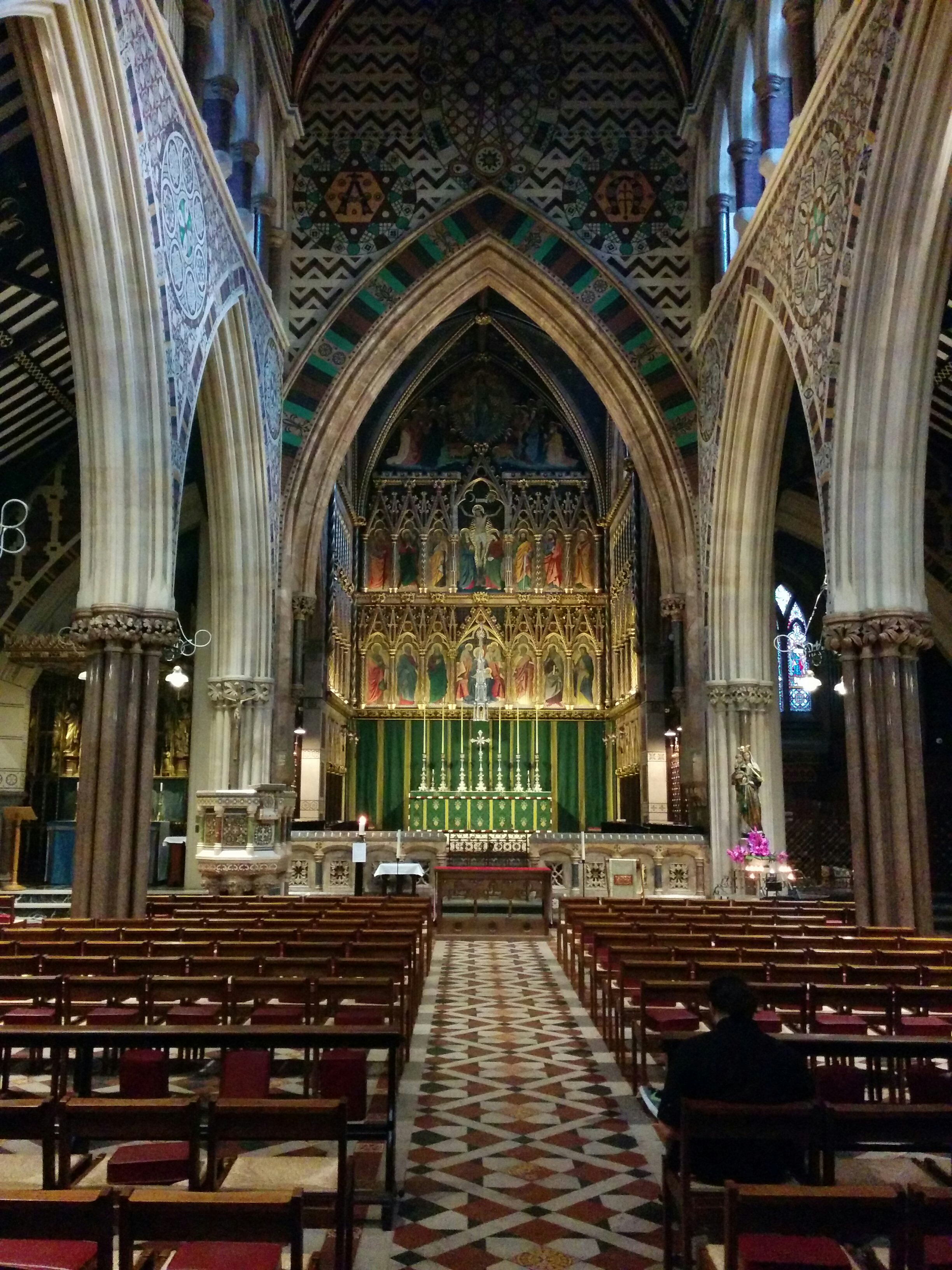
IMG_20150828_144007 IMG_20150828_151100Back up Wells Street and veering off down Marylebone Passage (above right) takes us on to Margaret Street where on opposite sides you have the Fo Guang Shan Buddhist temple (south side) and All Saints Church (north side). The former (Grade II listed) was originally the parish school attached to the latter and dates from the mid 19th century.

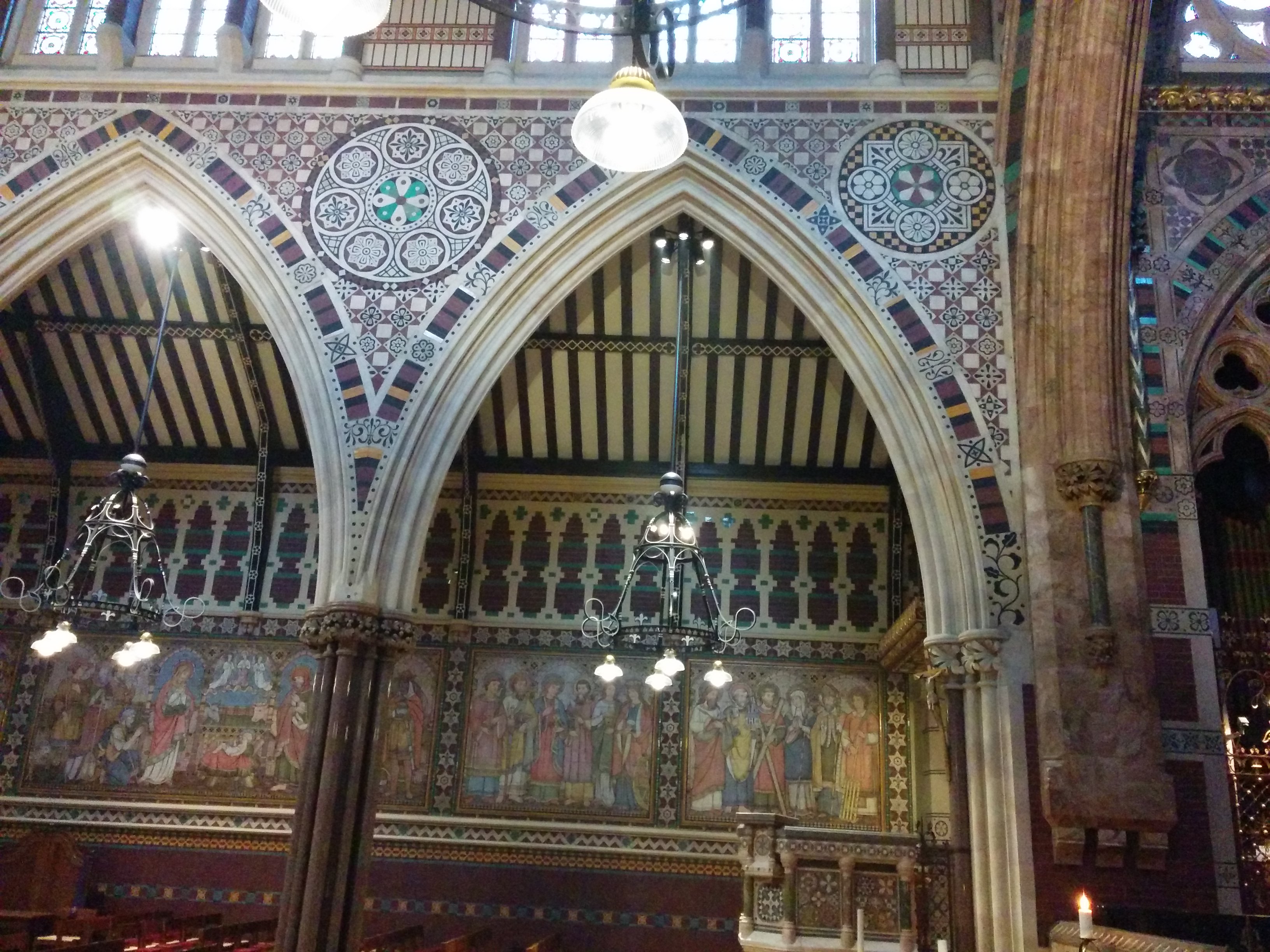
All Saints was completed in 1950 and, designed by the architect William Butterfield, is one of the landmark buildings of the Gothic revival.

IMG_20150828_150806IMG_20150828_150712The church has recently undergone renovation work which shows off the impressive decorative tiling and paintwork to fantastic effect.

IMG_20150828_150557

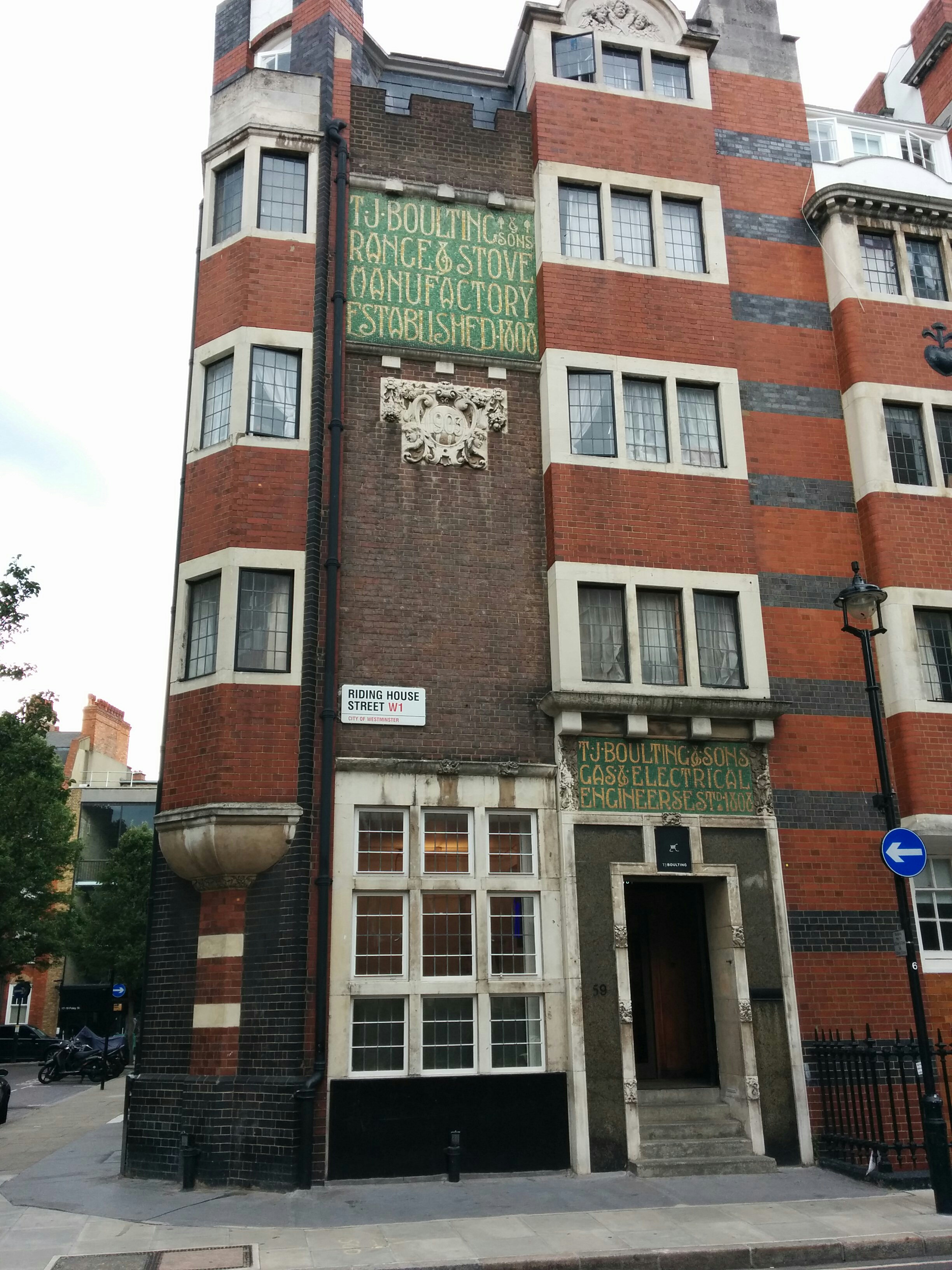
Next up is Riding House Street home to the College of Naturapathic Medicine where presumably one student has the same effect as several thousand.

IMG_20150828_144857

This leads on to Nassau Street, Foley Street, Candover Street, Hanson Street and Eastcastle Street.

IMG_20150828_145232 IMG_20150828_151433

Eventually arriving back on Oxford Street via the already familiar Great Titchfield Street we emerge opposite Marks & Spencer which opened here in 1938 occupying the former site of the London Pantheon which in its various incarnations since 1772 served as a theatre, opera house, bazaar and wine merchants. The present building, in iconic art deco style, was designed by by Robert Lutyens (son of Sir Edwin Lutyens) and was granted Grade II listed status in 2009.

IMG_20150828_151555

Day 4 – North of Oxford Street West

Today’s route covers the area north of the Marble Arch to Bond Street stretch of Oxford Street. It’s a part of London dominated by soulless chain hotels and the knock-on effect of proximity to the mecca of consumerism but with some surprises.

Day 4 Route

First of those surprises is Stratford Place which almost has more of interest in its short span than the rest of this area put together. Immediately adjacent to Bond Street tube it’s only about 100 yards long but by the end of it you would never know that the inferno that is Oxford Street is within spitting distance. The Tanzanian and Botswanan high commissions are next door to each other at numbers 3 and 5 and at no. 7 is the one-time residence of Martin Van Buren, 8th President of the USA.

IMG_20150817_112254 Van Buren

Colloquially known as the “Little Magician” he was unfortunately unable to conjure up a solution to the financial crisis of 1837 (which if you read about it sounds rather familiar – plus ca change).

At no.10 is the Royal Society of Musicians and at no. 11 (though it doesn’t advertise itself) is the Oriental Club, originally established in 1824 by and for officials and officers who had served in India and elsewhere in the “East”. Nowadays you just need to have the right background and a £1,000 a year to spare.

IMG_20150817_112352

IMG_20150817_112644

Finally at no.12 is the Kabbalah Centre. “Kabbalah is an ancient wisdom that provides practical tools for creating joy and lasting fulfilment.” As you can see from these handy aphorisms (if you enlarge the picture).

IMG_20150817_112909

Next street down is James Street which has gone for al-fresco dining in a big way.

IMG_20150817_142836I notice that the branch of Nando’s here does a Quinoa salad. And thoughtfully displays a poster advising on the ridiculous pronunciation (Keen-wah). Can’t be long before people in Ireland start naming their children after it. Come back cous-cous all is forgiven.

IMG_20150817_114045Running parallel is St Christopher’s Place, home of high-end brunching and shops aimed at people who might get French puns, as in the name “Les 100cials”, and appreciate a bush shaped into a giant platform shoe.

IMG_20150817_113916Turn right into Wigmore Street and then north up Welbeck Street. IMG_20150817_115231This was home to the scientist Thomas Young (1773 -1829) at no.49 and the poet and sculptor Thomas Woolner (1825 – 1892) at No.29. Woolner was one of the founding members of the Pre-Raphaelite Brotherhood (though not quite colourful enough to make it into the TV series).

Left into Bulstrode Street and on to Marylebone Lane. Here you can find Paul Rothe & Sons delicatessen (est.1900). As you can see, actor Tim McInnerny (of Black Adder fame) worked behind the counter back in the day.

IMG_20150817_120832

paul_rothe2

Bentinck Street houses the former residences of historian Edward Gibbon (1737 – 1794) and chemist James Smithson (1765 – 1829) at nos. 7 & 9 respectively. The former is of course best known for the Decline and Fall of the Roman Emperor (the book not the actual event). The latter was the founding donor of the Smithsonian Institute in Washington, D.C. despite having never visited the United States.

North again on Mandeville Place. At no.11-13 is the School of Economic Science, a registered charity which has the somewhat esoteric mission of finding the common ground between Philosophy and Economics and the spiritual dimension to that link.

IMG_20150817_121334IMG_20150817_121407

Mandeville Place is bisected by Hinde Street, home to quite an imposing Methodist Church which dates from 1887, before turning into Thayer Street. A nod to the AtTheMovies film poster store at no. 18.

IMG_20150817_121443 IMG_20150817_121521

Right onto George Street where we find St James’ Spanish Place RC Church with a lunchtime service in full swing. Out of respect I decide I have no choice but to sit down and wait for this to finish before taking a look around. Quite a fan of the current Pope but judging by the literature on display some of his more liberal notions have yet to filter down to the grassroots.

IMG_20150817_123655 IMG_20150817_125622

On Spanish Place proper no.4 is the former of home of the novelist Captain Frederick Marryat (1792 – 1848) and actor-manager George Grossmith (1847 – 1912).

IMG_20150817_130356A quick tour round Manchester Square home of the Wallace Collection (see previous post). At no. 14 lived Lord Alfred Milner (1854 – 1925) the sort of chap who wouldn’t have had any trouble getting into the Oriental Club.

IMG_20150817_130743

The route then takes us along Robert Adam Street, Blandford Street, Portman Close and Upper Berkeley Street. The beginning of the last of these is sandwiched between the massive and unlovely Radisson and Hyatt Regency hotels.

Montagu Street then on to Great Cumberland Place which goes all the way back down to Marble Arch. Part way down is Wallenberg Place which features this memorial to the great Raoul Wallenberg (1912 – 1945?). The Swedish diplomat responsible for savings tens of thousands of Jews from the Nazi holocaust who was taken captive by the Red Army at the end of WW2 and never heard of again. If you’re not familiar with him this is one of the essential bios to look up.

IMG_20150817_132924

On Bryanston Street can be found the Church of the Annunciation Marble Arch then down to Marble Arch itself (which more another day). Don’t know when this ferris wheel was put up.
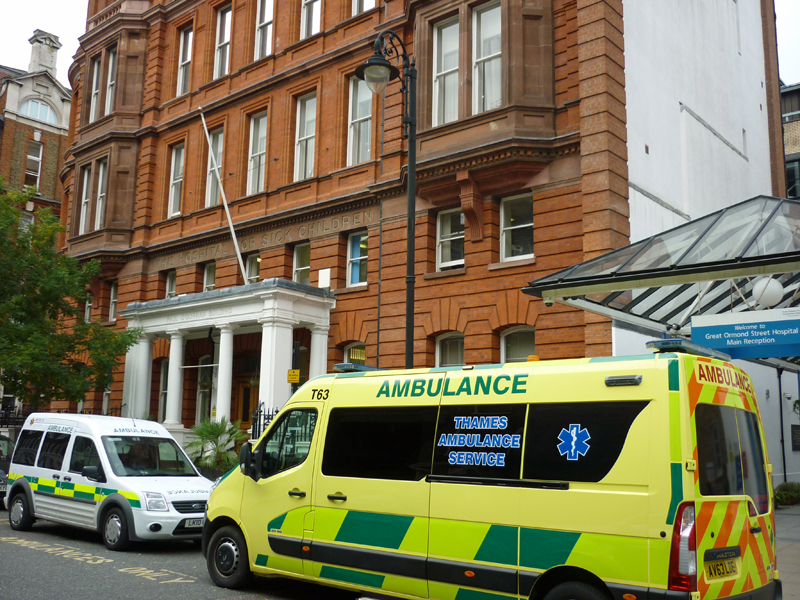
IMG_20150817_133252 IMG_20150817_133527

Finally brave the hell that is Oxford Street to briefly marvel at the hordes outside Primark. Since this is everywhere these days God alone knows why anyone would want to trek into town just to patronise a slightly larger branch. I will also note in passing the very sizeable presence of middle-easterners in this corner of the capital – the Marble Arch to Bond Street stretch of Oxford Street could just as well be part of downtown Riyadh.
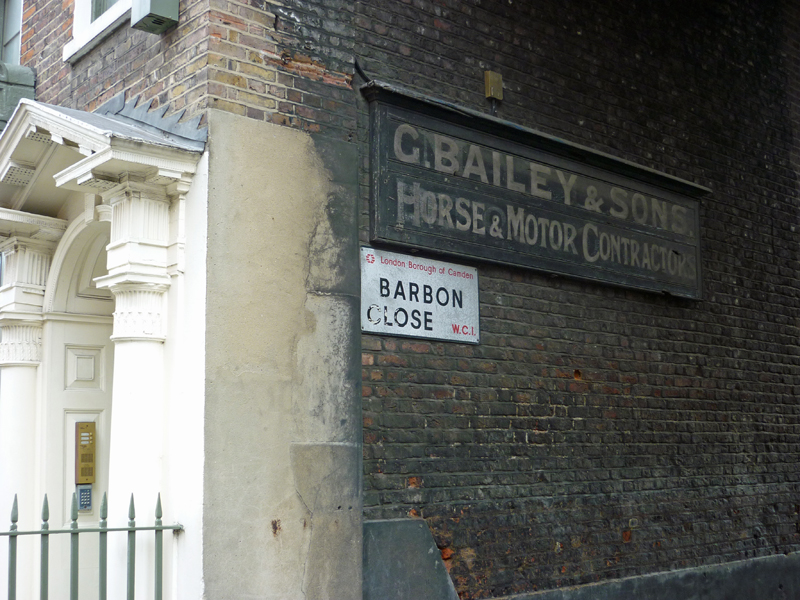
IMG_20150817_133756

 Take in Old Quebec Street, Seymour Street and New Quebec Street before reaching Portman Square which has one of those private gardens that always strike a discordant note. Off the north-west corner of the square is Fitzhardinge Street which is only notable for being the former home of B.T Batsford the publisher for whose softball team, the Batsford Bats, I turned out as a regular ringer during the late eighties and early nineties.

Back to Oxford Street via Seymour Mews and Orchard Street. No pub of the day today as this part of town is something of desert as far as hostelries are concerned. Duke Street has both the Devonshire Arms and the Henry Holland but the former doesn’t do food and the latter is asking £8 for a baguette. It also boasts the fact that Simon Bolivar (1783 – 1830) the hero of South American liberation took lodgings at no.4 in 1810.

IMG_20150817_142156

Picton Place and Barrett Street then finish off at Selfridges the world-renowned emporium and TV series inspiration founded by Harry Gordon Selfridge in 1909.

IMG_20150817_140409 IMG_20150817_140538

Was going to have something to eat on the 4th floor but £11 for a Halloumi wrap (as an example) is taking the proverbial somewhat. Still, the toilets are splendid enough to make the trip worthwhile even if it does involve passing the jaw-dropping apparition that is the Christmas Shop. Now either they’re jumping the gun by several months or this is here all year round – and I don’t know which is worse. All the more surprising since quite a fair proportion of their clientele definitely doesn’t do Christmas.

IMG_20150817_141007