Day 11 (part 2) – Tottenham Court Road – University College London – Bloomsbury

Second leg of today’s walk resumes at the north side of Russell Square then concentrates on the constellation of buildings and institutions that constitute the “Bloomsbury Site” of the University of London, principally UCL.  This was originally an area of eleven acres stretching from Woburn Square to the British Museum and its acquisition, from the Duke of Bedford (see last post) in 1927, was partially funded by the Rockefeller Foundation. It ends with visits to the two wonderful in-house museums belonging to UCL, the Grant Museum of Zoology and the Petrie Museum of Egyptian Archaeology.

Day 11 Route pt2

We begin by heading north up Bedford Way then after turning left into Gordon Square venture south again via Woburn Square and Thornhaugh Street before returning to Russell Square and exiting that by the south-west corner. This takes us into Montague Place which runs along the back of the British Museum (more of which in a later post).

P1040656

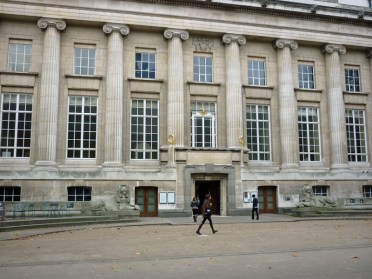
As mentioned above the creation of this new hub for the University of London in the thirties was facilitated by an endowment from the Rockefeller Foundation – £400,000 which was a pretty immodest sum back then. The centrepiece of the development was the (still) imposing Senate House on Malet Street. Construction of this iconic Art Deco edifice (often claimed as London’s first skyscraper) began in 1932 and although some staff moved in during 1936 it wasn’t fully completed until 1937 by which time it had been scaled back from the original designs due to a shortfall in funds.

The building was used by the Ministry of Information during WWII and this, combined with its monolithic appearance no doubt, inspired both Graham Greene’s “Ministry of Fear” (adapted for the cinema by Fritz Lang) and George Orwell’s Ministry of Truth as featured in “1984”.

There is even an actual Room 101 inside on the first floor though there is not thought to be any direct correlation between this and Orwell’s home of nightmares made flesh (despite the fact that his wife worked for the MoI during the war).

The right-hand image below is of a map in The Chancellor’s Hall showing the location of all the constituent colleges of the University of London in 1939. The actual painting, by MacDonald Gill, is 4m across.

The building mainly functions as the administrative centre for the University of London but also houses its main library. On the left below is the Senate Room itself; these days used only a handful of times a year for meetings of the actual Senate (which is largely ceremonial) though it is available for hire.

To the north of the Senate House is Torrington Square where reside  Birkbeck College and The School of Oriental and African Studies (SOAS). Opposite the latter is the Brunei Gallery (no prizes for guessing where the funding for that came from) which is well worth a visit, not only for its exhibitions but also its Japanese roof garden.

Across the road at the top end of the square is the southern end of  Church of Christ the King, Bloomsbury

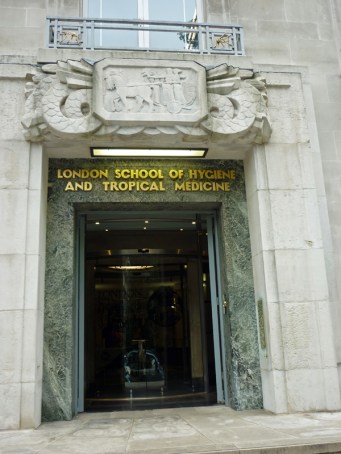
Here we turn left along Byng Place then head back down Malet Street until we get to Keppel Street which is where London School of Hygiene & Tropical Medicine lives.

130922 Open House (4)

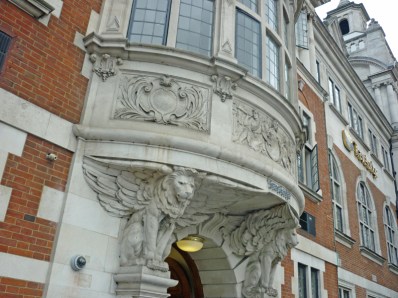
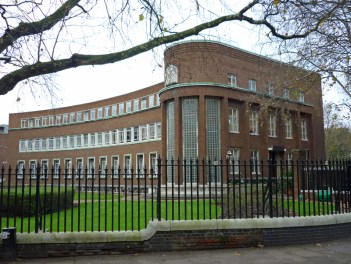
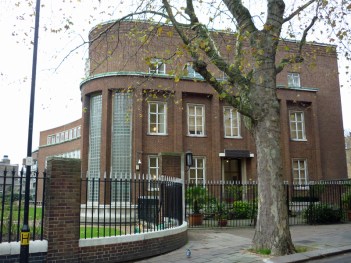
The creation of this new building for the school, following the granting of its Royal Charter in 1924, was another result of the munificence of the Rockefeller Foundation. The building, which was opened in July 1929, was one of the first constructed around a steel frame. The facade of Portland stone incorporates above the main entrance a carving of Apollo and Artemis riding a chariot. As you can also see above, the first floor balconies are  decorated with a selection of gilded bronze studies of insects and animals infamous for their roles in the transmission of disease.

The sculpted panel above is by Eric Kennington (1888 – 1960) who is mainly known for his work as an official artist in both World Wars. The bust in the library is of Sir Richard Doll (1912 – 2005) considered to be the foremost epidemiologist of the 20th century.

Cross over to Store Street with its uniformly fronted independent shops, galleries and coffee shops and on the corner with Ridgmont Street come across the site of the old Bloomsbury Service Station which was redeveloped in 2012 incorporating the style and some of the features of the original 1926 building into what is now offices and a Byron hamburger joint.

Next up Chenies Street, North Crescent and Alfred Place. The middle one of those is largely comprised of Minerva House, a grade II listed former car showroom and workshop.

P1040664

Back on Store Street, South Crescent to be precise, is the Building Centre. Established in 1931, this is now not-for-profit organisation is dedicated to providing education, information and support in relation to all aspects of the built environment. Worth a visit just to see the 3D map which highlights all the current new-build projects in London.

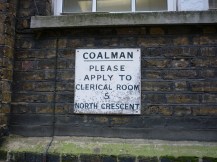
We now take a first dip into Tottenham Court Road and the next turning on the right is Alfred Mews where we come across this somewhat redundant instruction.

P1040668

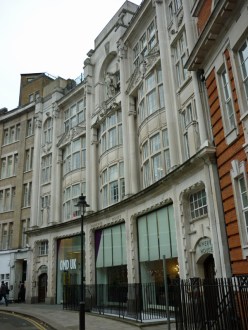
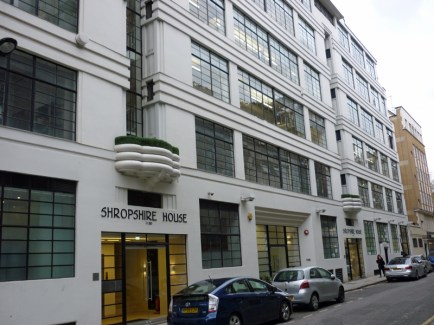
Criss-cross between Tottenham Court Road and Gower Street via Torrington Place, Huntley Street, Chenies Mews and Capper Street. Last of these features another great surviving example of the Art Deco form in Shropshire House which dates from 1932.

P1040671

Another cul-de-sac off of TCR is Queen’s Yard where behind this unprepossessing entrance can be found the Government Art Collection. One of the small selection, of the over 100,000 works in the collection, on display is the splendid 4’33” (Prepared Pianola for Roger Bannister) by Mel Brimfield


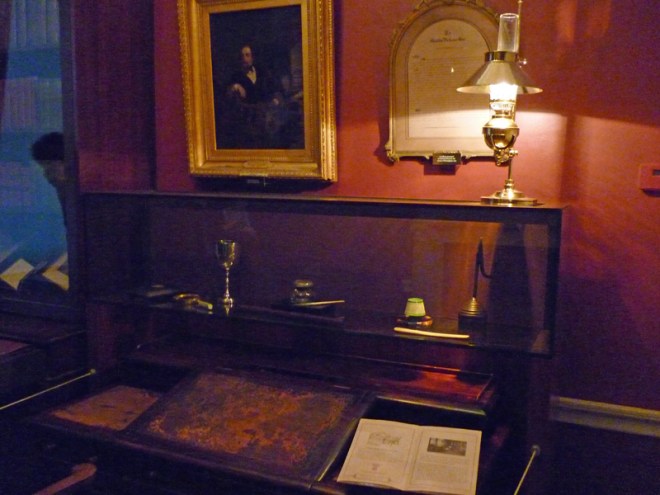
On University Street, where we turn next, there is, appropriately, a pub named after the philosopher, Jeremy Bentham (1748 – 1832),  who left his body to be publicly dissected by his friend, Dr Thomas Southwood Smith, and preserved as an ‘auto-icon’. Jeremy the auto-icon was bequeathed to UCL in 1850 and has remained there ever since.


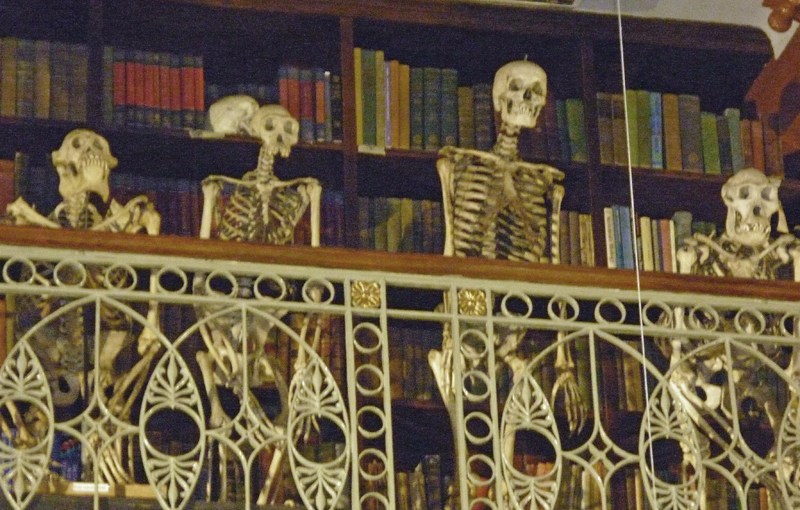
The Grant Museum of Zoology sits on the corner of University Street and Gower Street and houses around 68,000 remarkable zoological specimens.


Founded in 1828 as a teaching collection, the Museum is packed full of skeletons, mounted animals and specimens preserved in fluid. Many of the species concerned are now endangered or extinct. Below are a selection of my personal favourites.

This slideshow requires JavaScript.


After leaving the museum we head down Gower Street, stopping briefly for a look at the UCL Main Building also known as the Octagon Building.

To get to the final stop for today, the Petrie Museum of Egyptian Archaeology we veer off to the left and left again into Malet Place. The museum was set up as a teaching resource for the Department of Egyptian Archaeology and Philology at UCL. Both the department and the museum were created in 1892 through the bequest of the writer Amelia Edwards (1831-1892). The collection, of over 80,000 Egyptian and Sudanese artefacts dating from prehistory through the time of the pharaohs to the Islamic era, was considerable extended due to the extraordinary excavating career of the first Edwards Professor, William Flinders Petrie (1853-1942) after whom the museum is named. Of course the export of such antiquities from their place of discovery has long been illegal so the collection is a static one. It is also quite astonishing.

This slideshow requires JavaScript.

2015 is actually the centenary of the museum opening to the public and in recognition of that here is one final exhibit to hopefully whet your appetite for a visit.

P1040695

This is a fragment from the “Book of the Dead” papyrus belonging to a man named Khnumemheb. It shows the ‘weighing of the heart’ scene in which the deceased’s heart is weighed against the feather of truth while Ammut, the monstrous devourer of the dead, sits beneath the balance awaiting the judgement.


And on that cheery note…until next time.


Day 7 – Euston – Somers Town – Bloomsbury

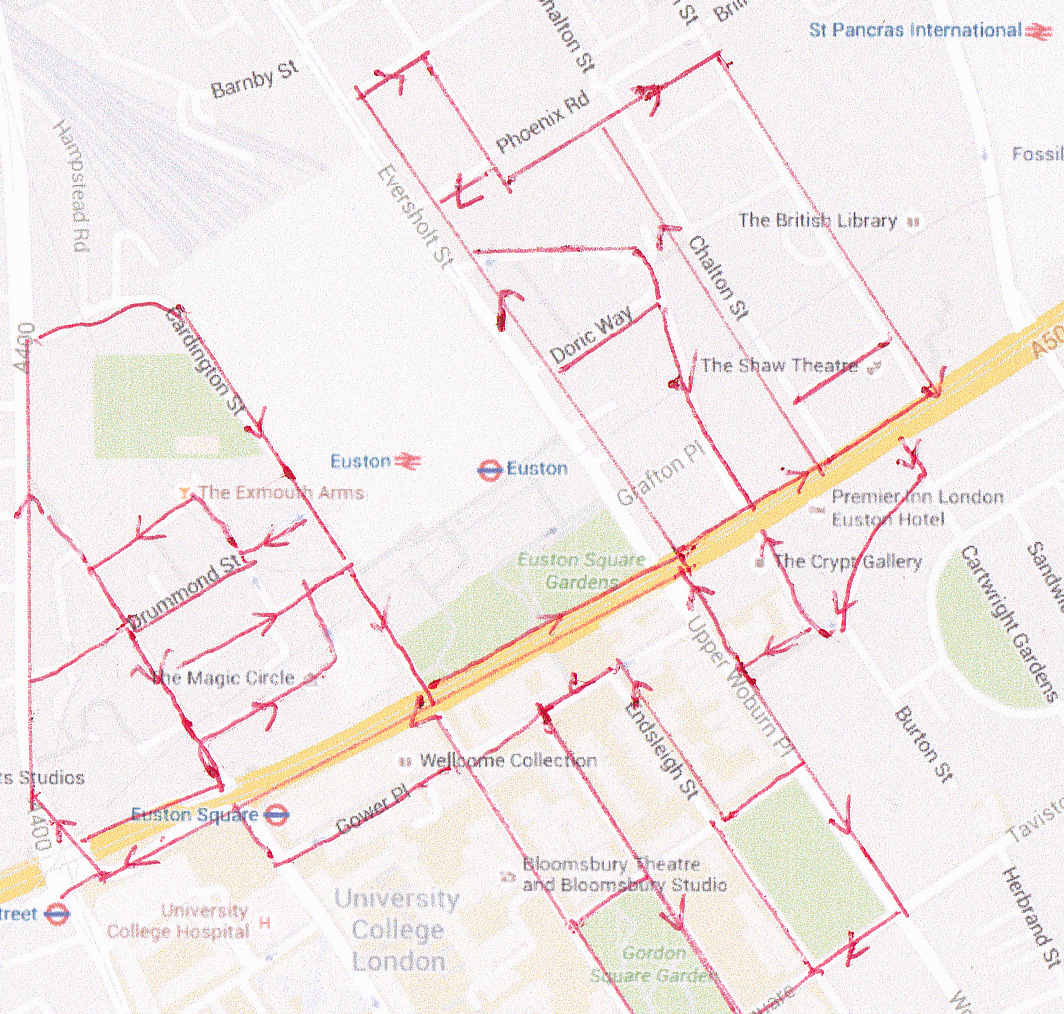
Today’s route sees us heading north again to cover the area around Euston Station starting in the locality of Somers Town which bridges the gape between Euston and Kings Cross. We then head across the Euston Road encroaching into Bloomsbury before finishing off in the streets surrounding University College London.

Day 7 Route

From Euston Station we head north along Eversholt Street which is somewhat reminiscent of the vicinity of Kings Cross before it was tarted up. Though it does have the impressive 1930’s built Euston House at no.24, originally the HQ of the London, Midland and Scottish Railway it later became the home of the British Railways Board (now of fond memory).

IMG_20150930_105125

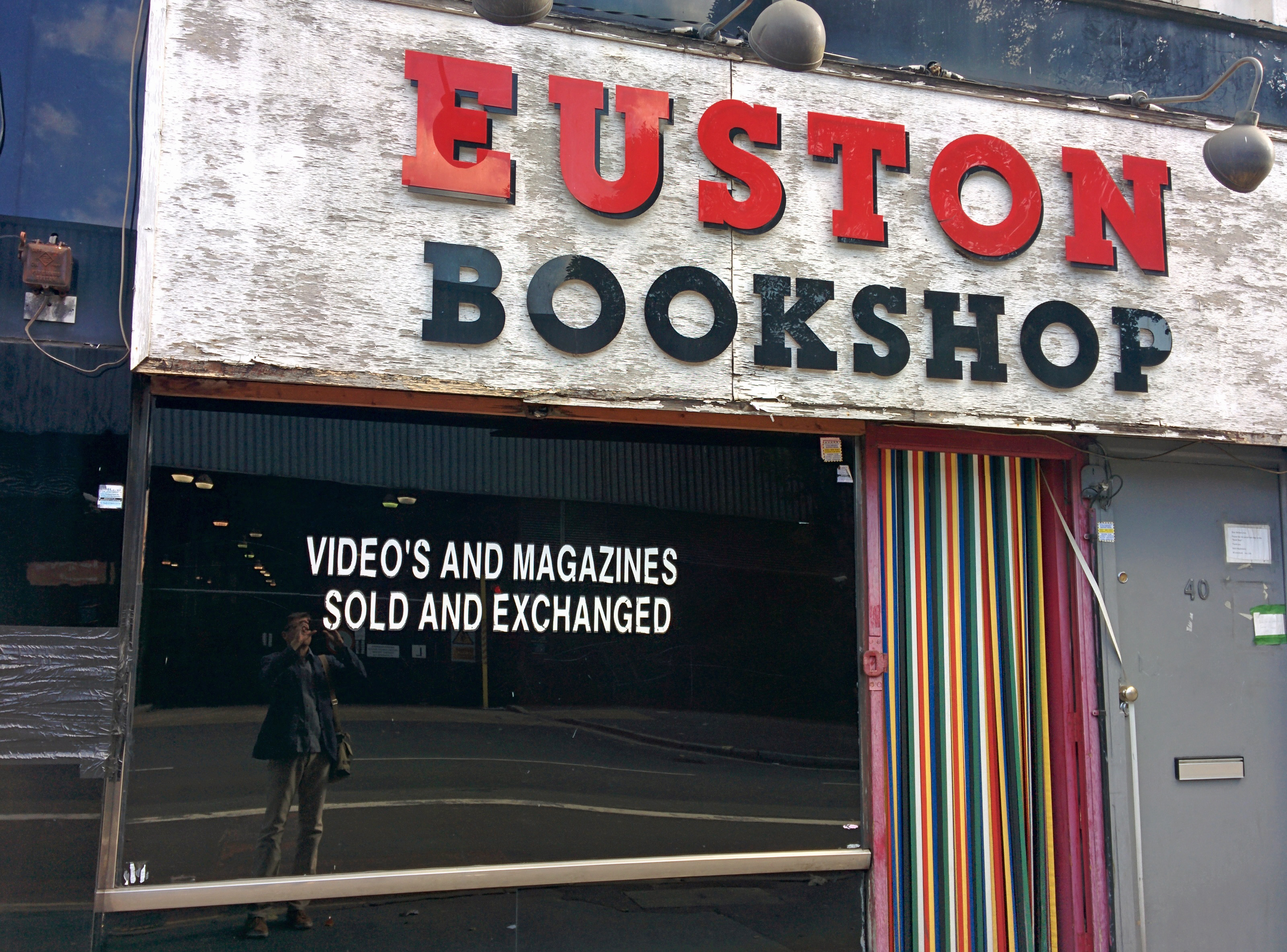
Further up it looks more like this. I don’t think I’ve seen one of those multi-coloured plastic strip curtains since about 1981. Interesting to note that the misused apostrophe isn’t a particularly modern phenomenon – though whoever put this up has obviously hedged their bets.

IMG_20150930_105903

Turn eastward along Polygon Street where at no.16 is the site of the  the former Jubilee pub closed in 2003 but nice to see the splendid frontage still in situ. We are now venturing into Somers Town which like the area immediately east of Regents Park still has a good stock of social housing and a bit of an old-school community feel. Right down Werrington Street and left along Pheonix Road and we hit Ossulton Street which heading south flanks the new British Library.

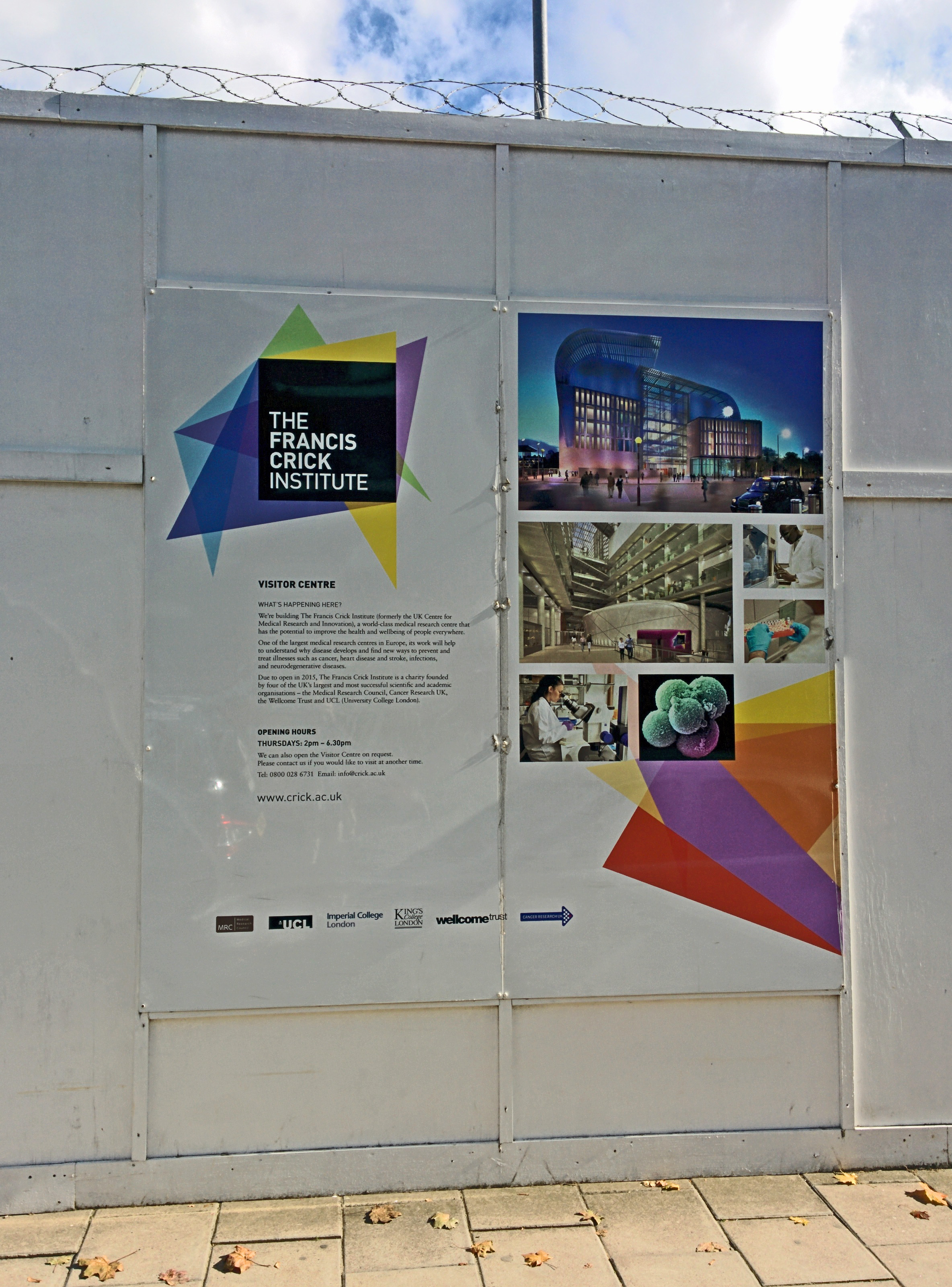
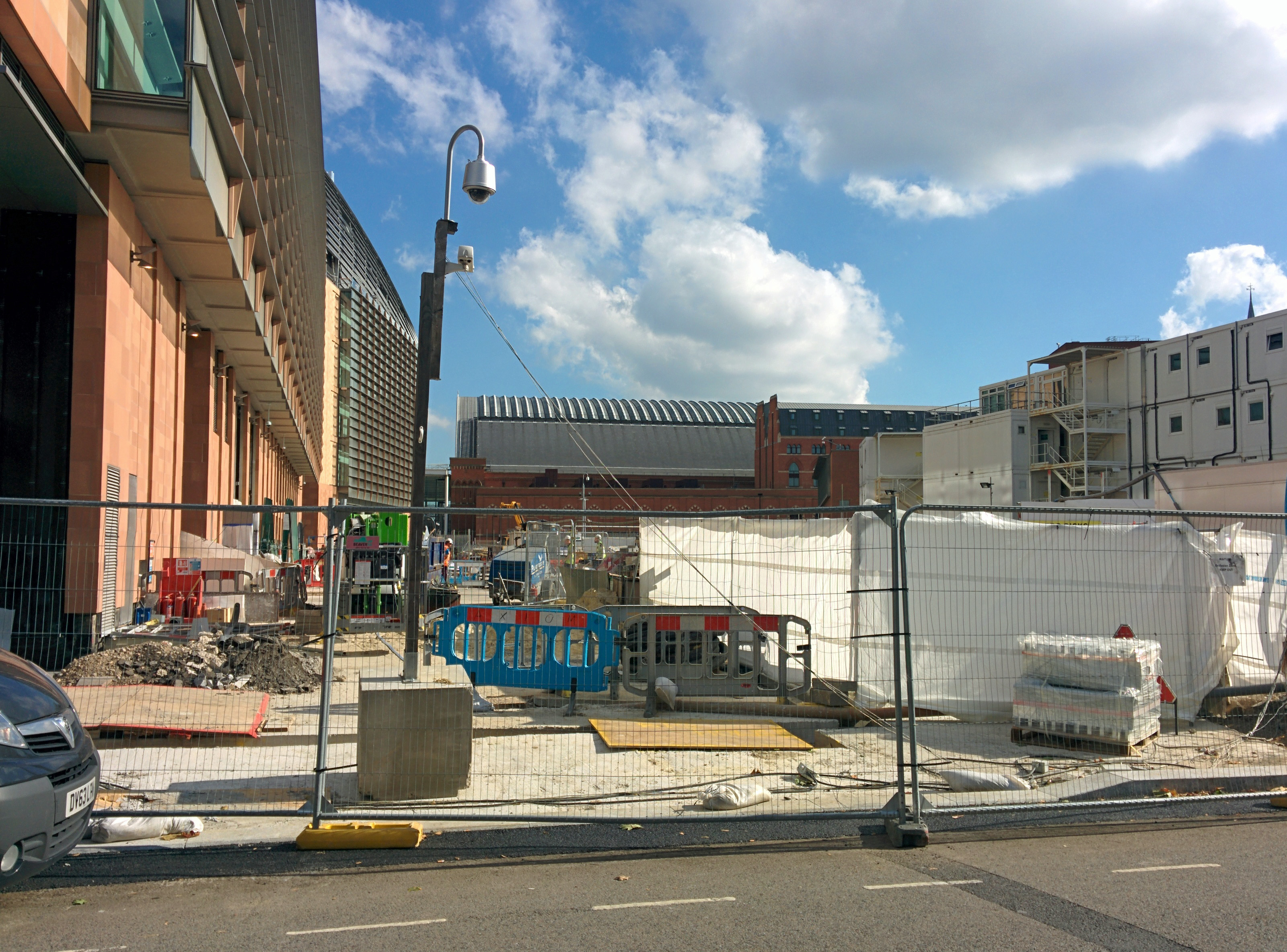
The site just to the north of the library is supposedly being redeveloped as the Francis Crick Institute, intended to be one of the largest medical research centres in Europe. I say supposedly because the poster below proclaims an opening in 2015 and as you can see from the other photo there’s still basically just an empty space.

IMG_20150930_110457 IMG_20150930_110531

Quick right onto Euston Road and back northward on Chalton Street, a pleasingly tree-lined thoroughfare with an interesting mix of retail and hospitality outlets. Including one with a secret garden – though it’s obviously not that secret once you advertise it on your billboard.

IMG_20150930_111127 IMG_20150930_111316

IMG_20150930_111951

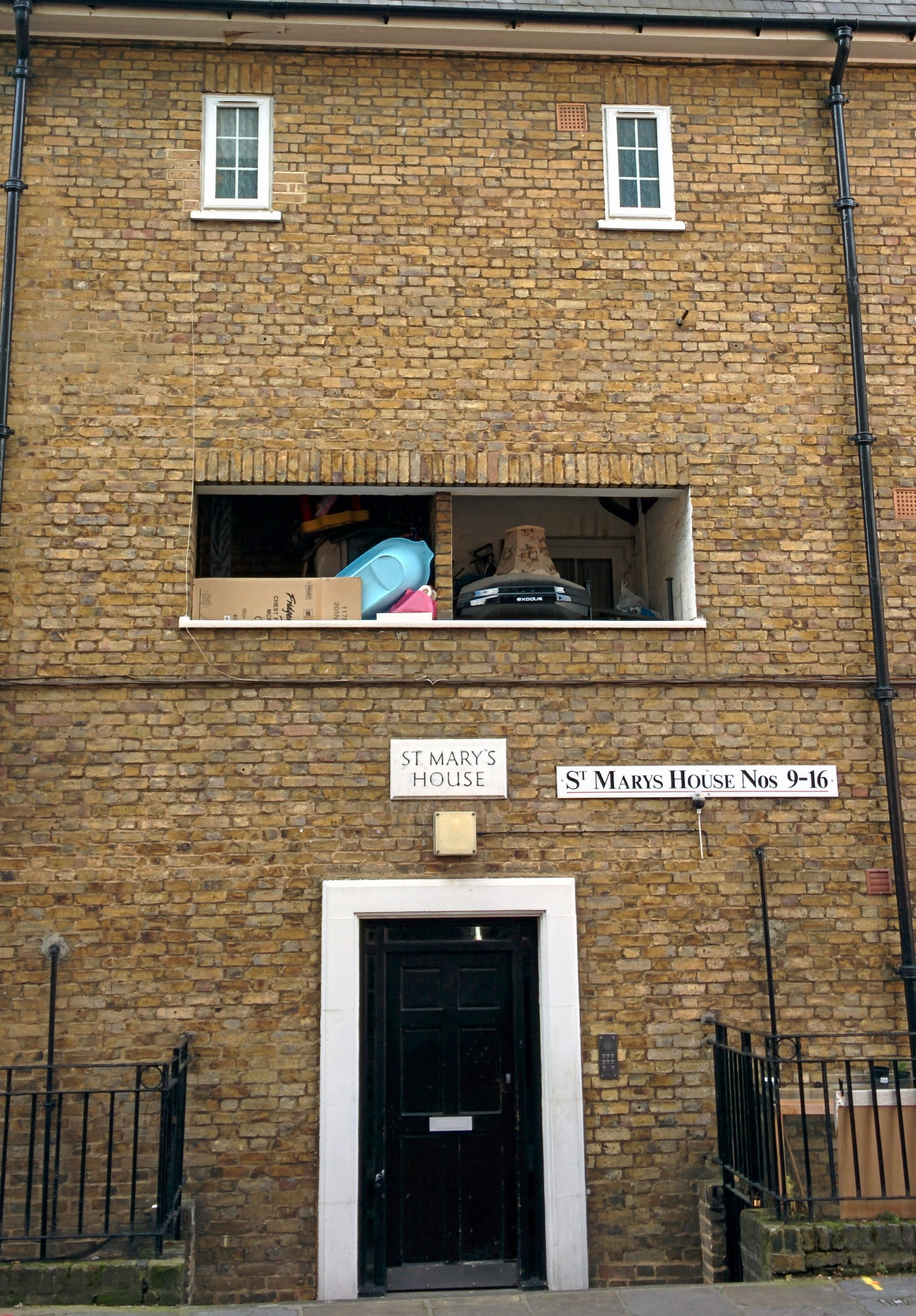
Drummond Crescent, Doric Way, Churchway and Grafton Place complete the set of streets east of Euston and somewhere amongst these is this rather novel storage solution.

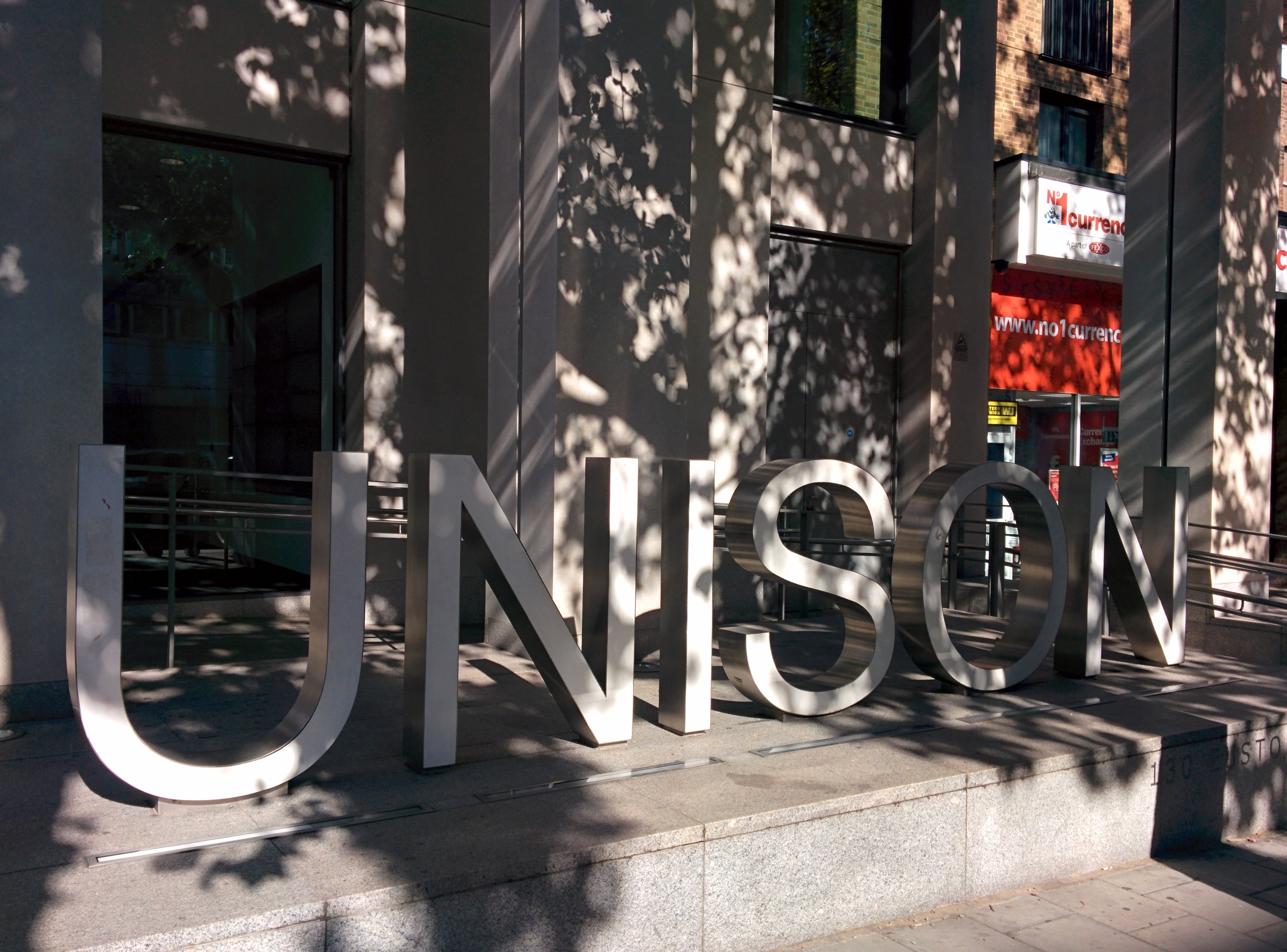
Then we’re back out by the supremely unlovely Euston Station from where heading east along Euston Road we pass the headquarters of the Unison Trade Union at no. 130.

IMG_20150930_112622 IMG_20150930_112851

 IMG_20150930_113545

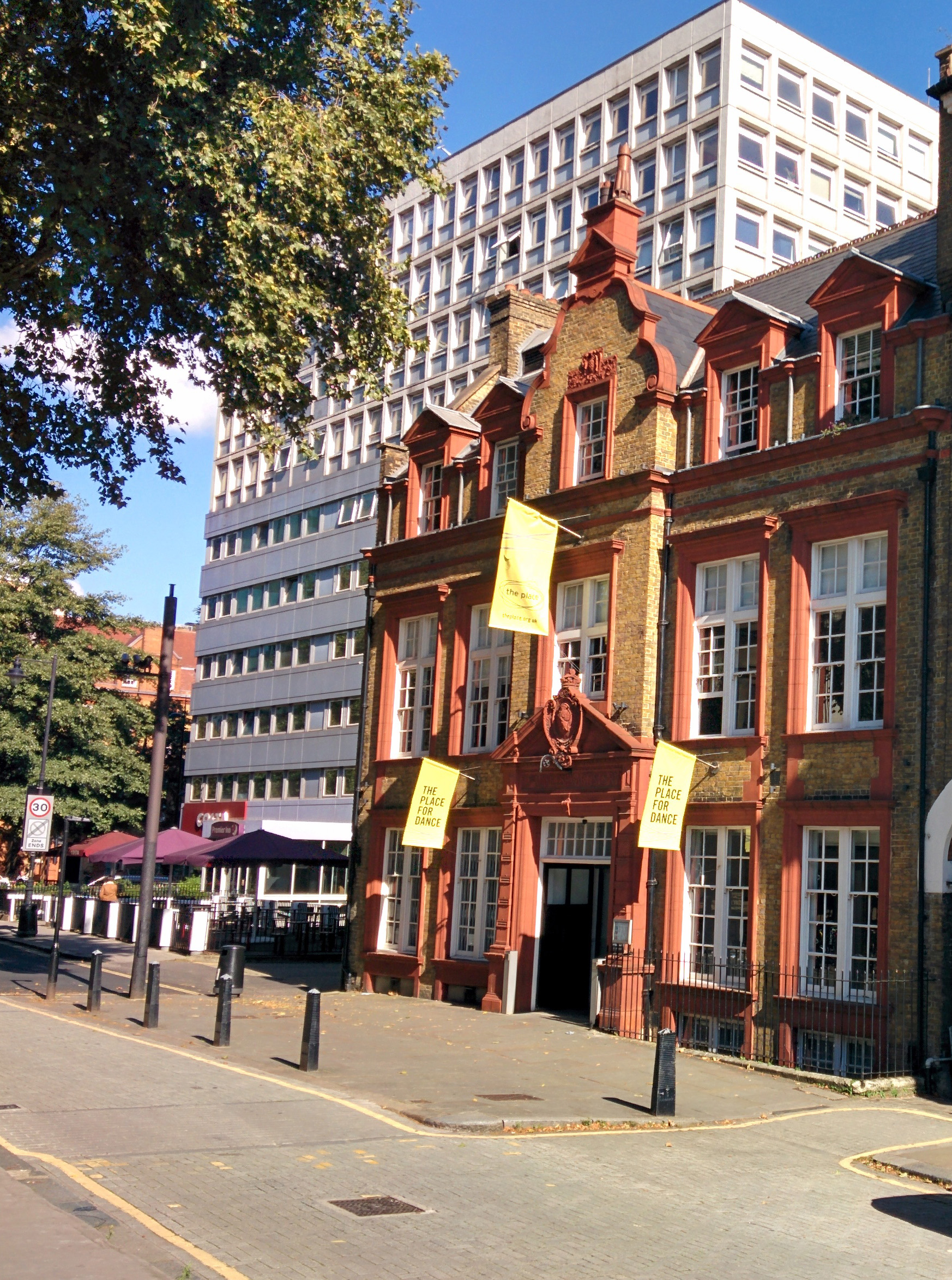
Cross over Euston Road and skirt round the back along Flaxman Terrace which segues into Dukes Road where we find The Place, home of contemporary dance.

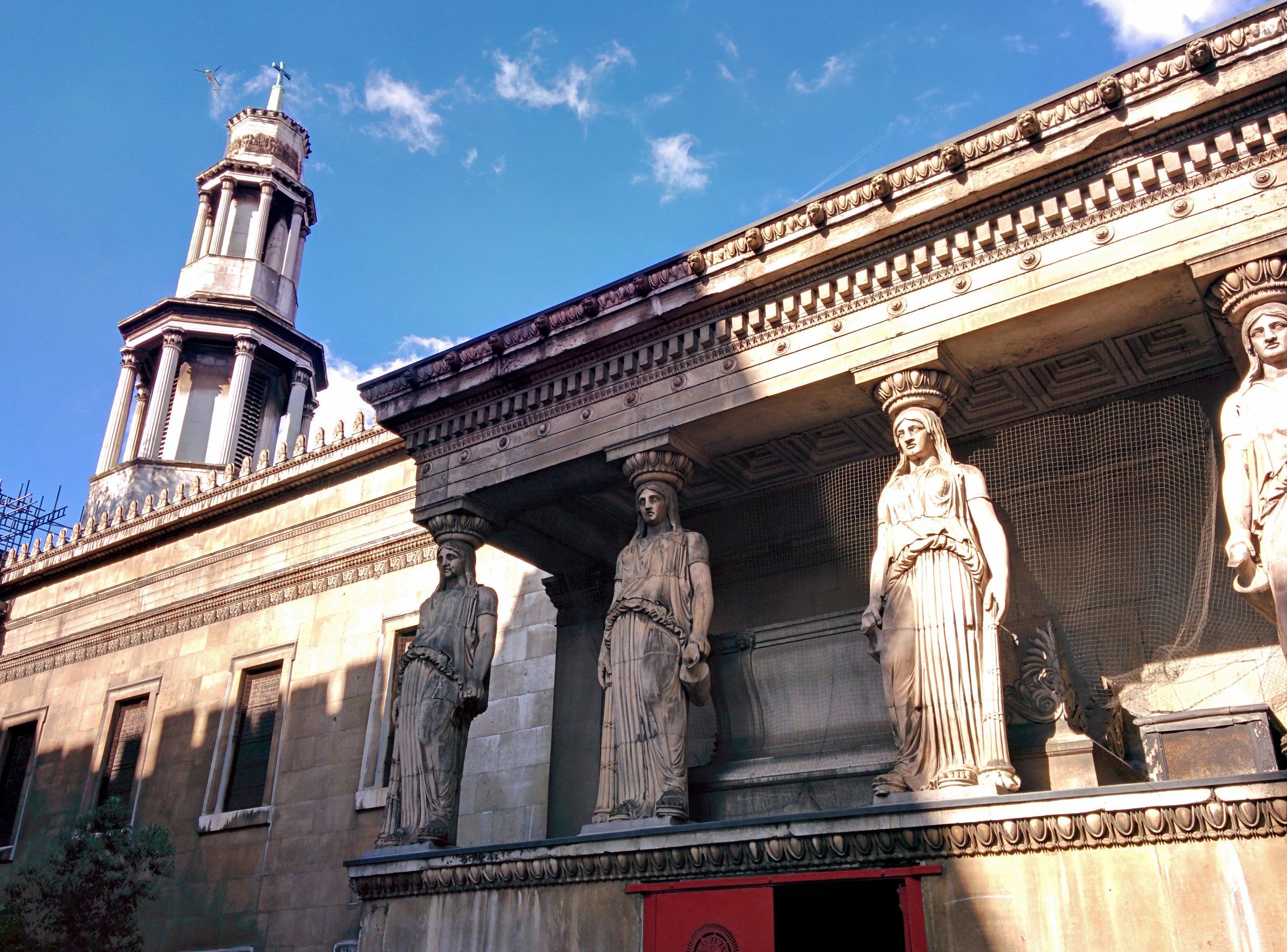
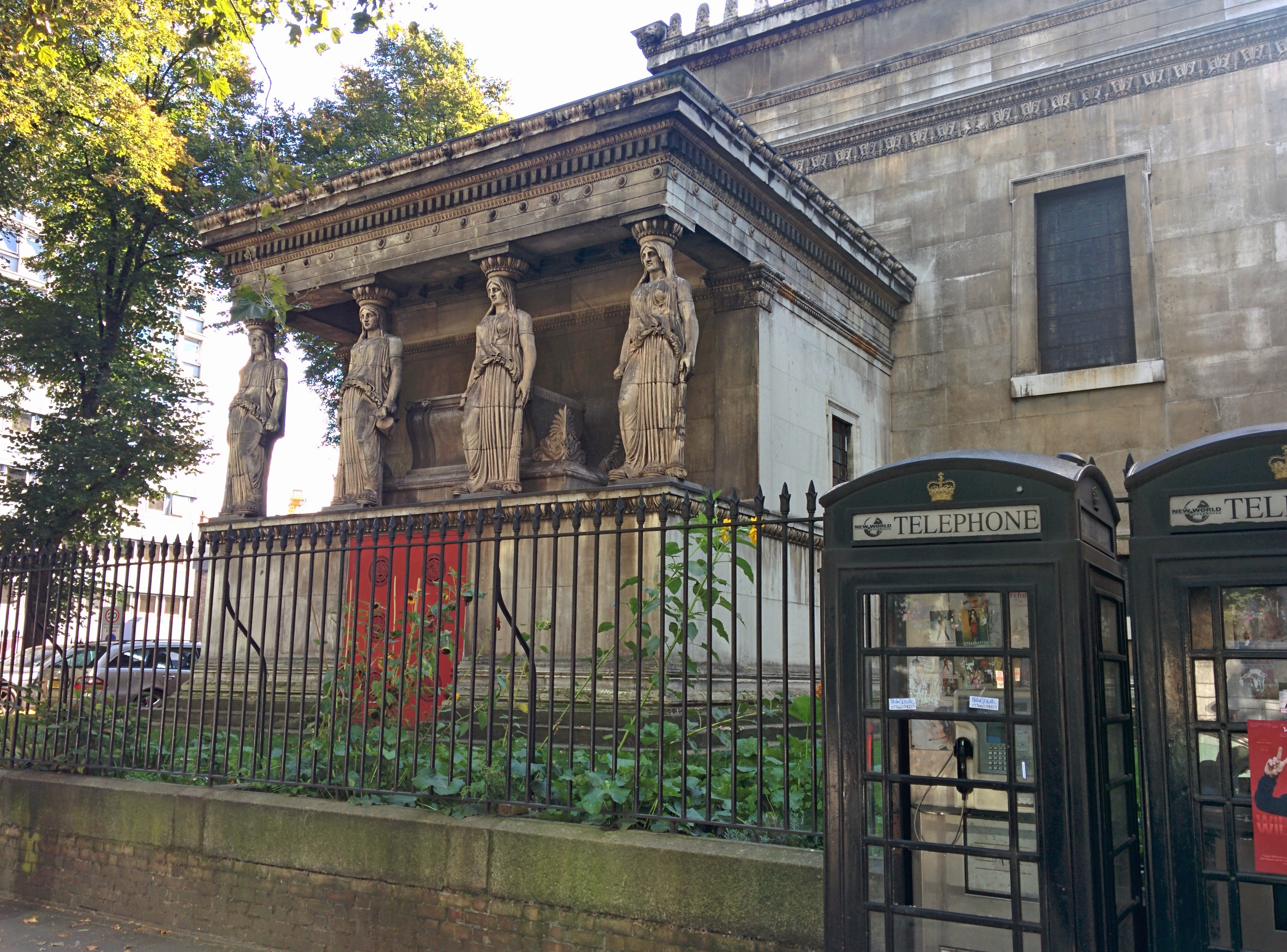
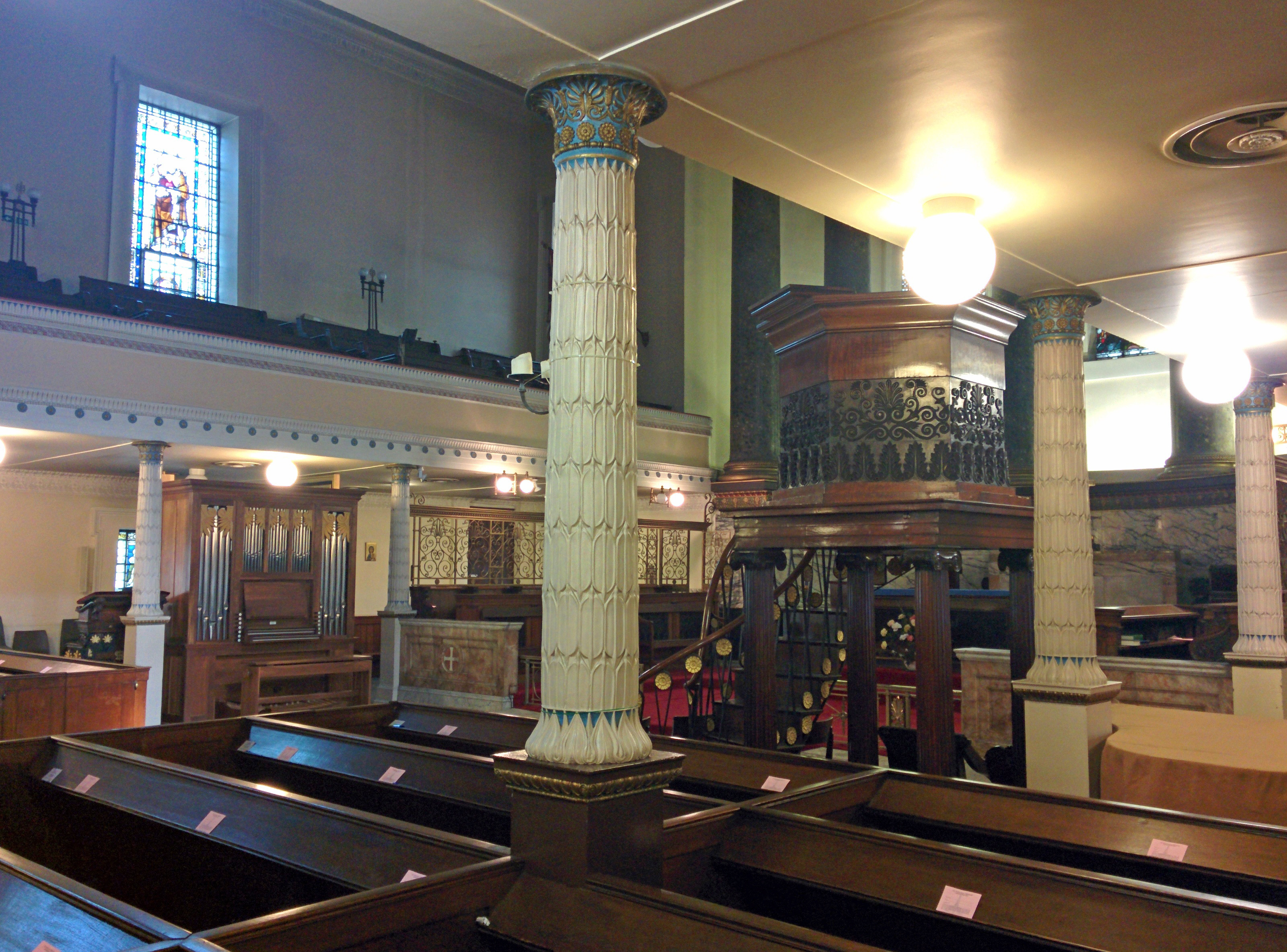
Opposite is the back entrance to the imposing neo-classical St Pancras New Church. Built in 1819–22 to the designs of William and Henry William Inwood; the most impressive features of this Grade-I listed building are the two tribunes on either side of the eastern end with their four terracotta caryatids modelled on those at the Erechtheum in Athens.

IMG_20150930_114537 IMG_20150930_114341

Inside the entrance to the church is a plaque commemorating a family of worshippers who were amongst those lost when the Steamship City of Boston sank en route from Halifax, Nova Scotia to Liverpool in 1870.

IMG_20150930_114233 IMG_20150930_114121

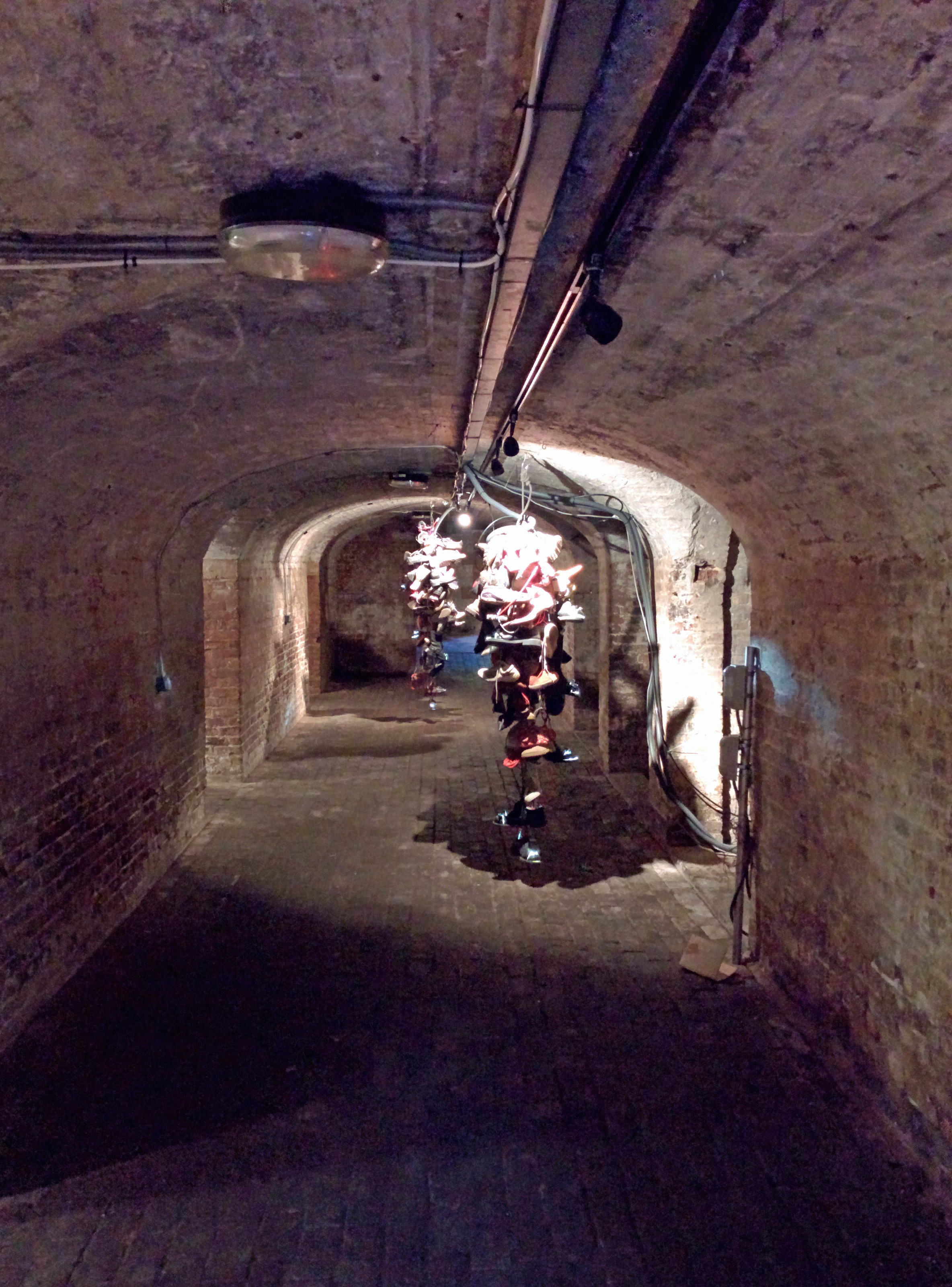
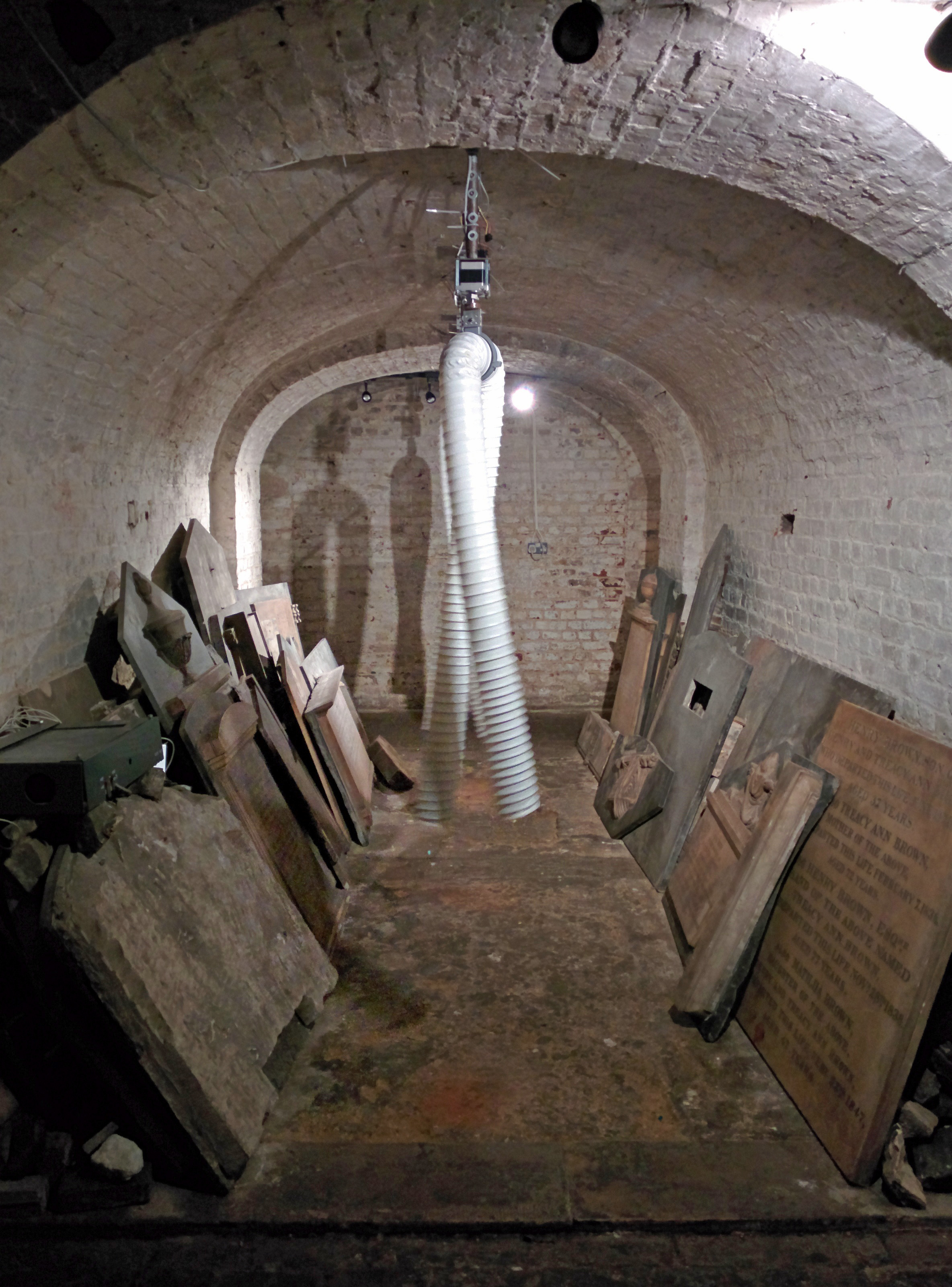
The crypt, which extends the whole length of the church, was designed to contain 2,000 coffins, but fewer than five hundred interments had taken place by 1854, when the practice was ended in all London churches. It served as an air-raid shelter in both world wars and is now used as an art gallery. The kinetic installations in the pictures below are the work of Irish-French artist Malachi Farrell.

IMG_20150930_114707 IMG_20150930_115114

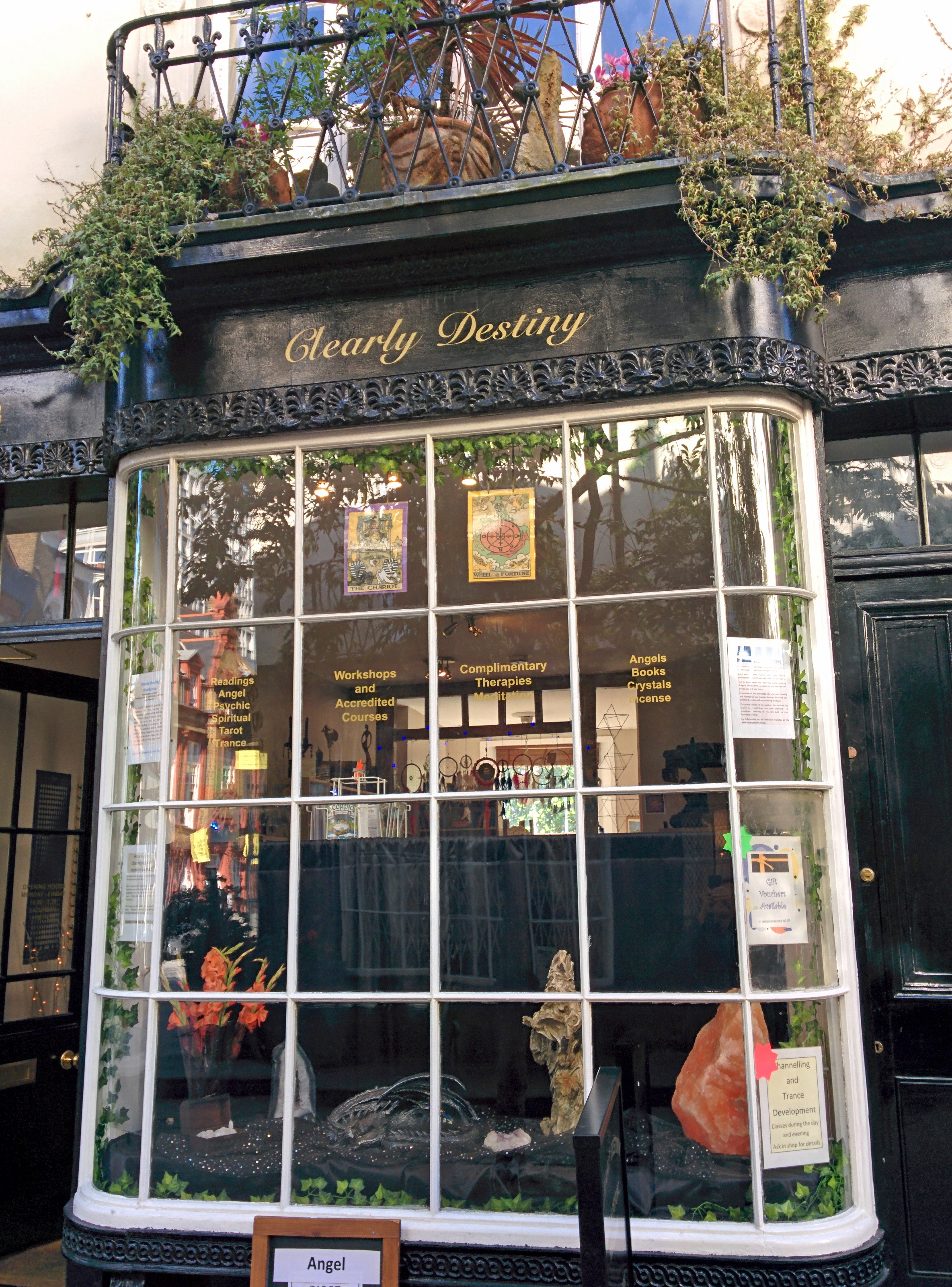
Running parallel to the south side of the church is the self-consciously quaint Woburn Walk which trumpets its Georgian origins along with the facts that WB Yeats is a former resident and Dickens used to buy his tobacco here. It’s a popular location for anachronistic TV and advertising shoots most notably episodes of Poirot. As you can see it’s not all about the past – the future is catered for as well, if you dare seek to know it !

IMG_20150930_113740 IMG_20150930_113637

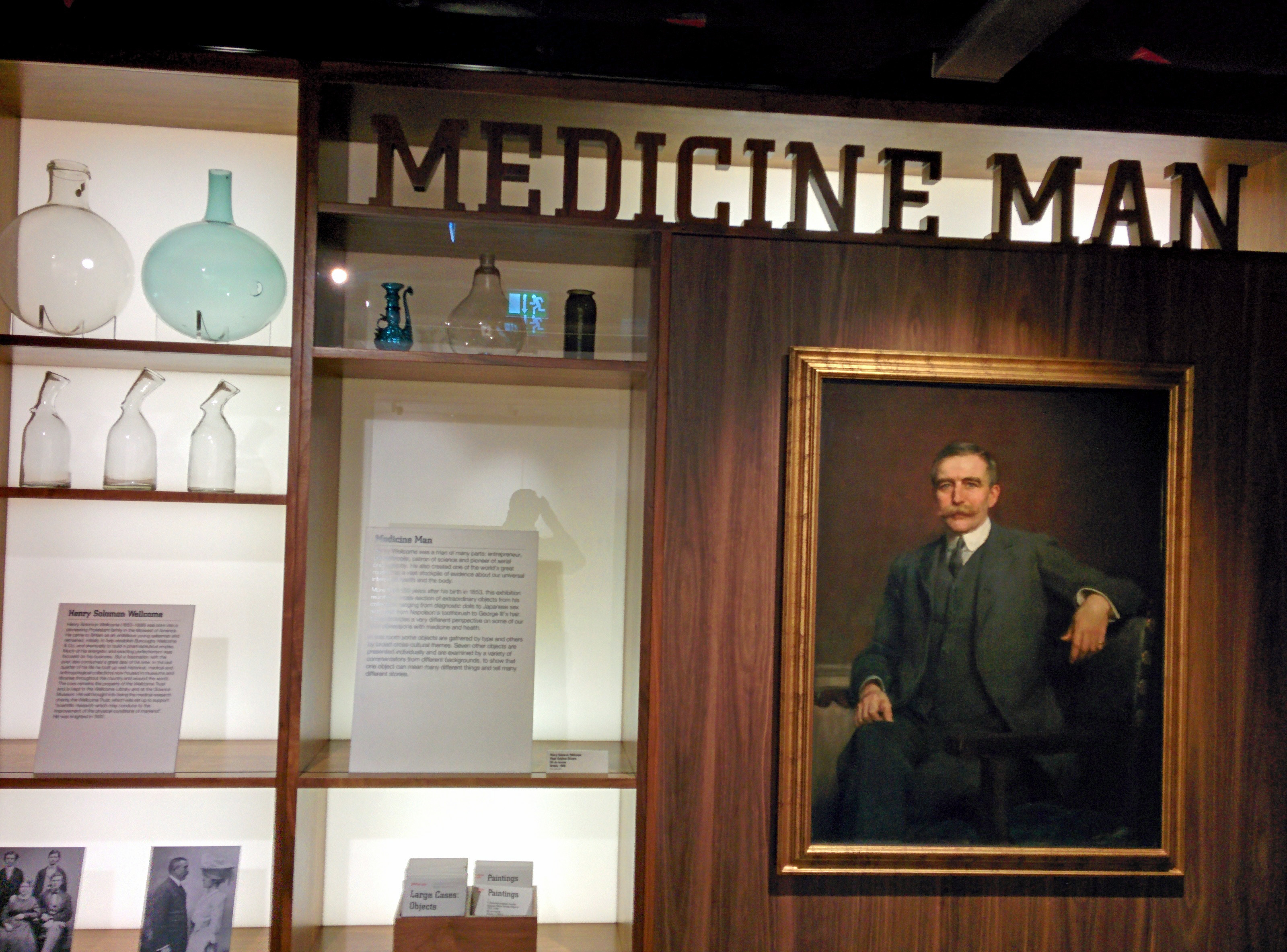
Moving back westward along the south side of the Euston Road we pass Friends House, the Quakers’ top joint, before reaching the Wellcome Collection. This is part of the Wellcome Trust, founded in 1936 by the munificent Henry Solomon Wellcome as a global charitable foundation dedicated to improving health. As well as its permanent collection of medical-related artefacts the Collection also puts on regular free artistic and historical exhibitions. If you’re quick you can still (up until 18 October) catch the work of Alice Anderson who has “mummified” an astonishing array of items using layers of thin copper wire.

IMG_20150930_124942 IMG_20150930_122821

IMG_20150930_123008

IMG_20150930_125044

Crossing on to the north side of Euston Road we encounter the headquarters of the Royal Society of General Practioners, yet another grand London edifice at the disposal of members of the medical profession.

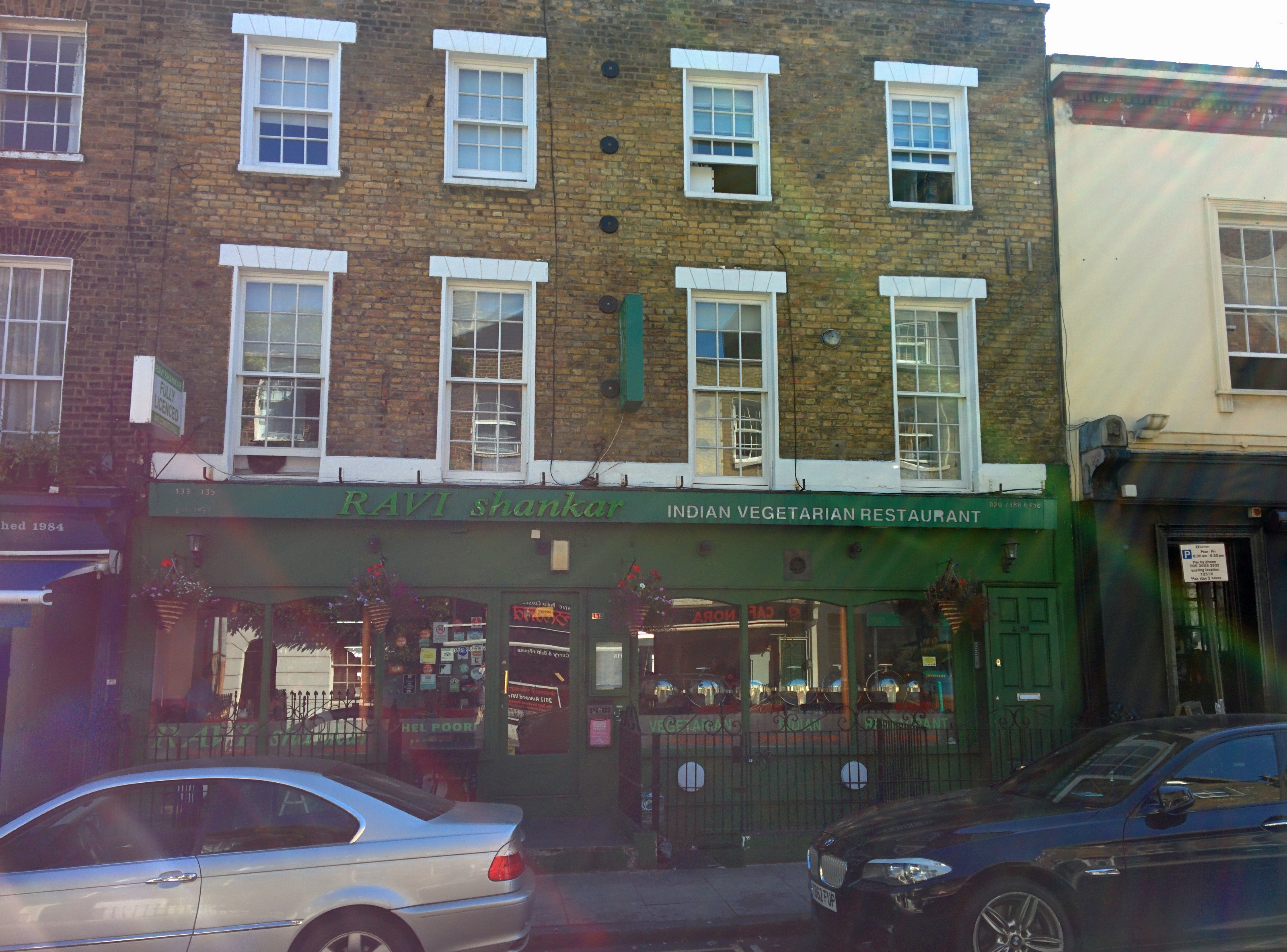
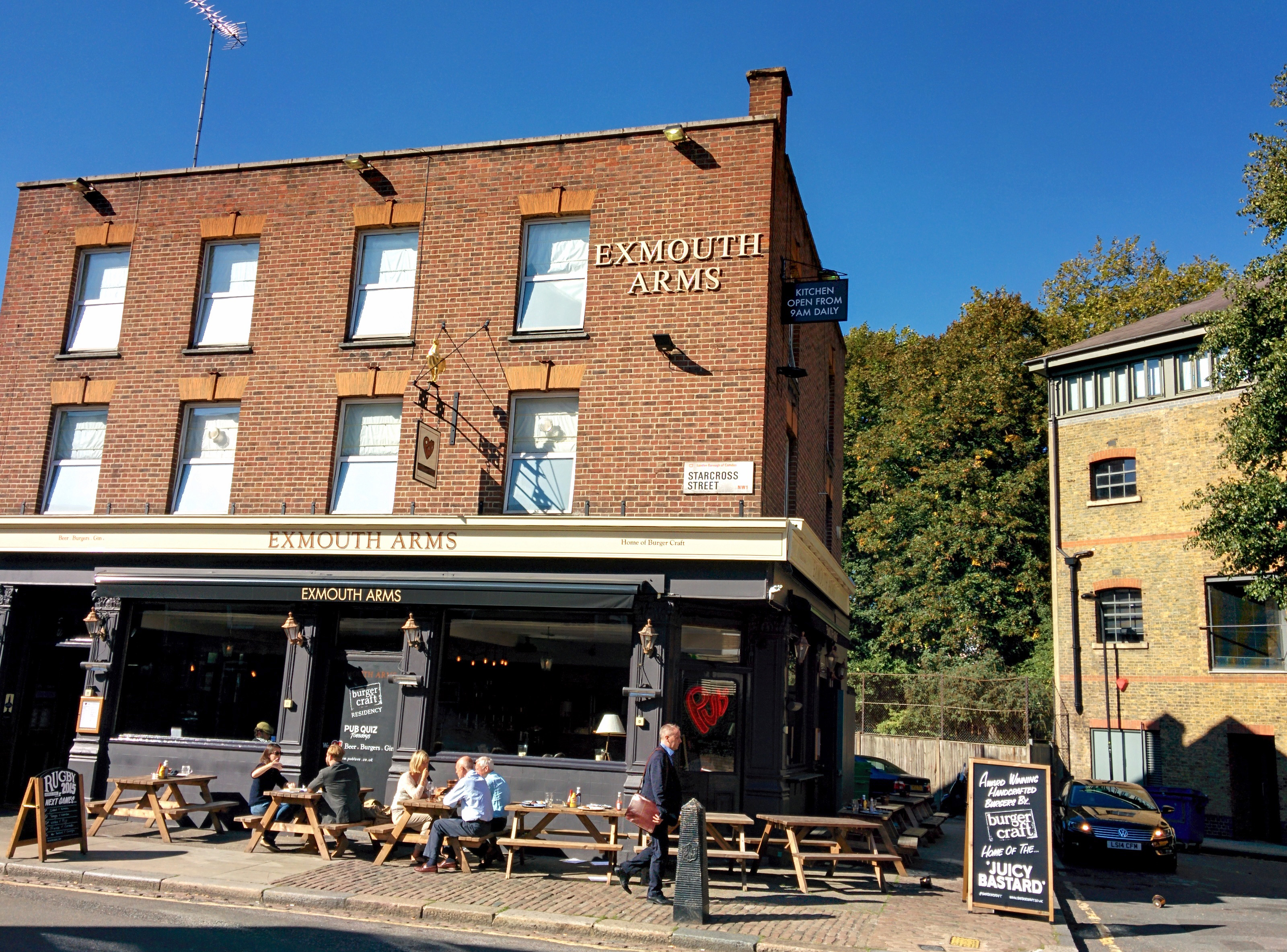
From here we head back north along Hampstead Road before doubling back down Cardington Street then turning onto Drummond Street, which used to be wall-to-wall Indian vegetarian restaurants but now only has a couple left. Cobourg Street adjoins Starcross Street where we pause at the pub of the day, the Exmouth Arms, for a pint and a burger (though not your actual Juicy Bastard I’m sorry to say).

IMG_20150930_135513 IMG_20150930_135110

North Gower Street leads back to Drummond Street and on the corner of this and Melton Street sits one of those red-tiled disused former tube stations. This was one of two separate tube stations built to service Euston just after the start of the 20th century. This one, which was part of the Charing Cross, Euston and Hampstead Railway was only in use from 1907 to 1914 when both the original stations were closed (though the other one did reopen in the twenties). The current Euston underground station dates from 1968 like the Victoria Line on which it sits.

IMG_20150930_135752

We turn right onto Euston Street and then circle back to the station via Stephenson Way where I completely (and perhaps aptly) fail to spot the (Harry Potter-ishly named) Centre for the Magic Arts which is the home of the Magic Circle. I guess they must keep it shrouded in some kind of invisibility cloak during the daytime..

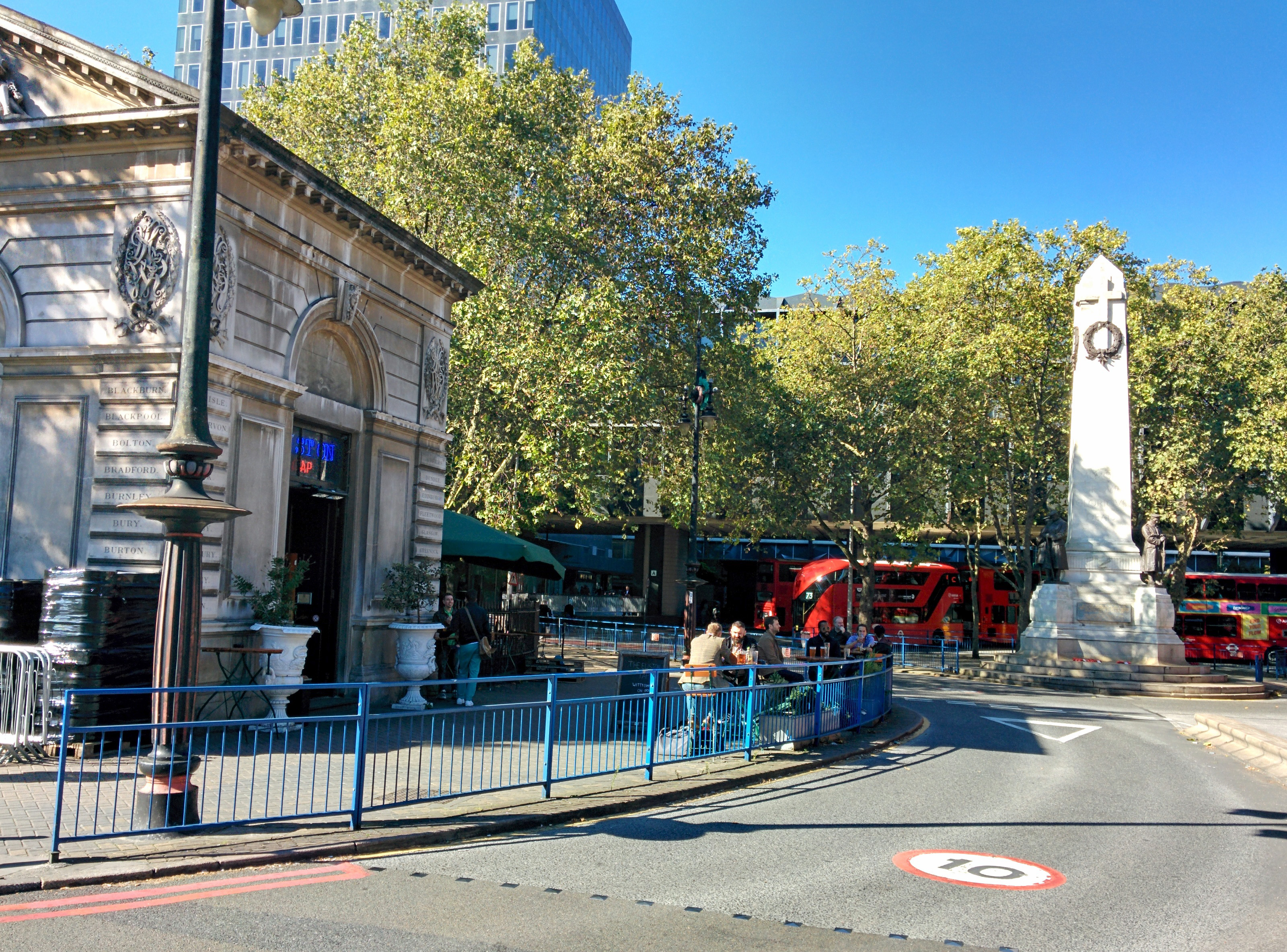
At the Euston Road entrance to the station can be found the last remnants of the original station which was built in the 1830’s and demolished (surprise, surprise) in the 1960’s. The two lodges which originally flanked the grandiose Euston Arch (despite being Grade-II listed this failed to survive the redevelopment) are now in use as bars. The war memorial in the background below also made it beyond the decade of destruction.

IMG_20150930_141139

Turning south again on Upper Woburn Place we find the home of the British Medical Association ( I refer you to my earlier comment). This photo doesn’t do it justice and I’ve missed off the plaque noting that Dickens (him again) lived on this site for ten years or so from around 1860. On the upside what’s not to like about those trousers ?

IMG_20150930_141753

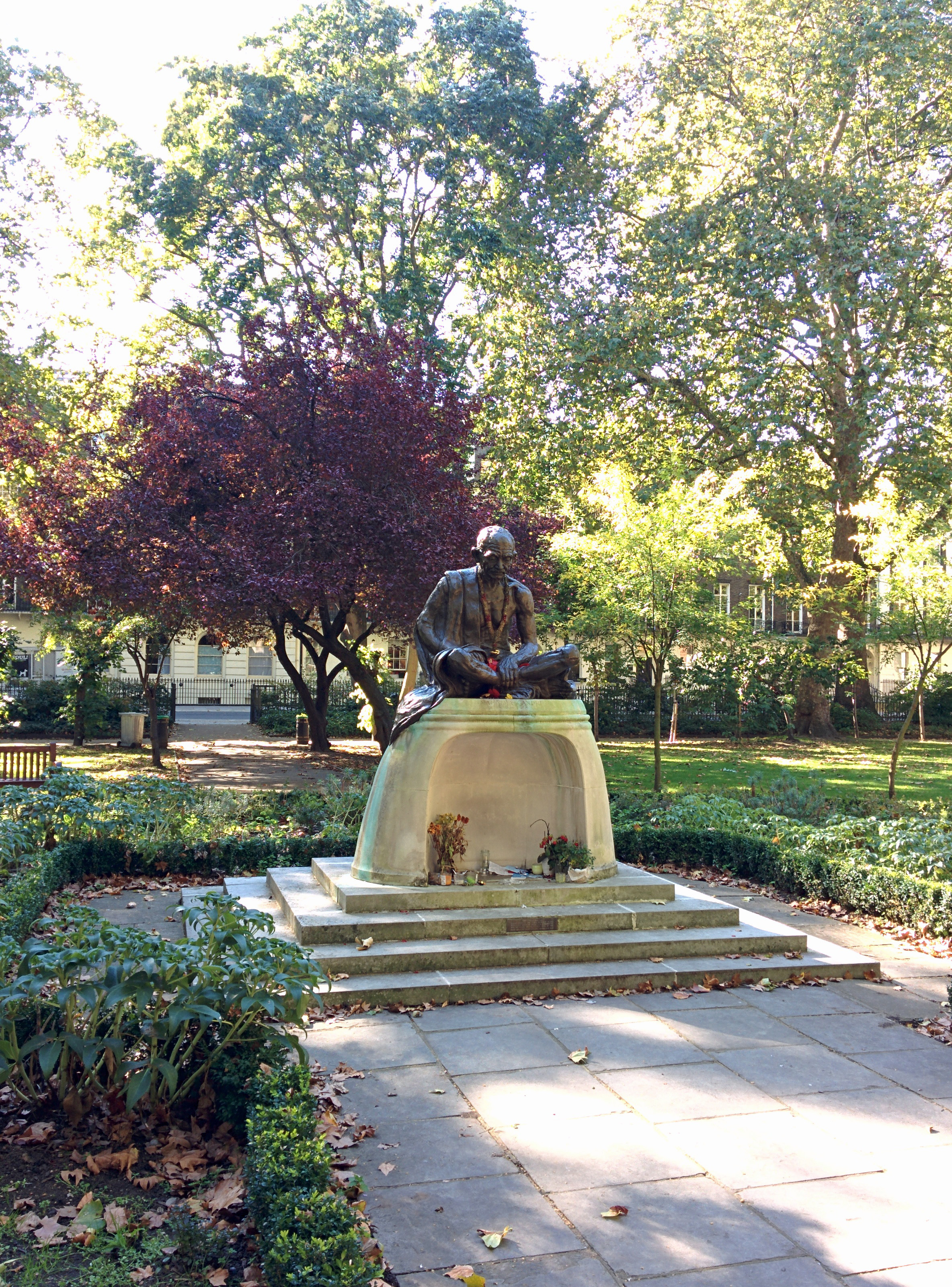
We arrive at Tavistock Square which encircles and eponymous garden whose centrepiece is this statue of Mahatma Gandhi, sculpted by the Polish artist, Fredda Brilliant (real name), and installed in 1968 ( as big a year round these parts as it was in Paris seemingly).

IMG_20150930_142054

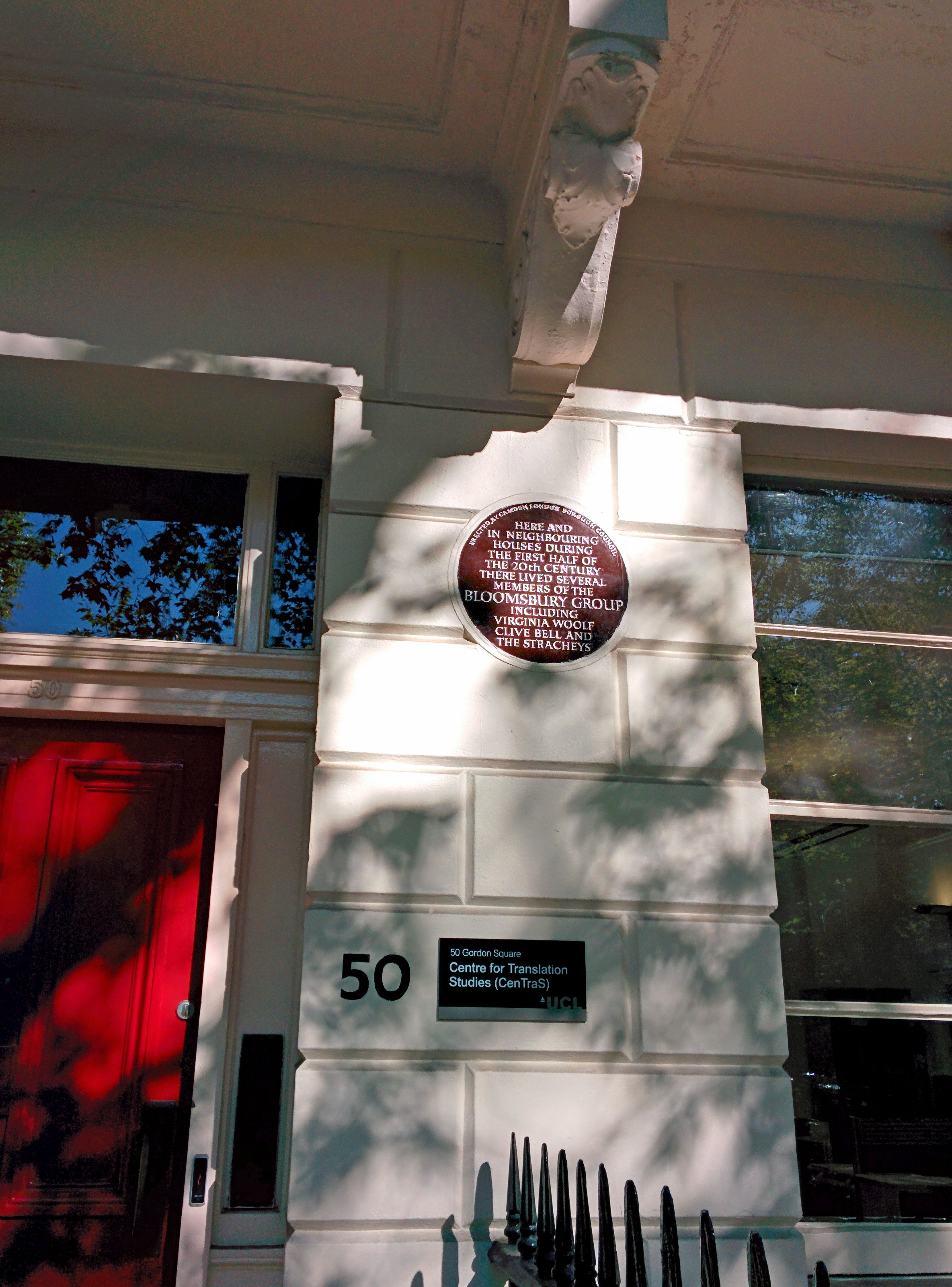
Via Endsleigh Street, Endsleigh Gardens and Taviton Street we reach Gordon Square. This is now firmly within the bailiwick of Bloomsbury as evidenced by the plaque at no 50. celebrating the whole Bloomsbury set and another at no.51 dedicated to Lytton Strachey (1880 – 1932) alone. Thankfully I managed to avoid the recent TV series on the set and I won’t dwell on them here though I suspect they will crop up again in a subsequent post.

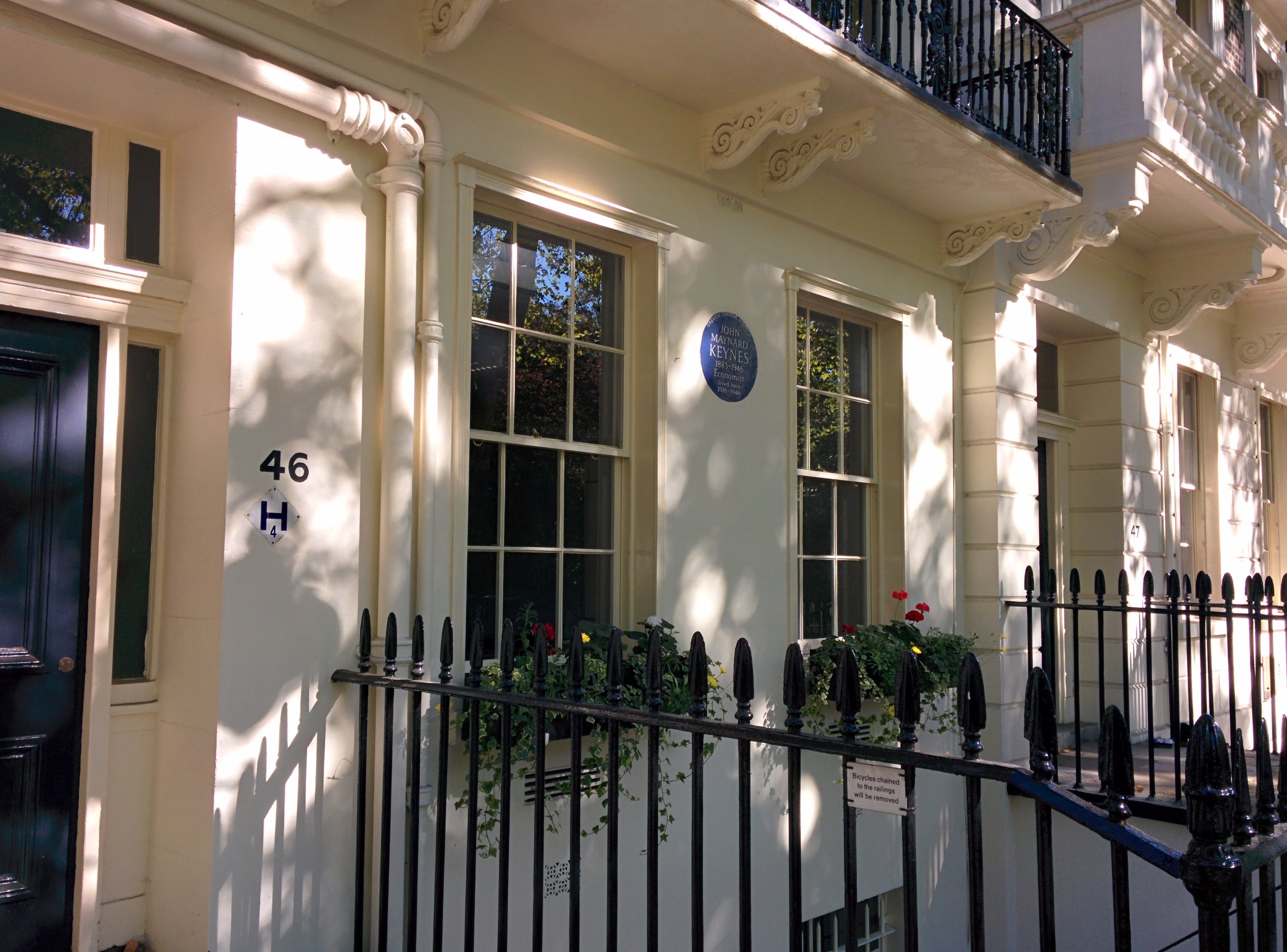
More interestingly, no.46 was home to the great economist John Maynard Keynes (1883 – 1946) from 1916 until his death. In 1999, Time magazine included Keynes in their list of the 100 most important and influential people of the 20th century, commenting that: “His radical idea that governments should spend money they don’t have may have saved capitalism.” As we know just nine years later that idea came into its won once more.

IMG_20150930_143240 IMG_20150930_143116john-maynard-keynes-1

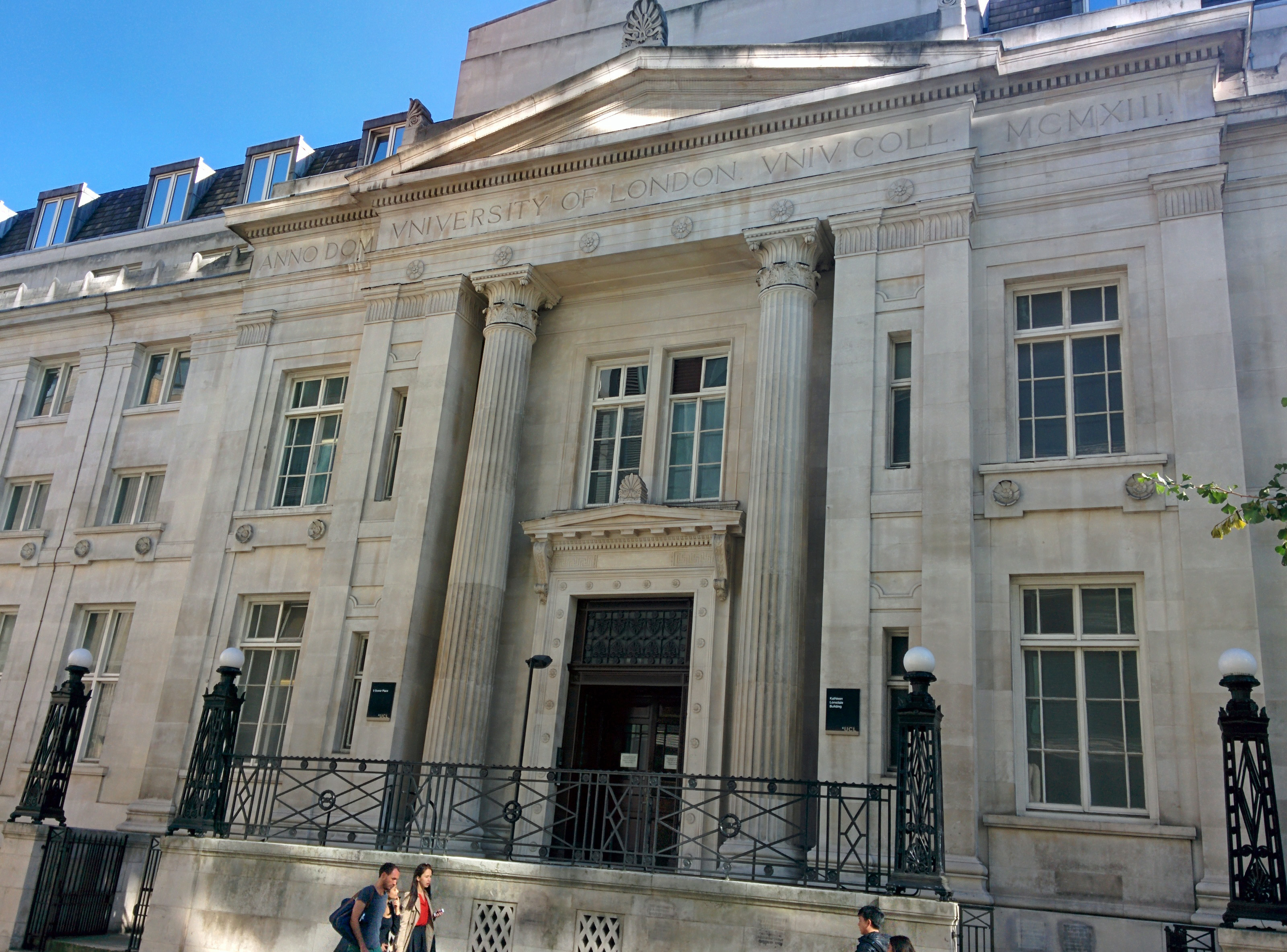
On the other side of the square is Dr Williams’ Library. The gardens in between are much frequented by students of University College London whose campus occupies a large site to the west of Gordon Street and a smaller one to the east.

IMG_20150930_143352 IMG_20150930_143507

So large in fact that bypassing it takes us, via Gower Place and Beaumont Way, all the way back to Warren Street tube and the end of today’s journey.

IMG_20150930_144532 IMG_20150930_144927

Day 6 – Wigmore Street- Portland Place – Cavendish Square

Today’s Route finishes off the area to the north of Oxford Street, covering the stretch between Bond Street and Oxford Circus tube stations. Main focus is on the southern portion of Portland Place home of BBC HQ and the Langham Hotel but also foreign embassy central.

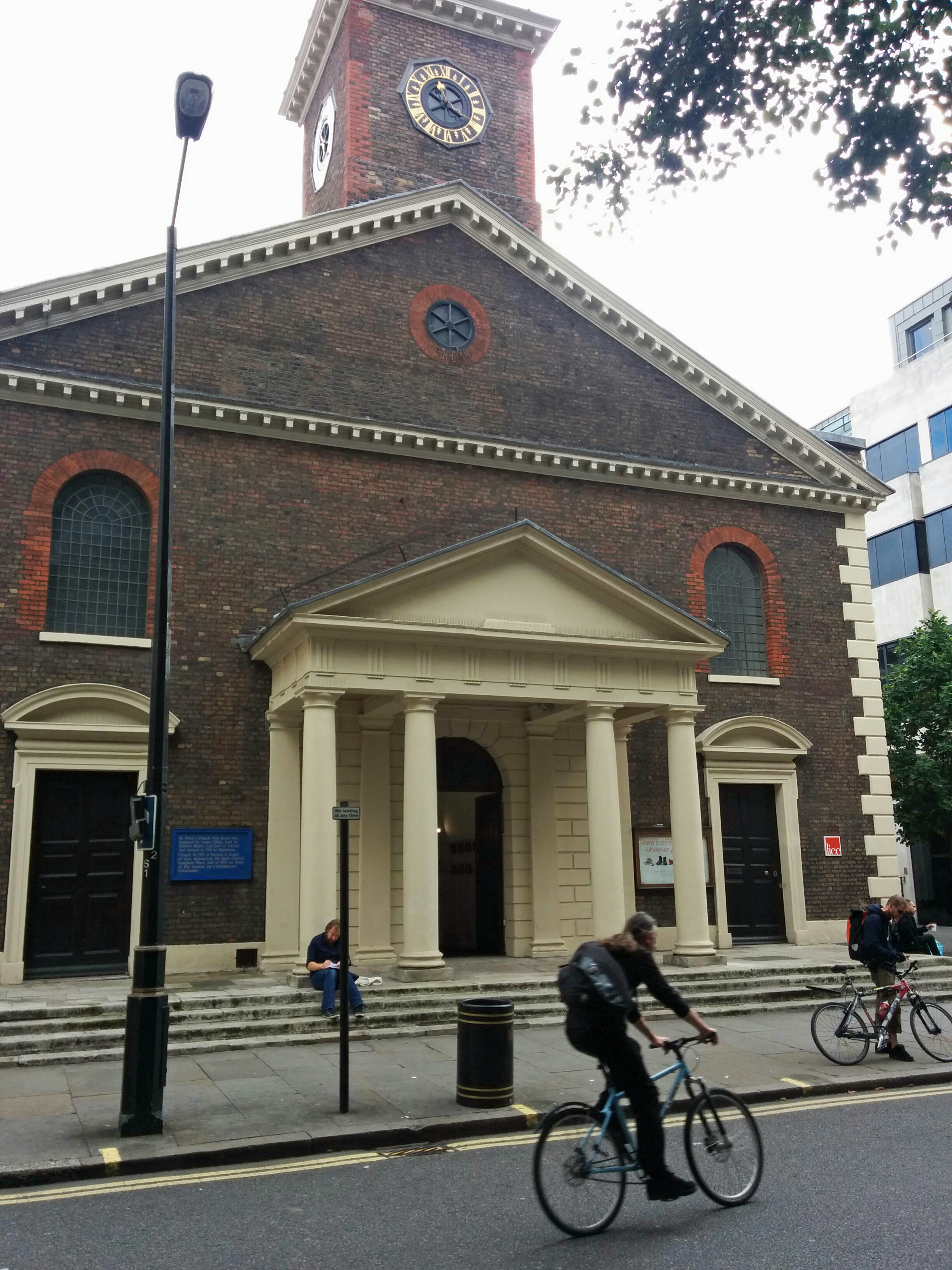
Day 6 RouteStarting point is Bond Street tube from where we head north on Marylebone Lane then right at Wigmore Street and south again on Welbeck Street to Vere Street. Here we find St Peter’s Church once known as the Oxford Chapel. This is now the base for the London Institute of Contemporary Christianity.

IMG_20150904_111828

The Brazilian Consulate General (different from the embassy) is also located here at no.3. IMG_20150904_112202

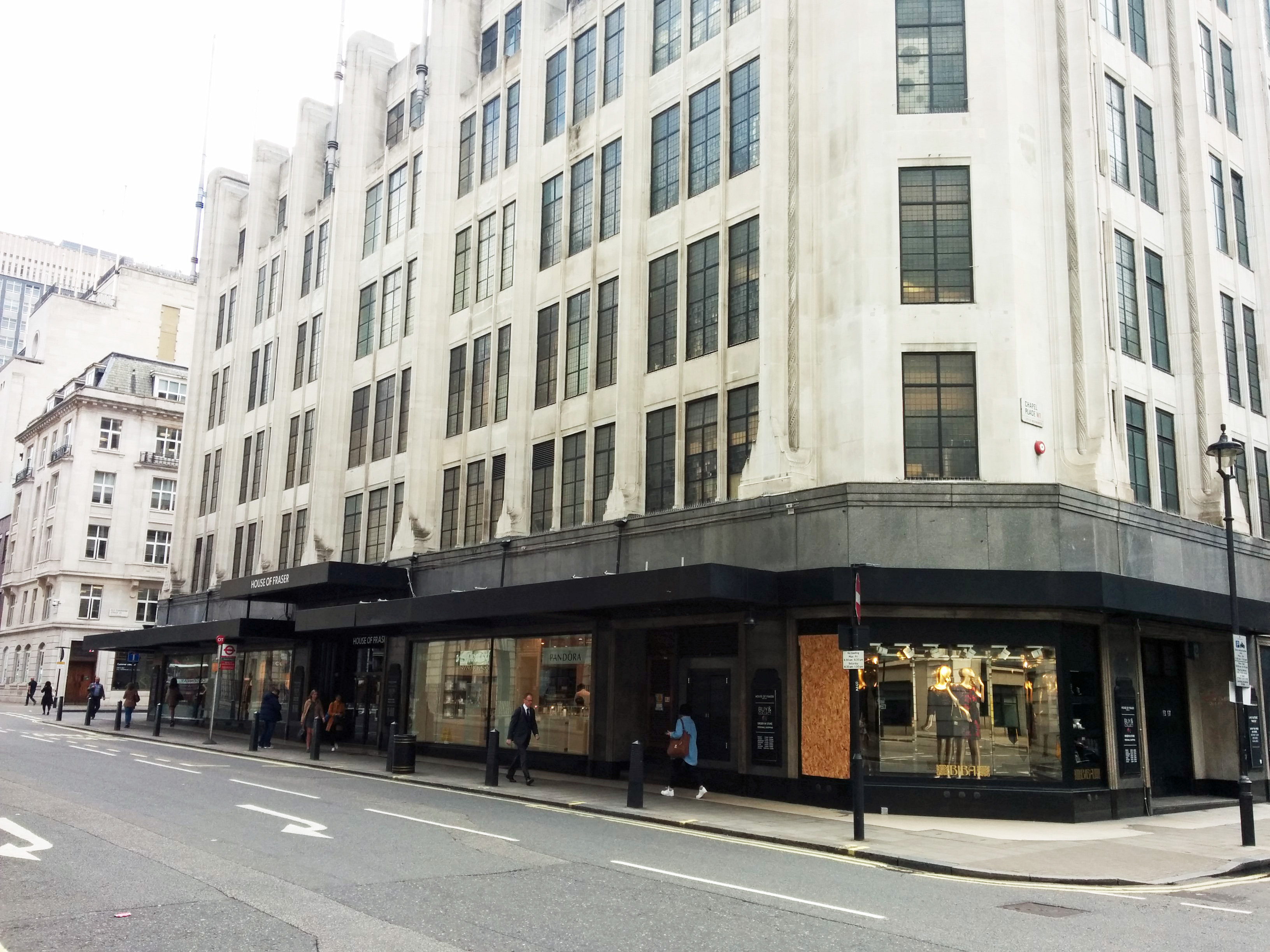
Chapel Place skirts up the side of House of Fraser at no.350 Oxford Street. Up until its rebranding in 2001 this was the main branch of DH Evans. (DH Evans was named after Welshman Dan Harries Evans and opened on Oxford Street in the last century. It was quickly expanded but Mr Evans died penniless in 1928 after a series of unsuccessful property deals. House of Fraser is unfortunately not after the misanthropic Dad’s Army character though it did originate in Glasgow – in 1849 as Athur and Fraser).

IMG_20150904_112511

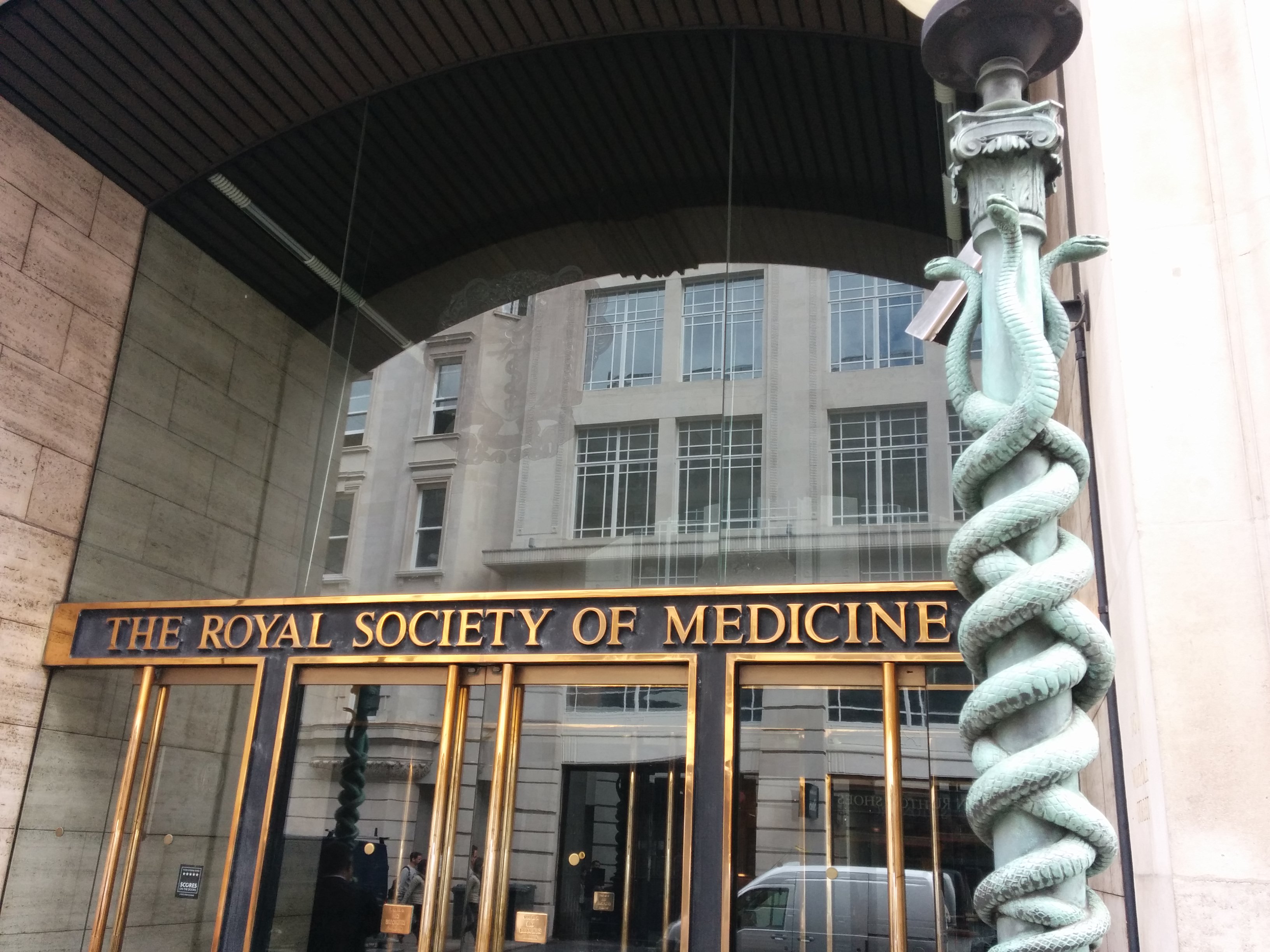
IMG_20150904_112713 This brings us to the bottom end of Wimpole Street (see previous post). Since 1912 No.1 has been the home of the Royal Society of Medicine. Both Charles Darwin and Sigmund Freud are Honorary Fellows of the Society and five of its former presidents have diseases named after them. The symbol of the serpent entwined around a staff derives from the rod wielded by the Greek god Asclepius, a deity associated with healing and medicine.

Somewhat ironically No.1A houses the London HQ of Coca Cola.IMG_20150904_114303

Further down the street we find the London Eye Hospital
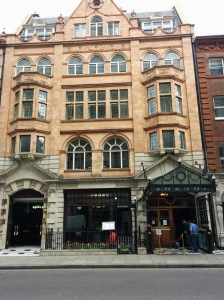
IMG_20150904_113207At the intersection with Wigmore Street (again) is the world-renowned Wigmore Hall London’s premier venue for chamber music. Rather shamefully I have only ever been here once which was when my A level Russian group (all three of us) came up to hear the poet Yevgeniy Yevtushenko. So that would be have been either 1976 or 1977 and I suspect none of us managed to follow a word.

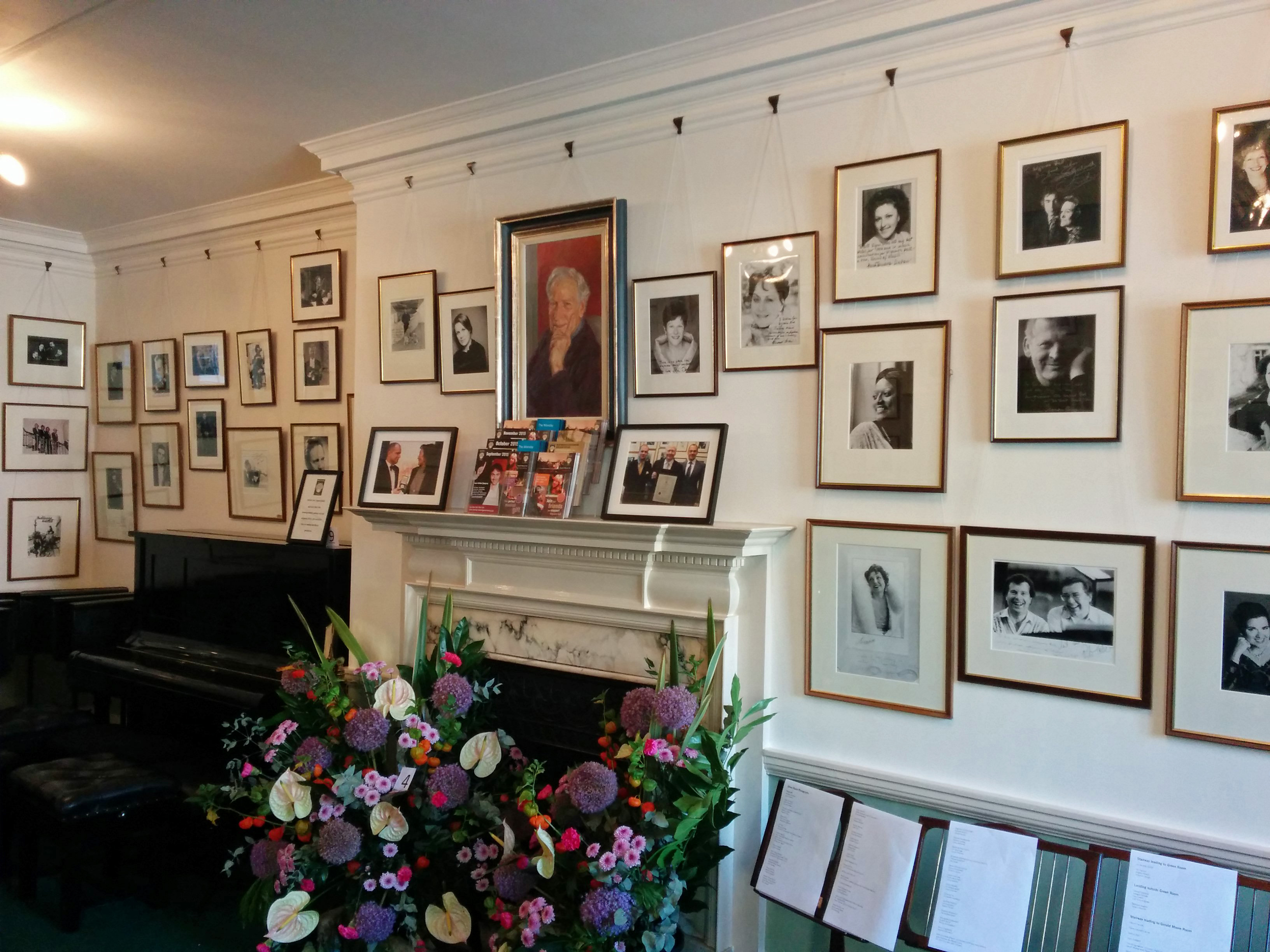
The stage and green room at the Wigmore Hall

IMG_20150919_122721

IMG_20150919_122918

This rather splendid edifice opposite the Wigmore Hall at no.33 brings us back into the realm of department stores as this is where Debenhams began. (Its genesis was actually at no.44 but it moved to no.33 in 1851 as Debenham and Freebody and properly took off from that point.)

IMG_20150919_123840

IMG_20150904_114857

IMG_20150904_114953

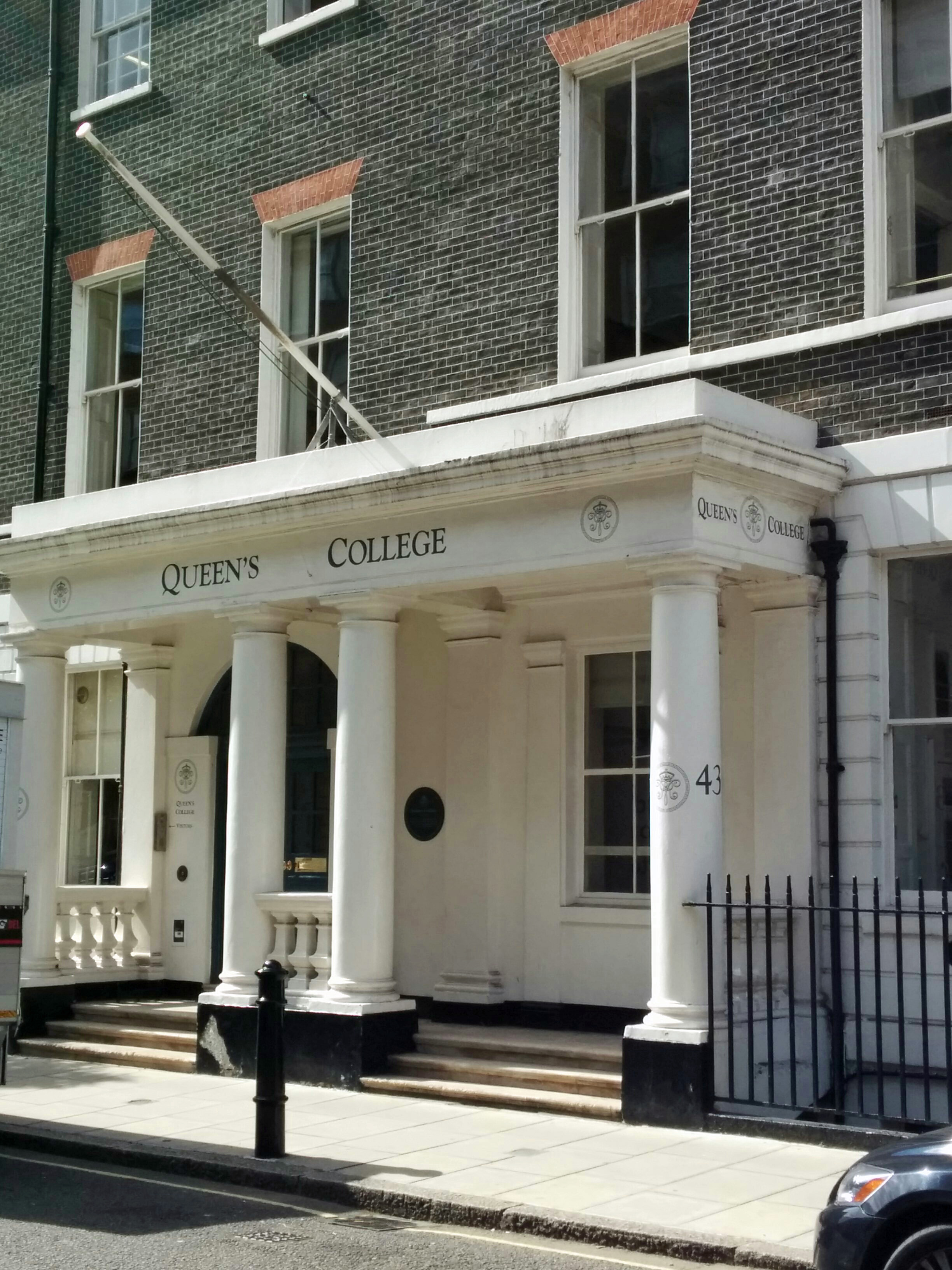
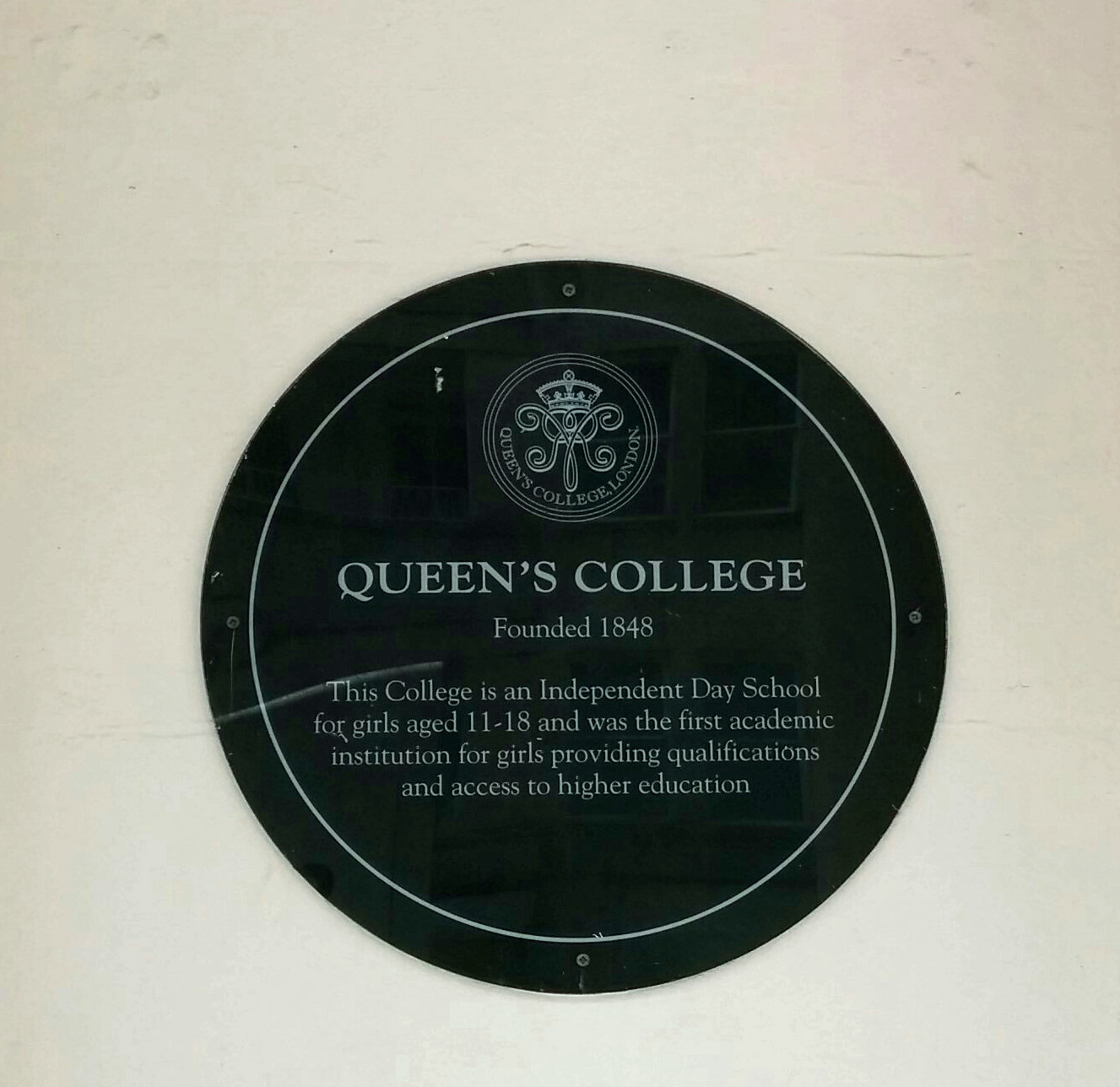
Via Queen Anne Street we reach yet another stretch of Harley Street and here at No.43-49 is sited Queen’s College which was founded in 1848 as the first academic institution providing girls aged 11-18 with a secondary education that would allow them to go on to university.

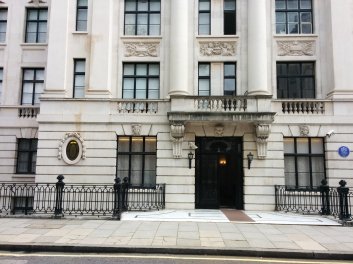
In a flat at the very grand no.2 Mansfield Street resided the music patron and philanthropist, Sir Robert Mayer (1870 -1985), who was one of the founders of the London Philharmonic Orchestra and (as you can see) lived to be 105. When he appeared on Desert Island Discs at the age of a hundred he picked Son of My Father by Chicory Tip as his favourite track.
IMG_20150904_115450

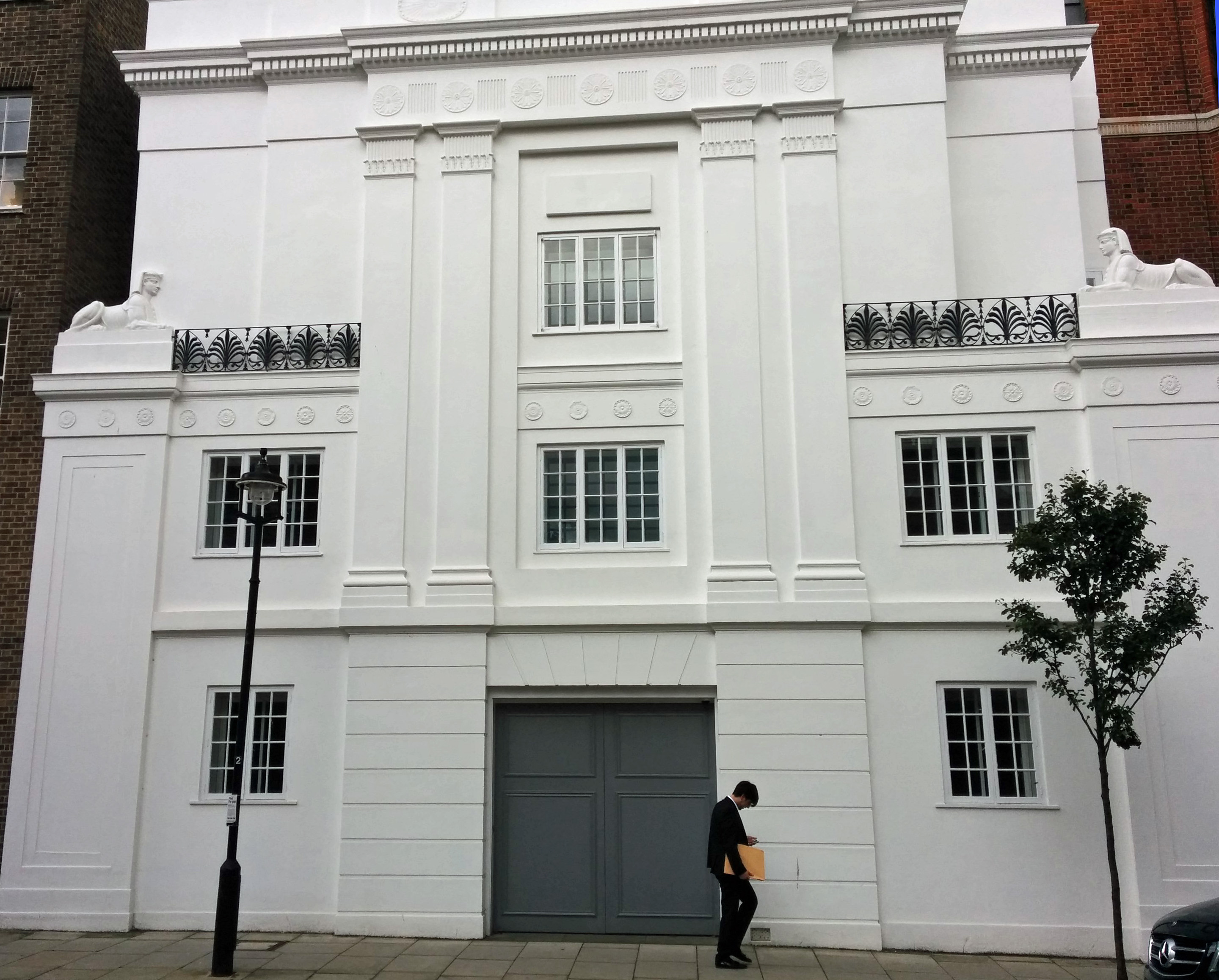
IMG_20150904_120025This rather enigmatic grade II listed building at no. 10 Duchess Street is now part of the British Medical Association and originates from around 1770 as designed by Robert Ada. At the end of the 18th century the house was acquired by Thomas Hope, a wealthy Dutch designer and collector. His remodelling of the interior based on a series of themes included an Egyptian Room but whether this was inspired by or led to the creation of the sphinxes on the exterior is unclear.

IMG_20150904_120608 IMG_20150904_120827

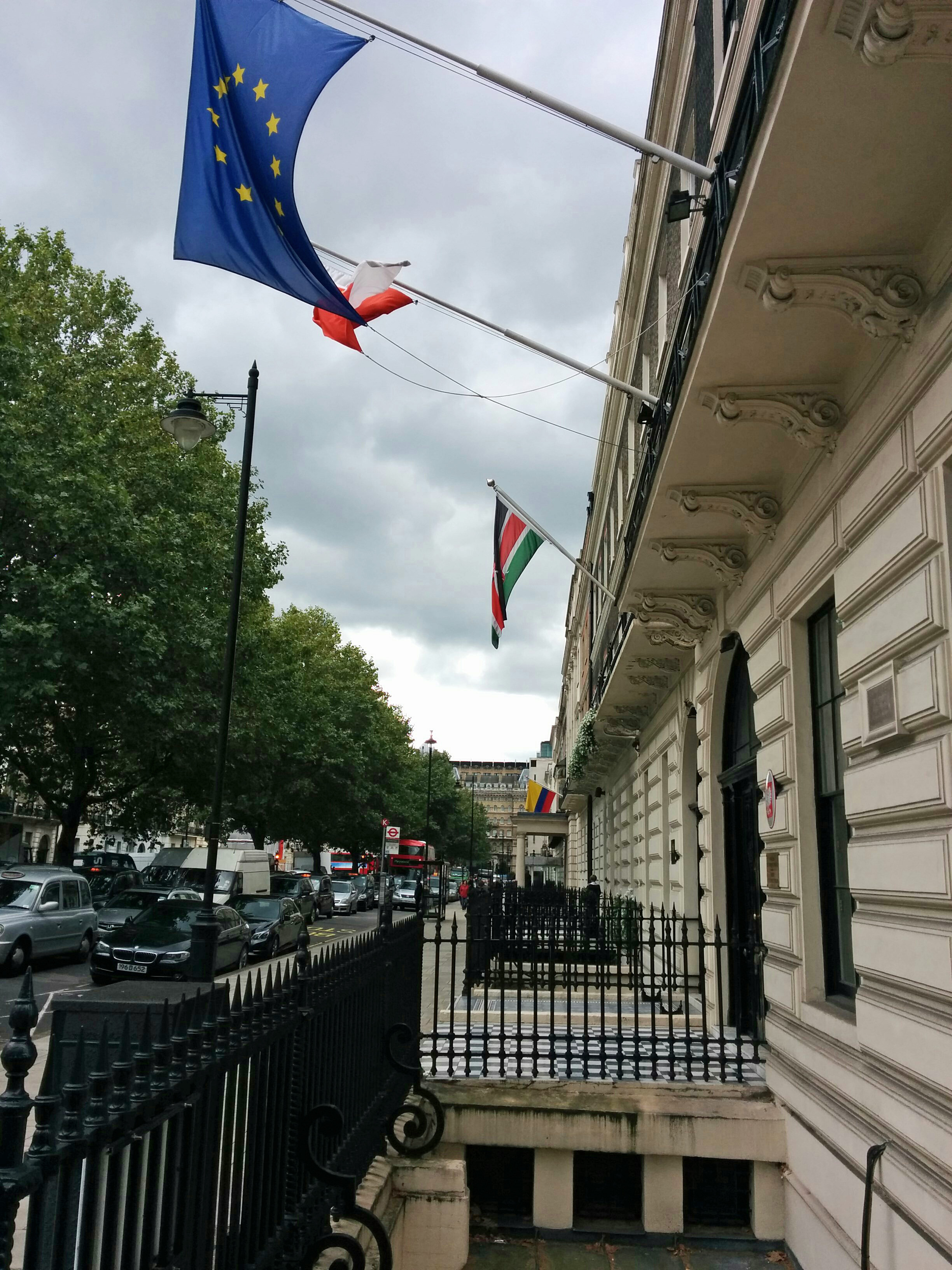
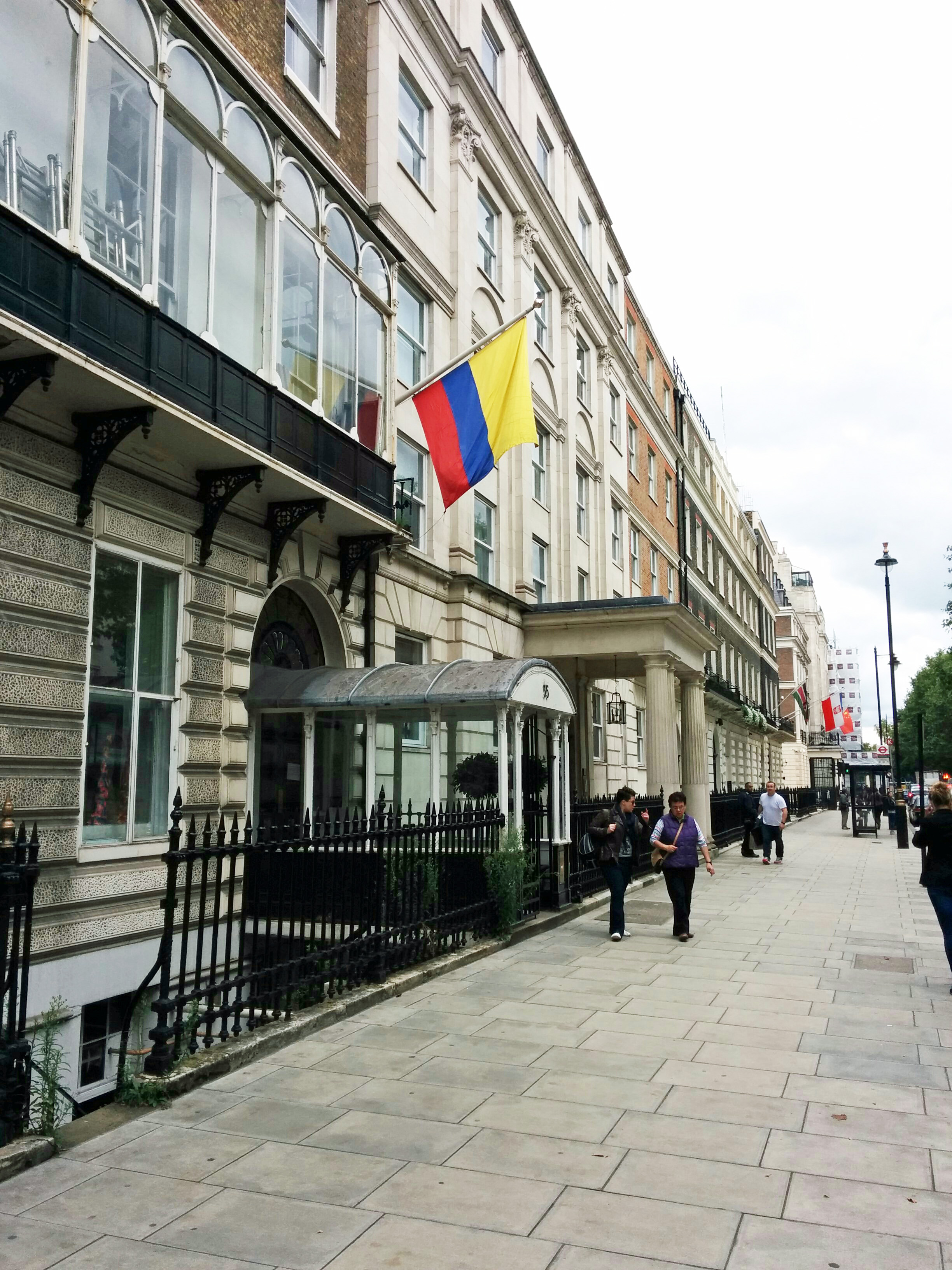
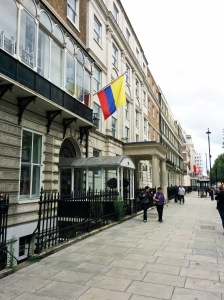
Back out now on to the lower end of Portland Place with its cluster of embassies. So high numbers to low we have China down at no. 49, Poland a non-mover at no. 47, Kenya bubbling under at no. 45, Columbia a new entry at no.35, Sweden climbing to no.27 and Portugal smashing in at no.3.

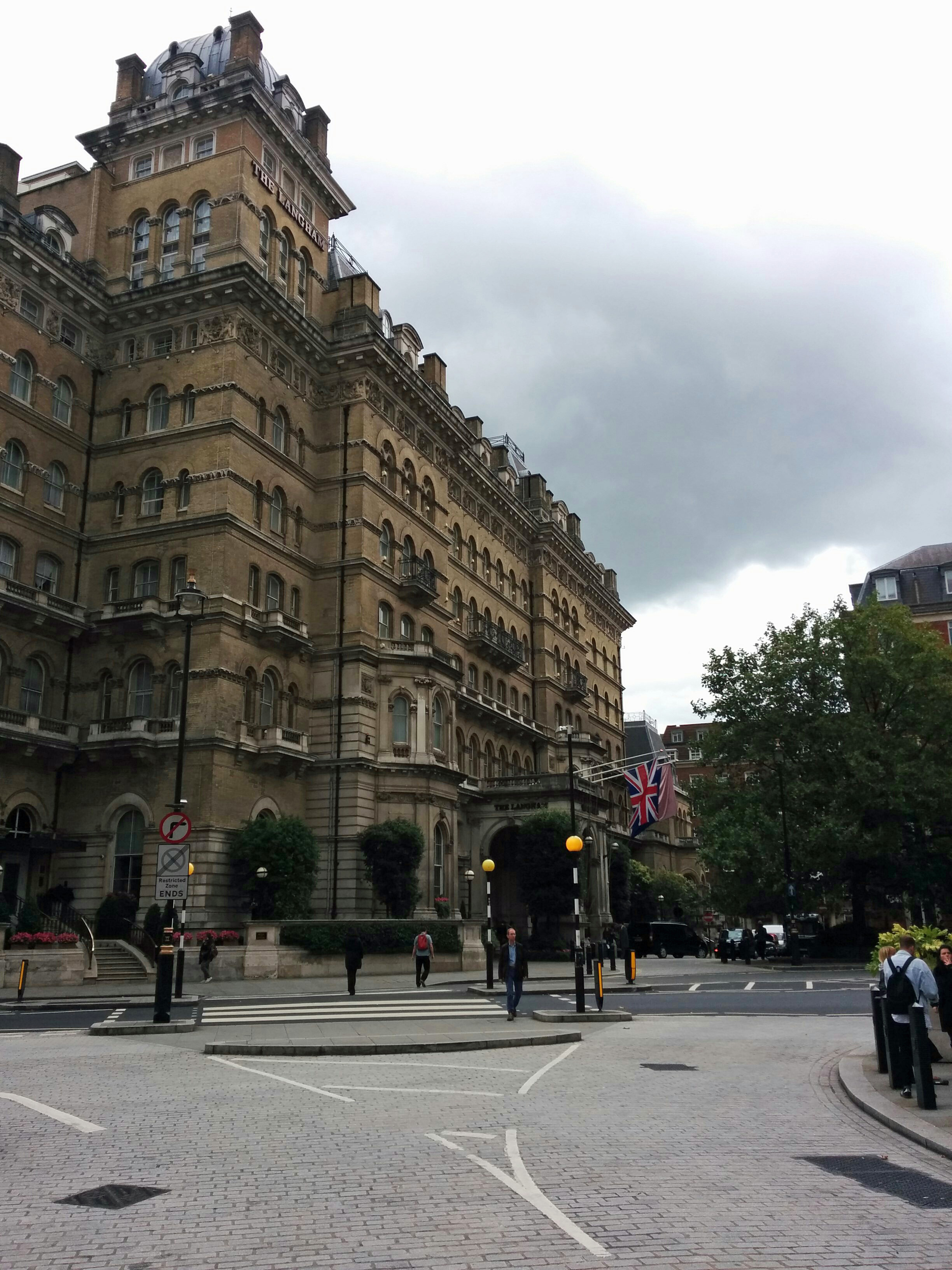
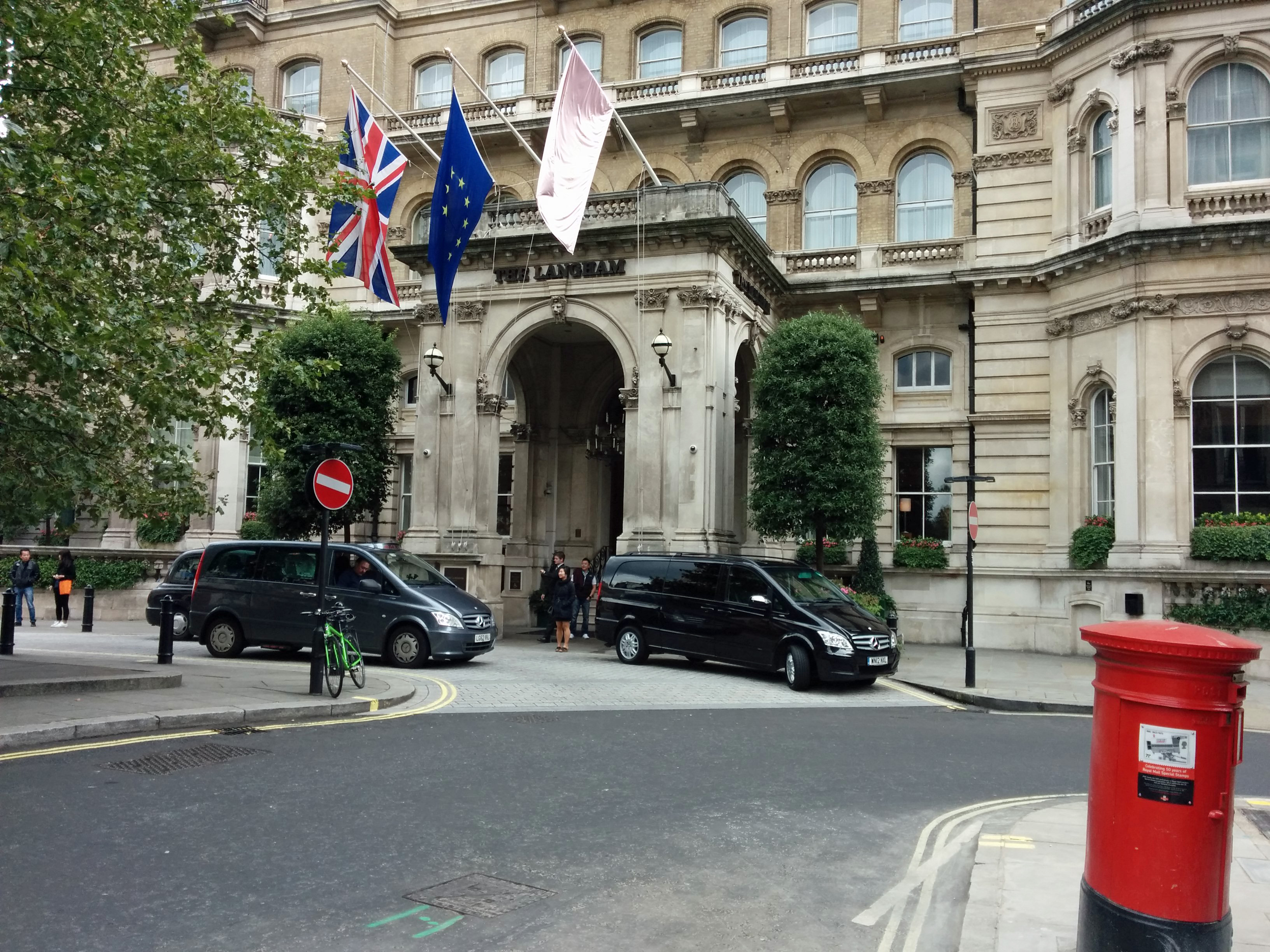
Adjacent to Portugal on the eponymous Langham Street lies the Langham Hotel opened in 1865 and mooted as the first of Europe’s so-called “Grand Hotels”. It was built at a cost of £300,000 which today would get you about 12 nights in the penthouse Sterling Suite.
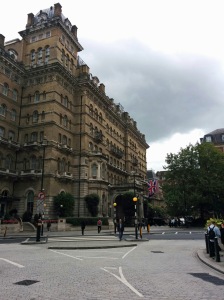
IMG_20150904_123850 IMG_20150904_121200

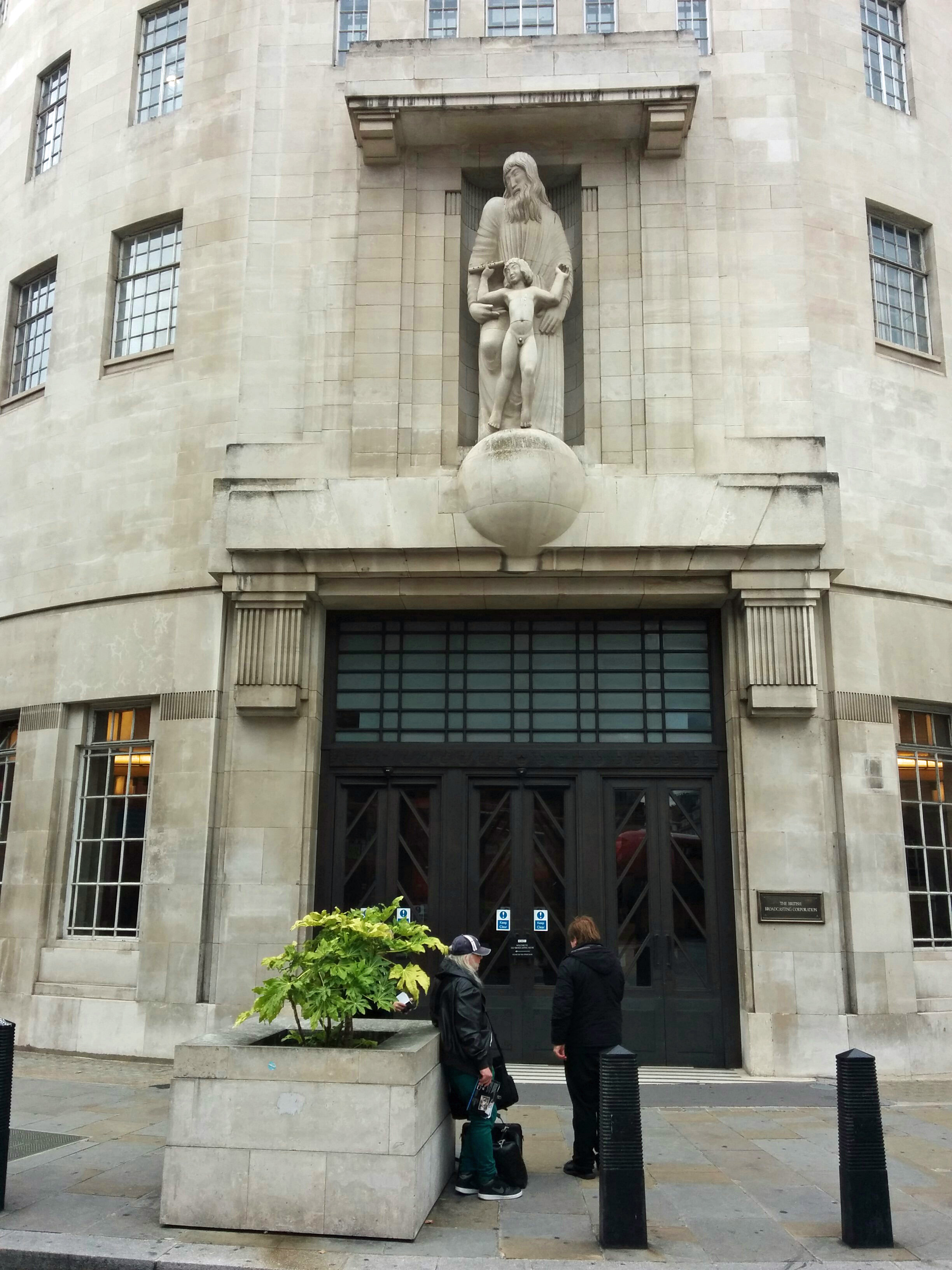
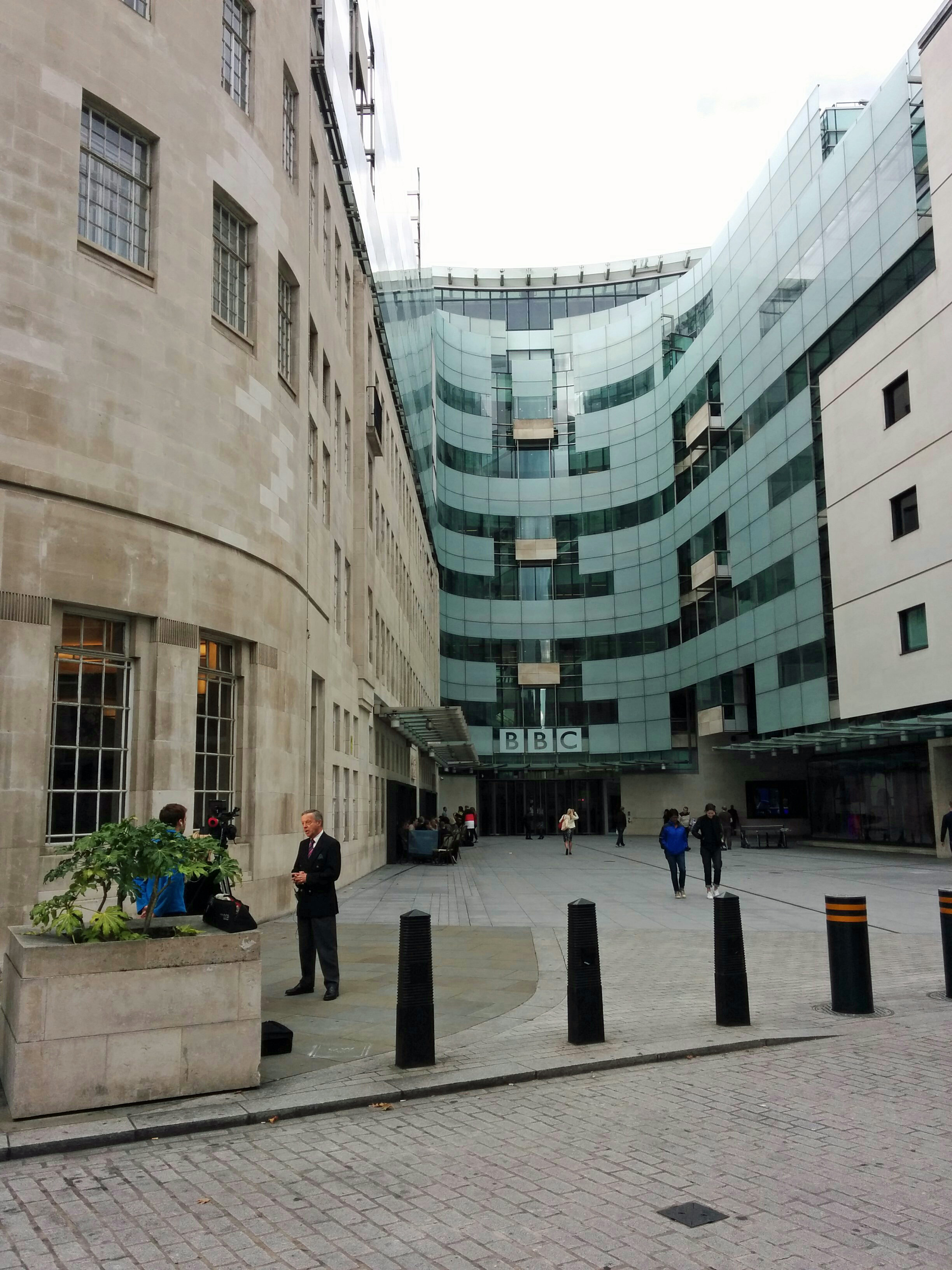
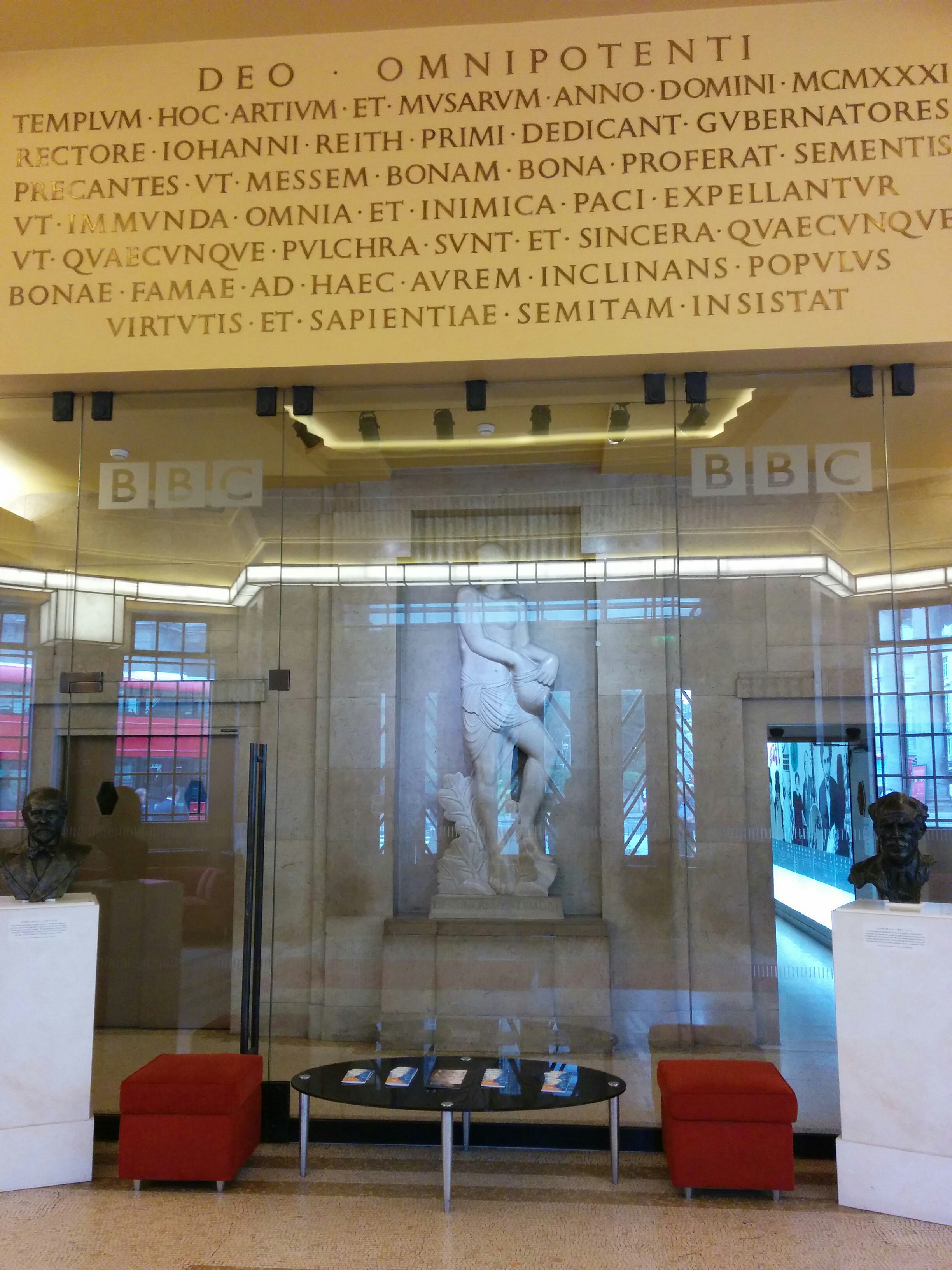
Notwithstanding that the most famous occupant of Portland Place is of course the good old BBC Broadcasting House. W1A 1AA being possibly the most iconic post code in the country – at least for those of us old enough to have written actual letters to BBC television programmes. Built in classic art deco style in 1932 the building was extensively restored and redeveloped in the early years of the 21st Century and as well as being the administrative HQ of the BBC is home to its news and radio services.

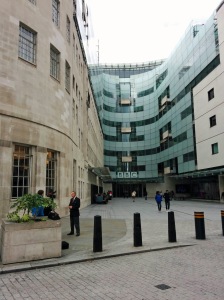
IMG_20150904_121540 IMG_20150904_121623

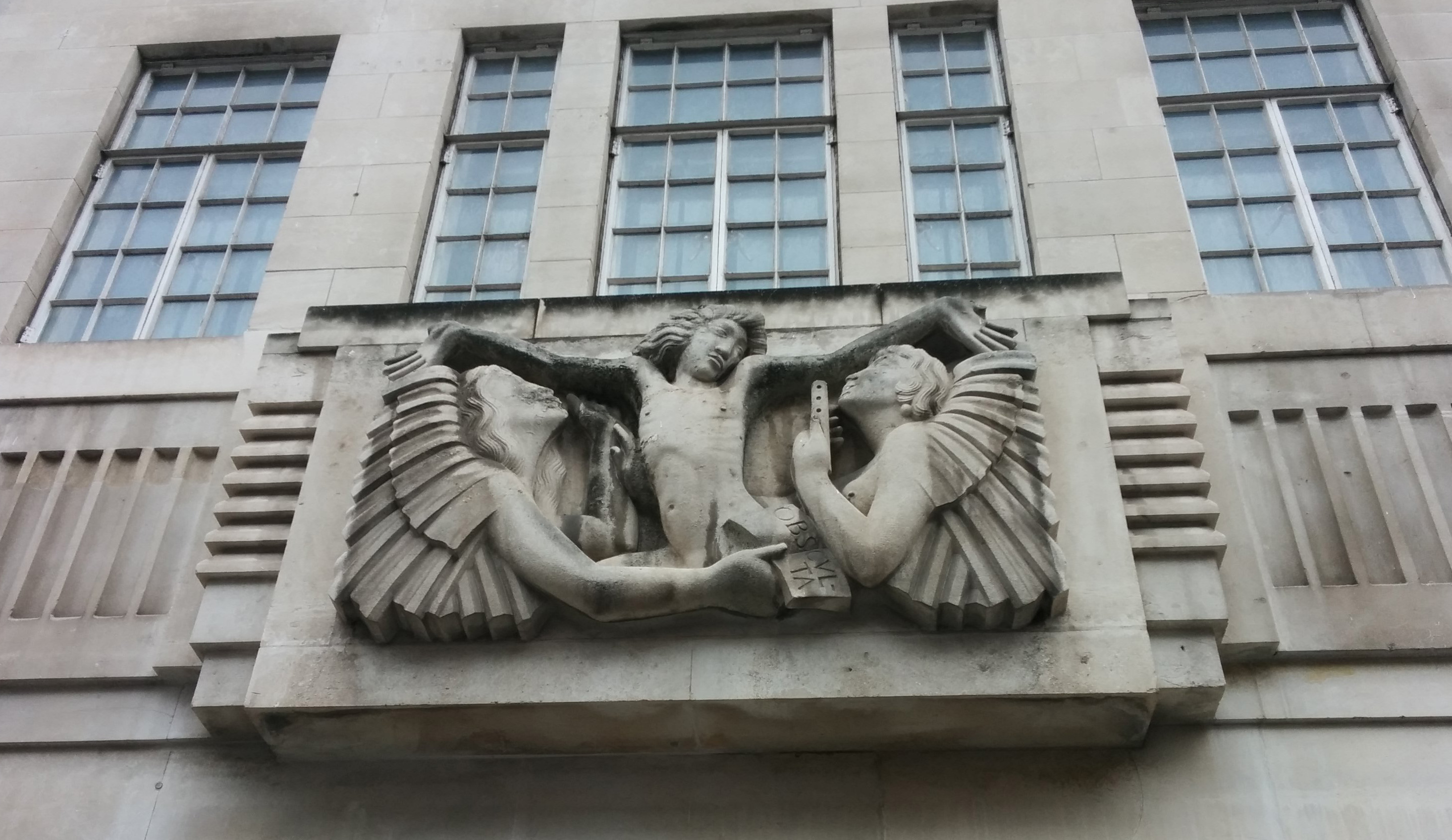
The statues on the exterior of the building are the work of the supremely talented but infamous Eric Gill (1882 – 1940). Suffice to say, were Eric Gill  alive today his activities would be of more than passing interest to Operation Yewtree. There are probably few more prominent examples of the vexed question of whether or not it is possible to continue to admire the work of an artist whose personal mores turn out to be abhorrent.
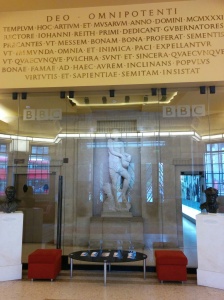
IMG_20150904_122001 IMG_20150904_122107

IMG_20150904_123613 IMG_20150904_123451

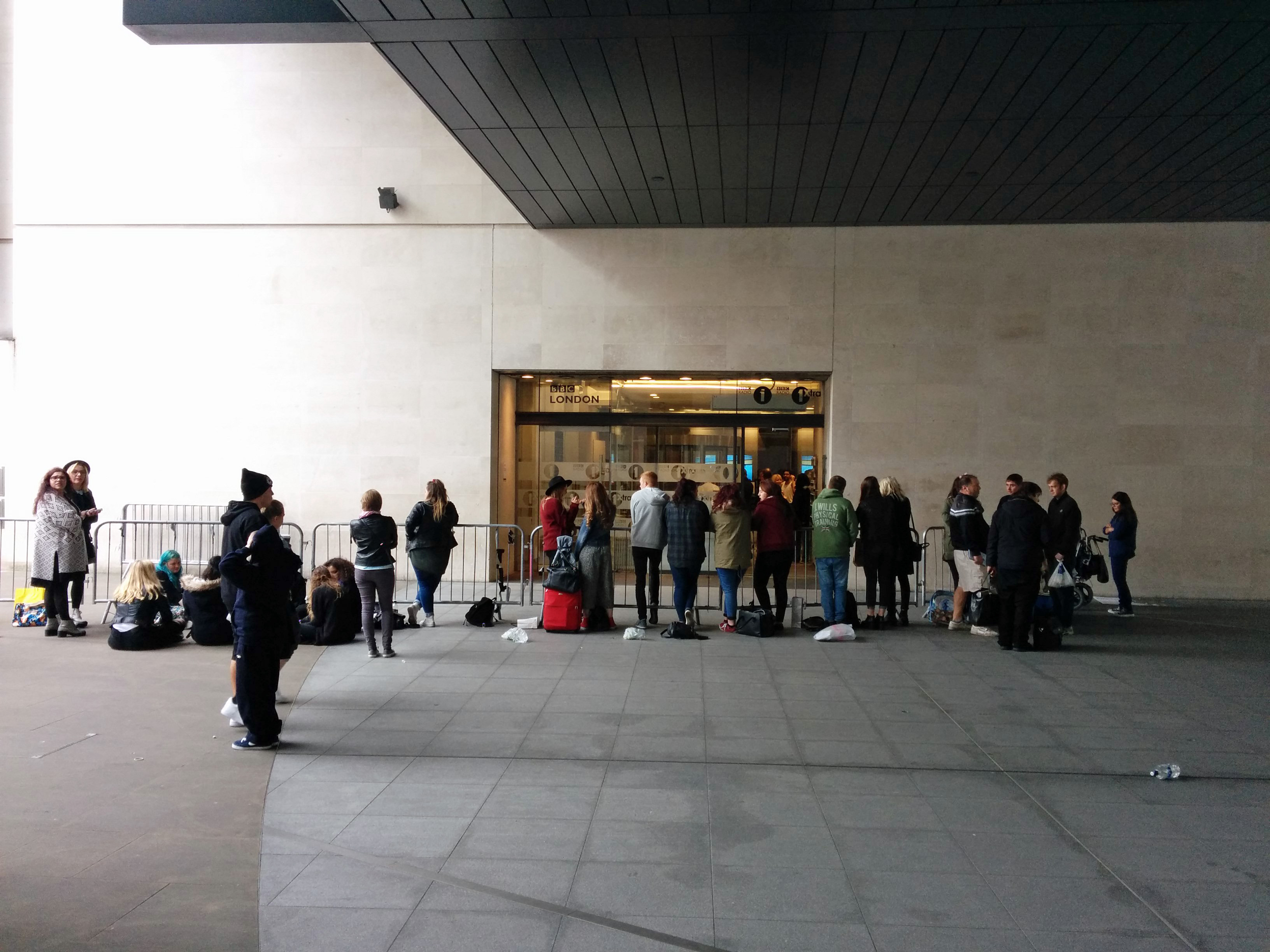
Round the back of the new development (on Middleton Place) is the home of Radio 1 and Radio 1-Xtra. And on this day there was a posse of young hopefuls looking out for the visiting James Bay, one of the new breed of sensitive male singer-songwriters (Ed Sheeran you have a lot to answer for). At another entrance (presumably Radio 6) was a collection of trainspottery middle-aged men clutching record bags but I never did find out who they were hoping to meet.

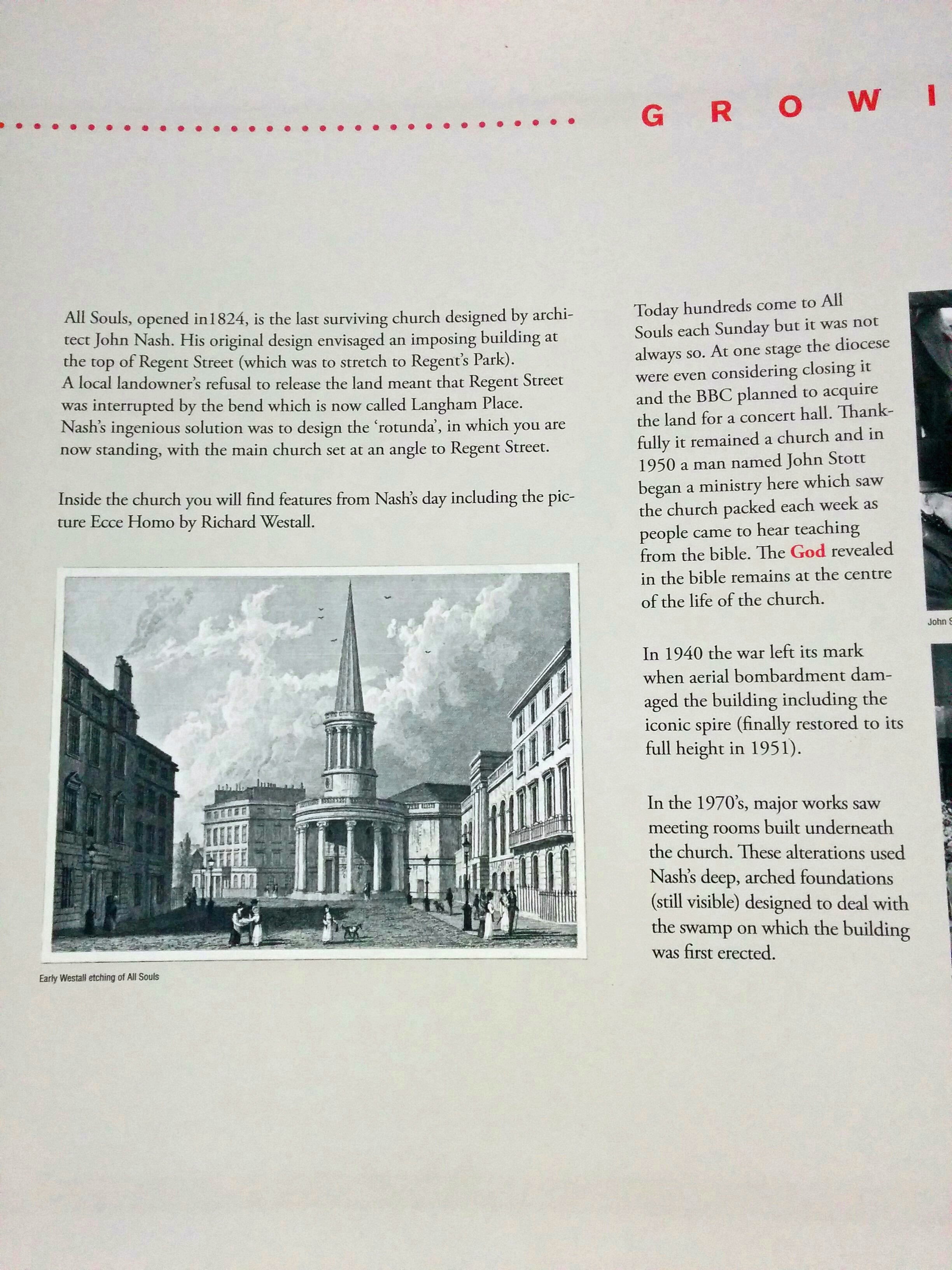
Just next door to the BBC on is All Souls, the last remaining church designed by John Nash (1752 – 1835), which opened in 1824.

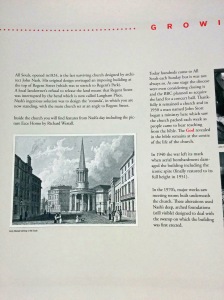
IMG_20150904_123650IMG_20150904_124020


IMG_20150904_124334

Not to be confused of course with either the mathematician John Nash who was the subject of “A Beautiful Mind” or the pop reggae singer Johnny Nash of ” I Can See Clearly” fame.

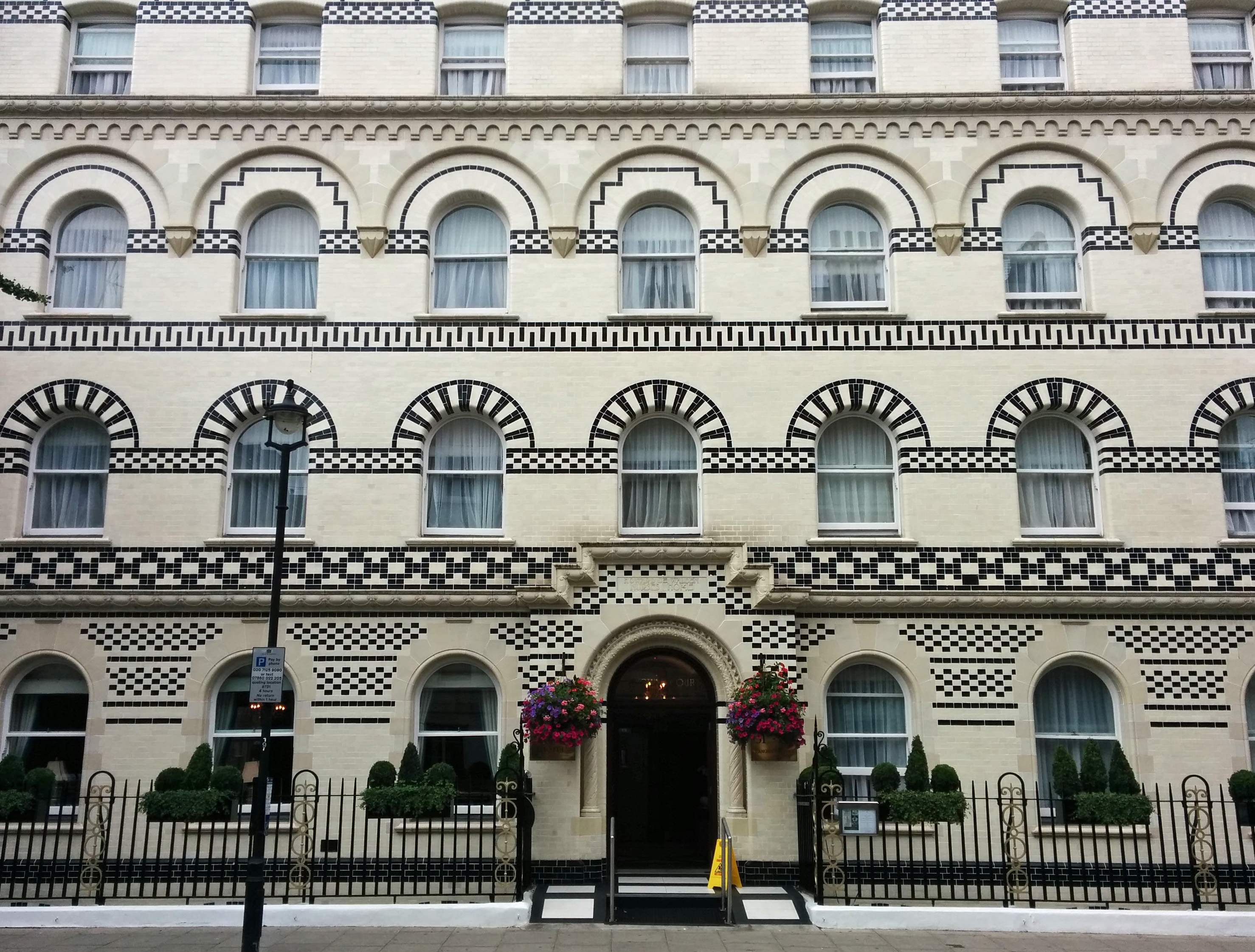
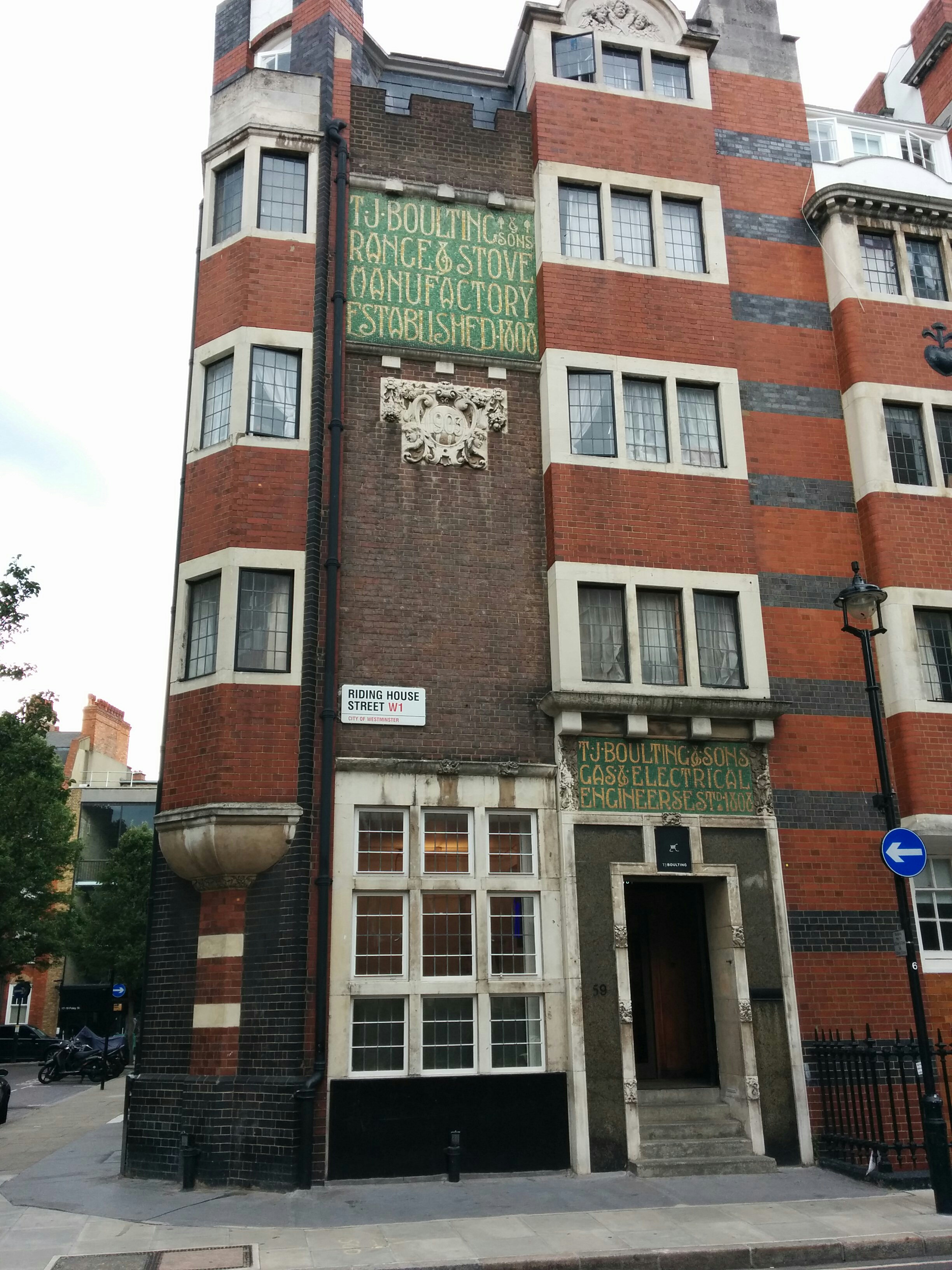
East of here the walk takes in the man stretch of Langham Street where the attractively tiled Grange Langham Court makes a bit of a show of itself before moving on to Hallam Street, Gildea Street, Girfield Street and a bit more of Great Portland Street without arousing further interest before heading back via Riding House Street where another embassy, that of Algeria, sits at No.1 (with a bullet).

IMG_20150904_123033

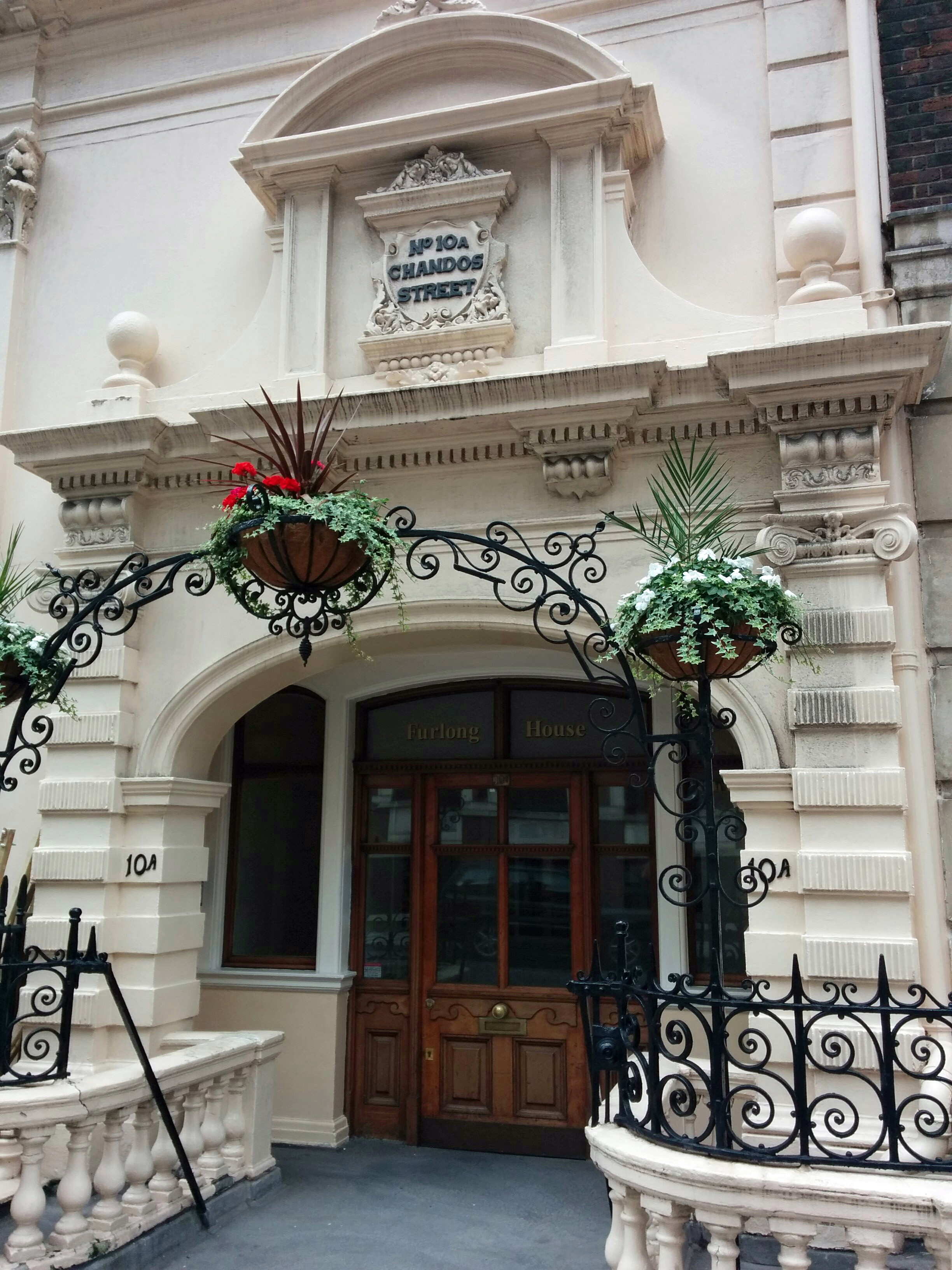
This is the point where Portland Place merges into Regent Street (north) but we head straight across and on to Cavendish Place. Chandos Street to the north is home at no.11 to the Medical Society of London founded in 1773. No.10a next door is built in the same style and although just offices of a financial company makes a nicer picture.

IMG_20150904_125021

IMG_20150904_125243

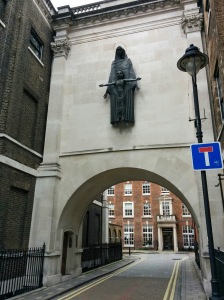
A little way further along, the entrance to Deans Mews is framed by this arch with its “levitating” sculpture of the Madonna and Child. This, the work of sculptor Jacob Epstein, was constructed from lead that was salvaged from the nearby roof of a building bombed in the Second World War and weighs in the region of three tons.

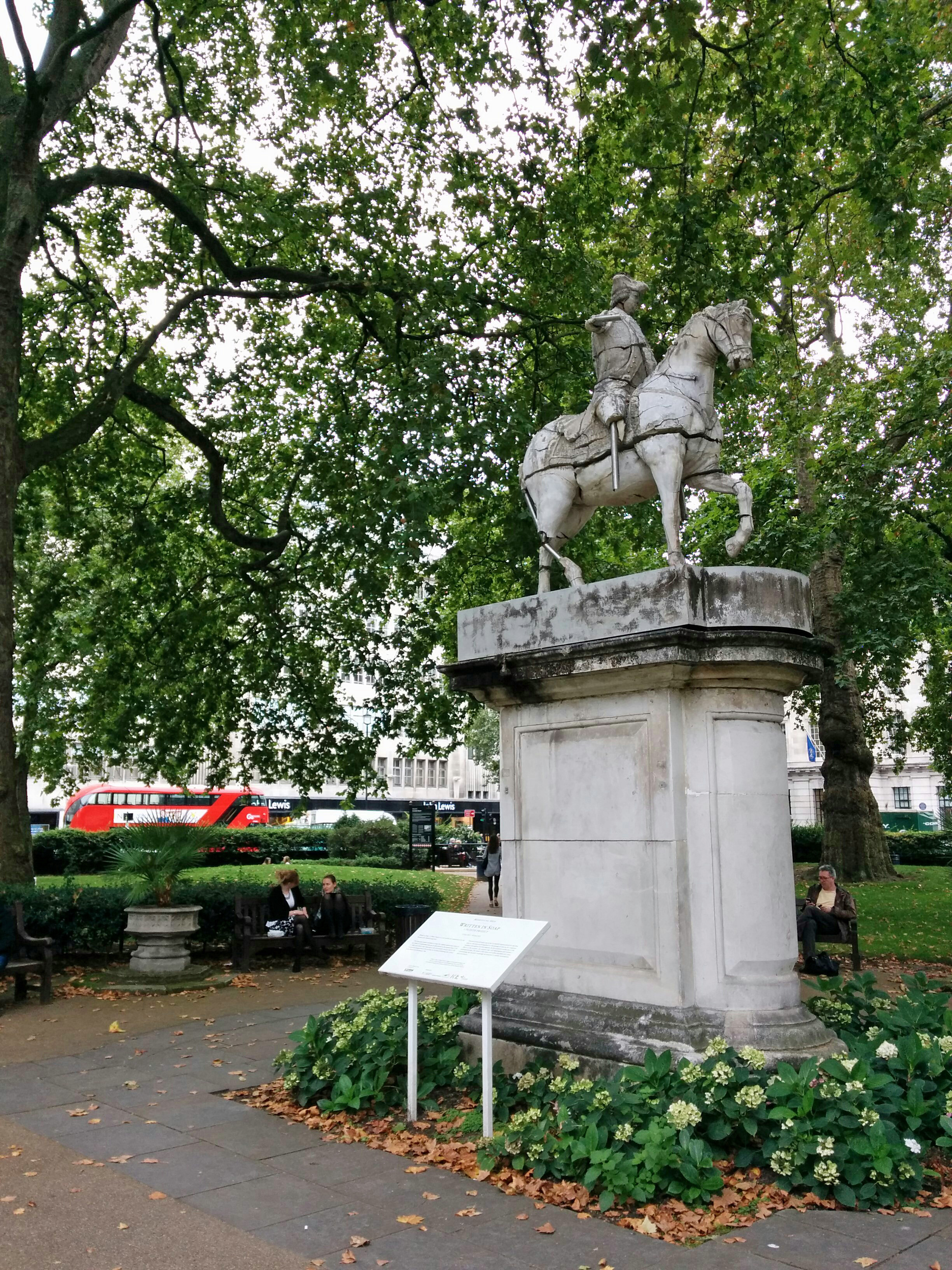
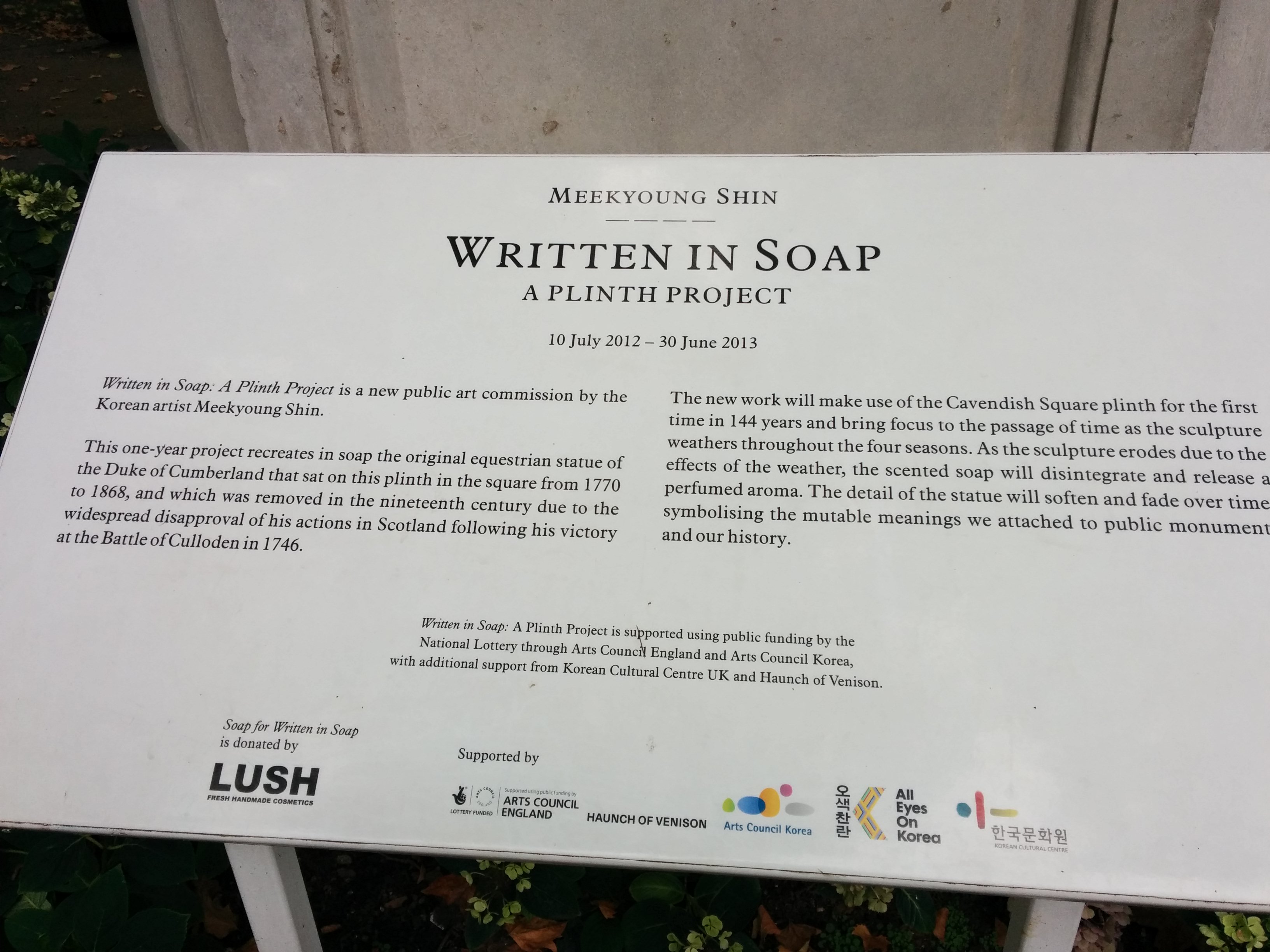
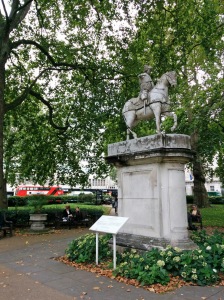
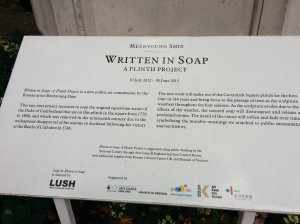
Almost final stop on this journey is Cavendish Square named after Henrietta Cavendish-Holles, the wife of the second Earl of Oxford. The statue on the centre of the square, ignored by the lunching office workers, is a recent art project which has recreated in soap the original statue of the Duke of Cumberland which stood on the plinth from 1770 to 1868 but was removed in the late nineteenth century due to posthumous disapproval of the Duke’s actions during the Battle of Culloden.
IMG_20150904_131249 IMG_20150904_131220

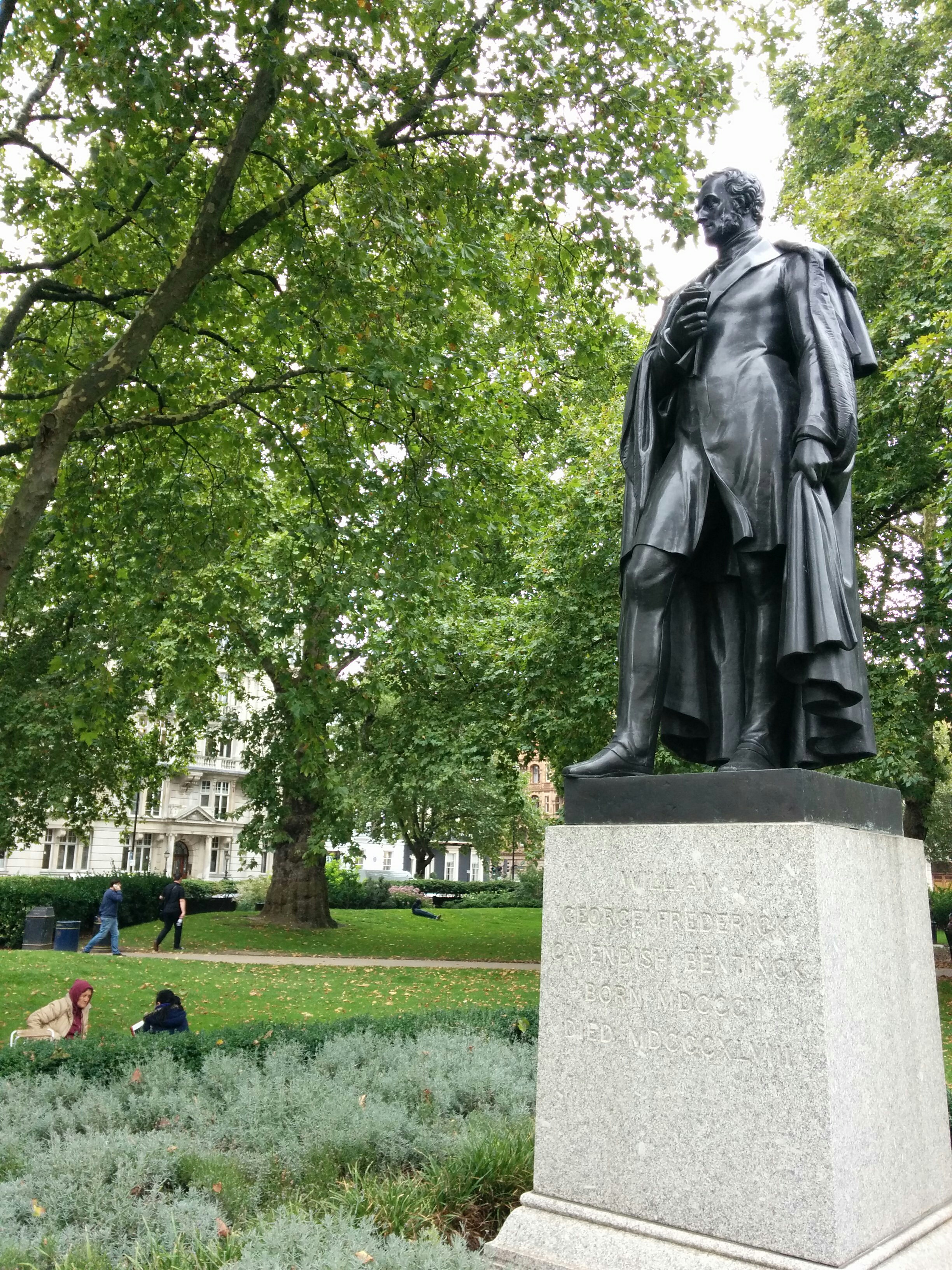
IMG_20150904_131425The bronze statue on the south side of the square is of Lord William George Frederick Cavendish-Scott-Bentinck (1802 – 1848). Bentinck was a conservative MP best known for his part in the corn laws-related downfall of Sir Robert Peel and also a prominent racehorse owner and notorious gambler. He died, unmarried, aged 46 of a suspected heart attack and was buried in (our old friend) St Marylebone Parish Church.

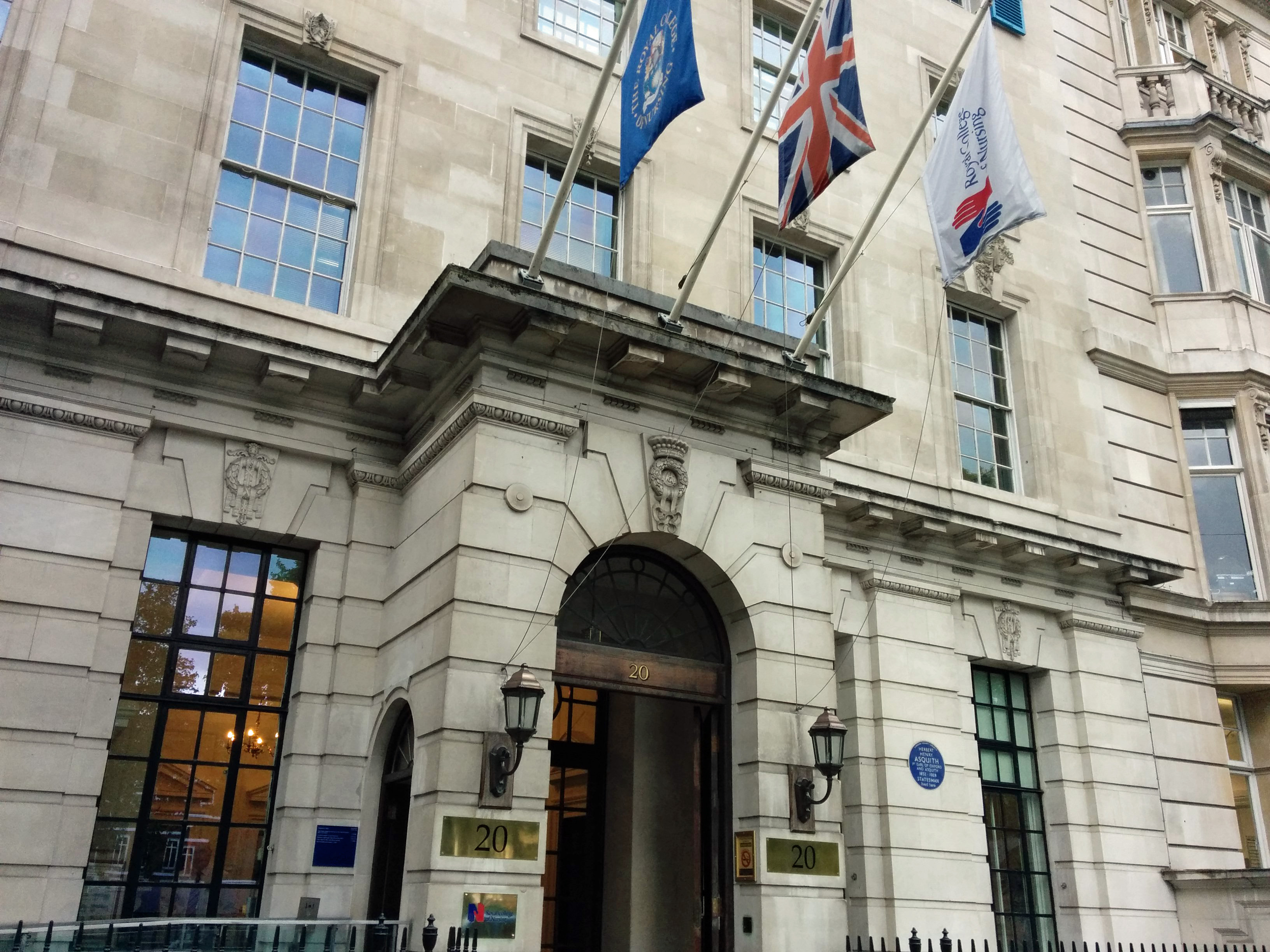
IMG_20150904_130311On the west side of the square is found The Royal College of Nursing, at no.20 which was at one time the home of Herbert Henry Asquith, Prime Minister from 1908 to 1916. The RCN, which was founded in 1916, took over the house that same year when Asquith left office and found he could no longer afford its upkeep.

Asquith was married twice but during his term in office he also developed a romantic obsession with Venetia Stanley who went on to marry Edwin Montagu, a Liberal Cabinet Minister. He sent her over 560 letters and Churchill who was at the time the First Lord of the Admiralty, viewed this endless letter writing as “England’s greatest security risk”. However within days of his rejection by Venetia, Asquith started an intense relationship with her older sister Sylvia, which lasted for several years.

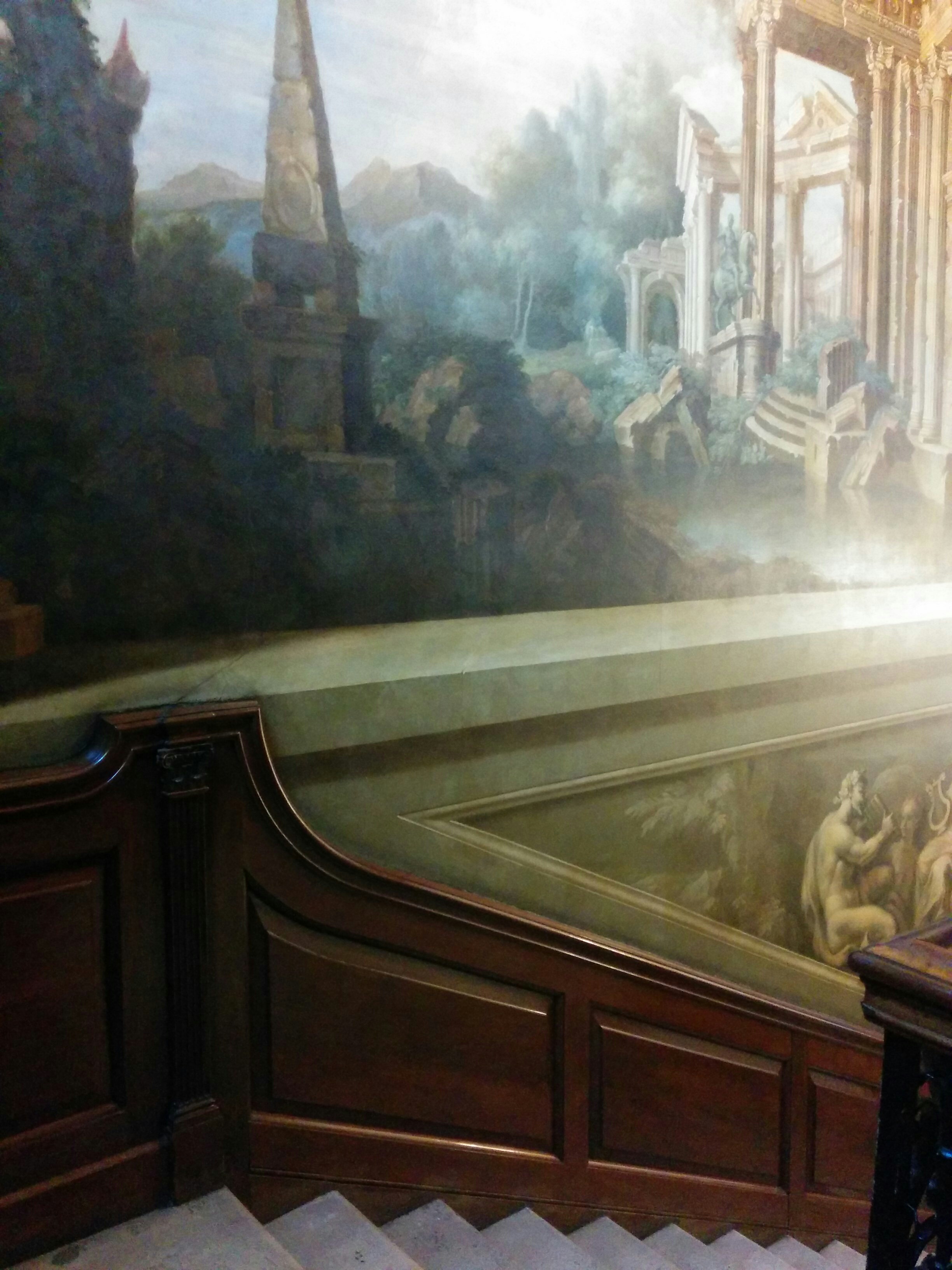
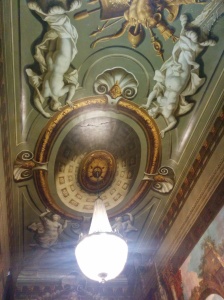
Returning to the building itself its most prominent feature is the extensive mural painted alongside and above the main staircase depicting scenes of ancient Rome. The mural is believed to date from around 1730 and be the work of Sir James Thornhill, father-in-law of Hogarth.

IMG_20150919_160733 IMG_20150919_160703

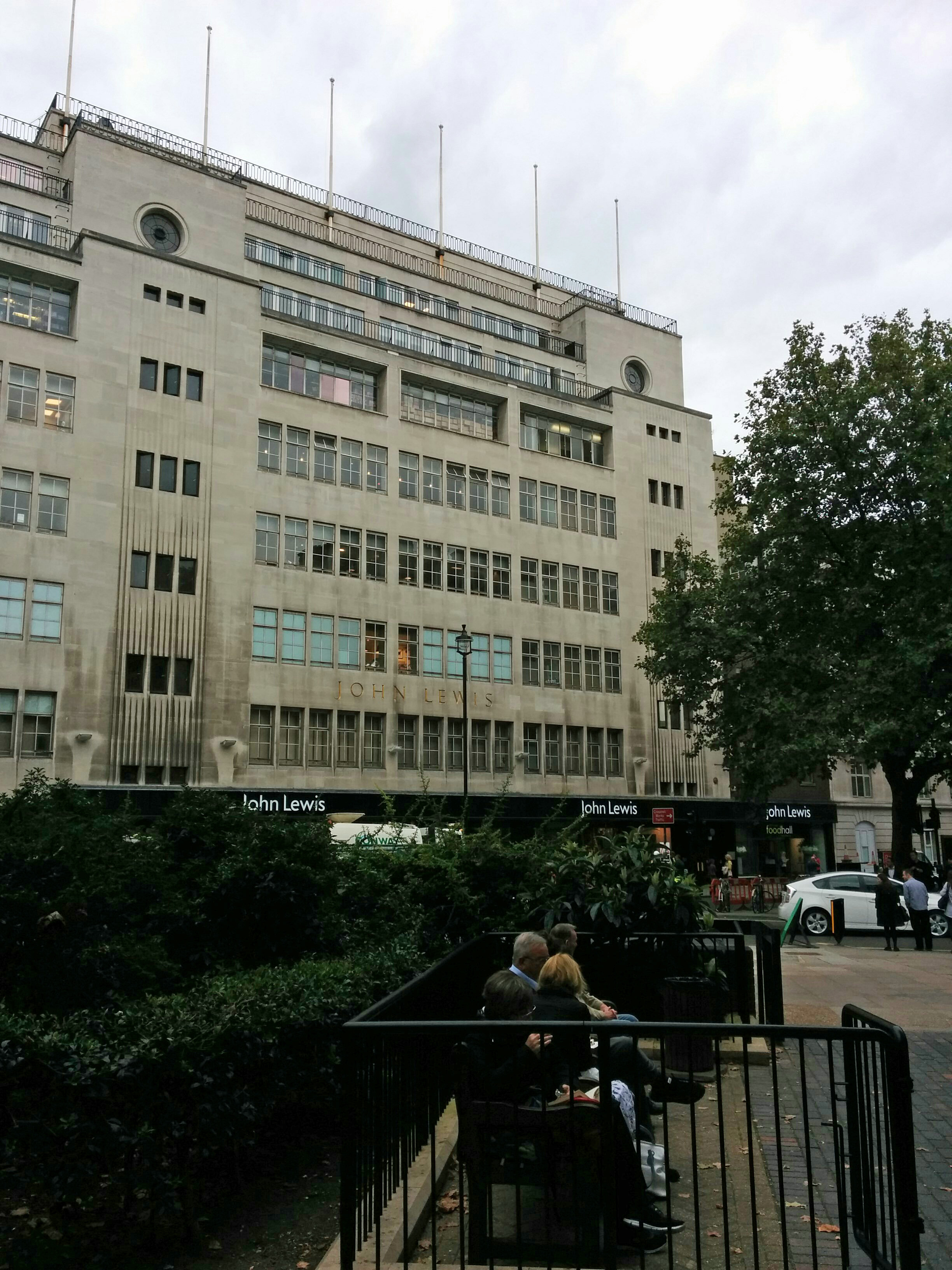
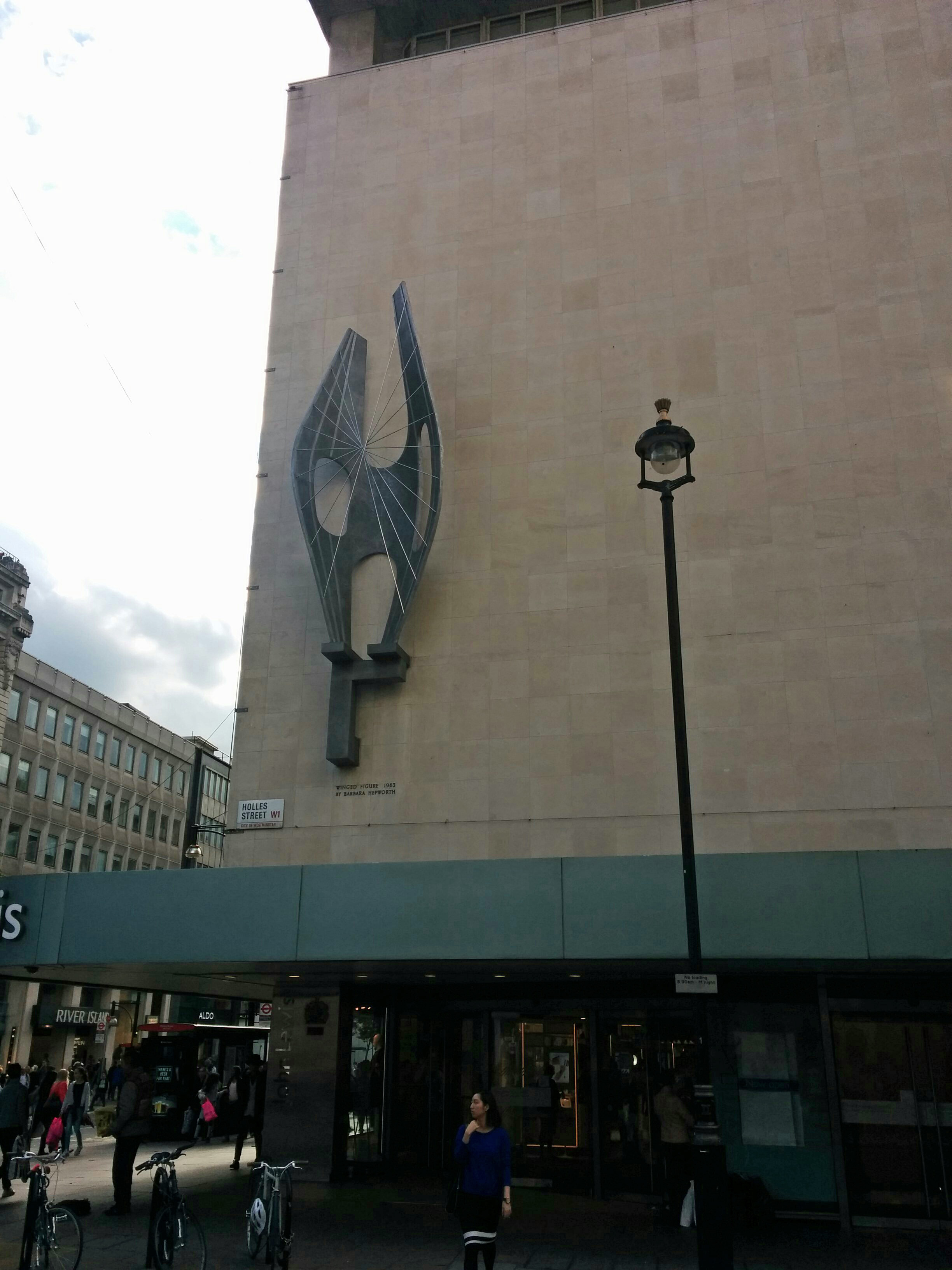
We end again back on Oxford Street emerging by John Lewis at no. 300. The original John Lewis store in Oxford Street was bombed to the ground during the Blitz (though amazingly without any casualties). It took until 1960 before the present building was completed and opened. The iconic Winged Figure statue by Barbara Hepworth was unveiled in 1963, John Lewis having commissioned the Yorkshire-born artist to create a work that evoked common interest and ownership.

IMG_20150904_131338 IMG_20150919_163525

Day 5 – Fitzrovia – North of Oxford Street East

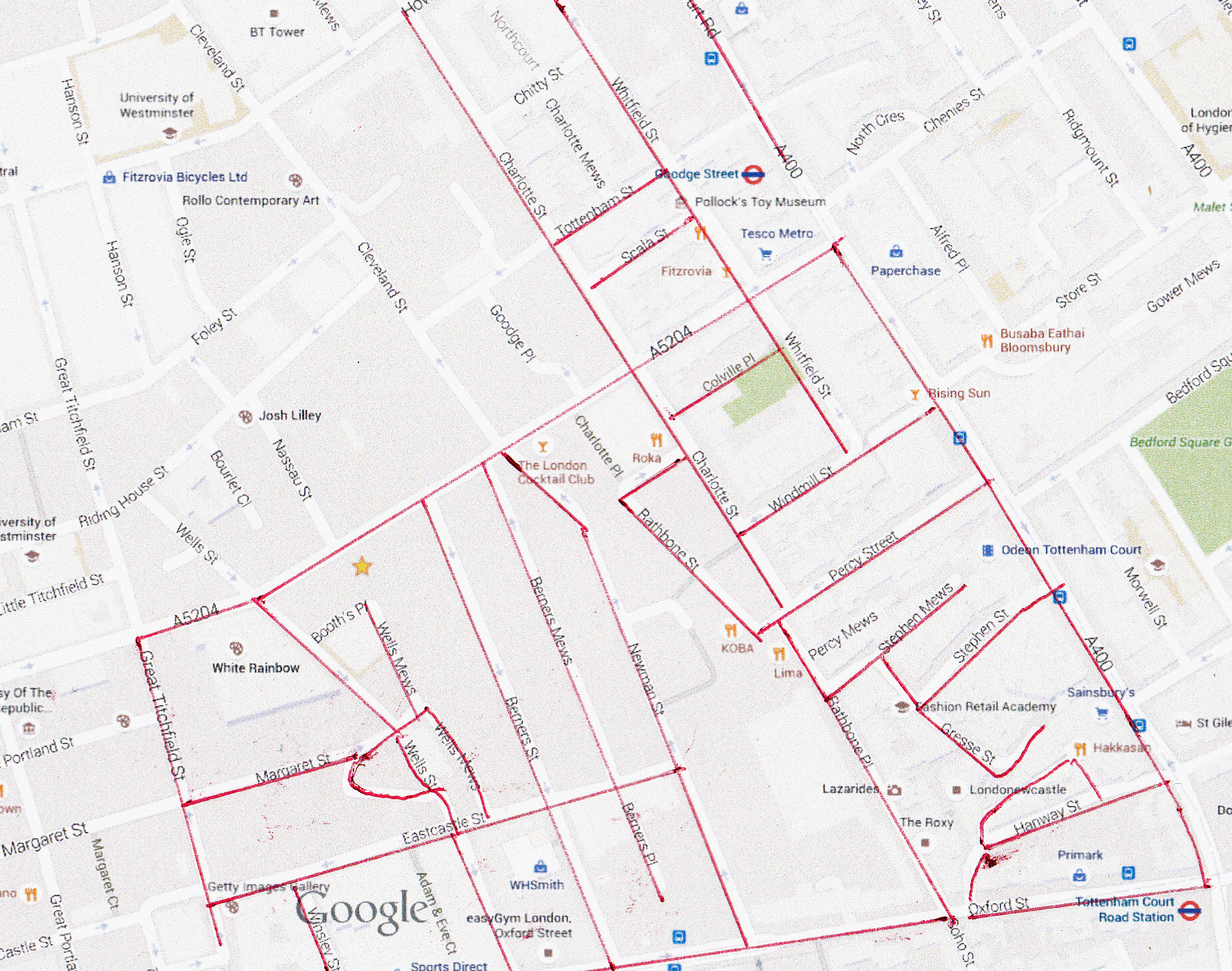
Today’s route covers the area to the west of Tottenham Court Road and North of Oxford Street and takes in most of the rest of Fitzrovia. Back in the 90’s some genius tried to re-brand this area as “NoHo” but there was NoHope of that succeeding despite the prevalence of media businesses. Most well-known thoroughfare is probably Charlotte Street; once renowned for its many Greek restaurants. It appears sadly that those have all gone now (I guess plate-smashing and austerity aren’t a good mix), replaced by clutch of high-end eating establishments – all doing great business on a Friday lunchtime.

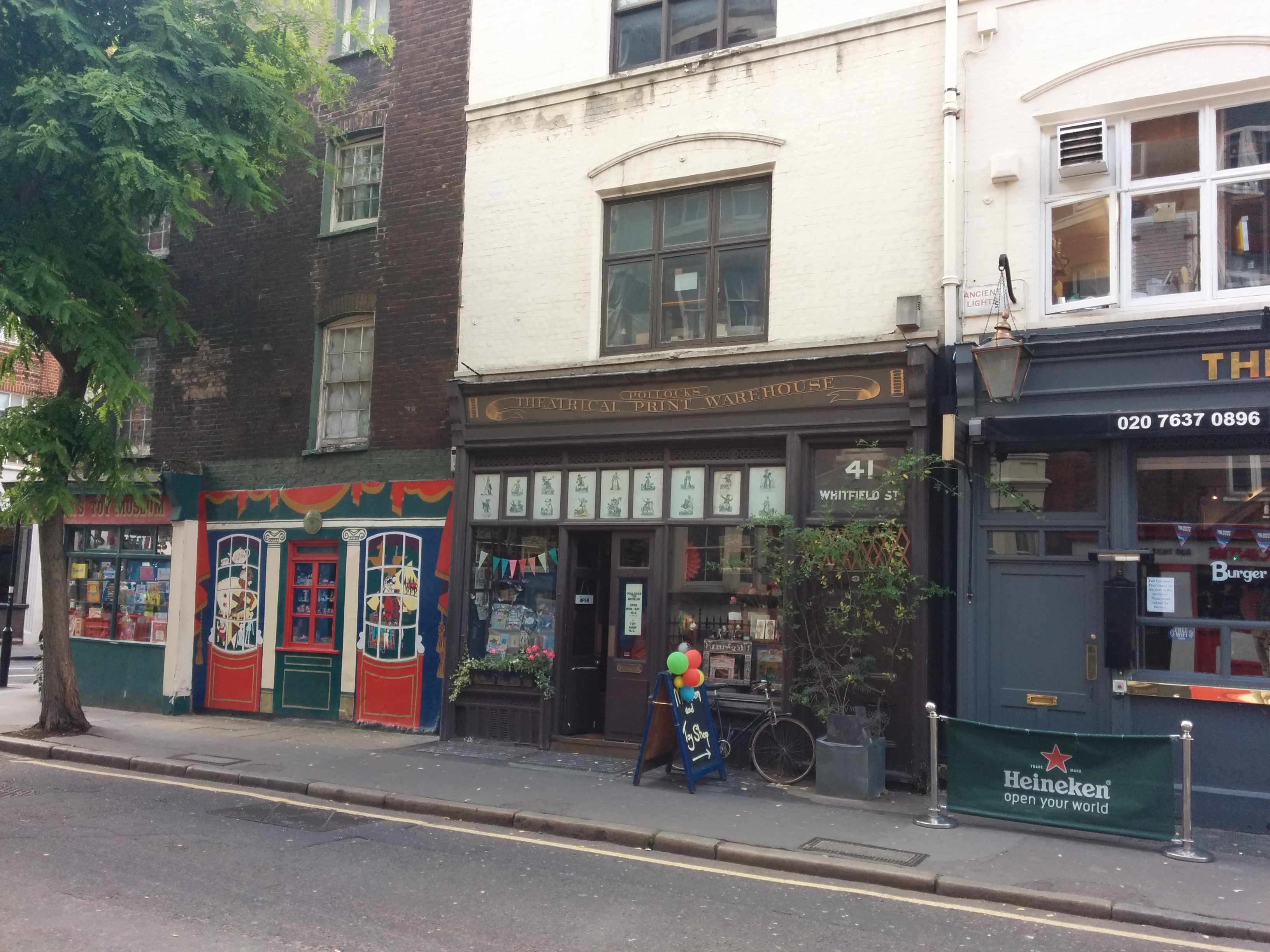
A lot of this post will focus on the compact but fascinating Pollock’s Toy Museum in Whitfield Street – more than worth £6 of your hard-earned if you’re ever in the vicinity.

Day 5 Route

IMG_20150828_111827

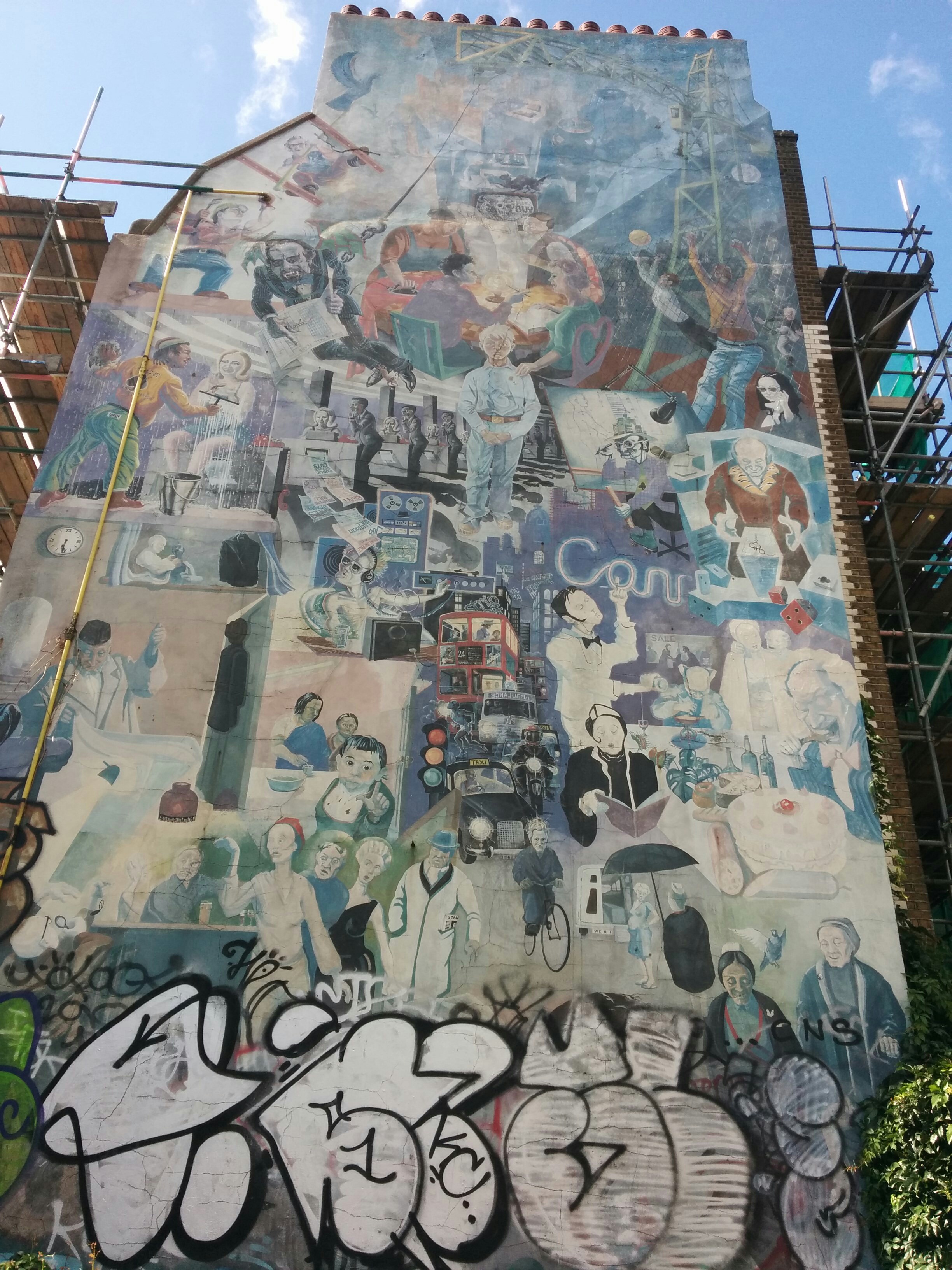
We begin at Goodge Street tube station just adjacent to which in Whitfield Gardens can be found the Fitzrovia Mural depicting life in the area at the start of the 1980s.

Head north up Tottenham Court Road then turn left into Grafton Way and again into Whitfield Street. At no.108 is Marie Stopes House, former home of the lady herself.  Marie Charlotte Carmichael Stopes (1880 – 1958) led a very colourful and varied life and although her fame today rests on her pioneering work in the field of birth control she was also (and first) a renowned palaeontologist.

IMG_20150828_112554240px-Marie_Stopes_in_her_laboratory,_1904

The address of the aforementioned Pollocks Toy Museum is actually 1 Scala Street but it does front onto Whitfield Street.

IMG_20150828_121541IMG_20150828_113155

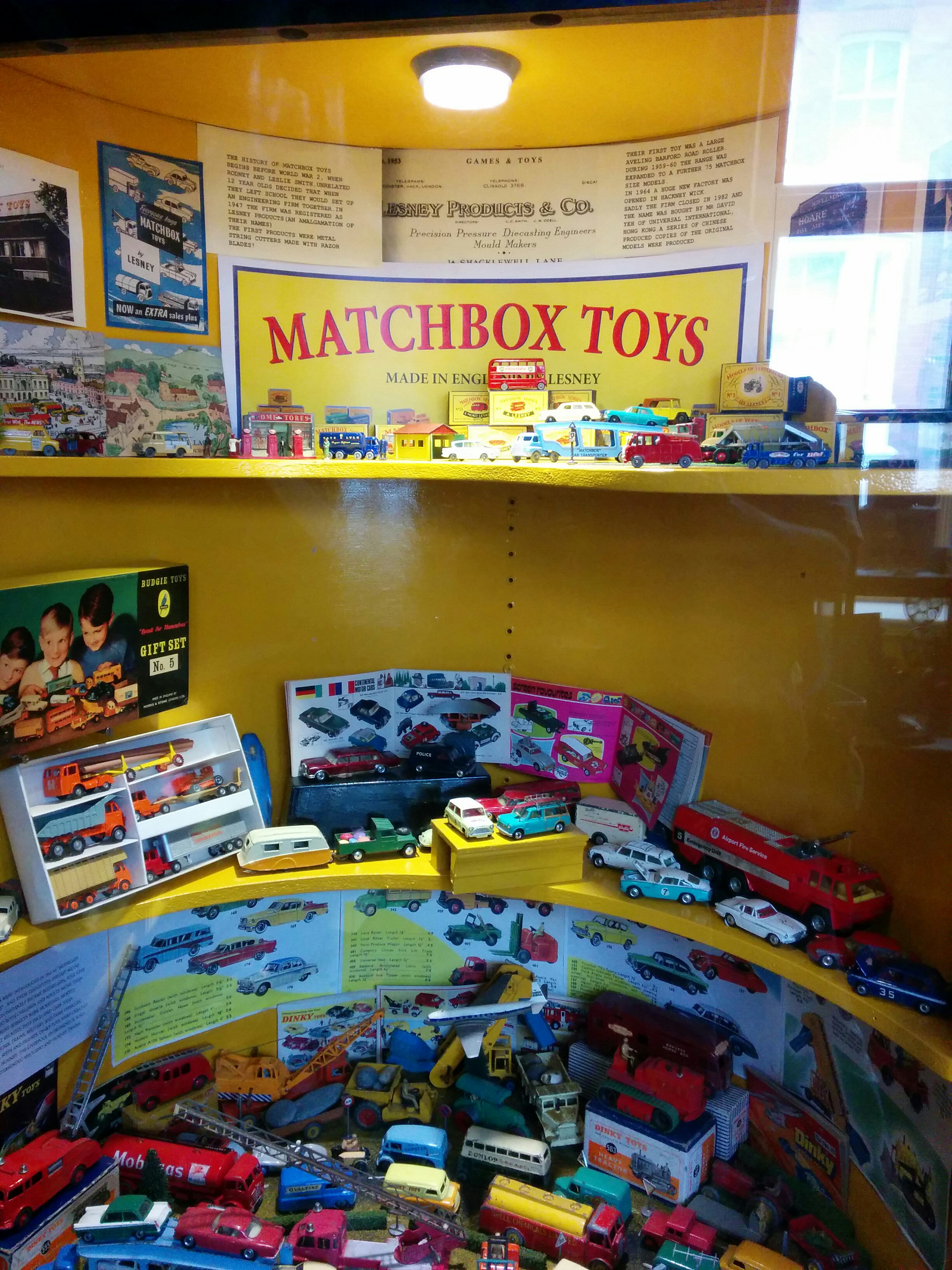
The museum’s collection mainly focuses on Victorian toys with a particular interest in model theatres and dolls but as you can see below there is plenty of nostalgia prompts for us kids of the sixties and seventies.

 IMG_20150828_114242 IMG_20150828_114811

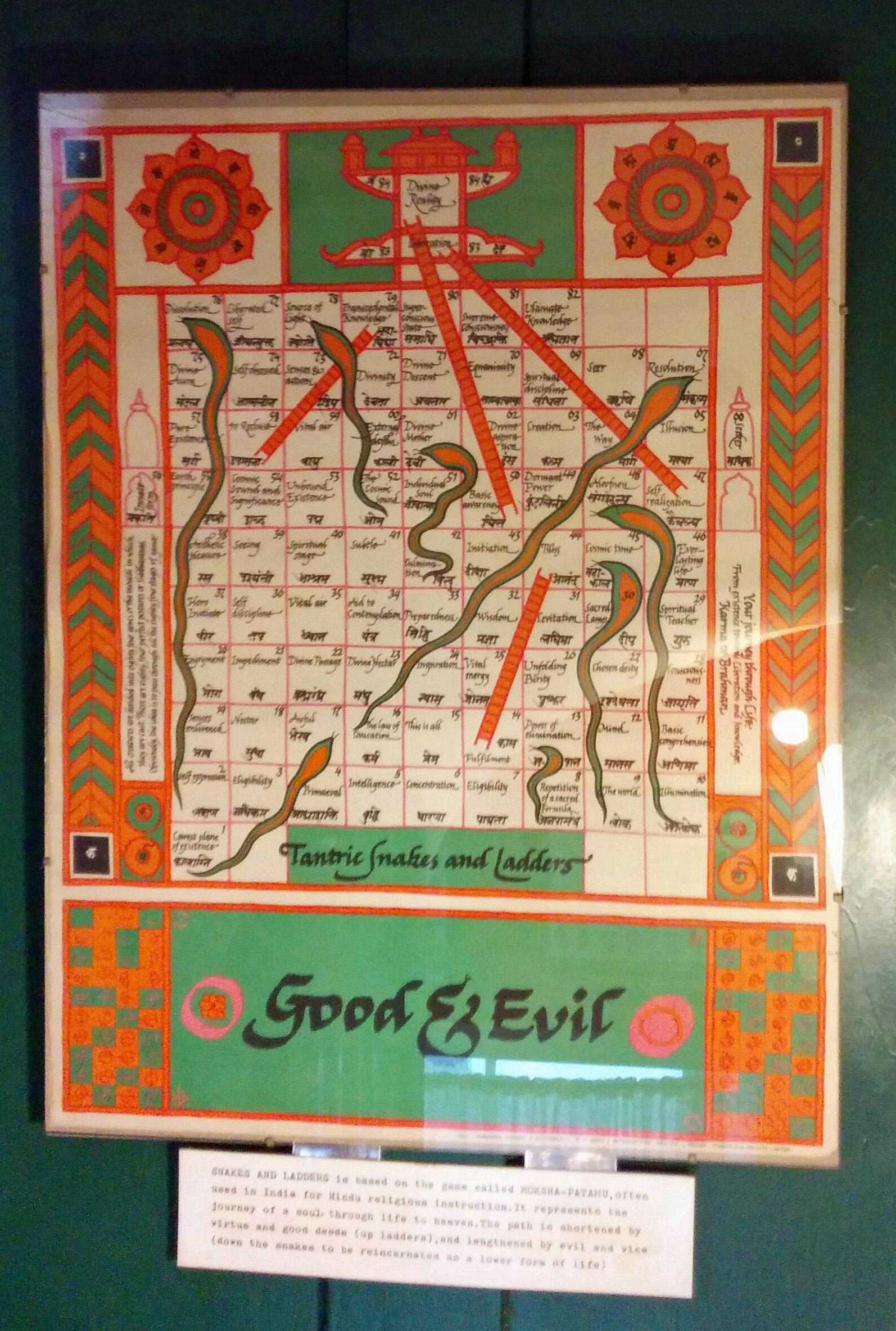
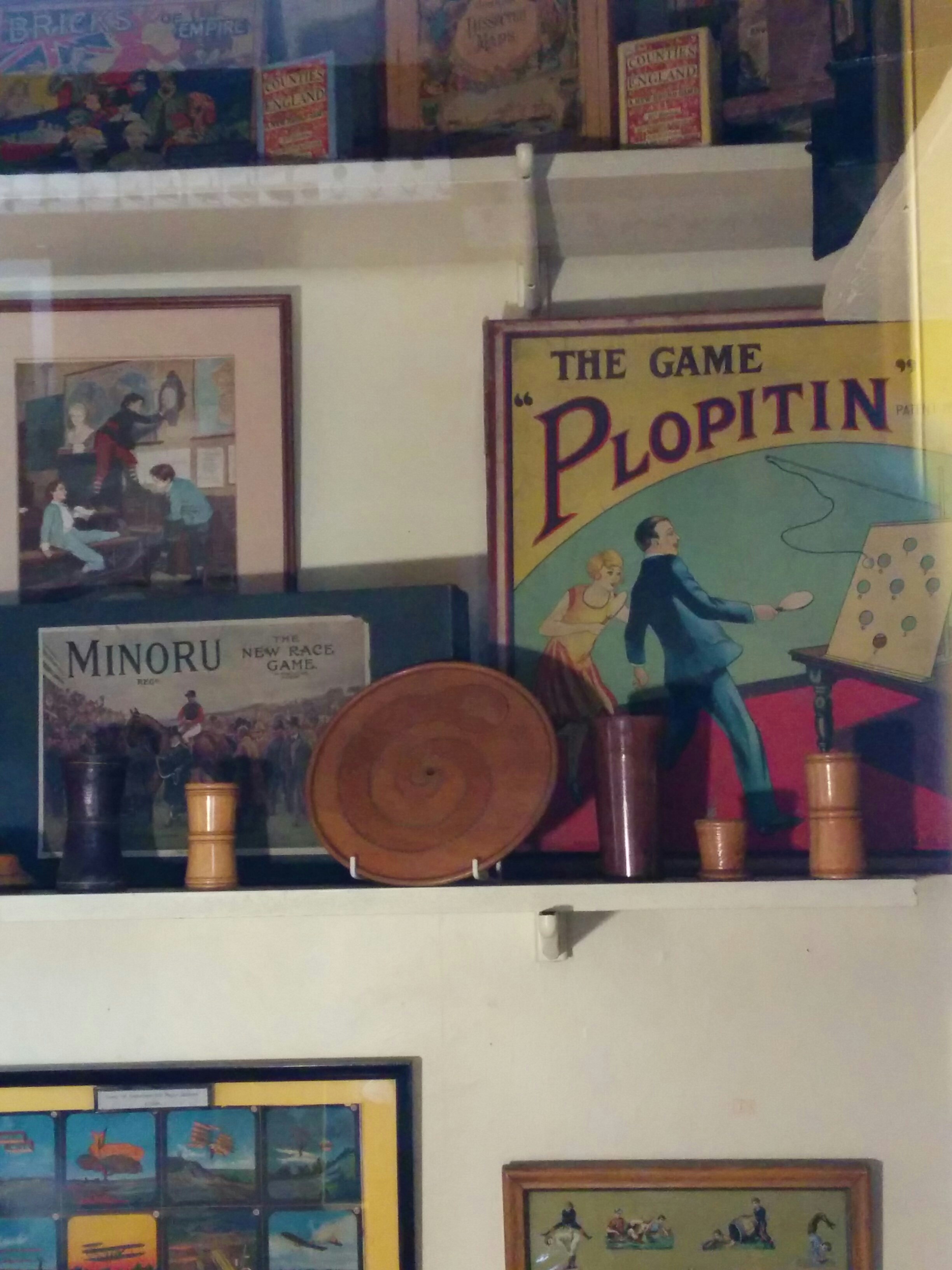
The following two items greatly intrigued me. I wasn’t previously aware that Snakes and Ladders originated as a game used for Hindu religious instruction. Apparently it represents the journey of a soul towards heaven with the ladders rewarding good deeds and the snakes punishing evil ones. The unfortunately named Plopitin looks like some weird 1930s forerunner of swingball. If you’ve got a £150 spare there’s one currently going on ebay

http://www.ebay.co.uk/itm/1930S-RARE-VINTAGE-BOXED-THE-GAME-OF-PLOPITIN-/261704562321

IMG_20150828_115223 IMG_20150828_114914

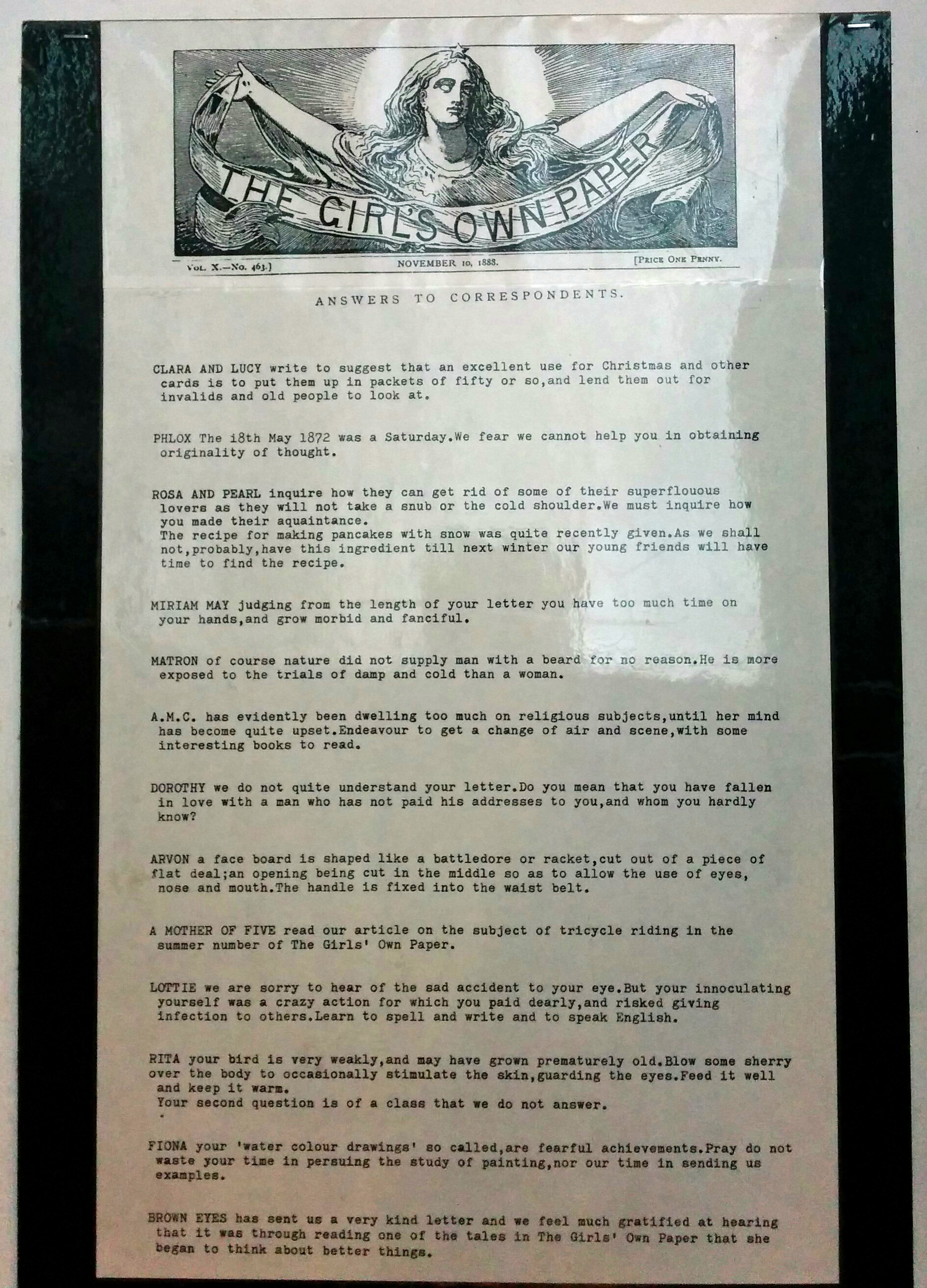
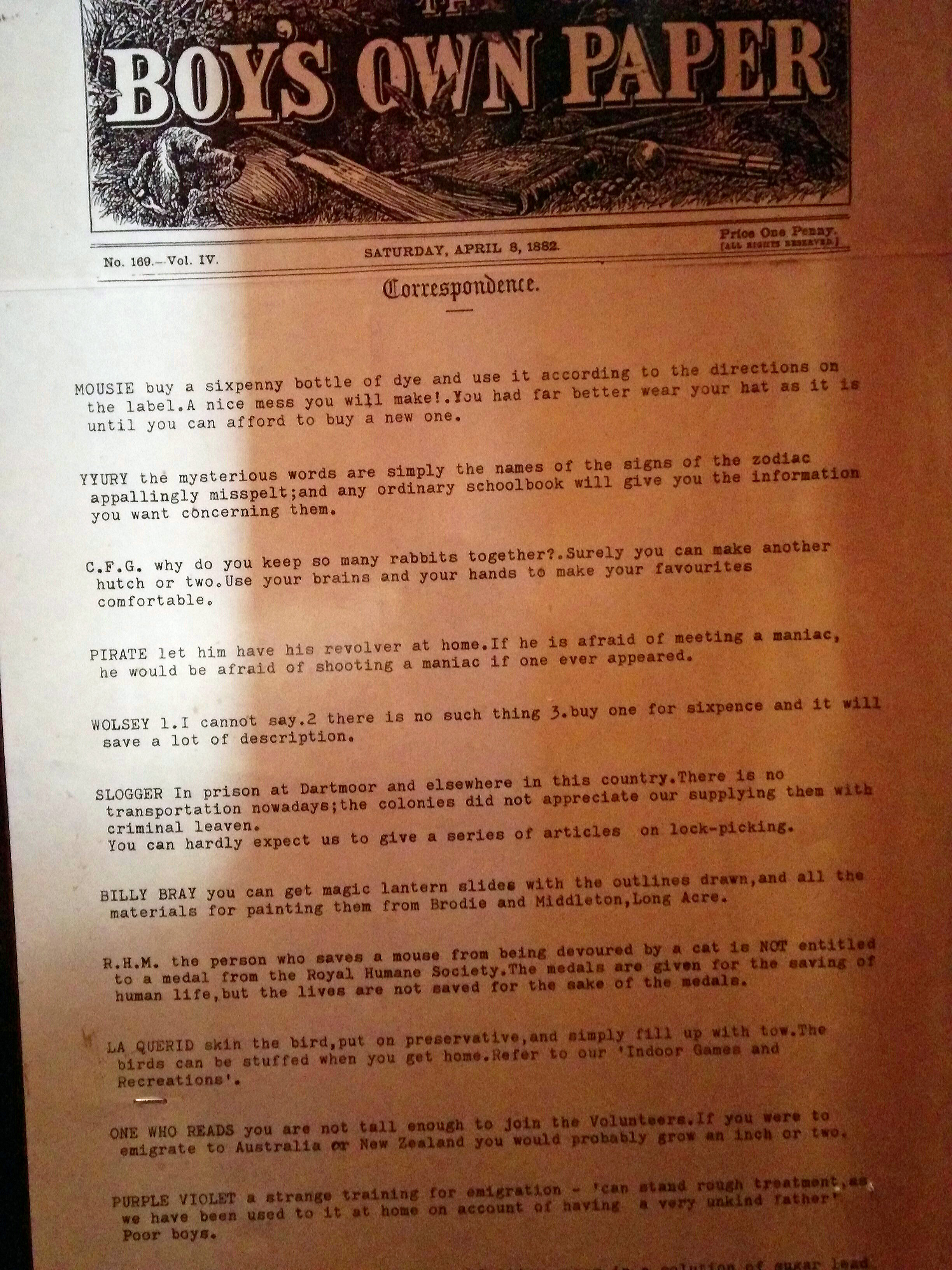
Just about my favourite things though were these two prints which are facsimiles from 1883 editions of the Victorian publications, the Girl’s Own Paper and the Boy’s Own Paper. At the end of each paper was as section which printed replies to correspondence received from readers – the letters themselves were never published. I’d urge you to take a closer look at these because they are supremely amusing.

IMG_20150828_113834 IMG_20150828_121352

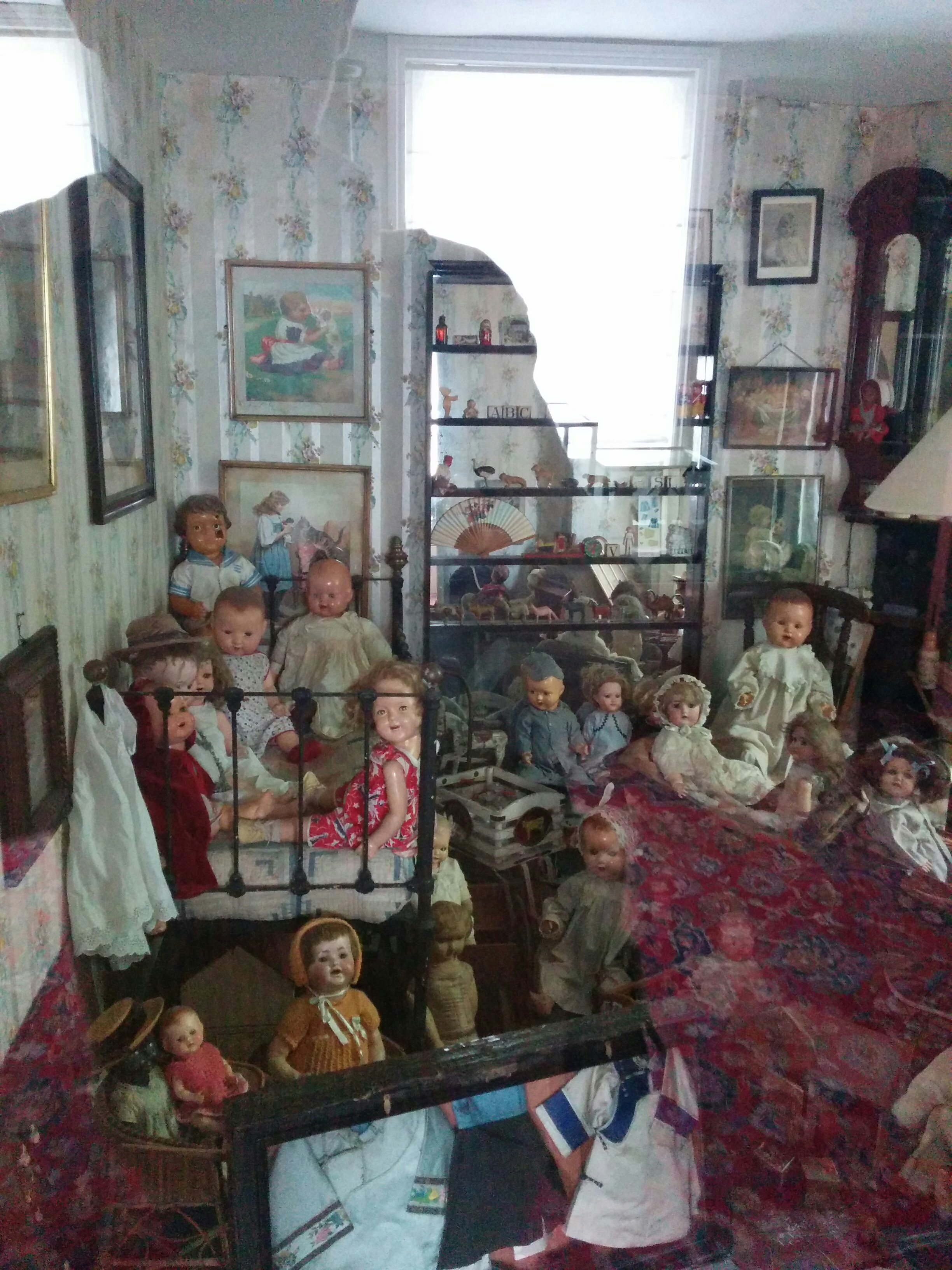
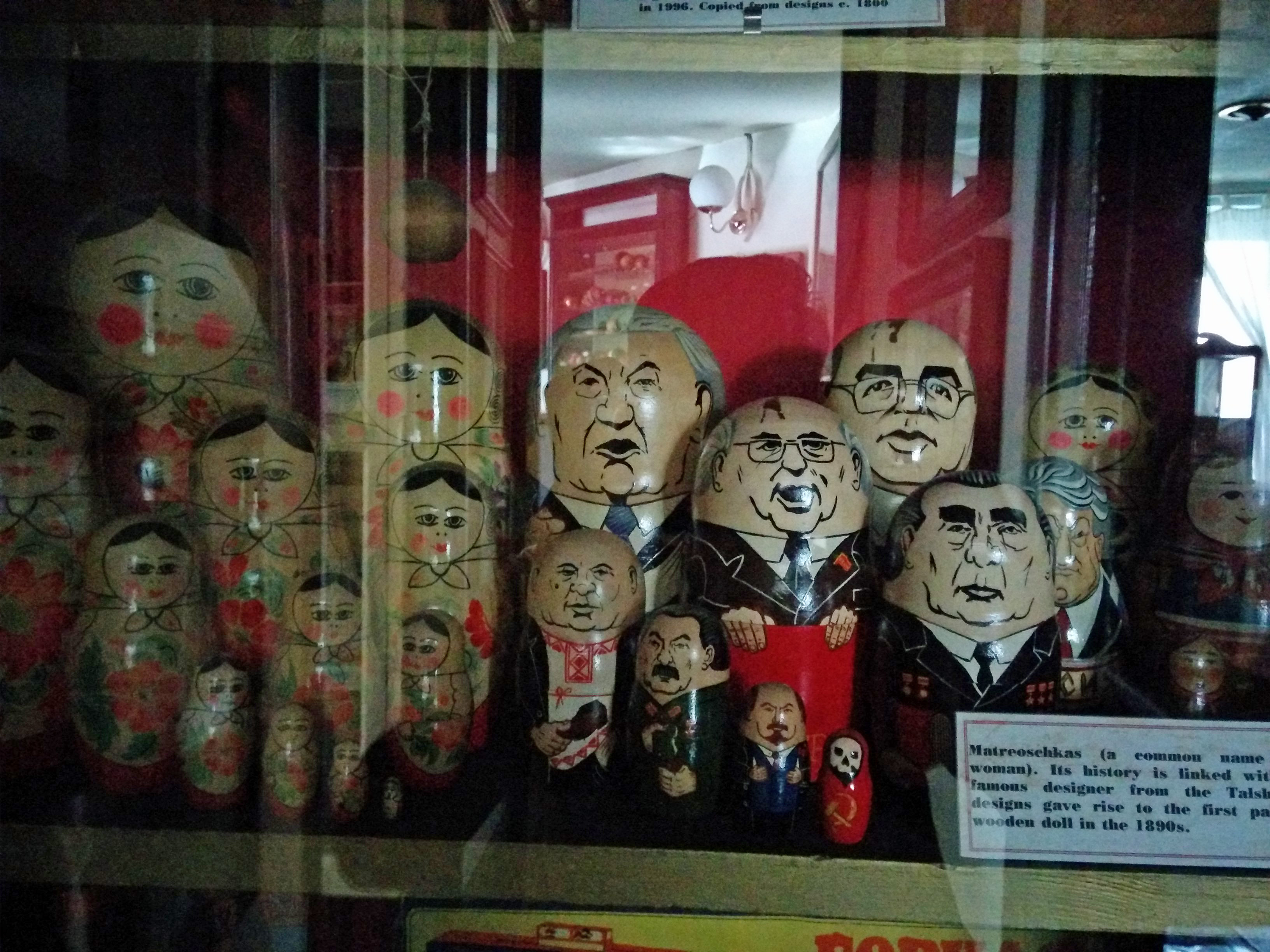
I can’t believe I’m alone in finding dolls like these incredibly creepy. As for the Russian Matryoshkas I’m ok on the smaller ones at the front but having trouble identifying the three at the back. Looks to me like there are two alternative Gorbachevs.

IMG_20150828_120409 IMG_20150828_115725

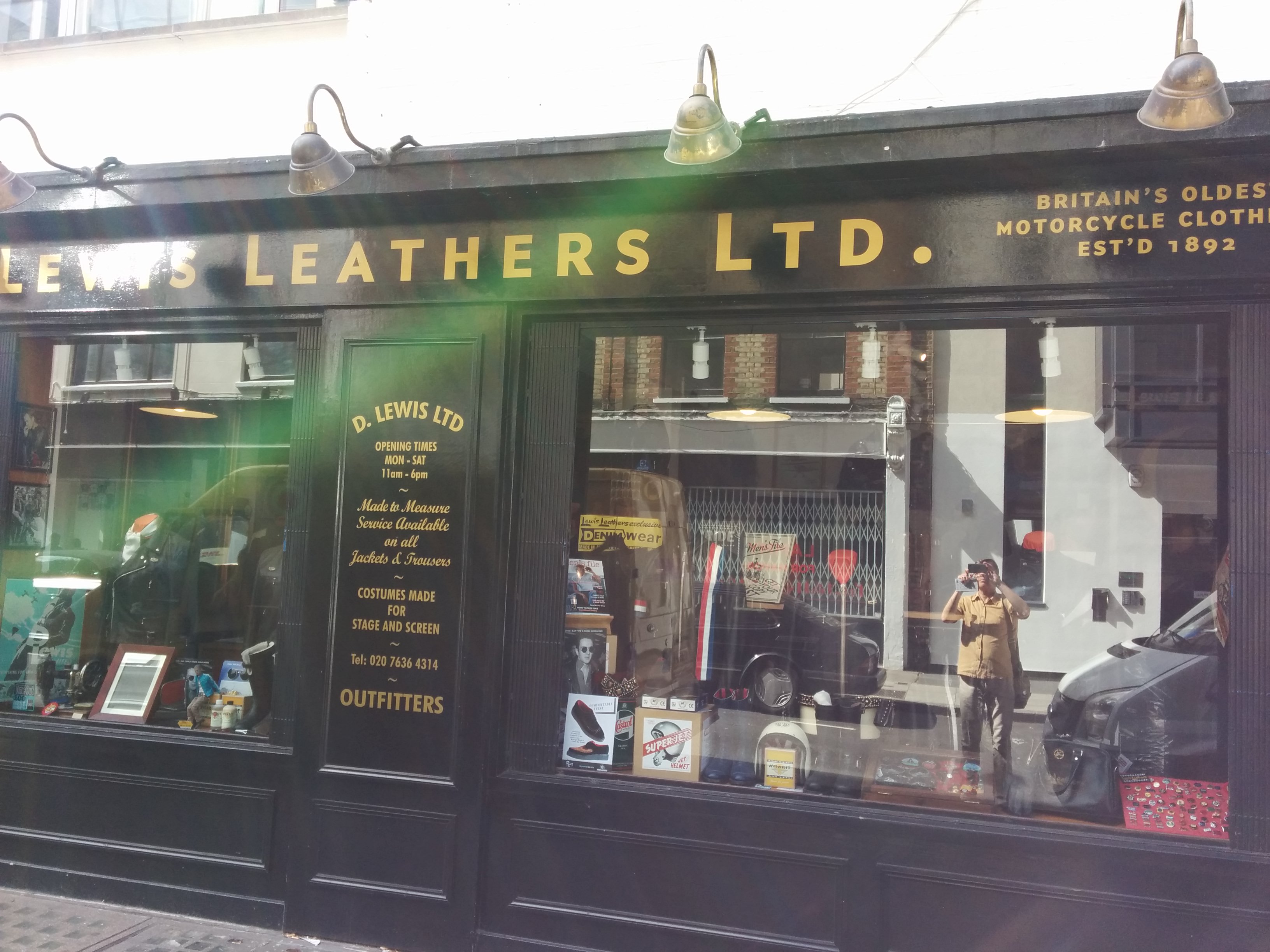
Anyway moving on…At the end of the street is Lewis Leathers, proclaimed as Britain’s oldest purveyors of motorcycle clothing. I thought it was the motorcyclists that wore the clothing but that may be just me being pedantic. Inadvertent crap selfie of the day. 

IMG_20150828_121841

IMG_20150828_122142

Above right is the charmingly out-of-context Colville Place which cuts between Whitfield Street and Charlotte Street. This is home to the Movie Poster Art Gallery which also features original artwork for LP sleeves such as this one for the brilliant A Certain Ratio’s Sextet album from 1982. If you’re unfamiliar with ACR then I strongly suggest that you Spotify them.

IMG_20150828_122110

I’ve already mentioned Charlotte Street and its culinary delights. It’s also home to Saatchi & Saatchi of which the less said the better probably. Quick mention of the Darren Baker gallery which currently has an interesting selection of work on display and where the assistant was atypically friendly.

IMG_20150828_125226

On to Goodge Street and then in succession, Tottenham Street , Goodge Place, Charlotte Place and Newman Passage.

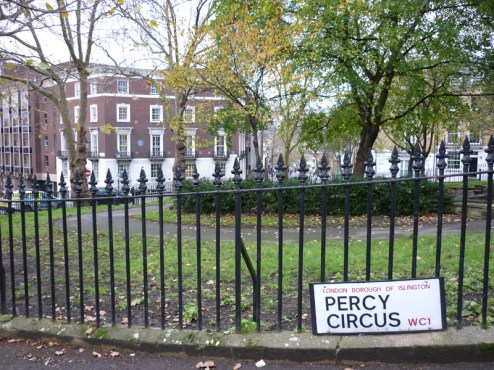
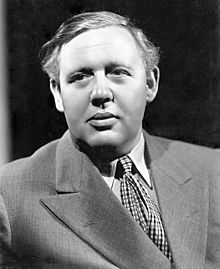
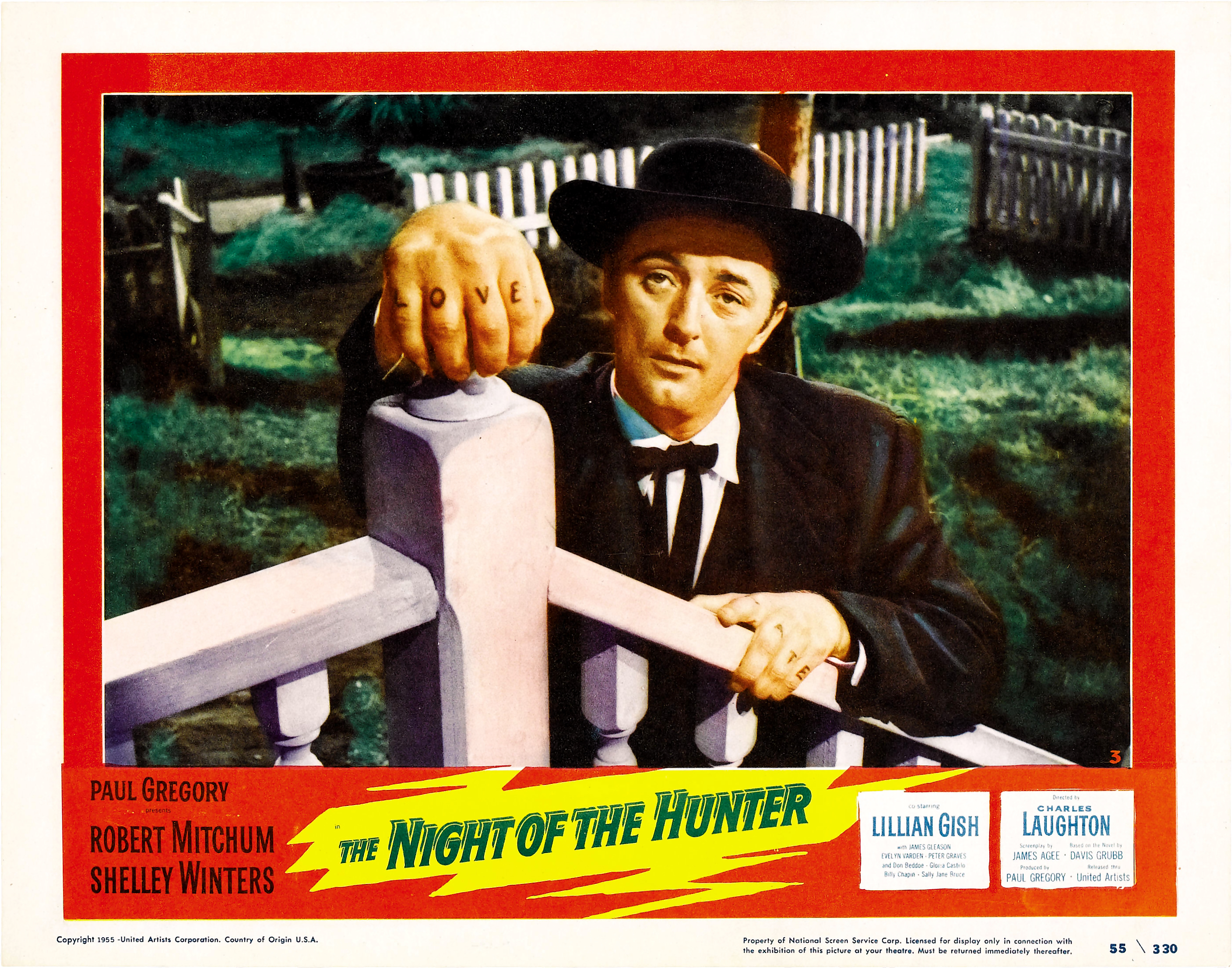
No 15. Percy Street was for a time the residence of actor Charles Laughton (1899 – 1962). No matinee idol, Laughton is probably best known for his portrayal of the Hunchback of Notre Dame though he also starred in Mutiny on the Bounty and The Barretts of Wimpole Street (see previous post). Nowadays his acclaim, as far as film buffs are concerned, rests on his solitary directorial effort, the startling Night of the Hunter.

220px-Charles_Laughton-publicity2

poster_thenightofthehunter

Next door at No.14 lived (though not contemporaneously) the poet, Coventry Kersey Dighton Patmore (1823 – 1896) about which nothing was quite as interesting as his name.

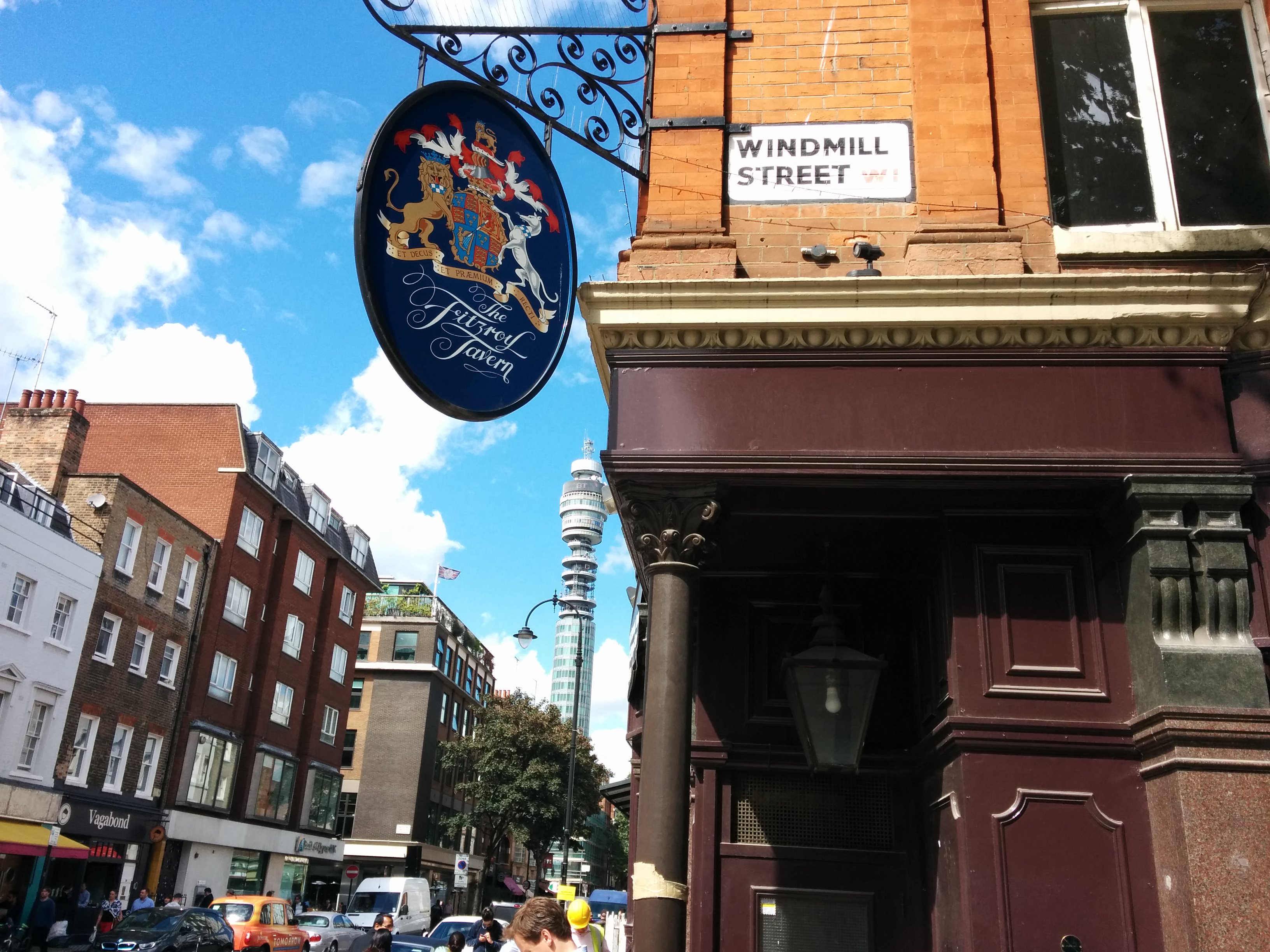
On the corner of Charlotte Street and Windmill Street is the famous Fitzroy Tavern which is unfortunately closed for major refurbishment until 2016 which means that the pub of the day is the nearby Rising Sun, quite possibly the last unreconstructed boozer in the vicinity. Which means that there are free tables and who can argue with just over a tenner for a pint of Czech lager and a plate of ham, egg & chips.

IMG_20150828_131002 IMG_20150828_140353

Had I hung on till I got round the corner into Rathbone Place I could have drunk in the footsteps of Dylan Thomas and George Orwell in the Wheatsheaf,

Stephen Street is home to the British Film Institute and in Gresse Sreet is the grandly named Fashion Retail Academy (where you can learn how to flog frocks in Next).

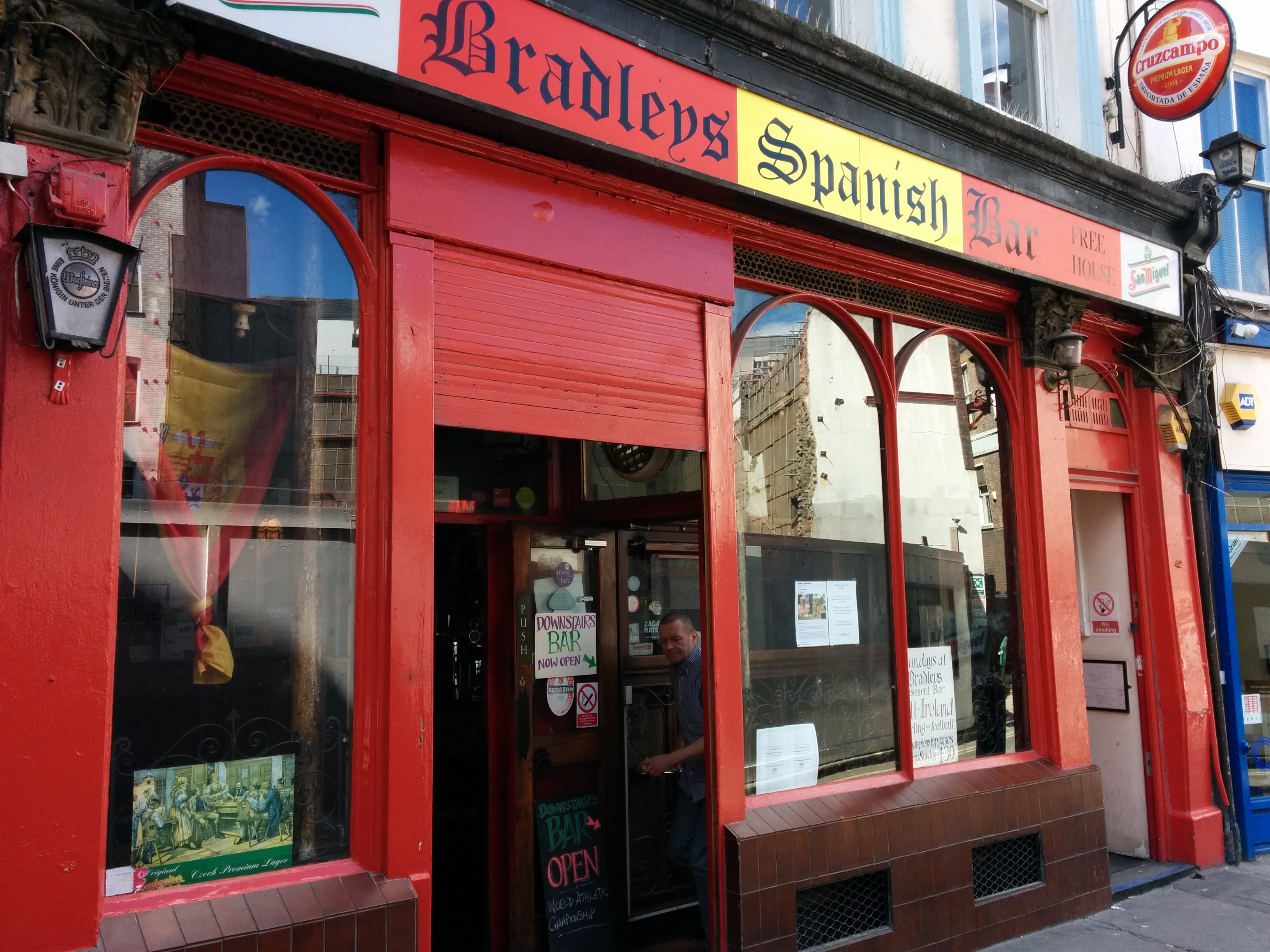
Duck back down onto Oxford Street and up Hanway Street leading to Hanway Place. On the former lies Bradleys Spanish Bar which is for my money the best drinking place within coughing distance of Oxford Street and one of the few bars that still has a working jukebox.

IMG_20150828_141751

North again on Newman Street and into Mortimer Street. The architecturally striking Radiant House occupies nos. 34-38 though there seems to be a dearth of information about its origins.

IMG_20150828_144422

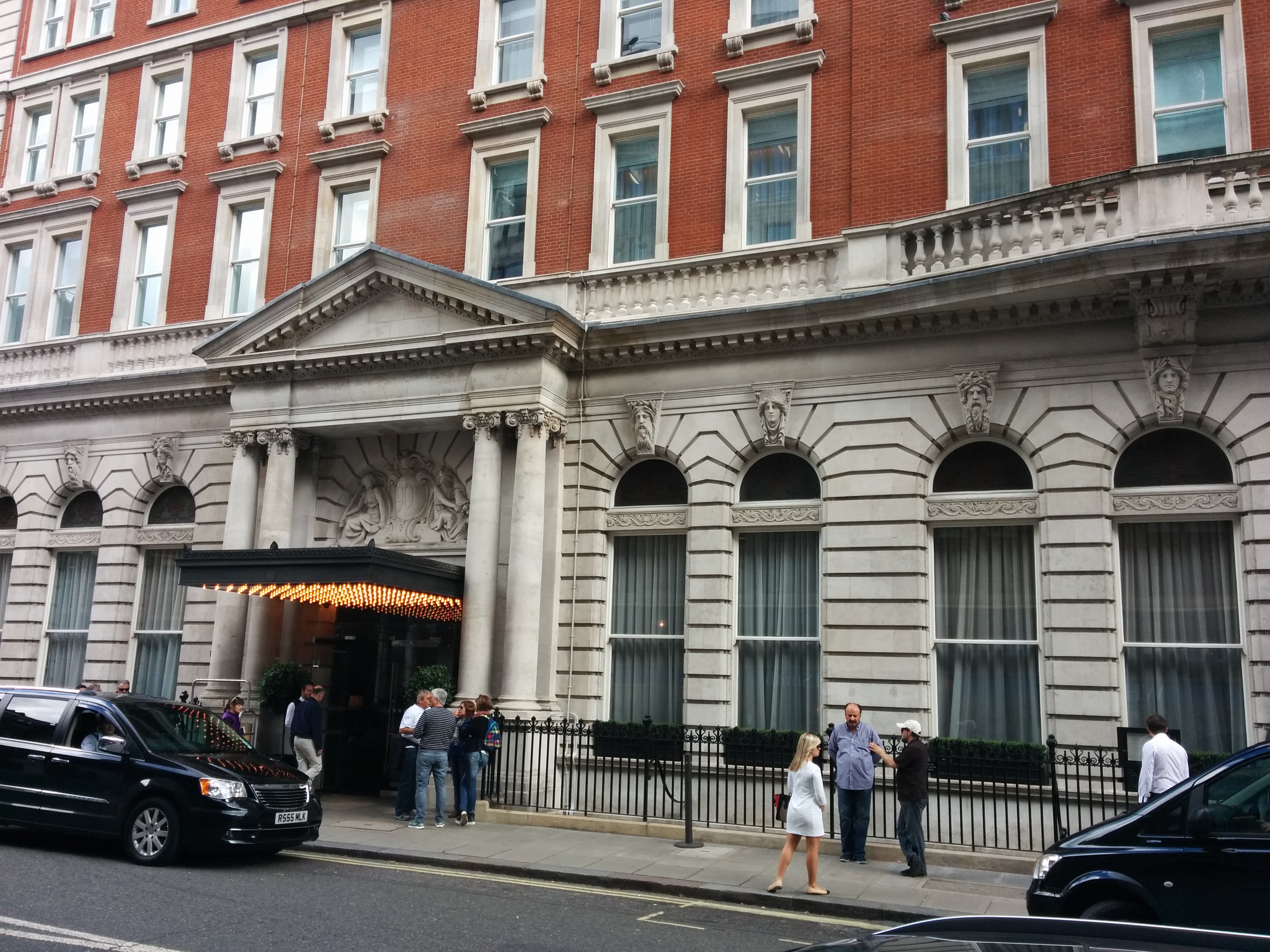
At No. 10 Berners Street is the 5 star Edition Hotel (part of the Marriott Group). The building dates from 1835 and the site has been a hotel since 1904, simply the Berners Hotel in its previous incarnation.

IMG_20150828_143421IMG_20150828_143817

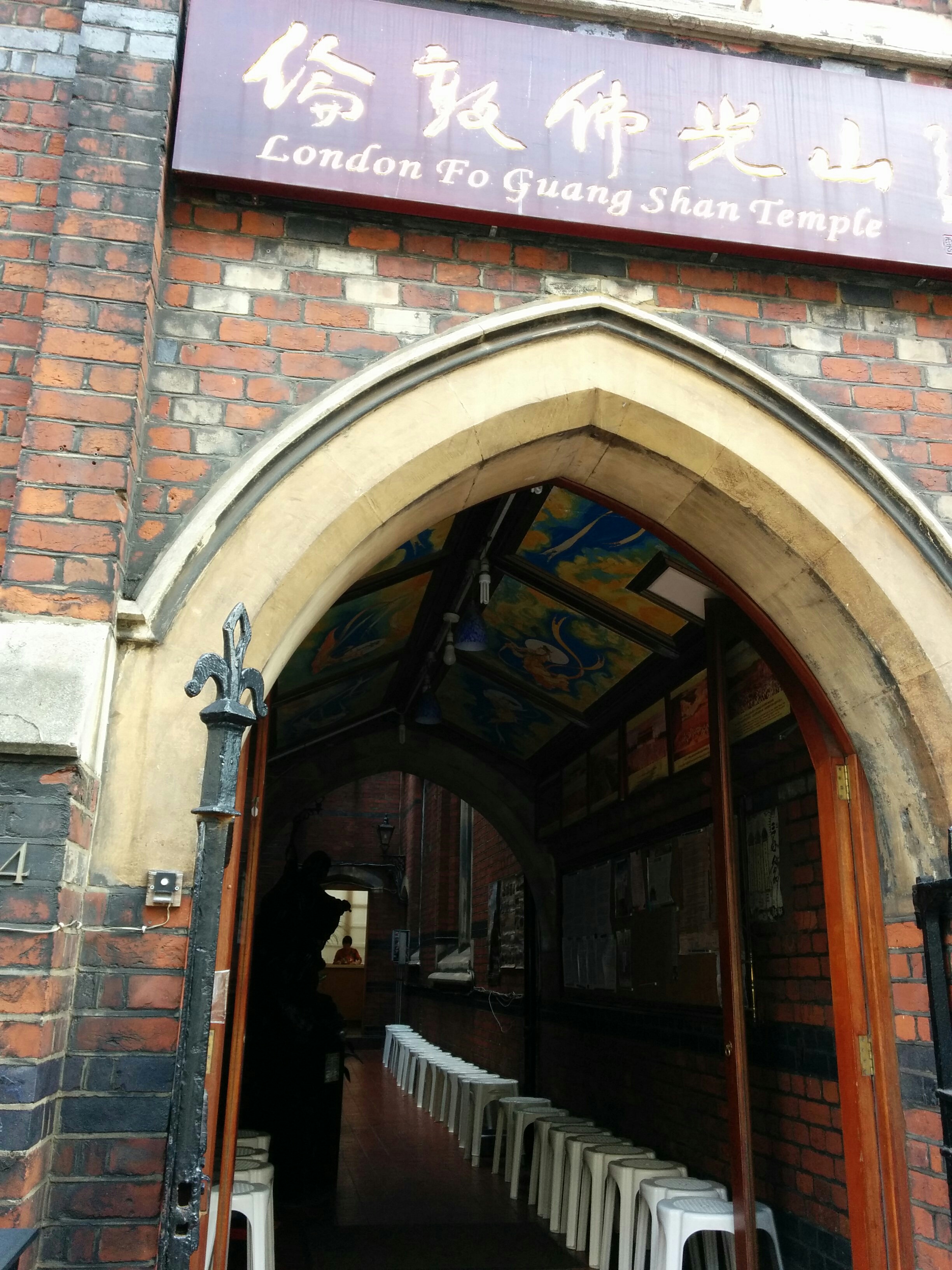
IMG_20150828_144007 IMG_20150828_151100Back up Wells Street and veering off down Marylebone Passage (above right) takes us on to Margaret Street where on opposite sides you have the Fo Guang Shan Buddhist temple (south side) and All Saints Church (north side). The former (Grade II listed) was originally the parish school attached to the latter and dates from the mid 19th century.

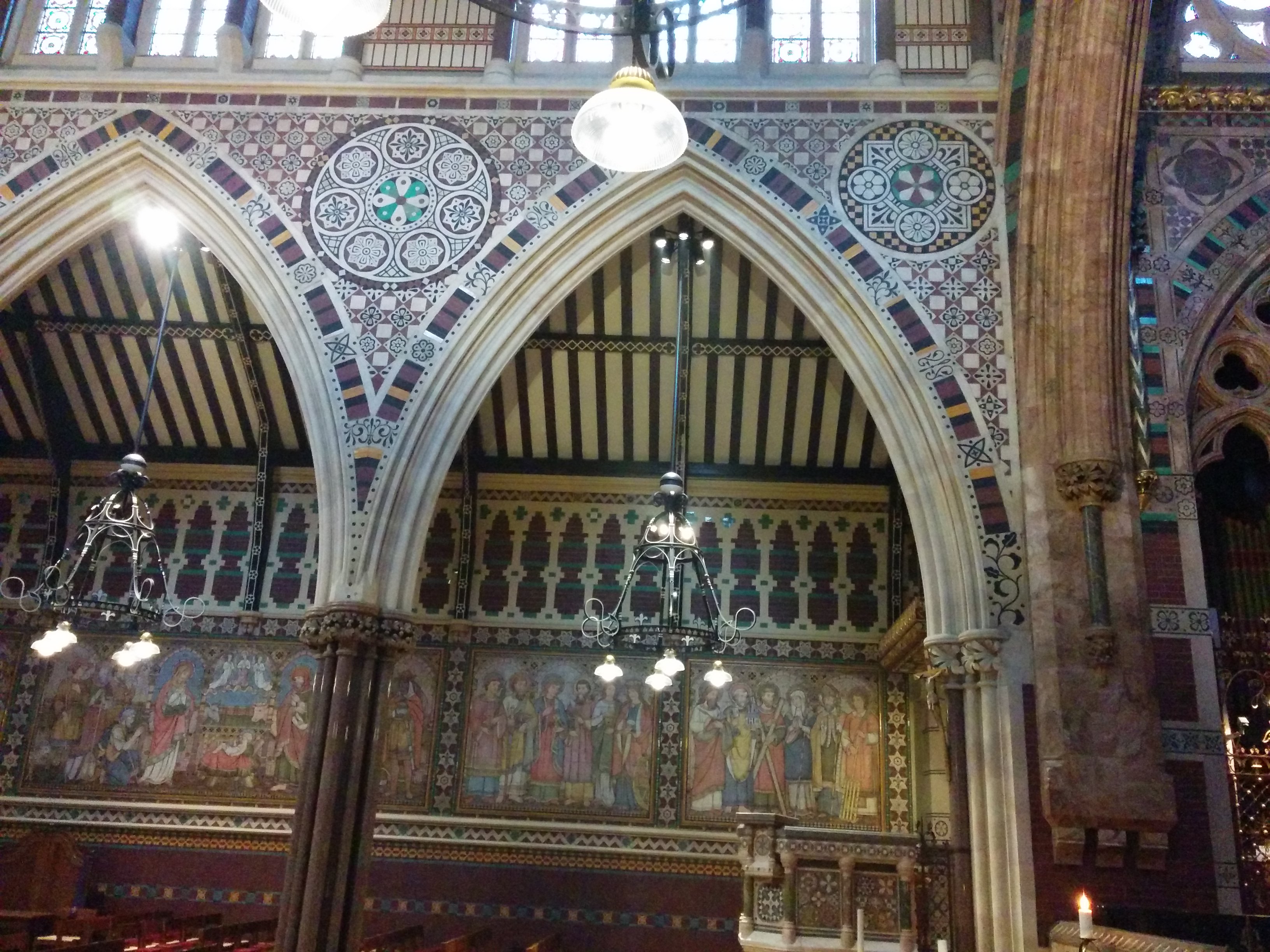
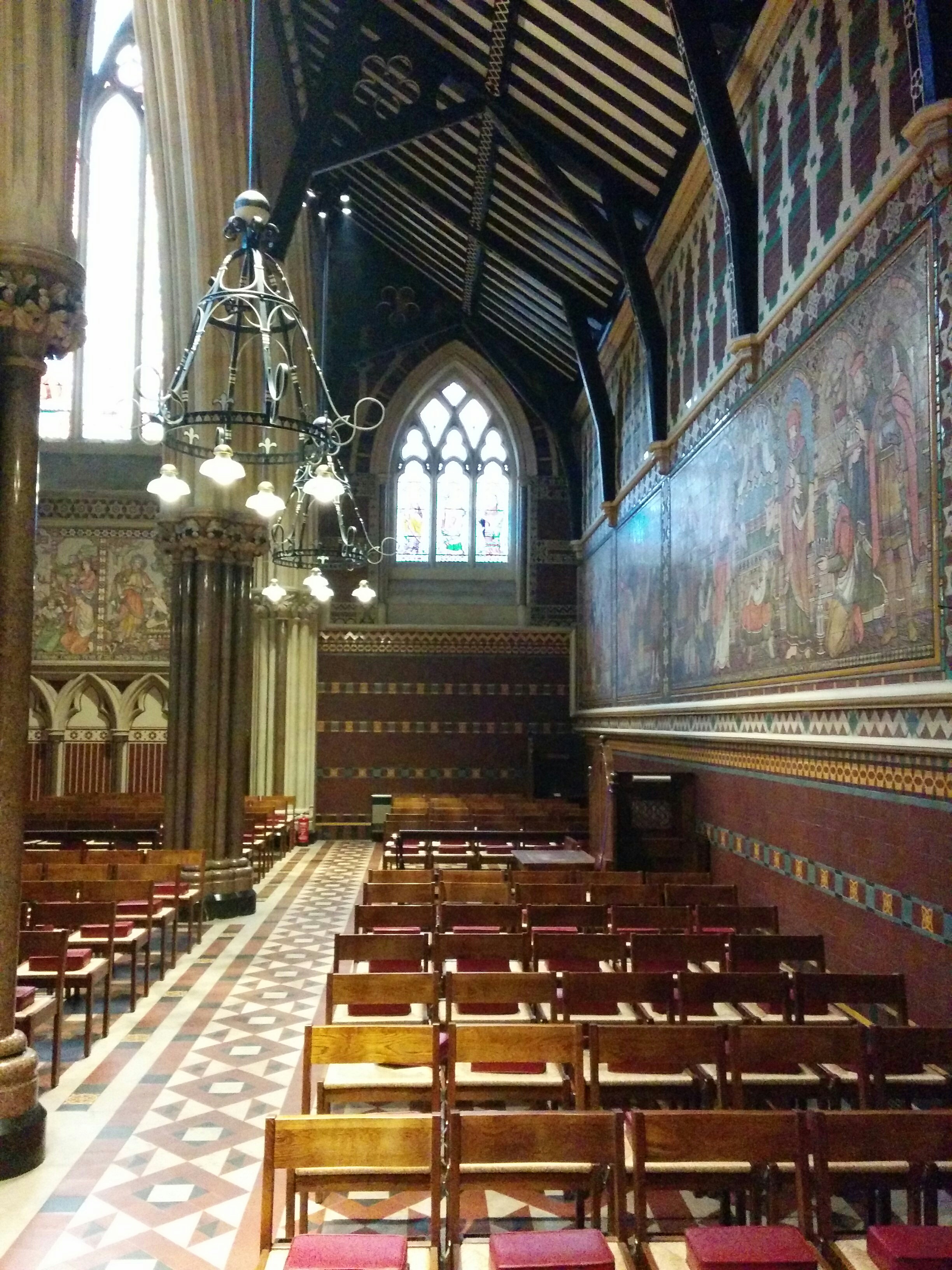
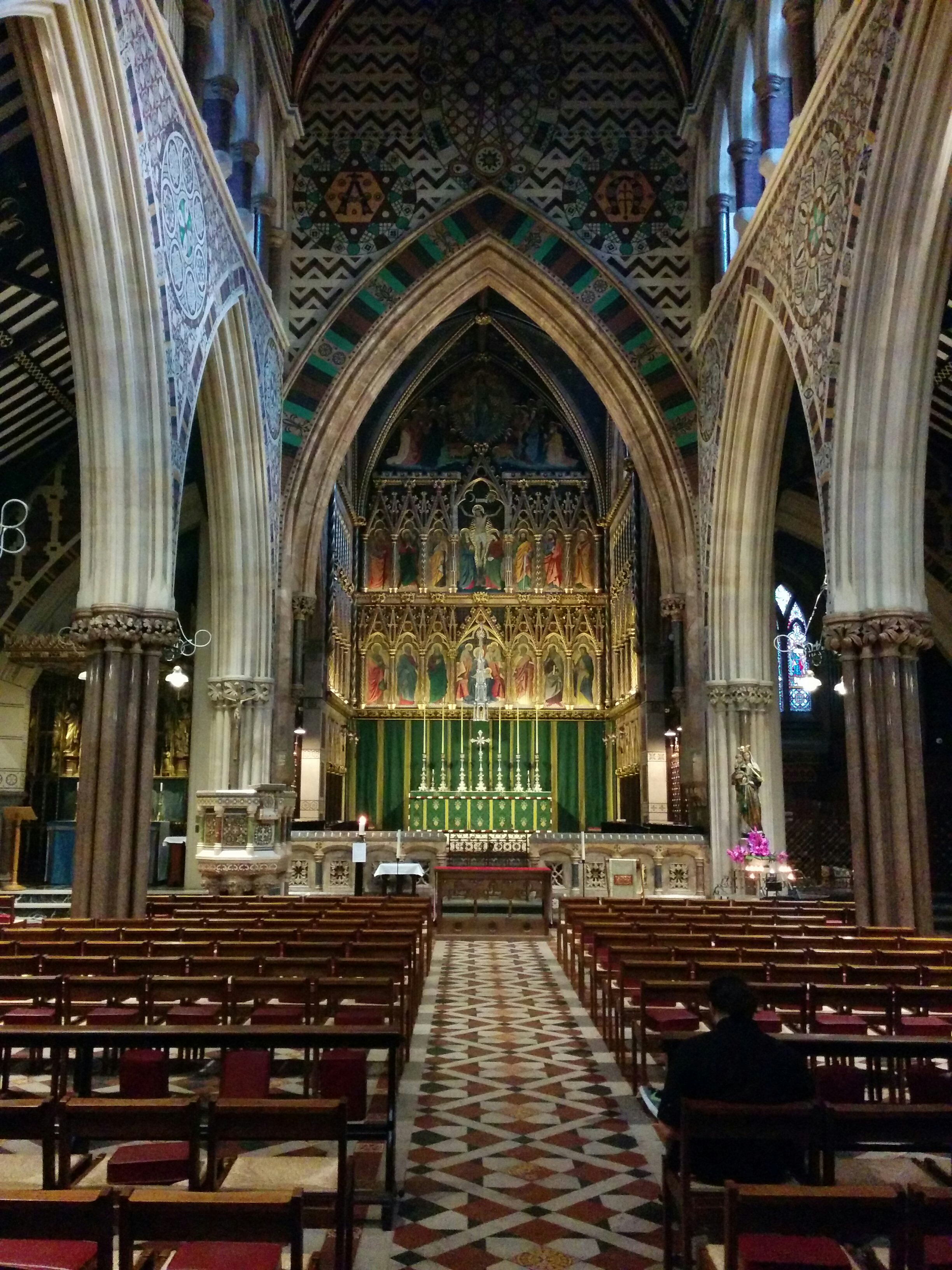
All Saints was completed in 1950 and, designed by the architect William Butterfield, is one of the landmark buildings of the Gothic revival.

IMG_20150828_150806IMG_20150828_150712The church has recently undergone renovation work which shows off the impressive decorative tiling and paintwork to fantastic effect.

IMG_20150828_150557

Next up is Riding House Street home to the College of Naturapathic Medicine where presumably one student has the same effect as several thousand.

IMG_20150828_144857

This leads on to Nassau Street, Foley Street, Candover Street, Hanson Street and Eastcastle Street.

IMG_20150828_145232 IMG_20150828_151433

Eventually arriving back on Oxford Street via the already familiar Great Titchfield Street we emerge opposite Marks & Spencer which opened here in 1938 occupying the former site of the London Pantheon which in its various incarnations since 1772 served as a theatre, opera house, bazaar and wine merchants. The present building, in iconic art deco style, was designed by by Robert Lutyens (son of Sir Edwin Lutyens) and was granted Grade II listed status in 2009.

IMG_20150828_151555