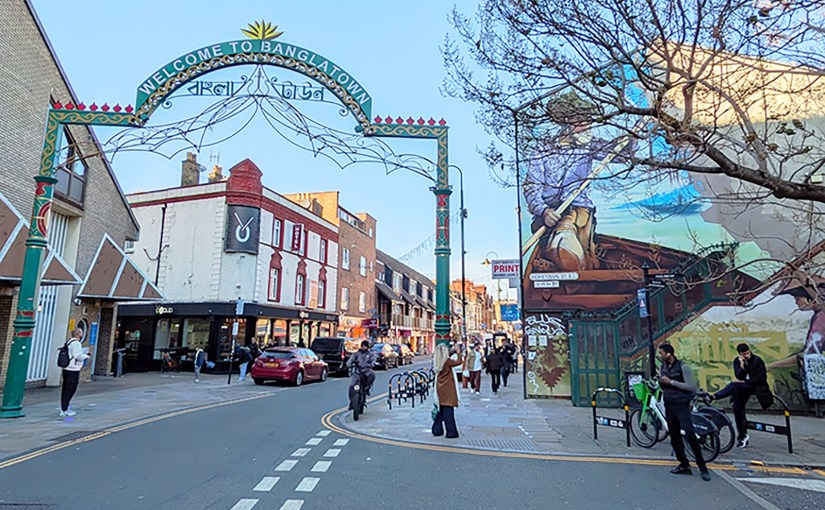
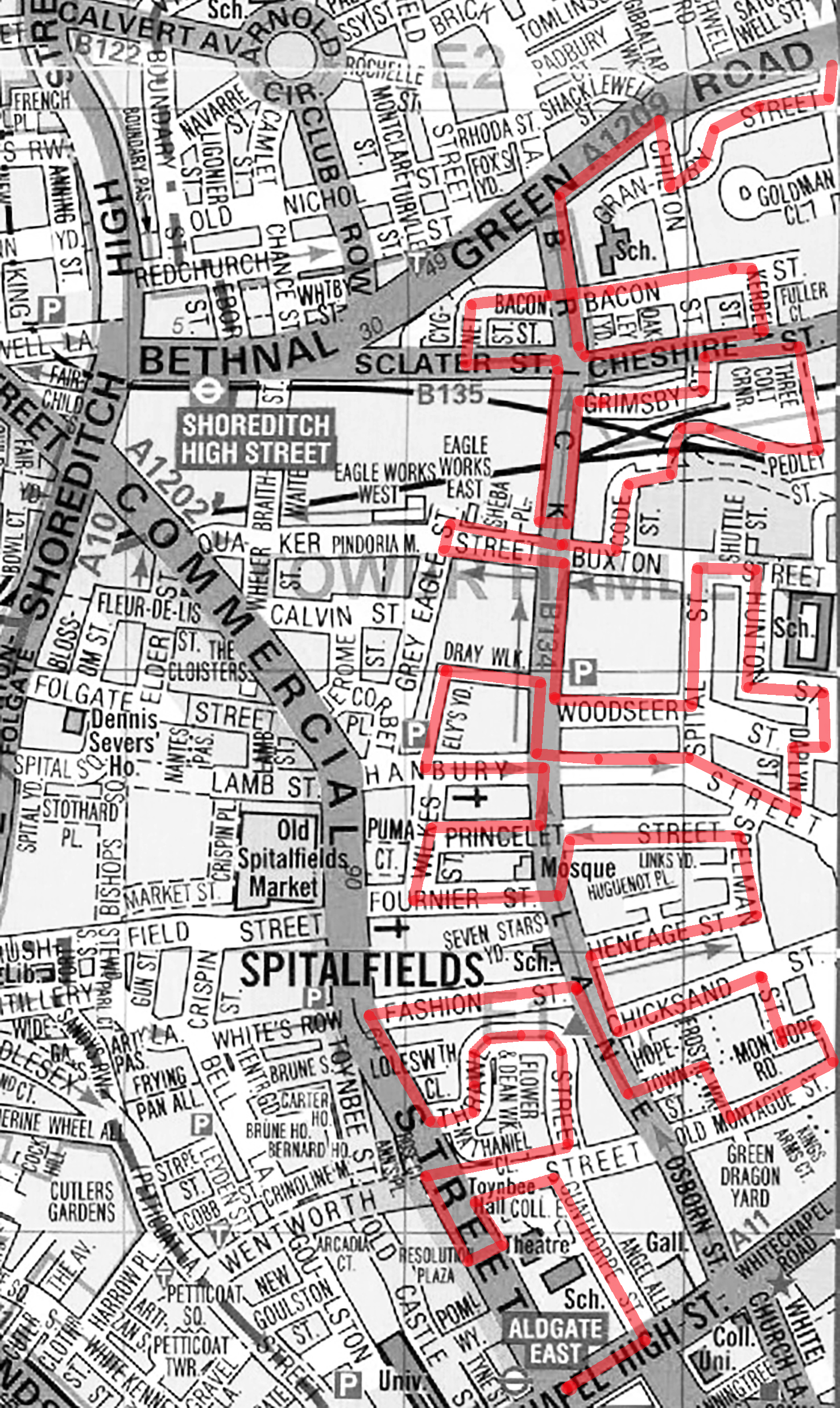
Today we’re all about Brick Lane and its surrounding streets. Known for the last few decades for its legion of curry houses, Brick Lane cuts through the heart of Spitalfields (aka Banglatown since 1997) which is home to London’s largest Bangladeshi community. The main section, which is what we’re concerned with today, runs from Bethnal Green Road in the north to (almost) Whitechapel High Street. From the late 17th century up to the late 1980’s the area was dominated by Truman’s Black Eagle Brewery which by the mid-19th century was the largest in the world, producing 400,000 barrels of beer each year, on a site covering six acres. We were last in this vicinity more than ten years ago and covered the Truman Brewery in the related post (Day 31) but since the brewery extended into Brick Lane I make no apologies for speaking to it again below.
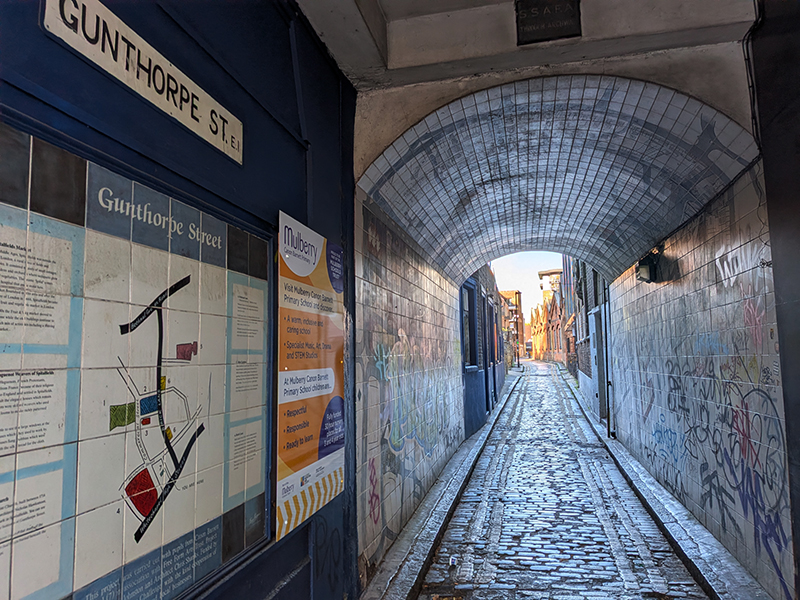
We set off from Aldgate East tube station, turning away from Whitechapel High Street up Gunthorpe Street. In 1888, Gunthorpe Street (at the time known as George Yard) was the scene of the murder of one Martha Tabram, a crime which may or may not have been the start of Jack the Ripper’s killing spree. (Officially, in so far as these things can be considered such, it’s a not). Ironically, just two years before that tragic event, provision merchant turned evangelist, George Holland, had established his ‘Sir George’s Residence for Respectable Girls’ on this very street.
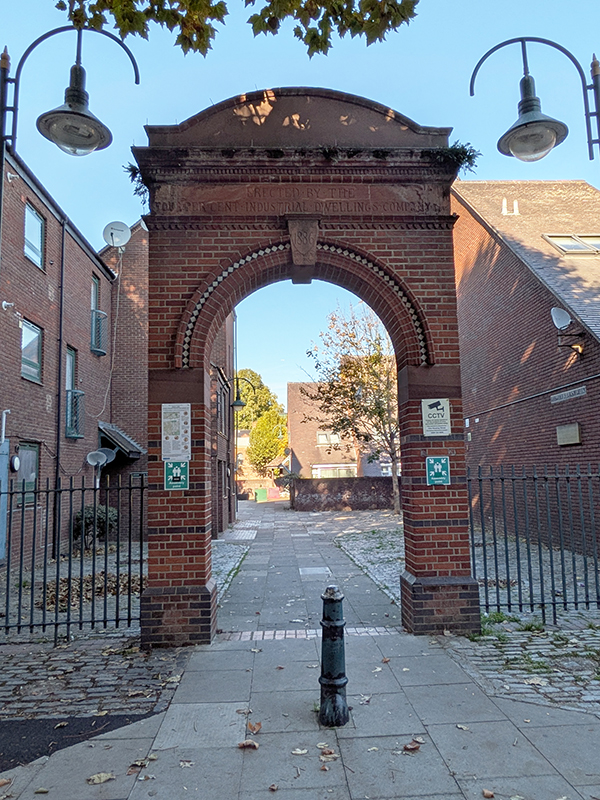
Turning left onto Wentworth Street we make our way to Commercial Street. En route, we pass another reminder of 1886, an archway erected by the Four Percent Industrial Dwellings Company to mark the entrance to the first block of homes built by the company following its foundation the year before. The company was created by Nathan Rothschild, 1st Baron Rothschild and other prominent Anglo-Jewish philanthropists including Frederick Mocatta and Samuel Montagu with the aim of providing affordable homes for poor Eastern European Jewish immigrants escaping severe slum conditions. Renamed the Industrial Dwellings Society (1885) Ltd (IDS) in 1952, the organisation still operates today as a registered social housing provider. The homes built behind here on what was originally Flower and Dean Street (now Walk), the Charlotte de Rothschild Dwellings, were demolished in the 1970’s.
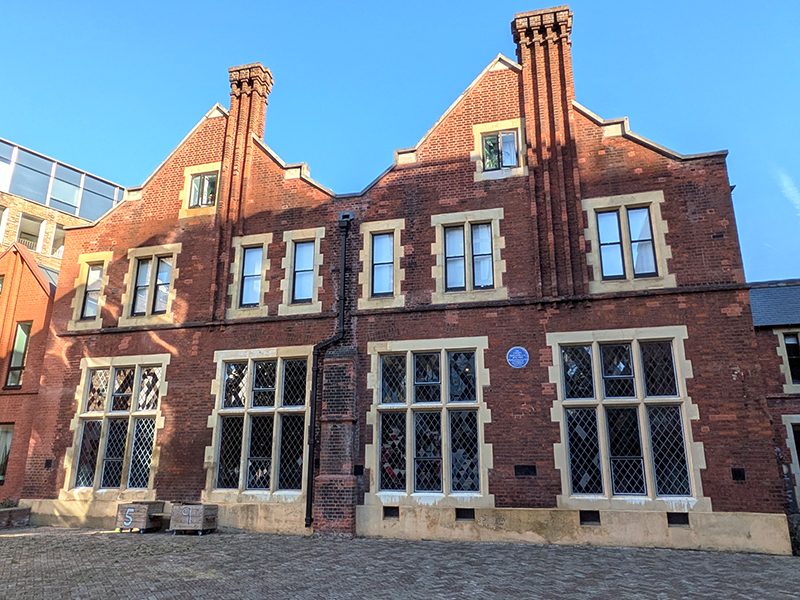
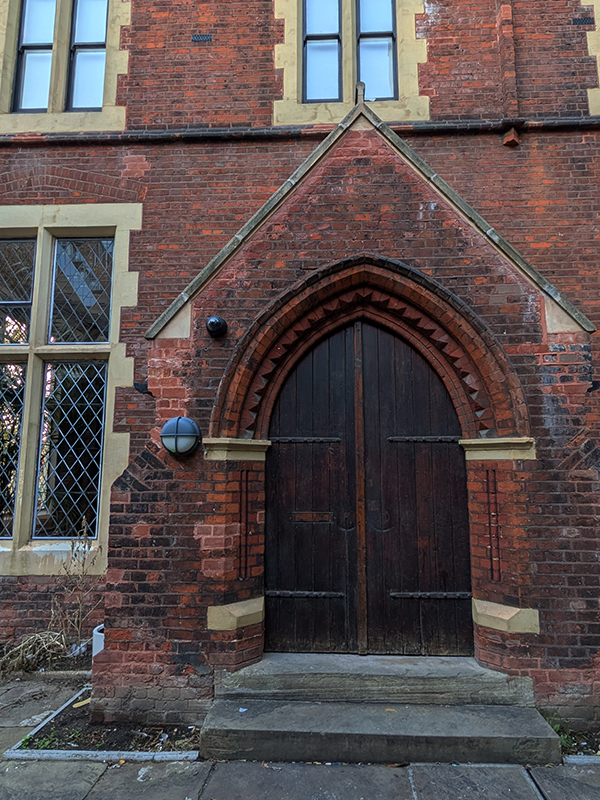
Just round the corner on Commercial Street is Toynbee Hall, a charitable institution that works to address the causes and impacts of poverty in the East End of London and elsewhere. It was established in 1884, by Samuel and Henrietta Barnett, vicar and teacher respectively, and was named in memory of their friend and fellow reformer, Oxford historian Arnold Toynbee, who had died the previous year. It was the first university-affiliated institution of the worldwide settlement movement – reformist social agenda that strove to get the rich and poor to live more closely together in an interdependent community. Among those who volunteered at Toynbee Hall before going on to enjoy major political careers were Clement Attlee and William Beveridge. Following his fall from grace in 1963, John Profumo devoted much of the remaining forty years of his life to Toynbee Hall. The main building was designed by Elijah Hoole in a Tudor-Gothic style and was designated a Grade II listed building in 1973. In 2020 a new building was added to function as a Community Centre.
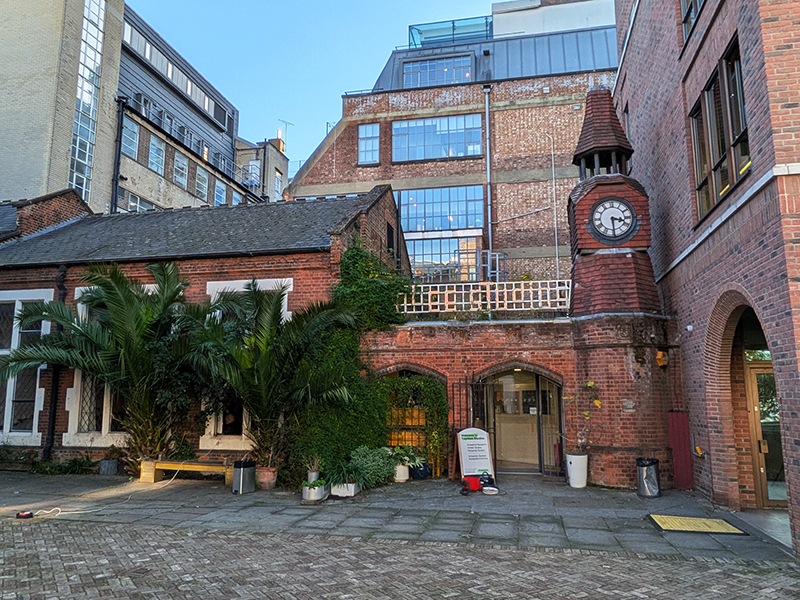
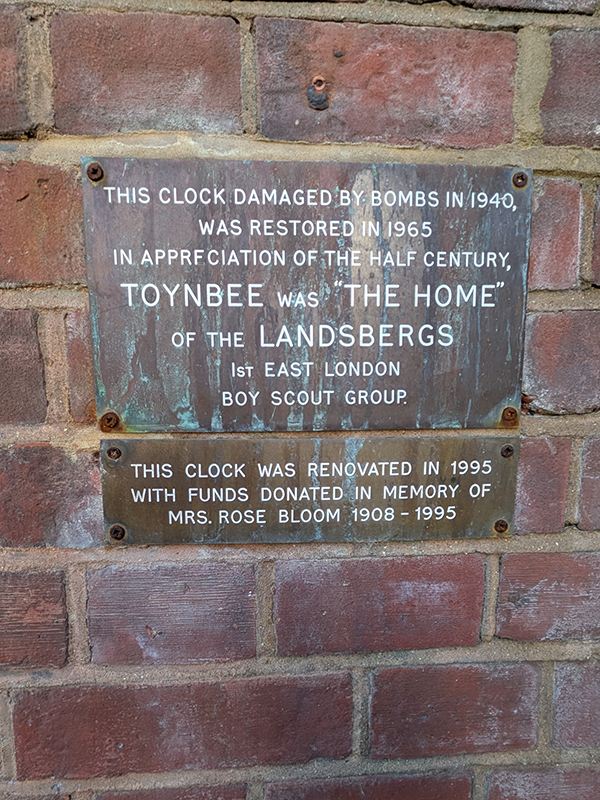
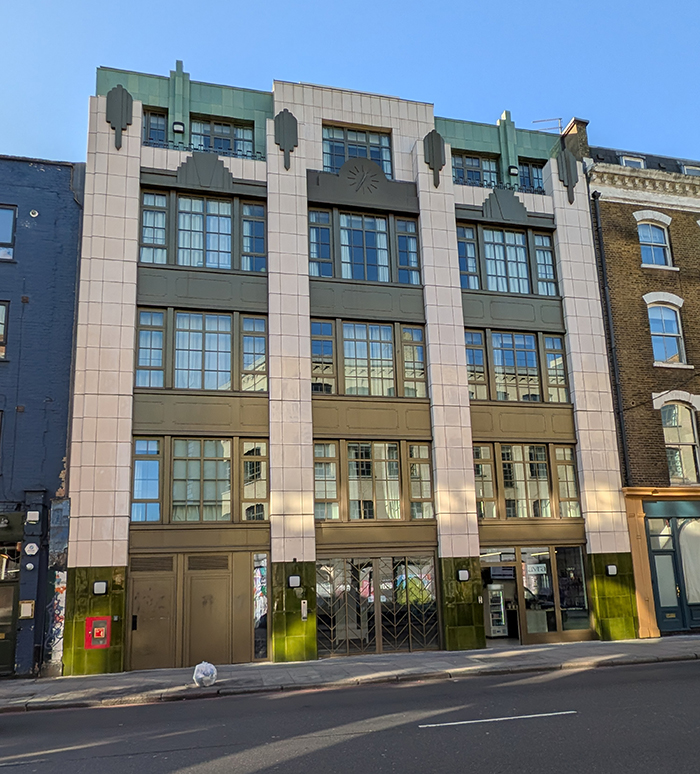
We head back down Wentworth Street and swing round the loop that is Thrawl Street to return to Commercial Street a bit further north. The Art Deco style Spitalfields Works building at no.67 on the west side was actually built as a new apartment complex by the Manser Practice in 2020.
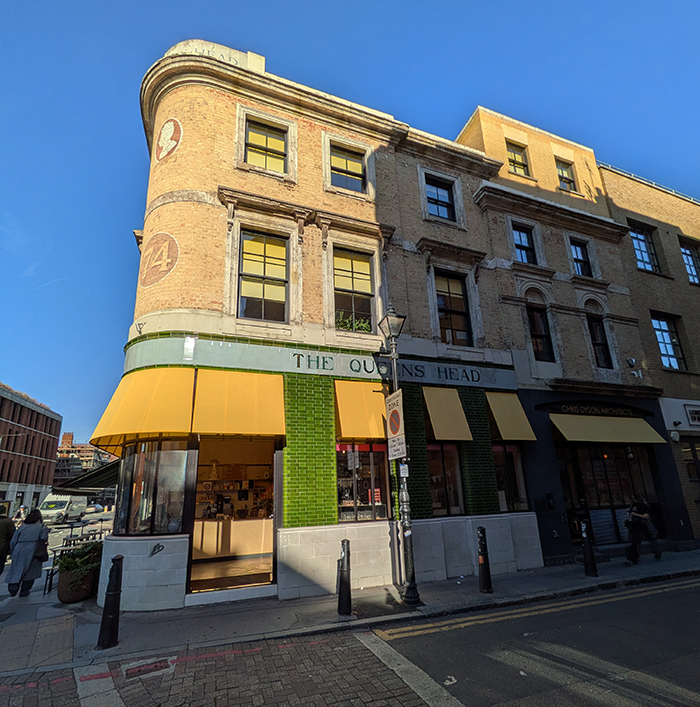
The former Queens Head pub on the corner of Commercial Street and Fashion Street dates back to the 1850’s. It ceased trading as a pub in 1927 and was subsequently taken over by a confectionery business then became a branch of the Bank of Bilbao in the 60’s and 70’s. After a long period of dereliction it was done up in 2019 and is now home to the SUBA Artisan bakery.
Fashion Street purportedly derives its name from a corruption of Fossan, after the developer Thomas Fossan who laid out this street in the 1650s. South side of the street retains the façade of the Fashion Street Arcade, also known as the Moorish Market, which was built in 1905 by the brothers Abraham and Wolff Davis. The ‘Moorish’ nickname is a nod to the eastern flourishes in the architecture, the scalloped embellishments around the windows and ogee arches. The brothers originally had plans for 250 shops with bathrooms and a reading room but when it first opened it only had 63 shops and after four years the business collapsed. The buildings were subsequently converted for industrial use and today are outposts of a couple of London universities. The splendid façade is rightly Grade II listed.
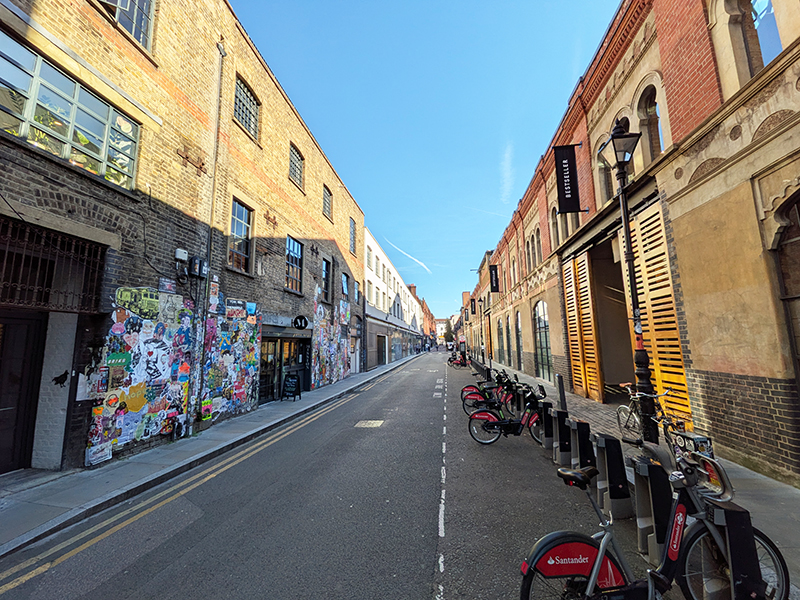
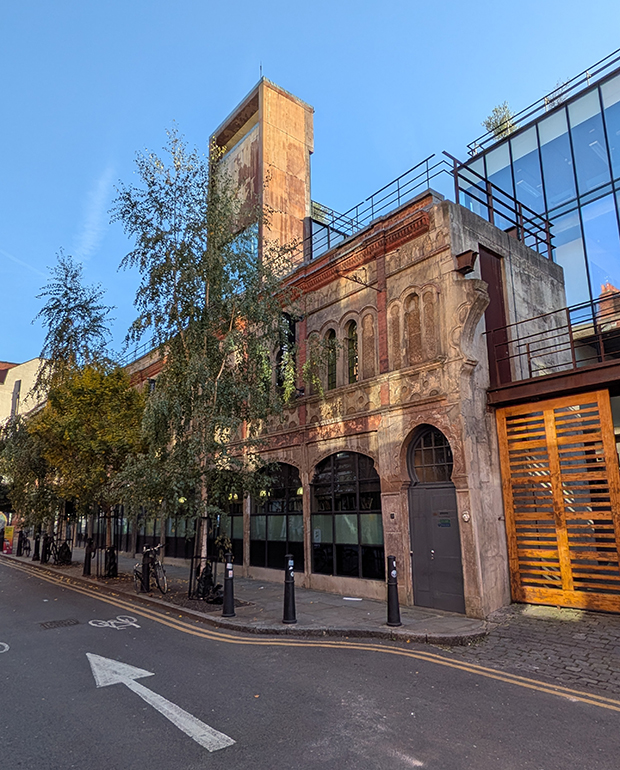
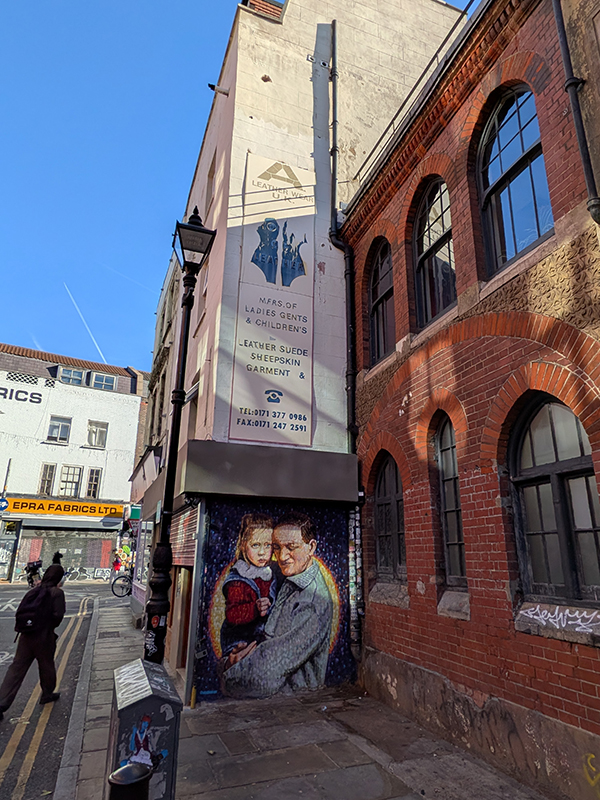
Fashion Street will take us into Brick Lane for the first time. Brick Lane started life as Whitechapel Lane and derives its current name from the brick and tile manufacture which started here in the 15th century. Successive waves of immigrants settled in the area. In the 17th century, French Huguenot refugees moved into this area and it became a centre for weaving, tailoring and the developing clothing industry. In the 19th century there was an influx of Irish emigrants and Ashkenazi Jews, the latter immigration continuing into the early 20th century. From the 1960s onward the majority of incomers were Bengali Muslims many from the (originally) Indian region of Sylhet which was given to Pakistan at partition but then became part of Bangladesh when it achieved independence.
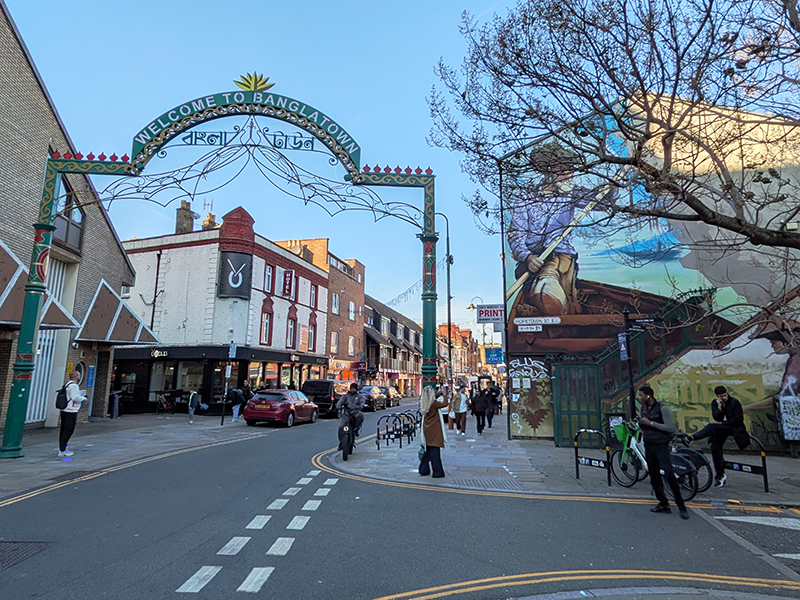
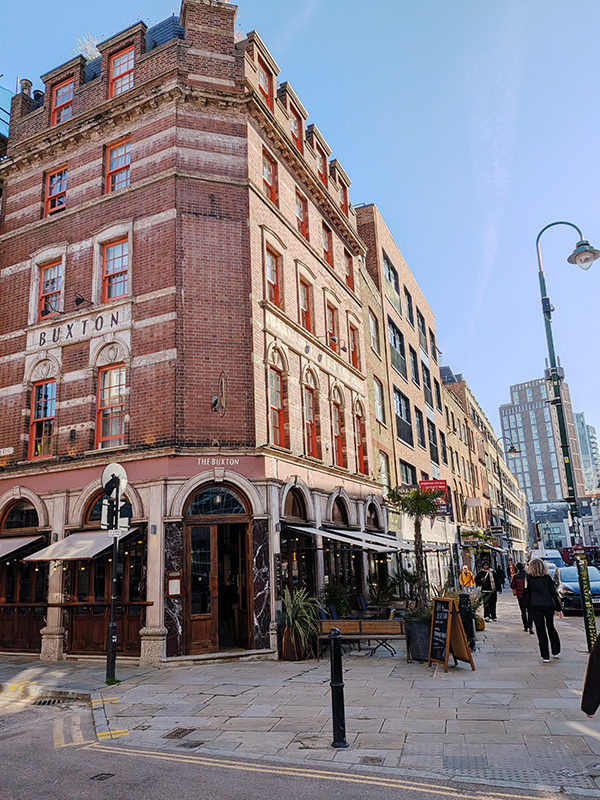
Turning south on Brick Lane we then cut through Hopetown Street and Frostic Walk to Old Montague Street. At the junction of the latter with Osborn Street (which joins the southern end of Brick Lane to Whitechapel High street) sits the Buxton. Now a bistro, wine bar, and 15-room hotel this former pub was named after Sir Thomas Fowell Buxton (1786–1845) a prominent anti-slavery campaigner and partner in the Truman, Hanbury and Buxton brewery.
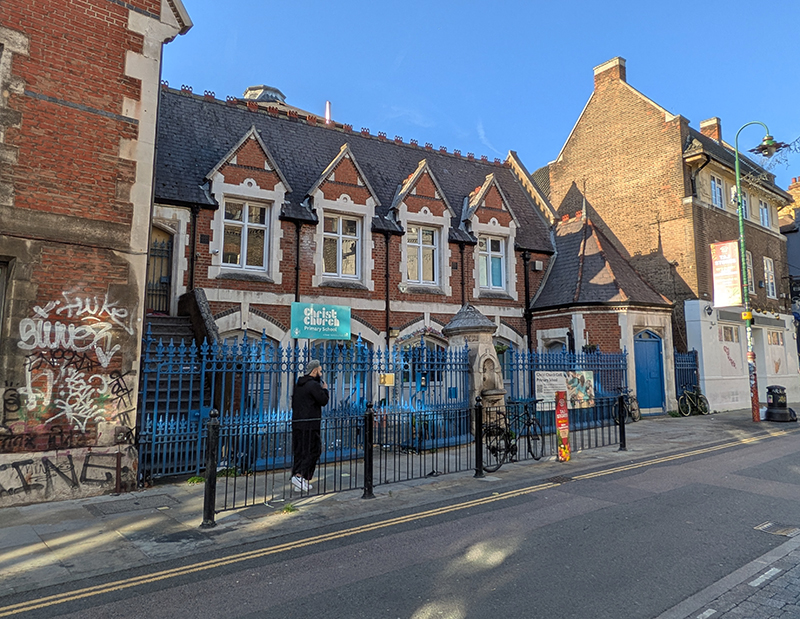
Heading back east on Old Montague Street we then follow Casson Street, Monthope Road, Spelman Street and Chicksand Street back to Brick Lane. Resuming northward our next turn-off is Heneage Street to the east. Opposite the entrance to this is, the now rather incongruously situated (given the local demographics), Christ Church CofE Primary School built in 1874.
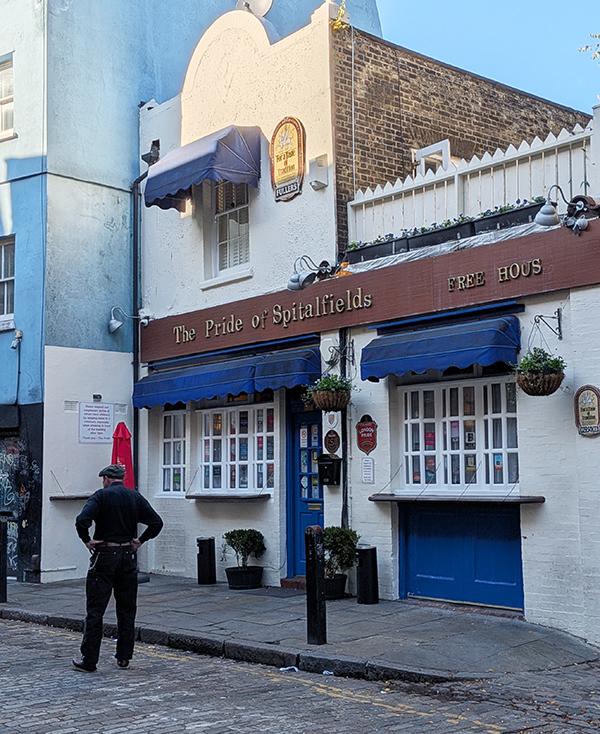
A short way along Heneage Street you’ll find the (perhaps) equally incongruous and resolutely ungentrified Pride of Spitalfields pub. This recently came 4th on Time Out’s recent list of the 50 best pubs in London (which I only found out later otherwise I might have paid a visit despite the early hour).
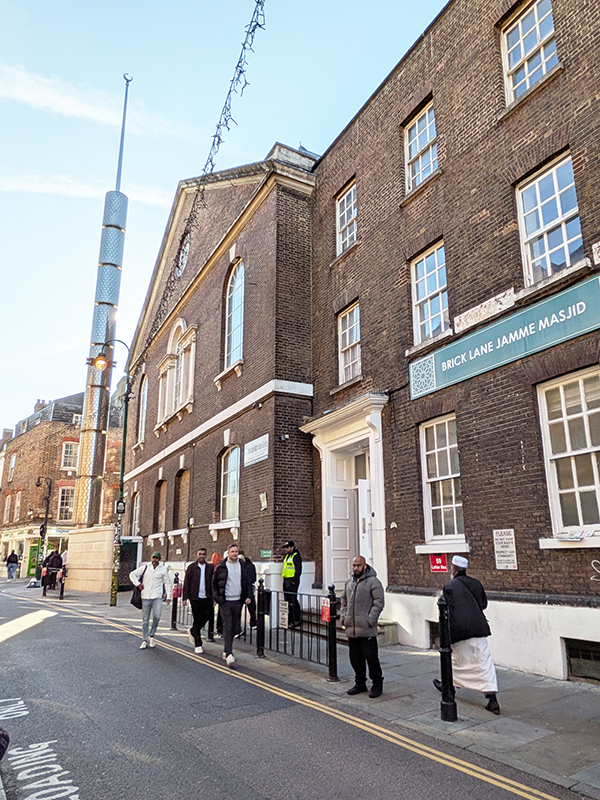
Back to Brick Lane via Spelman Street and Princelet Street emerging opposite the Brick Lane Jamme Masjid (Mosque). This building at no.59 has been home to a succession of Christian, Jewish, and Muslim communities since its construction in the mid-eighteenth century, reflecting the different waves of immigration in the neighbourhood. Established in 1743 as a Protestant Chapel by the Huguenots it was taken over in the early 19th century by the Methodists. Then in 1891 it became the Spitalfields Great Synagogue. From 1916, the synagogue’s leader was the notable Abraham Isaac Kook, later the first Ashkenazi chief rabbi of the British Mandatory Palestine. Post WWII the Jewish population gradually relocated to more distant parts of London and the synagogue closed. The incoming Muslim community eventually bought the building and it was refurbished and opened as a mosque which can accommodate up to 3,200 worshippers (including 200 women). The building has a Grade II * listing.
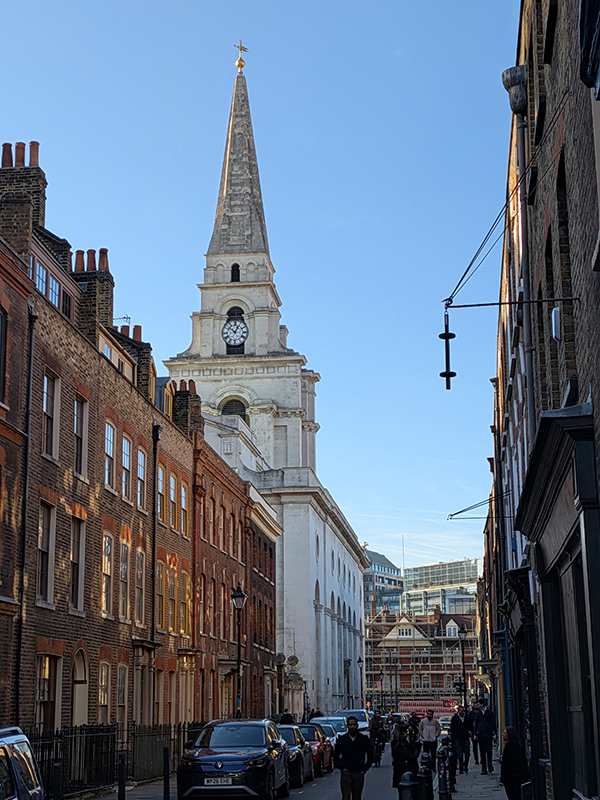
Just south of the mosque, running west, is Fournier Street. The houses mainly date from the 1720s and form one of the most important and best preserved collections of early Georgian domestic town-houses in Britain. Many were originally occupied by those wealthy French Huguenots, either as homes or business premises. In the latter case silk-weaving activities occupied the uppermost floors to gain the best light for the looms – hence the development of the unusual highly glazed lofts in these houses- while the ground floor rooms commonly served as elaborate showrooms for the finished products. Most notable current residents are the artist duo, Gilbert and George.
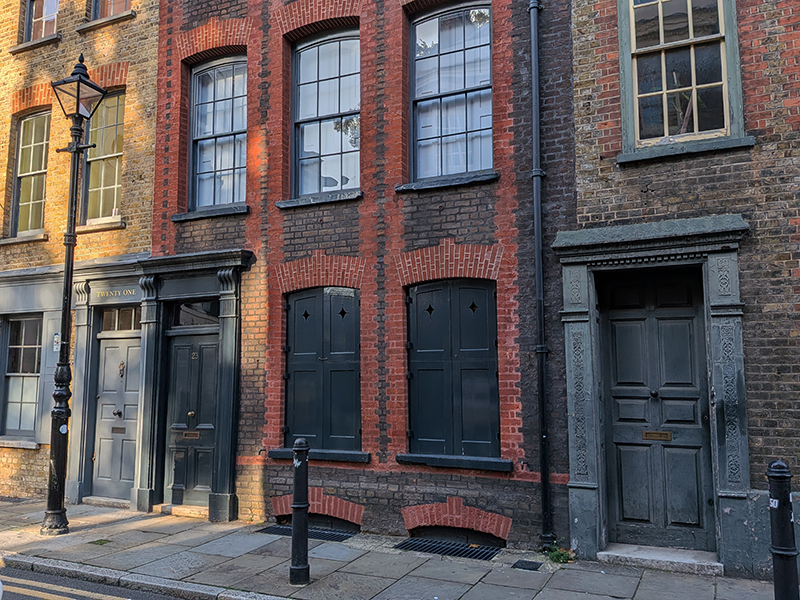
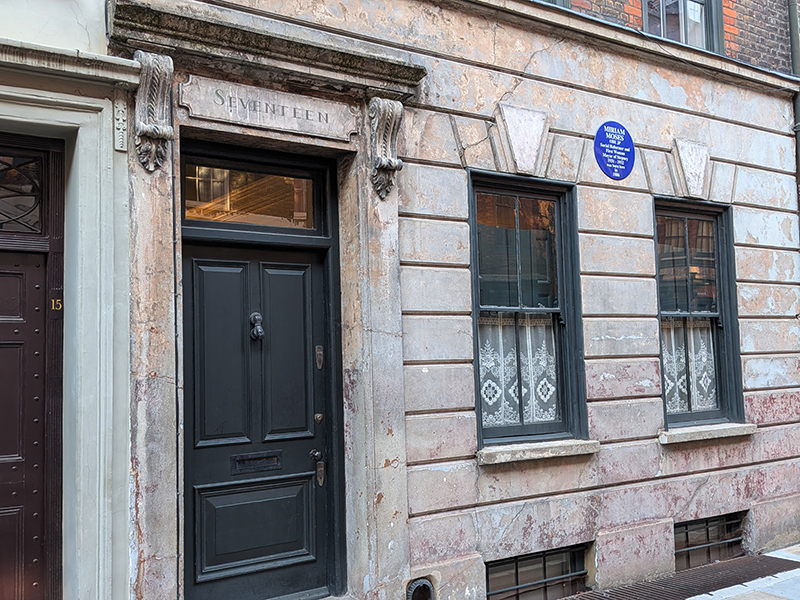
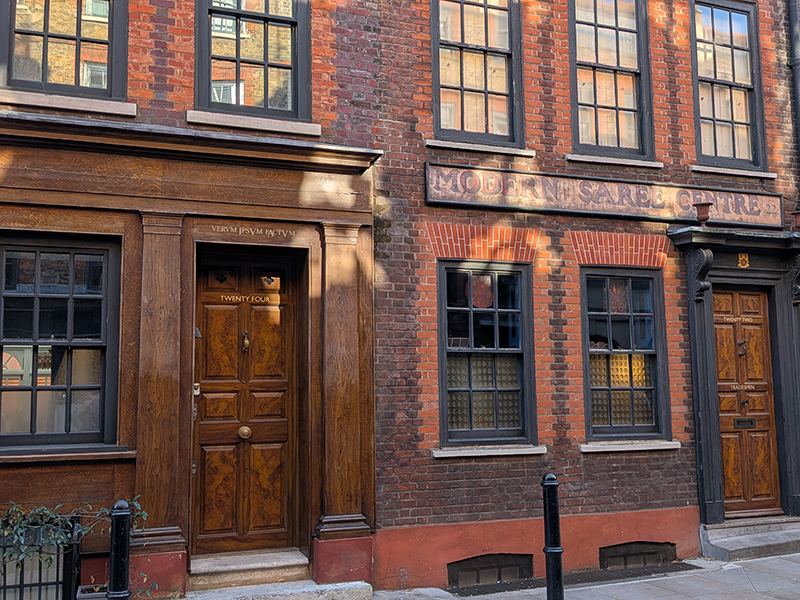
Wilkes Street connects us with the western section of Princelet Street which has a similar history to Fournier Street. At no.17 is a blue plaque recognizing this as the birthplace of Miriam Moses (1884 – 1965), a British Liberal politician, philanthropist and social reformer. She served as Britain’s first female Jewish mayor when she became mayor of Stepney. No.24 was largely destroyed by a bomb strike in 1940 and subsequently renovated later that decade. When architect Chris Dyson bought it in 1997 he spent 14 years redesigning it, including returning the façade of the house to a design of 1725 with timber sash windows and decorative brickwork.
Brick Lane is, of course, widely renowned for its Bangladeshi curry houses but there are fewer of them than there once were. Apparently, a fair number didn’t manage to survive the COVID-19 shutdown and it looks like restaurants offering alternative cuisines have filled many of those gaps. The UpMarket Food Hall, open since 2004 in part of the old Truman Brewery complex with stalls offering a multiplicity of international dishes, can’t make life any easier for the remaining restaurateurs.
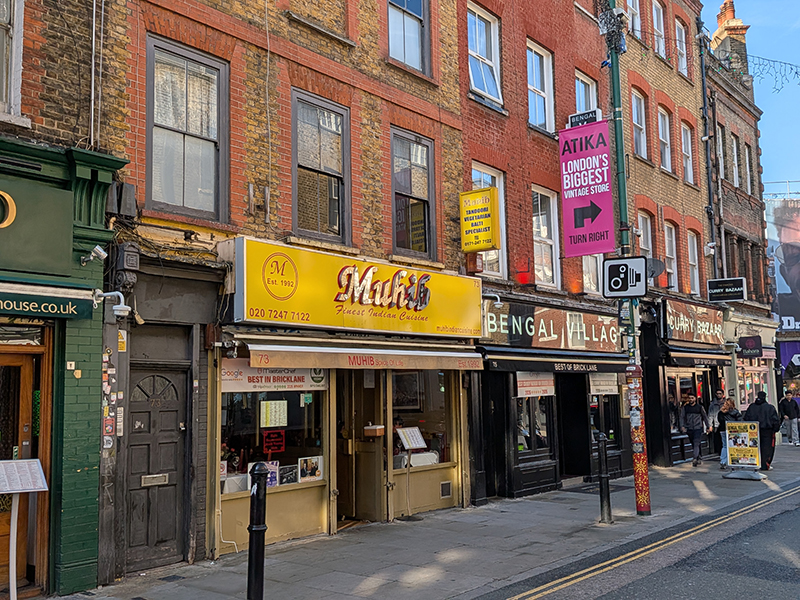
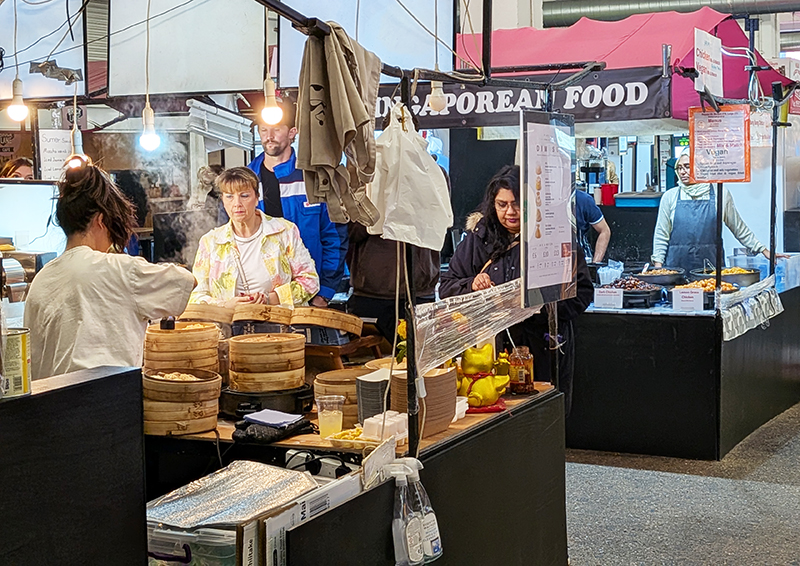
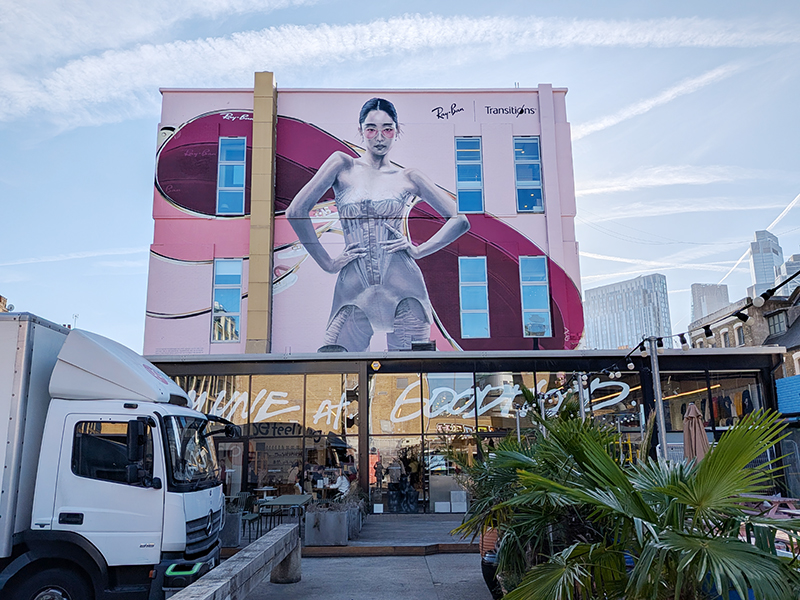
The Food Hall is on the corner of Brick Lane and Hanbury Street (named after another of the brewery’s founders of course). Off that western section of Hanbury Street, Ely’s Yard cuts through part of the brewery site and the buildings on its right side are now home to the massive Brick Lane Vintage Market (which reminds me of the old Kensington Market in its heyday though with more foreign tourists).
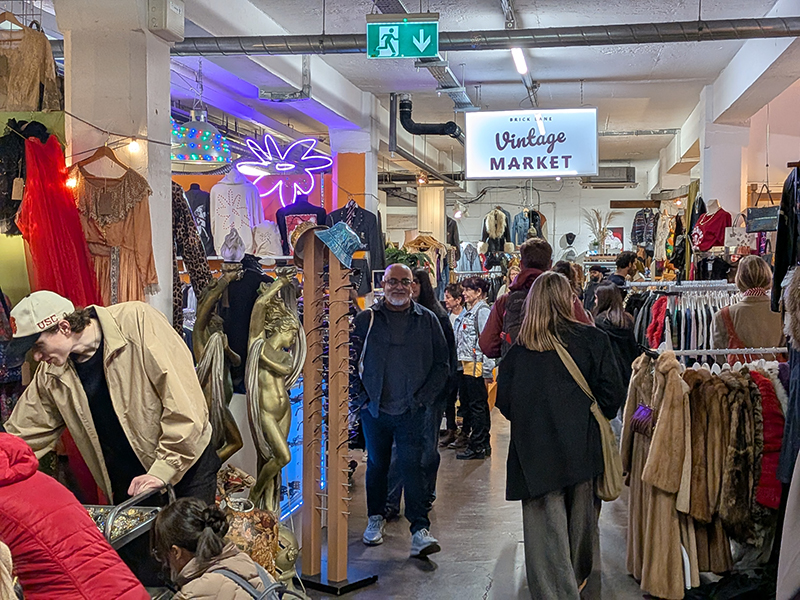
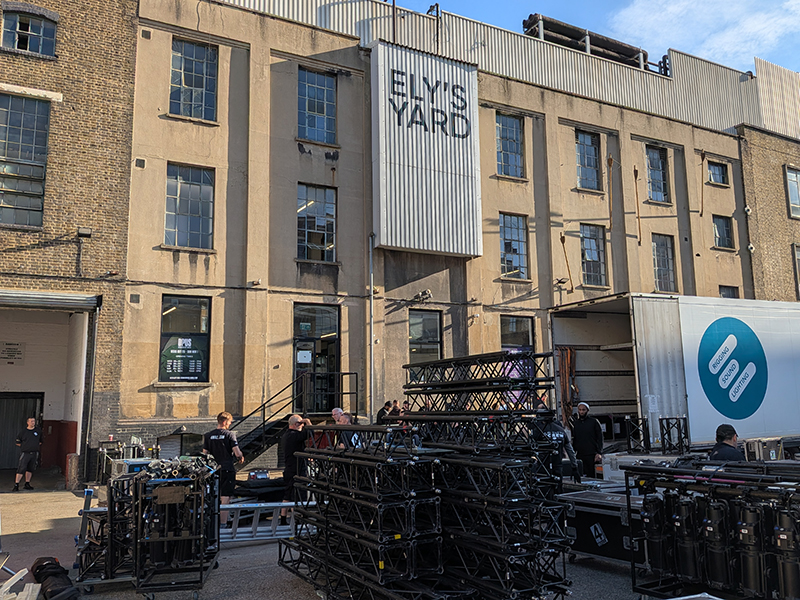
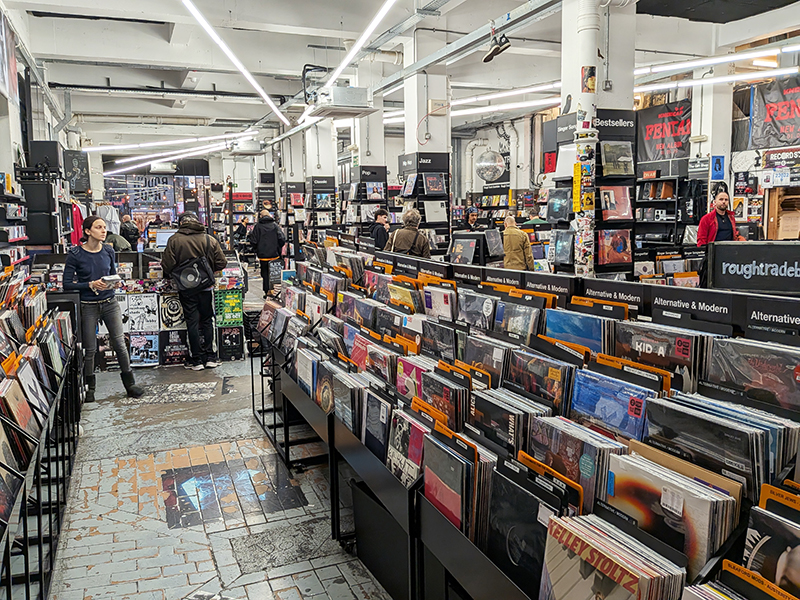
Round the corner on Drays Walk is the Rough Trade East record store, something of a mecca for vinyl enthusiasts.
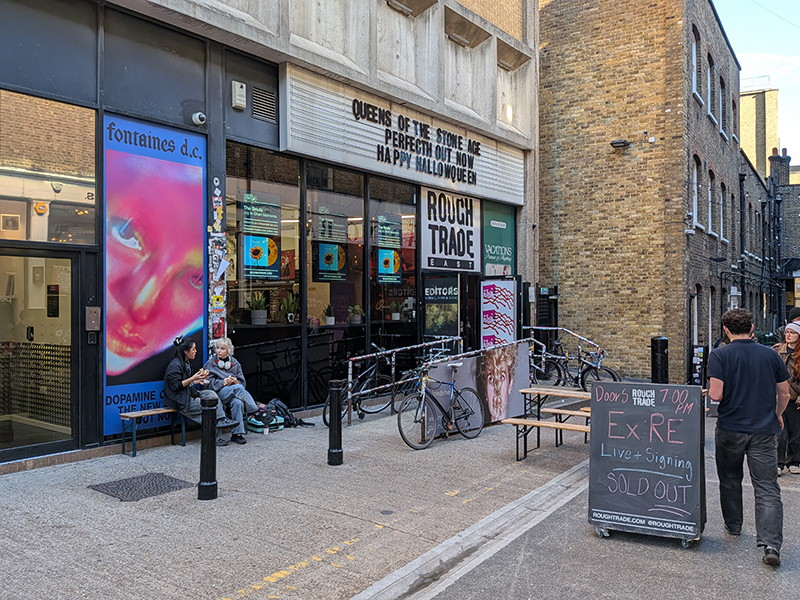
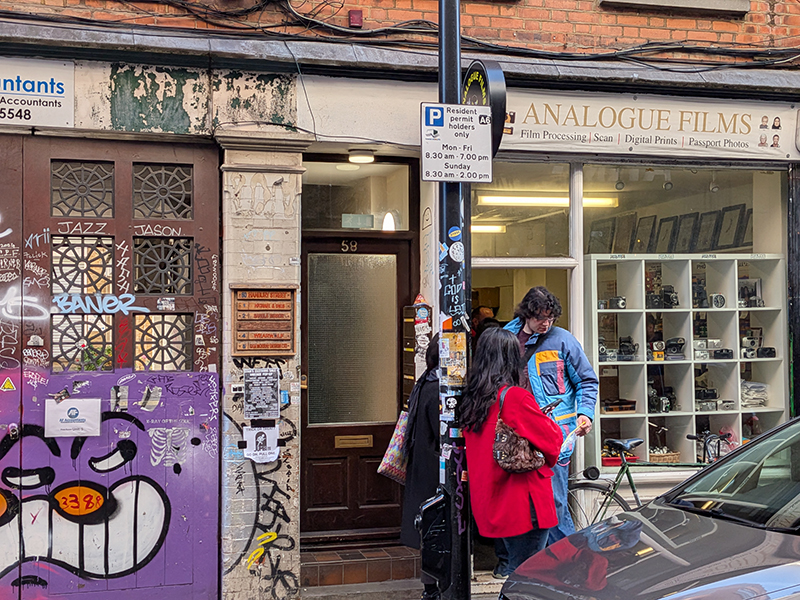
We head back down Brick Lane briefly to reach the eastern section of Hanbury Street where you’ll find a store offering Analogue Film Services and, further down, Second Home which was a pioneer in providing co-working spaces with fully-serviced amenities.
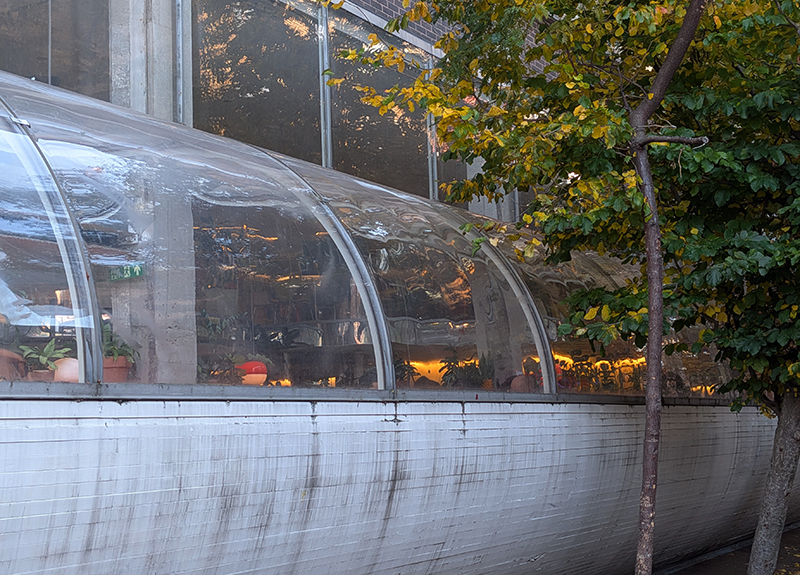
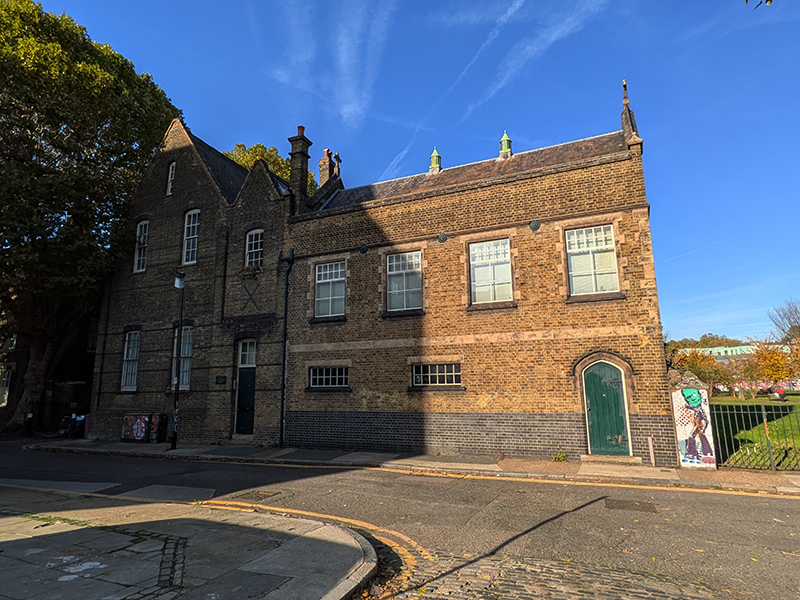
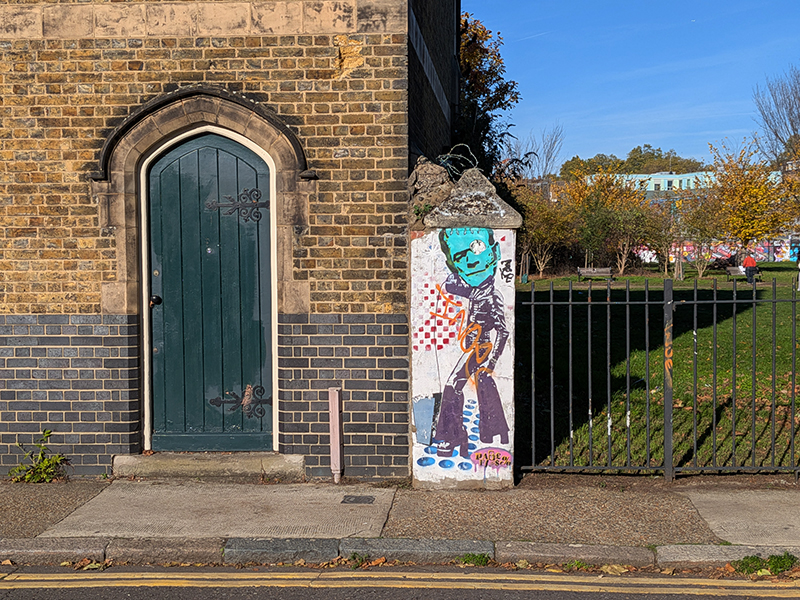
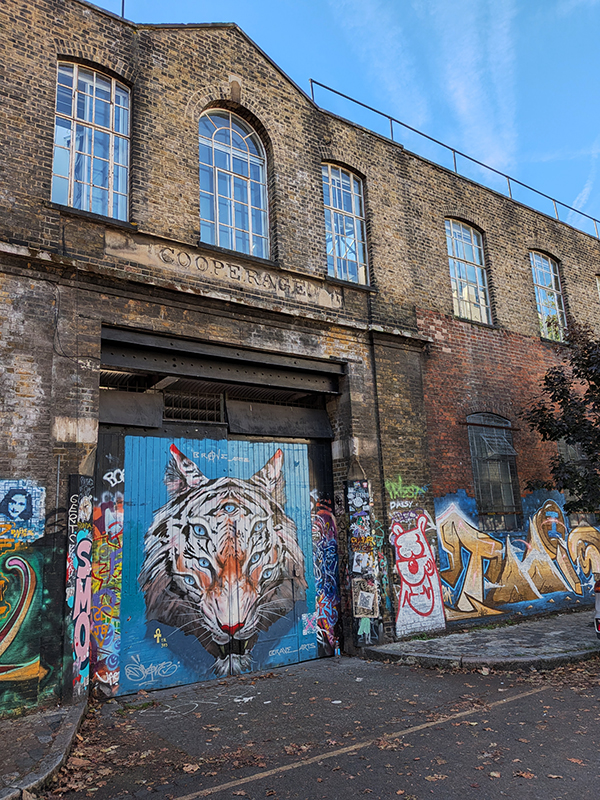
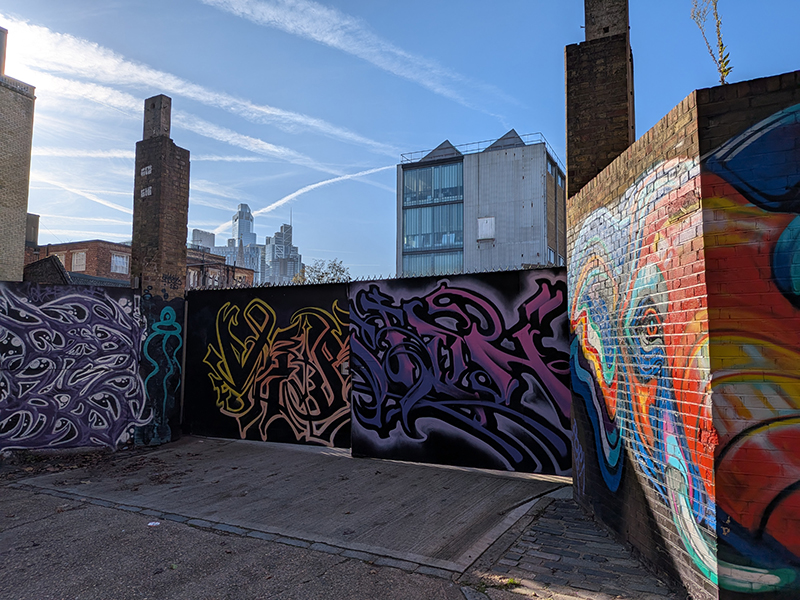
Leaving Hanbury Street via Daplyn Street, we follow Hunton Street up to Buxton Street (that man again). At the entrance to Shuttle Street sits the old St Patrick’s Roman Catholic School. These days, aside from the curry houses, the Brick Lane area is best known for its graffiti, a timely version of which adorns the school house (Halloween was a few days ago).
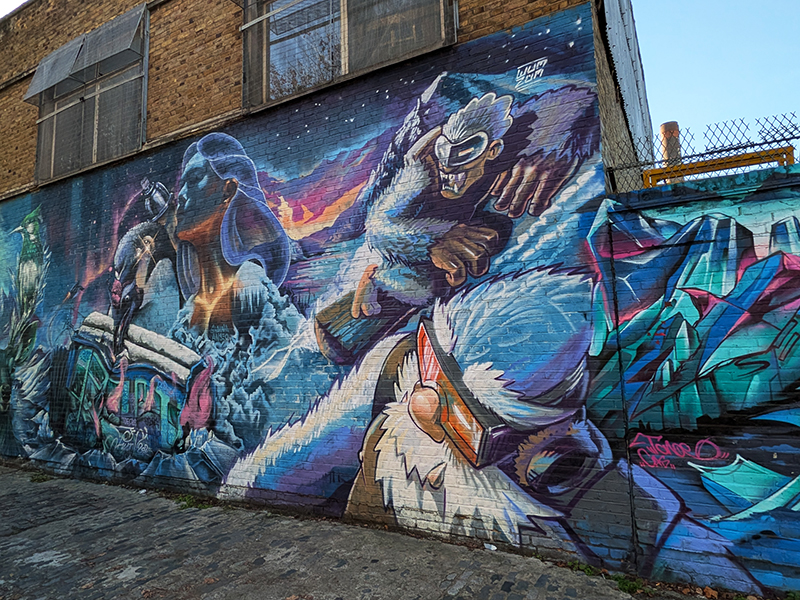
Up next, Spital Street, which takes us down to Woodseer Street and has some striking examples of that video art.
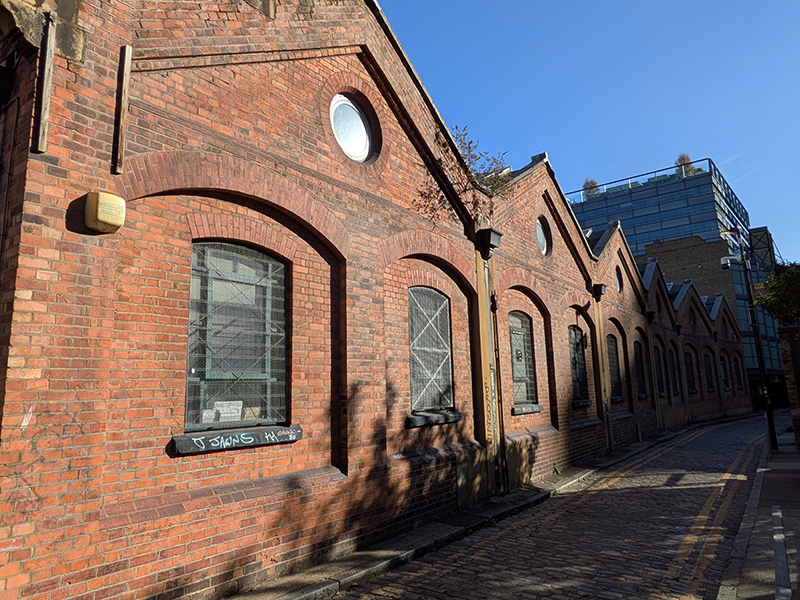
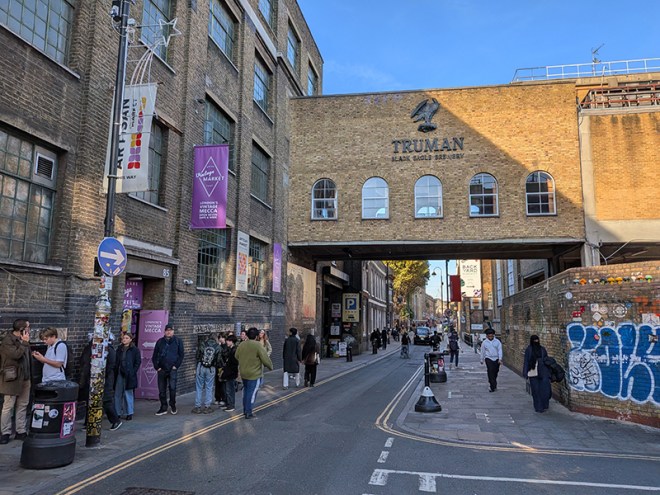
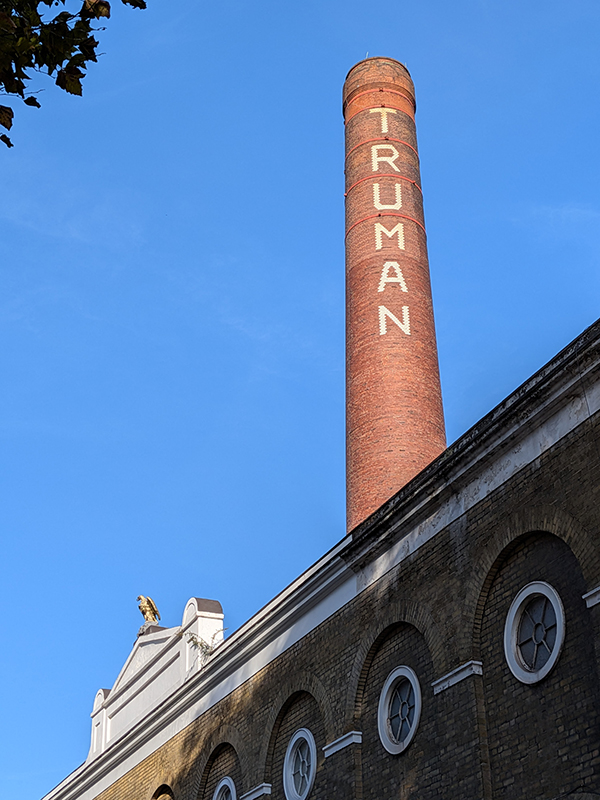
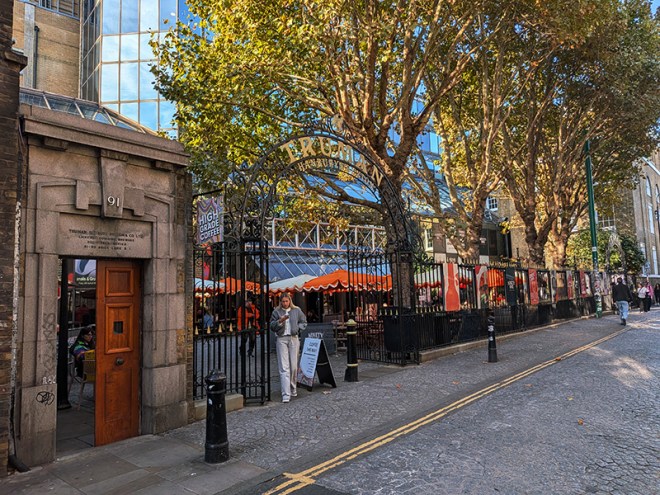
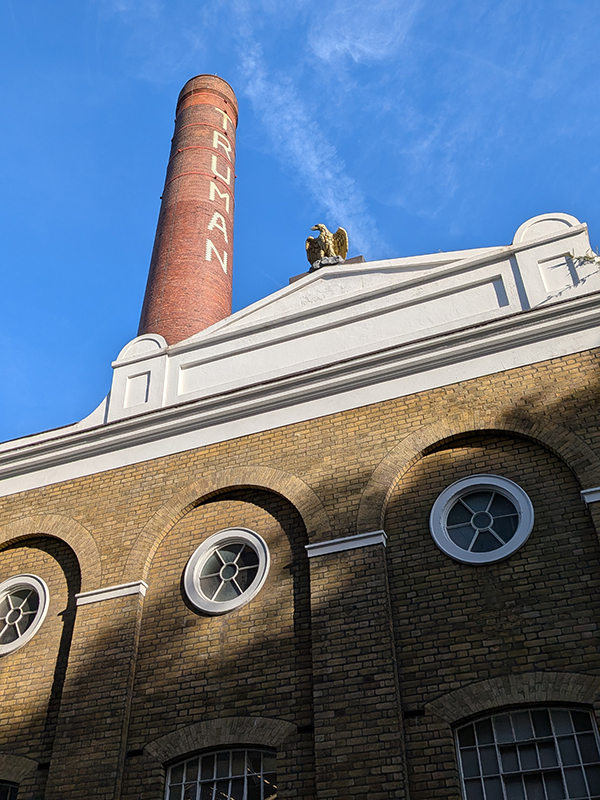
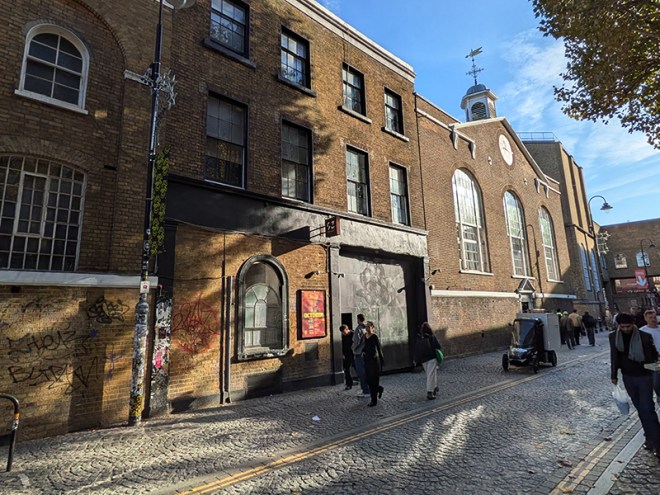
From Woodseer Street we return to Brick Lane and now we’re right in the heart of where Truman’s Black Eagle Brewery dominated the area for the best part of 300 years. (Warning: the next section contains self-plagiarism). A brewery was originally established here around 1666 and the Truman name arrived a decade or so later when one Joseph Truman took control of operations. Under the later guidance of Joseph’s younger son, Benjamin (who inspired the Ben Truman brand), the brewery expanded rapidly to become one of the largest in London. Sir Benjamin died in March 1780 and, without a son to take on the business, it passed to his grandsons. In 1789, the brewery was taken over by Sampson Hanbury (Hanbury had been a partner since 1780; the Truman family became ‘sleeping partners’) and in 1808 Hanbury’s nephew, (the aforementioned) Thomas Fowell Buxton, joined the company. By 1873 Truman had become the largest brewery in the world. Nothing lasts forever though and in 1971 Truman lost its independence when it was taken over by the conglomerate, Grand Metropolitan, and shortly thereafter was merged with Watney Mann. A switch into keg beer in the late seventies and early eighties combined with a growing consumer preference for lagers proved to be the undoing of Truman and the brewery eventually closed in 1989. In a bizarre case of things turning full circle though the Truman brand name was bought from Scottish & Newcastle in 2010 by two London businessmen who opened a new micro-brewery in Hackney Wick producing a range of cask ales. The brewery site itself has over the last twenty years been turned into a centre for the arts and creative and media industries with gallery spaces, restaurants and independent retail outlets. The 49 metre tall Grade II listed Truman Chimney still stands proudly within the Boiler House events and exhibition space. Also still standing are the brewery’s stables on the east side of Brick Lane. Some of these spaces are now occupied by nightlife venues such as 93 Feet East. On the other side of the street no. 91, the former Brewmaster’s House (also Grade II listed), is now a pub serving the modern incarnation of Truman beers.
Having taken a look at the eastern strand of Buxton Street we cross over Brick Lane again and continue on its western stretch as far as Code Street. This runs alongside Allen Gardens as far as the railway then a footpath takes us east to Pedley Street where we turn north again and go through a tunnel under the Windrush Line and a footbridge over the Weaver Line. This part of today’s route is literally wall to wall graffiti.
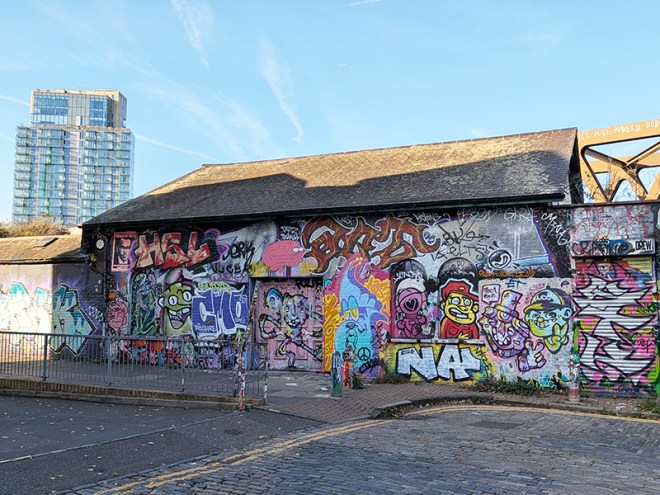
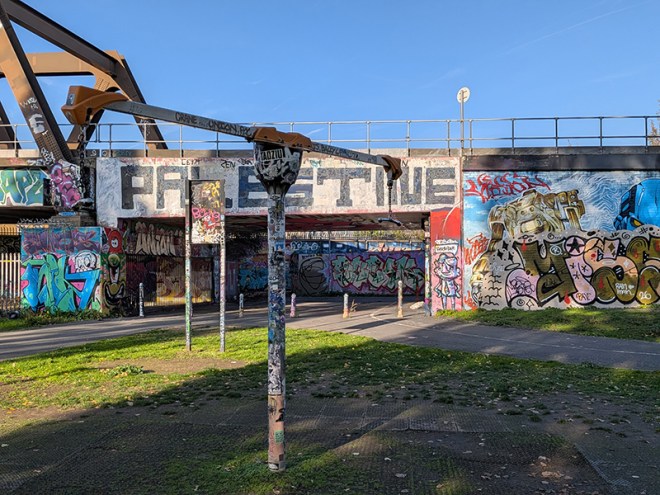
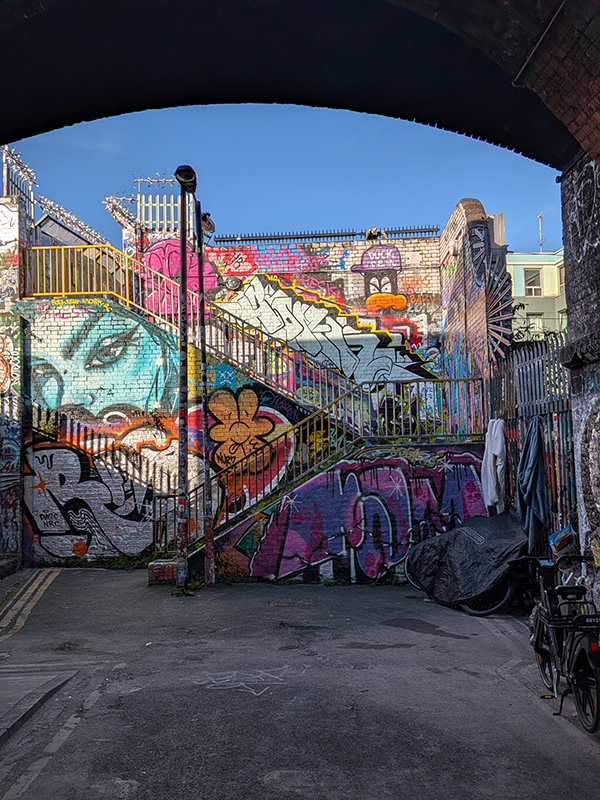
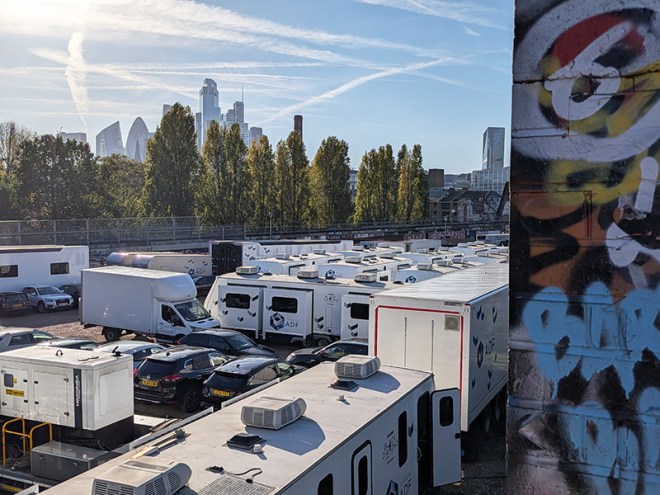
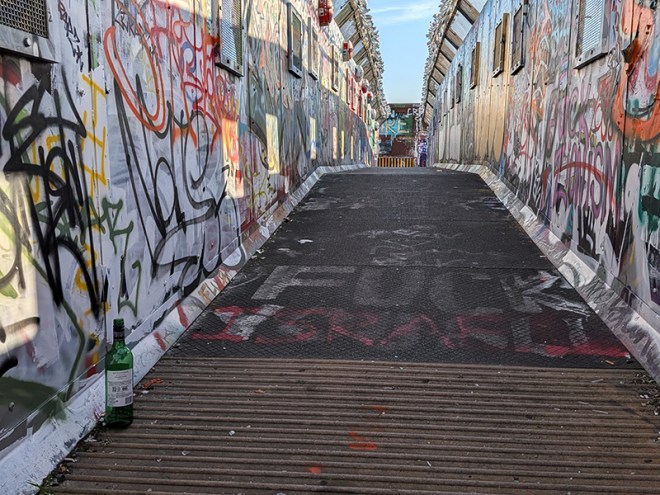
On the other side of the footbridge we arrive on Cheshire Street then head back to Brick Lane via Grimsby Street.
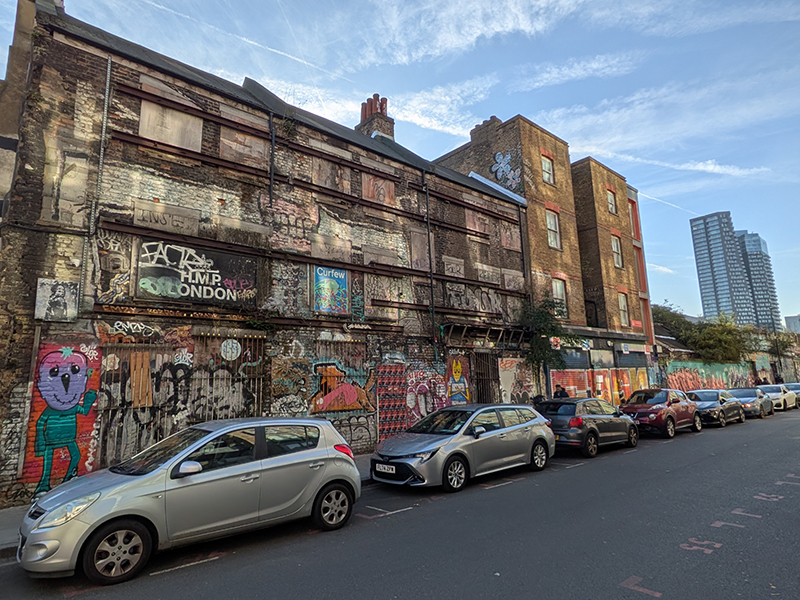
Next up is a western loop by way of Sclater Street, Cygnet Street and Bacon Street. The latter continues on the east side of the Lane with Kebela Street and Cheshire Street for a second time bringing us back to BL for the last time today.
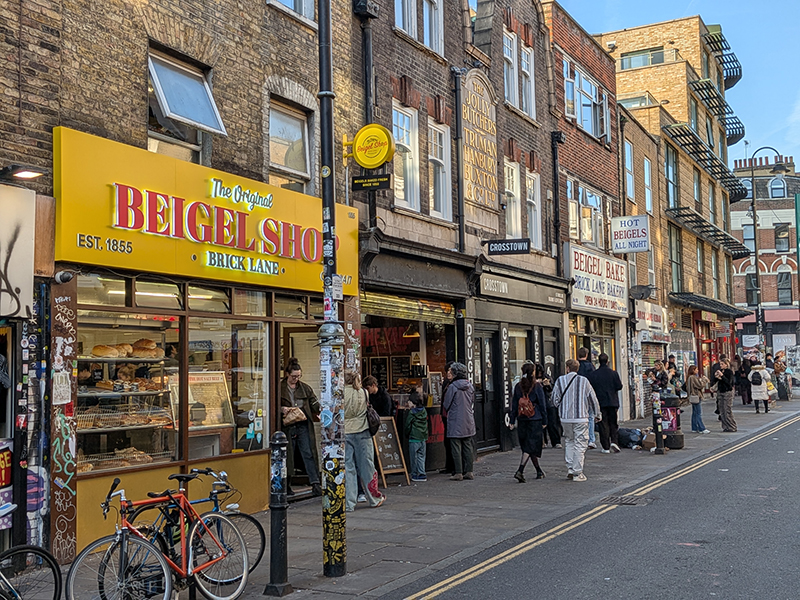
One final thing that Brick Lane is known for is its Bagel (or Beigel) bakeries, a reminder of its Jewish past, though the history of these is somewhat tricky to unentangle. The most famous of these nowadays is the open-all-hours Beigel Bake which was established in 1974 by brothers Amnon and Asher Cohen together with Sammy Minzley in a former butcher’s shop. The “yellow one” in the picture below, the Beigel Shop, purports to have been selling bagels from this site since 1855. During that time it has been through many iterations, including being run by Asher and another Cohen brother, Johnny, from the 1960’s on. The current owners, another pair of brothers, David and Aron (surname not publicly disclosed) acquired the business in 1987. In 2024 this one was widely reported as being under threat of closure but though it hasn’t filed accounts since then it does look very much open for business. The 24/7 Beigel Bake gets through around 20,000 of their brown bags in a single week and churns out about 3000 of their round chewy things each day. They use around 150 kilos of salmon and 100 kilos of cream cheese per week, as well as a huge amount of herring, avocado, houmous, and all sorts of other fillings.
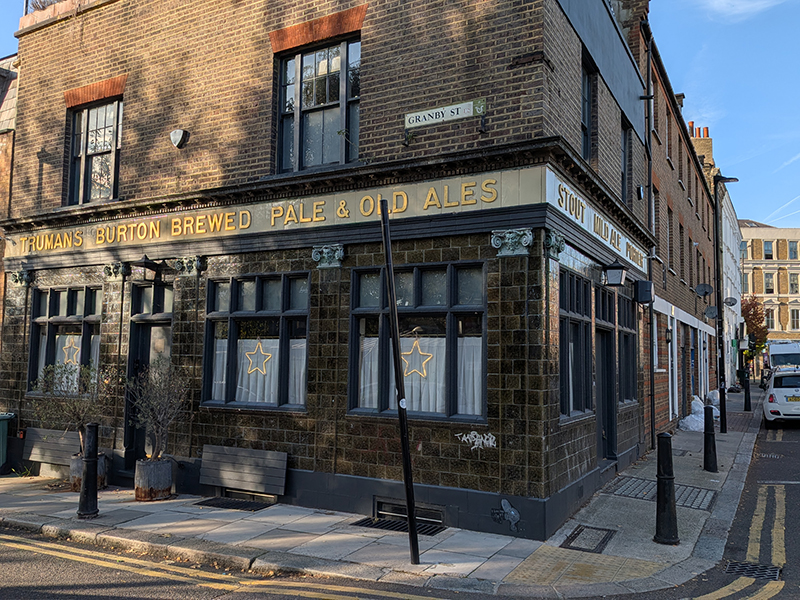
Reaching Bethnal Green Road our final push for the day sees us stroll east as far as Chilton Street and divert onto this as far as Granby Street which is the ultimate leg of today’s route. On the corner of Chiltern and Granby stands the Britannia Shoreditch a former 19th-century Truman Brewery pub which has been converted into a private luxury stay and event venue. A sign of the times maybe but given that the original Trumans signage has been retained an appropriate place to conclude proceedings.