Day 84 – Walworth Road – Penton Place – Kennington Park

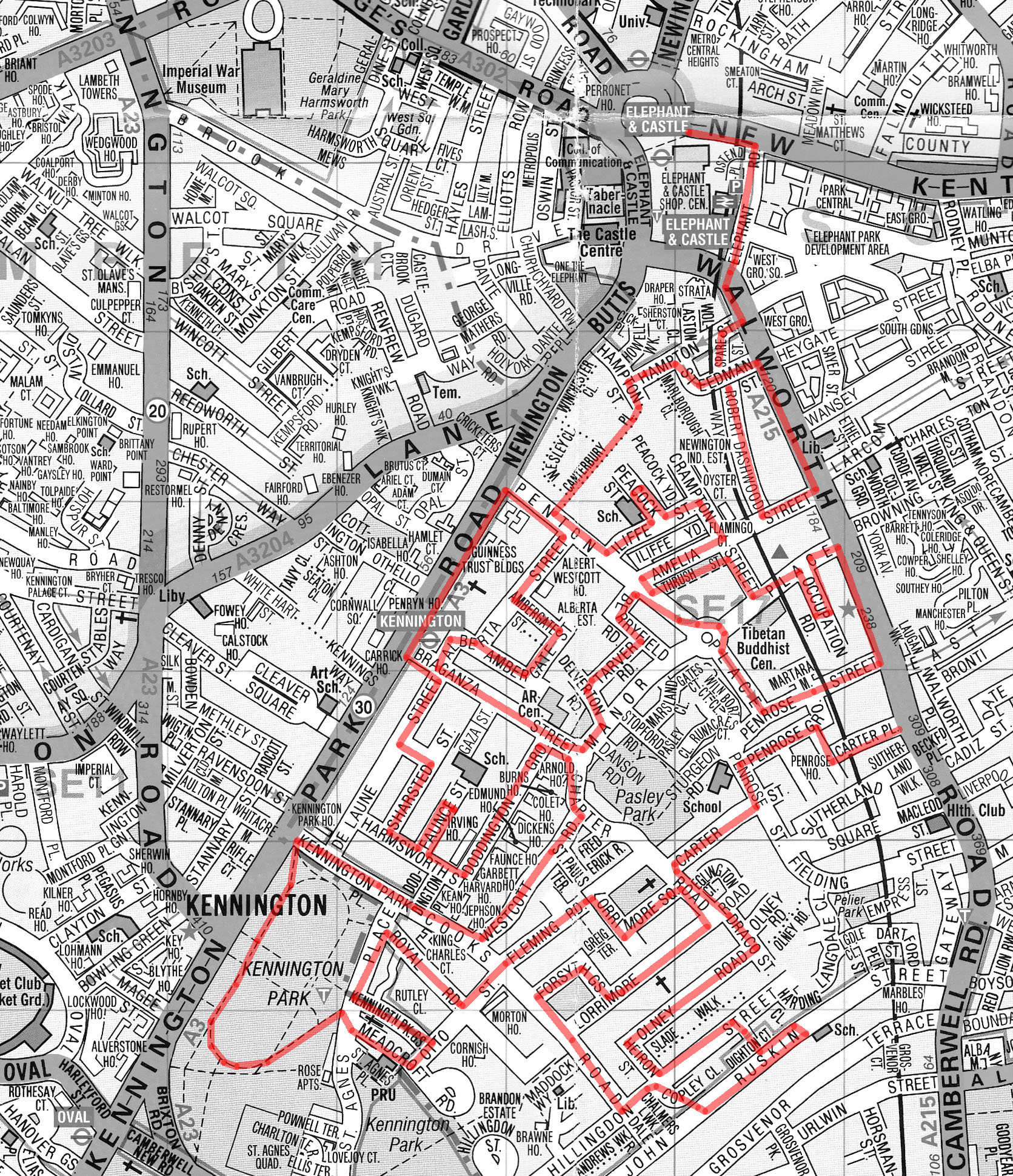
A grey day towards the end of March and a complete contrast from the previous outing sees us make another foray into the southlands. To be specific, we’re venturing beyond the Elephant and Castle into the territory that expands southward between the Walworth Road and Kennington Park Road. This area is predominantly occupied by Southwark-council run public housing so, unsurprisingly, the gentrification that we’ve seen making inroads in adjacent locales barely scratches the surface here. No museums or blue plaques (apart from one kind-of) to distract us today then but still plenty to take note of. It’s also an area that suffered considerable damage as a result of the Luftwaffe’s bombing campaign in late 1940.
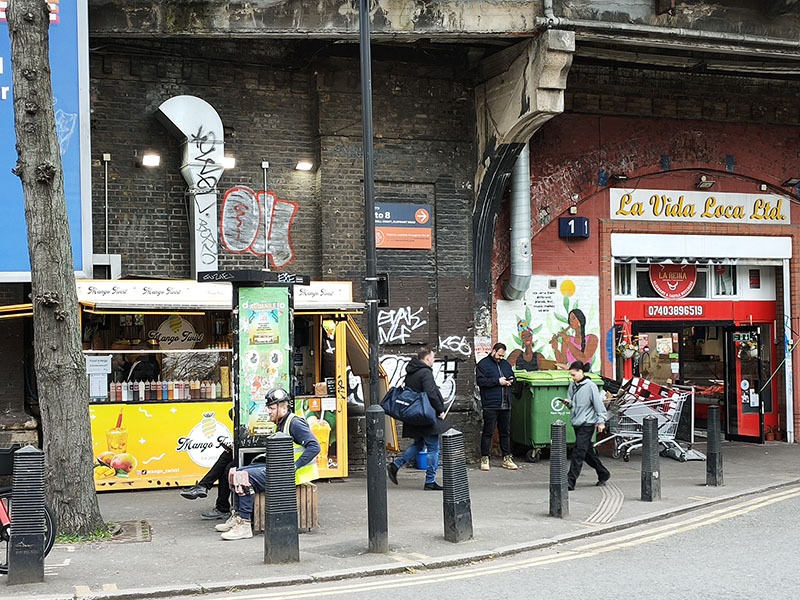
From Elephant and Castle tube we head a short way east on the New Kent Road the follow Elephant Road down to the Walworth Road. The railway arches here and further south and the Walworth Road itself are where all the activity in this area happens. Outside of that I hardly see another soul apart from a couple of dog-walkers and a cycling proficiency group until I get to Kennington Park.
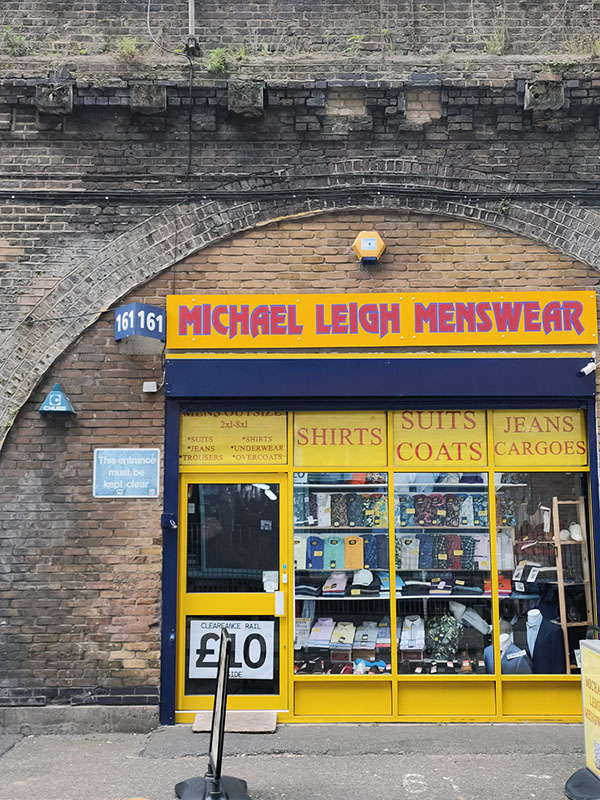
We make a right turn into Hampton Street then immediately continue to follow the rail line south on Spare Street and then Robert Dashwood Way. I can only surmise that the latter is named after one of the two holders of the Dashwood Baronetcy (which has its seat in West Wycombe, Buckinghamshire near to where I grew up) that were Roberts but I can find no connection between either of them and this part of London. The arches along these two access roads are pretty well occupied with a variety of enterprises, including this somewhat incongruous menswear outlet. (I was tempted to take a look as a change from TK Maxx but didn’t need any extra load to carry around with me).
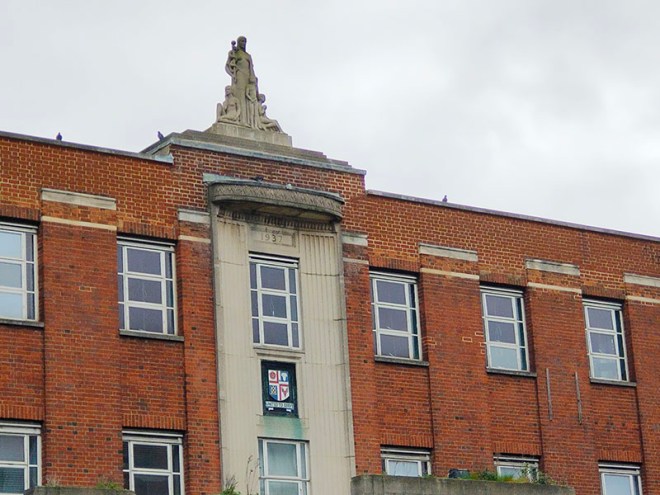
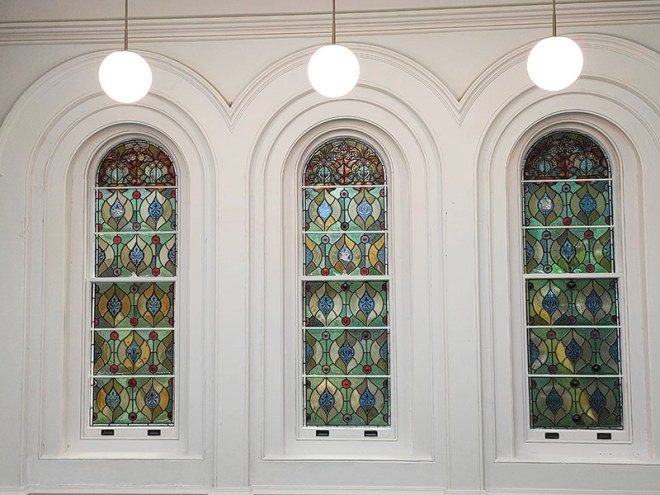
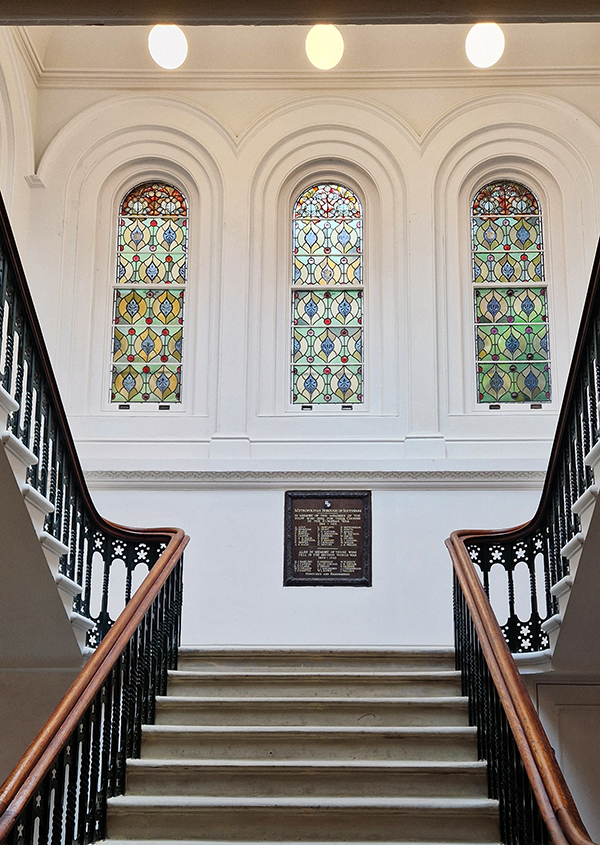
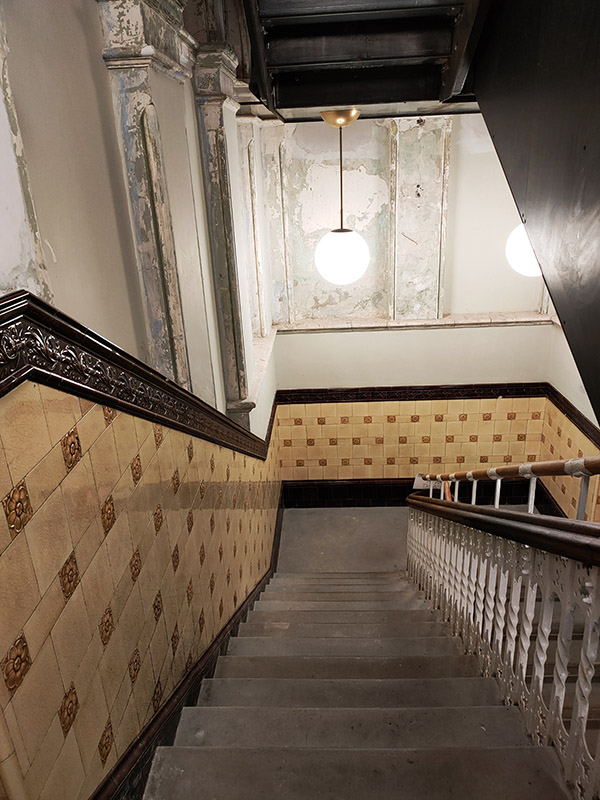
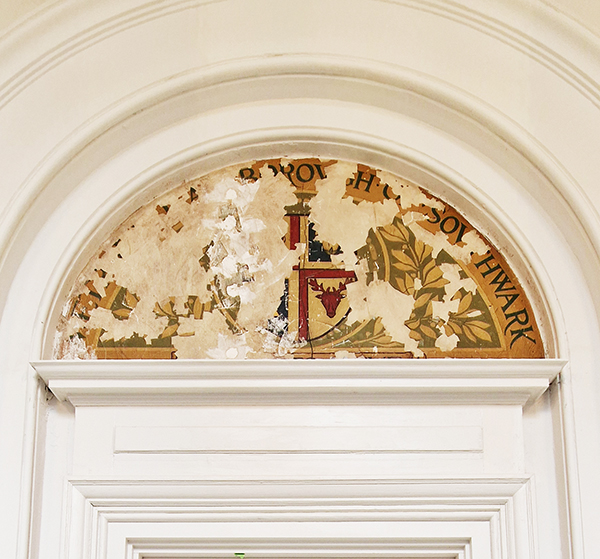
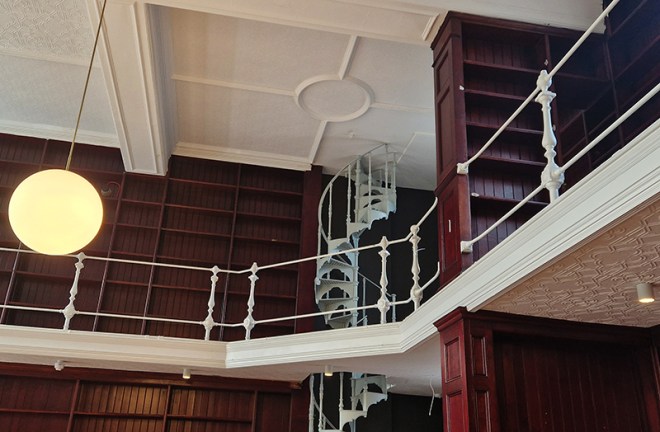
We return to the Walworth Road via Amelia Street and as we head back north temporarily we pass Walworth Town Hall which is over on the east side of the road. Originally named Newington Vestry Hall, it was built on land previously owned by the Worshipful Company of Fishmongers. Opened in 1865, it was designed by Henry Jarvis in the Italianate style, built by Piper and Wheeler and financed by a loan from Edward Chambers Nicholson, a wealthy local chemist.  When Newington became part of the Metropolitan Borough of Southwark in 1900 the building served as Southwark Town Hall. It ceased to be a headquarters of local government in 1965 when the London Borough of Southwark was created. It was subsequently used as workspace by the council, becoming known as “Walworth Town Hall”, and was also used as the local registrar’s office. The roof of the building was badly damaged by a fire in March 2013 and the building was subsequently added to the Heritage at Risk Register. In 2018, architects Feix & Merlin were appointed to restore the Grade II listed building and the adjacent Newington Library and Cuming Museum and create office and coworking spaces tailored to small and medium-sized businesses with room for up to 550 occupants. In 2024 I took a tour of the building as the renovations were nearing completion (the photos of the interior of the building in the slideshow below date from then). To see what it looks like inside now go to https://architecturetoday.co.uk/walworth-town-hall-feix-and-merlin-general-projects/
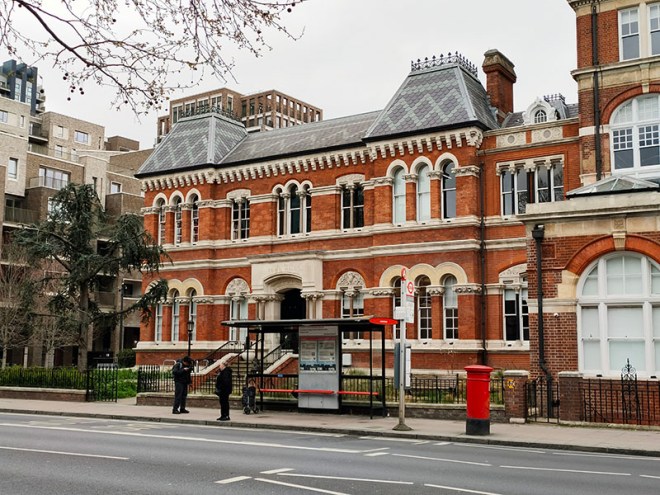
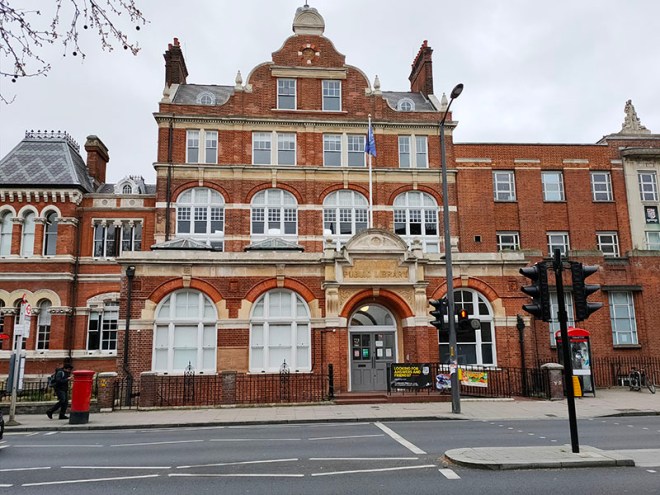
Steedman Street takes us back to Hampton Street from where we follow Canterbury Place through the Newington Estate. In theory at least; in reality it’s more of a tortuous ramble that delivers us onto Penton Place.
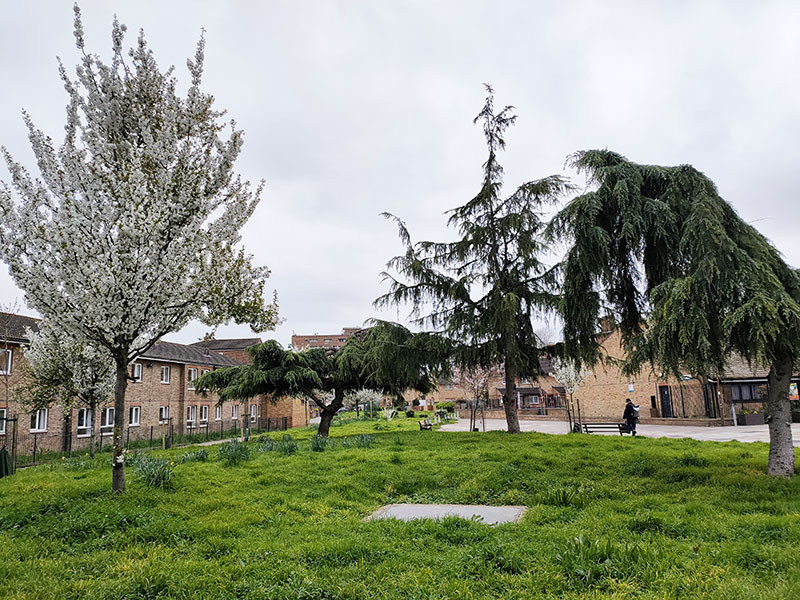
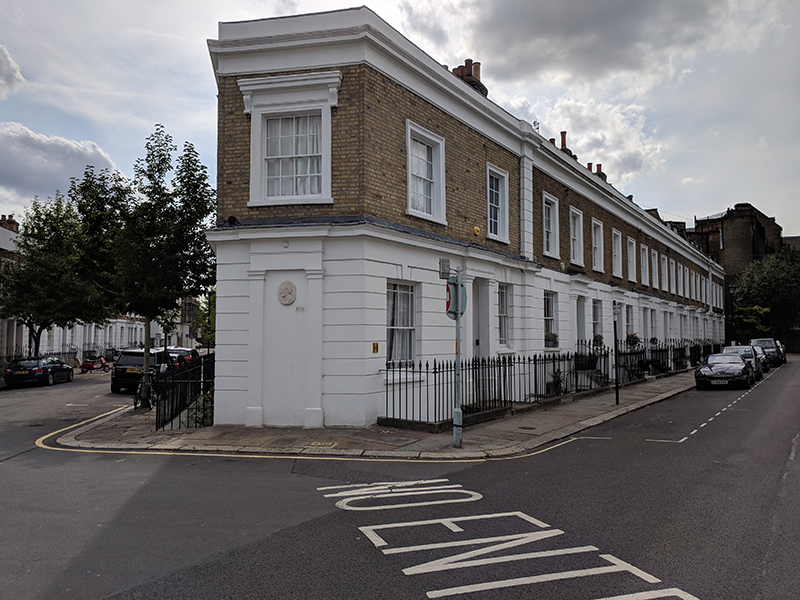
The Pullens Buildings, located on Penton Place and some of its adjoining streets are some of the last Victorian tenement buildings surviving in London. The Pullens Estate was built by James Pullen, a local builder, who acquired the land and developed it over a 15-year period from 1886. Unlike any thing else I’ve encountered on my travels, the four-storey residential buildings are faced with yellow stock brick and enriched with the use of decorative terracotta arches to the door and window openings. The full estate originally comprised 684 dwellings in 12 blocks but a V1 bomber reduced that number and post-WWII many of the remaining properties fell into disrepair. In the 1970s, the council planned to demolish the buildings but were thwarted by an alliance of the Pullens Squatter Organisation and the Residents’ Association which fought successfully to save them with a campaign of direct action and solidarity which culminated in the construction of barricades to stop police and bailiffs entering the buildings. Today around half of the remaining 351 flats in the buildings are local authority-owned with the rest in private leasehold ownership.
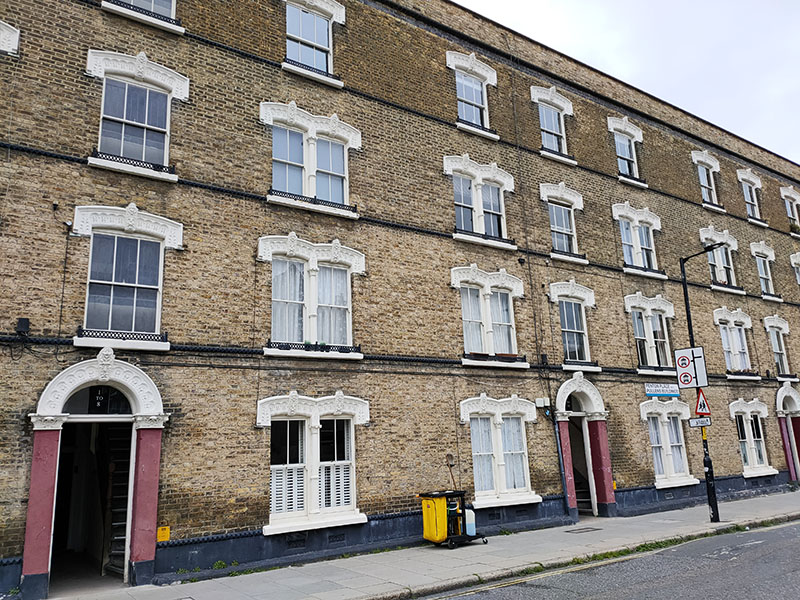
We turn off Penton Place onto Iliffe Street, where supermodel Naomi Campbell once lived, according to one source, and look in on Peacock Street before alighting onto Crampton Street.
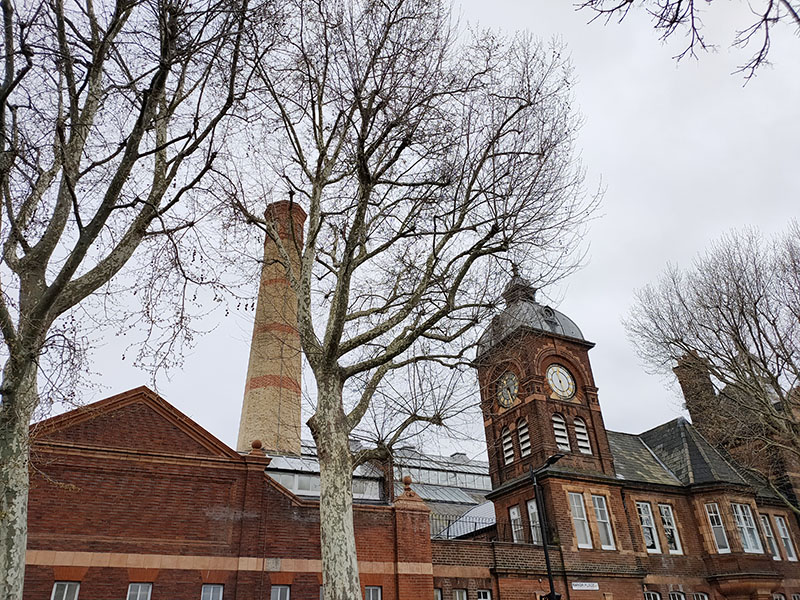
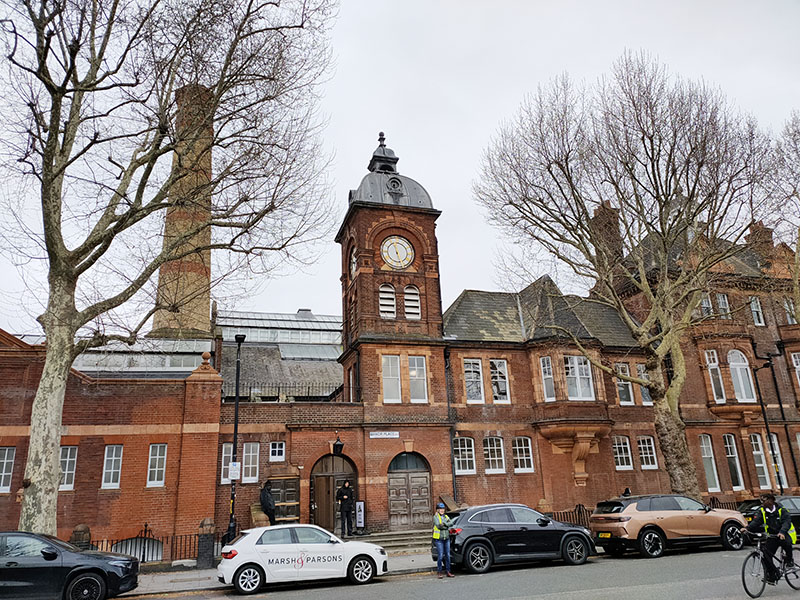
Having circumnavigated Pullens Gardens by way of Amelia Street and Thrush Street we continue south on Crampton Street to Manor Place. Directly facing us is Manor Place Baths,  a Grade II listed former public baths, swimming pool and boxing venue built in 1895 to a red brick and terracotta design by the company of Edward I’Anson (who was responsible for the Royal Exchange Buildings in the City of London). The baths originally had a first- and second-class pool for men, as well as a pool for women known as the “small swim”. Mixed-gender swimming was introduced in 1904. The first-class pool was 120 ft long and boarded over in winter so that the space could be used for sporting events, concerts and other public meetings. Boxing at the baths started in 1908 and boxers who fought bouts there included the Kray twins as well as Ken Buchanan,  Henry Cooper and Terry Spinks. The building survived the bombs of WWII but fell into later disuse as a public baths as apartments in the area began to have bathrooms installed. The baths closed as a public facility in 1976 but continued as a boxing venue until a final show in 1978. By 1995 it was in a dangerously poor condition with no viable use. In 1996 it was Grade II-listed and placed on the Buildings at Risk Register by English Heritage. The building was used by Southwark London Borough Council as offices until 2005, when Tibetan Buddhist organisation Kagyu Samye Dzong London obtained an initial five-year lease to use the building as a temporary home. They renovated the building and used it as a meditation centre with regular classes and retreats until 2015 by which time it had been purchased by Notting Hill Housing to be converted into residential accommodation and commercial space.
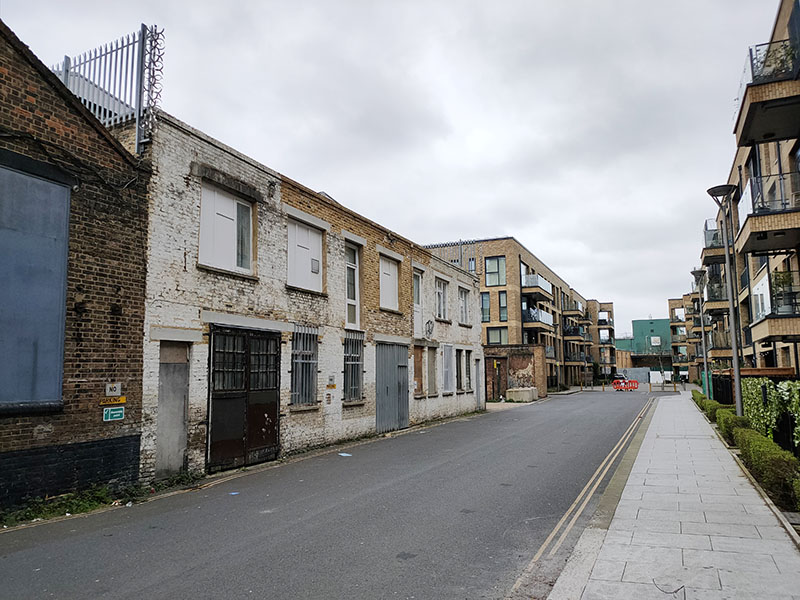
As we head east back to Walworth Road we make a detour onto Occupation Road which retains some signs of the area’s industrial past alongside contemporary residential development.
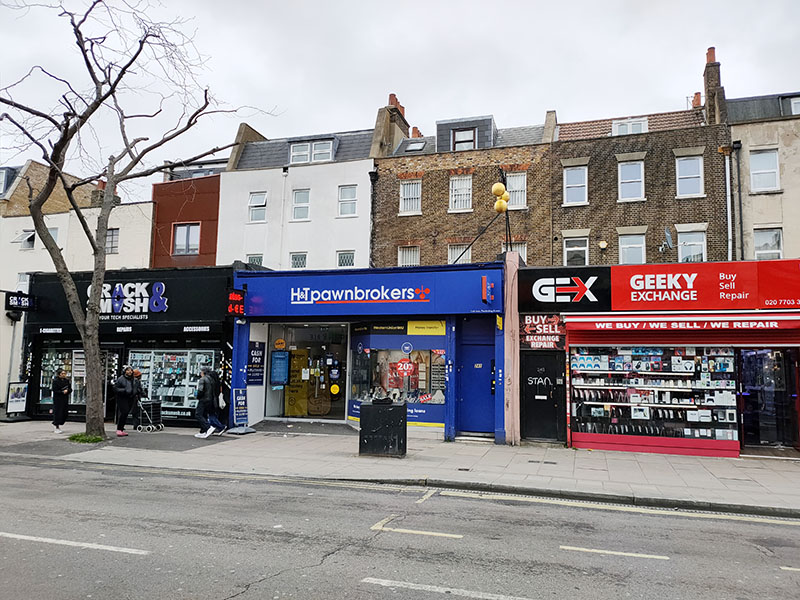
Back on Walworth Road we’re faced with two very 21st century establishments sandwiching one which harks back almost to the 19th.
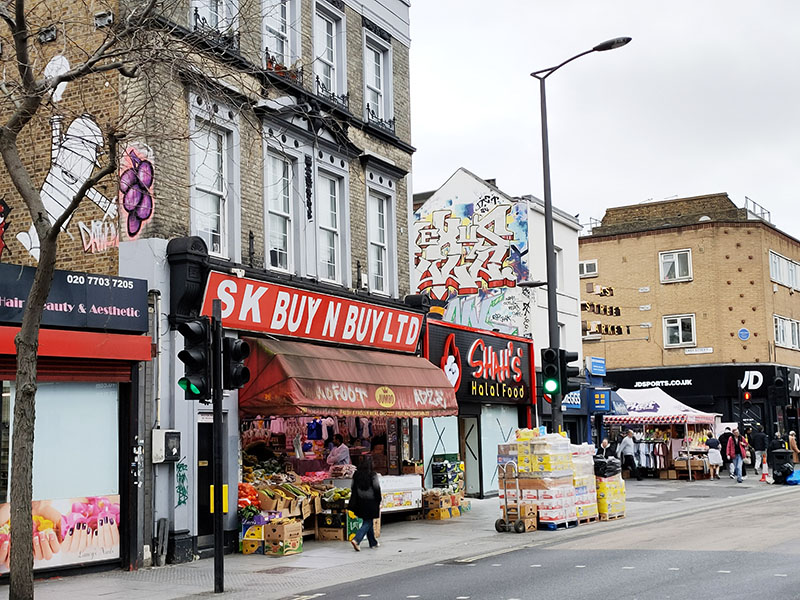
A little way further down the street is the entrance to the East Street Market which is a treat we’ll save for another day. On the far right of the picture you can just about see the plaque I mentioned at the outset. It doesn’t relate to any specific building but just notes that Charlie Chaplin was a local Walworth boy. (Spent part of his childhood in the Pullens Buildings in fact).
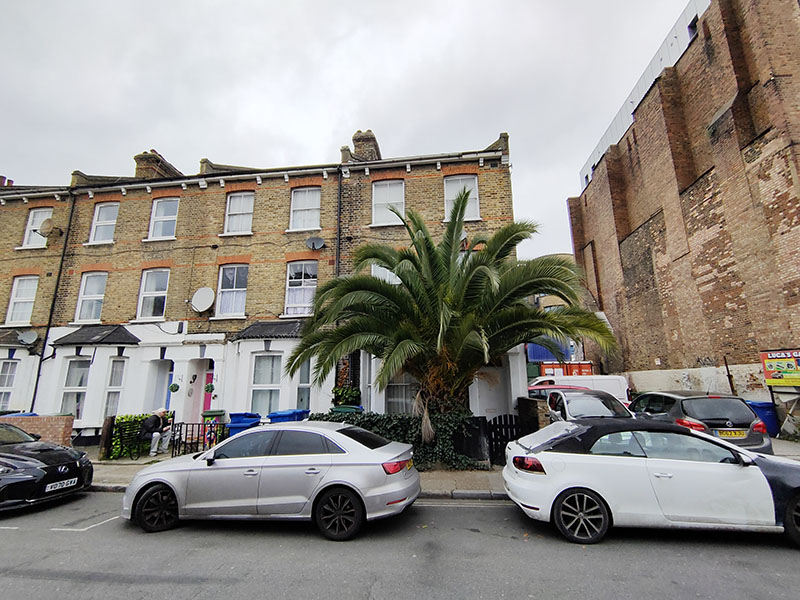
Making our way west again on Penrose Street we pass by Angel Place and then under the railway once more. Just on the other side of the tracks someone’s taken the idea of bringing a bit of the tropics to their front garden to something of an extreme..
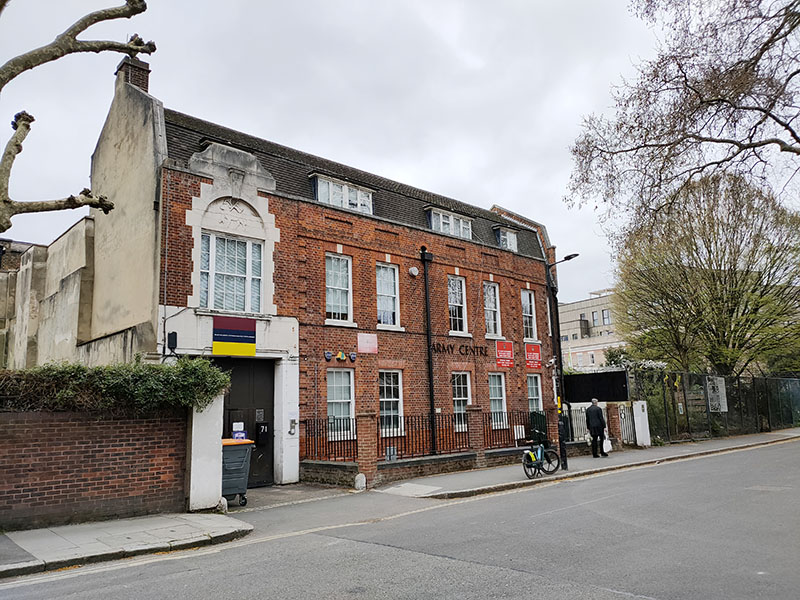
Next up a right turn onto Penton Place once more from where we head north as far as Berryfield Road then follow this, Tarver Road and Delverton Road down to Braganza Street. The Braganza Street Drill Hall originates from a pair of houses built in what was then known as New Street in 1833 and which were acquired by the 19th Surrey Rifle Volunteer Corps in 1865. The street was renamed in the 1930’s and the drill hall was substantially re-built at that time and the enlarged facility opened by the Duke of Gloucester in 1938. 217 (London) General Hospital Royal Army Medical Corps, was formed here in 1967 and a Medical Regiment continues to use the building to this day.
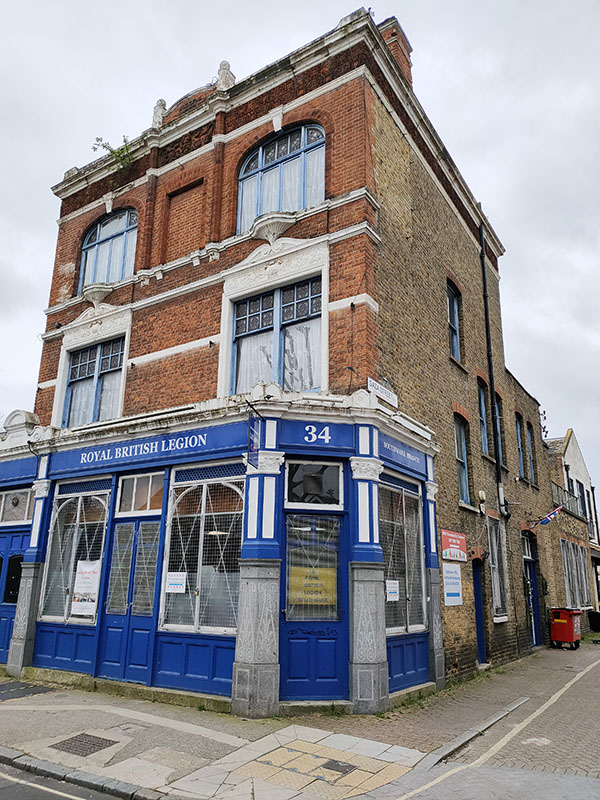
On the corner of Braganza Street and Gaza Street there is a British Legion Club (which is only open 4 nights a week). It would be interesting to know when and why this small side street came to be named Gaza Street but sadly that information is lost in the mists of time.
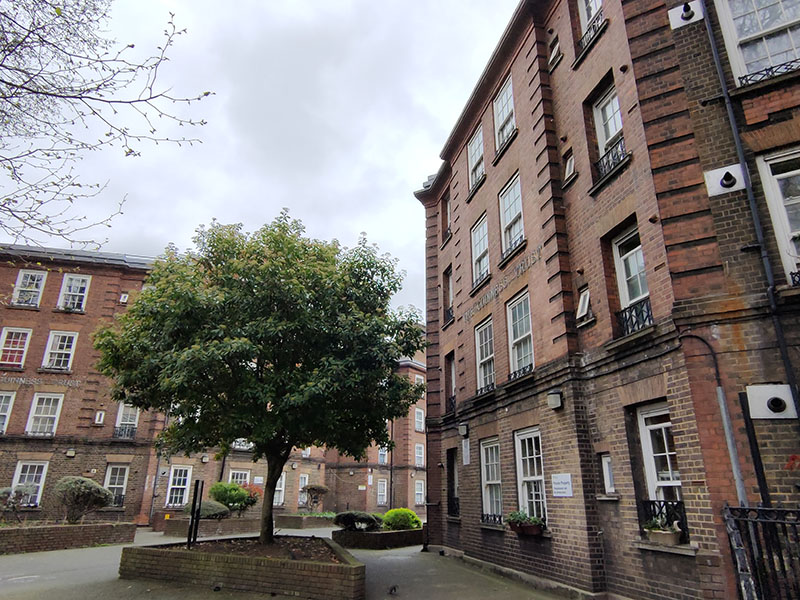
We return to Penton Place for the final time via Alberta Street and Ambergate Street then turn left to reach Kennington Park Road. Proceeding southward we pass the Guinness Trust Buildings. The Guinness Partnership, as it is now known, is one of the largest providers of affordable housing in England. It was founded in 1890 as a charitable trust by the then Edward Cecil Guinness, a great-grandson of the founder of the Guinness Brewery, to help homeless people in London and Dublin. The buildings here on Kennington Park Road were originally conceived by the architect Charles Joseph in 1913 but first, strike action in the building industry, then WWI delayed construction until 1921. This was Guinness’s first development built with the support of government funding. The original plans proposed the usual pre-war architecture for 160 tenements, but new public demand for self-contained, cottage-style housing and separate bathrooms prompted a change in design and a reduction in height to height to four storeys. This meant that whilst earlier estates had been built for between £79 and £169 per tenement, Kennington Park Road cost £807 per unit (without the cost of the land).
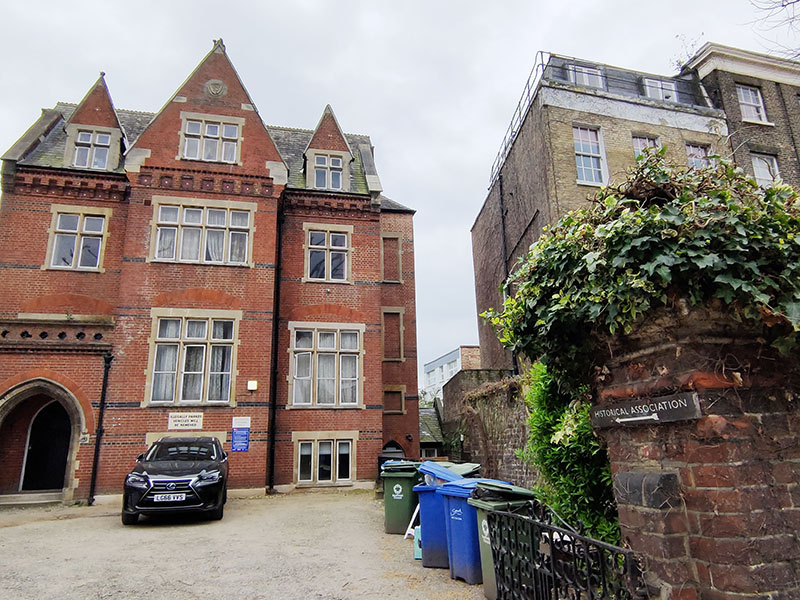
A little way further down Kennington Park Road is the home of The Historical Association, a registered charity founded in 1906 by a small group of history teachers and academic historians to support the growing need for good history resources in schools. Today the mission is to “support the teaching, learning and enjoyment of history at all levels and bring together people who share an interest in and love for the past”. (Good stuff – perhaps I should sign up).
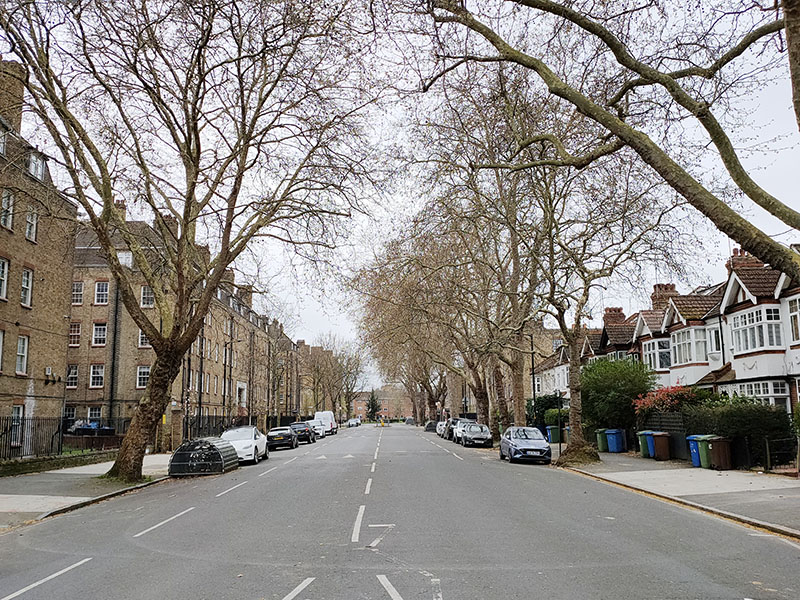
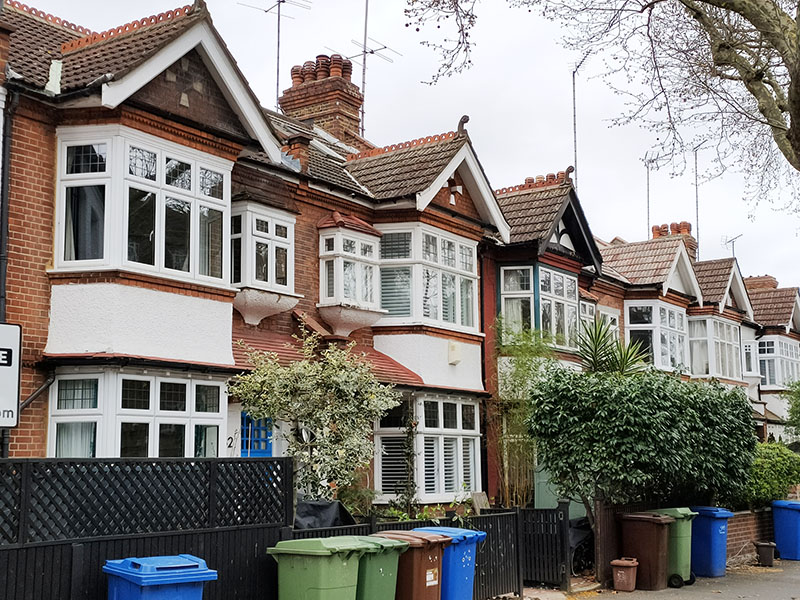
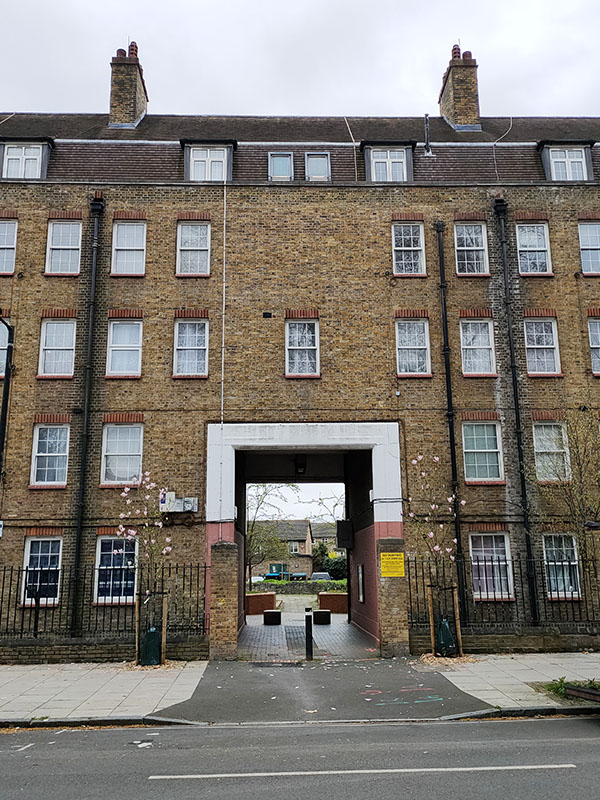
Just beyond Kennington tube we turn back on the Braganza Street and almost immediately resume in a southerly direction on De Laune Street (named after a prominent Huguenot family who came to London in 1572 to escape religious persecution in France). Sharsted Street, Harmsworth Street and Faunce Street take us to Doddington Grove which comes as something of a surprise. The most remarkable thing about this street is its width. Only on a couple of other occasions have we encountered a street this wide; with on-street parking on both sides and two clear lanes in the middle. The other strange thing about the street is the overwhelming contrast between its two sides. The west side consists of a row of late Victorian terrace houses that look like they’ve somehow been transported here from Pinner while the east side is dominated by the monolithic blocks of the Doddington Grove Estate.
From the northern end of Doddington Grove we double back by way of Chapter Road, Westcott Road and Cooks Road to arrive on Kennington Park Place which (naturally enough) runs alongside the top of Kennington Park.

Kennington Park was the first open space in Lambeth to be dedicated for public use, opening in 1854. Prior to that it was known as Kennington Common and was indirectly owned by the Duchy of Cornwall. In April 1848, 25,000 supporters of the Chartist Movement assembled on the common to press their demands for a ‘National Charter’ of rights for the working classes. The Park contains the Prince Consort’s Lodge which was originally built for the Great Exhibition of 1851 in Hyde Park as a ‘model dwelling’ and was re-erected here after the end of the Exhibition.
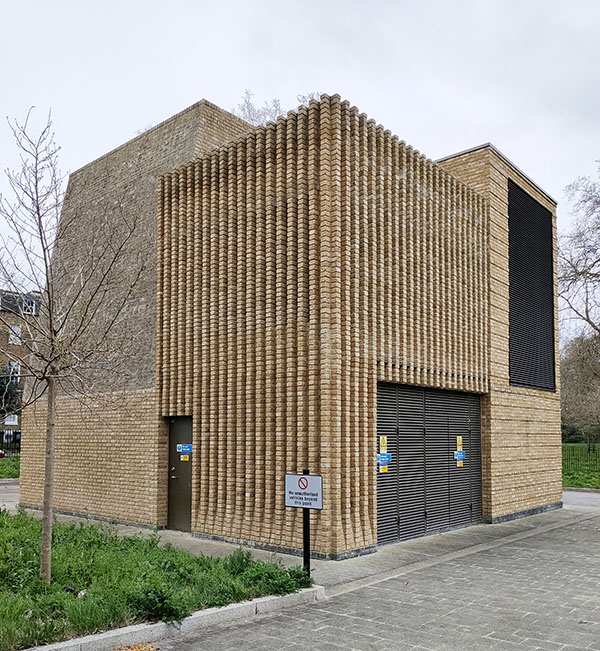
The north east corner of the park is home to one of the two ventilation shafts constructed for the Northern Line extension from Kennington to Battersea Power Station. The shaft is obviously underground but requires a structure on the surface, known as a head house, to provide access and to house ventilation fans and other equipment.
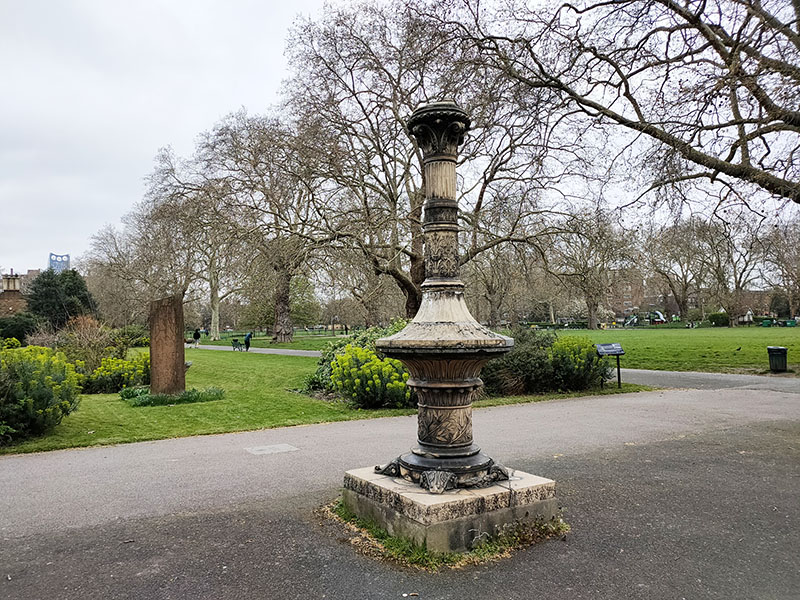
This pillar is all that remains of the Tinworth Fountain a large ornamental fountain created in 1872. The pillar originally supported a fountain bowl, a taller, slimmer column and a sculpture, The Pilgrimage of Life, the work of George Tinworth, the resident sculptor at Doulton’s Lambeth factory. The sculpture showed a man carrying a cross with a woman and child. The fountain was damaged irreparably during the Blitz while the sculpture survived until 1981. On 15 October 1940, a German bomb hit a crowded air raid shelter in the park, causing one of the worst civilian disasters in Lambeth during WWII. Roughly 104 people were killed when the underground trench shelter collapsed. The memorial in the background above, unveiled in 2006, commemorates this tragedy.
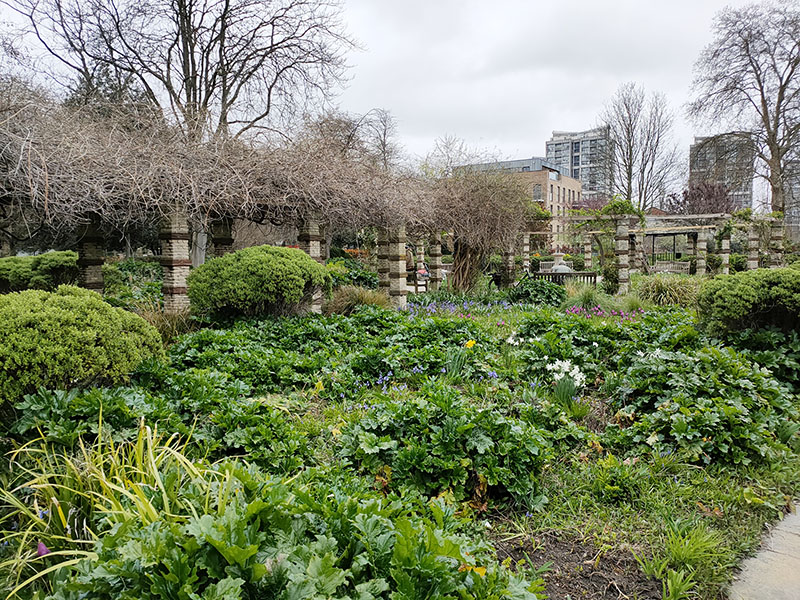
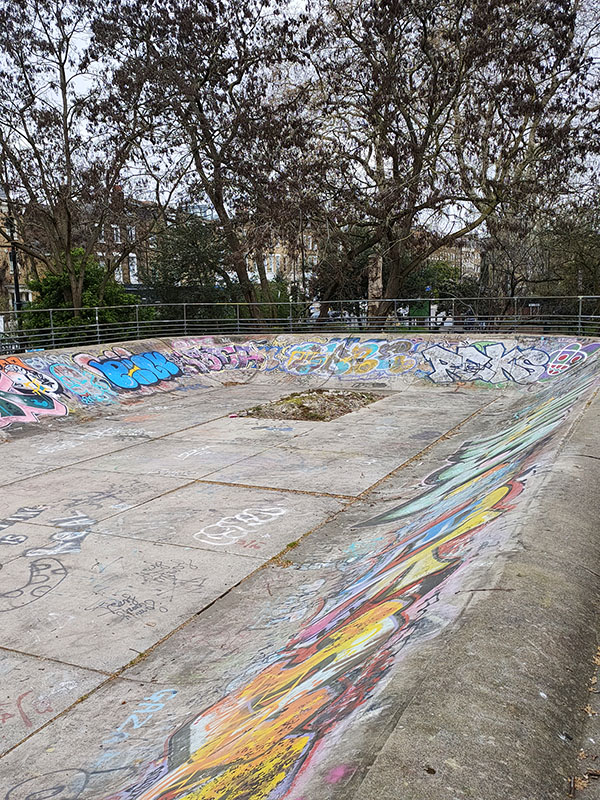
The flower garden at the southern of the park was originally opened in 1931. After falling into gradual disrepair in recent decades it was restored thanks to a grant from the Heritage Lottery Fund and reopened in 2015. Although we’re on the cusp of Spring there weren’t too many flowers in evidence yet, apart from a few tulips. Still, at least it’s in better shape than the skatepark.
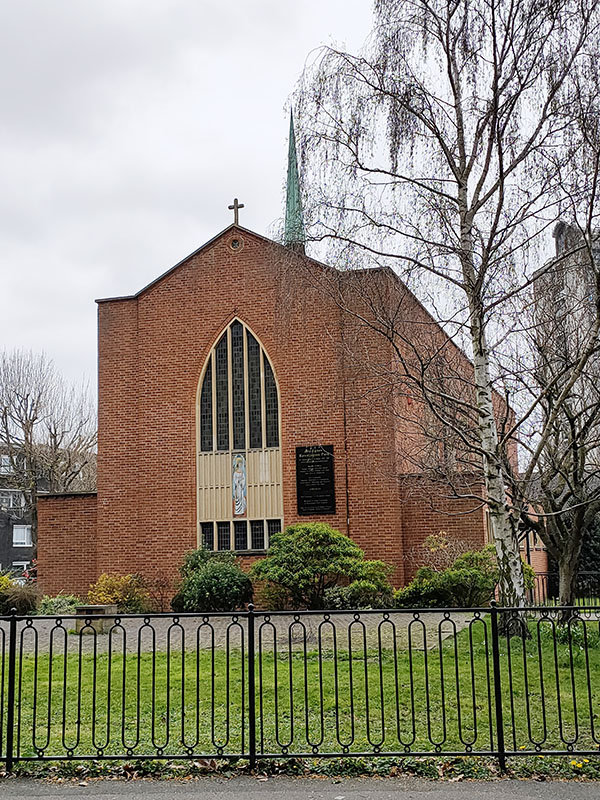
We exit the park onto St Agnes Place, immediately opposite the church of the same name. The original St Agnes Church on this site was built in 1875 and designed by George Gilbert Scott Jr. (son of the GGS responsible for the Midland Hotel, St Pancras and father of the GGS behind the iconic red telephone box). That first church was also destroyed in the Blitz and its current replacement was built in 1956 by Halliday and Greenwood to a design by Ralph Covell. St Agnes is a Church of England parish church in which worship follows the Catholic tradition.
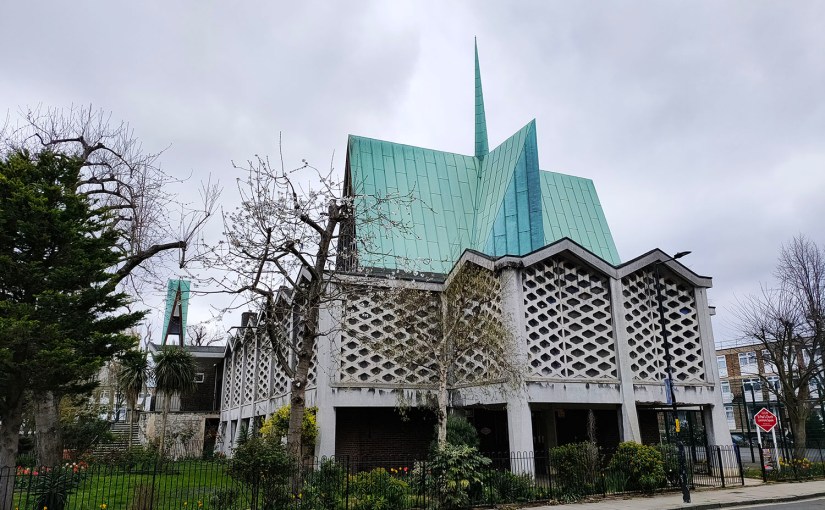
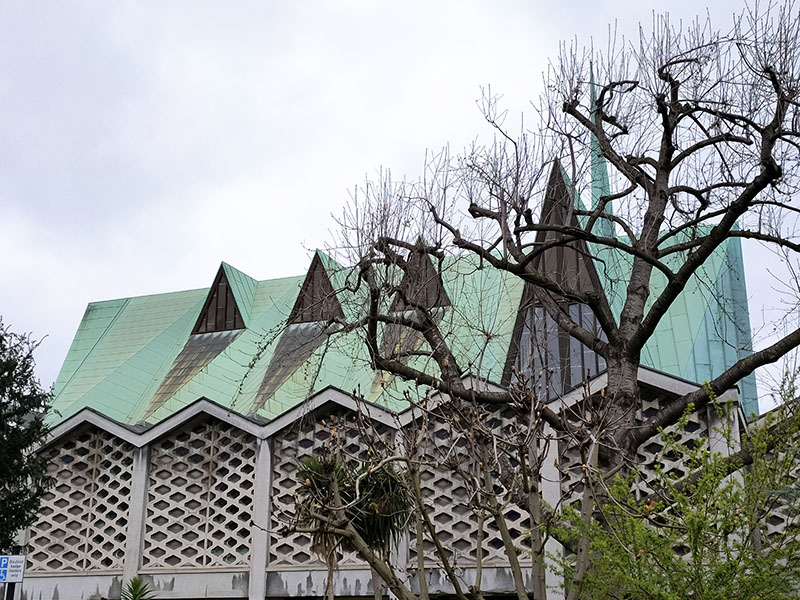
You wait eons for a modernist church built on the ruins of a bombed Victorian original then two come along in the space of ten minutes. Those ten minutes were spent negotiating Meadcroft Road, Kennington Park Gardens, Royal Road, Otto Street and Fleming Road to arrive at Lorrimore Square which is the home of St Paul’s Church. The current Grade II listed church was designed by firm Woodroffe Buchanan & Coulter and built in 1959–60. The building is a modernist, reinforced concrete buttressed form with a community centre on the ground floor and the church itself and church hall above. The “folded” roof is made of plate timber and coated in turquoise oxidised copper; it incorporates a series of triangles, symbolising the Holy Trinity. The external walls are a mix of brick, reclaimed stone from the original church, and artificial blocks, some incorporating multicoloured stained glass units. That original church was designed by local ecclesiastical architect Henry Jarvis and built in a Gothic revival style in the 1850’s.
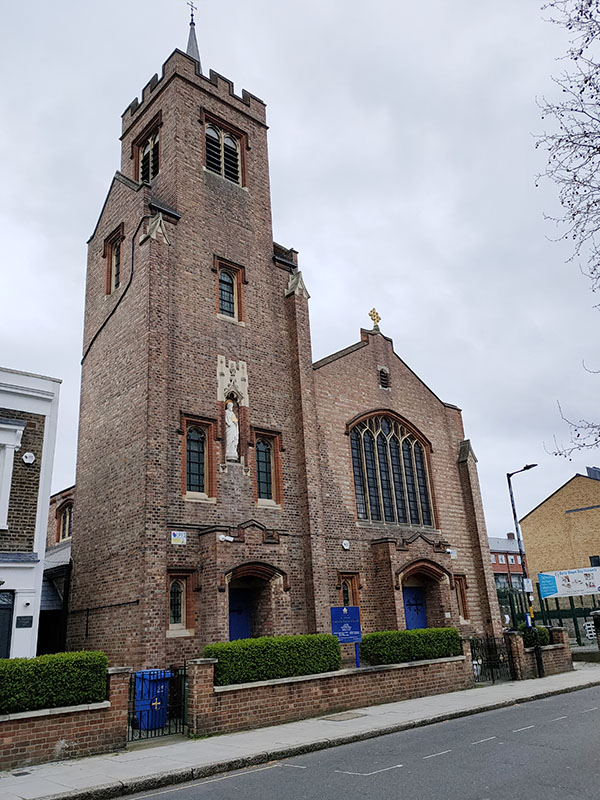
Just round the corner on Lorrimore Road, St Wilfrid’s Roman Catholic Church barely escaped the same fate as its neighbours.  This late Gothic composition in red brick was completed in 1915. In November 1940 it was struck, it is thought, by an anti-aircraft shell during a German air raid. Half the roof and one wall were blown away, the organ completely destroyed and the windows and doors ripped apart. The church was restored in 1948-1949 with the help of the War Damage Commission.
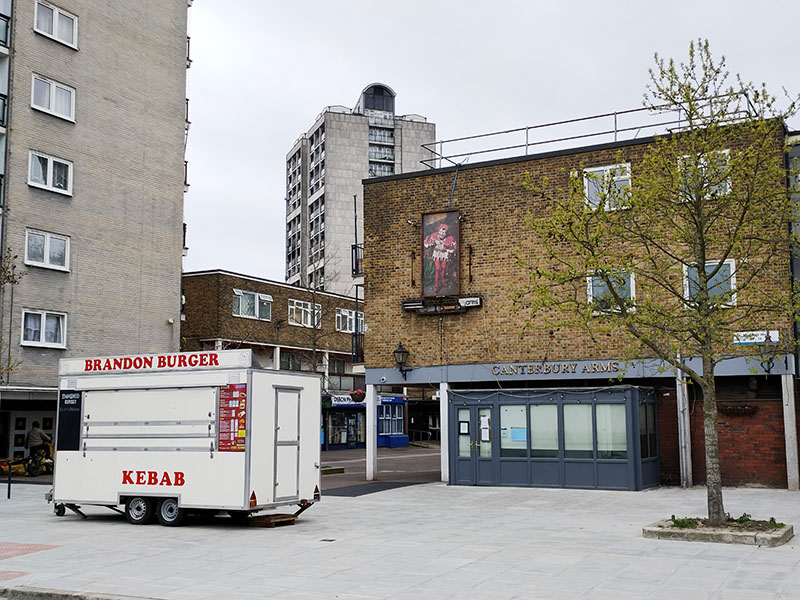
Once beyond the church we make a circuit of Forsyth Gardens then cover another section of Cooks Road. On the edge of the Brandon Estate is one of many abandoned pubs to be found in this vicinity. In terms of finding a “pub of the day” on this expedition the phrase “wild goose chase” springs to mind. On the plus side, at least the burger van wasn’t open to tempt the desperate.
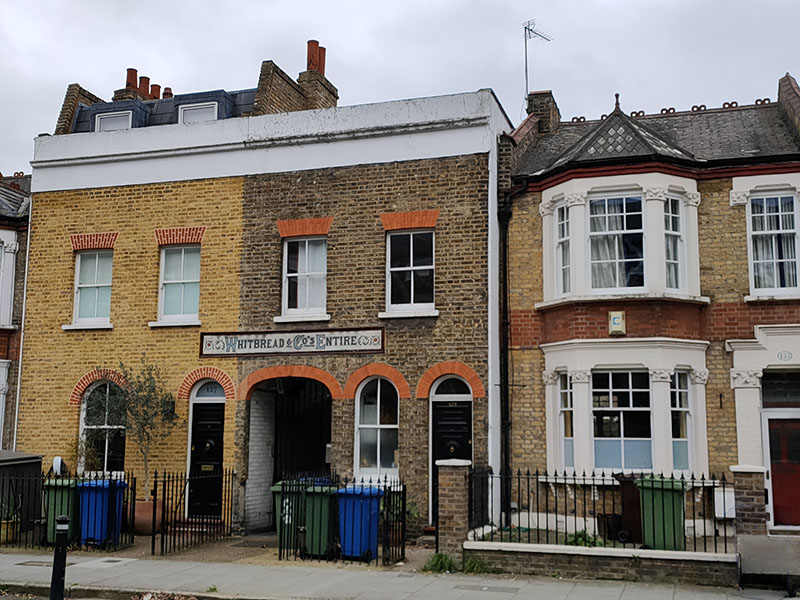
Next we’re turning off onto Hillingdon Street then cutting through Copley Close to John Ruskin Street (after the 19th century art critic that we named and shamed in the last post). I was intrigued by a sign reading “Whitbread & Co’s Entire” above an alley on the south side of the street. Apparently this once led to the back entrance to the long defunct Grosvenor Arms pub on the eponymous parallel terrace. The “Entire” refers to “Entire Butt Beer,” a popular type of porter in the 18th century that was a blend of different beers, which Samuel Whitbread helped popularize.
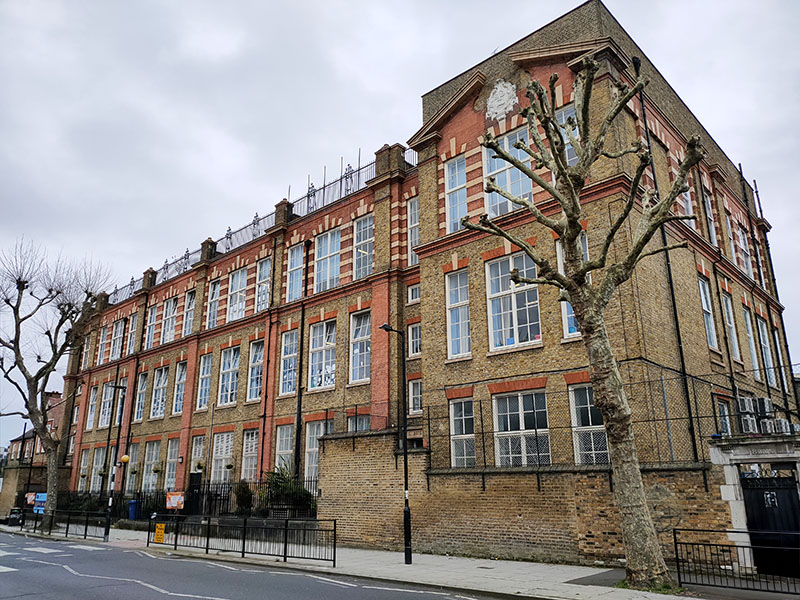
A bit further east is the John Ruskin Primary School, designed by renowned Victorian school architect Thomas Jerram Bailey and opened in 1899.
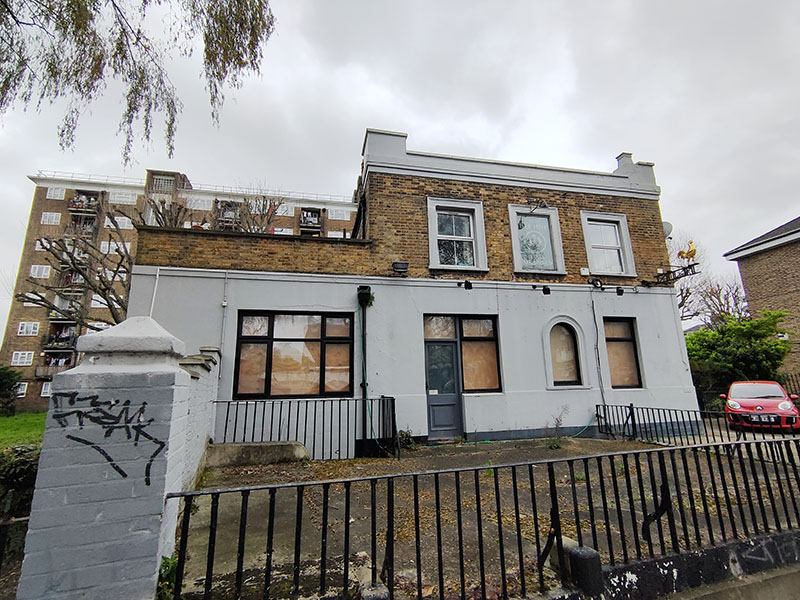
We cut through Dichton Court to return to Hillingdon Street then work our way north via Heiron Street, Olney Road, Draco Street and Chapter Road to Carter Street. This is where you’ll find another victim of the great pub die-off. The Beehive supposedly dates back to 1830 and had something of a colourful existence (especially in its early years) until COVID did for it. The now largely forgotten sport of pedestrianism (a form of race-walking) was hugely popular in the mid-19th century. Apparently beginning with members of the aristocracy betting on races between their footmen. There are many reports of these races taking place at the Beehive in the 1840s and they often attracted crowds of 3,000 or more. In 1837 a monkey parachuted onto land next door to the pub. This was part of Mrs. Graham’s spectacular balloon show at the nearby Surrey Zoological Gardens. The unfortunate creature was dropped in a small cage from around one hundred feet in a primitive parachute but had been blown off course when it had not opened properly. Local campaigners have successfully seen off two attempts by the landlords to convert the property into flats but its future currently seems uncertain.
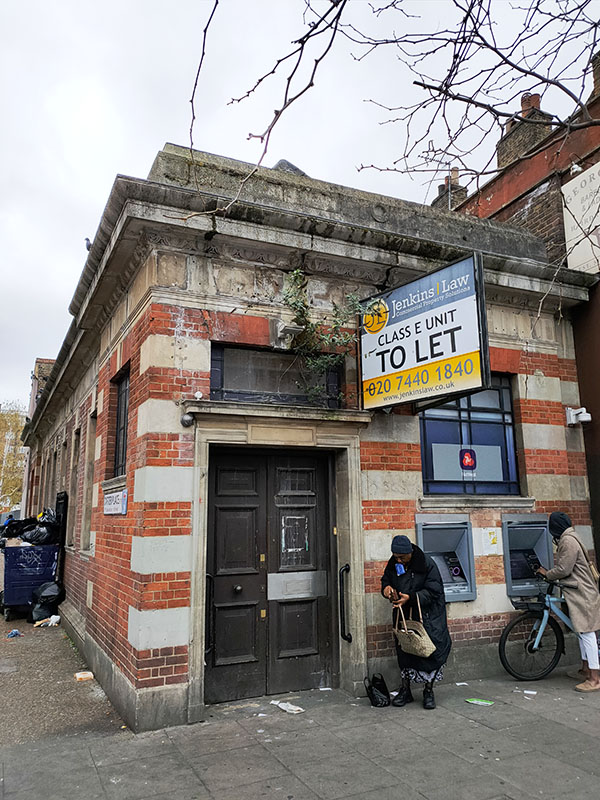
Having returned to the Walworth Road by way of Penrose Street, Penrose Grove and Carter Place I figure that’s enough for today and jump on the bus back to Waterloo. There’s just time for one more picture. This tiny former branch of Nat West Bank bizarrely still has operational ATMs despite being in a state of advanced decrepitude. It’s also currently the subject of a planning application – which the Walworth Society is strongly opposing. One to watch
Day 57 – Bankside – Southwark Bridge – Trinity Church Square

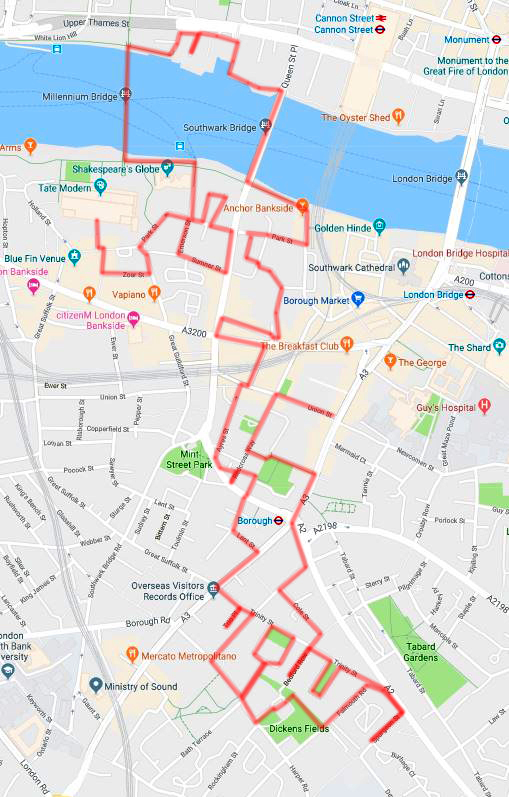
This is a bit of a meandering one, starting out on Bankside then crossing the river twice before heading down through Borough to Trinity Square and hallway back again. On the way we’ll cross paths with Shakespeare, Dickens, Alfred the Great and Catherine of Aragon.

Day 57 Route

So we begin where we left off last time, at Tate Modern, exiting from the Blavatnik Building onto Sumner Street. Then we cut down Canvey Street as far as Zoar Street turning east for a short while before nipping between the buildings up onto Southwark Street.

IMG_20181102_124648

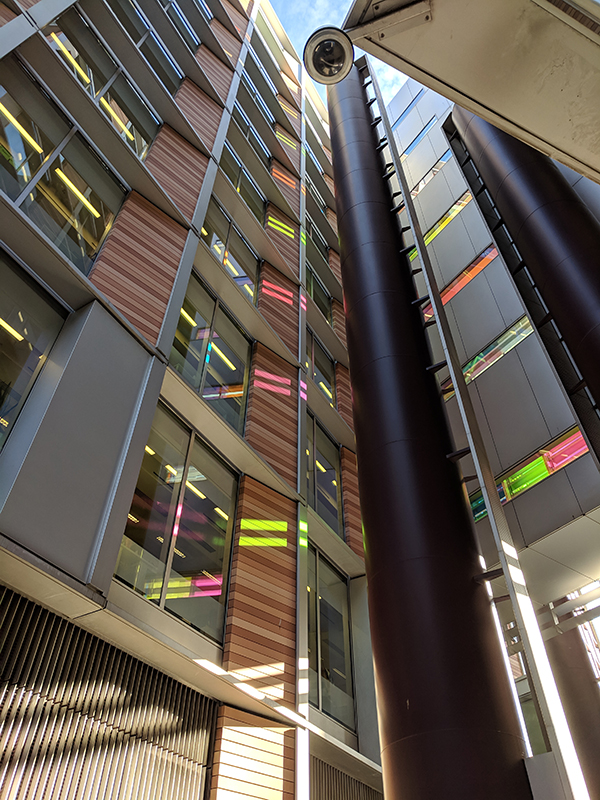
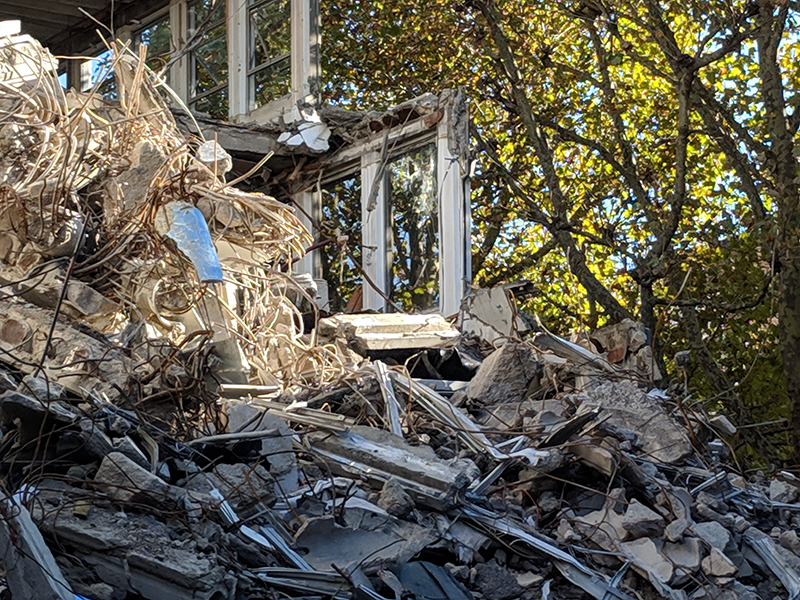
On Southwark Street we turn east and when we get to the next left, the by-now familiar Great Guildford Street head back towards the river. Crossing over Sumner Street we reach the western end of the long and winding Park Street. Before we get to Emmerson Street which return us to another section of Sumner Street there’s a nice new demolition site to stop and admire.

IMG_20181102_125143

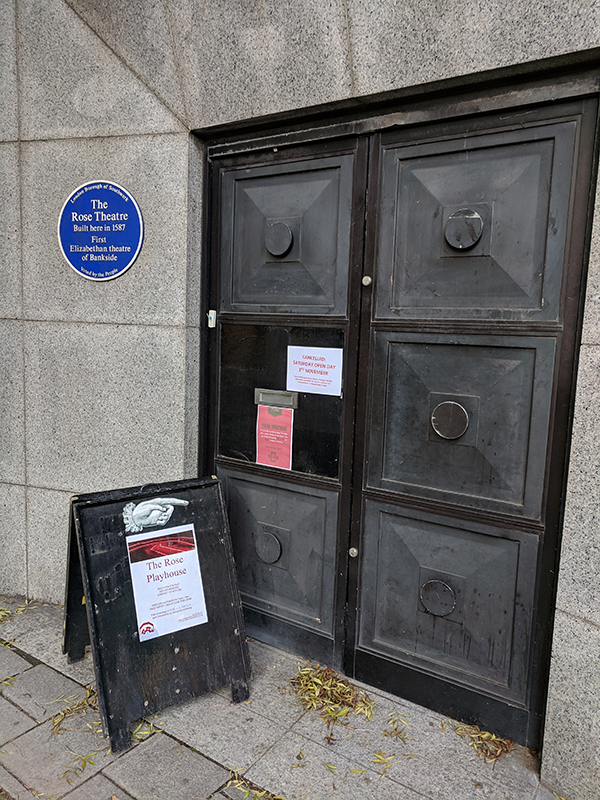
Sumner Street takes us up onto Southwark Bridge Road where we turn northward briefly before taking some steps which deposit us back on Park Street on the doorstep of the Rose Playhouse. The Rose became the fifth purpose-built theatre in London when it was created in 1587 pre-dating the Globe (of which more later) on Bankside by 14 years. It represented something of a cultural step-up for an area known for its brothels, gaming dens and bear-baiting pits. The Rose’s repertoire included Marlowe’s Doctor Faustus, Jew of Malta and Tamburlaine the Great, Kyd’s Spanish Tragedy and Shakespeare’s Henry VI part I and Titus Andronicus. Its star faded fairly swiftly in the shadow of the success of the Globe however and by the very early years of the 17th century it had fallen out of use. Its archaeological remains were discovered in 1989 during excavations for the re-development of an office block. The Rose Theatre Trust was formed in response to fears that the new building proposed for the site would bring about the destruction of the remains. A campaign to ‘Save The Rose’ was launched with enthusiastic support from the public, scholars and actors, including the dying Lord Olivier who gave his last public speech in May 1989 on behalf of The Rose. The Trust managed to secure government funds to delay construction and to bring about a re-design of the proposed new building so that only a small amount of the fabric of The Rose was lost, and a permanent enclosure of this fragile site was created. If you want to check it out public viewings take place most Saturdays.

IMG_20181102_125906

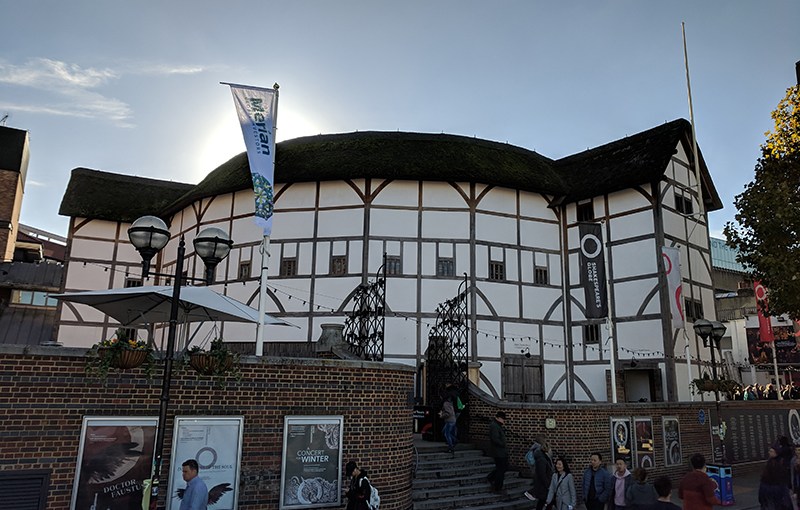
From Park Street we duck in and out of Rose Alley and Bear Gardens before New Globe Walk takes us up to Bankside and, naturally enough, the new Globe Theatre. The new incarnation of the Globe is located several hundred metres away from where the original was sited so we’ll deal with the latter in a while. The project to rebuild Shakespeare’s Globe was the brainchild of the American actor, director and producer Sam Wanamaker. Twenty one years after his first visit to London, in 1949, he founded what was to become the Shakespeare Globe Trust, dedicated to the reconstruction of the theatre and the creation of an education centre and permanent exhibition. After another 23 years spent tirelessly fundraising and planning the reconstruction with the Trust’s architect Theo Crosby, Sam Wanamaker died in 1993. He lived long enough to see the site secured and a few timber bays of the theatre in place. It was another three and a half years before the theatre was completed. Other than concessions to comply with modern day fire regulations such as additional exits, illuminated signage, fire retardant materials and some modern backstage machinery, the Globe is as accurate a reconstruction of the 1599 Globe as was possible with the available evidence.

This slideshow requires JavaScript.

Sandwiched in between the Globe and Tate Modern is a row of 18th century houses the most striking of which is the three-storey cream coloured building bearing the name Cardinal’s Wharf. Its façade also bears a ceramic plaque engraved with the words Here lived Sir Christopher Wren during the building of St Paul’s Cathedral. Here also, in 1502, Catherine Infanta of Castile and Aragon, afterwards first queen of Henry VIII, took shelter on her first landing in London. Sadly, both of these claims were debunked in a 2006 book by writer and historian Gillian Tindall. Since the house was built in 1710, the year St Paul’s was completed, Wren couldn’t have lived here during its construction. He did however live in a house nearby so it’s probable the plaque was rescued from that property at the time of its demolition and cheekily redisplayed. As for Catherine of Aragon, that’s dismissed as pure fantasy. The adjacent redbrick house is known as the Provost’s Lodging, a name adopted when it was acquired by Southwark Cathedral from Bankside Power Station in 1957. In 2011, following the death of the then Dean of Southwark (the title of provost was done away with in 2000) the property was put on the market for £6m. Which is a lot of money to spend if you’re going to have tens of thousands of people traipsing past each day within spitting distance of your front door.

And so it’s time to head briefly back across the river and tick off a couple more bridges. First up, of course, is the ill-fated (in terms of its name) Millennium Bridge, built to link St Paul’s Cathedral with the new Tate Modern as part of the Millennium celebrations. Unfortunately, as I’m sure we all recall, when it opened in June 2000 it only stayed accessible for two days before being closed for two years to allow for modifications to rectify the swaying motion (or resonant structural response) that led to the nickname “Wobbly Bridge”. The design of the bridge, which was subject to a competition, was a collaboration between Arup Group, Foster and Partners and Sir Anthony Caro.  Due to height restrictions, and to improve the view, the suspension design had the supporting cables below the deck level, giving a very shallow profile. The eight suspension cables are tensioned to pull with a force of 2,000 tons against the piers set into each bank—enough to support a working load of 5,000 people on the bridge at one time. Though not enough to save it from the Death Eaters in Harry Potter and the Half-Blood Prince.

This slideshow requires JavaScript.

Once across the bridge we turn east along the Thames Path though not for very long as you soon have to divert away from the river up Broken Wharf and along High Timber Street (calling in on the dead end Stew Lane if you wish) before rejoining via Queenhithe. Beside and below the street of the same name is the only surviving inlet along the City waterfront which was once a thriving Saxon and Medieval Dock. The harbour is reputed to have been established in AD 899 shortly after King Alfred the Great had turfed the Vikings out of London. Originally named ‘Ethelred’s Hythe’ it became known as ‘Queenhithe’ when Queen Matilda, wife of Henry I, was granted the dues from the dock in the early 12th century (a right inherited by successive English queens). In the 15th century the dock’s fortunes waned as larger vessels struggled to navigate past London Bridge and opted to unload further east at Billingsgate. The dock did however remain in service up to Victorian times and remnants of that period of usage are still visible at low tide.

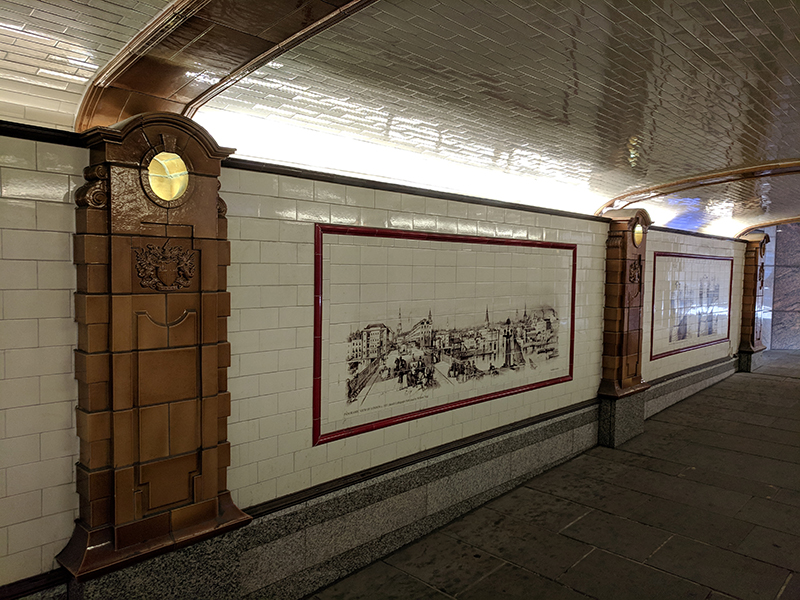
From Queenhithe it’s just a hop and a skip to Southwark Bridge. Before we get up onto the bridge itself though we can pop through the northside underpass, known as Fruiterers’ Passage after the Worshipful Company of Fruiterers whose warehouses once stood nearby. The passage is tiled on both sides incorporating scanned historic images of the bridge and its immediate surroundings.

IMG_20181102_133357

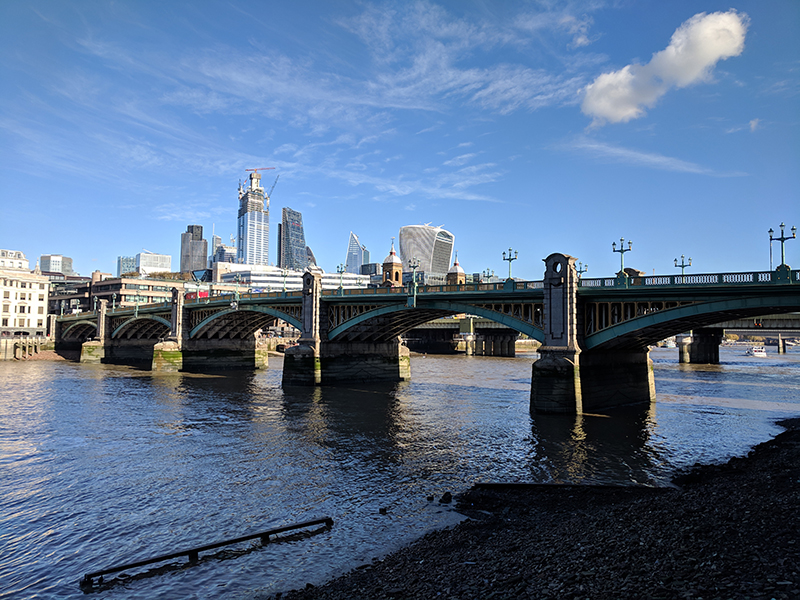
The bridge itself, something of a Cinderella as far as central London crossings of the Thames are concerned, dates from 1921 in its current form. The bridge was designed and engineered by Ernest George and Basil Mott respectively, the latter also partly responsible for the Mersey Tunnel. And there’s not really much else to say about it to be honest.

IMG_20181102_130219

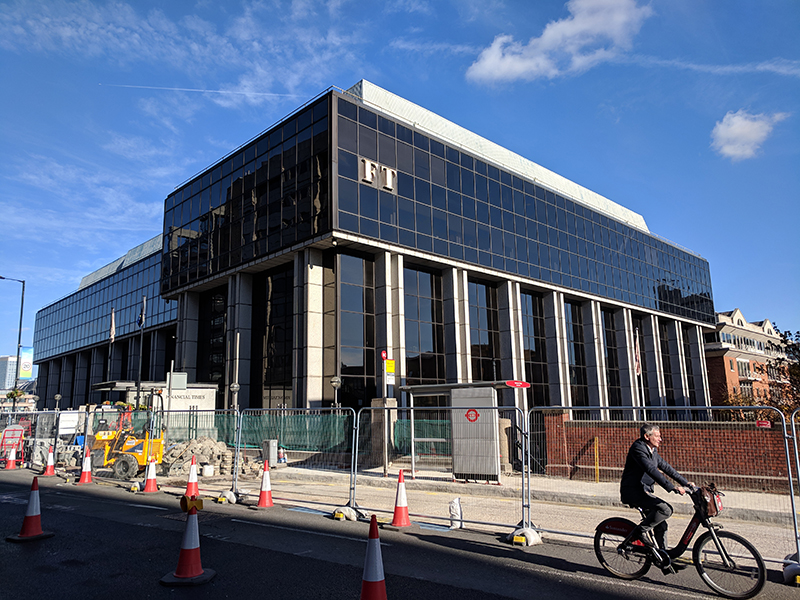
At the southern end of the bridge sits the current HQ of the Financial Times. I say current because at the time of writing the FT’s owners Nikkei (who acquired from Pearson in 2015) have just announced plans to sell the building ahead of a move back to the FT’s previous offices at Bracken House near St Paul’s in 2019. One Southwark Bridge has been the FT’s home since 1989.
IMG_20181102_125810

We drop down from the bridge onto Bankside and head east as far as the Anchor pub. The pub started life as the ‘brewery tap room’ for the Anchor Brewery which was established in 1616 on land adjacent to the original Globe Theatre and by the early nineteenth century was the largest brewery in the world. After being destroyed in the Great Fire the pub was rebuilt in 1676 and largely reconstructed again in the 19th century. The brewery was taken on by the newly founded Barclay Perkins & Co. in 1781 and Barclays survived as an independent brand (including their famous Russian Imperial Stout) up until 1955 and a merger with Courage. Brewing continued on the site under Courage but last orders were called in the early 1970’s and the buildings were demolished in 1981.

Beyond the pub we turn away from the river up Bank End which soon forms a junction with two more parts of Park Street. We take the section heading back west which runs through where the Anchor Brewery stood (a plaque on the south side commemorates this) and arrive at the site of the original Globe Theatre just to the east of the Southwark Bridge Road flyover and less than a hundred metres from the Rose Theatre. The precise location of the Tudor Globe was only determined in 1989 when part of the foundations were discovered beneath the car park of Anchor Terrace a building of 1834 which originally housed senior employees of the brewery. As this is itself a listed building further excavations have not been possible. The Elizabethan Globe Theatre was built in 1599 on land leased by Richard Burbage and his brother Cuthbert along with Shakespeare and four other members of the Chamberlain’s Men company. It was partially constructed re-using timbers from “The Theatre” in Shoreditch; London’s first theatre which had been built in 1576 by the Burbage brothers’ father, James. As noted above, the theatre was enormously successful in its early years but in 1613, during a performance of Henry VIII, wadding from a stage cannon ignited the thatched roof and the theatre burned to the ground. It was hastily rebuilt, with a tiled roof, and continued as a playhouse until 1642 when the Cromwell’s Puritan administration forced its closure. It was demolished to make way for tenements two years later.

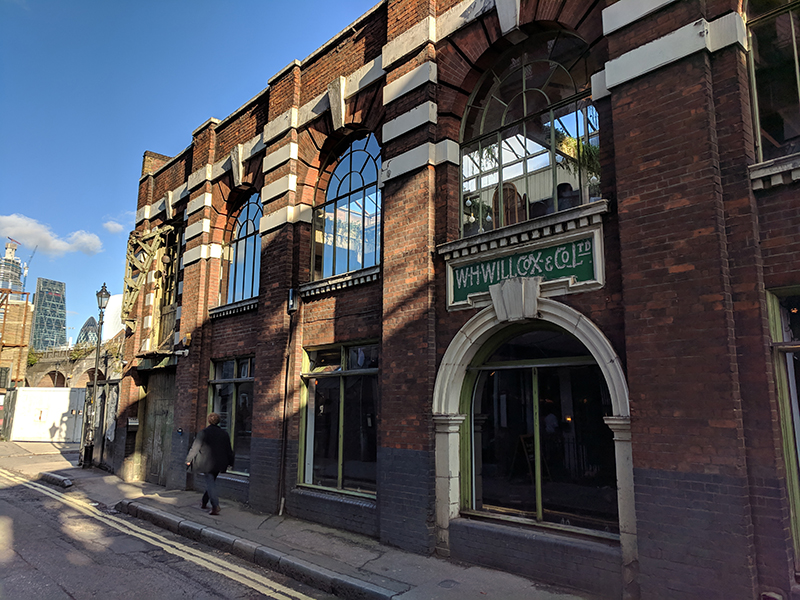
Doubling back along Park Street we turn south next down Porter Street then work our way though Gatehouse Square, Perkins Square and Maiden Lane back to the final, most easterly stretch of Park Street. From here we link back to Southwark Street via Redcross Way where the façade of the old W.H. Willcox & Co. engineering company building still clings on. Lord knows where you have to go these days to get your crank-pin lubricators.
IMG_20181102_135540

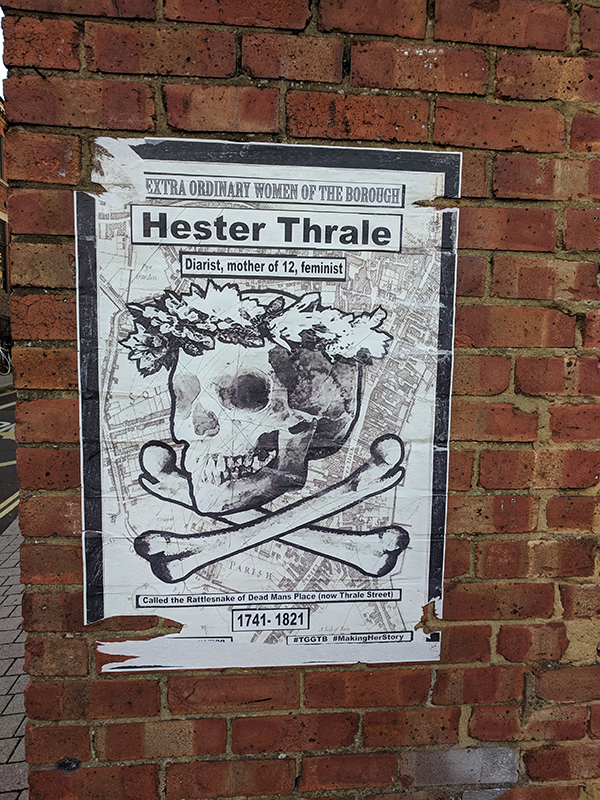
We turn west for a bit along Southwark Street then fork right down Thrale Street,  named after Henry Thrale the eighteenth century politician who was a friend of Samuel Johnson and who inherited the Anchor Brewery from his father (it then being sold to Messrs Barclay and Perkins upon his death). His wife, Hester, bore him 12 children and outlived him by forty years. Hester Thrale was a formidable woman; in addition to her procreational achievements she was a noted diarist, author and patron of the arts. She also rescued her husband from probable bankruptcy by raising the money to clear his debts of £130,000 that resulted from a failed scheme to brew beer without malt or hops.

IMG_20181102_153106

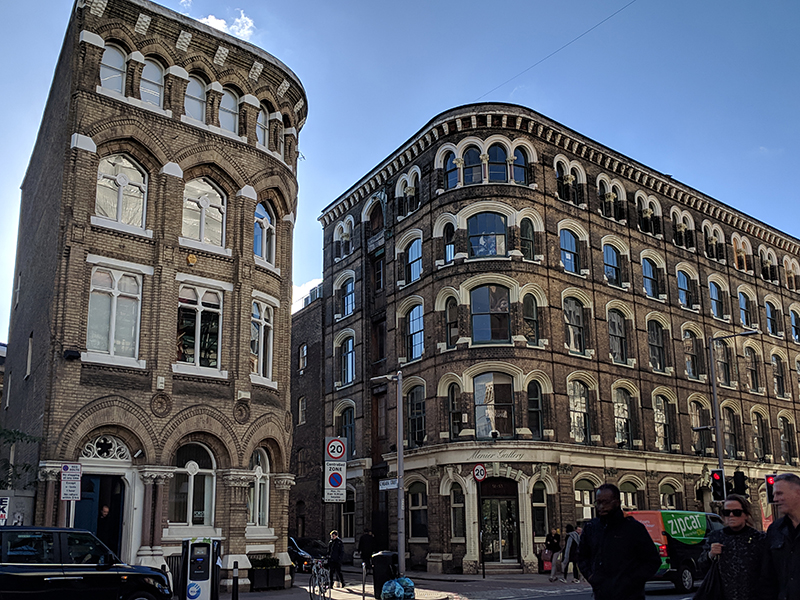
At the end of Thrale Street we turn left onto Southwark Bridge Road then right onto Southwark Street again. This takes us past the Menier Chocolate Factory building built by the French company, Chocolat Menier, in the 1870s. Menier eventually became part of the Rowntree Macintosh group which was in turn swallowed up by Nestle. Confectionery production had ceased here by the 1980s and the building was derelict until it was resurrected as an arts and theatre space in 2004. The Menier Chocolate Factory theatre has an impressive list of productions under its belt, including some particularly lauded musical revivals such as A Little Night Music and La Cage Aux Folles which both transferred to Broadway in 2010.

IMG_20181102_135730

Beyond the Chocolate Factory we turn south down Omeara Street where we find the dramatically-named Roman Catholic Church of the Most Precious Blood. The Parish was founded in 1891 and the church was designed by Frederick Arthur Walters who was also the architect for Buckfast Abbey.

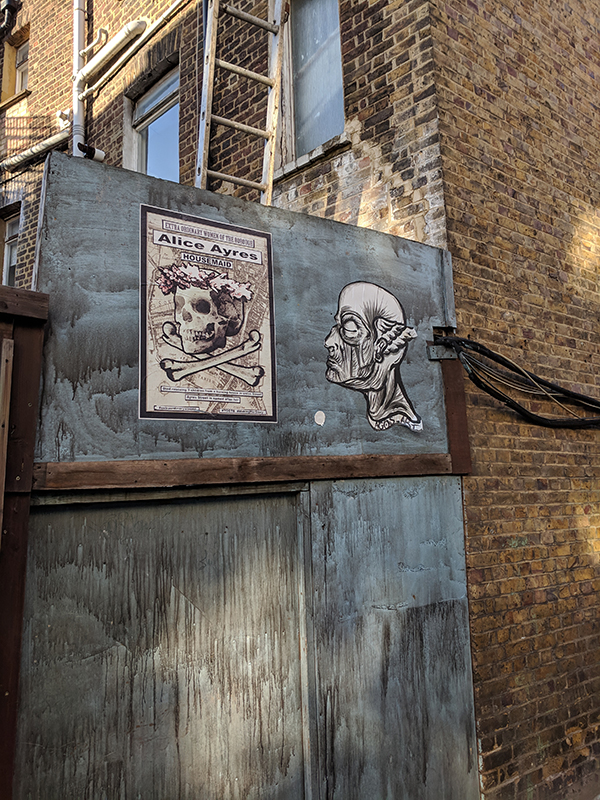
At the end of Omeara Street we cross over Union Street and continue south on Ayres Street. The street used to be known as White Cross Street but was renamed in 1936 by the then Labour-led LCC in honour of Alice Ayres, a nursemaid who attained a form of secular canonisation in the Victorian era after she died rescuing the three young children in her care (the daughters of her elder sister, Mary Ann) from a house fire. Such was the public interest in the story that Alice’s funeral was attended by 10,000 mourners and a memorial fund set up raised £100 for the erection of a granite obelisk monument above her grave in Isleworth cemetery.

IMG_20181102_143938

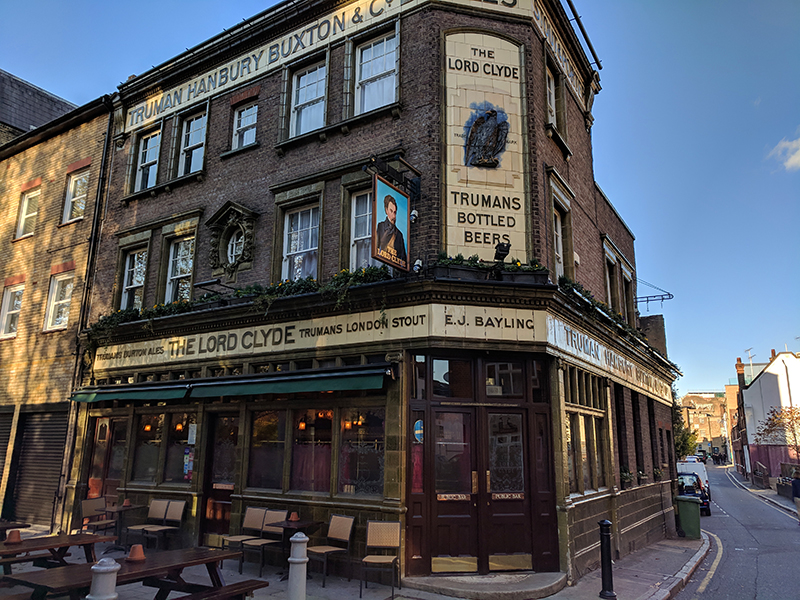
On the corner of Ayres Street and Clennam Street stands the Lord Clyde pub, one of the all-too-few remaining classic style Trumans Beer alehouses. Named after Field Marshal Sir Colin Campbell, 1st Baron Clyde, GCB, KSI, who commanded the Highland Brigade in the Crimean War and led the troops who quelled the Indian Mutiny of 1857, the pub has remained unchanged since it was built in 1913 and has been run by the same family, the Fitzpatricks, for over 60 years.

IMG_20181102_144151

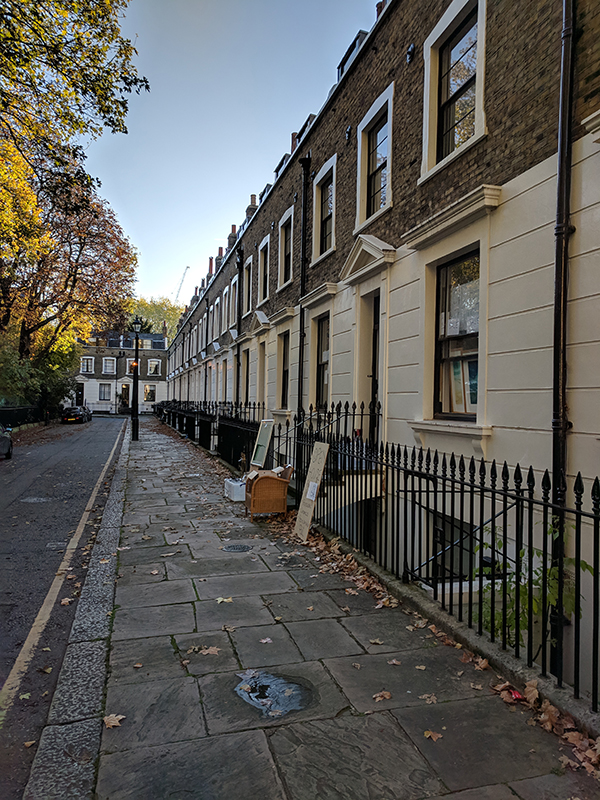
We turn left onto Marshalsea Road then almost immediately left down Quilp Street (the other section of which we visited last time). Off of Quilp Street is Dorrit Street which is basically a twenty-yard cul-de-sac and therefore crying out to be prefaced by the word Little; so one can only assume it was left off out of embarrassed deference towards Dickens’ titular heroine. Quilp Street disgorges into Redcross Way which we hop over into Disney Street then dog-leg round Disney Place back onto Marshalsea Road. Cross over into Sanctuary Street which we follow south as far as Lant Street where we turn left down onto Borough High Street. Continue south down to Trinity Street where we turn east past Trio Place then head south along Swan Street to Harper Road. Turning left onto Harper Road and then left again down Brockham Street brings us into Trinity Church Square, comprised of immaculately maintained Georgian terrace houses such as are the go-to residences for characters of any social station in London-set Hollywood films.

IMG_20181102_145712

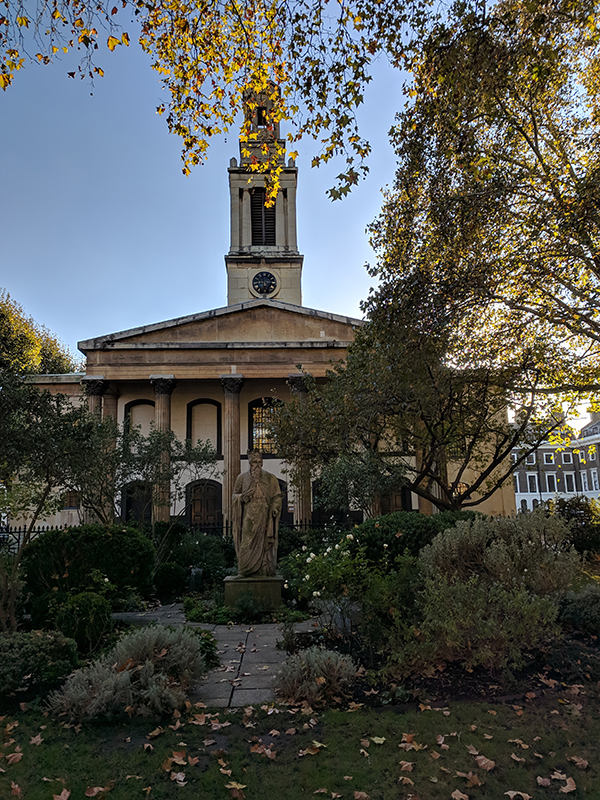
The eponymous church in the middle of the square was built in 1824 and designed by architect Francis Bedford. In 1968 it was declared redundant and in the 1970s was converted into an orchestral rehearsal studio for the London Philharmonic and London Symphony Orchestras and named after the conductor, Sir Henry Wood. On the north side of the church there is a statue reputed to be of King Alfred the Great. It’s suggested that it could be one of eight medieval statues from the north end towers of Westminster Hall (c. late 14th century) or, alternatively, one of a pair representing Alfred and Edward, the Black Prince, made for the garden of Carlton House in the 18th century.

IMG_20181102_145909

Having completed a circuit of the square we return up Brockham Street to Harper Road then take the next left into Dickens Square before cutting through Dickens Fields to Falmouth Road. We take Falmouth Road down to Great Dover Street (A2) and turn right briefly for a contractual look at Sturgeon Street before heading back west along Trinity Street. A diversion round Merrick Square gives us a chance to admire some more of those Georgian terraces.

IMG_20181102_151835

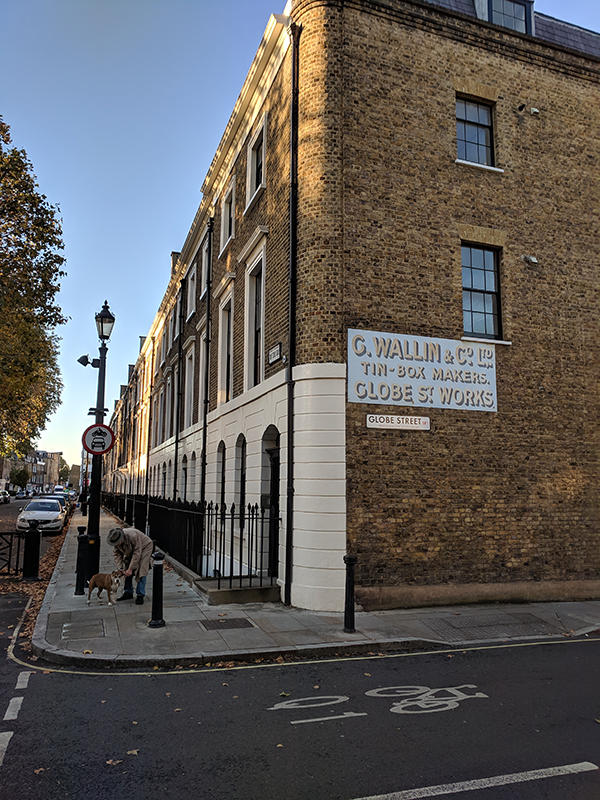
On the corner with Globe Street the bloke in the picture below taps me for £2 (to buy food for the dog) after spotting my remembrance poppy by claiming to have spent 6 years in the RAF before being discharged with a fractured skull that still troubles him. He then went on to bemoan the fact that “everyone else round here is foreign and doesn’t speak English”. Unfortunately I’d already parted with the cash by then.


IMG_20181102_151942

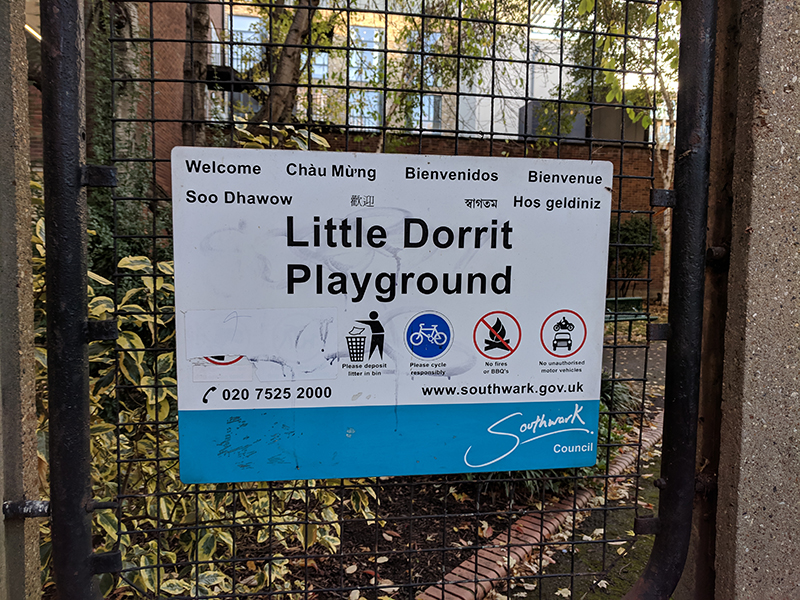
So we cut down Globe Street into Cole Street which runs down to Swan Street where we take a right back to Great Dover Street. From here we head down to the four-way junction by Borough Tube Station and take Borough High Street southward for about a hundred metres before turning left into Little Dorrit Court. A little bit more respectful to the fictional Amy and she has a playground named after her too.

IMG_20181102_152634

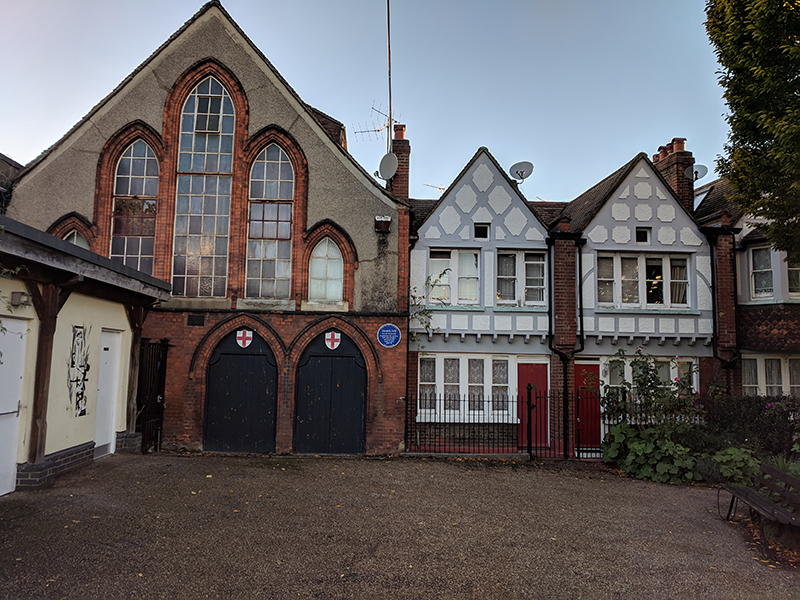
Little Dorrit Court returns us to Redcross Way across the street from Redcross Garden which along with the six cottages which flank it in one side was created by the social reformer, Octavia Hill (who we covered in detail in the last post).

IMG_20181102_152944

We follow Redcross Way back to the corner with Union Street and the last port of call for today which is the Crossbones Graveyard a disused post-medieval burial ground in which up to 15,000 people are believed to have been buried. Cross Bones is thought to have been established originally as an unconsecrated graveyard for prostitutes, or “single women”, who were known locally as “Winchester Geese” because they were licensed by the Bishop of Winchester to work within the Liberty of the Clink which lay outside the legal scope of the City of London. It was closed in 1853. Today the iron gates surrounding the graveyard are festooned with ribbons, feathers, beads and other tokens commemorating the “Outcast Dead” buried here.  In 2007, Transport for London, which now owns the site, gave playwright John Constable access inside the gates, where he and other volunteers have created a wild garden.  An informal group known as the Friends of Cross Bones is working to ensure that a planned redevelopment of the site preserves the garden as a more permanent place of reflection and remembrance.


Day 55 – The Cut – St George’s Circus – London Road – Borough Road – Blackfriars Road

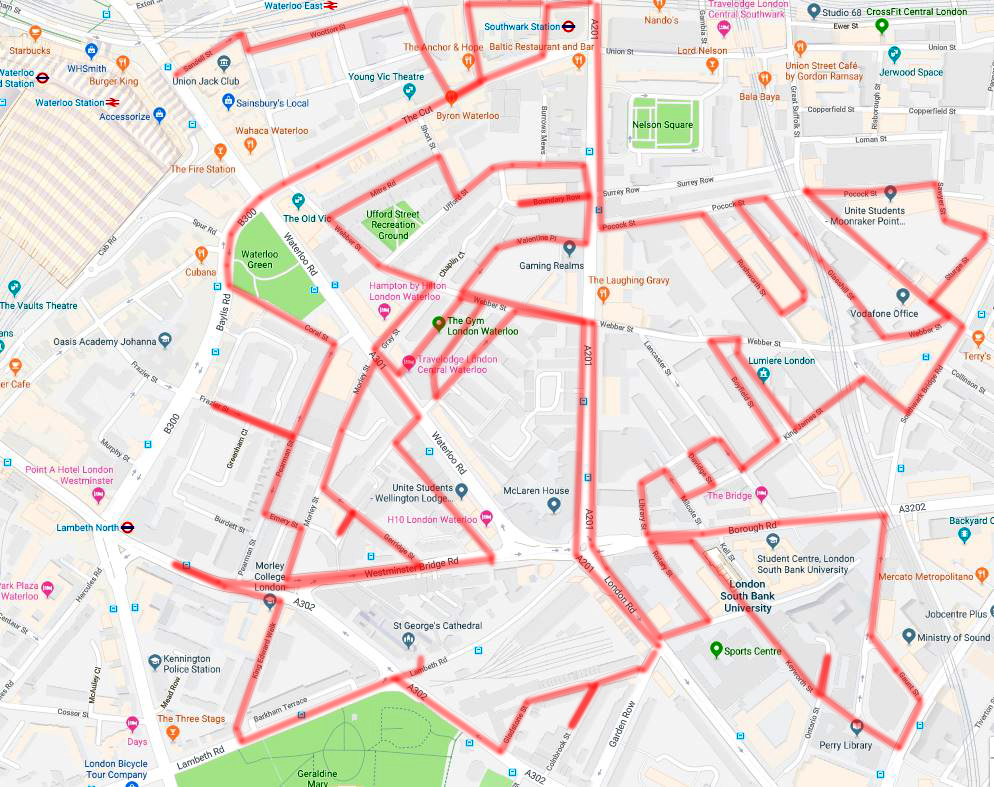
I think it’s fair to say that just about everywhere I’ve visited so far during this project is a places I’ve been to at least once before during the thirty odd years I’ve been resident in the London Metropolitan Area. Today’s foray however took me to some locations that I had genuinely never set eyes on before (and to be honest am unlikely to ever again). We’re taking about the area to the south and east of Waterloo stretching almost as far from the river as the wilds of the Elephant & Castle.

Day 55 Route

For the third and final time we set out from Waterloo Station, taking Sandell Street to the east then hopping over Cornwall Road into Wootton Street. At the end of this we turn right on Greet Street and pay a brief first visit to The Cut before turning left down Hatfields. On reaching the railway track we follow leafy Isabella Street east in front of the parade of restaurants that now occupy the railway arches.

At the far end Joan Street dog legs left past the lumpen monstrosity that is Colombo House, a 1969-built outpost of the BT empire. We follow Joan Street back to Hatfields and then take Meymott Street east onto Blackfriars Road. The building below, 209-215, was refurbished as recently as 2011 but is apparently under threat of demolition as part of Southwark Council’s plans to turn the Blackfriars area into an extension of the City.

IMG_20180830_132047
IMG_20180830_132217
Just before the railway bridge we cut down an alleyway (unofficially known as Falafel Alley due to its being home to a number of Turkish foodstalls) and utilise this and the top section of Joan Street to circumvent Southwark Tube Station in returning to The Cut which we then follow west all the way back to Waterloo Station. First point of interest en route is the Anchor and Hope pub, rebuilt here in 1936. The name, Anchor and Hope, and also its reverse which is more frequently encountered supposedly have a biblical origin, being a reference to a quotation from the Letter to the Hebrews (6: 19), “We have this as a sure and steadfast anchor of the soul, a hope”.

IMG_20180830_132619

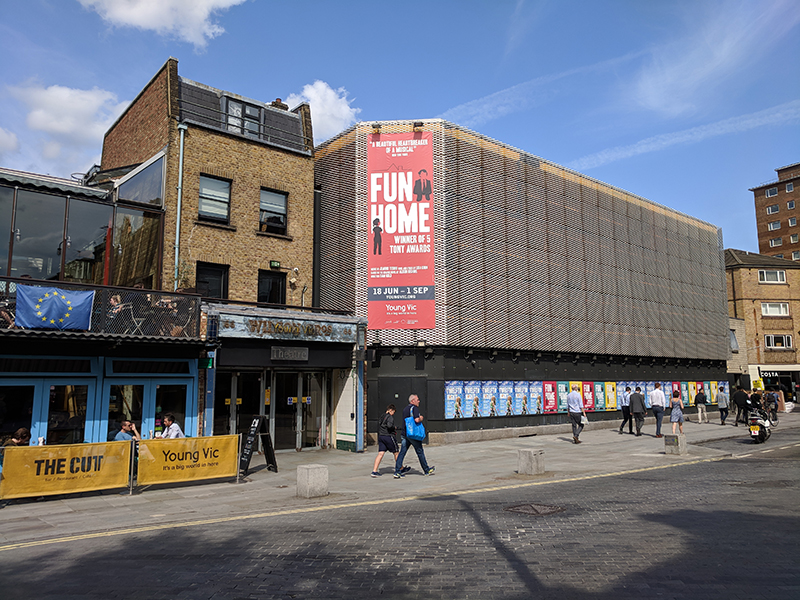
A short way further up on the same side of the street is the Young Vic theatre. The Young Vic Theatre Company was formed as an offshoot of the Old Vic (in the days when that was the home of the National Theatre) with a remit to produce classic plays for young audiences and also develop more experimental work. Its first Director, Frank Dunlop, oversaw the construction of the theatre building in 1970, taking over a butcher’s shop and extending onto a bomb-site where 54 people sheltering in a bakery had died in WW2. It was intended to last for five years, but has become a permanent venue.
The Young Vic primarily performs classic plays, but often in innovative productions. Many well-known actors have worked here including Ian Charleson, Vanessa Redgrave, Helen Mirren, Judi Dench, Timothy Dalton, Robert Lindsay, Willard White, John Malkovich, Michael Sheen and Arthur Lowe.
The Who performed free weekly concerts at the Young Vic in early 1971 in order to rehearse their  album, Who’s Next. One of these shows was released on the Deluxe edition of the album. Between 2004 and 2006 the old breeze-block building was rebuilt, though the main auditorium was left intact and the butcher’s shop was retained as the main entrance and the box office.

IMG_20180830_132813

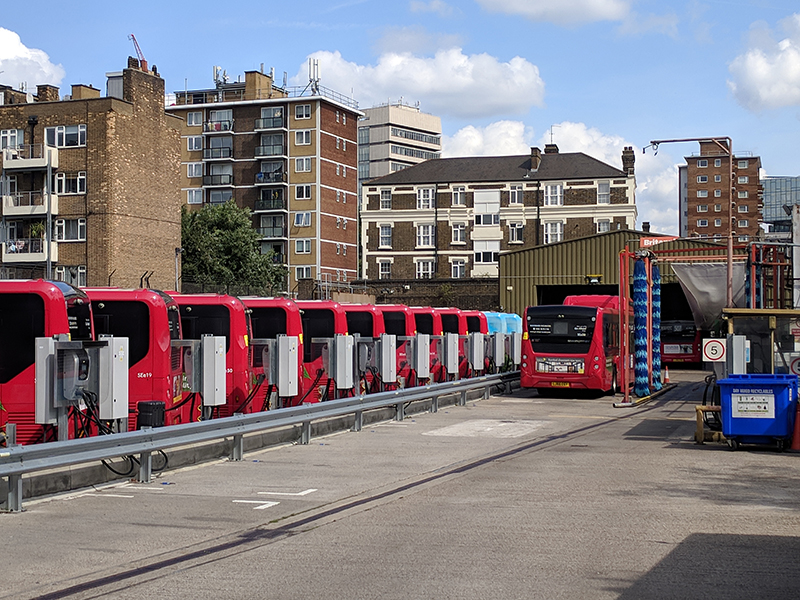
Just before we get to the end of The Cut we take a quick detour off to the right down the southern-most section of Cornwall Road. Down here are the sleeping quarters for the single-decker 521 and 507 buses which link Waterloo Station with its mainline counterparts at London Bridge and Victoria respectively.

IMG_20180830_133134

Back up on The Cut we come to the Old Vic theatre, standing on the corner with Waterloo Road. A theatre was first established here in 1818 and known as the Royal Coburg Theatre. In 1833 it was renamed the Royal Victoria Theatre and in 1871 was rebuilt and reopened as the Royal Victoria Palace. It was then taken over by the philanthropist Emma Cons (1838 – 1912) in 1880 and formally named the Royal Victoria Hall, although by this time it was already known as the “Old Vic”. In 1898, a niece of Cons, Lilian Baylis (1874 – 1937), the force behind Sadler’s Wells, assumed management and began a series of Shakespeare productions from 1914 onward. The building was damaged in 1940 during air raids and it became a Grade II listed building in 1951 after it reopened. As noted in the last post, the Old Vic was the first home of the National Theatre from 1963 up until 1976. In 1982 the theatre was put up for sale through a sealed bid. Canadian entrepreneur Ed Mirvish outbid Andrew Lloyd Webber and spent £2.5 million restoring the building. The facade of the building was based on an 1830 engraving while the auditorium was modelled on the designs of 1871. In 1998 the Mirvish family put the theatre on the market. Suggestions for changing it into a themed pub, a bingo hall or a lap-dancing club provoked widespread outrage and protests, in response to which, it was acquired by The Old Vic Theatre Trust 2000, a registered charity. In 2003 it was announce that the theatre would recommence in-house production (rather than just being a home for visiting productions) with Kevin Spacey appointed as the first Artistic Director of the newly created Old Vic Theatre Company. Spacey’s tenure ended in 2015 and we all know what’s happened subsequently. Following an initial allegation of sexual misconduct against Spacey by actor Anthony Rapp up to 20 employees of the Old Vic have come forward with similar complaints of unwanted advances. To put it mildly, not exactly what the Old Vic would have wanted as it celebrates its 200th anniversary in 2018.

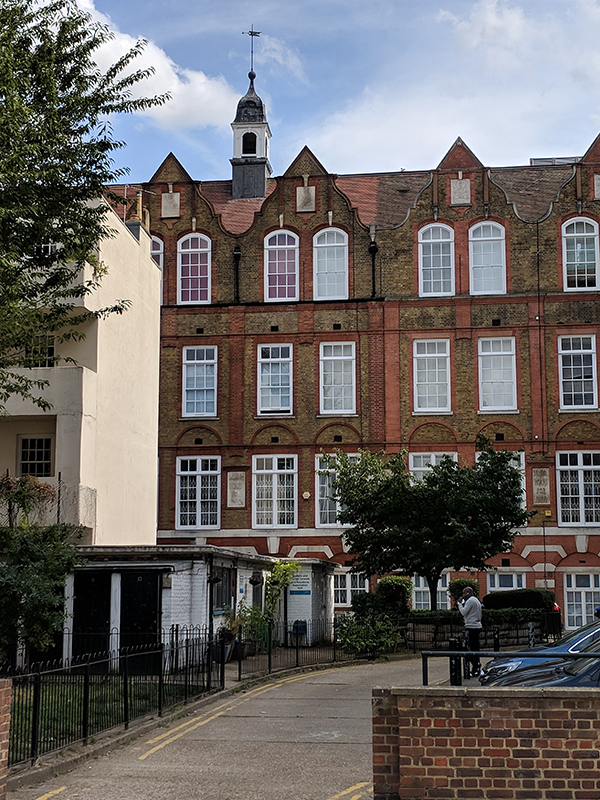
Passing the theatre we cross Waterloo Road into Baylis Road, named after Lilian, and then on the other side of Waterloo Green turn south down Coral Street. At the end we take a right into Pearman Street and, after a quick dip into Frazier Street, follow this down as far as Emery Street which links through to the parallel running Morley Street emerging opposite the former Webber Row School which was built in 1877 at the height of the Victorian era. Grade II listed since 1988 it’s now the Chandlery Business Centre.

IMG_20180830_134329

We follow Morley Street into Westminster Bridge Road and turn east as far as Gerridge Street which reconnects with Morley Street via Dibdin Row. Morley Street then takes us back to Waterloo Road from where we close the loop courtesy of Webber Row and Dodson Street.  Having arrived back on Westminster Bridge Road we strike north until we get to the Perspective Building at no. 100 then double back. In its former guise as Century House this was the home of the Secret Intelligence Service (SIS) aka MI6 from 1964 to 1994.  The Secret Service’s occupation of the building was supposedly classified information but according to the Daily Telegraph it was “London’s worst-kept secret, known only to every taxi driver, tourist guide and KGB agent”. Century House was described as “irredeemably insecure” in a 1985 National Audit Office (NAO) report with security concerns raised in a survey i.e. the building was made largely of glass, and had a petrol station at its base. MI6 moved to Vauxhall Cross in 1994 (if you’ve seen Skyfall you know what an upgrade in security that was).  Century House was refurbished and converted into the residential Perspective Building by Assael Architecture in 2001.

IMG_20180830_135743

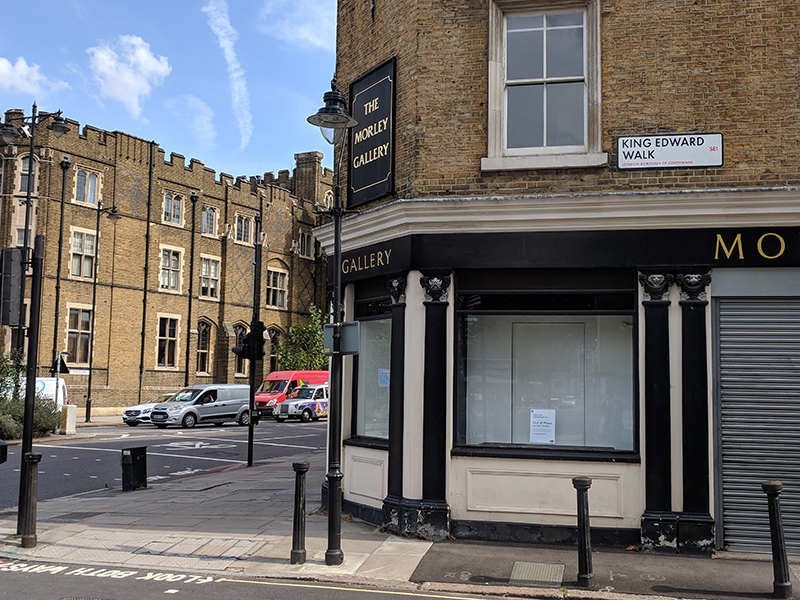
Returning southward along Westminster Bridge Road we arrive at Morley College, currently under redevelopment. Morley College is one of the main adult education centres in London; it was founded it the 1880’s and currently serves around 11,000 students. The college’s origins lie in the series of “penny lectures” introduced by the aforementioned Emma Cons as part of the programme of the Royal Victoria Hall when she took that over. The success of these led to the founding of the College thanks to an endowment from the MP, Samuel Morley. The College has been long renowned for its Music Department; Gustav Holst was Music Director from 1907 to 1924 and Michael Tippett held the same post from 1940 to 1951.

IMG_20180830_140003

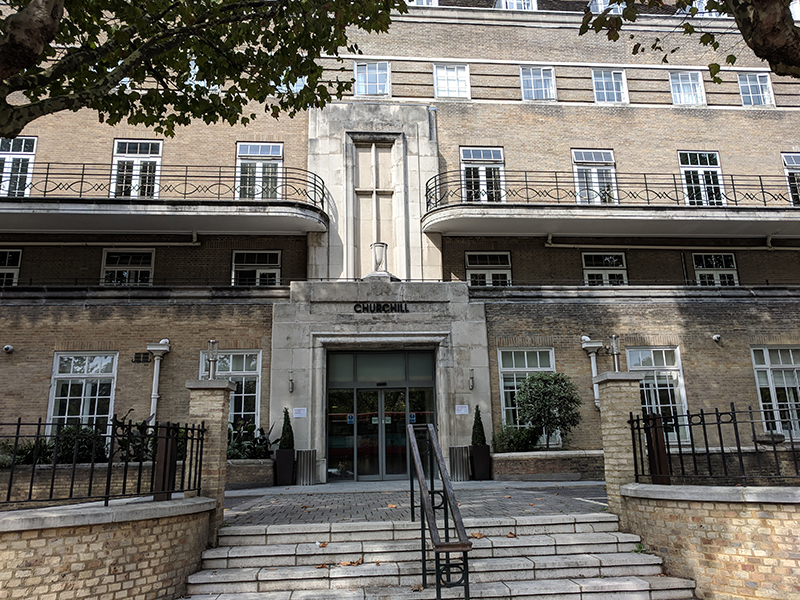
Turning the corner by the College we head down King Edward Walk until we reach Lambeth Road and turn left here, continuing on the opposite side of the road from the  grounds of the Imperial War Museum. Inset off the road here is Barkham Terrace which is mainly comprised of the building which now houses the Cambian Churchill mental health rehabilitation hospital. You wouldn’t know this from the outside though – I assumed it was just another residential conversion. The building dates from 1940 when it was opened as the Catholic Hospital of Our Lady of Consolation in Southwark. At the time the Catholic Herald described it as “ a splendid six-storey hospital whose creamy facade brightens the drabness of Lambeth Road”.

IMG_20180830_140237

At the junction of Lambeth Road and St George’s Road stands the Roman Catholic St George’s Cathedral, Southwark. St George’s was built in 1848 prompted by the swelling of the local congregation thanks to the influx of Irish immigrants into the area. Four years later it became one of the first four Catholic churches in England and Wales (and the first in London) to be raised to cathedral status since the English Reformation.  It was designed by Augustus Pugin (1812 – 1852), famous for his work with Charles Barry on the design of the rebuilt Houses of Parliament. Pugin was the first person to be married in the church, to his third wife Jane. The Cathedral was extensively damaged by an incendiary bomb during WW2. After the war (the fabulously named) Romilly Craze was commissioned to take charge of the rebuilding and the restored Cathedral was opened in 1958. Since then it has resumed its role as a focal point in the local community and has played host to many notable visitors, including the Dalai Lama (1998) and Pope John Paul II (1982), the latter being depicted in one of the Cathedral’s many fine stained-glass windows.

This slideshow requires JavaScript.

After our visit to the church we head south on St George’s Road towards Elephant & Castle. Having passed Notre Dame High School for Girls, founded by the Sisters of Notre Dame de Namur in 1855, we turn off to the left down Gladstone Street.

Gladstone Street and its offshoot, Colnbrook Street, are the epitome of the gentrification of this part of south London with their smartly done-up early Victorian terrace properties.
IMG_20180830_142543

This is reinforced by today’s pub of the day, the Albert Arms, which sits on the corner of Gladstone Street and Garden Row just across from the converted Ice Cream Factory. The gastro-pub menu isn’t really conducive to light lunchtime eating but it was gone 2.30pm and I was starving so I felt compelled to stump up £6.50 for three very small pulled-pork croquettes. In the Gents they’ve put up a framed poster of that lady tennis player scratching her bare bottom – I assume this is hipster irony.

IMG_20180830_142951

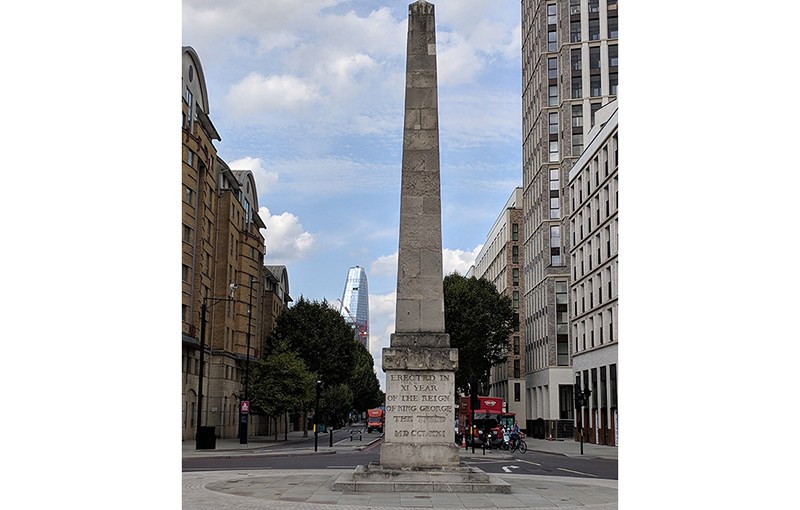
Having finished the aforementioned croquettes (and half a lager) I venture out onto London Road and take a northward turn, past several far more suitable eating spots, up to St George’s Circus. This nexus of five main arterial roads was created in 1771 as the first purpose-built traffic junction in London. Initially the middle of the roundabout was adorned by an obelisk with four oil lamps affixed to it but in 1905 this was relocated to in front of the Imperial War Museum and was replaced by a new clocktower. However by the 1930’s the clocktower was deemed a “nuisance to traffic” and was demolished. It took until the late 1990s before the obelisk was returned to its original location, now without the oil lamps. At the base of the obelisk is the inscription Erected in XI year of the reign of King George MDCCLXXI, with the inscriptions on the other three sides reflecting the obelisk’s one-mile distance from Palace Yard, London Bridge and Fleet Street.

This slideshow requires JavaScript.

Crossing over the Circus we continue north up Blackfriars Road for some distance before turning off west along Webber Street which is on the far side of another of the Peabody Estates we’ve become familiar with.

IMG_20180830_150521

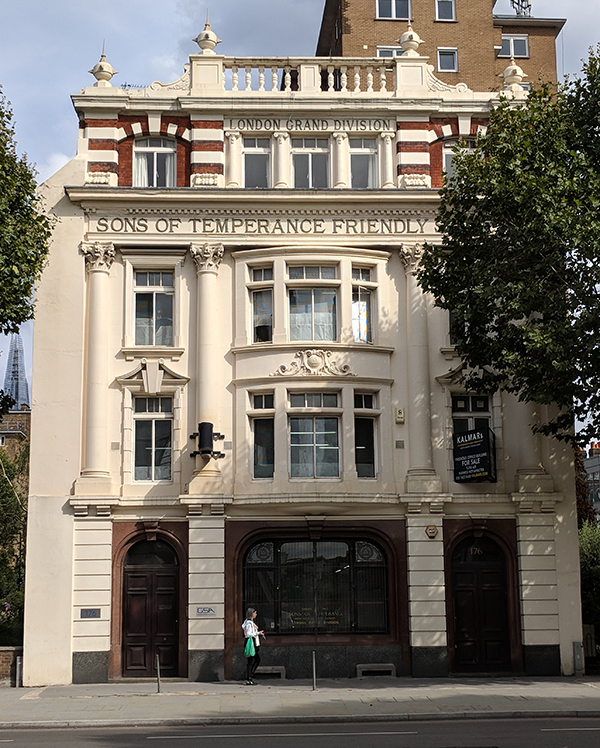
We’re heading back down towards the Old Vic now, criss-crossing between Webber Street and Waterloo Road by way of Webber Row, Baron’s Place and Gray Street. Just before we reach the theatre we take a sharp right onto Mitre Street and then navigate our way back to Blackfriars Road via Short Street and Ufford Street. At no.176 Blackfriars Road is the rather splendid (former) Sons of Temperance Friendly Society Building. The Order of the Sons of Temperance (SOT) was established in New York in 1842 as a teetotalist friendly society, with the dual aim of sustaining its members in a teetotal way of life, and of providing them with a modicum of financial security in case of ill-health, and their families with an insurance payment in the event of their death. The organisation, conceived on Masonic principles with lodges, insignia and rituals, overseen by a Supreme Patriarch, soon spread to other US states and to several Canadian provinces, and had amassed 100,000 members by 1847. The first UK lodges were established in Liverpool and other northern cities in the late 1840s, and in 1853 a National Division of Great Britain was formed. Within this were numerous Grand Divisions, the largest of which, based in London but with branches as far afield as Ipswich and Reading, commissioned the building of 176, Blackfriars Road as its headquarters in 1909-10 with Arthur Charles Russell as architect. The SOT only moved out in 2011 two years after which the building, now occupied by an architect’s practice, was Grade II listed.

IMG_20180830_152502

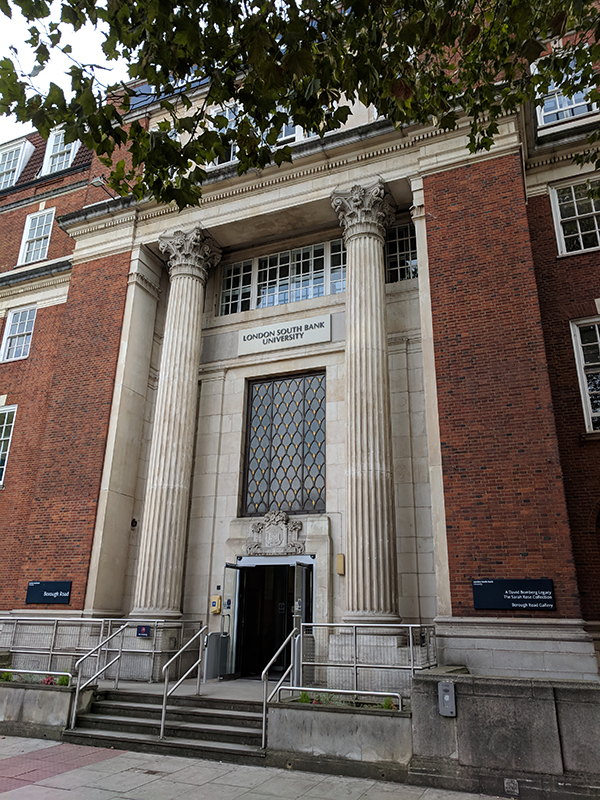
From here on there’s still a lot of streets to cover though not much to detain us en route so we’ll crack on. First off we work our way back to St George’s Circus passing through Boundary Row, Chaplin Close, Valentine Place and Webber Street then retracing our steps up Blackfriars Road. We then return to London Road and head off to the east side starting with Thomas Doyle Street, named after the founder of St George’s Cathedral (check the earlier slideshow for his memorial). This is the first of the streets that fall within the triangle created by London Road, Southwark Bridge Road and Borough Road, the others being Rotary Street, Keyworth Street, Ontario Street and Kell Street. Once we’ve tramped round that lot we end up on Borough Street by the entrance to London South Bank University, an institution which started life as the Borough Polytechnic Institute in 1892.

IMG_20180830_155227

On the other side of the road is another of the public libraries funded by the Victorian philanthropist (word of the day that) John Passmore Edwards. Most of these were built in the East End (we came across the one in Pitfield Street, Hoxton way back in Day 24). This one dates from 1899 and is currently unoccupied save for the presence of  “guardians” installed by the Camelot vacant property services company so its future is uncertain.

Traversing the area between Borough Road and the eastern stretch of Webber Street to the north takes us, in turn, through Library Street, Milcot Street, King James Street, Lancaster Street, Boyfield Street, Silex Street and Belvedere Buildings. The only thing to draw the eye amongst all that lot is this building, the Peabody Gateway Centre, and even that isn’t interesting enough for anyone to have recorded any information about it.

IMG_20180830_155826

Anyway, after all that we find ourselves back on Southwark Bridge Road from where we’re crossing between Webber Street to the south and Pocock Street to the north taking in Great Suffolk Street, Surge Street, Sawyer Street, Glasshill Street, King’s Bench Street and Rushworth Street. Final picture of the day is of Blackfriars Crown Court on Pocock Street which, earlier this year (2108), the Ministry of Justice announced plans to close and sell off. The site is valued at £32m on the Government’s National Asset Register.

IMG_20180830_161026

And so the very final leg of today’s marathon takes us from Pocock Street back onto Blackfriars Road and up to Southwark Tube Station. The tube station stands on the site of the Blackfriars Ring boxing arena that was bombed out of existence in 1940. The Ring arena was originally called the Surrey Chapel, built in 1783, until the strange shaped building was bought by former British Lightweight champion Dick Burge in 1910. Together with his wife Bella they staged many boxing matches including well known fighters such as Len Johnson, Jack Drummond, Alf Mancini, Jack Hood and the legendary Ted ‘Kid’ Lewis. This is all commemorated by the Ring public house that stands opposite the station on the other corner of The Cut and Blackfriars Road.