Day 83 – Fulham Road – Old Brompton Road – Cromwell Road – Natural History Museum

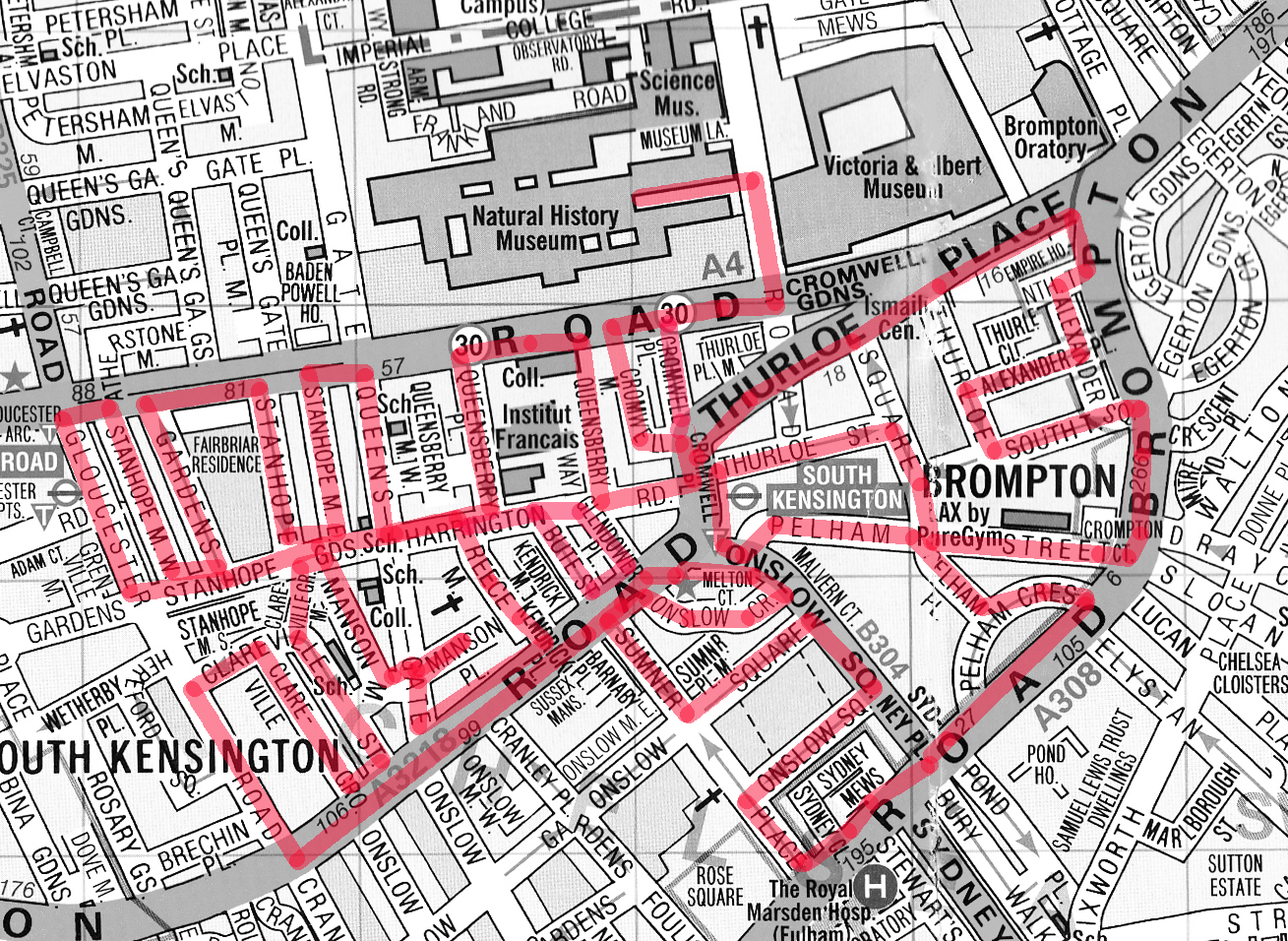
For today’s outing we’ve returned to SW7 to explore the area around South Kensington tube in between the Brompton Road and Gloucester Road. To avoid overload I’ve parcelled up this part of London so that no single post covers more than one of the big three museums on Exhibition Road. We already dealt with the V&A in Day 81 so today it’s the turn of the Natural History Museum where we’ll finish up. En route we’ll encounter a plethora of former residents and delve into the French influence on the area.
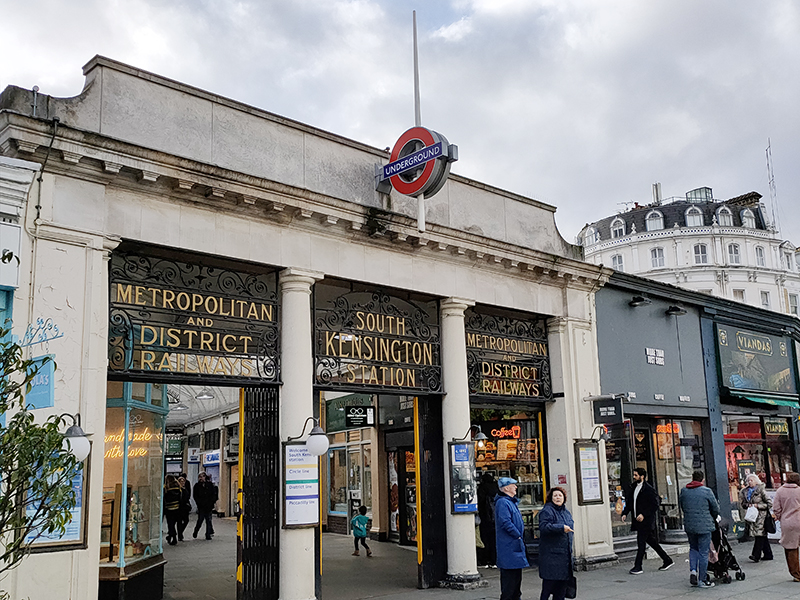
We start out from South Kensington Tube station which opened on Christmas Eve 1868. Designed by Sir John Fowler, it was originally known as Brompton Exchange and formed part of the Metropolitan Line. Following the construction of the deep-level Piccadilly Line link in 1905-06, Leslie Green designed a separate entrance on Pelham Street and George Sherrin was engaged to remodel the existing entrance and booking hall, and lay out a street-level arcade between Thurloe and Pelham Streets. This Edwardian arcade with its glazed barrel-vaulted roof above shops on each side and wrought iron screens at either end is the station’s USP.
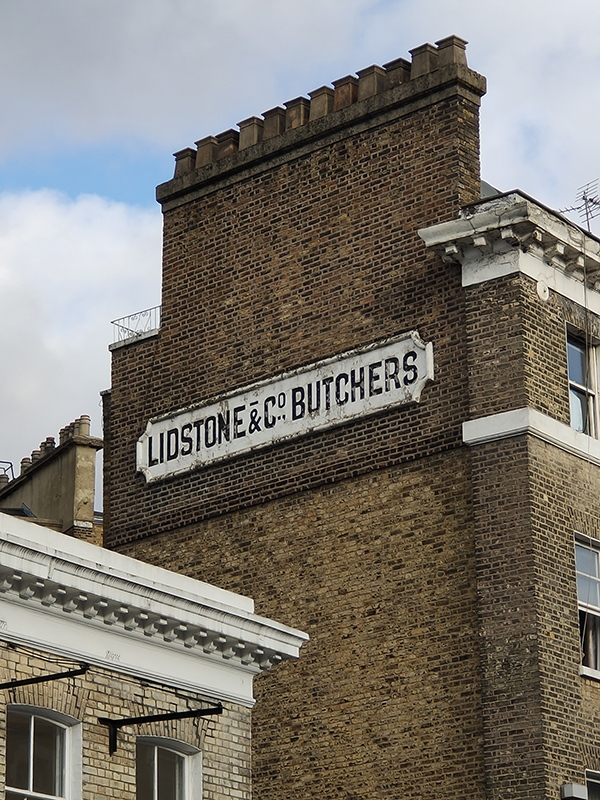
On exiting the station we head east on Thurloe Place, home to this “ghost sign” which dates from 1871 when butchers to the gentry “Lidstone Harris & Co” slimmed down to simply “Lidstone & Co” following Harris Crimp’s retirement from the business leaving Thomas Lidstone to go it alone.
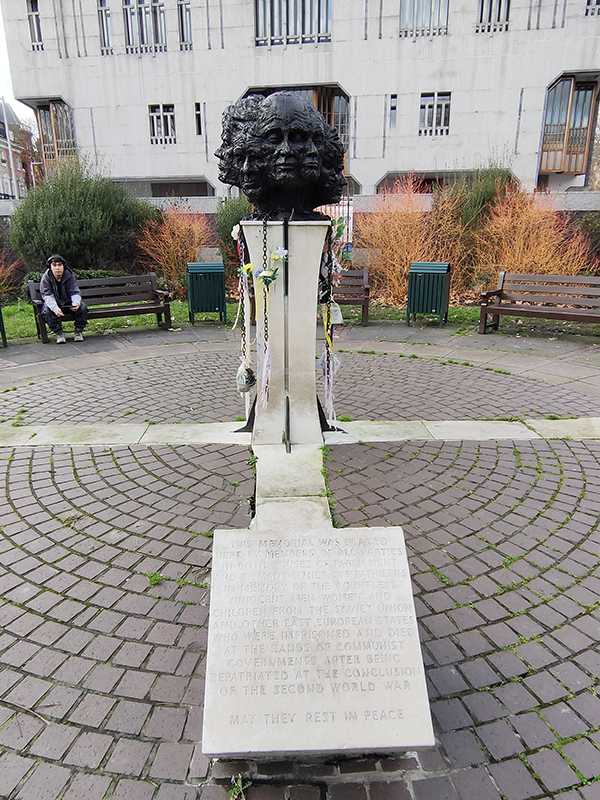
At the nexus of Thurloe Place the tiny Yalta Memorial Garden is home to Twelve Responses to Tragedy, a memorial to the people displaced as a result of the Yalta Conference at the conclusion of WWII. Created by the British sculptor Angela Conner, the work consists of twelve bronze busts atop a stone base. The memorial was dedicated in 1986 to replace a previous memorial (also by Conner) from 1982 that had been repeatedly damaged by vandalism.
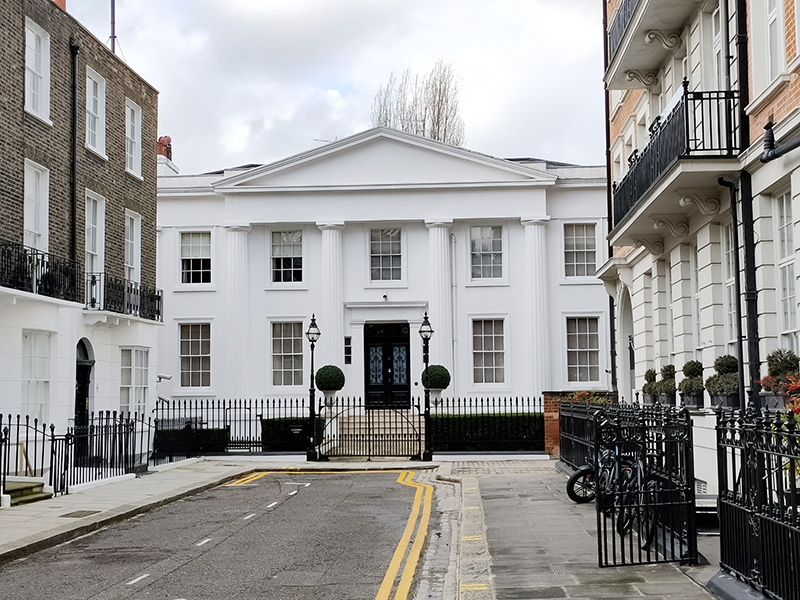
Having turn right onto the Brompton Road we make another right immediately into North Terrace at the end of which is the Grade II listed Alexander House, dating from the early 19th century.
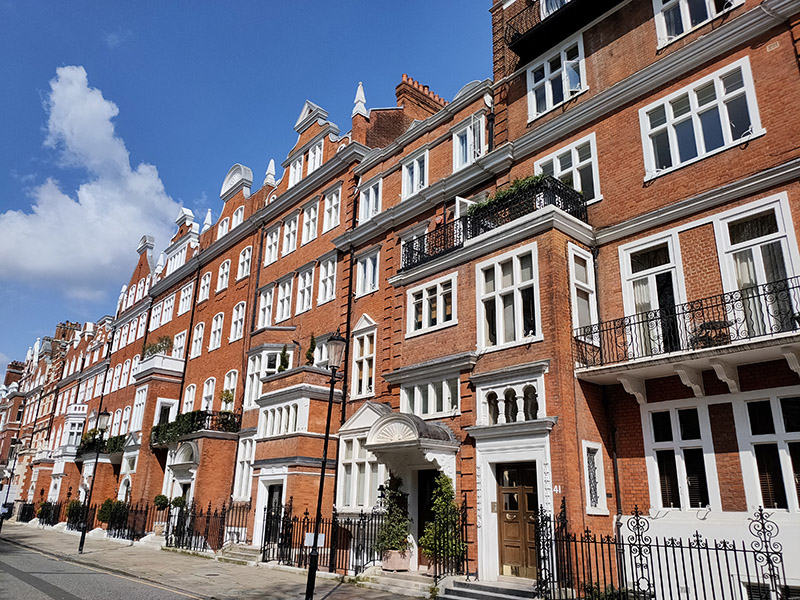
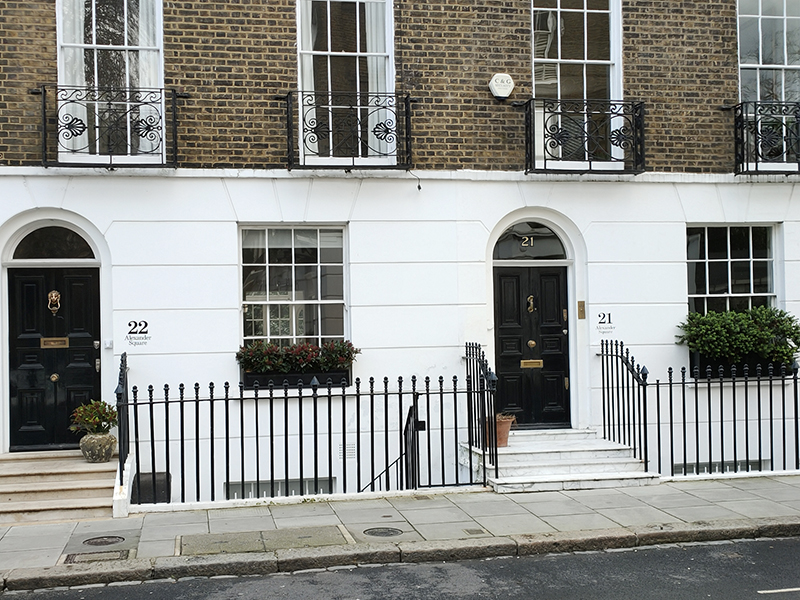
We make our way back to the Brompton Road via Alexander Square, Alexander Place, Thurloe Square and South Terrace. John Thurloe, an advisor to Oliver Cromwell, owned the land round here in the 17th century. John Alexander, godson of one of Thurloe’s descendants developed the area in the 1820’s. Although we’ve seen this type of Georgian housing many times before these residences are somewhat unusual in having the name of the street/square on which they sit painted alongside the property number.
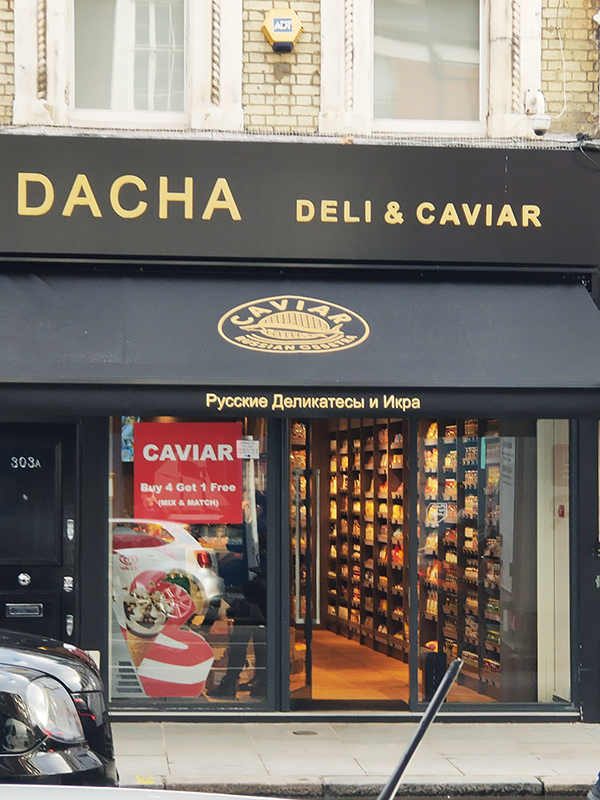
Brompton Road is home to quite a number of independent and exclusive boutiques. On this short stretch down to the top of Sloane Street we have, inter alia, a luxury Italian furniture showroom, a Russian caviar shop and an Artesian (sic) Tailors (presumably everything is Well-fitted).
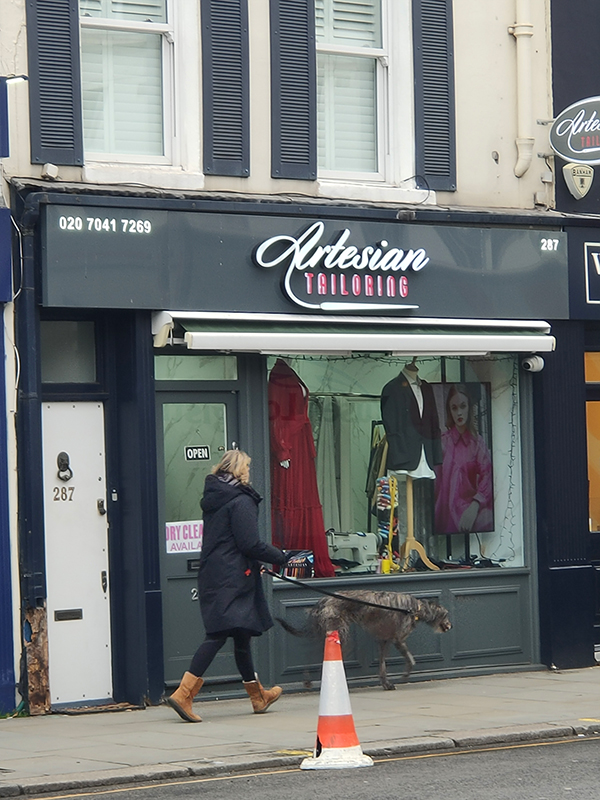
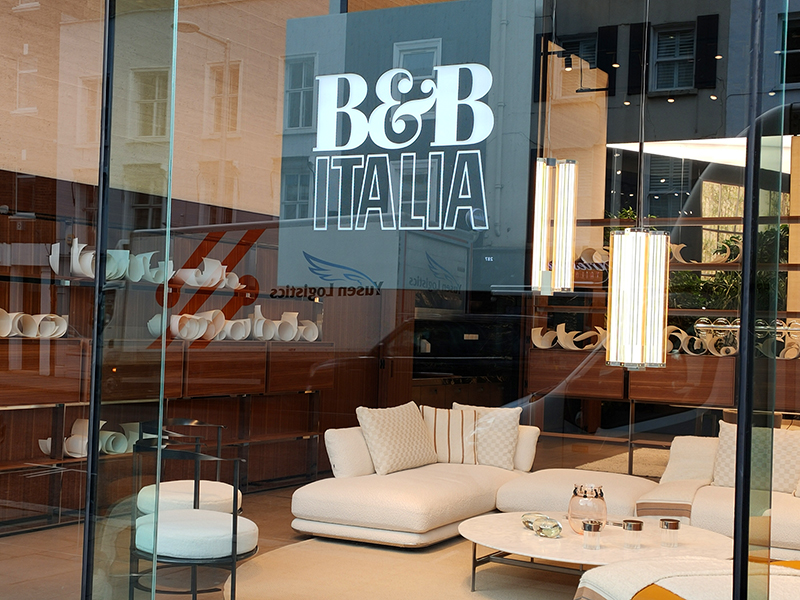
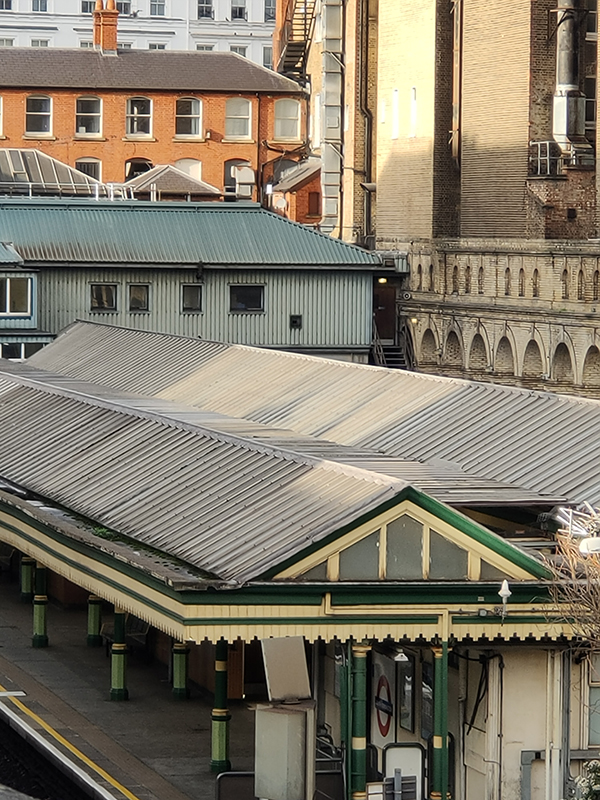
Next, Pelham Street takes us back to South Ken tube which we circumnavigate this time via Cromwell Place, Thurloe Street and Thurloe Square again. From where the latter crosses Pelham Street it is possible to sneak a view of the South Ken Circle & District Line platforms with their original arcaded revetments.
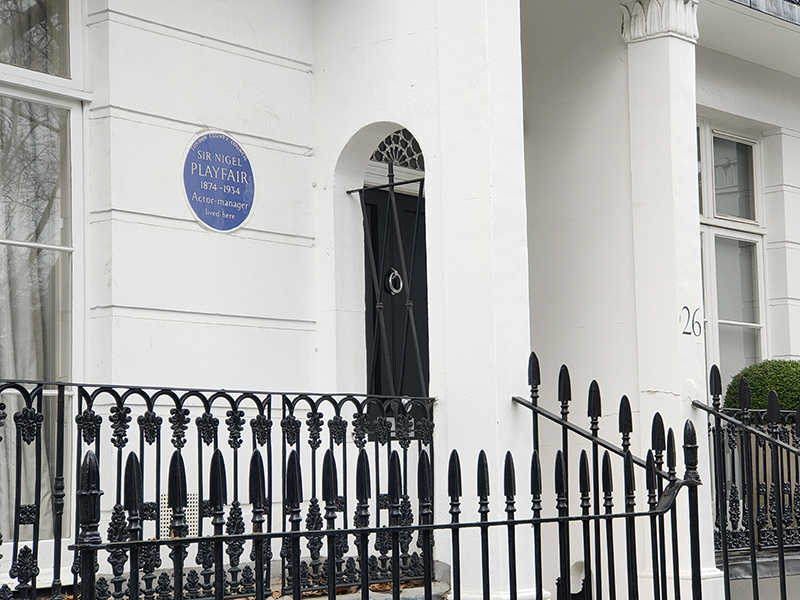
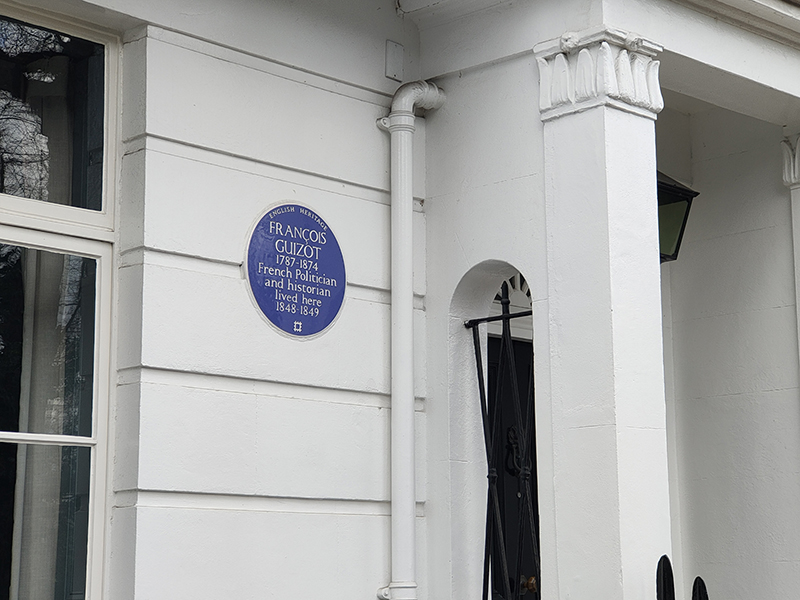
Pelham Place takes us into Pelham Crescent where we find the first of today’s blue plaques. No.26 was once home to Sir Nigel Playfair (1874 – 1934) – good surname, shame about the first part – best known as actor-manager of the Lyric Theatre, Hammersmith. . The French statesman and historian, Francois Guizot (1787 – 1874) lived at no.21 for a couple of years having taken refuge in England following the 1848 revolution in France. That year saw him resign as Prime Minister, after less than six months in the post, in conjunction with the abdication of King Louis Philippe and the founding of the Second Republic.
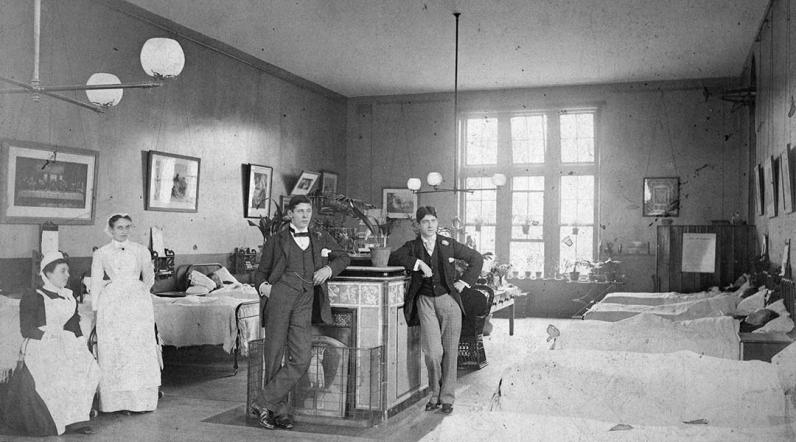
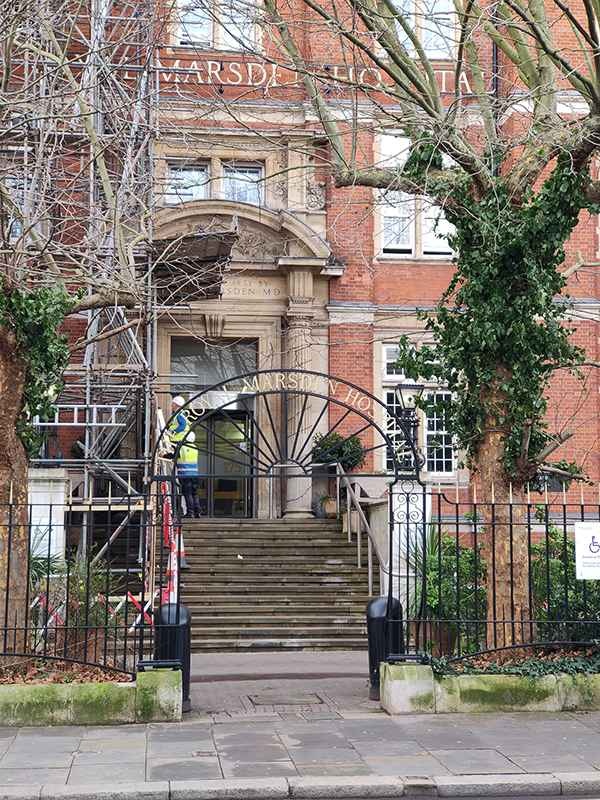
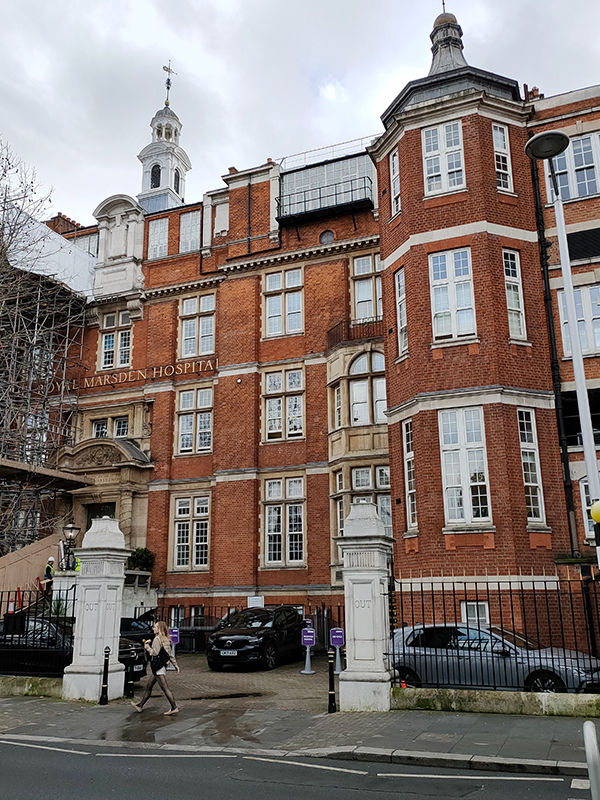
The crescent adjoins the Fulham Road, where, a short way further down, sits one of the two Royal Marsden Hospitals (the other is out in Sutton). The hospital was founded as the Free Cancer Hospital in 1851 by Dr William Marsden, following the death of his wife, Betsy, from the disease. It was originally based in Westminster and initially focused on palliative treatments and symptom relief. However, it quickly outgrew those first premises as it became apparent that some patients required inpatient care. In 1855, the noted philanthropist Baroness Burdett-Coutts, granted a loan of £3,000 which made it possible to purchase the Fulham Road site – about an acre of land. Architect, David Mocatta, drew up the plans for the building which opened in 1862. The hospital was granted its Royal Charter of Incorporation by King George V in 1910 and in 1954 the hospital was renamed The Royal Marsden Hospital in recognition of the vision and commitment of its founder. Back in 1986 I had a temporary job here as a porter for a couple of weeks. A salutary experience that left me with nothing but admiration for all proper NHS workers.
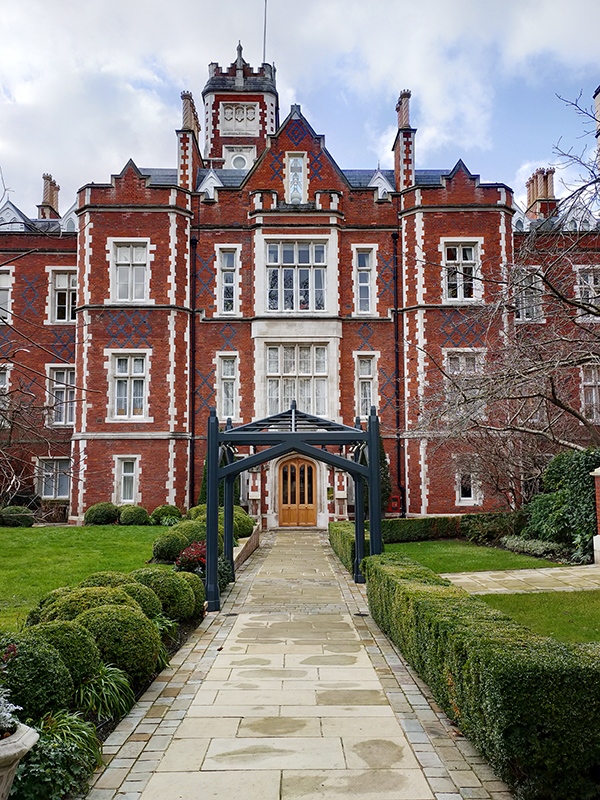
We turn north into Sumner Place, where on the immediate right is the entrance to Rose Square which surrounds The Bromptons, a luxury gated residential development created from the redevelopment of the historic Brompton Hospital. The site was developed as the Brompton Hospital for Consumption and Diseases of the Chest on what was previously market garden land in 1844. Following closure, the hospital was transformed in 1997 into exclusive apartments, whilst retaining its original Victorian architecture.  
Opposite, at no.27 Sumner Place is a the one-time home of the architect Joseph Aloysius Hansom (1803 – 1882) who is best known as the inventor of the Hansom Cab, the two-wheeled horse-drawn carriage which enjoyed great popularity from the 1830’s up to the introduction of Taximeter Cars (petrol cabs) in 1908. As an architect he was incredibly prolific, designing over 200 buildings, mainly in the Gothic Revival style, including Birmingham Town Hall, Arundel Cathedral and St Walburge’s RC Church in Preston which has the tallest spire of any Paris Church in England.
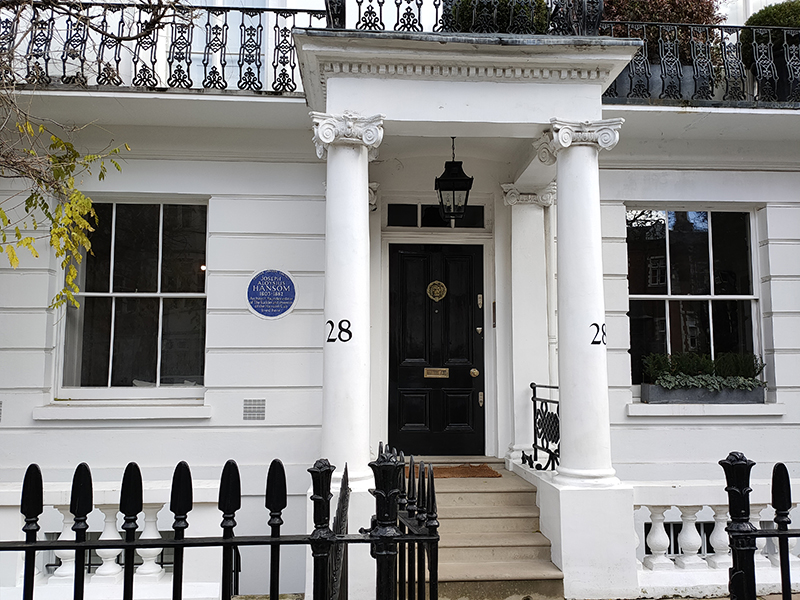
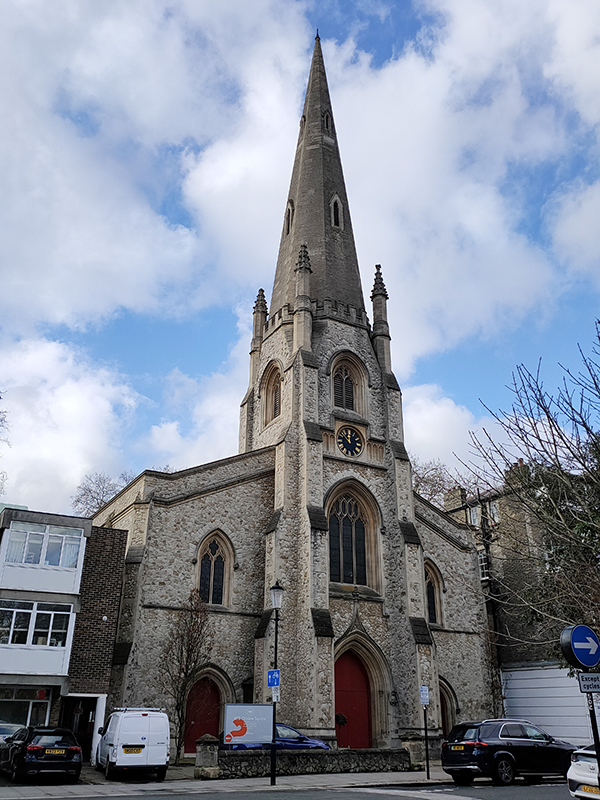
Just to the north of Rose Square is St Paul’s Church which dates back to 1860. This is now under the aegis of Holy Trinity Brompton (HTB), an evangelical Anglican church, which consists of six separate sites altogether.
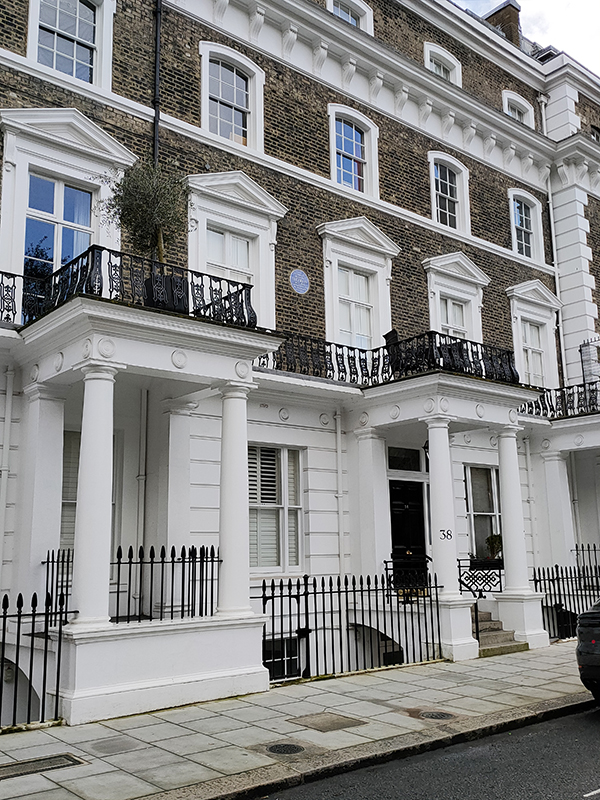
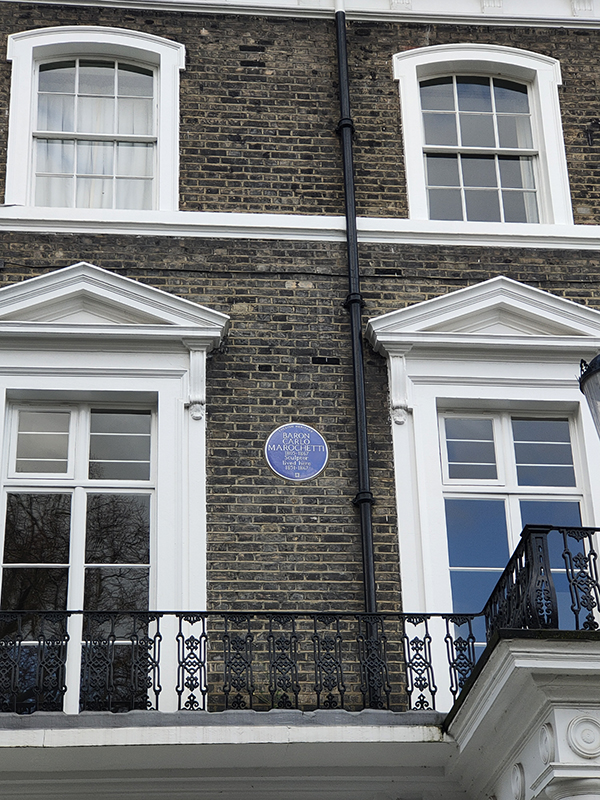
We continue along the south side of Onslow Square whose former residents include Admiral Robert Fitzroy (1805 – 1865) at no. 38, author William Makepeace Thackeray (1811 – 1863) at no.36 and Baron Carlo Marochetti (1805 – 1867) at no.32. From those dates in seems highly probable that their residencies here overlapped. Fitzroy was the captain of HMS Beagle during the famous survey expedition to Tierra del Fuego and the Southern Cone which took Charles Darwin (more of him later) to the places where he encountered the wildlife that inspired his theory of natural selection. Marochetti was was an Italian-born French sculptor who, after moving to England in 1848, was commissioned to create many public sculptures and memorials, including the equestrian statue of Richard the Lionheart which stands in front of the Palace of Westminster. Thackeray, best known as the writer of Vanity Fair, lived here during his latter years in which his health underwent a terminal decline due to excessive eating and drinking and an aversion to any form of exercise.
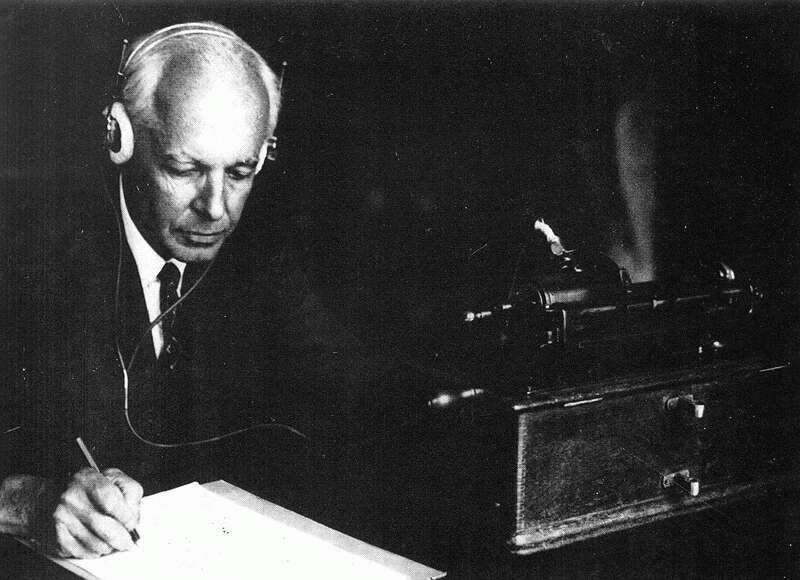
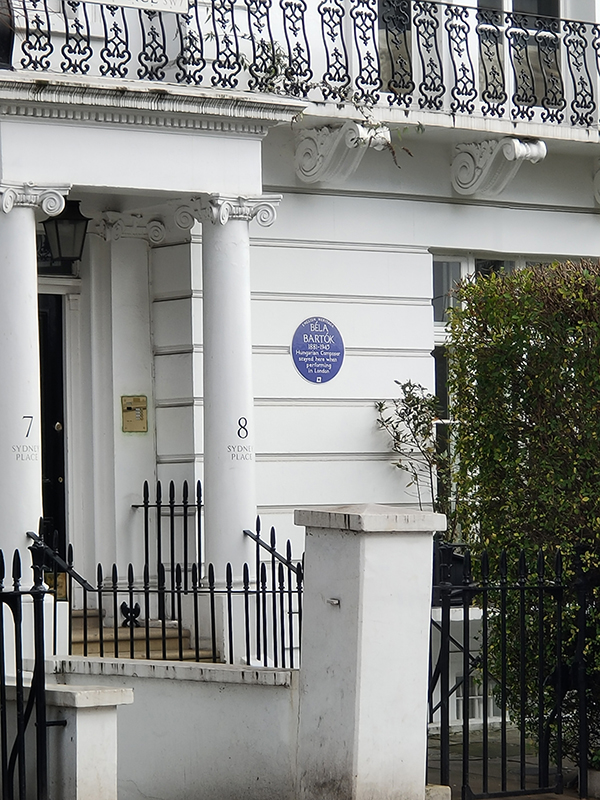
Next Blue Plaque up (they come thick and fast today) is the one that graces the outside of no.7 Sydney Place, commemorating the fact that the Hungarian composer, Bela Bartok (1881 – 1945) stayed there whenever he was performing in London. The English composer Peter Warlock was instrumental in bringing Bartok to London for the first time in 1922. From then until 1937 Bartok always stayed in London with Sir Duncan and Lady Wilson at this address. 230 yards further up towards the tube station is a statue of Bartok (that I somehow managed to overlook whilst on my perambulations).
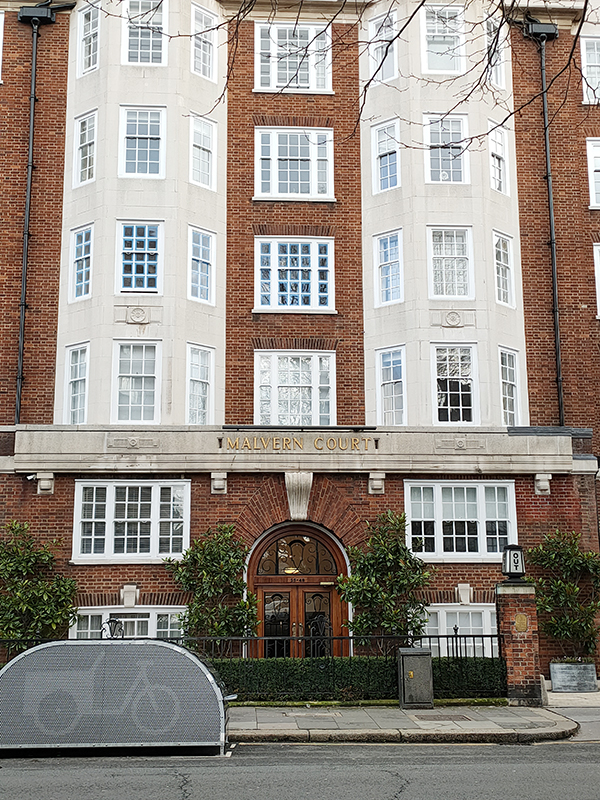
Prominent on the east side of Onslow Square (more so than the statue in any event) is the stylish early 1930’s built Malvern Court.
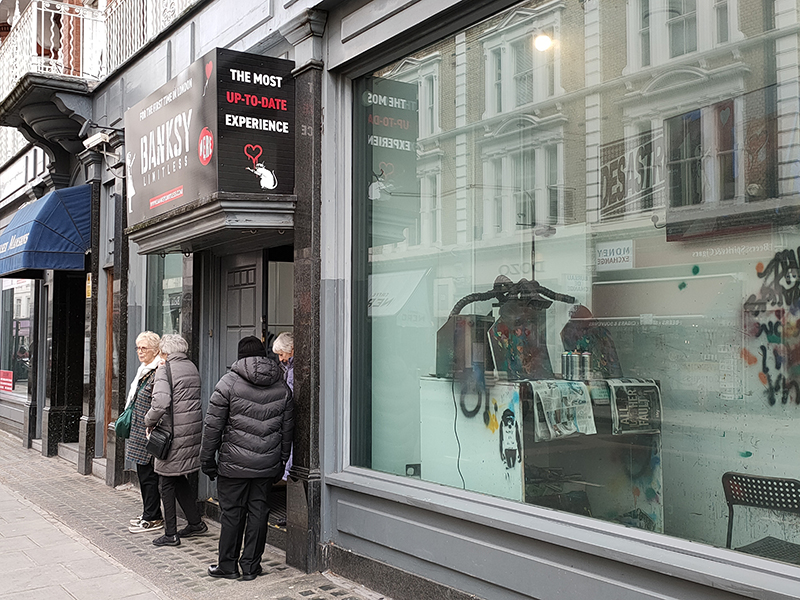
Completing a circuit of Onslow Square and Onslow Crescent we head west along Old Brompton Road. After a short way we pass the site of “Banksy: Limitless”, a temporary, non-official exhibition curated by private collectors, showcasing the breadth of Banksy’s street art in a gallery setting (with obligatory “immersive” element). It won’t be there for too much longer so no point in wasting £20 for the purposes of giving you a low-down.
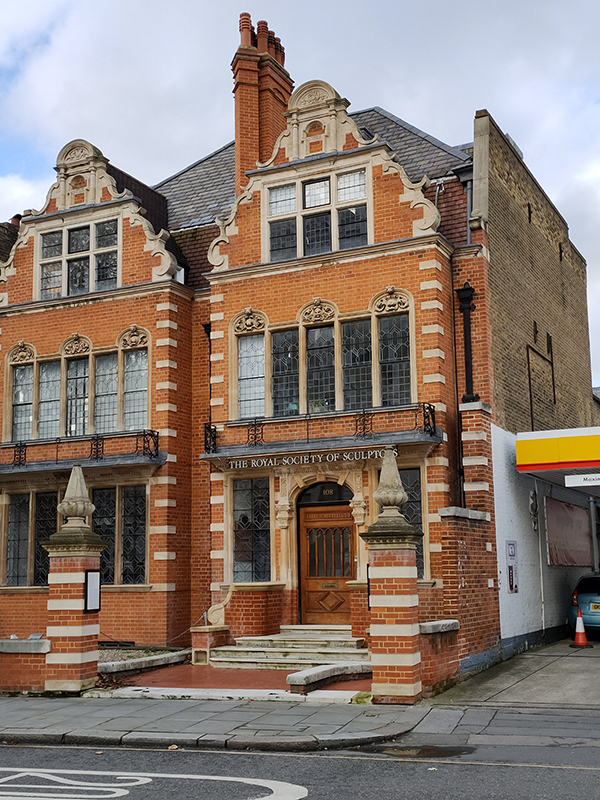
A couple of hundred metres further along is Dora House which is the home of the Royal Society of Sculptors (“RSS”). Dora House was originally built by William Blake (not that William Blake) in 1820 as a pair of early Georgian semi-detached villas. It’s constructed of red brick with a pair of steep curved gables, classical details in stone in the Flemish manner and tall leaded light windows on three floors. The ornate frontage dates from a remodelling in 1885-6 to provide a grand studio for Court photographers Elliot and Fry. In 1919 the house was taken on by the sculptor Cecil Thomas (1885-1976) who worked here and adopted it as his family home with wife Dora and son Anthony. After his wife died in 1967, Thomas set up the Dora Charitable Trust to protect the long-term future of the house. A few years later he bequeathed the house to the RSS. The RSS had been established in 1905 with 51 members, including all the leading sculptors of the day. Six years later it was granted Royal patronage. ( I’m afraid I have no information on when the Shell garage next door made its unfortunate arrival on the scene).
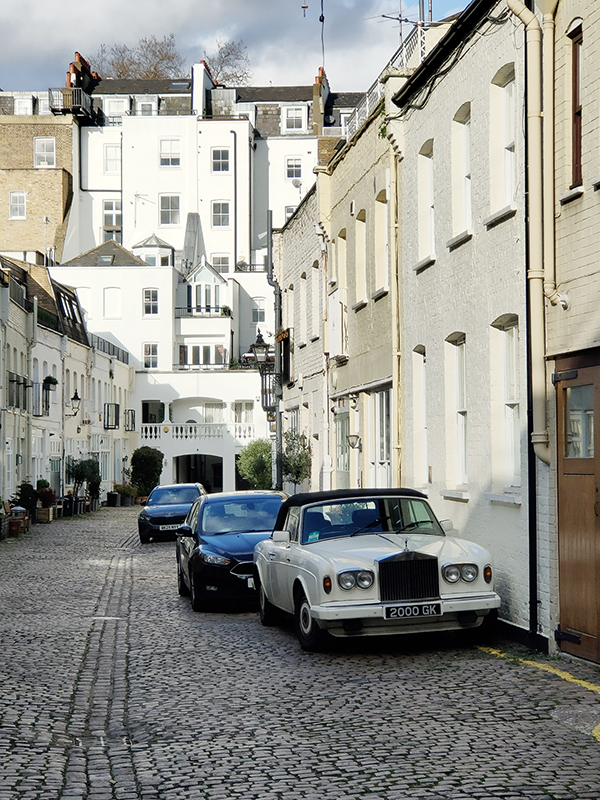
For the next stage of today’s journey we’re working our way back east towards South Ken tube. We begin by heading north on Gloucester Road, taking a right turn into Clareville Street and then diverting back to Old Brompton Road via Clareville Grove. We make our way north again on Clareville Street before switching into Manson Mews.
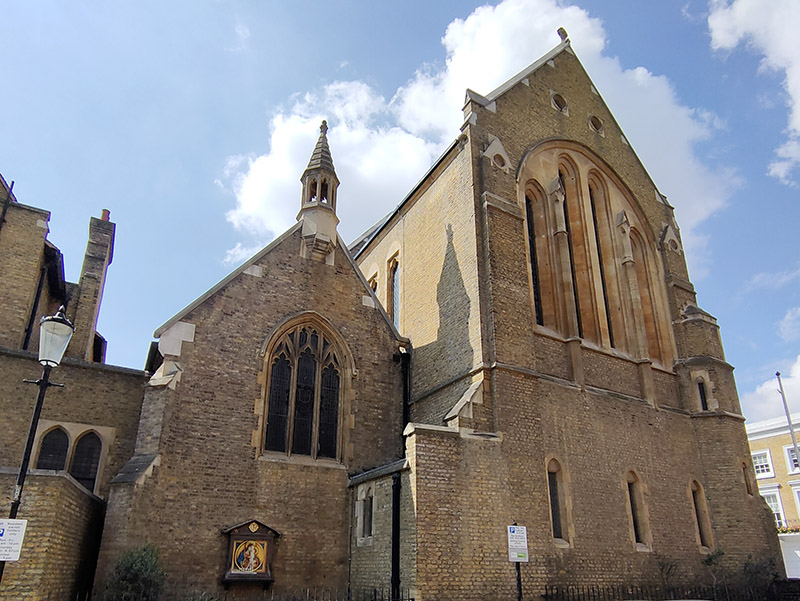
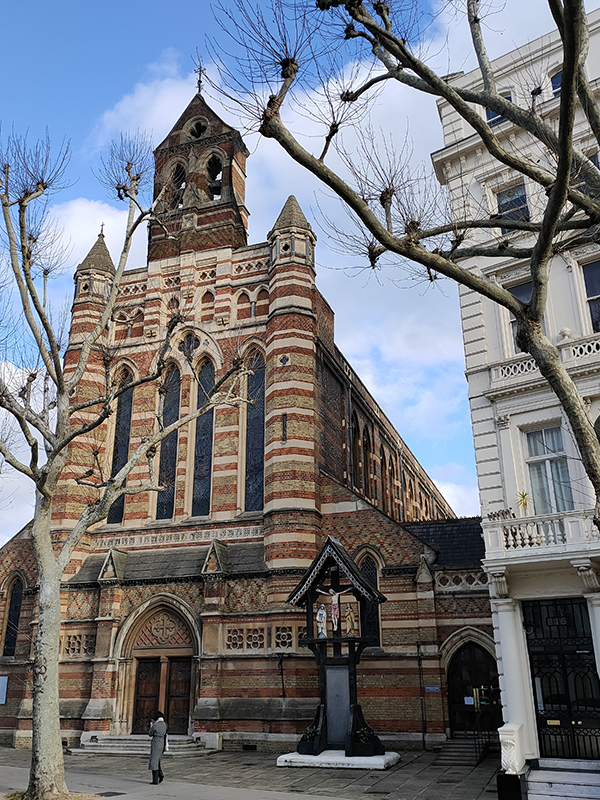
The non-cul-de-sac part of Manson Mews leads into Queen’s Gate. Almost directly opposite is the Grade II Listed, St Augustine’s Church. The church was built in 1865, and the architect was William Butterfield (1814 – 1900), another exponent of the Gothic Revival style. Butterfield was certainly possessed of a strong protestant work ethic; between 1842 and 1895 he contributed to the construction or renovation of around 120 religious buildings. St Augustine’s is now another member of the HTB group of churches.
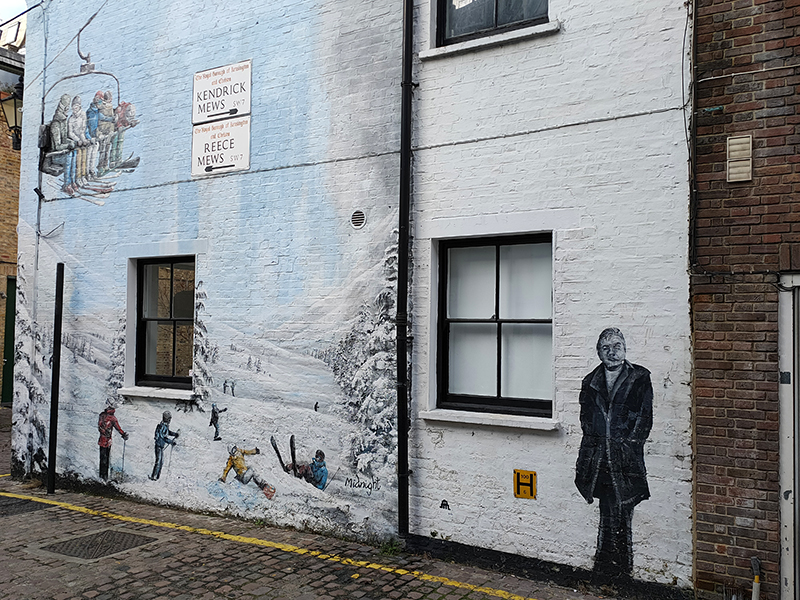
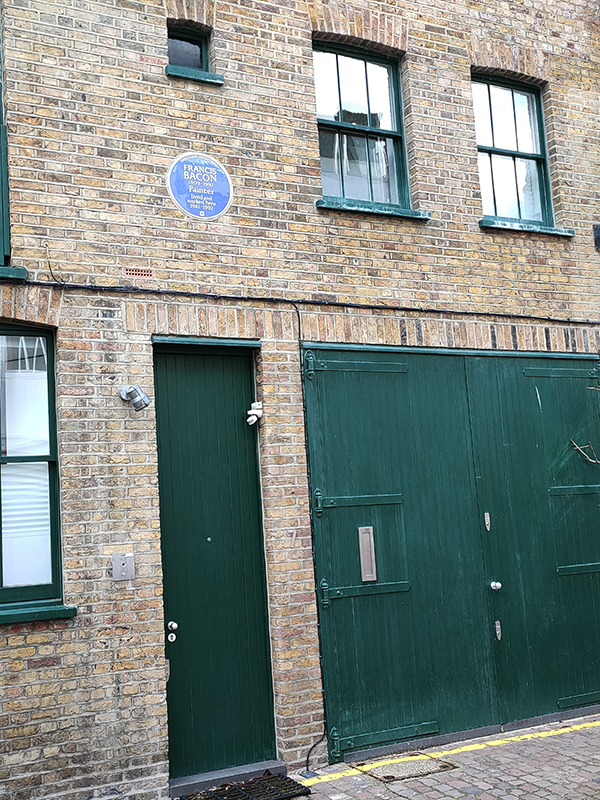
After a quick look at Manson Place we return to Old Brompton Road where we continue east then make our way in to Reece Mews via Kendrick Place. Artist, Francis Bacon (1909 – 1992) lived and worked at 7 Reece Mews for the last 30 years of his life. In 1962, a year after Bacon moved here, his lover, Peter Lacy, died from the effects of alcoholism the day before the opening of a retrospective exhibition of the artist at the Tate. As the Sixties progressed, Bacon’s work moved from the extreme subject matter of his early paintings to portraits of friends, including his new lover, George Dyer, who he had met in a pub in 1963. The much younger Dyer was also an alcoholic and in 1971, in a cruel twist of fate, he took a fatal overdose of barbiturates while in Paris with Bacon for another retrospective exhibition, this time at the Grand Palais. Bacon himself died of a heart attack in 1992. Six years later his sole legatee, John Edwards, and High Court appointed executor, Brian Clarke, donated the contents of Bacon’s studio at Reece Mews to the Hugh Lane Gallery in Dublin (Bacon’s birthplace) where they were moved and reconstructed.
Directly opposite the above mural on Kendrick Mews is the showroom of Heritage Classic Cars which has been selling special collector cars for the last sixty years. Among the cars currently for sale is an Aston Martin DB4 GT Continuation, one of only 25 of these models built by AM in 2017, and a 1957 Alfa Romeo Super Sprint.
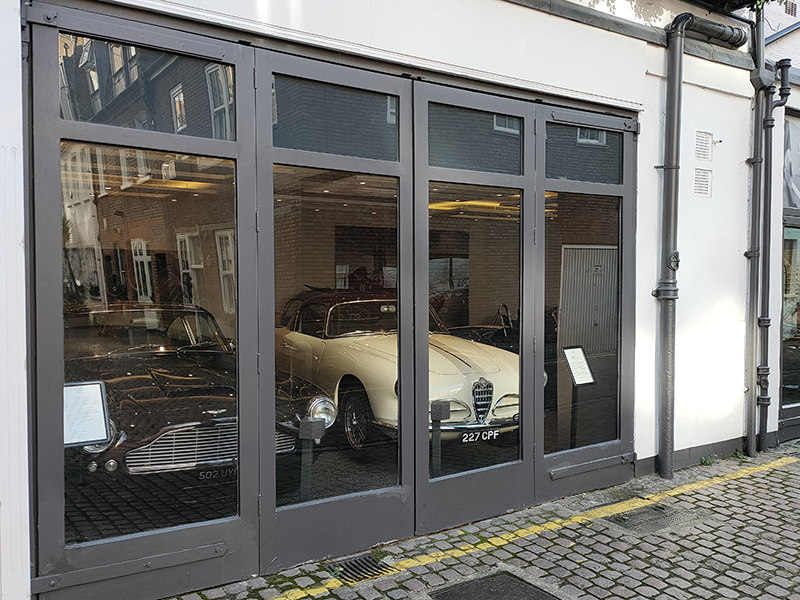
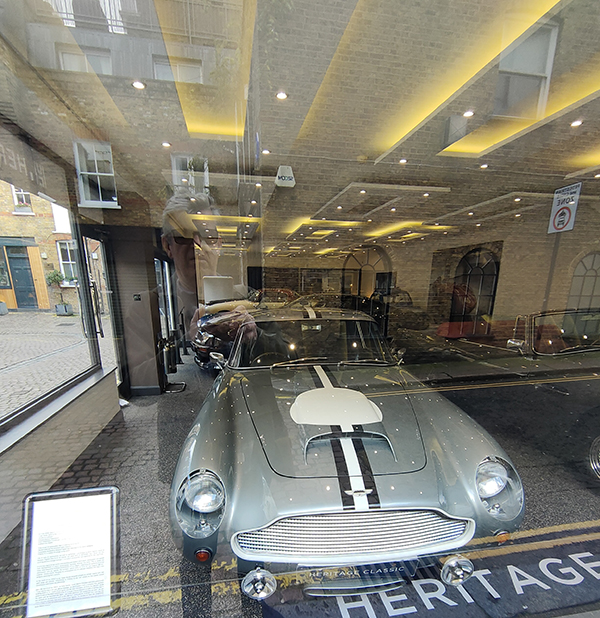
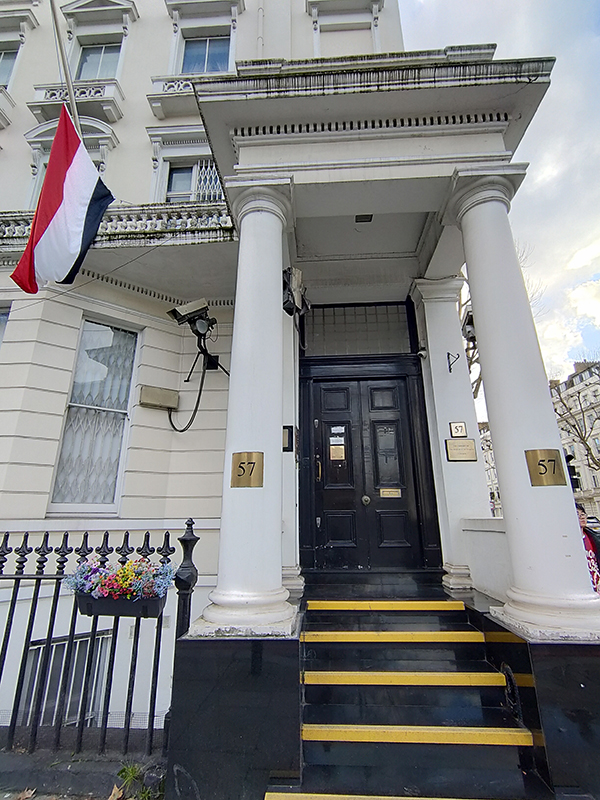
At the north end of Reece Mews we emerge onto Harrington Road then do a circuit of Bute Street and Glendower Place before switching west on Harrington Road which soon morphs into Stanhope Gardens. We carry on as far as Gloucester Road before turning north up to Cromwell Road. For the next twenty minutes or so we traverse between Cromwell Road and Stanhope Gardens by means of Stanhope Mews West, Stanhope Gardens (west and east sections), Stanhope Mews East and Queen’s Gate again. These Stanhopes are named after the eponymous family who assumed the Earldom of Harrington in 1742. On the corner of Queen’s Gate and Cromwell Road stands the Embassy of Yemen.
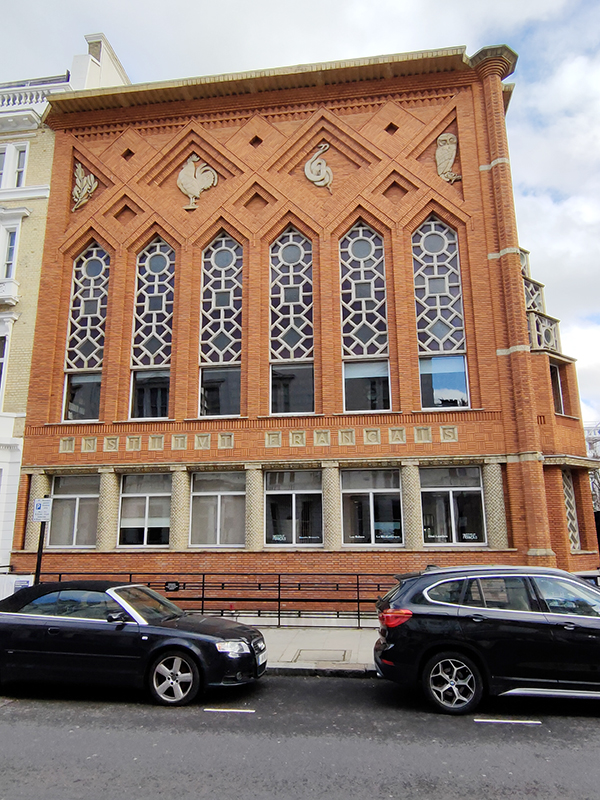
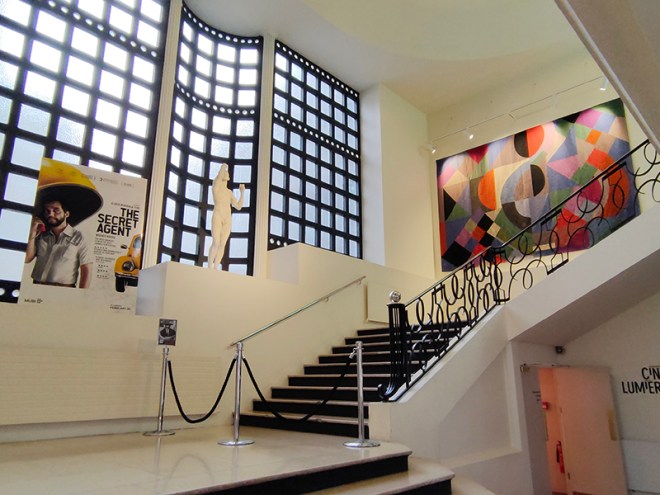
Next street along, continuing eastward, is Queensberry Place when we find the Institut Francais du Royaume Uni, the London branch of the worldwide network that promotes French Language and Culture. The Language Centre is on Cromwell Place and the building here on Queensberry Place houses the Cultural Centre which includes the Cine Lumiere. The Cine Lumiere has two screens and is a great place to watch the best of French and World cinema, both new releases and classic films. 15-17 Queensberry Place was is a Grade II listed, red-brick Art Deco building dating from 1939. It was designed by French architect Patrice Bonnet and features distinctive ceramic decorations which depict the four graces of Minerva (owl, asp, cockerel, and olive branch). The interior features a sweeping staircase decorated with a Auguste Rodin statue (L’Âge d’Airain) and a Sonia Delaunay tapestry.
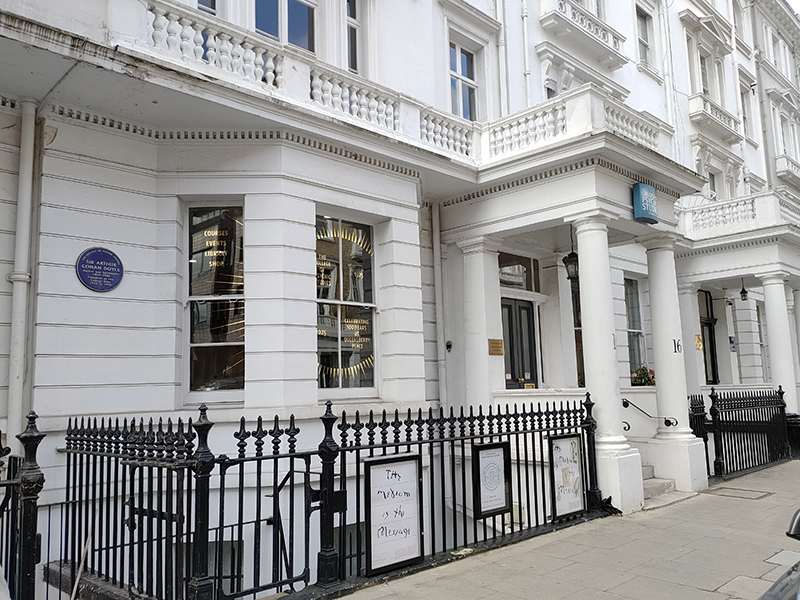
Across the street from the IF is The College of Psychic Studies. The College began life as London Spiritualist Alliance in 1883 at the instigation of the Rev. William Stainton Moses – an Anglican priest and medium – upon the dissolution of the Central Association of Spiritualists. The Alliance resided at several addresses in London before acquiring the freehold of 16 Queensberry Place for £5,000 in 1925. Sir Arthur Conan Doyle was President of the Alliance from 1926 to 1930, as commemorated by yet another blue plaque. The London Spiritualist Alliance changed its name in 1955 to The College of Psychic Science and in 1970 became The College of Psychic Studies. Nowadays the College organizes courses, workshops and talks in mediumship training, trance, psychic development, working with your guides and angels, automatic writing, past and future lives, shamanic healing, chakras, energy work, palmistry, numerology, tarot, mysticism, scrying and crystals. Anything not grounded in reality basically. I’m thinking they must get a lot of Americans enrolling.
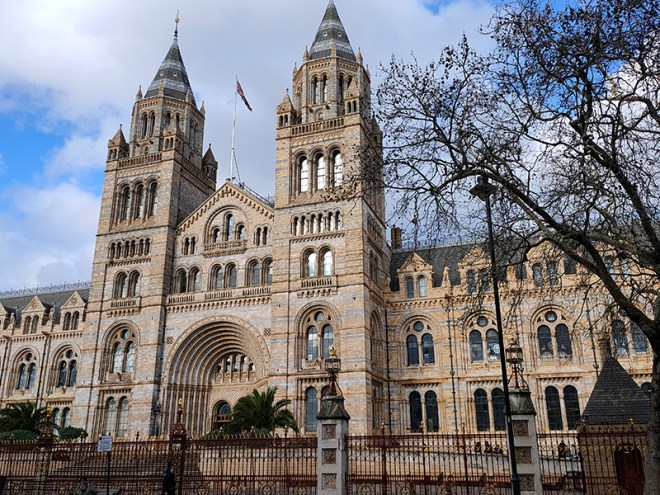
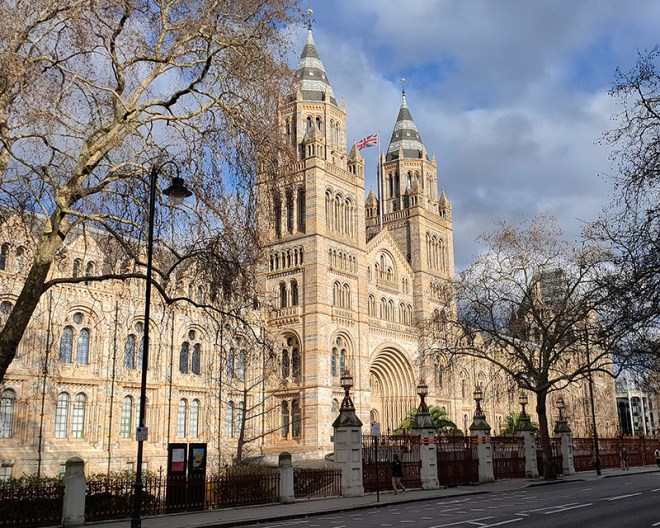
And so to the Natural History Museum. Last time I was visited it was to see a specific exhibition so I didn’t venture beyond the ground floor of the east wing. The time before that was a good few years ago and I don’t remember it being a great experience. I was therefore very pleasantly surprised at how much I enjoyed today’s visit. I expected to be in and out in half an hour but in the end I stayed for nearly three hours (though that did include the Space: Could Life Exist Beyond Earth exhibition which I can highly recommend but is only on for a few more weeks at time of writing).

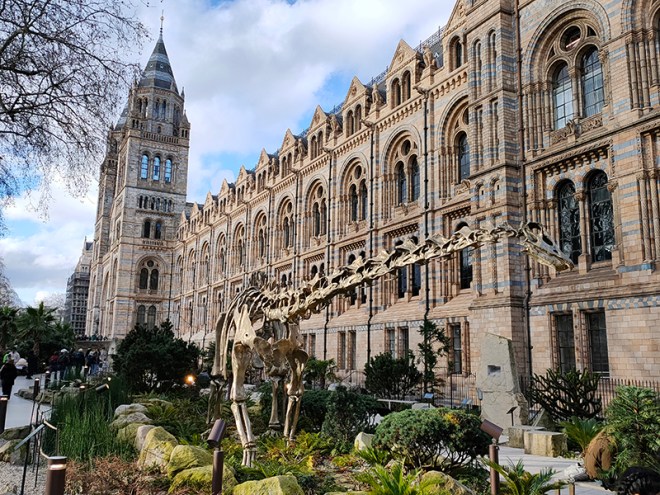
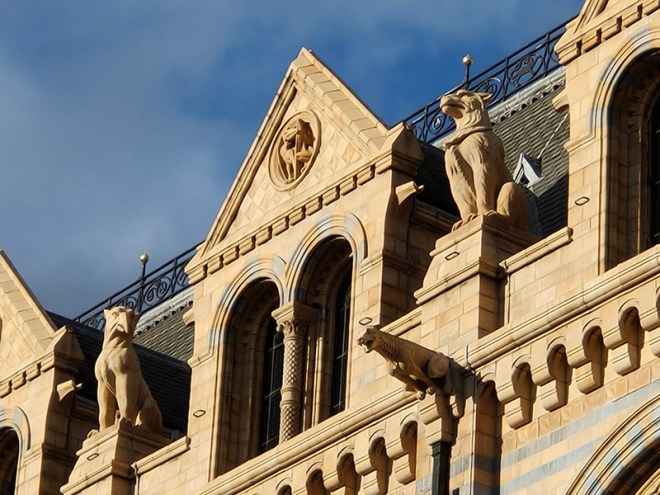
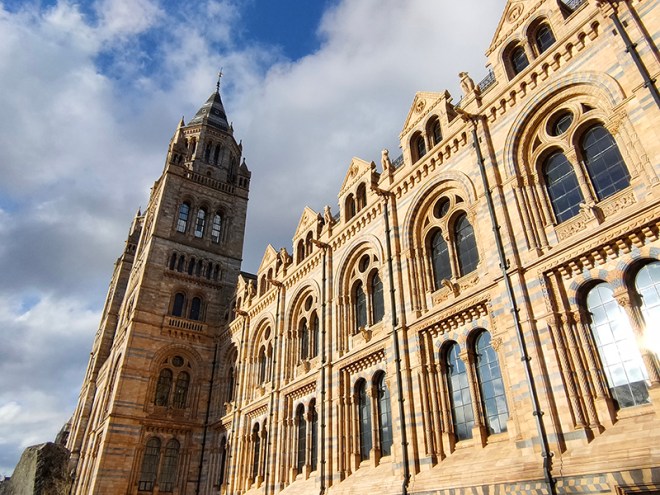
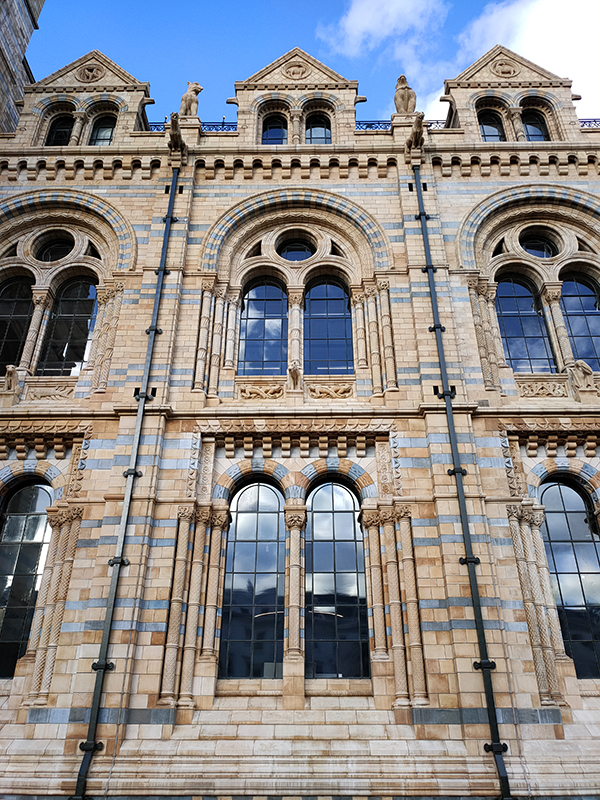
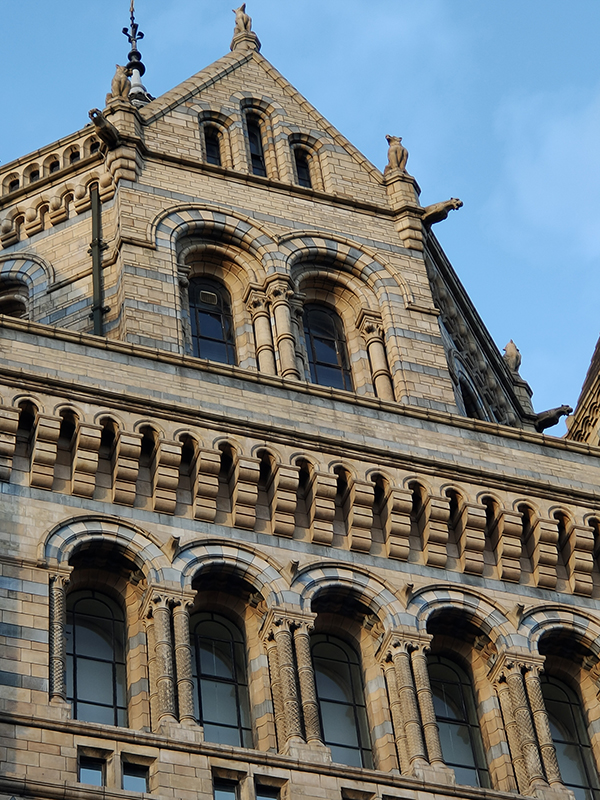
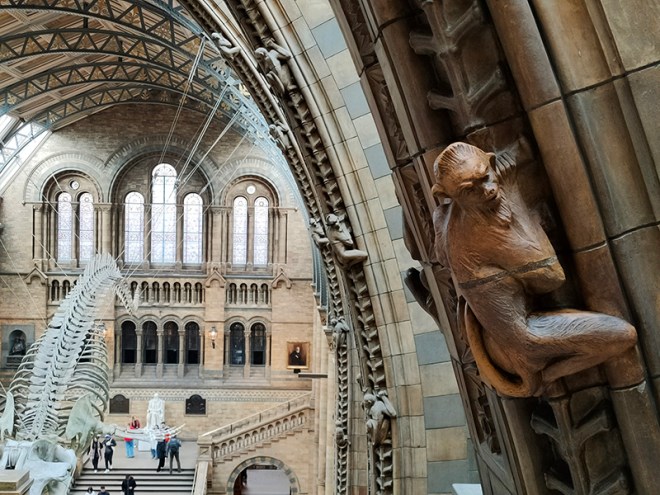
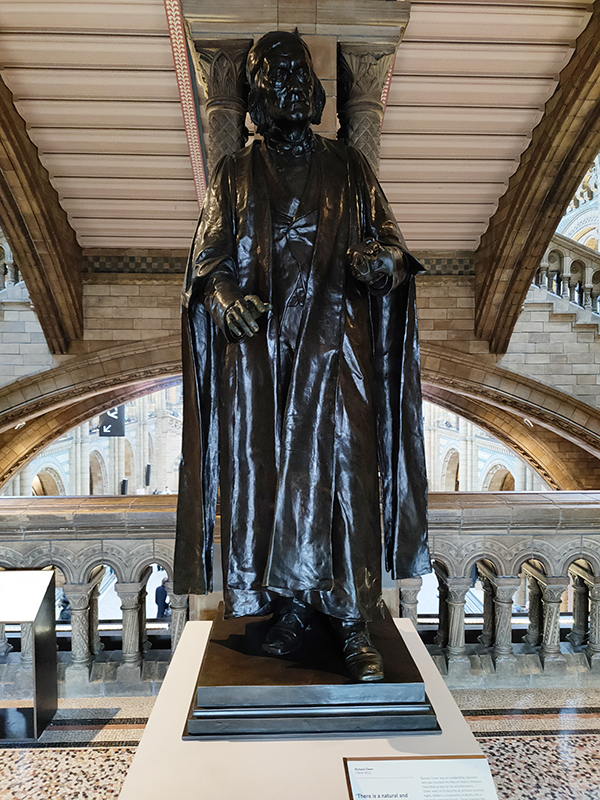
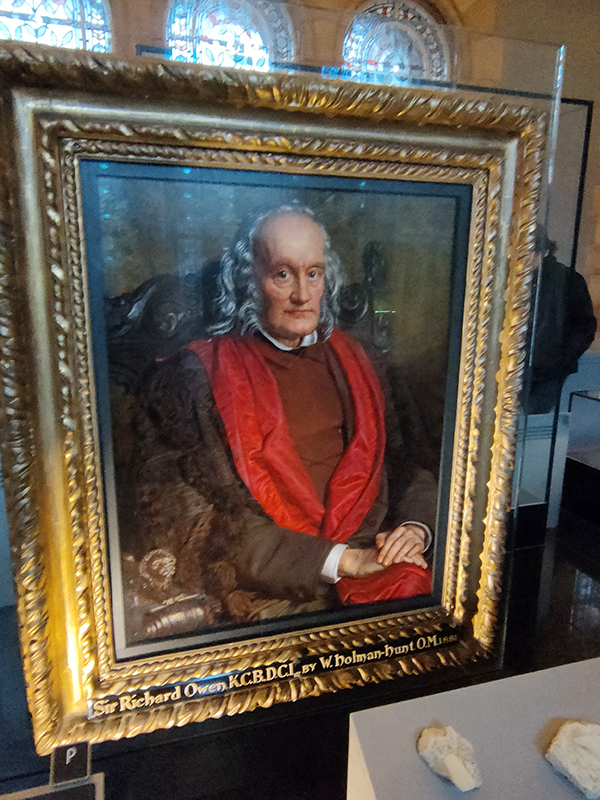
The Museum first opened its doors on 18 April 1881, but its origins stretch back to 1753 and the legacy of Sir Hans Sloane who had travelled the world as a high society physician, collecting natural history specimens and cultural artefacts along the way. After his death, Sloane’s will allowed Parliament to buy his extensive collection of more than 71,000 items for £20,000 – significantly less than its estimated value. The government agreed to the purchase Sloane’s collection and then built the British Museum so the items could be displayed to the public. Just over a hundred years on, Sir Richard Owen (the natural scientist who came up with the name for dinosaurs) took charge of the British Museum’s natural history collection and convinced the board of trustees that a separate building was needed to house these national treasures. In 1864 Francis Fowke, the architect who designed the Royal Albert Hall and parts of the Victoria and Albert Museum, won a competition to design the new Natural History Museum. When he unexpectedly died a year later, the relatively unknown Alfred Waterhouse took over and came up with a new plan for the South Kensington site. Waterhouse used terracotta for the entire building as this material was more resistant to Victorian London’s harsh climate. The result is one of Britain’s most striking examples of Romanesque architecture, considered a work of art in its own right and one of London’s most iconic landmarks.
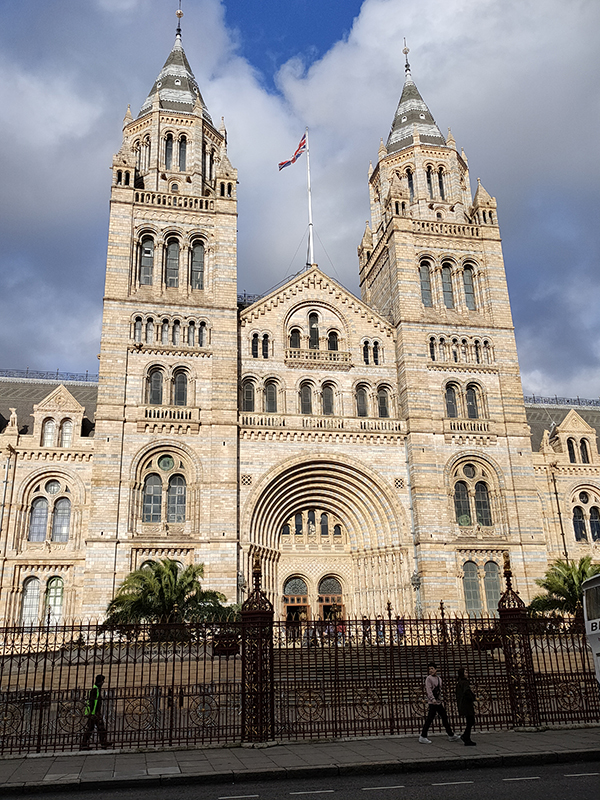
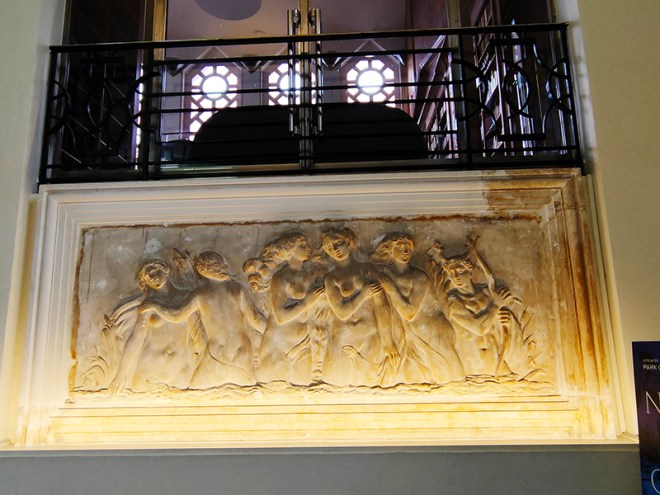
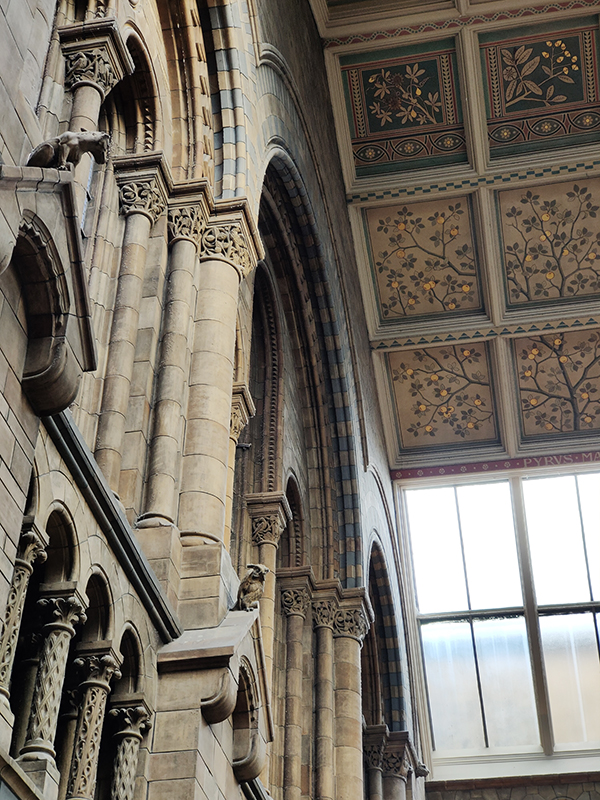
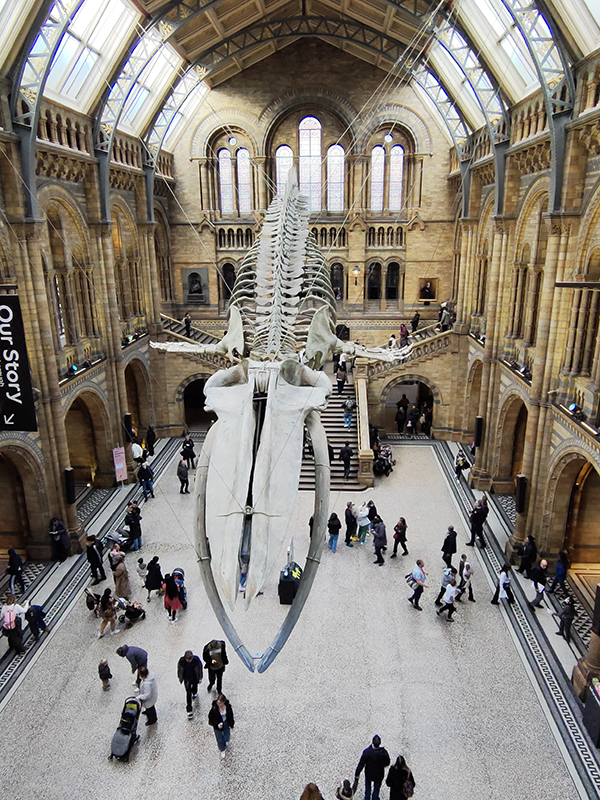
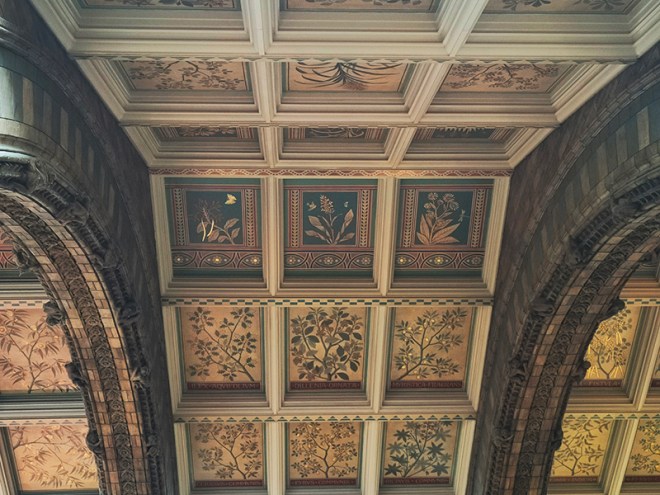
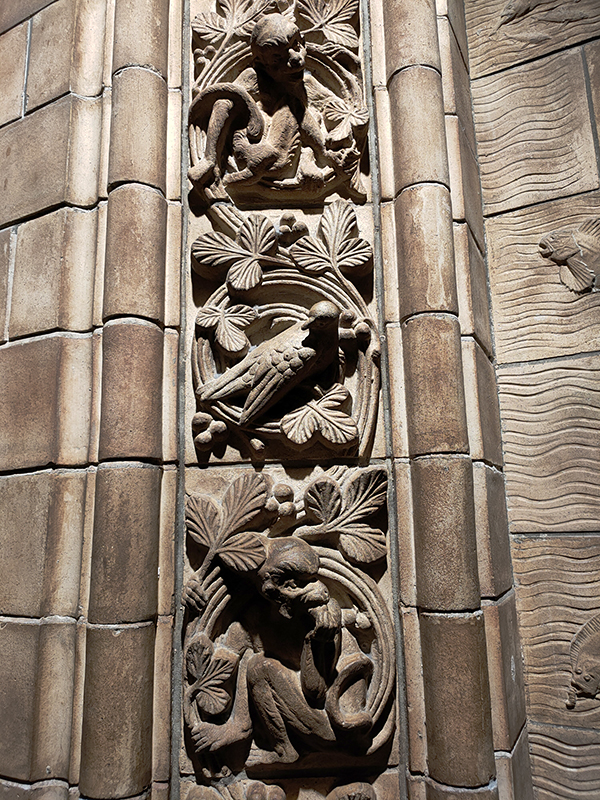
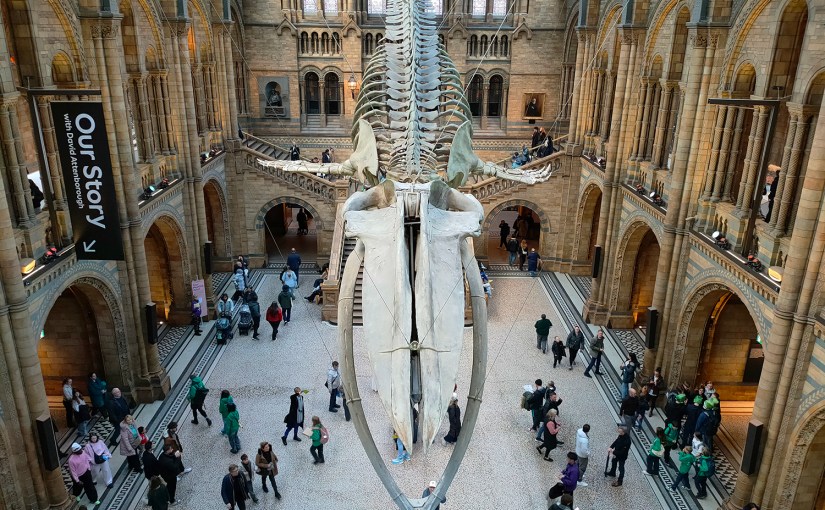
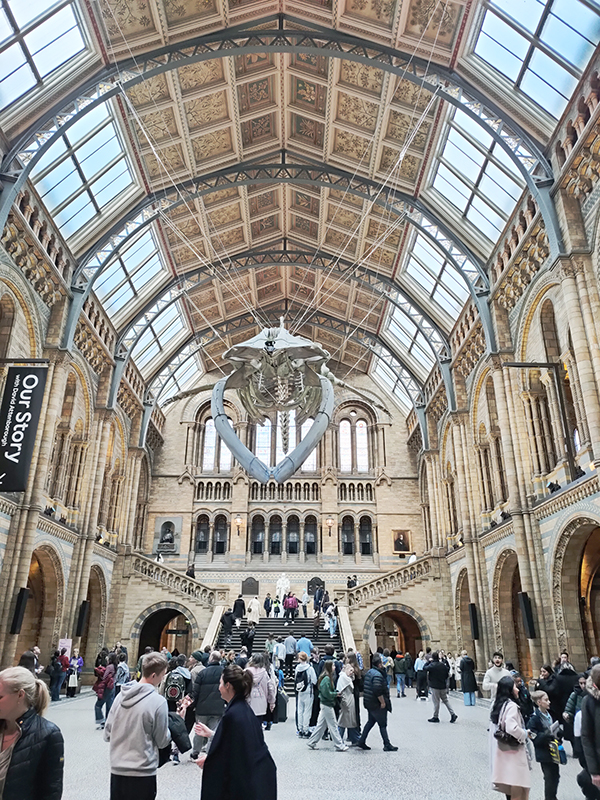
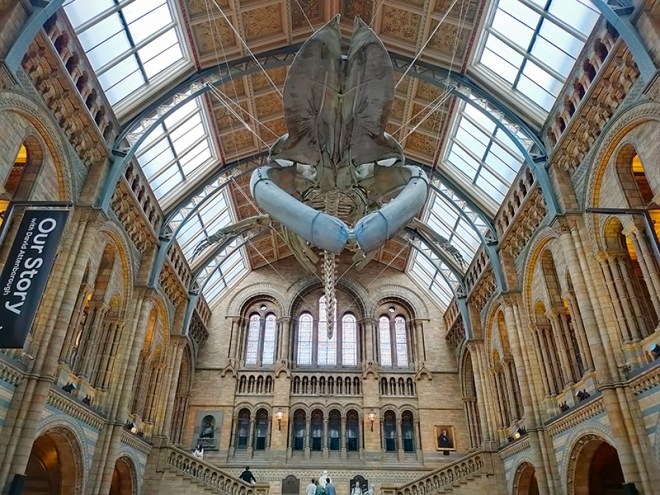
Hintze Hall, the Museum’s central space, was redeveloped in 2017 and the famous Diplodocus skeleton cast was replaced with a 25.2-metre blue whale skeleton, intended to be a reminder to visitors that humanity has a responsibility to protect the biodiversity of our planet. The Hintze Hall ceiling is covered with 162 intricate panels displaying illustrations of a vast array of plants from all over the world. Similar tiles adorn the other galleries in the museum and the entire building is decorated with carvings and sculptures depicting the natural world.
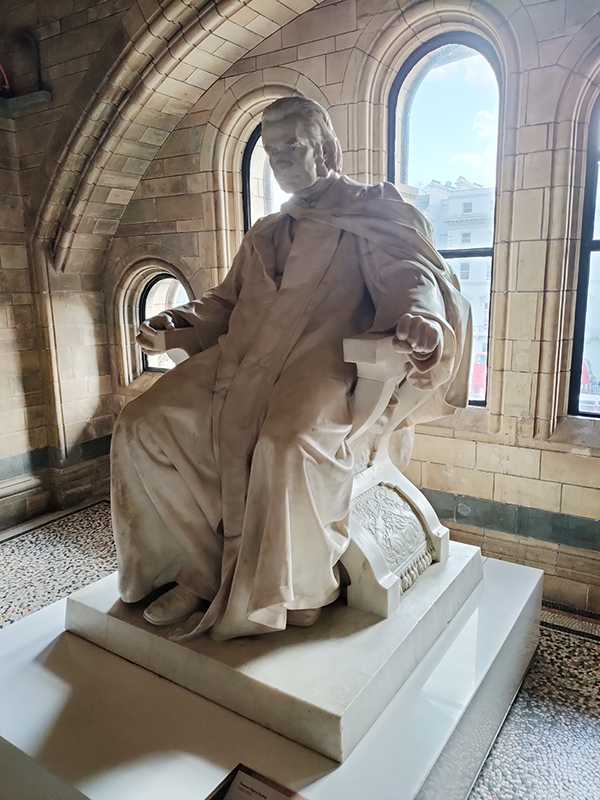
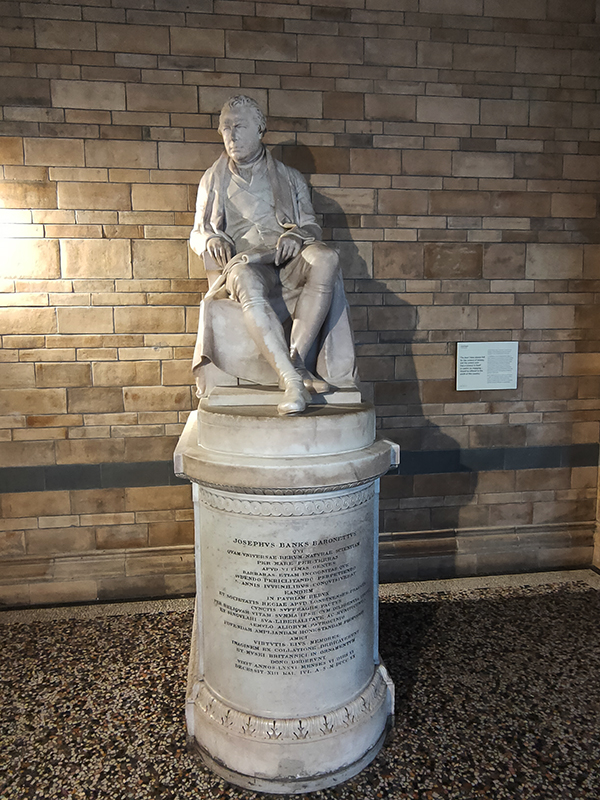
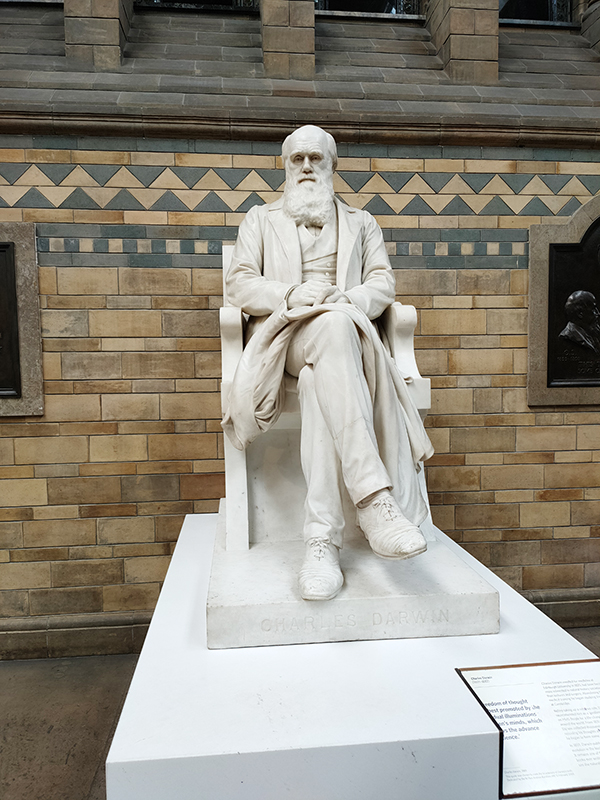
There are statues honouring prominent individuals who played an important role in the creation and evolution of the museum throughout the building. Richard Owen we’ve already spoken of and Charles Darwin needs no introduction but it’s worth giving a mention to Joseph Banks (1743 – 1820), Alfred Russell Wallace (1823 – 1913) and Thomas Henry Huxley (1825 – 1895). The great botanist, Banks, took part in Captain James Cook’s first great voyage (1768–1771), visiting Brazil, Tahiti, and after 6 months in New Zealand, Australia, returning to immediate fame. He went on to hold the position of president of the Royal Society for over 41 years and advised King George III on the Royal Botanic Gardens at Kew. Wallace was renowned as a naturalist, explorer, biologist and social activist. He was considered the 19th century’s leading expert on the geographical distribution of animal species. In 1858 he wrote a paper on the theory of evolution through natural selection; the publication of which was pretty much contemporaneous with that of extracts from Charles Darwin’s writings on the topic. It spurred Darwin to set aside the “big species book” he was drafting and to quickly write an abstract of it, which was published in 1859 as On the Origin of Species. Huxley was a biologist and anthropologist who became known as “Darwin’s Bulldog” on account of his vehement advocacy of Darwin’s theories. In 1860 he took part in the Oxford Evolution Debate in which he staunchly defended the Origin against its opponents, principal amongst whom was Bishop Samuel Wilberforce. Ironically, Wilberforce had received coaching prior to the debate from Richard Owen. The debate is best remembered today for a heated exchange in which Wilberforce supposedly asked Huxley whether it was through his grandfather or his grandmother that he claimed his descent from a monkey. Huxley is said to have replied that he would not be ashamed to have a monkey for his ancestor, but he would be ashamed to be connected with a man who used his great gifts to obscure the truth. However, as no verbatim record of the debate exists the exacts words used by each party are subject to the distortions of second-hand reportage.
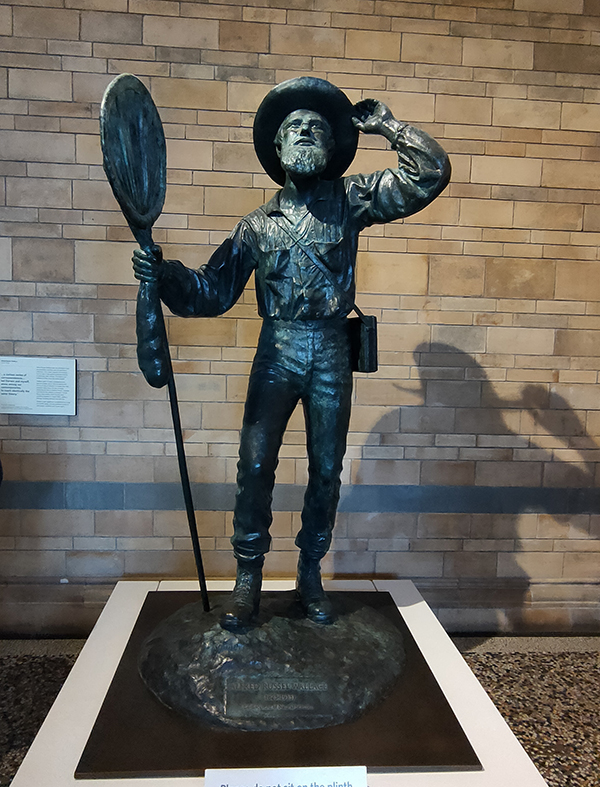
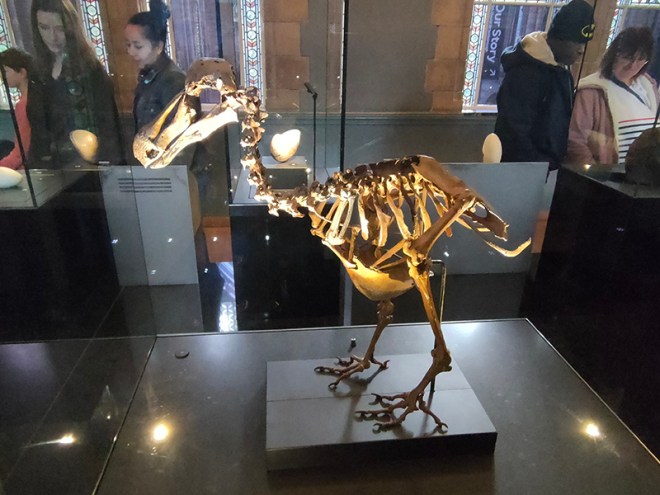
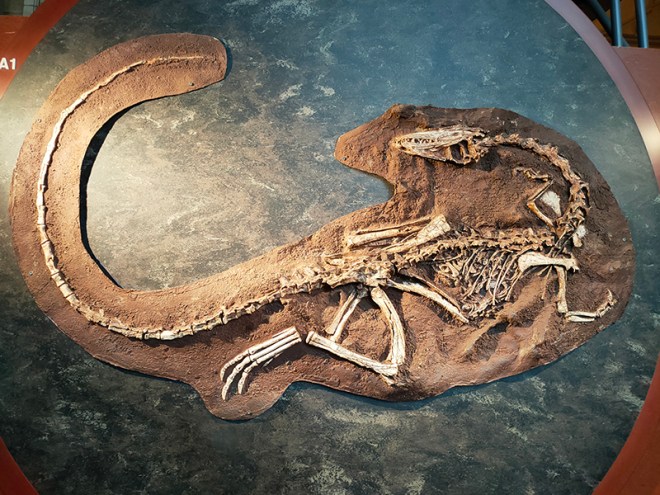
I hadn’t intended to say anything about the actual exhibits in the museum but I was very impressed by the objects in the Cadogan Gallery, which showcases 22 of the museum’s most treasured items. I’m not sure how long this display has been in situ but I don’t remember it from previous visits.
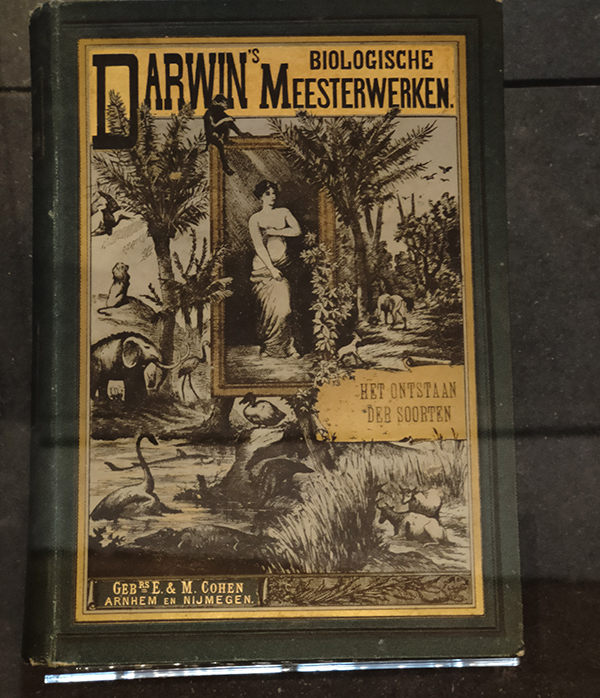
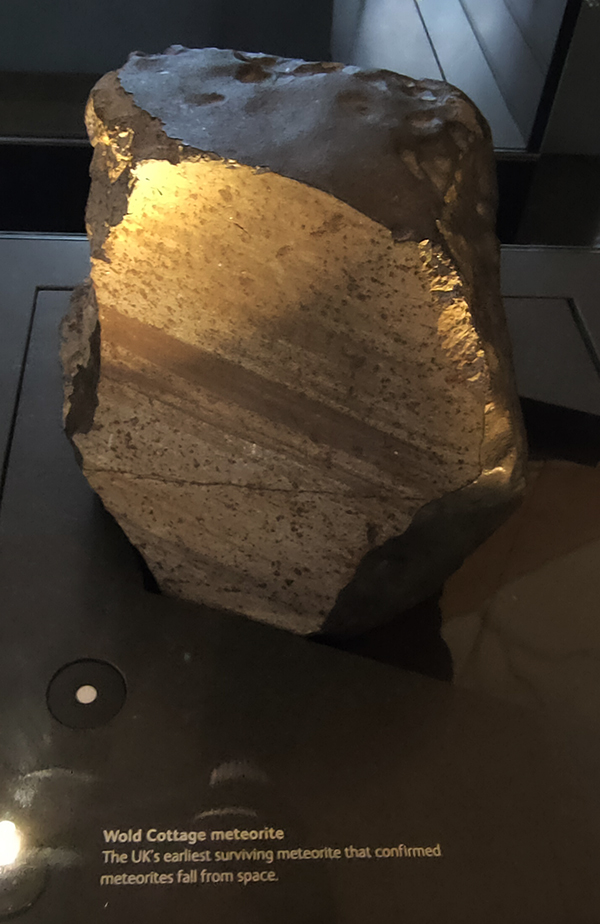
When we’re finally done with the NHM it’s a short walk down Cromwell Place past the French Consulate back to South Ken tube station with a final couple of plaques on the way.
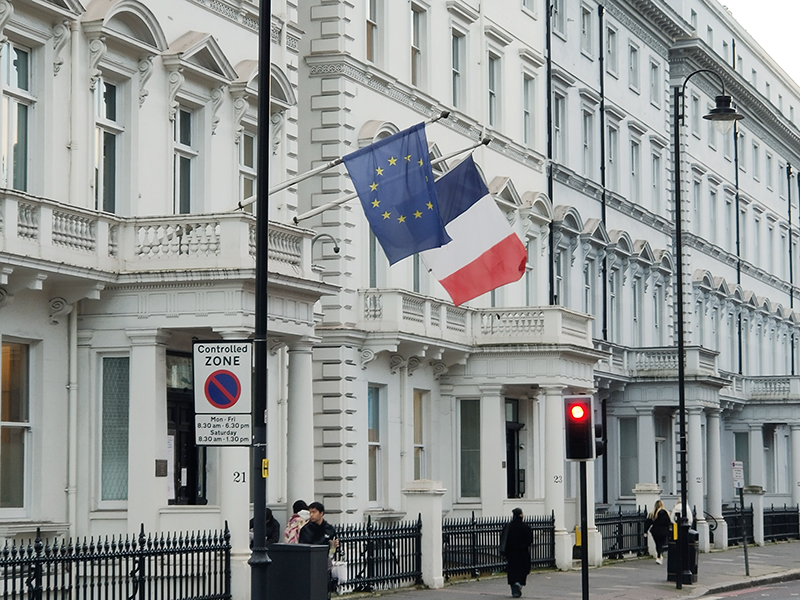
No.5 Cromwell Place was home to the Irish painter Sir John Lavery (1856 – 1941) from the turn of the 20th century until the start of WWII. Lavery was best known for portraits and wartime scenes. He and his wife, Hazel, were tangentially involved in the Irish War of Independence and the Irish Civil War and they gave the use of this house to the Irish participants in the negotiations leading to the Anglo-Irish Treaty. Today the house forms part of the ‘Cromwell Place’ arts hub created out of the full terrace of five Grade II listed Georgian properties.
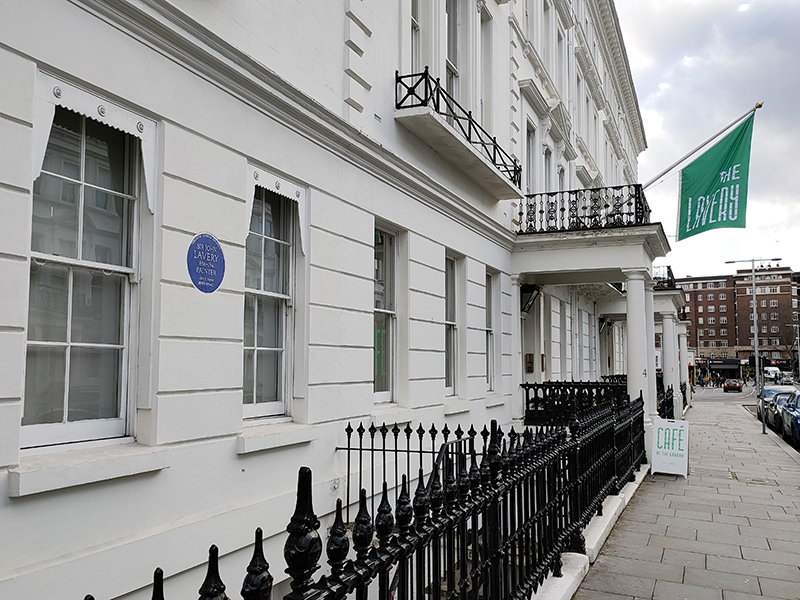
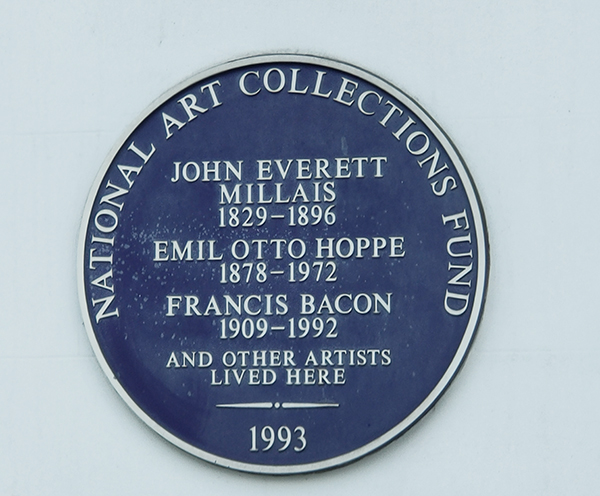
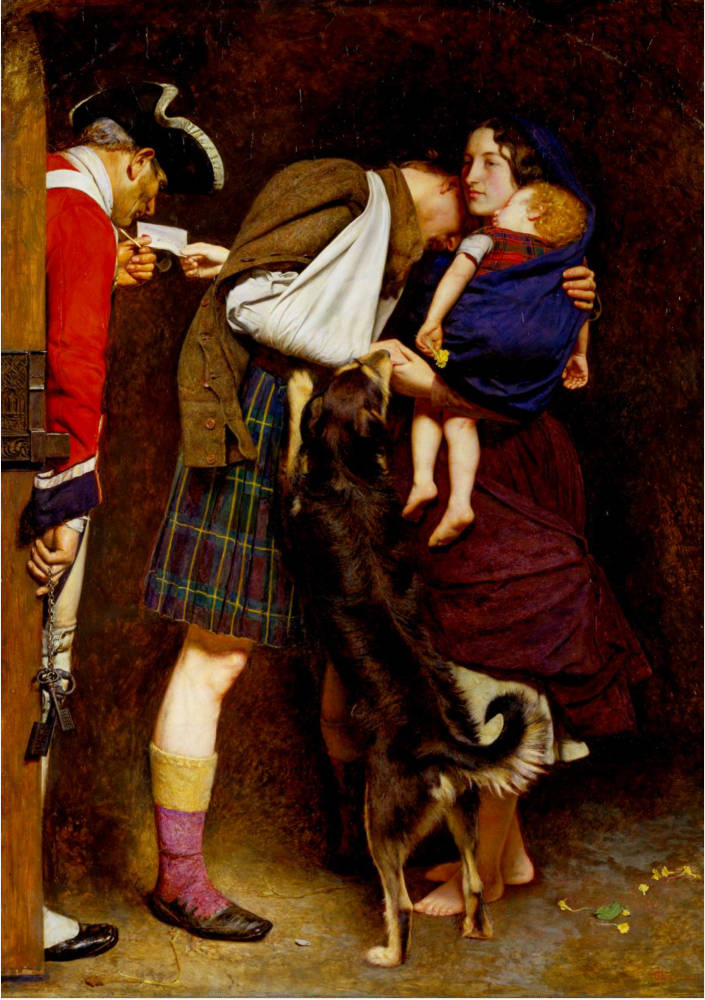
7 Cromwell Place was the London home and studio of the Pre-Raphaelite painter Sir John Everett Millais (1829 – 1896). Millais is as famous for his personal life as his art. In 1855 he married Effie Gray who had previously been the wife of the art critic, John Ruskin, and had modelled for Millais (most notably the female figure in The Order of Release) . The marriage between Effie and Ruskin, a supporter of Millais’ early work, was annulled after a few years due to lack of consummation. Effie and Millais went on to have eight children. The Victorian terrace in which they lived was later occupied by photographer Emil Otto Hoppe and (the aforementioned) Francis Bacon, who moved in in 1943 and worked in the former billiard room before moving his studio to Reece Mews.
Day 76 – King’s Road – Sydney Street – Sloane Avenue – Cadogan Square

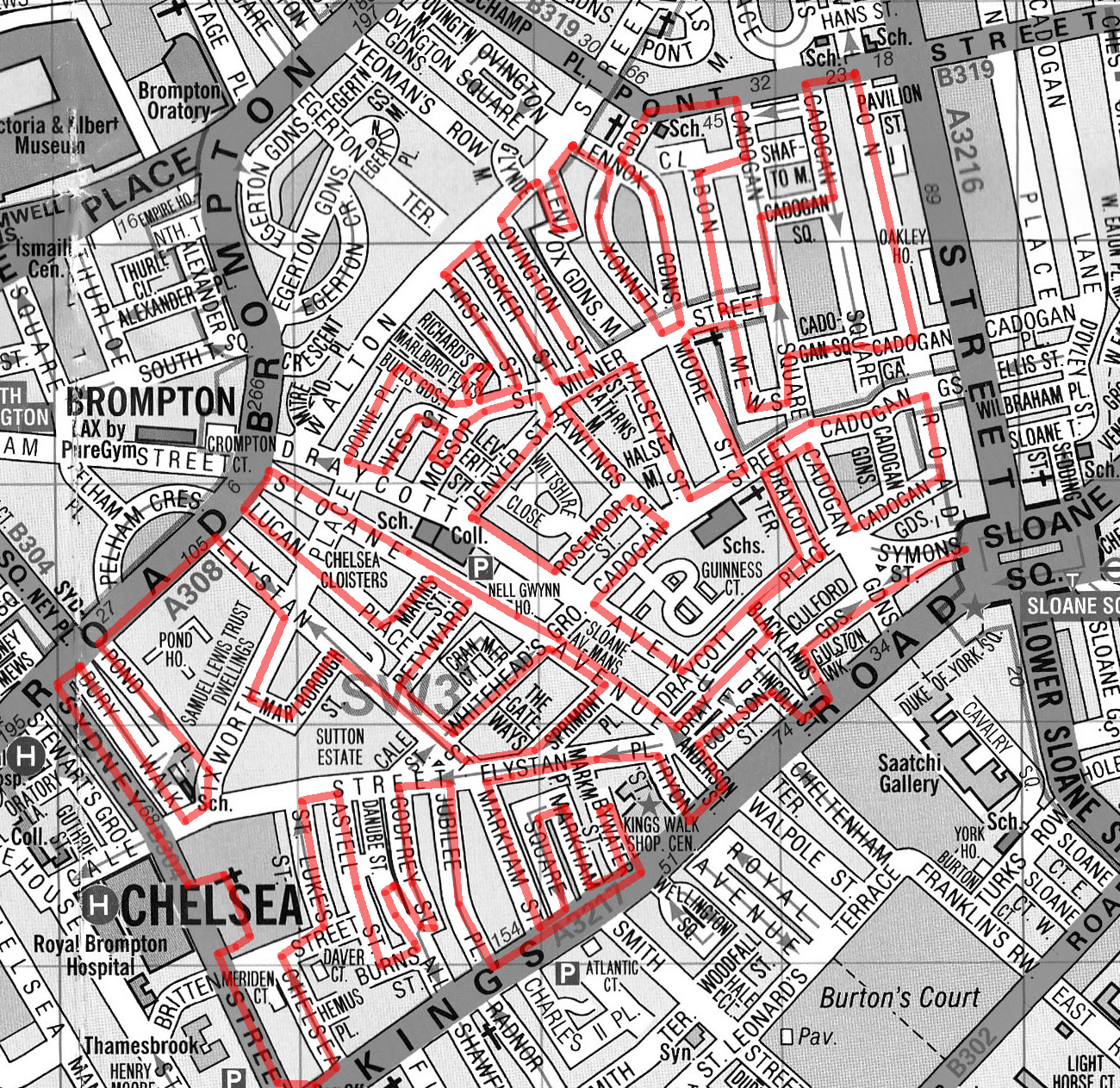
For today’s expedition, just like Real Madrid, we’re getting stuck into Chelsea. Specifically, the area north of the King’s Road bounded by Sydney Street to the west and Sloane Street to the east. Away from the main thoroughfares it’s a relatively quiet mainly residential quarter equally comprised of streets of terraced houses (some of the most expensive in London) and large mansion blocks. There are plenty of high-end stores scattered in between and some impressive churches. Not quite such well-known names as last time as far as former residents go but some interesting characters nonetheless.

Once again the starting point is Sloane Square and this time we’re leaving via the north west corner, on Symons Street to be precise. This feeds into Culford Gardens continuing westward then we take a left turn down Blacklands Terrace onto the King’s Road. John Sandoe opened his eponymous bookshop here in 1957 with Félicité Gwynne, sister of the cookery writer Elizabeth David (who we shall meet again later).

A sequence of Lincoln Street, Coulson Street, Anderson Street and Tryon Street bring us to the eastern end of Elystan Place which on a western trajectory merges into Cale Street. The next run of streets occupy the space between that duality and the King’s Road. After Markham Street we have to backtrack along the King’s Road to visit Bywater Street and Markham Square. The latter is a prime example of the terraced housing in this part of town, immaculately maintained and with brightly painted exteriors.

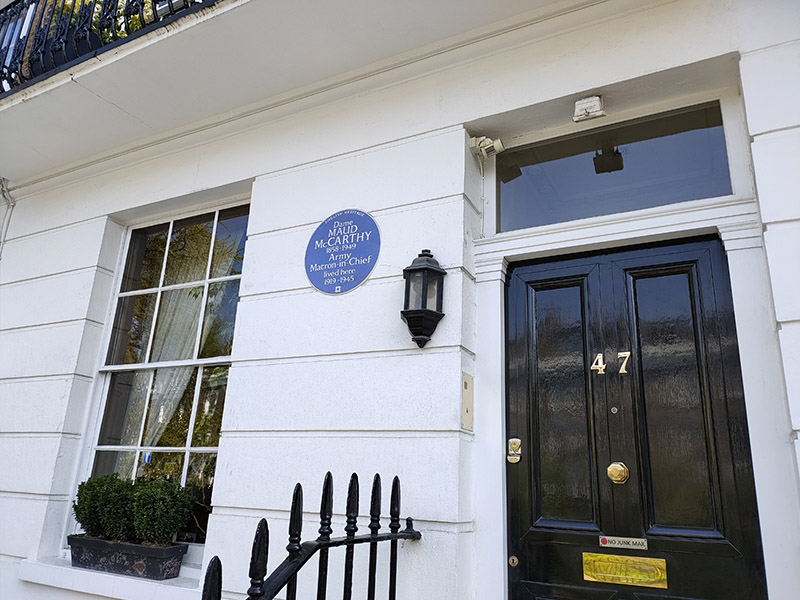
No.47 Markham Square was the one-time residence of Dame Maud McCarthy (1858 – 1949), who was matron-in-chief of the British Expeditionary Force in France and Flanders during WW1. The square, unsurprisingly, also boasts a well-planted private garden.

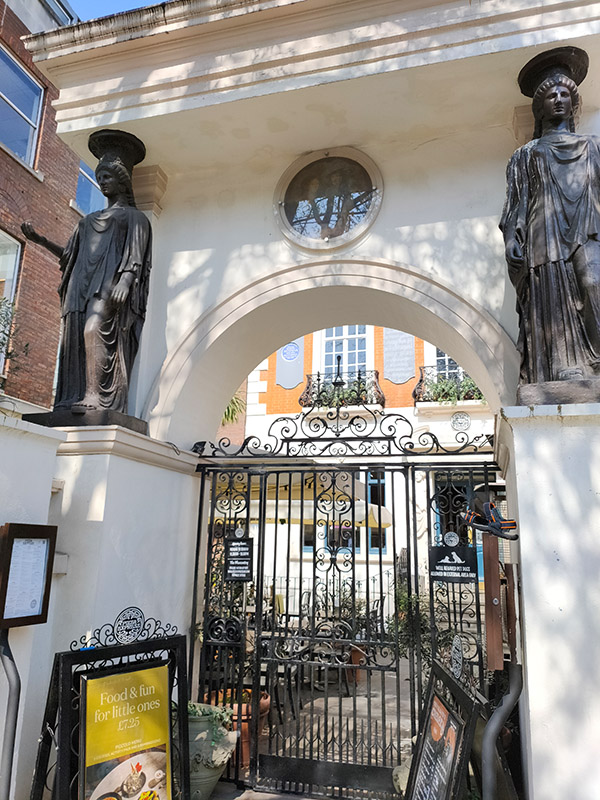
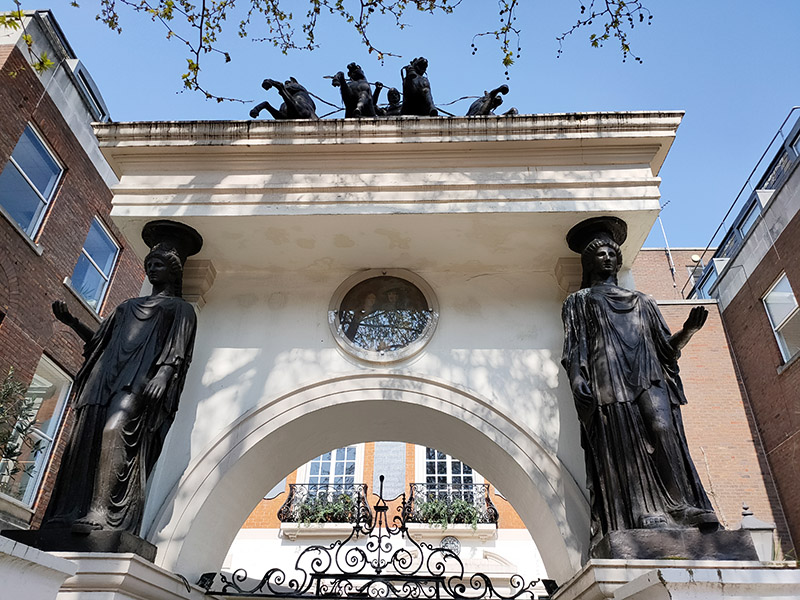
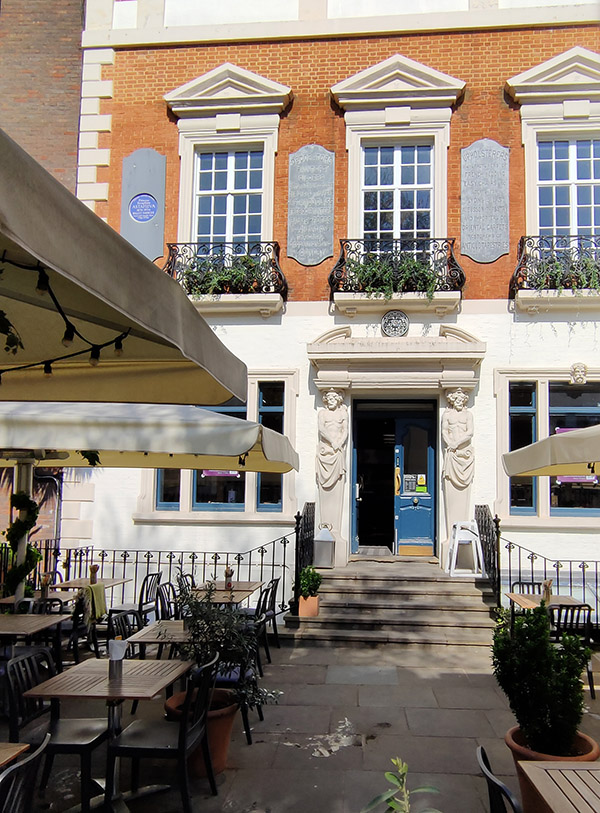
The branch of Pizza Express at 152 King’s Road occupies the building known as The Pheasantry, which got its name from the business of one Samuel Baker who developed new breeds of oriental pheasants here in the mid-19th century. The Grecian-inspired architectural stylings, including caryatids and quadringa, were added in 1881 by the artist and interior decorator Amédée Joubert. From 1916, part of the building was used for a ballet academy run by the dance teacher Serafina Astafieva (1876–1934), great niece of Leo Tolstoy. Then in 1932, the basement became a bohemian restaurant and drinking club patronised by actors and artists such as Augustus John, Dylan Thomas, Humphrey Bogart, and Francis Bacon. The drinking club closed in 1966 after the death of the owner Mario Cazzini, and the building was converted into apartments and the basement into a nightclub. The nightclub went on to host early gigs by Lou Reed, Queen and Hawkwind. The 1972 gig by Queen, which had been intended as a showcase for the band, did not go well. One attendee remembered that the band were “unpolished” and since the venue was mainly a disco, “once the disco had stopped and Queen went on everyone went to the bar.” (Oh, happy days). The Pheasantry name lives on under Pizza Express in the form of a basement jazz and cabaret venue.

To the west of The Pheasantry we turn north on Jubilee Place then return via Godfrey Street and Burnstall Street. The latter was once home to actress Diana Dors (1931 – 1984). Britain’s answer to the American “blonde bombshells” of the 1950’s was born in Swindon as Diana Mary Fluck. She made her screen debut in the British noir The Shop at Sly Corner (1947) in a walk-on role that developed into a speaking part. During the signing of contracts she changed her contractual surname to Dors, the maiden name of her maternal grandmother, later commenting “They asked me to change my name. I suppose they were afraid that if my real name, Diana Fluck, was in lights and one of the lights blew …”. Diana had an extremely varied career though she was rarely offered quality roles in films and by the 1970’s was restricted to a series of abysmal sex comedies and TV work. Her most acclaimed role was probably playing a Ruth Ellis-style character in 1956’s Yield To The Night. Dors had supposedly been close friends with Ellis, who was the last woman to be hanged in Britain, the year before the film was released. To say that Dors’ personal life was colourful doesn’t come close to covering it. At 10 Burnsall Street in the 1960s’ she hosted lavish “adult” parties that lasted until dawn, with guests including the Kray Twins, press coverage of which provoked the Archbishop of Canterbury Geoffrey Fisher to denounce Dors as a “wayward hussy” and her home as a “den of scandal”.

We make our way back up to Cale Street and then down to the King’s Road for the final time today taking in Danube Street, Astell Street, St Luke’s Street, Britten Street and Chelsea Manor Street (with a nod to Hemus Place). Britten Street once hosted the Anchor Brewery, which shut down in 1907, the site is now occupied by an office block called Anchor House but the brewery’s original arch (and anchor) remain in situ.

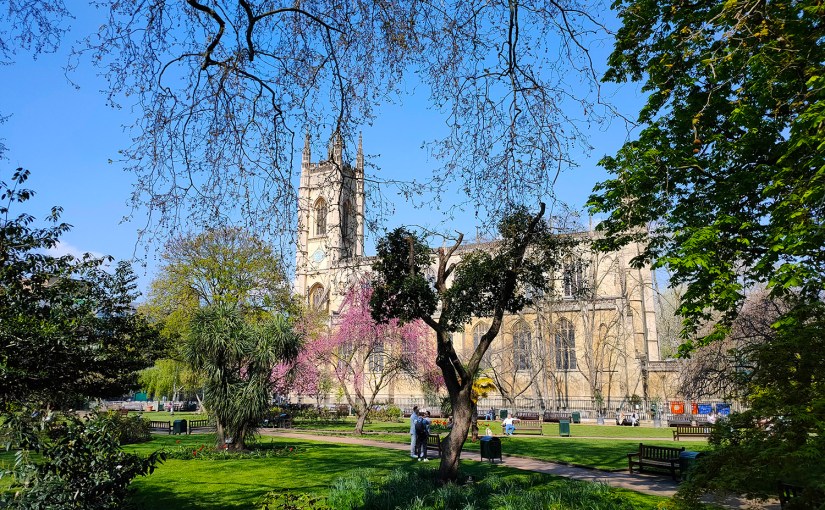
After that final incursion onto King’s Road we head north up Sydney Street and soon find ourselves in the splendid gardens attached to the imposing St Luke’s Church. St Luke’s, which was consecrated in 1824 and bears a striking resemblance to King’s College Chapel in Cambridge, is regarded as one of the first Neo-Gothic churches to be built in London. The nave, at 60ft in height, is the tallest of any parish church in the capital and the tower reaches a height of 142 feet. The architect was James Savage, one of the foremost authorities on medieval architecture of his time. Charles Dickens was married here on 2nd April 1836 to Catherine Hogarth, eldest daughter of George, who was editor of ‘The Evening Chronicle’ in which Dickens’ Sketches by Boz appeared. The large burial ground which surrounded the church was converted into a public garden in 1881, the gravestones being placed to form a boundary wall.

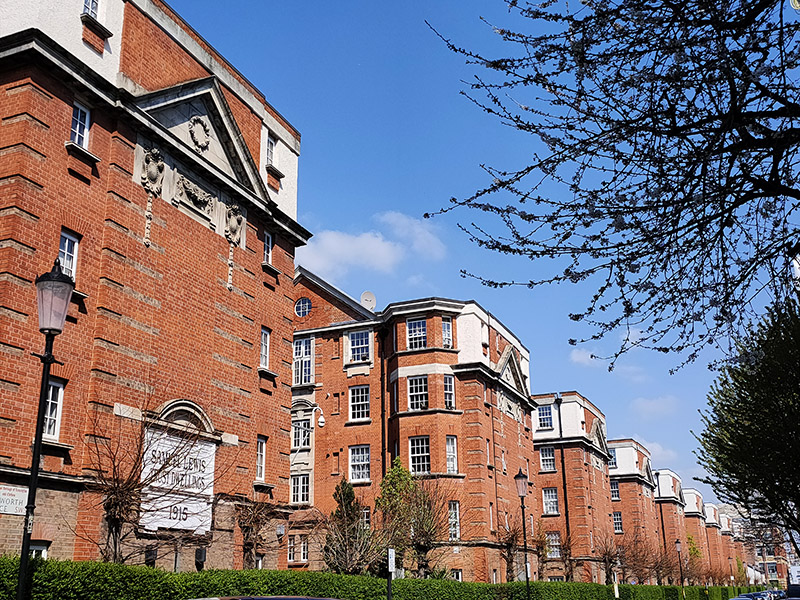
After visiting the church we continue north on Sydney Street up to Fulham Road then immediately make a loop down Bury Walk and up Pond Place. After heading east about a hundred metres on Fulham Road we turn right onto Elystan Street then right onto Ixworth Place to complete a circuit round the Samuel Lewis Trust Dwellings. Samuel Lewis was born in Birmingham in 1837. He began work at 13 and in due course became a salesman of steel pens, then opened a jeweller’s shop, and finally entered the money-lending business, becoming the go-to money-lender for most of Britain’s aristocracy. When he died, in London in 1901, he left an endowment of £670,000 to set up a charitable trust to provide housing for the poor, a huge sum at the time and one that equates to £30 million at today’s values. The estate in Chelsea was the second of eight to be built between 1`910 and the start of WW2.

We circle back to Elystan Street via Marlborough Street then turn south past one of many parades of tastefully presented shops.

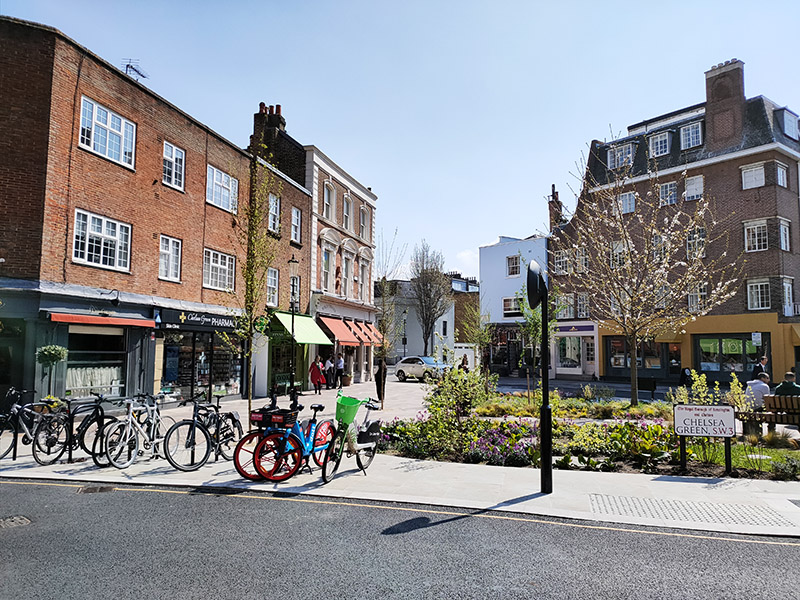
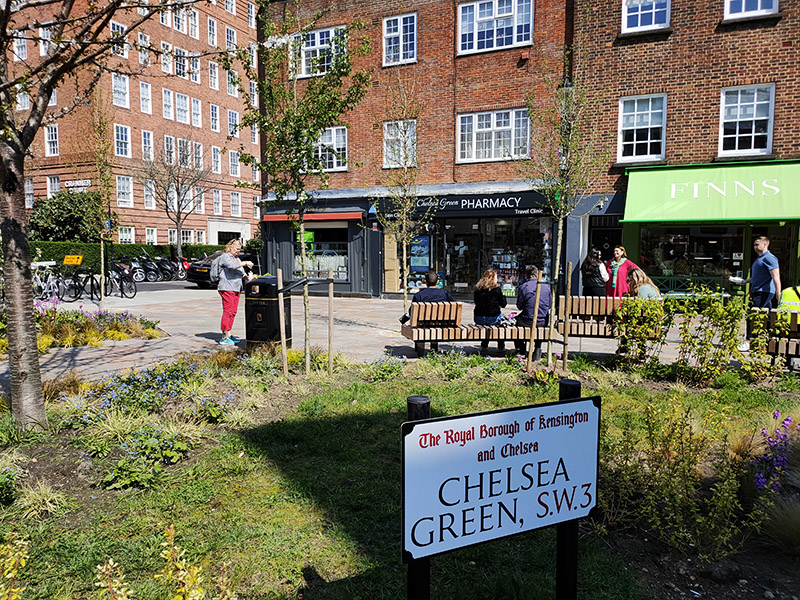
If you look closely you’ll see that the middle emporium is called Chelsea Green Shoe Repairs. In all innocence I initially took this to be a pitch for ecological credibility; however when I reached to the nexus of Cale Street and Elystan Place a short distance further south I realised that there is an actual Chelsea Green. Though, to put it kindly, that nomenclature is somewhat stretching a point; my back garden is bigger (and greener) and that’s not saying much.

Forking left off of Elystan Place into Sprimont Place there is more distinctive architecture in the form of The Gateways, a 1934 housing development designed by Wills and Kaula that now has a Grade II Listing.

Sprimont Place emerges onto Sloane Avenue, on the east side of which stand two very different high rise residential buildings though both date from the 1930’s and were designed by the same architect, George Kay Green (1877 – 1939). The Art Deco eleven-storey Sloane Avenue Mansions was completed first, in 1933. Neighbouring Nell Gwynn House was finished four years later and has a Cubist design which utilises Egyptian, Aztec, and Mayan patterns and decoration. From the outset, each apartment had built-in central heating and there was a restaurant in the basement, a hairdressing salon, and a bar in the lobby. Above the main entrance, at the level of the 2nd floor, is a statue of Nell Gwynn, with a Cavalier King Charles spaniel at her feet. This is reputedly the only statue of any Royal mistress to be found in London.

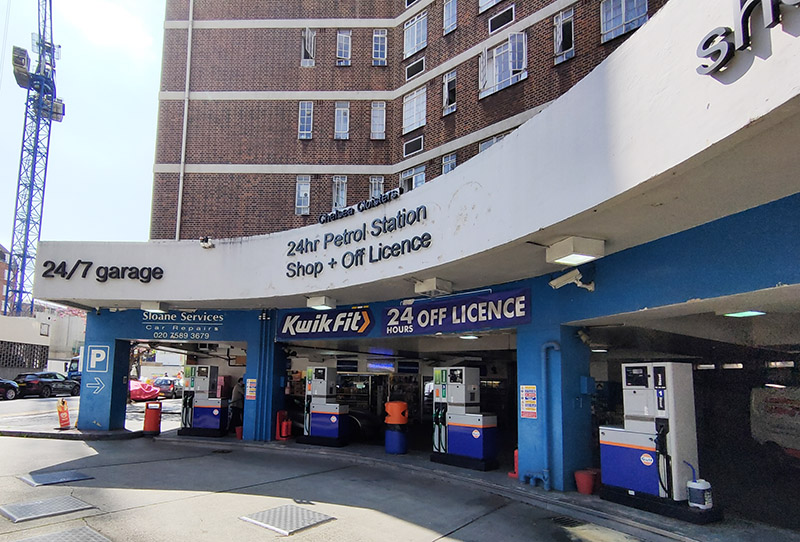
We return to Elystan Street down Whitehead’s Grove then back to Sloane Avenue via Petyward. On the intersection of Makin Street with Sloane Avenue there is a combined Kwik-Fit and 24-hour petrol station which at first sight appears totally incongruous in this context. But then you realise that all those Chelsea tractors have to have somewhere to fuel up.

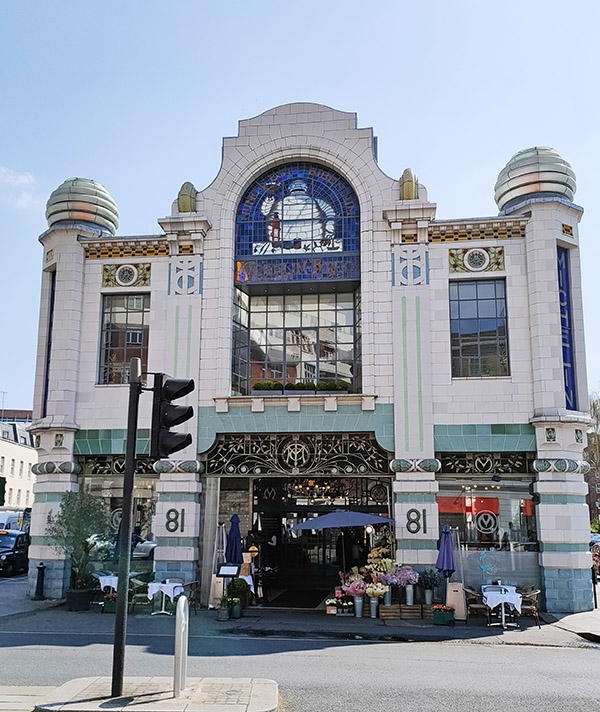
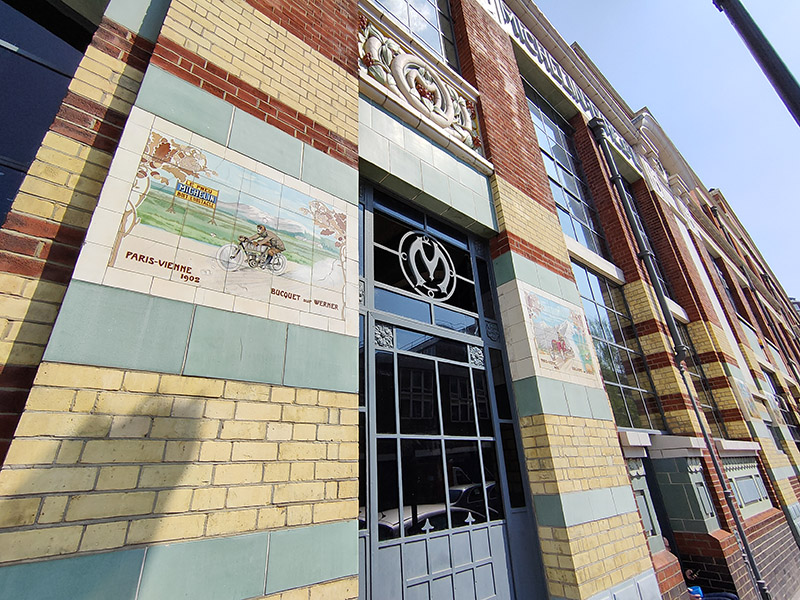
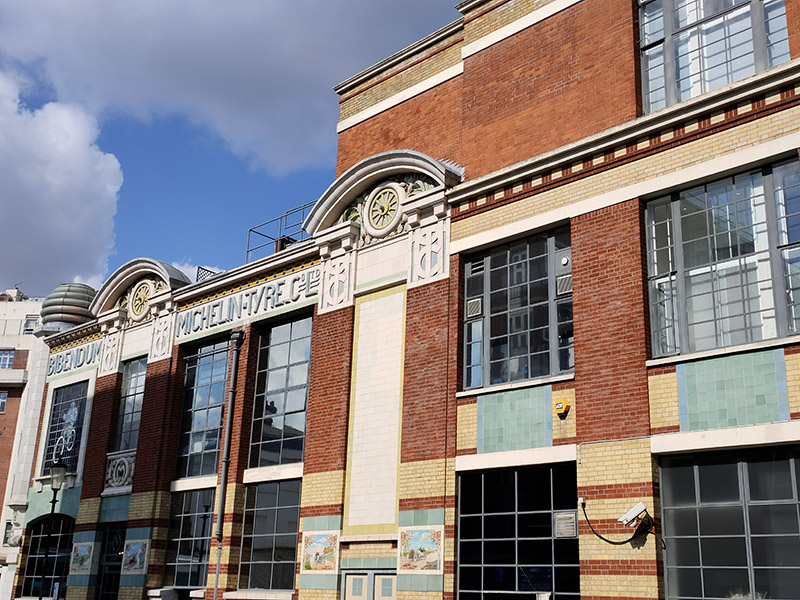
Rounding the garage we proceed north up Lucan Place to the point at which Fulham Road turns into Brompton Road and where stands Michelin House, one of the most distinctive and iconic buildings in the whole of the capital. Michelin House was constructed as the first permanent UK headquarters and tyre depot for the Michelin Tyre Company Ltd, opening for business in January 1911. The building was designed in an Art Nouveau style by one of Michelin’s employees, François Espinasse. It has three large stained-glass windows based on Michelin advertisements of the time, all featuring the Michelin Man aka “Bibendum” and around the front of the original building at street level there are a number of decorative tiles showing famous racing cars of the time that used Michelin tyres. When Michelin moved out of the building in 1985, it was purchased by publisher Paul Hamlyn and the restaurateur/retailer Sir Terence Conran who embarked on a major redevelopment that included the restoration of some of the original features. The new development, which opened in 1987, also featured offices for Hamlyn’s company Octopus Publishing, as well as Conran’s Bibendum Restaurant & Oyster Bar, and a Conran Shop. The dining experience is nowadays run by Chef Claude Bosi and the prices are not for the fainthearted.

From the east side of Bibendum we follow Sloane Avenue back south almost all the way to the King’s Road. Instead we turn east onto Bray Place then take Blacklands Terrace up to Draycott Place, passing the Spanish Consulate as we resume eastward.

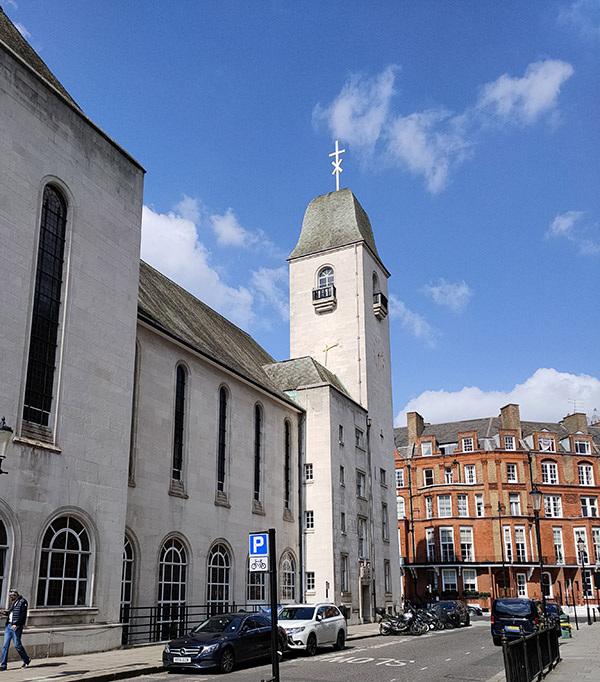
St Mary’s Church on the corner of Drayton Terrace and Cadogan Street looks rather humdrum in comparison with St Luke’s but, as you would expect from a Roman Catholic house of worship, the glories are all interior. The original St Mary’s was built close to the present site in 1812 and was one of the first Catholic chapels in the country since the Reformation. The foundation stone of the present church was laid in 1877. It was designed by John Francis Bentley (1839-1902), an English church architect chiefly known for Westminster Cathedral. For many years the church served the spiritual needs of the Roman Catholic residents of the Royal Chelsea Hospital. One of the special features of the interior is the hanging rood which has a figure of Christ, robed and crowned and the symbols of the four Evangelists.

From the church we head east on Cadogan Street into Cadogan Gardens then take a right into the southernmost section of Pavilion Road which is the area’s home of al- fresco dining and is one of the few places I’ve seen so far making any effort to prepare for the forthcoming Coronation.

Having completed the full circuit of Cadogan (private of course) Gardens we return to Draycott Place and proceed west to the southern end of Draycott Avenue.

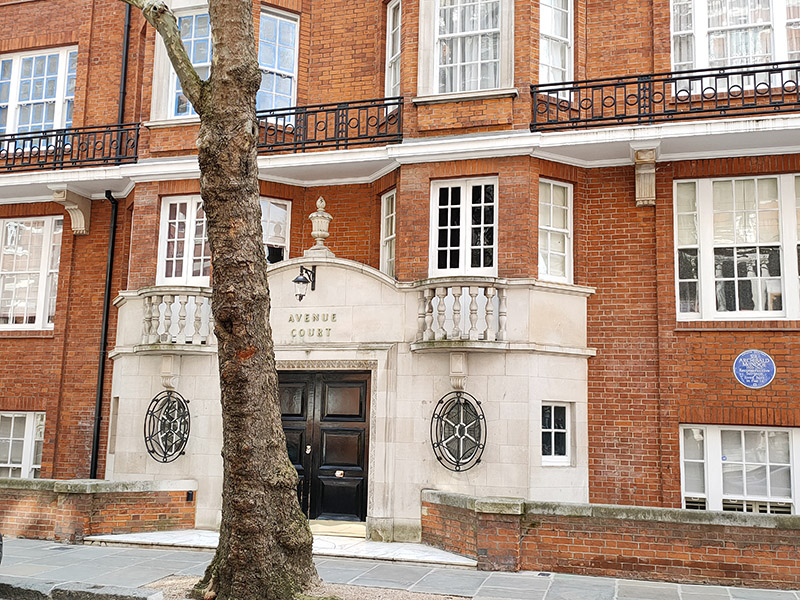
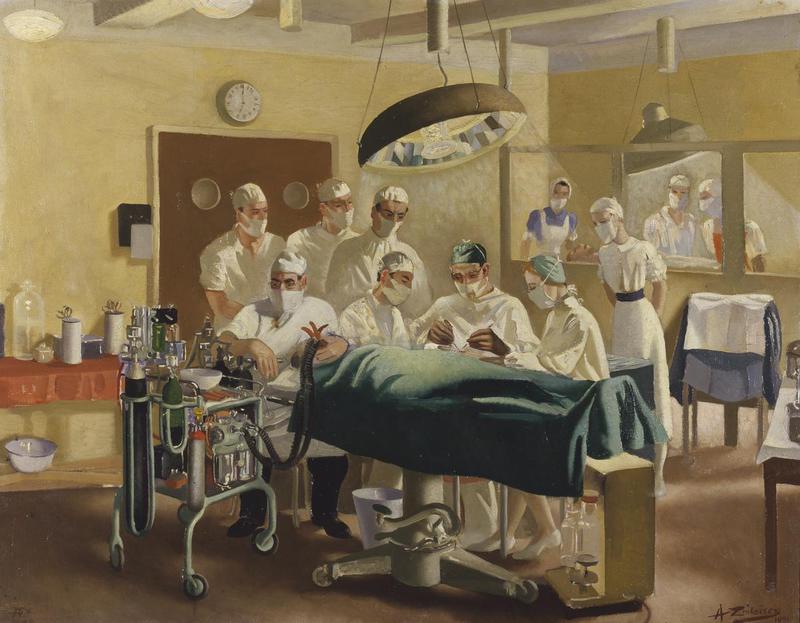
Flat 14, Avenue Court on Draycott Avenue was home between 1949 and 1955 to the New Zealand-born reconstructive surgeon, Sir Archibald McIndoe (1900 – 1960) who is feted for his work with seriously burned aircrew of the RAF during WW2. The painting below was done by artist Anna Zinkeisen in 1944 and depicts McIndoe operating at the Queen Victoria Hospital in East Grinstead.

We wend our way northward to the east of Draycott Avenue taking in Rawlings Street, Rosemoor Street, Denyer Street to reach today’s pub of the day, The Admiral Codrington on Mossop Street. The pub is named after Sir Edward Codrington (1770 – 1851) who served in the Battle of Trafalgar and the Battle of Navarino (Greek war of independence). As a consequence of the ships under his command destroying the Turkish and Egyptian fleets in the latter engagement, Codrington is a popular figure in Greece. His reputation in this country however is tarnished by the fact that he and his siblings inherited a slave plantation in Antigua from their uncle. The other two pubs named after him, in Coventry and south-east London, have both closed and I suspect, if this remains open, it may need to do so under a different name in future. In any event I enjoyed my Chicken Milanese sandwich and half a Madri.

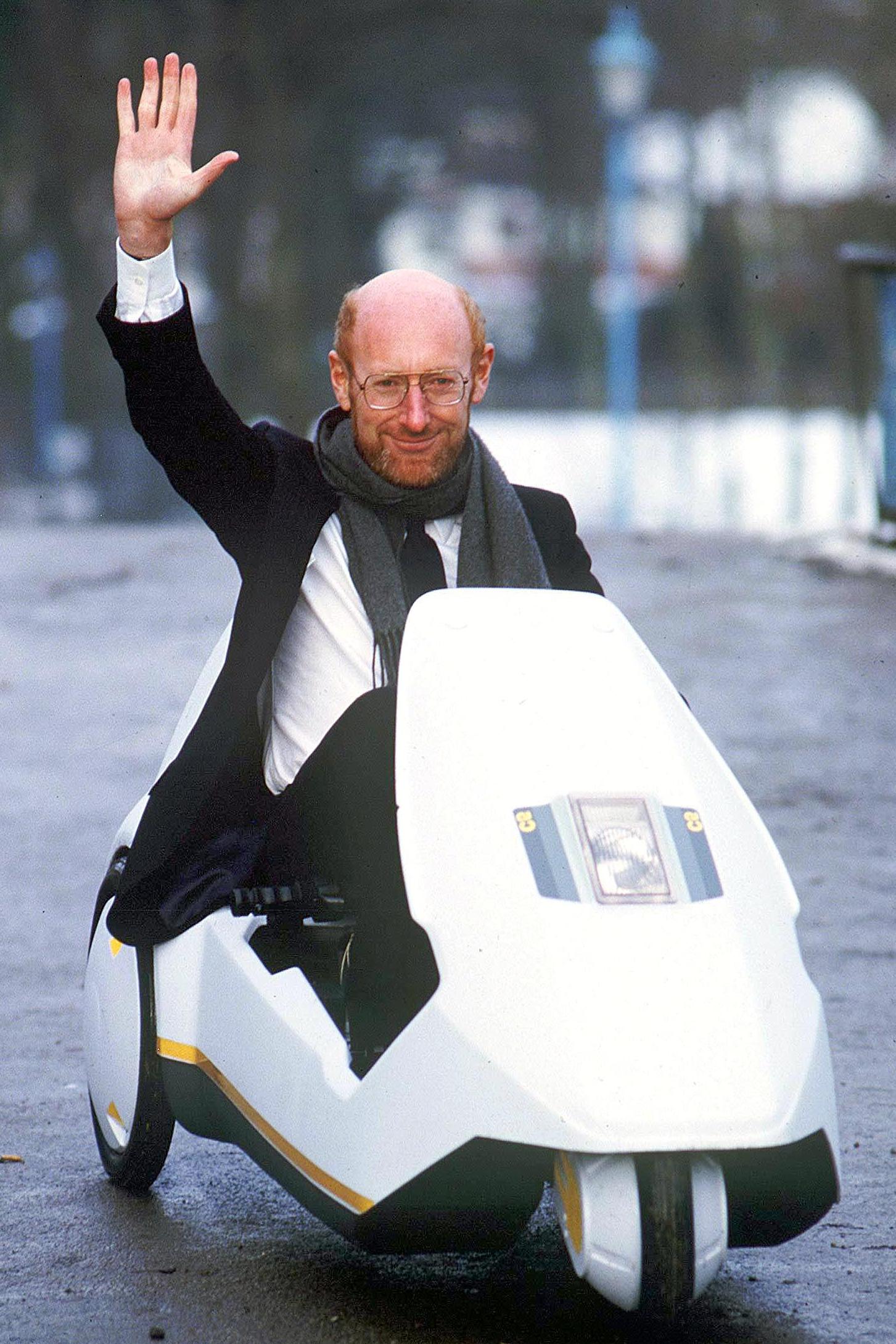
The pub faces onto an empty 4 hectare lot that was formerly the site of the John Lewis Clearing Depot which was built in the 1930’s. John Lewis closed the depot in 2010 and acquired permission to redevelop the site a year later, however, according to the bar staff, the building was only demolished about 18 months ago. It is reported that Mike Ashley (Sports Direct) was behind two companies that acquired the site from John Lewis for £200m in 2015. There is little sign of any construction work going on at the moment. Anyway, after leaving the pub we swing round Ives Street and drop onto Donne Place where maverick inventor Sir Clive Sinclair (1940 – 2021) lived at no.32 from 1982 to 1987, a period that covered both the heyday of the ZX Spectrum home computer and the unfortunate failure of the Sinclair C5 electric vehicle.

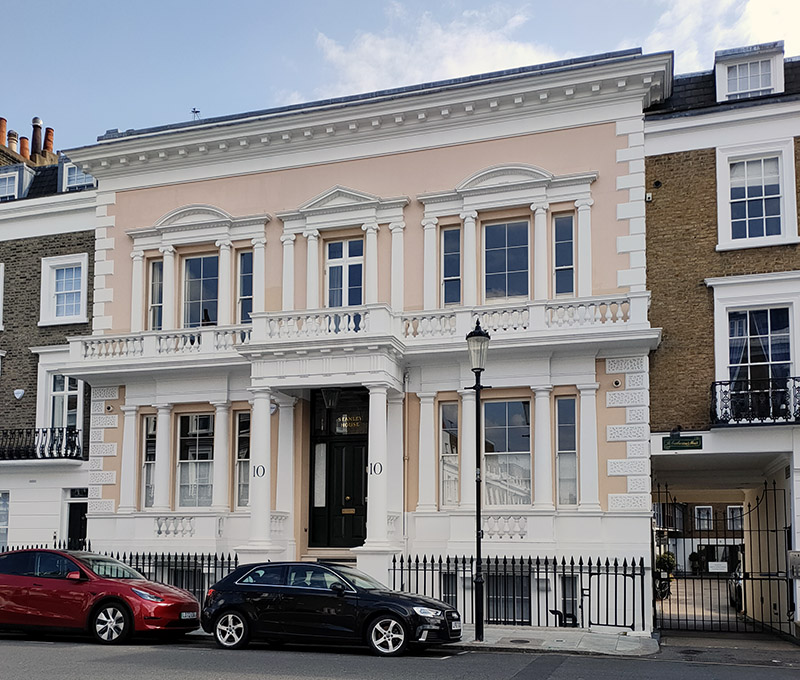
From Donne Place we visit Bulls Gardens and Richard’s Place on the way to Milner Street. We then traverse between Milner Street and Walton Street on First Street, Hasker Street and Ovington Street. No.10 Milner Street, which is also known as Stanley House, was built in 1855 in an Italianate style built by the Chelsea speculator John Todd for his own occupation. From 1945 it was home to the interior designer Michael Inchbald and his wife Jacqueline, who founded the Inchbald School of Design in the basement in 1960. The house was Grade-II listed in 1969, an honour it shares with the other Stanley House in the area, at 550 King’s Road (which is for another day).

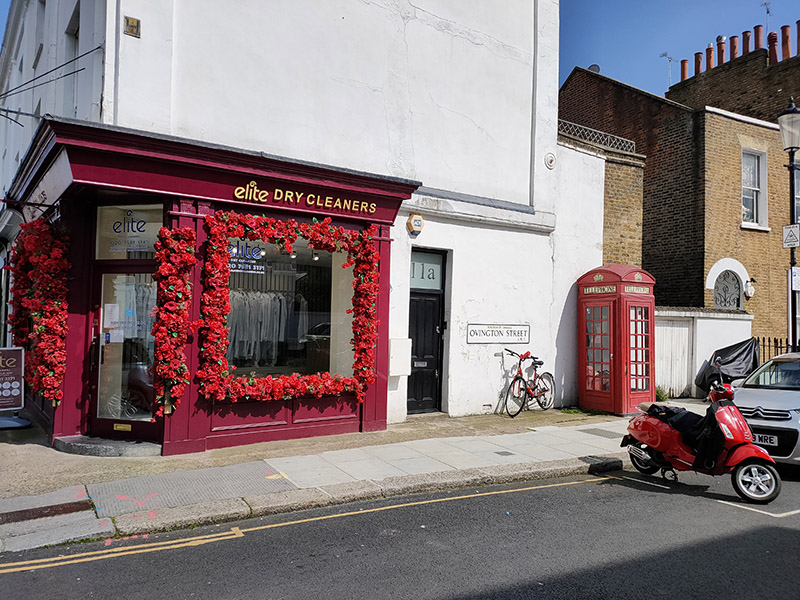
No launderette of the day this time (unsurprisingly) so we’ll have to make to do with the Elite Dry Cleaners at the top of Ovington Street. Come on you Reds !

Round the corner on Walton Street, the building at No. 1a started life as a school then became a magistrate’s court and finally a private mansion. In 2018 it was sold for over £50m following the death of the previous owner Canadian cable TV mogul David Graham, who had infuriated neighbours by submitting plans to triple its size by digging down 50ft to create a four-storey basement with 45ft pool, hot tub, sauna, massage room, ballroom, covered courtyards, staff accommodation, parking and car lift. The proposal was thrown out by Kensington and Chelsea council.

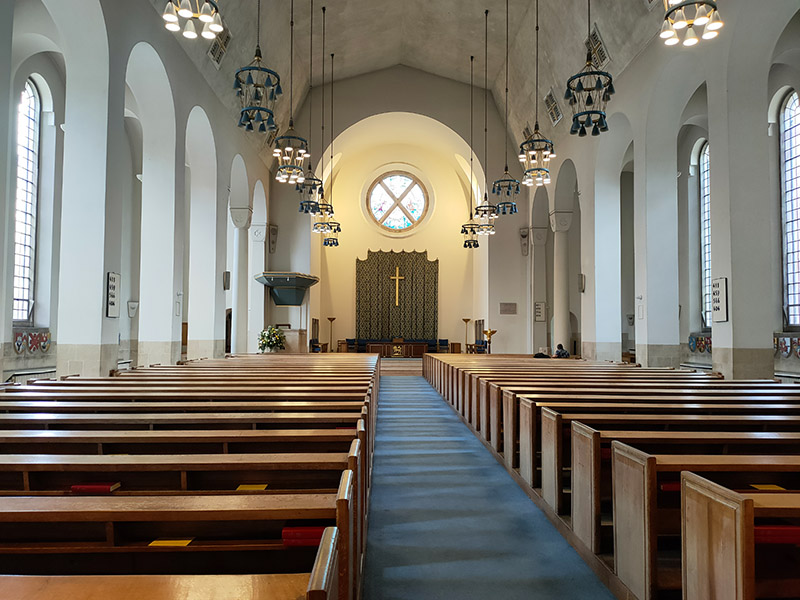
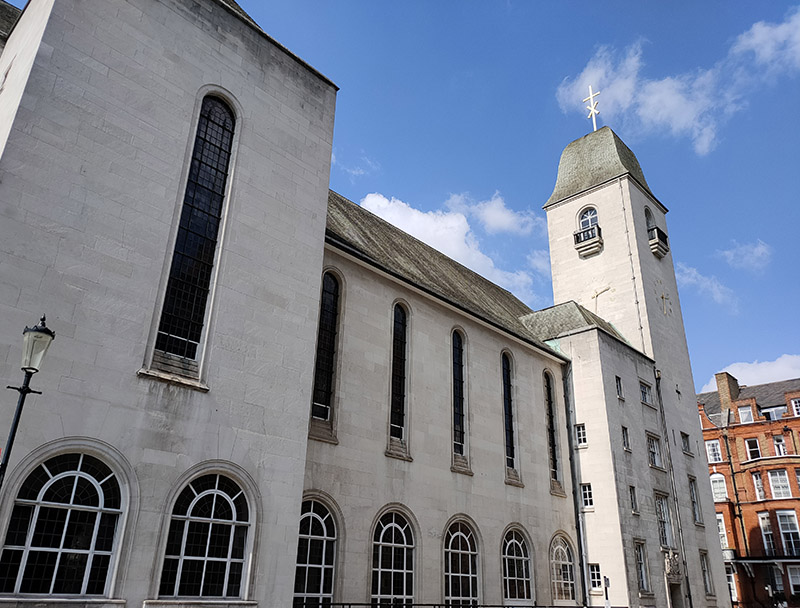
After looking in on Lennox Gardens Mews we navigate the loop that is Lennox Gardens and arrive at St Columba’s Presbyterian Church on Pont Street. The Church of Scotland originally built a kirk here in 1884 but that was hit by a German incendiary bomb in May 1941 and burnt to the ground. It took 14 years before the rebuilt church that we see today was open for worship. As you might expect the interior of the church is even more spartan than that of your typical C&E.

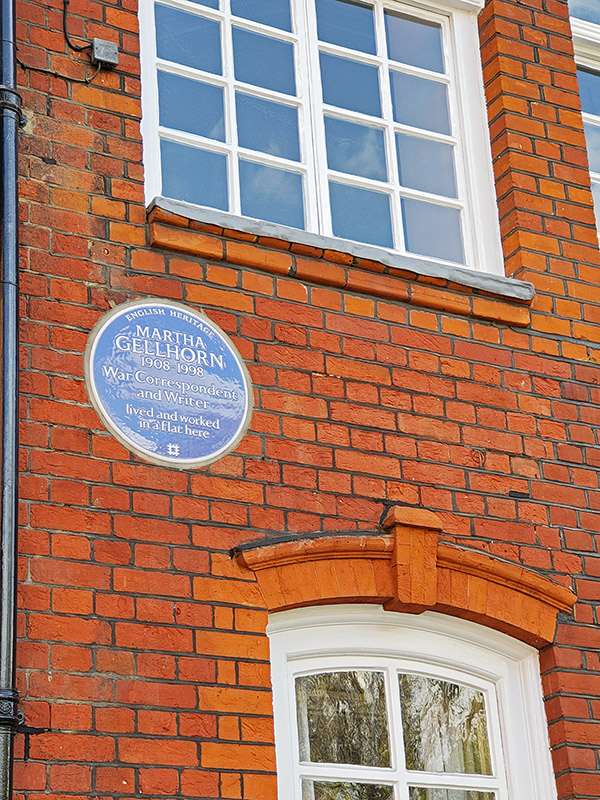
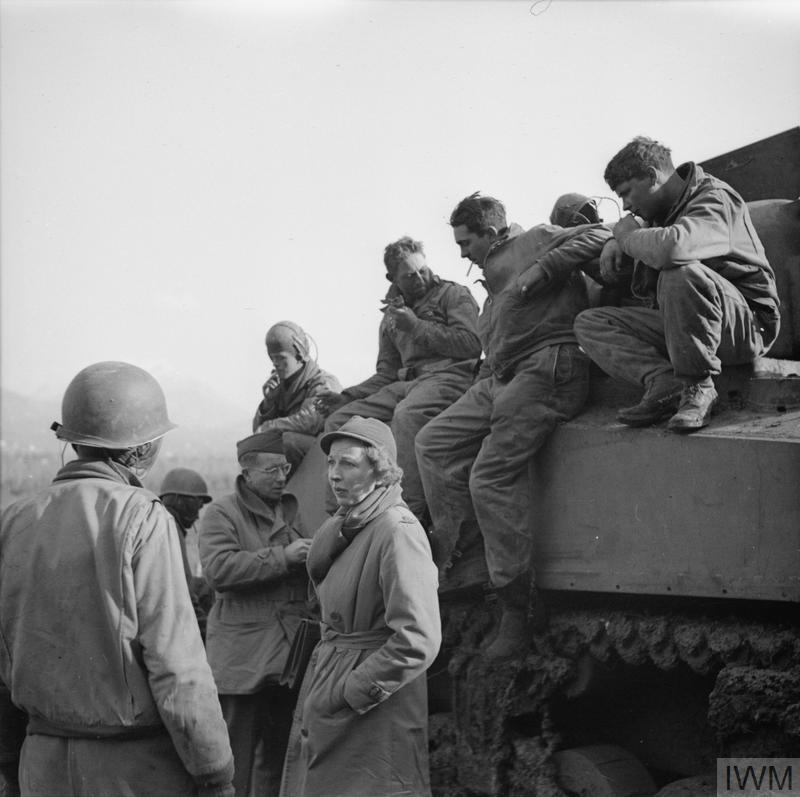
From Pont Street we make a tour of Cadogan Square, Clabon Mews and the northern section of Pavilion Road before returning to Milner Street. At 72 Cadogan Square there is a blue plaque commemorating the war correspondent and writer , Martha Gellhorn (1908 – 1998). Gellhorn met Ernest Hemingway during a 1936 Christmas family trip to Key West, Florida. Gellhorn had been hired to report for Collier’s Weekly magazine on the Spanish Civil War, and the pair decided to travel to Europe together. They celebrated Christmas of 1937 in Barcelona then, moving on to Germany, she reported on the rise of Adolf Hitler. In the spring of 1938, months before the Munich Agreement, she was in Czechoslovakia. After the outbreak of World War II, she described these events in the 1940 novel A Stricken Field. The same year she married Hemingway. Subsequently, Gellhorn reported on the war from Finland, Hong Kong, Burma, Singapore, and England. In June 1944, she applied to the British government for press accreditation to report on the Normandy landings; her application, like those of all female journalists, was denied. So, posing as a nurse she got herself onto a hospital ship where she promptly locked herself in a bathroom. Consequently, she was the only woman to land at Normandy on D-Day, becoming a stretcher-bearer for the wounded. A year later she and Hemingway divorced.

Final church of the day is St Simon Zelotes on the corner of Milner Street and Moore Street. This was designed by Joseph Peacock in the High Victorian tradition and completed in 1851. The church is named for Simon the Zealot, one of the less well-known of Jesus’s apostles. Very little of substance seems to have been recorded about Simon. He is variously reported as having been martyred by either crucifixion or being sawn in half but other accounts have him dying peacefully in his sleep. Despite this obscurity he is regarded as a saint by nearly all the major Christian faiths.

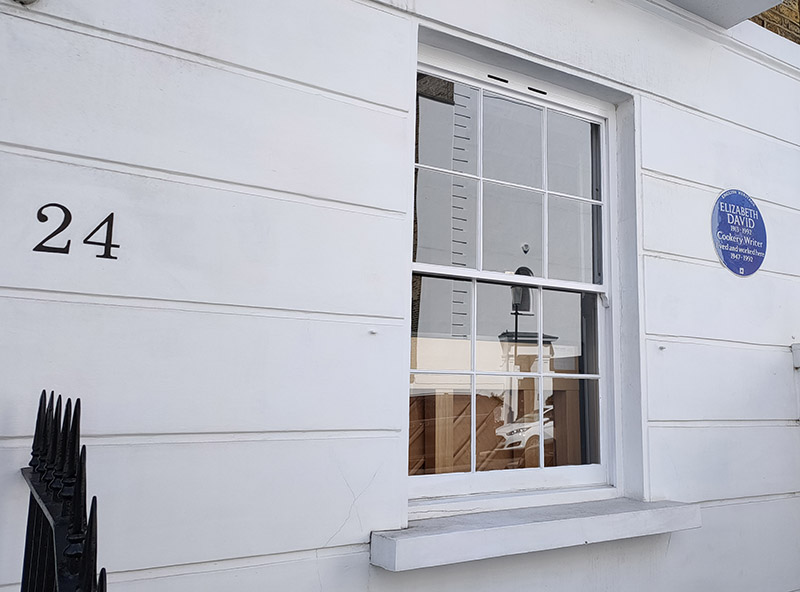
Final street of the day is Halsey Street, which also hosts a final blue plaque. I mentioned Elizabeth David (1913 – 1992) right and the start of this post and mentioned that we’d be returning to her later. Well, here she is at no. 24 where she lived and worked from 1947 until her death. Before she settled down to become one of the most influential cookery writers of the 20th century David had an eventful personal life. In the 1930s she studied art in Paris, became an actress, and ran off with a married man with whom she sailed in a small boat to Italy, where their boat was confiscated. They reached Greece, where they were nearly trapped by the German invasion in 1941, but escaped to Egypt, where they parted. She then worked for the British government, running a library in Cairo. After returning to England, she published her first cookery book, A Book of Mediterranean Food, in 1950 when rationing was still in force and many of the ingredients she championed were unavailable. Nonetheless, the book was a success and she went on to write seven more over the next three and a half decades becoming a major influence on British cooking, both domestic and professional. 

Day 22 (part 2) – Gray’s Inn – High Holborn – Red Lion Square

So with an hour so in hand there was just time for a second leg of today’s journey which took care of the streets within the more or less rectangular area bounded by Southampton Row to the west, Theobalds Road to the north, Gray’s Inn Road to the east and High Holborn to the south. A large proportion of this territory is occupied by the land and buildings owned by the Honourable Society of Gray’s Inn, one of the four Inns of Court (all in London) which are the professional associations that all barristers in England & Wales must belong to one of. By contrast, in the western section of the quadrant lies Red Lion Square which has associations altogether less aligned with the establishment.

Day 22 Route 2

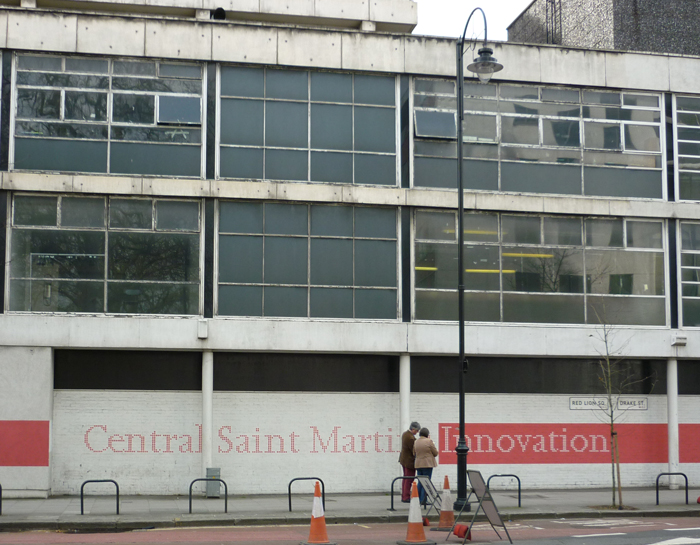
So I hop off the bus on Theobalds Road and turn left down Drake Street which is part of both the A40 and the Holborn one-way system. It’s also where you’ll find the second abandoned site of Central St Martin’s School of Art (the one that won’t be hosting a pop-up theatrical performance in May starring James Norton 0f War & Peace and Happy Valley fame – that’s the site on Charing Cross Road that featured a couple of posts back).

P1050428

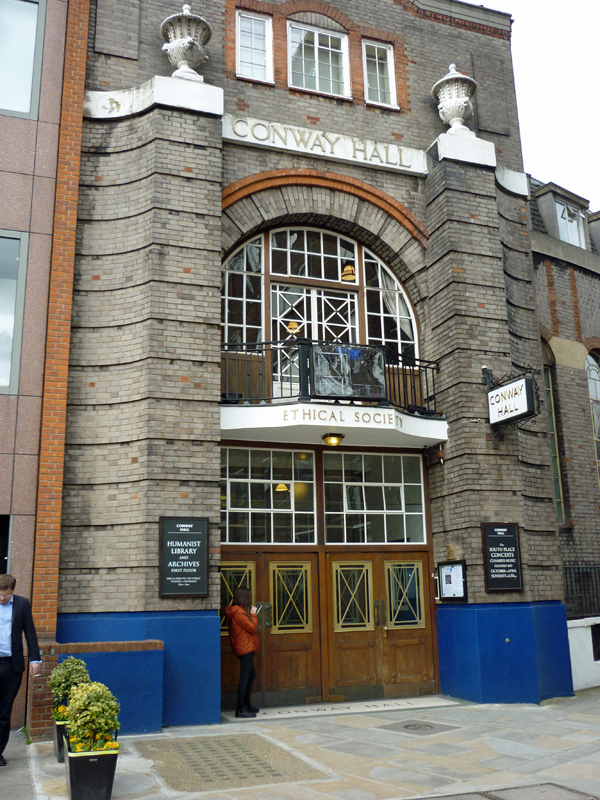
Swiftly take another left to skirt the northern side of Red Lion Square including a trip up  and down Old North Street. In the north eastern corner of the square sits the Conway Hall which is owned by Conway Hall Ethical Society and was first opened in 1929. The name was chosen in honour of Moncure Daniel Conway (1832 – 1907), anti-slavery advocate, out-spoken supporter of free thought and biographer of Thomas Paine. Nowadays it hosts a wide variety of lectures, classes, performances, community and social events and is renowned as a hub for free speech and independent thought. Its Library holds the Ethical Society’s collection, which is the largest and most comprehensive Humanist Research resource of its kind in the United Kingdom.

P1050408

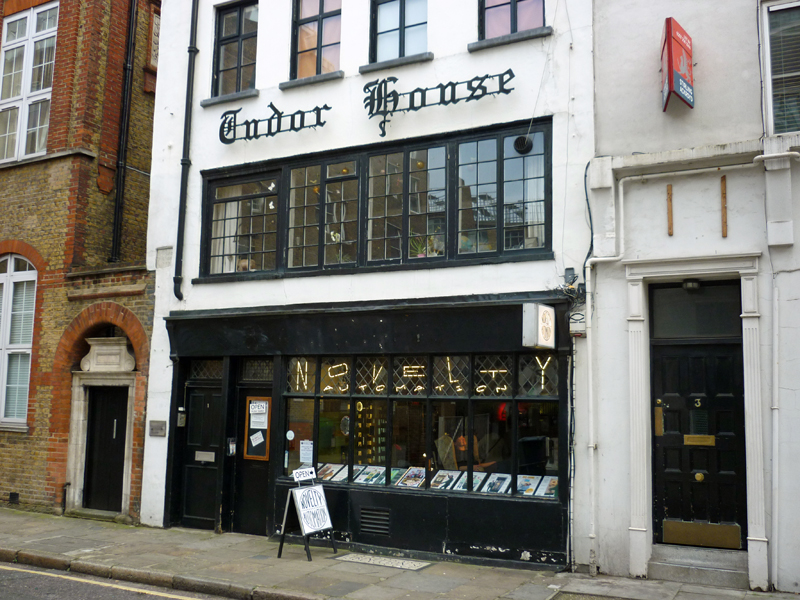
Head east away from the square via Lambs Conduit Passage then briefly south on Red Lion Street before resuming eastward along Princeton Street. No.1a (aka Tudor House) is now the London home of Novelty Automation which is a collection of, frankly, bonkers alternative amusement arcade machines. Didn’t have time to go in but having experienced the delights of the sister operation on Southwold pier would recommend a visit if you’re ever in the vicinity.

P1050409

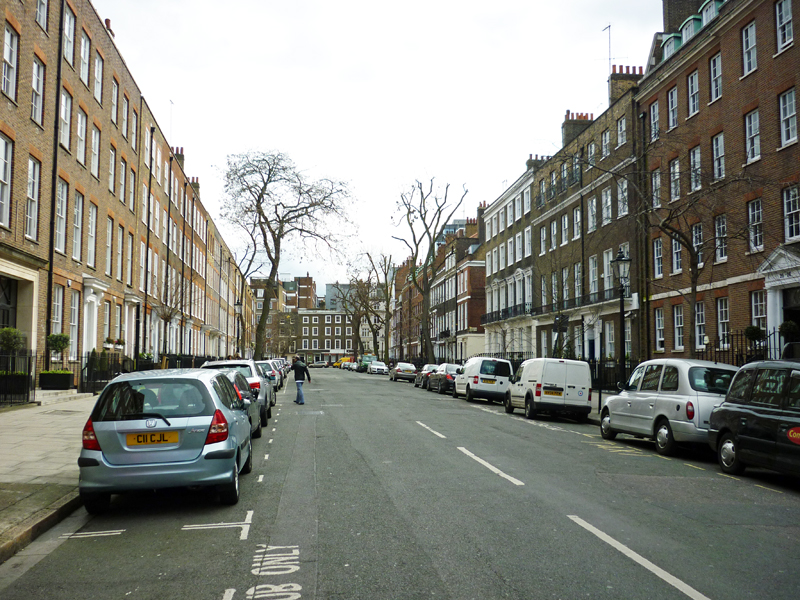
Next up is a circuit of Bedford Row which has to be one of the widest residential streets in the capital. If you were wondering who can afford properties like these then the clue is in the opening paragraph.

P1050410

Continuing east we get to Jockey’s Fields, one side of which is taken up by the western wall of Gray’s Inn. The equestrian origins of the name of this former mews of Bedford Row have unfortunately been lost in the mists of time. As you will note, the entrance to Gray’s Inn, at the southern end of the wall, is suitably forbidding.

P1050411

Just inside the gate to the left is a private road on the right side of which are the series of chambers known as Raymond Buildings. And behind you, on the wall itself, is a sign which continues the forbidding theme. The Servants of the Inn are a bit like the Deatheaters from Harry Potter I believe.

The Inn’s substantial gardens are known as The Walks and are only accessible to the general public between 12.00 and 2.30 on weekdays.

Apparently none of the Inns has a verifiable date of foundation. For many centuries it was the view that the starting point of the Inns of Court was a writ of Edward I made on the advice of his Council in 1292. The formal records of Gray’s Inn only date back to 1569 however. During the 16th century when Queen Elizabeth I herself was the Inn’s patron lady there were many more members than those who went on to be admitted to the bar including Lord Burleigh, the Queen’s First Minister, Lord Howard of Effingham, the Admiral who defeated the Spanish Armada in 1588, and Sir Francis Walsingham, the Chief Secretary who founded the Queen’s secret service.

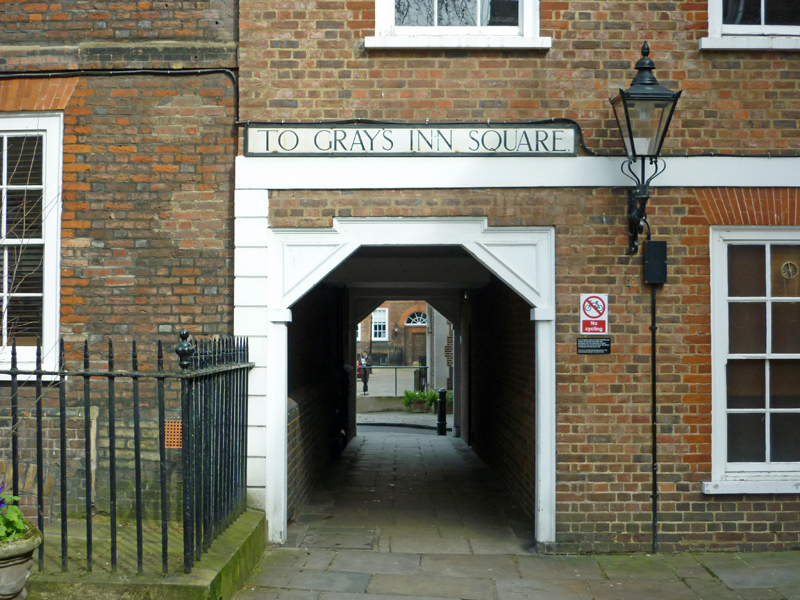
Passing the southern entrance to the gardens we head through the arch leading into Gray’s Inn Square.

P1050419

On your right as you enter the square is the Chapel at Gray’s Inn which predates the Inn itself in that its earliest in carnation is purported to have been around from 1315. The current building is largely a post-WW2 bombing reconstruction however.

P1050420

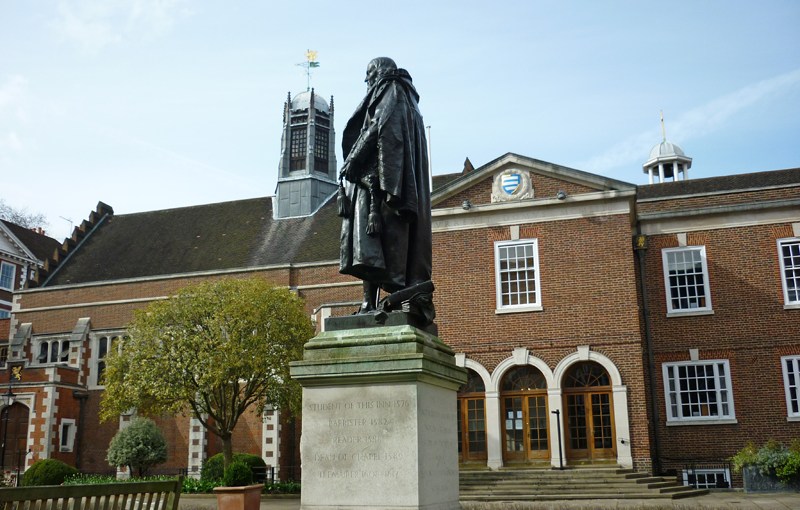
Behind the chapel is the South Square which houses the Library of over 75,000 books and journals. In the centre of the square is a statue of Francis Bacon (1561 – 1621 ) which was erected in 1912. Bacon was admitted to the Inn in 1576 and called to the bar in 1582. He was elected Treasurer of the Inn in 1608 and held the position until 1617, when he was appointed Lord Privy Seal.

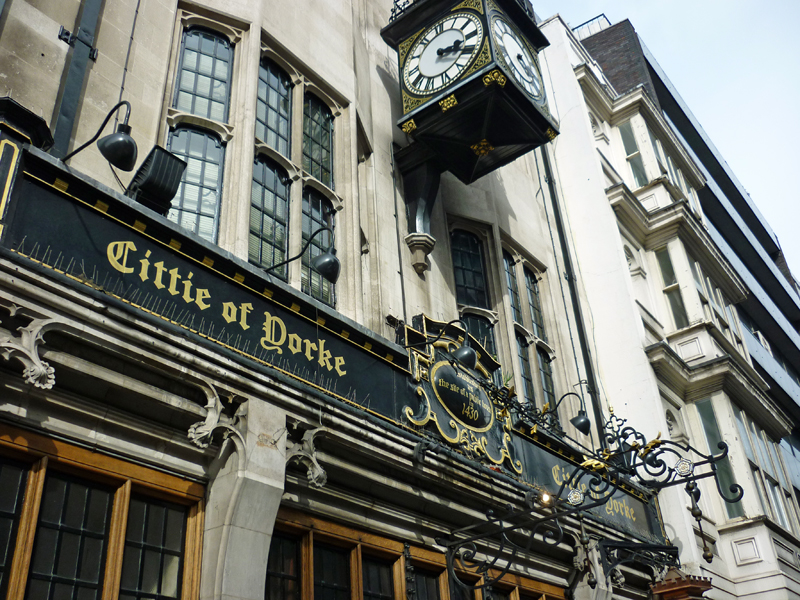
Exit the square by its south-west corner and emerge out onto High Holborn. Turning right we pass the Cittie of Yorke  which, although it looks (especially inside) like something from medieval times, actually dates from the 1920’s. Nonetheless this Samuel Smiths’ pub is distinctive enough to have earned a Grade II listing.

P1050426

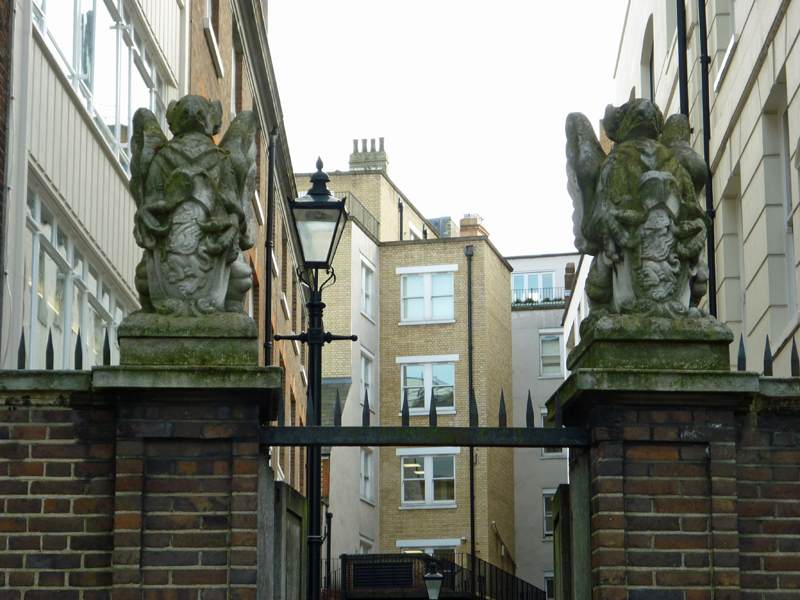
Duck back up the alley that is Fulwood Place, the north end of which (opposite the entrance to the Walks) is guarded by these stone griffins. The badge of Gray’s Inn  (as opposed to a true coat of arms) is a gold griffin on a black background encircled with the motto Integra Lex Aequi Custos Rectique Magistra Non Habet Affectus Sed Causas Gubernat, or “Impartial justice, guardian of equity, mistress of the law, without fear or favour rules men’s causes aright”.

P1050418

Make our way back to Red lion square now traversing en route Warwick Court, Brownlow Street, Hand Court, Sandland Street, Red Lion Street and Princeton Street (again). Despite its small size, Red Lion Square has something of a colourful history. Legend has it that beneath this site lie the bodies (but not the heads) of Oliver Cromwell, his son-in-law Henry Ireton and the judge John Bradshaw, the chief architects of the regicide of Charles I. After the restoration of the monarchy in 1660, parliament had the bodies of the three men disinterred and posthumously tried and executed at Tyburn. Their heads were then cut off and displayed on the roof of Westminster Hall while the bodies were initially buried near the gallows. Rumour has it though that the bodies were exchanged while being kept at the Red Lion Inn the night before the hanging and the real remains buried behind the inn where the square is now situated.

The square itself was laid out around 25 years later by a property speculator by the name of Nicholas Barbon. This didn’t go down that well with the lawyers of Gray’s Inn however. Ironically though their legal attempt to prevent the development of the land failed and they ended up taking the law into their own hands. Around 100 of them attacked the workmen on the site, armed with bricks and other building materials. In the ensuing pitched battle the workmen came out on top and the building work carried on.
In the 1850’s Dante Gabriel Rossetti, founder of the Pre-Raphaelites lived here as did his friends William Morris and Edward Burne-Jones.

Back in the present day; there is a bust of our old friend Bertrand Russell on the eastern side of the square (which the local pigeons have shown scant respect to) and on the west side a statue of the politician and anti-war activist Fenner Brockway (1888 – 1988). Living to the ripe old age of 99 meant that he got to be one of the few people to unveil their own statue.

After circling the square it just remains to visit Dane Street, Eagle Street, Catton Street and Fisher Street before calling time on today’s excursions.