Day 83 – Fulham Road – Old Brompton Road – Cromwell Road – Natural History Museum

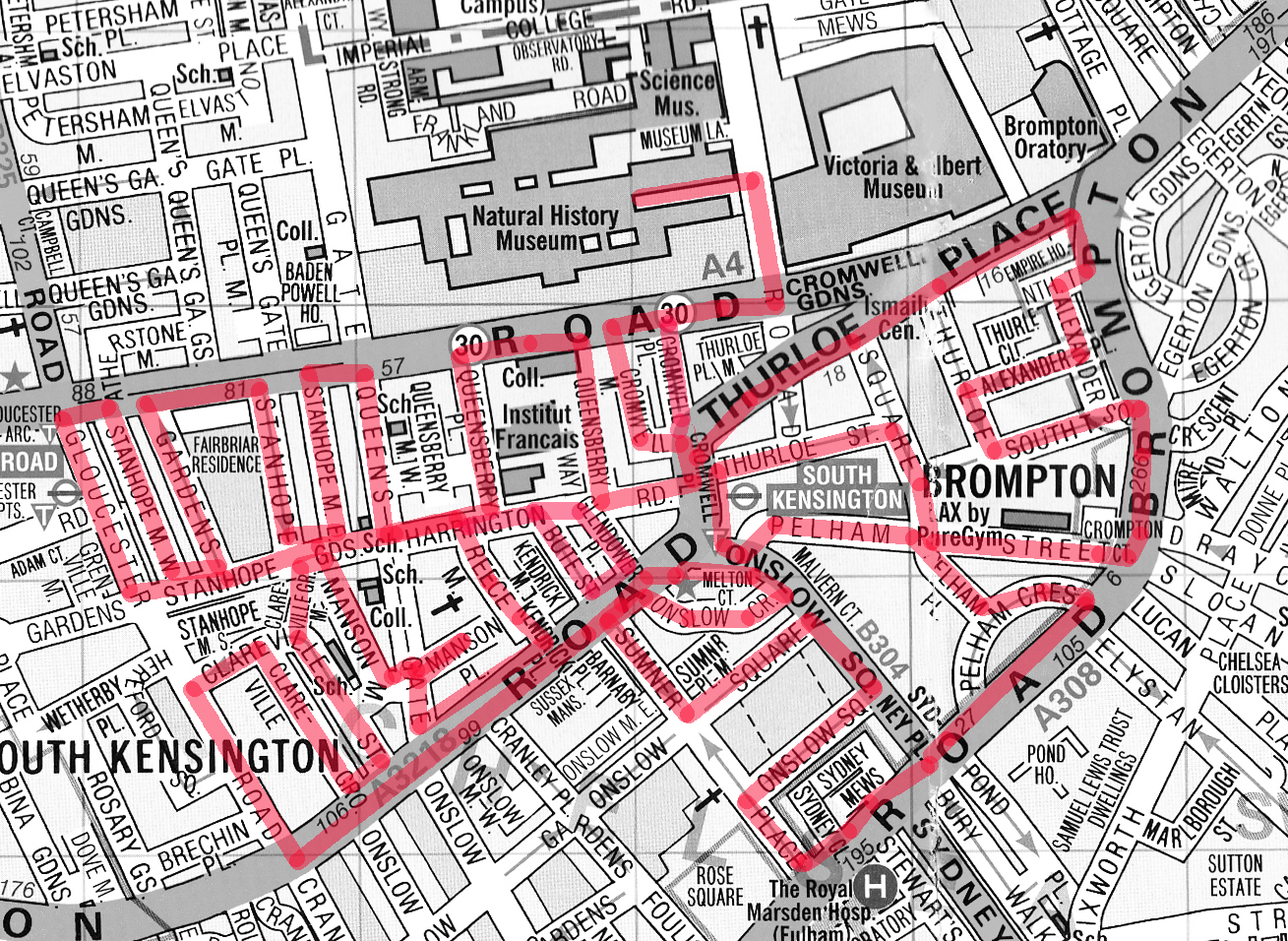
For today’s outing we’ve returned to SW7 to explore the area around South Kensington tube in between the Brompton Road and Gloucester Road. To avoid overload I’ve parcelled up this part of London so that no single post covers more than one of the big three museums on Exhibition Road. We already dealt with the V&A in Day 81 so today it’s the turn of the Natural History Museum where we’ll finish up. En route we’ll encounter a plethora of former residents and delve into the French influence on the area.
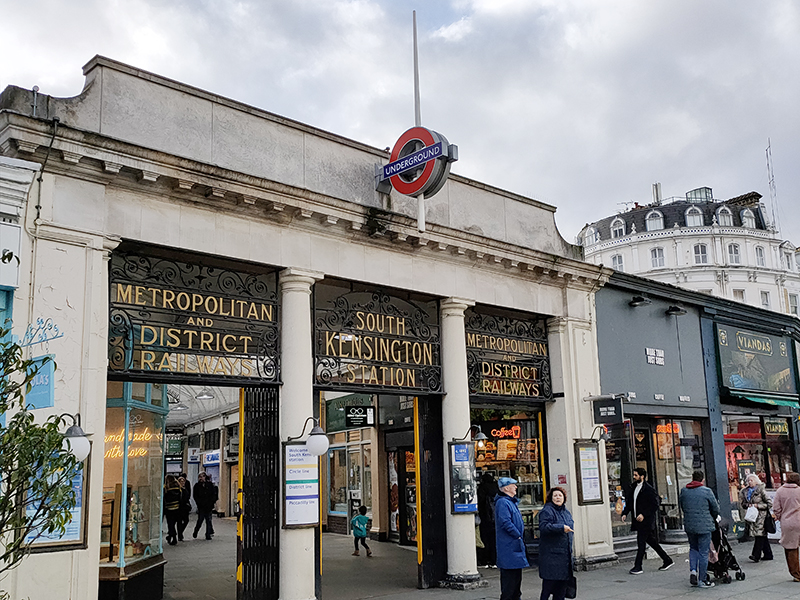
We start out from South Kensington Tube station which opened on Christmas Eve 1868. Designed by Sir John Fowler, it was originally known as Brompton Exchange and formed part of the Metropolitan Line. Following the construction of the deep-level Piccadilly Line link in 1905-06, Leslie Green designed a separate entrance on Pelham Street and George Sherrin was engaged to remodel the existing entrance and booking hall, and lay out a street-level arcade between Thurloe and Pelham Streets. This Edwardian arcade with its glazed barrel-vaulted roof above shops on each side and wrought iron screens at either end is the station’s USP.
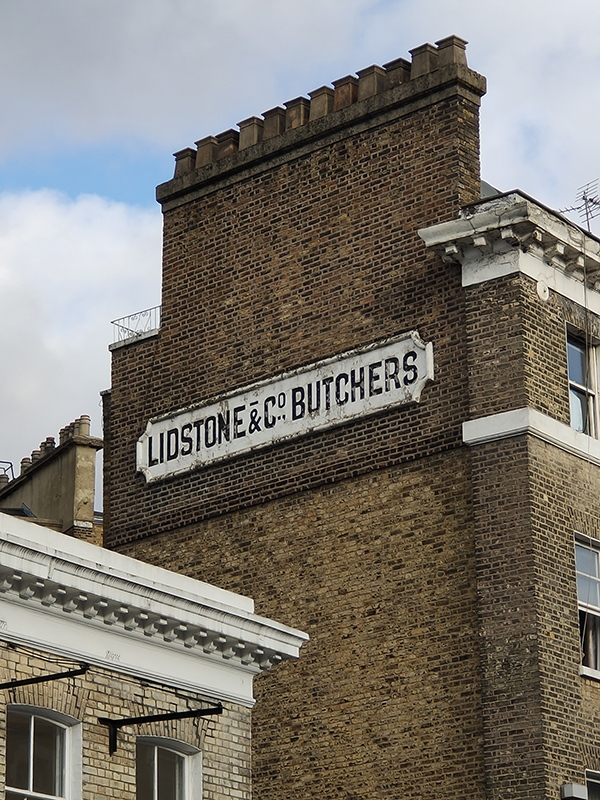
On exiting the station we head east on Thurloe Place, home to this “ghost sign” which dates from 1871 when butchers to the gentry “Lidstone Harris & Co” slimmed down to simply “Lidstone & Co” following Harris Crimp’s retirement from the business leaving Thomas Lidstone to go it alone.
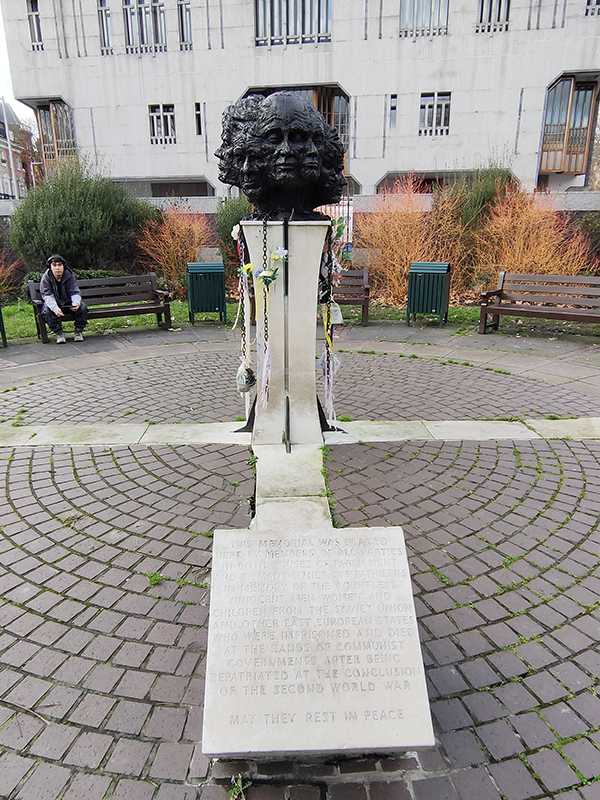
At the nexus of Thurloe Place the tiny Yalta Memorial Garden is home to Twelve Responses to Tragedy, a memorial to the people displaced as a result of the Yalta Conference at the conclusion of WWII. Created by the British sculptor Angela Conner, the work consists of twelve bronze busts atop a stone base. The memorial was dedicated in 1986 to replace a previous memorial (also by Conner) from 1982 that had been repeatedly damaged by vandalism.
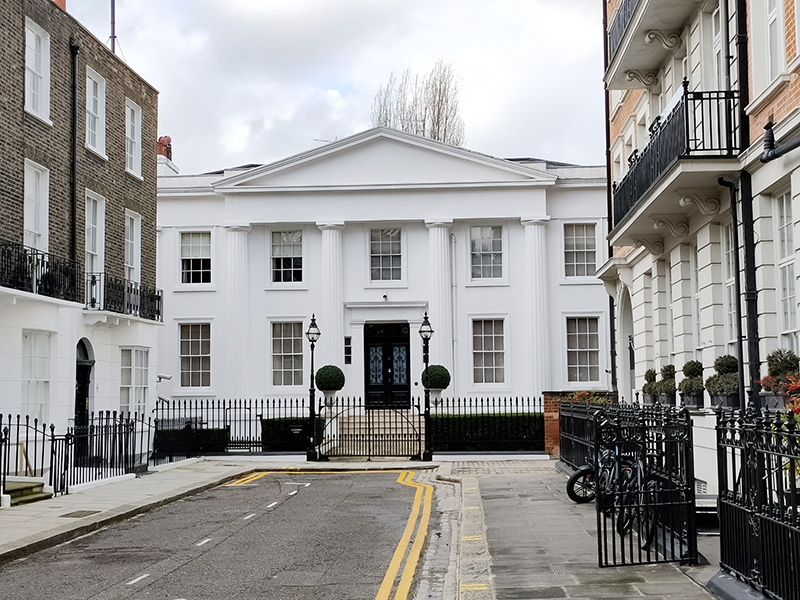
Having turn right onto the Brompton Road we make another right immediately into North Terrace at the end of which is the Grade II listed Alexander House, dating from the early 19th century.
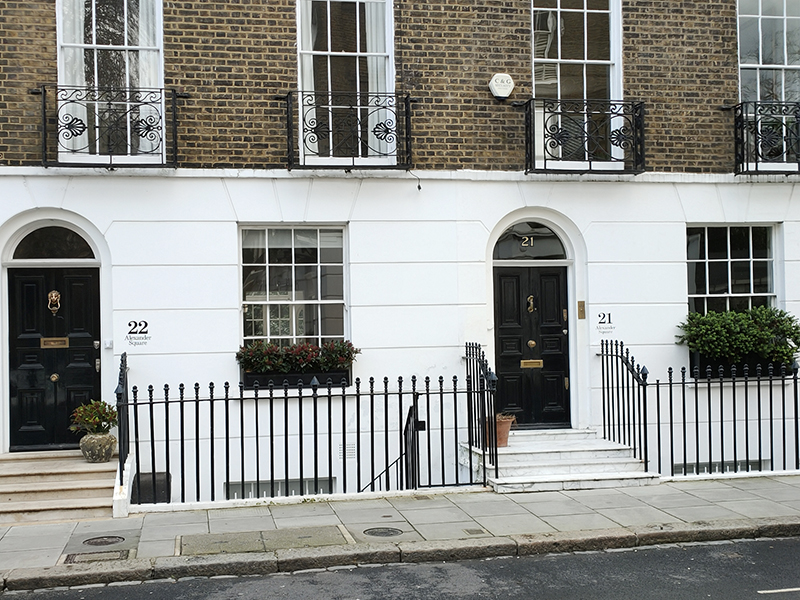
We make our way back to the Brompton Road via Alexander Square, Alexander Place, Thurloe Square and South Terrace. John Thurloe, an advisor to Oliver Cromwell, owned the land round here in the 17th century. John Alexander, godson of one of Thurloe’s descendants developed the area in the 1820’s. Although we’ve seen this type of Georgian housing many times before these residences are somewhat unusual in having the name of the street/square on which they sit painted alongside the property number.
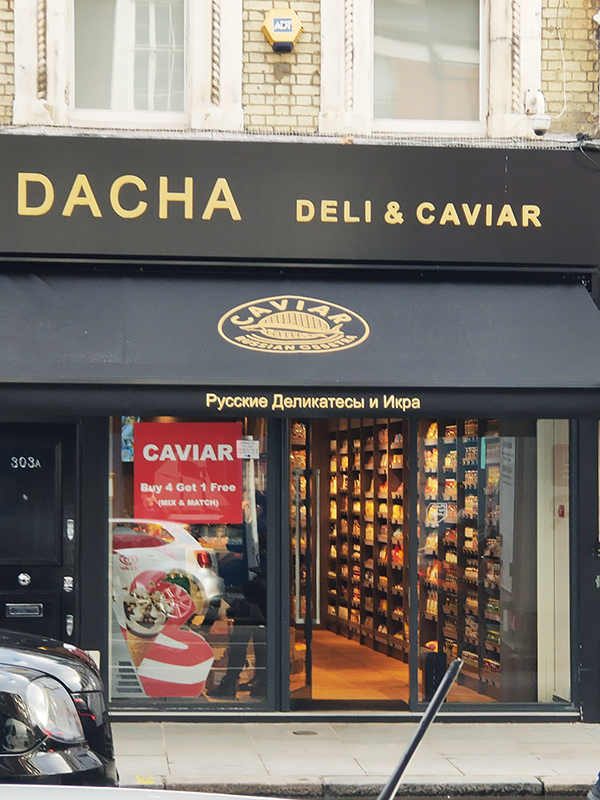
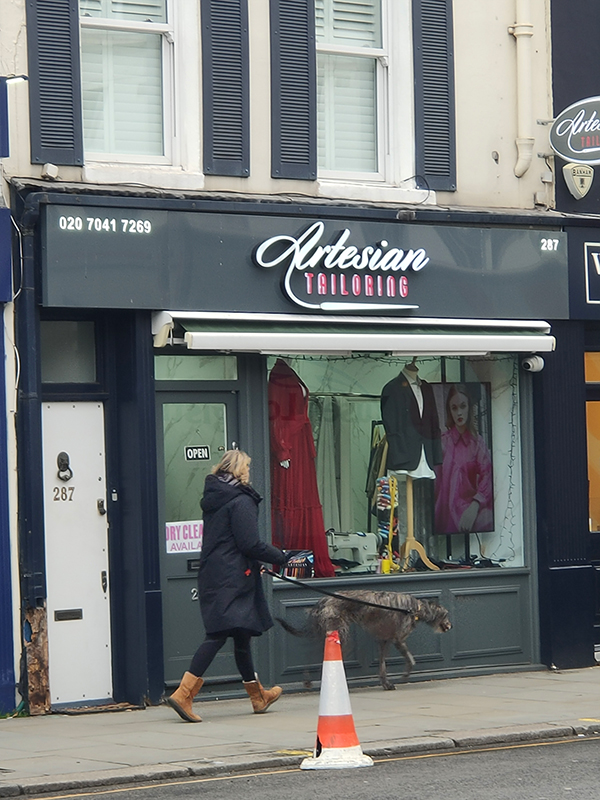
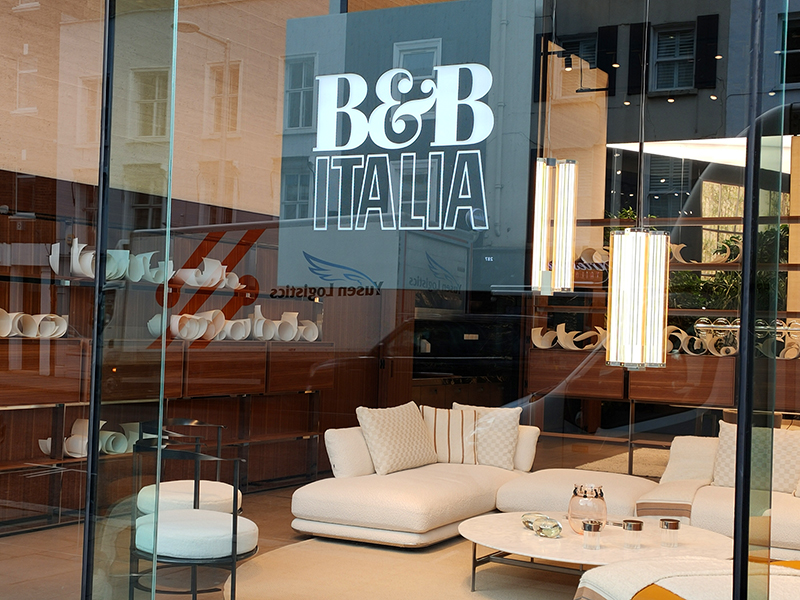
Brompton Road is home to quite a number of independent and exclusive boutiques. On this short stretch down to the top of Sloane Street we have, inter alia, a luxury Italian furniture showroom, a Russian caviar shop and an Artesian (sic) Tailors (presumably everything is Well-fitted).
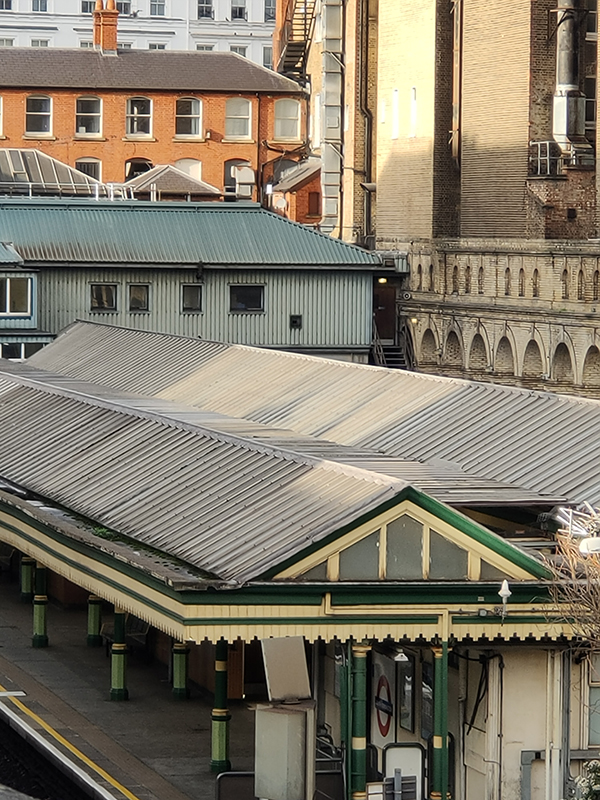
Next, Pelham Street takes us back to South Ken tube which we circumnavigate this time via Cromwell Place, Thurloe Street and Thurloe Square again. From where the latter crosses Pelham Street it is possible to sneak a view of the South Ken Circle & District Line platforms with their original arcaded revetments.
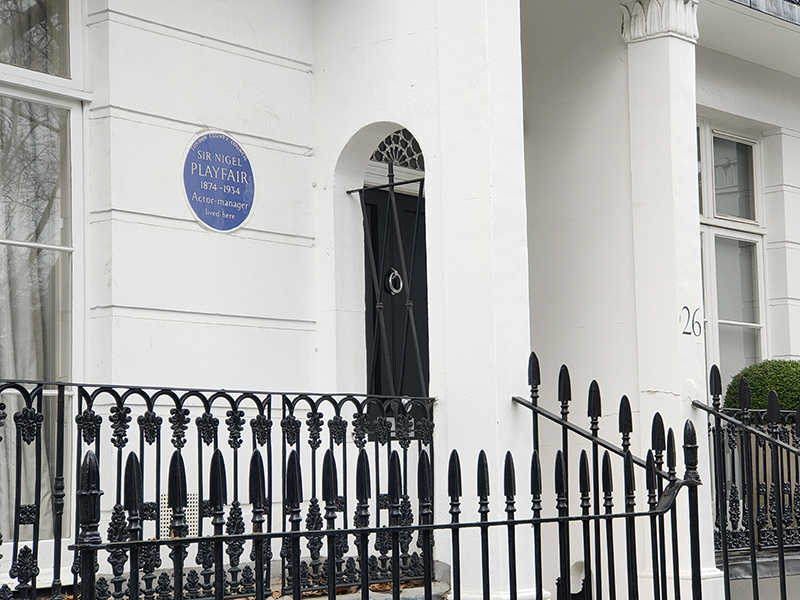
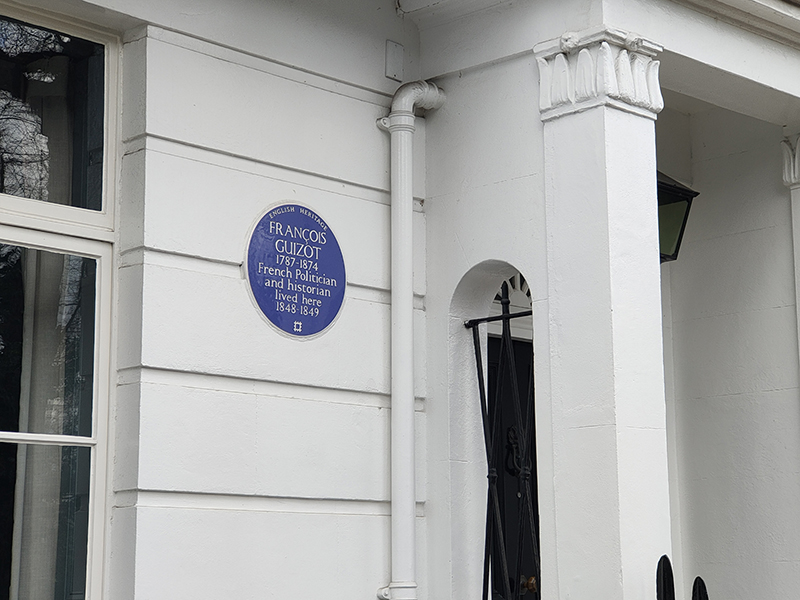
Pelham Place takes us into Pelham Crescent where we find the first of today’s blue plaques. No.26 was once home to Sir Nigel Playfair (1874 – 1934) – good surname, shame about the first part – best known as actor-manager of the Lyric Theatre, Hammersmith. . The French statesman and historian, Francois Guizot (1787 – 1874) lived at no.21 for a couple of years having taken refuge in England following the 1848 revolution in France. That year saw him resign as Prime Minister, after less than six months in the post, in conjunction with the abdication of King Louis Philippe and the founding of the Second Republic.
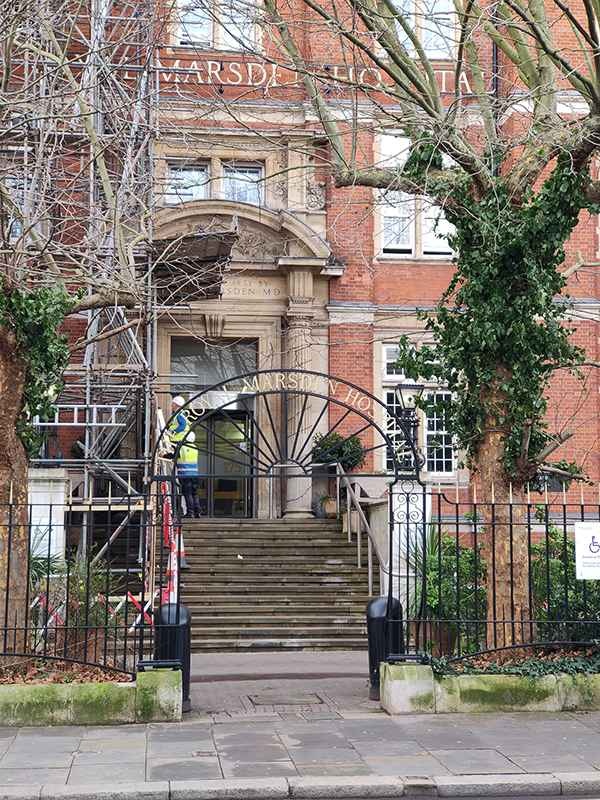
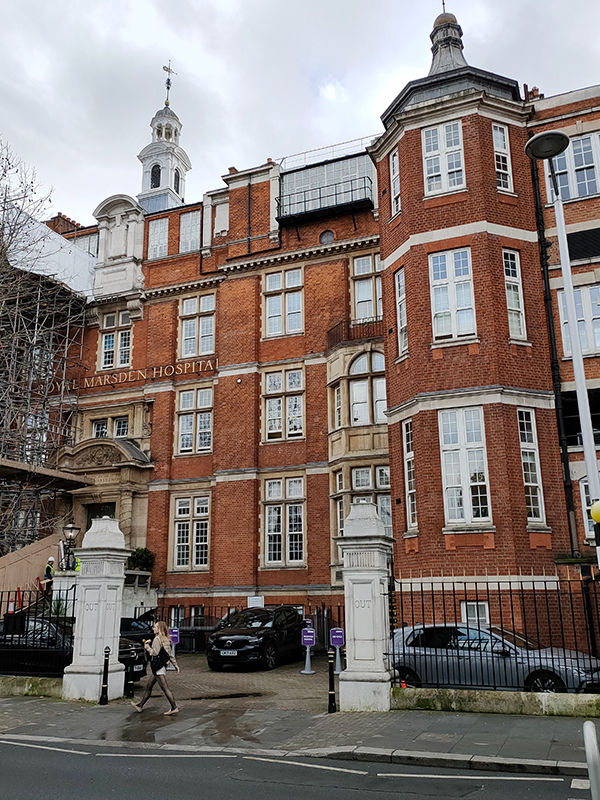
The crescent adjoins the Fulham Road, where, a short way further down, sits one of the two Royal Marsden Hospitals (the other is out in Sutton). The hospital was founded as the Free Cancer Hospital in 1851 by Dr William Marsden, following the death of his wife, Betsy, from the disease. It was originally based in Westminster and initially focused on palliative treatments and symptom relief. However, it quickly outgrew those first premises as it became apparent that some patients required inpatient care. In 1855, the noted philanthropist Baroness Burdett-Coutts, granted a loan of £3,000 which made it possible to purchase the Fulham Road site – about an acre of land. Architect, David Mocatta, drew up the plans for the building which opened in 1862. The hospital was granted its Royal Charter of Incorporation by King George V in 1910 and in 1954 the hospital was renamed The Royal Marsden Hospital in recognition of the vision and commitment of its founder. Back in 1986 I had a temporary job here as a porter for a couple of weeks. A salutary experience that left me with nothing but admiration for all proper NHS workers.
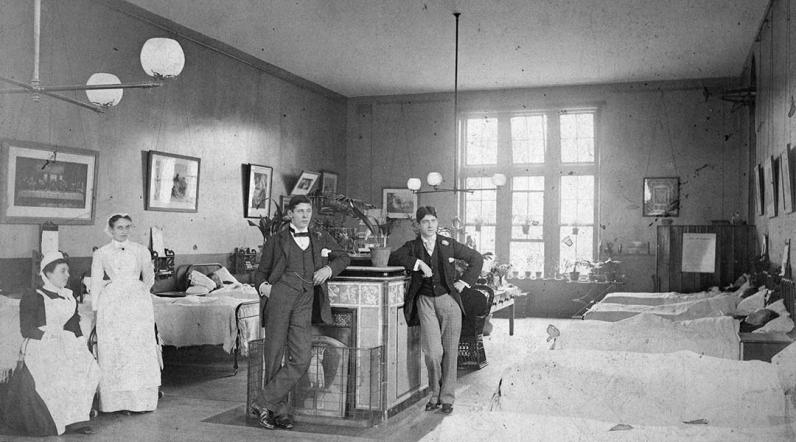
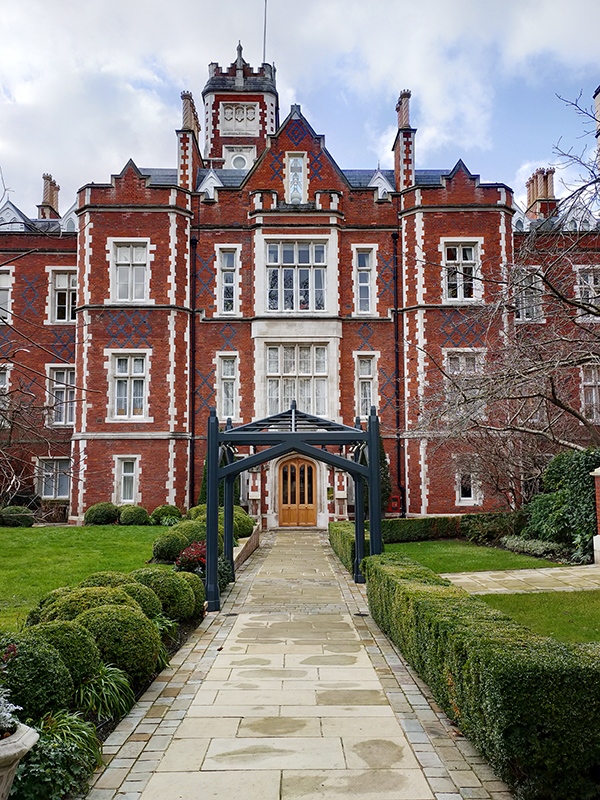
We turn north into Sumner Place, where on the immediate right is the entrance to Rose Square which surrounds The Bromptons, a luxury gated residential development created from the redevelopment of the historic Brompton Hospital. The site was developed as the Brompton Hospital for Consumption and Diseases of the Chest on what was previously market garden land in 1844. Following closure, the hospital was transformed in 1997 into exclusive apartments, whilst retaining its original Victorian architecture.  
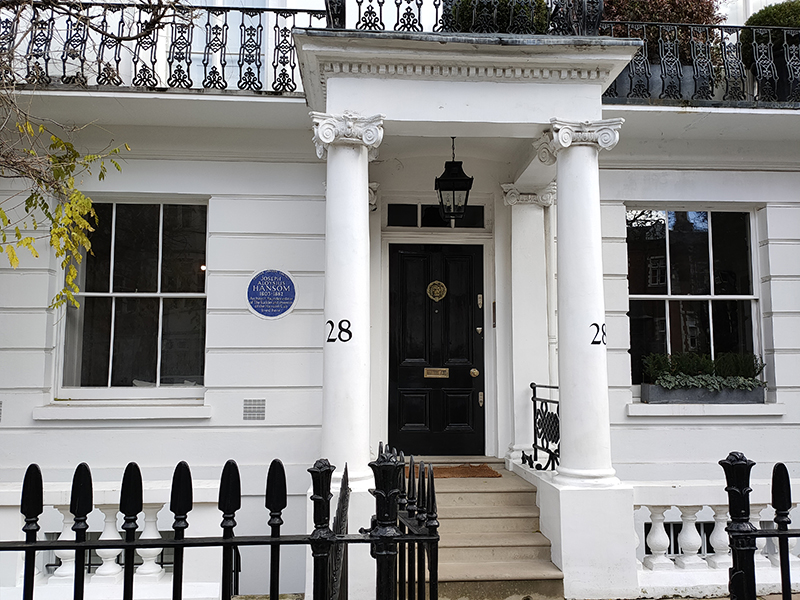
Opposite, at no.27 Sumner Place is a the one-time home of the architect Joseph Aloysius Hansom (1803 – 1882) who is best known as the inventor of the Hansom Cab, the two-wheeled horse-drawn carriage which enjoyed great popularity from the 1830’s up to the introduction of Taximeter Cars (petrol cabs) in 1908. As an architect he was incredibly prolific, designing over 200 buildings, mainly in the Gothic Revival style, including Birmingham Town Hall, Arundel Cathedral and St Walburge’s RC Church in Preston which has the tallest spire of any Paris Church in England.
Just to the north of Rose Square is St Paul’s Church which dates back to 1860. This is now under the aegis of Holy Trinity Brompton (HTB), an evangelical Anglican church, which consists of six separate sites altogether.
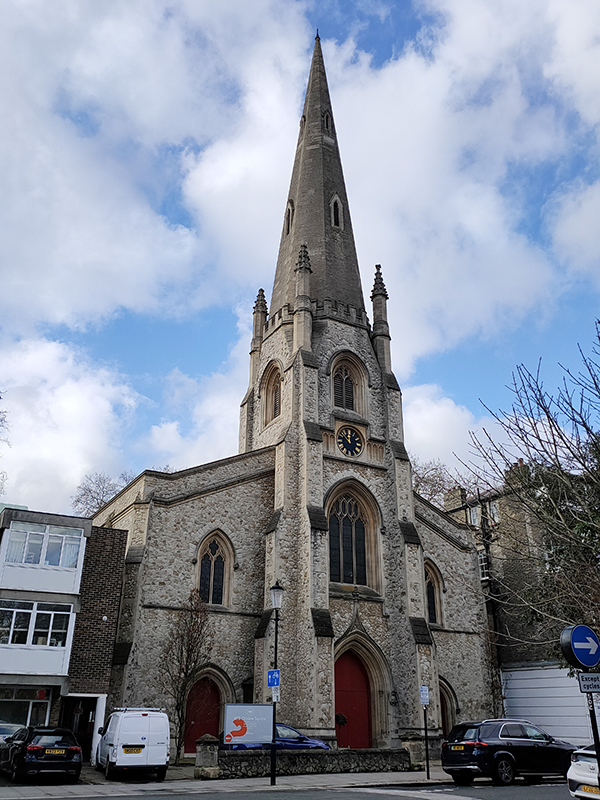
We continue along the south side of Onslow Square whose former residents include Admiral Robert Fitzroy (1805 – 1865) at no. 38, author William Makepeace Thackeray (1811 – 1863) at no.36 and Baron Carlo Marochetti (1805 – 1867) at no.32. From those dates in seems highly probable that their residencies here overlapped. Fitzroy was the captain of HMS Beagle during the famous survey expedition to Tierra del Fuego and the Southern Cone which took Charles Darwin (more of him later) to the places where he encountered the wildlife that inspired his theory of natural selection. Marochetti was was an Italian-born French sculptor who, after moving to England in 1848, was commissioned to create many public sculptures and memorials, including the equestrian statue of Richard the Lionheart which stands in front of the Palace of Westminster. Thackeray, best known as the writer of Vanity Fair, lived here during his latter years in which his health underwent a terminal decline due to excessive eating and drinking and an aversion to any form of exercise.
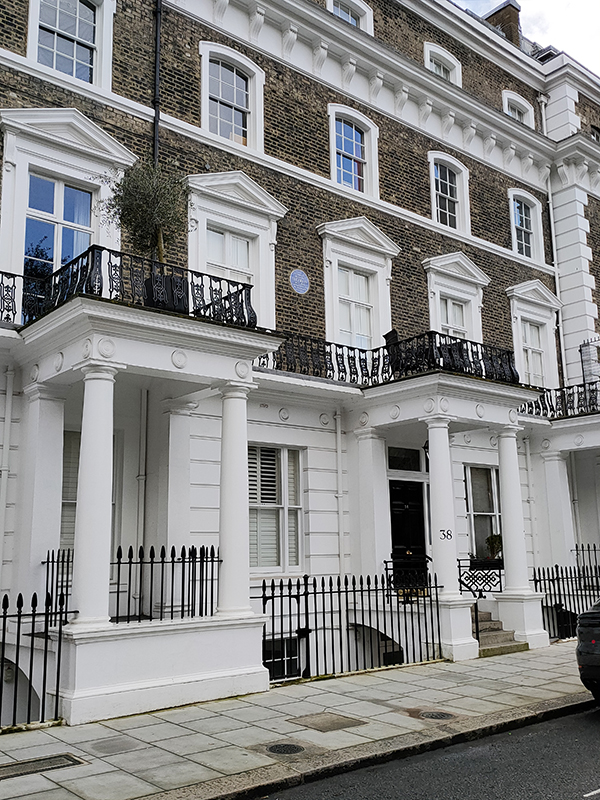
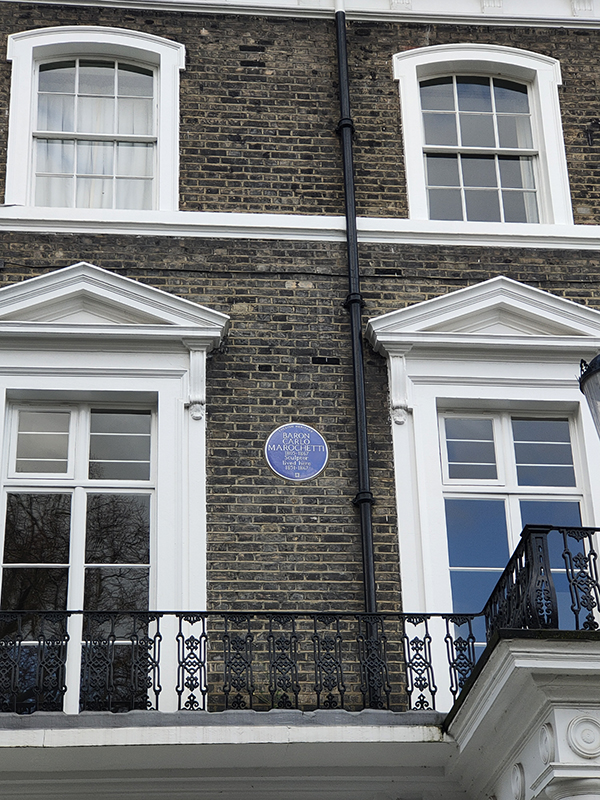
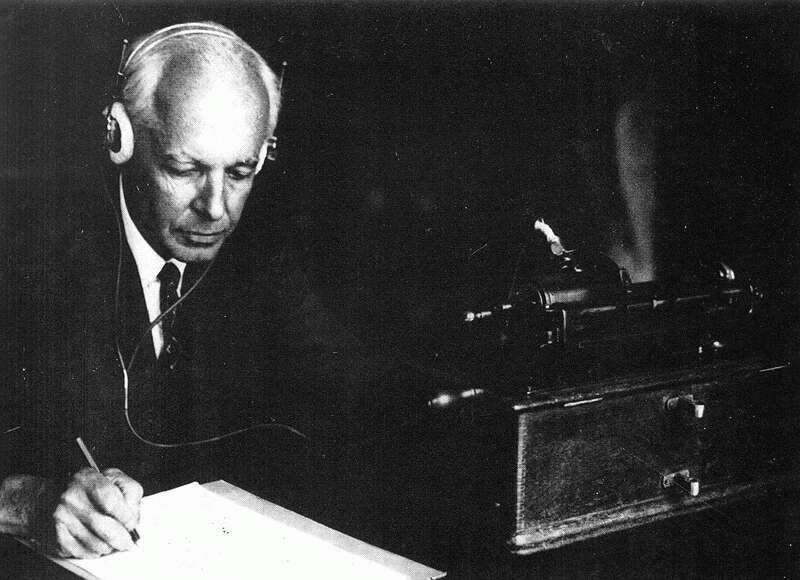
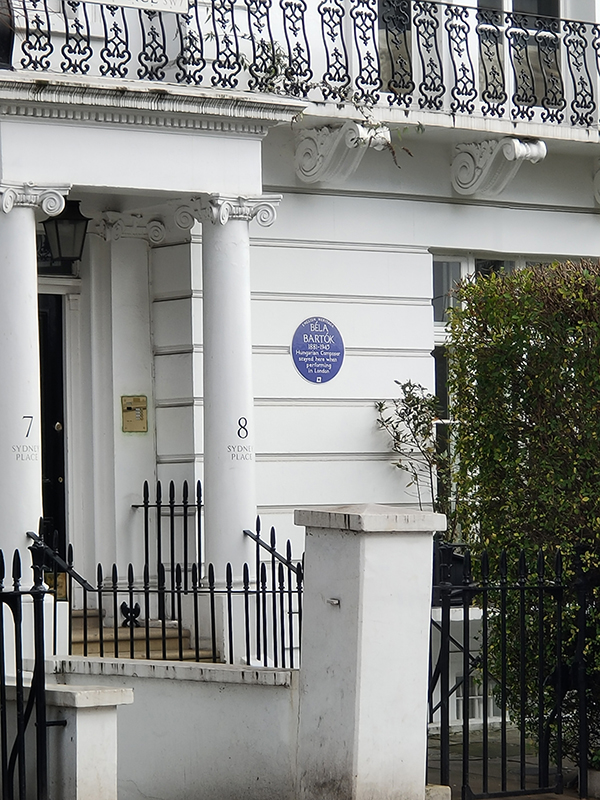
Next Blue Plaque up (they come thick and fast today) is the one that graces the outside of no.7 Sydney Place, commemorating the fact that the Hungarian composer, Bela Bartok (1881 – 1945) stayed there whenever he was performing in London. The English composer Peter Warlock was instrumental in bringing Bartok to London for the first time in 1922. From then until 1937 Bartok always stayed in London with Sir Duncan and Lady Wilson at this address. 230 yards further up towards the tube station is a statue of Bartok (that I somehow managed to overlook whilst on my perambulations).
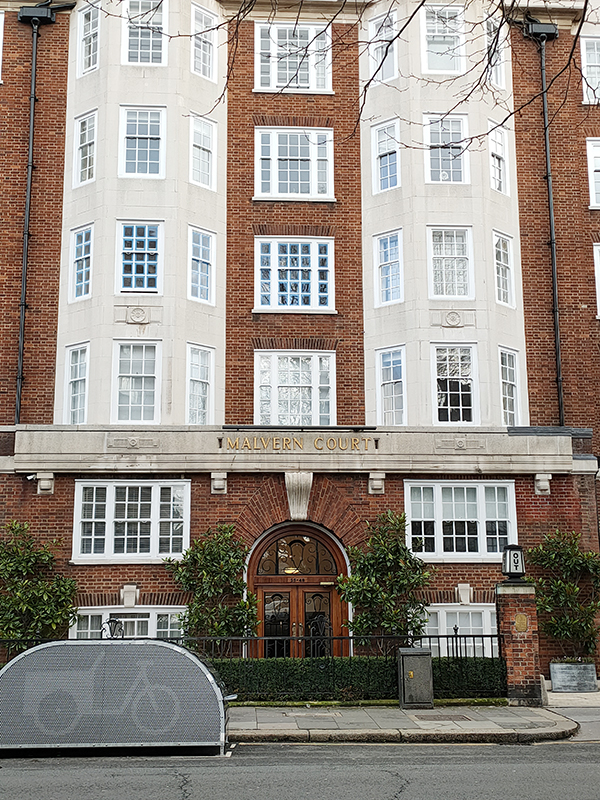
Prominent on the east side of Onslow Square (more so than the statue in any event) is the stylish early 1930’s built Malvern Court.
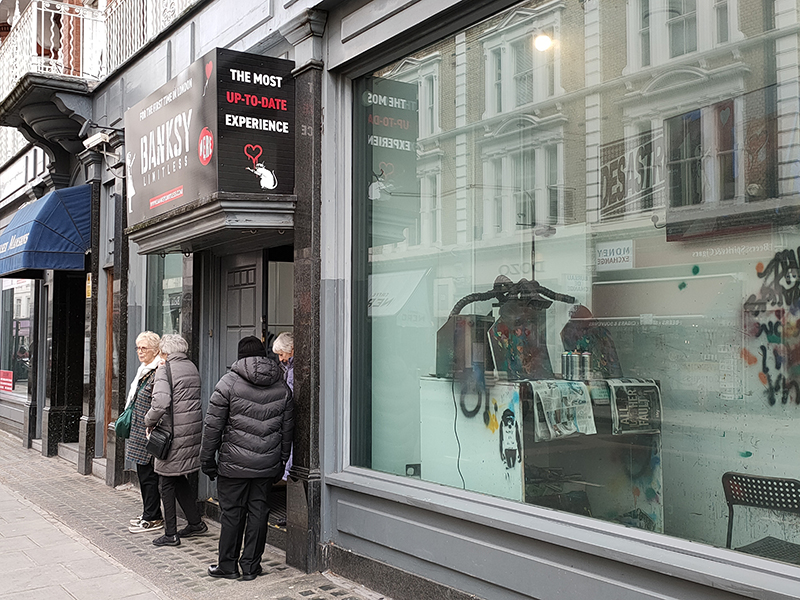
Completing a circuit of Onslow Square and Onslow Crescent we head west along Old Brompton Road. After a short way we pass the site of “Banksy: Limitless”, a temporary, non-official exhibition curated by private collectors, showcasing the breadth of Banksy’s street art in a gallery setting (with obligatory “immersive” element). It won’t be there for too much longer so no point in wasting £20 for the purposes of giving you a low-down.
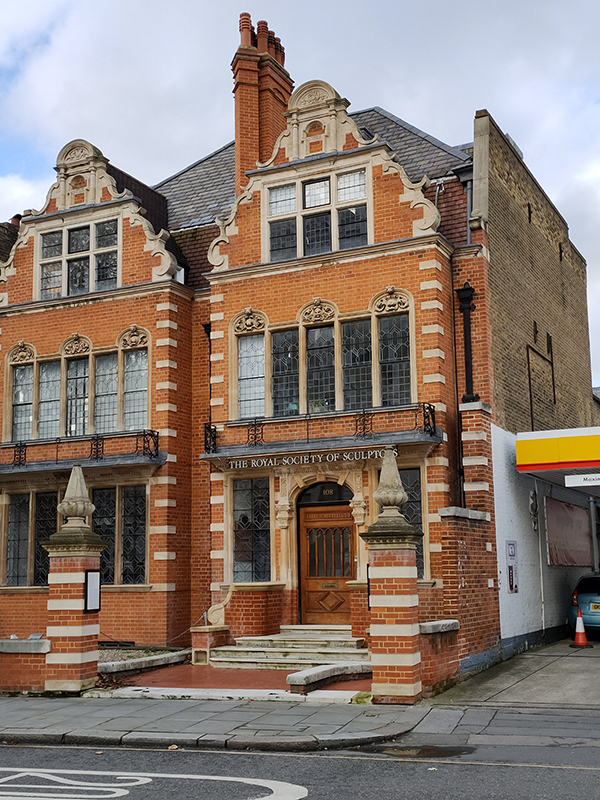
A couple of hundred metres further along is Dora House which is the home of the Royal Society of Sculptors (“RSS”). Dora House was originally built by William Blake (not that William Blake) in 1820 as a pair of early Georgian semi-detached villas. It’s constructed of red brick with a pair of steep curved gables, classical details in stone in the Flemish manner and tall leaded light windows on three floors. The ornate frontage dates from a remodelling in 1885-6 to provide a grand studio for Court photographers Elliot and Fry. In 1919 the house was taken on by the sculptor Cecil Thomas (1885-1976) who worked here and adopted it as his family home with wife Dora and son Anthony. After his wife died in 1967, Thomas set up the Dora Charitable Trust to protect the long-term future of the house. A few years later he bequeathed the house to the RSS. The RSS had been established in 1905 with 51 members, including all the leading sculptors of the day. Six years later it was granted Royal patronage. ( I’m afraid I have no information on when the Shell garage next door made its unfortunate arrival on the scene).
For the next stage of today’s journey we’re working our way back east towards South Ken tube. We begin by heading north on Gloucester Road, taking a right turn into Clareville Street and then diverting back to Old Brompton Road via Clareville Grove. We make our way north again on Clareville Street before switching into Manson Mews.
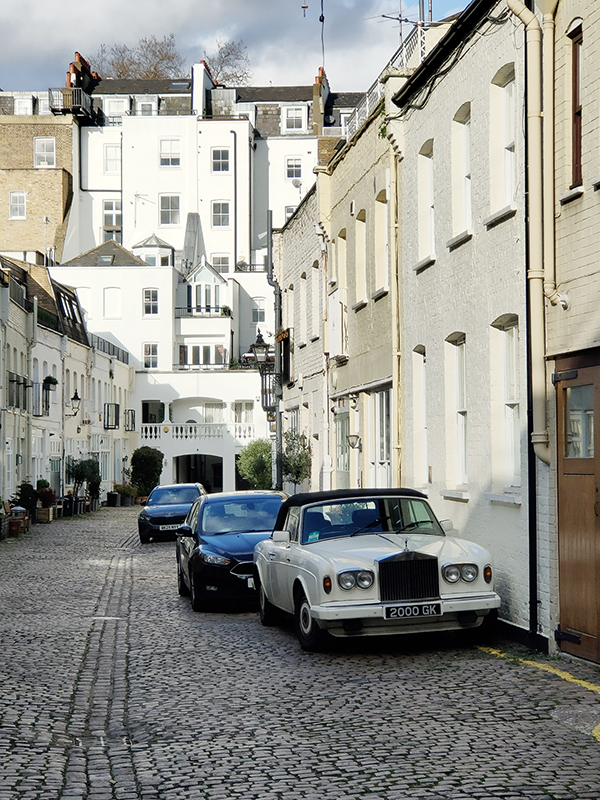
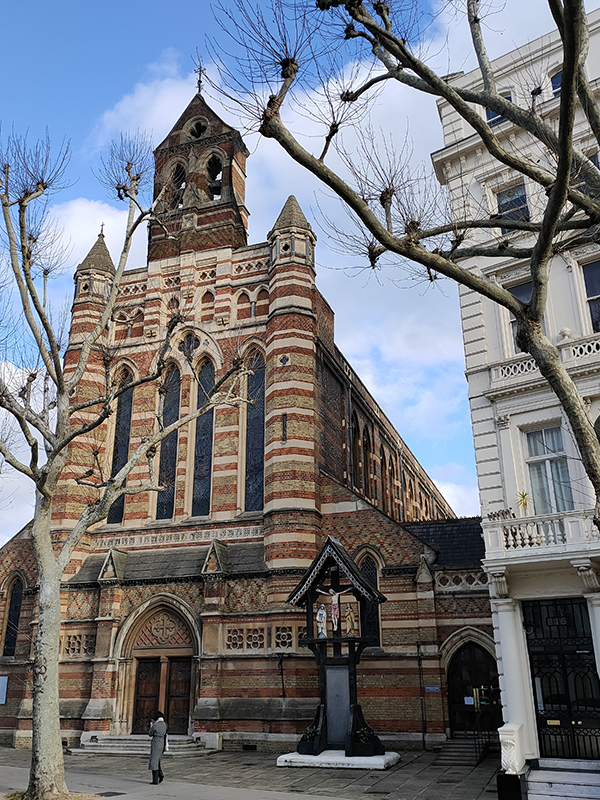
The non-cul-de-sac part of Manson Mews leads into Queen’s Gate. Almost directly opposite is the Grade II Listed, St Augustine’s Church. The church was built in 1865, and the architect was William Butterfield (1814 – 1900), another exponent of the Gothic Revival style. Butterfield was certainly possessed of a strong protestant work ethic; between 1842 and 1895 he contributed to the construction or renovation of around 120 religious buildings. St Augustine’s is now another member of the HTB group of churches.
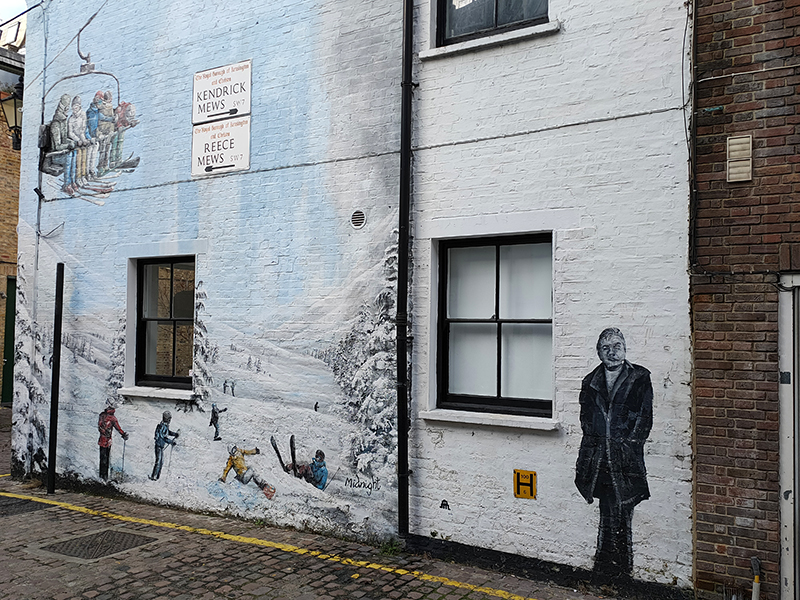
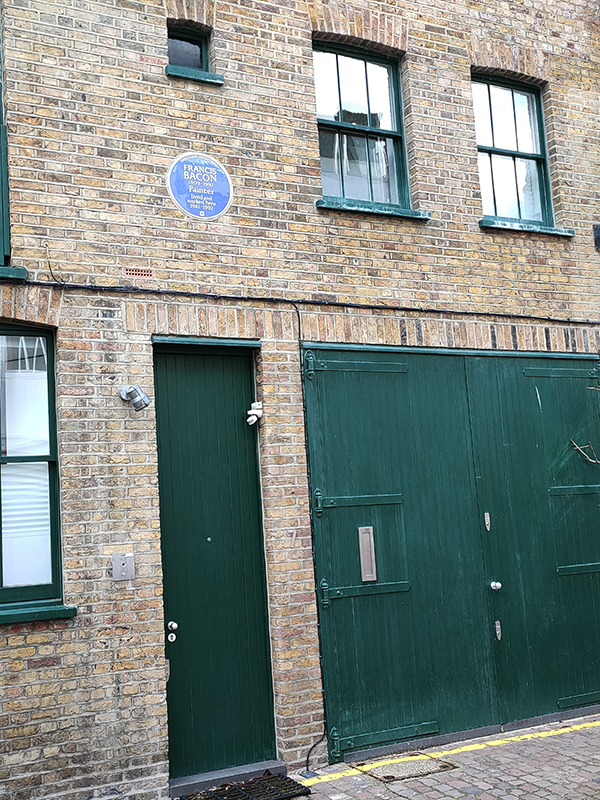
After a quick look at Manson Place we return to Old Brompton Road where we continue east then make our way in to Reece Mews via Kendrick Place. Artist, Francis Bacon (1909 – 1992) lived and worked at 7 Reece Mews for the last 30 years of his life. In 1962, a year after Bacon moved here, his lover, Peter Lacy, died from the effects of alcoholism the day before the opening of a retrospective exhibition of the artist at the Tate. As the Sixties progressed, Bacon’s work moved from the extreme subject matter of his early paintings to portraits of friends, including his new lover, George Dyer, who he had met in a pub in 1963. The much younger Dyer was also an alcoholic and in 1971, in a cruel twist of fate, he took a fatal overdose of barbiturates while in Paris with Bacon for another retrospective exhibition, this time at the Grand Palais. Bacon himself died of a heart attack in 1992. Six years later his sole legatee, John Edwards, and High Court appointed executor, Brian Clarke, donated the contents of Bacon’s studio at Reece Mews to the Hugh Lane Gallery in Dublin (Bacon’s birthplace) where they were moved and reconstructed.
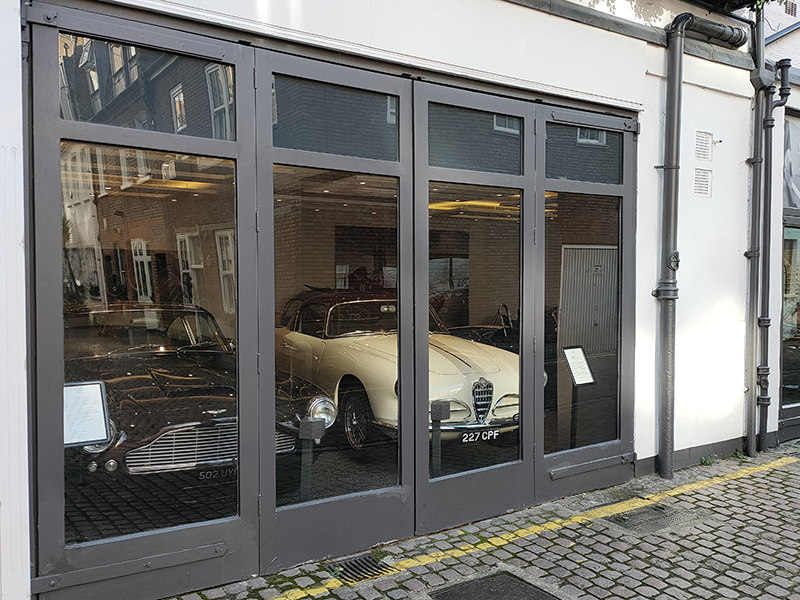
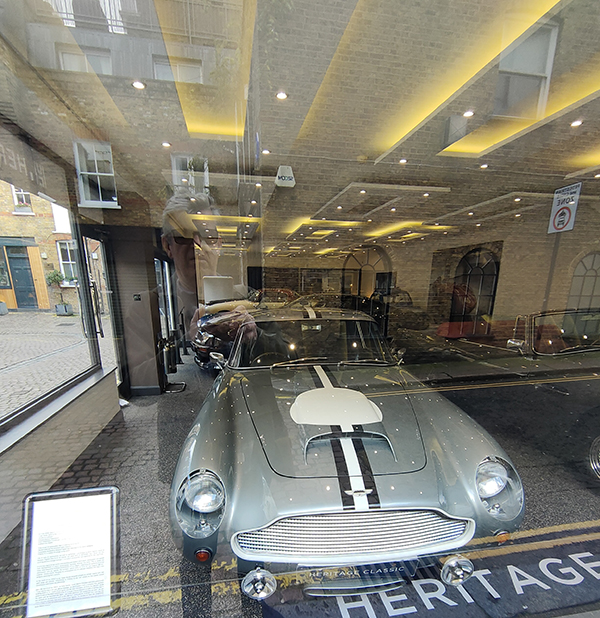
Directly opposite the above mural on Kendrick Mews is the showroom of Heritage Classic Cars which has been selling special collector cars for the last sixty years. Among the cars currently for sale is an Aston Martin DB4 GT Continuation, one of only 25 of these models built by AM in 2017, and a 1957 Alfa Romeo Super Sprint.
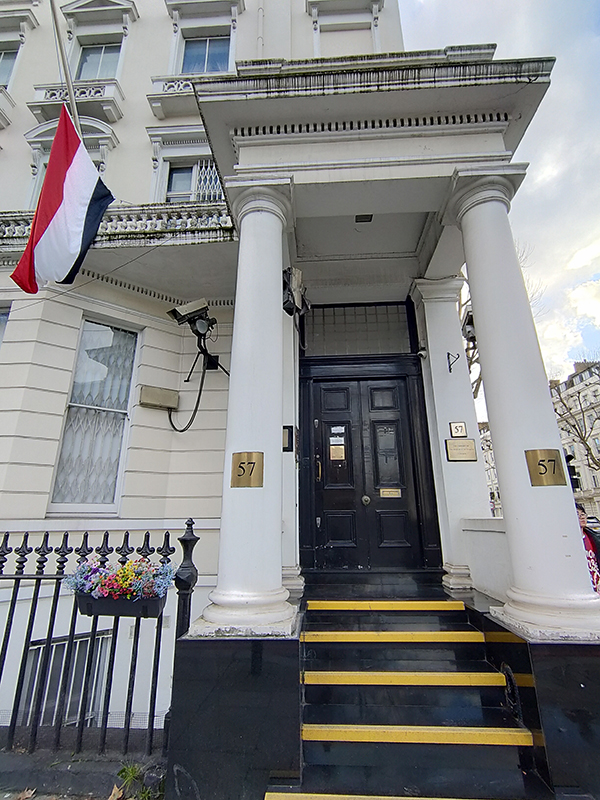
At the north end of Reece Mews we emerge onto Harrington Road then do a circuit of Bute Street and Glendower Place before switching west on Harrington Road which soon morphs into Stanhope Gardens. We carry on as far as Gloucester Road before turning north up to Cromwell Road. For the next twenty minutes or so we traverse between Cromwell Road and Stanhope Gardens by means of Stanhope Mews West, Stanhope Gardens (west and east sections), Stanhope Mews East and Queen’s Gate again. These Stanhopes are named after the eponymous family who assumed the Earldom of Harrington in 1742. On the corner of Queen’s Gate and Cromwell Road stands the Embassy of Yemen.
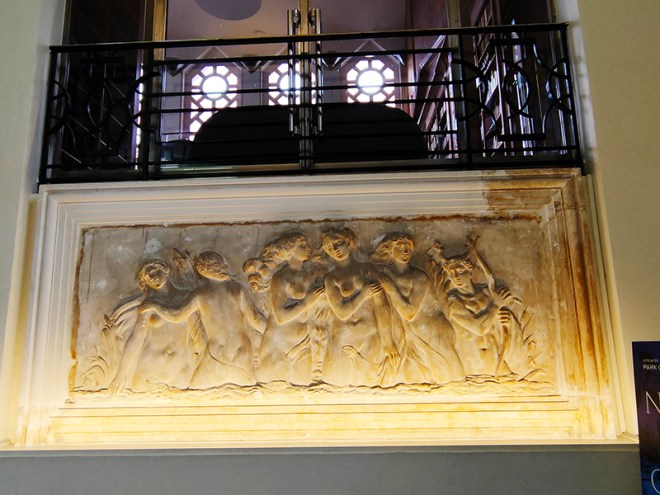
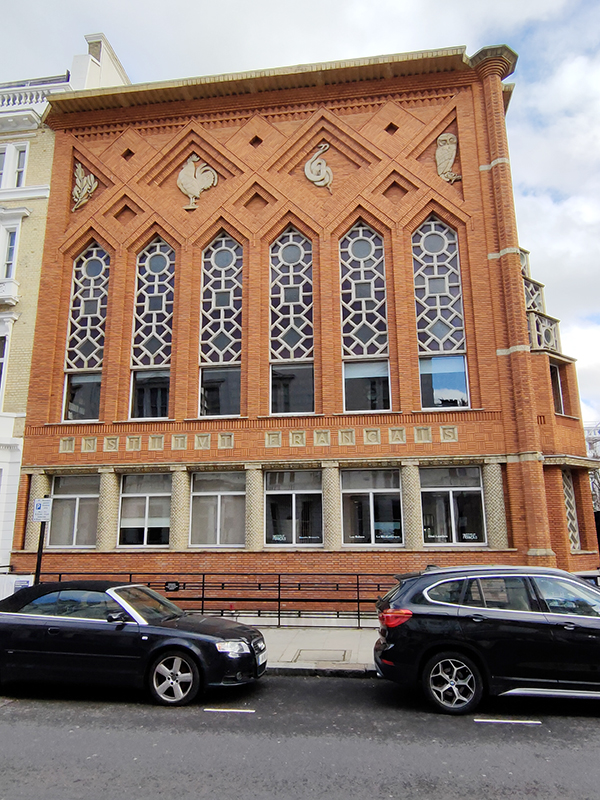
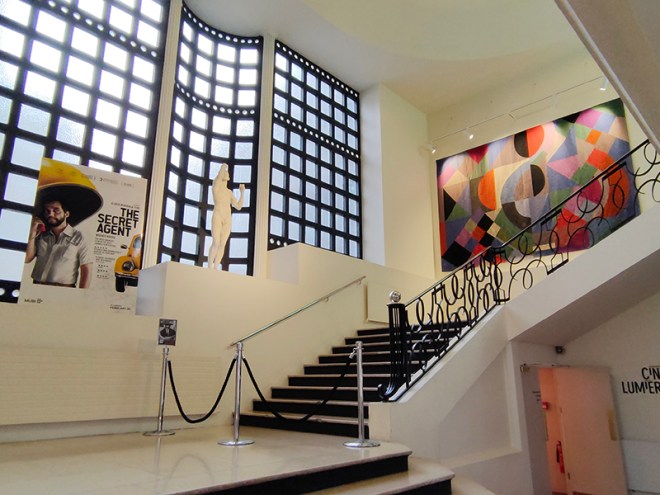
Next street along, continuing eastward, is Queensberry Place when we find the Institut Francais du Royaume Uni, the London branch of the worldwide network that promotes French Language and Culture. The Language Centre is on Cromwell Place and the building here on Queensberry Place houses the Cultural Centre which includes the Cine Lumiere. The Cine Lumiere has two screens and is a great place to watch the best of French and World cinema, both new releases and classic films. 15-17 Queensberry Place was is a Grade II listed, red-brick Art Deco building dating from 1939. It was designed by French architect Patrice Bonnet and features distinctive ceramic decorations which depict the four graces of Minerva (owl, asp, cockerel, and olive branch). The interior features a sweeping staircase decorated with a Auguste Rodin statue (L’Âge d’Airain) and a Sonia Delaunay tapestry.
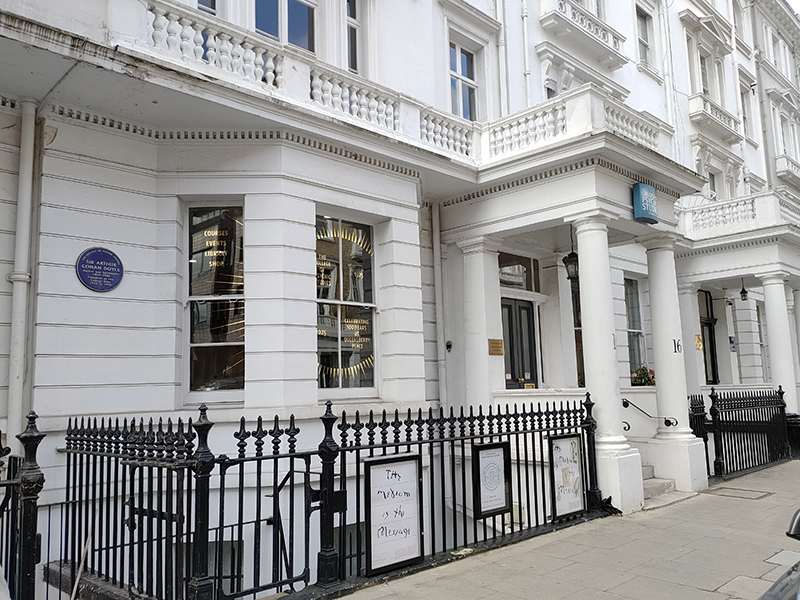
Across the street from the IF is The College of Psychic Studies. The College began life as London Spiritualist Alliance in 1883 at the instigation of the Rev. William Stainton Moses – an Anglican priest and medium – upon the dissolution of the Central Association of Spiritualists. The Alliance resided at several addresses in London before acquiring the freehold of 16 Queensberry Place for £5,000 in 1925. Sir Arthur Conan Doyle was President of the Alliance from 1926 to 1930, as commemorated by yet another blue plaque. The London Spiritualist Alliance changed its name in 1955 to The College of Psychic Science and in 1970 became The College of Psychic Studies. Nowadays the College organizes courses, workshops and talks in mediumship training, trance, psychic development, working with your guides and angels, automatic writing, past and future lives, shamanic healing, chakras, energy work, palmistry, numerology, tarot, mysticism, scrying and crystals. Anything not grounded in reality basically. I’m thinking they must get a lot of Americans enrolling.
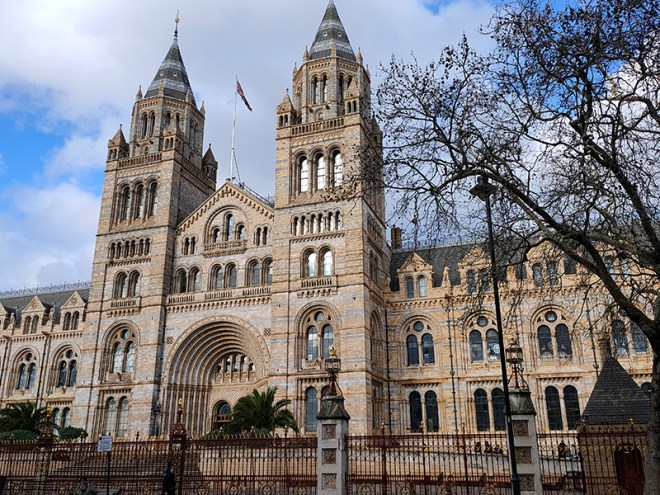
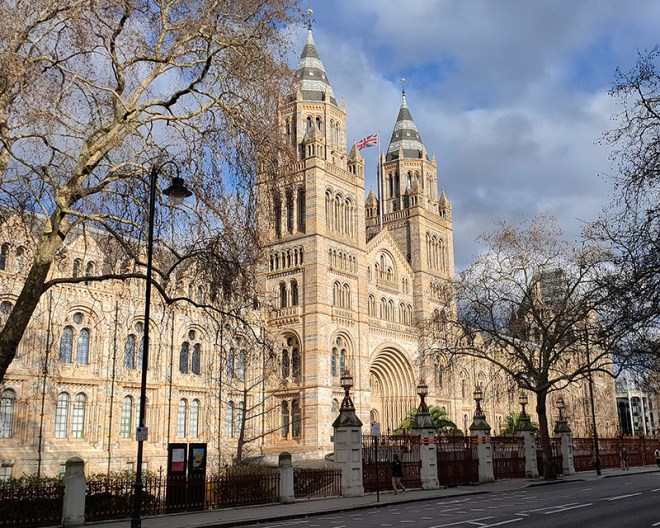
And so to the Natural History Museum. Last time I was visited it was to see a specific exhibition so I didn’t venture beyond the ground floor of the east wing. The time before that was a good few years ago and I don’t remember it being a great experience. I was therefore very pleasantly surprised at how much I enjoyed today’s visit. I expected to be in and out in half an hour but in the end I stayed for nearly three hours (though that did include the Space: Could Life Exist Beyond Earth exhibition which I can highly recommend but is only on for a few more weeks at time of writing).

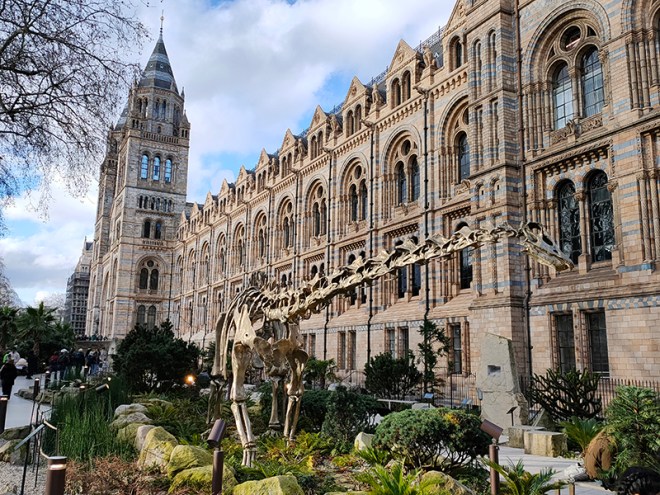
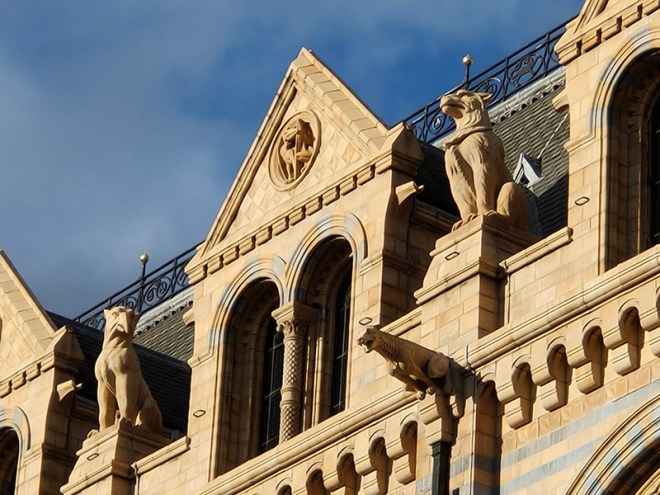
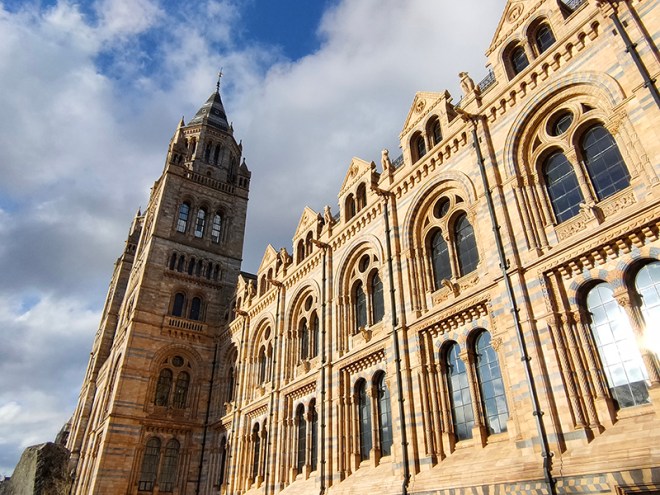
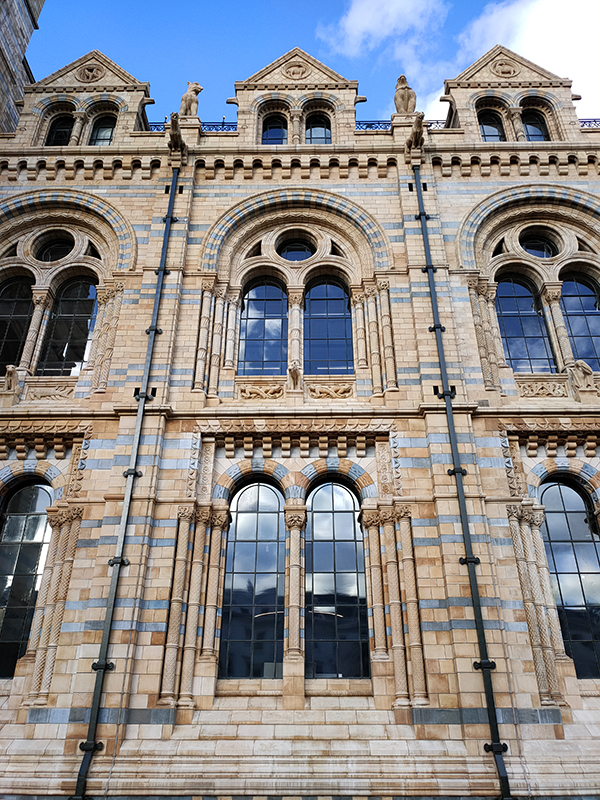
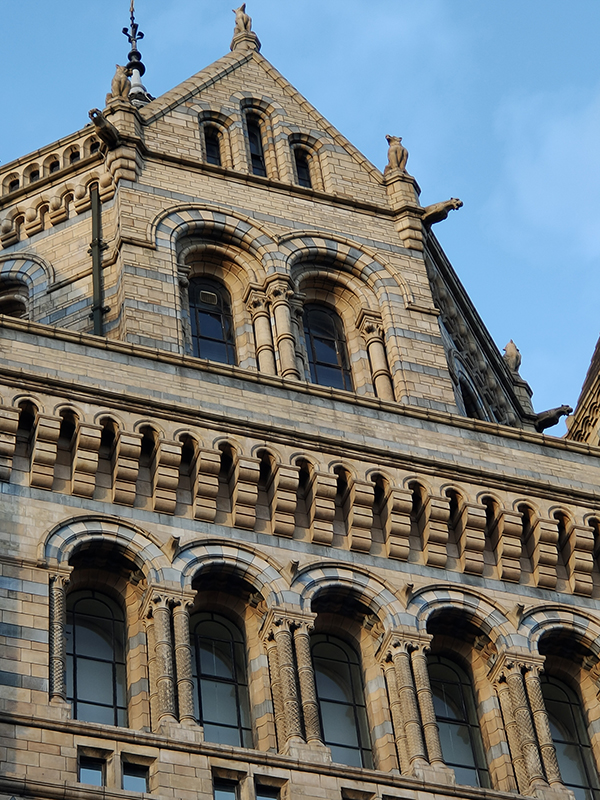
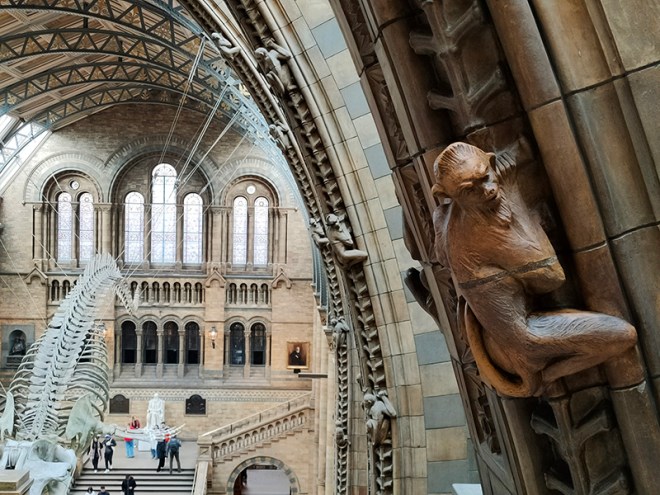
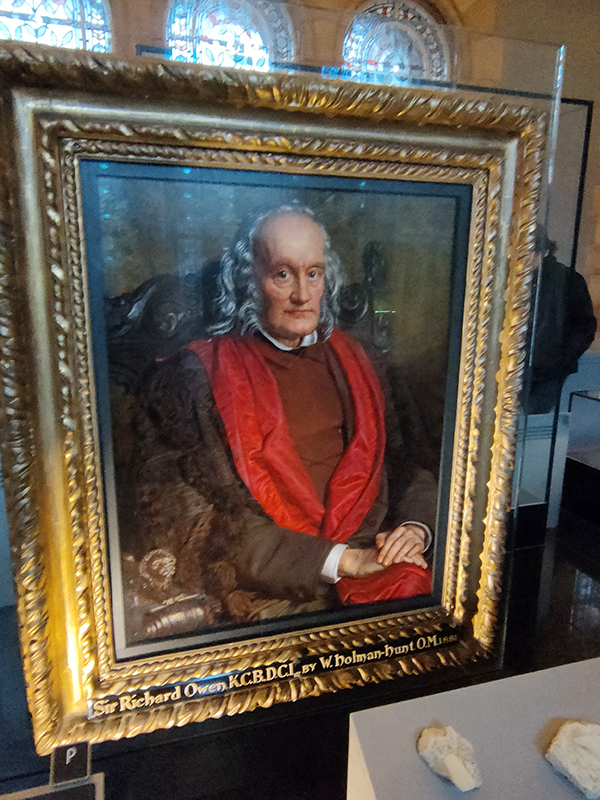
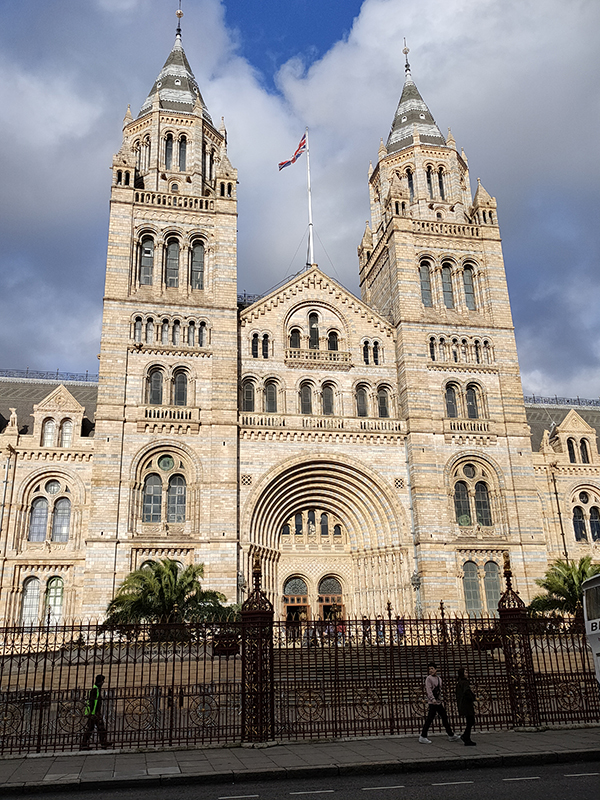
The Museum first opened its doors on 18 April 1881, but its origins stretch back to 1753 and the legacy of Sir Hans Sloane who had travelled the world as a high society physician, collecting natural history specimens and cultural artefacts along the way. After his death, Sloane’s will allowed Parliament to buy his extensive collection of more than 71,000 items for £20,000 – significantly less than its estimated value. The government agreed to the purchase Sloane’s collection and then built the British Museum so the items could be displayed to the public. Just over a hundred years on, Sir Richard Owen (the natural scientist who came up with the name for dinosaurs) took charge of the British Museum’s natural history collection and convinced the board of trustees that a separate building was needed to house these national treasures. In 1864 Francis Fowke, the architect who designed the Royal Albert Hall and parts of the Victoria and Albert Museum, won a competition to design the new Natural History Museum. When he unexpectedly died a year later, the relatively unknown Alfred Waterhouse took over and came up with a new plan for the South Kensington site. Waterhouse used terracotta for the entire building as this material was more resistant to Victorian London’s harsh climate. The result is one of Britain’s most striking examples of Romanesque architecture, considered a work of art in its own right and one of London’s most iconic landmarks.
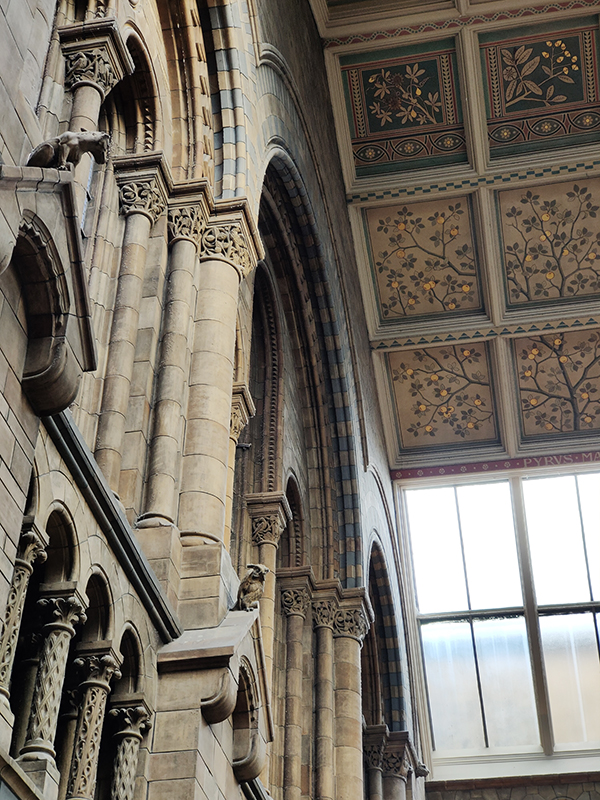
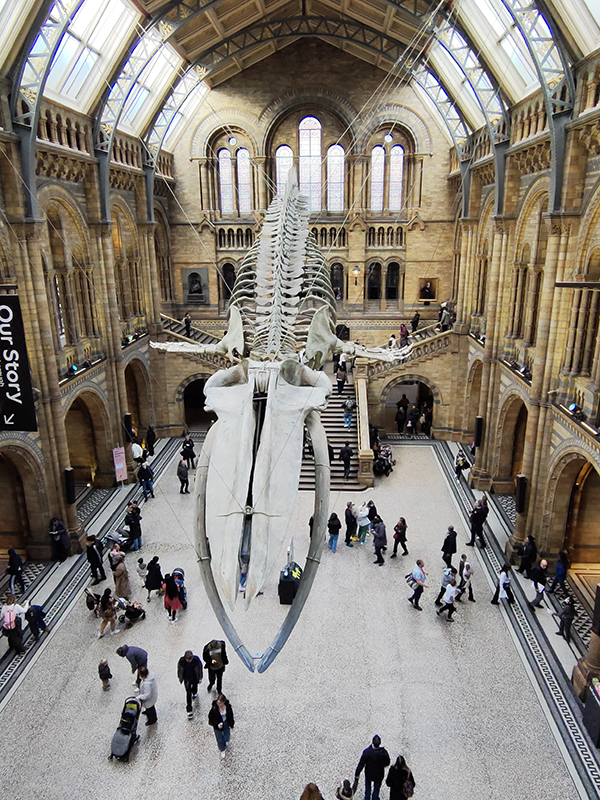
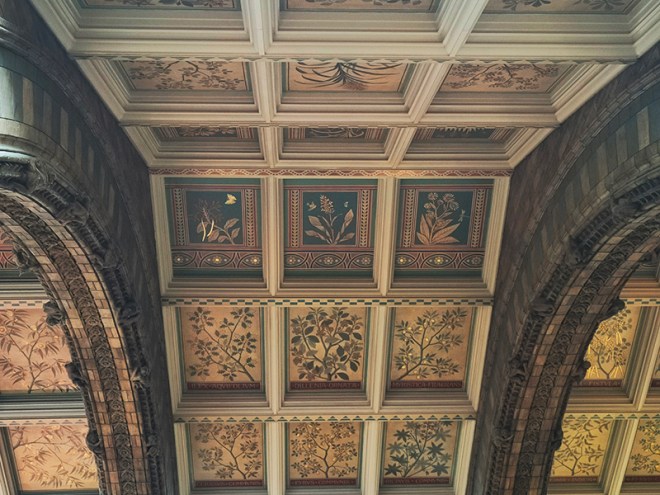
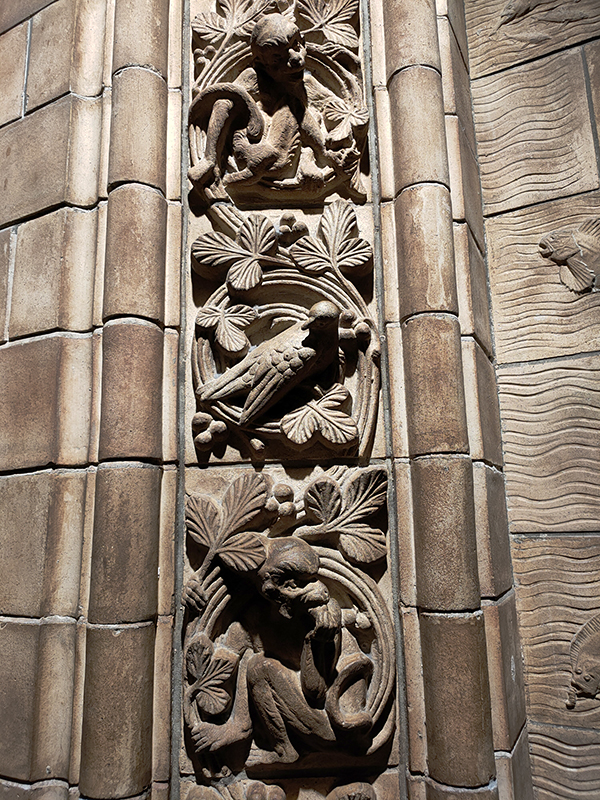
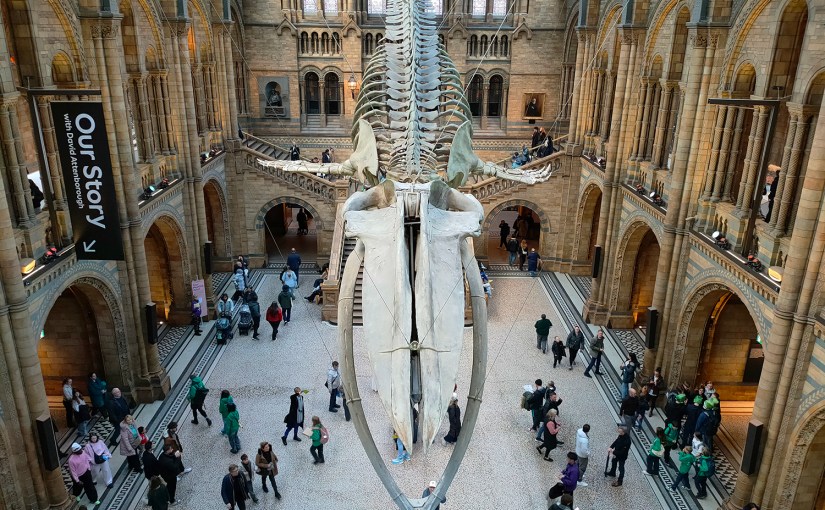
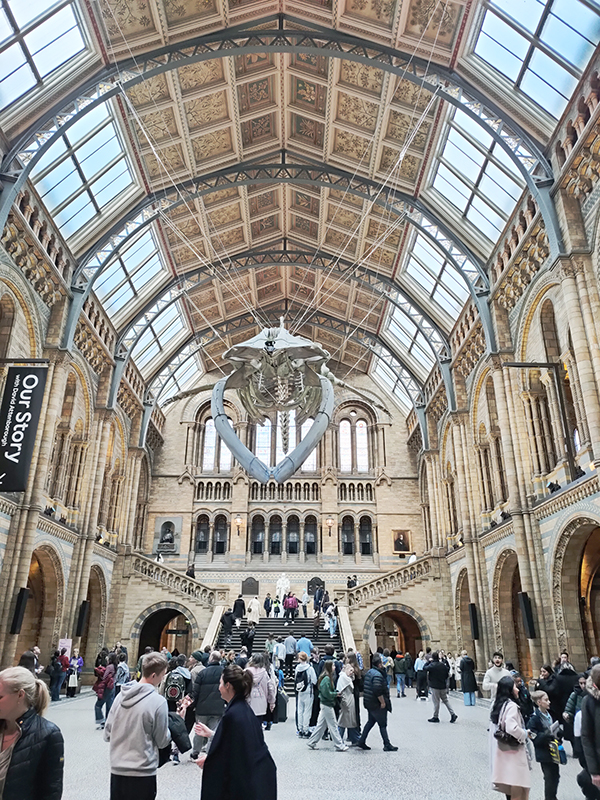
Hintze Hall, the Museum’s central space, was redeveloped in 2017 and the famous Diplodocus skeleton cast was replaced with a 25.2-metre blue whale skeleton, intended to be a reminder to visitors that humanity has a responsibility to protect the biodiversity of our planet. The Hintze Hall ceiling is covered with 162 intricate panels displaying illustrations of a vast array of plants from all over the world. Similar tiles adorn the other galleries in the museum and the entire building is decorated with carvings and sculptures depicting the natural world.
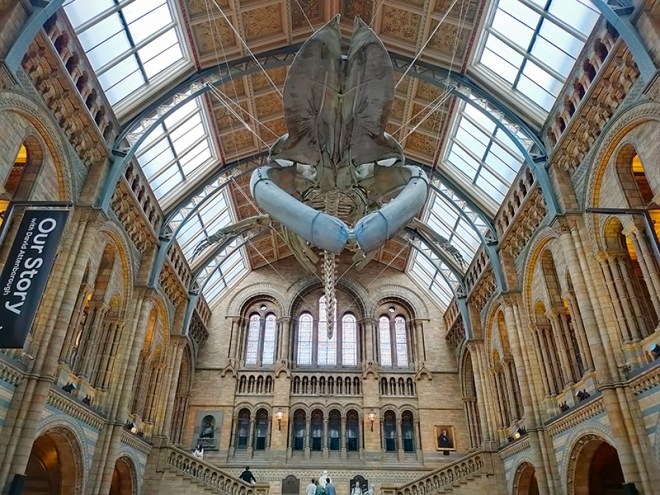
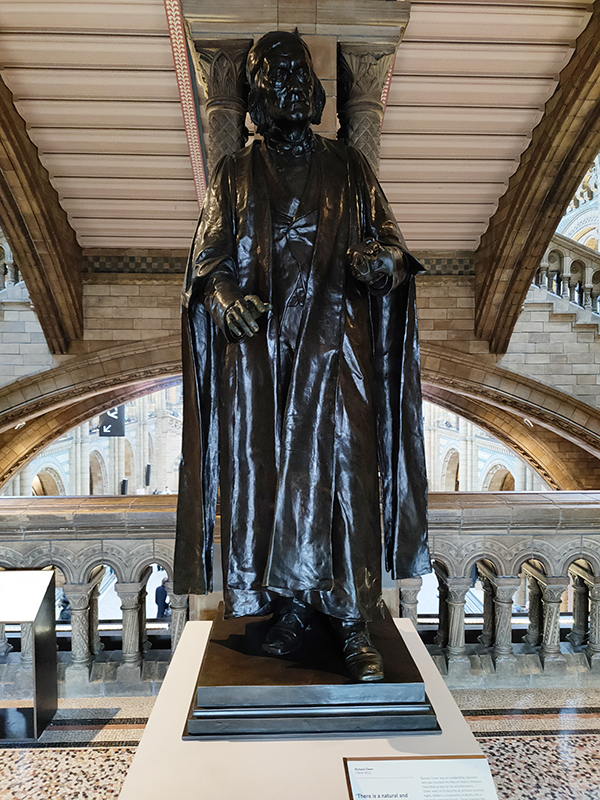
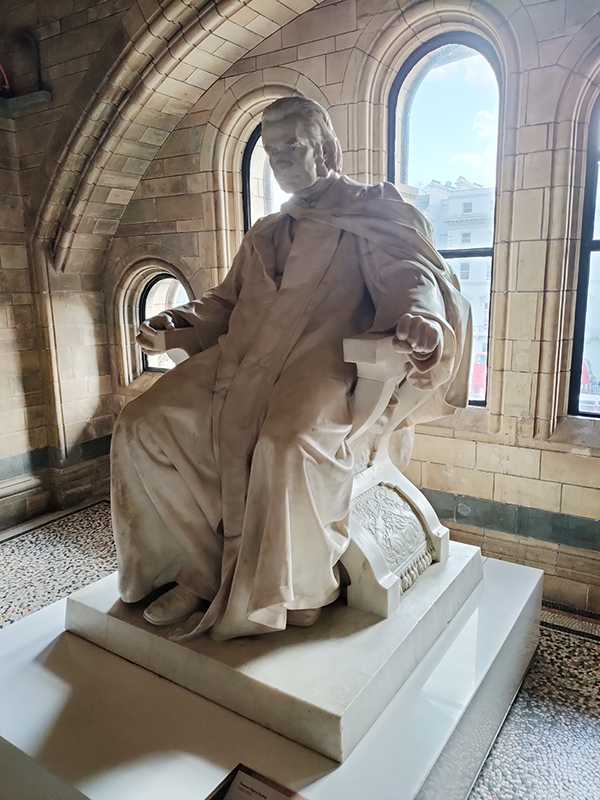
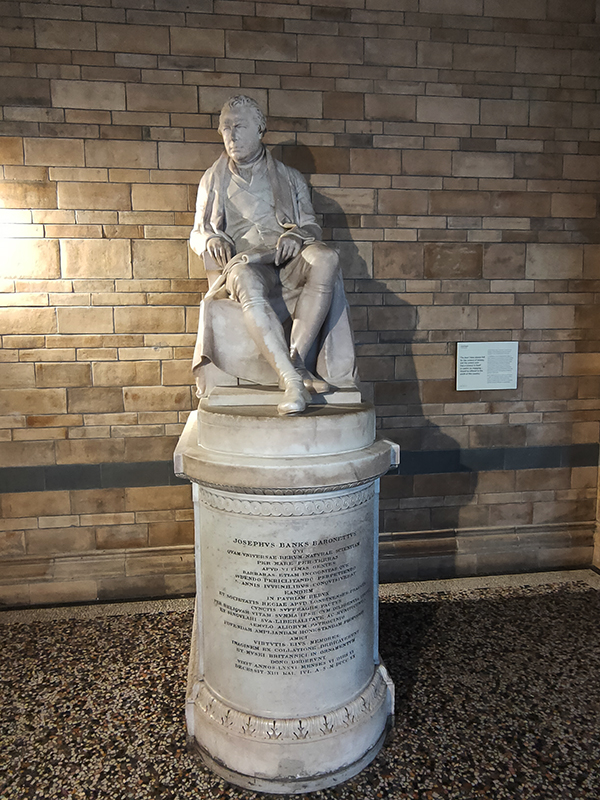
There are statues honouring prominent individuals who played an important role in the creation and evolution of the museum throughout the building. Richard Owen we’ve already spoken of and Charles Darwin needs no introduction but it’s worth giving a mention to Joseph Banks (1743 – 1820), Alfred Russell Wallace (1823 – 1913) and Thomas Henry Huxley (1825 – 1895). The great botanist, Banks, took part in Captain James Cook’s first great voyage (1768–1771), visiting Brazil, Tahiti, and after 6 months in New Zealand, Australia, returning to immediate fame. He went on to hold the position of president of the Royal Society for over 41 years and advised King George III on the Royal Botanic Gardens at Kew. Wallace was renowned as a naturalist, explorer, biologist and social activist. He was considered the 19th century’s leading expert on the geographical distribution of animal species. In 1858 he wrote a paper on the theory of evolution through natural selection; the publication of which was pretty much contemporaneous with that of extracts from Charles Darwin’s writings on the topic. It spurred Darwin to set aside the “big species book” he was drafting and to quickly write an abstract of it, which was published in 1859 as On the Origin of Species. Huxley was a biologist and anthropologist who became known as “Darwin’s Bulldog” on account of his vehement advocacy of Darwin’s theories. In 1860 he took part in the Oxford Evolution Debate in which he staunchly defended the Origin against its opponents, principal amongst whom was Bishop Samuel Wilberforce. Ironically, Wilberforce had received coaching prior to the debate from Richard Owen. The debate is best remembered today for a heated exchange in which Wilberforce supposedly asked Huxley whether it was through his grandfather or his grandmother that he claimed his descent from a monkey. Huxley is said to have replied that he would not be ashamed to have a monkey for his ancestor, but he would be ashamed to be connected with a man who used his great gifts to obscure the truth. However, as no verbatim record of the debate exists the exacts words used by each party are subject to the distortions of second-hand reportage.
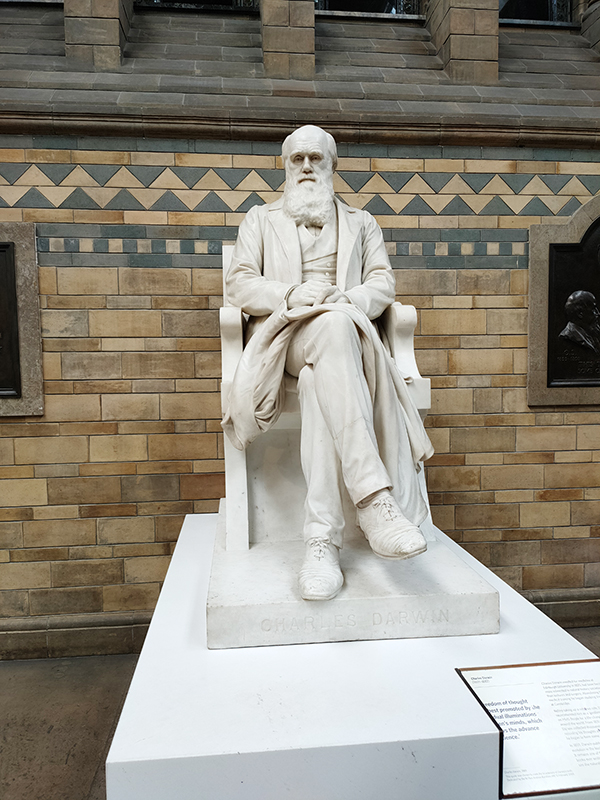
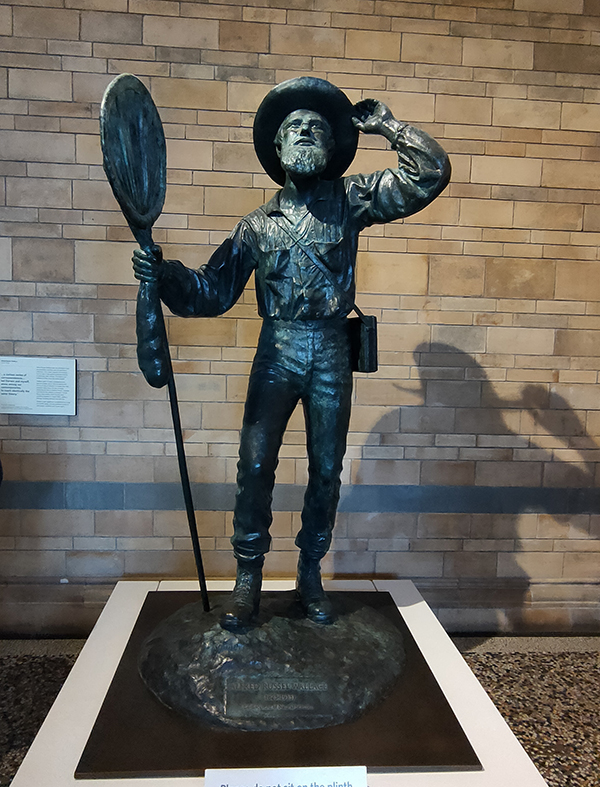
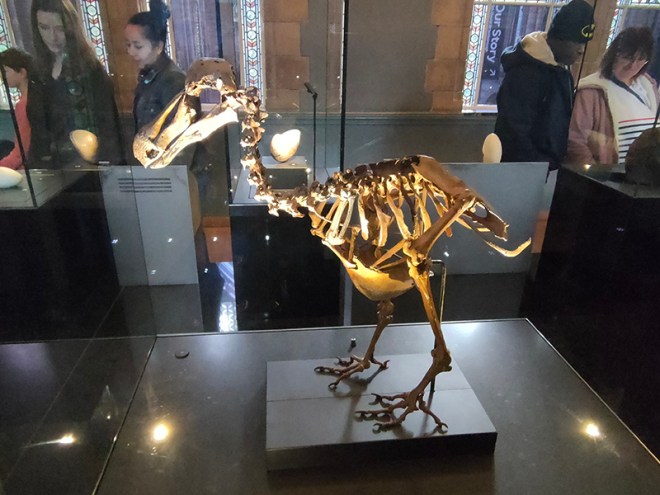
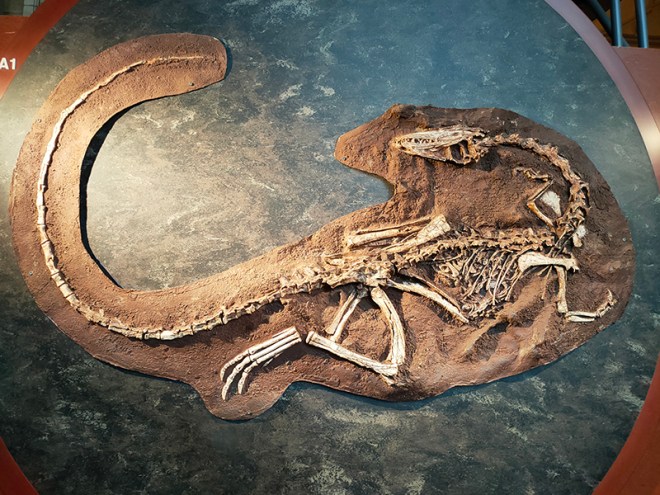
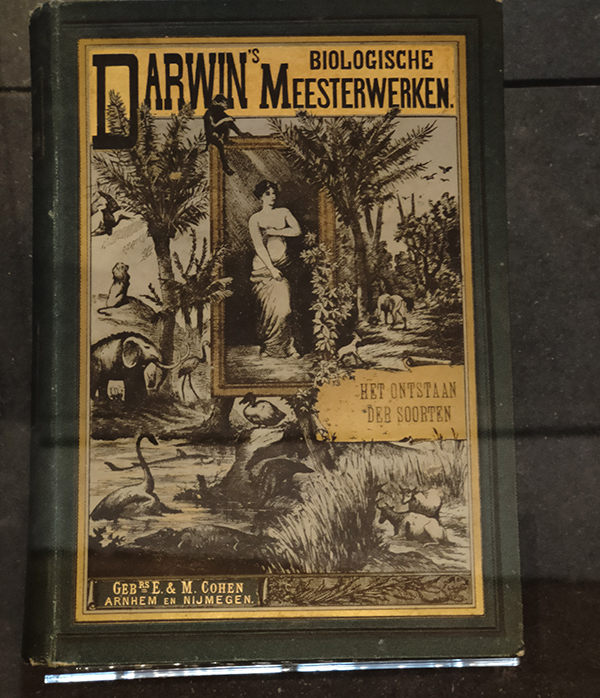
I hadn’t intended to say anything about the actual exhibits in the museum but I was very impressed by the objects in the Cadogan Gallery, which showcases 22 of the museum’s most treasured items. I’m not sure how long this display has been in situ but I don’t remember it from previous visits.
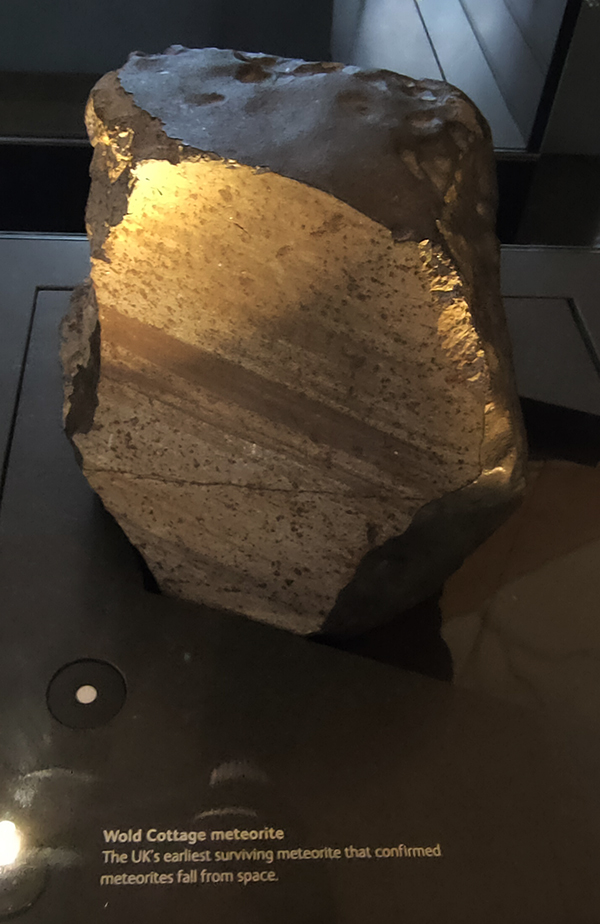
When we’re finally done with the NHM it’s a short walk down Cromwell Place past the French Consulate back to South Ken tube station with a final couple of plaques on the way.
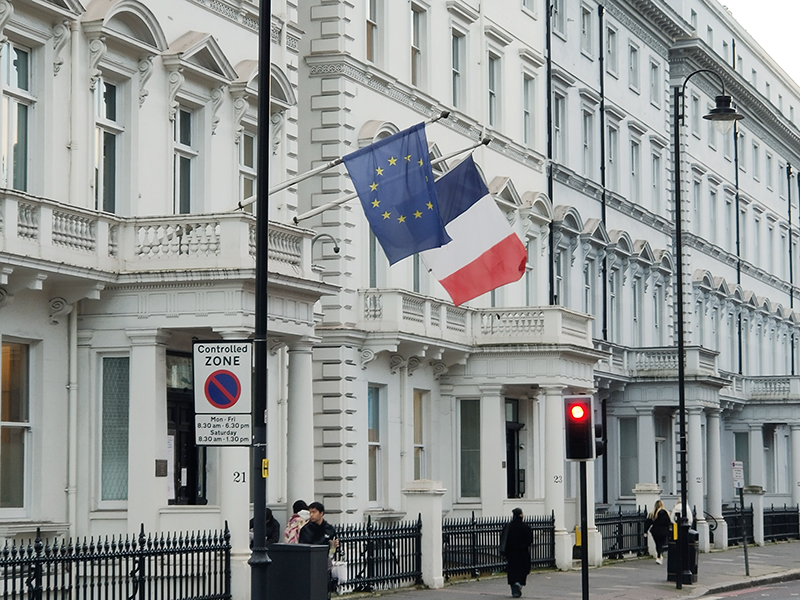
No.5 Cromwell Place was home to the Irish painter Sir John Lavery (1856 – 1941) from the turn of the 20th century until the start of WWII. Lavery was best known for portraits and wartime scenes. He and his wife, Hazel, were tangentially involved in the Irish War of Independence and the Irish Civil War and they gave the use of this house to the Irish participants in the negotiations leading to the Anglo-Irish Treaty. Today the house forms part of the ‘Cromwell Place’ arts hub created out of the full terrace of five Grade II listed Georgian properties.
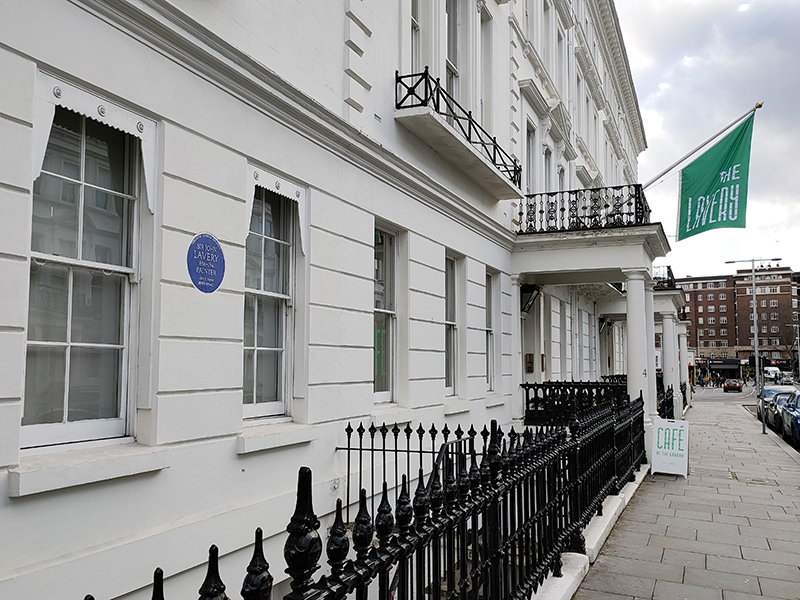
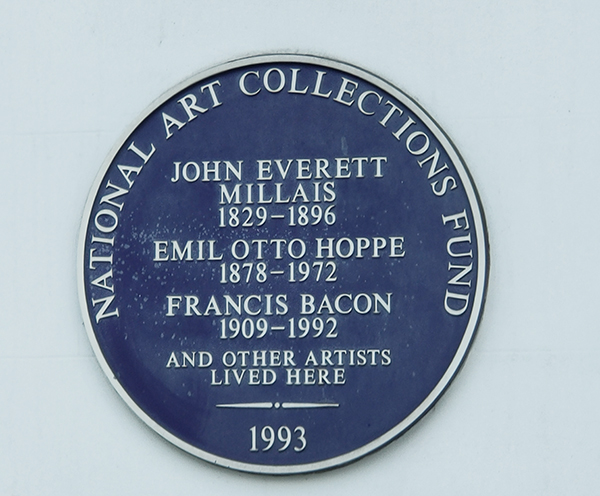
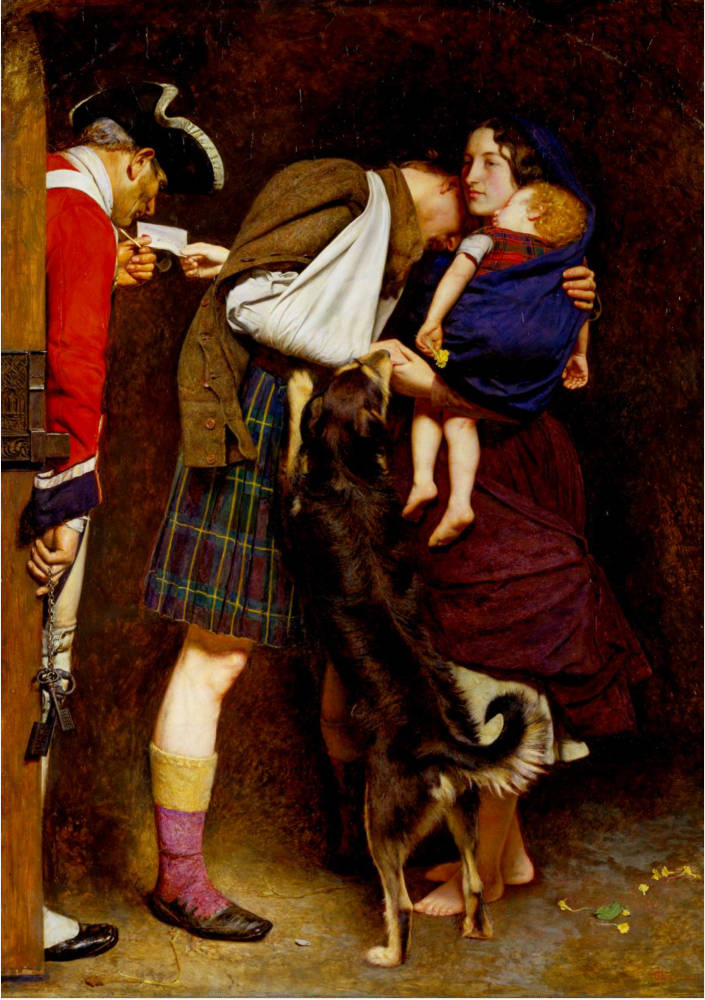
7 Cromwell Place was the London home and studio of the Pre-Raphaelite painter Sir John Everett Millais (1829 – 1896). Millais is as famous for his personal life as his art. In 1855 he married Effie Gray who had previously been the wife of the art critic, John Ruskin, and had modelled for Millais (most notably the female figure in The Order of Release) . The marriage between Effie and Ruskin, a supporter of Millais’ early work, was annulled after a few years due to lack of consummation. Effie and Millais went on to have eight children. The Victorian terrace in which they lived was later occupied by photographer Emil Otto Hoppe and (the aforementioned) Francis Bacon, who moved in in 1943 and worked in the former billiard room before moving his studio to Reece Mews.
Day 74 – Sloane Square – Chelsea Bridge Road – Pimlico Road

This trip sees us returning to south-west London, specifically the area to the north, south and east of Sloane Square which is a nexus of Chelsea, Belgravia and Pimlico. Basically, about as swanky as it gets. It’s long been a desirable area for the well-off and well-known so there were more blue plaques on this jaunt than you can shake a yappy little handbag dog at. But we’ve also got theatrical history, an iconic department store, a clutch of churches, a few embassies and one of the largest building sites in the capital to offer you. It’s a bit of an epic tbh.

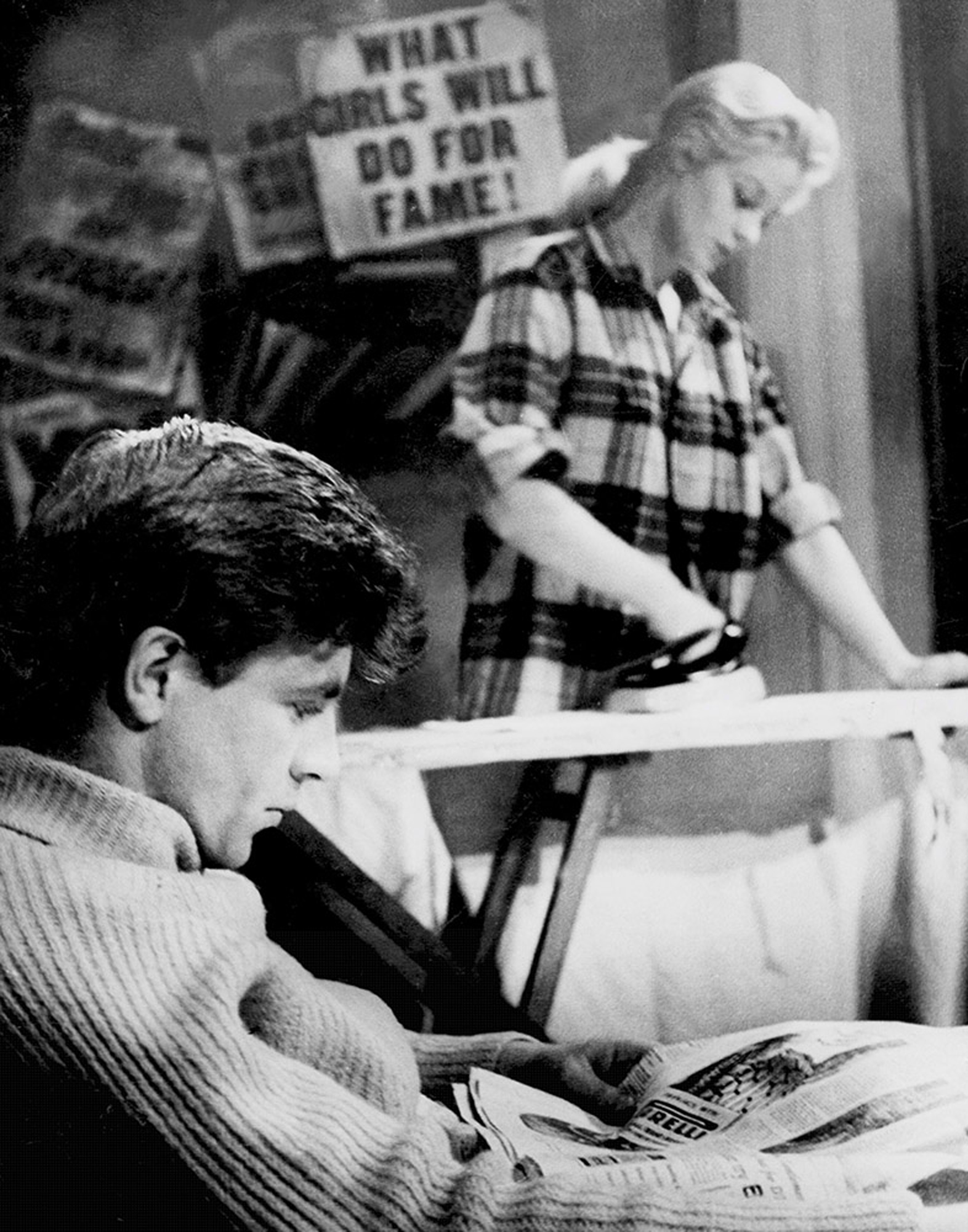
Right next door to today’s starting point, Sloane Square tube station, is the Royal Court Theatre. This red and moulded brick building with a stone facade in free Italianate style was designed by Walter Emden and Bertie Crewe and opened in 1888 as the New Court Theatre. Previously there had been a theatre on the opposite, west side of Sloane Square, a converted non-conformist chapel variously known as the New Chelsea Theatre, the Belgravia Theatre and the Royal Court Theatre between 1870 and 1887. By 1900 the “Royal” monicker had been reapplied to the new theatre and in the following few decades it played host to several of George Bernard Shaw’s plays. It ceased to be used as a theatre in 1932 and became a cinema from 1935 to 1940, until World War II bomb damage closed it. It reopened in 1952 and four years after that was acquired by The English Stage Company whose aim was to produce plays by young and experimental dramatists and “the best contemporary plays from abroad”. This intent was manifested from the outset with the premiere of John Osborne’s “Look Back In Anger” as the third production. Since then, the RCT has “courted” controversy on many occasions and played a key part in bringing about the abolition of theatre censorship laws in the 1960’s. Writers such as Caryl Churchill, Jez Butterworth and Sarah Kane have had multiple works given their first run here and “The Rocky Horror Show” debuted here in 1973. The building was Grade II listed in 1972.

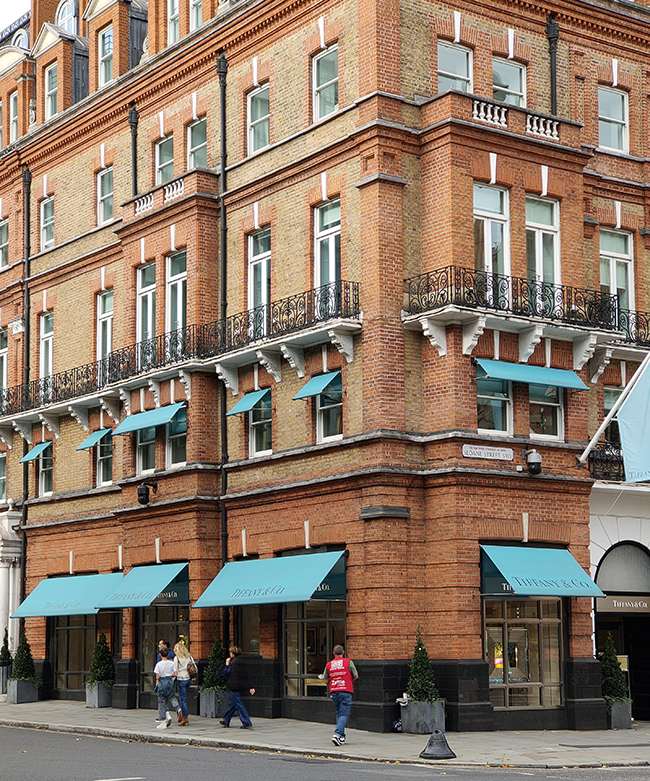
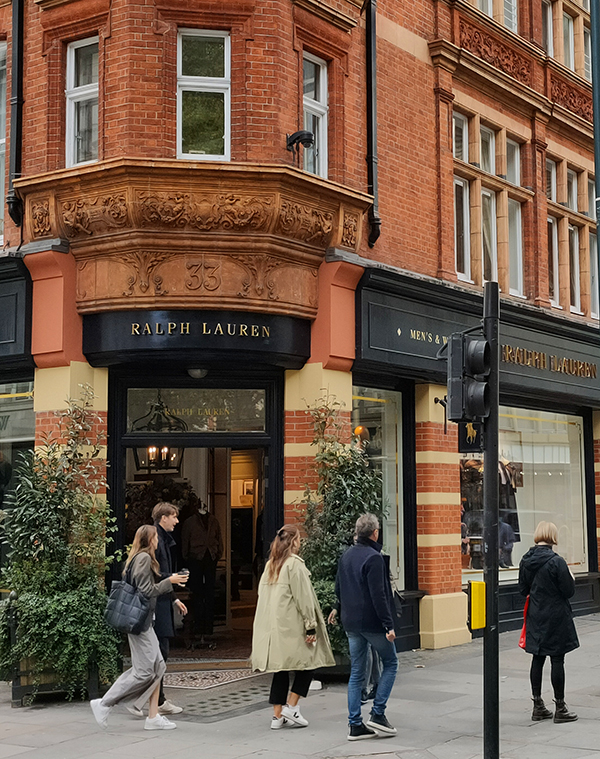
Sloane Square forms a boundary between the two largest aristocratic estates in London, the Grosvenor Estate and the Cadogan. Named after Sir Hans Sloane (1660–1753), an Anglo-Irish doctor who, jointly with his appointed trustees, owned the land at the time the square was laid out in 1771. In the 1980’s, of course, it became synonymous with the rise of yuppiedom and the Peter York-coined “Sloane Rangers”. These days the clientele for the Ralph Lauren and Tiffany stores is somewhat different I would imagine though you still have to watch out for marauding Range Rovers and where you step on the pavements.

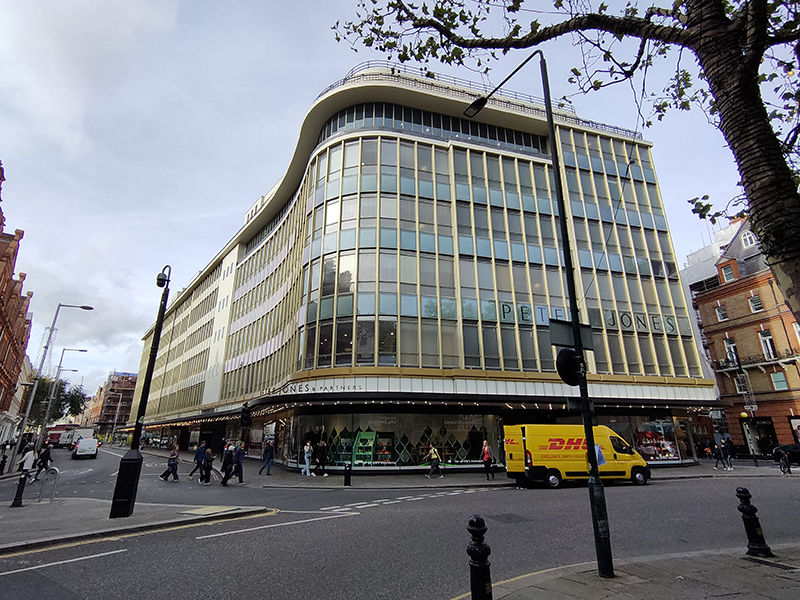
On the west side of the square, the Peter Jones department store still caters to its traditional demographic however. The shop is named after Peter Rees Jones (1842–1905), the son of a Carmarthenshire hat manufacturer, who opened a store here in 1877 on a 999-year lease from the Cadogan estate at £6,000 per year, the terms of which have never been increased (apparently). After Jones’ death in 1905 the store was bought by a certain John Lewis, who already owned a thriving business on Oxford Street. The present building was built between 1932 and 1936 to designs by William Crabtree of the firm of Slater, Crabtree and Moberly and is the first modern-movement use of the glass curtain wall in Britain. It is a Grade II* listed building. Despite being one of the flagship stores of the John Lewis partnership it has always retained the Peter Jones name.

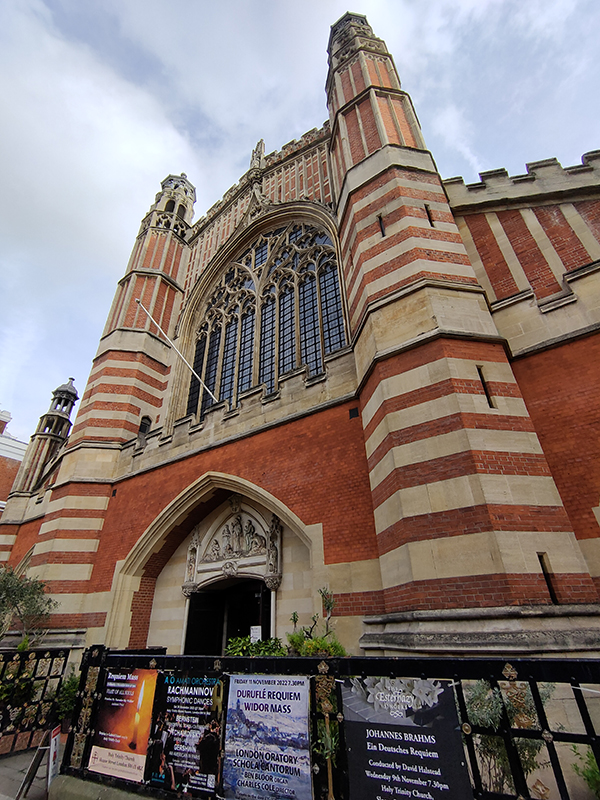
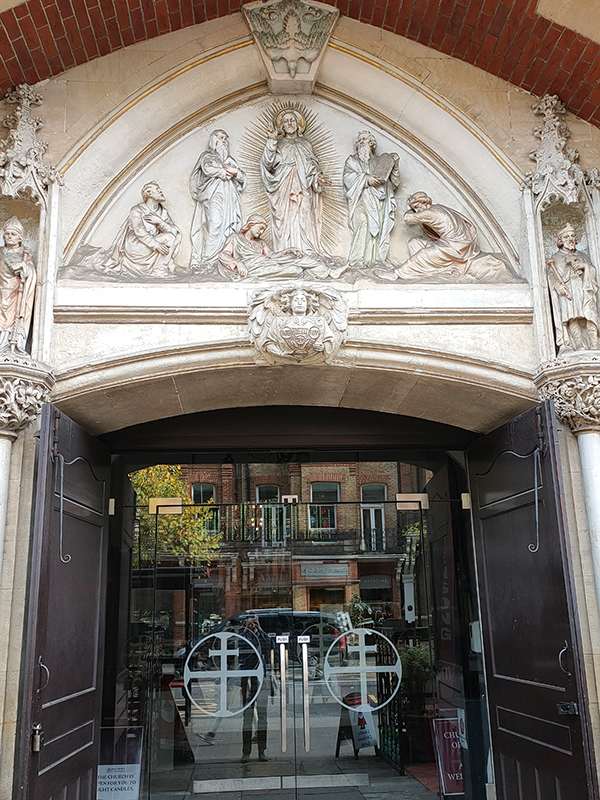
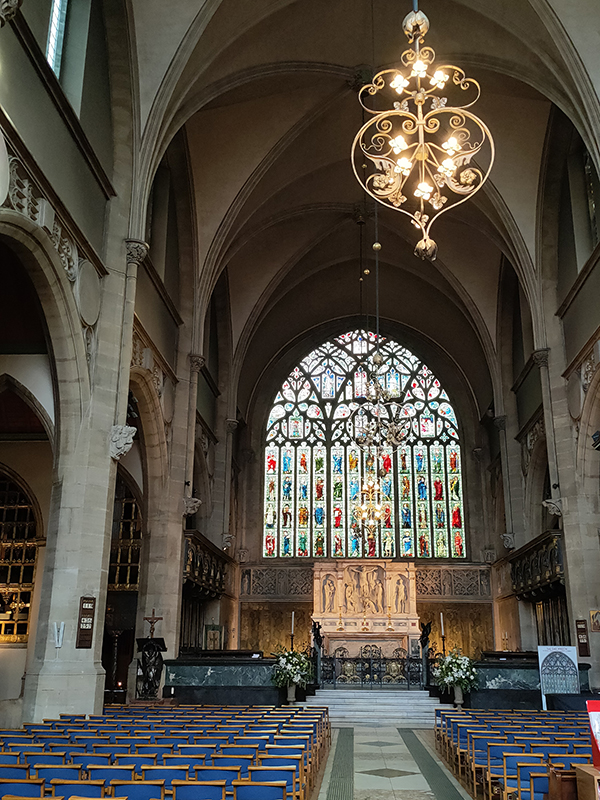
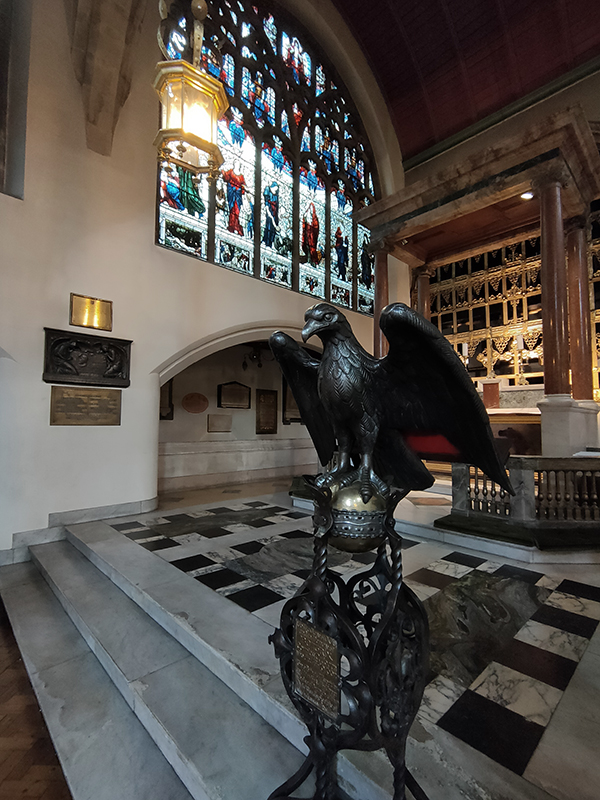
Just off the square, on Sloane Street, stands Holy Trinity Church which, like the theatre, was constructed in 1888. The architect was John Dando Sedding (1838-1891) who was appointed by the 5th Earl Cadogan and his wife Beatrix. The church is notable for its impressive stain glass windows, chief amongst which is the great east window designed by Edward Burne-Jones (1833 – 1898) and installed by Morris and Company (which was founded by William Morris and members of the pre-Raphaelite movement including Burne-Jones). During WW2 the church was hit by several incendiary bombs causing considerable structural damage. Post-war there was considerable pressure to demolish rather than restore the building, and it was only saved from this threat by a campaign mounted by the Victorian Society and Sir John Betjeman who described the church as the Cathedral of the Arts and Crafts Movement. I should also note that at the time of visiting there was an extensive selection of Charity Christmas cards for sale and the two ladies on the till were very amiable.

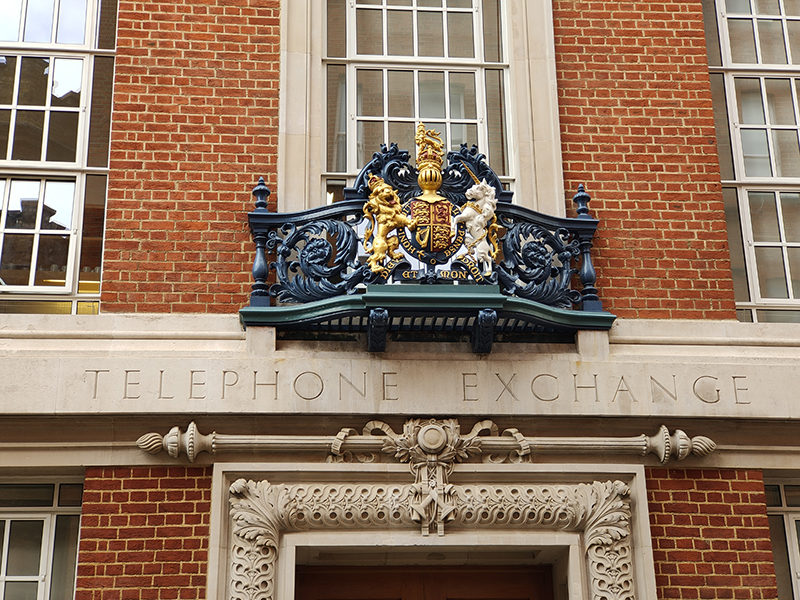
It’s about time we got into some actual streets, so let’s kick that off by exiting the square northwards up Sedding Street. On the left we pass the Grade II listed Neo-Georgian Sloan Telephone Exchange which dates from 1924 and was designed by John H. Markham for HM Office of Works. These days it’s used for offices.

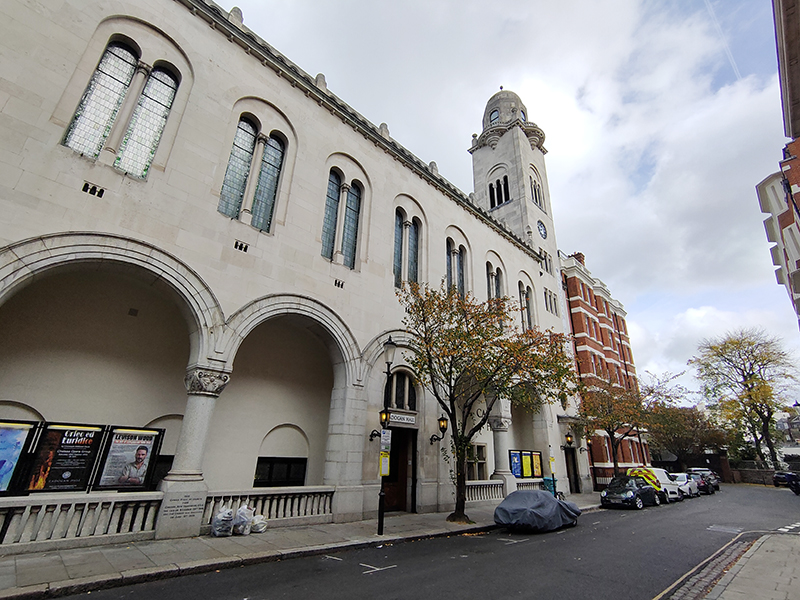
At the apex with Sloane Terrace stands the Cadogan Hall. This started life in 1907 as a new Christian Science Church designed by Robert Fellowes Chisholm, hosting up to 1400 worshippers. However, after planning permission for renovations was refused in 1996, the congregation moved on. The Hall was sold but fell into disuse until it was acquired by the Cadogan Estate in 2000 and four years later opened as a concert hall and the permanent base of the Royal Philharmonic Orchestra. Most of the concerts put on here are classical in nature but they also host (mainly) vintage pop and rock acts and jazz performers. In fact, I was due to attend a concert by the now 85-year old Ron Carter (one time bassist with the Miles Davis Quartet) and his current band in a couple of weeks’ time as part of the London Jazz Festival but sadly it’s been postponed until next year.

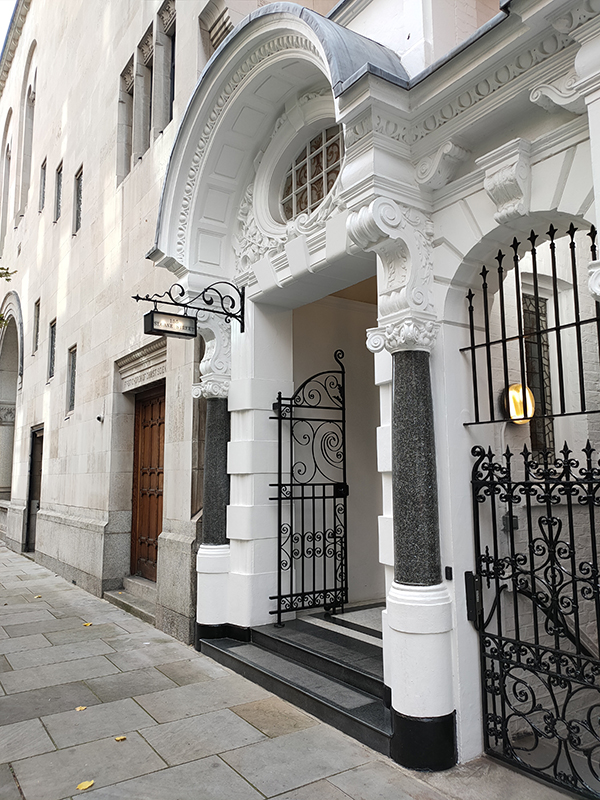
We turn left down to Sloane Street then turn briefly north before checking out the rear of the Hall on Wilbraham Place. Not an essential photo this next one but I do like these gates.

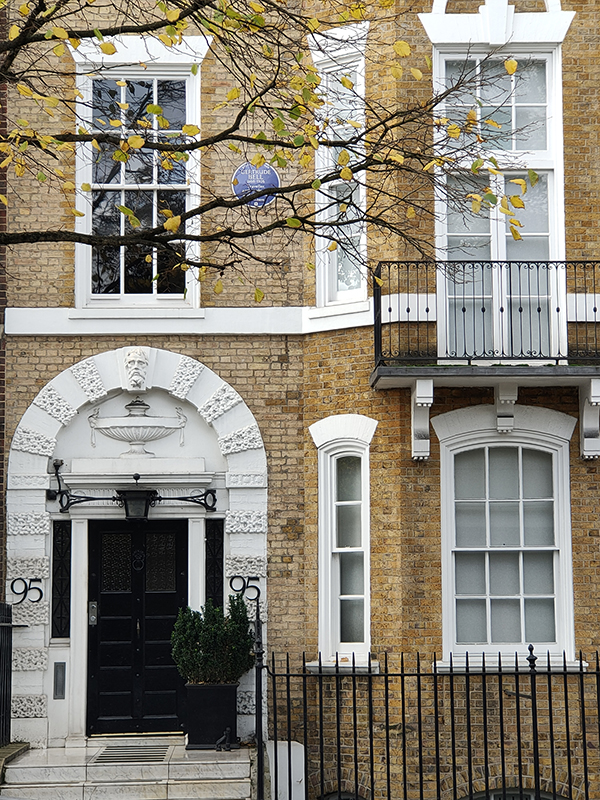
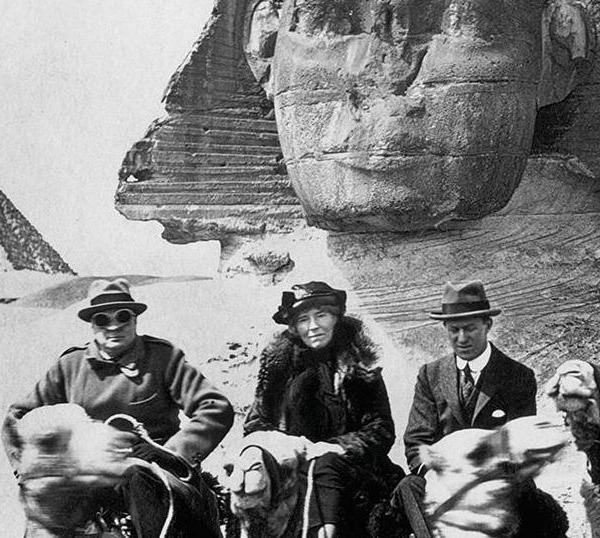
Returning to Sloane Street again via D’Oyley Street and Ellis Street we come across the first of today’s many blue plaques at no. 95, this one commemorating the English writer, traveller, political officer, administrator, and archaeologist, Gertrude Bell (1868 – 1926). Gertrude spent much of her life travelling around and mapping the Middle East and is principally known for her involvement in the establishment of territorial boundaries in the region following the break-up of the Ottoman Empire post-WW1. She was (alongside T.E Lawrence) a strong advocate for independent Arab states and was also opposed to the Balfour Declaration which determined the future of Palestine. Towards the end of her life she settled in her beloved Baghdad where she was President of the National Library and founded the Iraq Museum as a permanent home for the country’s rich collection of antiquities. I can thoroughly recommend the 2016 documentary about Bell’s life, Letters from Baghdad, in which quotations from her letters are read by Tilda Swinton. 

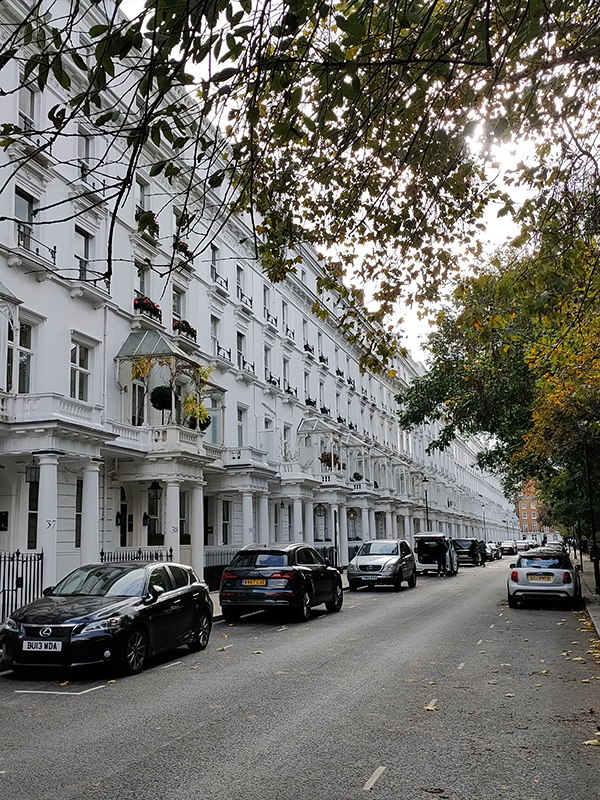
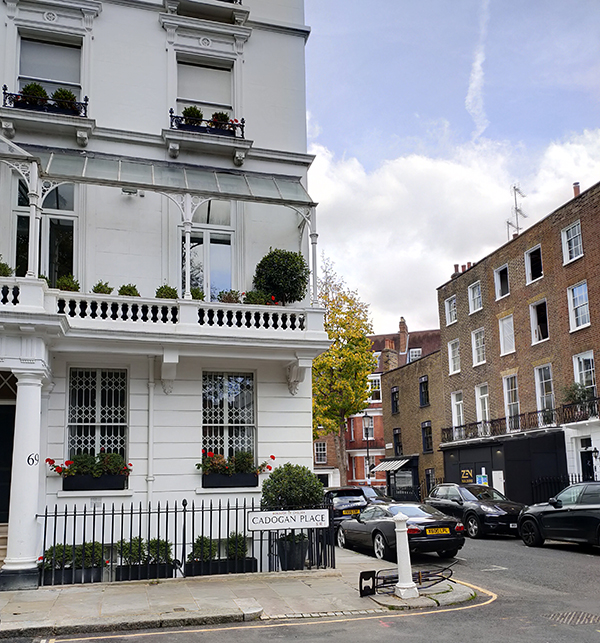
On reaching Pont Street we turn east and then south again down Cadogan Place where the houses, which distinguish themselves from other stuccoed terraces in the area by having mini gazebos on their first floor balconies, face the extensive eponymous private communal gardens. Both flats and terraced houses here are popular with foreign buyers, the average price of the former being upward of £3m and the latter £11m. There were some extremely expensive looking motors parked along the street but as I have little interest in cars you’ll have to use your imagination. The metal ironing board dumped beside the bollard outside no.69 strikes a nicely incongruous note.

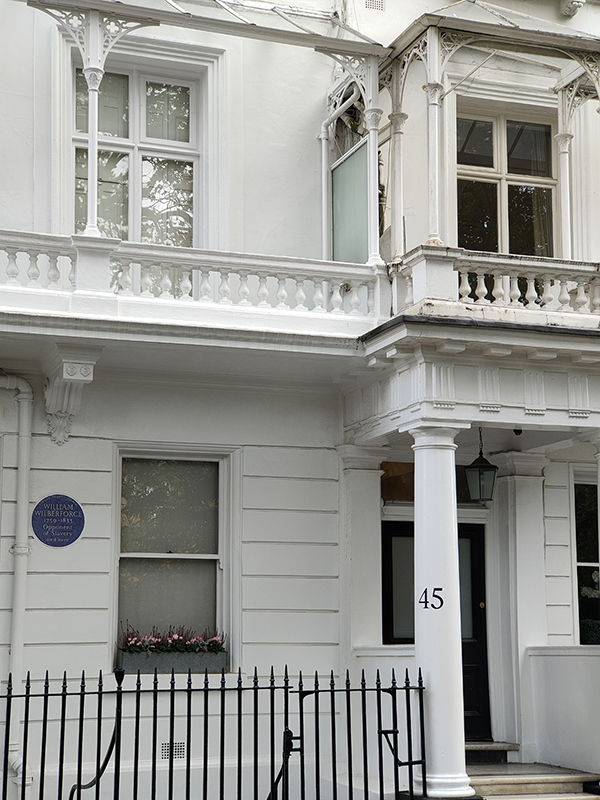
The next two blue plaques appear at nos. 30 and 44 Cadogan Place respectively. The former commemorates the actress Dorothy Bland (aka Mrs Jordan) (1762 – 1816) who was at least as famous for her love life as she was for her comic stage performances. In 1790 she became the mistress of the Duke of Clarence, later King William IV and during their a 20-year relationship bore him 10 children, all given the surname FitzClarence. The couple lived together as husband and wife, mainly at Bushy House in Bushy Park, Surrey, of which William was Ranger, until they finally separated in 1811. Dorothy moved to Cadogan Place the following year, living there for three years before retiring to France where she passed away within a year. The anti-slavery campaigner William Wilberforce (1759 – 1833) resided at no.44 but only for the last ten days of his life (it was his cousin’s house). One month after his death, the House of Lords passed the Slavery Abolition Act, which abolished slavery in most of the British Empire from August 1834.

Next street along, moving eastward, is Cadogan Lane which is largely comprised of mews houses which back on to the grand residences of its neighbour to the west. At no. 40 is an English Heritage (as opposed to GLC) blue plaque in honour of the writer and actor, Jeremy Lloyd (1930 – 2014). Lloyd is perhaps best known as the co-writer (with David Croft) of the sitcoms Are You Being Served and ‘Allo ‘Allo. In 1974 (at the age of 14) I went with my grandparents to see the recording of an episode of the former at the BBC’s White City studios. To my embarrassment, my grandma collared Jeremy for his autograph.

To the north Cadogan Place extends across Pont Street and here at no.4 Judy Garland died in June 1969 having accidentally overdosed on barbiturates. That house was eventually demolished in 2019.

No launderette of the day this time unsurprisingly so you’ll have to make do with London’s finest dry cleaners which we turn right past to get to Chesham Street where we immediately take a left into Chesham Place. It’s here you’ll find the German Embassy, or rather the 1970’s extension thereof. Amazingly, this won the Westminster City Council prize for architecture in 1978.

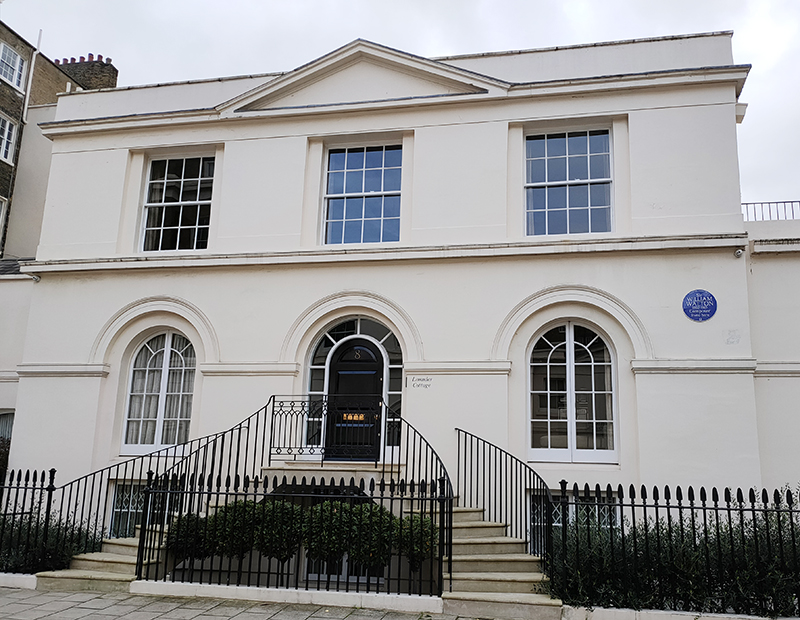
Next up is Lowndes Place where the composer, William Walton (1902 – 1983) lived. Among Walton’s orchestral works were marches he wrote for the Coronations of both King George VI and Queen Elizabeth II, entitled Crown Imperial and Orb and Sceptre respectively. Of the 13 film scores he composed those for the three Laurence Olivier-produced Shakespeare adaptions Hamlet, Henry V and Richard III are probably the best known. In 1934 Walton began an affair with Alice, Viscountess Wimborne, his senior by 22 years, which lasted until her death in 1948. Later that same year he met and married (in Buenos Aires) Susana Gil Passo who was 24 years his junior.

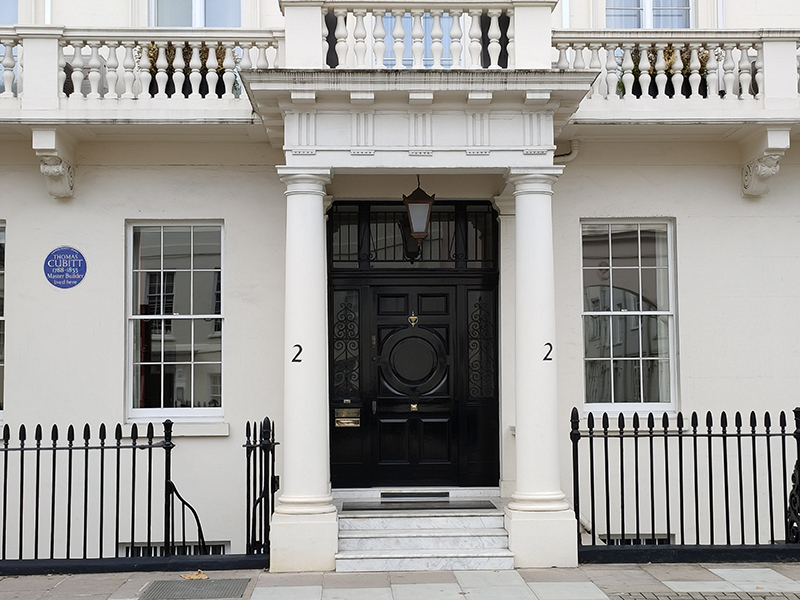
At the end of Lowndes Place we turn right into Eaton Place then right again up Lyall Street which was home to the master builder, Thomas Cubitt (1788 – 1855) who featured prominently in Day 69.

At the top end of Lyall Street we make a sharp left turn back down Chesham Street to the westernmost section of Eaton Place which plays host to the Chilean Embassy.

After turning off onto Lyall Street again we follow Eaton Mews North back to Eaton Place.

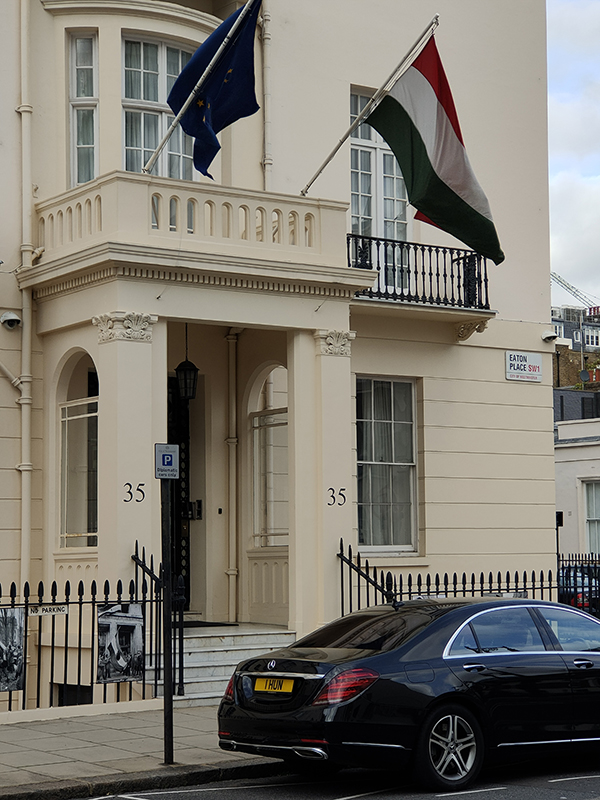
This next stretch of Eaton Place, going east, is the site of another embassy, that of Hungary. Though (and I’ll hate myself in the morning for saying this), judging from the number plate, that car would be more at home outside the German embassy.

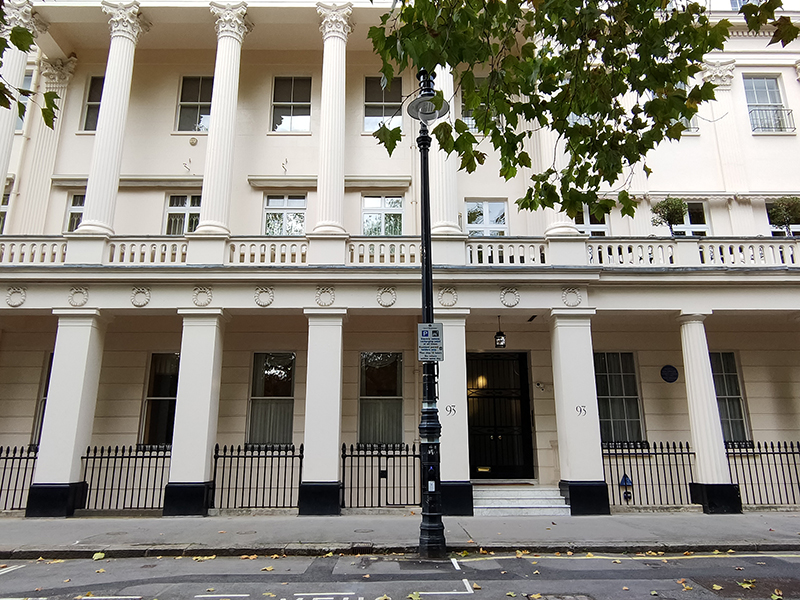
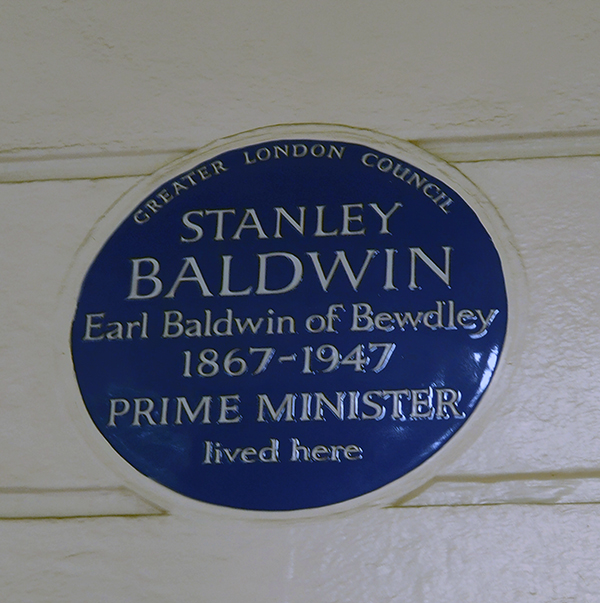
We turn right beyond the embassy down Belgrave Place then switch back westward along a previously unexplored section of Eaton Square. The grandest of the houses along here (no.93), with its double set of columns, was once the residence of Stanley Baldwin (1867 – 1947). Baldwin served as Prime Minister on three separate occasions, May 1923 to January 1924, November 1924 to June 1929, and June 1935 to May 1937. During the last of these stints the country was ruled by three different monarchs, George V, Edward VIII (although he was never crowned) and George VI. These days, of course, it’s hard to imagine a Conservative PM seeing out a full term of office let alone remaining as leader after losing even one election.

Just a few doors away, at no. 86, lived Edward Wood, 1st Earl of Halifax (1881 – 1959). He held various ministerial posts during the first and last of Baldwin’s three terms of office and in between time served as Viceroy of India from 1926 to 1931. Neville Chamberlain appointed him as Foreign Secretary in 1938 and he initially gave his support to the appeasement of Nazi Germany. However, after Hitler’s invasion of Czechoslovakia, he became a proponent of resistance to further German aggression. On Chamberlain’s resignation early in May 1940, Halifax effectively declined the position of Prime Minister as he felt that Winston Churchill would be a more suitable wartime leader. Following the retreat from Dunkirk, Halifax proposed trying to reach peace terms with Hitler using Mussolini as an intermediary. He was overruled by Churchill after a series of stormy meetings of the War Cabinet and was subsequently eased out of the Foreign Office, becoming UK ambassador to the USA from 1941 to 1946.

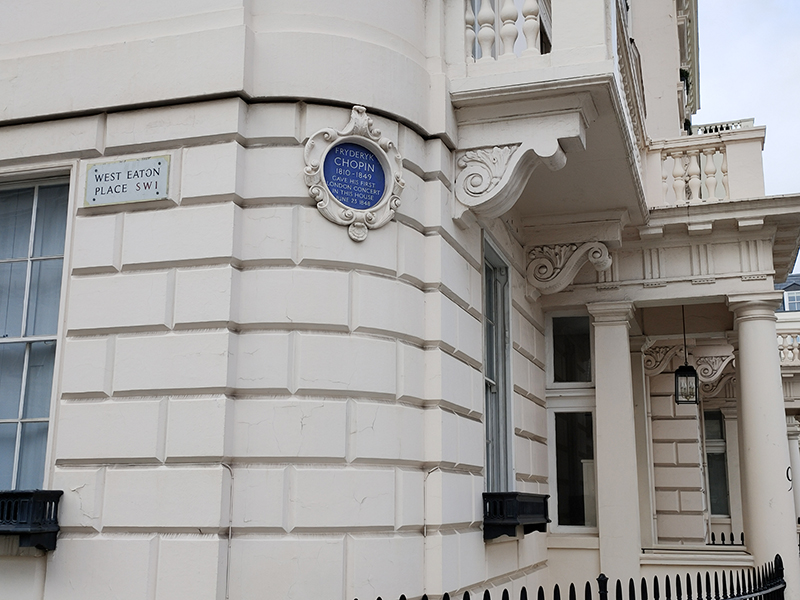
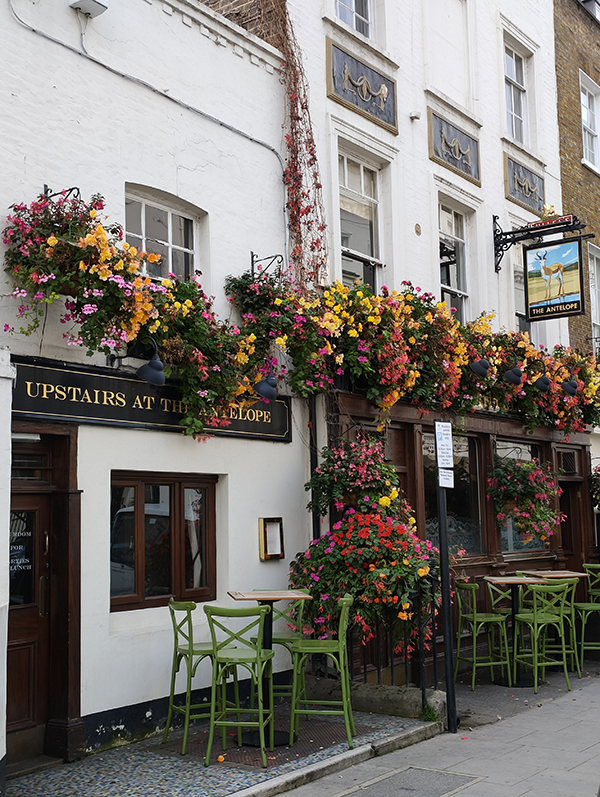
On the corner of Eaton Place and West Eaton Place is the house where Frederick Chopin gave his first London performance in 1848. West Eaton Place runs into Eaton Terrace where the Antelope pub is in full bloom.

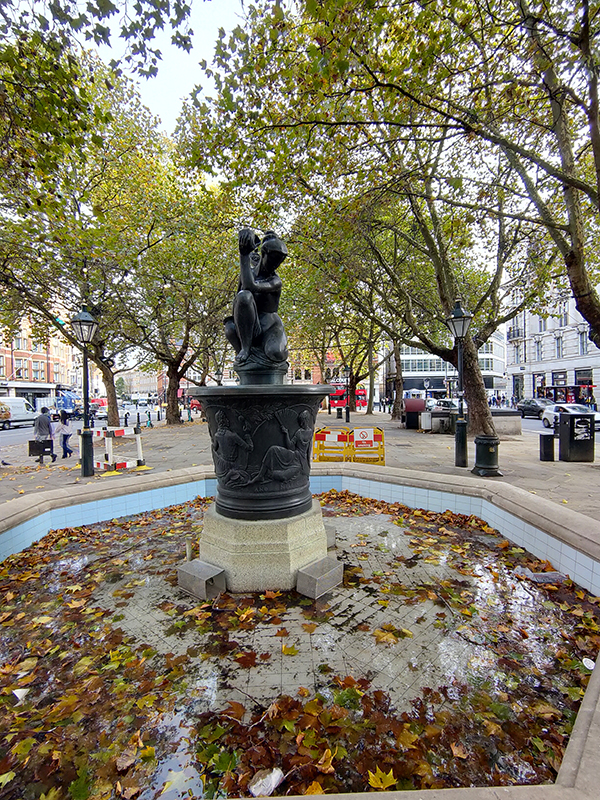
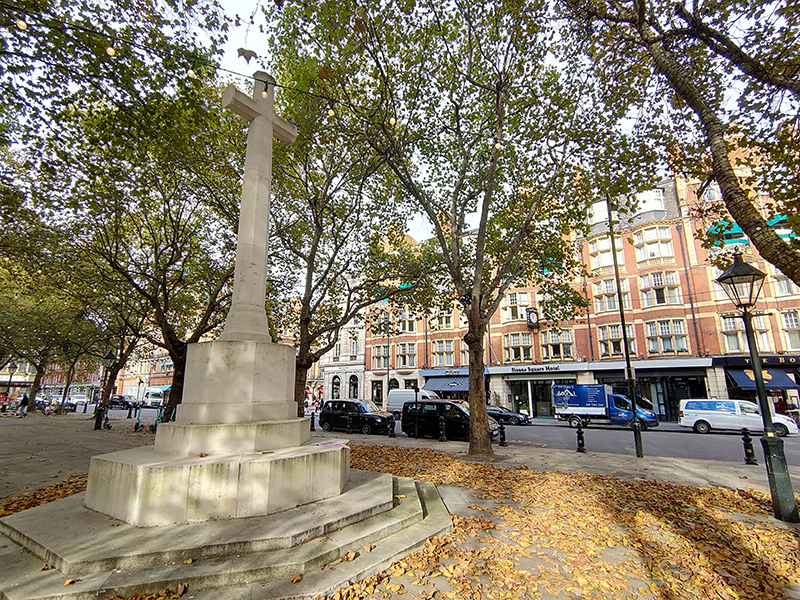
Beyond the pub, Cliveden Place takes us all the way back to Sloane Square. Before we finally leave the square via the southern section of Sloane Street I’ll just quickly mention the two monuments on the island. The Venus Fountain was created in 1953 having been designed by sculptor Gilbert Ledward. The fountain itself depicts the Goddess Venus, and on the basin section is a relief which depicts King Charles II and Nell Gwynn by the Thames. At the other end, the Chelsea War Memorial is a slightly off-centre cross made of Portland Stone with a large bronze sword affixed to its west face.

This section of Sloane Street, which runs down to join Chelsea Bridge Road, is lined on its west side by impressive Dutch style red-brick buildings built in the 19th century at the instigation of Earl Cadogan.

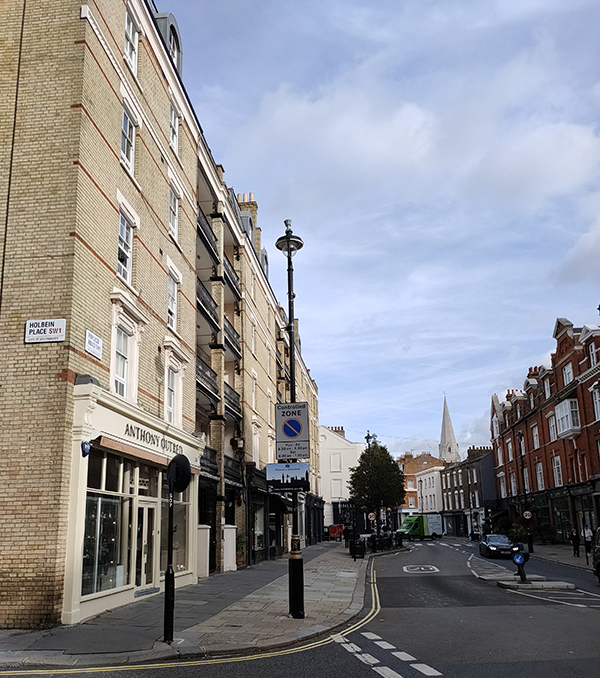
A good run of streets now before we get to the next point of interest (yet more of those blessed blue plaques !). So we’re working our way east to get to South Eaton Place and taking us there are Sloane Gardens, Holbein Place, Whittaker Street, Bourne Street, Caroline Terrace, Eaton Terrace, Eaton Gate, Lyall Street and Eaton Mews West. On reaching no.16 South Eaton Place we are presented with two plaques. The topmost is in honour of Robert Cecil, 1st Viscount Cecil of Chelwood (1864 – 1958) one of the creators of the League of Nations post-WW1 and accordingly winner of the Nobel Peace Prize in 1937 (though I’d rate that as the very definition of a pyrrhic victory given what happened two years later). The one underneath celebrates Philip Noel-Baker (1889 – 1982) the politician, diplomat, academic, athlete, and renowned campaigner for disarmament. He carried the British team flag and won a silver medal for the 1500m at the 1920 Summer Olympics in Antwerp, and (how’s this for coincidence) also received the Nobel Peace Prize (in 1959). So far, he is the only person to have won both an Olympic Medal and a Nobel Prize.

We’re heading back west to the top end of Chelsea Bridge Road next by means of Chester Row, Graham Terrace and Holbein Mews.

Holbein Mews

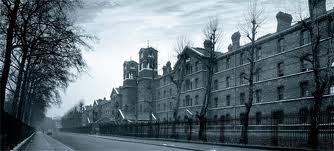
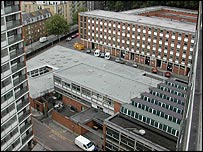
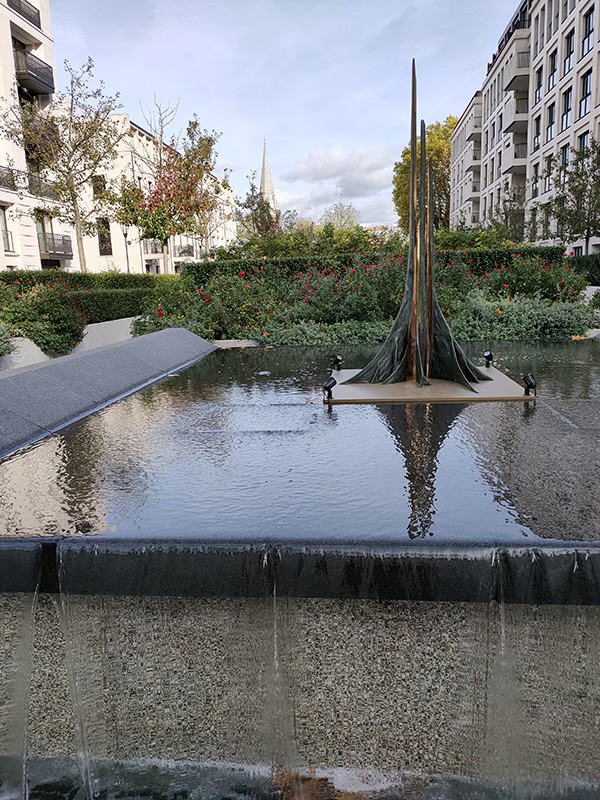
The 12-acre site to the east of Chelsea Bridge Road between Pimlico Road and Ebury Bridge Road was formerly occupied by the Chelsea Barracks. The original barracks, designed to house two battalions of infantry, were completed in 1862 and comprised a long and monotonous brick structure broken by towers in the centre. It also included a chapel which still remains (and which we will come to later). In the late 1950s these original buildings were demolished and in June 1960, construction started on new barracks primarily consisting of two 13-storey concrete tower-blocks which were used to accommodate four companies from the Guards Regiments.
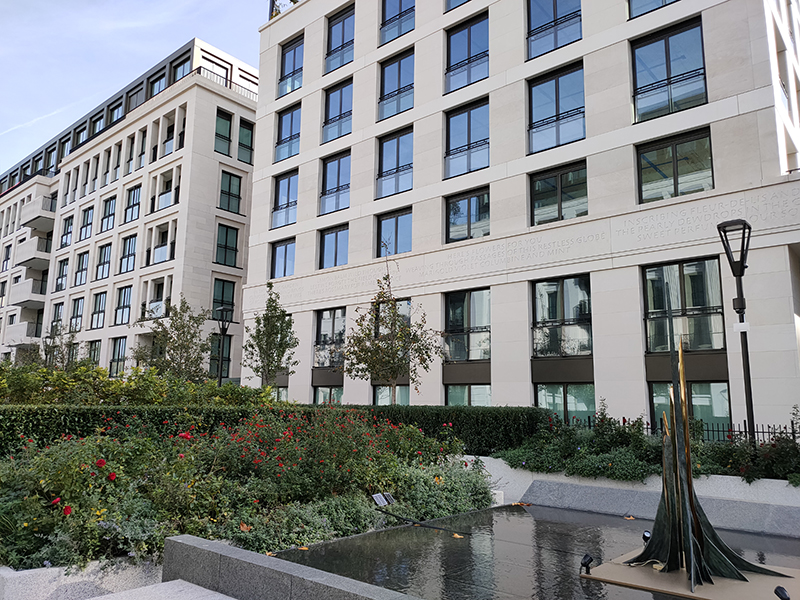
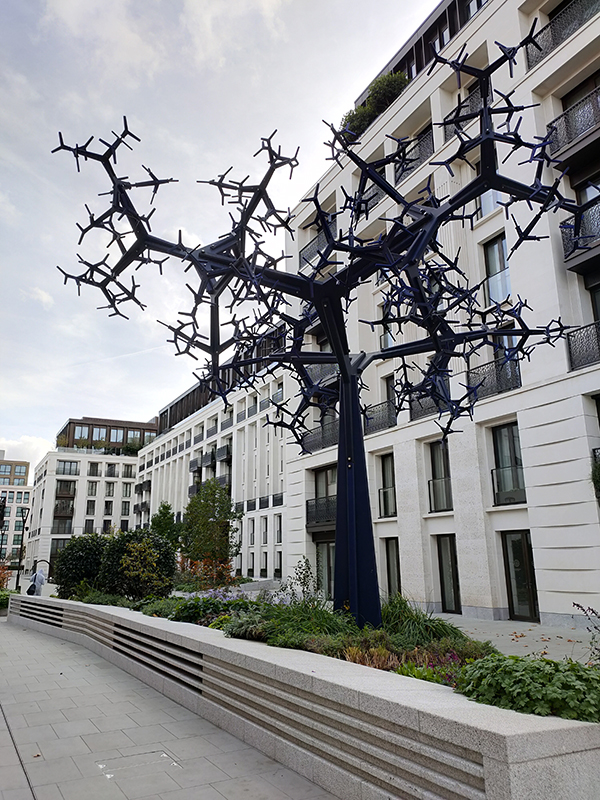
In 2005 the then government announced that Chelsea Barracks would be sold and three years later the site was vacated with the troops transferred to the Royal Artillery Barracks at Woolwich. In the meantime, a sale to the Qatar Investment Authority for £959m had been agreed subject to Westminster Council’s stipulation that 50% of any residential units should be affordable housing. The original development scheme proposed, a contemporary design with a series of copper, glass and concrete pavilions, by Rogers Stirk Harbour + Partners met this requirement but was withdrawn after criticism from Prince Charles. A new masterplan – designed by Squire and Partners – was approved by Westminster Council in 2011. Under this scheme the site would be redeveloped in multiple phases over several years and would incorporate 448 residential units including 123 affordable units (27%), as well as a new leisure centre, NHS medical centre, community centre and local shops. Phases 1 to 3 have now been completed and ground has been broken on phase 4.

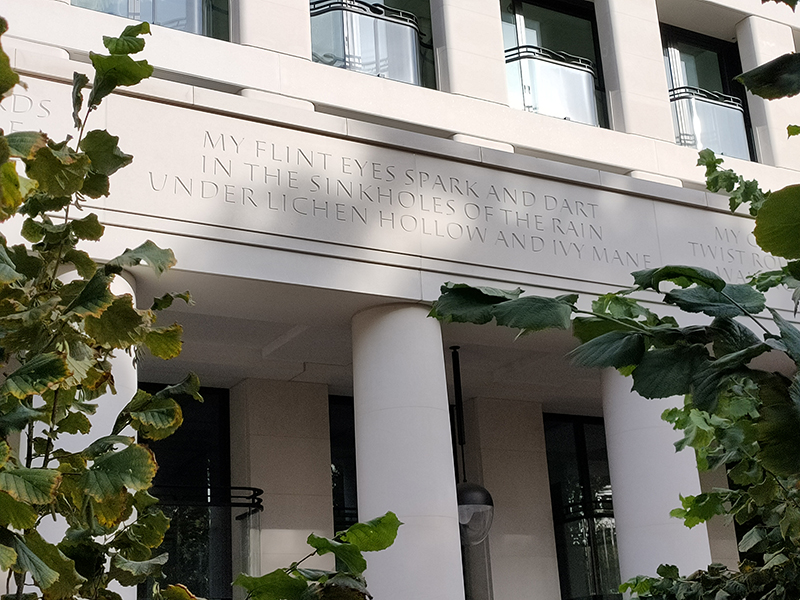
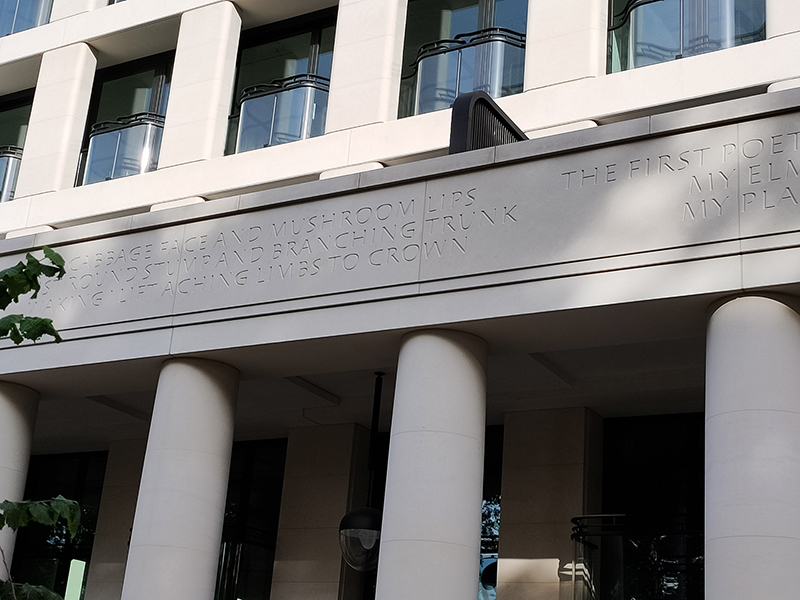
As you can see the results are a long way short of awe-inspiring and, to make matters worse, the buildings facing on to Chelsea Bridge Road have some of the naffest poetry I’ve ever encountered etched in their walls. Cabbage face and mushroom lips my arse ! The Qataris are also noticeably more comfortable advertising their involvement in this project that others around the capital. According to one of the security guards the penthouse apartments have a guide price of around £120m.

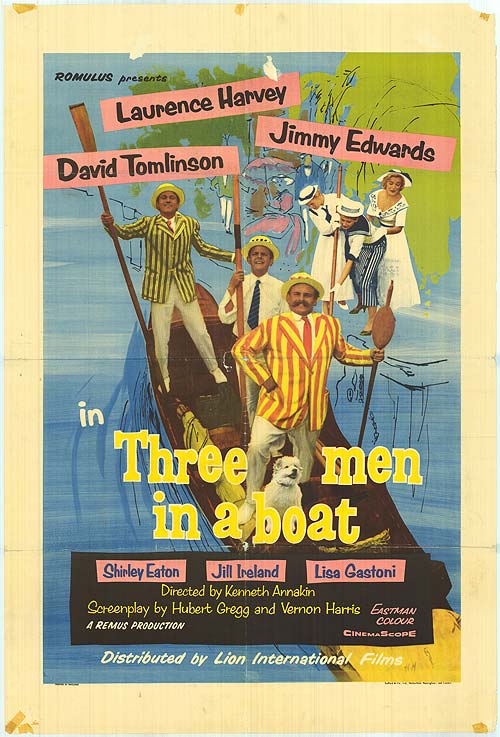
Anyway, moving on, we follow Chelsea Bridge Road down to its eponymous river crossing then backtrack to the start of Ebury Bridge Road. On the corner here is a plaque marking the flat where Jerome K. Jerome (1859 – 1927) wrote his timeless Three Men In A Boat in 1889. This humorous account of a two-week boating trip on the Thames upstream from Kingston to Oxford has been filmed numerous times including the 1956 screen adaptation, with David Tomlinson as J., Jimmy Edwards as Harris and Laurence Harvey as George, as well as German and Russian language versions.

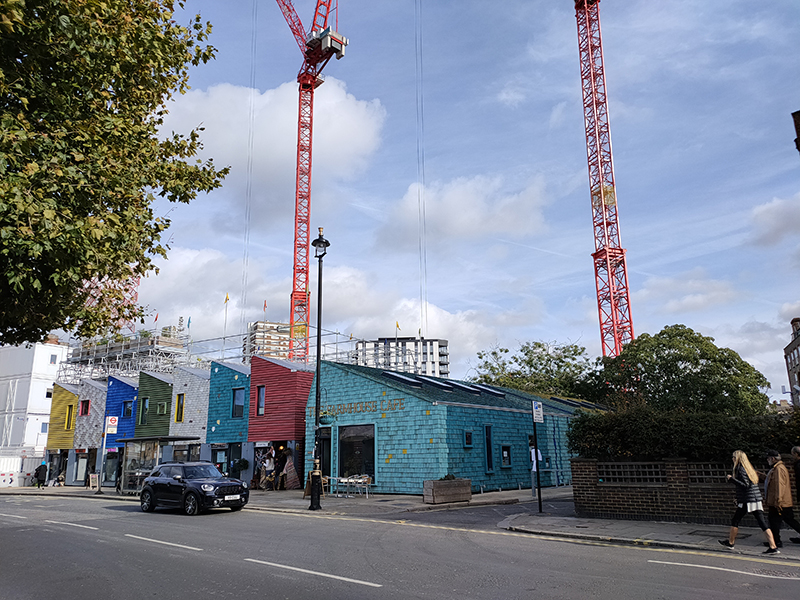
Heading east along Ebury Bridge Road, with a quick detour into Gatcliff Road, yet another massive development on the south side is at least trying something different with these colourful (but temporary) work and community spaces.

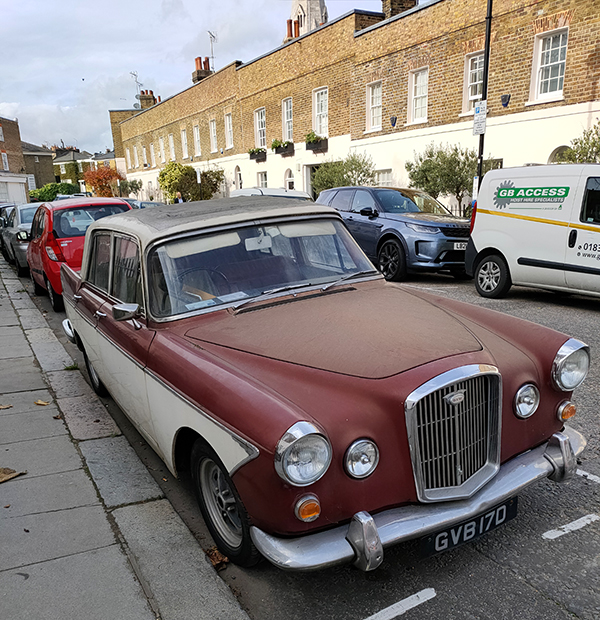
I mentioned earlier that I’m no car buff but who doesn’t love an old Wolseley like this one on St Barnabas Street.

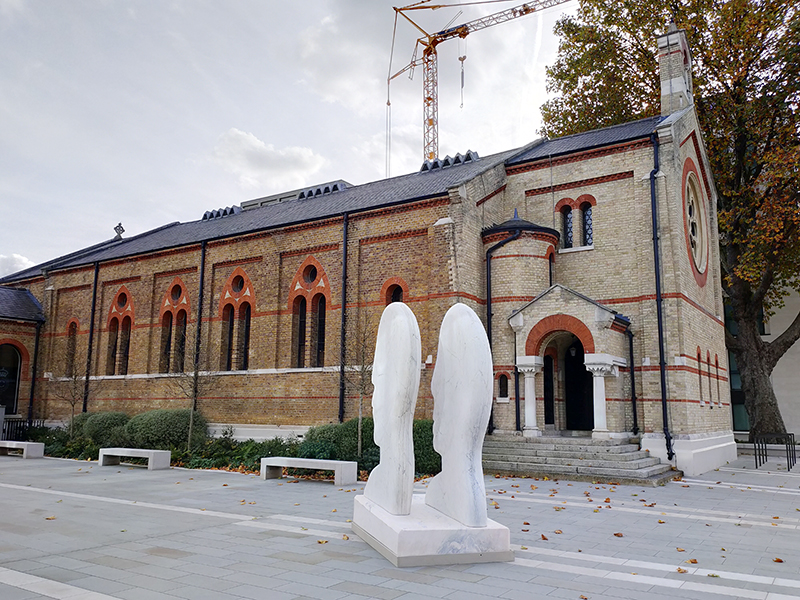
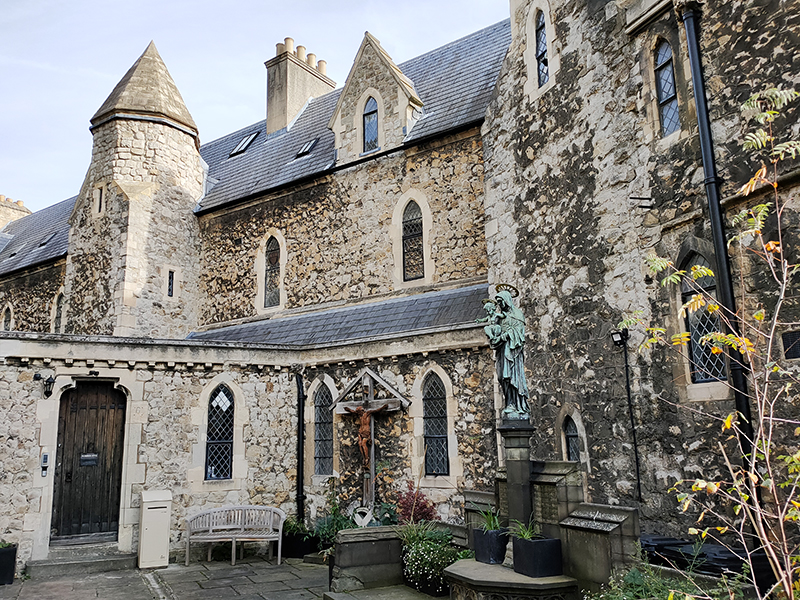
St Barnabas Street intersects Ranelagh Grove where you’ll find that chapel referred to above. As noted, this example of mid 19th Century Romanesque-Byzantine style with Venetian Gothic elements is the only thing that remains of the original barracks. As part of the current development this Grade II listed building was fully restored, including a new bell cast by the world’s largest foundry, John Taylor & Co., and is now home to the Prince’s Foundation (as in Charles of course) – funny that !

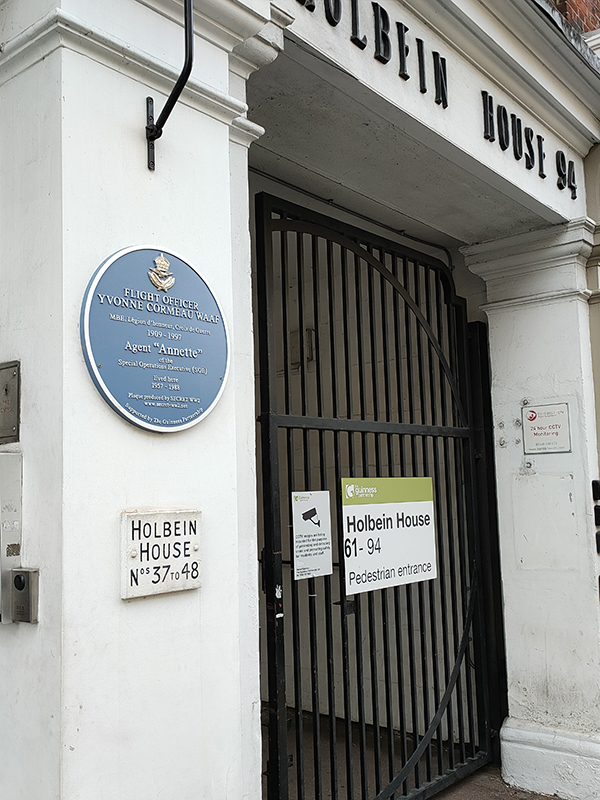
Our route takes us back west briefly next, Bloomfield Terrace leading into Pimlico Road which we follow down past Dove Place and Whistler Square (phase one of the Barracks development) before doubling back as far as Passmore Street. En route we pass the southern end of Holbein Place where there is a memorial to WW2 SOE agent Yvonne Cormeau (1909 -1997). In 1940 her husband, who had enlisted in The Rifle Brigade and been sent back to the UK after being wounded, was killed when their London home was bombed. Yvonne’s life was saved by a bathtub which fell over her head and protected her but not her unborn baby. Shortly thereafter she joined the WAAF (to “take her husband’s place) and in 1943 was recruited by the SOE where she was swiftly promoted to Flight Officer. Later that year she was parachuted into southwestern France to be the wireless operator for the SOE network there; a role she carried out until the liberation of France 13 months afterwards. Before dedicating herself to the SOE she placed her 2-year old daughter with a convent of Ursuline nuns in Oxfordshire.

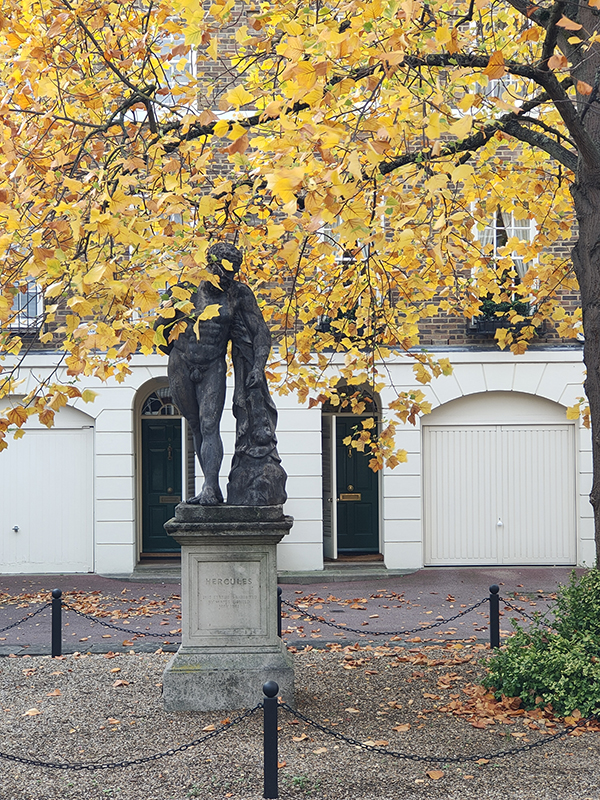
Once on Passmore Street we take an almost immediate right turn into Bunhouse Place which takes us back onto Bourne Street. In Ormonde Place, a discreet a relatively recent private residential development on the west side there is a somewhat incongruous statue of Hercules (about which I can find no further information).

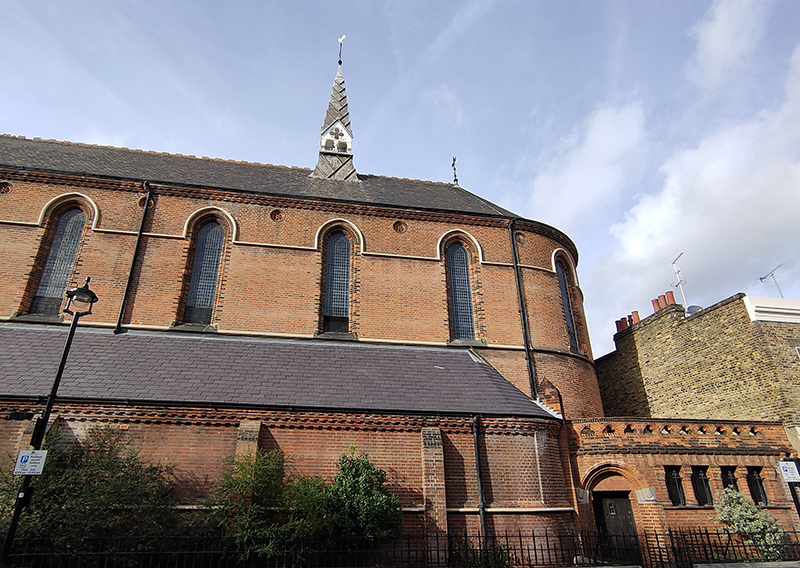
St Mary’s Anglican Church on Bourne Street was built ‘quickly and cheaply’ in 1874, with the intention of providing ministry to the poor living in the nearby slums of Pimlico. Sadly, it appears there is little else of note to be said about it.

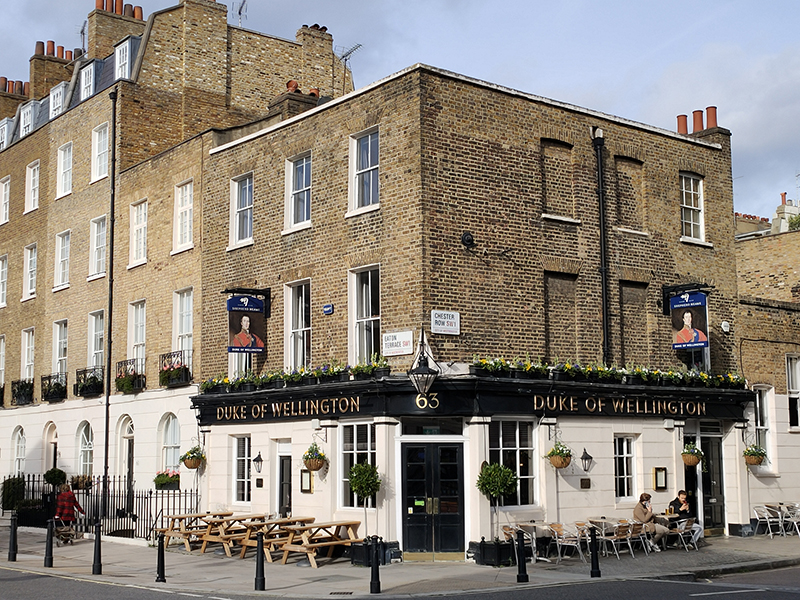
We pass the church to the south along Graham Terrace and make our way back to the intersection of Eaton Terrace and Chester Row for today’s pub of the day. The Duke of Wellington is devoid of other clientele when I enter but as I work my way through a (pretty good) fish finger sandwich and glass of Sauvignon there is a flurry of fresh arrivals (mostly tourists).

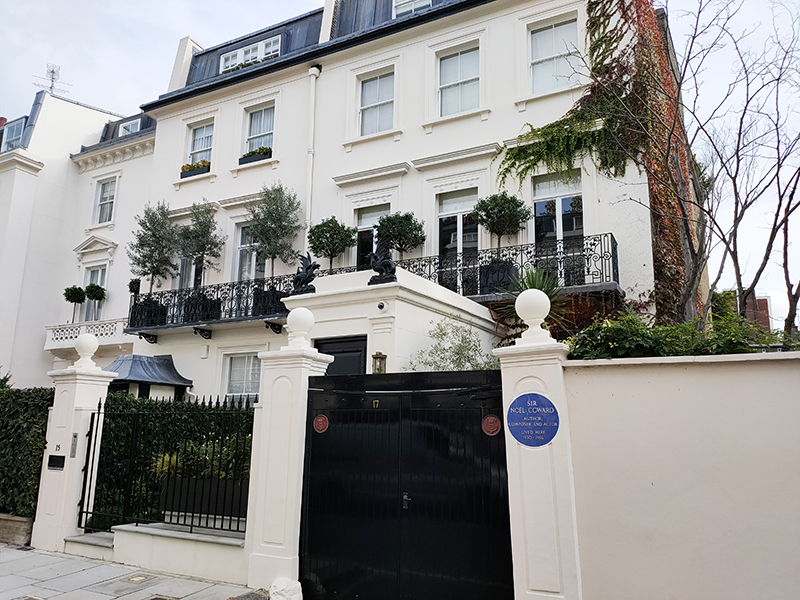
We make our way back along Chester Road then drop down South Eaton Place to Gerald Road to continue east. Here we find the last (blue) plaque for today commemorating the residence at no. 15 between 1930 and 1956 of the playwright, composer, director, actor, singer and noted wit, Sir Noel Coward (1899 – 1973). During this period, he penned two of his most successful stage works, Private Lives and Blithe Spirit and collaborated with David Lean on the patriotic WW2 films In Which We Serve and This Happy Breed. Subsequently, in 1945, he also provided the (uncredited) narration for Lean’s Brief Encounter.

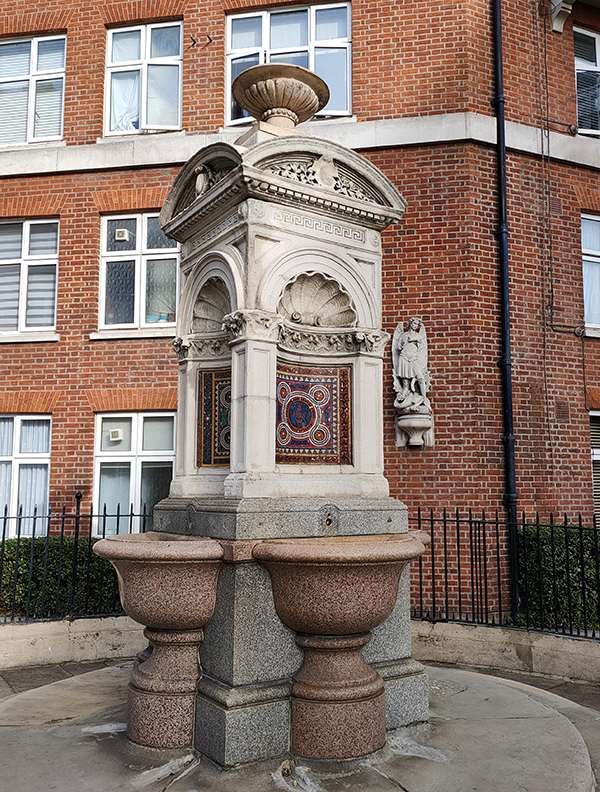
From Gerald Road we turn right onto Elizabeth Street then head back west along Ebury Street. Next left, Semley Place, leads into Ebury Square and off the south-western corner of the square, where the very short Avery Farm Row adjoins with Pimlico Road, stands the Memorial Fountain to Richard Grosvenor, 2nd Marquess of Westminster. Created in an Italian-renaissance style in around 1869 this incorporates four enamel mosaics by the renowned Italian glassmaker and artist, Antonio Salviati.

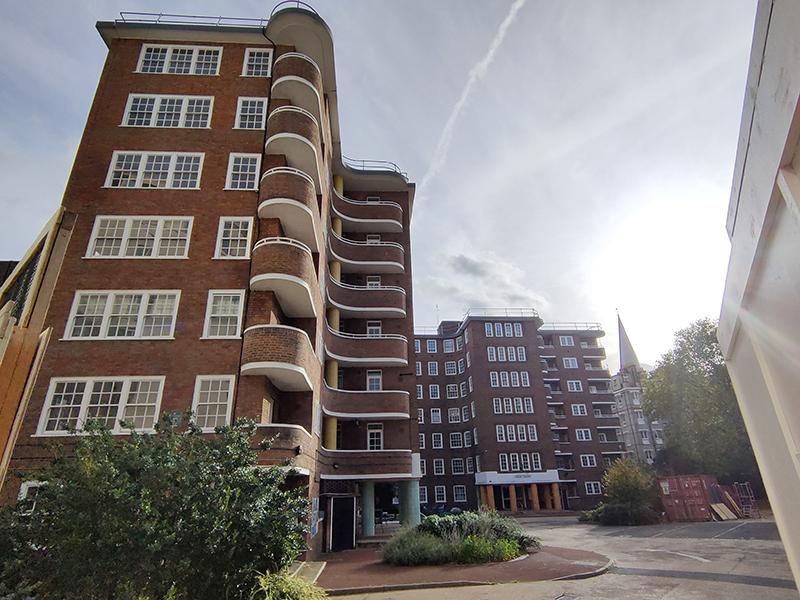
We make our way back up the west side of the square into Cundy Street. I was shocked to learn (from another security guard) that the splendid 1950’s estate, designed by T.P Bennett with a definite nod to Art Deco, is scheduled for demolition. Grosvenor Estates, which owns the site has received approval from Westminster Council to replace the existing 160 flats (44 of which are leased by the council) with new housing including 88 affordable homes, senior living housing for up to 170 people and 75 open market homes. These will be framed by new and improved green spaces and introduce a community hub, food store and cinema to the area. To my mind (and that of the existing residents who fought unsuccessfully against the plans) this could have been achieved without doing away with the current flats.

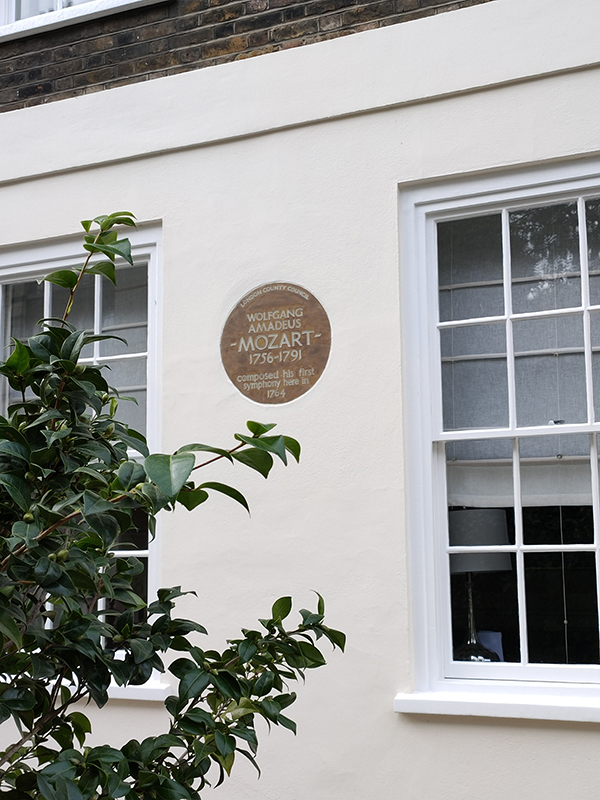
Back on Ebury Street is a today’s very final plaque (honestly). It’s one of the rare sepia brown London County Council ones from pre-WW2 and it commemorates the house in which Wolfgang Amadeus Mozart (1756 – 1791) composed his first symphony in 1764 (at the age of eight !).

I don’t tend to focus on retail establishments very much but sometimes you just can’t help yourself.

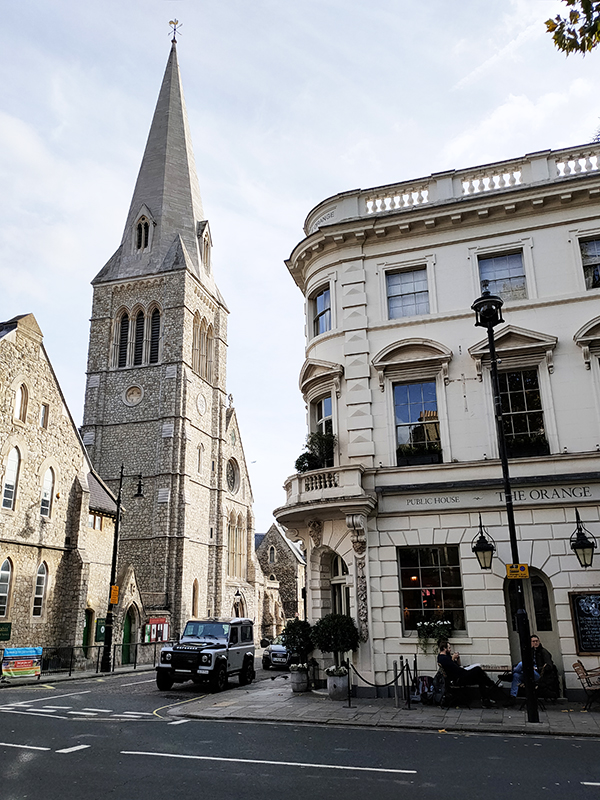
Ebury Street ends at Pimlico Road where we turn east briefly to find ourselves at the top end of St Barnabas Street. On the corner here is the Grade II listed Orange Pub and Hotel (formerly the Orange Brewery) which dates from 1845-6. And across St Barnabas Street is the Church of St Barnabas which is a year younger, having been completed in 1847 to the designs of Thomas Cundy (Junior).  It was one of the earliest Ritualistic churches, and the first in London in which all pews were free (charging for pews was normal practice at the time). The building was listed Grade I in 1958.

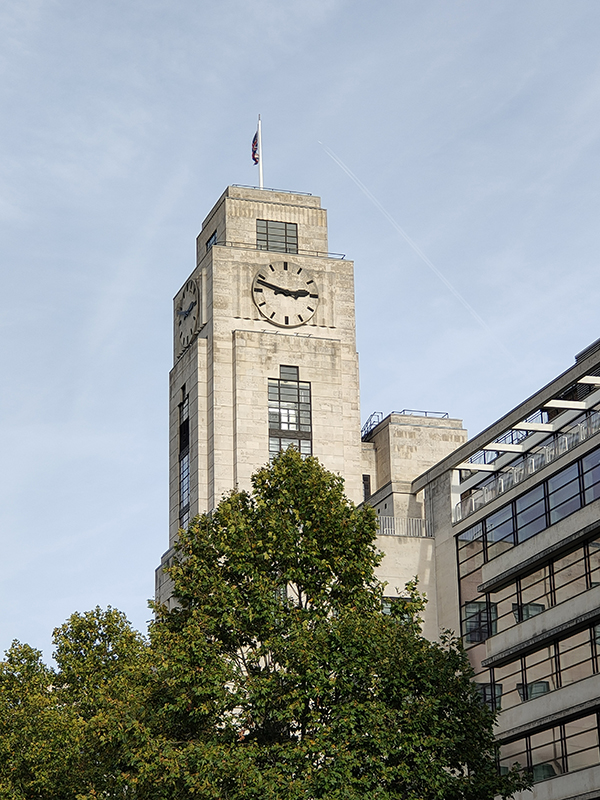
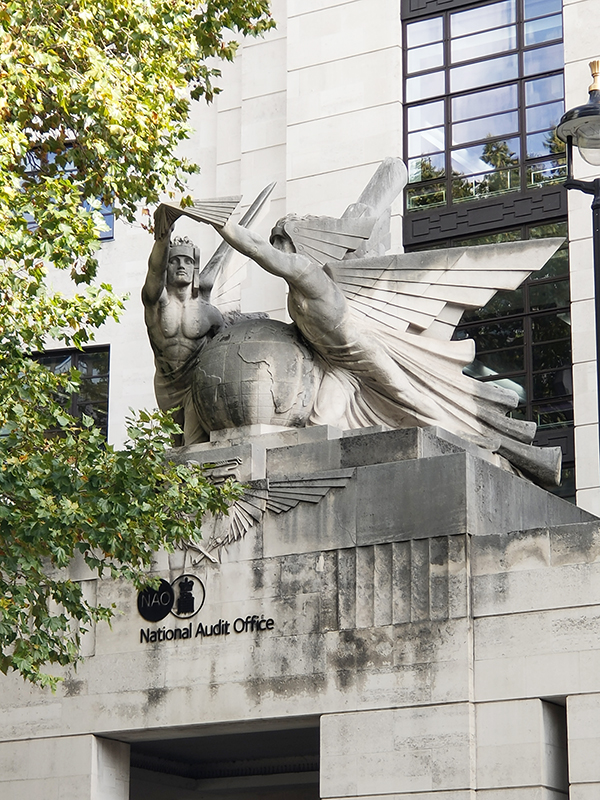
To finish off today (at last) we follow Ranelagh Grove and the last section of Pimlico Road onto Ebury Bridge Road and head up towards Victoria past the National Audit Office. This seminal example of Art Deco architecture was probably the last hurrah for that iconic style of building (at least as far as the UK is concerned). It was constructed as The Imperial Airways Empire Terminal and opened in June 1939 just months before the outbreak of WW2. Designed by the architect Albert Lakeman it has a symmetrical facade with a 10-storey central clock tower and wings curving forward to form a crescent shape. As well as being used by Imperial Airways for ticketing and checking in passengers, it was also used by the airline as a Head Office. The location was chosen because the Air Ministry insisted that Southampton had to be used as base for flying boat services, and this was the only site that backed on to what was then Southern Railway station. Over the years the name of the building changed in synch with changes to the national airline, becoming first the BOAC Terminal and then the British Airways Terminal. The building closed to passenger use in 1980, partly due to pressure on BA to cut costs and also because it became redundant as Heathrow Airport gained direct transport links. It was officially listed a year later and since 1986 has been occupied by the National Audit Office, the independent Parliamentary body with responsibility for auditing central government departments, government agencies and non-departmental public bodies. The sculpture above the entrance, “Wings Over The World” designed by Eric Broadbent, is the only remaining external clue as to the building’s original use.